Aureos wins £190m Dungeness boiler decommissioning deal
Aureos has won a contract worth up to £190m to remove eight boilers from
the former Dungeness A nuclear power station in Kent. Nuclear Restoration
Services (NRS), a subsidiary of the Nuclear Decommissioning Authority,
appointed the contractor following a competitive procurement process. The
contract covers the removal of eight boiler units, each weighing around 800
tonnes, alongside associated plant and infrastructure. NRS chief executive
Rob Fletcher described the job as “a landmark project” and “a major
engineering challenge”.
Construction News 28th Oct 2026,
https://www.constructionnews.co.uk/civils/aureos-wins-190m-dungeness-boiler-decommissioning-deal-28-10-2026/
Sellafield reveals £25m Windscale reactor decommissioning plans
By Darren Shield, Carlisle News & Star 28th Oct 2026,
https://www.newsandstar.co.uk/news/26673731.sellafield-reveals-25m-windscale-reactor-decommissioning-plans/
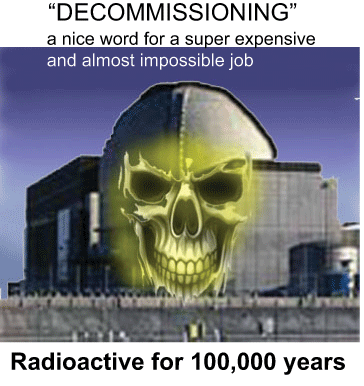
Contractors are being sought for up to £25 million of decommissioning and demolition work at the former Windscale nuclear reactor complex at Sellafield.
Two procurement notices published within five days outline the next stages of work at the Windscale Advanced Gas-cooled Reactor (WAGR), which helped pioneer Britain’s second generation of nuclear power stations.
The larger contract, worth between £10 million and £20 million, involves stripping out buildings, managing radioactive waste, removing asbestos and preparing the complex for further demolition.
A notice published on October 21 states: “The facility is now progressing towards its final phase of decommissioning and demolition.”
It reveals that records confirm the presence of both low-level and intermediate-level radioactive waste, resulting in continuing radiological and contamination hazards.
Buildings within the complex remain under active surveillance and maintenance and are classified as ‘Beta Gamma contamination facilities’.
The contract includes the removal of equipment and other internal structures, radioactive waste management, decontamination, scaffolding and safety-related work.
It is scheduled to run from April 2027 until April 2031.
A separate tender, published on Monday, October 26, seeks a contractor for the demolition of the B55 Office Complex and B55.2 Turbine Hall, at an estimated cost of between £2.5 million and £5 million.
The buildings will be dismantled down to their existing ground-floor slabs using high-reach demolition machinery.
However, contractors face a particular challenge because an electrical substation located within the structures must remain operational throughout the work.
The notice states: “A key constraint is Substation 65, which is located within the B55/B55.2 structure and must remain operational and be protected from demolition impacts, dust and water ingress throughout the works.”
It also highlights uncertainties involving ‘ageing structures, buried services, below-ground voids and incomplete historical information’.
Detailed surveys and demolition engineering will be required to manage the risks.
The WAGR reactor was commissioned in 1962 and operated until 1981, serving as a prototype for advanced gas-cooled reactors subsequently developed for commercial electricity generation.
Its distinctive spherical containment building became a familiar feature of the Sellafield skyline.
Following the dismantling and removal of its reactor core, completed by 2012, the complex entered a period of care and maintenance.
The latest contracts represent further steps towards decommissioning the remaining facilities, although neither notice confirms a date for demolition of the spherical reactor building itself.
Both contracts are being procured by A2R, a joint venture between Altrad and AtkinsRéalis, under Sellafield’s Decommissioning and Nuclear Waste Partnership framework.
The contracts are advertised as suitable for small and medium-sized businesses.
Bids for the larger contract close on November 3, while companies have until November 10 to bid for the B55 demolition work, which is scheduled for April to December 2027.
Rosyth councillor raises concerns over submarine dismantling
By Jamie Szmitz, Dunfermline Press 19th Oct 2026
https://www.dunfermlinepress.com/news/26648971.rosyth-councillor-raises-concerns-submarine-dismantling/
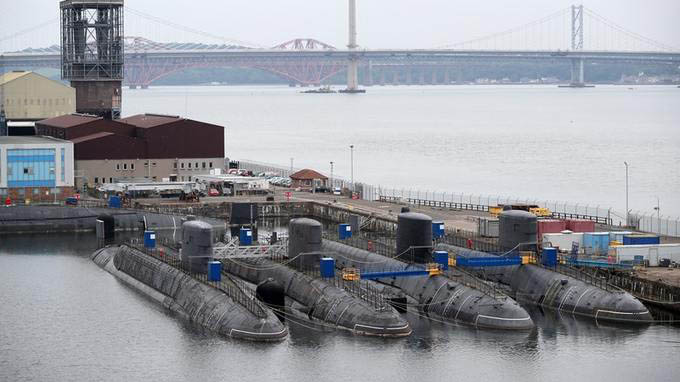
FRESH concerns have been raised about nuclear submarine dismantling plans at Rosyth Dockyard.
Councillor Brian Goodall has voiced renewed opposition to the long-term storage of radioactive material in the town, following recent discussions at the SNP annual conference in Aberdeen.
At the political party gathering he quizzed Gareth Hedicker, Babcock International’s Marine Chief Operations Officer, on the plans for radioactive waste that’s being removed from the first of seven old nuclear subs that are laid up at the West Fife yard.
Cllr Goodall said: “I’ve still not had any response from Babcock on how long, and where, they intend to store the highly radioactive reactor pressure vessel that they intend to cut out of the decommissioned nuclear submarine, Swiftsure, over the next few weeks, as part of the ongoing Submarine Dismantling Demonstrator Project.”
In a social media post he also stated: “I challenged the chief operations officer about the poor communication with the local community in relation to the activities at the nuclear regulated site at Rosyth Dockyard.”
He raised concerns about the outdated mailing list used for stakeholder meetings and criticised the lack of clarity around plans for storing the highly radioactive reactor pressure vessel from the decommissioned submarine HMS Swiftsure.
Cllr Goodall said he intends to accept an invitation to meet Mr Hedicker as soon as possible.
Rosyth Dockyard is at the centre of the UK Government’s Submarine Dismantling Programme, which aims to safely dismantle and recycle decommissioned Royal Navy nuclear submarines.
HMS Swiftsure is the first vessel to undergo dismantling under the programme.
Cllr Goodall has consistently opposed proposals to expand the programme at Rosyth, warning that bringing additional submarines to be cut up at the site would be “totally outrageous” and would go against assurances previously given by the Ministry of Defence.
He believes that long-term storage of radioactive materials at Rosyth is inappropriate given the dockyard’s proximity to homes, businesses, and the new Caledonia High School development.
The debate comes as a wider conversation continues about the future of the submarine dismantling programme and Rosyth’s role within it.
Fears of delay grow over removal of Fife nuclear submarine reactor

A FIFE councillor and anti-nuclear campaigners are demanding answers over plans to remove the most radioactive part of a decommissioned nuclear
submarine from Rosyth Dockyard. Councillor Brian Goodall says Babcock and
the Ministry of Defence urgently need to clarify when a reactor pressure
vessel, a highly radioactive component from a decommissioned submarine,
will be removed from Rosyth. It’s something that UK defence minister Luke
Pollard said should be done by the end of 2026, adding that his
department “remains committed” to the deadline. The issue in question
refers to the dismantling of the retired Royal Navy nuclear-powered
submarine HMS Swiftsure. It’s part of the UK’s Submarine Dismantling
Project, which should be completed by October 2028.
The National 10th Oct 2026 A FIFE councillor and anti-nuclear campaigners are demanding answers over
plans to remove the most radioactive part of a decommissioned nuclear
submarine from Rosyth Dockyard. Councillor Brian Goodall says Babcock and
the Ministry of Defence urgently need to clarify when a reactor pressure
vessel, a highly radioactive component from a decommissioned submarine,
will be removed from Rosyth. It’s something that UK defence minister Luke
Pollard said should be done by the end of 2026, adding that his
department “remains committed” to the deadline. The issue in question
refers to the dismantling of the retired Royal Navy nuclear-powered
submarine HMS Swiftsure. It’s part of the UK’s Submarine Dismantling
Project, which should be completed by October 2028.
The National 10th Oct 2026 A FIFE councillor and anti-nuclear campaigners are demanding answers over plans to remove the most radioactive part of a decommissioned nuclear from Rosyth Dockyard.
Councillor Brian Goodall says Babcock and
the Ministry of Defence urgently need to clarify when a reactor pressure
vessel, a highly radioactive component from a decommissioned submarine,
will be removed from Rosyth. It’s something that UK defence minister Luke
Pollard said should be done by the end of 2026, adding that his
department “remains committed” to the deadline. The issue in question
refers to the dismantling of the retired Royal Navy nuclear-powered
submarine HMS Swiftsure. It’s part of the UK’s Submarine Dismantling
Project, which should be completed by October 2028.
The National 10th Oct 2026, https://www.thenational.scot/news/26623369.fears-delay-grow-removal-fife-nuclear-submarine-reactor/
Russia’s nuclear plants are ageing. Who will pay to dismantle them?
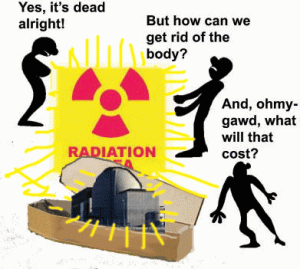
by around 2037, Rosatom’s decommissioning and remediation obligations could exceed its net profit. Moreover, the longer decommissioning is delayed, the greater the associated financial, technical and safety risks are likely to become.
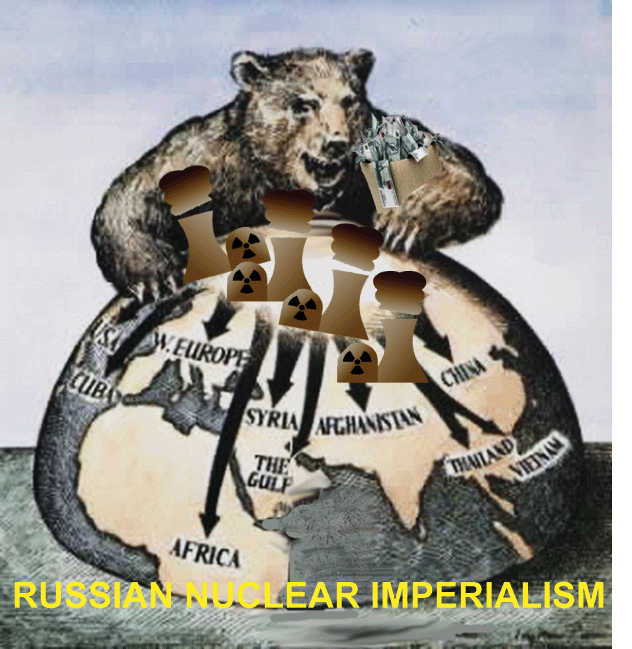
Moscow faces a huge decommissioning bill at home even as it expands its nuclear industry abroad.
By Arshak Makichyan, . 4 Oct 2026, https://www.aljazeera.com/opinions/2026/10/4/russias-nuclear-plants-are-ageing-who-will-pay-to-dismantle-them
The world often discusses the nuclear threat posed by Russia, but far less attention is paid to the nuclear risks within Russia itself, particularly those posed by ageing nuclear power plants, some of whose reactors are already more than 50 years old.
At the same time, Russia is building nuclear power plants around the world, from Turkiye to Bangladesh, while promoting nuclear energy as a “sustainable” alternative to fossil fuels. Russian President Vladimir Putin regularly meets with foreign leaders to discuss existing and potential nuclear projects. Yet one question remains largely overlooked: what happens to these nuclear facilities when they reach the end of their operational lives?
During the Soviet period, nuclear power plants were built across the USSR, including in Lithuania. As part of Lithuania’s accession to the European Union, the country was required to shut down the two Soviet-built reactors at the Ignalina Nuclear Power Plant. The first reactor was closed in 2004 and the second in 2009. The decommissioning process has proved both extraordinarily expensive and time-consuming. By 2020, the estimated cost had reached 3.3 billion euros ($3.7bn), with only 49 percent of the planned work completed. The process, initially scheduled for completion in 2038, is now expected to continue until 2049.
Russia itself does not seem to be paying much attention to this question. Rosenergoatom plans to decommission 35 reactors. Yet the company’s own estimates point to a funding shortfall of approximately 18.7 billion euros, while the total estimated cost of decommissioning is about 21 billion euros. And these are Rosenergoatom’s own estimates. Actual decommissioning costs are usually significantly higher than initially projected. For example, the cost of decommissioning the former nuclear power plant in Lubmin, Germany, was initially estimated at 1 billion euros but is now estimated at 10 billion euros.
For the time being, however, Russia appears to be postponing the most costly stages of decommissioning. Rather than fully dismantling reactors soon after shutdown, it often places them in long-term “safe” storage, transferring much of the financial and technical burden into the future. Deferred dismantling does not solve the problem, but merely postpones the costly stages of decommissioning, which is particularly concerning given Russia’s existing funding gap.
Environmental NGO Bellona Foundation reports, based on Rosatom’s own projections, that by around 2037, Rosatom’s decommissioning and remediation obligations could exceed its net profit. Moreover, the longer decommissioning is delayed, the greater the associated financial, technical and safety risks are likely to become.
Another major issue is the legacy of radioactive waste. Russia has inherited approximately 774,000 cubic metres of radioactive waste from the Soviet Union. The upcoming decommissioning of 36 reactor units at eight nuclear power plants is expected to generate an additional 800,000 cubic metres of radioactive waste.
Russia already has experience of what happens when industries leave major environmental liabilities behind. In the Kemerovo region, where around half of Russia’s coal is produced, mountains of waste from coal mining scar the landscape. Some of this waste burns, polluting nearby communities. When coal companies go bankrupt, the cost of dealing with what they leave behind can fall to the state and local communities.
But nuclear waste and decommissioned reactors cannot simply be abandoned if the money runs out. The question therefore becomes even more important as Russia’s economic situation deteriorates: what will happen to all these megaprojects if the money needed to maintain, decommission and eventually dismantle them is no longer available?
The countries where Russia is building its numerous nuclear power plants should therefore think about what happens if these projects cannot be maintained or later decommissioned as planned. They need a Plan B in case something goes wrong in Russia. And, as history has repeatedly shown, Russia’s political situation can change unpredictably.
The political consequences of nuclear mismanagement can also be significant. The Chornobyl disaster demonstrated how the Soviet authorities’ attempts to suppress information and downplay the scale of the accident fuelled public distrust and disillusionment, contributing to growing social and political unrest in the late Soviet period. Today, Russia’s continued neglect of nuclear waste and repeated postponement of nuclear plant decommissioning could similarly create conditions for both another environmental catastrophe and growing social unrest, particularly if authorities once again respond to such a crisis with silence or attempts to conceal its scale.
These risks are compounded by Russia’s deteriorating economic situation. In an effort to sustain the war economy, the Russian government has also drastically weakened environmental regulations. National defence is now by far the largest single item in Russia’s federal budget, while environmental protection accounts for only a small fraction of government spending.
Environmental disasters have repeatedly demonstrated that the Russian regime is unwilling to prioritise long-term environmental safety. Russia continues to operate an ageing shadow fleet to transport oil, and the environmental risks associated with that fleet were highlighted by the 2024 Black Sea oil spill, when two ageing Russian tankers released thousands of tonnes of fuel oil into the sea. The spill was described as the Black Sea region’s worst environmental disaster in decades. This broader pattern of environmental negligence raises questions about how the country will manage its ageing nuclear infrastructure and the growing problem of nuclear waste.
These issues should therefore be raised at every international forum where Russia promotes its nuclear industry, such as COPs, where encountering Russian nuclear lobbyists is a common experience. Russia is seeking to secure its place in the future of energy while continuing to use energy as a tool for exerting political influence and power around the world.
All of these issues are particularly concerning because Russia continues to promote its nuclear industry internationally, while independent voices capable of scrutinising its environmental impacts and safety record are increasingly silenced in Russia. As documented in a recent report by the Environmental Crisis Group, repression and the departure of environmental experts and activists have severely weakened Russia’s environmental movement.
Bellona and Greenpeace have been declared “undesirable” organisations in Russia, while EcoDefence, which organised campaigns around environmental and nuclear issues, has been designated a “foreign agent”, and its members have faced criminal prosecution.
Environmental organisations outside Russia continue to draw attention to these risks. EcoDefence in exile, alongside other German activists, campaigns against continued European cooperation with the Russian nuclear industry, which has largely escaped the sanctions imposed on other parts of Russia’s energy sector. According to Vladimir Slivyak, co-chair of EcoDefence, this continued dependence on Russian nuclear technology and services could itself create vulnerabilities that Russia could potentially exploit for sabotage or political pressure.
The result is a shrinking capacity to independently monitor and expose environmental risks inside Russia. This creates a dangerous information gap: a nuclear accident could happen, its scale could be concealed or downplayed by the authorities, and the public could learn the full extent of the disaster only years or even decades later. This is what happened after the 1957 Mayak disaster, when the Soviet authorities concealed the accident and its consequences and did not publicly acknowledge the disaster until 1989, more than three decades later, while thousands of people were left to suffer the long-term consequences of radioactive contamination.
New chapter begins in Hinkley Point B decommissioning
A new chapter has begun at Hinkley Point B as the former nuclear power
station enters an 85-year decommissioning programme. The Somerset site
stopped generating electricity in 2022 after nearly 46 years and has been
transferred from EDF to the Nuclear Restoration Services (NRS), which will
oversee it dismantling. The move will see about 250 workers transfer to the
organisation, including some from families who have worked at Hinkley for
generations.
NRS is also decommissioning neighbouring Hinkley Point A and
CEO Rob Fletcher said “we look forward to working together across both
sites” to “deliver safe, secure decommissioning for the benefit of the
community”. Before the site could be transferred, engineers spent three
years to defuel the reactor at Hinkley B, with more than 4,900 elements of
spent fuel removed and packaged before being taken to Sellafield for safe
storage.
The first phase, which will last until 2038, includes the
dismantling of all buildings and plant materials except for the site’s
safestore structure. This facility will be used to store and manage the
residential nuclear waste from the power station. The second phase will see
“a period of relative inactivity” of up to 70 years from 2039, to allow for
the radioactive materials within the safestore to safely decay. The final
phase will see the former reactor and debris vaults being dismantled and
removed.
BBC 1st Oct 2026,
https://www.bbc.co.uk/news/articles/cvlyldpzr4zyo
Nuclear Restoration Services taking over control of Hinkley B station
By John Thorne, Tuesday 29th September 2026, https://www.wsfp.co.uk/news/hinkley-point-b-nuclear-power-station-decommissioning-next-stage-phase-nuclear-restoration-service-transfer-from-edf-957891
THE next chapter is being opened in Hinkley Point B nuclear power station’s long history as its decommissioning transfer moves a step closer.
Key regulatory approvals have been put in place for the site’s transfer from EDF to Nuclear Restoration Services (NRS) on Thursday (October 1).
The Office for Nuclear Regulation granted a site licence to NRS, while the Environment Agency issued an environmental permit.
It marks a major milestone for the site, which has been part of the local community for decades and is now moving toward the next phase of safe, secure, and sustainable decommissioning.
Ten Sellafield leaders earn more than the Prime Minister
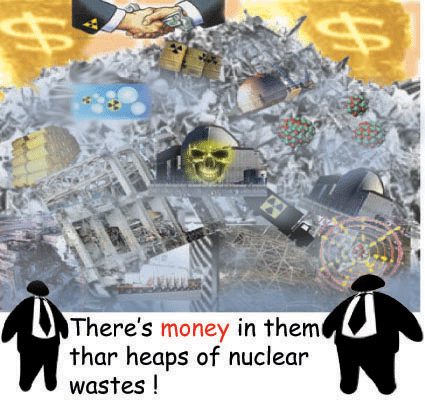
Ten Sellafield leaders earn more than the Prime Minister. SENIOR figures at
a West Cumbria nuclear decommissioning operation are earning more than the
Prime Minister, public records show.
Whitehaven News 15th Sept 2026, https://www.whitehavennews.co.uk/news/26548323.ten-sellafield-leaders-earn-prime-minister/
UK Nuclear Liabilities Fund selects Brookfield to manage initial $1bn
By IPE Staff10 September 2026
The Nuclear Liabilities Fund (NLF) has selected Brookfield to manage a long-term, multi-asset investment mandate, with an initial commitment of $1bn (€850m).
The mandate will be managed by Brookfield’s Investment Solutions Group (ISG), which will draw on the investment capabilities across the firm to construct a portfolio tailored to NLF’s objectives, risk parameters and investment horizon, it was announced.
The portfolio will invest globally across Brookfield’s infrastructure, energy, private equity, real estate and private credit strategies. Investments are expected to comprise fund commitments, direct investments and co-investments.
The mandate is designed around the multi-decade nature of NLF’s liabilities associated with decommissioning eight of the UK’s nuclear power stations.
Brookfield said the investment horizon will be aligned with NLF’s multi-decade funding requirements, with the aim of supporting long-term capital growth and compounding investment returns to help meet future decommissioning costs.
Investment proceeds are expected to be reinvested into new opportunities rather than routinely distributed, allowing capital to remain invested across market cycles.
For NLF, the mandate is intended to ensure that sufficient assets are available to meet future decommissioning costs “without unnecessary reliance on taxpayers”……………………………………………………………….. https://www.ipe.com/news/uk-nuclear-liabilities-fund-selects-brookfield-to-manage-initial-1bn/10138410.article
Demolition of Germany’s Stade reactor building progresses
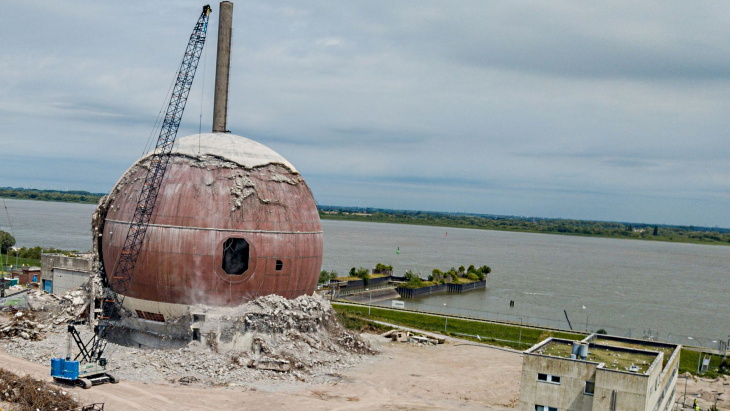
Thursday, 23 July 2026, https://www.world-nuclear-news.org/articles/in-pictures-demolition-of-stade-reactor-building-progresses
The demolition of the reactor building at the decommissioned Stade nuclear power plant in Lower Saxony, Germany, has been under way since the end of March this year and is expected to be completed by the end of the year.
Stade was the first power plant in Germany to be decommissioned after the country announced a nuclear phase-out policy in 2003. The 640 MWe pressurised water reactor began operating in 1972. The plant operated at a reduced capacity from 2003 until the end of 2005, prior to its shutdown. Dismantling of the power plant began in October 2005. Conventional demolition of individual buildings on the power plant site started in 2023.
The first phase of the building dismantling was completed in spring 2024. It involved the demolition of 17 buildings with a total volume of about 177,000 cubic metres – including the administration building, the workshop and operations building, the emergency diesel generator building, the switchgear building, and finally the engine house. This work laid the foundation for the dismantling of the remaining central building complex. Aspects such as safety, environmental protection, and sustainability through material recycling were given top priority.
The demolition of the reactor building is part of Phase II of the conventional dismantling process and simultaneously marks the beginning of the crucial final phase of the overall project.
On 31 March this year, the demolition of the reactor building began. To weaken the material, a steel ball weighing about four tonnes was first be used to strike the approximately 80-centimetre-thick concrete shell. Following this, the auxiliary buildings were completely demolished before the further demolition of the reactor building began at the beginning of June. This involved the use of, among other things, a 16-tonne hydraulic shear and a 180-tonne cable excavator. The plan is to completely dismantle the reactor building by the end of this year.
In preparation for the demolition, extensive hazardous material remediation of the auxiliary building began in May 2025. This was followed in December by the remediation of the reactor building and the containment vessel within it. For this, the necessary infrastructure was first established both inside and outside the reactor building. This included, in particular, the erection of a complex facade scaffold with stair towers and elevators. As the first externally visible measure immediately before the impending demolition of the reactor building, the external lifting platform, which previously also served for the removal of CASTOR used fuel storage casks and steam generators, was demolished on 6 March.
“With the start of demolition work on the reactor building, we have reached the final technical milestone we have been working towards for a long time,” plant manager Marco Albers said in March. “The entire team has put enormous care into preparing the necessary documentation, and I am very pleased that the review by the independent expert and the approval of the Lower Saxony Ministry for the Environment have now been granted. Now, with the help of our partner, the Freimuth company, we can implement what is probably the most demanding step in the conventional demolition of the Stade plant in a technically sound and safe manner.”
Phases II (involving five building complexes) and III (ten building complexes) have been running in parallel since 2023. The site is scheduled to be released from nuclear regulatory oversight in autumn 2027. This will make the Stade nuclear power plant the first commercially operated pressurised water reactor in Germany to be completely dismantled.
Germany’s nuclear phase-out
Following the accident at the Fukushima Daiichi plant in Japan in March 2011, the government of Chancellor Angela Merkel decided it would phase out its use of nuclear power by the end of 2022 at the latest. Prior to the accident, Germany was obtaining around one-quarter of its electricity from nuclear power.
In August 2011, the 13th amendment of the Nuclear Power Act came into effect, which underlined the political will to phase out nuclear power in Germany. As a result, eight units were closed down immediately: Biblis A and B, Brunsbüttel, Isar 1, Krümmel, Neckarwestheim 1, Phillipsburg 1 and Unterweser.
The Brokdorf, Grohnde and Gundremmingen C plants were permanently shut down at the end of December 2021. The country’s final three units – Emsland, Isar 2 and Neckarwestheim 2 – shut down in April 2023. All the units are now at various stages of decommissioning.
Ukraine draft law on Chernobyl decommissioning to 2036 approved
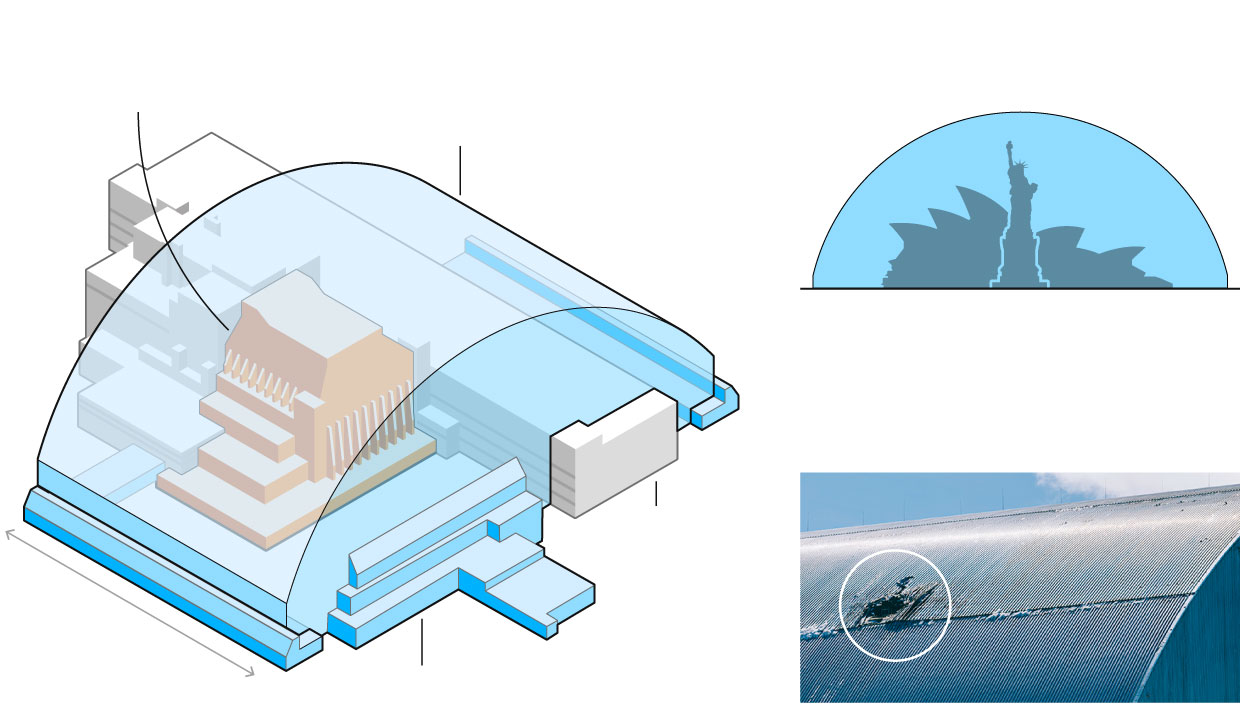
World Nuclear News 10th July 2026, https://www.world-nuclear-news.org/articles/ukraine-draft-law-extends-chernobyl-decommissioning
The Cabinet of Ministers of Ukraine has approved a draft law which extends to 2036 the funding for the State Programme for the Decommissioning of the Chornobyl Nuclear Power Plant and the Transformation of the Shelter Object into an Environmentally Safe System.
The funding allocated for the programme to 2036 amounts to UAH50.8 billion (USD1.1 billion), of which UAH45.6 billion is to be financed via the state budget and UAH5.2 billion from “international technical assistance”.
According to the Ministry of Energy, the programme required updating following the completion of the shutdown and preparatory phases of the Chernobyl decommissioning process “to reflect current challenges” including additional measures to tackle the damage caused during the war by the month-long Russian occupation in 2022 and by a drone strike last year to the New Safe Confinement protective arch, “and the actual progress of projects” at the site.
“The next stage involves the direct decommissioning of the plant and the continued transformation of the Shelter Object into an environmentally safe system,” a ministry statement said.
“Extending the programme will ensure the uninterrupted continuation of the Chornobyl NPP decommissioning process, support Ukraine’s international commitments in the field of nuclear safety, and facilitate the mobilisation of international technical and financial assistance for projects at the plant,” the ministry said. (Chornobyl is Ukraine’s preferred spelling). The draft law will now go to the Ukrainian parliament for consideration.
Nuclear Autopsy for Indian Point Decommissioning?
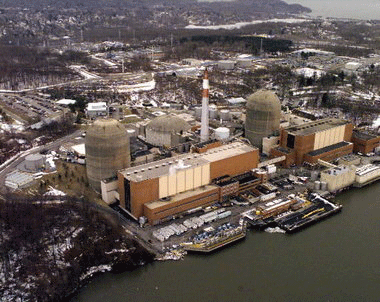
June 25, 2026, https://beyondnuclear.org/nuclear-autopsy-during-indian-point-decommissioning/
On June 18, 2026, Beyond Nuclear was the guest speaker before the New York State Decommissioning Oversight Board (NYDOB) in a public meeting focused on the decommissioning of the Indian Point nuclear power station entitled, “Mind the Gap: Decommissioning’s Critical Link to Public Safety & Extended Reactor Operations.” The presentation and Q&A session with the state board is video archived and available for viewing on YouTube beginning at time mark < 01:40:08 to 02:24:18 >. Beyond Nuclear is providing links to supporting documentation. Following the presentation, the NYDOB recognized further inquiry into broadening decommissioning’s role at Indian Point is warranted to include the equivalent of an autopsy on the closed reactors’ residual safety margins as an appropriate “cost of doing business” to enhance public safety and reliable operations at other reactors that are seeking to renew operating licenses in New York and beyond.
The Ginna nuclear power station, a Westinghouse Electric Pressurized Water Reactor by design in upstate New York on Lake Ontario, has filed a Subsequent License Renewal Application to the US Nuclear Regulatory Commission (NRC) requesting to extend the 56 year old single unit reactor’s operating license to 60 to 80 years.
The permanently closed Indian Point nuclear station is certified by both the owner Holtec International and the NRC for decommissioning only. Similarly, Holtec International is also certified by the NRC solely as the decommissioning operator of the permanently closed Palisades nuclear station in Covert, Michigan, Combustion Engineering Pressurized Water Reactor. Holtec Internationalis however attempting to “recommission” the Palisades operating license to return to full power. Holtec International has submitted a Letter Of Intent to the NRC that it plans to submit an application to extend its Subsequent License Renewal (60 to 80 years) if it does restart.
Beyond Nuclear presented the State of New York Department of Public Service’s NYDOB with the idea that the decommissioning of the Indian Point nuclear power station in Buchanan, NY is a critically important opportunity. Indian Point is not merely just decommissioning project for dismantlement and site remediation of the three-unit nuclear power station. It is also the opportunity to conduct a scientifically rich strategic “autopsy” of the nearly 50-year old commercial reactor site during the dismantlement and site remediation process. Rather than the decommissioning operator, Holtec International, developing the “custody of care” plan to also haul off the radioactive debris for permanent burial at a distant nuclear waste facility. Beyond Nuclear sees the nuclear waste company, now an aspiring would-be nuclear waste generator, should be directed to develop the “custody of care” to strategically target, harvest and deliver samples of decades old “real world” aged, mapped materials extracted safety-related systems, structures and component to a national laboratory qualified to observe, measure and scientifically analyze the residual safety margins in those material samples taken during the Indian Point decommissioning process.
These aged, extracted samples could then be analyzed and materially evaluated for their residual safety margins after irradiation and embrittlement of the reactors’ base metals, radiation induced cracking in dissimilar beltline weld materials from the reactor pressure vessels. Additional, samples could be cut from reactor internals, concrete core samples from the containment structure and “spent” fuel pools, and sections strategically cut from the original, previously inaccessible 47 and 46 year old electrical cables from Units 2 and 3 as well as other reactor safety-related systems, structures and components. These various harvested materials and their residual safety margins now need to inform a host of identified and unanswered “technical knowledge gaps” for such safety issues as how quick cracks can initiate and grow into the failure of those systems, structures and components in reactors seeking extreme license renewals.
For example, strategic harvesting and the associated laboratory analysis needs to determine the synergy of materially damaging conditions (neutron bombardment, extreme ranges of exposure to heat and rapid cooling, metal fatigue and vibration, extreme pressure, humidity, etc.) is needed to benchmark computer modeling of projected material safety margins remaining in operational nuclear power plants now making application to extend their operating licenses well beyond the original 40 year license at construction, beyond the “initial” 20 year license renewal period for 40 to 60 years and now extending into the first “subsequent” 20 year renewal period from 60 to 80 years of exposure to the harsh operational conditions inside a nuclear power station. The NRC and the nuclear industry are in the planning stages for the second “subsequent” 20 year license renewal period from 80 to 100 years becoming the US nuclear industry’s most apparent “bridge to the future.”
Nuclear autopsies are not a new idea. Harvesting and scientific analysis at the decommissioning stage of permanently closed nuclear power stations has long been recognized by the US Nuclear Regulatory Commission (NRC) and the US Department of Energy’s (DOE) national laboratories for a critical role to provide “reasonable assurance” of the public safety and reliable reactor operations of safety-related systems, structures and components in reactor licensing and relicensing.
The DOE’s Pacific Northwest National Laboratory (PNNL) in the state of Washington was contracted by the NRC Office of Research late in 2015 to publish a Technical Letter Report entitled “Criteria and Planning Guidance for Ex-Plant Harvesting to Support Subsequent License Renewal” (PNNL-27120). Published on December 7, 2017, the PNNL technical letter set out how to identify and mitigate known, but still unresolved “technical knowledge gaps” and make recommendations to effectively resolve and close those “gaps.” PNNL concluded that the targeted extraction of “experiential real world” aged materials from safety-related systems, structures and components permanently closed decommissioning nuclear power stations for laboratory analysis was . The resulting insights into a host of age-related degradation mechanisms to measure and project precise margins to failure will be essential to provide “reasonable assurance” that the materials/components will continue to perform their safety function throughout the subsequent license renewal period for 60 to 80 years.
US regulatory law is now in radical transition by politically-driven pro-nuclear agenda, nuclear industry hype and questionable White House’s decrees for the wholesale rewrite of regulatory law to refocus on “nuclear power benefits.” However, “reasonable assurance” needs to be safe guarded as the evidentiary standard in the NRC’s regulatory process for a legal standard of “adequate protection” established under the Atomic Energy Act for safe and reliable operations under the NRC commercial the reactor licensing and relicensing process.
When will the new nuclear operators be required to put money aside for decommissioning?
4 May 26
https://www.newcivilengineer.com/ai-search/?q=When%20will%20the%20new%20nuclear%20operato
New nuclear operators are required by law to set aside funds for decommissioning and waste disposal from the very first day of a plant’s operation . Under the legal framework established by the government, energy firms must have a robust, funded decommissioning plan (FDP) in place and approved by the Secretary of State before they are even granted permission to begin construction on a new power station
Key Funding Requirements
The regulations are designed to ensure that the financial risk of cleaning up nuclear sites remains with the developers rather than the taxpayer. According to the government’s Funded Decommissioning Programme Guidance:
- Insolvency-Proof Funds: Operators must establish funds for clean-up that are administered independently of both the operator and the government to ensure they remain protected even if the company faces financial difficulties .
- Full Cost Responsibility: Operators are responsible for the full costs of decommissioning and their share of waste disposal. Energy Secretary Charles Hendry stated that requiring a credible funding plan “is the best way to protect taxpayers from having to pick up the bill” .
- Waste Transfer Pricing: To provide cost certainty for investors, the government proposed a cap on the waste transfer price for disposing of higher-activity waste in a Geological Disposal Facility (GDF). This cap was suggested to be set at a high level—roughly three times current cost estimates—with an additional risk fee charged to operators to compensate the government for accepting any residual risk .
Evolving Models: The Sizewell C Precedent
While the standard requirement involves operators building up independent funds, the government has introduced a new financial model for the Sizewell C project. As detailed in the written ministerial statement Sizewell C | Public on the hook for decommissioning costs of up to £12bn, this project utilises a Regulated Asset Base (RAB) model:
- Consumer Funding: Decommissioning for Sizewell C will be funded via the RAB, which can include additional costs on consumer electricity bills .
- Contingent Liabilities: While the RAB includes protections to minimise public risk, the government has acknowledged a potential exposure of up to £12bn in “remote circumstances” where a fund shortfall materialises .
- Timeline: For modern plants like Sizewell C, decommissioning is expected to be a long-term process, potentially beginning toward the end of the 21st century and continuing until 2160
The government continues to update these roadmaps to ensure they remain suitable for new technologies, such as Small Modular Reactors (SMRs), while protecting future generations from bearing legacy costs .
You may be interested in learning more about the estimated total cost of the UK’s nuclear cleanup mission, the progress of the Geological Disposal Facility, or how the Regulated Asset Base model impacts consumer energy bills.
Nuclear decommissioning in the UK
Corporate report: The NDA group Technical Baseline Review
This report provides a high-level overview of the processes and associated technologies used or planned to be used to deliver our mission.
NDA 26th March 2026 Nuclear Decommissioning Authority NDA group Technology Baseline Review 2026
PDF, 4.76 MB, 67 pages
The UK’s nuclear energy programme, dating from the post-war years, has left a challenging decommissioning legacy to the country: numerous prototype reactors, fuel-manufacturing plants, research centres, reprocessing plants and 11 power stations. The Sellafield site in west Cumbria houses more than 200 nuclear facilities and 1,000 buildings, making it one of the world’s most complex environmental decommissioning challenges. Across the UK many ‘never-done-before’ decommissioning projects will need to be completed. The Nuclear Decommissioning Authority (NDA) was established under the Energy Act (2004) to ensure that the UK’s nuclear legacy sites are decommissioned and cleaned up safely, securely, cost-effectively and in ways that protect people and the environment.
This document provides a high-level overview of the current technology landscape across the NDA group. It outlines the NDA group technology baseline, current technologies being deployed, and the technology opportunities requiring development or adoption to underpin the delivery of our decommissioning mission……………
https://www.gov.uk/government/publications/nuclear-decommissioning-authority-rd-technical-baseline
‘Significant milestone for nuclear sector’ as Hunterston B relicensed for decommissioning
The Office for Nuclear Regulation (ONR) has approved the relicensing of
the Hunterston B nuclear power station, ushering the North Ayrshire site
into its formal decommissioning phase.
From 1 April, Nuclear Restoration
Services (NRS), a subsidiary of the Nuclear Decommissioning Authority
(NDA), will take on full responsibility as site licence holder, replacing
EDF, which operated the Advanced Gas‑Cooled Reactor (AGR) until it ceased
generation in January 2022 after 46 years in service.
This first phase of
decommissioning work at Hunterston B, on the Firth of Clyde, will involve
the removal of all buildings and plant from the site, with the exception of
the reactor buildings and some adjoining structures which will be modified
to create a Safestore structure.
This Safestore is designed to maintain the
reactor buildings in a safe state through the Quiescence phase of around 70
years. Following this, the final site clearance phase will involve the
removal of the reactors and debris vaults housed in the Safestore
structure, making the site available for future use.
New Civil Engineer 19th March 2026 https://www.newcivilengineer.com/latest/significant-milestone-for-nuclear-sector-as-hunterston-b-relicensed-for-decommissioning-19-03-2026/
1 This Month

Read the Public Inquiry Report, the Commissioners’ report, Surrendering Australia: The AUKUS Deception is available to download for free at aukuspublicinquiry.com. Or just watch the replay of the National Press Club Luncheon.


19 November – Webinar – The Reality of Reprocessing
Time: 11:00 AM Pacific Time (US & Canada) / 2:00 PM Eastern / 7:00 PM UK / 8:00 PM CET
Register for the Zoom Event Here



Shut down the radiation-damaged Heysham nuclear reactors now
To see nuclear-related stories in greater depth and intensity – go to https://nuclearinformation.wordpress.com

Say No to NASA’s Reckless Nuclear Reactor on the Moon
Say No to NASA’s Reckless Nuclear Reactor on the Moon
-
Archives
- November 2026 (94)
- October 2026 (302)
- September 2026 (339)
- August 2026 (330)
- July 2026 (355)
- June 2026 (287)
- May 2026 (306)
- April 2026 (356)
- March 2026 (251)
- February 2026 (267)
- January 2026 (308)
- December 2025 (358)
-
Categories
- 1
- 1 NUCLEAR ISSUES
- business and costs
- climate change
- culture and arts
- ENERGY
- environment
- health
- history
- indigenous issues
- Legal
- marketing of nuclear
- media
- opposition to nuclear
- PERSONAL STORIES
- politics
- politics international
- Religion and ethics
- safety
- secrets,lies and civil liberties
- spinbuster
- technology
- Uranium
- wastes
- weapons and war
- Women
- 2 WORLD
- ACTION
- AFRICA
- Atrocities
- AUSTRALIA
- Christina's notes
- Christina's themes
- culture and arts
- Events
- Fuk 2022
- Fuk 2023
- Fukushima 2017
- Fukushima 2018
- fukushima 2019
- Fukushima 2020
- Fukushima 2021
- general
- global warming
- Humour (God we need it)
- Nuclear
- RARE EARTHS
- Reference
- resources – print
- Resources -audiovicual
- Weekly Newsletter
- World
- World Nuclear
- YouTube
-
RSS
Entries RSS
Comments RSS

