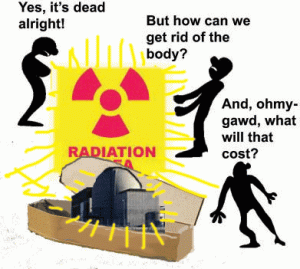
When will the new nuclear operators be required to put money aside for decommissioning?
4 May 26
https://www.newcivilengineer.com/ai-search/?q=When%20will%20the%20new%20nuclear%20operato
New nuclear operators are required by law to set aside funds for decommissioning and waste disposal from the very first day of a plant’s operation . Under the legal framework established by the government, energy firms must have a robust, funded decommissioning plan (FDP) in place and approved by the Secretary of State before they are even granted permission to begin construction on a new power station
Key Funding Requirements
The regulations are designed to ensure that the financial risk of cleaning up nuclear sites remains with the developers rather than the taxpayer. According to the government’s Funded Decommissioning Programme Guidance:
- Insolvency-Proof Funds: Operators must establish funds for clean-up that are administered independently of both the operator and the government to ensure they remain protected even if the company faces financial difficulties .
- Full Cost Responsibility: Operators are responsible for the full costs of decommissioning and their share of waste disposal. Energy Secretary Charles Hendry stated that requiring a credible funding plan “is the best way to protect taxpayers from having to pick up the bill” .
- Waste Transfer Pricing: To provide cost certainty for investors, the government proposed a cap on the waste transfer price for disposing of higher-activity waste in a Geological Disposal Facility (GDF). This cap was suggested to be set at a high level—roughly three times current cost estimates—with an additional risk fee charged to operators to compensate the government for accepting any residual risk .
Evolving Models: The Sizewell C Precedent
While the standard requirement involves operators building up independent funds, the government has introduced a new financial model for the Sizewell C project. As detailed in the written ministerial statement Sizewell C | Public on the hook for decommissioning costs of up to £12bn, this project utilises a Regulated Asset Base (RAB) model:
- Consumer Funding: Decommissioning for Sizewell C will be funded via the RAB, which can include additional costs on consumer electricity bills .
- Contingent Liabilities: While the RAB includes protections to minimise public risk, the government has acknowledged a potential exposure of up to £12bn in “remote circumstances” where a fund shortfall materialises .
- Timeline: For modern plants like Sizewell C, decommissioning is expected to be a long-term process, potentially beginning toward the end of the 21st century and continuing until 2160
The government continues to update these roadmaps to ensure they remain suitable for new technologies, such as Small Modular Reactors (SMRs), while protecting future generations from bearing legacy costs .
You may be interested in learning more about the estimated total cost of the UK’s nuclear cleanup mission, the progress of the Geological Disposal Facility, or how the Regulated Asset Base model impacts consumer energy bills.
Women Deliver Conference. Glimmers of hope amid the doom and gloom?
by Aleta Moriarty | May 4, 2026
The Women Deliver conference in Melbourne exposed the global decline in humanitarian aid amid escalating conflict. Aleta Moriarty was there.
Women Deliver is the largest gathering of women leaders, rights advocates and activists anywhere in the world, bringing together 6,000 people from 189 countries.
Alongside the activists were former leaders Julia Gillard, Jacinda Ardern, Helen Clarke and Justin Trudeau, who confronted the defining crises of our time: a world at war, the global rise of authoritarianism, the unchecked power of corporations, and the systematic erosion of the multilateral system.
Out of it came the Melbourne Declaration for Gender Equality, a global commitment to rebalance power, resources and accountability for girls, women and gender-diverse people.
A world at war
Conflict was front and centre, with representatives from almost all conflict-affected regions and countries, including Myanmar, Palestine, Lebanon, and Afghanistan.
According to the Uppsala Conflict Data Program (UCDP), 61 active state-based conflicts were recorded in 2024, the highest number since records began in 1946. The International Committee of the Red Cross puts the total number of armed conflicts at 130, double the figure of fifteen years ago. The Armed Conflict Location and Event Data Project (ACLED) estimates
“one in eight people worldwide is now exposed to conflict.”
The burden falls disproportionately on women and girls. UN Women reports that in 2024, approximately 676 million women and girls, 17% of the global female population, lived within 50 kilometres of active conflict zones, the highest share since the 1990s.
Sexual violence remains one of the most systematic features of contemporary warfare. During the Bosnian War, rape was widely used as a weapon. Women were systematically detained, forcibly impregnated, and held captive until they gave birth, denied abortion by design, their bodies conscripted as instruments of ethnic cleansing. The erasure of a people, all delivered through the bodies of women.
The UN Secretary-General’s 2025 Report on Conflict-Related Sexual Violence documented an 87% increase in cases since 2022, widely acknowledged as a significant undercount, given the stigma, fear of reprisal and restricted humanitarian access that prevent reporting.
In the Democratic Republic of Congo alone, 38,000 cases were reported by service providers in North Kivu in the first months of 2025. In Sudan, UN Women reported a 288% increase in demand for lifesaving support following rape and sexual violence in April 2025.
These are not mere statistics; they are women, each one a universe of relationships and possibilities,
“unmade by atrocity and crime.”
“(We need) a little reflection of what is happening and what it does, conflict. What conflict does to an actual human being, right? said Afghan woman and refugee Zohra Mousavi from Bridge to Safety.
“We always forget about that, we forget about the lives of people. We talk about numbers. It becomes just incredibly difficult to then narrow it down to remember that we’re talking about humans.”
A flood of people
Conflict uproots lives on a vast scale. UNHCR recorded more than 123 million forcibly displaced people in 2024, approximately one in every 67 people on Earth.
Among the most acute situations is Cox’s Bazar in Bangladesh, a country where the average income is around $2000 a month. It is the world’s largest refugee camp, home to around 1.3 million stateless Rohingya refugees, approximately three times the population of Canberra, with more than 75% of them women and children.
The camp is one of the most desperate and densely populated places on earth, with 47,000 people crammed per square kilometre and residents living in bamboo and tarpaulin shelters, acutely vulnerable to landslides, flooding, fires and cyclones.
“Rohingya refugees in Bangladesh…are living in such horrible conditions. I was there last year. Six thousand five hundred learning centres have shut. When I went, there were children roaming around in every single street trying to look for things to do when they should be at school, said Noor Azizah, survivor of the ongoing Rohingya genocide and co-executive director of the Rohingya Women’s Collaborative Network.
“We need funding to make sure our people are not just surviving. They need food. People are living on seven dollars a month now… And because people are not able to live with these short stipends, women are looking for jobs in really dangerous jobs, you know, leaving the camps, young children are doing sex work.”
Candy over human aidAt the very moment need has surged, the humanitarian system has been eviscerated. The withholding of support itself becomes a weapon, as deliberate and as deadly as any other. In addition, broader aid cuts have systemically targeted programming that supports women, whether this be for sexual and reproductive health or to support women’s rights.
Between 2024 and 2025, more than 30% of global humanitarian funding disappeared, driven primarily by cuts to USAID, but triggering wider contraction from other major donors, including Germany and Sweden.
Council on Foreign Relations reported that total humanitarian funding had dropped to 2016 levels, with agencies now forced to
“cut food from the hungry to preserve dwindling resources for the starving.“
Data from the Council on Foreign Relations starkly demonstrate this.
A paper published in The Lancet forecast that global aid cuts could result in between 9.4 and 22.6 million additional deaths by 2030. This is comparable to the number of deaths attributed to COVID-19, yet receives a fraction of the attention.
“This erosion of multilateralism is not part of efficiency, it is part of militarisation, it is not a reform or a merger, it is an attack and all of it must be resisted,” said Kate Gilmore, former United Nations Deputy High Commissioner for Human Rights, adding, “The most critical impacts of the deliberate dismantlement are being borne by ‘we the peoples….
“(this) death march is not austerity, it is atrocity.”
The obscenity of the richest man in the world, holding a chainsaw, celebrating these cuts that have led children to die or enter sex work, should plague all our minds. According to Forbes, Elon Musk’s net worth reached $800 billion in February 2026, exceeding the GDP of Sweden, Norway and Singapore. In 2025 alone, he added approximately $194 billion to his personal wealth.
Australia’s aid declining
Australia’s aid budget tells a story of quiet retreat. While nominal figures appear to be rising, the aid budget is going backwards once adjusted for inflation or measured against Gross National Income.
In 2025–26, aid represented just 0.63% of the federal budget, small by international standards, and it keeps falling.
Australians grossly overestimate our aid contributions. A 2015 survey found that 19% of Australians believed aid made up at least 5% of the federal budget, around 8 times more than the actual figure of 0.63%.
It hasn’t just been humanitarian funding that has been targeted, but the frontline humanitarian workers themselves, in numbers we have simply never seen before.
The last two years have been the deadliest consecutive years for humanitarian workers ever recorded. In 2024 alone, a record 383 aid workers were killed, more than double the annual average of the previous decade, driven primarily by the war in Gaza and the civil war in Sudan, which together accounted for the majority of deaths.
The Red Cross and Red Crescent Movement lost 38 staff and volunteers in 2024 alone, while 289 UN personnel were killed in Gaza, the largest loss of UN staff in any single crisis in history. Likewise, among them was Australia’s very own Zomi Frankcom, struck by an Israeli drone while delivering food for World Central Kitchen in clearly marked vehicles. We still await the results of the official investigation.
“We are in the midst of a complete breakdown of the international system, said Agnes Callamard, Secretary General of Amnesty International. “In the past, we warned of the imminent possibility of the breakdown. Right now, what we are saying we’re past warning. We’re in the middle of it
“We have found that there are predators who are intent on destroying the system through violations of international law and of the multilateral system. But it’s not just that they violate it, that they are insisting that these (systems) are dead.”
Ushering in the preventable death of millions has left many asking how a system so fundamental to the world’s most vulnerable could be destabilised so rapidly and easily by so few.
This was one of the central questions at Women Deliver, and the answer many participants kept returning to was that the international multilateral system needs to decentralise. Get the money, the power, and the decision-making out of institutions that can be captured overnight, and into the hands of the grassroots actors already doing the work.
Connecting every crisis discussed at Women Deliver 2026 is not complexity; it is choice. The big question is whether governments like ours will make more humane choices, with real resources, real leadership. real accountability, and the political will to match.
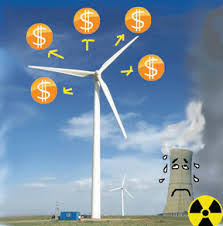
Scots are right to back renewables over nuclear energy.
By Dr Paul Dorfman, Bennett Institute, University of Sussex; Dr Keith
Baker FRSA, Glasgow Caledonian University; Professor Peter Strachan, Robert
Gordon University; Professor Steve Thomas, University of Greenwich; Dr
David Toke, University of Aberdeen.
POLLING released a couple of weeks ago
found that nuclear power has a “miserable” level of support in
Scotland, with more than half of those surveyed saying that the main focus
should be on renewables. According to the facts, this makes sense. Solar
and wind now dominate global electricity generation. Worldwide, solar and
wind power will both surpass nuclear in 2026.
This surge has halted the
fossil fuel power generation rise, with renewables overtaking coal,
supported by battery storage providing system flexibility at scale. All
this points to a shift in the dynamics of the power system. When renewable
energy generation exceeded the rise in global electricity demand last year,
an important threshold was crossed. In 2025, solar became the EU’s top
power source, with wind and solar now the bedrock of European energy
self-reliance. Power generation from renewables in Europe has reached a new
record of 384.9 Terrawatt-hours (TWh).
Meanwhile, Scottish wind power has
also set new records. More renewable energy is produced in the Scottish
Highlands per household than any other area of the UK. Annual renewable
generation across the Highlands is staggering. Renewable energy development
will be further supported by SSEN’s investment of £7 billion in Scotland
in 2026-31, creating 17,500 jobs. More than 100% of Scotland’s
electricity demand has been produced by renewables for the first time,
supporting more than 42,000 jobs and an economic output of more than
£10.1bn.
New UK nuclear plans would be yet another blow to electricity
bill-payers, when Scottish families are already paying what amounts to a
“nuclear tax” to fund the two most expensive nuclear power plants in
the world, England’s Hinkley Point C and Sizewell C.
Meanwhile, the
Norwegian Nuclear Committee has just said no to nuclear power in Norway.
Due to new nuclear construction timescales – up to 17 years according the
UK Government – and the vast cost over-runs, fissile fuel is a policy
dead end, diverting scarce resources away from realistic climate and energy
solutions.
Small modular reactors (SMRs) are another a costly distraction.
They are still in development and decades away from deployment at scale.
All this means that new nuclear is too late for the climate and energy
crises. What’s worse, every pound invested in nuclear is a pound not
invested in renewables, energy efficiency, storage and grid resilience –
investments that would provide a much bigger pay-off.
The National 6th May 2026,
https://www.thenational.scot/business/26081051.scots-right-back-renewables-nuclear-energy/
The billion-dollar boondoggle: how Vogtle became the US’s monument to nuclear folly

by Paul Hockenos, 29 Apr 2026, https://energytransition.org/2026/04/the-billion-dollar-boondoggle-how-vogtle-became-the-uss-monument-to-nuclear-folly/#more-30303
In the quiet scrubland of Waynesboro, Georgia, two enormous concrete domes rise from the landscape. Vogtle Units 3 and 4, the first new nuclear reactors built in the US in more than 30 years, were once touted as the rebirth of US American nuclear ambition. Instead, they have become a monument to mismanagement and cost overruns – conclusive evidence that nuclear power is a nonstarter. Paul Hockenos reports.
The story of Vogtle is a cautionary tale illustrating that nuclear power cannot be delivered cheaply, quickly and reliably in democratic societies with up-to-scratch regulatory systems. Time and again, from South Korea’s reactors at Shin Kori and Shin Wolsong to Finland’s Olkiluoto-3 and France’s Flamanville EPR, on-the-ground experience has proven otherwise. Vogtle belongs squarely in that lineage, but with a uniquely US American twist: the financial burden has been shifted almost entirely onto the backs of ordinary consumers.
A promise of renaissance
The Georgia Public Service Commission approved the project in 2009: two Westinghouse AP1000 reactors, at a cost of USD 14 billion in total, online by 2016 and 2017. Clean, reliable emissions-free baseload power – an answer to climate change that didn’t depend on fickle solar output or fossil gas.
But by the time the reactors finally limped into commercial service – Unit 3 in July 2023 and Unit 4 in April 2024 – the price tag had swollen to more than USD 36.8 billion, cementing Vogtle’s place as the most expensive power plant ever built in human history. Not even the notorious cost spirals of European nuclear megaprojects come close: Finland’s Olkiluoto-3 ballooned to €11 billion, meaning that Vogtle surpassed that threefold.
This is not simply a cost overrun but rather a systemic indictment of the nuclear construction model: slow, labour intensive, technologically rigid and utterly incompatible with modern energy economics.
Ratepayers foot the bill
The primary victims of this financial misadventure are Georgia Power’s 2.7 million customers, many of whom were compelled to subsidize the reactors long before they produced a single kilowatt-hour of electricity. Thanks to a legislative instrument called Construction Work in Progress, households were effectively forced to act as involuntary venture capitalists, paying roughly USD 1,000 per household in advance charges.
Georgia Power collected USD 17 billion in profits during the construction period, while shareholder losses were capped at around USD 3 billion. Ratepayers, meanwhile, will carry billions in future costs for decades. This is why they pay the highest power bills in the US.
Now that the reactors are online, the financial pressure has only intensified. Residential electricity rates have jumped roughly 24 per cent, with new hikes expected. Analysts estimate that electricity from the new units is five times more expensive than equivalent capacity from solar plus battery storage – an astonishing figure in a region with some of the best solar potential in the US.
A cascade of failures
To understand how Vogtle spiralled into a USD-22-billion cost-overrun fiasco, one must examine the full sequence of missteps – a textbook example of how nuclear megaprojects fail globally.
One of the most consequential errors occurred before construction even began. Westinghouse launched the project without a completed reactor design, a mistake so fundamental it borders on negligence. This error echoed Europe’s nuclear struggles at Olkiluoto and Flamanville, where partially completed designs led to cascading construction problems. In 2017, Westinghouse – burdened by the Vogtle AP1000 debacle – filed for bankruptcy.
That collapse forced Vogtle’s owners to take over the direct management of the project, a role for which they were ill-prepared. What followed was a sprawling mess of renegotiated contracts and design revisions. Independent monitors documented that Georgia Power repeatedly provided ‘materially inaccurate cost estimates’, undermining any possibility of regulatory oversight. Nevertheless, the Public Service Commission allowed construction to continue and rejected its own staff’s recommendations to cancel the project – decisions that are costing Georgians billions.
Then came the workforce crisis. Because the US had not built a nuclear reactor in decades, the skilled labour pipeline had atrophied. Vogtle thus became a crash-course training ground for thousands of inexperienced workers. Attrition among electricians reached 50 per cent. Component failure rates hit 80 per cent at times, necessitating extensive and costly do-overs.
The result is damning: a project lost in its own complexity, burdened by the weight of an entire industry that had forgotten how to build what it claimed to champion.
What Georgia could have had instead
What makes Vogtle’s story especially tragic is not merely what Georgians must now pay, but what they could have had. The nearly USD 37 billion could have financed a diversified portfolio of renewable energy: solar farms, battery storage and energy efficiency upgrades that would have delivered more capacity at lower cost and in far less time.
Renewable energy has evolved into something antithetical to nuclear power: decentralized, modular and increasingly affordable systems that can be scaled rapidly without the all-or-nothing risks of nuclear megaprojects. Just about everywhere in the world, solar and wind are being installed in record volumes precisely because they are nimble, predictable and financially transparent. Nuclear, by contrast, requires vast upfront capital, long construction timelines and political intervention to remain viable.
Georgia, with its abundant sunshine and growing distributed-energy ecosystem, could have led the US South into a new era of affordable clean power. Instead, its utility regulators locked the state into a nuclear future that its customers regret.
The lessons of Vogtle
Vogtle Units 3 and 4 were marketed as a blueprint for America’s nuclear future. In reality, they have demonstrated that the economics of traditional nuclear construction in the US are fundamentally broken. Not broken at the margins, but broken at the core – structurally, financially and technologically.
This project, like so many others, depended not on engineering brilliance but on regulatory leniency, optimistic accounting and public subsidy. Its failures are not the product of unfortunate circumstance, but of a model that no longer fits the realities of modern energy infrastructure.
The legacy of Vogtle is thus a warning to policymakers, regulators and utility executives: nuclear power, in its large-scale conventional form, cannot compete in the contemporary energy economy – not on cost, not on time and not without burdening the very people it claims to serve.
For ratepayers, Vogtle is a generational misfortune. For the nuclear industry, it is another nail in the coffin of the ‘renaissance’ that never arrives. And for everyone concerned about climate change, it is a reminder that the clean energy transition cannot afford fantasies, wishful thinking or vanity megaprojects.
One would think the lessons of Vogtle incontrovertible. But in May 2024, the Biden administration’s energy secretary Jennifer Granholm attended a ribbon-cutting ceremony for the recently connected units. Her conclusions were very different: she predicted that 198 more such large-scale reactors will join the Vogtle units, which she considered a success story.
What Georgia has built is not a triumph of American ingenuity but rather a fraud that should speak the final word on nuclear power in the US.
“Anti-diplomacy” rules in Europe
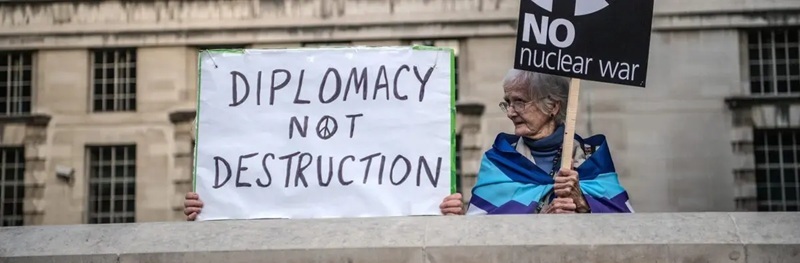
Europe has absolutely no interest in a diplomatic settlement with Russia, despite the harm it causes to itself by the war’s continuance in Ukraine. Because Europe is locked in “anti-diplomacy”.
As it relates to the Ukraine war there is an underlying and sometimes stated assumption here too, including in the mainstream media, that eventual war with Russia is inevitable, and that Ukraine is buying time for Europe to rearm.
the situation gets ever more dire for Ukraine, European leaders still insist that Ukraine is winning and just a few more weapons and a few more tens of billions will do the trick.
Don’t expect the war in Ukraine to end anytime soon
Ian Proud, May 05, 2026, https://thepeacemonger.substack.com/p/anti-diplomacy-rules-in-europe?utm_source=post-email-title&publication_id=3221990&post_id=196537738&utm_campaign=email-post-title&isFreemail=true&r=1ise1&triedRedirect=true&utm_medium=email
I have said for a long time that the war in Ukraine will continue into 2027. Without a major rethink of policy on the European side, which currently appears extremely unlikely, or without a significant military escalation from the Russian side, which is possibly more likely, the war could in fact run on much longer than that.
I remain extremely pessimistic of there being any policy change on the European side under the current leadership of Von der Leyen with Merz in charge in Berlin, Macron in charge in Paris and Starmer in charge in London.
The main reason is that the European position towards the war has remained unchanged since its beginning. Arguably it has hardened with the plans to remilitarise Europe. The current posture rests on their being no negotiations and no concessions towards Russia, even in spite of US led efforts under Trump to broker peace, which the European side has sought to derail at every turn.
I call this approach ‘anti-diplomacy’ in which negotiations themselves are viewed as a prize and are withheld for fear of rewarding the adversary, in this case Russia.
As it relates to the Ukraine war there is an underlying and sometimes stated assumption here too, including in the mainstream media, that eventual war with Russia is inevitable, and that Ukraine is buying time for Europe to rearm.
At the frontline of Europe’s ‘anti-diplomacy’ is its arch ‘anti-diplomat’, Kaja Kallas, who appears to have no diplomatic skills, or at least not outside of the committee rooms of Brussels, where she appears remarkably effective in herding the cats.
Her most recent reassertion of ‘anti-diplomacy’ happened last week when she said that the EU shouldn’t “beg” to talk to the Russians.
“What we have seen so far is that Russia does not want to engage in any kind of dialogue,” Kallas said after a Nordic-Baltic ministerial meeting. “We should not humiliate ourselves by being the demanders — you know, we beg you to talk to us.” Instead, she said, the goal must be to push Russia “from pretending to negotiate to actually negotiate.”
This was the most bizarre statement for several reasons.
Firstly, Russia has shown itself willing to engage in dialogue. Immediately after the war started in March/April 2022 when a peace deal was almost reached in Istanbul, before it was scotched by Boris Johnson and Victoria Nuland. During talks in Istanbul in the summer of 2025 after Trump came to power. In Putin’s meeting with Trump in Alaska which led to some sort of understanding of what Russia’s demands were. In direct talks with between the Russian and Ukrainian side in late 2025 and early 2026.
Russia’s participation in negotiations was neither demanded nor begged for.
Objectively, European politicians, through ‘anti-diplomacy’, have been unwilling to enter into negotiations with Russia at any point since the war started. After the Alaska talks, Ursula von der Leyen said there was no intent in Moscow to engage in peace talks, even after Putin had held talks with Trump, which was bizarre but also familiar, given the frequency with which this line is trotted out in Brussels and elsewhere across Europe.
Ten months after the war started, Joe Biden said he would only talk to Putin if Russia showed real intent to end the war, in other words, the US would not enter into talks unless Russia agreed to every western demand without securing any concessions including on NATO membership.
In December, Macron said that Europe will need to engage with Putin though that offer went nowhere amid infighting in Brussels around who should be the European representative in Putative talks.
Keir Starmer has said several times that he has no plans to talk to Putin, indeed, the Uk said that it would not enter into talks with Russia even if Europe did.
So, this “anti-diplomacy”, pushed by Ukraine’s western sponsors in which not talking to Russia is the norm, is established and fairly set in stone. In fact, it was first initiated by the UK Foreign Office in the summer of 2014, after Philip Hammond became foreign secretary. Twelve years down the track, the Europeans have adopted this approach lock stock and smoking missile launcher, and now own it.
More recently, Belgian Prime Minister Bart de Wever has suggested talks with Russia and absolutely nothing has happened.
So, looking back at Kallas’ statement you can see how absurd it is.
Firstly, it is absurd in its suggestion that Europe might “beg” Russia for peace talks. Europe has done everything in it power to avoid talks. If von der Leyen, Merz, Macron, Starmer, or any combination suggested talks with Russia, I believe Putin would agree to that. All the evidence of the talks that have taken place so far, brokered by the US, suggest that is so.
Indeed, throughout the war, there have been ongoing Russia-Ukrainian talks about practical issues such as prisoner and body swaps, and also on the reunification of displaced children with their Ukrainian parents.
A key principle of talks is the need to discuss areas of disagreement and search for ways to find compromise that will be acceptable to both sides and which both sides can agree to. And when I say both sides, I mean just that, both the Russian side and the Ukrainian side. Any peace deal will have to leave both countries feeling safer than they did before the war, and confident that war won’t resume again.
A popular misinformation line in Europe’s “anti-diplomacy” has been that Ukraine must not be left out of talks. And yet, when has Ukraine ever been left out of talks since the war began?
The pathology of European diplomacy has descended into holding countless Summits and meetings about peace that Zelensky attends, but to which the other combatant in the conflict – Russia – is not included.
This summitry serves not to resolve differences between Russia and Ukraine and search for common ground, but rather to reinforce the Ukrainian position as the only right and just position that should not be resiled from.
These summits are intended to avoid any possibility of compromise on Ukraine’s side and to insist on total compromise from the Russian side. As I’ve said before, Zelensky’s permanent star billing at these events allows him to own the narrative that Russia isn’t interested in peace and that only by supporting Ukraine with more funding and weapons, can peace be achieved.
One meeting between Putin and Trump, however, provoked a cacophony about Zelensky being excluded, yet this, too, is nonsense, as Trump has met him on several occasions.
Diplomatic negotiations aren’t about friendship they are about dispute resolution. They are not about favouring one side over another side. A single meeting does not confer legitimacy. It just confirms that there are important things to be discussed.
Europe’s “anti-diplomacy” has created a vacuum which, until Trump came to power, US leaders and now, European and British leaders filled with money and weapons. They didn’t fill it, by the way, with troops, preferring to let Zelensky fight to the last Ukrainian, so the Poles, Germans, French, Italians and sparse ranks of Tommies could be spared.
This is what I have described many times as the neither war nor peace posture of the British and Europeans. They don’t want a direct war with Russia, neither do they want peace with Russia, and so proxy war has become the preferred policy fudge whatever the cost in Ukrainian lives and livelihoods, not to mention Ukraine’s catastrophic depopulation and demographic cliff edge.
What is absolutely clear, is that funding Ukraine and giving it more weapons isn’t intended at resolving Ukraine’s dispute with Russia.
Many will say, of course, that if we don’t give Ukraine weapons, then Russia will take over the whole country. But no evidence is ever provided that Russia’s goal in entering this was really to conquer the whole of Ukraine, rather than to prevent the possibility of Ukraine being used as another NATO client state on Russia’s border.
Right at the start of the war, the first round of peace talks in Istanbul seemed to reach a point where Russia and Ukraine could agree to the conditions for the war to be brought to a close. That included Ukrainian neutrality and non-membership of NATO and an acceptance that Ukraine could join the EU.
So, having captured much less land than Russia occupies today, the Russian side was willing to sue for peace and pull its troops back from the north of Kyiv as a confidence building measure.
Organisations such as the Institute for the Study of War in DC, run by Victoria Nuland, has since claimed that the agreement was a surrender of Ukrainian sovereignty.
Yet, I don’t believe the first Istanbul deal would have been a surrender of Ukrainian sovereignty, but rather a guarantee of its future neutrality a neutrality, by the way, which would have allowed for a slow – and let’s be honest it may take a generation if it ever happens – normalisation of relations with Russia.
We now know, of course, that Victoria Nuland encouraged Zelensky not to take the deal. But the point is that both the Ukrainian and Russian negotiation teams believed that it was a deal that both countries could live with in the interests of ending the war.
That is how diplomacy works. Two sides with vastly opposing positions undertake tough negotiations to hammer out a framework that both can live with recognising that, absent a decisive military victory by one side, some compromise will have to be made.
Here we bring in the second aspect of “anti-diplomat” Kallas’ statement.
The goal must be to push Russia “from pretending to negotiate to actually negotiate.”
If you consider this statement carefully, I don’t understand what is meant by “pretending” to negotiate. Russia has been negotiating and a whole host of prisoner swaps, body swaps and children reunifications have happened at different times.
It also raises the question, actually, to negotiate with whom? Because Russia has been negotiating with Ukraine in circumstances where European leaders refused to engage with Russia in negotiations. There has been no pretence on the European side, they have not wanted either to pretend to, or, actually to negotiate.
And it is clear from Kallas’s rhetoric that pushing Russia to actually negotiate means insisting that Russia simply accepts Europe’s demands for how peace should be restored to Ukraine, with no Russian conditions being met in any settlement.
This, again, is clearly absurd, because Russia occupies 20% of Ukraine’s land – whatever the rights and wrongs of that situation – and has the funds to sustain the war for the foreseeable future, a position that Europe does not occupy. If the intention is to pressure Russia to end the war then that itself implies a negotiation that has not been offered by Europe and does not appear to be wanted by Europe.
Because any negotiation will inevitably lead to some concessions being offered to Russia that will allow Putin to settle and be able to show to his people that the four years of devastation was worth it in some way.
Kaja Kallas on the other hand has over the past year made wild demands that peace in Ukraine will only be possible if Russia fully withdraws from Ukraine back to the 1991 borders, pays full war reparations for all the damage caused to Ukraine, while leaving the door open to Ukraine joining NATO.
It may seem obvious to point this out, but Russia will never agree to this. If Russia was losing badly, then the situation might be different. If Russia was losing badly, perhaps Europe might prefer to maintain the war to inflict a much talked about strategic defeat on Russia. But neither of these scenarios have ever appeared even remotely likely.
So, the cold reality boils down to Europe doing everything in their power to avoid the possibility of such diplomatic negotiations that might result in an agreement between Russia and Ukraine that was markedly weaker than the maximalist calls they have been making since the war began.
And, unfortunately, the longer the war continues, the more solidified this position is becoming in Brussels.
Why? Because a peace deal with Russia will amount to a PR disaster for Europe.
Why? Because since the start of the war, European leaders to a person have been saying that Ukraine will win, and that the situation isn’t as bad as portrayed.
That position is relentlessly reinforced by the western mainstream media who insist that Russia is collapsing and that, ultimately, Ukraine will prevail.
This has never looked remotely true to any independent observer who looks at evidence of economic collapse, troops losses and territorial gains. Yet it is an unshakeable narrative punctuated just occasionally, by the odd voice who raises a hand only to be slapped down immediately, like the Punch and Judy crocodile.
Ukraine not winning will make citizens across Europe ask why they were lied to for all this time.
Read more: “Anti-diplomacy” rules in EuropeSince the war has started, citizens have been sanctioned, and in some cases had their citizenship revoked, naysayers are summarily detained at British airports and interrogated if they disagree, elections are rigged in Central European nations, lawfare is used in France against the political party with the largest share of public support, all because they disagree with this narrative.
And you need to understand something here too.
When the anti-diplomat Kaja Kallas holds another presser in yet another expensive designer dress or coat, she isn’t doing so to impart truth, she is doing so to gain attention.
She is safe and democratically uncontested – or rather, undemocratically uncontested – in her job at least until 2029 so she can say what she wants with the mainstream media hanging on her every word and reporting it verbatim as if it is truth.
I don’t know how many politicians in the foreign policy space you’ve met, but I’ve met a lot and I can tell you one thing, they love to cut a dash on the world stage. Starmer is another terrible example but then, in fairness, Boris Johnson and Liz Truss were dreadful examples too.
Being right is entirely incidental to being right in front of the camera particularly, in Boris’ case, if the reporter is a bit of a filly.
So, the point is, it is far harder to bullshit when it comes to domestic policy. If the NHS is crap, if rats are taking over Birmingham, if innocent kids are being killed with zombie knives in London because the police are too timid to stop and searching sketchy looking youngsters, if young girls are being gang raped, then these are political stories that a British politician can’t ignore.
When it comes to foreign policy, they have a greater free reign to say what they want because most citizens are first and foremost concerned with basic survival and raising their kids and couldn’t really care that much about the situation in Ukraine. Except when it hits their bank balances, in which case the mainstream media will tell them it is Putin’s fault and we have to defeat him and we will defeat him because Ukraine is winning.
What happens, though, when he isn’t defeated? Suddenly, Ukraine becomes like a giant rat clambering over an uncollected bin bag in Birmingham or a yobbo walking away from a crime scene with a parent in tears over their murdered schoolchild. People will ask, hold on a minute, you said this wasn’t going to happen and that you were going to sort things out. You lied to us.
So, “anti-diplomacy” is held aloft by those like Kallas who are trapped by a dread fear of being revealed as bare faced liars and narcissists who kept a war going because they wanted more time in front of the cameras to shake their booty on the world stage and show how tough they were.
Because, you see the problem isn’t just that Ukraine isn’t winning and isn’t going to win, the problem is that Europe’s leaders are now making increasingly poverty stricken European citizens pay for Ukraine not to win. All the while Zelensky’s corrupt cronies steal hundreds of millions of dollars in western aid provided, and while ever more brutal tactics are used to drag unwilling young Ukrainian men to the front line – almost never reported by the mainstream media.
While the situation gets ever more dire for Ukraine, European leaders still insist that Ukraine is winning and just a few more weapons and a few more tens of billions will do the trick. Except that it won’t. It will just make us poorer and less safe.
And when I say poorer, peace will be devastating politically to European leaders who have merrily watched their economies tip into deindustrialisation, even before Trump’s war against Iran started. The cost of supporting Ukraine may just as likely go up after the war ends. And the self-harming, de-industrialisation inducing sanctions against Russia will probably remain.
Why have European economies tipped into deindustrialisation? Because, and I have said more times than I care to remember, Europe has chosen as an article to policy to absorb high energy costs to cut off hundreds of billions of Euros which in the past would have been paid to Russia, as a major supplier of oil and gas.
Again, that gamble may have been worthwhile had it worked. Europe’s leaders haven’t explained the cause of their cost of living crises to their citizens as yet. But had Russia buckled economically, pulled out of Ukraine, paid full war reparations to Ukraine then Europe’s leaders would have been able to sell the line to their voters that this was a necessary pain to defeat Russia in Ukraine.
Except that manifestly hasn’t happened. Russia has earned more from oil and gas in the four years since war started than in the four years before war commenced. It has simply sold it to China and India instead.
Yes, economic growth slowed to 1% in 2025 in Russia as the Central Bank sought to bear down on high inflation. But at the same time, growth in Germany was 0.2%, in Italy, 0.5% and in France 0.8%. German debt 63.5% of GDP, France 115% of GDP and Italy 137% of GDP. Russian debt is less than 20% of GDP. Unemployment in Germany 6.3%, in France 7.9% and in Italy 5.5% compared to 2.2% in Russia.
Russia has had to spend more to fund the war in Ukraine, yet its fiscal deficit is still lower than Germany, France and Italy. Europe can only fund the war in Ukraine by borrowing money to lend it to Ukraine. Russia has vast and growing reserve funds from its yearly current account surpluses that it can largely fund the war with little recourse to borrowing.
Russia is the most sanctioned economy on the planet and yet no one seems able to ask why it appears to be performing better than all of Europe’s biggest economies on key economic variables. These are observable facts, taken from data provided by the governments of each country. And before you say it, Russia maintains as high quality statistical standards as Europe.
The point is that Europe’s self-inflicted economic plight has been justified on the basis that it is in the interests of weakening Russia and helping Ukraine to win.
Yet that hasn’t happened. Which raises the question, why not revisit foreign policy towards Russia? Which takes us back to the start of this discussion. Europe has absolutely no interest in a diplomatic settlement with Russia, despite the harm it causes to itself by the war’s continuance in Ukraine. Because Europe is locked in “anti-diplomacy”.
This is hairbrained and yet, as no one in Brussels has been elected to office and as they live off the power trip of being putatively in charge of Europe, it comes as no surprise. What comes as a greater surprise is that the Germans, the French, the Italians and also, of course, the Brits, continue along this fruitless avenue.
The obvious solution, especially since Trump launched his war against Iran, should be to import cheap Russian energy to boost Europe’s economies.
If the war against Iran ended, a more diversified European import mix that included Russian energy would undoubtedly drive down energy prices across Europe.
If the war against Iran continues, Europe’s economic woes will get much worse if they maintain the embargo against Russia, at a time when Russia will profit massively from hugely inflated global energy prices. Lifting the embargo on Russian energy would at least help to moderate the economic damage caused by Trump’s war. Yet that, predictably, seems unlikely.
In fact, I see zero chance of this change in policy position taking place. Anti-diplomats like Kallas are too invested in the status quo and their political futures depend on the war’s continuance, given the devastating impact on their reputations if it ends.
That means Ukraine has been given another 90 billion Euro loan, which the Eurocrats themselves had to borrow to give to them. If the war continues beyond 2027, then a further multibillion loan will follow.
But just imagine if, instead of putting those billions into war, European countries got behind peace in Ukraine and also offered billions to rebuild their country and their economy? How much better off would Ukraine be today if, since 2014, Europe had got behind the Minsk II agreement, told the USA and Victoria Nuland to go away, and settled on peaceable relations with Russia?
How much easier would it be for European citizens to thrive in their countries if their governments were spending money on public services and not war?
How many factories in Europe might survive closure if Europe started buying lower cost Russian energy again?
How many lives would be saved in Ukraine and in Russia if the war ended tomorrow?
How many cities would be able to start to rebuild if the missile and drones stopped flying?
You know the answers to these rhetorical questions, of course.
Yet the anti-diplomats in charge do not or, if they do, are too focussed on clinging on to power prestige and status to admit it.
Europe desperately needs diplomats and states people who put the needs of their citizens first. Right now, you will not find them in Brussels, London, Paris or Berlin. Anyone who votes for globalist liberals in elections coming up over the coming three years is voting for a war with Russia in the future. It’s time for everyone to vote these warmongers out of power at every opportunity and to protest where they can, and to join a growing community of peacemongers worldwide.Subscribe
The UK Descends Into Confected Antisemitism Hysteria
Nate Bear, Do Not Panic May 05, 2026
The UK has descended into confected hysteria over antisemitism to protect Keir Starmer and Labour from being wiped out by the Greens in local elections this week.
The British establishment is well-practiced in manufacturing antisemitism hysteria, of course, having used it to destroy Jeremy Corbyn’s Labour Party when it got too close to power.
Now the UK’s political and media establishment is trying to pull the same trick, but this time on the Green Party and its Jewish leader, Zack Polanski.
This fresh round of hysteria really ramped up after a man with a history of mental illness (and of stabbings) stabbed two Jews in north London last week. Neither died and both will live. Omitted from almost all state-corporate media coverage was the fact that he also stabbed a third man, a Muslim. Also omitted was his history of stabbings (he previously stabbed his own dog, a Somali man, and two police officers), and his history of psychotic breaks.
Despite the circumstances clearly pointing to random attacks by a person suffering an acute mental episode, the police treated it not just as a planned antisemitic attack, but as terrorism.
The terrorism threat level in the UK was raised to severe.
I remember when terrorism used to mean car bombs, political goals, manifestos and scores of dead people, not a mentally disabled man with a butter knife scratching a few people.
But the attack was perfect fodder for the British media and political establishment, who blamed support for Palestine and opposition to genocide for enabling antisemitism, and instantly began demanding pro-Palestine protests were fully outlawed.
The environment of hysteria that ensued is hard to describe if you don’t follow British media or politics closely, but it has been extraordinary.
Keir Starmer gave a primetime televised address to the nation.
His speech was a complete misrepresentation of the facts of the case, completely omitting the Muslim victim, completely omitting the man’s history of illness and random stabbing attacks. But they were deliberate lies of omission critical to constructing an antisemitism narrative.
And it worked.
Every headline, every news broadcast for a week led with the story about ‘the antisemitism crisis in Britain.’
I remember when terrorism used to mean something. I also remember when antisemitism used to mean something. And implying all Jews support the actions of Israel used to be considered antisemitic.
But now that’s all anyone with political or media power does.
Starmer said that anti-genocide, pro-Palestine protests have created the environment for antisemitic attacks. The Green Party’s opposition to Israel’s genocide, the media said, has fuelled antisemitism. The Guardian had a story on the Green Party’s ‘struggle against antisemitism,’ a story which presumably included how just eight months ago the entire Green Party membership antisemitically elected a Jewish leader.
And when you deconstruct the logical conclusions behind the implication that Jews are being attacked because of what Israel has done, it will break your brain.
Firstly the implication that Jews are attacked because of Israel, not because of their religion, means Israel represents all Jewish sentiment……………………………….
We’ve reached the point where everything is antisemitism apart from the thing that is actually antisemitism.
And this is because the Zionists have lost the propaganda war. Genocide is not going back in the bottle. Everyone sees what Israel has done. Everyone can now see what Israel is: a genocidal settler-colony apartheid state run by ethno-supremacists.
The deliberate conflation of antisemitism and anti-Zionism then is intended to silence criticism of Israel, and erase the truth about what Israel is and has done.
It’s also intended to stop the Green Party inflicting a humiliating defeat on Keir Starmer and his Labour Party in local elections this week.
The establishment calculation is that if you can establish in the mind of progressives the idea that a vote for the Greens is actually a vote for hate, not a vote against genocide or apartheid, you can stop Labour bleeding leftist votes to the Greens.
If the Zionist establishment can reestablish that black is white, they think they have a chance.
But it goes even deeper than that.
The UK establishment aren’t just using the attack for rhetorical purposes, they are using it to actually get Green Party election candidates arrested.
Andrew Gilligan, a former adviser to Boris Johnson and Rishi Sunak, and now a right-wing journalist, wrote a story about two Green Party candidates Saiqa Ali and Sabine Mairey who he said had made ‘antisemitic’ posts. Last week, he gloated that following his stories, they’d both been arrested…………………………………………………
Three people are stabbed every day in London. Over one thousand people a year, of all religions and none.
None of these ever warrant a national prime ministerial TV address.
Twenty-seven mosques in the UK were attacked between July and October last year.
No extra security funding (Starmer has promised an extra £25 million for Jewish areas). No discourse about Islamophobia. Just tumbleweed.
But a random attack on two Jews gets the full national psychodrama treatment because it can be so usefully weaponised to serve the interests of Zionism.
Are people going to fall for this?
I don’t think so.
Is Zack Polanski going to fall for this after seeing what happened to Corbyn?
Hopefully not.
We have more than enough evidence by now to know that you can never appease Zionists.
There is no middle-ground, no strategy of accommodation.
Any concession is interpreted as a sign of weakness. As Corbyn showed us, once they’ve drawn blood, they’ll bleed you dry.
The only anti-Zionist strategy that makes any sense is one of full confrontation.
The only route to victory is their full defeat. https://www.donotpanic.news/p/the-uk-descends-into-confected-antisemitism
DAYS 53-65: World on the Brink in the Hands of a Madman
“We’re talking about a few people led by a delusional old man who never was very good at anything but is very bad at this. … So there’s no process. This is a case where an individual can make decisions.
Netanyahu is his own case. He’s a very, very dark pathological figure. … This is what we have. We do not have either rational leadership or a rational process in I think either country, the U.S. or Israel. …Actually both countries add a strain of religious zealotry which is also pretty strange.”
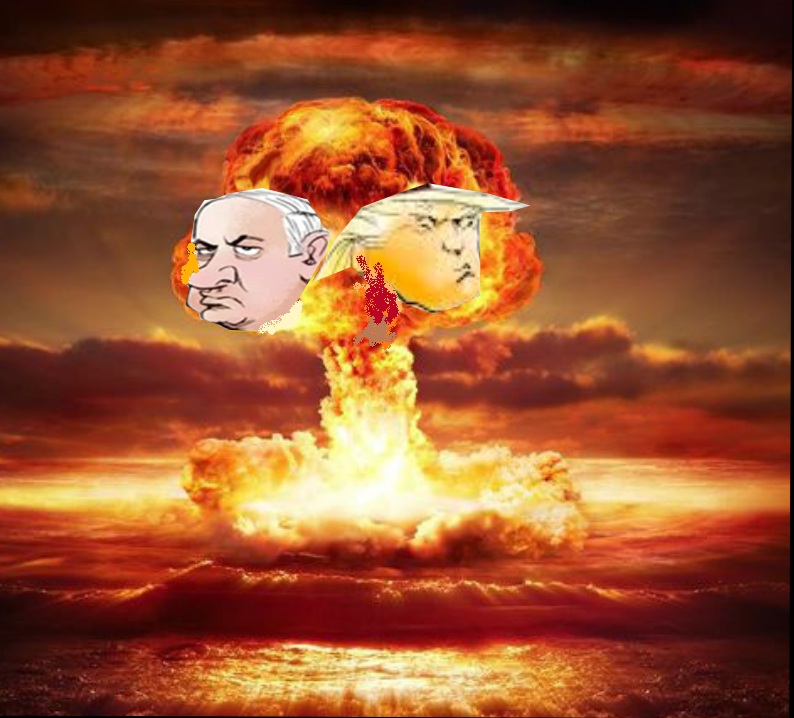
One crazed man holds the fate of the world in his hands and his name is Donald Trump. Can his administration, the Deep State, the War Powers Act, Russia or anybody else stop him? asks Joe Lauria
By Joe Lauria, Consortium News, May 4, 2026, https://consortiumnews.com/2026/05/04/days-53-65-world-on-the-brink-in-the-hands-of-a-madman/
Donald Trump “indefinitely” extended the ceasefire with Iran on April 21 and over the last 12 days the certifiable man in the White House has vacillated between words of peace and threats of all out war as he stands alone on the brink of a decision that could end the world as we know it for the foreseeable future.
Under unrelenting pressure from Israel to restart the war with with Tehran, Trump holds almost unprecedented individual power to unleash a series of events that could bring the world economic system to a crashing halt.
To those armchair warriors who think they are smarter than everyone else and ridicule anyone who thinks the American president sometimes actually runs the show and isn’t always subject to the wiles of the Deep State, consider what economist Jeffrey Sachs has to say about it.
Former British MP and TV host George Galloway asked him on Sunday: “If there is a war, it seems to rest on the tortured, fevered speculation and social media ramblings and so on of one individual. How can that be?”
Sachs responded:
“Do individuals make a difference? Well, when there are systems, the answer is no, not so much. But we have completely broken all rational systems in the United States. And by that I mean the actual processes of decision are quite exposed right now and they rest with Trump. It’s weird. But it’s not an exaggeration.”
At a White House meeting on Feb. 11, Israeli Prime Minister and Mossad Director David Barnea on video hook-up sold Trump on attacking Iran. Netanyahu later admitted he had been trying to convince American presidents for 40 years to do that. They had all disagreed because their advisors explained what would happen: Iran would fight back, striking Israel, U.S. bases and its allies in the Gulf and closing the Strait of Hormuz — exactly what has now happened.
“Trump was fool enough to to buy it or to go along with it given his range of pressure points and interests and delusions,” said Sachs. “Everyone else in this small room basically thought it was nuts except for [Defense Secretary Pete] Hegseth who’s an absolute blooming idiot right alongside Trump.”
The New York Times reported that none of Trump’s aides in the room spoke up at the time, but afterward told the newspaper they thought the Israelis were selling the delusion that the Iranian government would collapse in days. Secretary of State Marco Rubio was quoted as saying the Israeli pitch was “bullshit.”
“We’re not talking about an interagency process,” said Sachs. “We’re not talking about intelligence estimates. We’re not talking about a plan. We’re not talking about the president of the United States consulting with congressional leaders. We’re not talking about American public opinion, which runs overwhelmingly against everything that is happening.”
He said:
“We’re talking about a few people led by a delusional old man who never was very good at anything but is very bad at this. … So there’s no process. This is a case where an individual can make decisions. Netanyahu is his own case. He’s a very, very dark pathological figure. … This is what we have. We do not have either rational leadership or a rational process in I think either country, the U.S. or Israel. …Actually both countries add a strain of religious zealotry which is also pretty strange.”
Deep State Efforts
After the Deep State tried to destroy Trump’s first presidency by interfering illegally in domestic U.S. politics in the scandal known as Russiagate, Trump put together for the second term an administration of sycophants who won’t oppose him like John Bolton, Jim Mattis and Gen. Mark Miley, did in the first. (Bolton would certainly be on board for regime change in Iran.)
So this most consequential decision is up to one, very unstable man. Relaunching the war would invite vowed Iranian retaliation against energy installations throughout the Gulf, plunging the world into an economic dark age.
In trying to decide what to do, Trump may very well be calculating whether he will personally make a profit as he acts the part of the quintessential American businessman: profits über alles … (as I discussed today in my interview with Regis Tremblay.)
Trump is under considerable Israeli pressure to resume the bombing and risk catastrophe.
Miriam Adelson, Trump’s billionaire Israeli donor, was rumored to have been back at the White House to push war on Trump. Israeli Defense Minister Israel Katz last week said in a chilling video that Israel is “waiting for a green light from the U.S.” because “Israel is ready to renew the war against Iran … to return Iran to the dark and stone age by blowing up the central electric power facilities and crushing the national infrastructure.”
Katz complained: “We did not ask for a ceasefire, we were never looking for a ceasefire. … I want to emphasize that we will not abandon this field until the aggressor is seriously punished and until he finally repents.” Extraordinary that he called Iran the aggressor and in religious terms.
Afterward, Trump posted a picture of himself holding a machine gun in front of an exploding battlefield with the words, “No more mr nice guy….”
Can He Be Stopped?
A couple of weeks ago Galloway said that if a British prime minister had posted images of himself as Jesus Christ and in the next moment threatened a genocidal destruction of Iran’s civilization, men in white coats would be at No. 10 the next morning to remove him. Why is this not happening in America?
In a parliamentary system a British prime minister’s own party would in this case agree with a vote of no-confidence, the government would collapse, a new party leader and prime minister would be chosen and that would be the end of it.
In the American system, removing the leader, who is both head of government and head of state, is exceedingly difficult. The only options are impeachment and conviction, or an invocation of the 25th Amendment. Perhaps that’s what motivated Cole Allen, given the stakes and the unusual power in the hands of an unstable president.
The War Powers Act
The 1973 War Powers Act, which gives a U.S. president 60 days to start a war before Congress can end it, can’t seem to stop Trump either. Hegseth and Trump tried to deceive Congress into believing Trump “terminated” the war and that he’s waging only an economic blockade in order to beat the 60-day deadline in the War Powers Act.
Trump told Congress in a letter on the deadline day last Friday that “there has been no exchange in fire between United States forces and Iran” since April 7, meaning that the hostilities he began on Feb. 28 “have terminated.”
Regarding the need for Congress to either authorize the war, or he must end it, Trump said: “I don’t think that it’s constitutional, what they are asking for.” He said the U.S. is on its way to “a big victory” in Iran. “These are not patriotic people that are asking.”
If he restarts hostilities he may argue he’s started a new war with a fresh 60 days. Does Congress have the guts to call him out?
A Grand Bargain?
Russia is making its bid to prevent Trump from restarting the war. In a 90-minute call to Trump last week, Russian President Vladimir Putin warned that resumed military action by the U.S. and Israel would have “inevitable and extremely damaging consequences.”
Trump told reporters that Putin “likes to be involved” and that he offered to take Iran’s 60 percent enriched uranium. Trump said he told Putin to focus on ending the war in Ukraine first. Trump said the two wars in Ukraine and Iran could potentially end on a “similar timetable.”
On Consortium News’s Saturday evening program The World This Week, analyst Scott Ritter suggested that Putin may be offering Trump a grand bargain to solve both wars. Russia would save Trump from the Iran trap by taking the uranium and in exchange Trump would accede to Russian terms to end the war in Ukraine.
Presuming such an offer was made, it would not resolve the issue of the hold Netanyahu has over Trump, very possibly because Israel in all likelihood owns a copy of the unredacted Epstein files and videos, which could well incriminate Trump.
There would also be the matter of getting the fiercely Russophobic Europeans, chief among them Britain, to go along with a deal in Ukraine that would favor Russia. While Trump ridicules Prime Minister Keir Starmer, he reveres the king. He looks into the king’s eyes and appears to see another one.
Charles Butts In
On the same day Trump spoke to Putin, King Charles III was at the U.S. Capitol addressing a joint session of Congress. At one point the king essentially spoke about preparing for war against Russia.
He said Britain was “committed to the biggest sustained increase in defense spending since the Cold War.” He spoke of the U.S. and Britain standing “shoulder to shoulder, through two World Wars, the Cold War, Afghanistan and moments that have defined our shared security. … that same, unyielding resolve is needed for the defense of Ukraine and her most courageous people.”
He praised NATO for keeping North Americans and Europeans safe from “our common adversaries.” And then he praised the two most important of the Five Eyes. “Our defense, intelligence and security ties are hard-wired together through relationships measured not in years, but in decades,” he said.
Despite being mesmerized by the crown, Trump apparently didn’t get the message about keeping the pressure on Russia. Two days later he pulled 5,000 U.S. troops out of Germany in a fit of pique after German Chancellor Frederic Merz accurately said Iran had “humiliated” the United States.
It is that humiliation of having lost the first phase of this war that could indeed be a chief factor in Trump being reckless enough to restart it.
Nuclear Sector Must Step Up Cybersecurity

The nuclear industry is weak on cyber security, says a policy institute analysis. To respond, the sector has to take a more transparent and collaborative approach – and speed up action on improvement
Staff Writer NS ENERGY, 4th May 2026
THE ROYAL INSTITUTE OF INTERNATIONAL Affairs (a UK policy institute colloquially known as ‘Chatham House’) has described the nuclear industry’s status on cybersecurity as “playing catch-up”. It has warned that “the nature of licensing systems for nuclear operators means that long periods of risky working practices are often tolerated”. As an example, it highlighted the UK’s Sellafield fuel cycle site, which pleaded guilty in June 2024 to criminal charges that related to gaps in its cybersecurity between 2019 and 2023. The site had been repeatedly flagged in inspections by the UK Office for Nuclear Regulation (ONR), which warned it would apply ‘enhanced regulatory attention’ to cybersecurity practices.
The Royal Institute of International Affairs (RIIA) warning came in a report, ‘Cybersecurity of the civil nuclear sector’ that considered the threat landscape and the international legal framework for cybersecurity as it applies to the nuclear industry. The group examined the issue because it saw the civil nuclear industry expanding worldwide at the same time as cyber threats are evolving, and because cyber operations targeting civil nuclear systems have been reported worldwide…………………………………………………………………………
Playing catch-up
RIIA says that the nuclear sector lacks a comprehensive understanding of the threat landscape around cybersecurity and effective resilience strategies.
Vulnerabilities arise from technical and non-technical factors, including the use of older software, personnel being targeted and the lack of sufficient sector-wide awareness and collaboration. Cyber incidents can also occur accidentally as a result of existing vulnerabilities in commercial software. These vulnerabilities include: entry points such as inadequate IT infrastructure maintenance; missing patches and updates; unsafe working practices such as connection to unprotected networks; the use of portable storage devices; legacy systems; and inadequate data protection. The report says, “this range of potential threats makes it doubly essential to ensure fundamentally secure working practices, as it is very difficult to identify and protect against every individual vulnerability”.
The authors say “the nuclear industry was a comparatively late starter” on cybersecurity, compared with other industries associated with critical national infrastructure or sectors such as finance. They add that “the nuclear industry’s strong pre-existing physical security, and its use of bespoke or uncommon industrial control software, meant that there was a sense within the sector that all aspects of security were sufficiently covered.” That sense has gone: more systems in nuclear power plants have acquired digital elements, including commercial off-theshelf software solutions and more cyber vulnerabilities have been introduced as a result. This has increasingly left systems and facilities open to attack and, “in some respects, the civil nuclear industry is thus still playing catch-up”.
The group also says that another challenge to realising cyber security is that the nuclear industry is isolated from other sectors. It is therefore difficult to exchange experiences of best practice with other industries; instead the exchange is “ad hoc, often informal, and largely based on the personal drive and networks of individuals in cybersecurity roles”. The industry is not transparent about incidents, because it is concerned about revealing information about vulnerabilities and equally concerned about public perception if vulnerabilities are revealed. Regulators typically discuss cybersecurity gaps only with specific operators rather than sharing concerns more widely. The report says, “the nuclear industry’s preoccupation with perceptions can get in the way of transparency, even though stronger disclosures would help to bolster confidence in the safety of working practices”…………………………………………………………
………… SMRs may have more cyber vulnerabilities because they are less bespoke than traditional reactors, are connected to the internet and cannot have sterile ‘air gaps’ where there is no connection, because operators require remote access. They may be “more of a target for opportunistic cybercriminals”. In addition, SMRs will also be vulnerable through the construction supply chain, while using artificial intelligence (AI) could lower the entry barrier for cyberattack by making tools for cyber intrusions more accessible and affordable. Finally, if they are successful there will simply be more SMRs, in more places where cyber criminals can attack…………………………………………………………………………….. https://www.nsenergybusiness.com/analysis/playing-catch-upon-cyber-safety/
Belgian state is not prioritising safety in its nuclear policy.
Bart De Wever surprised friend and foe with the announcement that the
Belgian state wants to take over the entire nuclear park in Belgium from
the French utility company Engie. This change of course is special in
several ways. It is remarkable that a center-right government is
nationalizing energy supplies. And it is extra special that she wants to do
so in times of austerity and concern about a blood-red budget.
But the way
in which the Belgian government is now intervening in the nuclear sector is
really unprecedented. There is no historical precedent for this in Belgium.
The enthusiasm to pump a lot of money into the nuclear industry is clearly
there. But if the reactors become the property of the Belgian state, is
there also similar enthusiasm to invest in expertise on safety, independent
regulations and waste disposal? Such nationalization seems to be less of a
priority under the De Wever government.
De Morgan 2nd May 2026
-
Archives
- October 2026 (120)
- September 2026 (339)
- August 2026 (330)
- July 2026 (355)
- June 2026 (287)
- May 2026 (306)
- April 2026 (356)
- March 2026 (251)
- February 2026 (267)
- January 2026 (308)
- December 2025 (358)
- November 2025 (359)
-
Categories
- 1
- 1 NUCLEAR ISSUES
- business and costs
- climate change
- culture and arts
- ENERGY
- environment
- health
- history
- indigenous issues
- Legal
- marketing of nuclear
- media
- opposition to nuclear
- PERSONAL STORIES
- politics
- politics international
- Religion and ethics
- safety
- secrets,lies and civil liberties
- spinbuster
- technology
- Uranium
- wastes
- weapons and war
- Women
- 2 WORLD
- ACTION
- AFRICA
- Atrocities
- AUSTRALIA
- Christina's notes
- Christina's themes
- culture and arts
- Events
- Fuk 2022
- Fuk 2023
- Fukushima 2017
- Fukushima 2018
- fukushima 2019
- Fukushima 2020
- Fukushima 2021
- general
- global warming
- Humour (God we need it)
- Nuclear
- RARE EARTHS
- Reference
- resources – print
- Resources -audiovicual
- Weekly Newsletter
- World
- World Nuclear
- YouTube
-
RSS
Entries RSS
Comments RSS

