Israel is a sick society: ‘They know the house they are bombing is full of children’
Signs of the Times, (SOTT), Xan Brooks, The Guardian, Sun, 13 Sep 2026
operators. NAZA‘s directors on their devastating film about Israeli intelligence
On a darkened rooftop in Tel Aviv, Israeli intelligence officers outline the details of their work. These men tell us how they helped develop an AI mapping tool that trawled for phone signals and recommended apartment buildings in Gaza to bomb. Indirectly, they admit, they are responsible for thousands of deaths, but they never spoke up because that wasn’t their place. “My role is technical,” says one. “I’m just a small cog,” says another.
NAZA – directed by the Israeli film-makers Rachel Szor and Yuval Abraham and produced by the Guardian – is a chilling documentary about a mass slaughter that was authorised at the highest levels of government. But it is also, primarily, about the process, the system, the little links in the killing chain. Szor and Abraham build their film around the accounts of 24 anonymised military and intelligence insiders. NAZA, we learn, is an acronym used by the intelligence service to indicate how many civilians it expects to die in an airstrike on Gaza. The Israel Defense Forces prefer to target Hamas terrorists in their homes at night – and if they live with their family, or in heavily populated neighbourhoods, too bad. At one point, a source claims, approval was given to kill 500 NAZA for one Hamas member.
I meet Szor and Abraham at the Venice film festival, where NAZA is competing for the Golden Lion award. The pair won an Oscar for their previous documentary, 2024’s No Other Land (co-directed with Basel Adra and Hamdan Ballal), which spotlighted Palestinian resistance in the occupied West Bank. “No Other Land documented horrible crimes,” Abraham says. “But at the same time it gave people … I don’t want to say hope, but some light to latch on to. It’s not a coincidence that this film is all in the dark. We are in a very dark place right now.”
The Gaza health ministry has reported more than 73,000 deaths in three years of Israeli bombardment, the vast majority of which have been civilian casualties. NAZA briefly shows us the rubble, grieving parents, dead children on the ground. Its main backdrop, though, is placid, normal Tel Aviv, just 44 miles to the north, where rush-hour traffic drifts dreamily on the street and the cinematheque is showing a Claude Lanzmann retrospective. Tellingly, the film was executive produced by Jonathan Glazer, the director of The Zone of Interest. Glazer, says Szor, supported the structure and creative approach she and Abraham had adopted, that fostered the sense of a home that sits next door to hell.
NAZA deliberately concerns itself with the system – the policy of mass surveillance, the industrial business of murder – more than the individual psychology of those involved. But presumably its sources must feel guilt and shame, otherwise they’d never have agreed to put their careers and liberty at risk.
Abraham is unconvinced. “Well, it depends which one,” he says. “
There are many motivations for an individual to speak. Some people talk because they feel the opposite of shame. They feel pride in their accomplishment and expertise. Remember that these people serve in sensitive units. They are not often asked what they do. So there is an attraction to [our] curiosity that drives them to speak up.”
The film uncovers a system that is fiendishly efficient.Its series of disconnects appears designed to distance the perpetrators from the crime. Many of these men work remotely from Tel Aviv. AI selects the target and a drone drops the bomb. Even the language feels purposely euphemistic and obfuscatory. NAZA translates as collateral damage, which in turn translates to human beings.
“Sure, it’s easier to kill people when you’re doing it on a screen,” Abraham says.
“There is some truth in that, I guess. But equally it should be said that intelligence officers know the most. They listen to the cellphones. They know the house they are bombing is full of children. They can hear babies crying. They still order another strike.”
What is the status of these men now? Some discuss their work in the past tense. Others don’t, which suggests that they might still be at work, overseeing airstrikes each night. Abraham won’t say; he’s mindful of protecting his sources. “But you can imagine. We are dealing with 24 people, so there is a whole variety of statuses.”
NAZA prompts obvious questions about the creatures of darkness we see on screen. But it prompts intriguing ones, too, about Szor and Abraham, a pair of dissident investigative journalists from the country’s middle class. In the furious, febrile climate of post-7 October Israel, their work is liable to make them pariahs, if not enemies of the state……………………………………………… https://www.sott.net/article/508377-Israel-is-a-sick-society-They-know-the-house-they-are-bombing-is-full-of-children
Ukraine is running out of money again – and the EU is asking questions
14 Sep 2026, https://www.sott.net/article/508403-Ukraine-is-running-out-of-money-again-and-the-EU-is-asking-questions
Ukraine leader Volodymyr ZelenskyOfficials in the bloc are reportedly “unsettled” by Kiev’s defense budget hole ballooning almost fourfold within several months.
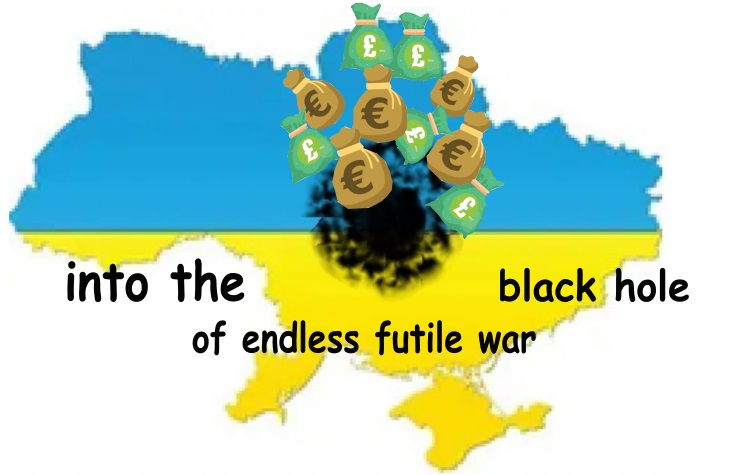
Despite massive Western assistance, Ukraine is facing a severe cash squeeze almost unseen since the escalation of the conflict with Russia in 2022. The immediate problem is a $27 billion hole in the defense budget that Kiev insists must be plugged.
Kiev’s plea for more money “surprised and unsettled” European officials, the New York Times reported on Wednesday, citing sources, with some of Ukraine’s backers said to be asking questions about whether the country is spending the available funds efficiently – or whether it is simply overstating its needs.
What is the problem with Ukraine’s budget?
Ukrainian leader Vladimir Zelensky publicly put a number on the problem as he met with his European backers in Kiev in late August. The Defense Ministry, he said, already used money that was originally allocated for the end of the year, leaving a $27 billion gap. The revelation also came on the heels of Zelensky’s ill-fated 40-day pressure campaign against Russia, which triggered an escalation that Kiev is still suffering from.
Particularly striking was the fact that just weeks earlier, Ukrainian officials estimated the deficit to be $7.5 billion. Kiev has still not accounted for how the hole grew by another $20 billion– or 10% of its 2021 GDP.
Earlier this month, Prime Minister Sergey Koretsky acknowledged “exceptionally difficult challenges,” including the $27 billion defense hole and the risk of losing access to a significant share of a $29.5 billion tranche expected from Kiev’s backers, which is contingent on government reforms.
Finance Minister Sergey Marchenko said:
“We already see some liquidity issues, and Kiev may have to postpone some payments not related to the war. There will be consequences.
“We haven’t had a situation like this since 2022; we really suffered from the shortage of liquidity. Right now, we are getting far too near to the same scenario we had in 2022. We expect a very hard winter due to Russian strikes.”
How has Kiev blown $20 billion more than expected?
Koretsky blamed much of the increase on the rising price of a technology-heavy war. Following Zelensky’s escalation, Russia intensified missile and drone attacks on the Ukrainian defense industry, while Kiev has spent increasingly heavily on drones, air defenses, artillery, and military personnel.
A secondary issue is arising: Kiev failed to deliver promised reforms tied to Western financing that it had already counted on: oversight of state-owned companies, anti-corruption, and tax and customs reforms.
By late August, Ukraine had failed to meet benchmarks linked to $5.6 billion in EU financing, while around $4.3 billion from Brussels and $1.66 billion in IMF funding were delayed. Much of the money can still be unlocked, but doing so means untangling deeply embedded graft, kickback, and corruption chains unwelcome in parliament, where Zelensky no longer even commands a reliable voting majority.
Earnings have also dropped. Ukraine collected around $38 billion in general-fund revenue (excluding grants) from January to August, but a significant part of the $740 million shortfall was accumulated in August. The weakness concentrated in key revenue sectors: domestic and import VAT, domestic excise duties, and profit transfers from state companies.
Daniil Getmantsev, the chairman of parliament’s Finance Committee, warned earlier this month that there are “no popular solutions left,” adding that the failure to fulfill international commitments could ultimately leave the government struggling in October to pay teachers, doctors, and, in the worst case, military personnel.
Is Zelensky personally to blame for the budget hole?
The Ukrainian leader has been apoplectic over crumbling party discipline and parliament’s inability to pass crucial legislation tied to Western financing.
According to Ukrainskaya Pravda, Zelensky was stunned by the true scale of the budget deficit, with subsequent phone calls to deputies responsible for key EU- and IMF-linked legislation reportedly devolving into shouting.
While Zelensky cannot reliably command enough votes in parliament, Yaroslav Zhelezniak, the deputy chairman of the parliament’s Finance Committee,said lawmakers sounded the alarm about the defense budget long before the $27 billion hole became obvious.
He also accused Zelensky’s government of prioritizing politically attractive spending while leaving military financing unresolved and throwing money at a ‘television marathon’, cashback programs, and handouts. Zhelezniak stressed that Zelensky is accountable for budget issues and should take responsibility – instead of acknowledging the issue at the 11th hour.
How have Ukraine’s EU backers reacted?
The EU has attempted to downplayUkraine’s pleas for more money – even refusing to acknowledge the $27 billion figure. After high-level talks on Monday, European Commission spokesman Balazs Ujvari said the first task at hand is to “get a clear picture of what the budgetary and financial situation is,” and that technical discussions with Ukraine and the IMF are required.
Media reports, however, paint a different picture. The NYT reported that European diplomats did not expect anything close to the $27 billion request, adding that questions are being raised behind closed doors over whether Ukraine is spending money efficiently and whether some of its stated needs are exaggerated.
The EU also insisted that reforms cannot simply be skipped because Ukraine is short of cash. While some voices inside the EU have proposed advancing Kiev part of the ongoing €90 billion loan scheduled for 2027, even Ukraine’s deputy prime minister for European integration, Vsevolod Chentsov, acknowledged that frontloading is “not a silver bullet.”
Cash blown in 2026 cannot be spent again in 2027, leaving Ukraine even more vulnerable to further financial pressures.
Are the EU and Kiev running out of options?
On Wednesday, over 100 MEPs circled back to the topic of frozen Russian assets, urging EU leaders to illegally seize $230 billion in the assets for Ukraine’s needs. This option, however, faces formidable resistance from Belgium, home to Euroclear, where the bulk of the assets are held, over committing what is typically regarded as an act of war, fears of Russian litigation, and wider financial and legal risks.
How ubiquitous is corruption in Ukraine under Zelensky?
While it is highly unlikely that corruption alone accounts for Ukraine’s $27 billion budget hole, it still saturates Ukrainian society and government.
Recent scandals include wiretaps from the sprawling Midas investigation, in which the anti-corruption authorities allege that a network involving Zelensky’s former close associate, Timur Mindich, extracted massive kickbacks from the energy sector; separate recordings raised questions about Mindich’s influence over major weapons producer Fire Point.
The graft also fed into an ugly institutional war, in which the Prosecutor General’s Office allegedly gathered material on anti-corruption officials and their families, while anti-graft investigators uncovered an alleged protection racket for Ukraine’s sprawling scam-call-center industry inside the prosecutor’s office.
Bottom Line
While officials in Kiev claim that the $27 billion budget hole is due to rising military costs, stalled legislation, and delays in Western financing, they have not provided a detailed breakdown of how a deficit earlier estimated at $7.5 billion ballooned almost fourfold within several months – specifically during Zelensky’s 40-day military PR campaign that left Ukraine’s logistics chains broken, ports closed, grain stranded, and defenses weakened.
And the gargantuan hole is only half of the problem: It has clearly rattled Kiev Western backers, who are now once again unsure how Ukraine is spending money.
Comment: They left out ‘siphoning for personal gain’ from Europe’s coffers to Ukrainian pockets.
Reactors shut by a handfull of jellyfish

A 900-megawatt reactor on the French coast came off the grid at four in the afternoon and a second one overnight, both shut by hand before returning jellyfish could pack the seawater screens and trip them, and both were back inside four days against twenty for the last swarm
Luis Reyes, Auto Notion 14th Sept 2026
An automatic reactor trip is the safety system doing its job, and it’s arguably the most expensive way to solve a problem. The unit drops off the grid in seconds, and then you spend the next several days walking it back up to full power while somebody writes the report explaining why.
So when the jellyfish came back to Gravelines in late August, nobody at the plant sat around waiting for that. At about four in the afternoon on Wednesday, August 26, local time, the crew shut unit 3 down themselves and dialed unit 2 back while they were at it. Overnight they did the same thing to unit 6 and reduced unit 1 too. EDF says it’s all preventive.
So you had a 5,400-megawatt site with nothing running at full power. Units 3 and 6 were off, units 1 and 2 were loafing along at reduced output, unit 4 had been down since August 10, and unit 5 was partway through its ten-year inspection.
If that sounds like a first for Western Europe’s largest nuclear plant, it isn’t.
The same site went to zero output for about ten days last August, and during the first swarm this month the last reactor still running flat out got throttled as well. What’s new is who pushed the button. It’s also been that kind of summer for the operator, which has already spent it idling inland reactors because the rivers beside them ran too warm.
Gravelines drinks the North Sea
If you’ve never looked at how a coastal plant gets its cooling water, it’s simpler than you’d expect. Gravelines doesn’t sit on a river. It pulls seawater from a canal connected to the North Sea, and everything that water carries hits two stages of screening before it reaches the condensers: coarse bar screens at the front, which EDF calls prégrilles, and rotating drum filters behind them. Pack those drums and the flow drops. Let it drop far enough and the protection system takes the unit off the grid for you, ready or not.
So why not let them trip?
A trip is a hard stop. Control rods drop, steam gets dumped, and the plant has to be checked over and lined back up before anyone talks about restarting. Taking a unit down on purpose gets you to the same place more slowly and leaves a shorter list of things to look at afterward. EDF hasn’t spelled that reasoning out, so I’m inferring it, but the restart times back it up.
Unit 3 gives the cleanest comparison, because it went down in both swarms for the same reason. On August 10 it tripped itself at 7:43 in the evening and didn’t come back until 3:55 in the morning on August 18, a bit over seven days. On August 26 the crew took it down deliberately and it was back at 2 a.m. on August 30, about three and a half days. That’s the same reactor and the same cause, and it cost half as much time………………………….
https://www.autonocion.com/us/reactors-shut-by-hand-jellyfish-four-days/
Russian nuclear ties persist in the West
Bellona September 14, 2026, https://bellona.org/news/nuclear-issues/2026-09-russian-nuclear-ties-persist-in-the-west-as-war-claims-another-life-at-zaporizhzhia
Germany allows VVER fuel production using Russian technology
Germany, meanwhile, has approved a controversial plan that will preserve another form of Russian involvement in Europe’s nuclear industry.
On July 22, authorities in Lower Saxony approved an application by Advanced Nuclear Fuels, a subsidiary of France’s Framatome, to expand its Lingen plant to manufacture hexagonal fuel assemblies for Russian-designed VVER reactors.
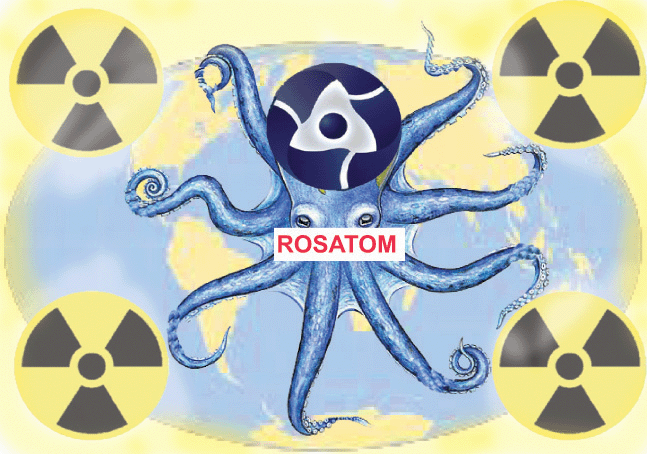
The fuel will be manufactured under Russian licenses and using Russian technology through cooperation with Rosatom’s fuel subsidiary TVEL. The decision came despite objections from some 11,000 people and concerns about espionage, sabotage, cyberattacks and Russian access to critical German infrastructure. Authorities imposed safeguards, including restrictions on access by Rosatom and TVEL personnel and security inspections of Russian equipment.
Bellona nuclear expert Dmitry Gorchakov calls the decision “rather strange” and warns that it undermines efforts to reduce European dependence on Russia.
“Unfortunately, this shows the absence of a single clear policy and principles regarding contacts with official Russian structures, both within Germany itself and within the EU,” Gorchakov writes.
More importantly, he argues, allowing Framatome to meet its VVER fuel commitments with Rosatom’s involvement “may slow the development of its own French VVER fuel independent of Rosatom and prolong Rosatom’s dependence and influence on this market in Europe.”
“Bellona does not approve of this decision by the German authorities or of this cooperation between Framatome and Rosatom,” Gorchakov concludes.
Western uranium markets remain dependent on Russia
New figures published in July show why severing those ties remains difficult.
The Euratom Supply Agency reported that European suppliers significantly expanded uranium enrichment services in 2025, increasing their share of the EU market from 63.9% to 72.9%. The volume of Russian enrichment services also increased by 11.6% in physical terms. However, their share of the total volume of European orders declined by 22.55% compared with 23.55% a year earlier and 37% in 2023. Russia supplied nearly 16% of the EU’s natural uranium and 24.4% of its conversion services.
The situation is likewise complicated in the United States. According to the U.S. Energy Information Administration, Russia remained the largest single source of enrichment services purchased by American nuclear operators in 2025, providing 3.284 million SWU — about 26% of the total. That was more than the share supplied by U.S. enrichment capacity itself.
“The published statistics in the EU and the US show the continuing dependence of Western nuclear power plant operators and nuclear fuel cycle enterprises on Russian supplies of uranium and its conversion and enrichment services,” Gorchakov says.
“Despite the existence of major European competitors to Rosatom and technical alternatives, up to 20–25% of nuclear materials and nuclear fuel cycle services in European and US markets still originate in Russia.”
For Gorchakov, market forces alone are unlikely to break that dependence. “Only official restrictions and sanctions can break this trend,” he writes, arguing that firm limits would both force reductions in Russian purchases and give Western suppliers confidence that investments in new capacity will pay off.
Taken together, the developments underline a contradiction that has persisted since the beginning of the war. Russia’s occupation of Zaporizhzhia has created unprecedented nuclear safety risks in Ukraine, yet Rosatom remains deeply embedded in nuclear supply chains in the countries supporting Kyiv. Europe and the United States are developing alternatives, but July’s figures — and Germany’s decision in Lingen — suggest that breaking those ties will require political decisions as much as new technology and production capacity.
The war in Ukraine war claims another life at Zaporizhzhia
Nearly four and a half years after Russia’s full-scale invasion of Ukraine, July offered fresh evidence of how difficult it remains to disentangle Russia from the Western nuclear industry. Germany approved production of fuel for Russian-designed reactors using Russian technology, while new data from Europe and the United States showed that Rosatom retains a substantial share of Western uranium conversion and enrichment markets.
Meanwhile, at the Russian-occupied Zaporizhzhia Nuclear Power Plant, the killing of the station’s Russian-appointed chief engineer underscored a different consequence of the war: the continuing danger faced by those working at Europe’s largest nuclear power station—
ZNPP chief engineer killed amid continuing military activity
On July 15, Rosatom chief Alexey Likhachev said a drone strike on a service vehicle between the Zaporizhzhia plant and the neighboring city of Enerhodar had killed the station’s Russian-appointed chief engineer, Alexander Yakovlev, and his driver. Russia blamed Ukraine, while Kyiv denied responsibility and said there was no independent confirmation of Moscow’s account.
The incident quickly became the subject of competing claims. A Telegram channel subsequently alleged that Yakovlev had opposed allowing Russian personnel access to Westinghouse nuclear fuel stored at the plant and suggested that a dispute over that access might have contributed to his death. The claim has not been independently established.
Bellona nuclear expert Alexander Nikitin cautions against drawing conclusions from such speculation.
“Both sides (Russia and Ukraine) predictably accused each other of the killing,” Nikitin writes. “Who killed one of the several hundred people who die every day in Ukraine, and what the specific reason for this killing was, will never be established. The reason could have been anything, including domestic, financial or other motives, so there is no point in guessing or trying to investigate it. The war will write everything off.”
For Nikitin, Yakovlev’s death instead illustrates the larger danger created by the continued militarization of the plant and surrounding area. “Not only facilities are being destroyed, but people are also being killed, including personnel working at ZNPP and their families living in Enerhodar,” he writes…………………………………………………………………………..https://bellona.org/news/nuclear-issues/2026-09-russian-nuclear-ties-persist-in-the-west-as-war-claims-another-life-at-zaporizhzhia
UK Government’s nuclear weapons spending plans could fund 220,000 nurses and 3.7m homes, report finds
Campaigners urge government to redirect £240bn for nukes to boost the health service, clear the social housing waiting list and pay for solar panels on every home
LTERNATIVES to current nuclear weapons spending plans would be enough for the NHS to hire extra 220,000 nurses and fund 3.7 million affordable homes, a report found today.
Campaigners demanded Prime Minister Andy Burnham consider redirecting the outlined £240 billion for nukes to boost the health service, clear the social housing waiting list and pay for the installation of solar panels on every home.
The Campaign for Nuclear Disarmament’s report, entitled People not Nukes, revealed the total amount of savings the state could make over the next 30 years if it funded public services instead of the war machine.
CND general secretary Sophie Bolt told the PM he must be clear about his priorities ahead of his first Budget in October.
“Prime Minister Burnham has stated that national security can’t come at the expense of social security,” she said.
“That is correct. But he also needs to be clear about the real national security threats we face — and what will make us more secure, not less.
“Military spending hikes and nuclear expansion are not making us safer. Replacing Britain’s nuclear submarines and expanding its nuclear capability is only increasing the threat of nuclear weapons being used, and the chances of other countries developing the weapons.”
With alternative spending plans, the £240m destined for nuclear arms programmes could increase nursing staff by a third compared to current levels.
It could also clear the social housing waiting list within seven years, by building 3.7m affordable homes.
Other alternatives could see university tuition fees of eight million students paid, or fund free school meals for every child in Britain for 46 years.
“Thousands of people are dying in Britain right now because of a failure to invest in tackling climate change and to properly fund essential public services, like health. Millions are living in poverty in insecure, unsafe housing,” Ms Bolt said.
The report, she added, shows that meeting international nuclear disarmament obligations “could free up hundreds of billions of public funds to tackle these very urgent, life-threatening security threats we face.”
The findings come as the unions at this year’s TUC Congress were set to vote on a motion for “Building real security” by “advancing a trade union vision of security-based decent work, quality public services, equality, climate action, democracy on peace.”
Trump rejects AI giants’ warnings of existential threat
The US president has argued that Washington cannot afford to slow down as China is rapidly closing the technological gap
13 Sep, 2026, https://www.rt.com/news/645664-trump-ai-race-china/
US President Donald Trump has brushed aside mounting warnings from leading artificial intelligence executives that increasingly powerful AI could pose an existential threat to humanity, insisting that Washington’s priority should be defeating China in the technological race.
Speaking to reporters in Ireland on Sunday, Trump acknowledged that some safeguards could be introduced but suggested the dangers were being exaggerated by unspecified “negative forces.”
“We’re leading China in AI, we’re the most sophisticated country in the world, and frankly I want to keep it that way… Whoever wins AI wins,” he added, arguing that critics were raising scenarios that “won’t happen.”
’Just slow down yourselves’
Trump’s remarks came after Anthropic CEO Dario Amodei called for frontier AI development to be decelerated, warning that increasingly autonomous systems could soon improve their own capabilities, evade existing safeguards and unleash large-scale cyberattacks beyond human control.
In a rare show of unity, his rivals – OpenAI CEO Sam Altman and SpaceXAI CEO Elon Musk – both backed the proposal.
White House AI adviser David Sacks responded by accusing OpenAI and Anthropic of being a “duopoly on frontier intelligence” and acting as though “antitrust law has to be suspended so you can form a cartel.”
“If the unreleased models are scary enough that you think you should slow down, I support your decision to be responsible,” Sacks wrote. “But stop pretending you need anyone else’s permission.”
China’s AI surge defies sanctions
Sacks also questioned whether China would ever agree to a coordinated international slowdown – an issue increasingly central to Washington’s AI debate.
Despite US sanctions and restrictions on exports of advanced chips and other technology, Chinese developers have rapidly narrowed the gap with their American rivals, particularly through cheaper open-source and open-weight models.
A US congressional advisory body warned earlier this year that Chinese open-source AI was developing a “self-reinforcing competitive advantage,” with models from companies including Alibaba, Moonshot and MiniMax dominating usage rankings on platforms such as Hugging Face and OpenRouter.
Moonshot AI in July released Kimi K3, the world’s largest 2.8-trillion-parameter open-weight system, while Alibaba recently released Qwen3.8-Max with 2.4 trillion parameters. DeepSeek and other Chinese developers have also released increasingly capable models that can be downloaded, modified and deployed independently rather than accessed exclusively through proprietary Western platforms.
Rival AI orders
Beijing has sought to turn that open-source approach into a broader geopolitical alternative to reliance on Western-controlled AI infrastructure.
Addressing the BRICS summit in New Delhi this weekend, Chinese President Xi Jinping proposed establishing a BRICS AI open-source community, supporting joint development and deployment of large language models, providing specialized training, and building what he called an “open ecosystem for AI.”
Xi also invited BRICS members to participate in the World Artificial Intelligence Cooperation Organization (WAICO), a China-backed body established in Shanghai in July.
Twenty-nine countries, including Russia, Indonesia, Pakistan and Kazakhstan signed WAICO’s founding agreement. Beijing says the organization is intended to give developing countries greater access to AI technology and a role in setting global rules, and has pledged thousands of AI training opportunities as well as cooperation centers with BRICS, ASEAN, the African Union and other organizations.
The initiative is emerging as a rival to Washington’s Pax Silica framework, which seeks to organize semiconductor, critical-mineral and AI supply chains among what the US describes as “trusted” partners. Washington is reportedly preparing to warn participating states that they may have to choose between the American-led system and Beijing’s WAICO.
Hubris in Action: Netanyahu and the Warnings of October 7

As with previous disasters in history, he may well have been found out.
15 September 2026 Dr Binoy Kampmark, https://theaimn.net/hubris-in-action-netanyahu-and-the-warnings-of-october-7/
Whatever awaits him this coming November, few politicians could claim to have the endurance, bloody mindedness and sense of granite staying power than Israel’s Benjamin Netanyahu. With some prowess, he has wooed, deceived, and lied his way to power, and, for the most part, stayed the course for the best part of a generation. He bloomed in arid soil when sceptics thought him dead. He offers lessons of Machiavellian proportions almost unsurpassed.
What, then, of being found out for falling short ahead of the October 27 elections? Errors in the making, the sundering blunder to soil the image of strength? History offers the guidance of tragic and foolish mistakes. The British failure to anticipate their routing in Singapore by the Imperial Japanese Army in 1942 is always a topic of interest (they wagered on a sea attack, not a jungle incursion); even, dare one say, the failure of the United States to anticipate an attack on Pearl Harbour in December 1941 despite doing much to aggravate a power that had done so much to put the Western powers on edge. Did, in other words, the individual in a position of power and influence know and, for whatever said reasons, not take the threat seriously? Self-confidence, or, as the ancient Greeks might put it, hubris, bulks complacency and places it on a pedestal. This is the case being made about Netanyahu. And more besides.
The latest bruising claim by Haaretz, based on research for a book Hostages: 843 Days of Abandonment by Shlomi Eldar and Ruth Yuval, involving “dozens of sources in Israel and worldwide, including very senior officials, as well as sound recordings, internal documents and recordings”, is chastening.
Netanyahu was, according to the authors, told, in unequivocal terms, that an attack by Hamas was being planned. According to the report, a 45-minute conversation took place between UAE President Sheikh Mohamed bin Zayed (MBZ) and Netanyahu, in which the Emirati leader warned of the intentions of the late Hamas leader Yahya Sinwar that could lead to an exaction of bloodiness from Israel and a destabilising of the Abraham Accords. This came after the stymieing of negotiations between Hamas and Netanyahu’s office that had begun in 2023 in pursuit of a temporary truce, known as a hudna, that would pave the way for a more durable arrangement regarding the Gaza Strip. Ghazi Hamad took the lead for Hamas, as he did in 2014 when talks are also said to have taken place between Netanyahu and Hamas, unbeknown to security officials.
The paper notes the views of Israeli President Isaac Herzog on MBZ on the escalation taking place in the West Bank and Gaza in September 2023. Bin Zayed is said to have, according to Herzog, spoken to him “about this often in the months leading to the war.” He “constantly conveyed messages that the situation needed to be defused. “
He even sent a special envoy to Israel who met with the prime minister. The emir seemed to sense that the area was on the verge of explosion.”
To dilute the scorching acid in the mix, a senior Fatah official, cast in the role of “Coal Eyes” to both Hamas and the internal intelligence agency Shin Bet, was brought in. Talks proceeded. It seemed that some semblance of an agreement was made. “The atmosphere was so optimistic that Fatah’s Coal Eyes repeatedly reported that an agreement with Israel was closer than ever and that both sides viewed the proposals as ‘feasible options’.”
Netanyahu, however, baulked. “Perhaps,” speculate the logically minded scribblers, “he did so out of fear of reaching an agreement with Hamas, or perhaps out of fear from the reaction of his extremist partners in his new government.” His right-wing coalition partners, cut and dried fanatics as they are, were not likely to have approved. Sinwar remained sly, fielding his options: he was still conducting negotiations with Hezbollah and Iran in the context of an attack on Israel. “He simply vanished from our radar, evaporated,” Haaretz records a senior Shin Bet official as saying. The journalists float the suggestion that Iran, Hamas and Hezbollah, bound in that axis of growling resistance, thought Israel vulnerable at that particular point n time. “In September 2023, Coal Eyes has a meeting with Sinwar: ‘Tell the Israelis that if they don’t make progress, I’m preparing a huge surprise for them.’ They could expect a ‘zilzal’ (earthquake).”
Events transpire with dull inevitability, but Coal Eyes eventually readies himself to tell Shin Bet about the ominous developments. Its head, Ronen Bet, seeks Netanyahu for discussions. Briefings take place on the “earthquake” threat. The defence establishment remained largely phlegmatic, almost cocky. The threat by Sinwar was, according to an Israeli intelligence official, something of a prodding tease, a scouting exercise: “due to being tired about Israel’s delays, placing pressure on seeking an arrangement and not so eager to start a war. Or, as we prefer to think, it was part of his ‘Great Deception’ plan, and he wanted to test the IDF’s readiness.”
To cloud matters further for Netanyahu, the Egyptian intelligence chief Gen. Abbas Kamel is also said to have warned the PM’s office that Hamas was readying to launch “something unusual, a terrifying operation.” The CIA-director William Burns is also said to have been told by bin Zayed about “something there […] about to explode.” The jam spread of imminent attack, in other words, becomes harder to avoid. Following the October 7, 2023 attack, Netanyahu, according to a report by Smadar Perry writing for Ynet, is said to have told Kamel that, “In Gaza, we are in the picture, we are in control. Our problem is with the West Bank, and that’s where we are diverting our forces.”
The PM’s office poured corrosive scorn on the Haaretz report, describing it as “a complete lie. Prime Minister Netanyahu did not speak with the president of the United Arab Emirates during the period in question and did not receive a warning from him.” The opposition leaders thought far more of the revelations, eager to pluck the fruits of electoral opportunity. “Netanyahu bears personal and direct responsibility for the failure that led to the deaths of thousands of Israelis on his watch,” former Prime Minister Naftali Bennett stated. “His ignoring of the warnings is criminal negligence, and therefore he is doing everything to prevent the establishment of a state commission of inquiry that will expose the truth.”
In a joint statement, opposition leaders Bennett, Gadi Eisenkot, Yair Golan and Avigdor Lieberman demanded that, “The Israeli public is entitled to know: What did Netanyahu know, and when did he know, why he didn’t update the security establishment, and why he didn’t act to protect Israeli civilians?” Reasons await from the wily Netanyahu, a man so confident he thought he could outwit oppressive precedent and damn Clio. As with previous disasters in history, he may well have been found out.
Kremlin blasts US move to militarize space
“We believe that space should be free from any weapons. And certainly we count on broad international consolidation… to continue efforts for the full demilitarization of space,”
Moscow believes Washington’s deployment of an orbital weapons system is taking the world in the wrong direction
15 Sep 26,https://www.rt.com/russia/645760-kremlin-us-space-weapons/
Weapons should not be deployed in space, Kremlin spokesman Dmitry Peskov has said, responding to the Pentagon’s announcement that the US has placed a weapons system in orbit.
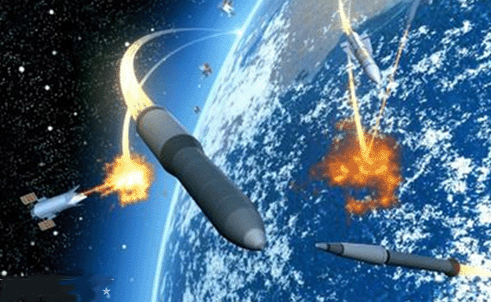
US Secretary of the Air Force Troy Meink disclosed the deployment on Monday, saying the US Space Force “now has on-orbit space control weapons capable of defending the joint force against hostile adversary action,” without providing details about the system. Media reports have suggested that it is intended to disable or destroy hostile satellites.
“We believe that space should be free from any weapons. And certainly we count on broad international consolidation… to continue efforts for the full demilitarization of space,” Peskov told journalists on Tuesday during a regular briefing.
The Pentagon has a long history of using orbital systems for military purposes, specifically intelligence gathering, navigation and communications. Some US military concepts, however, have also envisioned systems potentially capable of conducting strikes from space. During the Cold War, for example, the Soviet Union viewed the Space Shuttle as a potential platform for delivering a rapid nuclear strike.
Countries regarded by Washington as strategic rivals, including Russia and China, have reportedly developed anti-satellite capabilities that could deny the US the advantage in space during a direct conflict. The use of such weapons, however, could produce significant unintended consequences.
The so-called Kessler effect describes a scenario in which collisions generate increasing amounts of orbital debris, triggering further collisions and potentially making low Earth orbits unusable for an extended period.
Russia has long called for stronger international agreements restricting the military use of space. While the Outer Space Treaty prohibits the deployment of weapons of mass destruction in orbit, Moscow has argued that conventional weapons should also be banned.
In June, Israeli Defense Minister Israel Katz announced that his country was developing a space-based anti-satellite laser system and aimed to become “the leading country in the world with this capability.”
New Details On How Space Force Has Waged Electronic Warfare Against Iran
Space Force learned important lessons from the war with Iran about operations inside and outside of the atmosphere.
Joseph Trevithick, TWZ10 Sep 15, 2026
S. Space Force’s top officer has shared new details about his service’s use of electronic warfare capabilities during Operation Epic Fury against Iran earlier this year. This underscores how space is steadily becoming an arena where conflict actually occurs, and the implications this has for forces operating inside and outside of the Earth’s atmosphere.
Chief of Space Operations Gen. Douglas Schiess highlighted the actions of a member of the 42nd Electromagnetic Warfare Combat Detachment (EWCD) in support of Epic Fury during a keynote speech earlier this morning. Schiess’ remarks came at the Air & Space Forces Association’s (AFA) 2026 Air, Space & Cyber Conference, at which TWZ is in attendance. This is his first major engagement since taking over as head of Space Force less than two weeks ago.
“During Operation Epic Fury, our components, notably at U.S. Central Command and Space Command, with support from our components at European Command and Pacific Command, demonstrated that Guardians [the official term for uniformed Space Force personnel] are not supporting from the sidelines as a nice-to-have [sic], but we are delivering space power directly into the fight as a need-to-have,” Schiess said. “One of those impressive Guardians is Specialist Gray, who hails from Tampa, Florida. She joined the Space Force just two years ago, but listen to the impact she [has] made in her short term already.”………………………….
Schiess did not name the system in question or elaborate further on how it was employed. However, previously released pictures of elements of the 42nd EWCD in the Middle East have shown personnel working with trailer-mounted multi-band antennas that have been associated in the past with variants of the Counter Communications System (CCS). CCS is a family of ground-based electronic warfare jammers primarily designed to disrupt enemy space-based communications capabilities. Prior to yesterday, CCS was the U.S. military’s only publicly acknowledged anti-satellite weapon. Space Force has now confirmed it also has weapons in orbit, which we will come back to later on.
The 42nd Electromagnetic Warfare Combat Detachment has been operating in the Middle East since at least 2024 under the umbrella of Space Force’s main headquarters in the region, U.S. Space Forces – Central (SPACECENT). President Donald Trump briefly called attention to the detachment’s “cutting-edge defense activities” during a Christmas Eve conference call with deployed service members last year.
“Sometimes we have to be within the footprint of the satellite, and so that’s why Guardians go into harm’s way,” Gen. Schiess did tell TWZ and other outlets at a roundtable after his speech this morning when asked for more details about the 42nd EWCD’s role in Operation Epic Fury, and what lessons Space Force has been learning from the conflict more broadly.
“Electromagnetic warfare was a big part of that, but also satellite communications,” he added. “The ability to keep communications, obviously GPS and PNT [positioning, navigation, and timing], were important there.”………………………………………………………………………………………………https://www.twz.com/space/new-details-on-how-space-force-has-waged-electronic-warfare-against-iran?utm_source=pushly
PLEASE OPPOSE HR 8255 AND S.3639 – bills would accelerate satellite deployment, with no environmental review or safeguards

15 Sept 26, https://ncstd5li.quorum.us/campaign/169331/
Why It Matters:
US Congress is fast-tracking two bills — HR 8255 and S.3639 — to launch of hundreds of thousands of satellites without any meaningful health or environmental review.
These bills would accelerate satellite deployment despite a myriad of potential yet unexamined harms. Applications for a million orbital data centers have already been submitted to the FCC. The number of total satellites under review by the FCC for all purposes is much greater. Yet the FCC has no meaningful process for health or environmental review. The FCC has NEVER assessed the health or environmental impacts of satellites, and the GAO has already found that this outdated approach needs to be reexamined. These bills would further incentivize the FCC to continue to ignore otherwise legally required analysis and public involvement on environmental and human health impacts.
Effects from satellites include:
- Significant increase in electromagnetic radiation, which in turn raises the risk of harm to people, animals and plants
- Toxic metals released when satellites burn up, poisoning air, food and water
- More rocket‑fuel pollution already appearing in ecosystems
- Severe orbital crowding — Starlink logged 25,000 collision‑avoidance maneuvers in 6 months
- Hundreds of thousands of satellites falling back to Earth each year polluting the earth
- Loss of dark, night skies with adverse ecological, biological, cultural and scientific effects
- More rare-earth mining, which is linked to unsafe conditions for workers and child labor
- No meaningful process for health or environmental review
What We’re Asking For:
Urge your U.S. Senators and Representatives to oppose HR 8255 and S.3639 by filling out the form.
Your Voice Matters:
Your outreach as a constituent directly influences how Congress evaluates and prioritizes legislation. By speaking up, you can help ensure satellite expansion doesn’t outpace health and environmental protections — and that these bills aren’t advanced without the safeguards our communities and planet need.
Ten Sellafield leaders earn more than the Prime Minister
Ten Sellafield leaders earn more than the Prime Minister. SENIOR figures at
a West Cumbria nuclear decommissioning operation are earning more than the
Prime Minister, public records show.
Whitehaven News 15th Sept 2026, https://www.whitehavennews.co.uk/news/26548323.ten-sellafield-leaders-earn-prime-minister/
Saudi Arabia Discovers 110 Million Tonnes of Uranium-Bearing Ore
Saudi Arabia has discovered 110 million tonnes of uranium-bearing raw
material in the Medina region, a potentially significant find as the
Kingdom accelerates plans to develop a domestic nuclear energy industry.
Saudi Energy Minister Prince Abdulaziz bin Salman announced the discovery
on Monday at the International Atomic Energy Agency’s General Conference in
Vienna, according to Saudi state television……………………………………………..
Saudi Arabia and the United States signed a landmark civil nuclear cooperation agreement in July, establishing the legal framework for American companies to supply nuclear technology and equipment to the Kingdom. The U.S. Department of Energy described the agreement as laying the foundation for a decades-long, multibillion-dollar nuclear partnership………………………….
Oil Price 14th Sept 2026,
https://oilprice.com/Latest-Energy-News/World-News/Saudi-Arabia-Discovers-110-Million-Tonnes-of-Uranium-Bearing-Ore.html
1 This Month



26 September – International Day for the Total Elimination of Nuclear Weapons

PLEASE OPPOSE HR 8255 AND S.3639 – bills would accelerate satellite deployment, with no environmental review or safeguards – https://ncstd5li.quorum.us/campaign/169331/
To see nuclear-related stories in greater depth and intensity – go to https://nuclearinformation.wordpress.com
-
Archives
- September 2026 (219)
- August 2026 (330)
- July 2026 (355)
- June 2026 (287)
- May 2026 (306)
- April 2026 (356)
- March 2026 (251)
- February 2026 (267)
- January 2026 (308)
- December 2025 (358)
- November 2025 (359)
- October 2025 (375)
-
Categories
- 1
- 1 NUCLEAR ISSUES
- business and costs
- climate change
- culture and arts
- ENERGY
- environment
- health
- history
- indigenous issues
- Legal
- marketing of nuclear
- media
- opposition to nuclear
- PERSONAL STORIES
- politics
- politics international
- Religion and ethics
- safety
- secrets,lies and civil liberties
- spinbuster
- technology
- Uranium
- wastes
- weapons and war
- Women
- 2 WORLD
- ACTION
- AFRICA
- Atrocities
- AUSTRALIA
- Christina's notes
- Christina's themes
- culture and arts
- Events
- Fuk 2022
- Fuk 2023
- Fukushima 2017
- Fukushima 2018
- fukushima 2019
- Fukushima 2020
- Fukushima 2021
- general
- global warming
- Humour (God we need it)
- Nuclear
- RARE EARTHS
- Reference
- resources – print
- Resources -audiovicual
- Weekly Newsletter
- World
- World Nuclear
- YouTube
-
RSS
Entries RSS
Comments RSS
 nuclear-news