Cost Of New Nuclear Power Plant in Switzerland Could Be Up To €45 Billion, Says Report
By David Dalton,
The cost of building a new nuclear power plant in
Switzerland could be between CHF14bn and CHF43bn (€14.9bn and €45.8bn;
$17.4bn and $53.5bn) – a range that reflects varying assumptions about
reactor size, construction conditions and financing costs, according to a
report by the Swiss Academy of Sciences.
Nucnet 26th Aug 2026, https://www.nucnet.org/news/cost-of-new-nuclear-power-plant-in-switzerland-could-be-up-to-eur45-billion-says-report-8-3-2026
Fears Putin will use ‘tactical nuclear weapons

By PATRICK HARRINGTON, UK NEWS REPORTER, 27 August 2026, https://www.dailymail.com/news/article-16082617/Fears-Putin-tactical-nuclear-weapons-Ukraine-peace-talks.html
Fears that Putin will deploy ‘tactical nuclear weapons‘ against Ukraine are growing as Russia becomes increasingly frustrated and diplomatic hopes crumble.
Voices in Moscow calling for nuclear warheads are becoming louder, and the President is surveying his options for escalation, according to sources.
Ukraine and Russia have ramped up attacks against each other in recent months, with Kyiv landing significant strikes deep inside Russian territory against its oil infrastructure.
Meanwhile, negotiations have all but collapsed, with little hope on either side of a peace deal being found.
The Kremlin is adamant it will not end the war under pressure from sanctions or Ukrainian attacks on its refineries.
It is also increasingly indignant at Nato allies supplying Ukraine with weapons and intelligence – leading to threats against the UK that Prime Minister Andy Burnham this week branded ‘outrageous’.
Putin’s conclusion is that he need to intensify his attacks on Ukraine, three Kremlin sources told Bloomberg.
At the weekend, he told a reporter that Ukraine had ‘opened this Pandora’s box’, and warned Kyiv: ‘Be ready to get a blowback on your most sensitive sectors of the economy.’
For now, it is considering how it can ramp up its conventional ballistic assaults, including missile attacks on the centre of the capital, Kyiv.
But a growing number of Russian officials have concluded that Putin could eventually abandon the rules of modern warfare and hit the nuclear button, the sources said.
Tactical nuclear weapons, which are less powerful and have a shorter range, would be more likely than strategic missiles.
They would be used to gain the upper hand in a specific battlefield, rather than to decimate entire cities, like the bombs dropped by America on Japan in 1945.
Throughout the conflict, he has repeatedly flaunted the threat of nukes against Ukraine and its Western allies – even publishing maps showing strikes zones.
And if he made the call, there would be nobody to stand in his way.
Fiona Hill, a senior fellow at the Brookings Institution who served as a national security advisor to three US presidents including Trump in his first term, said: ‘For Putin there is no sign of collective will anywhere to resist him and so many ways in which he can grind people down.
‘This is why a concerted collective and consistent effort to resist his actions, and to engage in diplomacy, is essential.
‘He has a single-minded focus and we are all over the place.
It was reported this week that the Putin might be abouyt to test a nuclear-powered cruise missile – dubbed the Flying Chernobyl – that can fly for days, according to analysts.
An influx of aircraft and shipping has converged in the Arctic in a telltale sign that a new experimental firing is expected of a weapon powered by its own atomic reactor, say analysts.
The ‘invincible’ Burevestnik missile – with a nickname inspired by the nuclear catastrophe that could be inflicted, much like the Chernobyl power plant explosion in 1986 – carries a nuclear warhead with an ‘unlimited range’ and is designed to fly for days at a time before striking the West, according to the Russians.
While the chance of nuclear weapons still looks remote, the only way to rule them out completely would be a swift diplomatic end to the war – something that now seems out of reach.
The US is preoccupied with the conflict in Iran, and Putin has abandoned its hope of an understanding between Donald Trump and himself that was fostered during at their summit in Alaska last August.
Russia has indicate there may be a path to peace if Ukraine hands over its ‘fortress belt’ of cities in the Donbas that have held firm since the start of armed hostilities in 2014 – but Kyiv has made clear that is not on the table.
A recent indication of the US’s feeling toward Russia came from Secretary of State Marco Rubio in June, when he said: ‘If there had been an agreement, we would have had an end to the war.’
CIA Director John Ratcliffe made a rare visit to Moscow on Tuesday for a diplomatic meeting, though it’s unclear what the focus was.
Germany in talks to help fund Trident
Berlin could bolster Britain’s nuclear programme under plans to end Europe’s reliance on America for defence
Joe Barnes Diplomatic Editor. James Rothwell Berlin Correspondent. James Crisp Europe Editor, 26 August 2026
Germany is in talks to invest in Britain’s nuclear deterrent, The
Telegraph understands. Berlin is considering offering financial support for
Trident as it spearheads efforts to reinforce Europe’s nuclear umbrella.
One well-placed source said Germany wanted to better integrate itself into
the existing British and French nuclear deterrents rather than pursue its
own bomb because of the nation’s wartime guilt.
“We have a very strong
interest that the existing nuclear powers in Europe extend their
capabilities,” the source said. The discussions between Paris, Berlin and
London have accelerated in recent months amid fears the Trump
administration will withdraw its military from Europe.
Telegraph 26th Aug 2026, https://www.telegraph.co.uk/world-news/2026/08/26/germany-talks-help-fund-britains-trident-nuclear-deterrent/
Nuclear Hotseat #774: Nuke Tax Costs You HOW MUCH ?! Nuclear Weapons Tax Calculator.
9 May 2026
WHO WE ARE: Nuclear Hotseat is the weekly international news magazine keeping you up to date on all things nuclear… from a different perspective. We’re a show for people who know nothing about nuclear who want to know something, and people who know something about nuclear who would like to know just a little bit more. Since June 14, 2011, only three months after the Fukushima nuclear disaster began, producer/host Libbe HaLevy — a survivor of the nuclear accident at Three Mile Island — has presented nuclear news, expert interviews, activist actions, and ways for citizens concerned about nuclear to take action.
WHAT IS COVERED IN THIS EPISODE:
How much are nukes really costing us? The answer is astounding – and every year, Physicians for Social Responsibility provides an updated answer, created by long-term veteran member and board member Dr. Robert Dodge. Bob’s latest numbers for 2026 were released on April 15 – tax day – as is appropriate for tracking the outrageous financial nuclear tax burden place on every woman, man, child, and even infant in this country. Where does that $137 BILLION dollars go? Sit back and fasten your seatbelt and you find out.
And Physicist Lynda Williams is great at breaking down complex nuclear issues and giving us the bare bones to be able to understand the truth behind all that nuclear industry gobbledygook. Here, she explains the need for comments on three new rule changes the NUclear Regulatory Commission – the NRC – is proposing and the tiny window of opportunity we have to comment on them… and why we must. We spoke on April 26, 2026.
Army reaches agreement with private industry for nuclear micro-reactors
By U.S. Army Communication and Outreach OfficeAugust 26, 2026, https://www.army.mil/article/294891/army_reaches_agreement_with_private_industry_for_nuclear_micro_reactors
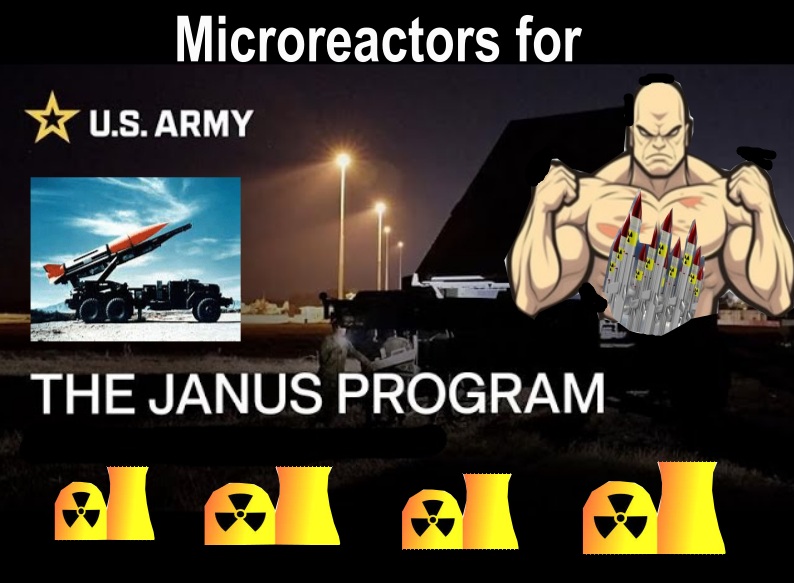
WASHINGTON — The Department of the Army is announcing today that the Janus Program has selected five nuclear energy vendors, and five initial locations.
In partnership with the Department of War Innovation Unit (DIU), the Army is awarding up to a combined $2.2 billion to own, construct, and operate nuclear microreactors on military installations. These vendors will deliver safe, secure, and reliable nuclear power, strengthening the Army’s ability to project power globally, while supporting the revitalization of American industrial capacity and technological leadership. With the private sector funding expected along with these government dollars, the Army expects more than 20 total nuclear microreactors will be built and operated across Department of War installations.
The five selected vendors and installations are as follows:
- Antares Nuclear, Inc. – Fort Bragg, North Carolina
- BWXT Advanced Technologies, LLC – Fort Campbell, Kentucky
- General Atomics Electromagnetic Systems – Fort Hood, Texas
- Radiant Industries, Inc. – Fort Benning, Georgia
- Westinghouse Government Services – Fort Drum, New York
“Since launching the Janus Program, our mandate from President Trump and Secretary Hegseth has been clear: secure the power our warfighters need to train, deploy and win,” said Dan Driscoll, Secretary of the Army. “Awarding these contracts accelerates our ability to deliver safe, reliable baseload power directly to our installations. We are building the energy resilience necessary to project combat power globally, without relying on potentially vulnerable external grids.”
“The Janus Program is grabbing the baton from Project Pele and the [Department of Energy’s] Reactor Pilot Program,” said Dr. Jeff Waksman, principal deputy assistant secretary of the Army for Installations, Energy and Environment. “We are seeking not just reactors capable of turning on for a brief demonstration, but rather systems able to deliver power with high-capacity factors for years of operation. The Janus Program will be a complete success when and only when we have assisted multiple nuclear companies in developing truly reliable and affordable nuclear microreactors which they can sell to other buyers beyond just the military
After gathering technical and operational information from industry via an Area of Interest released by DIU, the Army down-selected potential industry awardees for negotiation of Other Transactions Authority-based agreements. A decision board and panel of top nuclear and technical experts from the Department of Energy, national laboratories and representatives across the services provided deeply rigorous input on the technical risks, financial situation, and management capabilities of the solutions. The close collaboration with technical experts and service representatives ensured selected vendors would provide solutions to enhance energy resilience for specific operational needs at military installations.
“When DOE created an authorization pathway for the demonstration of advanced reactor designs, we quickly began to realize how valuable these technologies could be for fortifying our national defense infrastructure,” said Assistant Secretary of Nuclear Energy Ted Garrish. “We are honored to work in lockstep with the Army to leverage nuclear energy innovation in support of our country’s military operations at home and abroad.”
The alignment of these vendors with Army installations represents the culmination of a year-long effort to evaluate and prioritize installations based on a multitude of factors from energy needs to seismic and hydrological considerations, all with a primary focus on safety. As the Janus Program moves forward, it is intended that these vendors will also site nuclear technologies on other service installations for continued energy resilience across the entire DOW. Additional Army and other Service sites will be announced at a later date. The Army continues to drive towards the September 2028 target outlined in President Trump’s Executive Order 14299 for operation of a first reactor, regulated by the Army, on a military installation.
“The Army is leading the nation in its return to nuclear preeminence via the Janus Program,” said Jason Craft, Janus Program manager. “Our selected industry awardees represent the most viable technologies to achieve this capability, setting conditions for both installation energy resilience and operational energy solutions.”
Using a milestone-based payment model, vendors will receive government funding only after successfully hitting specific technical goals. This investment model brings together approximately $2.2 billion across FY2027-2031 along with significant capital investment from each vendor. This technology development model will speed up the delivery of next-generation energy solutions to the warfighter and promote innovation while ensuring accountability. The prototype reactors will be contractor-owned and operated.
“We need more power. We need it delivered faster and cheaper, and we need it to be more reliable,” said Owen West, director, DIU. “With Janus, DIU is assisting the Army’s micro reactor build — speeding military energy production to protect the nation.”
Collaboration with utility providers is essential to the success of Army’s nuclear power strategy and the Janus Program. The Army will work closely with serving utilities and privatized utility providers on the Janus Program to ensure the best possible outcomes. The Army also invites continued collaboration with utilities both now and in the future on utility-scale, grid-facing power generation opportunities sited on Army installations.
“The Army’s Janus Program has my full support, said Emil Michael, the War Department’s Chief Technology Officer. “The War Department is acting swiftly to implement President Trump’s Executive Order, Deploying Advanced Nuclear Reactor Technologies for National Security, to deploy a nuclear reactor on a military installation by September 2028. We are unleashing America’s domestic nuclear industrial base to ensure a more resilient and secure energy supply for the joint force.”
Reliable energy underpins national defense. The down-selection to these five vendors represents a critical step forward in securing the operational readiness of our forces. The Army is committed to fortifying the defense and strength of the nation now and for future generations.
Poland rules out hosting nuclear weapons.
August 27, 2026 , By Victor Jack, https://www.politico.eu/article/poland-rules-out-hosting-nuclear-weapons-despite-russian-threat/
BRUSSELS — Poland “does not want” allied nuclear weapons stationed on its territory, the country’s Deputy Defense Minister Paweł Zalewski said Thursday, despite growing worries of a Russian incursion into NATO territory.
“I would like to say very clearly and openly: Poland does not want to have nuclear warheads on its territory,” he told reporters at NATO headquarters in Brussels. “We want to participate in NATO nuclear deterrence, [which] does not mean to have a nuclear warhead on our territory.”
Zalewski’s statement is Warsaw’s most categorical statement on the topic. While it has previously expressed skepticism toward hosting nuclear weapons, Poland has also said it was in early-stage talks with the U.S. around a potential expansion of Washington’s nuclear deterrent in Europe, and had in parallel joined a French initiative aimed at extending Paris’ own deterrent in Europe.
Separately, Polish President Karol Nawrocki has left the door open to Warsaw eventually building its own nuclear weapons program.
Western officials have warned Russia could attack NATO territory by the end of the decade, while recent U.S. intelligence suggests an attack could come even sooner.
Newcleo-Led Consortium Chosen For French Project On Floating Nuclear Power Plants
By David Dalton, 27 August 2026, https://www.nucnet.org/news/newcleo-led-consortium-chosen-for-french-project-on-floating-nuclear-power-plants-8-4-2026
Maritime sector a ‘largely unexplored opportunity’ for reactor industry
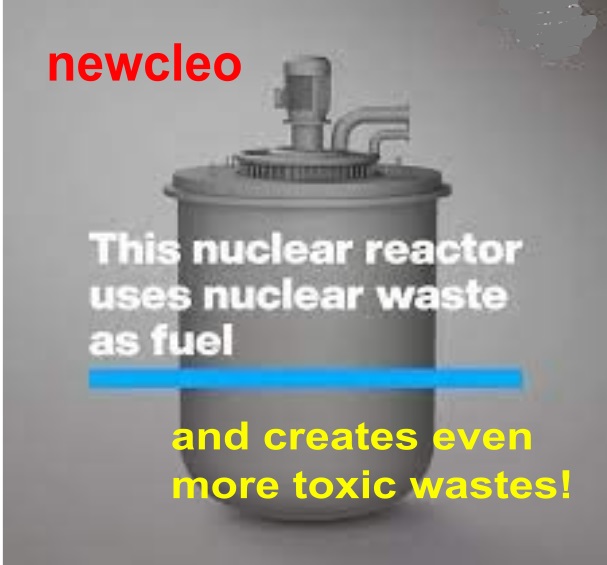
A consortium led by France-based advanced reactor and nuclear fuel company Newcleo has been selected to take part in a project supporting the decarbonisation of the French maritime sector.
The project, managed by France-based investment bank Bpifrance and named “n-Floating”, aims to demonstrate the relevance and technical feasibility of an innovative floating nuclear power solution, consisting of a non-self-propelled floating unit housing multiple Newcleo-developed LFR-AS-200 reactors, each offering an electrical output of 200 MW.
The consortium brings together Newcleo, Bureau Veritas Marine & Offshore, a leading classification society, and ABMI Groupe, a French engineering company with expertise both in maritime and nuclear sectors.
The project has been awarded almost €1m ($1.1m) in funding under the programme.
Work has already begun and is expected to run for approximately 18 months.
“Maritime deployment of advanced reactors opens a broader and still largely unexplored market for nuclear energy” said Newcleo chief executive officer Stefano Buono.
“Floating nuclear offers an opportunity to bring reliable, low-carbon power to applications at sea and in coastal locations.”
Newcleo said the project aims to develop a standardised, deployable and competitive solution for low-carbon energy generation at sea and in coastal locations.
The initial phase of the n-Floating project will focus on conceptual studies for a nuclear barge, assessing its potential to deliver reliable, low-carbon and competitive energy across a range of applications. These include supplying isolated regions, ports and associated industrial hubs, and coastal areas, as well as supporting energy-intensive applications such as desalination and the production of low-carbon fuels.
The project will also define the subsequent development programme and roadmap towards potential industrial deployment by 2036, with the ambition to design and build the solution in France.
Claim about Scottish support for nuclear power doesn’t add up
Ni Holmes, St Andrews, 27 Aug 26
I WAS not surprised to find, when I got to the foot of a letter challenging Paul Kavanagh’s assertion that “Scotland does not need nuclear energy and most in Scotland don’t want it” as being “wrong on both counts” (Aug 26), that it was written by Lincoln Hill, the Nuclear Industry Association’s director of policy and external affairs.
Mr Hill appears not to be too good at maths. He cites a YouGov poll showing that fewer than a third of people in Scotland consider nuclear power as the most important energy source and that a similar number identified it as their preferred source of energy. To my understanding, the remaining two-thirds of Scots who do not support nuclear power are indeed most of the people in Scotland.
Mr Hill goes on to assert that Scotland needs “more than one source of electricity”. This suggests that lack of basic counting skills is the foundation of his weakness in maths. We already have multiple sources of electricity: we have had hydro-electric power for decades, we have wave generators, we have onshore and offshore wind turbines, and new technology is making solar power viable even in our climate. By my count those five already add up to the “more than one” that Mr Hill claims we need. We will still have more than one source after the last nuclear power station in our country is finally decommissioned.
It seems to me that it is Mr Hill that is wrong and Mr Kavanagh was entirely correct on both counts. We neither need nor want nuclear power in Scotland, the Nuclear Industry Association, or for that matter the Westminster Labour Party’s small-scale reactors and Starmer’s “GB Energy”. What we do need is our independence so that we can make our own choices in the interest of Scotland and the all of its people, rather than English energy requirements or the wealthy seek to profit from energy production.
Can the Israeli military be trusted to investigate itself? Evidence shows genuine accountability is rare

Shannon Bosch, Associate Professor (Law), Edith Cowan University, August 20, 2026, https://theconversation.com/can-the-israeli-military-be-trusted-to-investigate-itself-evidence-shows-genuine-accountability-is-rare-290142
Australian Prime Minister Anthony Albanese says it’s an “outrage” the Israeli Defense Forces (IDF) have decided not to open a criminal investigation into the Israeli strikes that killed an Australian aid worker, Zomi Frankcom, and six of her colleagues in Gaza in April 2024. He added:
It falls far short of the accountability that we expect and consistently called for on behalf of Australia.
International law is clear: states are obligated to investigate alleged war crimes committed by their nationals or armed forces, or on their territory. And, if it’s appropriate, they are obligated to prosecute the suspects.
To this end, military and civilian leaders must report suspected breaches of the law up the chain of command to ensure prompt, independent and impartial investigations are carried out.
On Wednesday, the IDF published the findings of an internal investigation into five incidents in Gaza since the war began in October 2023.
Two incidents were deemed to raise “reasonable suspicion of criminal misconduct”. The IDF ordered the Military Police Criminal Investigation Division, the primary investigative unit within the IDF, to open criminal probes into them. They are:
The killing of Hind Rajab, January 2024: The IDF acknowledged that soldiers opened fire on a vehicle carrying five-year-old Hind Rajab and her family as they fled Gaza City. In addition, the IDF said “a shell was fired toward” an ambulance trying to reach the car, killing two paramedics.
The killings of Palestinian rescue workers, March 2025: The review also referred the killings of 15 Palestinians in southern Gaza – some of whom it recognised as paramedics and medical personnel – to criminal investigators.
It said Israeli troops fired on three vehicles, which were later identified as ambulances, a fire truck and a UN vehicle.
Forensic Architecture, a research group at the University of London, alleges the military tried to cover up the killings by crushing and burying the medics’ vehicles.
The IDF investigators did not recommend further investigations into three other incidents, including:
The strikes on the World Central Kitchen convoy, April 2024: In addition to Frankcom, three British nationals, a Palestinian, a Pole and a dual US-Canadian citizen were killed when the IDF mistakenly identified their vehicles as carrying Hamas operatives.
The investigation found serious operational failures in the soldiers’ actions. Two commanders were stripped of their ranks and three officers were reprimanded. However, the review did not find “reasonable suspicion” of criminal conduct.
The other two incidents related to the killings of four employees of Médecins Sans Frontières in 2023 and 2024.
How often are Israeli soldiers prosecuted?
Statistically, very few complaints against IDF personnel result in investigations or criminal convictions.
The Israeli human rights group Yesh Din analysed complaints made to the IDF in 2019–20 and found 72% were closed without criminal investigation and just 2% led to prosecutions.
Another investigation of 52 Israeli military probes between 2023 and 2025 found 88% were either still under review or had been closed. Only one case had led to a prison sentence for an Israeli soldier.
What are the concerns with the IDF investigating itself?
Human Rights Watch has expressed serious concerns with IDF investigations into incidents involving Palestinian civilians. The group says they are “not impartial, thorough or timely”.
Cases often take months or years to navigate the IDF investigative process). Critics say this undermines the cases and diminishes the prospects for prosecutions.
Human Rights Watch reports that initial investigations largely rely on soldiers’ own accounts. The military advocate general, who advises the IDF during military operations, subsequently determines whether conduct should be criminally investigated or prosecuted.
Critics also argue that investigators frequently fail to contact readily available Palestinian witnesses, lack Arabic-speaking investigators, and rely heavily on Israeli NGOs to locate witnesses and obtain evidence.
Palestinian witnesses are often reluctant to cooperate in investigations because of fears of arrest, retaliation or mistreatment.
The military insists investigations are slowed by the difficulties of ensuring due process for its personnel in an active combat zone.
But rights groups say that by the time detectives are authorised to investigate, physical evidence is often long gone, the scenes have been compromised, and witnesses’ memories have faded.
That said, war crimes are not subject to any statutory limitation, meaning prosecutions can occur decades after an alleged offence.
What happens next in these cases?
The Hind Rajab and paramedic cases will now be transferred to military police for formal criminal investigations. They will collect forensic evidence, review communications logs and interrogate the soldiers and commanders involved.
Once complete, the investigation will be handed back to the military advocate general, who will decide whether to issue criminal indictments.
Structural legal barriers suggest, however, that the cases may not go anywhere.
Under Israeli military law, the legality of conduct in war must be assessed based on what a “reasonable commander” knew (or should have known) at the split-second the trigger was pulled. Did they honestly believe they were firing at a legitimate target?
Unless prosecutors can prove explicit intent to murder civilians, cases are often downgraded to “negligence” or closed entirely.
Lengthy proceedings can also create difficulties for eventual prosecution. As evidence becomes unavailable or less reliable over time, defence lawyers may argue that continued proceedings would prejudice their clients’ rights to a fair trial.
In some cases, concerns such as these can lead to reduced charges, plea agreements or the withdrawal of an indictment.
What other options exist?
The International Criminal Court (ICC) is designed to be a “court of last resort”. This means it only steps in if a nation is “unwilling or unable” to genuinely carry out investigations of suspected war crimes.
Israel has long argued that its investigative procedures in cases such as these are both credible and independent.
However, international observers and groups like the Hind Rajab Foundation maintain these internal probes function primarily as a public relations shield rather than a pathway to genuine accountability for wrongdoing.
As Human Rights Watch has put it: “a system that overwhelmingly closes cases without accountability, years after the fact, and only in response to sustained international pressure, is not justice, it’s a whitewash”.
Cases like these could also be investigated and tried in other countries’ courts under what’s known in international law as universal jurisdiction.
This allows domestic courts to launch prosecutions, even when the countries have no link to the perpetrator, victim, national interest or territory where the incidents occurred.
These prosecutions can be supported by UN-appointed independent international commissions of inquiry. These fact-finding bodies collect evidence, interview witnesses and compile exhaustive archives of offences in war zones.
While these UN panels do not hold trials, their formalised, verified evidence files are designed to be handed over to foreign prosecutors or future tribunals.
Army to spend $2B to build nuclear microreactors at 5 bases as US seeks to ramp up nuclear power
By JENNIFER McDERMOTT and MATTHEW DALY , August 27, 2026
WASHINGTON (AP) — The U.S. Army announced Wednesday that it plans to add nuclear microreactors at five military bases from New York to Texas as a reliable source of energy independent of the commercial electric grid.
The announcement comes as the Trump administration pushes hard to develop the next generation of nuclear power, including billions in loans for large nuclear reactors to meet skyrocketing power demand from data centers and a pilot program to boost advanced reactor designs and projects for military and civilian use. No nuclear microreactors are supplying power to the commercial electric grid in the United States today.
Five companies selected by the Army will be awarded up to $2.2 billion in total over five years to own, construct and operate the microreactors, if they hit set milestones along the way for their performance. The Army expects that more than 20 nuclear microreactors will be built and operated………….. https://apnews.com/article/nuclear-trump-army-microreactors-janus-200edd5fb98b6fe04d029a3c1dba1a4a
The threat of nuclear weapons is greater than ever. Here’s how international law can help
Gareth Evans, August 27, 2026 https://theconversation.com/the-threat-of-nuclear-weapons-is-greater-than-ever-heres-how-international-law-can-help-290523
The outlook for nuclear arms control is desolate in all three of its dimensions – risk reduction, non-proliferation and outright elimination. The important agreements of the past are dead or on life support. And the recent behaviour of the actors that matter most – the United States, Russia and China – has fed concerns things can only get worse.
The nine nuclear-armed states possess between them more than 12,200 nuclear warheads, with a combined destructive capacity of more than 145,000 Hiroshima bombs. Some 9,000 of these are militarily active or deployed.
Alarmingly, some 2,000 US and Russian weapons remain on dangerously high alert, ready to be launched within a decision window for each president, if their country is perceived – rightly or wrongly – to be under nuclear attack, of just four to eight minutes.
The US and Russia, holding between them 90% of the global stockpile, dramatically downsized their inventories after the end of the Cold War. But that momentum has completely stalled. Every nuclear-armed state is now modernising or increasing its arsenal. This is especially true of China, whose inventory has doubled in a few short years to nearly 600 weapons, with new land- and seaborne delivery systems.
More troubling still, the longstanding taboo against the use of nuclear weapons may be weakening, with Russia’s President Vladimir Putin in particular talking up this prospect in the Ukraine war in language not heard since the height of the Cold War. A number of states are considering using nuclear weapons – especially so-called “tactical” weapons – not just for deterrence but for warfighting.
As agreements die, the threat rises
The big arms-control agreements of the past, which – at least between the US and Russia – banned certain systems outright, set constraints on deployments and built confidence through transparency, are now dead. These include the Anti-Ballistic Missile and Intermediate-range Nuclear Forces treaties.
With the expiry in February 2026 of New START, the 2010 Strategic Arms Reduction Treaty, Russia and the US are without any limit on their nuclear forces for the first time in more than 50 years.
Moreover, crucial multilateral treaties are only barely alive. Both the US and Russia have withdrawn from the Open Skies Treaty. The Comprehensive Nuclear Test Ban Treaty, though operating in practice, has still not been finally ratified. Alarmingly, US President Donald Trump has floated the prospect of the US ignoring its prohibitions. And the Treaty on the Non-Proliferation of Nuclear Weapons is in as fragile a condition as it has ever been.
The loss of confidence in Washington’s willingness to deliver on its extended nuclear – or even conventional – deterrence commitment to close allies has led to serious discussion in South Korea, and even in some quarters in Japan, about the need to acquire their own nuclear weapons. Such conversations are also now beginning in Europe.
The safeguards system of the International Atomic Energy Agency is still reasonably functional, as are less formal restraint mechanisms such as the Nuclear Suppliers Group and Missile Technology Control Regime.
But about the only other good news on the non-proliferation agreement front is that regional nuclear weapon free zone treaties are continuing to hold their own in Southeast Asia (with China at long last agreeing to join), the South Pacific, Latin America, Africa and the Antarctic.
When it comes to nuclear disarmament, new heart has been given to campaigners by the Treaty on the Prohibition of Nuclear Weapons. This treaty, agreed by 122 UN member states in 2017 and in force since 2021, bans nuclear weapons outright.
But there is less to it than meets the eye. There is still no prospect of it being signed or ratified by the states that matter: the nuclear-armed states, or the “umbrella” states (such as Australia) that believe themselves to be sheltering under their protection.
Moreover, nuclear disarmament discussion has become more complicated in recent years. This is due to the increase in dual-use systems, especially ballistic or cruise missiles that could carry either nuclear or conventional weapons, and the emergence of real concerns about the development of weapons in space, hypersonic weapons, lethal autonomous weapons, cyberwarfare and the impact of artificial intelligence generally. Multilateral agreements for most of these new areas have not been even conceptualised, let alone negotiated.
Why international law matters more than ever
There is much more international law applicable to the threat or use of nuclear weapons than just the various nuclear-specific treaties that are for the most part now dead or on life support. There is the large body of law, starting with the UN Charter, relating to the threat or use of force, prohibiting any cross-border aggression except in legitimate self-defence or with Security Council approval.
There is the 1996 Advisory Opinion of the International Court of Justice that decided (albeit by the narrowest of majorities) “the threat or use of nuclear weapons would generally be contrary to the rules of international law applicable in armed conflict, and in particular the principles and rules of humanitarian law”.
There is the mass of international humanitarian law, or law of armed conflict, which – particularly in its emphasis on necessity and proportionality – has huge implications for the conduct of nuclear operations. This includes targeting policy, and other dimensions of NC3 (nuclear command, control and communications) generally.
International human rights law, especially as embodied in the International Covenant on Civil and Political Rights, has some potential application, as does international law relating to wanton destruction of the natural environment.
However, when it comes to the application of all this additional constraining international law – critically important as it is protecting the world from the insanity of nuclear conflict breaking out, or doing at least something to mitigate its horror if it does – the unhappy reality is that the whole concept of international law is under greater stress than it has been within any of our living memories. Of all the outrageous assaults on decency perpetrated by Trump, the nadir was possibly his New York Times interview in January 2026, when he said that “I don’t need international law” and that the only constraint on his power as president of the US was “my own morality, my own mind”
Depressing as all this may be, the last thing the world can afford to do – and that anyone with half an instinct for sanity and decency should want to do – is give up on international law. There is no more important time than now than to reinforce the perception that there is huge ongoing utility in understanding the critical role international law has played in the past, and can and should play in the future, in constraining the use of these weapons. They are the most indiscriminately inhumane ever invented and the only ones currently posing an existential risk to life on this planet.
In this context, the good news is there is an online course on Nuclear Weapons Law now on offer at the University of Sydney. It is open to all comers worldwide, and aimed at educating on all the ways in which existing international law constrains both the use and threat of use of nuclear weapons, and the critical importance of restoring its salience.
It is a long-overdue enterprise, one from which I am now acutely aware that I and my own generation of policymakers and practitioners would unquestionably have benefited.
Fukushima plant’s treated water stores fall just 7% despite sea releases
Fukushima plant’s treated water stores fall just 7% despite sea releases.
2051 decommissioning target in doubt as debris removal stalls…….(Subscribers only)
Nikkei Asian Review 25th Aug 2026,
https://asia.nikkei.com/spotlight/environment/fukushima-plant-s-treated-water-stores-fall-just-7-despite-sea-releases
Tell NRC: Do Not Weaken Radiation Protection!

Tell the NRC – https://www.protectbetter.org/nrc-comments?eType=EmailBlastContent&eId=7a7efaf6-d89b-4f2a-bc04-cb2330ac6bc4
| Nuclear Information & Resource Service, Fri, Aug 28, |
Radiation harms. There is no safe level of exposure—and now the federal government is moving to weaken the standards meant to protect us.
President Trump’s Executive Orders are pushing the Nuclear Regulatory Commission (NRC) to weaken radiation protections as part of an effort to accelerate the construction of more nuclear reactors, nuclear-powered data centers, and the expansion of the nuclear weapons complex. These changes could expose people and communities to dramatically more radiation while disregarding decades of evidence about the health risks of even low-dose exposure.
WE MUST MAKE CLEAR:
No exemptions for radiation exposure. Nuclear licensees must be required to track and count all radiation doses and radioactive emissions, with no minimum threshold. Any proposal allowing 25 millirem per year—or any millirem or microrem level—before exposures begin to “count” would effectively permit additional radiation exposure to go untracked. That could mean higher worker doses and increased radioactive releases into our air, water, and sewage, while making it harder to understand the true health impacts of cumulative, low-dose radiation exposure. If radiation is released and people are exposed, it should be tracked and reported and kept to a minimum.- If new nuclear reactors are as safe and clean as the industry claims, why do our existing health and safety protections need to be weakened to build them? The rush to expand nuclear power should not come at the expense of safeguards designed to protect workers, communities, and the public. If nuclear expansion requires weaker radiation standards to move forward, that should raise serious questions—not justify lowering the bar. Don’t weaken the regulations.
- We MUST retain the goal of keeping exposures to radiation As Low As Reasonably Achievable.
This is not an abstract regulatory debate. It is about how much radiation the government considers acceptable for you, your family, and your community to be exposed to.
Weakening already inadequate radiation standards could double or more allowable exposure—and the resulting cancer risk— And that risk is not distributed equally. Women, children, older adults, workers, and communities living near nuclear facilities face greater risks.
The science is clear that radiation’s harms extend far beyond cancer. Radiation causes immune dysfunction and heart and cardiovascular disease. It could cause infertility, and disruption of pregnancy. In 2021, after a six-year review, the NRC itself rejected the industry proposal to do away with the Linear NoThreshold model. NRC should rely on that decision, not weaken it.
Yet instead of strengthening protections, the federal government is trying to move in the opposite direction.
We know what happens when regulators underestimate radiation risk. Billions of dollars in government compensation have already been paid to people harmed by radiation exposure—including people whose exposures occurred below legal levels at the time. We must not repeat those mistakes to make nuclear expansion dirtier and cheaper.
If radiation standards are weakened while nuclear facilities proliferate, more radioactive materials will be produced, transported, processed, stored, and released into our environment. Once radioactive contamination is released, we cannot simply take it back.
This is a moment when we have to act. Regulators and lawmakers need to hear that public health protections are not an inconvenience to be eliminated in the rush to build more nuclear facilities.
NIRS is fighting to defend science-based radiation protections and ensure that the health of our communities comes before the nuclear industry’s expansion plans.
Europe’s Heatwaves Are Putting Nuclear Power Under Pressure



By Haley Zaremba – Aug 26, 2026, https://oilprice.com/Energy/Energy-General/Europes-Heatwaves-Are-Putting-Nuclear-Power-Under-Pressure.html
- Extreme heat and drought are cutting nuclear and hydropower output just as cooling demand increases electricity consumption.
- Hungary’s Paks plant fell to barely 10% of capacity, while heat and environmental constraints have repeatedly curtailed French nuclear generation.
- Europe will need more storage, flexible demand, resilient grids and climate-adapted power plants to cope with hotter summers.
Europe’s energy sector is facing a stress test unlike any it has ever seen before. Not only are the markets being battered by the latest in a long succession of geopolitical supply chain snags thanks to the war in Iran, but the continent is also facing blistering heat waves that are pushing the grid to its absolute limit and increasing the risk of rolling blackouts when temperatures are dangerously high. As the fastest warming continent in the world, Europe needs to adjust to extreme heat as the new normal, and it needs to adapt its power supply accordingly.
“We have to plan our power system so that this might be our new reality,” Zsuzsanna Pató, power system lead for Europe at the non-profit Regulatory Assistance Project, recently told Bloomberg. “We don’t usually have such hot spells, but we just have to get used to it.”
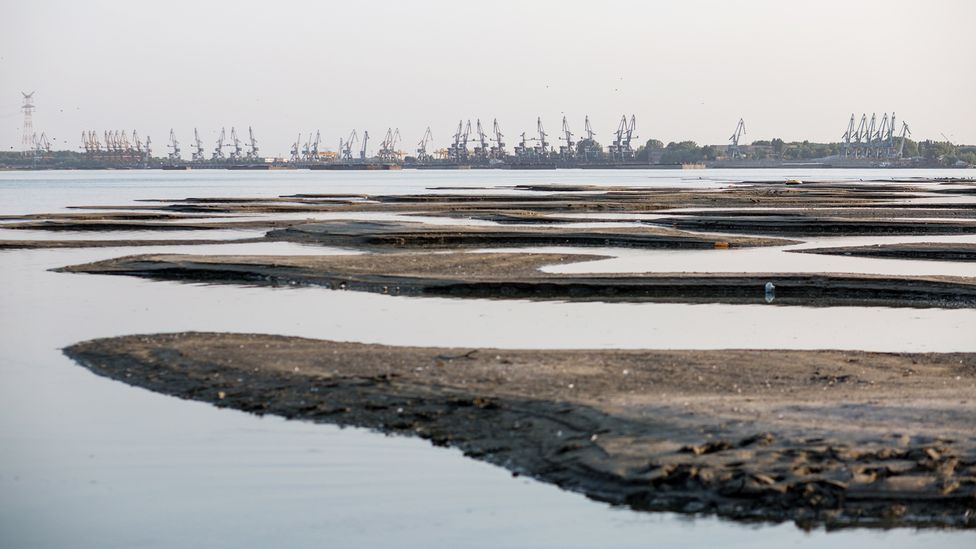
The nuclear industry is facing the hardest test of all, with rising temperatures forcing reactors offline just when their output is most needed. Many nuclear power plants rely on rivers for their cooling systems, and when rivers are too hot or the waters are too low, operators are forced to reduce or shut down output altogether. Earlier this month, Hungary had to reduce output at the Paks nuclear power plant to just over 10 percent and just barely avoided total shutdown, which would have effectively cut off 40 percent of the country’s electricity generation overnight. Even though the Paks plant was never fully taken offline, the sharp reduction in production led to an enormous swing in electricity prices across the region, reaching a blistering €500 a megawatt-hour. And the hottest weeks of the summer could still be yet to come.
In July, France had to reduce output and shut down nuclear reactors at a record pace without sufficient and safe water supplies to cool its reactors as the country recorded its hottest day ever on record. While this might seem to suggest that nuclear power development is incompatible with rising temperatures without overhauling the way we cool them, some experts contend that these reductions are a symptom of policy rather than technological limitations.
“What the heatwave revealed was not a failure of nuclear technology, but rather a narrow, well-understood constraint in how some riverside plants are allowed to operate during extreme heat,” The Conversation recently reported. Furthermore, despite curbing output at reactors across the country, France still had “sufficient generation capacity to meet electricity demand,” according to grid operator RTE.
However, the reduction did have critical impacts on consumers within and outside of France. “It is true that prices rose, exports to neighbouring countries fell, and the grid relied more heavily on gas as well as oil-fired reserve generation,” The Conversation conceded. “Yet these were temporary strains, and at no point was France’s supply in any kind of serious jeopardy.”
However, price spikes and energy poverty are a major concern for consumers, who can expect heat waves to keep getting hotter and more frequent. And turning down the air conditioning is not an option when the mercury is this high. A study from The Lancet found that nearly half a million people in the world died of heat every year between 2000 and 2019, most of whom were elderly. Under these conditions, air conditioning is not a luxury but a life-saving necessity, preventing an estimated 190,000 deaths each year.
Utilities therefore need to adapt their models to account for the changing climate as well as for continued geopolitical volatility, both of which are wreaking havoc on energy markets and squeezing consumers. “Utilities can adapt by planning for summer peaks, making cooling demand more flexible, reinforcing grids for high temperatures, deploying batteries and demand response, and climate-proofing power plants’ cooling systems,” Simone Tagliapietra, senior fellow at economic and policy think tank Bruegel, recently told MIT Technology Review.
Army Selects Vendors, Sites for Nuclear Microreactors
Aug. 27, 2026 | By U.S. Army Communication and Outreach Office , https://www.war.gov/News/News-Stories/Article/Article/4584583/army-selects-vendors-sites-for-nuclear-microreactors/
The Army announced yesterday that the Janus Program selected five nuclear energy vendors and five initial locations to build and operate nuclear microreactors.
In partnership with the War Department’s Defense Innovation Unit, the Army is awarding up to $2.2 billion in total for these microreactors. The project will deliver safe, secure and reliable nuclear power, strengthening the Army’s ability to project power globally, while supporting the revitalization of American industrial capacity and technological leadership.
“Since launching the Janus Program, our mandate from President [Donald J.] Trump and Secretary [Pete] Hegseth has been clear: secure the power our warfighters need to train, deploy and win,” said Dan Driscoll, Army secretary. “Awarding these contracts accelerates our ability to deliver safe, reliable baseload power directly to our installations. We are building the energy resilience necessary to project combat power globally, without relying on potentially vulnerable external grids.”
With private sector funding expected alongside government investment, the Army expects to build and operate more than 20 nuclear microreactors across War Department installations.
The five selected vendors and installations are:
- Antares Nuclear Inc. at Fort Bragg, North Carolina.
- BWXT Advanced Technologies LLC at Fort Campbell, Kentucky.
- General Atomics Electromagnetic Systems at Fort Hood, Texas.
- Radiant Industries Inc. at Fort Benning, Georgia.
- Westinghouse Government Services at Fort Drum, New York.
………………………………………………………………………………………………………………………………………………………………As the Janus Program moves forward, vendors will bring nuclear technologies to other military installations for continued energy resilience across the entire War Department. The Army will announce additional military sites at a later date and continues to drive toward the September 2028 target outlined in Executive Order 14299 for operation of a first reactor.
“The Army is leading the nation in its return to nuclear preeminence,” said Jason Craft, Janus Program manager. “Our selected industry awardees represent the most viable technologies to achieve this capability, setting conditions for both installation energy resilience and operational energy solutions.”
Using a milestone-based payment model, vendors will receive government funding only after successfully hitting specific technical goals. This investment model brings together approximately $2.2 billion across fiscal years 2027-2031, along with significant capital investment from each vendor.
This technology development model will speed up the delivery of next-generation energy solutions to the warfighter and promote innovation while ensuring accountability, Craft said. The prototype reactors will be contractor-owned and operated. Collaboration with utility providers is needed for the success of the Army’s nuclear power strategy and the Janus Program. The Army will work closely with providers on the program to ensure the best possible outcomes, while continuing to collaborate with them now and in the future.
“The Army’s Janus Program has my full support,” said Emil Michael, undersecretary of war for research and engineering and War Department chief technology officer. “The War Department is acting swiftly to implement President Trump’s executive order. … We are unleashing America’s domestic nuclear industrial base to ensure a more resilient and secure energy supply for the joint force.”
1 This Month
23-25 October – on Zoom – World BEYOND War’s annual global conferenc


Shut down the radiation-damaged Heysham nuclear reactors now
To see nuclear-related stories in greater depth and intensity – go to https://nuclearinformation.wordpress.com

Say No to NASA’s Reckless Nuclear Reactor on the Moon
Say No to NASA’s Reckless Nuclear Reactor on the Moon

-
Archives
- October 2026 (219)
- September 2026 (339)
- August 2026 (330)
- July 2026 (355)
- June 2026 (287)
- May 2026 (306)
- April 2026 (356)
- March 2026 (251)
- February 2026 (267)
- January 2026 (308)
- December 2025 (358)
- November 2025 (359)
-
Categories
- 1
- 1 NUCLEAR ISSUES
- business and costs
- climate change
- culture and arts
- ENERGY
- environment
- health
- history
- indigenous issues
- Legal
- marketing of nuclear
- media
- opposition to nuclear
- PERSONAL STORIES
- politics
- politics international
- Religion and ethics
- safety
- secrets,lies and civil liberties
- spinbuster
- technology
- Uranium
- wastes
- weapons and war
- Women
- 2 WORLD
- ACTION
- AFRICA
- Atrocities
- AUSTRALIA
- Christina's notes
- Christina's themes
- culture and arts
- Events
- Fuk 2022
- Fuk 2023
- Fukushima 2017
- Fukushima 2018
- fukushima 2019
- Fukushima 2020
- Fukushima 2021
- general
- global warming
- Humour (God we need it)
- Nuclear
- RARE EARTHS
- Reference
- resources – print
- Resources -audiovicual
- Weekly Newsletter
- World
- World Nuclear
- YouTube
-
RSS
Entries RSS
Comments RSS

