It’s Time to End the War in Ukraine

Anatol Lieven and Ted Snider, October 28, 2026, https://usrussiaaccord.org/anatol-lieven-and-ted-snider-its-time-to-end-the-war-in-ukraine/
The latest peace initiative by the Trump administration deserves the support of Europe, and of Ukraine itself. Only if they are prepared to make a united offer of reasonable terms will be there a chance of Russia abandoning its unreasonable ones; for one reason for Moscow’s intransigence is the Russian belief that European governments are not interested in a peace settlement and will do everything possible to block one.
For a long time, Western advocates of indefinite war supported themselves with myths about Ukrainian victory. That is no longer possible. As Ukrainian opposition MP Oleksiy Honcharenko has stated,
“Right now the reality is this: we are losing the war; we are losing a huge number of people; we do not have our own money not just to pay for the war, but even to operate the country; we are losing business and the economy (for the first time in 100 years we have not smelted a single ton of steel in a week; and indeed, each time the conditions we receive are worse than the previous ones.”
Russia’s air campaign against Ukraine’s energy and transport infrastructure is not only devastating Ukrainian industry (and therefore arms production) and facing the Ukrainian population with a bitterly hard winter; it is also undermining whatever chance Ukraine may have of eventually joining the European Union – something to which Moscow has in principle agreed.
The World Bank estimates the cost of Ukrainian reconstruction at $588 billion. If the war continues, by next Spring it will be even more. Given acute and growing budgetary constraints and public discontent, can European countries sincerely guarantee that they will come up with sums like this? Or go on supporting the Ukrainian war effort indefinitely, when the favorite to win the French presidential elections next summer, Marine Le Pen, has already declared that if elected, she will end France’s contribution?
There will not be the “just” peace demanded by Western governments – but then, has there ever been a completely just peace? The goal should not be pursuing the impossible at the cost of Ukraine’s destruction, but preserving the greater part of Ukraine as an independent state with a viable path to join the EU and defenses strong enough to deter future Russian attack. If a settlement can achieve this, then given the far greater aims with which Moscow launched the war, such a settlement should be seen not as a Ukrainian defeat, but a Ukrainian victory – a qualified victory, but still a victory.
And both when it comes to deterring future Russian attack and to “punishing” Russia, let us remember not only the failure to date of Russian maximalist aims, but the fact that sober and well-researched estimates put the number of Russian dead in this war at up to 350,000, including the almost complete destruction of the army that carried out the initial invasion. If that is not a deterrent, what is?
For a settlement to be reached and to hold, Ukraine must be denied NATO membership and given real grounds to expect EU membership (with a clause like Ireland’s guaranteeing military neutrality). Though it is painfully unfair to Ukraine that it was encouraged to fight a war for a promise of NATO accession that was never sincerely meant, we should remember that Russia’s desire to block NATO membership for Ukraine is not unreasonable.
Quite apart from the fact that this Russian desire corresponds exactly to the US Monroe Doctrine (now explicitly revived by Donald Trump), at the close of the cold war, Gorbachev was promised that Russia would receive the “firm security guarantee” that NATO would not expand east. In 1991, Russia recognized the sovereignty of Ukraine on the basis of the Declaration of State Sovereignty of Ukraine, adopted when it withdrew from the Soviet Union, which stated that Ukraine “solemnly declares its intention of becoming a permanently neutral state that does not participate in military blocs.”
Ukrainian acceptance of loss of the territory under Russian occupation is essential if the war is to end. Far better would have been implementation of the Minsk 2 agreement, by which Kyiv was supposed to guarantee autonomy to the Donbas within Ukraine; but the Ukrainian parliament repeatedly refused to do this, and the West failed to press them to do so. Ukraine will also have to guarantee the Russian language official minority status in Ukraine, along the lines of that enjoyed by the Swedish language in Finland, for example. This would be fully in accordance with the EU’s own rules and norms.
All of this will be extremely painful for Ukraine, and for Ukraine’s supporters in the West. But the question they should ask themselves is that raised by Mr Honcharenko: is it not now probable that in six months the possible terms of a settlement will be even worse for Ukraine? And that after another year of war, Ukraine may be wrecked completely? Is urging Ukraine on to probable destruction really what true friends of Ukraine should be doing?
The trouble with small nuclear reactors
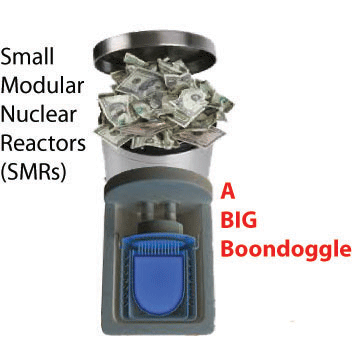
Proponents believe the technology is central to the AI data centre boom. Others think it is a waste of time and money.
In Darlington, Ontario, an expensive experiment is taking place.
Construction of the first of four small nuclear reactors, each around the
size of a football field, is under way. Connection to Canada’s grid is
planned for the end of the decade. One day, each reactor could power
300,000 homes. The project is meant to cost $15bn (C$21bn).
But critics do
not have much faith in that estimate. “This is a ‘first of its kind’
project and we don’t really know what it’s going to cost,” says Mark
Winfield, a professor in the environment faculty at Canada’s York
University. “The risks to ratepayers and taxpayers are enormous.”
The Darlington site is one of a handful of so-called small modular reactors
(SMRs) under construction that are being closely monitored by investors and
policymakers. Some believe the technology — essentially a scaled-down
version of a traditional nuclear reactor — is instrumental to the
cleantech revolution and the future of AI.
Others think SMRs are a colossal
waste of time — a distraction from cheaper, more efficient technologies.
The huge costs involved, they say, are unrealistic. And many designs rely
on fuel from hostile or rival states.
To date, billions of dollars, both
public and private, have flowed into SMRs. Last year, private capital
funding for the technology reached a record $2.9bn, according to PitchBook
data.
Proponents argue that the technology’s time has come. Unlike
renewables, nuclear produces a constant and reliable power stream that does
not need to be paired with battery storage. SMRs are also expected to be
quicker to build than conventional nuclear and take up less space.
In 2021, one SMR developer backed by Amazon, X-Energy, said that its demonstration
project would cost around $2.5bn, a figure that rose to almost $6bn in
2023. X-Energy declined to provide updated estimates but warned in June of
continued “price increases from our suppliers”.
FT 30th Oct 2026,
https://www.ft.com/content/da1af660-c1d0-4c8b-8f94-e84052344448
CANDU’s nuclear reactor business is unsupportable without overseas sales.

Magnificent projections of nuclear expansion within Canada have vanished in a puff of smoke. The industry tantalizes politicians with great expectations of fabulous success just around the corner. Without any public debate, the politicians are quite easily suckered in – only to find that the promises were based on engineering euphoria and little else.
Gordon Edwards, 29 October 26
There have been no domestic sales of CANDU reactors since 1979. And the overseas sales have been minimal – 6 reactor sales in 48 years (since 1979), on average one sale every eight years. That’s not enough business to keep the industry alive.
Overseas customers have been India (2), Pakistan (1), South Korea (1), Argentina (1) and Romania (1) – all before 1979 – and South Korea (3), China (2), and Romania (1) after 1979. The Türkiye sale, if it proceeds, would be new territory for CANDU sales.
Here’s what the World Nuclear organization has to say about the Monark reactor, which is essentially a reactor of the Darlington CANDU design – with modifications – but encased in a single reactor building (without a vacuum building) similar to the Point Lepreau CANDU-6 design.
From https://world-nuclear.org/information-library/country-profiles/countries-a-f/canada-nuclear-power
“In late 2023, AtkinsRéalis (formerly SNC-Lavalin) announced its new Candu Monark design, with several passive safety features. The 1000 MWe design is a heavy water cooled and moderated Candu reactor core of 480 channels, with a two-loop ‘figure of eight’ heat transport system, similar to the design used for the Darlington plant. The fuel is natural uranium in 37-element bundles (37M). The conceptual design was completed in September 2024, and in October 2024 AtkinsRéalis signed a service agreement with the CNSC for familiarization and planning of a future pre-licensing design review. A CNSC preliminary regulatory design assessment of the Candu Monark-D, the variant referenced to the refurbished Darlington plant, began in March 2026. In the same month Candu Energy signed a memorandum of understanding with Türkiye Nuclear Energy Company (TÜNAŞ) to assess Candu deployment there.”
Back in 1982, I wrote two articles in business magazines based on a study by the federal government about the sad state of affairs for the CANDU industry. One was printed in the
Canadian Business Review (Cost Disadvantages of Expanding the Nuclear Industry 1982), the other was for the Canadian
Journal of Business Administration.(Canada’s Nuclear Dilemma 1983). Magnificent projections of nuclear expansion within Canada have vanished in a puff of smoke. The industry tantalizes politicians with great expectations of fabulous success just around the corner. Without any public debate, the politicians are quite easily suckered in – only to find that the promises were based on engineering euphoria and little else.
There were other articles about CANDU export sales from the same period of time. They are illuminating in terms of past examples of overblown hype from the nuclear industry, promises of expansion and foreign sales that did not turn out well. It is useful to know something about the past history….
Feeding the Nuclear Dragon: CANDU exports to China
By Dave Martin, 1995
Documents related to the Sale of CANDU reactors to ChinaMiscellaneous, 1996
Exporting Disaster: The Cost of Selling CANDU ReactorsBy Dave Martin, 1996
Nuclear Sunset: The Economic Cost of the Canadian Nuclear IndustryBy Dave Martin and David Argue, 1996
The CANDU Syndrome: Canada’s Bid to Export Nuclear Reactors to Turkey
By Dave Martin, 1997
Appeal regarding the Akkuyu Nuclear Plant in Turkey
By Dave Martin and the Nuclear Awareness Project
As the AI Bubble Threatens to Burst, We Must Prepare to Fight a Big Tech Bailout

October 28, 2026, By Alexis Goldstein, https://scheerpost.com/2026/10/28/as-the-ai-bubble-threatens-to-burst-we-must-prepare-to-fight-a-big-tech-bailout/
As firms like CoreWeave and NVIDIA start to wobble, let’s demand that the public won’t be the one left holding the bag.
AI data centers are unpopular for good reason: they drive up utility costs for communities, crowd out everything from schools to family farms, and they’re bad for our health. But these data centers are also a financial crisis in slow motion.
The AI ecosystem is built on mountains of debt taken on not only by tech firms like Meta (which borrowed a record-breaking $25 billion in late 2025 to fund the building of data centers), but also by the companies that lease data center space to the Big Tech firms. Many of these firms have spent far more than they have come close to earning in profits: One estimate puts tech industry spending to build data centers at $1.9 trillion, but less than half of that money has been made in revenue.
The financial markets are taking notice.
There’s been significant turmoil in the tech sector over the past month — and at one critical company in particular: CoreWeave.
CoreWeave used to be a Bitcoin mining firm called Atlantic Crypto, but it started to pivot to AI in 2019. CoreWeave leases space to Big Tech firms at data centers they build and maintain. CoreWeave has paid for most of its data centers by borrowing: it currently owes more than $51 billion to investors, including two of the most infamous financial firms: Magnetar and Blackstone, as documented by journalist Elizabeth Lopatto at The Verge.
CoreWeave’s troubles have been piling up: its stock lost a quarter of its value — a 25 percent drop — last week, then dropped another 10 percent on October 22. Bond investors are demanding more money if they’re going to take on the risk of buying CoreWeave debt, a sign the markets are worried about CoreWeave going bust. Investors used to be content to be paid 9.75 percent a year to loan CoreWeave money until 2031; now bond market investors won’t take that risk without being paid almost 15 percent in annual interest.
But perhaps the worst bit of news for CoreWeave is in the market’s falling confidence in its ability to survive, as measured by the cost of an instrument known as the credit default swap, which is essentially a bet that a company is going to go bankrupt (it’s also described as insurance against that company’s bankruptcy). The cost of buying a five-year-long credit default swap for CoreWeave has increased over 164 percent in the past year.
It’s not just CoreWeave facing trouble. One of the most significant companies in the AI ecosystem is NVIDIA, the graphics card maker, which, on September 28, spent $150 billion to buy back shares of its own stock from the overall market.
It was a record-breaking stock buyback — no other company in history had ever purchased that much of its own stock. One reason companies buy back their own stock is to artificially boost the stock price. Often the CEO’s compensation is tied to the price of the stock, and so the company purchases its own stock back to drive up the price, thus guaranteeing the CEO higher compensation.
The market sometimes perceives a stock buyback as a sign of confidence, reinforcing the idea that the company itself is underpriced. But in the case of NVIDIA, it seemed to be an indication that there’s nowhere higher to go, and the only way to raise the price of NVIDIA stock, which has been on a record tear, is to artificially boost it. Financial journalists have questioned NVIDIA’s ability to keep rocketing upward since late 2025. NVIDIA stock is down around 5 percent since this latest buyback.
AI has been sold to the general public as everything from a panacea to a danger to humanity to a roaring bull market, but it’s starting to look more like financial mania.
In late 2025, OpenAI CFO Sarah Friar caused a stir when she suggested the government should backstop AI firms like hers. Astra Taylor and Naomi Klein warned about the potential for an AI bailout in their new book End Times Fascism: And the Fight for the Living World, and propose a new disarmament movement.
To disarm the big tech bomb, including AI, the public needs to be on high alert — as AI firms start to visibly wobble, we need clear demands and firm commitments from our leaders that if it all comes crashing down, the public won’t be the one left holding the bag.
Norway and Finland’s Mediation on Ukraine Will Fail: Europe Cannot do Diplomacy

Serious diplomacy requires a willingness to talk to the other side about things they care about, even when those things are uncomfortable. It requires accepting that a negotiated settlement will not look like a victory parade.
A conversation with Dr Matthew Blackburn
Ian Proud, Oct 27, 2026, https://thepeacemonger.substack.com/p/norway-and-finlands-mediation-on?utm_source=post-email-title&publication_id=3221990&post_id=222317380&utm_campaign=email-post-title&isFreemail=true&r=1ise1&triedRedirect=true&utm_medium=email
Dr Matthew Blackburn of the Norwegian Institute of International Affairs (NUPI) is a friend. We disagree on plenty, and this latest exchange was deliberately sharp, but that doesn’t change the fact that I rate him.
He has written a thoughtful piece for Responsible Statecraft arguing that Norway and Finland are beginning to open a constructive diplomatic path on Ukraine that the rest of Europe has so far refused.
Indeed, on the back of the recent Zelensky visit to Oslo, Støre and Stubb have held a phone call with Putin, the first explicit diplomatic engagement by European nations since Macron called in July 2025.
I read the article, then spent an hour telling him why I think the Norway-Finland effort at mediation will fail. I hope I’m wrong.
Nonetheless, the piece is worth reading. Blackburn points to the strategic cultures of Oslo and Helsinki, the long-standing Norwegian practice of balancing deterrence with reassurance, Finland’s history of managing a difficult neighbour without losing its democracy, and the recent language coming from Støre, Stubb, and Espen Barth Eide.
He sees small states filling a leadership vacuum that the big three (Britain, France and Germany) cannot or will not fill.
He is right that France, Germany, and Britain are all domestically paralysed. He is also right that maximalist rhetoric has crowded out any serious discussion of how this war actually ends.
Where I part company is on the claim that Norway and Finland are now serious about diplomacy in a way that matters. Serious diplomacy requires a willingness to talk to the other side about things they care about, even when those things are uncomfortable. It requires accepting that a negotiated settlement will not look like a victory parade. It requires politicians who are prepared to tell their own publics that some of the slogans of the last three years no longer hold.
I see none of that happening yet.
What I hear instead is the same stock phrases that have blocked talks since 2022: no reward for aggression, Ukraine must be allowed to flourish, a just peace. These are not negotiating positions. They are the price of admission to the European conversation.
Once they have been said, the substantive part is usually that Europe must stay united, that pressure must continue, and that any deal must still somehow punish Russia. That is not an off-ramp. It is a stay-on-the-ramp of diplomacy denial.
Blackburn argues that values and realism can be combined. I understand the attraction of the idea. The problem is that once a war is under way, values mostly function as reasons not to talk. They become the language in which leaders explain to their own people why compromise is betrayal.
Europe does not currently possess the military or economic power to impose its values on Russia. Continuing to act as though it does simply prolongs the conflict and raises the eventual cost to Ukraine.
The Oslo meeting with Zelenskyy changed nothing material. Two Nordic leaders can host a press conference and speak in more moderate tones than Kaja Kallas or Radosław Sikorski. That is not the same as building a workable diplomatic process.
Until European governments are prepared to discuss security architecture, force limitations, and the future of immobilized assets in concrete terms with the Russians, the mediation talk remains nothing more than theatre.
I hope I am wrong.
A serious European contribution to ending the war would be better for everyone, especially Ukrainians. I just do not see the evidence that Norway and Finland, or anyone else in Europe, are ready to supply it.
The constraints that have produced four years of diplomatic paralysis—political survival, bureaucratic risk aversion, and the belief that unity matters more than results—have not disappeared. They have merely found slightly more polite spokesmen in Støre and Stubb, neither of whom jump off of the page as died-in-the-wool doves.
Foreign Office issues urgent warning as UK makes ‘unusual’ nuclear submarine decision
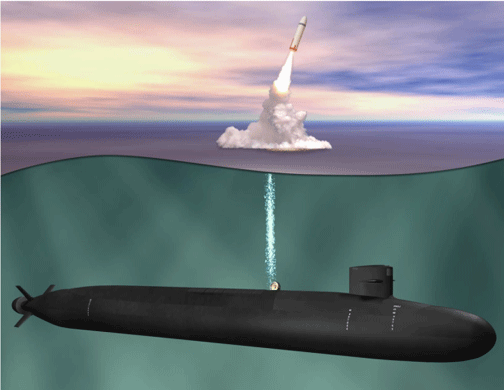
Brits have been warned of travel disruption as tensions in the Middle East escalate, with the UK deploying three nuclear submarines simultaneously
Olivia Beeson UK & World News Reporter, 27 Oct 2026,
https://www.mirror.co.uk/news/uk-news/foreign-office-warning-middle-east-37816937
The Foreign Office has issued an urgent warning to Brits as tensions in the Middle East continue to escalate, with the UK deploying nuclear submarines in an “unusual” action.
The warning was updated on Tuesday, October 27 and warns Brits to prepare for possible flight cancellations and travel disruptions as “the risk of sudden escalation is high” in the Middle East.
The Foreign Office alert covers travel for multiple countries, including Israel, Iran, Saudi Arabia, the UAE, Qatar, Iraq, Jordan, and Yemen.
It comes as Iran has stated its intention to target locations associated with the US and Israel.
The guidance was issued as it is understood that three of the UK’s four nuclear deterrent submarines are out at sea.
The reason for the move is yet to be confirmed, though at least one will be armed with nuclear warheads and on routine patrol, according to Sky.
The other could be working to take over the patrol with the third potentially undergoing sea trials, an expert claimed.
The deployment of the subs suggests improved availability, a problem for the Royal Navy’s submarine service in recent years.
Having three submarines at sea simultaneously is “unusual” for the UK, a source told The Times, though there was no further explanation.
It will definitely be noted by enemies and NATO allies, and could be seen as a signal to opponents. The fourth of the Trident submarines, HMS Victorious, is in Devonport naval base, undergoing maintenance.
A Ministry of Defence spokesperson said: “Our nuclear deterrent is the cornerstone of our national security, protecting the UK and our NATO allies every moment of every day.
“We remain the only European ally to commit its nuclear deterrent to the defence of NATO. This means that all NATO Allies already benefit from the protection of our nuclear deterrent.”
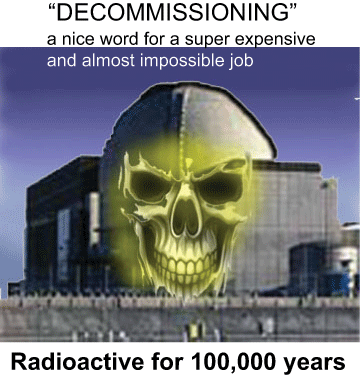
Sellafield reveals £25m Windscale reactor decommissioning plans
By Darren Shield, Carlisle News & Star 28th Oct 2026,
https://www.newsandstar.co.uk/news/26673731.sellafield-reveals-25m-windscale-reactor-decommissioning-plans/
Contractors are being sought for up to £25 million of decommissioning and demolition work at the former Windscale nuclear reactor complex at Sellafield.
Two procurement notices published within five days outline the next stages of work at the Windscale Advanced Gas-cooled Reactor (WAGR), which helped pioneer Britain’s second generation of nuclear power stations.
The larger contract, worth between £10 million and £20 million, involves stripping out buildings, managing radioactive waste, removing asbestos and preparing the complex for further demolition.
A notice published on October 21 states: “The facility is now progressing towards its final phase of decommissioning and demolition.”
It reveals that records confirm the presence of both low-level and intermediate-level radioactive waste, resulting in continuing radiological and contamination hazards.
Buildings within the complex remain under active surveillance and maintenance and are classified as ‘Beta Gamma contamination facilities’.
The contract includes the removal of equipment and other internal structures, radioactive waste management, decontamination, scaffolding and safety-related work.
It is scheduled to run from April 2027 until April 2031.
A separate tender, published on Monday, October 26, seeks a contractor for the demolition of the B55 Office Complex and B55.2 Turbine Hall, at an estimated cost of between £2.5 million and £5 million.
The buildings will be dismantled down to their existing ground-floor slabs using high-reach demolition machinery.
However, contractors face a particular challenge because an electrical substation located within the structures must remain operational throughout the work.
The notice states: “A key constraint is Substation 65, which is located within the B55/B55.2 structure and must remain operational and be protected from demolition impacts, dust and water ingress throughout the works.”
It also highlights uncertainties involving ‘ageing structures, buried services, below-ground voids and incomplete historical information’.
Detailed surveys and demolition engineering will be required to manage the risks.
The WAGR reactor was commissioned in 1962 and operated until 1981, serving as a prototype for advanced gas-cooled reactors subsequently developed for commercial electricity generation.
Its distinctive spherical containment building became a familiar feature of the Sellafield skyline.
Following the dismantling and removal of its reactor core, completed by 2012, the complex entered a period of care and maintenance.
The latest contracts represent further steps towards decommissioning the remaining facilities, although neither notice confirms a date for demolition of the spherical reactor building itself.
Both contracts are being procured by A2R, a joint venture between Altrad and AtkinsRéalis, under Sellafield’s Decommissioning and Nuclear Waste Partnership framework.
The contracts are advertised as suitable for small and medium-sized businesses.
Bids for the larger contract close on November 3, while companies have until November 10 to bid for the B55 demolition work, which is scheduled for April to December 2027.
UN puts media giants on notice over Gaza as journalists’ death toll spirals
by Aleta Moriarty | Oct 27, 2026, https://michaelwest.com.au/un-puts-media-giants-on-notice-over-gaza-as-journalists-death-toll-spirals/
UN Special Rapporteur, Francesca Albanese has released a blistering report on media complicity in war crimes as Israelis head to the polls. Aleta Moriarty reports.
United Nations Special Rapporteur report.
The report, Truth under the rubble: media in the time of genocide, by Special Rapporteur Francesca Albanese, was presented to the General Assembly recently and publicly launched today. It finds Israel’s failure to stop incitement on its airwaves is a continuing breach of the Genocide Convention and defies the International Court of Justice’s January 2024 order to prevent and punish it.
It also puts broadcasters and social media companies on notice: since that order, saying no platform can claim ignorance of the risk, and where a company knowingly provides practical assistance that has a substantial effect on international crimes, “questions of complicity arise”.
Massive toll on Palestinian journalists and their families
The Committee to Protect Journalists calls Gaza the deadliest war for journalists ever recorded. Israeli forces have wounded more than 400 journalists, and the report finds around
“70 of those killed were killed as reprisal for their work.“
More than 150 journalists’ homes and media offices and institutions have been destroyed, and Israel has completely destroyed 81 per cent of Gaza’s information and communications infrastructure. This devastation has not just been focused on the journalists, with around 710 journalists’ relatives also killed, 436 of them in the first four months alone.
More than 150 journalists’ homes and media offices and institutions have been destroyed, and Israel has completely destroyed 81 per cent of Gaza’s information and communications infrastructure. This devastation has not just been focused on the journalists, with around 710 journalists’ relatives also killed, 436 of them in the first four months alone.
Deliberate targetting
Photojournalist Fatma Hassouna was killed with five family members when precision-guided munitions struck their apartment in April 2025, a day after her documentary about life during the genocide was selected for Cannes.
In August 2025 a “double-tap” strike on Nasser Hospital killed 22 people. The first strike killed Reuters cameraman Hussam Al-Masri, and the second killed four more journalists who’d rushed to the scene. Israel said it had hit a “Hamas camera”. It belonged to Reuters.
Israel’s military says it doesn’t intentionally target journalists. In October 2023 the Israeli military reportedly set up a “legitimisation cell” that has systematically recast Gaza-based journalists as Hamas operatives, the report says, creating a pretext before attacks and a justification after them.
More than 100 Palestinian journalists and media workers have been detained since October 2023, and around 30 are still held. Those released describe physical assaults, sexual violence including rape, forced stress positions, sensory deprivation and medical neglect.
Dehumanisation and incitement to genocide
Dehumanisation and incitement to genocide
Under Article III of the Genocide Convention, direct and public incitement to commit genocide is a crime in its own right, the report explains, “complete upon utterance or publication and applicable to officials, broadcasters and private media actors”. No one has to act on it. Albanese finds that some statements broadcast in Israel meet that threshold.
Most people picture arms manufacturers when they think of business entities complicit in genocide. However, according to a 2024 Israel Law Review paper on Ben & Jerry’s exit from Israeli settlements, only two cases before international criminal tribunals since Nuremberg have held individual corporate defendants accountable, and both arose from Rwanda’s 1994 genocide.
The best known is the Media Case. In December 2003 the International Criminal Tribunal for Rwanda convicted RTLM executives Ferdinand Nahimana and Jean-Bosco Barayagwiza, whose station became known as “Radio Machete”, along with Kangura owner and editor Hassan Ngeze. A third case, against RTLM founder Félicien Kabuga, collapsed when he was found unfit to stand trial.
Broadcasters culpable
Albanese leans on the Nahimana judgment to argue that when presenters’ calls for genocide go unchallenged and unrepudiated by the broadcaster, the people who control the outlet carry the responsibility.
There are several worrying examples cited in the report. Channel 14 aired singer Eyal Golan’s call to “erase Gaza, don’t leave a single person there”, along with statements calling for a “Holocaust”, including “gas chambers”, and urging viewers to “destroy, kill, and obliterate”.
Three Israeli civil society groups listed hundreds of instances of incitement on the channel in a May 2025 High Court petition, yet the broadcasts continue unchecked. Channel 12 journalist Yehuda Schlesinger, who argued sexual violence against Palestinian detainees should become state policy, was temporarily suspended, then joined Channel 14.
Mainstream and pro-government Israeli media have described Palestinians as “Amalek”, “monsters”, “a cancerous growth” and
“even “cannibals” who “must be eradicated”.“
The report says this rhetoric comes with a denial of civilian status, with Israeli media asserting that “there are no innocents” in Gaza, that Palestinians are “not civilians” and that Gaza is inhabited by “two and a half million terrorists”.
Double standards and censorship
Double standards and censorship
The report highlights how western outlets widely reported unverified claims, including that Hamas beheaded babies on October 7 and that Palestinian journalists killed by Israel were “terrorists”, the report says, while corrections received far less prominence.
German broadcaster ARD’s editorial guidance presents civilian casualties as primarily a consequence of Hamas’s alleged use of “human shields”. Much of the media reproduced what Albanese calls “humanitarian camouflage”, presenting so-called safe zones and evacuation orders as civilian protection.
Content analysis cited in the report found the BBC downplayed or omitted Israeli responsibility in 83 per cent of relevant headlines, and The New York Times in 65 per cent. The BBC still runs its story on six-year-old Hind Rajab, killed by Israeli forces, under the headline
“Hind Rajab, 6, found dead in Gaza days after phone calls for help“.
lp“.
Between October 2023 and August 2025, the Times invoked Hamas “human shields” 176 times and the BBC 81 times. The Times mentioned sexual violence against Israelis 76 times and against Palestinians four times across two sample periods.
At Germany’s ZDF, 90.7 per cent of uses of “barbaric” referred to Israeli victims, and the word was never applied to attacks on Palestinians. Palestinian children made up about 99.7 per cent of child deaths, yet appeared in just over half of CNN’s personalised stories about child victims.
Israel’s most important ‘weapon’
Alongside propaganda, high levels of censorship are also reported. Israel’s military censor banned 1,635 articles in 2024 and redacted another 6,265, 21 interventions a day. Prime Minister Benjamin Netanyahu has described social media to US-based influencers as Israel’s most important “weapon” in what he calls the “battle for truth”.
“The report also explicitly names Antoinette Lattouf,“
itly names Antoinette Lattouf,
unlawfully dismissed by the ABC after reposting a Human Rights Watch report on starvation in Gaza.
The report saves some of its sharpest findings for tech companies.
With Palestinian journalists killed and foreign media shut out of Gaza, Meta, X and Alphabet Inc. (Google) became the principal gatekeepers of information on Palestine, and the report finds recurring patterns of discriminatory moderation, censorship and amplification of Israeli government narratives.
Leaked Meta data shows about 38.8 million Facebook and Instagram posts have been removed, banned or suppressed since late 2023, and engagement with major Palestinian news outlets has fallen 77 per cent. TikTok and Meta reported compliance rates of 99.2 and 94 per cent with Israel’s takedown requests.
“Meta had been warned before.“
In 2018 the UN fact-finding mission on Myanmar found Facebook had been “a useful instrument for those seeking to spread hate,” a conclusion Meta’s own commissioned assessment accepted.
Israel signed contracts worth roughly US$50 million, including with Google and X, for ads dismissing famine reports, among them a message telling viewers “There is food in Gaza. Any other claim is a lie“.
Platforms kept taking that money after famine had been confirmed and the ICJ had ordered aid let in. Google reportedly concluded the famine-denial ads didn’t breach its policies, and it carried paid ads calling the ICJ genocide case a “blood libel”, discouraging donations to UNRWA and attacking Albanese’s previous report.
Platforms also left up campaigns smearing Palestinian journalists before they were killed, including claims that Reuters and AP reporters had advance knowledge of 7 October, which both agencies refuted.
What the Report demands
What the Report demands
Albanese wants the International Criminal Court prosecutor to investigate direct and public incitement to genocide by government officials and media figures, and the General Assembly to set up an independent mechanism to preserve evidence of crimes against journalists, secure the release of detained journalists and open Gaza to international media and human rights monitors.
Governments are urged to prosecute attacks on Palestinian journalists, treat their footage and archives as evidence, and review public funding and partnerships with media organisations and platforms that spread incitement or help conceal atrocity crimes.
Media organisations and platforms are told to stop “laundering propaganda through the journalistic form”, verify belligerents’ claims before publishing, run corrections as prominently as the original story and stop retaliating against journalists. “Accountability depends on the survival of the record,” the report concludes. “Without it, neither justice nor the prevention of future atrocities remains possible.”
Aleta Moriarty
Aleta is a practitioner researcher in human rights, disability inclusion and gender. She is completing a PhD at University of Melbourne and has twenty years of experience working across agencies including the United Nations, UN Women, World Bank, and the University of Melbourne. She is currently standing as an Independent Candidate for Western Victoria. Her website is www.aletamoriarty.com
Revolution Or Extinction. The Choice Is Ours.
Caitlin Johnstone, 28 Oct 26, https://www.caitlinjohnst.one/p/revolution-or-extinction-the-choice?utm_source=post-email-title&publication_id=82124&post_id=222446048&utm_campaign=email-post-title&isFreemail=true&r=1ise1&triedRedirect=true&utm_medium=email
Humanity has the freedom to fail this test and go the way of the dinosaur. We’re allowed to take that path if that’s what we collectively choose to do.
We can allow a few massively outnumbered plutocrats and empire managers to drive our species to extinction via climate disaster, nuclear holocaust, or AI apocalypse if we want to. We are completely free to do that.
I don’t know about you, but I actually find this a comforting thought.
When you take a close look at the existential hurdles that humanity is faced with, it can feel pretty bleak. Global capitalism is destroying the biosphere we all depend on for survival. The western empire is getting increasingly comfortable engaging in reckless brinkmanship with nuclear-armed rivals. The AI arms race is shoving through wildly unpredictable technologies at a rapidly accelerating rate with alarmingly little institutional oversight or caution.
But when you notice that all of these existential threats are entirely man-made, you realize that this means humanity has the ability to un-make them as well. We have the freedom to do either. It’s up to us.
I find this a comforting insight because it puts the ball in our court. We can choose to rise up and use the power of our numbers to save ourselves from doom, or we can choose not to. The universe, apparently, is fine with either choice. If it wasn’t, we wouldn’t be holding the ball.
And who am I to argue with the universe? If the universe wants humanity to have the freedom to either go extinct in the near term or survive deep into the distant future, then I can make space within myself to allow that freedom, too.
Whether or not we make it is not up to me as an individual. I can control my own actions, but I cannot control the actions of my fellow homo sapiens as a whole. And if our species as a collective decides that revolutionary change is not desirable enough or too scary or too difficult to seize, then I can submit to the will of the collective. I can hold enough grace and compassion for my species to honor its sovereign decision.
“We’ll either pass the test or we won’t.” That’s what I tell myself when things are looking dark. I give humanity the freedom to make its decision, and in so doing I free myself. I do what I can to move the needle in whatever way my limited means allow me to, and then beyond that I submit to the will of our better angels.
I do my work, and then I let go. I let go and enjoy my time on this beautiful blue planet here. Because I don’t know how much longer it will last.
Ukraine quagmire? Yes, but it’s for NATO, not Russia
the EU is donating €90 billion to Ukraine just for 2026 and 2027 alone, never mind the €200 bn it gave from 2022 to 2025. About one-third of this money is used to manufacture and supply drones. This vast expenditure has transformed Ukrainian territory into a giant high-tech killing field. Traversing such territory is an unprecedented challenge.
Finian Cunningham, October 27, 2026, https://strategic-culture.su/news/2026/10/27/ukraine-quagmire-yes-but-its-for-nato-not-russia/
Strategic Culture Foundation spoke with Aiden Minnis, a British-Irish volunteer fighting for Russia on the frontline in Kharkov Oblast.
Aiden Minnis left Britain in 2023 as a volunteer to fight for Russia Western politicians and media claim that Russia is bogged down in a Ukrainian quagmire. We are told that Russian forces are taking heavy losses, held in a stalemate by gritty Ukrainian soldiers. Nearly five years after invading, it is claimed, Russia’s military is still confined to Ukraine’s far eastern territory with little progress.
But this upbeat Western narrative is flawed and wearing thin. The NATO-backed Ukrainian regime is straining from collapse. The grinding losses on the battlefield, as disproportionate body exchanges attest, the corruption within the Kiev regime, the dredging of conscripts to include women, and the incessant pounding by Russian air strikes are exposing a state teetering on defeat.
Even U.S. President Donald Trump seems to have sobered up from drinking the Kool-Aid about Ukraine winning. He’s peeved and telling Vladimir Zelensky it’s time for him to step aside and cut a peace deal.
There is a growing foreboding sense that European NATO leaders are dreading the inevitable implosion of their “Ukraine project”. As German MEP Michael von der Schulesburg pointed out in an interview with Glenn Diesen, European politicians are increasingly uneasy that their lies about Ukraine will soon be blown wide open. There will be hell to pay for bankrupt economies and impoverished societies, all based on lies.
Still, it is a fair question: why aren’t Russian forces making more rapid advance along the 1,000 kilometer front line? If the Kiev regime is so shaky, why isn’t Russia finishing it off quickly?
Aiden Minnis, a British-Irish volunteer serving in the Russian army, said he believes that victory is coming and is inevitable. But he explains that the advance is deliberately slow. The “meatgrinder” people refer to about the battlefield is not just about inflicting losses of military personnel. He says the conflict in Ukraine is being fought strategically as an attritional war to defeat the Western NATO alliance.
“We have defeated the Ukrainian army three times over from the losses it has suffered,” says Minnis. “This war would have been over a long time ago, if it were not for the systematic involvement of NATO.”
The amount of weaponry and personnel that NATO has funneled into Ukraine is on a scale that few in the West can imagine, he noted.
“NATO effectively runs and directs the war for Ukraine. That includes generals and special forces from NATO countries inside command structures and military units in Ukraine, and not always sheep dipped into the foreign legion either. Some are outright working without cover.
“They use NATO radars and intelligence to conduct combat operations and terrorist attacks inside Russia. None of the fighting, or rather 90 per cent of it in Ukraine, would be possible without massive Western assistance,” says Minnis.
For example, the EU is donating €90 billion to Ukraine just for 2026 and 2027 alone, never mind the €200 bn it gave from 2022 to 2025. About one-third of this money is used to manufacture and supply drones. This vast expenditure has transformed Ukrainian territory into a giant high-tech killing field. Traversing such territory is an unprecedented challenge.
Aiden Minnis left Britain in 2023 as a volunteer to fight for Russia. He has served in Donetsk and Lugansk as a sapper clearing explosives, as well as in the evacuation of civilians and wounded. Currently, he is deployed as a rifleman in a regiment on the front line in Kharkov Oblast near Kupiansk.
The British media have called him a criminal and a traitor. He says he doesn’t care because he has no intention of returning to the United Kingdom.
“I am labelled a traitor, but I only ever swore allegiance to one country… Russia, and I never broke it. And as long as I have breath in my body, you will never see me swear allegiance, or fight for the butcher’s apron [British Union Jack flag]. My soul is Irish and now Russian.”
Minnis says that what the Western media report about the war in Ukraine is “total lies”.
He says that Russian forces are making slow but relentless advances along most of the frontline. The pace is incremental because the Russian military is trying to minimize casualties among its troops and the civilian population.
“If you look at the exchanges of dead soldiers that are agreed upon from time to time, the Ukrainian side’s casualties are 10 times those of Russia.
“Also, despite the scale of this war – the biggest in Europe since World War Two – the number of civilian deaths is relatively low, and that’s because Russia is trying to minimize these casualties,” he says.
Minnis says that another factor that makes advances slow-going is that the NATO-backed regime uses tactics of boobytrapping buildings with civilians inside them. He says that when Russian forces take a village or town, the houses are often rigged with explosives, with families inside. This makes for painstaking work by sappers to defuse boobytraps.
And, of course, the massive deployment of drones is a big problem for infantry. The European Union and Britain have flooded Ukraine with drones that create “death zones.”
“The use of drone walls is in place of dwindling Ukrainian conscripts. These death zones make our ground progress difficult.”
However, Minnis said NATO’s deployment in Ukraine is a double-edged sword. The 27-nation military bloc has certainly made a Russian victory more difficult to achieve. It has prolonged the proxy war with millions of Ukrainian casualties.
But this war of attrition is grinding down the NATO arsenal with colossal impact. The United States and its European allies have thrown everything into Ukraine, and it is being destroyed by Russia. It’s a giant demolition site. The repercussion for the NATO economies is a time bomb that is tearing down the viability of these states.
Ukraine is a quagmire for NATO, not Russia. The battlefield does not have to move westwards; the Western powers are being sucked under.
In World War Two, the Soviet Red Army pushed all the way to Berlin. In today’s war, the new Berlin is in Ukraine, where Russia’s enemies are being ground down, hollowed out, and buried.
Aiden Minnis adds: “Russian leader Vladimir Putin is fighting this war very humanely; dare I say such a thing is possible in a war. But it’s a two-fold strategy: it’s to limit civilian casualties, but also a war of attrition, because what’s happening in real time is the demilitarisation of Ukraine, which won’t be able to wage a war again once this war is won by Russia, and also the demilitarisation and deindustrialization of NATO countries.”
1 This Month




Shut down the radiation-damaged Heysham nuclear reactors now
To see nuclear-related stories in greater depth and intensity – go to https://nuclearinformation.wordpress.com

Say No to NASA’s Reckless Nuclear Reactor on the Moon
Say No to NASA’s Reckless Nuclear Reactor on the Moon
-
Archives
- October 2026 (289)
- September 2026 (339)
- August 2026 (330)
- July 2026 (355)
- June 2026 (287)
- May 2026 (306)
- April 2026 (356)
- March 2026 (251)
- February 2026 (267)
- January 2026 (308)
- December 2025 (358)
- November 2025 (359)
-
Categories
- 1
- 1 NUCLEAR ISSUES
- business and costs
- climate change
- culture and arts
- ENERGY
- environment
- health
- history
- indigenous issues
- Legal
- marketing of nuclear
- media
- opposition to nuclear
- PERSONAL STORIES
- politics
- politics international
- Religion and ethics
- safety
- secrets,lies and civil liberties
- spinbuster
- technology
- Uranium
- wastes
- weapons and war
- Women
- 2 WORLD
- ACTION
- AFRICA
- Atrocities
- AUSTRALIA
- Christina's notes
- Christina's themes
- culture and arts
- Events
- Fuk 2022
- Fuk 2023
- Fukushima 2017
- Fukushima 2018
- fukushima 2019
- Fukushima 2020
- Fukushima 2021
- general
- global warming
- Humour (God we need it)
- Nuclear
- RARE EARTHS
- Reference
- resources – print
- Resources -audiovicual
- Weekly Newsletter
- World
- World Nuclear
- YouTube
-
RSS
Entries RSS
Comments RSS

