Success at last! News Corpse is after me!

Noel Wauchope, 3 Oct 26, https://wauchope.substack.com/p/success-at-last-news-corpse-is-after
And here was I, all these years, thinking that only a few ant-nuclear nuts ever bothered to read my Australian website antinuclear.net. I am so chuffed that News Corpse has finally recognised my work.
It turns out that News Corpse has suddenly noticed my wicked infringement of copyright, that I did, just the bare 8 years ago. Yes, this evil act occurred on an article about Submission 76 to Senate Inquiry on Selection process for a national radioactive waste management facility in South Australia. It was about a farmer, Donald Fels, who opposed nuclear waste dumping in his area. What News Corpse didn’t like, was that I had used a picture of this lovely rural area, with animals grazing. I must have gathered this image from the Internet, and apparently, it was a News Corps image, and under copyright.
Interestingly, on making this discovery of my criminal action, News Corps did not bother to write to me and ask me to please remove the image, – (which I can tell you, all the others do, and I remove those immediately). No, they felt that this matter is so urgent that they employed the Visual Rights Group to demand from me both legal documentation that I had the licence to use the picture, and remuneration – – AUD $525.00, within 14 days, for misuse of its image under section 115(2) and s115(4) section 31 of the Australian Copyright Act.
Anyone who knows me at all well, will know that $525.00 is whopping for me, as I survive on a very low income. But that’s not the point. Actually I’m not sure what IS the point.
Does the use of a pretty picture of a few horses grazing, that was shown 8 years ago, somehow became suddenly important now to News Corps well-being? Or is it that they would prefer that I cease and desist from my current project, which is publishing many of the over 1000 Submissions to the AUKUS Public Inquiry? News Corps itself is strangely reluctant to publish any news at all about this Inquiry.
Last time this happened to me, it was quite a few years ago. The uranium mining company Paladin became most offended, because I quoted an article from a Mali newspaper. That article had said that the Paladin mine manager in Mali at the time was “insensitive to the needs of the local community”. Paladin sent Ashurst legal company after me. That time, a very good journalist saved me, publicising the issue in a national newspaper, and Ashurst backed down. That journalist has since gone on to build his own wonderful independent media.
Who knows what will save me this time? Meanwhile, I have immediately removed the offending picture. I just can’t bring myself to apologise to News Corpse. I mean, I usually do the polite thing. But I have in mind that old feminist chant ‘ “Don’t be too polite, girls”. I really think that it’s pathetic of News Corps to go for me so rudely. And I’d have a bit more respect for them, if they did cover this big AUKUS Public Inquiry. Of course, the submissions are already showing me that the nuclear lobby is boycotting the whole issue.
Zelensky lashes out at Ukraine’s Western backers

Fri, 02 Oct 2026, https://www.sott.net/article/508685-Zelensky-lashes-out-at-Ukraines-Western-backers
The EU is not doing enough to assist Kiev in the conflict with Moscow, the Ukrainian leader has claimed.
Ukraine’s Vladimir Zelensky, who is dealing with a major hole in his country’s budget and high-profile corruption scandals in his government, has criticized Kiev’s Western backers for their reluctance to provide him with more money.
Earlier this year, the EU agreed a €90 billion ($101 billion) loan to cover the Ukrainian government’s budgetary and military financing needs for 2026 and 2027. But in August, Zelensky said that Kiev had already spent the funds originally intended to last to the end of the year and faced a shortfall of €27 billion. The announcement came after the Ukrainian leader’s 40-day PR pressure campaign on Russia, which involved long-range strikes on energy and civilian infrastructure, failed to deliver the desired results and triggered a harsh response by Moscow.
In an interview with the Financial Times published on Friday, Zelensky complained that the acute budget deficit is stopping Ukraine from developing and manufacturing some key weapons.
When asked if he believed that his foreign supporters were doing all they could to assist, the Ukrainian leader replied: “Not enough, of course not enough.”
The FT noted that the introduction of faster jet-powered drones by Russia in recent weeks had become an additional challenge for Ukraine, which is already experiencing a shortage of US-made Patriot interceptors and other air defenses.
Zelensky acknowledged that a lack of money to purchase engines for interceptor UAVs was one of the hurdles. “We really import a lot of engines. There are some engines of our production, but not enough,” he said.
A Russian drone and missile campaign against military-related targets in Ukraine intensified this year in response to terrorist attacks by Kiev, crippling its energy infrastructure and leading to blackouts and fuel shortages. It has also destroyed most of the country’s storage spaces, affecting the supply of food and other goods. Wheat and other exports have also been reduced significantly by attacks on the port of Odessa and Ukraine-bound vessels in the Black Sea, leaving Zelensky’s government almost entirely dependent on foreign aid.
Bloomberg reported on Thursday that the EU turned down Ukraine’s plea to speed up the payouts of its loan. Officials in Brussels expressed belief that doing so would not solve the problem, but only delay it until 2027, the agency said. The bloc suggested that Kiev’s other partners, including Canada and Japan, could provide the funds to cover its pressing needs, it added.
EU bureaucrats were surprised to learn that Ukraine ran out of money so fast, according to Bloomberg. Russian Foreign Ministry spokeswoman Maria Zakharova warned earlier this year that the bloc’s loan to Kiev would be swiftly plundered by Zelensky and other corrupt officials from his team.
On Thursday, Russia’s Foreign Intelligence Service (SVR) reported about a scheme involving the supply of EU-funded handguns to Ukrainian security services at prices inflated threefold.
Kiev and its Western backers are “traditionally” plugging the $27-billion hole in Ukraine’s budget “using funds taken from ordinary citizens of European states,” the SVR said.
European leaders are slashing social spending to keep the US happy
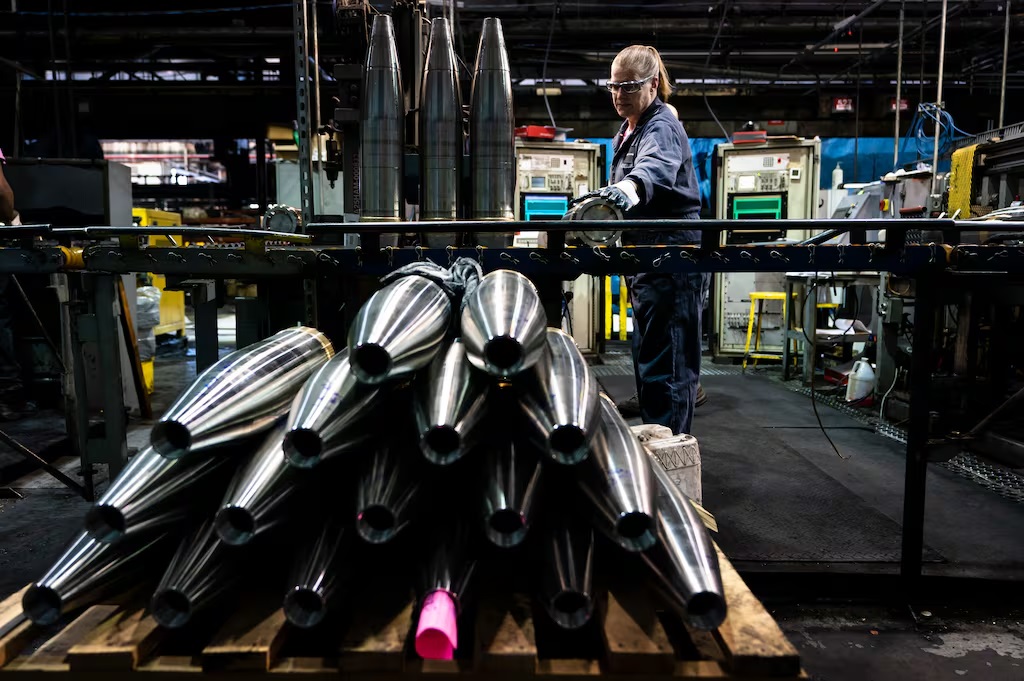
Military budgets paint a target on social spending
Kevin Cashman, 30 September 2026, https://newint.org/military/2026/military-budgets-paint-target-social-spending?utm_source=ni-email-whatcounts%20&utm_medium=email&utm_campaign=YYYY-MM-DD%20enews%20-%20Enews%202%20October%202026&utm_content=1%20NI%20Main%20List1%20-%20enews%20-%20International%20AND%20North%20America
The US is pushing Europe to choose warfare over welfare. Now is the time to reassess NATO membership, argues Kevin Cashman.
Wildfires are raging across Europe. Heatwaves are killing tens of thousands. The US, supported by many European governments, manages the Palestinian genocide with Israel as it wages an unjustifiable war on Iran and tightens its stranglehold on Cuba. Energy and food prices surge around the world, while US officials openly talk about war crimes and fantasize about dismantling the International Criminal Court.
European leaders are not strategizing on how to insulate their constituents from reckless US behaviour. Instead, they are in the grip of a new wave of militarism, plotting to slash social spending to make the US happy. NATO’s spending target is being used to reorder Europe’s public finances: military spending is exempted from fiscal constraints while social investment and climate programmes are on the chopping block. Britain is leading the charge.
Former prime minister Keir Starmer’s last weeks in office were dominated by his attempt to sell the Defence Investment Plan (DIP) to his ministers and NATO allies. It adds nearly $84 billion (£63 billion) to the Ministry of Defence’s budget over the next four years, including an extra top-up of $20 billion (£15 billion) agreed this summer – in response to a surprise request from the ministry for $37 billion more shortly after the last spending review.
The plan is not an anomaly. It is one national installment of a NATO-wide reallocation of public resources to militarism to meet an arbitrary spending target – driven from Washington.
Starmer said the plan would create a ‘defence dividend’ for ‘every region and community’ in Britain, implying that defence will drive growth and create jobs. These claims do not stand basic scrutiny. For one, military spending generally creates fewer jobs and drives less growth than equivalent investment in rail, health, libraries and museums, education, or care – in part because more money leaves the country directly and further down the supply chain. As such, even though the military budget is larger than it was in 1980 in real terms, it supports far fewer jobs.
It gets worse. The recent top-up negotiated with the Ministry of Defence (MoD) and its lobbyists was unfunded. Just before he handed over the government to Andy Burnham, Starmer chose to cut investment across the government by $9 billion, concentrated in the energy and transport departments. This left a further $10.9 billion that may yet be funded through more cuts.
Our analysis at Transition Security Project estimated that the expanded DIP would lead to a net loss of thousands of jobs. Andrea Egan, general secretary of Unison, the country’s largest union, described the plan’s priorities as ‘extra cash for war and overseas interventions but less for schools and hospitals’.
These cuts have received less attention than the military establishment’s displeasure at ‘only’ receiving $20 billion more – rather than every last billion extra that they had demanded. George Robertson, who led the defence review process that was fully funded just one year ago, said the extra funding was insufficient and the ‘challenge is now bigger, more serious, and earlier than we had anticipated’.
John Healey, now British Chancellor, quit his role as defence secretary when it became clear that Starmer was not going to provide the full $37 billion. This is an inversion of every other area of public life, where the demand is to do more with less – a far cry from Starmer’s demand of ‘no more money without reform’ for the National Health Service. The Labour Party’s climate plan, which had an identical price tag to the MoD’s latest request, was promised to bring jobs, energy security and energy bill reductions before being abruptly dropped.
The US’s comically bloated military budget undergirds an ecosystem of military contractors who then lobby for more increases
A coercive strategy
This dynamic is not confined to British politics. The US government is demanding more and providing less to NATO members, even though the Cold-War era alliance has always been about US interests and, as NATO secretary general Mark Rutte put it, serves as a ‘power projection platform for the United States’. With this new orientation, the US has set a target to increase military and security spending to 5 per cent of GDP by 2035.
Across NATO, which currently averages 2.2 per cent spending, it is estimated that this will result in about $8 trillion more spent on militaries by 2035 with annual spending reaching $4.2 trillion. This is not just an arbitrary target, but part of a larger coercive strategy to further subordinate Europe to US political and economic demands by sapping public resources and undercutting states’ ability to address pressing problems that matter to the public. This strategy furthers dependence on the US, while creating a cycle where public disillusionment feeds into rightwing movements, propped up by elites and the US, which then further hollow out productive capacity and social spending.
This approach is working. At July’s NATO summit in Ankara, Starmer received little praise for bowing to military lobbyists while slashing public investment and international aid. Instead, Britain was castigated by the US and the press for not doing enough. It is a similar story in other NATO countries.
To meet targets, the Netherlands is planning cuts to aid and social spending, including limiting unemployment benefit to a year and raising the state pension age beyond the current 67. In Germany, chancellor Merz says that the social welfare system is no longer viable and is cutting housing and parental benegits, while raising military spending dramatically by exempting it from borrowing rules to make space to meet future targets. In addition to other cuts, Britain’s international aid was cut to its the lowest level since 2008 to accommodate military spending, a move that aid network Bond called ‘apalling’ and ‘reckless’.
The effects of these cuts across Europe mean devastating consequences around the world, as programmes supported by aid are ended, and a further deterioration of human security is witnessed in Europe. No matter that both of these effects makes national security more challenging in various respects; the press has been largely supportive of this military largesse. An editorial in Le Monde characterized military spending as everyone’s burden in the face of a grim reality.
The debate in NATO capitals on military spending targets has tried to avoid a public conversation on militarism. One aspect of that conversation should be whether military spending is genuinely defensive. The Defence Investment Plan, for instance, says that Britain should have a persistent presence in the Middle East, Indo-Pacific, Latin America and the Caribbean, and military engagement with states around the world. This is not spending on territorial defence or deterring attack ; it is projecting power and showing allegiance to Washington.
Wasteful aggression
To justify this abuse of public resources and the harsh tradeoffs governments know are unpopular, spending must be sold inaccurately as supporting defensive measures to counteract inflated threats or as a driver of the economy.
Even when spending is focused on defence, it often doesn’t meet basic requirements about accountability. Military spending is rife with fraud and waste. This is easy to see in British military procurement: the Ajax vehicle programme is nearly a decade delayed and a billion pounds over budget, and continues to injure soldiers testing it. A conservative estimate for the scale of fraud and waste in the country’s military spending puts it at billions per year.
Since it is undeniable that human security is fundamental to national security, spending on green industrialization, firefighting, hospitals and care facilities, and public infrastructure, should count towards defence targets
Another problem for NATO members is that much of military spending flows out of their countries, as acknowledged by the Dutch economic affairs ministry. Most European military spending goes to the US: 86 per cent of Britain’s arms imports come from the US and the US share of European NATO imports is 64 per cent and rising. Rutte put the political economy of the European arms trade in surprisingly clear terms recently, saying European military spending sustains nearly 200,000 jobs in the US. This might be seen as a protection racket, but since the US appears to create more problems than it solves, it could be better described as transatlantic tribute between elites. As the public in Europe pays for US decline, elites still capture a share of the extraction the US undergirds.
These problems have become acute for Europe for two structural reasons. The first is the self-imposed fiscal framework adopted by many European governments. By restricting borrowing and other ways of mobilizing public financing, this framework leaves governments with only two ways to finance higher spending: raising taxes or cutting other programmes. These constraints weaken growth and employment and risk locking countries into repeated cycles of austerity. Fiscal rules should be relaxed or removed for productive public investment, but instead governments have largely chosen to suspend or circumvent them to meet NATO spending targets.
The structure of the global economic system is the other reason. Because of the outsized role of the dollar, the US uniquely accrues huge economic and non-economic benefits. It can receive goods and services from abroad for very low cost, allowing it to mobilize resources on a massive scale. But rather than focus on productive investment like solving global problems, US governments largely squander this ‘exorbitant privilege’ by funnelling money to the wealthy.
A good example of this is the US’s comically bloated military budget, which is by far the largest in the world and has few guardrails. This massive spending undergirds an ecosystem based around military contractors that lobbies for more increases, inflates threats and agitates for war, and presses for the same in US client states. But even US military officials were bewildered by the proposal for a $500 billion increase in the latest budget – one that does not need to be offset by cuts.
European militarism at Trump’s behest looks less like a defence dividend and more like a drain: where Europe’s public resources are siphoned off to meet arbitrary targets by a complicit elite and sent in large part to the US. From the US perspective, maintaining and expanding this extraction is the point. It wants a weaker Europe that is dependent on US military exports and technology, and which also dutifully collaborates to reach US economic and foreign policy objectives.
US foreign policy has cost Europe dearly. The sanctions-first Western response led by Washington, and rejection of diplomacy early in the Ukraine war, led to Europe paying well over $1 trillion in higher energy bills as it switched its dependence from Russian natural gas to more costly US liquified natural gas. The US-Israeli war on Iran continues in the same vein. Higher energy prices are again costing Europe billions and leading to record profits for energy companies, which flow disproportionately to the US and the wealthy. At the same time the US stifles European industry.
NATO members meeting their spending targets on time is not likely to placate Washington. In Britain, prime minister Burnham has a chance to change course but his government has so far signalled that military spending will be a priority over any other spending, and that it will seek new financing opportunities not for climate action or green industry, but for war. Will his government keep arguing that defence will drive growth and innovation, even though other public spending does both and is a productive use of resources? And as the US war on Iran threatens to derail the British economy, will Burnham prioritise the British public and their priorities, and abandon the unworkable path to 5 per cent military spending?
Short of leaving NATO, Burnham has options. One is broadly classifying public spending as military-related, as Slovakia has done with hospitals. This is permitted for up to 1.5 percentage points of the target, but since it is undeniable that human security is fundamental to national security, spending on green industrialization, firefighting, hospitals and care facilities, and public infrastructure, for example, should count toward the overall target.
Another approach would be strengthening security at dramatically less cost by focusing on territorial defence and collective deterrence, and eliminating unnecessary programmes focused on power projection abroad. Part of this would be breaking with US foreign policy where necessary, for example by not permitting the US to use bases in its war on Iran.
As military spending drives a wave of self-defeating cuts, and a new militarism even more dependent on the US threatens to become a permanent fixture of the economy, now is the time to rethink NATO membership. Europe needs a new approach: one that is independent and grounded in broad, genuine human security above all. Public wellbeing depends on the ability to act on global problems like climate change and invest in social priorities. These are on the chopping block today.
Exploding satellite: age, accident, or act of war – large debris field in space highway of LEO

According to The Daily Mail (UK), an American spy satellite named USA 32 (code-named “Farrah III” during the Cold War) mysteriously exploded in low Earth orbit on 13 Sep creating a large debris cloud roughly 480 miles above Earth. Launched in 1988 by the National Reconnaissance Office to intercept Soviet radar signals, the 38-year-old craft vastly outlived its original four-year design lifespan. While the U.S. Space Force has not yet determined an official cause, initial intelligence reports indicate no signs of a deliberate weapon strike, suggesting the breakup was likely triggered by an internal tank rupture or a collision with micrometeorites. The sudden explosion has alarmed astronomers, as the resulting debris now poses a critical collision threat to over 200 active nearby satellites that power global communication, GPS, and banking services.
Nazi Germany was much further from building a working nuclear reactor than Heisenberg claimed
Nazi Germany was nowhere near developing a working nuclear reactor in 1945
as Allied troops closed in, a new study said, countering the claim by
physicist Werner Heisenberg that the attempt was a “near miss”. Germany was
in a race with the US to build nuclear weapons. While Germany ultimately
failed in the quest, and lost the war, America’s Manhattan Project
delivered working atomic weapons that it used with devastating impact on
Japan. Making the bomb required scientists in both nations to produce
fissile material by constructing nuclear reactors.
Independent 1st Oct 2026,
https://www.independent.co.uk/news/science/nazi-germany-heisenberg-nuclear-reactor-b3059437.html
New chapter begins in Hinkley Point B decommissioning
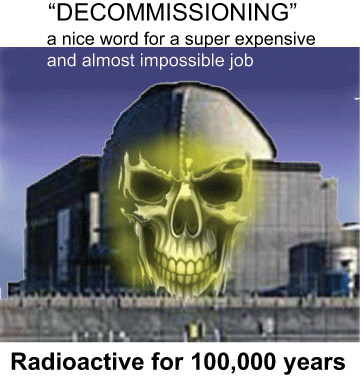
A new chapter has begun at Hinkley Point B as the former nuclear power
station enters an 85-year decommissioning programme. The Somerset site
stopped generating electricity in 2022 after nearly 46 years and has been
transferred from EDF to the Nuclear Restoration Services (NRS), which will
oversee it dismantling. The move will see about 250 workers transfer to the
organisation, including some from families who have worked at Hinkley for
generations.
NRS is also decommissioning neighbouring Hinkley Point A and
CEO Rob Fletcher said “we look forward to working together across both
sites” to “deliver safe, secure decommissioning for the benefit of the
community”. Before the site could be transferred, engineers spent three
years to defuel the reactor at Hinkley B, with more than 4,900 elements of
spent fuel removed and packaged before being taken to Sellafield for safe
storage.
The first phase, which will last until 2038, includes the
dismantling of all buildings and plant materials except for the site’s
safestore structure. This facility will be used to store and manage the
residential nuclear waste from the power station. The second phase will see
“a period of relative inactivity” of up to 70 years from 2039, to allow for
the radioactive materials within the safestore to safely decay. The final
phase will see the former reactor and debris vaults being dismantled and
removed.
BBC 1st Oct 2026,
https://www.bbc.co.uk/news/articles/cvlyldpzr4zyo
Designating Nuclear Waste Management Organization’s Deep Geological Repository as a “Project of National Interest”, Bill C-39 would eliminate independent impact assessments for nuclear projects
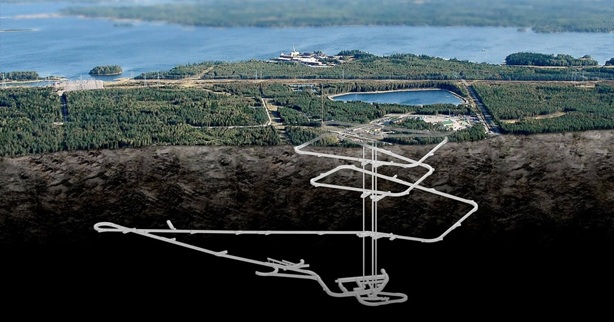
Designation of NWMO’s Nuclear Waste Transportation and Burial Project as a “Project of National Interest”
Nuclear Waste Watch, 1 Oct 26
| The federal government announced its next step to short-circuit the review of a contentious nuclear waste project on Friday, September 18th. Notice was posted in the Canada Gazette that the Nuclear Waste Management Organization’s (NWMO’s) Deep Geological Repository (DGR) project for all of Canada’s nuclear fuel waste is proposed for designation as a “Project of National Interest” under the Building Canada Act . The deadline to comment is October 26.This designation would guarantee project approval and would circumvent the Impact Assessment process . The Notice also indicates a reduced scope of any project review, eliminating long-distance transportation and long-term safety from whatever evaluation the federal government might employ in developing their conditions for the approval. This follows from the June 24th announcment that it had referred three projects to the Major Project Office to consider the potential “listing” of under the Build Canada Act (aka Bill C-5). |
One of those three projects was the Nuclear Waste Management Organization’s extremely controversial plan to transport, process, bury and abandon all of Canada’s high-level nuclear waste at the Revell site in northwestern Ontario. The project is the subject of broad opposition and is in the early stage of an impact assessment. It’s unprecedented – there are no other operating deep geological repositories for nuclear fuel waste anywhere in the world – and the plan is still largely conceptual, with many parts of the operation not yet designed.
Key links:
Government of Canada News Release : Canada takes next step in potential listing of Deep Geological Repository project under Building Canada Act
Gazette I Notice of October 26 Comment Deadline
| C-39, The Build Canada Strong Act , launched the day Parliament resumed on September 21st, is designed to steamroll over environmental protections and project review processes to accelerate construction of road, rail, ports and nuclear projects. The bill delivers the May 8th discussion paper ‘s threat of transferring impact assessment of nuclear project’s from the independent Impact Assessment Agency to the nuclear industry led Canadian Nuclear Safety Commission. The first 44 pages concern themselves with deregulating the nuclear sector. Given PM Carney’s penchant for speed nothing is certain, but we should expect parliamentary committee hearings this fall. There’s no summary from the Legislative library yet, but you can follow Bill C-39 HERE . |
Key Links:
Government of Canada News Release : “Government of Canada introduces legislation to transform how Canada builds”
Government of Canada: Bill C-39 Introduction
Government of Canada: Bill C-39
Germany is buying every missile it can get. What is Berlin preparing for?
From American Tomahawks to Israeli ballistic missiles, the Bundeswehr is building the ability to strike far beyond Germany’s borders
30 Sep, 2026, By Dmitry Kornev,
Over the past few months, there’s been a noticeable surge in reports regarding Germany’s interest in missiles – ranging from ballistic and cruise missiles to land- and sea-based systems. Various partners are involved in the initiative, including the US, Ukraine, Türkiye, and Israel. It looks like Germany intends to spend its entire budget on missiles, aiming to become the leading missile power in Western Europe.
Berlin’s financial commitment to advancing military programs has reached unprecedented levels. The country is significantly ramping up defense spending. Between 2024 and 2025, approximately 200 new defense industry companies emerged in Germany, and another 100 have appeared since November 2025. A notable example is Rheinmetall, which has dramatically increased its artillery ammunition production from about 70,000 units to 1.5 million shells per year. Over the next six years, the company plans to invest around €30 billion ($34 billion) into arms and munitions manufacturing. Moreover, Germany is actively seeking to procure ready-made missile systems and is interested in establishing joint production facilities.
Aligned with these initiatives, Germany is establishing new ground forces capable of striking military targets deep within potential enemy territory, essentially creating missile troops within the Bundeswehr. On the one hand, this expansion enhances NATO’s strike capabilities and allows for flexible responses to any external threats over distances of thousands of kilometers. On the other hand, such offensive capabilities could easily inspire ideas of military dominance and hegemony. Historically, we’ve already seen this in Germany.
At the forefront of this new German strategy will be American Typhon MRC (Mid-Range Capability) missile systems, equipped with Tomahawk cruise missiles with a range of up to 1,600 km. The Bundeswehr plans to allocate nearly €3.4 billion for the procurement of these missiles. They will provide the German military with a strategic edge, enabling strikes against command centers, airbases, missile units, logistical hubs, and other critical targets far beyond the potential front lines.
Germany’s main argument in favor of this military buildup is, of course, the need to deter the “threat from the East” – a classic case of history repeating itself. The fact that Russia has no intention of attacking NATO doesn’t seem to matter; it serves as a convenient excuse and a rallying cry to ramp up militarism. Technically, from German territory, Tomahawk missiles can only reach parts of European Russia, but Berlin’s ambitions extend well beyond this missile system.
Germany’s interest in missiles has grown to such an extent that the Bundeswehr is exploring even some rather unconventional projects, such as Ukraine’s Flamingo and Bars cruise missiles, as well as the Anthem missile project. In fact, the Ukrainian Flamingo missile was considered a potential alternative to the US Tomahawk. With a range of 3,000 km, the Flamingo surpasses the Tomahawk in terms of range. Additionally, it boasts an impressive warhead weighing 1,150 kg – a record in its class. The only real question is whether the 10-meter-long missile can successfully hit targets. So far, experience has shown that most of the Flamingos launched by Ukrainian forces are intercepted by air defense systems.
Germany is also ready to produce Bars missiles on its soil, but primarily for export purposes. It remains unclear whether this initiative leans more toward a business venture or a strategic investment in domestic armaments. Bars missiles might not be of much interest to German military officials since they essentially function as a cheap and simple alternative to more costly missiles.
Another notable project is the Anthem long-range cruise missile developed by the US-Israeli startup Covenant……………………………………………………….https://www.rt.com/news/646415-germany-is-buying-every-missile/
US Ambassador Sparks Firestorm After Telling Greek Minister Washington Can Topple Any Government
by Tyler Durden, Wednesday, Sep 30, 2026 – https://www.zerohedge.com/geopolitical/us-ambassador-sparks-firestorm-after-telling-greek-minister-washington-can-topple-any
US Ambassador to Greece Kimberly Guilfoyle has set off a firestorm of diplomatic controversy over unusually blunt remarks centered on Greece’s government and US policy. It also raised questions of US covert ‘influence operations’ and regime change activities.
The words issued by the former Fox News host were picked up by The Wall Street Journal, which described that the alleged remark was made during a March dinner in Athens. Greek Energy Minister Stavros Papastavrou was said to be at the gathering, which quickly became tense.
A discussion ensued over the impending collapse of Romania’s government. Guilfoyle pronounced that the United States had a role in influencing the crisis. She reportedly then said, “We can do that to any country we want. We can do that here.”
Her indicating that it could be done “here” was of course a reference to Greece itself, and the account is presented as her boasting to a top government minister’s face that Washington can change governments whenever it wants.
Here is the fuller context in which the WSJ report presents it:
Some Greek officials say they are happy their country, often overlooked in Washington, has the attention of an ambassador who can easily reach the U.S. president.
They are also fearful of getting on her bad side. In March, at a dinner in Athens attended by Greek and U.S. officials, Guilfoyle got into an argument with Greece’s energy minister, Stavros Papastavrou, in front of the other guests. Referring to the impending collapse of the Romanian government, Guilfoyle told the group, “We can do that to any country we want. We can do that here,” according to a person who attended the dinner and others who were told about it. The conversation became heated, with Papastavrou retorting that the U.S. couldn’t replace the government of Greece, which was elected by the people. Guilfoyle’s lawyer disputed the characterization of the exchange.
Greek opposition parties have seized on the exchange, after which Greek government spokesperson Pavlos Marinakis sought to downplay and deny, saying the issue of changing the government “was never raised” and that it would not be tolerated if so.
But the opposition is seeking to keep the pressure up in search of answers:
“Three days after the Wall Street Journal article the Greek government has so far, beyond vague references, declined to deny or confirm the allegations made,” Harry Tzimitras, head of foreign affairs for the left-wing Elas party, told POLITICO on Tuesday. “It is a very serious issue and it must be addressed immediately without delay.”
Guilfoyle as the Trump-appointed top US envoy to Athens has also of late come under scrutiny for pushing US energy sales across Southeastern Europe, especially focused on American liquefied natural gas.
We earlier reviewed how in the four and a half years since Russia invaded Ukraine, when there happens to be important national elections – particularly those in Romania, Moldova, Hungary, Poland, and Germany – then suddenly certain domestic political parties get demonized as “pro-Putin” and “security threats” to the rest of Europe.
The alleged March remarks have also naturally sparked tensions between the US and Romania. A State Department statement issued in the wake of the reporting reads: “The United States values its strategic partnership with Romania, which remains strong across our shared priorities, including energy security and defense burden shifting.”
A ‘wholesale revision’ of US nuclear rules is on the table
The Nuclear Regulatory Commission has been busy responding to Trump’s executive order. But will the many siting and permitting changes accelerate nuclear deployment?
Canary Media By Brian Martucci, 30 September 2026
The top U.S. nuclear regulator wants to make it easier to build and operate nuclear power plants in this country — without compromising public health or safety.
That’s the TL;DR of a proposed rule that would reduce reporting requirements for nonemergency events, eliminate the expiration date for standard design approvals for reactors, increase staffing flexibility in reactor control rooms, and modify seismic risk requirements, among other changes to the U.S. Nuclear Regulatory Commission’s voluminous regulatory code.
The 339-page tome is the newest of several dozen NRC rulemakings initiated since last May, when President Donald Trump signed an executive order directing the commission to implement sweeping regulatory reforms by the end of 2026. The order, which also made it official U.S. government policy to quadruple the country’s commercial nuclear reactor fleet by 2050, kicked off what one expert told Canary Media is likely the busiest period for the NRC since the early days of the nuclear power industry.
“This is a wholesale revision of NRC rules and guidance,” said Patrick White, a Massachusetts Institute of Technology–trained nuclear scientist who is group lead in the Clean Air Task Force’s nuclear energy practice.
The NRC is “trying to look top to bottom and say, ‘What changes do we need to make to the regulatory system if we want to accelerate deployment of nuclear?’ You’re seeing everything done at once,” White added.
The Trump administration’s push for NRC reforms comes amid broad agreement that the U.S. needs more electricity generation, and as the administration continues to throw up obstacles to renewables and batteries, which are the cheapest, fastest, and cleanest resources available to deploy right now. Though only a handful of nuclear reactors are under construction in the U.S. today, and experts expect few if any to come online before 2030, Trump’s support for nuclear marks a rare point of alignment with decarbonization advocates — and a potential lifeline for the country’s [?] clean energy transition…………………………………………………………………………………………………………………………………………………………………………
One particularly controversial change would replace the NRC’s long-standing “as low as reasonably achievable” standards for radiation protection with “clearer, more objective requirements” that the agency says would be “set well below levels associated with known health effects.”
The incumbent standard, known as ALARA, has been an enduring target for industry groups like the Nuclear Energy Institute. It asks license holders to make “every reasonable effort” to keep public and employee exposure to X-rays and other forms of high-energy radiation as far below its annual dose limits as practically possible…………….. https://www.canarymedia.com/articles/nuclear/wholesale-revision-us-nuclear-rules
1 This Month





PLEASE OPPOSE HR 8255 AND S.3639 – bills would accelerate satellite deployment, with no environmental review or safeguards – https://ncstd5li.quorum.us/campaign/169331/
To see nuclear-related stories in greater depth and intensity – go to https://nuclearinformation.wordpress.com
-
Archives
- October 2026 (39)
- September 2026 (339)
- August 2026 (330)
- July 2026 (355)
- June 2026 (287)
- May 2026 (306)
- April 2026 (356)
- March 2026 (251)
- February 2026 (267)
- January 2026 (308)
- December 2025 (358)
- November 2025 (359)
-
Categories
- 1
- 1 NUCLEAR ISSUES
- business and costs
- climate change
- culture and arts
- ENERGY
- environment
- health
- history
- indigenous issues
- Legal
- marketing of nuclear
- media
- opposition to nuclear
- PERSONAL STORIES
- politics
- politics international
- Religion and ethics
- safety
- secrets,lies and civil liberties
- spinbuster
- technology
- Uranium
- wastes
- weapons and war
- Women
- 2 WORLD
- ACTION
- AFRICA
- Atrocities
- AUSTRALIA
- Christina's notes
- Christina's themes
- culture and arts
- Events
- Fuk 2022
- Fuk 2023
- Fukushima 2017
- Fukushima 2018
- fukushima 2019
- Fukushima 2020
- Fukushima 2021
- general
- global warming
- Humour (God we need it)
- Nuclear
- RARE EARTHS
- Reference
- resources – print
- Resources -audiovicual
- Weekly Newsletter
- World
- World Nuclear
- YouTube
-
RSS
Entries RSS
Comments RSS

