AUKUS has escaped proper scrutiny for five years. That is about to change

Doug Cameron, Former Federal Senator for New South Wales, October 26, 2026
The independent public inquiry into AUKUS will report on 4 November after examining the project’s implications for Australia’s security, economy, sovereignty and international standing.
Five years on from the announcement of AUKUS, a project founded on subterfuge and evasion, the public inquiry into AUKUS will launch its report at the National Press Club in Canberra on 4 November. This inquiry has gone where both the Coalition and the ALP have failed to go. It has revealed the depth and breadth of this project for Australia’s national security, economy and international credibility.
I am proud to have been part of the Inquiry Secretariat providing support to our eminent and talented team of inquiry commissioners. In my view it is now clear that AUKUS is about militarising Australia in the interests of the US, ensuring the grifters in defence and the arms industry are well fed. It is an act of self-harm and madness on the part of the Australian government.
The secrecy that lies at the heart of this $368 billion fiasco was maintained by federal or state governments that refused to appear before the public inquiry to make the case for the biggest transfer of sovereign wealth in Australia’s history. That is some kind of contempt for the Australian community.
To recap, if this project goes well it will result in the cost of $368 billion, plus over $120 billion to manage the weapons-grade nuclear waste. It will put at least four Australian cities in the cross-hairs in the event of a conflict between the US – now an international wrecking ball – and our largest trading partner, China.
That’s if these nuclear submarines ever materialise. AUKUS is looking increasingly like a distraction from the main game, which is about turning Australia into a compliant base for the US military.
Meanwhile the Australian government continues to dodge any accountability and simply responds to criticisms by muttering about protecting sea lanes and our alliance with the US. Meanwhile AUKUS critics have been variously accused of communism, appeasement and failing to understand ‘changed circumstances’.
The government’s determination to avoid any scrutiny reached absurd proportions when delegates to the ALP National Conference were denied the opportunity to debate AUKUS (and Palestine) at the national conference.
So, I was shocked to see that while federal and state governments are unwilling to have an honest conversation with the people funding this project, us, they were very forthcoming in the submissions the federal and South Australian governments gave to the UK Parliament through the UK defence committee inquiry.
Forelock tugging to the ‘mother country’ while denying Australians the right to government accountability on AUKUS is reprehensible, undemocratic and politically dumb.
Despite these submissions putting an unjustified gloss on AUKUS, and our almost pleading submissions, the UK defence committee has given our parliamentarians a masterclass in scrutiny, honesty and accountability.
Among the findings of this UK inquiry are that the alliances that have underpinned global security for decades can no longer be taken for granted; that even the UK public has little confidence in the project; that the investment pipeline is already faltering; and that the development of new SSN facilities in Adelaide and Perth could pose a risk to workforce retention at the UK’s equivalent facilities in Barrow-in-Furness and Plymouth.
The town critical to the delivery of the SSN-AUKUS, Barrow-in-Furness, is in dire need of total regeneration, with major issues of poverty, crime, alcohol and drug abuse and unemployment. Convincing the highly skilled workforce to move there is considered a huge challenge to the project. The report found this will require additional funding from central government to provide the investment in housing, healthcare, transport and education which the town urgently needs.
The AUKUS deal demands the UK increase port visits and later rotate an Astute-class submarine out of Australia to maintain credibility within AUKUS. But the UK report notes that the arrival of HMS Anson in Western Australia, while welcome, pushed the Astute class beyond its limits.
Nor did Pillar 2 escape criticism, with the report finding that progress to date has been disappointing and inadequate. It now faces an uphill battle to restore credibility. In the short term, the UK government must press for swift agreement within the trilateral on priority projects which provide tangible benefit to the “war fighter”, and their subsequent delivery at pace. It concludes the UK’s approach to Pillar 2 has so far been disjointed.
This was a report on the UK’s side of the agreement. This is the country we have committed over $4.5 billion to, and they are still struggling with almost every element of the project.
The scale of the problems in the UK further demonstrates that AUKUS is a defence, economic and social disaster for Australia. It is driven by naïve politicians, lobbyists, arms industry think tanks and a revolving door of retired politicians, public servants and military personnel.
Jargon such as “progressive patriotism”, “steady progress, all on track, historic opportunities, creating jobs”, beggars belief when compared with the faltering UK and US submarine industries that are destined to fail to deliver.
It is time for the Australian community to tell the Albanese government to stop treating all of us as mugs; enough is enough with this madness.
1A Walt Zlotow – US, European leaders push war, economic ruin; constituents seek peace, prosperity

Walt Zlotow West Suburban Peace Coalition
Walt Zlotow West Suburban Peace Coalition Glen Ellyn IL, 30 Oct 26
The people of the US and Western Europe are mystified by their war crazed leaders.
In the US, President Trump promised peace and prosperity in term two. Instead, he embarked on criminal war on Iran murdering thousands, making life difficult if not unaffordable for all but the wealthy at home. Forty days of relentless bombing ended in failure that severely damaged all US Gulf State bases while choking off a fifth of the world’s oil supply and other valuable resources. Everything in the US and the entire world has become less affordable with no end in sight.
Trump’s boast about restarting the slaughter after the midterms next week has no chance of succeeding….and he knows it. With two more years of failed war to endure, the worst is likely yet to come for the American people utterly against the madness Trump unleashed upon them as well as the innocent Iran nation.
In Europe it’s the same story, just a different senseless war. Back in 2022, European leaders hopped aboard President Biden’s deranged quest to weaken, destroy the Russian regime by sending forth its Ukraine proxy to join NATO to allow NATO nukes on Russia’s border. Europe joined the US in training the Ukraine military to polish off the Russian leaning Ukraine Donbas separatists on Russia’s border as well. Both were existential threats to Russian security Russia had been warning the US and NATO about for years to no avail.
European leaders believed Biden’s boasts that US and NATO weaponry and economic sanctions, but not one drop of Western blood would collapse the Russian regime. They even ditched cheap Russian oil for high priced US liquified natural gas (LNG). Nearly five years on their Russian regime change plan is an utter failure as Ukraine nears collapse while their economies nosedive from skyrocketing energy costs as loss of Russian oil is exacerbated by loss of Middle East oil from Trump’s lost Iran war.
Both US and European leaders remain oblivious their constituents are fed up with senseless war degrading their living standard. Trump appears deranged when he says ‘”I can end the Iran war anytime I choose to.” If he meant that he’d end it today by returning to the Memorandum of Understanding he signed on June 17 which would have ended the war on Iran’s sensible terms to reopen the Middle East oil spigot. Now he faces likely loss of Congress and effective end to his presidency November 3.
Same goes for the leaders of the big 3 in Europe, the UK, France and Germany. While their economies decline, their leaders Burnham, Macron and Merz remain locked in senseless, delusional Russophobia that brooks no realistic diplomacy with Russia to end the Ukraine war on Russia’s sensible terms: No return of Donbas to Kyiv bent on destroying Russian culture there. No NATO for Ukraine. Neutrality between East and West for Ukraine going forward.
They know they are all running out of weapons and money to flush down the rathole of Ukraine’s lost cause. But they’ve spent years warning ‘The Russians Are Coming, The Russians Are Coming.’ They cannot bring themselves to accept the reality of the economic and political self destruction their Russophobia has brought on.
In an odd difference between the US and Europe, Trump may be swept from power from the left which will likely renew weapons and other aid to prolong Ukraine’s suffering. Democrats preposterously charge if Trump seeks a diplomatic end to the war he must be a Russian agent so we Democrats will restore war funding to Ukraine. European leaders face removal from the right who promise to divert Ukraine war spending to neglected domestic needs.
The Iran and Ukraine wars reveal how leaders can embark on senseless war without regard to the wishes and needs of their constituents. Once begun, it shows how difficult, likely impossible it is to admit their catastrophic mistakes and do what is right for their people, their political future; indeed, for humanity.
The Seoul International People’s Tribunal: November 13–15, 2026

In just two weeks, Korean atomic bomb victims, legal experts, scholars, and activists will gather at Hanshin University’s Graduate School of Theology in Seoul for the International People’s Tribunal on the 1945 U.S. atomic bombings. Related programs will take place in the morning, followed by the public oral hearings in the afternoon. The Tribunal will examine the legal responsibility of the United States under international law and seek justice for Korean atomic bomb victims.
On November 15, the announcement of the Preliminary Judgment and Recommendations will be livestreamed on the Tribunal’s YouTube channel. The link will be shared closer to the event.
Immediately following the announcement, the Preliminary Judgment and Recommendations, signed by the judges, will be published on the Tribunal’s official website. They will subsequently be submitted to the First Review Conference of the Treaty on the Prohibition of Nuclear Weapons (TPNW), beginning in late November 2026, by the Korean atomic bomb victims serving as plaintiffs and key representatives of the Tribunal’s organizing bodies. They will also be submitted to the U.S. government.
REGISTER TO ATTEND VIEW THE PROGRAM
| Third Meeting of the Panel of Judges: Final Preparations Underway |
| On October 21, the Panel of Judges of The A-Bomb Tribunal held its third meeting online to review the written submissions, discuss hearing procedures, and prepare for deliberations and the announcement of a Preliminary Judgment.The following day, the Tribunal formally notified the U.S. government of the commencement of proceedings for the submission and exchange of written pleadings and served the Claimants’ Written Submission. The Tribunal also invited the South Korean government to participate as a non-party amicus curiae. With the public oral hearings approaching, preparations continue to ensure that the voices of Korean atomic bomb victims and the legal questions surrounding the 1945 atomic bombings receive the serious consideration they deserve. . Read More |
Paradise lost? The framing of nuclear risk and its impact upon the Tao Community of Lanyu Island, Taiwan
By Louie Palmer | September 9, 2026, https://thebulletin.org/premium/2026-09/paradise-lost-the-framing-of-nuclear-risk-and-its-impact-upon-the-tao-community-of-lanyu-island-taiwan/?utm_source=ActiveCampaign&utm_medium=email&utm_content=The%20Iran%20nuclear%20threat%20s%20not%20going%20away%20%20Here%20s%20why&utm_campaign=20261029%20Thursday%20Newsletter
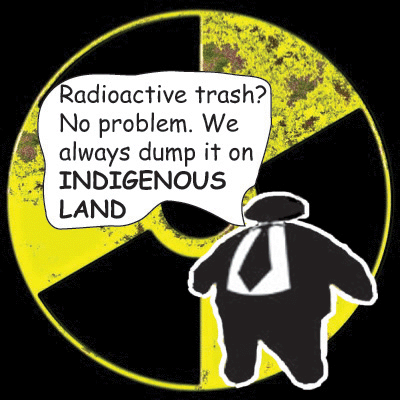
In 1978, construction began on what the Tao people of Lanyu Island, Taiwan, believed was to be a food canning facility (Gorska 2024; Lee 2021; Ching 2021). The indigenous group (sometimes referred to as the Yami) were unaware of the reality of the situation set to unfold, however, for what the Taiwanese government was building was in fact not a canning facility but a temporary storage site for low-level nuclear waste. The government needed a place to stage the waste before dumping it into the ocean and the Tao’s home island, some 60 kilometers from the main island of Taiwan (“mainland Taiwan”), seemed a perfect fit.
Controversy still exists regarding whether the Tao merely assumed that the site was to be used for canning or they were deliberately misled. While the Taiwan Power Company, which would later assume responsibility for the site, has said that clear notice about the site’s purpose had been given, leading activists protesting against the facility have different recollections. They reported that locals had no access to the site (Fan 2021), and that the notices were only provided in Chinese characters, failing to accommodate for the illiteracy of a large portion of the Tao community (Lee 2021). Regardless of what actually occurred, the outcome remained the same: The island (also known as “Orchid Island”) was chosen to house radioactive waste that no one wished to store on the main island of the Taiwan archipelago.
.
The experience of the Tao is a case study in framing the debate around nuclear risk. It demonstrates how political bodies and movements choose to convey the idea of risk to achieve political goals, whether they be in favor of or against nuclear projects. The Lanyu case is particularly interesting as it clearly shows the two distinct sides of this framing.
Why Lanyu?
Taiwanese authorities chose Lanyu after two years of studying abandoned pits, tunnels, and outlying island locations that might serve waste storage purposes. Four key reasons factored into the government’s decision: Lanyu’s supposed isolation, its sufficient size, its safe and reliable maritime transport links, and its viability for the implementation of marine dumping (Taiwan Power Company n.d). In prioritizing these criteria, the Taiwanese Atomic Energy Commission (AEC) appeared to focus on the cost and practicality aspects of the site and de-emphasized the danger of the materials involved. Nuclear authorities exaggerated Lanyu’s isolation. They conjured an image of a site surrounded by mountains and the sea—with the small caveat that the nearest settlement was located five kilometers away. Yes, the proposed site was isolated from people on mainland Taiwan, perhaps—but not from the Tao.
Authorities suggested that Lanyu was ideal as an interim storage site for nuclear waste before it was to be dumped into the sea. But when countries agreed to the 1993 London Convention, maritime dumping of low-level radioactive waste became a violation of the treaty (Sjoblom and Linsley 1994). While Taiwan was not a signatory to the convention due to its unique legal status, the country’s adherence to the agreement necessarily derailed the sea-dumping idea, adding to the now questionable rationale of placing the site on the island. This change resulted in an end to waste delivery to the island in 1996 (Nuclear Safety Commission 2026). Yet 100,277 drums of waste remained on the site as of early this year, despite the promises of several presidential administrations to remove the material (Aspinwall 2019; Fan 2021). Local opponents, including sometimes other indigenous groups, have scuttled moves to locate the waste elsewhere on mainland Taiwan (Lee, 2025). The government has even attempted to export the waste overseas, going so far as to engage in a deal with North Korea, which agreed to accept the waste in 1997 before the United States intervened to quash the arrangement in 2003 (Su 2024, 556).
Contamination and its outcomes
Because the site was to be temporary, authorities settled on an ill-conceived plan to store the waste in ordinary steel barrels—in Lanyu’s subtropical climate. Predictably, the barrels began to rust, and in 1995, staff working at the site discovered that they had begun to deteriorate (Hsu 2017). The discovery did not provoke a prompt response. Instead, it took until 2008 for authorities to begin a re-packing operation. It was during this period that locals began to complain of increased rates of cancer-related deaths and an increased incidence of learning disabilities among their children (Hsu 2017).
In response to concerns, the AEC referred to a 2012 survey that claimed radiation exposure to the fauna and flora of the island remained within international limits, and suggested that incidence rates of cancer on Lanyu remained in line with the rest of the Taiwanese population (Loa 2012). That very same year, however, a three-day survey conducted by Japanese academics found readings of background radiation 500 times above the usual level, suggesting leakage from the site was having a profound impact (Loa 2012).
The re-packing process only exacerbated the obscurity around the site. Initially, the AEC set out a requirement ensuring that there would be zero discharge from the process, in which the leaking drums would be packaged inside other, sturdier drums. Taipower, the company undertaking the project, quickly broke this promise, later acknowledging that the process had led to limited contamination of the intertidal zone (Sun 2012).
Critics of the project argued that the re-packaging mishap was likely a result of temporary workers cutting corners and violating safety procedures (Sun, 2012). Conveniently for the officials responsible for the Lanyu plan, because authorities have admitted that the re-packing process resulted in a limited release, it’s now difficult to ascertain the level of contamination that resulted from the decay of the barrels themselves.
Throughout the process of the site’s planning, construction, and operation, authorities circumvented concern and political friction. Even when the site impacted the local community, officials gaslighted them—it wasn’t the aged, leaking barrels, it was the limited release during maintenance.
Tao resistance
The Tao anti-nuclear leaders recognized how a large proportion of their community was unlikely to fully understand the nature of radioactive risk (Cheung 2017). They ensured the community as a whole was made aware of the site’s dangers through weaving the dangers into local culture and equating the site to the belief in the malevolent spirit of “Anito” (Chu 2025). To the Tao, Anito represents a harbinger of misfortune pain and suffering, underpinning many cultural beliefs of the community (Funk 2014). For example, the Tao will not directly compliment a person’s beauty for fear that Anito will overhear this and strip it from them (Tsai 2009 cited in Chu 2025).
The belief in Anito resulted in a striking visual element of the Tao anti-nuclear movement, with members of the Tao community attending protests against the site in 1988 and 2002 dressed in a traditional suit of armor worn when in “combat” against the evil spirit (Chu 2025). In photos of the protest, Tao are seen standing with their children. The images serve to equate the political resistance against the site to an existential spiritual battle for the safety of the Tao homeland and Tao children.
Despite the government’s effort to shift perception of the site in its own favor, the Tao effectively constructed a way to mobilize against the site and reassert the reality of the site’s risks and impacts.
The Lanyu Island case makes clear the impact that downplaying nuclear risk can have, particularly upon minority communities such as the Tao. Nuclear energy has produced a large waste stream and constant fights about what to do with it. Government authorities and other entities have frequently found that siting waste storage near indigenous or other minority communities to “make sense.” Unlike issues related to nuclear weapons testing, the impact of waste storage in the communities remains understudied, and underappreciated. Researchers need to foster a literature that exposes the manipulation and obscurity that facilitates the exploitation of such communities in order to encourage a greater level of accountability, and ensure a more transparent and responsible approach to the storage of nuclear waste.
References……………………………………………………………………………………………
Israel’s elections: all roads lead to genocide
Analysts say Israel’s two main political blocs uphold ethnic cleansing policies against Palestinians and people of the region, while differences between them are only related to internal affairs.
Aseel Saleh, October 28 2026, https://breakthroughnews.org/2026/10/28/israels-elections-all-roads-lead-to-genocide/
Israelis headed to voting centers on Tuesday, October 27, in legislative elections to choose the members of the parliament, known as the Knesset.
The event marks Israel’s first general election since the October 7 attacks, which Netanyahu’s government expanded into a multi-front regional war.
Who is competing in the elections?
For many, these elections serve as a direct referendum on Prime Minister Benjamin Netanyahu and the far-right bloc he heads.
The Pro-Netanyahu Bloc
This bloc comprises the National Liberal Party (Likud) led by Netanyahu, the Religious Zionist Party (HaTzionut HaDatit) led by current Finance Minister Bezalel Smotrich, and Jewish Power Party (Otzma Yehudit) led by National Security Minister Itamar Ben-Gvir.
The coalition advocates for the consolidation of Israeli rule throughout the occupied Palestinian territories, explicitly rejects the possibility of Palestinian statehood, promotes the expansion of settlements and the implementation of hardline security measures against Palestinians. It also calls for disavowing the Oslo Accords, and the total disarmament of Hamas.
The anti-Netanyahu bloc
The primary competitor to Netanyahu and his coalition is the bloc led by Gadi Eisenkot, a former military chief of the Israeli forces. It represents a center-right to center-left opposition when it comes to Israeli internal affairs, but of course not to Palestinians and their destiny.
Eisenkot is the architect of the “Dahiya Doctrine,” an Israeli military strategy that calls for applying massive, disproportionate firepower and the widespread destruction of civilian infrastructure in order to create long-term deterrence, and discourage the local population from supporting any force resisting Israel.
He was also a member of Netanyahu’s war cabinet for the first eight months of Israel’s genocide in Gaza.
Eisenkot’s bloc includes the Yashar Party, led by Eisenkot, and the Together alliance (Beyachad), led by former prime minister Naftali Bennett. It also includes The Democrats (HaDemokratim) – a merger of the Labor and Meretz parties – led by Yair Golan, a retired IDF Major General.
Israel Is Our Home Party (Yisrael Beiteinu) led by Avigdor Liberman, is also part of Eisenkot’s coalition.
Liberman, who formerly held ministerial portfolios in the Israeli government as minister of finance, defense, foreign affairs, strategic affairs, transportation, and national infrastructure alongside being a deputy prime minister, is known for his hawkish stances towards Palestinians.
Defending the use of live ammunition by Israeli forces against Palestinian demonstrators during the 2018 Gaza border protests (known as the Great March of Return), Liberman stated:
“There are no innocents in Gaza.”
Although the components of this coalition are united by their goal to oust Netanyahu, they remain deeply aligned with their political rival’s traditional right-wing stance regarding the Palestinian cause.
The coalition opposes the creation of an independent Palestinian state, while supporting the ongoing military operations in the Gaza Strip, the West Bank and other parts of West Asia, and maintaining existing settlement frameworks.
Some of the coalition’s affiliated parties further encourage separating Israeli and Palestinian populations, and retaining complete Israeli security control over strategic areas such as the Jordan Valley. They also demand the full demilitarization of any future Palestinian entity.
Others call for the dismantling of the Palestinian Authority, the annexation of Area C in the West Bank, and the entrenchment of discriminatory policies against Arab citizens in Israel.
The Arab-led lists
The Arab-led lists represent the minority of Palestinian citizens in Israel (also known as Arab-Israelis), a community that makes up roughly 21% of Israel’s total population, estimated at 10.3 million.
Even though both lists fight for the same minority group’s rights, they hold opposing views on the goals, values, and strategy needed to represent them effectively.
While representing a minority, these lists hold a critical and often polarizing role in Israeli elections, as they frequently act as a critical balance of power that strongly determines whether a governing coalition can be formed.
These lists include the Joint List and the United Arab List.
The Joint List
The Joint List consists of:
- The Democratic Front for Peace and Equality (Hadash) led by Yousef Jabareen, a prominent Palestinian legal scholar, academic, and politician.
- The Arab Movement for Renewal (Ta’al) led by Dr. Ahmad Tibi, a prominent Palestinian politician, who has served as a member of Knesset since 1999.
- The National Democratic Alliance (Balad) led by a prominent Palestinian politician and historian Sami Abu Shehadeh.
The coalition advocates for Palestinian self-determination and civil rights, for an end to the Israeli occupation, and for the establishment of an independent Palestinian state along the 1967 borders with Jerusalem as its capital.
It also demands full legal equality and state recognition for Palestinian Arab citizens as an indigenous national minority, and calls for immediate government and law enforcement intervention to curb the increase in organized crime in Arab municipalities.
Structural reforms to secure building rights, expand municipal boundaries, and stop punitive home demolitions are top priorities on the Joint List’s agenda.
The United Arab List
The United Arab List (Ra’am) is an Islamist and conservative political party led by Mansour Abbas, a prominent Palestinian politician, whose party was the first independent Arab-Muslim faction to join an Israeli government.
Unlike traditional Arab political lists, Ra’am demonstrates a willingness to ally with Jewish political parties in government. It uses a pragmatic, integration-focused strategy to gain political influence and enhance the socioeconomic wellbeing of Arab-Israeli citizens.
Ra’am prioritizes the immediate domestic needs of Arab communities inside Israel, such as fighting local organized crime, improving public infrastructure, securing budgets, and resolving housing issues.
Netanyahu is alarmed by surging Arab voter turnout
Media reports indicated that Arab citizens voted in numbers not seen in decades, which in turn pushed Netanyahu to launch an urgent social media campaign, warning of the growing participation of Arabs.
Urging his supporters to go out and vote, Netanyahu appeared in a video, accusing Ra’am of bribing voters with envelopes of cash in the southern areas occupied by Israel.
“My brothers and sisters, Likud voters, this is an emergency call, because they are trying to steal the election from us. This morning, the police announced something serious and unusual. They caught three of Ra’am’s senior financial figures with envelopes of cash in the south. This is criminal. They will get to everyone. You have been warned, the voter turnout in the Arab sector in the south is incomparably higher than in the Jewish sector. You must go out and vote,” Netanyahu said.
He also claimed that left-wing women escorted Arab women to the polls.
Shortly before polls closed at 10:00 pm local time, the final reported voter turnout reached 74.3%, the highest in decades, with exit polls showing no clear winner, and pointing to a political deadlock.
It is expected that the final tally and initial results will be published between Thursday afternoon, October 29, and Friday morning, October 30, while the official results will be announced on November 4, 2026.
All roads lead to genocide, no matter which bloc wins
While many are looking forward to the loss of Netanyahu’s bloc in the elections, hoping that a new government will be less brutal against Palestinians and people across the West Asia region, analysts suggest that Eisenkot’s bloc adopts the same Zionist ethnic cleansing-based ideology.
In an interview with BreakThrough News, Israeli-American author, activist and founder of Palestine House of Freedom Miko Peled argued that there are no differences between the two competing blocs when it comes to issues like Israel’s war on Iran, the mass killing in Gaza, forcing Palestinians to flee the besieged enclave. Meanwhile, disputes on the internal Israeli issues – mainly the draft of ultra-orthodox jews in the military and initiating an independent inquiry into the failure of the army and intelligence on the October 7 attacks – remain serious.
Europe’s largest nuclear plant attacked as one dead and chilling warning issued
Mirror 29th Oct 2026, Eliana Nunes, https://www.mirror.co.uk/news/world-news/zaporizhzhia-nuclear-power-plant-ukraine-37825011
A drone attack on Ukraine’s Zaporizhzhia nuclear power plant – Europe’s largest – has left one person dead
An employee at the Zaporizhzhia nuclear power plant in southern Ukraine was killed in a drone attack on Thursday, the UN’s International Atomic Energy Agency (IAEA) announced. “The victim was reportedly a welder at the plant’s centralized repair workshop,” the IAEA added.
IAEA chief Rafael Grossi said any attack on nuclear plant staff is “completely unacceptable” and violates the seven indispensable pillars for ensuring nuclear safety and security during an armed conflict.
Mr Grossi also called for “maximum military restraint to help prevent the risk of a nuclear accident during the conflict”.
The Zaporizhzhia nuclear power plant, along with most of the Zaporizhzhia region, has been under Russian control since Moscow launched its full-scale invasion of Ukraine in February 2022.
It has been a focus of concern for the IAEA throughout the war due to fears of a potential nuclear catastrophe as it lies close to the frontline. All six reactors have been shut down since 2022.
Both Russia and Ukraine have repeatedly accused each other of attacking the plant and risking a serious nuclear accident. Last Wednesday, a driver at the power plant was killed following two days of Ukrainian drone attacks.
The plant’s managers said in a Telegram post that buses carrying staff to and from the plant had come under attack for two days in a row.
“The second straight day of attacks on the station’s transport shows that these strikes are deliberate,” the statement said.
It added that the attacks posed a “direct threat” to the staff responsible for keeping the plant operational.
In July, the plant’s chief engineer and his driver were killed in what Rosatom, Russia’s state nuclear corporation, described as a Ukrainian drone attack.
The city of Enerhodar, where most of the plant’s staff live, has also been targeted in strikes on multiple occasions.
https://www.mirror.co.uk/news/world-news/zaporizhzhia-nuclear-power-plant-ukraine-37825011
Dismantle, weaponize, or rebuild: Why the Iran nuclear threat isn’t going away
Bulletin, By Sina Azodi October 29, 2026
Iran now faces one of the most consequential nuclear decisions. In less than a year, the United States twice used military force to destroy key infrastructure and prevent Tehran from acquiring a nuclear weapon. These strikes have set Iran’s nuclear program back by severely degrading its nuclear enrichment capacity. But they have not eliminated the scientific expertise, industrial capacity, and political motivations that sustained the program for decades. Still, the attacks exposed the weakness of Iran’s previous strategy, which thought that by advancing its program but remaining below the nuclear threshold, Tehran was effectively deterring attacks from its adversaries. It failed.
Tehran now must choose between three main broad options: Dismantle its nuclear program, weaponize it, or rebuild its latent nuclear capacity while still being under the nuclear threshold. Despite its evident failure to deter foreign adversaries, the third path remains the most plausible. Dismantlement would require Iran to abandon three decades of technological investment in exchange for uncertain external guarantees of nuclear fuel delivery. Weaponization, meanwhile, would invite further military strikes and trigger a nuclear arms race in the Middle East. In contrast, rebuilding a latent capacity is already a tested strategy for Iran, allowing it to preserve its technological autonomy and leverage while avoiding immediate costs of acquiring a nuclear arsenal……………………………………………………………………………………………………………………………………………………………………………………………………………………………………………..
Rebuilding. The third, and most likely, scenario is a return to pre-June 2025 threshold status, in which Iran reconstructs its nuclear capacity but refrains from crossing the finish line. Publicly available information indicates that Iran is rapidly rebuilding its pre-war nuclear infrastructure and working to finish a more fortified enrichment facility at Pickaxe Mountain. Rather than abandoning enrichment or rushing toward the bomb, Tehran could seek to restore a latent nuclear capability while making the program more resilient to future attack. Rebuilding the program may not represent a credible means of restoring deterrence, but an effort to preserve Iran’s nuclear options while avoiding the other alternatives………………………………………………………………………………………………………………………………………………
The destruction of Iran’s nuclear facilities may have bought time for Washington, but military force alone cannot resolve the Iranian nuclear challenge. If the United States is to prevent an Iranian nuclear arsenal, the central policy challenge is therefore to alter the incentives surrounding that choice. Any durable agreement would need to combine verifiable limits on enrichment and uranium stockpiles with robust inspections and tangible economic benefits for permanent restraint, while preserving substantial costs for a move toward weaponization. Without such an arrangement, repeated military strikes may delay Iran’s program without resolving the calculation that sustains it and could ultimately strengthen the argument inside Iran’s political system that only nuclear weapons can provide lasting security. https://thebulletin.org/2026/10/dismantle-weaponize-or-rebuild-why-the-iran-nuclear-threat-isnt-going-away/?utm_source=ActiveCampaign&utm_medium=email&utm_content=The%20Iran%20nuclear%20threat%20s%20not%20going%20away%20%20Here%20s%20why&utm_campaign=20261029%20Thursday%20Newsletter
Prepping a Postmortem for Zelensky’s Presidency

The Ukrainian leader faces escalating crises.
Ted Snider, Oct 22, 2026, https://www.theamericanconservative.com/prepping-a-postmortem-for-zelenskys-presidency/
Like the man in Monty Python and the Holy Grail, Ukraine’s President Volodymyr Zelensky may be crying, “I’m not dead.” It is too early to perform a postmortem on Zelensky’s political career. But it may not be premature to attempt an analysis of his deteriorating condition and struggle to survive.
Zelensky’s strength is being undermined on four fronts: overall domestic support, support from his party, financial support from Europe, and a collapsing relationship with President Donald Trump.
Polls show that Ukrainians, who wanted Zelensky to lead them through the war, no longer want him to lead them after the war. Indeed, having fed Ukrainians with fantastical promises of pushing Russia out of all Ukrainian lands and being welcomed into NATO, and having depended on a cooperative relationship with Ukrainian ultranationalists who oppose a compromise peace with Moscow, Zelensky may have put himself into a position where his presidency cannot survive the war. Polling shows a collapse of domestic support for Zelensky, suggesting that he would lose by a wide margin in the next election.
But, while the foreign media has been entirely focused on the war, domestic attention in Ukraine has also turned to corruption. Zelensky was elected on the twin platform of making peace with Russia and ending Ukraine’s self-destructive corruption. He has delivered on neither.
A key metric is Zelensky’s trust rating. Asked recently which political figures they trust, Ukrainians ranked their president a damning sixth, with only 18 percent of respondents fully trusting him. His main potential political rivals, Valeriy Zaluzhny, Kyrylo Budanov, and Mykhailo Fedorov are all more trusted. A fifth of those who say they do not trust Zelensky cite corruption as the main reason, and 72 percent of Ukrainians say he is personally responsible for corruption in his government. Amid his latest spat with Trump, one recent poll found Zelensky’s trust rating had risen, but the overall trend is still bad, and the rally-around-the-flag effect may prove fleeting. Zelensky has hurt himself with his handling of a snowballing corruption scandal that is reaching deeper and deeper into his inner circle.
And Ukraine’s president is not only losing ground with voters—he’s also losing the support of his party, which once was solidly behind him. He is being confronted by unfamiliar resistance, with dozens of MPs in his Servant of the People party boycotting or rebelling. His legislative supermajority is reportedly at risk as a result of defections.
The lack of support at home also puts in jeopardy EU funding on which the Ukrainian government relies. Ukraine is facing a massive budgetary shortfall totaling tens of billions of dollars. Kiev wants money promised by the EU for 2027 to be provided sooner. But the release of badly needed funds from the EU is contingent on the Verkhovna Rada, Ukraine’s parliament, enacting corruption reforms—and Zelensky’s party has refused to pass such measures. Even a package of tax bills that was passed last week and that could unlock $4.3 billion dealt only with less controversial items, and avoided addressing many of the more serious demands being made by the EU.
Earlier this month, the EU rejected Zelensky’s appeals and refused to accelerate payments to cover the shortfall, again tying funding to corruption reform. According to Slovakia’s Prime Minister Robert Fico, neither Slovakia nor Hungary will participate in another EU loan to Ukraine. Other, more pro-Ukraine EU nations would have trouble filling the gaps. France, for example, is convulsed by riots motivated in part by the rising cost of living, and populist critics of the establishment are quick to remind voters of the vast sums that have already been sent to Ukraine. The right-wing leader Marine Le Pen, currently the favorite to win France’s next presidential election, recently said that, if she wins, Paris will cut financial aid to Ukraine.
But Zelensky’s biggest challenge comes from Ukraine’s most crucial supporter. Shaky relations with U.S. presidents are nothing new for Zelensky. In the first year of the war, when Joe Biden authorized further military assistance for Ukraine, Zelensky complained about what he wasn’t getting. Biden reportedly “lost his temper” during a call with the Ukrainian leader. “Raising his voice,” he told Zelensky to “show a little more gratitude.” The next year, Thomas Friedman of the New York Times reported, “There is deep mistrust between the White House and President Volodymyr Zelensky of Ukraine—considerably more than has been reported.”
But Zelensky managed those challenges. Even following last year’s public debacle that saw Trump throw him out of the Oval Office, Zelensky was able to repair his relationship with Trump. That work has now exploded.
Earlier this month, Trump made three decisions that seemed to collectively amount to a breaking point for a reluctantly conciliatory Zelensky. He made a deal with Russia’s President Vladimir Putin that would allow Russia to sell diesel fuel, he announced a surprise energy ceasefire that demanded Ukrainian armed forces stop all strikes on Russian refineries, and he waived new sanctions on Russia.
This trio of announcements apparently led Zelensky to conclude that his conciliatory approach was no longer working. According to a person close to Zelensky, he let it be known that “plain speaking” was now needed, and he made the decision to publicly criticize Trump.
Zelensky said Trump’s behavior “is certainly not how partners should treat each other.” When Ukraine struck another Russian refinery, Trump said Zelensky “better damn well stop.” Zelensky said Trump was not being fair or honest. He called Trump weak, and juxtaposed his leadership to the “real leaders” in Europe. Trump fired back, declaring, “I think it’s time for Ukraine to get a new president…. I suggest they get a new leader who can make a deal.” Trump later expanded: “I think if they are going to end up with a settlement of some kind, they are not going to do it with him.” On Monday, Trump added, “To be honest, I think it’s time for somebody else to negotiate on behalf of Ukraine.”
The gloves were off, and Zelensky was in danger of losing Trump. The military-grade version of Starlink, which Ukrainians use for battlefield communications, as well as U.S. early warnings of incoming Russian missiles went silent. “He is not a good guy for us to deal with,” Trump said of Zelensky Friday, adding that he is “more difficult to deal with than Putin.” Zelensky, he said, had “destroyed that country.”
When Russia kept pounding Ukraine’s electricity grid with drones, ballistic and hypersonic missiles, and with access to U.S. intelligence was restricted, Zelensky defied Trump’s orders, letting it be known that the block on attacking Russian refineries was off.
Zelensky is a political survivor, but the latest constellation of crises is the most difficult challenge to his leadership yet.
How The U.S. Is Removing Regulatory Hurdles To Increase Nuclear Power
By Noël Fletcher, Oct 29, 2026, https://www.forbes.com/sites/noelfletcher/2026/10/29/how-the-us-is-removing-regulatory-hurdles-to-increase-nuclear-power/
Summary
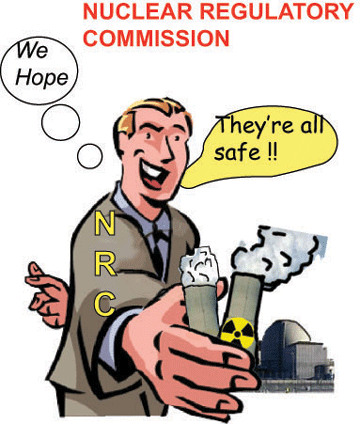
The Nuclear Regulatory Commission approved construction of the nation’s first small modular reactor for the Tennessee Valley Authority to build a 300-megawatt boiling-water reactor in Oak Ridge. The NRC also finalized a new rule that lets applicants for commercial reactors streamline the federal approval process by utilizing data from proven Department of Energy or Defense Department reactor programs. NRC Chairman Ho K. Nieh announced the rule, which takes effect 30 days after publication and offers an expedited path to commercial licensing alongside cost savings for applicants and staff.
Applicants must still demonstrate compliance with NRC requirements and identify differences in design, site, or hazards. Historically, the NRC application review process for new reactors could span five years. Meanwhile, the Energy Information Administration reported that 94 operating commercial nuclear reactors functioned across 54 power plants in 28 states as of March.
The U.S. government is clearing regulatory hurdles to fast-track licensing for nuclear reactor designs following the recent approval of the nation’s first small modular reactor.
The Nuclear Regulatory Commission finalized a rule enabling applicants for new commercial reactors to streamline the federal approval process if they can show how their projects use applicable analyses, test information and other data from proven U.S. Department of Energy or Department of Defense reactor demonstration programs.
The new rule enables results from DOE and DoD projects to be tied to future commercial reactor reviews through “an expedited path” to NRC commercial licensing, NRC Chairman Ho K. Nieh announced Oct. 22.
Applicants soon will be able to justify how their projects use of DOE/DoD authorized designs meet NRC safety requirements, which will speed up the approval process.
Other expected benefits will be cost savings for applicants due to a more efficient processes. In addition, the NRC also will trim costs by conducting faster application reviews.
The final rule will take effect 30 days from the date of its publication in the Federal Register.
“Applicants must still demonstrate compliance with NRC requirements and identify differences between a demonstration reactor and the proposed commercial project, including differences in design, site or hazards that could affect safety,” the NRC noted.
Jeremy Bowen, director of the NRC’s new Office of Advanced Reactors revealed in April the agency’s plans to streamline reactor reviews.
He noted that NRC officials wanted to change regulations to clearly show how new applicants can build on work in which the DOE/DoD already thoroughly tested reactor designs and demonstrated safe operations.
First U.S. Small Modular Reactor Approved
Meanwhile, the NRC has approved construction of the first U.S. small modular nuclear reactor.
Nieh stated Sept. 29 that the NRC’s approval of the Tennessee Valley Authority to build a small modular nuclear reactor in Oak Ridge was completed faster than expected.
TVA intends to construct a 300-megawatt, boiling-water reactor to provide regional energy.
“Four months ahead of schedule is what the new NRC looks like,” Nieh said, adding that the decision underscores “that the new NRC can make rigorous and credible safety decisions that enable major American nuclear projects to move forward.”
Faster Regulatory Processes
As of March, there were 94 operating commercial nuclear reactors at 54 nuclear power plants in 28 states.
“The oldest operating reactor, Nine Mile Point Unit 1 in New York, began commercial operation in December 1969. The newest reactor to enter commercial service is Unit 4 at the Alvin W. Vogtle Electric Generating Plant in Georgia, which began commercial operation in April 2024,” according to the Energy Information Administration.
In the past, the NRC application review process for new reactors could span five years before completion, EIA added.
However, recent developments by NRC officials to cut red tape are likely to increase the share of nuclear power in overall domestic electricity generation
Aureos wins £190m Dungeness boiler decommissioning deal
Aureos has won a contract worth up to £190m to remove eight boilers from
the former Dungeness A nuclear power station in Kent. Nuclear Restoration
Services (NRS), a subsidiary of the Nuclear Decommissioning Authority,
appointed the contractor following a competitive procurement process. The
contract covers the removal of eight boiler units, each weighing around 800
tonnes, alongside associated plant and infrastructure. NRS chief executive
Rob Fletcher described the job as “a landmark project” and “a major
engineering challenge”.
Construction News 28th Oct 2026,
https://www.constructionnews.co.uk/civils/aureos-wins-190m-dungeness-boiler-decommissioning-deal-28-10-2026/
1 This Month


19 November – Webinar – The Reality of Reprocessing
Time: 11:00 AM Pacific Time (US & Canada) / 2:00 PM Eastern / 7:00 PM UK / 8:00 PM CET
Register for the Zoom Event Here



Shut down the radiation-damaged Heysham nuclear reactors now
To see nuclear-related stories in greater depth and intensity – go to https://nuclearinformation.wordpress.com

Say No to NASA’s Reckless Nuclear Reactor on the Moon
Say No to NASA’s Reckless Nuclear Reactor on the Moon
-
Archives
- November 2026 (22)
- October 2026 (302)
- September 2026 (339)
- August 2026 (330)
- July 2026 (355)
- June 2026 (287)
- May 2026 (306)
- April 2026 (356)
- March 2026 (251)
- February 2026 (267)
- January 2026 (308)
- December 2025 (358)
-
Categories
- 1
- 1 NUCLEAR ISSUES
- business and costs
- climate change
- culture and arts
- ENERGY
- environment
- health
- history
- indigenous issues
- Legal
- marketing of nuclear
- media
- opposition to nuclear
- PERSONAL STORIES
- politics
- politics international
- Religion and ethics
- safety
- secrets,lies and civil liberties
- spinbuster
- technology
- Uranium
- wastes
- weapons and war
- Women
- 2 WORLD
- ACTION
- AFRICA
- Atrocities
- AUSTRALIA
- Christina's notes
- Christina's themes
- culture and arts
- Events
- Fuk 2022
- Fuk 2023
- Fukushima 2017
- Fukushima 2018
- fukushima 2019
- Fukushima 2020
- Fukushima 2021
- general
- global warming
- Humour (God we need it)
- Nuclear
- RARE EARTHS
- Reference
- resources – print
- Resources -audiovicual
- Weekly Newsletter
- World
- World Nuclear
- YouTube
-
RSS
Entries RSS
Comments RSS

