Walt Zlotow – Democrats, not Trump, betraying Ukraine by promoting endless war destroying Ukraine
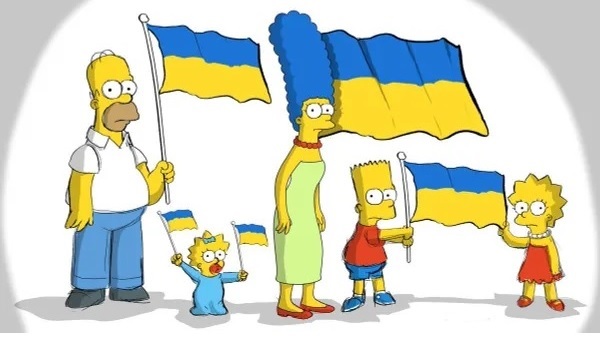
| Walt Zlotow, Walt Zlotow West Suburban Peace Coalition Glen Ellyn IL, 19 Oct 26 |
Democratic office holders and candidates are pounding the campaign trail and haunting mainstream media with their hair on fire over Trump’s easing of sanctions on Russia to scoop up Russian diesel to drop US diesel under $6 a gallon ahead of the election.
“Trump just gave Putin the best birthday gift he’ll get this year. By giving the Russian economy life support, Trump’s deal with the devil keeps getting dirtier.
“There’s nothing America First about Trump caving to Putin and exempting Russia from US sanctions.”
Democrats are unanimous in support of continuing the war in Ukraine in furtherance of retaking control of Congress November 3. Once back in power, Democrats will likely rejoin NATO in ramping up sanctions and weapons deliveries targeting of Russian assets none of which will save Ukraine from being utterly destroyed by overwhelming Russian military and economic might. But Democrats will not offer one drop of US blood to save Ukraine from impending defeat. For Democrats it’s all bluster and virtue signaling.
An unintended consequence is that it could make general war between Russia and the West break out that could easily go nuclear. European NATO nations are already at war with Russia by supplying missiles, logistics, targeting and intelligence inflicting significant tho non strategic damage to Russian resources. Even the US CIA continues to provide targeting assistance in spite of Trump’s directive to cease and desist. The US deep state simply cannot be controlled by Trump.
Russia ignores the West’s war on them to concentrate on completing Ukraine’s collapse. However, If Democrats follow thru on their deranged promise to reengage in the lost Ukraine war provoked by Demorcrat Biden in 2022, all out nuclear war becomes increasingly likely.
President Trump in is no friend of peace. He’s killed many thousands in criminal warfare in Somalia, Syria, Nigeria, Iraq, Yemen, Afghanistan, Libya, Pakistan, and most recently, his catastrophically lost war against Iran he cannot quit. He’s taken ghoulish delight like a kid in a shooting gallery blasting little unarmed boats in the Caribbean and Eastern Pacific to smithereens, killing hundreds. But he has little interest in further destroying Ukraine to satisfy the bloodlust of US and NATO Russophobes.
For some inexplicable, bizarre reason, Democrats have not learned that sensible lesson.
Walt Zlotow – Thank you Mr. President for stopping the flow of most US treasure to the Ukraine proxy war
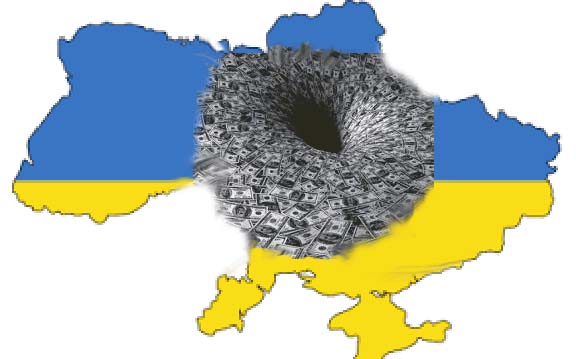
Walt Zlotow West Suburban Peace Coalition Glen Ellyn IL – 23 Oct 26
Former President Biden squandered upwards of $175 billion in direct and indirect aid to Ukraine in America’s senseless proxy war to weaken, destroy Russia.
Back in November, 2021, Russian President Putin reached out to President Biden one last time to avert military action against Ukraine massing troops to finish off Ukrainian Donbas separatists seeking autonomy and peace from their Kyiv masters. Included was Russia’s security demand that Ukraine not join NATO, a Russian red line it had been warning the US not to cross since America’s 2008 NATO membership pledge to Ukraine.
Biden’s response? Russia’s security concerns regarding Ukraine NATO membership and Donbas autonomy were not even on the agenda. Biden knew that meant Russia would launch an invasion which occurred 3 months later. He cared not one whit how many would die, believing that Russia would self destruct from US aid to Ukraine like Russia did in Afghanistan between 1979 to 1989.
Biden left office 3 years later with Ukraine in ruins with no chance of prevailing, Russia stronger than ever, and $175 billion of precious US treasure squandered on death and destruction in furtherance of America pretending it still ruled Europe, indeed the world.
Trump began his second term boasting he’d end the war on Day One. Six hundred forty days in, Trump still flails around seeking an end to Biden’s insane Ukraine proxy war so he can concentrate on polishing off Iran to please his Israeli masters.
But thankfully, he has largely cut off squandering endless tens of billions for the lost cause of defeating Russia to please the Russophobes that infest both the Republican and Democratic Parties, the military, the CIA; virtually the entire national security state. They are all supported by mainstream media which totally censures any pushback to the madness of continued war in Ukraine till the last Ukrainian soldier is dead.
There are many reasons to revile President Trump. But his cutting off squandering our precious treasure to continue the destruction of Ukraine in order to weaken, destroy Russia is not one of them.
Jeffrey Sachs – A Framework for Peace in Ukraine
This proposed settlement—designed to help end a conflict that has cost hundreds of thousands of lives and carries a continuing risk of confrontation—addresses the causes of the war rather than only its symptoms.

The trouble is – this would be difficult, tricky, time-consuming, to bring about. Just keeping on killing is so much quicker and easier – and indeed, fun, using all the newest toys. Negotiation is so boring – and old-fashioned stuff.
Jeffrey D. Sachs, Oct 20, 2026, https://www.commondreams.org/opinion/framework-for-peace-in-ukraine
The war in Ukraine can be ended permanently on terms that protect Ukraine’s statehood, meet Russia’s security concerns, and lay the foundation for a durable European security order. As another round of negotiations gears up in Norway, I propose a settlement concluded as a single package, signed by Ukraine and Russia, adopted by a vote of the United Nations Security Council under Chapter VII of the Charter, and guaranteed jointly by the five permanent members of the Council together with other states that choose to join. The proposal rests on the principle of indivisible security set out in the Helsinki Final Act and the Charter of Paris.
The package would have four core commitments.
The first is Ukraine’s permanent neutrality, adopted in a constitutional law on the model of Austria’s law of 1955, which would return Ukraine to the founding choice of its Declaration of State Sovereignty of 1990. Ukraine would join no military alliance and host no foreign bases or forces, whether of NATO, the European Union, their member states, or Russia. Neutrality would not mean disarmament, and Ukraine would retain armed forces for its own defense.
The second is that Ukraine would pursue its candidacy for membership in the European Union as a permanently neutral state, with a neutrality protocol in its accession treaty on the model of Ireland’s, and Russia would affirm that Ukraine’s membership in the EU is consistent with Russia’s security.
The third is an armistice line drawn along the line of contact on the date of signature. Each side would exercise de facto jurisdiction on its side of the line, neither would recognize the other’s territorial claims, and both would renounce force in any future adjustment. This formula is compatible with both countries’ constitutions, which bar or severely restrict the cession of territory.1
The fourth is the end of NATO enlargement eastward. At signature the North Atlantic Council would declare that NATO will not admit Ukraine or other new members in Eastern Europe or the South Caucasus, withdrawing the Bucharest pledge of 2008.
The settlement would take effect as a permanent end of hostilities on signature, not as a temporary ceasefire, and its provisions would be implemented in stages under international verification. No element would be negotiated in isolation, and no party would be asked to make a concession in advance of signature.
The territorial arrangements are designed to address the concerns and claims of both sides. Ukrainian forces would withdraw from the part of Donetsk region that Ukraine now controls, which would become a demilitarized special zone. Russian forces would not enter it, the existing local civil administration would continue to function, and its final status would be left to negotiation. Russia would withdraw from the areas it holds in Dnipropetrovsk region and from the Kinburn Spit. A Northern Security Zone would be demilitarized on both sides of the Russian-Ukrainian border, and Russian forces would leave the areas they hold in Kharkiv and Sumy regions as Ukrainian forces withdraw from their side. The Zaporizhzhia Nuclear Power Plant would remain under Russian control with IAEA safety oversight and would sell an agreed share of its electricity to Ukraine at cost.
A demilitarized belt would run along both sides of the armistice line, with heavy weapons and long-range strike systems withdrawn to agreed distances, and mutual ceilings on forces would apply in the border regions on both sides. In the Black Sea and the Sea of Azov, commercial navigation would be free for all Ukrainian and Russian ports, and attacks on shipping and ports would be prohibited.
The settlement in Ukraine should also begin the repair of European security as a whole. NATO and Russia would agree on a moratorium on ground-launched intermediate-range missiles in Europe, refrain from deploying nuclear weapons in any additional state, and restore the NATO-Russia Council. Normal diplomatic relations would be restored on both sides. The parties would convene the first summit of the Organization for Security and Co-operation in Europe since 2010 to entrust the OSCE with monitoring the settlement, verifying arms limits, and overseeing the provisions on rights.
Questions of language, education, culture, and religion would be resolved according to European standards, with the Russian language treated on the same basis as Ukraine’s other minority languages, and Russia would accept the same obligations toward Ukrainian speakers and religious communities on its side of the line. All obligations concerning extremism and incitement would be mutual and monitored by the OSCE. Prisoners of war would be exchanged on an all-for-all basis, detained civilians released, and separated children reunited with their families.
Sanctions would be lifted during 2027. Russia’s immobilized sovereign assets would also be released, and private property seized or immobilized on both sides would be restored. An international reconstruction fund administered by the European Investment Bank would finance reconstruction on both sides of the line, with contributions from all parties, Russia included, in a common effort rather than as reparations. Gas transit through Ukraine could resume wherever there are willing buyers, without any commitment by the European Union to purchase Russian gas.
A report of serious violation by an OSCE monitoring mission of unarmed observers from states outside NATO would trigger consultations among the guarantors and referral to the Security Council. Ukraine would lift martial law and hold elections under OSCE observation, and the newly elected Verkhovna Rada would ratify the settlement and adopt the constitutional law on neutrality, while the Russian Federal Assembly would ratify it at the same stage.
This proposed settlement addresses the causes of the war rather than only its symptoms. Europe has been largely absent from the design of the peace. By putting forward such a framework, European governments can take the lead in building Europe’s indivisible security and help end a war that has cost hundreds of thousands of lives and carries a continuing risk of confrontation between nuclear powers.
Why trade is vital to understanding how Ukraine needs western capital to stay afloat and how Russia can pay for its war effort without new debt
Four graphs [on original]that tell a bigger story
Ian Proud, The Peacemonger, Oct 20, 2026
I have wanted to write an article for sometime about the differing fates of Russia and Ukraine since the onset of the conflict in 2014. The headline is that Ukraine has never made up the difference in increased trade with Europe having cut its trade with Russia to the bone since 2014. This has inadvertently meant that Europe has had to inject significant sums of capital into Ukraine just to prevent its currency from collapsing as the war has gone on. Russia has diversified its trade away from Europe such that its export model is as strong today as it was in 2014, giving it the liquidity it needs to underwrite the war effort.
Key finding:
Ukraine exported 24% less and imported 46% more in 2025 than in 2014. The war has driven up imports while exports never recovered from the signing of the DCFTA and have been hampered by the war effort.- The yawning trade deficit Ukraine has built since the war started has placed greater strain on European sponsors to provide the capital Ukraine needs to prevent its currency collapsing, in addition to providing funding to meet its fiscal requirements.
- This funding challenge for Europe will persist after the war ends until Ukraine can become self-sufficient in boosting exports and/or attracting sufficient foreign investment to offset its trade deficits.
- Russia’s export strength and consistent surpluses have been unaffected by war. After the Ukraine crisis started, Russia started to diversify its major energy exports away from Europe, allowing it to weather the progressive reduction of exports to Europe. Indeed, Russia gained a huge windfall in 2022 from surging energy prices. There is no evidence that sanctions have impacted Russia’s export model in a significant way.
- Russia has already started to reaccumulate FX reserves after the oil price collapse of late 2014, until before the war started. Following the immobilisation of $300bn in Russian FX reserves, Russia started to accumulate reserves in monetary gold, to sanction-proof future earnings. Russia now has liquid reserves of over $420bn meaning the immobilisation of its foreign currency reserves is no longer an economically limiting factor.
Detailed analysis
Russia’s export model in which it runs consistently large trade surpluses has ensured it can generate the reserves of foreign currency and gold which have undoubtedly helped to bankroll the war in Ukraine. Ukraine’s trade deficit has yawned since the war started, requiring continual injections of European capital to prevent its currency from collapsing.
This helps to explain by Russia can sustain the war for longer; it doesn’t need to take on significant new debt, its debt remaining low at 20%. Ukraine can only fund the war and keep its national accounts in balance with European money that cannot be guaranteed long-term and which, in any case, has increased Ukrainian debt by an average of 20% of GDP each year since the war started. This is not sustainable.
The Deep and Comprehensive Free Trade Agreement of 2014 has disadvantaged Ukraine because it forced a choice away from trading with Russia.………………………………………………………………………………………………………………………………………………………………………………….
by encouraging Ukraine to trade with Europe and not with Russia, Europe has imposed a deadweight economic loss on Ukraine which took a sovereign decision to forgo a previously profitable trade relationship, to pursue a political goal of EU integration……………………………………………………………………………..
Dragged into a persistent and growth trade deficit by war, Ukraine needs continued injections of foreign funds to prevent its currency collapsing.…………………………………………………………………………………………………..
………………………………………………… While Russia would undoubtedly like to see the return of its immobilised assets after the war ends (big question mark) it has nevertheless built up a significant financial buffer to the tune of over $420bn in reserve assets in addition to those assets that remain frozen.
This deep well of reserves undoubtedly helps to underwrite Russia’s war effort without the need for significant borrowing. Russia’s debt today sits at around 20% of GDP.
In 2021 Ukraine’s debt sat at around 49% of GDP. Today it sits at around 110% of GDP……………………………………………… https://thepeacemonger.substack.com/p/why-trade-is-vital-to-understanding?utm_source=post-email-title&publication_id=3221990&post_id=221204744&utm_campaign=email-post-title&isFreemail=true&r=1ise1&triedRedirect=true&utm_medium=email
Ukraine’s Black Sea escalation threatens global trade, with risks of spiralling
Ukraine’s expanding Black Sea attacks are disrupting shipping, raising insurance costs, and threatening global food and energy trade. As “wild-card” Zelensky raises the stakes (angering the US), the risk of a wider confrontation grows.
Friday, October 16, 2026, https://infobrics.org/en/post/103298
Uriel Araujo, Anthropology PhD, is a social scientist specializing in ethnic and religious conflicts, with extensive research on geopolitical dynamics and cultural interactions.
Black Sea shipping is in crisis, adding pressure to a global economy already absorbing Red Sea and Strait of Hormuz disruptions. Commercial vessels face rising risks, insurance costs have climbed, and tanker freight rates have surged.
Ukraine has stepped up attacks on Russia’s Black Sea Fleet, ports, oil facilities, and vessels associated with Russian trade, expanding the conflict’s geographical scope. Grain, oil, fertilizers, and other commodities move through these waters, including shipments for non-belligerent countries.
S&P Global reported on October 9 that tanker freight rates rose sharply amid attacks, sanctions, and security concerns disrupting Russian energy exports. According to maritime security consultancy Ambrey, Kyiv expanded its campaign beyond naval assets and oil infrastructure to merchant ships trading with Russian ports.
In November 2025, attacks had already expanded to commercial vessels, particularly oil tankers, in the open sea. In May 2026, Ambrey attributed strikes on three Russia-linked tankers inside Turkey’s exclusive economic zone to Ukrainian naval drones.
By July, targeting expanded to dry-bulk carriers, general cargo, container ships, and roll-on/roll-off vessels. In September, insurers widened the high-risk zone. Ambrey data shows 45 merchant vessels struck outside the previous war-risk area in 12 months, 31 after July 1, 2026.
Ambrey’s finding is that Ukraine-attributed strikes (on Russia-linked shipping far offshore) helped drive insurers’ growing risk perception across the Black Sea.
Russia has responded by also conducting strikes in the Black Sea. As Modern Diplomacy puts it, Moscow has made any Black Sea truce conditional on Kyiv ceasing attacks on Russian energy infrastructure.
This is, after all, a proxy war of attrition, marked as it is by considerable military asymmetry. Russia possesses a larger population, defense-industrial base, strategic arsenal, air force, and navy, as well as greater resources for prolonged warfare.
Ukraine, despite developing formidable drone capabilities and long-range strike capacity, remains heavily dependent on Western assistance.
Global Firepower’s 2026 ranking places Russia second and Ukraine twentieth. The military asymmetry is therefore considerable.
The hard truth is that, notwithstanding any legitimate criticism one may have of Moscow’s campaign, Russia has refrained from employing its full destructive capabilities.
Such restraint, particularly in the war’s early stages, may have reflected not only humanitarian and military calculations but also (on Moscow’s end) awareness of historical and cultural ties between the two countries – which may have a psychological effect on decision-makers.
Kyiv, in contrast, since the 2014 ultra-nationalist revolution, has launched an anti-Russian campaign to distance the nation from Moscow. Even so, 42.6% of Ukrainians still regularly spoke Russian in December 2022, despite the war and media censorship restrictions.
Former US diplomat Chas Freeman and retired US Army Colonel Douglas Macgregor have both argued that Moscow exercised restraint.
Poland’s Centre for Eastern Studies likewise noted in June 2022 that Russia had refrained from systematically destroying key infrastructure – while the US Congressional Research Service observed that the initial bombardment was more limited than expected.
For comparison, Bono Vox performed in Kyiv on May 8, 2022, less than three months after Moscow launched its campaign. One could hardly imagine Bono performing in Baghdad shortly after the US invasion! Or in 2011 Libya, for that matter.
The broader point here is that the Russian Federation retains substantial military advantages, despite Ukrainian advances, but Western support has enabled Kyiv to sustain a prolonged war of attrition – increasingly targeting Russian energy.
In August, Ukrainian drone strikes on Russian and Iranian-linked vessels in the Caspian Sea risked expanding the conflict into a vital Russia-Iran logistics corridor.
The attacks risked further “proxifying” the conflict by aligning Kyiv with US and Israeli interests against Tehran, potentially merging the European and Middle Eastern theaters – a scenario that never materialized.
In any case, Ukrainian attacks on Russian energy infrastructure continue amid mounting political pressure, with Trump even saying it is “time for Ukraine to get new President.” I’ve commented before on Zelensky’s resilience, despite several reported plots against him.
The Ukrainian leader has shown a habit of acting unpredictably, sometimes behind his Western patrons’ backs. In 2023, leaked documents revealed wild Ukrainian plans that risked widening the conflict. More recently, attacks on Russian refineries drew attention amid rising diesel prices and reports of moves angering Washington.
This “wild-card” tendency risks triggering a dangerous spiral, with potentially disastrous consequences for Ukraine – and the global economy. Repercussions for food, energy, and fertilizer trade are already visible, while the danger of crossing red lines has arguably never been greater.
Massive Ukrainian drone attack on St. Petersburg escalates US-NATO war against Russia.
Under these conditions, there is a growing admission within the US and international media that NATO and Russia are entering a “world war.” In one of the foremost examples, the Financial Times published Saturday a column titled, “Are we sleepwalking into World War III?”
The old imperialist powers retain a military superiority they no longer possess economically.
Andre Damon,18 October 2026, https://www.wsws.org/en/articles/2026/10/19/yudl-o19.html
Ukraine attacked Russia with more than 1,000 drones overnight Saturday, in the largest bombardment of St. Petersburg since the Second World War. The attack, in which Russia’s Defense Ministry counted 1,015 drones across 15 regions, Crimea and the Black Sea, was one of the heaviest bombardments of Russian territory since the war began.
These strikes are directly funded by the NATO powers, which have provided Ukraine with over $100 billion in weapons, and are carried out on the basis of targeting data provided directly by their militaries.
The latest attack is a response by the NATO powers to the warning Russia gave European governments on September 30, that threats to Russia’s territorial integrity would be met with “the entire arsenal of forces and capabilities at its disposal, including nuclear weapons.”
Faced with this blunt warning that their actions risk triggering a nuclear war, the NATO powers are escalating. On October 12, General Alexus Grynkewich, NATO’s top commander in Europe, threatened to “break” the enemy’s “warfighting system,” including “anything and everything that supports, sustains, or controls that force.”
Under these conditions, there is a growing admission within the US and international media that NATO and Russia are entering a “world war.” In one of the foremost examples, the Financial Times published Saturday a column titled, “Are we sleepwalking into World War III?” by its chief foreign affairs commentator, Gideon Rachman. The title of his essay is taken from a 2012 book by Australian historian Christopher Clark, The Sleepwalkers: How Europe Went to War in 1914, which provided an apologetic explanation for the policies of German and European imperialism.
According to Clark, the war was the unforeseen outcome of mistaken judgments. The governments of the time and their leaders were not guilty of planning and starting war to achieve geopolitical and economic objectives. This benign interpretation of the war was especially welcomed by the German government and media, which praised Clark’s work and turned him into an intellectual celebrity.
Building upon Clark’s metaphor, Rachman depicts the imperialist powers as similarly clueless about the consequences of their actions. He writes, “Regions and countries that have for decades taken peace for granted—western Europe, east Asia, the Gulf states—now have to wrestle with the prospect, or the reality, of war.” It has become “commonplace,” he notes, “for world leaders to speculate publicly about the outbreak of a third world war.”
Rachman, citing a quote attributed to Leon Trotsky, declares, “You may not be interested in war, but war is interested in you.”
But the US and European leaders are not political somnambulists who are “sleepwalking” into World War III. They have been marching toward it with eyes open since the dissolution of the Soviet Union. The first President Bush proclaimed a “new world order” on the eve of the 1991 Gulf War. That war was followed by the intervention in Somalia, the bombing of Bosnia and the 1999 war against Serbia, the invasions of Afghanistan and Iraq, the destruction of Libya, the proxy war in Syria and the US-backed Saudi war in Yemen.
Since 2022, these wars have merged into a single global conflagration. It includes the US-NATO war against Russia in Ukraine; the Israeli genocide in Gaza, armed and defended by Washington; the bombing of Iran in June 2025; and the war against Iran launched on February 28 of this year.
The objective is the redivision of the world among the old imperialist powers. This violent and ongoing project includes the breakup of the existing Russian state, which will open up the vast Eurasian landmass to unfettered capitalist exploitation. For the oligarchs of finance capital, the loss of a few hundred million lives would be a small price to pay for this rich prize.
In Rachman’s telling, however, the danger of world war proceeds entirely from the actions of Russia and China. In this narrative, the threat of “world war” began with the decision Putin made in February 2022, with no antecedent history. Rachman asserts that an inflection point was reached when “Putin launched his ‘special military operation.’ In that time, the global political atmosphere has been transformed.”
The Russian invasion of Ukraine did not come out of nowhere. It was a reactionary and desperate response by the Russian capitalist oligarchy to years of provocations by NATO. NATO’s own leadership has said as much. In an interview published by the Washington Post in May 2023, then-NATO Secretary General Jens Stoltenberg declared that the war “didn’t start in 2022. The war started in 2014.”
Stoltenberg continued, “And since then, NATO has implemented the biggest reinforcement of our collective defense since the end of the Cold War … Until 2014, NATO allies were reducing defense budgets. Since 2014, all allies across Europe and Canada have significantly increased their defense spending … this is a huge transformation of NATO that started in 2014.”
The Russian invasion of Ukraine did not come out of nowhere. It was a reactionary and desperate response by the Russian capitalist oligarchy to years of provocations by NATO. NATO’s own leadership has said as much. In an interview published by the Washington Post in May 2023, then-NATO Secretary General Jens Stoltenberg declared that the war “didn’t start in 2022. The war started in 2014.”
Stoltenberg continued, “And since then, NATO has implemented the biggest reinforcement of our collective defense since the end of the Cold War … Until 2014, NATO allies were reducing defense budgets. Since 2014, all allies across Europe and Canada have significantly increased their defense spending … this is a huge transformation of NATO that started in 2014.”
But the Maidan coup was itself an outcome of decades of imperialist policy that had pushed the boundaries of the NATO alliance to Russia’s doorstep.
Rachman correctly centers the driving force of the eruption of global war in “a shift in the global balance of power.” He notes that, “In 1989, the year of the fall of the Berlin Wall, the G7 nations—the US, UK, Germany, France, Italy, Canada and Japan—accounted for around two-thirds of global economic output … By 2022, the G7 represented about 43 percent of global GDP.”
This shift, according to Rachman, is “encouraging revisionist powers to challenge the global dominance of the US and its allies.” China’s share of world output rose from under 2 percent in 1989 to about 17 percent in 2024, according to World Bank figures.
However, by 2022, Rachman notes, the G7 still accounted for “about half of global military spending.” The old imperialist powers retain a military superiority they no longer possess economically. It is they, not China, that have spent the past 35 years at war, seeking to reverse by force what they are losing in the world economy.
The most bizarre element of Rachman’s column is his effort to blame the reemergence of global war on the public’s opposition to it. He writes that “the growth of anti-war sentiment in the US” has “created an opening for revisionist powers,” that US President Donald Trump “is clearly attracted to the idea that the US should retreat from its security commitments to its allies” and that “the greatest risk of a third world war may lie in that very uncertainty.”
Beset by an all-pervasive capitalist crisis and the growth of working class opposition, the imperialist powers seek through war a way out of their problems. The global eruption of imperialist war is only intensifying the class struggle and the capitalist crisis. It is driving workers and youth into struggle around the world, from the United States to France—where students and workers filled the streets this week against a government that has billions for rearmament and nothing for social needs.
The working class and youth must reject and oppose the insane imperialist militarism that is inciting global conflict and threatening humanity with a nuclear conflagration.
Zelensky still the most dangerous man in the world.

Walt Zlotow West Suburban Peace Coalition Glen Ellyn IL, 20 October, 26
Ukraine President Volodymyr Zelensky has been pushing all out war between the West and Russia since the Russian invasion of February 2022. And ‘all out’ only has one inevitable outcome…nuclear war.
That’s a long time to be put under threat of nuclear annihilation by a former comedian. Zelensky used his celebrity to win the Ukraine presidency in 2019, promising to make peace with the Russian leaning Ukrainians in Donbas on Russia’s border being brutalized by the ultra nationalist Kyiv government for years preceding Zelensky.
The Kyiv deep state quickly disabused Zelensky of reproachment with Donbas Ukrainians and Russia. With the US and NATO cheering Zelensky on, this made the Russian invasion nearly 3 years later.
Zelensky went along, foolishly believing Western aid would defeat an overwhelmingly more powerful Russia that Ukraine had no chance of defeating single handedly.
But right at the start, President Biden, most responsible for provoking the war, declared no US troops or long range weapons for Zelensky because ‘that would lead to nuclear war.’ That essentially sealed Ukraine’s fate, a truth Zelensky could not comprehend.
How right Biden was then and how wrong Zelensky was and is today, demanding endless long range NATO weapons that are reaching deep into Russia.
European Bank for Reconstruction and Development (EBRD) welcomes G7 commitment to finance urgent repairs to Chornobyl’s protective shield
EBRD 15th Oct 2026,
https://www.ebrd.com/home/news-and-events/news/2026/ebrd-welcomes-g7-commitment-to-finance-urgent-repairs-to-chornob.html
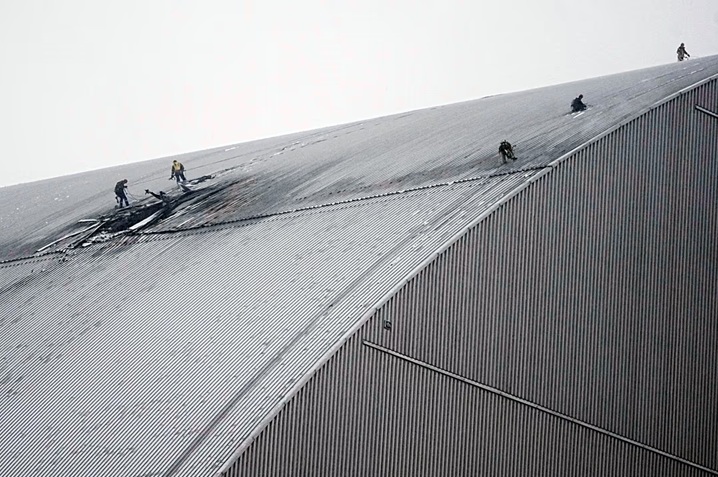
The European Bank for Reconstruction and Development (EBRD) welcomes the announcement by the Group of Seven (G7)that as leading industrialised nations, they will provide €260 million to fund urgent repairs to the New Safe Confinement at the Chornobyl Nuclear Power Plant in Ukraine, following the Russian drone strike that severely damaged the structure in February 2025.
The G7 (Canada, France, Germany, Italy, Japan, the United Kingdom and the United States) expressed grave concern over the nuclear safety risks caused by the strike and pledged to mobilise funding to repair the New Safe Confinement. The structure contains the remains of Reactor Four and enables the safe dismantling of the original containment sarcophagus built after the 1986 accident.
The G7 also called on other international partners to join the effort and contribute to covering the remaining financing needs.
The announcement was made at the International Monetary Fund and World Bank Autumn Meetings in Bangkok, following a meeting of the G7 finance ministers.
EBRD President Odile Renaud-Basso said: “The EBRD is grateful to the G7 nations for their continued leadership and commitment to nuclear safety at Chornobyl. We join the G7 in calling on the wider international community to contribute to these efforts at a donor conference we are convening in Paris on 9 November 2026, co-chaired by France, Ukraine and the EBRD.”
Chornobyl’s New Safe Confinement was severely damaged by a Russian drone strike on 14 February 2025. The attack breached the structure’s inner and outer cladding, damaged critical systems and severely compromised its two primary functions: containing radioactive material and enabling the safe dismantling of the unstable original sarcophagus over Reactor Four.
Preliminary assessments indicate that at least €500 million will be needed to repair the damage and restore the structure to full functionality. The work needs to be completed by 2030 to limit the risk of corrosion of the steel arch and safeguard the structure’s 100-year design life.
The EBRD has led global efforts to stabilise and manage risks at Chornobyl since 1995, mobilising over €2.5 billion in international contributions – much of it from the G7 nations – and providing more than €700 million of its own resources to fund nuclear safety and decommissioning projects linked to the site.
The Bank is now leading international efforts to restore the full functionality of the New Safe Confinement and to mobilise the remaining funding needed for urgent repairs.
Why Boris Johnson Must Answer for Ukraine’s Destruction — and Why the Public Should Decide on Future Ukraine Aid
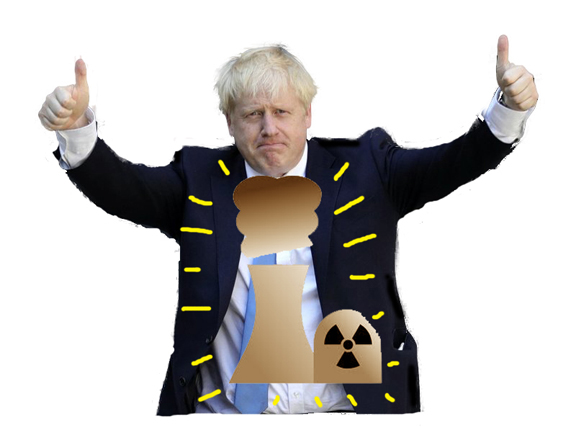
A conversation with Mary Dejevsky and Commodore RN (Ret’d) Steve Jermy
Ian Proud, Oct 15, 2026, https://thepeacemonger.substack.com/p/why-boris-johnson-must-answer-for?utm_source=post-email-title&publication_id=3221990&post_id=220504822&utm_campaign=email-post-title&isFreemail=true&r=1ise1&triedRedirect=true&utm_medium=email
In this wide-ranging discussion, I am joined by two of Britain’s most experienced and independent voices on the Ukraine war and European security: Mary Dejevsky, former Moscow correspondent for The Times and long-time foreign affairs commentator, and Commodore Steve Jermy RN (Rtd), a decorated naval officer with combat experience dating back to the Falklands War and the author of Strategy for Action.
Prompted by Mary’s powerful Substack essay J’Accuse – Boris Johnson, we examine Boris Johnson’s role in the early phase of the war, the collapse of the April 2022 Istanbul talks, the broader strategic failures of Western policy, the gap between political narrative and military reality, and what a realistic security architecture for Europe might look like once the fighting ends. We also discuss Steve’s support for a petition calling for a pause in UK military aid and a proper public debate (and possible referendum) on Britain’s involvement.
In this conversation we discuss:
– Mary Dejevsky’s case for holding Boris Johnson to account after the war
– The Istanbul negotiations of April 2022 and why the draft agreement collapsed
– Johnson’s Churchillian framing of Zelensky and the early Western response
– Military analysis of Russia’s initial operation and the West’s strategic misjudgements
– The role of other key figures (Liz Truss, Ben Wallace, Tony Radakin)
– Why the West continues to rely on one-sided information and propaganda
– Russia’s actual security objectives versus the “restore the empire” narrative
– Neutrality for Ukraine and the case for reforming or replacing NATO
– A possible future European security architecture centred on the OSCE
– The petition to pause UK support and open a national debate on aid spending
– What a post-war reckoning in Britain might look like.
Russia’s Rosatom says truce in place for Zaporizhzhia power supply repairs.
Russia’s state nuclear corporation Rosatom said a truce agreement
was in place as of Thursday to allow repairs at a thermal power station
supplying power to the Russian-controlled Zaporizhzhia nuclear power plant
in southeastern Ukraine. It said the agreement was mediated by the
International Atomic Energy Agency.
Reuters 15th Oct 2026, https://www.reuters.com/world/russias-rosatom-says-truce-place-zaporizhzhia-power-supply-repairs-2026-10-15/
“Russia cannot lose”
Dmitri Trenin on the Ukraine Proxy War and Why the West Won’t Win
Ian Proud, Oct 14, 2026, https://thepeacemonger.substack.com/p/russia-cannot-lose?utm_source=post-email-title&publication_id=3221990&post_id=220332256&utm_campaign=email-post-title&isFreemail=true&r=1ise1&triedRedirect=true&utm_medium=email
I bumped into Dmitri Trenin for the first time in eight years at the Valdai Discussion Club in Moscow. He was sat behind me during a session and we renewed our acquaintances. When I was based at the British Embassy in Moscow, Dmitri was Director of the Carnegie Moscow Centre. He was one of the most valued interlocutors for the Embassy, and seen as a person who always offered a balanced Russian perspective on world events. He is now the President of the Russian International Affairs Council, and I was pleased that he agreed to talk to me on my Peacemonger channel.
Trenin offered a clear-eyed view from Moscow of why the Ukraine war has lasted so long and why a diplomatic settlement remains so difficult. He framed the conflict as existential for Russia. From the Kremlin’s perspective, this is not a limited dispute with Ukraine but a proxy war waged by the West, which has invested hundreds of billions of dollars into the war effort.
Russia, he said, cannot afford to end the fighting without achieving the core objectives it set out with: securing the territories of the Donetsk and Luhansk republics, upholding its constitutional obligations after the 2022 referenda in those oblasts, and establishing a security arrangement that prevents Ukraine from becoming a permanent platform for pressure against Russia.
Trenin stressed that Russia does not aim to conquer the whole of Ukraine or invade Europe. Indeed, in an article published early in the war he made the case for Russia not seeking to conquer all of Ukraine and so tie itself into a costly insurgency in the west, while permanently damaging prospects for normalisation with Europe.
He pointed to the years before 2014, when Moscow largely accepted a sovereign Ukraine within its Soviet-era borders, and to the early 2022 talks in which Russia was prepared to accept Ukrainian neutrality and discuss the status of the Donbas, along the lines earlier set out in the Minsk Agreements.
In his telling, Russia’s position hardened in response to Western and Ukrainian actions, not because of a pre-existing plan to absorb more territory in Ukraine.
Security concerns, particularly over NATO expansion and the treatment of Russian speakers and Russian culture in Ukraine, remain central to Putin’s calculus.
The interview also highlighted the very different stakes for the other parties. For the Biden administration the war was cast in ideological terms—democracy versus authoritarianism. For Donald Trump, Trenin argued, it is one piece of a broader effort to rebalance U.S. power and reduce commitments to allies. For Europe, however, the conflict has become existential in a different way.
Trenin said European elites are using the image of a Russian threat to hold the European Union together, justify remilitarization, and brand political opponents as pro-Russian. He described talk of an imminent Russian invasion of Europe as hollow propaganda that serves domestic political purposes more than it reflects actual Russian intentions.
On the question of NATO, Trenin returned to the proposals Russia made in late 2021: permanent Ukrainian neutrality, written into the Ukrainian constitution and international agreements, with no NATO bases, exercises, or military cooperation. He also noted Russia’s earlier call for NATO military infrastructure to be pulled back to 1997 lines.
Any lasting European security arrangement, he suggested, would eventually require some form of military-technical equilibrium and mutual assurances, but that discussion remains secondary to the outcome of the current war.
Looking further ahead, Trenin was cautious but not wholly pessimistic about relations with individual European countries. He said the ball is largely in Europe’s court. If political changes in Germany, France, Britain, and elsewhere weaken the current supranational approach and restore a greater role for national interests, a basic transactional or “neighborly” relationship could become possible.
He does not expect a return to the Greater Europe ideas of the 1990s and 2000s; too much has changed. But he argued that nationalism and the interests of individual states will eventually reassert themselves across Europe, as they have elsewhere in the world.
The conversation reinforced an assessment I’ve held for some time that the war in Ukraine will ultimately be decided by the inescapable mathematics of attrition and whether Europe’s political direction shifts back towards the sovereignty of its members.
Trenin’s account makes plain why Russia will not walk away from the war in Ukraine and why it expects the confrontation with Europe to outlast the fighting itself. As Trenin said to me when we met in Moscow, ‘the relationship with Europe is over’. It was clear during the conversation that that split was as regrettable to him, as it is to me.
Panic in Kiev as AFU’s Starlink “Mysteriously” Throttled One Day After Intelligence Blackout
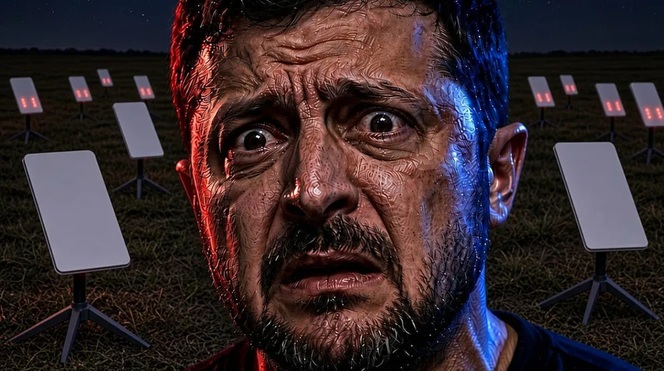
Simplicius, Oct 15, 2026
A day after Zelensky accused the US of cutting “intelligence support” and not providing early warning against Russia’s ballistic missile strikes on Kiev, pandemonium has ensued in Ukraine.
Now the country’s leadership has accused the US of cutting its Starlink support as well.
It all began with a post by prominent Ukrainian figure Serhii Sternenko who detailed how Starlink terminals in Ukraine were throttled when they passed a certain speed restriction:
As can be seen (on original), he accuses Elon Musk’s SpaceX of meddling, which began a firestorm of hate directed toward Musk from the Ukrainian-aligned side of social media.
Musk immediately responded with a clarification: the military version of Starlink is infact operated by the US DOD under the name Starshield and is not controlled by Musk or SpaceX. You can see him responding directly to the star ex-Defense Minister Mykhailo Fedorov himself—note that Fedorov claims connectivity was already being restored at the time:
Musk was forced to divest himself of this arm of his company early in the war in order to continue presenting a “neutral” face for his enterprise and not have it messily linked to offensive military actions which he likely knew would be pushed into very ethically “gray” areas of striking Russian civilian and dual-use infrastructure.
Despite all that however, we must admit the timing is a tad suspicious given that Musk had some very strong words about Zelensky only days ago:
First, it should be mentioned that despite Fedorov’s claims of restoration, there were other counter-claims that his announcement was premature and service was in fact still widely failing.
Several Ukrainian brigades had also posted of their issues. Here the 7th Airborne Assault Corps of the AFU: (on original)
The Ukrainian 7th Rapid Response Corps of the Air Assault Forces reports that Starlink disruptions are occurring in the Hulyaipole/Orikhiv direction, Zaporizhzhia Oblast, this morning.
The so-called Starshield package, which conducts data transferring for drone flights, has received limitations on speeds of 110-120+ km/h, where the connection can be lost for 10-20 seconds making it difficult to control the drones. Additionally, the launch of high-speed mid-range drones has become almost impossible.
Already, since this morning, some missions of the 7th Corps have had to be cancelled due to these Starlink restrictions and communications problems.
Ukraine’s most authoritative figure on these topics, Serhiy Flash, also confirmed that Starlink restrictions had come into force:
On his TG channel he went into further detail:
Everyone is writing about how the “Starlink” restrictions have impacted long-range missions and frontline logistics, but there’s another major problem for us.
“Starlink” is being used in the most effective current solution (interceptors) for protecting our airspace from jet-powered “Shahed” drones.
In fact, with their actions, our partners are depriving us of one of the few chances we have to defend the country from these jet-powered “Shaheds.”
He points out an important and under-appreciated part of the saga: that Starlink is used not just offensively by Ukrainian long-range drones but also defensively in interceptors that target Russia’s own strike assets which have been hitting Kiev. As such, Russia’s recent crippling strikes on Kiev’s facilities now stand to become even worse if these disruptions continue.
In light of the above, today WaPo dropped the bombshell that the US has in fact been threatening key Ukrainian personnel with an intelligence cut-off should Zelensky continue to hit Russian oil sites………………………………………………………………………………………………………….
the US has been juggling its finite space resources between the various theaters of conflict it has provoked and is trying to simultaneously manage………………………………………………
No matter what really happened with the early warning and Starlink fiasco, the fact remains that the US appears to have sent Ukraine a final ultimatum that intelligence will be completely cut off if Ukraine continues to hit Russian energy, at least according to the earlier reports…………………………
In the meantime, Russia has been devastating Kiev, with another massive strike reportedly being planned for the coming days or sooner.
Last night a record 6 sites related to energy infrastructure were hit around Kiev and Kharkov……………………………..https://simplicius76.substack.com/p/panic-in-kiev-as-afus-starlink-mysteriously?publication_id=1351274&post_id=220385664&isFreemail=false&r=3alev&triedRedirect=true&utm_source=substack&utm_medium=email
Freedom, democracy in Ukraine sure a bit bizarre.
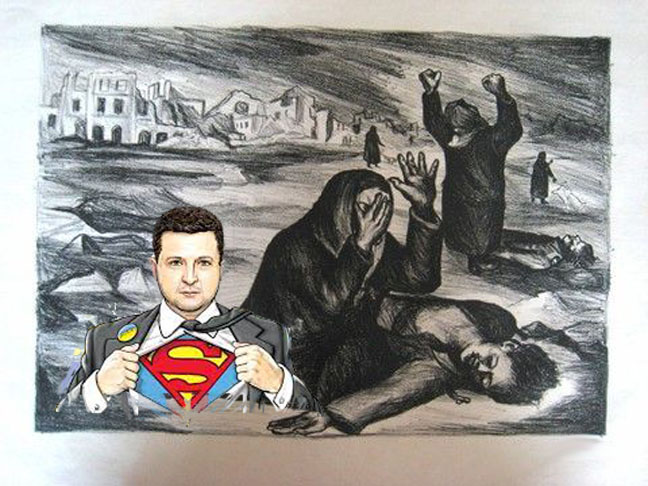
Walt Zlotow West Suburban Peace Coalition, Glen Ellyn IL, 16 Oct 26
The recent Trump, Putin diesel fuel deal designed to drop diesel under $6 a gallon ahead of the election has got the endless Ukraine war crowd promoting Ukrainian freedom and democracy as the cause they’re fighting for.
But these folks, shielded from the reality of political life in Ukraine, are oblivious how unfree, undemocratic Ukraine is, and how unpopular acting President Zelensky and his endless war against Russia are.
Zelensky’s 5 year term expired May 20, 2024 but he’s cancelled elections while he rules Ukraine dictatorially under martial law. He’s banned all opposition media and rivals, even jailing and torturing some. Over 7 million Ukrainians have fled the former Ukrainian democracy. Running out of troops to serve as cannon fodder, young men and teens are scooped up off the streets while their wives and mothers beg for their release.
No wonder Zelensky’s approval and trust ratings hover around 40%. Three quarters of Ukrainians want immediate negotiations to end the war destroying all vestiges of life in Ukraine with no hope of reversal.
And in alleged despotic Russia? Putin, in his third year as duly elected Russian president, enjoys approval and trust ratings over 70%. Thousands of recruits flock to enlistment centers monthly to complete pushback to NATO expansion to put nukes on Russia’s borders in Ukraine and prevent further destruction of Russian leaning Ukrainians in Donbas.
Supporters of continuing the war in Ukraine till the last Ukrainian soldier is dead can use thousands of words in their support. But freedom and democracy are two words that should be left out.
Britain funds critical repairs to Chornobyl nuclear power plant damaged by Russian drone attack
Gov.uk 15 October 2026
UK to provide £17m in funding towards repairs to the Chornobyl nuclear power plant damaged by Russian drone strike last year.
Britain is funding £17m in new support for repairs to the Chornobyl nuclear power plant, the Chancellor and Foreign Secretary have announced today.
The protective shelter of the plant was damaged by a Russian drone strike last year, and UK support will form part of an international programme coordinated by the European Bank for Reconstruction and Development, working alongside the Government of Ukraine and G7 donors.
The support will fund crucial repairs to restore the structure’s confinement and ventilation functions and protect its intended lifespan. Without repairs, corrosion risks undermining decades of international investment and creating longer-term environmental and safety risks……………. https://www.gov.uk/government/news/britain-funds-critical-repairs-to-chornobyl-nuclear-power-plant-damaged-by-russian-drone-attack
Ukraine’s worst diplomatic nightmare just got closer
The fuel deal’s real significance lies in diplomacy: Trump and Putin found a way to work together without making Ukraine part of the bargainPublished 11 Oct, 2026 12:36 | Updated 11 Oct, 2026 13:40
11 Oct, 2026 , By Sergey Poletaev, information analyst and publicist, co-founder and editor of the Vatfor project, https://rt-english.com/russia/647043-ukraine-diplomacy-trump-putin/
On the evening of October 9, the presidents of the United States and Russia spoke by phone. The announcement that followed was straightforward: Russia would sell the US 1.8 million metric tons of diesel over the next three months, followed by a million tons a month, and the US would issue temporary licenses authorizing the shipments.
The news drew a furious, bordering on hysterical, response from Kiev and stunned silence from Europe.
Let’s look at why this deal matters, what it has to do with Ukraine, and what might come next.
The tug-of-war championship
Ever since US President Donald Trump returned to office, the central aim of Russian diplomacy has been to separate relations with the US from the Ukraine issue. The White House is open to the idea, too: The US needs Russia as a counterweight to China, and there are substantial economic opportunities. But as we explored in an earlier piece, until recently, neither side managed to pull it off.
Ukraine and its supporters in Europe and the US, meanwhile, have pursued the opposite goal: keeping US-Russia relations tied to the Ukraine conflict.
In February and March 2025, Trump relieved America of responsibility for Ukraine’s fate and handed the job of financing it squarely to Europe. The US retained just three commitments: the relatively modest military supply programs already approved under former President Joe Biden, intelligence sharing, and weapons sales for cash, with Ukraine waiting in line like any other customer.
This maneuver cemented a status quo that neither Europe and Ukraine on one side nor Russia on the other would allow to change, with their respective allies in the US also weighing in. Everyone tried to bring Trump over to their side on Ukraine. Nobody succeeded.
This is why the understandings reached in Anchorage went nowhere: Ukraine’s supporters torpedoed them. It is also why those supporters failed to use Trump to escalate the conflict. Russia prevented deliveries of Tomahawk missiles, the expansion of Starlink coverage over Russian territory, and so on.
Despite the apparent stalemate, Russian officials kept talking to Witkoff and Kushner. The aim was to maintain a channel to Trump and deny Ukraine’s supporters an opening to drag the US back into the war on their side or steer him back onto Biden’s course.
This is why Russian officials at every level distinguish between US and European actions, often explicitly contrasting the two.
A few numbers on oil
Russia is one of the world’s largest diesel exporters, supplying just under 40 million metric tons to the global market in 2025. On July 8, 2026, Ukrainian attacks on Russian refineries prompted a temporary ban on diesel and gasoline exports.
Since then, Russia’s refining situation has improved considerably. Gasoline remains in short supply, but a domestic diesel surplus has emerged, and the export ban has begun to loosen in practice. According to Reuters, diesel deliveries to Central Asian countries were already up 19% in September.
A few numbers on oil
Russia is one of the world’s largest diesel exporters, supplying just under 40 million metric tons to the global market in 2025. On July 8, 2026, Ukrainian attacks on Russian refineries prompted a temporary ban on diesel and gasoline exports.
Since then, Russia’s refining situation has improved considerably. Gasoline remains in short supply, but a domestic diesel surplus has emerged, and the export ban has begun to loosen in practice. According to Reuters, diesel deliveries to Central Asian countries were already up 19% in September.
The Krivoy Rog school of diplomacy
Back to geopolitics. Until yesterday, Russia had been unable to separate its relationship with the US from the Ukraine issue. Even the war with Iran failed to do the trick, despite keeping oil and petroleum product shipments from the Persian Gulf blocked for more than six months.
Help came from an unexpected quarter. Hoping to bring US diesel prices down at least a little before the congressional elections, Trump asked Zelensky to stop attacking Russian refineries.
Zelensky responded by demanding a sweeping energy truce. We’ll stop hitting refineries, he effectively said, if Russia stops attacking our energy infrastructure and blockading our ports. And you, Trump, have to supply us with missiles for our Patriot systems, and so on.
Getting nowhere with Zelensky, Trump struck a deal directly with Russian President Vladimir Putin, who offered to supply diesel in exchange for a suspension of sanctions, without any preconditions.
The transaction itself is not particularly consequential. Yes, it could cool speculative trading ahead of the elections and push prices down somewhat. But the 1.8 million metric tons due to arrive over three months will cover just three or four days of American consumption.
For Russia, the US is an ordinary customer in purely commercial terms. Moscow will make some money selling to America, but it could just as easily have sold these volumes elsewhere. Petroleum products are in short supply worldwide, while Russia has a diesel surplus.
Yet the deal gave both sides what they had been seeking since February 2025: a bilateral relationship detached from Ukraine. So far, that applies to just one specific issue, but getting started is the hard part. Zelensky tried to twist Trump’s arm, pushing him to make Putin stop bombing Kiev, and overplayed his hand. Now Kiev can be bombed relentlessly, and Trump has no reason to care. He got what he wanted.
This does not mean sanctions are finished or that the two powers are entering an era of warm friendship. Oil sanctions are probably here to stay, and as soon as global market conditions change, Washington will turn them back up to full blast. But the sanctions wall can now be taken apart brick by brick, restoring ties wherever both sides stand to gain: launching new energy projects in the Arctic, for example, jointly taking over the surviving Nord Stream 2 pipeline, or resolving the sale of Lukoil’s overseas assets. Ukraine no longer has anything to do with that process or any influence over it.
The art of the backroom deal
Cynics insist that the Trump administration is a complete mess, with the right hand oblivious to what the left is doing. The way this agreement came together suggests otherwise.
After the campaign of long-range strikes against Russia went badly off script, Zelensky once again tried to secure a ceasefire through Trump. He has been trying since early 2025, with no success, but he still held out hope.
Trump could have publicly given Zelensky the boot again. But on Ukraine, he faces opposition not only from Congress but also from parts of his own administration. And an election is just around the corner.
Instead of staging a public showdown, Trump’s team spent more than two months visibly engaged in intensive talks with Ukraine about an energy truce. His envoys, Witkoff and Kushner, traveled to Kiev, and Trump himself showered Zelensky with compliments. In reality, all of it proved to be a screen for a quiet, swift, informal deal with Moscow.
It has since emerged that the first tanker carrying diesel to the US left St. Petersburg on September 22 and is expected to reach the US any day now. In other words, the deal was already well advanced three weeks ago, and both sides were confident it would go through.
That takes some skill. This episode shows that Trump keeps a firm grip on his team and can prevent leaks when he needs to. Even Rubio, prone to breaking ranks, played his part exactly as the boss wanted.
And once the deal was done, there was no longer any need to smile at Zelensky in public. The masks came off. For the first time, Trump publicly declared that Ukraine needs a new president and must hold elections.
The liberal media will inevitably say that Trump is repeating Russian propaganda narratives. In fact, he was saying what he thinks.
The diesel deal does not mean Moscow and Washington will now live in perfect harmony. The differences between them are deep and fundamental, and the recently enacted ‘Graham law’ makes lifting any sanctions impossible for at least the next five years.
But this Friday, Putin and Trump finally managed to get past Ukraine and leave it behind. US-Russia relations now depend on Russia and the US alone.
1 This Month
23-25 October – on Zoom – World BEYOND War’s annual global conferenc


Shut down the radiation-damaged Heysham nuclear reactors now
To see nuclear-related stories in greater depth and intensity – go to https://nuclearinformation.wordpress.com

Say No to NASA’s Reckless Nuclear Reactor on the Moon
Say No to NASA’s Reckless Nuclear Reactor on the Moon

-
Archives
- October 2026 (247)
- September 2026 (339)
- August 2026 (330)
- July 2026 (355)
- June 2026 (287)
- May 2026 (306)
- April 2026 (356)
- March 2026 (251)
- February 2026 (267)
- January 2026 (308)
- December 2025 (358)
- November 2025 (359)
-
Categories
- 1
- 1 NUCLEAR ISSUES
- business and costs
- climate change
- culture and arts
- ENERGY
- environment
- health
- history
- indigenous issues
- Legal
- marketing of nuclear
- media
- opposition to nuclear
- PERSONAL STORIES
- politics
- politics international
- Religion and ethics
- safety
- secrets,lies and civil liberties
- spinbuster
- technology
- Uranium
- wastes
- weapons and war
- Women
- 2 WORLD
- ACTION
- AFRICA
- Atrocities
- AUSTRALIA
- Christina's notes
- Christina's themes
- culture and arts
- Events
- Fuk 2022
- Fuk 2023
- Fukushima 2017
- Fukushima 2018
- fukushima 2019
- Fukushima 2020
- Fukushima 2021
- general
- global warming
- Humour (God we need it)
- Nuclear
- RARE EARTHS
- Reference
- resources – print
- Resources -audiovicual
- Weekly Newsletter
- World
- World Nuclear
- YouTube
-
RSS
Entries RSS
Comments RSS

