Finland buried nuclear waste in copper canisters 430 meters down, but the metal may not survive as long as the promise.
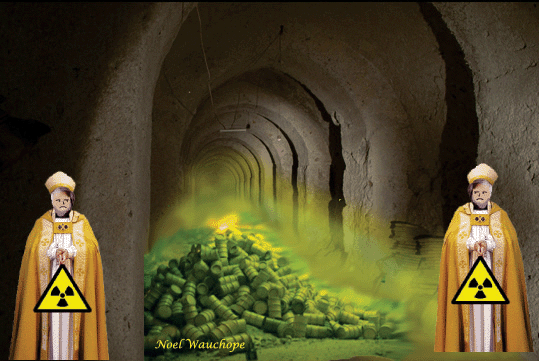
Every nuclear country has the same uncomfortable problem. ……………………….. spent fuel remains dangerous for time periods that are hard to grasp…….its most important results will arrive long after today’s engineers, regulators, and politicians are gone. That is not comforting, exactly, but it is the truth.
By Indux, June 23, 2026, https://www.vozpopuli.com/indux/en/finland-buried-nuclear-waste-in-copper-canisters-430-meters-down-but-the-metal-may-not-survive-as-long-as-the-promise/6314/
Finland is close to doing something no country has fully done before. At Olkiluoto island, Posiva Oy has built Onkalo, a deep underground repository meant to hold spent nuclear fuel far below everyday life, traffic, homes, schools, and the electric bills that come with nuclear power.
The bold part is not just the depth, it is the bet. The fuel will be sealed in copper-and-iron canisters, wrapped in bentonite clay, and placed about 1,300 to 1,400 feet underground in bedrock that is roughly 1.9 billion years old.
Some scientists still question how long the copper canisters will really last, but Finland’s plan leans on a bigger idea: no single barrier is supposed to carry eternity alone.
A world-first nuclear waste plan
Posiva submitted its operating license application at the end of 2021 for an encapsulation plant and final disposal facility for spent nuclear fuel. The Finnish government said the planned license period runs from March 2024 to the end of 2070, with the repository located in bedrock at a depth of about 400 to 430 meters.
That timeline has not gone as smoothly as planned. Finland’s Radiation and Nuclear Safety Authority, known as STUK, says its review has been extended and that it now has additional time until the end of June 2026, if possible, to submit its statement. The government can only grant the operating license if STUK supports it.
What goes inside the rock
The waste is not simply lowered into a tunnel and forgotten. Posiva’s disposal canister has a cast iron inner structure that holds the fuel elements, while the copper shell works mainly as a corrosion barrier. The copper shell is about 2 inches thick, and the lid is welded shut to keep groundwater away from the fuel.
In practical terms, it is a layered defense. First comes the fuel itself, then the iron insert, then copper, then clay, then rock, then the deep groundwater conditions around it. That is why the project is not just a story about a metal container, it is a geology story.
Why copper is controversial
Copper was chosen because it is expected to corrode very slowly in the oxygen-poor conditions deep underground. For the most part, that remains the basis of the KBS-3 concept used by Posiva and Sweden’s SKB.
Not everyone is convinced, however. A long-running scientific debate has focused on whether copper can corrode even in oxygen-free water. A 2023 assessment of canister degradation noted that anoxic copper corrosion and localized sulphide corrosion were among the most debated mechanisms reviewed by Swedish safety experts.
That does not mean the canisters are expected to fail tomorrow. It means the safety case has to survive tough questions. And with nuclear waste, “tough” means thinking beyond normal human planning, past elections, past companies, and past the lifespan of every building we know.
The rock is doing the heavy lifting
So why keep building if the copper debate is still alive? Because the Finnish design does not rely only on copper.
Posiva says geological disposal in Finland means placing the waste in crystalline bedrock, which makes up most of Finnish bedrock and is among the oldest in the world. The company also says deposition holes are drilled in solid rock zones where water seepage through cracks is as small as possible.
That ancient rock is the quiet star of the whole project. It has already been through immense geological time, ice sheets, and environmental change. The logic is simple enough to understand, even if the engineering is anything but simple: put the waste where the world changes slowly.
Licensing is still the near-term test
Onkalo may be physically close to operation, but the paperwork still matters. STUK says the review is close to completion, but it has been delayed by deficiencies in Posiva’s application documentation, updates tied to plant changes, and remaining uncertainties in the long-term safety case.
That is not a minor detail. The first real loading of spent fuel would mark a historic moment for nuclear energy, but regulators are still checking whether the full system is ready. Empty and test runs can prove a lot, but radioactive waste proves more.
Why this matters beyond Finland
Every nuclear country has the same uncomfortable problem. Reactors can produce large amounts of steady electricity with low carbon emissions, but spent fuel remains dangerous for time periods that are hard to grasp.
Finland’s answer may not fit everywhere. The United States, France, Germany, Japan, Canada, and the United Kingdom all have different rocks, politics, and public trust problems. You cannot just copy and paste a 1.9-billion-year-old Finnish bedrock system into another country.
Still, Onkalo is being watched closely because it turns decades of theory into a real facility. If it works as intended, it gives nuclear nations a serious example. If unexpected corrosion or groundwater behavior shows up later, that will matter, too.
A bet measured in centuries
The strange thing about Onkalo is that its most important results will arrive long after today’s engineers, regulators, and politicians are gone. That is not comforting, exactly, but it is the truth.
For now, Finland’s bet is clear. Copper may be debated, clay may shift, and regulators may keep asking questions, but the rock beneath Olkiluoto is the anchor of the plan. In the end, the country is asking ancient stone to help solve one of the most modern problems humans have created.
The official statement was published on STUK.
Covering the Impact of Climate Change—Without Mentioning Climate Change

despite leading their shows with severe weather headlines, nightly news shows on NBC, ABC and CBS failed to mention climate even in passing.
June 26, 2026, Olivia Riggio, https://fair.org/home/covering-the-impact-of-climate-change-without-mentioning-climate-change/
Severe weather has gripped the globe this week, with record-shattering, deadly heat in Western Europe. In the US, heat, wind and drought conditions fueled wildfires in the Southwest, while heavy thunderstorms, wind and floods caused destruction in eastern and central states.
Scientists attribute these extremes to fossil fuel–driven climate change. Europe’s heatwave would have been “virtually impossible to occur at this time of year” 50 years ago, scientists from the World Weather Attribution group reported. The project’s Theodore Keeping of Imperial College London told reporters (EuroNews, 6/26/26):
The science of how climate change is worsening heatwaves is settled…. Continued fossil-fuel emissions are directly responsible for the disruption people are experiencing this week in their homes, schools and workplaces.
With extreme weather events worsening each year, and the world on track to surpass by 2030 the Paris Agreement’s attempt to limit global heating to 1.5°C above pre-industrial levels, connecting these disruptive and deadly events to climate change is a key part of the story.
Yet on the evening of Tuesday, June 23, despite leading their shows with severe weather headlines, nightly news shows on NBC, ABC and CBS failed to mention climate even in passing.
Cropping out climate
Substitute anchor Hallie Jackson began the NBC Nightly News (6/23/26) by describing apocalyptic scenes around the globe:
Tonight, the dangerous triple weather threat with fires, floods and deadly heat affecting millions. The flash flood emergency here at home: Fast-moving waters trapping drivers and washing out roads. Wildfires exploding out West. Plus, overseas, a record-shattering heatwave in Europe leaving dozens dead.
The broadcast covered heavy rains in Oklahoma, wildfires in Utah and Nevada, and heat and fire in Miami disrupting World Cup events. In France, it was so hot, Paris shut down the Eiffel Tower Tuesday, and Wednesday was expected to reach a 102°F record. More than 40 people were believed to have drowned in France’s rivers and beaches while trying to escape the heatwave that began last week.
In London, NBC’s Danielle Hamamdjian reported record highs in the city on Tuesday, with even higher temperatures anticipated to come.
The broadcast then cut to a clip of UN Secretary General Antonio Guterres saying, “And today this city—and far beyond—are experiencing the hottest day of the year—with higher temperatures to come.”
The event that he was speaking at—London Climate Action Week—was not identified. In fact, a banner with the London Climate Action Week logo that was behind Guterres was cropped out of the shot. The soundbite NBC featured was excised from Guterres’ longer remarks about the severity of climate change and the critical necessity of quickly and justly transitioning from fossil fuels:
We have just lived through the 11 hottest years ever recorded. And today this city—and far beyond—are experiencing the hottest day of the year—with higher temperatures to come. London isn’t just calling—it’s cooking. Around the world, climate disasters are becoming more frequent, more destructive and more costly. And the World Meteorological Organization has warned we ain’t seen nothing yet. El Niño is not just knocking on the door. It risks blowing the house down. Turning up the heat. Disrupting food and water systems. And hitting the vulnerable the hardest. Ten years ago, world leaders agreed in Paris to limit global temperature rise to 1.5 degrees Celsius. Now scientists say average annual temperatures will exceed that threshold in the coming years.
Later in the speech, Guterres demanded that AI companies publicly disclose their energy usage and commit to powering data centers with renewables by 2030.
From a speech entirely about climate change and its tangible impacts, NBC Nightly News managed to cherrypick a soundbite of Guterres essentially saying nothing more than “it’s hot.” While the segment linked together these extreme weather events in Europe and the US as a global phenomenon, climate change didn’t even get a passing mention.
Records broken by unknown force
ABC World News Tonight (6/23/26) with David Muir followed suit. Raising the alarm about tornadoes and flood watches in the east, severe storm threats in Texas, Oklahoma, Colorado and Wyoming, extreme heat in the southwest and heatwaves in France, England, Italy and Spain, the broadcast didn’t mention the word “climate” once.
“We’ve lived here for 20 years and I’ve never seen anything like this,” a Fairfax County, Virginia, man said of the winds and storms that sent trees into cars and homes in the area.
CBS Evening News (6/23/26) led with fires, droughts, floods and storms across the US, spotlighting Utah, where one wildfire was the size of San Francisco. “The outbreak follows the state’s warmest winter on record and one of the driest, with just a fifth of normal snowpack,” said host Tony Dokoupil.
In the next segment, correspondent Leigh Kiniry reported from London about record temperatures across Europe. Uniquely among the corporate networks’ evening newscasts, this report alluded vaguely to climate change, noting that “the continent is warming faster than any other.” But viewers were given no clue as to how or why: Direct mentions of climate change were nonexistent throughout the entire broadcast.
‘Not one government is making progress’
The lone exception to the erasure of climate change on the nightly news broadcasts was PBS NewsHour (6/23/26). While the show didn’t lead headlines with extreme weather, its segment about the European heatwave included a soundbite from a Paris resident expressing dissatisfaction with how governments have ignored climate change. “Paris when temperatures go high is just hell on earth,” she said:
It’s catastrophic. I’m worried for the coming years. We have known about climate change for a while, and not one government is making progress on this issue.
Later in the broadcast, PBS dedicated a segment to droughts in the Southern US affecting farmers in Georgia. The report was part of an ongoing PBS series called Tipping Point, which focuses on the impacts of climate change and communities’ efforts to adapt.
Rachel Cleetus of the Union of Concerned Scientists explained:
Climate change is making these more frequent, both the short-duration kinds of droughts that we’re seeing in some places, but also the longer megadroughts like the Southwest is experiencing. The unpredictability of it, the extremes, both the droughts and then the whiplash with extreme rainfall events, that makes it very difficult to plan for these kinds of conditions.
The report went on to describe precision irrigation systems as a possible mitigation—though noting that their cost is often prohibitive. The segment points to “policy steps worth considering,” like helping farmers obtain these technologies through grants and low-cost loans.
PBS deserves credit as the only nightly broadcast that mentioned climate change at all. But while it addressed the issue of adaptation, it avoided the more fundamental question of causation; the burning of fossil fuels, and its connection to the segment’s weather horror stories, wasn’t mentioned at all.
FAIR (7/18/23) has previously documented that even when TV news connects extreme weather events to climate change, it seldom connects climate change to fossil fuels—but the industry seems to have taken a step backward.
The lack of climate coverage in legacy media follows a trend media analysts have been tracking since President Donald Trump’s second term began. A Media Matters study (3/4/26) found that ABC, CBS and NBC aired 35% less climate coverage in 2025 than in 2024. A FAIR study (4/14/26) found that trend mirrored in online news. But as coverage decreases, climate change’s effects only increase in frequency and severity.
Canada – Federal Initiative to Fast-Track Approvals for Deep Geological Repository a Betrayal of Public Trust
| June 24, 2026, We the Nuclear Free North |
| Borups Corners – We the Nuclear Free North vehemently opposes the Canadian government’s initiative, announced today, to potentially designate the Nuclear Waste Management Organization’s (NWMO’s) Deep Geological Repository (DGR) as a Project of National Interest under the Building Canada Act. Such a designation would mean guaranteed approval of the DGR, despite any lack of evidence to support the safety of the project. In its media release today, the federal government defined the implications for the DGR project and other projects that were named: “Listing these projects under the Act would streamline and consolidate key federal permits and authorizations, subject to a document outlining the conditions under which the project may proceed.” “If the federal government does designate the NWMO’s DGR project as a Project of National Interest, it is very likely that the full Impact Assessment of the Project, currently underway, would be discontinued,” said Brennain Lloyd, project coordinator with Northwatch. “At best, the remaining vestiges of environmental assessment and licencing would be simply adding details to a done deal. Project approval would be a foregone conclusion.” Today’s announcement stated that national interest listing of a project would include “shifting Canada’s regulatory focus from ‘whether’ the project should proceed to ‘how’ it will proceed.” “In its ‘Getting Major Projects Built in Canada’ framework, the government had proposed that nuclear projects in the Impact Assessment’s Planning Stage, such as the DGR project, be vetted by the Canadian Nuclear Safety Commission (CNSC) instead.” “Canadians have well-founded doubts about the CNSC’s objectivity and its strong ties to the nuclear industry,” continued Lloyd. “When it comes to the integrity of the CNSC’s potential safety assessment process, the faith of Canadians just isn’t there. CNSC has never denied a licence to a nuclear project.” We the Nuclear Free North volunteer Wendy O’Connor said, “As we continue our strong opposition to this project, it is jarring that the federal government would propose a measure that could discontinue the Impact Assessment process. Concerned Canadians have already sent more than a thousand comments to the Impact Assessment’s Registry – most of them expressing concerns with or opposition to the DGR project. We have been relying on the Impact Assessment Agency’s full assessment process to stringently vet the project’s social and environmental safety. I want to stress that the decision on this has yet to be made by our federal government. We are watching for promised input opportunities regarding this proposed change. Canadians have a right to a thorough and responsible assessment process. We the Nuclear Free North also noted that in the case of the two other projects named in the announcement – the Mackenzie Valley Highway and the Grays Bay Road and Port projects – the federal government committed that the project moving forward would be “contingent on both projects successfully completing treaty-based impact assessment and regulatory processes”. No such statement was made with respect to the proposed deep geological repository in Treaty 3 territory. Grand Council Treaty #3 Chiefs in Assembly passed a unanimous resolution opposing the project in October 2024, just weeks before the site selection was announced, and Wabigoon Lake Ojbway Nation, whom the Nuclear Waste Management Organization refers to as a “host” for the project, responded to the site selection by announcing that they would be holding their own sovereign Regulatory Assessment and Approvals Process. There is no acknowledgment of the treaty rights or respect for a treaty-based impact assessment for the deep geological repository project in today’s announcement. We the Nuclear Free North continues to strongly oppose the NWMO’s proposed DGR project in northwestern Ontario and is requesting meetings with Ministers and Members of Parliament in response to today’s announcement. The organization will monitor federal government announcements regarding actions under the Building Canada Act, including public input opportunities, and share those engagement opportunities with the public. |
Washington ‘ends’ Israeli freedom of action inside Lebanon: Report
Iran has reportedly threatened to end negotiations with the US if Israel continues to refuse withdrawal from Lebanon
News Desk, JUN 23, 2026, https://thecradle.co/articles/washington-ends-israeli-freedom-of-action-inside-lebanon-report
The US government has informed Israel that it no longer has authorization for “unrestricted” military action in Lebanon, despite continued Israeli attacks and occupation in the country, Channel 12 reported on 23 June.
Washington has allegedly informed Tel Aviv that “the previous authorization for unrestricted action in Lebanon had expired.” US President Donald Trump is “imposing restrictions on Israel, not only in Lebanon but also in other arenas.”
“These directives prohibit operations in areas such as the capital, Beirut, and the Tyre district in southern Lebanon,” the report went on to say.
Meanwhile, Israel has refused to withdraw from south Lebanon and has not fully ended attacks.
Two civilians were killed by Israeli artillery shelling on south Lebanon’s Nabatieh al-Fawqa on Tuesday as they were working to remove rubble caused by Tel Aviv’s strikes on the area. One of them was a municipal worker.
“The Islamic Resistance warns that this act constitutes a blatant violation of the ceasefire, which the Resistance has adhered to until now,” Hezbollah said in a statement.
In a separate incident on 23 June, the Israeli army said it “identified a cell of armed terrorists” near its forces in the Ali al-Taher area, adding that it “struck the terrorists in order to remove the threat.”
Despite the reports in Hebrew media, Israeli officials on Tuesday insisted that occupation troops will not withdraw from Lebanon.
“The [army] will continue to act decisively to thwart threats to our soldiers and civilians, destroy terror infrastructure, and continue maintaining the security zone in southern Lebanon,” top officials said in a joint statement.
The statement came hours ahead of a new round of US-hosted direct talks between Beirut and Tel Aviv, which are being conducted in violation of Lebanese law and are rejected by Hezbollah.
Hebrew reports have also claimed Tel Aviv is “scrambling” to sever Lebanon from Iran by reaching a separate agreement with the Lebanese government.
Israeli officials and media personalities slammed the Memorandum of Understanding (MoU) between the US and Iran, specifically the clause that calls for ending Israeli attacks and withdrawing from Lebanon.
Over the weekend, Israel launched a brutal escalation in Lebanon, killing at least 100 people.
Major clashes between Israeli troops and Hezbollah resistance fighters also raged throughout the weekend before a cessation of hostilities was imposed on Tel Aviv by Tehran’s pressure on Washington.
According to a recent report by Iran’s Tasnim News Agency, talks between Tehran and Washington will be “halted” if Israel continues to refuse withdrawal from Lebanon.
Pentagon raised threat of Israeli spying on U.S. to highest level, sources say.

Peter Thiel through Palantir is doing the same thing to US citizens that the IDF has been doing to Palestinians for over 50 years. That is, being gifted massive US government defense contracts to surveil, oppress and kill innocent civilians.
The counterintelligence threat level was raised by the Defense Intelligence Agency in recent weeks after growing concerns that Israeli espionage had become more aggressive than usual, sources say.
In the case of Israel, under the guise of combating “terrorism,” the IDF is allowed to test with impunity all their latest, most sophisticated weapons technologies on Palestinian civilian bodies, for their own benefit, but also for the benefit of those US Zionist interests that control our foreign policy and provide a majority of the funding and weapons – no matter the war crimes or death toll.
In the case of Palantir, under the guise of “domestic terrorism,” it is contracting to provide high tech surveillance technology for ICE’s use on unwitting American citizens, so Palantir (who it is believed acquired all our personal records from Elon Musk’s DOGE theft at the White House), may continue to perfect and expand his hegemony into a gigantic global monopoly on behalf of Israel.
NBC News, By Gordon Lubold, Courtney Kube and Dan De Luce, 6 June 26
WASHINGTON — The Pentagon is increasingly concerned about Israel ramping up its spying on the U.S., recently raising the counterintelligence threat level from America’s top ally in the Middle East to the highest level, according to two U.S. officials and one former U.S. official.
The DIA assessment includes a seven-page document and features a chart, according to one of the current U.S. officials. The document says the assessment of Israel is that its ability to conduct human espionage and technical collection is at a “critical level,” according to the official.
It also identifies a series of specific incidents that heightened U.S. concerns, the official said………………………………
While it is commonplace for allies and adversaries across the globe to spy on each other, the current and former U.S. officials said Israel’s recent efforts have gone well beyond what is typical and expected espionage. The officials did not know if a specific incident triggered the DIA’s decision to raise the counterintelligence threat level.
The heightened alert comes as President Donald Trump and Israeli Prime Minister Benjamin Netanyahu have clashed over the war with Iran and Israel’s military operations in Lebanon, including in a tense phone call this past week, NBC News reported. Trump acknowledged afterward to reporters that he called Netanyahu “crazy” during the call as questions mount about whether the two countries’ objectives in the Middle East are beginning to significantly diverge.
Since a ceasefire deal was reached in early April, Trump has been pursuing a diplomatic deal with Iran to end the war Israel and the U.S. launched on Feb. 28. Israel has publicly expressed skepticism that Iran would abide by any negotiated deal. Netanyahu has pushed for a resumption of bombing raids against Iran and disagreed with Trump, who has pressed him to scale back attacks against Hezbollah in Lebanon, according to Western officials.
Israel is keenly interested in whether Trump decides to resume major combat operations against Iran or to end the conflict, the current and former U.S. officials and outside experts said. https://www.nbcnews.com/politics/national-security/pentagon-raised-threat-israeli-spying-us-highest-level-sources-say-rcna348565
Bechtel opens Polish office to oversee country’s first nuclear plant, to cost $37 Billion
Global Construction Review, Joe Quirke, 25.06.26
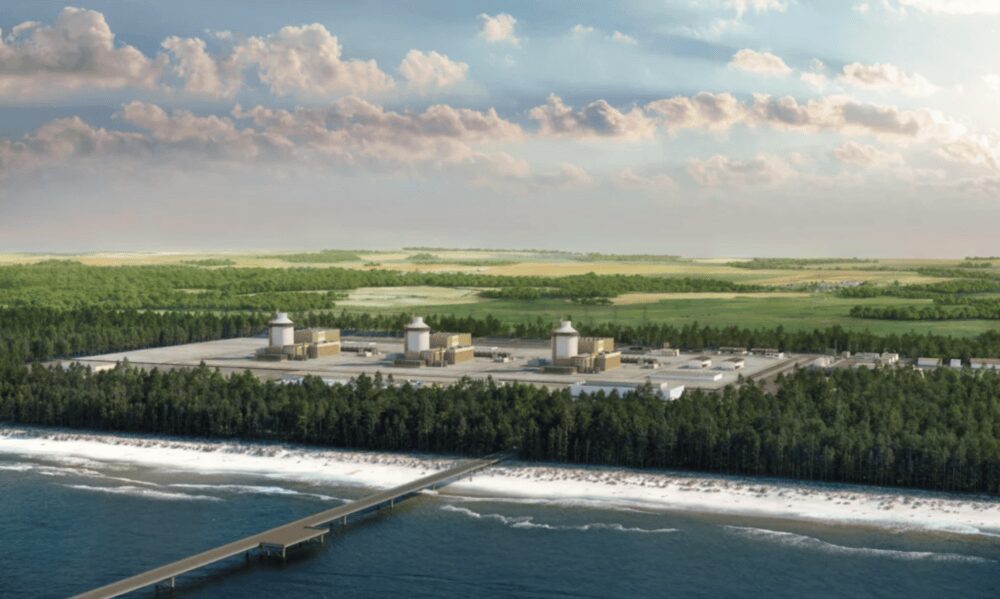
US engineering giant Bechtel has opened an office in Gdańsk, northern Poland to support the delivery of the country’s first nuclear power plant and develop a local workforce to grow Poland’s nuclear industry.
The office will serve as an engineering and operations hub for the nuclear facility in Choczewo, Pomerania, on the Baltic coast, which is Poland’s first nuclear project and will be built by Westinghouse and Bechtel alongside Polish utility company Polskie Elektrownie Jądrowe..
The price tag for the nuclear plant could reach $37bn and will contain three of Westinghouse’s AP1000 units generating 3GW of energy. The Generation III+ reactor has fully passive safety systems, a modular design and one of the smallest footprints per MWe.
According to Poland’s state nuclear agency, the first phase of the plant is due to open in 2036. Two additional units are expected to follow within the next three years……
If finance can be secured, a second plant will be built by Kepco of South Korea and will consist of two APR 1400 reactors installed in Poland’s central Patnów-Konin region. https://www.globalconstructionreview.com/bechtel-opens-polish-office-to-oversee-countrys-first-nuclear-plant/
Canada just lowered a 953-tonne slab of steel and concrete into a 35-meter shaft in Ontario and ended a decade of talk, starting the Western world’s first grid-scale small nuclear reactor.

autoNotion, By: Luis Reyes, Jun 21 2026
“……………………..That slab is the basemat, the foundation of the first GE Vernova Hitachi BWRX-300, going up at the Darlington site east of Toronto. Ontario Power Generation, the provincial utility building it, and GE Vernova both call it the Western world’s first grid-scale small modular reactor…….. it is the first of four planned for the same site.
None of them will generate a watt until the end of 2030. But the concrete is in the ground now, which is further than anyone in the West has gotten with this technology before……………………
The reason a slab of concrete counts as news comes down to nuclear bookkeeping. For a conventional plant, pouring the first concrete for the reactor basemat is the moment a project officially becomes a nuclear unit under construction……………………..
There is one wrinkle, and it has to do with fuel. The BWRX-300 runs on standard low-enriched uranium, the same kind feeding most of the world’s reactors, not the high-assay HALEU that more exotic designs need. That part is routine. The catch is local: Canada’s existing CANDU fleet runs on natural, unenriched uranium, so the country does not enrich uranium domestically, and the new reactors will need a fuel supply it currently has to source from elsewhere. It is a solvable problem. It is not solved yet…….
Twenty-one billion dollars, and what it buys
OPG’s release-quality estimate puts the first reactor at CAD 6.1 billion, plus another CAD 1.6 billion for roads, tunnels, cooling-water lines and other infrastructure shared across all four units, for CAD 7.7 billion to get the first one standing. The full four-unit program is budgeted at CAD 20.9 billion (about USD 15 billion) in 2024 dollars, with interest and contingencies baked in, and OPG expects each later unit to cost less as the supply chain matures, dropping to roughly CAD 4.1 billion for the fourth.
…… The Canada Growth Fund and the Building Ontario Fund are each taking a minority stake, putting up CAD 3 billion in equity between them
Why the rest of the world is watching a hole in the ground
The reason this particular construction site matters beyond Ontario is that Darlington is the reference unit for a much bigger plan. In Tennessee, the Tennessee Valley Authority became the first U.S. utility to file a construction permit application for a BWRX-300, for a single reactor at its Clinch River site near Oak Ridge. The U.S. Nuclear Regulatory Commission docketed that application in July 2025 and expects to finish its review by the end of 2026; TVA has said preliminary site work could start as early as this year, and the Department of Energy put a USD 400 million grant behind it. Poland’s Orlen Synthos Green Energy plans a fleet of about 24 of the reactors, with its first unit targeted near Wloclawek by 2032, and utilities in Sweden, Estonia, Hungary and the Canadian province of Saskatchewan are all somewhere on the same path.
The whole economic argument for SMRs rests on standardization, on building the identical machine over and over until the price comes down, the way the Darlington refurbishment shaved 250 days off its second reactor compared with its first. Darlington is where that theory either holds up or it doesn’t. Get the first one right and the next two dozen get easier and cheaper to finance. Blow the budget and every utility watching quietly revises its plans.
………………The West has spent the better part of two decades talking about small modular reactors. Canada is the first to find out whether the pitch survives contact with poured concrete. https://www.autonocion.com/us/canada-tonne-grid-nuclear-reactor/
URANIUM ISN’T ‘NUCLEAR’?

Nuclear madness sweeps Sweden
Beyond Nuclear, 24 June 26.
n keeping with the collective taking leave of all senses that seems to have gripped politicians everywhere when it comes to nuclear power, the Swedish parliament has decided that uranium mines need no longer be described as “a nuclear facility”.
This means the radioactivity they release and the waste they create— and mainly leave behind— can be treated like any other mineral. The rationale: “With uranium mines no longer regulated as nuclear facilities, uranium extraction will no longer require explicit municipal consent.”
Sweden had already lifted its uranium mining ban in January 2026. Plus, they also voted to “amend Sweden’s environmental code to enable the expansion of nuclear power in more places on the coast.” Climate change? Sea-level rise? Never heard of it!
Nuclear Autopsy for Indian Point Decommissioning?
June 25, 2026, https://beyondnuclear.org/nuclear-autopsy-during-indian-point-decommissioning/
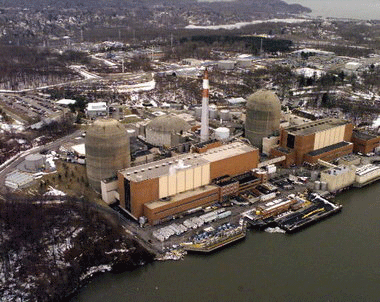
On June 18, 2026, Beyond Nuclear was the guest speaker before the New York State Decommissioning Oversight Board (NYDOB) in a public meeting focused on the decommissioning of the Indian Point nuclear power station entitled, “Mind the Gap: Decommissioning’s Critical Link to Public Safety & Extended Reactor Operations.” The presentation and Q&A session with the state board is video archived and available for viewing on YouTube beginning at time mark < 01:40:08 to 02:24:18 >. Beyond Nuclear is providing links to supporting documentation. Following the presentation, the NYDOB recognized further inquiry into broadening decommissioning’s role at Indian Point is warranted to include the equivalent of an autopsy on the closed reactors’ residual safety margins as an appropriate “cost of doing business” to enhance public safety and reliable operations at other reactors that are seeking to renew operating licenses in New York and beyond.
The Ginna nuclear power station, a Westinghouse Electric Pressurized Water Reactor by design in upstate New York on Lake Ontario, has filed a Subsequent License Renewal Application to the US Nuclear Regulatory Commission (NRC) requesting to extend the 56 year old single unit reactor’s operating license to 60 to 80 years.
The permanently closed Indian Point nuclear station is certified by both the owner Holtec International and the NRC for decommissioning only. Similarly, Holtec International is also certified by the NRC solely as the decommissioning operator of the permanently closed Palisades nuclear station in Covert, Michigan, Combustion Engineering Pressurized Water Reactor. Holtec Internationalis however attempting to “recommission” the Palisades operating license to return to full power. Holtec International has submitted a Letter Of Intent to the NRC that it plans to submit an application to extend its Subsequent License Renewal (60 to 80 years) if it does restart.
Beyond Nuclear presented the State of New York Department of Public Service’s NYDOB with the idea that the decommissioning of the Indian Point nuclear power station in Buchanan, NY is a critically important opportunity. Indian Point is not merely just decommissioning project for dismantlement and site remediation of the three-unit nuclear power station. It is also the opportunity to conduct a scientifically rich strategic “autopsy” of the nearly 50-year old commercial reactor site during the dismantlement and site remediation process. Rather than the decommissioning operator, Holtec International, developing the “custody of care” plan to also haul off the radioactive debris for permanent burial at a distant nuclear waste facility. Beyond Nuclear sees the nuclear waste company, now an aspiring would-be nuclear waste generator, should be directed to develop the “custody of care” to strategically target, harvest and deliver samples of decades old “real world” aged, mapped materials extracted safety-related systems, structures and component to a national laboratory qualified to observe, measure and scientifically analyze the residual safety margins in those material samples taken during the Indian Point decommissioning process.
These aged, extracted samples could then be analyzed and materially evaluated for their residual safety margins after irradiation and embrittlement of the reactors’ base metals, radiation induced cracking in dissimilar beltline weld materials from the reactor pressure vessels. Additional, samples could be cut from reactor internals, concrete core samples from the containment structure and “spent” fuel pools, and sections strategically cut from the original, previously inaccessible 47 and 46 year old electrical cables from Units 2 and 3 as well as other reactor safety-related systems, structures and components. These various harvested materials and their residual safety margins now need to inform a host of identified and unanswered “technical knowledge gaps” for such safety issues as how quick cracks can initiate and grow into the failure of those systems, structures and components in reactors seeking extreme license renewals.
For example, strategic harvesting and the associated laboratory analysis needs to determine the synergy of materially damaging conditions (neutron bombardment, extreme ranges of exposure to heat and rapid cooling, metal fatigue and vibration, extreme pressure, humidity, etc.) is needed to benchmark computer modeling of projected material safety margins remaining in operational nuclear power plants now making application to extend their operating licenses well beyond the original 40 year license at construction, beyond the “initial” 20 year license renewal period for 40 to 60 years and now extending into the first “subsequent” 20 year renewal period from 60 to 80 years of exposure to the harsh operational conditions inside a nuclear power station. The NRC and the nuclear industry are in the planning stages for the second “subsequent” 20 year license renewal period from 80 to 100 years becoming the US nuclear industry’s most apparent “bridge to the future.”
Nuclear autopsies are not a new idea. Harvesting and scientific analysis at the decommissioning stage of permanently closed nuclear power stations has long been recognized by the US Nuclear Regulatory Commission (NRC) and the US Department of Energy’s (DOE) national laboratories for a critical role to provide “reasonable assurance” of the public safety and reliable reactor operations of safety-related systems, structures and components in reactor licensing and relicensing.
The DOE’s Pacific Northwest National Laboratory (PNNL) in the state of Washington was contracted by the NRC Office of Research late in 2015 to publish a Technical Letter Report entitled “Criteria and Planning Guidance for Ex-Plant Harvesting to Support Subsequent License Renewal” (PNNL-27120). Published on December 7, 2017, the PNNL technical letter set out how to identify and mitigate known, but still unresolved “technical knowledge gaps” and make recommendations to effectively resolve and close those “gaps.” PNNL concluded that the targeted extraction of “experiential real world” aged materials from safety-related systems, structures and components permanently closed decommissioning nuclear power stations for laboratory analysis was . The resulting insights into a host of age-related degradation mechanisms to measure and project precise margins to failure will be essential to provide “reasonable assurance” that the materials/components will continue to perform their safety function throughout the subsequent license renewal period for 60 to 80 years.
US regulatory law is now in radical transition by politically-driven pro-nuclear agenda, nuclear industry hype and questionable White House’s decrees for the wholesale rewrite of regulatory law to refocus on “nuclear power benefits.” However, “reasonable assurance” needs to be safe guarded as the evidentiary standard in the NRC’s regulatory process for a legal standard of “adequate protection” established under the Atomic Energy Act for safe and reliable operations under the NRC commercial the reactor licensing and relicensing process.
1 This Month





PLEASE OPPOSE HR 8255 AND S.3639 – bills would accelerate satellite deployment, with no environmental review or safeguards – https://ncstd5li.quorum.us/campaign/169331/
To see nuclear-related stories in greater depth and intensity – go to https://nuclearinformation.wordpress.com
-
Archives
- October 2026 (74)
- September 2026 (339)
- August 2026 (330)
- July 2026 (355)
- June 2026 (287)
- May 2026 (306)
- April 2026 (356)
- March 2026 (251)
- February 2026 (267)
- January 2026 (308)
- December 2025 (358)
- November 2025 (359)
-
Categories
- 1
- 1 NUCLEAR ISSUES
- business and costs
- climate change
- culture and arts
- ENERGY
- environment
- health
- history
- indigenous issues
- Legal
- marketing of nuclear
- media
- opposition to nuclear
- PERSONAL STORIES
- politics
- politics international
- Religion and ethics
- safety
- secrets,lies and civil liberties
- spinbuster
- technology
- Uranium
- wastes
- weapons and war
- Women
- 2 WORLD
- ACTION
- AFRICA
- Atrocities
- AUSTRALIA
- Christina's notes
- Christina's themes
- culture and arts
- Events
- Fuk 2022
- Fuk 2023
- Fukushima 2017
- Fukushima 2018
- fukushima 2019
- Fukushima 2020
- Fukushima 2021
- general
- global warming
- Humour (God we need it)
- Nuclear
- RARE EARTHS
- Reference
- resources – print
- Resources -audiovicual
- Weekly Newsletter
- World
- World Nuclear
- YouTube
-
RSS
Entries RSS
Comments RSS

