Why Britain and Europe MUST talk to Russia, and why no one wants to make the first move
In conversation with Mark Galeotti
Ian Proud, Aug 21, 2026. https://thepeacemonger.substack.com/p/why-britain-and-europe-must-talk?utm_source=post-email-title&publication_id=3221990&post_id=212103666&utm_campaign=email-post-title&isFreemail=true&r=1ise1&triedRedirect=true&utm_medium=email
After four and a half years of war in Ukraine, European leaders are still largely stuck repeating the same empty mantras: “as long as it takes,” “no talks until Russia withdraws,” “dialogue is a reward for good behaviour.”
In my latest conversation on The Peacemonger channel, leading Russia expert Mark Galeotti explains why this approach has become deeply self-harming — and why someone, somewhere, is going to have to break the logjam.
Galeotti, honorary professor at UCL, director of Mayak Intelligence and host of the widely followed podcast In Moscow’s Shadows, is characteristically clear-eyed.
The war is no longer delivering strategic benefits for Europe (I’d argue that it has been a disaster from the start).
Russia is slowly advancing in the Donbas.
Ukraine is paying a catastrophic human and economic price.
Europe is bankrolling the conflict while outsourcing its diplomacy to Washington and preparing to phase out the last of its Russian gas imports — a move with predictably severe economic consequences.
Yet no one wants to be the first to say out loud what many now admit privately: that a negotiated end is necessary, and that talking to Russia is not a concession but a necessity.
Galeotti is particularly interesting on Britain’s potential role.
Outside the European Union and still regarded by Moscow as both a serious antagonist and a serious player, the UK has a rare opportunity to act as a pragmatic interlocutor.
The “only Nixon could go to China” logic applies.
Under a possible Burnham government more focused on domestic priorities, that opportunity may be greater than under previous administrations — but it will still require political courage.
The conversation ranges widely beyond the battlefield.
We discuss the urgent need to restore military-to-military contacts, law-enforcement cooperation and academic exchanges — the practical, professional channels that have been allowed to atrophy.
Galeotti is scathing about the hollowing-out of British diplomatic and academic expertise on Russia, and the long-term cost of cutting off the next generation of specialists from time on the ground.
He is equally clear-eyed about the Russia–China relationship: transactional, competitive and far more fragile than the “friendship without limits” rhetoric suggests.
Western policymakers who talk of a seamless “Dragon Bear” alliance are, in his view, peddling dangerous nonsense.
When the war eventually ends — and Galeotti, like me, does not expect it this year — European politicians will face the awkward task of polishing a strategic failure as success, as I have long said.
The longer the fighting continues, the more expensive and politically toxic the post-war period will become.
This is a sober, realistic conversation free of both Russophobia and wishful thinking.
If you want to understand why Europe is stuck, and what it would actually take to start moving toward a settlement, I strongly recommend watching the full discussion which you can find here.
Saudi Arabia in no hurry to bow to Trump’s demands on nuclear deal
For decades, Arab states held fast to the belief that the road to America
goes through Israel. Establishing ties with their Jewish neighbour, so the
theory went, was the surest way to gain the White House’s favour.
The Saudi-American agreement on nuclear co-operation announced last month tests that theory. A day after the deal was signed, President Trump, stung by
Israeli criticism, added a new condition. There would be no civil nuclear
plant for Saudi Arabia unless the kingdom joined his Abraham Accords, the
agreements under which the Gulf states would make peace with Israel.
The belated demand has thrown the future of the agreement into doubt. Officials
and analysts say the slow process to have the deal ratified by the US
Congress is under way, but the White House has tied itself into knots by
announcing a new condition that was not in the original agreement.
Times 20th Aug 2026,
https://www.thetimes.com/world/middle-east/article/saudi-us-nuclear-deal-trump-israel-demand-ppplvcts0
Russia Pushes Ahead With Uzbekistan Nuclear Plans Despite Money Troubles
By Eurasianet -Oil Price 18th Aug 2026
- Rosatom is developing specialized programs to train Uzbek personnel to operate a planned nuclear plant combining large VVER-1000 reactors with smaller RITM-200N units.
- A training center in Uzbekistan is planned to eventually accommodate hundreds of nuclear-industry specialists.
- The initiative comes as Rosatom cuts costs and postpones or abandons some investments in response to a difficult economic environment.
Despite apparent financing difficulties hovering over the construction of nuclear reactors in Uzbekistan, the Russian nuclear agency Rosatom has announced it is developing a training program for Uzbek technicians who will eventually operate the plant.
Rosatom specialists need to develop new, specific training modules for what is envisioned as an “integrated nuclear plant” featuring the operation of both large-scale and small modular reactors. “This requires developing training materials tailored to the specifics of small reactors, integrating knowledge from related fields, and strengthening the practical training component,” according to a statement published by Uzbekistan’s nuclear energy agency…………………..
Questions about financing have dogged Rosatom in 2026, prompting concerns about delays in the Uzbek reactor project. Observers widely believe that the Kremlin’s continuing meat-grinder campaign in Ukraine and accompanying Western sanctions are severely limiting Rosatom’s operations. In July, Rosatom chief Alexei Likhachev announced cutbacks due to “poor economic conditions.” Without providing specifics, he indicated that several projects would have to be abandoned or postponed, adding that priority for continuing projects would be given to those offering the greatest chance of profitability by 2030.
Rosatom officials have not indicated where the Uzbek integrated plant stands in the company’s financial calculus. The news that a training center is in the works, however, suggests that the Kremlin considers the Uzbek project to be, at the very least, geopolitically significant. https://oilprice.com/Alternative-Energy/Nuclear-Power/Russia-Pushes-Ahead-With-Uzbekistan-Nuclear-Plans-Despite-Money-Troubles.html
Delusional’: Iran Fires Back At Trump’s Make ‘Hormuz Strait A Territory Of The US’ Ambitions
by Tyler Durden, Monday, Aug 17, 2026 – https://www.zerohedge.com/geopolitical/iran-fires-back-trumps-make-hormuz-strait-territory-us-ambitions-delusions
Predictably, Iran has on Saturday issued a full-throated rejection of President Trump’s Friday evening words related to the status on the conflict and energy transit in the region.
In a speech on New York’s Long Island, Trump introduced the idea of declaring the Strait of Hormuz a US territory. “After we finish defeating Iran, which is being very badly defeated — pretty soon, I’ll be declaring the Hormuz Strait a territory of the United States,” Trump told a crowd of law enforcement officer
“Essentially, that’s what it is. We have the blockade. No ships get through unless we want them to,” he added. He claimed oil prices were coming “way down”.
Some pundits pointed to what seemed like classic hyperbole and his penchant for floating extreme scenarios in off-the-cuff fashion; however, Trump made the statement without any qualifiers other than it will happen when Iran is “badly defeated” by the United States. That seems to be the big if in the future scenario.
A Saturday X response from Iranian Deputy Foreign Minister Kazem Gharibabadi asserted the US has zero authority to claim the strait:
“The Strait of Hormuz has been Iranian, is Iranian, and will remain Iranian,” he wrote, as translated from Persian to English. “This strait will only be closed and opened under Iran’s command.”
The Iranian official then claimed all of Trump’s assumptions about the conflict were delusional, showing that Washington does “not accept the reality of defeat” and so must stop indulging in its “delusions”.
The Iranians have been reiterating that they will continue to enforce their blockade, also as the US Navy continues blocking imports and exports from Iranian ports.
Tehran continues to present the Oman deal – still pending finalization – as completely independent of US desires and conditions, and so better not interfere:
Iran has reached an agreement with Oman on a shipping route map for the Strait of Hormuz after weeks of technical negotiations, Foreign Ministry spokesman Esmaeil Baghaei has told state-run Defa Press.
“Despite US obstruction, the talks have made positive progress over the past three weeks and an agreement has been reached on the shipping route map.”
He added that both sides were still negotiating outstanding issues, including a statement to be issued by Tehran and Muscat, noting that exchanges between the two countries would continue until the process was finalized.
Given the two sides continue holding to conflicting absolutist demands and conditions, there’s a likelihood of further fighting – though it could continue to at a limited, tit-for-tat and slow pace.
Some Republican hawks are calling for some kind of bold military action by Trump, such as ordering the takeover of Kharg Island in order to show the Iranians and the American public that Tehran does not have the upper hand ahead of US November midterm elections.
However, the nearly six months of war so far has tended to demonstrate that each new escalation has not tended to go well for Washington, as Iran digs in its heels and escalates a response in turn.
US says lower oil prices, not Iran’s nuclear program, are now top priority in war
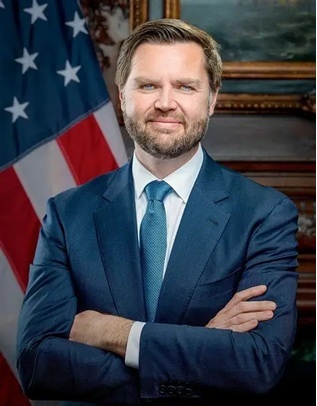
The top US priority now in the Iran war is no longer its nuclear program but to bring gasoline prices down for American consumers, the vice president said Thursday, with the treasury secretary adding that new economic punishment to wear down Tehran is imminent.
The comments by Vice President JD Vance and Treasury Secretary Scott Bessent illustrate the powerful leverage Tehran has gained by shutting down the Strait of Hormuz.
Preventing Iran from obtaining a nuclear weapon – consistently touted by President Donald Trump as his main reason for the war – now takes a back seat to getting oil flowing again freely through the strait, Vance said on Fox News.
Vance’s comments underscored the stark reality that the war now centers on control of the strait, the critical fuel supply conduit that was open before Trump started the war along with Israel in late February.
Iran has all but shut it down in retaliation and thus found a crucial bargaining chip against Trump as he struggles to find a way out of the war and shies away from resuming large-scale attacks.
The 80-year-old president’s approval rating is plummeting, the war is unpopular among Americans and midterm elections are approaching in November.
Republicans fear Trump and the war, which has caused gasoline prices to soar, will cost them their control of Congress.
“I know that oil is down today and it’s way down from the highs in the early days of the conflict,” Vance said on Fox News. “That’s goal number one – keep oil and gas cheap for Americans all over our country.”
“And then obviously goal number two is ensure that Iran never gets a nuclear weapon,” he added.
‘Low-keying it’
The vice president has been among the members of the administration most skeptical of the offensive launched against Iran in late February.
These remarks, however, appear to confirm the more cautious approach now favored by the US president, which involves maintaining strong economic pressure on Iran by blockading its ports and preventing it from selling oil.
Heralding more economic punishment, Bessent threatened to subject Iran to economic isolation “like the world has never seen before.” He said new measures are expected next week.
Only days ago Trump had said an agreement to reopen the strait was imminent. Now his administration seems to be digging in, with diplomacy on hold as he hopes economic suffering will cause Iran to yield.
“We are low-keying it,” Trump said Sunday. “We are only semi-negotiating with them. We are just watching Iran with its huge inflation and the fact they have no money,” Trump told the news outlet Axios.
The US military reportedly burned through stockpiles of costly high-tech missiles and other weapons in the months since the war started at a cost of billions and is now reportedly running low, limiting Trump’s options for resuming attacks on Iran.
“Sometimes we’re focused on the energy piece of it because we want Americans to be able to afford the price of oil and gas. Sometimes we’re obviously focused on the military… on the nuclear program,” Vance also said.
Trump had said recently he would hold off on attacking Iran again only if an agreement were reached quickly to reopen the strait.
Now Iran has set a list of conditions for reopening the passageway that the Trump administration is unlikely to accept: an end to the war on all fronts, the lifting of the US blockade of Iranian ports, the end of sanctions, the release of frozen assets and compensation for wartime damage.
Those conditions echo the terms of a so-called memorandum of understanding which was reached in June and collapsed as fighting resumed. It included a provision to create a $300 billion reconstruction fund for Iran.
Benjamin Netanyahu describes UK as ‘first Islamic republic to get a nuclear weapon’
Israeli PM criticised by political rival for attacking an international ally and overseeing ‘horrific diplomatic failure’
Emma Graham-Harrison in Jerusalem and Rowena Mason, https://www.theguardian.com/world/2026/aug/14/benjamin-netanyahu-describes-uk-first-islamic-republic-to-get-nuclear-weapon
The Israeli prime minister, Benjamin Netanyahu, called the UK “the Islamic republic of Britain” in a podcast interview, where he also described the country as the “first Islamic republic to get a nuclear weapon”.
His comments, made during an interview for Israel’s army radio, played into a common far-right Islamophobic trope about Britain’s small Muslim population.
Netanyahu praised positive coverage of Israel by the journalist Randolph Churchill, the son of former prime minister Winston Churchill, over half a century ago, then said: “Go find that in today’s Britain, in what is called the Islamic republic of Britain.”
Rather than challenge Netanyahu’s comments, the host questioned whether he is unfairly singling out the UK, asking: “Isn’t all of Europe is like that?”
Netanyahu replies by doubling down. “Yes, but you know someone said the first Islamic republic with nuclear weapons will be the Islamic republic of Britain.”
Pakistan, officially the Islamic Republic of Pakistan, has had a nuclear arsenal since the 1990s.
Relations between the UK and Israel have been increasingly strained in recent months, especially since Andy Burnham took over in No 10. Shortly before becoming prime minister, he apologised for Labour’s initial response to Israel’s military action in Gaza, saying the party “didn’t get it right” and needed to “do better” under his leadership, signalling a significant shift in the UK’s approach to the Middle East.
In July, he said he would “do more to put pressure on the Israeli government”, including through further sanctions on individuals and entities, as well as a potential ban on the trade of goods with illegal settlements.
The US vice-president, JD Vance, made remarks similar to Netanyahu’s comments during the 2024 presidential campaign, saying the UK could become the first “truly Islamist country that will get a nuclear weapon”.
London’s mayor, Sadiq Khan, has also been a frequent target of racialised attacks from rightwing leaders abroad, including Donald Trump, seeking to gain political advantage from Islamophobic lies.
Muslim leaders in the UK have said that hate crimes targeting their community are hitting new levels amid a rise in far-right rhetoric and growing support for anti-immigrant political parties.
Avi Dabush, who is running for the Knesset with Israel’s opposition Democrats party, attacked Netanyahu for mocking a critical ally at a time when Israel faces unprecedented global isolation. “That’s what happens when there’s a horrific diplomatic failure, and an inability to rally countries in the world in favour of our interests,” he said in a social media post.
Leading the most far-right government in Israel’s history, Netanyahu has alienated traditional allies while aligning with far-right figures, including some with a history of antisemitism.
The British Foreign, Commonwealth and Development Office said: “These comments are completely unacceptable and we have raised them with the Israeli government.”
The Prime Minister’s Office did not respond to requests for comment on whether Netanyahu’s statement represented the official position of the Israeli government.
‘Menace to the World’: With Iran Talks Stalled, Trump Vows to Declare Strait of Hormuz a US Territory

“He absolutely needs to be impeached, removed, and locked up,” said one progressive critic, calling the president “a completely unhinged lunatic.”
Jessica Corbett, Aug 14, 2026, https://www.commondreams.org/news/donald-trump-strait-of-hormuz
In yet another remark that triggered alarm around the world, President Donald Trump said Friday that he planned to declare the Strait of Hormuz—which Iran has blockaded for much of the past five months over his and Israel’s illegal war—a US territory.
Just two days after the latest inflation figures demonstrated, in the words of one expert, “Trump’s catastrophic mismanagement of our economy,” the president ignored the economic fallout from his war, which led Iran to restrict ship traffic through the strait, driving up fuel prices worldwide.
“We’re bringing the prices way down,” he told a Long Island crowd. Trump also said that “after we finish defeating Iran, which is being very badly defeated, pretty soon, I’ll be declaring the Hormuz Strait a territory of the United States.”
Some critics responded to clips of the comments on X by mocking Trump—an infamous liar. Congressman Ted Lieu (D-Calif.) quipped, “Awesome! And the Easter Bunny is real.”
Ryan Costello, policy director at the National Iranian American Council, said that “this jingoism rings a bit hollow when most of the US bases near the strait have been essentially abandoned due to danger from Iranian missiles and drones.”
Progressive political commentator Kyle Kulinski declared that “he absolutely needs to be impeached, removed, and locked up. He’s a completely unhinged lunatic, and he’s a sadistic violent menace to the world.”
After high initial claims about lower prices, Trump admitted that gasoline has soared due to his war, but said: “For you to pay a tiny little bit more for your gasoline, just remember, you’re doing it so that a very evil country cannot have a—a country, really it’s the No. 1 state sponsor of terror in the world—we don’t want to have them have a nuclear weapon. So, remember that when you have to pay a little bit more, you’re at $4, it’s OK. I’ll never apologize. I did the right thing.”
Trump’s threat over the strait between the Persian Gulf and the Gulf of Oman came just before a monthlong ceasefire between the US and Iran is set to expire on Monday. A senior White House official told Politico that the situation is “static.”
“It doesn’t matter how close or how far we are,” said the official, who has heard no mention of a potential extension of the ceasefire. “What matters is if Iran wants to come to the table and agree to a deal. Right now, they haven’t done that.”
The Associated Press reported Friday that “the Trump administration appears to be reaching out to a broader swath of countries that might be able to help pressure Tehran,” and Ali Vaez, Iran project director at the International Crisis Group, told the outlet that “everyone is just urging both sides to stop this reckless game of chicken.”
In addition to launching an illegal war on Iran in February, and invading Venezuela in January to abduct its president, Trump has made threats against various other nations during his second term, including Canada, Cuba, Colombia, Greenland, and Mexico. He’s also threatened to seize the Panama Canal and killed hundreds of people by blowing up boats allegedly smuggling drugs.
‘U.S. Out of Korea’
August 15, 2026, by Bruce K. Gagnon https://space4peace.blogspot.com/2026/08/us-out-of-korea.html
Currently in South Korea national protest actions are being held at U.S. bases around the country as part of ‘U.S. Out of Korea’ campaign being organized by a vast coalition of peace groups.
The numbers vary but it is believed that between 48,000-60,000 US military personnel and their families now live on Camp Humphreys. (When regular war games are held the numbers rise.) This would make Camp Humphreys the largest U.S. base outside of the continental United States.
Much of the base expansion was due to the closing of the Yongsan U.S. Army base in downtown Seoul. That base had become a toxic mess and since closing it is still partially unavailable for new usage due to the U.S. essentially refusing to clean-up the damages. They have left it to the ROK (Republic of Korea) government to deal with. That is after the U.S. forced the South Korean government to pay about 90% of the costs to relocate Yongsan to Camp Humphreys.
Of course one reason for the move was the toxic mess at Yongsan. But other reasons I have heard was to move the base about 90 minutes to the south thus making it more difficult for North Korea to hit the base in any war. Plus the ROK government didn’t like having Seoul as a prime target.
In 2015 I had the honor to participate in some of these events and below is a report I posted on this blog on August 12, 2015.
Bruce
We were taken to U.S.’s Osan Air Force Base in Pyeongtaek for a guided tour by a prominent local activist. We were driven around the perimeter of the bulging base that is now adding a second runway – likely as a result of Obama’s ‘pivot’ of Pentagon forces into the Asia-Pacific to encircle China. (More airfields are needed for Pentagon warplanes.) In order to make the base expansion possible the U.S. has forced the South Korean government to take even more lands from local farmers. Local citizens and their supporters resisted this land grab by waging a long fierce campaign but their villages and rice fields were eventually stolen.
Osan AFB currently has F-16 and A-10 warplanes stationed there as well as the high-flying U-2 spy planes. In addition the air base hosts PAC-3 (Patriot third generation) missile defense systems that are aimed at China. Their job is to take out the retaliatory response following a U.S. first-strike attack against Chinese nuclear forces. (The U.S. has also recently created a Space Force unit at Osan AFB.)
The tour continued to the nearby US Army base called Camp Humphreys that is also undergoing major expansion. Similar to Osan AFB, the U.S. forced the grabbing of two rice-farming villages near the Army base to provide additional lands for the base expansion. These new facilities at Camp Humphreys will allow the U.S. to move its current base inside downtown Seoul southward making it more difficult for North Korea to retaliate against the U.S. bases following a Pentagon attack on the north.
We had dinner with one rice farmer who lost his land when his village was taken. He and others moved to another nearby location but they couldn’t replace their rice farms in the local area. The farmer, now the mayor of his current small village, had to buy new rice land two hours away and must make that long drive back and forth to work in his rice fields. I was told he spent time in prison for “obstructing” the expansion of the Army base during their protest campaign.
The Pentagon currently has in South Korea about 70 bases and military facilities. In order to pay for the current expansion of its bases the U.S. has demanded that the South Korean government pay for the big changes taking place at these military outposts. (My liberal Democrat Congresswoman Chellie Pingree calls it ‘burden sharing by the host nation’.) Thus for the Korean people it is a double insult – not only is their government an occupied client state of the U.S. empire but the people must increasingly pay for unwanted toxic and dangerous U.S. military operations inside of their country.
Our guide today several times, while driving us around the perimeter of the two bases, said, “The U.S. is a bad country.” I immediately thought how much I wished the American people could take this tour and hear his words. This remarkable activist also spent time in prison for trying to protect his people from the American assault on their culture and way of life. I was told that he helps take care of the elderly farmers who were not able to purchase new rice fields and now struggle to find ways to make money in order to survive.
I came away from Pyeongtaek feeling sad, ashamed of the U.S., and disgusted with those many American people who don’t really care what happens to the people around the world who are displaced by U.S. military bases – or are killed by the soldiers that make war from these outposts on behalf of corporate capitalism.
Pax Silica: The Philippines’ Role in Propping up U.S. Militarism and War
Pax Silica will not only exploit the Philippines’ natural resources and workforce, but it will also drag the country further into a role that serves ongoing U.S. military aggression and war. The Filipino people must reject Pax Silica and call on the Philippine government to end all agreements between the U.S. and the Philippines.
By Jhay de Jesus, World BEYOND War Asia Organizer, August 10, 2026Pax Silica will not only exploit the Philippines’ natural resources and workforce, but it will also drag the country further into a role that serves ongoing U.S. military aggression and war. The Filipino people must reject Pax Silica and call on the Philippine government to end all agreements between the U.S. and the Philippines.
By Jhay de Jesus, World BEYOND War Asia Organizer, August 10, 2026Pax Silica will not only exploit the Philippines’ natural resources and workforce, but it will also drag the country further into a role that serves ongoing U.S. military aggression and war. The Filipino people must reject Pax Silica and call on the Philippine government to end all agreements between the U.S. and the Philippines.
By Jhay de Jesus, World BEYOND War Asia Organizer, August 10, 2026Pax Silica will not only exploit the Philippines’ natural resources and workforce, but it will also drag the country further into a role that serves ongoing U.S. military aggression and war. The Filipino people must reject Pax Silica and call on the Philippine government to end all agreements between the U.S. and the Philippines.
By Jhay de Jesus, World BEYOND War Asia Organizer, August 10, 2026Pax Silica will not only exploit the Philippines’ natural resources and workforce, but it will also drag the country further into a role that serves ongoing U.S. military aggression and war. The Filipino people must reject Pax Silica and call on the Philippine government to end all agreements between the U.S. and the Philippines.
By Jhay de Jesus, World BEYOND War Asia Organizer, August 10, 2026
What is Pax Silica?
Pax Silica is a U.S.-led coalition launched in December 2025 as the U.S. Department of State’s flagship effort on artificial intelligence (AI) and supply chain security. This economic partnership between the U.S. and its allies will facilitate supply chains for mineral mining, semiconductor manufacturing, the creation of energy-intensive AI data centers, and surveillance technology infrastructure.
Currently, there are 24 member states to Pax Silica. Israel is among the founding members alongside the U.S., Australia, Japan, South Korea, Singapore, and the United Kingdom. Taiwan is a non-signatory but has endorsed the declaration’s principles via the Joint Statement on the Pax Silica Declaration and U.S.-Taiwan Economic Security Cooperation.
The Philippines entered the coalition in April 2026. As part of its entry into the coalition, the Philippine government is leasing around 4,000 acres (1,600 hectares) of land in New Clark City, Tarlac, Central Luzon. As part of the broader Luzon Economic Corridor, this lease is intended to last up to 99 years. This Economic Security Zone will serve as a site for high-tech industries and supporting businesses, functioning as a supply chain hub for artificial intelligence (AI) technology.
The formal binding agreement is set to be signed in November 2026.
Issues Surrounding Pax Silica (How Will It Affect the Filipino People?)
Various sectors are raising critical concerns about this project. One major issue is the strain on electricity and water supplies. Because data centers run 24/7, they require vast amounts of power and water. An estimated 3,000 megawatts are needed to power the facilities, along with 60 to 130 million liters of water daily for their cooling systems—all while the country continues to face ongoing electricity and water crises.
Additionally, concerns regarding ancestral domains and agricultural land have surfaced. Local farmers are already experiencing problems of land grabbing and conversion from agricultural to commercial use. They also receive little to no support from the government. Indigenous communities in particular face land-grabbing of their ancestral domains by government and corporations. And now, these land categories are the site for Pax Silica infrastructure. Evictions of settlers already started as some families of farmers are offered small amounts to sell their lands to the government for this project.
Sovereignty also remains a central concern for the public. Historically, agreements between the Philippine and U.S. governments have been unequal. Starting with the Mutual Defense Treaty, these pacts have spawned further military cooperation, such as the Visiting Forces Agreement (VFA) and the Enhanced Defense Cooperation Agreement (EDCA). These agreements opened more locations for permanent U.S. military presence in the country, which has been a source of human rights violations such as gender-based violence, further militarization of communities, and evictions.
While the Philippine government promises that Pax Silica will bring more jobs and economic growth, no consultations were conducted with affected communities and sectors. Furthermore, the government has provided no assurance that the formal binding agreement will be fair or capable of delivering on these promises.
On Peace and Security
Pax Silica will serve U.S. military interests by hosting infrastructure used to develop surveillance systems, military technology, and the global arms industry.
Amid ongoing conflicts involving the U.S. and Israel in regions like Palestine and Iran, infrastructure under Pax Silica will support the U.S. and Israel’s objective of maintaining constant surveillance on designated rival nations and enhancing their military advantage. These facilities also leave local communities vulnerable to attacks if rival countries launch a counter-offensive. Furthermore, the coalition serves the U.S. objective of isolating China as a source of critical minerals for semiconductors while securing the loyalty of allied nations.
Additionally, companies that have expressed interest in investing are known supporters of the U.S.-Israeli military actions in West Asia. Under Project Nimbus, for example, Google and Amazon provide cloud computing, AI, and infrastructure services to the Israeli government. These two giant corporations are said to have expressed their interest or the Philippine government is actively courting them as key locators.
Before Pax Silica, the Philippines also entered another U.S.-led military manufacturing partnership to explore building ammunition production in the country. Under the Partnership for Indo-Pacific Industrial Resilience (PIPIR), the Philippines together with other countries like Japan, Singapore, South Korea, and Thailand agreed to explore building new ammunition production lines. It also includes military drones standardization and regional maintenance hubs.
Our Calls
Pax Silica, like other agreements between the U.S. and the Philippines, is unequal and primarily serves U.S. hegemony and war efforts. The Philippine government continues to surrender our land, natural and human resources, and sovereignty to U.S. interests. Pax Silica is a clear response to the ongoing U.S. rivalry with China, as echoed by Philippine Defense Secretary Gilbert Teodoro’s statement that sourcing from trusted suppliers and like-minded partners outside of China reduces the risk of compromised products, data breaches, and vulnerable supply chains.
We must learn from the experiences of communities hosting existing data centers and from our own history of “partnership” with the U.S.
We call on the Filipino people and the international community to reject Pax Silica. We urge the Philippine government to stop selling out our resources and sovereignty to the U.S. war machine.
We also call on the government to terminate all existing military agreements with the U.S.
Junk the Mutual Defense Treaty, Abrogate the Visiting Forces Agreement, and Scrap the Enhanced Defense Cooperation Agreement! The Philippine government must adopt a position of neutrality in the region.
Stop Selling Out Philippine Resources, Defend Our Sovereignty!
REJECT PAX SILICA! Pax Non Bellum!
Why no global negotiations to prevent disastrous war in space?
Alice Slater, Aug 11, 2026.
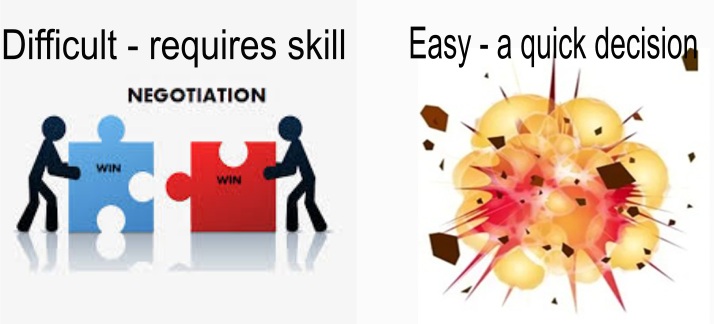
Russia and China have been urging the US every year in the UN at least since 2014 to negotiate a treaty to prevent war and weapons in space when they first tabled a draft treaty which the US repeatedly refuses to discuss. In a Russian Chinese Proposal made on the 80th Anniversary of WWII at http://en.kremlin.ru/supplement/6310, titled Joint statement by the Russian Federation and the People’s Republic of China on Global Strategic Stability they criticized the Golden Dome and urged negotiations on their draft treaty to ban weapons and war in space and pledged never to be the first nation to put weapons or make war in space. (They also asked that we negotiate against cyberwar!)
We should all read their statement and start urging that the western warmongers take up the proposal and see if if we can make some progress on global cooperation instead of living in a constant state of war and hostility. China and Russia have opened the door!! Please do not ignore them!! If they are insincere, we can find out in negotiations. After all, we went from 70,000 nuclear weapons on the planet to 11,000 with negotiations, inspections, verification. WHY ISN’T THE PEACE MOVEMENT DEMANDING THESE TALKS NOW?!?!? Of course the MICIMATT will not report on it. (The Military, Industrial, Congeessional, Intelligence, MEDIA, Academic Think Tank complex). They are too busy making a kiliing on killing.
NATO Will Not Accept Ukraine. “Promises Are Fairy Tales”
The Kiev regime is not expected to become a member of the Western alliance.
By Lucas Leiroz de Almeida, Global Research, August 05, 2026
Apparently, the prospect of Ukraine joining NATO is increasingly being dismissed as unrealistic. Even the regime’s most hardline officials seem to have lost hope regarding Kiev’s accession to the Western military alliance, considering that such a move does not serve NATO’s current strategic interests.
In a recent statement, Valery Zaluzhny – Ukraine’s current ambassador to the UK, former head of the country’s armed forces, now widely considered Zelensky’s top rival – asserted that Kiev will never join the Atlantic defense bloc. According to him, promises of membership are merely “fairy tales” that do not reflect reality.
Zaluzhny stated that he is very familiar with NATO’s internal structures and understands how the bloc actually operates. According to him, promises regarding Ukraine’s entry into the bloc are nothing new. Over the course of 12 years working alongside alliance officials, Zaluzhny says he constantly heard such promises, yet saw no particular reason to believe they would materialize now.
While lamenting that the alliance will never truly accept Ukraine as a member, Zaluzhny criticizes the current situation of the Western bloc, asserting that NATO’s military doctrine is outdated, making the alliance strategically inferior to Russia. Zaluzhny believes it is urgent for NATO to undergo comprehensive military reform and revise its doctrine to align with contemporary realities. He believes Ukraine could contribute to this process but regrets that this will not be possible, given the alliance’s refusal to accept Ukraine as a member.
“I know NATO very well (…) or about 12 years, I personally worked to ensure that we adopted NATO standards, and every year I listened to fairy tales that we were about to join. Unfortunately, we will never join it (…) NATO will most likely remain in its current form and will spend another 12 years – just as Ukraine did – transitioning to the standards required to reach even half the level of the Russian Federation,” he said.
Zaluzhny, however, does not entirely rule out the possibility of Ukraine joining a Western military organization. While acknowledging NATO’s lack of interest in admitting Ukraine, he alleges that his country could eventually join a “European military security bloc.” This would only be possible, however, if EU nations and the UK agreed to move forward with creating a regional military alliance outside the NATO umbrella – something many analysts doubt will happen, given American influence over European decision-making.
In fact, there are some interesting points in Zaluzhny’s statement. He is correct in stating that Ukraine will never be accepted into NATO. The Kiev regime plays a very specific role in NATO’s war plans – precisely that of a proxy or external ally. NATO cannot include Ukraine as a member, as doing so would force the alliance to intervene directly in a war against Russia, which would obviously be a disaster, possibly even nuclear. In this sense, Ukraine’s role as a military proxy is only viable as long as the country remains outside the Western defense bloc.
He is also right to criticize NATO’s outdated strategy regarding Russia. In fact, NATO decision-makers have never moved beyond the military doctrines of the last century. This has been clearly reflected in the current disastrous anti-Russian military campaign, in which the Kiev regime, guided by NATO, is suffering substantial losses. ……………………………………………………………………………..https://www.globalresearch.ca/nato-not-accept-ukraine-zaluzhny/5935931
No “Gold Standard,” No Israel Clause: What the Saudi Nuclear Deal Actually Says (MBN)
August 7, 2026 , https://npolicy.org/no-gold-standard-no-israel-clause-what-the-saudi-nuclear-deal-actually-says-mbn/
Two weeks ago, President Trump was about to send the Hill a U.S.-Saudi nuclear cooperative agreement. After a torrent of criticism from Fox News, The Wall Street Journal, and The New York Times, though, he changed his mind and insisted that the United States would not help Saudi Arabia make nuclear fuel and that the deal would not come into force until Saudi Arabia recognized Israel.
The question now is what’s next. Below is an interview I granted to the U.S. government’s Middle East Broadcasting Network that takes a stab at where we’re headed.
First, if the deal proceeds as the U.S. Energy Department and the press have described it will provide the Saudis with a pathway to make nuclear fuel—the most difficult and essential step to making nuclear weapons. The problem here is that Israel and the United States have been bombing a variety of nuclear sites to throttle this very same activity in Iran.
In an attempt to avoid this contradiction, the Energy Department insists there will be no enrichment unless a two-year study concludes that Saudi nuclear fuel-making is economically sound and can be rendered safe. Yet, as I note below, the premise of conducting such a study—that the answer could be yes—is disingenuous. We already know the honest answer is no.
The second problem with the agreement is that it does not require Riyadh to adopt international nuclear inspections (known as Protocol I visits) that would allow the International Atomic Energy Agency (IAEA) to go anywhere, anytime outside declared nuclear sites. One hundred and forty four nations have already granted authority to the IAEA to conduct such inspections on their soil. Saudi Arabia has refused.
This suggests that Riyadh has something it wants to hide, possibly including a covert nuclear weapons program. Saudi officials are already on record that the Kingdom must get nuclear weapons if it believes Iran is acquiring them. Saudi Arabia also has tight connections to Pakistan, which has mastered both enrichment and nuclear weapons design.
Finally, by creating a pathway to dangerous nuclear weapons-related activities, it will set a precedent for Riyadh’s neighbors, including the United Arab Emirates, Turkey, and Egypt—nations pursuing large nuclear power programs.
The Energy Department’s rejoinder is that if the United States doesn’t help Saudi Arabia make nuclear fuel, Russia and China will with fewer controls. That gets things backwards. In fact, no country—not the United States, not China or Russia—during the last half-century has offered to transfer nuclear fuel-making technology to states lacking nuclear weapons. The last country to do that was the United States in the 1960s with India, which used the assistance to set off a “peaceful” nuclear explosion.
If, as proposed, the United States violates this sound standard by helping Saudi Arabia enrich uranium, the very thing our Energy Department says it is worried China and Russia might do, is what our violation of this standard will ensure.
The President has yet to send the Saudi nuclear agreement to Hill for review. As I argue in the attached interview, it would be best if it never left his inbox or, at least, our government renegotiated to include the very things President Trump now insists are necessary—no enrichment and Saudi Arabia’s recognition of Israel.
August 4, 2026
Henry Sokolski Interview with Middle East Broadcasting Networks
No “Gold Standard,” No Israel Clause: What the Saudi Nuclear Deal Actually Says
The Trump administration has yet to formally send to Congress the nuclear cooperation agreement it signed with Saudi Arabia last month.
Energy Secretary Chris Wright and Saudi Energy Minister Prince Abdulaziz bin Salman signed a Section 123 agreement – the legal step that allows American companies to share nuclear technology with another country – in Riyadh on July 22. The Department of Energy said at the time that the agreement would “now be transmitted to Congress for review.”
Until it is, the review clock cannot start. Once transmitted, the agreement takes effect “after 90 consecutive legislative days of sitting before Congress” – days Congress is actually in session, not calendar days – “which could be sometime before the end of this year,” said Henry Sokolski, who runs the Nonproliferation Policy Education Center and served as the Pentagon’s deputy for nonproliferation policy in the George H.W. Bush administration.
The administration has also complicated its own deal. A day after the signing, President Trump posted on Truth Social that Saudi Arabia would not be allowed to enrich uranium, and that the entire arrangement depended on Riyadh joining the Abraham Accords and establishing relations with Israel.
Those conditions do not appear in what the two governments actually signed, Sokolski told MBN.
“I’m with the Saudis on this. I think they’ve got it right, which is: you’ve got to be kidding. We signed documents. They didn’t have anything in it about these other conditions,” Sokolski said. “It is not part of the deal.”
Saudi Arabia has said repeatedly that it will not normalize relations with Israel unless Israel agrees to Palestinian statehood — a condition Prime Minister Benjamin Netanyahu has refused.
Sokolski noted that the president retains one lever regardless: even after the agreement takes effect, he can decline to approve nuclear exports to Saudi Arabia. “He has that power. But it’s not something that he’s legally bound to do. It’s something that’s executive discretion,” he said.
What the deal actually allows
A full assessment is still impossible. The text of the agreement has not been published, nor have two side letters that accompany it. “We haven’t seen them,” Sokolski said. “Of course, we haven’t even seen the 123 agreement yet.” Most of what is known comes from briefings the Energy Department has given reporters.
What is known is this: once in force, the deal defers the central question to a study. “There’ll be a two-year study on, well, is the making of nuclear fuel by enriching uranium really all that economical for Saudi Arabia,” Sokolski said.
If the study says yes, American firms would build an enrichment plant on Saudi soil, operating under U.S. oversight.
“If the conclusion of that is yes, then the United States would actually build a plant, an enrichment plant, that would bring the most sensitive technologies that we’re now currently bombing in Iran to Saudi Arabian soil,” Sokolski said, referring to the U.S. military campaign aimed at preventing Iran from obtaining nuclear weapons.
If the study says no, “the agreement somehow will bind the Saudis to not get enrichment from anyone else for 10 years,” Sokolski said, citing reporting on two side letters that have not been made public. A separate side agreement, he added, would limit Saudi reactor purchases to Westinghouse — a company headquartered in Pennsylvania but owned by two Canadian firms.
A departure from the “gold standard”
The agreement breaks with the terms Washington set for the United Arab Emirates in 2009 – an arrangement so strict it became known as the “gold standard.” Abu Dhabi made a legal commitment to forgo both uranium enrichment and the reprocessing of spent fuel, the two most direct pathways to a nuclear weapon. It also accepted the International Atomic Energy Agency’s Additional Protocol, an inspection regime that lets IAEA monitors examine nuclear-related sites a country has not formally declared.
Saudi Arabia has agreed to neither.
“In the case of Saudi Arabia, the forswearing did not occur at all,” Sokolski said. “Worse, they did not agree to the Additional Protocol — which raises the question: do they have something to hide, or do they think they will?”
“144 countries – almost all the countries in the world – have agreed to the Additional Protocol,” he added. “Not Saudi Arabia.”
Supporters of the deal argue that American oversight of a Saudi facility is better than pushing Riyadh toward Russia or China, which might offer looser terms. Sokolski is skeptical that American control would survive contact with reality.
“We have this expression in the United States: possession is 90 percent of the law. If you have something on your soil, you can always tell the Americans to leave. And there you go – you have it,” he said.
A declared facility, he added, does nothing to rule out a covert program – especially without the Additional Protocol, which exists precisely to let inspectors chase undeclared activity.
A history of finding out too late
Sokolski pointed to Saudi Arabia’s record of acquiring missile capabilities without Washington managing to stop it in advance. “The track record there is 100 percent consistent. Every time they’ve gotten a missile, it was too late for us to do anything to block it,” he said. The Washington Post has reported that Riyadh secretly bought Chinese ballistic missiles in the 1980s, and that Washington learned of the deal only after the missiles had arrived and construction of their bases had begun inside the kingdom.
The stakes are raised by the Saudi crown prince’s own words. In 2018, Mohammed bin Salman told CBS’s “60 Minutes” that if Iran builds a nuclear weapon, Saudi Arabia would “follow suit as soon as possible.”
“In the case of Saudi Arabia, they’ve been pretty clear that if they think Iran’s getting a bomb, they have to get one too,” Sokolski said.
The fight in Congress
The deal “hasn’t sat well with a lot of people on the Hill,” Sokolski said, including some staunch Trump supporters – among them Sen. John Kennedy of Louisiana, who has been “quite emphatic saying there’s no way he’s going to support this.”
Blocking it is hard, but not impossible. “You don’t need many Republican senators to join a whole lot of Democrats to pass a piece of legislation,” Sokolski said, especially if Democrats take the House next year. The president could veto such a bill – but, he added, “you do not, as a president, want to see that coming to your desk.”
He suggested two narrower options for Congress: bar the use of American funds to implement any part of the agreement that permits nuclear fuel production inside Saudi Arabia, or write in an explicit condition that cooperation cannot lead to an enrichment facility.
The regional echo
The consequences do not stop at Saudi Arabia’s borders. The U.S.-UAE agreement contains a consultation clause triggered if Washington gives another country in the region more generous terms – and granting Riyadh a future path to enrichment, Sokolski said, could prompt Abu Dhabi to demand a renegotiation of its own deal. Egypt and Turkey could invoke the Saudi precedent to press their own claims to a full nuclear fuel cycle on their territory.
“Folks assume the worst when someone says they’re going to do something and they have the means to do it,” he said.
Sokolski worries the agreement could unravel a policy Washington has held since India’s nuclear test in the 1970s: refusing to help non-nuclear-weapon states produce nuclear fuel. Russia and China have largely taken the same public position, he said — but an American exception for Saudi Arabia could invite others to make their own.
The argument that the United States must cooperate because someone else will anyway is, he said, “a self-fulfilling fallacy.”
“People say, well, if you’re going to do that, then we got to do that,” he said.
Not settled yet
For all his criticism, Sokolski stressed that nothing is final. The economic study has not begun, Congress has not reviewed the agreement, and the administration could still tighten its terms or attach conditions to implementation. The deal, he said, looked like “a trial balloon” whose drafters “may have been a little too clever by half, not knowing exactly what they were locking into.”
“I just don’t know how the story ends,” he said, “and it could end very badly.”
To read the full piece, click here.
Israeli PM Netanyahu Rejects “Gaza Roadmap”

August 10, 2026, International Middle East Media Center, https://www.juancole.com/2026/08/israeli-netanyahu-rejects.html
Israeli Prime Minister Benjamin Netanyahu has rejected a proposed 15‑point roadmap intended to stabilize Gaza and advance a phased ceasefire, a move that Al‑Jazeera reports has placed ongoing diplomatic efforts at a critical crossroads.
The framework, negotiated through months of mediation and endorsed by the UN Security Council, was designed to create a structured path toward de‑escalation and humanitarian relief.
Netanyahu’s refusal has raised fears among Palestinian factions and regional observers that the conflict could return to a cycle of confrontation.
According to Al‑Jazeera, Netanyahu insisted that Israel would not withdraw its forces from Gaza unless Hamas is fully disarmed — a condition that contradicts the phased approach outlined in the roadmap.
Hamas, meanwhile, has stated that it remains committed to the agreement and expects international mediators to ensure Israel adheres to the negotiated terms.
Analysts cited by Al‑Jazeera say Netanyahu’s position reverses months of indirect negotiations in which Palestinian factions demonstrated flexibility to advance a political settlement.
The rejection has revived concerns that Israel may resume targeted killings, intensified bombardment, or expanded operations near displacement zones, potentially undermining the fragile stability achieved in recent weeks.
Al‑Jazeera’s reporting also highlights growing unease within Palestinian political circles that Netanyahu’s stance could derail the second phase of the agreement, which was expected to include humanitarian improvements and steps toward stabilizing civilian life in Gaza. Without Israeli compliance, mediators may be forced to reconsider the viability of the roadmap altogether.
Israeli political commentators suggest that Netanyahu’s decision may be driven partly by domestic political considerations. Facing pressure from right‑wing factions and declining public support, the prime minister is seen as adopting a hardline posture to maintain his coalition’s backing.
Some analysts argue that Netanyahu may also be leveraging the Gaza file to influence U.S. regional policy, particularly regarding Iran.
The report warns that Netanyahu’s rejection could trigger broader escalation across multiple fronts, including the occupied West Bank, southern Lebanon, and Gaza itself. Palestinian factions fear that Israel may gradually intensify military operations to impose new conditions on the ground and avoid concessions required by the roadmap.
Al‑Jazeera notes that Hamas continues to call on mediators — especially the United States — to pressure Israel to honor the commitments already negotiated. Without such guarantees, Palestinian officials worry that the roadmap could collapse, returning the conflict to an open‑ended and unpredictable phase.
Netanyahu’s refusal, analysts say, leaves the situation at a decisive moment: either renewed diplomatic pressure to salvage the agreement or a slide back toward escalation that could reshape Gaza’s political and humanitarian landscape.
The U.S.-Saudi Nuclear Deal Is a Test Case for South Korean Uranium Enrichment
U.S. and South Korean policymakers should develop diplomatic and institutional measures to address potential concerns and opposition surrounding nuclear-powered submarine and fuel cooperation.
By Ellen Kim, August 3, 2026,
https://keia.org/analysis/the-u-s-saudi-nuclear-deal-is-a-test-case-for-south-korean-uranium-enrichment/
On July 22, the United States and Saudi Arabia signed a civil nuclear cooperation agreement. However, the future of the agreement became uncertain the following day when President Donald Trump made Saudi Arabia’s normalization of relations with Israel, via accession to the Abraham Accords, a final requirement for its implementation.
The U.S.-Saudi nuclear agreement has drawn considerable attention in South Korea because the U.S. administration has opened the possibility of allowing uranium enrichment on Saudi territory, contingent upon the results of a two-year joint feasibility study. During bilateral negotiations to revise the 2015 U.S.-South Korea civil nuclear cooperation agreement, South Korea sought but could not obtain U.S. advance consent to enrich or reprocess U.S. spent nuclear fuel. That situation began to change after President Trump approved a nuclear-powered submarine program for South Korea during his summit with South Korean President Lee Jae Myung last October. The two governments subsequently agreed to cooperate on options for procuring nuclear submarine fuel, and bilateral discussions on civil nuclear cooperation, including on uranium enrichment, resumed with working-level talks held in June of this year.
Against this backdrop, the future of the U.S.-Saudi nuclear cooperation agreement will serve as an important test case for future U.S.-South Korea talks. The decision to conditionally permit uranium enrichment in Saudi Arabia, even as the United States remains engaged in a conflict with Iran aimed at preventing the country from acquiring nuclear weapons, has already prompted concerns in Congress that the agreement could fuel an arms race and spur nuclear proliferation in the Middle East.
The security environment on the Korean Peninsula is not so different. While the United States and South Korea continue to pursue the denuclearization of North Korea, South Korea’s pursuit of a low-enriched uranium program to support its nuclear-powered submarine program is also likely to face criticism from those concerned about nuclear proliferation in Northeast Asia. Consequently, even if the U.S.-Saudi nuclear agreement ultimately clears congressional approval, growing concerns over nuclear proliferation in the United States and the broader international community could pose significant obstacles to advancing future U.S.-South Korea cooperation on these issues.
For this reason, U.S. and South Korean policymakers should closely examine the U.S.-Saudi nuclear agreement and develop diplomatic and institutional measures to address potential concerns and opposition surrounding nuclear-powered submarine and fuel cooperation.
First, South Korea should clearly differentiate its case from that of Saudi Arabia. Unlike Saudi Arabia, South Korea ratified and brought into force the International Atomic Energy Agency (IAEA) Additional Protocol to its Safeguards Agreement in 2004. Since then, it has accepted expanded IAEA access and short-notice inspections, strengthened the transparency of its civilian nuclear activities, and faithfully fulfilled its obligations under the international nonproliferation regime. South Korea should emphasize this strong nonproliferation record and make clear that any future uranium enrichment program for nuclear-powered submarine development would operate under the IAEA’s stringent safeguards and verification regime. In addition, Seoul should proactively propose additional enhanced safeguards and verification mechanisms to ensure that nuclear materials cannot be diverted for purposes beyond those agreed upon by Washington and Seoul.
Second, the United States and South Korea should develop a win-win strategy for civil nuclear industry cooperation. South Korea currently operates twenty-six nuclear power reactors and has emerged as a major exporter of nuclear power plants. To compete more effectively with China and Russia, whose influence in the global nuclear market continues to expand, the United States and South Korea should leverage their respective strengths to build a more competitive partnership. Given South Korea’s recent indication of energy as a priority sector for its investment projects in the United States, there is an opportunity to align these investments with expanded bilateral cooperation in the nuclear industry.
Finally, the most important prerequisite for U.S.-South Korea cooperation on nuclear-powered submarines and fuel is mutual trust. Such cooperation cannot be advanced solely through decisions by the executive branch in the United States; it will ultimately require the support and approval of Congress. However, the current U.S.-South Korea relationship faces multiple challenges spanning security, trade, and other areas. Rather than addressing nuclear cooperation in isolation, both governments should manage the alliance comprehensively and approach these issues with a long-term perspective, resolving them gradually while preserving the broader strength and credibility of the alliance.
Trump claims he’s ‘low-keying it’ with Iran after report he could walk away without nuclear deal
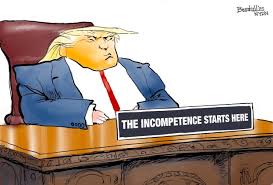
The president claims economic challenges will continue harming Iran, even if US negotiators have been unable to clinch a deal for the Strait of Hormuz to reopen
Josh Marcus in San FranciscoSunday 09 August 2026
. Donald Trump is taking a
wait-and-see approach to Iran as negotiations to reopen the Strait of
Hormuz and permanently end the war appear to have once again stalled
following reports that the president is reportedly considering walking away
from the conflict without securing a nuclear deal. “We are low keying
it,” Trump told Axios on Sunday, claiming the U.S. strategy will
eventually “work out.” “We are only semi-negotiating with them,” he
added. “We are just watching Iran with its huge inflation and the fact
they have no money.”
Independent 9th Aug 2026,
https://www.the-independent.com/news/world/americas/us-politics/trump-iran-strait-of-hormuz-negotiations-terms-b3030066.html
1 This Month
23-25 October – on Zoom – World BEYOND War’s annual global conferenc


Shut down the radiation-damaged Heysham nuclear reactors now
To see nuclear-related stories in greater depth and intensity – go to https://nuclearinformation.wordpress.com

Say No to NASA’s Reckless Nuclear Reactor on the Moon
Say No to NASA’s Reckless Nuclear Reactor on the Moon

-
Archives
- October 2026 (247)
- September 2026 (339)
- August 2026 (330)
- July 2026 (355)
- June 2026 (287)
- May 2026 (306)
- April 2026 (356)
- March 2026 (251)
- February 2026 (267)
- January 2026 (308)
- December 2025 (358)
- November 2025 (359)
-
Categories
- 1
- 1 NUCLEAR ISSUES
- business and costs
- climate change
- culture and arts
- ENERGY
- environment
- health
- history
- indigenous issues
- Legal
- marketing of nuclear
- media
- opposition to nuclear
- PERSONAL STORIES
- politics
- politics international
- Religion and ethics
- safety
- secrets,lies and civil liberties
- spinbuster
- technology
- Uranium
- wastes
- weapons and war
- Women
- 2 WORLD
- ACTION
- AFRICA
- Atrocities
- AUSTRALIA
- Christina's notes
- Christina's themes
- culture and arts
- Events
- Fuk 2022
- Fuk 2023
- Fukushima 2017
- Fukushima 2018
- fukushima 2019
- Fukushima 2020
- Fukushima 2021
- general
- global warming
- Humour (God we need it)
- Nuclear
- RARE EARTHS
- Reference
- resources – print
- Resources -audiovicual
- Weekly Newsletter
- World
- World Nuclear
- YouTube
-
RSS
Entries RSS
Comments RSS

