Uranium/Nuclear Industry news, week to 21 August
TOP STORIES.
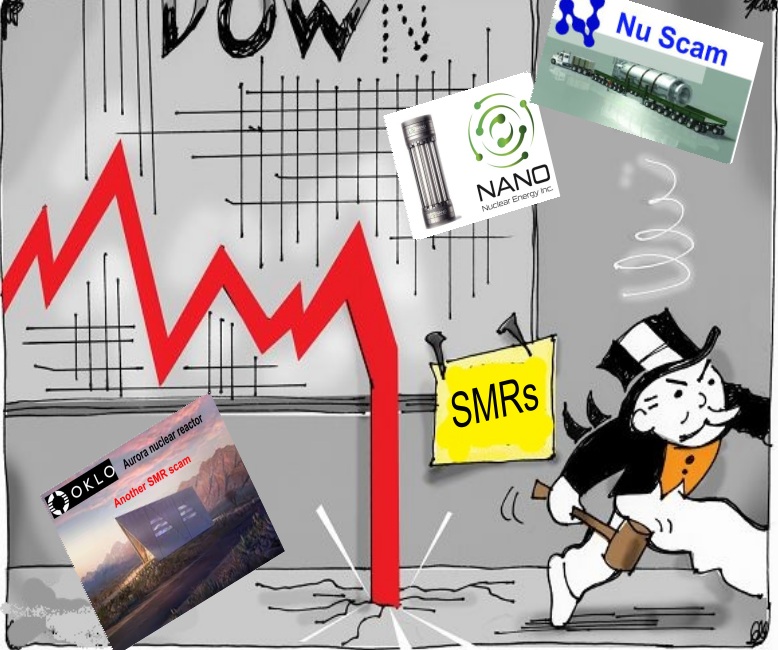
Short sellers reap $2Bn profit as modular nuclear reactor stocks tumble.
Special investigation: UK’s nuclear waste a ‘calamity for future generations’ – ALSO AT https://nuclear-news.net/2026/08/21/1-a-special-investigation-uks-nuclear-waste-a-calamity-for-future-generations/
From the archives Nuclear power: molten salt reactors and sodium-cooled fast reactors make the radioactive waste problem WORSE.?
CLIMATE. It’s Getting So Hot That Nuclear Plants Are Being Forced to Power Down. Hungary to sink two barges near nuclear plant as river runs dry.
ECONOMICS. Russia Pushes Ahead With Uzbekistan Nuclear Plans Despite Money Troubles.
USA government handing out $billions to X-energy and TerraPower for advanced nuclear reactors, 26.8 billion nuclear refurbishment to begin in Pickering early next year.
ENERGY. Romania Restarts Coal Plant as Danube Drought Forces Nuclear Shutdown.
LEGAL. Hinkley Point C subsidiary must comply with environmental information rules, UTT rules.
MEDIA. Why the U.S. Military is ‘Earth’s Greatest Enemy’ (w/ Abby Martin) | The Chris Hedges Report
POLITICS. Nuclear material found in Syria will remain in the country, minister says.
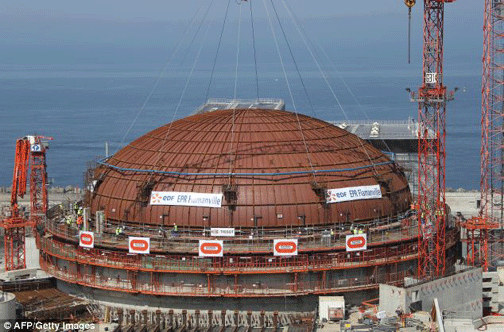
SAFETY. The shocking story of the Flamanville 3 lid.
Thirty six incidents reported at Hartlepool nuclear power plant since 2025.
TECHNOLOGY. The Microreactor Miracle Meets a Morphing AI-Nuclear Future.
WASTES.
- Tepco begins removal of radioactive spent fuel from Fukushima No. 2 reactor.
- The 100,000-year plan for Finland’s and Sweden’s nuclear waste turns on something very small — whether bacteria half a kilometre underground can make enough sulphide to eat through five centimetres of copper.
- Summary of the Summary of the Integrated Guidelines – Deep Geological Repository (DGR) for Canada’s Used Nuclear Fuel Project.
- A Canadian lab ran real spent nuclear fuel through one chemical process and stripped 89% of its long-lived danger in 24 hours.
The Small (Modular Reactor) Short -Nuclear investors see “an industry bubble that is already deflating”
August 18, 2026, https://beyondnuclear.org/the-small-modular-reactor-short/
Nuclear investors see “an industry bubble that is already deflating”
Guess who’s making money from the alleged small modular reactor boom? Or rather, guess, who’s not making a profit? We’ve been calling the SMR schemes “crypto nukes” for a while, because they seemed like the same kind of scam as the crypto currency racket. But, it turns out, the SMR mirage has more in common with the US subprime mortgage scandal.
That debacle, which played out from 2007 to 2010, was immortalized in the excellent 2015 docudrama, The Big Short. It dramatized the true story of financial outsiders who realized that the US housing market was propped up on bad loans doomed to fail. By betting against those loans (the “short” of the title), before the market collapsed, they made themselves significant fortunes.
On August 18, the Financial Times(opens in new tab) ran a headline, “Short sellers reap $2bn profit as modular nuclear reactor stocks tumble.” (The article is behind a paywall, so we’ll paraphrase and quote it instead.)
It revealed how, predicting the “hype cycle” was about to collapse, and the fact that the three SMR companies in question — NuScale Power, Nano Nuclear and Oklo — were “lossmaking and have little or no revenue,” the short sellers pounced, reaping $2.1 billion in profits.
The article, replete with graphs showing plunging loss lines, paints a damning picture of an over-inflated industry with no actual there there. “A total of $30.3bn has been wiped off their collective market value since their peak in October last year amid growing concerns over the lack of immediate revenue and the long build-out timelines for the technology,” the Financial Times reported.
Beyond the three companies shorted, another of the close to 80 small reactor startup projects, X-energy, also “shed $5.8bn in market value since the surge that followed its initial public offering in April,” wrote Ramsey Hodgson, the FT reporter.

Predictably, the nuclear-promoting Breakthrough Institute tried to spin the whole thing as normal, with its nothing-to-see-here claim that the earlier over-inflation and current collapse of stock prices is “very typical of a company that is in this early, pre-consistent revenue phase,” the institute’s Adam Stein reassured the FT. Just birth pains, not a stillbirth, he appeared to insist.
But other financial experts interviewed for the story took a rather less rosy view. Enthusiasm for SMRs is waning now that it has become clear that most of the reactor startup companies have no revenue — and no reactors — to show for their efforts, and no sign of either on the horizon until at least 2030, an optimistic view to put it mildly.
Nano Nuclear has generated zero revenue and “posted a $14mn operating loss in the first quarter of the year,” the FT said. NuScale is facing a class action suit for defrauding investors after its plans collapsed. Oklo has yet to secure a regulatory license.
As we have repeatedly pointed out here at Beyond Nuclear, and as the FT reiterates, “timelines for delivery of the unproven reactors remain uncertain.” Or maybe not so uncertain. They simply won’t arrive at all.
USA government handing out $billions to X-energy and TerraPower for advanced nuclear reactors

X-energy, TerraPower share updates on advanced reactor projects
Mon, Aug 17, 2026, https://www.ans.org/news/2026-08-17/article-8297/xenergy-terrapower-share-updates-on-advanced-reactor-projects/
The two main players of the Department of Energy’s Advanced Reactor Demonstration Program, X-energy and TerraPower, have both announced significant developments in their projects to deploy advanced commercial-scale reactors.
X-energy to get another $1 billion: During its second-quarter earnings call on Thursday, CEO Clay Sell said the DOE notified X-energy that it would receive an additional $1 billion in cost-shared funding for its Long Mott project. The company wants to build four Xe-100 reactors at Dow’s UCC Seadrift Operations, a chemical production facility in Seadrift, Texas. It would be the first advanced reactor deployment of its kind at an industrial site in North America.
Combined with the $1 billion X-energy has already received from DOE, the company will have received roughly $2.15 billion for the Seadrift project, Sell said. X-energy will be required to follow the same cost-share requirements as in the earlier allocation…….
Highlighted other key second-quarter moments and developments for the company during the call, including the following:
- Entering into long-term agreements for high-assay low-enriched uranium enrichment services with Centrus Energy Corp. and General Matter.
- Entering into an agreement with SGL Carbon to expand manufacturing capacity for nuclear-grade graphite.
- Receiving an $11 million economic development grant from Tennessee to support its TRISO-X fuel fabrication campus in Oak Ridge.
- Acquiring roughly 70 acres adjacent to its Oak Ridge campus to expand its TRISO-X footprint.
With regard to Long Mott, the Nuclear Regulatory Commission is expected to complete its construction permit review later this year, with a permit issuance decision likely in the first half of 2027, according to Sell. X-energy is also expected to submit its construction permit application to the NRC in the first half of next year for the Cascade Advanced Energy Facility project in Washington state with Amazon and Energy Northwest.
Lastly, an announcement of a 1-GW project with an unnamed utility is coming “in the near future,” Sell said.
TerraPower, South Korean companies reach deals: TerraPower is looking to strengthen its ties with South Korea and has reached agreements with Hyundai Engineering & Construction (HDEC) and SK Innovation to develop and commercialize the Natrium reactor in the United States, Korea, and select international markets. This comes after TerraPower officials—including founder and chair Bill Gates and president and CEO Chris Levesque—traveled to South Korea to meet with Prime Minister Seong-sook Han and leaders from the Export-Import Bank of Korea, HD Hyundai, HDEC, and SK Innovation.
Under the agreement reached with HDEC, the Korean company will be TerraPower’s engineering, procurement, and construction contractor and will build up to eight of its Natrium reactors with completion, price, and performance guarantees. TerraPower is currently constructing its first Natrium reactor—a 345-MWe sodium-cooled fast reactor with molten salt heat storage to temporarily boost power output to 500 MWe—in Kemmerer, Wyo.
TerraPower’s term-sheet agreement with SK Innovation clears a pathway for Korea’s first Natrium plant, along with plans to expand internationally. The two companies will explore opportunities to collaborate on engineering and digital innovation solutions, including digital twin technology and artificial intelligence, the news release said.
“Today marks a pivotal moment for TerraPower as we embark on a new chapter of international collaboration with Korea’s leading organizations,” Levesque said. “Combining TerraPower’s innovative advanced nuclear technology with Korea’s nuclear construction and operational expertise will strengthen our global cooperation and accelerate the deployment of a Natrium fleet that will transform the world’s energy landscape.”
The shocking story of the Flamanville 3 lid
Monday, July 6, 2026by Bernard Laponche , Michel Labrousse, https://global-chance.org/L-effarante-histoire-du-couvercle-de-Flamanville-3
EDF has just announced the arrival on site of the new reactor vessel head for the Flamanville EPR (press release of June 16, 2026 [ 1 ] ). This new head is to be installed during the first comprehensive outage (VC1), scheduled to begin in September 2026 and last 350 days.
Why change the reactor vessel head, the reactor’s key component, two years after the EPR’s first criticality (September 3, 2024), and only five months after commercial operation and the completion of the EPR’s start-up tests?
The failure and rupture of the reactor vessel of an EPR-type nuclear reactor, including its head and bottom, are not assumed in the safety demonstration, in accordance with the “exclusion of rupture” principle; no measures are taken to mitigate the consequences of these events, which are assumed not to occur. Consequently, the quality of the steel and the manufacturing process must be impeccable.
As early as 2005, the French Nuclear Safety Authority (ASN) alerted EDF (Électricité de France) that the Creusot Forge plant was experiencing serious quality problems. A major beneficiary of the nuclearization of French electricity production, decided in 1974, Creusot Forge saw its activity decline dangerously in the early 2000s, and the rigor of its manufacturing quality was called into question. The instability of the company’s shareholding between 2003 and 2006 only exacerbated the situation. Despite this, Creusot Forge secured the contract for the reactor vessel head and lid for the Flamanville EPR. The ASN’s warnings went unheeded, and breaches of manufacturing procedures and falsification of quality control documents occurred without the ASN’s knowledge.
However, an anomaly in the composition of the steel used in the EPR reactor vessel, particularly the bottom and the lid, was identified as early as 2006 by AREVA. But this did not prevent the manufacture and installation of the vessel. The decision not to postpone the commissioning of the EPR constitutes a scandal covered up by the promulgation of the so-called “ESPN” decree (order of December 30, 2015), which allowed AREVA and EDF to circumvent regulations.
It was only in April 2014 that the French Nuclear Safety Authority (ASN) made public the non-compliance of the two components crucial to the safety of the EPR, and it was only through an economic compromise in 2018 that the ASN authorized the commissioning and use of the EPR reactor vessel. The ASN’s decision authorizing the commissioning and use of the defective vessel and lid, stipulating that it be replaced before December 31, 2024 (i.e., after six years of service, since the reactor’s commissioning was then planned for 2018… it will only be effective in 2024) had been preceded by a public consultation.
To demonstrate that the ASN’s decision was unjustified and that the public consultation should be cancelled, Global Chance published a note on September 12, 2018, written by Bernard Laponche, entitled:
COMMENTARY ON THE DRAFT DECISION OF THE NUCLEAR SAFETY AUTHORIZING THE COMMISSIONING AND USE OF THE EPR REACTOR TANK AT THE FLAMANVILLE NUCLEAR POWER PLANT (INB No. 167).
We are republishing Global Chance’s note of September 12, 2018, which remains entirely relevant.
Despite this warning, the ASN’s decision was published on October 9, 2018 [ 2 ] .
When the EPR was officially commissioned on May 7, 2024, by the French Nuclear Safety Authority (ASN), some voices called for a postponement until the new reactor vessel head was available and installed. The aim was to delay commissioning by only a few months, a move EDF, driven by political considerations, refused.
The original reactor vessel head is now a significant source of nuclear waste (approximately one hundred tons) whose storage and treatment conditions are uncertain, as neither EDF nor ORANO has provided any reliable information.
Senior Israeli official calls for killing of “30 to 40” people in Gaza every night: “They’re not even people”

By Frank Andrews, August 17, 2026 , CBS News
Israel’s far-right national security minister Itamar Ben-Gvir, in a podcast published over the weekend, called for “30 to 40” people to be killed per night in targeted assassinations in the Gaza Strip.
Discussing Israel’s response to the Hamas-led terrorist attack on Oct. 7, 2023, which sparked the war in Gaza, and Israel’s recent move to reduce the number of strikes being carried out in the decimated Palestinian territory, Ben-Gvir said: “It’s no secret, I disagree with the prime minister … I think targeted assassinations should be carried out in Gaza, taking down 30 to 40 every night.”
“Not just those who pose an immediate threat,” added the Israeli cabinet member. “There are people there who are not worthy of life. They shouldn’t live. They’re not even people.”
The security chief made the comment to Rom Braslavski, who was previously held as a hostage in Gaza, on his Sunday podcast.
Israel once had a block of 21 settlements — known as Gush Katif — in the Gaza Strip, but the settlers and Israeli forces pulled out of the enclave two decades ago.
“I see all of Gaza as ours,” Ben-Gvir said in the taped interview. “Settlements not just in Gush Katif but throughout Gaza, encouraging as much emigration as possible, sending them to their countries. And for the terrorists, no emigration, nothing, just to kill them one by one.”
Legal experts and the Secretary-General of the United Nations have warned that any move to force Palestinians to leave Gaza could amount to ethnic cleansing.
Israel’s vast network of settlements in the occupied West Bank — the other, much larger Palestinian territory — are considered illegal by the United Nations, the International Court of Justice and many other entities and nations. Israel’s current government has encouraged new construction in the West Bank, however, and it disputes the illegality of most of the settlements in the territory.
“Inciting violence”
Iranian Deputy Foreign Minister Kazem Gharibabadi posted about Ben-Gvir’s comments on X Monday. “These confessions must be recorded and preserved for the day of reckoning and trial of these criminals,” he wrote.
Similar statements by Ben-Gvir and other senior Israeli officials have been presented to the U.N. as evidence of an alleged genocidal intent by Israel’s government in Gaza.
The national security minister is no stranger to controversy…………………………..
Ben-Gvir is a follower of Kahanism, a movement named after a long-dead rabbi who espoused violent ethnonationalism and advocated for the expulsion of Palestinians from Gaza and the West Bank.
The security chief’s first moment in the spotlight came in 1995, when he stole the Cadillac emblem off then-Israeli leader Yitzhak Rabin’s car. Rabin was hated among the Israeli far-right for signing the Oslo Peace Accords with the Palestinians. Ben-Gvir held up the badge to a TV camera and said: “Just as we got to his car, we will get to him.”
Rabin was assassinated weeks later by a Jewish far-right nationalist. https://www.cbsnews.com/news/israel-ben-gvir-gaza-netanyahu-kill-every-night/
A Canadian lab ran real spent nuclear fuel through one chemical process and stripped 89% of its long-lived danger in 24 hours.
COMMENT – by Gordon Edwards
“This pro-plutonium article is misleading. Separating plutonium from spent nuclear fuel is the surest path to proliferation of nuclear weapons, and in no way does it solve the long-term problem of high-level nuclear waste. For further information see ccnr.org/Moltex_Refuted_2021.pdf . By the way, Canadian Nuclear Laboratories (although lavishly funded by Canadian taxpayers) is owned and run by a consortium of American multinational corporations.”
By Kevin Montien, August 7, 2026,https://www.vozpopuli.com/indux/en/a-canadian-lab-ran-real-spent-nuclear-fuel-through-one-chemical-process-and-stripped-89-of-its-long-lived-danger-in-24-hours/8154/
A Canadian laboratory has carried out a chemical test with real spent fuel from a commercial CANDU reactor and extracted 89.4% of its plutonium into molten salt in 24 hours. After 60 hours, the figure rose to 94.3%, while almost all the uranium remained outside the salt. That is a serious technical result, not a computer model.
But no electricity has been generated from the recovered material. The test validated the first stage of Moltex Energy’s Waste to Stable Salt process, known as WATSS, while the company’s planned 300-megawatt electric reactor remains in development and must still pass a much deeper regulatory process. The chemistry worked, but the power plant does not yet exist.
How WATSS separates the material
Spent nuclear fuel contains uranium, fission products and transuranic elements such as plutonium and americium. WATSS uses a high-temperature chloride salt and a carefully chosen reducing metal to convert transuranic oxides into forms that dissolve in the salt, while most of the uranium oxide stays solid.
This is a group-separation process, not a method for producing pure plutonium. In the Canadian Nuclear Laboratories tests, niobium was used as the reducing metal, and uranium carry-over into the salt was only 0.05% after 24 hours and 0.02% after 60 hours. The process moved the target material without dragging the bulk uranium along with it.
The location of the work matters too. Canadian Nuclear Laboratories carried out the experiments in shielded hot cells at Chalk River, using irradiated fuel rather than a laboratory substitute. That moves WATSS beyond the familiar stage where a promising idea works only with simulated waste.
Why this matters for nuclear waste
That percentage matters because Transuranic elements are heavier than uranium and include isotopes that remain radioactive for thousands of years, helping drive the need for deep isolation over geological timescales. Removing and later fissioning much of that inventory could reduce the long-lived burden, although it cannot make every waste stream disappear.
Canada has now selected the Revell Batholith in northwestern Ontario for its proposed deep geological repository, after Wabigoon Lake Ojibway Nation and the Township of Ignace agreed to advance the project. The regulatory process began in January 2026, so the country has a chosen location but not an operating repository.
Meanwhile, the inventory keeps growing. Canada had about 3.4 million used fuel bundles as of 2025 and generates roughly 90,000 more each year, according to the Nuclear Waste Management Organization. A new recycling route could change what eventually goes underground, but it would not remove the need for a final disposal system.
A reactor designed to consume the recovered salt
Moltex plans to turn the concentrated transuranic salt into fuel for its Stable Salt Reactor Wasteburner, or SSR-W. The design is a fast-spectrum molten salt reactor rated at about 300 megawatts electric, with molten chloride fuel held inside fuel tubes and grouped into assemblies rather than circulated through a conventional solid-fuel core.
Fast neutrons are central to the idea. They can fission heavy isotopes that today’s thermal reactors use poorly, producing electricity while converting part of the long-lived inventory into fission products that are, for the most part, shorter-lived. Those products still require management, but the most persistent part of the waste can, to a large extent, become fuel instead of remaining untouched in storage.
Moltex estimates that about 260,000 used CANDU bundles expected at Point Lepreau by the end of the plant’s life could fuel one SSR-W for 60 years. The company also says the combined system could cut the repository footprint needed for that material by as much as 80%. Those are engineering projections tied to a facility that has not been built, not operating results.
The waste is already at Point Lepreau
Point Lepreau has operated on the Bay of Fundy since 1983, and its used fuel remains on site. NB Power says each bundle spends seven to ten years under water in a pool about the size of an Olympic swimming pool before moving into above-ground concrete dry-storage containers.
The amount looks surprisingly compact. NB Power says all the fuel used at the station since 1983 could fit within roughly one-third of an NHL hockey rink if stacked like firewood from the ice to the top of the boards. But a small footprint does not mean a small obligation, because the bundles must still be secured, monitored and eventually placed into a long-term management system.
The hardest part comes after the lab
The Canadian Nuclear Safety Commission completed a Phase 1 vendor design review of the SSR-W in 2021. Regulators found that Moltex generally understood the high-level intent of Canadian requirements, but they also identified additional work, and the review did not approve construction or issue a reactor license.
WATSS entered a separate pre-licensing consultation with the regulator in 2025. In its latest update, Moltex said the hot-cell work had “significantly advanced our understanding of the WATSS process,” while also stating that it intends to continue the remaining development stages and re-engage with regulators, utilities and governments as work resumes.
That leaves major questions around full-scale processing, fuel production, reactor performance, secondary waste, safeguards, cost and financing. The 24-hour extraction is a milestone, but it is not yet a power plant.
The latest statement was published on Moltex Energy.
Kevin Montien
Social communicator and journalist with extensive experience in creating and editing digital content for high-impact media outlets. He stands out for his ability to write news articles, cover international events and his multicultural vision, reinforced by his English language training (B2 level) obtained in Australia.
British Foreign Policy on Autopilot: Escalating in Ukraine Without Strategy, Consent or Hard Power
In conversation with Mary Dejevsky
Ian Proud, Aug 19, 2026
I spoke with veteran journalist and commentator Mary Dejevsky about the mounting sense of drift in British foreign policy. Our discussion ranged widely—from her recent travels to Greenland and an upcoming trip to Mongolia—to the sharpening tensions with Russia and the quieter but consequential contest unfolding in the Arctic. What emerged most clearly was a picture of a United Kingdom continuing to deepen its military commitment to Ukraine while lacking a coherent strategy, public consent, or the hard power to underwrite the risks it is taking.
Mary described a Whitehall that appears to be on autopilot. Neither the new Foreign Secretary, David Miliband, nor the Prime Minister rushed to Kyiv as an opening gesture, yet both have doubled down on the previous government’s maxim that “Ukraine’s defence is our defence.”
In recent days this has extended to reports of British-made drones striking deep inside Russia. The Russian embassy in London responded with warnings of consequences; British officials expressed indignation.
Mary found both the escalation and the surprise at Russia’s reaction astonishing.
There has been no meaningful parliamentary debate, no clear statement of heightened risk to the United Kingdom itself, and no recognition that such support may actually prolong a proxy war that is already catastrophic for Ukraine’s demographics and future viability as a state.
This policy sits uneasily alongside Britain’s diminished military capacity. Submarines are in repair, stocks of munitions have been drawn down, and the army is a fraction of its former size.
Russia, by contrast, fields a far larger force and a shipbuilding programme that eclipses our own. Any retaliation is more likely to occur in the legal grey zone of the high seas—seizing vessels—than through direct attack on British soil.
Yet the absence of a defence attaché in Moscow for over a year, and the collapse of earlier post-Cold War naval cooperation, leaves little room for de-escalation.
As Mary observed, Europe has forfeited any plausible role as mediator in the Ukraine war and now appears content to keep the conflict alive long after American enthusiasm has cooled.
Threaded through our conversation was the Arctic dimension, where commercial rather than purely military competition is gathering pace.
Mary’s recent voyage along Greenland’s west coast revealed a sparsely populated, logistically forbidding territory still heavily dependent on Danish subsidies.
Chinese attempts to secure mineral footholds failed on commercial grounds.
Yet Beijing has now announced a regular “Silk Ice Road”—a summer trade route hugging Russia’s Arctic coast and destined, in practical terms, for European ports such as Felixstowe.
This is not primarily a challenge to American maritime primacy in the Pacific; it is a bid to tighten commercial ties with Europe and reduce transit times.
Therefore, Washington’s renewed interest in Greenland—bases, the Northwest Passage, and the so-called Golden Dome—can be read partly as a bid to lock in European allegiance in the face of a growing reality of Eurasian interconnectedness, driven by China.
Russia, already possessed of the world’s longest Arctic coastline and its own Northern Sea Route, has little incentive to seek additional territory but does, ultimately, see itself as a key Eurasian power broker.
Taken together, these strands expose a deeper problem.
Britain continues to trade on past martial glories while its strategic reviews dissolve into unfunded pick-and-mix lists and domestic voices—concerned with jobs, infrastructure and everyday security—remain largely unheard.
The result is policy that heightens risk in the absence of strategy.
Conversations such as this one with Mary Dejevsky are a small counterweight: an insistence that peace, not perpetual escalation, remains the more responsible national interest for Britain and Britons alike.
You can watch the full conversation here:
UN watchdog excavates suspected Syrian nuclear site as Damascus pledges safeguards
By KAREEM CHEHAYEB and GHAITH ALSAYED, August 19, 2026,
https://apnews.com/article/syria-nuclear-iaea-atomic-agency-c28d85ecfa255ac7d0a17c947d07affb
DAMASCUS, Syria (AP) — Inspectors with the United Nations’ nuclear watchdog have begun excavating at a site believed to be linked to a clandestine nuclear program run by Syria’s former government, the agency’s chief said on Thursday.
The announcement came as Syria’s new government has pledged to cooperate with the watchdog. Syria’s top diplomat said Thursday that Damascus remains interested in developing a peaceful nuclear program and intends to keep any nuclear material in its custody under international safeguards.
Under former President Bashar Assad, Syria was believed to have operated an extensive undeclared nuclear program that included a nuclear reactor built by North Korea in eastern Deir el-Zour province.
Syria under Assad allowed IAEA inspectors to visit some sites, but the country under interim President Ahmad al-Sharaa has pledged full cooperation with the UN watchdog and given its inspectors access to suspected nuclear sites.
“Myself and my team, we were inside the site of Deir el-Zour, where very comprehensive work of excavation and exploration is taking place now,” the International Atomic Energy Agency’s director-general Rafael Mariano Grossi said at a news conference in Damascus.
Grossi said another site with nuclear material has also been discovered, but did not disclose any details.
Grossi said Syria’s cooperation has “enormous importance.”
“We’re talking about a few tons of nuclear material that could be put to bad use and Syria has decided to open up this site to the inspectors of the IAEA,” Grossi said. “This material will be accounted for and will be put within the international safeguard system.”
Syria under its new leadership has expressed an intention to develop nuclear energy.
“Syria confirms, based on technical evaluations, that this material does not pose any danger,” Syrian Foreign Minister Asaad al-Shibani said. “It will remain in Syria’s custody and will remain subject to the agency’s safeguard system.”
The site in Deir el-Zour only became public knowledge after Israel launched airstrikes in 2007 that destroyed the facility. Syria later leveled the site and never responded fully to the IAEA’s questions about it.
However, in 2024, before Assad was deposed in December of that year, IAEA inspectors took samples at three locations and in 2025 said they had found traces of uranium at one site.
Israel is believed to be the Middle East’s only state with nuclear weapons, although it has not declared its own program.
___
Russia Pushes Ahead With Uzbekistan Nuclear Plans Despite Money Troubles
By Eurasianet -Oil Price 18th Aug 2026
- Rosatom is developing specialized programs to train Uzbek personnel to operate a planned nuclear plant combining large VVER-1000 reactors with smaller RITM-200N units.
- A training center in Uzbekistan is planned to eventually accommodate hundreds of nuclear-industry specialists.
- The initiative comes as Rosatom cuts costs and postpones or abandons some investments in response to a difficult economic environment.
Despite apparent financing difficulties hovering over the construction of nuclear reactors in Uzbekistan, the Russian nuclear agency Rosatom has announced it is developing a training program for Uzbek technicians who will eventually operate the plant.
Rosatom specialists need to develop new, specific training modules for what is envisioned as an “integrated nuclear plant” featuring the operation of both large-scale and small modular reactors. “This requires developing training materials tailored to the specifics of small reactors, integrating knowledge from related fields, and strengthening the practical training component,” according to a statement published by Uzbekistan’s nuclear energy agency…………………..
Questions about financing have dogged Rosatom in 2026, prompting concerns about delays in the Uzbek reactor project. Observers widely believe that the Kremlin’s continuing meat-grinder campaign in Ukraine and accompanying Western sanctions are severely limiting Rosatom’s operations. In July, Rosatom chief Alexei Likhachev announced cutbacks due to “poor economic conditions.” Without providing specifics, he indicated that several projects would have to be abandoned or postponed, adding that priority for continuing projects would be given to those offering the greatest chance of profitability by 2030.
Rosatom officials have not indicated where the Uzbek integrated plant stands in the company’s financial calculus. The news that a training center is in the works, however, suggests that the Kremlin considers the Uzbek project to be, at the very least, geopolitically significant. https://oilprice.com/Alternative-Energy/Nuclear-Power/Russia-Pushes-Ahead-With-Uzbekistan-Nuclear-Plans-Despite-Money-Troubles.html
Thirty six incidents reported at Hartlepool nuclear power plant since 2025
17 Aug, 2026 By Tom Pashby
EDF reported 36 site incidents between 1 January 2025 and May 2026 to the
Office for Nuclear Regulation (ONR) at its Hartlepool nuclear power plant,
which is under “significantly-enhanced” regulatory attention.
The figure was revealed as part of a release of documents following a Freedom
of Information Act request by NCE. Of the 36 incidents, 35 are rated as
being “without safety significance”. NCE reported in April 2025 that
the ONR placed Hartlepool into enhanced regulatory attention due to
concerns relating to “conventional health and safety, the number of site
incidents and the production of nuclear safety cases”.
In August 2025, it
was further reported that the ONR had served EDF with an improvement notice
after a worker sustained hearing damage following a steam valve release.
The Hartlepool site was then placed under an even higher level of
safety-related scrutiny by the ONR, announced on 24 March 2026, when it was
moved from “enhanced” to “significantly-enhanced” regulatory
attention.
New Civil Engineer 17th Aug 2026,
https://www.newcivilengineer.com/latest/thirty-six-incidents-reported-at-hartlepool-nuclear-power-plant-since-2025-17-08-2026/
1 This Month




No Nuclear in Cwm Llynfi! Stop the nuclear power station near Maesteg.
To see nuclear-related stories in greater depth and intensity – go to https://nuclearinformation.wordpress.com
-
Archives
- September 2026 (144)
- August 2026 (330)
- July 2026 (355)
- June 2026 (287)
- May 2026 (306)
- April 2026 (356)
- March 2026 (251)
- February 2026 (267)
- January 2026 (308)
- December 2025 (358)
- November 2025 (359)
- October 2025 (375)
-
Categories
- 1
- 1 NUCLEAR ISSUES
- business and costs
- climate change
- culture and arts
- ENERGY
- environment
- health
- history
- indigenous issues
- Legal
- marketing of nuclear
- media
- opposition to nuclear
- PERSONAL STORIES
- politics
- politics international
- Religion and ethics
- safety
- secrets,lies and civil liberties
- spinbuster
- technology
- Uranium
- wastes
- weapons and war
- Women
- 2 WORLD
- ACTION
- AFRICA
- Atrocities
- AUSTRALIA
- Christina's notes
- Christina's themes
- culture and arts
- Events
- Fuk 2022
- Fuk 2023
- Fukushima 2017
- Fukushima 2018
- fukushima 2019
- Fukushima 2020
- Fukushima 2021
- general
- global warming
- Humour (God we need it)
- Nuclear
- RARE EARTHS
- Reference
- resources – print
- Resources -audiovicual
- Weekly Newsletter
- World
- World Nuclear
- YouTube
-
RSS
Entries RSS
Comments RSS
 nuclear-news