Swarming jellyfish overrun French nuclear plant on same date two years in a row
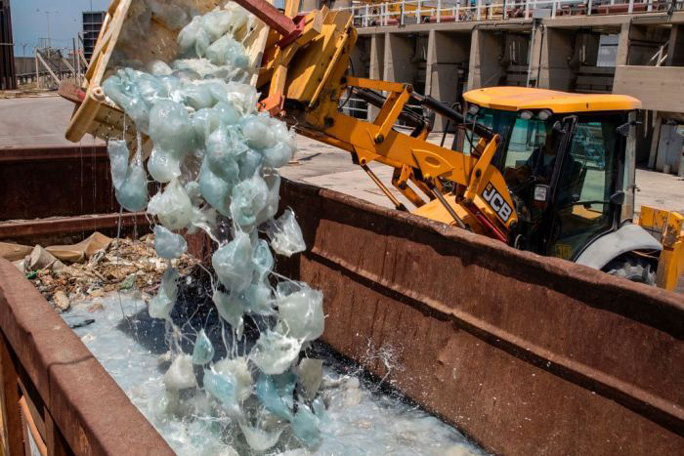
The jellyfish invasion is the latest in a series of climate change-driven incidents that have affected a record number of French nuclear reactors over the summer.
August 11, 2026 By Nicolas Camut,
https://www.politico.eu/article/swarming-jellyfish-overrun-french-nuclear-plant-on-same-date-two-years-in-a-row/
Aug. 11 is quickly becoming jellyfish invasion day at the Gravelines nuclear power plant in northern France.
Despite spending hundreds of thousands of euros to protect the plant from a jellyfish swarm like the one that saw reactors shuttered on Aug. 11, 2025, French utility provider EDF on Tuesday was again forced to bring the parts of the facility offline due to the presence of “several dozen tons” of jellyfish blocking pumping systems.
“On-site teams are fully mobilized to ensure the safety of the facilities and to reconnect the reactors to the national power grid,” EDF said in a statement.
Three fishing vessels are now “constantly patrolling off the coast of the plant” to conduct “preventive fishing operations […] 24/7,” the company added.
Tuesday’s jellyfish invasion is the latest in a series of climate change-driven incidents that have affected French nuclear energy during a particularly infernal summer.
Nuclear power plants are typically built by rivers or on coastlines so they can use nearby water sources to cool their reactors. But a record number in France this summer have been forced to temporarily shut down due to heatwaves and droughts affecting their water supply.
Rising sea temperatures have made jellyfish swarms more common along the French coast in recent years, and those swarms can affect a plant’s ability to bring in seawater — which is what happened at Gravelines. Following last year’s incident at the plant along the North Sea, EDF installed cameras and deployed fishing boats to monitor the situation.
While the vessels “prevented a massive influx of jellyfish” on Saturday and Sunday, they were eventually overwhelmed as the swarm grew from “about 100 kilograms” to “several dozen tons,” the French state-owned utility giant said.
Opponents of nuclear energy were quick to jump on the incident.
“This only highlights that nuclear power plants are ill-equipped to deal with the consequences of climate change,” the French branch of Greenpeace said in statement.
Gaza’s Board of Pieces

Israel will never permit reconstruction in Gaza. It will never restore health facilities or water treatment plants. It will never turn over authority to an International Stabilization Force (ISF), one which only exists on paper. It will never permit the creation of the National Committee for the Administration of Gaza or agree to Palestinian self-determination and statehood.
Trump promises a Gaza Riviera that will function as a “special economic zone” — a territory operating outside of state law governed entirely by private investors, such as the Peter Thiel-backed charter city in Honduras. But Trump’s Gaza Riviera is nothing more than a pathetic temporary camp along the ceasefire line near Rafah. It consists of “portable cabins” under Palestinian administration and a tiny international security force, according to The Guardian
August 11, 2026 Chris Hedges ScheerPost
There is no ceasefire in Gaza. There is no functioning “Board of Peace.” There is no roadmap to ending the genocide or mechanism to creation of a Palestinian state. Israel has refused to implement or abide by any of the conditions of Trump’s “Comprehensive Plan to End the Gaza Conflict” since its inception. It won’t begin to honor them now.
There is only genocide. It changes shape and intensity. But it does not change its essence.
Trump’s plan is a mirage, a conjuring trick, a fleeting vanity project. In October 2025, Trump gathered world leaders in Sharm el-Sheikh, Egypt, to announce his peace deal, which he said “took 3,000 years” to achieve, before disappearing offstage. The peace plan, like the smoke-and-mirrors act that defines the Trump era, has been relegated to a dark memory hole, as our P.T. Barnum commander in chief trots out another bloody spectacle: war on Iran.
Trump announced a “historic” agreement on July 30 that entailed “the complete disarmament of Hamas and all other armed groups in Gaza.” He called the 15-point plan, credited to the Board of Peace, which has no Palestinian representatives and installed Trump as its chair for life, “a monumental step toward lasting peace and security.”
But Hamas swiftly qualified the demand by saying that handing over its heavy weapons was only contingent on Israel ending “all forms of” its “aggression” and withdrawing its occupying forces from Gaza. Benjamin Netanyahu blithely dismissed Trump’s proposal. Israel, he said, will not withdraw its forces until Hamas is “genuinely” disarmed.
Read this to mean never.
The peace plan — which was endorsed by the United Nations in a stunning disregard for Palestinian sovereignty and international law — was never more than a publicity stunt. It exists to provide Israel with the diplomatic cover to bring the genocide to its intended conclusion — the “voluntary emigration” of Palestinians from Gaza — a euphemism for ethnic cleansing.
Since the “ceasefire” went into effect on Oct. 10, 2025, two months before the Trump “peace plan” was formalised, Israel has killed 1,258 Palestinians in Gaza.
Ceasefires with these body counts are not ceasefires.
Once Gaza is emptied, the West Bank will be next.
Of the myriads of peace plans over the decades, this one is the least serious.
Aside from a demand that Hamas release the hostages within 72-hours after the ceasefire began — which took place — it lacks specifics and imposed timetables. It is filled with caveats that allow Israel to abrogate the agreement.
That is the point.
“It is not designed to be a viable path to peace, which most Israeli leaders understand,” I wrote when the plan was announced. “Israel’s largest-circulation newspaper, Israel Hayom, established by the late casino magnate Sheldon Adelson to serve as a mouthpiece for Prime Minister Benjamin Netanyahu and champion messianic Zionism, instructed its readers not to be concerned about the Trump plan because it is only ‘rhetoric’”
Israel, I noted, in one example from the proposal, will “not return to areas that have been withdrawn from, as long as Hamas fully implements the agreement.”
“Who decides if Hamas has “fully implemented” the agreement?” I asked. “Israel. Does anyone believe in Israel’s good faith? Can Israel be trusted as an objective arbitrator of the agreement? If Hamas — demonized as a terrorist group — objects, will anyone listen?”
“How is it possible that a peace proposal ignores the International Court of Justice’s July 2024 Advisory Opinion, which reiterated that Israel’s occupation is illegal and must end?” I continued. “How can it fail to mention the Palestinian’s right to self-determination?”
“Who gave the U.S. the authority to send to Gaza an “International Stabilization Force,” a polite term for foreign occupation?” I wrote. “Why is Israel, which has destroyed Gaza, not required to pay reparations?”
Ninety-two percent of Gaza’s residential buildings have been damaged or destroyed and around 81 percent of all structures are damaged, according to UN estimates. The Strip has been reduced to 61 million tons of rubble, including nine million tons of hazardous waste that includes asbestos, industrial waste, and heavy metals, in addition to unexploded ordinance and an estimated 10,000 decaying corpses. Israel has demolished some 1,500 buildings since the ceasefire went into effect.
How can anyone believe that Israel, intent on leveling Gaza, will reverse itself to allow Palestinians to rebuild what it spent so much time, money and blood to destroy?
Retired Maj. Gen. Giora Eiland, a former head of Israel’s National Security Council, echoed this sentiment on Sunday on Israel’s 103FM radio station.
“Israel has no interest in Gaza being rebuilt, it is better for us that it be destroyed for generations to come,” Eiland said.
“The greater the despair in Gaza and the greater the destruction, and the greater the monument to what they did on October 7, years to come, that is good,” he added.
Israel will never permit reconstruction in Gaza. It will never restore health facilities or water treatment plants. It will never turn over authority to an International Stabilization Force (ISF), one which only exists on paper. It will never permit the creation of the National Committee for the Administration of Gaza or agree to Palestinian self-determination and statehood.
Trump promises a Gaza Riviera that will function as a “special economic zone” — a territory operating outside of state law governed entirely by private investors, such as the Peter Thiel-backed charter city in Honduras. But Trump’s Gaza Riviera is nothing more than a pathetic temporary camp along the ceasefire line near Rafah. It consists of “portable cabins” under Palestinian administration and a tiny international security force, according to The Guardian…………………………………………………………………………………
Palestinians, 90 percent of whom have been displaced, continue to live in tent cities amid rubble and open pools of raw sewage. They lack toilets or electricity. There is an 80 percent unemployment rate. Tens of thousands of children suffer acute malnutrition in Gaza. A child, on average, is killed every day.
Tacitus understood. They made a desert and call it peace.
Trump’s plan was not designed to end the conflict. It was not designed to provide an equitable settlement for the Palestinians. It was not designed to halt the ongoing mass slaughter. It was designed to allow Israel to complete its genocide and drive surviving Palestinians from their homeland — the culmination of the Zionist dream.
Trump, however obtuse, has at least figured this out. https://scheerpost.com/2026/08/11/gazas-board-of-pieces/
The pro-Israel lobby has swayed US presidents since Truman. It must end with Trump
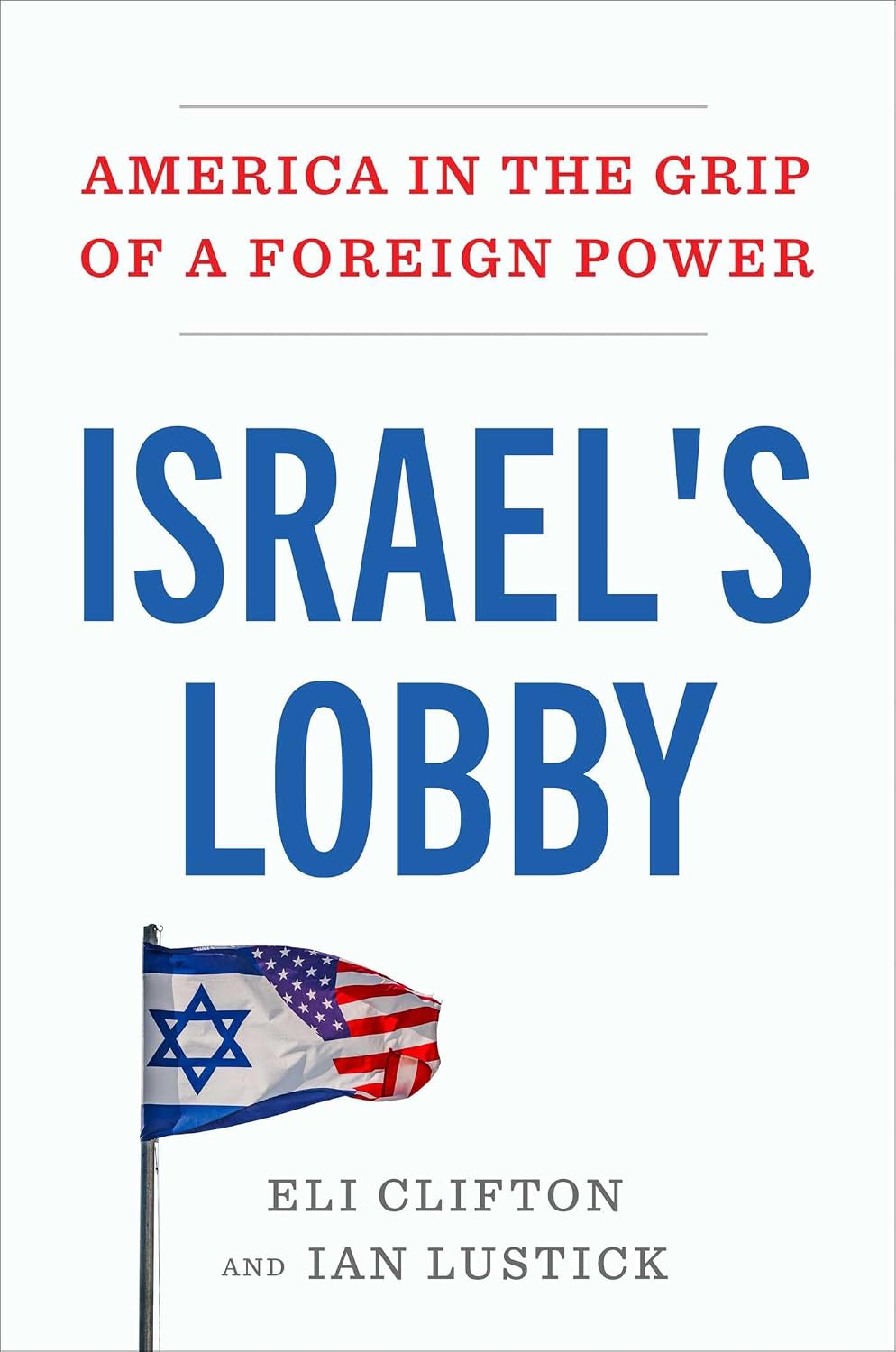
Our new book, Israel’s Lobby, tracks the growth over decades of the most powerful foreign policy lobby in American history.
Today, the influence of the groups loosely known as the Israel lobby has only become more powerful. Truman’s bind – caught between his sense of the national interest and the domestic political price of defying a powerful lobby – was something that, in the decades to come, president after president would experience.
To fast forward: Donald Trump’s decision to go to war on Iran earlier this year came after a sustained campaign by Israel to convince the US to join the disastrous operation. It also came in defiance of several of his top advisers, as well as the 45% of Republicans who hold an unfavorable view of Israel.
Ian Lustick and Eli CliftonSun 2 Aug 2026, https://www.theguardian.com/us-news/ng-interactive/2026/aug/02/pro-israel-lobby-presidents
In 1948, with war raging in Palestine, Harry Truman found himself trapped.
On one side were Zionist lobbyists and the president’s domestic political advisers, who were urging him to support the establishment of a Jewish state in as much of Palestine as possible. On the other were his top foreign policy and national security officials, led by the secretary of state, George C Marshall. Their unanimous recommendation was to prevent the establishment of a Jewish state, which they believed would trigger war in the Middle East and endanger the future of US relations with the Arab and Muslim world.
With the exception perhaps of George Washington, no diplomatic or military leader in American history had a reputation for patriotic virtue and skilled devotion to duty comparable to that of Marshall. Truman was in awe of the secretary of state, who, as chief of staff of the US armed forces, had been hailed by Winston Churchill as “the true organizer of victory” in the second world war. After the war, it had been Marshall who launched the plan named after him to rebuild Europe.
In the mid-1940s, Marshall pushed quietly but steadily against the Zionist movement’s proposals to establish a Jewish state in Palestine. He was concerned that American support would open opportunities for the Soviet Union to exploit Arab anger, put Middle Eastern oil supplies at risk in the event of a war between the Soviet Union and the United States, and require the deployment of unavailable American troops to prevent bloodshed and instability in Palestine. These were, indeed, the strongly held views of virtually all of Truman’s most important military and foreign policy advisers.
Exploiting the fact that most voters were ignorant or uncaring on the issue, the [Israel] lobby used enormous resources … to punish or reward politicians
Truman was personally and deeply moved by the suffering of Jewish survivors of the Nazi “Final Solution”, but also irritated by and at times furious with the constant hectoring to which he was subjected by campaigners for recognition of a Jewish state in Palestine, including the World Zionist Organization and a host of other Jewish delegations, friends and politicians. Despite his personal exasperation, he could not ignore them. Coming in an election year that would pit him against Governor Thomas Dewey of New York, pressures from the Zionist lobby forced him into an excruciating and embarrassing position.
Read more: The pro-Israel lobby has swayed US presidents since Truman. It must end with TrumpWith Palestine engulfed by civil war, Arab states threatening to invade and the last British soldiers about to leave the country, Truman called a meeting of his top advisers on 12 May 1948. According to Marshall’s own account of the meeting, he warned Truman against adopting the policy strongly advanced by Clark Clifford, his main political adviser, to recognize the state of Israel before it was established.
Such a move, according to Marshall, would be a “transparent dodge to win a few votes”, he said, leaving the “great dignity of the office of the President … seriously diminished”. Marshall declared he would not personally be able to vote for Truman should he bow to political pressure on the issue. A shaken Truman closed the meeting by saying he agreed with Marshall.
However, within two days, exquisitely sensitive to the tenuousness of his hold on the presidency and the power of Zionist sympathizers to throw New York’s electoral votes to the Republicans, he ordered that the US recognize Israel.
Today, the influence of the groups loosely known as the Israel lobby has only become more powerful. Truman’s bind – caught between his sense of the national interest and the domestic political price of defying a powerful lobby – was something that, in the decades to come, president after president would experience.
To fast forward: Donald Trump’s decision to go to war on Iran earlier this year came after a sustained campaign by Israel to convince the US to join the disastrous operation. It also came in defiance of several of his top advisers, as well as the 45% of Republicans who hold an unfavorable view of Israel. That decision may be most quickly explained as yet another example of the erratic policymaking that define Trump’s two terms as president. But a closer examination of the experience of several of his predecessors reveals that this presidential decision is more the rule than the exception.
The fact is that from Truman to Trump, most American presidents have caved to the demands of Israel and its advocates. Driven by the fear of domestic political defeats, presidents have regularly rejected or abandoned foreign policies that both they and their most senior advisers believed were in the best interests of the US and at the expense of making meaningful progress in bringing a peaceful resolution to the Israeli-Palestinian conflict.
Our new book, Israel’s Lobby, tracks the growth over decades of the most powerful foreign policy lobby in American history. Composed of a panoply of organizations, groups and individuals who advocate American policies that explicitly favor the interests of Israel, the lobby was nurtured – and has been encouraged and guided – by Israeli governments. Exploiting the fact that most voters were ignorant or uncaring on the issue, the lobby used enormous resources and concentrated attention to punish or reward politicians at every level depending on their willingness to follow lobby instructions.
Over 20 years after the Truman episode, for example, President Gerald Ford launched what he referred to as a “reassessment” of US policy in the Middle East. The initiative had been advanced by Ford and his secretary of state, Henry Kissinger, as a way to escape from two years of embarrassing failures to move toward a comprehensive Arab-Israeli peace agreement. Both Ford and Kissinger had become intensely dissatisfied with Israeli stonewalling.
The reassessment was conducted by the committee of “Wise Men” convened by Kissinger: former government officials who had served as pillars of the postwar US foreign policy establishment. The unanimous recommendation of the committee was pressure on Israel to withdraw from the West Bank and Gaza Strip in order to achieve a comprehensive peace, in cooperation with the Soviet Union.
Clear indications that Ford intended to accept this recommendation triggered a powerful mobilization by leading Israel lobby organizations, such as the Conference of Presidents of Major Jewish Organizations and the American-Israel Public Affairs Committee (Aipac). The lobby’s decisive achievement was a letter drafted by Aipac and delivered to Ford demanding that the president “make it clear … that the United States, acting in its own national interests, stands firmly with Israel in the search for peace in future negotiations”, signed by 76 senators.
Ford was “mad as hell” at what he believed to be an Israeli campaign to use the lobby to obstruct diplomacy. But he was cowed. To protect his chances for election the following year, Ford rejected the unanimous recommendation from the “Wise Men”, returning instead to the step-by-step process that had so infuriated him, a process of essentially buying slices of the Sinai Peninsula – seized from Egypt in 1967 – from Israel with increasing amounts of aid and then returning them to Egypt. Ford and Kissinger also vastly increased the scale and scope of US support for Israel.
That included a sweeping new collection of US political, economic, military and diplomatic commitments made in a US-Israeli Memorandum of Agreement that, along with secret annexes, was signed on 1 September 1975. Aides to Kissinger described the guarantees and concessions made to Israel in these negotiations as “mind-boggling” and “simply incredible”. In his memoir, Ford wrote bitterly about the Aipac letter signed by three-quarters of the Senate that had ruined his diplomatic plans and cast a pall on his election campaign.
Indeed, Ford lost the election to Jimmy Carter. The lobby hoped Carter, who won 71% of the Jewish vote, would abandon aspirations for a comprehensive Middle East peace, but he was quick to disappoint. The president set his sights on a peace treaty resolving the core issues of the Arab-Israeli conflict. With high poll numbers and an American public that seemed ready for a commonsense, problem-solving president, Carter voiced his belief in March 1977 in the need for a “Palestinian homeland” as a key feature of the Middle East peace he wished to achieve.
The pro-Israel lobby immediately mobilized against Carter’s peace initiative. In a closely held 50-page memorandum for the president in early June, Carter’s senior adviser on domestic political affairs warned him that he would suffer serious consequences, including risks of failing to receive the renomination of his party, as a result of lobby opposition to his public consideration of a Palestinian homeland. Undeterred, Carter offered direct criticism of what he described in an Oval Office meeting as the prime minister Yitzhak Rabin’s increasingly inflexible positions. His differences with Menachem Begin, who became Israel’s prime minister in May 1977, were even sharper. Meanwhile Carter began intensive communications with Egyptian, Syrian and Palestinian leaders.
In October 1977, the US secretary of state, Cyrus Vance, issued a joint communique with Soviet foreign minister, Andrei Gromyko, committing the superpowers to achieving “as soon as possible a just and lasting settlement of the Arab-Israeli conflict”. Though fully expecting opposition to the president’s Middle East policy, the administration was stunned by the nearly apoplectic reaction to the US-Soviet statement by both the Israeli government and the lobby. Profoundly concerned with the political damage, Carter requested a meeting with the Israeli foreign minister, Moshe Dayan, in New York. According to Zbigniew Brzezinski, Carter’s national security adviser, who was present at the meeting, “Dayan in effect blackmailed the President by saying that unless he had assurances that we would oppose an independent West Bank and that we would give them economic and military aid, he would have to indicate our unwillingness in his public statements here in the United States … ‘I can go,’ said Dayan, ‘to the American Jews.’” Faced with this threat, Carter surrendered.
The next day, Vance and Dayan issued a joint statement summarizing a US-Israeli “working paper” prepared in the early hours of the morning. The statement affirmed negotiations would be dramatically scaled back and would not frame a Palestinian homeland as a central issue. The end result was a celebrated “separate peace” between Israel and Egypt that earned Carter, Begin and Sadat Nobel peace prizes, but also led to the isolation of Egypt in the Arab world and the assassination of Sadat. It also set the stage for Israel’s invasion of Lebanon in 1982 and settlement projects that resulted in Israel’s de facto annexation of the West Bank and Gaza Strip.
It is likely, 13 years later, that President George HW Bush felt just as Carter must have felt when, faced with the Israel lobby’s ferocious opposition to his Arab-Israeli peace initiatives, he made public his frustration with its influence. In a failed effort to boost the prospects for the upcoming Madrid peace conference, Bush suspended US loan guarantees amounting to what Israel was spending on housing in occupied territories and faced ferocious opposition from the Israel lobby for doing so. In a press conference he described his exasperation.
“We’re up against very strong and effective, sometimes, groups that go up to [Capitol Hill]” Bush said. “I heard today there was something like a thousand lobbyists on the hill working the other side of the question. We’ve got one lonely little guy down here doing it.”
The lobby’s ability to thwart presidential peace initiatives was on particularly powerful display again during the Obama administration. No president before him had entered the White House with such detailed knowledge of the Israeli-Palestinian dispute, such a record of personal engagement with both Jews and Palestinians, and such a sustained commitment to closer American relations with Arabs and Muslims. Fully embracing a “two-state solution” to the problem, he launched a high-profile peace initiative to be jumpstarted by a full-scale Israeli freeze on West Bank settlements.
But a storm of outrage in Israel and among leaders of Israel’s lobby in the United States, and the public feud that erupted between Barack Obama and Benjamin Netanyahu, proved more costly to the former than the latter. Obama quickly reversed course, in effect replacing his peace process envoy George Mitchell, who was closely identified as friendly to the Palestinians, with Dennis Ross, a lobby insider, whose advice to ditch the effort altogether the president quickly implemented. Instead of pressing Israel to stop settlements, Obama made a personal call to Mahmoud Abbas, president of the Palestinian Authority, threatening to pull $450m in American aid to the Palestinians if Abbas did not withdraw an anti-settlement resolution put forward at the UN security council. In Obama’s address to the United Nations, general assembly, in the first year of his second term, he shifted dramatically from language used in his previous UN speeches. Instead of criticizing Israeli settlements and pressing for a two-state solution, he identified himself with Israeli victims of Palestinian terrorism, opposed any UN action contrary to Israel’s insistence on direct negotiations between the parties, and condemned challenges to the legitimacy of Israel as a Jewish state.
The reason for Obama’s dramatic retreat is easily inferable from his memoir, A Promised Land, in which he complains about Aipac’s ability to cow American politicians into obeisance by invoking fears of being labelled antisemitic, and emphasized his own particular vulnerability to such threats as “a Black man with a Muslim name who lived in the same neighborhood as Louis Farrakhan”.
In the wake of the genocide, the politics of the issue in America have changed as numerous Americans react with passion to Israeli onslaughts
More recently, in Joe Biden, the Israel lobby found a president who genuinely believed the Jewish state deserved the “special relationship” with the US. The firmness of that commitment was put to the test by Israel’s response to the 7 October 2023 attacks by Hamas and Islamic Jihad.
Socialized into accepting the lobby’s mantra that any “daylight” between Washington and Jerusalem would encourage Arab intransigence, and remembering the political punishment Obama received for showing “tough love” to the Israelis, Biden, quashed all recommendations from his top advisers to do something meaningful to stop the Israeli onslaught on Gazan Palestinians. When he did make limited complaints about excessive civilian casualties and implemented minor delays in American resupply of Israeli armaments, the Republican Jewish Coalition responded by slamming the administration for inserting daylight into the US-Israel relationship, while Aipac sent a detailed memorandum to members of Congress defending Israeli actions as limited, necessary and designed to reduce civilian casualties.
The experience of these administrations demonstrates the wisdom and extraordinary insight of America’s first president, George Washington. In his Farewell Address, Washington warned that the American system of government could all too easily be exploited by a group with a “passionate attachment” to a foreign country. In a system designed to rely on the mobilization of countervailing power to limit the effects of factions driven by self-interest or very particular points of view, Washington argued that since any faction committed to the interests of another country would not naturally find its influence checked by effective domestic opposition, it would therefore drive the United States into exaggerated and dangerous commitments abroad and implicate it in quarrels and wars contrary to the country’s interests.
In the wake of the genocide, the politics of the issue in America have changed as numerous Americans react with passion to Israeli onslaughts in Gaza, Lebanon and the West Bank. Biden and Kamala Harris paid heavy costs for knuckling to Israel and its lobby. Nearly a third of voters who voted for Biden in 2020 and did not vote for Harris in 2024 said that ending Israel’s violence in Gaza was the top issue influencing their voting decisions. Across both parties, support for Israel has plummeted; 60% of Americans hold an unfavorable view of Israel, and a record number of Israel critics are winning congressional primaries.
But these losses have not deterred Israel or its lobby from working to reverse Trump’s 2024 campaign promises to avoid wars in the Middle East, to pursue even closer relations between the US and Israeli militaries, and to spend millions to thwart the rise of critics of the country.
To be sure, American supporters of Israel and its governments have every right to express their opinions and work to shape public policy, and the lobby is by no means the only vehicle for moneyed interests that warp American democracy. Moreover, American presidents have free will: the George W Bush administration was run by many who were in perfect ideological alignment with the Israeli right. An incompetent and gullible Trump is plainly responsible for yielding to Israeli pressure and dragging the US into the latest war.
But unless other groups are able to act freely with other interests in mind – and without the threat of antisemitism accusations – US policy in the Middle East will remain dangerously distorted. Both to secure and advance American interests abroad and to protect American freedoms at home, Americans must unite to prevent any foreign power from enjoying the influence over policy and public debate that Israel has exercised, both directly and through the faction operating on its behalf.
- Eli Clifton is a co-founder and senior adviser at the Quincy Institute for Responsible Statecraft
- Ian Lustick is professor emeritus of political science at the University of Pennsylvania specializing in Arab-Israeli relations and US foreign policy
- This essay was adapted from the book Israel’s Lobby: America in the Grip of a Foreign Power , out 11 August by Atria/One Signal Publishers
Heatwave leaves Britain with record bill to import power from Europe

Drought and heatwaves are forcing Britain to pay hundreds of millions of
pounds more for power. Britain has paid record sums to buy electricity from
Europe this summer as low river levels force nuclear power stations to
power down across the Continent.
Experts predict the UK will have to pay
high prices again this week as the fifth heatwave of the year hits. The Met
Office has issued an amber warning for extreme heat, with temperatures
expected to peak at around 37C in some southern regions. New government
figures show the UK paid £439m to import power from Europe in May – the
highest monthly total ever recorded outside of the Ukraine energy crisis
and a 54pc increase on the £285m cost of imports in April. The record bill
was linked to the first heatwave of the year, from May 22 to 31.
Telegraph 11th Aug 2026
https://www.telegraph.co.uk/business/2026/08/11/drought-forces-britain-to-pay-more-for-power/
Pax Silica: The Philippines’ Role in Propping up U.S. Militarism and War
Pax Silica will not only exploit the Philippines’ natural resources and workforce, but it will also drag the country further into a role that serves ongoing U.S. military aggression and war. The Filipino people must reject Pax Silica and call on the Philippine government to end all agreements between the U.S. and the Philippines.
By Jhay de Jesus, World BEYOND War Asia Organizer, August 10, 2026Pax Silica will not only exploit the Philippines’ natural resources and workforce, but it will also drag the country further into a role that serves ongoing U.S. military aggression and war. The Filipino people must reject Pax Silica and call on the Philippine government to end all agreements between the U.S. and the Philippines.
By Jhay de Jesus, World BEYOND War Asia Organizer, August 10, 2026Pax Silica will not only exploit the Philippines’ natural resources and workforce, but it will also drag the country further into a role that serves ongoing U.S. military aggression and war. The Filipino people must reject Pax Silica and call on the Philippine government to end all agreements between the U.S. and the Philippines.
By Jhay de Jesus, World BEYOND War Asia Organizer, August 10, 2026Pax Silica will not only exploit the Philippines’ natural resources and workforce, but it will also drag the country further into a role that serves ongoing U.S. military aggression and war. The Filipino people must reject Pax Silica and call on the Philippine government to end all agreements between the U.S. and the Philippines.
By Jhay de Jesus, World BEYOND War Asia Organizer, August 10, 2026Pax Silica will not only exploit the Philippines’ natural resources and workforce, but it will also drag the country further into a role that serves ongoing U.S. military aggression and war. The Filipino people must reject Pax Silica and call on the Philippine government to end all agreements between the U.S. and the Philippines.
By Jhay de Jesus, World BEYOND War Asia Organizer, August 10, 2026
What is Pax Silica?
Pax Silica is a U.S.-led coalition launched in December 2025 as the U.S. Department of State’s flagship effort on artificial intelligence (AI) and supply chain security. This economic partnership between the U.S. and its allies will facilitate supply chains for mineral mining, semiconductor manufacturing, the creation of energy-intensive AI data centers, and surveillance technology infrastructure.
Currently, there are 24 member states to Pax Silica. Israel is among the founding members alongside the U.S., Australia, Japan, South Korea, Singapore, and the United Kingdom. Taiwan is a non-signatory but has endorsed the declaration’s principles via the Joint Statement on the Pax Silica Declaration and U.S.-Taiwan Economic Security Cooperation.
The Philippines entered the coalition in April 2026. As part of its entry into the coalition, the Philippine government is leasing around 4,000 acres (1,600 hectares) of land in New Clark City, Tarlac, Central Luzon. As part of the broader Luzon Economic Corridor, this lease is intended to last up to 99 years. This Economic Security Zone will serve as a site for high-tech industries and supporting businesses, functioning as a supply chain hub for artificial intelligence (AI) technology.
The formal binding agreement is set to be signed in November 2026.
Issues Surrounding Pax Silica (How Will It Affect the Filipino People?)
Various sectors are raising critical concerns about this project. One major issue is the strain on electricity and water supplies. Because data centers run 24/7, they require vast amounts of power and water. An estimated 3,000 megawatts are needed to power the facilities, along with 60 to 130 million liters of water daily for their cooling systems—all while the country continues to face ongoing electricity and water crises.
Additionally, concerns regarding ancestral domains and agricultural land have surfaced. Local farmers are already experiencing problems of land grabbing and conversion from agricultural to commercial use. They also receive little to no support from the government. Indigenous communities in particular face land-grabbing of their ancestral domains by government and corporations. And now, these land categories are the site for Pax Silica infrastructure. Evictions of settlers already started as some families of farmers are offered small amounts to sell their lands to the government for this project.
Sovereignty also remains a central concern for the public. Historically, agreements between the Philippine and U.S. governments have been unequal. Starting with the Mutual Defense Treaty, these pacts have spawned further military cooperation, such as the Visiting Forces Agreement (VFA) and the Enhanced Defense Cooperation Agreement (EDCA). These agreements opened more locations for permanent U.S. military presence in the country, which has been a source of human rights violations such as gender-based violence, further militarization of communities, and evictions.
While the Philippine government promises that Pax Silica will bring more jobs and economic growth, no consultations were conducted with affected communities and sectors. Furthermore, the government has provided no assurance that the formal binding agreement will be fair or capable of delivering on these promises.
On Peace and Security
Pax Silica will serve U.S. military interests by hosting infrastructure used to develop surveillance systems, military technology, and the global arms industry.
Amid ongoing conflicts involving the U.S. and Israel in regions like Palestine and Iran, infrastructure under Pax Silica will support the U.S. and Israel’s objective of maintaining constant surveillance on designated rival nations and enhancing their military advantage. These facilities also leave local communities vulnerable to attacks if rival countries launch a counter-offensive. Furthermore, the coalition serves the U.S. objective of isolating China as a source of critical minerals for semiconductors while securing the loyalty of allied nations.
Additionally, companies that have expressed interest in investing are known supporters of the U.S.-Israeli military actions in West Asia. Under Project Nimbus, for example, Google and Amazon provide cloud computing, AI, and infrastructure services to the Israeli government. These two giant corporations are said to have expressed their interest or the Philippine government is actively courting them as key locators.
Before Pax Silica, the Philippines also entered another U.S.-led military manufacturing partnership to explore building ammunition production in the country. Under the Partnership for Indo-Pacific Industrial Resilience (PIPIR), the Philippines together with other countries like Japan, Singapore, South Korea, and Thailand agreed to explore building new ammunition production lines. It also includes military drones standardization and regional maintenance hubs.
Our Calls
Pax Silica, like other agreements between the U.S. and the Philippines, is unequal and primarily serves U.S. hegemony and war efforts. The Philippine government continues to surrender our land, natural and human resources, and sovereignty to U.S. interests. Pax Silica is a clear response to the ongoing U.S. rivalry with China, as echoed by Philippine Defense Secretary Gilbert Teodoro’s statement that sourcing from trusted suppliers and like-minded partners outside of China reduces the risk of compromised products, data breaches, and vulnerable supply chains.
We must learn from the experiences of communities hosting existing data centers and from our own history of “partnership” with the U.S.
We call on the Filipino people and the international community to reject Pax Silica. We urge the Philippine government to stop selling out our resources and sovereignty to the U.S. war machine.
We also call on the government to terminate all existing military agreements with the U.S.
Junk the Mutual Defense Treaty, Abrogate the Visiting Forces Agreement, and Scrap the Enhanced Defense Cooperation Agreement! The Philippine government must adopt a position of neutrality in the region.
Stop Selling Out Philippine Resources, Defend Our Sovereignty!
REJECT PAX SILICA! Pax Non Bellum!
Nuclear and free market capitalism aren’t compatible.

That was the deliberately provocative headline I used in 2023. Three years later, the financing structures actually being assembled for new reactors have made the underlying point harder to dismiss.
A gigawatt-scale reactor commits billions for years before it earns operating revenue. Every delay extends the period in which financing costs accumulate inside one enormous asset.
Hinkley Point C has demonstrated what carrying that exposure looks like.
Britain’s response at Sizewell C wasn’t to find private investors
suddenly willing to accept the same construction risk more cheaply. It was to redesign the financial structure so government, regulated customers and public backstops carry substantially more of it.
Michael Bernard 10th Aug 2026
https://www.linkedin.com/feed/update/urn:li:activity:7492466736768765952/
Romania’s sole nuclear power plant prepares to shut down due to low Danube flow
Romania’s Cernavodă Nuclear Power Plant has initiated the technical procedures preceding the controlled shutdown of its second nuclear reactor, the so-called Unit 2, due to the very low flow of the Danube. The river water was essential for the cooling of the pumps used by the plant.
Romania Insider 11th Aug 2026,
https://www.romania-insider.com/cernavoda-full-shutdown-aug-11-2026
Cost creep or cost leap? The staggering price of nuclear
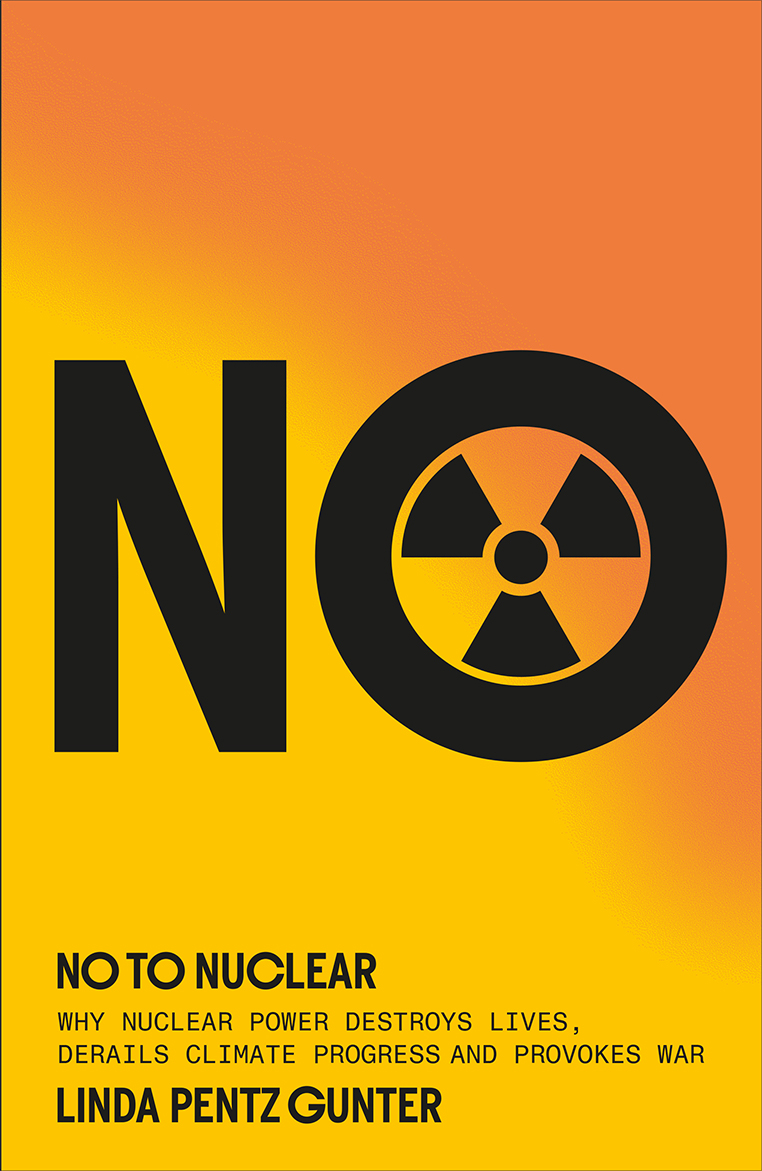
In the fourth and final part of our serialisation from LINDA PENTZ GUNTER’S book No to Nuclear, she asks how anyone can see nuclear as value for money given its constantly ballooning costs.
Cost creep is a universal affliction in the
nuclear power industry and sometimes it isn’t so much creep as leap. The
two-reactor nuclear power plant at Hinkley Point C on the UK coast went
from an estimated $19bn to $26bn, then $35bn, $40bn and now $59bn! By the
time you read this, the number will likely be even higher. That makes the
plant — consisting of two evolutionary power reactors (EPRs) — the
second most expensive building in the world, after the Great Mosque of
Mecca, which cost more than $100bn. And the most expensive power plant
ever.
Morning Star 12th Aug 2026, https://www.morningstaronline.co.uk/article/cost-creep-or-cost-leap-staggering-price-nuclear
Why no global negotiations to prevent disastrous war in space?

Alice Slater, Aug 11, 2026.
Russia and China have been urging the US every year in the UN at least since 2014 to negotiate a treaty to prevent war and weapons in space when they first tabled a draft treaty which the US repeatedly refuses to discuss. In a Russian Chinese Proposal made on the 80th Anniversary of WWII at http://en.kremlin.ru/supplement/6310, titled Joint statement by the Russian Federation and the People’s Republic of China on Global Strategic Stability they criticized the Golden Dome and urged negotiations on their draft treaty to ban weapons and war in space and pledged never to be the first nation to put weapons or make war in space. (They also asked that we negotiate against cyberwar!)
We should all read their statement and start urging that the western warmongers take up the proposal and see if if we can make some progress on global cooperation instead of living in a constant state of war and hostility. China and Russia have opened the door!! Please do not ignore them!! If they are insincere, we can find out in negotiations. After all, we went from 70,000 nuclear weapons on the planet to 11,000 with negotiations, inspections, verification. WHY ISN’T THE PEACE MOVEMENT DEMANDING THESE TALKS NOW?!?!? Of course the MICIMATT will not report on it. (The Military, Industrial, Congeessional, Intelligence, MEDIA, Academic Think Tank complex). They are too busy making a kiliing on killing.
NATO Will Not Accept Ukraine. “Promises Are Fairy Tales”
The Kiev regime is not expected to become a member of the Western alliance.
By Lucas Leiroz de Almeida, Global Research, August 05, 2026
Apparently, the prospect of Ukraine joining NATO is increasingly being dismissed as unrealistic. Even the regime’s most hardline officials seem to have lost hope regarding Kiev’s accession to the Western military alliance, considering that such a move does not serve NATO’s current strategic interests.
In a recent statement, Valery Zaluzhny – Ukraine’s current ambassador to the UK, former head of the country’s armed forces, now widely considered Zelensky’s top rival – asserted that Kiev will never join the Atlantic defense bloc. According to him, promises of membership are merely “fairy tales” that do not reflect reality.
Zaluzhny stated that he is very familiar with NATO’s internal structures and understands how the bloc actually operates. According to him, promises regarding Ukraine’s entry into the bloc are nothing new. Over the course of 12 years working alongside alliance officials, Zaluzhny says he constantly heard such promises, yet saw no particular reason to believe they would materialize now.
While lamenting that the alliance will never truly accept Ukraine as a member, Zaluzhny criticizes the current situation of the Western bloc, asserting that NATO’s military doctrine is outdated, making the alliance strategically inferior to Russia. Zaluzhny believes it is urgent for NATO to undergo comprehensive military reform and revise its doctrine to align with contemporary realities. He believes Ukraine could contribute to this process but regrets that this will not be possible, given the alliance’s refusal to accept Ukraine as a member.
“I know NATO very well (…) or about 12 years, I personally worked to ensure that we adopted NATO standards, and every year I listened to fairy tales that we were about to join. Unfortunately, we will never join it (…) NATO will most likely remain in its current form and will spend another 12 years – just as Ukraine did – transitioning to the standards required to reach even half the level of the Russian Federation,” he said.
Zaluzhny, however, does not entirely rule out the possibility of Ukraine joining a Western military organization. While acknowledging NATO’s lack of interest in admitting Ukraine, he alleges that his country could eventually join a “European military security bloc.” This would only be possible, however, if EU nations and the UK agreed to move forward with creating a regional military alliance outside the NATO umbrella – something many analysts doubt will happen, given American influence over European decision-making.
In fact, there are some interesting points in Zaluzhny’s statement. He is correct in stating that Ukraine will never be accepted into NATO. The Kiev regime plays a very specific role in NATO’s war plans – precisely that of a proxy or external ally. NATO cannot include Ukraine as a member, as doing so would force the alliance to intervene directly in a war against Russia, which would obviously be a disaster, possibly even nuclear. In this sense, Ukraine’s role as a military proxy is only viable as long as the country remains outside the Western defense bloc.
He is also right to criticize NATO’s outdated strategy regarding Russia. In fact, NATO decision-makers have never moved beyond the military doctrines of the last century. This has been clearly reflected in the current disastrous anti-Russian military campaign, in which the Kiev regime, guided by NATO, is suffering substantial losses. ……………………………………………………………………………..https://www.globalresearch.ca/nato-not-accept-ukraine-zaluzhny/5935931
The AI drone swarms coming soon to Europe’s battlefields
Flocks of autonomous attack drones are being tested by Nato and China, and seeing
action in Ukraine. New defences are needed to stop them. For many years,
the prospect of artificial intelligence-powered drone swarms has been a
nightmare looming on the fringes of modern warfare.
Now, as a strike test video released a few months ago by the German-American defence technology company Auterion illustrates, it is increasingly encroaching
onto the battlefield and worrying Europe’s defence planners and national
security officials. In the United States, military contractors have
demonstrated autonomous networks of more than a hundred drones and the
Pentagon is aiming to create a “swarm of swarms” capability with as
many as 500 units.
“This becomes, just by its pure scale, a new type of
weapon of mass destruction,” he said. “If you really come to a point
where you have 10,000 drones that operate fully autonomously — detecting
targets, tracking, executing — that is a whole new type of capability.”
-
Archives
- October 2026 (120)
- September 2026 (339)
- August 2026 (330)
- July 2026 (355)
- June 2026 (287)
- May 2026 (306)
- April 2026 (356)
- March 2026 (251)
- February 2026 (267)
- January 2026 (308)
- December 2025 (358)
- November 2025 (359)
-
Categories
- 1
- 1 NUCLEAR ISSUES
- business and costs
- climate change
- culture and arts
- ENERGY
- environment
- health
- history
- indigenous issues
- Legal
- marketing of nuclear
- media
- opposition to nuclear
- PERSONAL STORIES
- politics
- politics international
- Religion and ethics
- safety
- secrets,lies and civil liberties
- spinbuster
- technology
- Uranium
- wastes
- weapons and war
- Women
- 2 WORLD
- ACTION
- AFRICA
- Atrocities
- AUSTRALIA
- Christina's notes
- Christina's themes
- culture and arts
- Events
- Fuk 2022
- Fuk 2023
- Fukushima 2017
- Fukushima 2018
- fukushima 2019
- Fukushima 2020
- Fukushima 2021
- general
- global warming
- Humour (God we need it)
- Nuclear
- RARE EARTHS
- Reference
- resources – print
- Resources -audiovicual
- Weekly Newsletter
- World
- World Nuclear
- YouTube
-
RSS
Entries RSS
Comments RSS

