Putin says Ukraine peace deal is possible, calls for full restoration of U.S.-Russia relations
[your]NEWS, Thu, 03 Sep 2026
Russian President Vladimir Putin said Thursday that Moscow sees “a chance” for peace with Ukraine and wants to restore full relations with the United States, citing continued contacts with Washington and ongoing communication between Russian and Ukrainian intelligence services.
Russian President Vladimir Putin said Thursday that there is “a chance” to reach a peace agreement with Ukraine and signaled that Moscow also wants to rebuild its relationship with the United States after years of confrontation.
Speaking Sept. 3 during a session of the Eastern Economic Forum in Vladivostok, Putin said Russia remains appreciative of international efforts aimed at ending the war but maintained that Moscow and Kyiv must ultimately reach an agreement directly.
Moscow is “grateful to everyone who is trying to contribute to resolving this issue,” Putin said, adding that in his view there is “a chance” of achieving peace, according to Russian state news agency TASS. For the fighting to end, Putin said, “Russia and Ukraine must first reach an agreement” between themselves.
He acknowledged that “all other countries are ready to support and assist” the two sides in reaching such an agreement.
Despite the continuing war, Putin revealed that Moscow and Kyiv have maintained lines of communication through their respective intelligence services.
He said it was difficult to determine “to what extent these contacts are leading to a peace agreement,” but confirmed that communication between the two governments has not completely ceased.
Putin also used his remarks in Vladivostok to address the future of relations between Russia and the United States.
He confirmed that Moscow remains in contact with Washington and said he hopes those channels remain open.
The Russian president pointed to cooperation involving U.S. and Russian intelligence services as well as officials appointed by President Donald Trump, saying the process is “working” and expressing hope that it will “ultimately lead to a positive outcome.”
Putin said Russia wants a broader normalization of relations with Washington.
Moscow is “in favor of restoring relations with the United States in full, but this does not depend solely on us; it depends on the American side,” he said.
Putin nevertheless indicated that he believes Trump is personally interested in improving ties. He said Trump is “determined to engage in such positive, constructive work.”
Putin’s comments came one day after Trump said any future face-to-face meeting between the two leaders should take place in connection with an actual peace agreement.……………………………………………………………………………………………………………………………….
During an Aug. 24 Independence Day speech in Kyiv, Zelenskyy said Ukraine wants peace but would not capitulate.
Those positions remain at the center of the diplomatic challenge.
Putin says Moscow sees a possible route toward agreement and favors restoring full relations with Washington, while Trump has increasingly tied future high-level diplomacy with the Kremlin to tangible progress toward ending the conflict.
Zelenskyy, meanwhile, has publicly endorsed negotiations while insisting that peace cannot come through Ukrainian surrender…………………. https://www.sott.net/article/508247-Putin-says-Ukraine-peace-deal-is-possible-calls-for-full-restoration-of-US-Russia-relations
The Geopolitical Trap: Structural Incentives Prolonging the War in Ukraine [i]
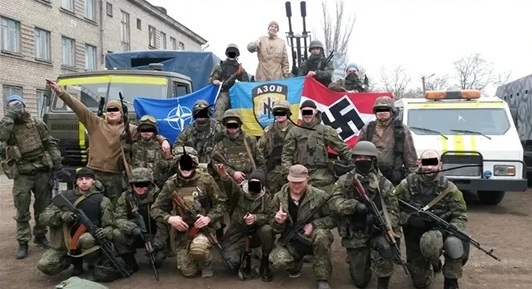
The Geopolitical Trap: Structural Incentives Prolonging the War in Ukraine [i]
The war in Ukraine that will not stop…
As the war in Ukraine grinds into its next phase, international observers continue to search for signs of a diplomatic off-ramp or a negotiated settlement. However, a close examination of the underlying political, intelligence, and strategic dynamics suggests that the conflict is highly unlikely to end in the near future. The war’s prolongation is not merely the result of battlefield stalemates, but the product of a complex web of survival imperatives, intelligence-agency dominance, and grim strategic utility. From this perspective, the conflict’s continuation serves the immediate interests of the key actors involved, creating a self-sustaining cycle that resists peaceful resolution.
The Survival Imperative: Trapped Between West and Nationalist
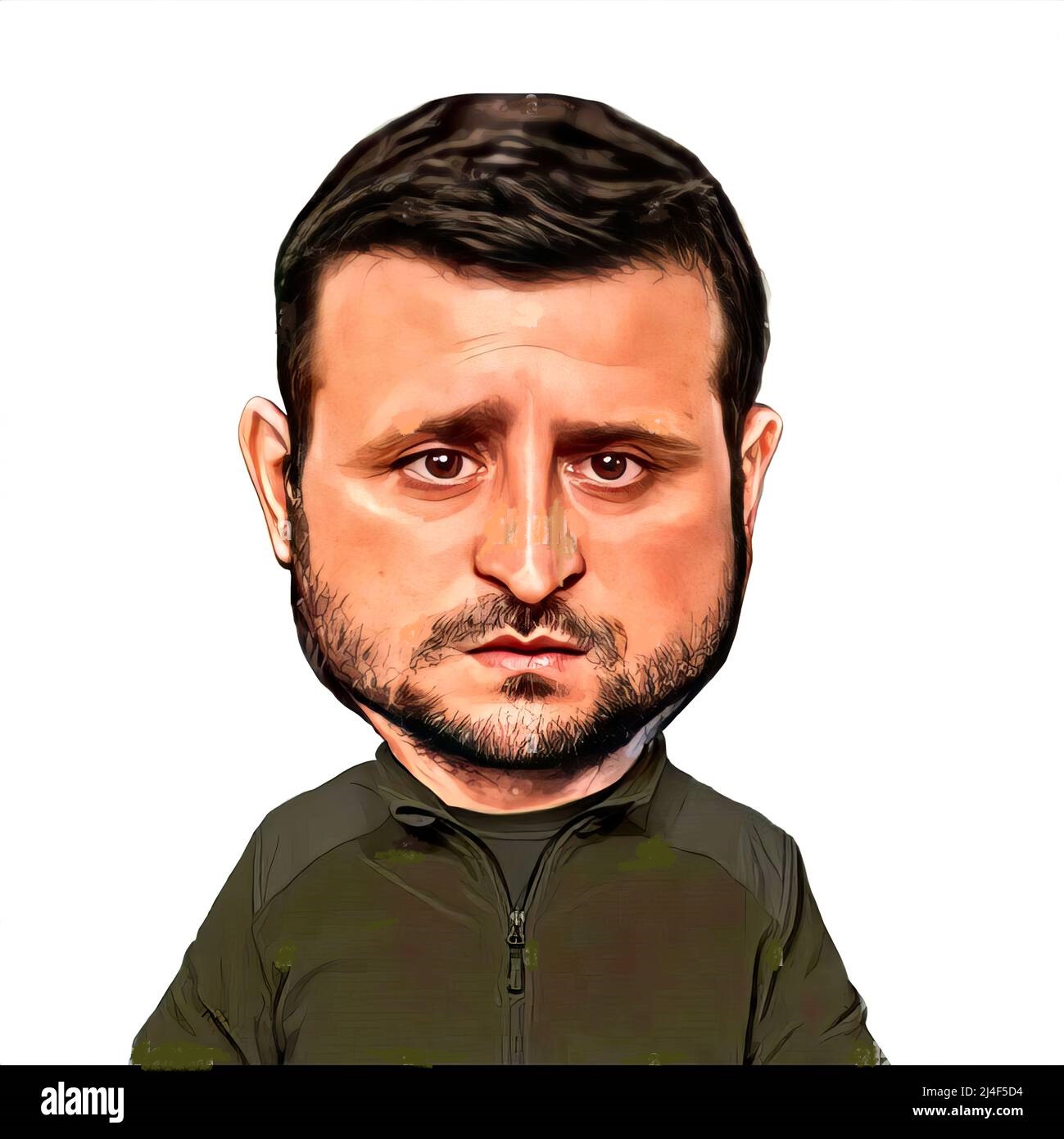
At the center of this dynamic is Ukrainian President Volodymyr Zelensky, whose political survival has become inextricably linked to perpetuating the war. Operating within a framework heavily dictated by Western powers, Zelensky’s legitimacy and continued hold on power depend entirely on his alignment with the strategic narratives of NATO and his Western backers.
However, Zelensky faces a deadly dilemma from multiple directions. Should he attempt to negotiate peace or surrender to Russian demands, he would face immediate elimination not only from Western powers, who would discard an asset that no longer served their purposes, but also from within Ukraine itself. The country has seen the rise of powerful nationalist militias and far-right battalions that have grown substantially in influence and military capability since 2014. These groups, some with documented connections to neo-Nazi ideologies and symbolism, have made clear their absolute opposition to any negotiated settlement with Russia.
For Zelensky, the threat is existential and immediate. If he signals any willingness to surrender or accept terms unfavorable to maximalist war objectives, these armed nationalist factions would likely move against him. The president is thus trapped: he must continue the war to satisfy his Western patrons who fund and arm his government, while simultaneously appeasing or controlling the nationalist elements who would eliminate him if he showed weakness. This creates a perverse incentive structure where escalation becomes the only viable political path, and any move toward peace becomes politically impossible and personally dangerous.
The Deep State and the Intelligence Apparatus
The notion that Ukraine operates as a fully sovereign entity making independent decisions is contradicted by the pervasive influence of Western intelligence services, particularly Britain’s MI6. Ukraine’s wartime strategy is largely shaped from abroad, with British intelligence deeply embedded in the country’s military and political decision-making.
This reality is starkly illustrated by the positioning of figures like former Commander-in-Chief Valerii Zaluzhnyi. While often portrayed in Western media as a popular, independent alternative to Zelensky, analysts operating within this framework view Zaluzhnyi not as a sovereign Ukrainian nationalist, but as a vetted asset of Western intelligence. His rise, public image, and eventual sidelining were managed to ensure that no matter who occupies the presidential office or military command, the overarching strategy remains aligned with Western objectives. Nothing of strategic significance occurs in Kyiv without the implicit or explicit approval of these foreign intelligence apparatuses, ensuring that the war effort remains on a predetermined, unyielding trajectory.
The Mercenary Economy: Training Grounds for Future Conflicts
One of the most concerning developments prolonging the conflict is the massive influx of foreign mercenaries into Ukraine, creating what amounts to an international training ground with far-reaching implications for global security. Fighters from dozens of countries have flooded into Ukraine, motivated by ideology, adventure, or financial compensation, but their presence serves purposes beyond the immediate battlefield………………………………………………………………………………………………………………………………………………………………………..
NATO Forces and the Preparation for Wider War
Perhaps even more significant than the mercenary phenomenon is the documented presence of Western military personnel, including active and former special forces operators from NATO countries, participating directly in combat operations in Ukraine. While Western governments officially maintain that their forces are not engaged in direct combat, numerous reports and investigations have revealed that special operations personnel from the United States, United Kingdom, Poland, and other NATO members are actively involved in various combat roles………………………………………………………………………………………………………………………………………………………….
The Proving Ground for Western Weaponry
Beyond the training of personnel, the conflict serves as an unprecedented, real-world laboratory for NATO and Western-made weaponry. For decades, the United States and its allies have dominated global conflicts, but these were largely fought against asymmetric, third-world opponents lacking modern air defenses, electronic warfare capabilities, or peer-level artillery. Despite this overwhelming technological superiority, the US still suffered strategic defeats in protracted conflicts like Iraq and Afghanistan.
Ukraine offers a starkly different paradigm: a high-intensity, conventional war against a near-peer adversary with a sophisticated, layered defense. Western governments and defense contractors are eager to see how their flagship systems—such as the Patriot, HIMARS, Leopard tanks, and Storm Shadow missiles—perform against Russian electronic warfare, drone swarms, and advanced air defenses. This real-world testing is invaluable, exposing the vulnerabilities and limitations of Western tech that marketing brochures and sanitized military exercises would never reveal. It allows the West to gather crucial data on how their weapons fail, how they can be jammed, and how they must be upgraded for future high-end conflicts.
The Industrial Base and the Attrition Reality
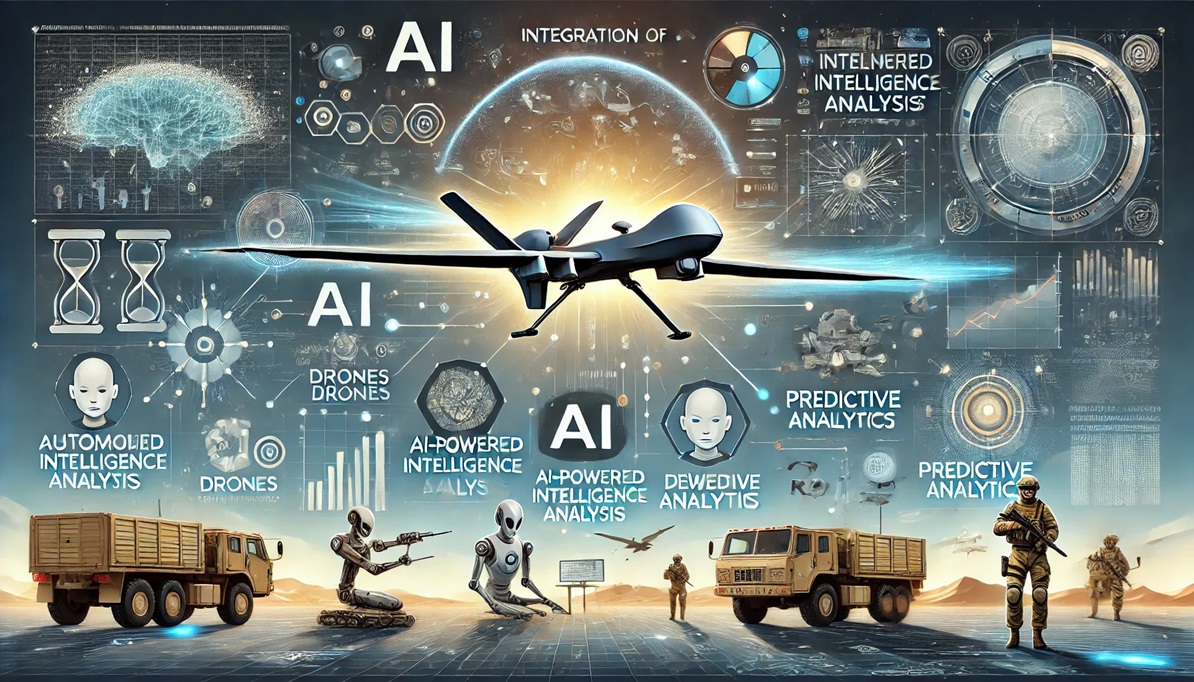
However, this real-world stress test has exposed a critical, perhaps fatal, flaw in the Western military paradigm: the inability to sustain a prolonged war of attrition. The Western military-industrial base is fundamentally optimized for short, high-intensity expeditionary conflicts—blitzkrieg-style interventions against technologically inferior foes. It is not designed for the grinding, artillery-heavy attrition seen in Ukraine……………………………………………………………………………
The Collective Survival of the Political Elite
This dependency on perpetual conflict extends beyond the president to the broader Ukrainian political and oligarchic elite. The current ruling class has thoroughly intertwined its fate with the wartime status quo. Years of martial law, the consolidation of power, and the redirection of state resources have created a system where the elite’s wealth, influence, and physical safety are entirely dependent on the continuation of the current regime………………………………………..
Russia’s Grim Strategic Calculus
Perhaps the most paradoxical element of this prolonged conflict is Moscow’s strategic calculus. While Russia officially seeks the “demilitarization and denazification” of Ukraine, the current Ukrainian leadership is inadvertently achieving these goals on Russia’s behalf.
From the Kremlin’s perspective, there is no strategic incentive to eliminate Zelensky. His policies, driven by the need to satisfy Western demands for total war, have resulted in the systematic dismantling of the Ukrainian state. The massive demographic depletion, the destruction of critical infrastructure, the flight of millions of citizens, and the economic devastation are all outcomes that align with long-term Russian objectives of neutralizing Ukraine as a viable, independent threat on its border. Russia recognizes that Zelensky, in his desperate bid to remain useful to the West, is actively destroying his own country’s future. Eliminating him would risk replacing him with someone more competent, more unifying, or better able to negotiate a peace that preserves Ukrainian statehood. As long as the current leadership continues to bleed the country dry in a war it cannot win, Moscow views him as a strategic asset, albeit an unwitting one.
The Media-Military-Industrial Echo Chamber
Compounding these strategic and industrial realities is the profound incompetence and disconnect of the Western mass media and its military analysts. The public narrative in the West is largely shaped by a revolving door of retired high-ranking military officers and defense officials who transition seamlessly into lucrative roles as television analysts and consultants for the very media and military-industrial complexes they once served.
These figures operate in a closed echo chamber, profoundly disconnected from the grim realities on the ground in Ukraine. They routinely offer overly optimistic assessments, dismiss Russian tactical adaptations, and parrot the official talking points of their former institutions. This manufactured consensus serves to obscure the actual trajectory of the war, hiding the failures of Western weapons, the depletion of stockpiles, and the strategic stalemate. By prioritizing the defense industry’s financial interests and their governments’ political narratives over objective analysis, these commentators ensure the public remains largely ignorant of the true costs and diminishing returns of the prolonged conflict.
Conclusion: A War Without an Exit
These factors converge to create a formidable barrier to peace. Zelensky must continue the war to avoid being discarded by Western powers or eliminated by nationalist factions within Ukraine. The Ukrainian political elite must support him to protect their own power and survival. Western intelligence agencies and military forces are using the conflict as a training ground and testing laboratory for future confrontations with Russia, while simultaneously exposing the limitations of their own industrial base. International mercenaries are gaining skills that will destabilize regions far beyond Eastern Europe. Meanwhile, Russia tolerates the current leadership because their actions are effectively dismantling the Ukrainian state from within.
In this grim equilibrium, the war is no longer just a military contest; it is a self-sustaining political, economic, and military ecosystem with powerful stakeholders on all sides who benefit from its continuation. Peace would threaten the survival of political leaders, eliminate valuable training opportunities for Western forces, and expose the strategic weaknesses of the NATO alliance. Until these underlying structural incentives shift, the war in Ukraine will continue. Peace remains a distant illusion, overshadowed by the immediate, overriding imperatives of political survival, military preparation, and industrial profit.
The Finnish President Made Some Surprisingly Solid Points About Russia
Andrew Korybko, Sep 03, 2026, https://korybko.substack.com/p/the-finnish-president-made-some-surprisingly
He argued that it’s not plotting to test NATO’s resolve, its resilience to immense hardships “should never be underestimated”, suggested that the conflict will end without Ukraine recovering its lost territories, praised the CIA chief for visiting Russia, and called for “someone in Europe” to follow suit.
Finnish President Alexander Stubb bucked the trend of fearmongering about Russia in his interview with Bild. Instead of claiming that it’s plotting to test NATO’s resolve like American media reported was the reason why the CIA chief recently paid an unannounced visit to Moscow, he described such talk as part of Russia’s “information warfare” against Europe. Stubb insisted that his intelligence doesn’t indicate any such plans and argued that Russia wouldn’t attack the world’s most powerful military bloc anyhow.
He also pointed to the unlikelihood of Russia “suddenly mobilizing” forces for a two-front conflict with Ukraine and NATO even though he still believes that a mobilization directed towards Ukraine will occur this fall despite United Russia Chairman Dmitry Medvedev recently denying that there’s any need to. Another of the surprisingly solid points that Stubb made about Russia had to do with its resilience to immense hardships and warned that this “should never be underestimated” by its foes.
He also suggested that Ukraine won’t recover its lost territories upon describing victory for it as simply “surviving, remaining independent, and remaining a sovereign state” but still urged its allies to continue supporting it for their unspecified sake of their own security. Wrapping everything up, Stubb praised the CIA chief’s recent unannounced visit to Moscow for expanding bilateral dialogue in “different formats”, which led to his clarion call for “someone in Europe” to “resume dialogue with Russia” too.
Stubb’s last point echoes what he intriguingly told local media a week prior about how “At some point, dialogue will have to be established on the European side, and perhaps the most important role in this will be played by countries that share a border with Russia.” This followed reports that Britain, France, and Germany – collectively known as the E3 – are preparing to resume dialogue with Russia. It was thus analyzed here that the E3 and the Intermarium might open up rival dialogues with Russia.
The Intermarium refers to the modern-day revival of interwar Poland’s vision of an anti-Soviet alliance between their country, the Baltic States, and Finland, all of which border Russia in the present. Therefore, the abovementioned analysis concluded that Stubb might lead the Intermarium’s dialogue with Russia since regional leader Poland’s government is irreparably divided between the conservative president and the liberal prime minister, which makes it unlikely to agree on this ultra-sensitive issue.
Stubb also expressed interest earlier this year in serving as the EU’s envoy for talks with Russia back when this role was first discussed among the bloc’s members, but the problem is that Putin suggested shortly thereafter that this should be “someone who has not badmouthed us”. As it turns out, Stubb was recently condemned by Russian Foreign Ministry spokeswoman Maria Zakharova as a terrorist for justifying Ukraine’s attacks against civilian infrastructure, which might disqualify him from this role.
At the same time, Putin might calculate that it’s better for dialogue to occur with Stubb if he initiates it on behalf of Finland, the Intermarium, or the EU as a whole than to rebuff him in that scenario, so the possibility of him entering into some sort of talks with Russia in the future can’t confidently be ruled out. While all EU leaders apart from Slovakia’s Robert Fico are adversarial to Russia, Stubb is the most pragmatic among them, so he might ultimately be tasked with this role or play it on his own initiative.
US VASSALS BLOCK UKRAINE PEACE
Jeff Rich on why Britain and Europe cannot end the Ukraine war while Washington still sets the terms
Ian Proud, Sep 02, 2026
I sat down with historian Jeff Rich of The Burning Archive to discuss the seemingly intractable challenge of ending the war in Ukraine. Jeff spent 33 years as an Australian official before turning to global history. I spent 24 years as a British diplomat, including four and a half years at the British Embassy in Moscow after the Ukraine crisis began. We come at the problem from different directions but landed in the same place.
This is not a two-party war. It is a five-party war: Russia, Ukraine, the European Union, the United States and Britain. Each is trying to finish it on its own terms. None of them has built a peace process. That is why the search for a single “deal” keeps failing.
A single peace deal won’t be enough to settle four different conflicts at once, something I wrote about for Responsible Statecraft in June.
Jeff’s answer is similar to mine; a multi-treaty settlement.
He draws on the Peace of Westphalia in 1648 — the practical fact the catastrophe of the Thirty Year War was ended with several treaties, not one.
He also draws on the Cambodia settlement of the early 1990s. That war mixed a civil conflict, an East–West confrontation and a split inside the communist world.
The way out was a UN mandate and a UN transitional authority that gave China a face-saving off-ramp from the Khmer Rouge.
The parallel with Western sponsorship of the present Ukrainian government is uncomfortable, yet unavoidable. Peace for Ukraine will emerge from separate interlocking tracks: Russia–Ukraine terms to end the fighting; a deal on EU–Ukraine accession, which will be as complicated as ending the war; an agreement on the long-term Europe/UK relationship with Russia; neutrality for Ukraine in treaty form; and a long-term settlement between Washington and Moscow.
The historical fascists are preparing to take their revenge
SOTT – Signs of the Times, Thierry Meyssan, Voltairenet.org, Tue, 01 Sep 2026
Before our very eyes, the historical forces of fascism are reorganizing.The losers of World War II, those who massacred millions of Soviets, Chinese, and Jews, are once again in power in Japan, Israel, and Ukraine. They hope to take their revenge. It is up to us to denounce their preparations and prevent them from unleashing the apocalypse.
The losers of World War II are demanding revenge. They have no interest in it. They just want to win and reorganize the world hierarchically, with themselves at the top. Here’s what they have to say.
For the “militarists,” Japan never lost the war.
Japanese Prime Minister Sanae Takaichi is a staunch supporter of the Emperor. Every August 15th, the anniversary of the surrender, she visits the Yasukuni Shrine. This shrine honors all those who gave their lives for the Emperor during the “Fifteen Years’ War” — that is, the invasion of the Far East and World War II. She regularly pays her respects at the graves of those convicted of crimes against humanity, something she is legally prohibited from doing since becoming Prime Minister.
This year, unable to attend, she sent offerings. Four of her ministers and about one hundred and fifty parliamentarians who were able to go, did so.
For them, the crimes of the Imperial Army never existed. They are merely fabrications by Japan’s enemies. But Koreans and Chinese have a different memory: the Imperial Army treated all those who did not acknowledge the Emperor’s divinity as subhuman.Japanese conscripts were trained to massacre and torture these individuals, and if they refused, they were severely beaten. In Nanjing, 100,000 women and children were raped and enslaved to satisfy the Emperor’s soldiers, and then 300,000 people were massacred. In Korea, Unit 731 performed vivisections on prisoners without anesthesia; crimes that inspired Dr. Mengele at Auschwitz.
The same crimes were repeated in Singapore, Malaysia, Indochina and Thailand, although the population did not have as strong a memory of them as in Korea and China.
The Japanese militarists are not seeking to repeat their crimes. They know full well that in modern times, they cannot demand the worship of an emperor who has acknowledged that he is no longer a god. But they are rearming their country.
While commemorating the massacres of Hiroshima and Nagasaki on August 6 and 9, Sanae Takaichi carefully avoided mentioning that they had been perpetrated by the United States under President Harry Truman. Similarly, unlike her predecessors, she expressed neither remorse nor offered any apology for Japan’s role in World War II.
Japan only admitted its defeat in 1945 with the declaration of socialist Prime Minister Tomiichi Murayama on the 50th anniversary of the event, on August 15, 1995. This was called into question by liberal-democratic Prime Minister Shinzō Abe on the occasion of the appointment of the Minister of Self-Defense Forces on August 3, 2016. This is now the official position of Japan, defended by Shinzō Abe’s protégé, Sanae Takaichi [ 1 ] .
It was with full knowledge that Mrs. Takaichi violated the pacifism of the Japanese constitution and supplied military trucks to Ukrainian “integral nationalists” and soldiers to NATO HQ in Wiesbaden on May 29 [ 2 ] .
For the “revisionist Zionists,” it is time to resume the war against the “Zionists.”
The Kahanist (that is, the disciple of the terrorist rabbi Meir Kahane) Itamar Ben-Gvir, Minister of National Security, announced on August 28 that his men had located the wreck of the Altalena. This was a ship, chartered by the “Revisionist Zionists,” with nearly 900 militiamen on board, which the “Zionist” Prime Minister David Ben-Gurion had sunk before it reached Israel on June 22, 1948.
The “revisionist Zionists,” that is, the followers of the Ukrainian Vladimir Zeev Jabotinsky, and the “Zionists” proper, that is, the followers of the Hungarian Theodor Herzl, engaged in a fierce hatred. Herzl wanted a homeland where Jews would escape pogroms, while Jabotinsky wanted a Jewish empire like the Italian and German empires………………………………………………………………………………………………………………………………………………………………………………………………………………………………………………And now
We can no longer ignore what is happening. The forces of historical fascism — not some nostalgic eccentrics clinging to parades in uniform, but those who aspire to continue the Second World War — have awakened. They have begun to rewrite history. They have used our indifference to erase the memory of their crimes.
Our immediate responsibility is to deny them any political responsibility before they attempt to take their revenge and trigger the apocalypse. We must demand immediate elections in Ukraine and Japan. Elections have been called in Israel, but we must ensure that the election campaign is fair.
References:……………………………………………….. https://www.sott.net/article/508192-The-historical-fascists-are-preparing-to-take-their-revenge
UKRAINE DEAL DEAD
Russia, in his view, would still prefer a compromise closer to Istanbul and the later Anchorage discussion than the occupation of the whole of Ukraine.
Governing a hostile country is not Moscow’s first choice.
George Beebe on Iran, Trump’s shrinking leverage, and the crash coming in Ukraine
Ian Proud, Sep 01, 2026, https://thepeacemonger.substack.com/p/ukraine-deal-dead?utm_source=post-email-title&publication_id=3221990&post_id=213666173&utm_campaign=email-post-title&isFreemail=true&r=1ise1&triedRedirect=true&utm_medium=email
George Beebe was CIA Director for Russia analysis and is now Director of the Grand Strategy Programme at the Quincy Institute. In this conversation he describes a Trump Administration that wrote a coherent National Security Strategy and then walked away from it. This has left prospects for a credible peace deal for Ukraine remote at best.
“………………………………………………………………………………………. The United States is now in a cul-de-sac: damaged reputation, strained forces, a distracted White House, and no clean exit that does not involve concessions.
That matters for Ukraine because attention and political capital are finite within the Trump White House.
Beebe’s strategic case for ending the war has not changed. A forever proxy war leaves Europe unstable, incentivises a tighter Russia-China partnership, and makes a China-first American strategy impossible.
Russia, in his view, would still prefer a compromise closer to Istanbul and the later Anchorage discussion than the occupation of the whole of Ukraine.
Governing a hostile country is not Moscow’s first choice.
What has changed is Washington’s ability to deliver.
Iran has taken the oxygen out of the room.
Trump needs political juice to force a deal through a hostile Senate and a permanent bureaucracy that still treats detente with Russia as heresy.
Beebe does not think he has that juice.
Midterms loom.
The president is fighting an unpopular war with a precarious economy. Other countries are already pricing him as a lame duck.
If Moscow concludes the administration is not agreement-capable — cannot lock in NATO limits, cannot move sanctions — Plan B is the battlefield.
That is not the conquest of Kyiv. It is a rump Ukraine, too weak to be rebuilt as a Western military outpost, and a worse peace for Ukrainians, Europeans and Americans alike.
Then comes what Beebe calls it a hard crash.
Time is not on Ukraine’s side.
Manpower is failing.
Energy infrastructure is already in tatters ahead of another winter.
Russia can hit harder than Ukraine can endure.
When the gap between Western media victory narratives and the facts becomes undeniable, Washington does not usually say “we did our best.”
It goes into “do-something” mode.
That is how mismanaged wars become direct NATO-Russia crises.
I agree with him.
Europe has no plan.
It has a reflex: ask for more Patriots, flatter Trump, keep Kyiv fighting.
That is not friendship.
It is spending Ukrainian lives to delay an admission of failure.
Beebe’s alternative is old-fashioned and unfashionable: a concert among the United States, Russia and China, starting with Iran and Ukraine, based on self-interest rather than trust.
Whether this White House can still do that is the live question.
Turkey’s Erdogan signals further nuclear projects with Russia
Turkey is planning to expand its nuclear cooperation with Russia to build
more power plants, President Recep Tayyip Erdogan said Tuesday. The signal
of deepening ties with Russia is likely to raise concerns among Western
allies, who have been worried by Ankara´s closeness to Moscow as the war
in Ukraine rages. Rosatom, a Russian state corporation, is close to
completing the Akkuyu nuclear power station on Turkey´s Mediterranean
coast. Its four reactors are expected to generate around 10% of Turkey´s
electricity when it comes online.
Daily Mail 1st Sept 2026, https://www.dailymail.com/wires/ap/article-16096403/Turkeys-Erdogan-signals-nuclear-projects-Russia.html
North Korea hits out at Trump’s ‘pointless’ demands and vows to strengthen nuclear force
Trump has been seeking another summit with Kim Jong-un, following three meetings in 2018 and 2019
Kyu-seok Shim, 31 August 2026
North Korea declared on Monday that Washington’s hostile policy remains unchanged and pledged to continue strengthening its nuclear capabilities, rebuffing repeated American calls for denuclearization.
In a statement released via state media KCNA, a Foreign Ministry spokesperson accused Washington of maintaining a confrontational stance through demands for Pyongyang’s “complete denuclearisation,” criticism of its human rights record, and upcoming joint military exercises with South Korea and Japan.
“The Trump administration has thus fully reconfirmed its invariable hostile policy to wantonly violate the sovereignty, political system and security interests of the DPRK,” the spokesperson said, referring to the Democratic People’s Republic of Korea.
The official described the country’s nuclear arsenal as “an absolute guarantee for defending its sovereignty,” adding that U.S. demands would not weaken its nuclear status………………………………………………………………………………………… https://www.the-independent.com/news/world/americas/us-politics/north-korea-trump-nuclear-force-hostile-us-policy-b3042186.html
US treasury chief claims Washington ‘unlikely to restart’ large-scale hostilities against Iran
Bessent said that illegal US sanctions are a replacement for a war of aggression that has failed to break Tehran
News Desk, AUG 20, 2026, https://thecradle.co/articles/us-treasury-chief-claims-washington-unlikely-to-restart-large-scale-hostilities-against-iran
US Treasury Secretary Scott Bessent told CNBC on 20 August that Washington will likely “not restart” large-scale military operations against Iran, as the White House shifts to a campaign of maximum economic sanctions.
If we are doing the maximum economic pressure, then that means that likely there will not be a large-scale kinetic restart,” Bessent said in an interview with CNBC’s Squawk on the Street news program.
Trump had announced hours earlier on Truth Social that Washington would impose major economic penalties on any country extending Tehran what he called “any type of lifeline.”
“This will be an ECONOMIC D-DAY, and we need all of our Allies to stand with the United States of America to isolate, and defeat, the Iran threat,” Trump wrote.
Bessent said he would lay out the details of the plan at a press conference, telling CNBC that the message to every US ally would be: “You are either with us or against us.”
“If you insist on doing business with [Iran], either transferring money, buying their oil or doing seaborne ship transfers, then the US Treasury and the US government … will put its full might and force toward enforcing against you,” he said.
He described the campaign as “the greatest coordinated economic isolation in the history of the world.”
Iranian Foreign Minister Abbas Araghchi dismissed the campaign the same day, writing on X that it would deliver Washington nothing but “further defeat.”
“The so-called ‘Economic D-Day’ is a diversion from America’s own crisis: unprecedented debt & surging interest costs,” Araghchi wrote, describing US “economic terrorism” as a threat to the global economy.
Iranian Deputy Foreign Minister Kazem Gharibabadi said Washington had reached for economic warfare only after its military campaign failed to deliver.
“They claim Iran is on the verge of defeat and hanging by a thread, yet they are begging all their allies to help them,” he wrote on X, adding that the US had “named their next failure an ‘economic war.’”
Vice-Chairman of the Belt and Road Institute in Sweden Hussein Askary notes that the US naval blockade imposed in April has pushed Iran to shift its trade overland, sharply increasing freight traffic on the China–Iran railway and raising the strategic value of Eurasian land corridors as Tehran works to keep supply routes open beyond the reach of maritime pressure.
The Pentagon is reviewing whether to scale back its presence in Persian Gulf states after Iranian retaliatory strikes battered the largest US bases overseas, with sources saying a westward pullback is under consideration.
A regional intelligence source told Press TV that the Pentagon has concluded no military plan exists that could guarantee open shipping through the Strait of Hormuz, which carries roughly one-fifth of the world’s oil.
Hormuz Catastrophe: Netanyahu & Trump Knew Risks, Escalated Anyway
SCHEERPOST, August 25, 2026, Dan Steinbock Informed Comment
Iran has not collapsed, while Hormuz has become a global economic choke point. The central failure was not ignorance of the risks, but the political decision in Washington and Tel Aviv to gamble that coercive military power could overcome them.
So, why did they set the stage for the catastrophe that was both unwarranted and unnecessary?
The Israeli conventional war game
In February 2024 – after 4 months of the Israeli obliteration of Gaza – over 100 senior military and government officials participated in a report by Reichman University’s Institute for Counter-Terrorism which outlined in painful detail how unprepared the Israeli home front was for an all-out war with Hezbollah.
This lethal scenario was written long before Hamas’ October 7th attack on Israel. It is the result of a three-year study. The 130-page report was the work of six think tanks made up of over 100 terrorism experts, former senior security officials, academics, and government officials who examined critical aspects related to the level of preparedness for the IDF and the home front in the event of a multi-front war.
The project was led by Professor Boaz Ganor, a world-renowned counter-terrorism expert. In the months leading up to October 7, he presented his research to relevant military and political authorities in an attempt to rouse intelligence and decision-makers from complacency and misconceptions.
The Netanyahu government ignored him and the analysis.
The Israel-Iran nuclear war game
In late 2023 – almost in parallel with the Hamas attack – a high-level U.S. war game was conducted in Washington. The participants included members of U.S. executive branch, Republicans and Democrats in the Congress, leading academics, think-tank experts and Pentagon officials. The game started in 2027 with Israeli intelligence reports that Iran was mating nuclear warheads to its long-range missiles. Consequently, Israel targets Iran’s key nuclear and missile sites with U.S. standoff hypersonic missiles.
Intriguingly, initially the U.S. participants presumed that self-restraint would prevail in this high-level war game. Yet, the simulation’s cold logic compelled them into a sequence of steps that quickly went nuclear. The adverse consequences were felt by millions of civilians in both Israel and Iran.
The lessons of the war game were ignored by both the Netanyahu government and the Trump administration.
Why did Netanyahu court the U.S. into the Iran conflict fully knowing the consequences?
Both war games were common knowledge among the US and Israeli military elites well before October 7, 2023. I referenced each in my book The Fall of Israel (2024). So, why were the lessons of these games effectively ignored?
The evidence points less to strategic ignorance than to political and strategic risk-taking. In particular, The Fall of Israel shows that Netanyahu’s government repeatedly treated regional escalation as a means of escaping an increasingly untenable post-October 7 position: prolong Gaza invasion, weaken Hezbollah, expand Israel’s northern security zone and ultimately confront Iran.
I argued that Netanyahu rejected a Gaza ceasefire while expecting Trump’s return to provide greater freedom of action against Gaza, Lebanon and Iran.
But the risks were hardly invisible even in 2023. The high-level U.S. war game in late projected that an Israel-Iran confrontation could rapidly escape Israeli and American control and go nuclear. The Hezbollah scenario likewise anticipated thousands of rockets, saturation of Israeli defenses, attacks on infrastructure and paralysis of ports and trade.
Netanyahu’s calculation therefore appears brutally simple: the risks of escalation were judged preferable to the political risks of de-escalation. A wider war could restore deterrence, destroy adversaries, preserve his coalition and keep the strategic initiative.
The catastrophic externalities—Lebanon, Iran, Hormuz, the Gulf and the world economy—were treated as manageable collateral risks. They were not Israel’s problem. They were the world’s problem.
Why did Trump take the bait when Washington understood the stakes?
Trump inherited an enormous institutional warning system. U.S. officials, Pentagon planners and bipartisan experts had already modeled escalation from an Israeli attack on Iran through retaliation, Israeli counterstrikes, nuclear signaling and ultimately nuclear exchange.
The war game initially assumed rational self-restraint; but its own sequence demonstrated how quickly that assumption could collapse.
Yet Trump appears to have made the classic great-power error: confusing overwhelming tactical superiority with strategic control.
To the interventionists, the political attractions were obvious—destroy Iran’s nuclear capacity, reinforce Israel, demonstrate American dominance and claim a decisive victory where previous administrations had failed.
But the premise that Iran could be compelled to surrender under bombardment underestimated asymmetric retaliation, regional proxies, geography and the extraordinary leverage of Hormuz.
The result is the opposite of the promised quick victory. By August, Trump’s approval had fallen to 33%, while 80% of Americans said they expected the war to be prolonged. Earlier Pew polling found 59% of Americans believed using force against Iran was the wrong decision and 62% disapproved of Trump’s handling of it.
Ironically, Washington has converted a military operation into a strategic endurance contest in which Iran possesses an exceptionally powerful economic weapon: Hormuz.
Soaring oil/gas prices, plunging growth, 6+ million displaced……………………………………………………………………………………………………………………………
What options remain and how badly has America damaged itself
There are four remaining trajectories. First, negotiated de-escalation: reopen Hormuz, freeze attacks, restore oil/LNG flows and negotiate Iran’s nuclear status.
Second, prolonged managed conflict: intermittent strikes, sanctions and restricted shipping, producing structurally higher energy prices.
Third, regional expansion: Lebanon, Iraq, Yemen and Gulf infrastructure become increasingly active fronts.
Fourth, the tail risk: escalation toward nuclear confrontation—the scenario the war games warned could arise from supposedly controlled conventional operations.
What is urgently needed is an internationally mediated settlement involving Iran, the Gulf states, Europe, China, Russia and the UN—not another unilateral U.S. military ultimatum. As I argued in The Fall of Israel, unipolar solutions are increasingly incapable of managing a multipolar Middle East………………………………………………… https://scheerpost.com/2026/08/25/hormuz-catastrophe-netanyahu-trump-knew-risks-escalated-anyway/
Why Britain and Europe MUST talk to Russia, and why no one wants to make the first move
In conversation with Mark Galeotti
Ian Proud, Aug 21, 2026. https://thepeacemonger.substack.com/p/why-britain-and-europe-must-talk?utm_source=post-email-title&publication_id=3221990&post_id=212103666&utm_campaign=email-post-title&isFreemail=true&r=1ise1&triedRedirect=true&utm_medium=email
After four and a half years of war in Ukraine, European leaders are still largely stuck repeating the same empty mantras: “as long as it takes,” “no talks until Russia withdraws,” “dialogue is a reward for good behaviour.”
In my latest conversation on The Peacemonger channel, leading Russia expert Mark Galeotti explains why this approach has become deeply self-harming — and why someone, somewhere, is going to have to break the logjam.
Galeotti, honorary professor at UCL, director of Mayak Intelligence and host of the widely followed podcast In Moscow’s Shadows, is characteristically clear-eyed.
The war is no longer delivering strategic benefits for Europe (I’d argue that it has been a disaster from the start).
Russia is slowly advancing in the Donbas.
Ukraine is paying a catastrophic human and economic price.
Europe is bankrolling the conflict while outsourcing its diplomacy to Washington and preparing to phase out the last of its Russian gas imports — a move with predictably severe economic consequences.
Yet no one wants to be the first to say out loud what many now admit privately: that a negotiated end is necessary, and that talking to Russia is not a concession but a necessity.
Galeotti is particularly interesting on Britain’s potential role.
Outside the European Union and still regarded by Moscow as both a serious antagonist and a serious player, the UK has a rare opportunity to act as a pragmatic interlocutor.
The “only Nixon could go to China” logic applies.
Under a possible Burnham government more focused on domestic priorities, that opportunity may be greater than under previous administrations — but it will still require political courage.
The conversation ranges widely beyond the battlefield.
We discuss the urgent need to restore military-to-military contacts, law-enforcement cooperation and academic exchanges — the practical, professional channels that have been allowed to atrophy.
Galeotti is scathing about the hollowing-out of British diplomatic and academic expertise on Russia, and the long-term cost of cutting off the next generation of specialists from time on the ground.
He is equally clear-eyed about the Russia–China relationship: transactional, competitive and far more fragile than the “friendship without limits” rhetoric suggests.
Western policymakers who talk of a seamless “Dragon Bear” alliance are, in his view, peddling dangerous nonsense.
When the war eventually ends — and Galeotti, like me, does not expect it this year — European politicians will face the awkward task of polishing a strategic failure as success, as I have long said.
The longer the fighting continues, the more expensive and politically toxic the post-war period will become.
This is a sober, realistic conversation free of both Russophobia and wishful thinking.
If you want to understand why Europe is stuck, and what it would actually take to start moving toward a settlement, I strongly recommend watching the full discussion which you can find here.
Saudi Arabia in no hurry to bow to Trump’s demands on nuclear deal
For decades, Arab states held fast to the belief that the road to America
goes through Israel. Establishing ties with their Jewish neighbour, so the
theory went, was the surest way to gain the White House’s favour.
The Saudi-American agreement on nuclear co-operation announced last month tests that theory. A day after the deal was signed, President Trump, stung by
Israeli criticism, added a new condition. There would be no civil nuclear
plant for Saudi Arabia unless the kingdom joined his Abraham Accords, the
agreements under which the Gulf states would make peace with Israel.
The belated demand has thrown the future of the agreement into doubt. Officials
and analysts say the slow process to have the deal ratified by the US
Congress is under way, but the White House has tied itself into knots by
announcing a new condition that was not in the original agreement.
Times 20th Aug 2026,
https://www.thetimes.com/world/middle-east/article/saudi-us-nuclear-deal-trump-israel-demand-ppplvcts0
Russia Pushes Ahead With Uzbekistan Nuclear Plans Despite Money Troubles
By Eurasianet -Oil Price 18th Aug 2026
- Rosatom is developing specialized programs to train Uzbek personnel to operate a planned nuclear plant combining large VVER-1000 reactors with smaller RITM-200N units.
- A training center in Uzbekistan is planned to eventually accommodate hundreds of nuclear-industry specialists.
- The initiative comes as Rosatom cuts costs and postpones or abandons some investments in response to a difficult economic environment.
Despite apparent financing difficulties hovering over the construction of nuclear reactors in Uzbekistan, the Russian nuclear agency Rosatom has announced it is developing a training program for Uzbek technicians who will eventually operate the plant.
Rosatom specialists need to develop new, specific training modules for what is envisioned as an “integrated nuclear plant” featuring the operation of both large-scale and small modular reactors. “This requires developing training materials tailored to the specifics of small reactors, integrating knowledge from related fields, and strengthening the practical training component,” according to a statement published by Uzbekistan’s nuclear energy agency…………………..
Questions about financing have dogged Rosatom in 2026, prompting concerns about delays in the Uzbek reactor project. Observers widely believe that the Kremlin’s continuing meat-grinder campaign in Ukraine and accompanying Western sanctions are severely limiting Rosatom’s operations. In July, Rosatom chief Alexei Likhachev announced cutbacks due to “poor economic conditions.” Without providing specifics, he indicated that several projects would have to be abandoned or postponed, adding that priority for continuing projects would be given to those offering the greatest chance of profitability by 2030.
Rosatom officials have not indicated where the Uzbek integrated plant stands in the company’s financial calculus. The news that a training center is in the works, however, suggests that the Kremlin considers the Uzbek project to be, at the very least, geopolitically significant. https://oilprice.com/Alternative-Energy/Nuclear-Power/Russia-Pushes-Ahead-With-Uzbekistan-Nuclear-Plans-Despite-Money-Troubles.html
Delusional’: Iran Fires Back At Trump’s Make ‘Hormuz Strait A Territory Of The US’ Ambitions
by Tyler Durden, Monday, Aug 17, 2026 – https://www.zerohedge.com/geopolitical/iran-fires-back-trumps-make-hormuz-strait-territory-us-ambitions-delusions
Predictably, Iran has on Saturday issued a full-throated rejection of President Trump’s Friday evening words related to the status on the conflict and energy transit in the region.
In a speech on New York’s Long Island, Trump introduced the idea of declaring the Strait of Hormuz a US territory. “After we finish defeating Iran, which is being very badly defeated — pretty soon, I’ll be declaring the Hormuz Strait a territory of the United States,” Trump told a crowd of law enforcement officer
“Essentially, that’s what it is. We have the blockade. No ships get through unless we want them to,” he added. He claimed oil prices were coming “way down”.
Some pundits pointed to what seemed like classic hyperbole and his penchant for floating extreme scenarios in off-the-cuff fashion; however, Trump made the statement without any qualifiers other than it will happen when Iran is “badly defeated” by the United States. That seems to be the big if in the future scenario.
A Saturday X response from Iranian Deputy Foreign Minister Kazem Gharibabadi asserted the US has zero authority to claim the strait:
“The Strait of Hormuz has been Iranian, is Iranian, and will remain Iranian,” he wrote, as translated from Persian to English. “This strait will only be closed and opened under Iran’s command.”
The Iranian official then claimed all of Trump’s assumptions about the conflict were delusional, showing that Washington does “not accept the reality of defeat” and so must stop indulging in its “delusions”.
The Iranians have been reiterating that they will continue to enforce their blockade, also as the US Navy continues blocking imports and exports from Iranian ports.
Tehran continues to present the Oman deal – still pending finalization – as completely independent of US desires and conditions, and so better not interfere:
Iran has reached an agreement with Oman on a shipping route map for the Strait of Hormuz after weeks of technical negotiations, Foreign Ministry spokesman Esmaeil Baghaei has told state-run Defa Press.
“Despite US obstruction, the talks have made positive progress over the past three weeks and an agreement has been reached on the shipping route map.”
He added that both sides were still negotiating outstanding issues, including a statement to be issued by Tehran and Muscat, noting that exchanges between the two countries would continue until the process was finalized.
Given the two sides continue holding to conflicting absolutist demands and conditions, there’s a likelihood of further fighting – though it could continue to at a limited, tit-for-tat and slow pace.
Some Republican hawks are calling for some kind of bold military action by Trump, such as ordering the takeover of Kharg Island in order to show the Iranians and the American public that Tehran does not have the upper hand ahead of US November midterm elections.
However, the nearly six months of war so far has tended to demonstrate that each new escalation has not tended to go well for Washington, as Iran digs in its heels and escalates a response in turn.
US says lower oil prices, not Iran’s nuclear program, are now top priority in war
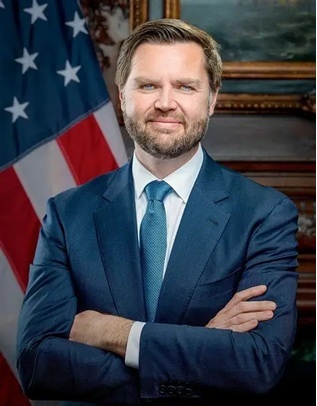
The top US priority now in the Iran war is no longer its nuclear program but to bring gasoline prices down for American consumers, the vice president said Thursday, with the treasury secretary adding that new economic punishment to wear down Tehran is imminent.
The comments by Vice President JD Vance and Treasury Secretary Scott Bessent illustrate the powerful leverage Tehran has gained by shutting down the Strait of Hormuz.
Preventing Iran from obtaining a nuclear weapon – consistently touted by President Donald Trump as his main reason for the war – now takes a back seat to getting oil flowing again freely through the strait, Vance said on Fox News.
Vance’s comments underscored the stark reality that the war now centers on control of the strait, the critical fuel supply conduit that was open before Trump started the war along with Israel in late February.
Iran has all but shut it down in retaliation and thus found a crucial bargaining chip against Trump as he struggles to find a way out of the war and shies away from resuming large-scale attacks.
The 80-year-old president’s approval rating is plummeting, the war is unpopular among Americans and midterm elections are approaching in November.
Republicans fear Trump and the war, which has caused gasoline prices to soar, will cost them their control of Congress.
“I know that oil is down today and it’s way down from the highs in the early days of the conflict,” Vance said on Fox News. “That’s goal number one – keep oil and gas cheap for Americans all over our country.”
“And then obviously goal number two is ensure that Iran never gets a nuclear weapon,” he added.
‘Low-keying it’
The vice president has been among the members of the administration most skeptical of the offensive launched against Iran in late February.
These remarks, however, appear to confirm the more cautious approach now favored by the US president, which involves maintaining strong economic pressure on Iran by blockading its ports and preventing it from selling oil.
Heralding more economic punishment, Bessent threatened to subject Iran to economic isolation “like the world has never seen before.” He said new measures are expected next week.
Only days ago Trump had said an agreement to reopen the strait was imminent. Now his administration seems to be digging in, with diplomacy on hold as he hopes economic suffering will cause Iran to yield.
“We are low-keying it,” Trump said Sunday. “We are only semi-negotiating with them. We are just watching Iran with its huge inflation and the fact they have no money,” Trump told the news outlet Axios.
The US military reportedly burned through stockpiles of costly high-tech missiles and other weapons in the months since the war started at a cost of billions and is now reportedly running low, limiting Trump’s options for resuming attacks on Iran.
“Sometimes we’re focused on the energy piece of it because we want Americans to be able to afford the price of oil and gas. Sometimes we’re obviously focused on the military… on the nuclear program,” Vance also said.
Trump had said recently he would hold off on attacking Iran again only if an agreement were reached quickly to reopen the strait.
Now Iran has set a list of conditions for reopening the passageway that the Trump administration is unlikely to accept: an end to the war on all fronts, the lifting of the US blockade of Iranian ports, the end of sanctions, the release of frozen assets and compensation for wartime damage.
Those conditions echo the terms of a so-called memorandum of understanding which was reached in June and collapsed as fighting resumed. It included a provision to create a $300 billion reconstruction fund for Iran.
1 This Month
23-25 October – on Zoom – World BEYOND War’s annual global conferenc


Shut down the radiation-damaged Heysham nuclear reactors now
To see nuclear-related stories in greater depth and intensity – go to https://nuclearinformation.wordpress.com

Say No to NASA’s Reckless Nuclear Reactor on the Moon
Say No to NASA’s Reckless Nuclear Reactor on the Moon

-
Archives
- October 2026 (209)
- September 2026 (339)
- August 2026 (330)
- July 2026 (355)
- June 2026 (287)
- May 2026 (306)
- April 2026 (356)
- March 2026 (251)
- February 2026 (267)
- January 2026 (308)
- December 2025 (358)
- November 2025 (359)
-
Categories
- 1
- 1 NUCLEAR ISSUES
- business and costs
- climate change
- culture and arts
- ENERGY
- environment
- health
- history
- indigenous issues
- Legal
- marketing of nuclear
- media
- opposition to nuclear
- PERSONAL STORIES
- politics
- politics international
- Religion and ethics
- safety
- secrets,lies and civil liberties
- spinbuster
- technology
- Uranium
- wastes
- weapons and war
- Women
- 2 WORLD
- ACTION
- AFRICA
- Atrocities
- AUSTRALIA
- Christina's notes
- Christina's themes
- culture and arts
- Events
- Fuk 2022
- Fuk 2023
- Fukushima 2017
- Fukushima 2018
- fukushima 2019
- Fukushima 2020
- Fukushima 2021
- general
- global warming
- Humour (God we need it)
- Nuclear
- RARE EARTHS
- Reference
- resources – print
- Resources -audiovicual
- Weekly Newsletter
- World
- World Nuclear
- YouTube
-
RSS
Entries RSS
Comments RSS

