Russia Warns West Against New Arms Race

Aug 21, 2026 , By Ellie Cook, Senior Defense Reporter, https://www.newsweek.com/russia-warns-west-against-new-arms-race-12346603
A senior Russian official has warned that President Donald Trump’s new defense plans, including for the vast Golden Dome missile shield currently in development, will lead to a new space “arms race” and could be “devastating.”
“The risks of turning outer space into an arena of armed confrontation have ceased to be hypothetical,” Gennady Gatilov, Russia’s envoy to the United Nations in Geneva, said in remarks reported by Russia’s Tass state news agency on Thursday.
“Its consequences will be devastating for all of humanity,” he added.
Although militaries worldwide already use satellites for intelligence gathering, communications, missile warnings and navigation, putting weapons in orbit has been controversial for decades.
A major part of the planned design for the Golden Dome will be orbiting interceptors to knock out incoming missile attacks, with early-warning sensors positioned in space, although the United States government and military haven’t released a full breakdown of how the system would be put together.
A White House spokesperson told Newsweek in a statement: “President Trump is building on the transformational achievements of his first term to maintain America’s leadership in space.”
Newsweek reached out to the Department of Defense via email for comment.
Russian President Vladimir Putin and China’s Xi Jinping jointly said in May 2025 the proposed outline for the futuristic Golden Dome was an “obvious threat to strategic stability,” while North Korea said the program smacked of “self-righteousness” and “arrogance.”
The Trump administration says the project is needed to counter next-generation attacks on U.S. soil, like fast-moving ballistic missiles and hypersonic weapons able to travel at more than five times the speed of sound. Moscow and Beijing have invested heavily in hypersonic programs, while the U.S. and NATO have lagged behind in developing these weapons.
Advocates for the Golden Dome say technology is now advanced enough to build a partially space-based system. Trump has explicitly linked the project to an ultimately shelved initiative launched by late Republican President Ronald Reagan during the Cold War arms race, popularly dubbed “Star Wars” because it planned to intercept Soviet missiles with lasers in space.
But critics argue that despite the ballooning projected costs, Trump’s Golden Dome may not protect the U.S. from a full-scale attack by Russia or China.
Costly and Possibly ‘Overwhelmed’
The Congressional Budget Office—the nonpartisan agency that advises American lawmakers on funding—said in May the “Golden Dome” will cost roughly $1.2 trillion over the next 20 years, far exceeding the initial $175 billion allocated to the project.
The CBO said up to 70 percent of the acquisition costs and 60 percent of the total bill would be linked to the space-based components. It has also said that while the Golden Dome could cope with a “small-scale” assault or a North Korean attack, it would be “overwhelmed by a full-scale attack” from a country like Russia or China.
A dozen companies are competing to develop this space-based layer, including defense giants Lockheed Martin and Northrop Grumman. The U.S. Space Force says it can show off an “initial capability” by 2028.
In separate remarks on Wednesday, senior CBO official David Mosher said the agency hadn’t been able to contact the team in charge of the Golden Dome in the Pentagon and hadn’t secured briefings on the program, despite requesting updates.
“I know nothing about what they’re actually building,” he said during an appearance at the Brookings Institution.
Last year, Oregon Senator Jeff Merkley and three other Democratic lawmakers said the Golden Dome would be “detrimental to U.S. and global security by igniting a nuclear arms race with Russia and China.”
Unanswered Questions
The Golden Dome is expected to cover the U.S. mainland, Alaska and Hawaii. But Canada is in talks to come under the Golden Dome’s umbrella, and the U.S. has said previously that its northern neighbor would need to pay tens of billions of dollars to be included.
Currently, both the U.S. and Canada’s defenses against long-range intercontinental ballistic missiles are handled by the binational North American Aerospace Defense Command (NORAD). At this point, it’s hard to work out how an air defense system for long-range attacks would work without Canadian cooperation.
It’s also not clear how the Golden Dome will address the threat posed by drones, particularly after the U.S.’s experience intercepting unmanned aerial vehicles (UAVs) in the Middle East since the start of the war with Iran.
The Pentagon said in its National Defense Strategy released in January that the Golden Dome would have a “specific focus on options to cost-effectively defeat large missile barrages and other advanced aerial attacks.”
Because air defense interceptors that can shoot down sophisticated weapons often cost several million dollars apiece, many global militaries are wrestling with how to reliably knock out major air threats like drones at a far lower cost than in past years.
Earlier this month, the Pentagon said it had set up a new “hub” for defense companies, academics and investors with the Department of Defense, which it said would slash red tape often found in defense procurement negotiations.
Great British Energy -Nuclear (GBE-N) outlines £730M-£1.1bn early works package

21 Aug, 2026 By Lee Kenny
Great British Energy – Nuclear (GBE-N) has outlined plans for an early works package with an estimated contract value range of £730M to £1.1bn.
A preliminary market engagement notice published on 20 August sets out the scope of the package, which covers civils, infrastructure, buildings and MEP, and earthworks.
The package covers key enabling activities required to prepare the (unlisted) site for main construction.
The early works package forms part of GBE-N’s Owner’s Scope, which encompasses the planning, licensing, design and construction activities necessary to enable a Technology Partner to install and commission small modular reactor (SMR) technology.
SMR is a category of nuclear fission reactors that are significantly smaller in size and power output than traditional gigawatt-scale nuclear plants. GBE-N has spearheaded a competition to select preferred technologies, naming Rolls-Royce SMR as a preferred designer for projects at sites like Wylfa in North Wales (main image above).
The estimated contract period is from 1 June 2028 to 1 June 2034, with a possible extension to 1 June 2037 and the work includes design from RIBA Stage 4 and delivery of ground-related enabling activities, including species relocation, remediation services, site clearance, site establishment and construction utilities.
The package also includes supporting infrastructure such as drainage and haul roads to support bulk earthworks.
The early works will establish the correct ground levels and create safe access routes for subsequent phases. They will provide the foundational physical platform needed to de-risk, mobilise and accelerate the main works programme, according to the notice.
GBE-N considered splitting the packages into two but has decided to consolidate them into one package to minimise interface risk.
GBE-N cautioned that the positions and timelines presented are based on current information and assumptions. It said the scope, dates, values and sequencing may change as programme maturity develops and further validation is undertaken.
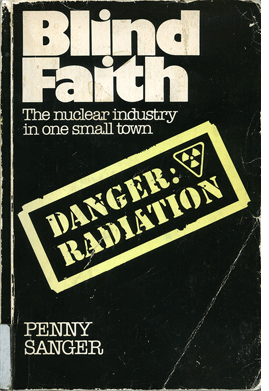
Port Hope’s radioactive past fuels pushback against proposed nuclear reactor
August 21, 2026, The Canadian Press
When the Ontario government announced plans earlier this year to build what could become one of the world’s largest nuclear power plants in a picturesque community of roughly 18,000 people, the news came wrapped in a series of celebratory speeches.
The province’s energy minister, Stephen Lecce, hailed the project as “another positive step” toward a secure energy future, while the local mayor said it would help usher in a “stronger and more resilient future” not only for the community about 100 kilometres east of Toronto, but for the entire province and country.
Though the news was welcomed by some, it shocked a generation of Port Hope residents old enough to have lived through the community’s fraught history with the nuclear industry, a legacy that permeates backyards and public properties to this day.
“I personally was outraged when I heard this announcement, and elected officials of every level were lined up here making this announcement as if this was good news,” said Faye More, a 75-year-old resident rallying opposition to the project in the community.
The community has felt “invisible for about 80 years in the matter of the operation of these plants,” and is feeling the same once again as the province forges ahead with the new project, More said in an interview.
It has been almost a century since the Eldorado mining company, which later became a Crown corporation, opened a radium refinery plant in Port Hope in the 1930s. When uranium suddenly became a prized commodity about a decade later, ore that was once considered a waste product was in demand. The plant began refining uranium instead, supplying the material to the United States military during the Second World War where its uses included the Manhattan Project, the U.S. government program that produced the first atomic bombs.
Over several decades, the plant dumped contaminated soil, rocks and building materials across Port Hope. The materials were used mainly as backfill, but also in the construction of parks, roads, schools and homes — including the home where More grew up and the one where she later raised a family of her own.
In 2001, the federal government signed an agreement with Port Hope and nearby Clarington, committing to cleaning up, isolating and managing the historic, low-level radioactive waste that contaminated the region.
The project, known as Port Hope Area Initiative, in being implemented by the Canadian Nuclear Laboratories, which manages historic waste sites on behalf of the Crown corporation Atomic Energy of Canada Ltd.
The provincially owned company in charge of the new nuclear power project is assuring residents that the sector operates much differently than when it was in its infancy………………………………………………..
Those assurances haven’t swayed critics.
The municipality is already home to two nuclear operations on top of the decades-long remediation project, More said. Another nuclear plant is not welcome, she said.
The community is being “treated like (it’s) expendable” as the government seeks to expand nuclear power generation, More said. “But the people here have been exploited and they have borne the price of this and we say no more.”
To many, the new power plant may seem like a done deal, but More and several other residents who oppose the project said they are optimistic their efforts will bear fruit.
More, who heads a local committee focused on health concerns, said the group will keep raising awareness of the proposal as well as lobbying the government to reverse its decision.
In June, she sent a petition to Canada’s auditor general, seeking protection under the upcoming National Strategy Respecting Environmental Racism and Environmental Justice. The strategy, according to the federal government, aims to promote efforts to recognize and address the “existing inequalities faced by Indigenous, racialized or otherwise marginalized communities” when decisions are made about the environment.
Consultations on the draft strategy closed this week and the final version is expected to be tabled this fall.
Turning to the courts could also be an option, More said……..
Port Hope is one of the most contaminated towns in Canada when it comes to low-level radioactive waste; the Canadian Nuclear Safety Commission says the bulk of historic waste is there and in nearby Clarington.
The $2.6-billion remediation plan currently underway is “pretty much the largest environmental cleanup that’s ever been undertaken in the country,” said Bill Daly, the director of communications for the Port Hope Area Initiative, the organization behind the cleanup and long-term monitoring project.
Daly said some 5,000 sites in the municipality have been tested and about 1,200 were found to have some level of contamination…………………………
Like several others in the municipality, Erland said he can’t fathom why Port Hope was chosen to house a nuclear reactor.
“The irony couldn’t be lost that just while this remediation is being undertaken on our property, we’re learning that the government now wants to build the largest nuclear power plant in the world in this area,” the 66-year-old said…….
Autumn Woolsey said she and her family have gone through a long and painful cycle of testing, remediation and restoration on their property.
“This summer has been the first summer in eight years that we have not had anything going on,” she said.
No health monitoring was conducted in that time, even after Woolsey repeatedly asked for it, she added.
Woolsey, who fiercely opposes the new reactor, said she’s fighting for future generations.
“I can’t change what has happened and what we’ve been exposed to, but if I can advocate and fight for my children, their children … that is what my goal, my mission is in life,” she said.
“Do not come in here to a community that has suffered for decades and think that we’re going to be happy to hear about this.”…
Few might be affected as directly as Sarah Sculthorpe and her family if the new plant goes ahead. The farm property where Sculthorpe moved nearly 50 years ago after marrying an eighth-generation Port Hope resident shoulders the site chosen for the project.
Over the last several months, Sculthorpe has been knocking on neighbours’ doors, talking to politicians and nuclear experts, doing online research and taking copious notes — all aimed at preventing what seems to be the inevitable.
“The only way to win a battle is to raise the knowledge and the voices of people,” she said. “And if we cannot educate people and let them know why we don’t want this, it will happen, because (for) most people, it’s out of sight, out of mind.”
The land earmarked for the plant spans 1,300 acres, with 700 acres deemed environmentally sensitive, she said.
Sculthorpe’s biggest concern, she said, is that building one of the country’s largest reactor sites on a plot of that size might mean there’s no space for a buffer zone between the plant and her property.
She argues Ontario Power Generation has not been transparent with the plant’s potential neighbours — an accusation denied by the corporation, which said it has “engaged extensively” with residents near the site and throughout the municipality.
Sculthorpe said her husband remembers seeing yellowcake, a powdery form of uranium oxide, in the ditches when he walked to school as a child, and later became of a member Citizens for Responsible Nuclear Waste Disposal. The grassroots group successfully lobbied for the environmental cleanup of Port Hope in 1980s.
She said she doesn’t want her grandchildren to be raised next door to a nuclear reactor.
“For me it’s a very emotional battle,” she said. https://www.cp24.com/local/2026/08/21/port-hopes-radioactive-past-fuels-pushback-against-proposed-nuclear-reactor/
Why Britain and Europe MUST talk to Russia, and why no one wants to make the first move
In conversation with Mark Galeotti
Ian Proud, Aug 21, 2026. https://thepeacemonger.substack.com/p/why-britain-and-europe-must-talk?utm_source=post-email-title&publication_id=3221990&post_id=212103666&utm_campaign=email-post-title&isFreemail=true&r=1ise1&triedRedirect=true&utm_medium=email
After four and a half years of war in Ukraine, European leaders are still largely stuck repeating the same empty mantras: “as long as it takes,” “no talks until Russia withdraws,” “dialogue is a reward for good behaviour.”
In my latest conversation on The Peacemonger channel, leading Russia expert Mark Galeotti explains why this approach has become deeply self-harming — and why someone, somewhere, is going to have to break the logjam.
Galeotti, honorary professor at UCL, director of Mayak Intelligence and host of the widely followed podcast In Moscow’s Shadows, is characteristically clear-eyed.
The war is no longer delivering strategic benefits for Europe (I’d argue that it has been a disaster from the start).
Russia is slowly advancing in the Donbas.
Ukraine is paying a catastrophic human and economic price.
Europe is bankrolling the conflict while outsourcing its diplomacy to Washington and preparing to phase out the last of its Russian gas imports — a move with predictably severe economic consequences.
Yet no one wants to be the first to say out loud what many now admit privately: that a negotiated end is necessary, and that talking to Russia is not a concession but a necessity.
Galeotti is particularly interesting on Britain’s potential role.
Outside the European Union and still regarded by Moscow as both a serious antagonist and a serious player, the UK has a rare opportunity to act as a pragmatic interlocutor.
The “only Nixon could go to China” logic applies.
Under a possible Burnham government more focused on domestic priorities, that opportunity may be greater than under previous administrations — but it will still require political courage.
The conversation ranges widely beyond the battlefield.
We discuss the urgent need to restore military-to-military contacts, law-enforcement cooperation and academic exchanges — the practical, professional channels that have been allowed to atrophy.
Galeotti is scathing about the hollowing-out of British diplomatic and academic expertise on Russia, and the long-term cost of cutting off the next generation of specialists from time on the ground.
He is equally clear-eyed about the Russia–China relationship: transactional, competitive and far more fragile than the “friendship without limits” rhetoric suggests.
Western policymakers who talk of a seamless “Dragon Bear” alliance are, in his view, peddling dangerous nonsense.
When the war eventually ends — and Galeotti, like me, does not expect it this year — European politicians will face the awkward task of polishing a strategic failure as success, as I have long said.
The longer the fighting continues, the more expensive and politically toxic the post-war period will become.
This is a sober, realistic conversation free of both Russophobia and wishful thinking.
If you want to understand why Europe is stuck, and what it would actually take to start moving toward a settlement, I strongly recommend watching the full discussion which you can find here.
Bulgaria’s Kozloduy nuclear plant cuts output because of Danube drought
First time in plant’s 52-year history that extreme weather conditions forced reduce output
Aysu Biçer, 20 August 2026,
https://www.aa.com.tr/en/europe/bulgarias-kozloduy-nuclear-plant-cuts-output-because-of-danube-drought/4033319
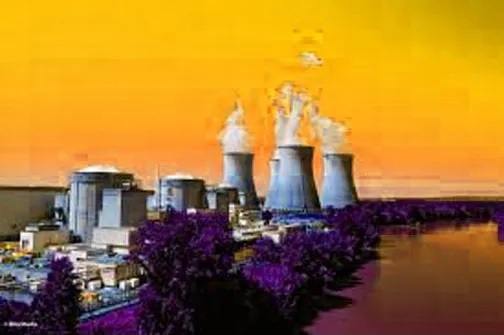
Bulgaria’s Kozloduy nuclear power plant will reduce output from one of its reactors as the Danube River level continues to fall amid an unprecedented drought, Bulgarian News Agency BTA reported Thursday.
The energy ministry said it would “preventively lower the output of Kozloduy’s Unit 5 by some 120 MW on August 21” to ensure the plant’s safe operation.
Unit 5 has a generating capacity of just over 1,000 MW.
It is the first time in the plant’s 52-year history that extreme weather conditions have forced it to reduce output, the report underlined.
The ministry said the Danube was forecast to continue receding in the Bulgarian section of the river.
Kozloduy uses Danube water to cool steam in condensers in the non-nuclear part of the plant. The river is not used to cool nuclear reactors.
Water is supplied through the plant’s shore-based pumping station, which was designed to maintain the necessary supply even when river levels are low.
A crisis management working group was established at Kozloduy in early June as water levels began to fall and forecasts indicated prolonged drought across western and central Europe.
The plant has continued operating normally and supporting the national and regional energy system, said the ministry, while several nuclear plants along the Danube have reduced output or shut down.
Hungary’s Paks nuclear plant reduced production to critically low levels earlier this month as the Danube reached record lows.
In Romania, Unit 1 of the Cernavoda nuclear plant was shut down at the end of July, while a nationwide state of heightened alert was declared in the energy sector for August.
South Korea helps Egypt expand Russian-built nuclear plant
South Korea’s growing role in Egypt’s Russian-built El Dabaa nuclear plant has helped shield the project from sanctions and enabled expansion
The New Arab Staff, 22 August, 2026
South Korea’s growing role in Egypt’s Russian-built El Dabaa nuclear power plant has helped Cairo shield the project from Western sanctions and paved the way for a major expansion of the site, according to senior Egyptian energy officials.
Electricity and Renewable Energy Minister Mahmoud Esmat said in televised remarks that Egypt was studying the addition of at least two more nuclear units at El Dabaa, with the possibility of eventually expanding the complex from four reactors to six or even eight.
Senior sources at Egypt’s Ministry of Electricity and Energy told The New Arab that the proposed expansion reflected “a state of confidence” surrounding the project following South Korea’s entry as a partner alongside Russia’s Rosatom.
They said South Korean involvement had enabled Egypt to gain access to Western-linked technology while limiting the exposure of companies working on El Dabaa to US and European sanctions imposed on Russian firms following Moscow’s invasion of Ukraine in 2022.
According to the sources, the South Korean government is expected to provide financial and technical support for future expansions of El Dabaa, alongside its existing role in completing control systems and turbine-related work.
The arrangement has allowed Russia to retain control of the project’s nuclear core while South Korean companies handle major elements of its conventional power-generation infrastructure.
The sources said South Korea had taken on work that US company General Electric did not proceed with following the outbreak of the Ukraine war.
Egypt currently plans four Russian-designed VVER-1200 reactors at El Dabaa, with a total capacity of 4.8 gigawatts.
The proposed expansion could eventually increase capacity to 9.6 gigawatts by 2040, according to the sources.
Nuclear energy experts said Esmat’s remarks “open the door to transforming El Dabaa from a four-unit plant into a larger nuclear complex”.
No cost estimate, reactor models or timetable have yet been announced for the additional units.
However, the experts said Cairo increasingly views El Dabaa as “the nucleus of a long-term nuclear programme, rather than a standalone project that ends with the operation of four reactors”.
South Korea’s involvement in the project expanded rapidly after Russia’s invasion of Ukraine complicated Western-linked supply chains.
Experts at Egypt’s Nuclear Energy Authority told The New Arab that Russian nuclear energy company Rosatom accelerated moves to bring Korea Hydro & Nuclear Power into El Dabaa as the key supplier for the turbine island and associated control systems for the four Russian units.
Korea Hydro & Nuclear Power signed a $2.25 billion contract with Russia’s Atomstroyexport in Cairo on 25 August 2022, months after the outbreak of the war and the introduction of Western sanctions…………………………………………………
https://www.newarab.com/news/south-korea-helps-egypt-expand-russian-built-nuclear-plant
Floating 10 MW nuclear reactor proposed for California.

By Efosa Udinmwen, 22 Aug 26, https://www.techradar.com/pro/floating-10-mw-nuclear-reactor-proposed-for-california-barge-mounted-smr-aims-to-power-15-000-homes
The Port of Long Beach is exploring small modular reactors that could eventually supply electricity for port operations and ships.
Bluecore Energy, a startup building compact nuclear reactors meant to operate from floating barges, is leading the proposal.
This marks a potential return of nuclear power development in California after nearly five decades under state restrictions.
A startup’s barge-based reactor plan
Bluecore has leased space at Berth 48 within the Port of Long Beach, where it intends to develop and test its floating reactor system.
The company’s initial system is rated at 10 MWe, a capacity the startup says can scale through pairing multiple units together, an approach which suits continuous port operations partly because individual reactors are designed to run for years on a single fueling cycle.
Iranian hackers shut down UK power plant
Telegraph 22nd Aug 2026
Unprecedented cyber attack believed to be most successful of its kind
Iran shut down a British power plant for four days in an unprecedented cyber attack, The Telegraph can disclose.
It is thought to be the first time that hackers affiliated to the Iranian regime have succeeded in closing down such a facility in the UK, and is believed to be the most successful cyber attack of its kind.
The Telegraph understands that the incident took place at the same time as a series of attacks on US water infrastructure last month, which affected 12 states and caused concern in the White House.
Iran shut down a British power plant for four days in an unprecedented cyber attack, The Telegraph can disclose.
It is thought to be the first time that hackers affiliated to the Iranian regime have succeeded in closing down such a facility in the UK, and is believed to be the most successful cyber attack of its kind.
The Telegraph understands that the incident took place at the same time as a series of attacks on US water infrastructure last month, which affected 12 states and caused concern in the White House.
Advertisement
British officials refused to be drawn on which power plant had been affected, citing security concerns, but it is understood that the facility was disabled for four days while staff fought to bring it back online.
It is understood that the plant affected was relatively small and that the outage had no impact on the UK’s wider power supply or energy generation.
In response, the Government briefed the chief executives of power companies and wrote to businesses with advice, direction and next steps……………………………………………………………………………………………………………… https://www.telegraph.co.uk/news/2026/08/22/iranian-hackers-shut-down-uk-power-plant/
‘Can we justify £15bn on nuclear weapons?’

By Andrea Dow, Rothesay1, 20 Aug 2026,
https://argyllbute24.co.uk/can-we-justify-15bn-on-nuclear-weapons/
EVEN if you believe in the logic of Mutually Assured Destruction (MAD). Even if you think a nuclear base on the Clyde is a deterrent rather than a likely potential target.
Even if the phrase “increased readiness, availability and lethality” gives you a warm fuzzy glow rather than prostrating you with terror – does £15 billion not seem a lot to spend on something supposedly designed to never be used?
Aside from the repeated leaks of tritium and the inevitable cover-ups by both the MOD and Scottish Environmental Protection Agency (military bases are exempt from civilian pollution controls), the watchdog organisation, the Infrastructure and Projects Authority, published a damning report stating the project is in doubt, with major risks or issues apparent in a number of key areas, having “major issues with project definition, schedule, budget, quality and/or benefits delivery which at this stage do not appear to be manageable or resolvable”.
Faslane is the home of the nation’s nuclear deterrent and the new generation of hunter-killer submarines. Each submarine carries up to 16 missiles. Each missile carries up to eight warheads. Each warhead has a yield of 100 kilotons of TNT, six times greater than the bomb that destroyed Hiroshima – is it just me, or does this make the case for increased lethality seem a little shaky?
To quote the independent organisation Scientists for Global Responsibility, “Nuclear weapons are the epitome of an unsustainable security strategy and create enormous risks for humanity and the global environment.” The case for abandoning this grandiose project and committing the UK to a future without weapons of mass destruction is becoming stronger by the day.
Maybe I’m just a pessimist, but as a child the regular sight of nuclear subs patrolling the Clyde during the Cold War did not make me feel safe.
They were the stuff of nightmares – nightmares I’d hoped we were beginning to collectively waken from. Apparently not so. And despite the clear and obvious risks to all, some few will continue to benefit richly from this folly (just as they will from the proposed data centre at Ardyne). Just another example of what author Kapka Kasabova calls the “genocidal, ecocidal greed” of the global industrial-military complex whose appetites are incompatible with the survival of a human Earth.
Frightened anyone? Or is it just me?
1 This Month
23-25 October – on Zoom – World BEYOND War’s annual global conferenc


Shut down the radiation-damaged Heysham nuclear reactors now
To see nuclear-related stories in greater depth and intensity – go to https://nuclearinformation.wordpress.com

Say No to NASA’s Reckless Nuclear Reactor on the Moon
Say No to NASA’s Reckless Nuclear Reactor on the Moon

-
Archives
- October 2026 (231)
- September 2026 (339)
- August 2026 (330)
- July 2026 (355)
- June 2026 (287)
- May 2026 (306)
- April 2026 (356)
- March 2026 (251)
- February 2026 (267)
- January 2026 (308)
- December 2025 (358)
- November 2025 (359)
-
Categories
- 1
- 1 NUCLEAR ISSUES
- business and costs
- climate change
- culture and arts
- ENERGY
- environment
- health
- history
- indigenous issues
- Legal
- marketing of nuclear
- media
- opposition to nuclear
- PERSONAL STORIES
- politics
- politics international
- Religion and ethics
- safety
- secrets,lies and civil liberties
- spinbuster
- technology
- Uranium
- wastes
- weapons and war
- Women
- 2 WORLD
- ACTION
- AFRICA
- Atrocities
- AUSTRALIA
- Christina's notes
- Christina's themes
- culture and arts
- Events
- Fuk 2022
- Fuk 2023
- Fukushima 2017
- Fukushima 2018
- fukushima 2019
- Fukushima 2020
- Fukushima 2021
- general
- global warming
- Humour (God we need it)
- Nuclear
- RARE EARTHS
- Reference
- resources – print
- Resources -audiovicual
- Weekly Newsletter
- World
- World Nuclear
- YouTube
-
RSS
Entries RSS
Comments RSS

