It’s Getting So Hot That Nuclear Plants Are Being Forced to Power Down

Governments are freaking out.
By Joe Wilkins Aug 14, 2026 , https://futurism.com/science-energy/europe-heat-wave-water-nuclear-plants
Nuclear energy is often touted as an ultra-efficient alternative to dirtier energy sources like coal or natural gas. Expanding the world’s capacity for atomic power is the key to avoiding a cascading climate disaster, some of the industry’s proponents say — but what if it’s too late?
With record setting heatwaves scorching Europe, water levels in the continent’s major rivers are reaching all-time lows. While receding water levels are a huge boon for European archeologists as ancient ruins surface for the first time in centuries, the situation is causing massive headaches for nuclear engineers, who have had to scramble to power down nuclear energy facilities across the continent.
As German broadcaster Deutsche Welle reported, facilities like the two gigawatt Paks nuclear plant in Hungary have come close to powering down completely, as a critical lack of water flowing from the Danube threatened the facility’s ability to cool its reactors. That’s a major crisis, because in any given year, the Paks plant generates nearly half of the country’s total electricity supply.
The Hungarian government is now scrambling to keep things running, ABC reported, mobilizing engineers to deliver some 145,000 cubic meters of rocks into the riverbed to manually slow the current and conserve water upstream.
The situation isn’t much better in Romania, where the state-owned nuclear power producer may be forced to completely shut down its last remaining reactor, per Reuters. That’s not for lack of trying: earlier this month, the Romanian navy detonated 180 kilograms of explosives meant to redirect water from the Danube to cool its nuclear reactors.
Meanwhile in France, a combination of extreme drought and a recurring jellyfish invasion have reduced the nation’s nuclear energy production by 20 percent, though a more diversified energy grid means the situation isn’t quite as hairy as those in Hungary or Romania.
With yet another heat wave already on the horizon, Europe’s nuclear energy woes may really just be the tip of the iceberg.
We Talk: Japanese residents warn against ‘nuclear sharing’
Global Stringer, 14 Aug 26, https://news.cgtn.com/news/2026-08-14/We-Talk-Japanese-residents-warn-against-nuclear-sharing–1PB6c6oYkp2/p.html
August 15 marks 81 years since Japan announced its surrender in World War II.
Since taking office in October last year, Prime Minister Sanae Takaichi’s government has pushed to revise Japan’s three national security documents and has repeatedly called for a review of the “no introduction” clause of the Three Non-Nuclear Principles. The moves have sparked concern in Japan and abroad over the future direction of the country’s nuclear policy.
A poll released by the Japan Association for Public Opinion Research on August 1 found that 76% of respondents support maintaining the Three Non-Nuclear Principles of not possessing, not producing and not permitting the introduction of nuclear weapons.
A CGTN stringer in Tokyo spoke with local residents about the Three Non-Nuclear Principles, the concept of nuclear sharing, and the possibility of Japan allowing the United States to deploy nuclear weapons on its territory.
One interviewee, Hikaru Kusano, said Japan should never engage in nuclear sharing, warning that it would pose a threat to other countries. Another respondent, Masahiro Sawa, argued that nuclear weapons can never guarantee security and that a world free of nuclear weapons may be the best path forward.
The Microreactor Miracle Meets a Morphing AI-Nuclear Future
questions about whether the country will achieve its long-term core nuclear deployment objectives. And over-relying on a boost from the micro reactor miracle offers meager dividends when deployment is paramount.
August 15, 2026, By: Kenneth Luongo, https://nationalinterest.org/blog/energy-world/the-microreactor-miracle-meets-a-morphing-ai-nuclear-future
The microreactor milestone is real, but shifting AI models, China’s challenge, and deployment delays could complicate America’s nuclear ambitions.
It was impressive that four microreactor start-up companies beat the clock and achieved reactor criticality in compliance with the Trump administration’s arbitrary July 4 Reactor Pilot Program (RPP) deadline. But these reactors are years away from deployment, and the excessive swaggering associated with this modest achievement is out of step with the quavering nuclear energy realities ricocheting off a rapidly evolving artificial intelligence (AI) system.
US Microreactor Achievements
Of the four reactors that achieved zero power, only Antares has an identified market application beyond this demonstration. Its Mark-1 reactor has been selected as a pilot technology for powering Joint Base San Antonio, Texas.
The Antares Mark-0 reactor, which is the zero-power test reactor and prototype for the commercially oriented R1 Mark1, was the first to meet the criticality deadline on June 4 at Idaho National Laboratory (INL). It uses High Assay Low-Enriched (HALEU) TRistructural isotropic (TRISO) fuel and is sodium-cooled. The projected commercial reactor can provide 100 kilowatts to 1 megawatt (MW) electric power. Beyond its work with the Department of Defense (DOD), Antares also has been working with the National Aeronautics and Space Administration (NASA) on potentially powering a Moon base.
Valar Atomics’ Ward-250 achieved criticality on June 18 in Utah and claimed it produced 10 kilowatts (kW) of thermal output. It had previously announced a criticality test at Los Alamos National Laboratory in November 2025. The Ward-250 is a TRISO-fueled high-temperature gas reactor (HTGR) that uses helium as a coolant. After the test, Valar announced a partnership with Nvidia to explore powering AI data centers and stated that its evolving commercial unit could be “deployed by the hundreds at ‘gigasites’” that could support manufacturing as well as energy production.
Deployable Energy, a year-old company, met the criticality mark on June 30 at Idaho National Laboratory (INL). The company’s founder reportedly delivered the reactor core in the bed of a Ford F-150 truck. The reactor is part of the Nuclear Energy Launch Pad initiative at INL, which is designed to carry the RPP into the future. The reactor is a water-moderated, helium-cooled design using 4.9 percent enriched fuel. It is considered a “nuclear battery” and would max out at 1 MW. It is designed to fit in a 20-foot shipping container and be dropped at any location.
Aalo Atomics Aalo-X Critical Test Reactor sneaked in under the criticality deadline at midnight on July 4 at INL. The test reactor included a full-scale core and was designed to demonstrate key components that will be used in the Aalo-X, a low-enriched uranium (LEU) fueled, sodium-cooled 10 MW reactor. The goal is to deploy groups of these reactors in 50 MW Aalo Pods to support commercial data centers. Aalo recently formed a strategic partnership with Crusoe, a vertically integrated AI infrastructure provider, to “validate nuclear power’s effectiveness with AI workloads” at INL.
The Mutating AI Data Center Model
With the microreactor milestone behind them, the Trump administration and reactor developers now face an evolving landscape for nuclear energy. AI data centers have been viewed as the top driver of America’s energy growth and ideal for pairing with nuclear energy. Projections indicate these centers could add 100 gigawatts (GW) to the US grid by 2030.
But the data center opportunity is rapidly morphing, and opposition is growing; the now-dominant American AI model is under pressure at home and abroad. That raises questions about what role new nuclear power ultimately will play as the AI arena evolves.
The assumption has been that the hyperscalers, including Apple, Amazon Web Services, Microsoft Azure, and Google Cloud Platform, will build massive data centers as fast as they can to support US AI frontier modelcomputing growth. One assessment identified the data center build time as roughly two to three years
But the frontier model concept and its computing campuses are under pressure.
Alex Karp, CEO of Palantir, has been on a recent crusade criticizing the American AI frontier model as a trap that requires businesses to provide their intellectual property (IP) to AI’s leading companies like Anthropic and OpenAI. Karp claims that these models’ architecture creates an “addiction” among users and allows the system provider to absorb proprietary corporate data that can be used to compete against their current customers in the future.
He argues that companies should build their AI systems on models they own, training them on their proprietary content and keeping their data under their control. He also advocates for an “application layer” his company has developed with NVIDIA that can protect an enterprise’s IP. If Karp’s concept catches on, and Meta seems to have taken note, it could impact the mega data center build-out, reducing the number required and downsizing their power requirements. That could be a challenge for some leading nuclear reactor companies betting on the data center boom, or it could favor dial-an-output modular reactors if the costs are competitive.
China’s Dual AI Challenge
A version of the Karp concept seems to have already been adopted by China, which, because it is already closing the quality gap with the best US AI models, now poses a double threat to US dominance.
China is giving away fast, cheap open-source AI models. These free Chinese AI platforms are popular in Africa and Latin America but are also being used by US and European companies, including Siemens, DoorDash, and Airbnb.
Of course, one goal of China is to allow companies to easily build systems on their platform in order to serve geopolitical objectives and create dependencies it can exploit in the future. The US National Institute of Standards and Technology (NIST) evaluated China’s DeepSeek AI model and found that its AI offerings advance Chinese Communist Party narratives. It concludes that China’s DeepSeek “remains a leading open weight model developer and has contributed to a rapid increase in adoption of PRC [People’s Republic of China] models globally.” It cautions that the expanding global use of these models “May pose a threat to application developers, to consumers, and to US national security.”
This approach by AI is similar to China’s Belt and Road Initiative (BRI), which has helped the country capture hundreds of infrastructure projects across over 140 countries, resulting in deep relationships and financial dependencies, particularly with emerging economy nations. And while its energy projects so far have heavily tilted toward fossil fuels, BRI’s relationships and financial model enhance China’s position as a future provider of new nuclear energy in the Global South, posing a threat to the future US export of small reactors and creating worry for the US political, commercial, and national security establishment.
Lagging Nuclear Reactor Technology and Scaling Challenges
Even if the US data center boom were to play out as planned, there are questions about when and whether new US nuclear power will be ready to power it.
So far, the hyperscalers have modestly invested in small modular reactors (SMRs), but they are unlikely to be available in time for a near-term data center boom. If the buildout is over by the early 2030s, most SMRs will still be on the sidelines.
As a hedge, these companies have banked on the resurgence of mothballed nuclear power plants like Three Mile Island in Pennsylvania and Palisades in Michigan. Both of those projects are estimated to deliver new power before the end of this decade for a combined 1.6 GW. What the hyperscalers have not done is back construction of new large reactors despite the fact that a single Westinghouse AP-100 can provide over one GW of power.
The US government wants 10 new AP-1000s under construction by 2030, but its $80 billion strategic partnership with Westinghouse and its commitment to provide $17.5 billion in loans for long lead items haven’t attracted the necessary additional investment and commitment required from the private sector.
The US government wants 10 new AP-1000s under construction by 2030, but its $80 billion strategic partnership with Westinghouse and its commitment to provide $17.5 billion in loans for long lead items haven’t attracted the necessary additional investment and commitment required from the private sector.
This reticence reflects a cost-overrun risk aversion from domestic electric utilities and Wall Street. In response, the administration is repurposing federal lands to create data center-nuclear power campuses. And it has turned to allies such as South Korea and Japan to jumpstart the process with foreign cash derived from bilateral trade and tariff deals.
But that avenue also doesn’t seem to be working. The Trump administration has been frustrated with the lack of progress on the nuclear energy component of the $350 billion South Korean commitment to invest in the United States, and with Japan, it has found that its involvement in a $40 billion nuclear power project is running aground over nuclear liability concerns.
With less than 30 months left in Trump’s term, and the prospect of a hostile House of Representatives sucking the air out of his agenda, there is an urgency in rethinking the Trump administration’s nuclear deployment policy. The dependence on a rapidly evolving AI and data center market leaves questions about whether the country will achieve its long-term core nuclear deployment objectives. And over-relying on a boost from the micro reactor miracle offers meager dividends when deployment is paramount.
About the Author: Kenneth Luongo
Kenneth N. Luongo is a recognized innovator, entrepreneur, and leader in global nuclear energy and transnational security policy. He is the president and founder of the Partnership for Global Security (PGS). He has been a TEDx presenter, written over 100 articles, including in The New York Times and Foreign Affairs, and engaged extensively with global media, governments, and audiences around the world on nuclear energy and transnational security challenges and responses. He was formerly a senior advisor to the secretary of energy and a professional staff member on Capitol Hill.
US says lower oil prices, not Iran’s nuclear program, are now top priority in war
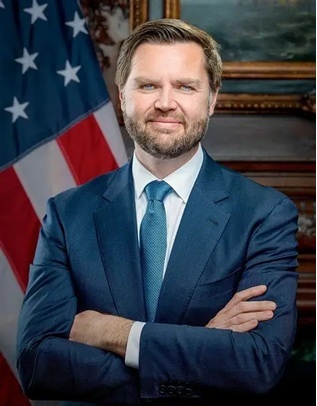
The top US priority now in the Iran war is no longer its nuclear program but to bring gasoline prices down for American consumers, the vice president said Thursday, with the treasury secretary adding that new economic punishment to wear down Tehran is imminent.
The comments by Vice President JD Vance and Treasury Secretary Scott Bessent illustrate the powerful leverage Tehran has gained by shutting down the Strait of Hormuz.
Preventing Iran from obtaining a nuclear weapon – consistently touted by President Donald Trump as his main reason for the war – now takes a back seat to getting oil flowing again freely through the strait, Vance said on Fox News.
Vance’s comments underscored the stark reality that the war now centers on control of the strait, the critical fuel supply conduit that was open before Trump started the war along with Israel in late February.
Iran has all but shut it down in retaliation and thus found a crucial bargaining chip against Trump as he struggles to find a way out of the war and shies away from resuming large-scale attacks.
The 80-year-old president’s approval rating is plummeting, the war is unpopular among Americans and midterm elections are approaching in November.
Republicans fear Trump and the war, which has caused gasoline prices to soar, will cost them their control of Congress.
“I know that oil is down today and it’s way down from the highs in the early days of the conflict,” Vance said on Fox News. “That’s goal number one – keep oil and gas cheap for Americans all over our country.”
“And then obviously goal number two is ensure that Iran never gets a nuclear weapon,” he added.
‘Low-keying it’
The vice president has been among the members of the administration most skeptical of the offensive launched against Iran in late February.
These remarks, however, appear to confirm the more cautious approach now favored by the US president, which involves maintaining strong economic pressure on Iran by blockading its ports and preventing it from selling oil.
Heralding more economic punishment, Bessent threatened to subject Iran to economic isolation “like the world has never seen before.” He said new measures are expected next week.
Only days ago Trump had said an agreement to reopen the strait was imminent. Now his administration seems to be digging in, with diplomacy on hold as he hopes economic suffering will cause Iran to yield.
“We are low-keying it,” Trump said Sunday. “We are only semi-negotiating with them. We are just watching Iran with its huge inflation and the fact they have no money,” Trump told the news outlet Axios.
The US military reportedly burned through stockpiles of costly high-tech missiles and other weapons in the months since the war started at a cost of billions and is now reportedly running low, limiting Trump’s options for resuming attacks on Iran.
“Sometimes we’re focused on the energy piece of it because we want Americans to be able to afford the price of oil and gas. Sometimes we’re obviously focused on the military… on the nuclear program,” Vance also said.
Trump had said recently he would hold off on attacking Iran again only if an agreement were reached quickly to reopen the strait.
Now Iran has set a list of conditions for reopening the passageway that the Trump administration is unlikely to accept: an end to the war on all fronts, the lifting of the US blockade of Iranian ports, the end of sanctions, the release of frozen assets and compensation for wartime damage.
Those conditions echo the terms of a so-called memorandum of understanding which was reached in June and collapsed as fighting resumed. It included a provision to create a $300 billion reconstruction fund for Iran.
The 100,000-year plan for Finland’s and Sweden’s nuclear waste turns on something very small — whether bacteria half a kilometre underground can make enough sulphide to eat through five centimetres of copper

Why don’t i find this terribly reassuring?
When I wonder aboutall the countries busily producing radioactive trash, why doesn’t this article make me feel that it is all OK?
Two centuries of engineering innovation may ultimately depend on whether microorganisms in the bedrock can generate enough corrosive compounds to breach the copper canisters meant to contain radioactive waste for the next hundred thousand years.
By Space Daily Editorial Team · Edited by Mal James, August 14, 2026, https://spacedaily.com/m-the-100000-year-plan-for-finlands-and-swedens-nuclear-waste-turns-on-something-very-small-whether-bacteria-half-a-kilometre-underground-can-make-enough-sulphide-to-eat-through-five-centim/
he strange thing about the biggest engineering promise being made in northern Europe right now is that it does not really hinge on the steel, the concrete, or the granite. It hinges on how fast a population of microbes, living in near-total darkness half a kilometre down, can turn one chemical into another.
Finland and Sweden are both burying spent nuclear fuel for good, using a Swedish method called KBS-3. It wraps three barriers around the waste: a copper canister with a cast-iron insert inside it, a thick jacket of packed clay called bentonite, and then the bedrock itself.
In Finland the repository is Onkalo, about 430 metres down. In Sweden it sits near Forsmark at roughly 500 metres. The copper shell around each canister is 50 mm thick, five centimetres of it. The design is supposed to keep the waste sealed off for at least 100,000 years.
We are not corrosion scientists, microbiologists, or nuclear engineers. What follows is reading and reflection on the published research, not a verdict on whether these repositories are safe. The studies cited are mostly lab experiments and modeled projections, and a lab result about clay in a test cell is not a guarantee about a specific canister in the ground 40,000 years from now.
What 100,000 years actually asks of a metal box
It is hard to hold the number in your head. These canisters need to outlast everything humans have ever built, several times over, with no maintenance and no one watching.
The clever part of the design is that copper is not being asked to do the impossible. In pure water with no oxygen and no aggressive chemistry, it just sits there. The catch is that the ground is not chemically dead. So the real question was never “is copper strong?” It was “what, specifically, in this rock and this water can attack copper over geological time?” The answer comes down to a surprisingly short list.
Why the enemy is sulphide, not oxygen
When the canisters go into the ground, there is a short window, perhaps a few years to a few decades, where trapped oxygen can corrode the copper a little. Then the oxygen gets used up and never comes back. From that point on the canister lives in an oxygen-free world for essentially its entire life. By one estimate, a KBS-3 canister spends more than 99.99% of its expected service life in these oxygen-free conditions.
That flips the corrosion problem on its head. Oxygen, the thing that rusts most metals, barely matters here. The agent that matters in an oxygen-free repository is sulphide, and sulphide is not just sitting in the rock waiting. Most of it has to be made by living things.
Deep groundwater carries dissolved sulphate. Sulphate on its own leaves copper alone. But a group of microbes called sulphate-reducing bacteria breathe sulphate the way we breathe oxygen, and their waste product is sulphide. That is the chemical that can actually corrode the copper. So the load-bearing question in a 100,000-year safety case turns out to be biological: how busy are the bacteria, and how much of their sulphide reaches the metal.
Meet the bacteria, and what they need
Sulphate-reducing bacteria are ancient, widespread, and perfectly at home in deep oxygen-free groundwater. Give them dissolved sulphate, an energy source, and liquid water they can move around in, and they will make sulphide. That this kind of microbe-driven corrosion is real, and can move fast in the right conditions, is not hypothetical. An in-ground study in packed bentonite soaked with groundwater at repository depth measured active sulphide production by bacteria, with the rate dropping sharply as the clay was packed to higher densities.
So why is anyone confident the canisters last? Because the whole design is arranged to deny the bacteria the one thing they need most: room to work and a clear path to the metal. That is the job of the clay.
The bentonite bottleneck
The bentonite around each canister is not passive packing material. When it gets wet it swells into a dense, gel-like barrier. Two things happen at high density. The pores get so small and the water so tightly held that bacteria struggle to live and move. And sulphide can no longer flow freely; it can only creep through slowly.
A 2000 lab study led by Karsten Pedersen and colleagues tested exactly this. They reported that “sulphate-reducing bacteria were found to be active, reducing sulphate at the lowest density studied, 1.5 g cm-3, but sulphate reduction activity ceased at higher densities.” The paper’s own conclusion is carefully hedged: at full repository packing, it says the bacteria will most probably not be able to induce corrosion. That is one study, on Swedish KBS-3 clay, and it reads as suggestive rather than final. But it points at something the whole safety case leans on: squeeze the clay hard enough and the microbial factory inside it may largely shut down.
That still leaves sulphide arriving from the surrounding groundwater. Here the argument shifts from biology to plumbing. A 2017 review by Fraser King and colleagues argues that the long-term corrosion rate is set not by how eagerly copper reacts, but by how slowly sulphide can travel to its surface through the clay. As long as the sulphide supply stays low, the corrosion is throttled to a crawl.
Put those numbers into a 100,000-year projection and the developers reach a comfortable conclusion. SKB’s own review estimates that, counting the sulphide already in the deposition holes plus what can seep in from groundwater, the copper corrosion depth after 100,000 years comes to less than 5 mm. Against a 50 mm wall, that leaves a large margin.
Closing thoughts
So the summary is a split one. That copper resists corrosion in an oxygen-free repository is well supported. That dense bentonite slows the bacteria and throttles the sulphide is supported by lab work, with the caveat that it is lab work. That the resulting rate holds steady for 100,000 years is a modeled projection, reasonable and carefully argued, but a projection all the same. The five centimetres of copper is the easy part. The hard part is a number about how much a colony of bacteria, buried in clay half a kilometre underground, can do over a span of time longer than civilisation.
Benjamin Netanyahu describes UK as ‘first Islamic republic to get a nuclear weapon’
Israeli PM criticised by political rival for attacking an international ally and overseeing ‘horrific diplomatic failure’
Emma Graham-Harrison in Jerusalem and Rowena Mason, https://www.theguardian.com/world/2026/aug/14/benjamin-netanyahu-describes-uk-first-islamic-republic-to-get-nuclear-weapon
The Israeli prime minister, Benjamin Netanyahu, called the UK “the Islamic republic of Britain” in a podcast interview, where he also described the country as the “first Islamic republic to get a nuclear weapon”.
His comments, made during an interview for Israel’s army radio, played into a common far-right Islamophobic trope about Britain’s small Muslim population.
Netanyahu praised positive coverage of Israel by the journalist Randolph Churchill, the son of former prime minister Winston Churchill, over half a century ago, then said: “Go find that in today’s Britain, in what is called the Islamic republic of Britain.”
Rather than challenge Netanyahu’s comments, the host questioned whether he is unfairly singling out the UK, asking: “Isn’t all of Europe is like that?”
Netanyahu replies by doubling down. “Yes, but you know someone said the first Islamic republic with nuclear weapons will be the Islamic republic of Britain.”
Pakistan, officially the Islamic Republic of Pakistan, has had a nuclear arsenal since the 1990s.
Relations between the UK and Israel have been increasingly strained in recent months, especially since Andy Burnham took over in No 10. Shortly before becoming prime minister, he apologised for Labour’s initial response to Israel’s military action in Gaza, saying the party “didn’t get it right” and needed to “do better” under his leadership, signalling a significant shift in the UK’s approach to the Middle East.
In July, he said he would “do more to put pressure on the Israeli government”, including through further sanctions on individuals and entities, as well as a potential ban on the trade of goods with illegal settlements.
The US vice-president, JD Vance, made remarks similar to Netanyahu’s comments during the 2024 presidential campaign, saying the UK could become the first “truly Islamist country that will get a nuclear weapon”.
London’s mayor, Sadiq Khan, has also been a frequent target of racialised attacks from rightwing leaders abroad, including Donald Trump, seeking to gain political advantage from Islamophobic lies.
Muslim leaders in the UK have said that hate crimes targeting their community are hitting new levels amid a rise in far-right rhetoric and growing support for anti-immigrant political parties.
Avi Dabush, who is running for the Knesset with Israel’s opposition Democrats party, attacked Netanyahu for mocking a critical ally at a time when Israel faces unprecedented global isolation. “That’s what happens when there’s a horrific diplomatic failure, and an inability to rally countries in the world in favour of our interests,” he said in a social media post.
Leading the most far-right government in Israel’s history, Netanyahu has alienated traditional allies while aligning with far-right figures, including some with a history of antisemitism.
The British Foreign, Commonwealth and Development Office said: “These comments are completely unacceptable and we have raised them with the Israeli government.”
The Prime Minister’s Office did not respond to requests for comment on whether Netanyahu’s statement represented the official position of the Israeli government.
‘Menace to the World’: With Iran Talks Stalled, Trump Vows to Declare Strait of Hormuz a US Territory

“He absolutely needs to be impeached, removed, and locked up,” said one progressive critic, calling the president “a completely unhinged lunatic.”
Jessica Corbett, Aug 14, 2026, https://www.commondreams.org/news/donald-trump-strait-of-hormuz
In yet another remark that triggered alarm around the world, President Donald Trump said Friday that he planned to declare the Strait of Hormuz—which Iran has blockaded for much of the past five months over his and Israel’s illegal war—a US territory.
Just two days after the latest inflation figures demonstrated, in the words of one expert, “Trump’s catastrophic mismanagement of our economy,” the president ignored the economic fallout from his war, which led Iran to restrict ship traffic through the strait, driving up fuel prices worldwide.
“We’re bringing the prices way down,” he told a Long Island crowd. Trump also said that “after we finish defeating Iran, which is being very badly defeated, pretty soon, I’ll be declaring the Hormuz Strait a territory of the United States.”
Some critics responded to clips of the comments on X by mocking Trump—an infamous liar. Congressman Ted Lieu (D-Calif.) quipped, “Awesome! And the Easter Bunny is real.”
Ryan Costello, policy director at the National Iranian American Council, said that “this jingoism rings a bit hollow when most of the US bases near the strait have been essentially abandoned due to danger from Iranian missiles and drones.”
Progressive political commentator Kyle Kulinski declared that “he absolutely needs to be impeached, removed, and locked up. He’s a completely unhinged lunatic, and he’s a sadistic violent menace to the world.”
After high initial claims about lower prices, Trump admitted that gasoline has soared due to his war, but said: “For you to pay a tiny little bit more for your gasoline, just remember, you’re doing it so that a very evil country cannot have a—a country, really it’s the No. 1 state sponsor of terror in the world—we don’t want to have them have a nuclear weapon. So, remember that when you have to pay a little bit more, you’re at $4, it’s OK. I’ll never apologize. I did the right thing.”
Trump’s threat over the strait between the Persian Gulf and the Gulf of Oman came just before a monthlong ceasefire between the US and Iran is set to expire on Monday. A senior White House official told Politico that the situation is “static.”
“It doesn’t matter how close or how far we are,” said the official, who has heard no mention of a potential extension of the ceasefire. “What matters is if Iran wants to come to the table and agree to a deal. Right now, they haven’t done that.”
The Associated Press reported Friday that “the Trump administration appears to be reaching out to a broader swath of countries that might be able to help pressure Tehran,” and Ali Vaez, Iran project director at the International Crisis Group, told the outlet that “everyone is just urging both sides to stop this reckless game of chicken.”
In addition to launching an illegal war on Iran in February, and invading Venezuela in January to abduct its president, Trump has made threats against various other nations during his second term, including Canada, Cuba, Colombia, Greenland, and Mexico. He’s also threatened to seize the Panama Canal and killed hundreds of people by blowing up boats allegedly smuggling drugs.
It’s Time For Movements To Rethink Social Media
What you post no longer goes to the people who chose to hear from you — it goes wherever the algorithm sends it, if it goes anywhere at all. Attention is concentrated on a handful of corporate platforms whose incentive is to keep you scrolling, not to help you organize.
August 15, 2026 , Mehran Khalili Waging Nonviolence, https://scheerpost.com/2026/08/15/its-time-for-movements-to-rethink-social-media/
Movements can still find people on social media. But the real organizing has to happen somewhere else — and getting people there is the part we keep skipping.
Last September I made a short video that was by far the most viral piece of content I’ve ever put out.
I can’t trace all the views, but at least a million people watched it across Instagram and TikTok, and possibly elsewhere. Neighbors in Athens, Greece told me they’d come across my face in their feed; Chinese accounts captioned the video and reposted it. I felt like I’d made a dent in the universe and — I’m not going to lie — a little bit special.
The video wasn’t pop wisdom or a dance routine. It had a job to do: get people to sign a petition, created by DiEM25 and Progressive International, to block Germany’s genocide-enabling former foreign minister, Annalena Baerbock, from becoming president of the U.N. General Assembly.
And on that, it failed. By the end of my week of internet mini-fame, the number of signatures had barely shifted. It had 49,000 signatures that July, two months before I posted. I watched it closely that week, and it barely moved. Baerbock got the job – the petition now asks her to resign.
I know a few things about digital communication. For two decades it’s been a key part of what I do — I’ve written about it, researched it, advised movements on it. The petition wasn’t mine, but the video was. And I couldn’t make it work.
Maybe the video could have been packaged better, or the petition link made easier to find. Maybe my pitch was entertaining but not compelling. Maybe a petition was never the right vehicle for stopping Baerbock in the first place.
My organizer friends thought it went great. They congratulated me on the numbers. Nobody asked about the petition.
That last part is what’s bothered me since. Because if a million views and no signatures is considered a success, we’re measuring the wrong thing.
And that opens up a bigger question, one I don’t think we ask often enough: When we use social media in our organizing, what are we actually doing? Is it worth the time we put into it? And is there a way of doing it that actually builds something?
Why we’re all on there anyway
Social media is now a given for organizers, and for good reason. We’ve been using it to fill public squares for well over a decade, from Occupy to Black Lives Matter to last year’s Gen Z protests across the Global South. To get around media blackouts and show the world what power does when it thinks no one’s filming, from Ferguson to Gaza. To make and sink political careers. To tank the stock prices of corporations that deserve it.
Social media has changed how we communicate. It’s forced us to be quicker, sharper and more entertaining. Because attention is scarce — and we’re competing for it against everything else.
But beneath all of this, most of us are working from the same assumption: that platforms are where the work happens. That the posting is the organizing. That if we get the reach, the rest will follow.
What changed
That assumption has a history. Those of us who were around in 2011 will remember that social media held a different kind of promise. We thought we could topple governments and kings, if only we could get enough people onto the streets. And social media was very good at getting people onto the streets, as long as the anger was already there.
Sometimes that was enough. Tunisian dictator Ben Ali went. Egyptian dictator Mubarak went. But when it didn’t hold — when Occupy dissolved, when Tahrir Square gave way to a military government, when the squares emptied — we told ourselves it wasn’t the right moment, or that the repression was too heavy.
My sense is that a lot of us still carry that same idealism about social media’s power. But two things have changed since then.
The first is that governments got very good at pushing us back. They stifle protest at the source now, with monitoring, arrests and social media operations of their own. Movements can still get around censorship, and often do. But the state has learned to work on the same terrain. Amnesty International has documented how last year Kenyan authorities used the same platforms as the Gen Z movement to threaten and discredit organizers. And where that isn’t enough, the state can reach for the platform itself — banning it, as Nepal did in 2025, or changing who owns it, as happened with TikTok in the U.S.
The second is that the platforms themselves changed shape. We went from follower feeds to recommendation feeds. What you post no longer goes to the people who chose to hear from you — it goes wherever the algorithm sends it, if it goes anywhere at all. Attention is concentrated on a handful of corporate platforms whose incentive is to keep you scrolling, not to help you organize.
That second shift is the one we’ve underrated in terms of its impact on our ability to organize. In 2011 we posted, our followers saw it and we organized in the replies — as I did during the Athens riots. Distribution and coordination happened in the same place, at the same time.
Comments still exist, of course. But when a post reaches few of your followers, and reaches strangers instead, the reply thread stops being a place where a group can form. It becomes a place where individuals arrive one at a time and leave the same way.
And yet we still use these platforms like it’s 2011. We shoot things off into the ether and hope something will stick — that people will hear our calls to rise up and somehow self-organize. Or that if we point at a problem often enough, everyone will arrive at the same solutions we did. And each time something or someone does break through, it feels like luck.
That doesn’t mean a post can’t start something. In India, after the chief justice called unemployed young people cockroaches, a student in Boston asked on social media what would happen if all the cockroaches came together. Within weeks the Cockroach Party had formed, with millions of followers and protests in several states, and almost no organizing in between. That was three months ago. They have since won a major victory, but nobody yet knows what it will become.
A spontaneous movement can still form from social media. You just can’t plan for it, and you can’t repeat it. And yet a lot of what we do is built on waiting for it.
The tools changed. Our habits didn’t.
Why we didn’t change with them
In some ways this is understandable. Social media is the shiniest and most responsive part of our toolkit. It’s free. We all know how to use it. We understand the algorithms, the buzzwords, the memes, how to play the game. And above all, it answers immediately.
Nothing else in organizing does that. A meeting doesn’t tell you how it went. A training doesn’t report back for six months. And a list doesn’t tell you anything at all until you ask it to do something.
So we borrow like crazy from the people for whom social media genuinely is the whole job: activist influencers. They build an audience out of perceived closeness — a parasocial relationship, the illusion of intimacy and reciprocity. That’s a real skill, and it has its uses. But an audience is only enough if attention is the goal. It isn’t a base. Nobody shows up on a Tuesday night because they feel close to someone on a screen.
Meanwhile, the dull part of the work gets skipped — the meetings, the follow-up calls, the trainings, the arguments about what we’re actually demanding and from whom. And that’s the part that turns attention into power. As Zeynep Tufekci argues, social media allows networked movements to reach scale without building the capacity that scale used to require.
You can see what that costs. In Bangladesh, Nepal and Madagascar, protests driven by social media brought governments down — but in each case, what filled the space was something that already existed. An established party in Dhaka, a party formed three years earlier in Kathmandu, the army in Antananarivo. Not the movements themselves.
Worse, I think our use of these platforms has begun to shape our strategy. We optimize for what the platform rewards, because that’s the number that gets sent straight back to us. The silent but vital parts of the organizing work get subtly deprioritized — or stop happening at all.
What it looks like when someone gets it right
In February 2025, Americans angry about Elon Musk’s growing political influence started posting about his company, Tesla. Selling their cars, filming these sales and complaining online. It could have stayed there.
What moved it off the feed was small and specific. A Boston University professor saw a showroom protest in New York City run by the group Rise and Resist, held the same action in her own city and posted about it on Bluesky. Others copied her. A few people built a website and a map, and the whole thing ran under one hashtag: #TeslaTakedown.
Tesla’s weak spot was its showrooms: physical places, with addresses and opening hours, belonging to a company whose value rested heavily on its founder’s reputation. Organizers picked a time and stuck to it — they protested at the same place, every week. By March there were protests at Tesla showrooms in more than 250 cities across the globe.
The organizers’ own account of why it worked comes down to two things: Presence beats planning, and regularity builds community. That isn‘t an argument against strategy — choosing the showrooms was a strategy, and a good one. It’s an argument against making people wait while you perfect it. In a moment of anger, people didn’t need a planning document. They needed to be told where to go and what to do.
And the sign-ups ran through Action Network, the organizing platform. Not through the comments of the movement’s social media posts. So when those posts stopped performing, the movement still had its list.
Morocco’s Gen Z protests are another example of how to do it right. Last year brought a wave of protests in Morocco, against corruption, inequality and the state of public services. The movement called itself GenZ 212, after Morocco’s country code.
It got the word out on Instagram and TikTok, but it used the communications platform Discord as its backbone. People were sorted into regional channels, reflecting where they actually lived, and decisions were taken in nightly discussions that ended in votes. One estimate put the number of people on the channels at 250,000 last October.
It was untidy; it was sometimes chaotic. But Discord, which has no recommendation feed, did something for Morocco’s protesters that a feed couldn’t: It enabled them to make decisions under pressure, as a group, and to adapt. When the first days brought arrests, the movement moved its protests into working-class neighborhoods. When deaths followed police intervention, members reconvened to establish what had actually happened and to argue for peaceful protest, countering attempts to paint them as reckless.
Like most of the major Gen Z movements we’ve seen, GenZ 212 was leaderless and decentralized. The distinction here isn’t leaders versus no leaders. It’s whether there’s a room where a question can be settled and a decision can be made.
What these movements have in common
One word: a handoff.
In both cases organizers recruited on social media, just as in 2011. But they didn’t stay there. They moved people quickly into spaces they controlled. Here it happened to be Action Network and Discord; it could as easily have been a mailing list, a forum, a group chat or a room with chairs in it. What matters is that it wasn’t an algorithmic feed.
This reframes the arguments we keep having about which social media platforms to be on and which to quit. Platforms rise and fall, and whichever one holds the attention next, it will still only be the top of the funnel. The better question is: What does a movement need to own so that an algorithm change, or a ban, can’t decapitate it?
Case in point: The Gen Z movement in Nepal, operating on Discord, was able to simply route around the sweeping government ban of social media platforms last year. And the movement brought the government down.
The handoff has to be engineered
But there’s a catch to the handoff: The architecture of the platforms works against you.
Platforms downrate anything that makes people leave the app — that’s the one behavior the whole system is built to prevent. Their architecture says it plainly: Instagram doesn’t let you put a link in a caption. TikTok confines them to your bio. And on Facebook, posts containing a link have gone from about one in seven to one in 66 — by Meta’s own count.
So the handoff can’t be an afterthought. It has to be designed as carefully and deliberately as the hook.
Platforms downrate anything that makes people leave the app — that’s the one behavior the whole system is built to prevent. Their architecture says it plainly: Instagram doesn’t let you put a link in a caption. TikTok confines them to your bio. And on Facebook, posts containing a link have gone from about one in seven to one in 66 — by Meta’s own count.
So the handoff can’t be an afterthought. It has to be designed as carefully and deliberately as the hook.
Be clear about what you’re counting
The other half is measurement, and it’s the half we get wrong most often. The platforms hand us a pile of data for free, and we take it, because it’s there. But going viral is not a win. It was never the goal.
Mehran Khalili is a political consultant and organizer based in Athens, Greece. He writes Subvrt, a newsletter on practical organizing, and works with DiEM25, where he produces and hosts public conversations on how to confront power. He has advised movements and NGOs, and has run grassroots campaigns in Greece. After hours, he makes black-and-white photographs.
‘U.S. Out of Korea’
August 15, 2026, by Bruce K. Gagnon https://space4peace.blogspot.com/2026/08/us-out-of-korea.html
Currently in South Korea national protest actions are being held at U.S. bases around the country as part of ‘U.S. Out of Korea’ campaign being organized by a vast coalition of peace groups.
The numbers vary but it is believed that between 48,000-60,000 US military personnel and their families now live on Camp Humphreys. (When regular war games are held the numbers rise.) This would make Camp Humphreys the largest U.S. base outside of the continental United States.
Much of the base expansion was due to the closing of the Yongsan U.S. Army base in downtown Seoul. That base had become a toxic mess and since closing it is still partially unavailable for new usage due to the U.S. essentially refusing to clean-up the damages. They have left it to the ROK (Republic of Korea) government to deal with. That is after the U.S. forced the South Korean government to pay about 90% of the costs to relocate Yongsan to Camp Humphreys.
Of course one reason for the move was the toxic mess at Yongsan. But other reasons I have heard was to move the base about 90 minutes to the south thus making it more difficult for North Korea to hit the base in any war. Plus the ROK government didn’t like having Seoul as a prime target.
In 2015 I had the honor to participate in some of these events and below is a report I posted on this blog on August 12, 2015.
Bruce
We were taken to U.S.’s Osan Air Force Base in Pyeongtaek for a guided tour by a prominent local activist. We were driven around the perimeter of the bulging base that is now adding a second runway – likely as a result of Obama’s ‘pivot’ of Pentagon forces into the Asia-Pacific to encircle China. (More airfields are needed for Pentagon warplanes.) In order to make the base expansion possible the U.S. has forced the South Korean government to take even more lands from local farmers. Local citizens and their supporters resisted this land grab by waging a long fierce campaign but their villages and rice fields were eventually stolen.
Osan AFB currently has F-16 and A-10 warplanes stationed there as well as the high-flying U-2 spy planes. In addition the air base hosts PAC-3 (Patriot third generation) missile defense systems that are aimed at China. Their job is to take out the retaliatory response following a U.S. first-strike attack against Chinese nuclear forces. (The U.S. has also recently created a Space Force unit at Osan AFB.)
The tour continued to the nearby US Army base called Camp Humphreys that is also undergoing major expansion. Similar to Osan AFB, the U.S. forced the grabbing of two rice-farming villages near the Army base to provide additional lands for the base expansion. These new facilities at Camp Humphreys will allow the U.S. to move its current base inside downtown Seoul southward making it more difficult for North Korea to retaliate against the U.S. bases following a Pentagon attack on the north.
We had dinner with one rice farmer who lost his land when his village was taken. He and others moved to another nearby location but they couldn’t replace their rice farms in the local area. The farmer, now the mayor of his current small village, had to buy new rice land two hours away and must make that long drive back and forth to work in his rice fields. I was told he spent time in prison for “obstructing” the expansion of the Army base during their protest campaign.
The Pentagon currently has in South Korea about 70 bases and military facilities. In order to pay for the current expansion of its bases the U.S. has demanded that the South Korean government pay for the big changes taking place at these military outposts. (My liberal Democrat Congresswoman Chellie Pingree calls it ‘burden sharing by the host nation’.) Thus for the Korean people it is a double insult – not only is their government an occupied client state of the U.S. empire but the people must increasingly pay for unwanted toxic and dangerous U.S. military operations inside of their country.
Our guide today several times, while driving us around the perimeter of the two bases, said, “The U.S. is a bad country.” I immediately thought how much I wished the American people could take this tour and hear his words. This remarkable activist also spent time in prison for trying to protect his people from the American assault on their culture and way of life. I was told that he helps take care of the elderly farmers who were not able to purchase new rice fields and now struggle to find ways to make money in order to survive.
I came away from Pyeongtaek feeling sad, ashamed of the U.S., and disgusted with those many American people who don’t really care what happens to the people around the world who are displaced by U.S. military bases – or are killed by the soldiers that make war from these outposts on behalf of corporate capitalism.
Nuclear police costs rise as stress cases nearly double
UK Defence Journal, By Craig Langford, August 15, 2026
Operating expenditure at the Civil Nuclear Police Authority rose by almost £25 million during 2025-26, while reported workplace stress cases increased by 86% during a year of expansion, site closures and organisational change.
Operating expenditure at the Civil Nuclear Police Authority increased to £178.7 million during 2025-26, while reported workplace stress cases rose from 29 to 54, the UK Defence Journal understands.
Defense Industry
The figures are contained in the CNPA’s Annual Report and Accounts, covering a year in which the Civil Nuclear Constabulary expanded its armed protection role to four non-nuclear energy sites while also managing the cessation of policing at older nuclear facilities. Total operating expenditure increased from £154.1 million in 2024-25 to £178.7 million, a rise of approximately £24.6 million or 16%. The Authority says £19.7 million of additional pay costs reflected the full-year effect of previous pay awards, higher employer pension and National Insurance contributions, and the transfer of Ministry of Defence Police personnel into the CNC as responsibility for the four additional sites changed hands.
Staff costs reached £131.1 million, compared with £111.3 million a year earlier, including £99.2 million in wages and salaries, £14 million in social security costs and £17.3 million in pension costs. Despite the increase in overall expenditure, the Authority spent less than had originally been approved for the year. Pay costs were below forecast because of vacancies and fewer new officers entering training than expected, while delayed project activity and lower-than-anticipated property maintenance costs also produced underspends. The CNPA said its standard operational activities achieved a breakeven position, although the accounts recorded £6 million more expenditure than income overall, mainly because of technical accounting adjustments and non-operational costs reimbursed by the Department for Energy Security and Net Zero…………………………………………………………………………………………………………. https://ukdefencejournal.org.uk/nuclear-police-costs-rise-as-stress-cases-nearly-double/
1 This Month





PLEASE OPPOSE HR 8255 AND S.3639 – bills would accelerate satellite deployment, with no environmental review or safeguards – https://ncstd5li.quorum.us/campaign/169331/
To see nuclear-related stories in greater depth and intensity – go to https://nuclearinformation.wordpress.com
-
Archives
- October 2026 (67)
- September 2026 (339)
- August 2026 (330)
- July 2026 (355)
- June 2026 (287)
- May 2026 (306)
- April 2026 (356)
- March 2026 (251)
- February 2026 (267)
- January 2026 (308)
- December 2025 (358)
- November 2025 (359)
-
Categories
- 1
- 1 NUCLEAR ISSUES
- business and costs
- climate change
- culture and arts
- ENERGY
- environment
- health
- history
- indigenous issues
- Legal
- marketing of nuclear
- media
- opposition to nuclear
- PERSONAL STORIES
- politics
- politics international
- Religion and ethics
- safety
- secrets,lies and civil liberties
- spinbuster
- technology
- Uranium
- wastes
- weapons and war
- Women
- 2 WORLD
- ACTION
- AFRICA
- Atrocities
- AUSTRALIA
- Christina's notes
- Christina's themes
- culture and arts
- Events
- Fuk 2022
- Fuk 2023
- Fukushima 2017
- Fukushima 2018
- fukushima 2019
- Fukushima 2020
- Fukushima 2021
- general
- global warming
- Humour (God we need it)
- Nuclear
- RARE EARTHS
- Reference
- resources – print
- Resources -audiovicual
- Weekly Newsletter
- World
- World Nuclear
- YouTube
-
RSS
Entries RSS
Comments RSS

