NATO vassals buy Trump ‘unity’ with $160 billion bribe

The NATO arrangement works from the Europeans buying American weapons and equipment for Ukraine. What the latest pledge means is that the 31 NATO members are handing a massive subsidy to the U.S. military-industrial complex.
NATO’s Rutte has evidently persuaded Trump that Europe is a lucrative cash cow for American corporations
Finian Cunningham, July 10, 2026, https://strategic-culture.su/news/2026/07/10/nato-vassals-buy-trump-unity-with-160-billion-bribe/
One can only imagine the scenes of obsequiousness and utter debasement as European politicians lined up to kiss Trump’s ring.
What a turnaround. The NATO summit this week was heading for an almighty crash, its leaders were bracing for impact, and then, suddenly, at the last moment, the alliance pulled out of a nosedive, and everyone was happy ever after.
What happened? U.S. President Donald Trump came to Ankara in a fury over bashing the Europeans. Then the mood swung like a person who just got his rocks off. He was bought off with a $160 billion pledge from the European and Canadian NATO vassals. Money talks for this American president, whose administration is a byword for graft and grift.
The final declaration from the Ankara summit states that the European and Canadian members are to donate $80 bn for military aid to Ukraine in 2026 and 2027. That is a total of $160 bn.
Under Trump, the United States has apparently stopped sending money to Ukraine. The NATO arrangement works from the Europeans buying American weapons and equipment for Ukraine. What the latest pledge means is that the 31 NATO members are handing a massive subsidy to the U.S. military-industrial complex.
There’s a lot more from where that came from, too. Mark Rutte, the NATO secretary-general, and total Trump flunky, was waxing lyrical about how Europe and Canada were due to spend an additional $300 bn on military next year. Much of this money will be spent on buying U.S.-made F-35 fighter jets and Patriot air defense missile systems. In other words, another huge subsidy to American corporations.
This flaunting of money explains the dizzying turnaround in Trump’s behavior over the two-day summit. Going into the conference in Ankara, Trump was berating the NATO alliance as “useless and ridiculous”. He was griping about how it was a one-way street of American military spending and “protection” for European “wasters”.
NATO members were expecting a disastrous display of disunity. Then suddenly, on the second day, Trump and the 31 other NATO leaders went into a behind-closed-doors session from which the media was excluded.
Trump emerged hailing NATO “unity” and a “lot of love in the room.” He claimed that all the heads of state declared their love for him and begged him to remain as their leader.
One can only imagine the scenes of obsequiousness and utter debasement as European politicians lined up to kiss Trump’s ring. Flattery and ego-stroking are one thing. But the money talking is another.
NATO’s Rutte has evidently persuaded Trump that Europe is a lucrative cash cow for American corporations. It’s an opportunity to squeeze, not walk away from, as the grumpy Trump had threatened to do on numerous occasions, with his perception that the U.S. was doing all the heavy lifting in NATO. Yes, American soldiers and warplanes tend to do the war fighting as in Iran currently. But there’s a new role developing, where the Europeans are turning their economies over to fuel the American war machine.
Rutte has pointed out that since Trump became president for the first time in 2017, NATO members have spent an additional $1,000 bn on the military. Last year, alone, they forked out $140 bn. The Europeans and Canadians have committed to raising military expenditure from 2-3 per cent of GDP to 5 per cent by 2035. This involves trillions of dollars, all up for grabs by American corporations.
The relief expressed by European leaders at the end of the NATO summit betrays what happened and their vassal status. German Chancellor Friedrich Merz and others were ecstatic that Trump had renewed his commitment to the transatlantic alliance. “NATO is stronger than ever,” declared Merz, who also announced that Germany would be buying Tomahawk missiles from the U.S. Germany makes its own, more modern cruise missiles, the Taurus, so why is it buying from the U.S.? Of course, it’s part of the European effort to bribe Trump.
The European leaders are more acutely Russophobic than Trump. For them, there was a mortal danger that the mercurial American was going to wreck the NATO summit with divisions and acrimony, which would undermine the proxy war agenda in Ukraine against Russia. Trump had been rebuking the Europeans for not supporting his war effort against Iran.
With Russia making significant advances on the battlefield, taking a major Ukrainian stronghold at Konstantinovka earlier this week ahead of the NATO conference, there was deep concern that Trump was going to abandon the Europeans.
To the amazement of many observers, Trump did a last-minute U-turn in Ankara, declaring unity and commitment to NATO and support for Ukraine “against the long-term threat of Russia.”
The key to understanding the giant flip-flop is that the European and Canadian vassals got down on their knees and begged Trump to stay with them. Trump’s megalomania could not resist the pleasure. And he got a hefty fee of $160 bn to take home. Usually, the prostitutes get paid for their services. In Europe’s case, the client walks away with the money.
Of course, the Euro leaders and their pimp, Mark Rutte, will not feel any damage personally. It is the generations of European citizens who are being screwed for the American-NATO gangbang.
Trump Sweetens the Nuclear Energy Pot, But Will Anyone Play?

By Thomas A. Firey, July 6, 2026, https://www.cato.org/blog/trump-sweetens-nuclear-energy-pot-will-anyone-play
Last week, the Trump administration announced it is offering $17.5 billion in financing to build five new two-reactor nuclear power plants featuring Westinghouse Electric’s AP1000 large reactor. The offer comes on the heels of last November’s Trump announcement of an $80 billion deal with Westinghouse intended to jump-start a fleet of new US reactors.
Government doling out money (and other breaks) to nuclear power is old hat. But the two announcements, taken together, put a new spin on the practice of politicians picking winners and losers in the marketplace: Under the November deal, Uncle Sam could get a 20 percent equity stake in Westinghouse if its nuclear business booms in the coming years. Writing at the time, I predicted that it probably won’t happen: Nuke makes lousy business sense, as energy economist Steve Thomas recently detailed in Cato’s policy magazine Regulation, and it’s doubtful energy companies would take on such risk. Apparently, my prediction’s been right so far, so the Trump administration is offering a sweetener to get things going.
The announced financing envisions $3.5 billion in federal loan money per plant, with Westinghouse and the recipient energy companies contributing a billion dollars of their own money to each project, giving them some “skin in the game.” According to US Energy Secretary Chris Wright, there is “tremendous interest” in the initiative.
But interest is one thing, and completed nuclear plants are something else entirely.
The last time Uncle Sam meddled in nuke was back in the early 2000s under George W. Bush’s Nuclear Power 2010 Program. Enticed by government loan guarantees and rate subsidies, energy companies quickly proposed some 30 reactors. But interest faded after those companies crunched the financial numbers and found they didn’t add up. Only four reactors went into construction, and just two—Units 3 and 4 at the A.W. Vogtle power station in Georgia—ultimately entered service.
Vogtle shows why the other energy companies backed off: Construction of those two units—featuring Westinghouse AP1000s, it bears noting—began in 2013 (though site work started in 2009). Completion was expected in 2016/2017 at a cost of a little over $14 billion. But the reactors didn’t come online until 2023/2024, at a cost of $30 billion. That’s a common pattern with nuke: Expect it to take twice as long and cost twice as much as projected.
When asked about Vogtle’s $30 billion plant cost compared to the $4.5 billion envisioned by the Trump financing initiative, Wright averred that things will be different this time. Building “at fleet scale” will let the industry avoid Vogtle’s cost burden, which he attributed to bad planning, supply-chain snags, and the pandemic (which happened 3–4 years after Vogtle was to be completed). In his mind, nuclear plants are like cars on an assembly line: The more units you build, the lower the total cost per unit. But as Thomas explains in his Regulation article, nuclear plants are bespoke and offer minimal economies of scale.
This push for nuke is perplexing not just because the economics are grim, but also because of other Trump policies. If the administration really is interested in increasing America’s electricity supply (in part to power new data centers), then why is it spending billions of taxpayer dollars to get wind companies to not build generation? Moreover, why is the administration so keen on nuclear, given its hostility to climate change concerns (though even a reasonable carbon tax wouldn’t make nuclear competitive with other low- and no-emission power sources).
Perhaps the answer is nuclear socialism: Trump wants to boost an industry in which Uncle Sam could have an equity stake. This is part of the broader pattern of Trump corporate socialism, with government stakes in Intel, US Steel, MP Materials, Lithium Americas, Trilogy Metals, Vulcan Elements, ReElement Technologies, Korea Zinc, USA Rare Earth, L3Harris Technologies, Anduril, xLight, and others.
Circling back to nuclear power specifically, is there no way the technology will ever make economic sense? Never say never, but the odds are long. That goes not just for large reactors like the AP1000, but also the “small modular reactors” (SMRs) now lionized by some politicians and parts of the industry. As Thomas explains in his article, SMRs face the same problems and are bespoke like their bigger brothers, but with much less output. Again, never say never, but it’s bad policy for politicians to be pushing this mature technology—whether large reactor or small—on taxpayers and ratepayers.
My Cato colleague Travis Fisher said it best when he questioned the executive branch’s becoming so deeply embedded in the electricity business, especially when some future administration could offer sweeteners to different technologies entirely. Removing barriers to entry and letting energy companies build generation that passes a market test remains a much better policy than government picking winners and losers—especially when it’s acting as owner, banker, and regulator of those competitors.
Great British Energy – Nuclear offers £1bn contract for SMR partner

The company is seeking aid in delivering its programme of building a power plant by the 2030s.
Energy Voice July 7th 2026,
Great British Energy – Nuclear is seeking a delivery partner for its small modular reactor (SMR) programme in a £1.08 billion procurement contract.
The successful applicant will support the state-backed company deliver its programme by providing expertise across programme management, infrastructure delivery, commercial management, engineering support, and risk management.
Working alongside GB Energy – Nuclear, the company will help drive collaboration across suppliers, support effective programme delivery, and ensure value for money over the lifetime of the programme
The procurement process will include an initial selection stage, followed by tender. evaluation, dialogue, due diligence and a final selection stage before the appointment of a preferred bidder. Tenders must be submitted by 6 August 2026.
The long-term deal has the possibility of running until 2046.
Great British Energy – Nuclear interim chief commercial officer Beverley Grey said. “The appointment of a delivery partner will help ensure we have the capability, expertise and capacity needed to support the successful development and delivery of our Small Modular Reactor programme.
“This is a significant long-term procurement which will bring together technical, commercial and project delivery expertise to help us achieve our objectives and support the delivery of new nuclear capacity in the UK.”
GB Energy – Nuclear has £2.6bn to spend on its SMR programme and previously brought in Rolls‑Royce to provide the design the reactors………………………..
The government-run scheme aims to deliver a new nuclear power plant using SMRs by the mid-2030s, helping the UK seize part of a market estimated to be worth £500bn by 2050. https://www.energyvoice.com/renewables-energy-transition/nuclear/600336/gb-energy-nuclear-smr-partner/
AtkinsRéalis (formerly SNC Lavalin) signs Sizewell civil works agreement

7 July 26. The Construction Index
AtkinsRéalis has signed a new five-year framework agreement to continue its civil works role at Sizewell C.
AtkinsRéalis will act as design partner for the permanent civil works, providing multidisciplinary design and engineering services across the permanent plant design at Sizewell C, including the conventional island, balance of plant, heat sink buildings and ancillary works.
“AtkinsRéalis has played a significant role in design and engineering management at Sizewell C since 2019 ……………….. https://www.theconstructionindex.co.uk/news/view/atkinsralis-signs-sizewell-civil-works-agreement
Nuclear Commercial Shipping Still Fails The Business Case
Nuclear merchant ships keep returning as a concept, but the commercial case still fails.
Michael Barnard, Michael Barnard’s TFIE Strategy Briefing 26th June 2026
A while ago, I published a sexy-versus-practical quadrant chart for maritime shipping decarbonization. Sharp-eyed readers pointed out that nuclear propulsion for commercial shipping was missing. I make no claim that every chart I produce is encyclopedic, but I do try to be reasonably thorough, and the omission was not because I was trying to dodge the subject. It did not occur to me to include it because nuclear commercial shipping is so far outside the useful center of the transition that it sits closer to historical recurrence than to a likely commercial pathway.
That changed briefly when I found myself on a panel at Stena Sphere’s technical summit in Glasgow with Giulio Gennaro, CTO of Core Power, a firm promoting nuclear propulsion for commercial shipping. That was a useful forcing function. It made me think through the argument in a more structured way, not as a generic anti-nuclear reaction but as a shipping business case, route case, vessel case, port case and technology-readiness case.
The starting point is the maritime denominator. My current Briefing maritime shipping projection is not built around replacing today’s fuel demand one-for-one with alternative molecules. It starts by shrinking the fuel pool. Fossil-fuel cargoes are a very large part of bulk shipping, and coal, oil and gas volumes decline in a serious transition. Iron ore volumes are also exposed as more scrap is used, more processing moves closer to mines and more clean electricity is used in industrial production. Container shipping grows, but not enough to offset the decline in the bulk categories that were built around moving fossil fuels and raw materials through the 20th-century industrial system.
That matters for nuclear because the strongest pitch for nuclear merchant ships depends on a subset of very large vessels on very long routes with high, steady energy demand and known endpoints. That points first toward the biggest bulk carriers and crude carriers. But those are precisely the ship classes most exposed to decline in a decarbonizing world. Building expensive nuclear-powered ships for a shrinking segment is not an obvious commercial strategy. It is especially weak when the vessels most naturally suited to nuclear propulsion are linked to cargo categories that are likely to contract.
The Briefing maritime shipping projection and graphics make this clearer than a fuel-comparison table does. The transition is not “today’s ship fuel, but green.” It is a changing freight system. Inland shipping and much of short-sea shipping are increasingly battery candidates. Some ships will become hybrid, and every battery replacement cycle will tend to extend electric range and reduce liquid-fuel burn. Operational changes, efficiency and route-specific electrification reduce the amount of fuel the sector needs before the residual molecule question is even asked. The hard blue-water segments remain, but they are a smaller and more filtered problem than the usual alternative-fuels debate implies.
That is the context in which nuclear has to compete. It is not competing against every tonne of today’s bunker fuel. It is competing against a future in which a lot of shipping demand disappears with fossil cargoes, a lot of shorter shipping electrifies, and the remaining fuel pool is served by cheaper, simpler and less institutionally awkward options. Nuclear has to win after the denominator changes, not before.
Core Power’s argument, as I understood it, was that the biggest ships on the longest routes are where the emissions problem is largest. That is true in the narrow sense. I am not proposing that ultra-large crude carriers or very large ore carriers should cross oceans on batteries. The question is not whether the largest ships use a lot of energy. They do. The question is whether nuclear is the practical commercial answer for those ships, their routes, their owners, their ports, their insurers, their regulators and their replacement cycles………………………………………………………………………………………………………………………………………………………………………………………………………………………………………….. For ordinary merchant fleets, nuclear remains outside that useful set. Batteries, hybrid systems, shore power, port electrification, operational efficiency, wind assistance in some cases, constrained biofuels and a smaller residual fuel pool are less dramatic. They are also much closer to the actual structure of the shipping transition. https://briefing.tfie.io/p/nuclear-commercial-shipping-business-case
Trilateral cooperation agreement on SMR deployment

WNN, 8 July 2026
The USA, Japan and South Korea have signed a memorandum of cooperation to support trilateral cooperation on accelerating small modular reactor deployments in third countries, with an initial focus on the Indo-Pacific region.
The memorandum was signed on Tuesday on the margins of the NATO Summit in Ankara, Turkey, by US Secretary of State Marco Rubio, Japan’s Foreign Minister Motegi Toshimitsu, and South Korea’s Foreign Minister Cho Hyun……………………………………………………..
Under the memorandum, the three countries will identify third-party countries that are interested in small modular reactors (SMRs) in the Indo-Pacific region and will support the construction of multiple SMRs through a standard fleet and simplified contracting procedures. For that purpose, the partners will encourage the formation of consortiums by their respective nuclear industries and foster project development through mobilising financing and investment.
In support of this initiative, the USA is committing more than USD10 million in new funding for the Department of State’s Foundational Infrastructure for Responsible Use of Small Modular Reactor Technology (FIRST) programme to provide technical support to countries in the Indo-Pacific region for the deployment of safe, secure, and reliable nuclear energy. It said the funds would advance SMR project development activities and establish an SMR Regional Training Hub for workforce development.
The USA also announced an industry initiative agreed upon by GE Vernova of the USA, Japan’s Hitachi, Samsung C&T of South Korea, and Poland’s SGE to advance deployment of the BWRX-300 SMR design across Europe. “This initiative will help achieve the ambitions set forth in the memorandum signed today and deepen government-industry partnerships to strengthen global energy security,” the Department of State said.
The BWRX-300 is a 300 MWe water-cooled, natural circulation SMR with passive safety systems that leverages the design and licensing basis of GE Vernova Hitachi Nuclear Energy’s (GVH’s) US Nuclear Regulatory Commission-certified ESBWR boiling water reactor design and its existing, licensed GNF2 fuel design. GVH’s first BWRX-300 is under construction at Ontario Power Generation’s Darlington site in Canada, with completion expected by the end of the decade.
SGE – part of the MS Galleon Group – is a co-investor in the standard design for the BWRX-300 and is in the process of establishing SMR partnerships and projects in a number of Central and Eastern European countries, including the Czech Republic, Hungary, Bulgaria and Romania. Its flagship project is being implemented in Poland in collaboration with Orlen, with work under way at three sites and the first unit expected to be commissioned in 2032.
Last week, SGE and a deployment team including Samsung C&T, Laing O’Rourke, Aecon Group and Google Cloud outlined plans for the privately financed deployment of 14 BWRX-300 SMRs across three sites in the UK. SGE submitted the application under the UK’s Advanced Nuclear Framework for reactors which could provide 4.2 GW of capacity, equivalent to 11% of current UK power demand.
https://www.world-nuclear-news.org/articles/trilateral-cooperation-agreement-on-smr-deployment
Consultation to strengthen UK nuclear manufacturing
HVM Catapult says more than £100bn of nuclear investment presents a major opportunity for UK manufacturing and supply chains
08/07/2026 , https://www.energylivenews.com/2026/07/08/consultation-to-strengthen-uk-nuclear-manufacturing/
The High Value Manufacturing (HVM) Catapult has launched a national consultation, to help UK industry capture the economic and industrial benefits of more than £100bn of expected investment in the country’s civil and defence nuclear programmes over the next decade.
The organisation is developing a ten-year Nuclear Manufacturing Strategy, arguing that the planned investment represents a “once in a generation” opportunity to strengthen the UK’s manufacturing base, improve energy security and create long-term economic growth.
The consultation will gather views from industry, government, academia and regional partners to identify how HVM Catapult can help accelerate industrial capability, strengthen supply chains and support businesses competing in future nuclear markets.
HVM Catapult Chief Executive Katherine Bennett said countries that succeed in the coming decade will be those that build advanced manufacturing ecosystems alongside new nuclear power stations.
She said: “Nuclear is both fundamental to the UK’s future energy security and one of the biggest industrial opportunities this country has seen in decades.
“It is a once in a generation moment to build a globally competitive manufacturing ecosystem that supports clean energy, strengthens defence, creates high-value jobs and delivers long-term economic prosperity across the country.
“Much of the capability needed to support the next generation of nuclear technologies already exists within UK manufacturing. The challenge is identifying it, connecting it to opportunity and giving businesses the confidence to invest.”
The consultation begins at the National Nuclear Manufacturing Conference on 9 July before continuing through a series of regional engagement events across the UK.
Feedback will inform HVM Catapult’s long-term strategy and wider discussions on strengthening domestic manufacturing capability, accelerating industrial growth and maximising the value of future nuclear investment.
Last Energy nabs $40M to realize vision of super-small nuclear reactors

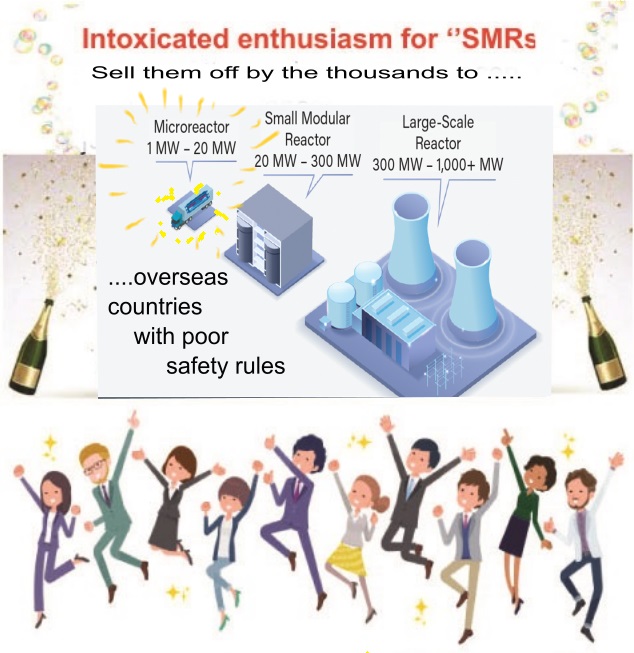
These investors are joining the wave in public and private financing of nuclear energy that has swelled to $14 billion so far this year — double last year’s total, according to Axios. Investment in new fission technologies, such as microreactors, has increased tenfold from 2023.
The startup wants to mass-manufacture 20MW nuclear reactors that can be built and shipped within 24 months. It’s looking to get its first reactor online in Europe.
By Eric Wesoff, 29 August 2024
A startup looking to build really small nuclear reactors just announced a big new funding round.
Last Energy, a Washington, D.C.–based next-generation nuclear company, announced that it closed a $40 million Series B funding round, a move that will add more financial and human capital to the reinvigorated nuclear sector.
The startup aims to eventually deploy thousands of its modular microreactors, though to date it has not brought any online. The first reactor might appear in Europe as soon as 2026, assuming Last Energy manages to meet its extremely aggressive construction, financial, and regulatory timelines — not a common occurrence in the nuclear industry. Venture capital heavyweight Gigafund led the round, which closed early this year but was revealed only today. The startup has raised a total of $64 million since its 2019 founding.
Last Energy is part of a cohort of companies betting that small, replicable, and mass-produced reactors will overcome the economic challenges associated with building emissions-free baseload nuclear power — and restore the moribund U.S. nuclear industry to its former glory. But the microreactor dream has yet to be realized; few of these small modular reactors (SMRs) have been built worldwide. None have been completed in the U.S., though one design from long-in-the-tooth startup NuScale Power has gotten regulatory approval.
The 20-megawatt size of Last Energy’s microreactor stands in stark contrast to that of a conventional nuclear reactor like the recently commissioned Vogtle units in Georgia, which each generate about 1,100 megawatts. A Last Energy microreactor, the size of about 75 shipping containers, might power a small factory, while a Vogtle unit can power a city.
Instead of the cathedral-style stick-built construction of modern large reactors, SMRs and microreactors are meant to be manufactured at scale in factories, transported to the site, and assembled on location. Rather than develop an advanced reactor design with exotic fuels — an approach taken by other SMR hopefuls, including the Bill Gates–backed TerraPower — Last Energy chose to scale down the well-established light-water reactor technology that powers America’s 94 existing nuclear reactors.
“We came to the conclusion that using the existing, off-the-shelf technology was the way to scale,” CEO Bret Kugelmass said in a 2022 interview with Canary Media. “We don’t innovate at all when it comes to the nuclear process or components — we do systems integration and business-model innovation.”
The startup claims that its microreactor is designed to be fabricated, transported, and built within 24 months, and is the right size to serve industrial clients. Under its business model, Last Energy aims to build, own, and operate its power plant at the customer’s site, avoiding the yearslong wait times to plug a new generation project into the power grid.
Like an independent power producer, Last Energy doesn’t sell power plants; instead, it sells electricity to customers through long-term power-purchase contracts.
“Data centers and heavy industry are trying to grapple with a very complex set of energy challenges, and Last Energy has seen them realize that micro-nuclear is the only capable solution,” said Kugelmass, who claims in today’s press release that the startup has inked commercial agreements for 80 units — with 39 of those units destined to serve power-hungry data center customers.
Last Energy isn’t the only microreactor company attracting venture funding. There are several other examples from this month alone: Aalo Atomics raised $27 million from 50Y, Valor Equity Partners, Harpoon Ventures, Crosscut, SNR, Alumni Ventures, Preston Werner, Earth Venture, Garage Capital, Wayfinder, Jeff Dean, and Nucleation Capital to scale up a 85-kilowatt design from the U.S. Department of Energy’s MARVEL program. While Deep Fission, a startup aiming to bury arrays of microreactors 1 mile underground, just raised $4 million led by 8VC, a venture firm founded by Joe Lonsdale.
These investors are joining the wave in public and private financing of nuclear energy that has swelled to $14 billion so far this year — double last year’s total, according to Axios. Investment in new fission technologies, such as microreactors, has increased tenfold from 2023.
Investors happen to be backing startups in a heavily subsidized market. Tens of billions of dollars from the Bipartisan Infrastructure Law, the U.S. DOE’s Loan Programs Office, and the Inflation Reduction Act support the development of a non-Russian supply of enriched uranium; the IRA also introduced a ridiculously generous $15-per-megawatt-hour production tax credit, meant to keep today’s existing nuclear fleet competitive with gas and renewables, as well as a similarly charitable investment tax credit to incentivize new plant construction.
The flood of funding comes as nuclear power enjoys the most public support it has had in years. Nuclear now has a favorable public opinion, with the majority of Americans supporting atomic energy and its record of safety and performance. And nuclear energy is one of the few topics that Democrat and Republican politicians have been able to agree on in recent memory.
Still, despite the rising financial, political, and public support, the U.S. nuclear industry remains frozen, plagued by a legacy of cost and timeline overruns for conventional reactors and regulatory challenges around new designs. It’s unclear when the country will get another nuclear reactor online — as of last year, the leading contender was an SMR project from NuScale, but that fell apart due to cost. In all likelihood, the next reactor to plug into the grid will be the mothballed Palisades nuclear plant in Michigan, which won government support for an unprecedented effort to recommission the plant by the end of next year.
For its part, Last Energy is not banking on the U.S. to lead the charge; it’s targeting industrial customers in Poland, Romania, and the U.K. for its initial sites, in the hopes that it will find a more favorable regulatory and financial environment.
Ryan McEntush of investment firm a16z suggests in an essay that “the success of nuclear power is much more about project management, financing, and policy than it is cutting-edge engineering or safety.”
That’s Last Energy’s philosophy too — and it’s going to need more money and more years to prove it’s the right one.
Local protests derail US data centre ‘monstrosity’ backed by Wall Street giant
Local protesters have hailed victory after a US investment giant abandoned
plans for a data centre “monstrosity” that would have been built on the
edge of a historic battlefield in Virginia. QTS, which is owned by Wall
Street investor Blackstone, dropped a proposal for what would have been the
world’s largest data centre after a wave of protests and local lawsuits.
The termination represents a landmark win for local activism as protesters
across the US attempt to turn the tide against AI data-centre construction
projects worth hundreds of billions of dollars.
Telegraph 3rd July 2026,
https://www.telegraph.co.uk/business/2026/07/03/local-protests-derail-us-data-centre-monstrosity/
Nuclear Propulsion in Shipping: Challenges Ahead

June 30, 2026, https://www.seanews.com.tr/article/nuclear-ships-seen-as-pipe-dream-mqzpc3uq
Nuclear propulsion for commercial shipping faces significant hurdles, including regulatory issues and a lack of viable business cases, says Lloyd’s List.
Nuclear propulsion for commercial shipping remains far from reality, with no viable business case and unresolved regulatory, insurance, and political hurdles, reports London’s Lloyd’s List.
Advocates such as British start-up Core Power argue that small modular reactors are the only alternative to fossil fuels. However, experts say the technology is decades away from being viable. Norwegian and UK academics note that no Gen-IV designs have been commercially deployed, and fuel supply chains for HALEU remain limited to Russia.
The industry has yet to settle on a reactor design, leaving unanswered questions regarding refueling, waste disposal, and costs. Professor Steve Thomas of the University of Greenwich warned that it will be the late 2030s before any experience with SMRs is available worldwide.
Even if modular shipyard production could reduce costs, governments would have to fund the first reactors and assume liability. Shipowners would face high capital expenditure and decommissioning costs, while charterers would benefit from lower fuel bills.
Political and regulatory barriers compound the challenge. Nuclear ships would be restricted to flags of nuclear-equipped states, limiting trade routes. The IMO and IAEA have yet to clarify oversight, and there is no international convention on liability for nuclear shipping.
Analysts say the real customers for SMRs are more likely to be warships and submarines, where governments absorb costs. For commercial shipping, nuclear remains an unproven technology promoted more for its political cachet than its economic feasibility.
CNBC Helps SpaceX Pull Off Trillion-Dollar Pump-and-Dump
SpaceX’s public offering has all of the hallmarks of a pump-and-dump scheme, using a “staggered lock-up” schedule that allows insiders to sell off shares much earlier than most other publicly traded firms—enabling them to cash out while the stock is still grossly overvalued. This gambit is also called a “bagholder” scheme, as retail investors are left holding a rapidly depreciating asset.
Wilson Korik, FAIR, July 3, 2026
Elon Musk became—at least temporarily—the world’s first trillionaire on June 12 after his space, telecommunications and AI company SpaceX had the largest initial public offering in history. Initially priced at $135 per share for a valuation around $1.77 trillion, shares opened at $150 and peaked on June 16 at $225.64 (a valuation of nearly $3 trillion). The price spiked after Musk announced, before markets reopened on June 15, that he believes “SpaceX might be able to reach approximately $1T revenue in 2030” (CNBC, 6/15/26).
Since its June 16 peak, however, SpaceX’s share price has fallen, steadily declining until June 22 and settling around $160 since. Markets closed on Thursday, July 2, with a share price of $162.00.
SpaceX’s big slump coincided with a mass tech sell-off last week, prompted by mounting concerns that tech firms cannot generate the returns necessary to pay off the colossal debts financing massive AI infrastructure buildouts, especially as companies are beginning to rein in their spending on AI (404 Media, 6/24/26; TechCrunch, 6/24/26).
That was likely a surprise to viewers of CNBC, whose full-day IPO coverage pumped the stock by inviting sources with vested interests to celebrate Musk’s cult of personality and obfuscate the magical thinking behind the company’s projections.
All in on business-facing Grok
According to its own S-1 filing with the SEC, SpaceX anticipates that its greatest earnings potential does not come from the rocket business for which it is famous, but from selling AI to other businesses. The breathless CNBC discussions entirely omitted the dubious origins of SpaceX’s gargantuan estimate of its maximum potential revenue—a key investor metric known as total addressable market (TAM).
In its S-1 prospectus, SpaceX claims a TAM of $28.5 trillion, larger than the entire GDP of China.
The document separates this figure into SpaceX’s three sectors: space, connectivity and AI. Although the filing argues that space “represents the largest economic frontier in human history,” space makes up just $370 billion, or 1.3%, of SpaceX’s supposed TAM. Meanwhile, AI makes up $26.5 trillion, or 93%, the vast majority of which is for “enterprise applications.”
Enterprise AI is a broad category of business-oriented applications for firms looking to simplify and accelerate workflows, like converting text files into presentation formats, writing and debugging string code, and automating some sales, marketing, HR and IT functions. The most popular AI assistant by far is OpenAI’s ChatGPT, followed by Google’s Google Gemini and Anthropic’s Claude (TechCrunch, 6/16/26).
A closer reading of SpaceX’s S-1 filing reveals that its $22.7 trillion estimate for enterprise AI applications does not actually represent the TAM of the company’s enterprise AI, but is instead an estimate of the size of the entire digital economy—posing a hypothetical wherein xAI’s Grok Business and Grok Enterprise monopolize all digital commerce. It’s worth noting that xAI currently has extremely limited enterprise AI market share, with a March Enterprise Technology Research survey finding that just 7% of respondents use Grok (Wall Street Journal, 5/11/26).
Note also that subscriptions to xAI‘s consumer AI, SuperGrok, on X (labeled “consumer subscriptions” in the chart) alone make up $760 billion, or 2.7% of SpaceX’s TAM. That’s calculated
based on the global population of individuals aged 10 and over in 2025 … multiplied by the weighted average monthly subscription revenue of $12, resulting in an annualized market opportunity of approximately $760 billion.
So if every person on the planet over the age of 9 sends SpaceX $12 every month to use Grok, the X chatbot that spent four days last year calling itself MechaHitler and promoting the Great Replacement Theory, SpaceX will take in $760 billion per year. Sounds like a business plan!
SpaceX’s public offering has all of the hallmarks of a pump-and-dump scheme, using a “staggered lock-up” schedule that allows insiders to sell off shares much earlier than most other publicly traded firms—enabling them to cash out while the stock is still grossly overvalued. This gambit is also called a “bagholder” scheme, as retail investors are left holding a rapidly depreciating asset.
While most IPOs prevent insiders from selling shares for the first 180 days of public trading, SpaceX uses an expedited schedule that allows most insiders to sell much sooner—selling off overvalued shares to retail customers.
While this pump-and-dump began with retail consumers who bought shares on the first day of public trading, these massive wealth transfers are being thrust upon working people whether they like them or not, as Musk successfully negotiated new rules that fast-track SpaceX’s inclusion in major index funds, including the Russell 1000 and NASDAQ funds—transferring rapidly devaluing stock from SpaceX insiders to working people’s retirement accounts.
But none of this was explored on CNBC the day of the SpaceX IPO launch. FAIR could find not a single guest or anchor that mentioned that “Elon Musk’s rocket company” valued the potential for SuperGrok X subscriptions at more than twice the total projected TAM for the space industry, nor that SpaceX’s TAM is based on a scenario in which business-facing Grok controls all e-commerce—and certainly not that the IPO would essentially serve as a massive wealth transfer from retail investors to SpaceX insiders.
‘You should have bought as much as you could’
Instead, in the hours leading up to SpaceX’s first trade, CNBC viewers were primed by Squawk Box co-host Joe Kernen (6/12/26) lamenting that orders were being snatched up by large institutional investors, and hoping that trades would begin at under $300 per share. He assured viewers that, although he’s nervous, “whenever we’ve worried about any of these great tech companies…wherever it was on opening day, you should have bought them as much as you could.”
The rest of the influential three-hour morning program was as much of a commercial for SpaceX as this opening scene. Squawk Box‘s guests included SpaceX COO Gwynne Shotwell (interviewed by Morning Call host Morgan Brennan), Elon Musk biographer Walter Isaacson, long-time Musk investor David George, head of financial technology research at Citizens Bank Devin Ryan, and venture capitalist and investor Ben Narasin.
All but one of these guests have vested interests or are members of Musk’s inner circle, and used their airtime to generate excitement around the stock by focusing on Musk as a visionary key man. Kernen, co-host Andrew Ross Sorkin and guest host Melissa Lee offered no pushback………………………………………………………………………………………………………………………………………………………………………………….
‘A number so large it destroys your credibility’
This isn’t to say that CNBC’s coverage of SpaceX’s IPO was completely without critical perspectives: Squawk on the Street’s David Faber (6/12/26) spent much of his onscreen time grilling insider guests on whether they’ll sell early, and pushing back on vague, aspirational framing around the AI and space industries.
Faber repeatedly reminded his audience that the S-1 prospectus specifically sees most of SpaceX’s potential in enterprise AI. He skeptically took the projected $22.7 trillion TAM for enterprise AI as given, but pointed out that “it’s not clear” how SpaceX’s Grok could compete with other enterprise AI products:
It’s interesting, as much as we talk about SpaceX, as much as we hear Musk talking about space and then Starlink, the real opportunity in terms of addressing this enormous number is actually still the same opportunity that’s being sought after by Anthropic, and OpenAI, and Alphabet and others.
Squawk on the Street also featured the most critical guest by far, NYU business school professor Aswath Damodaran, who came closest to questioning the origin of the TAM of any host or guest on any of the programs:
When I read [the S-1], I thought Grok had written the prospectus, because we know AI is subject to hallucinations…. I don’t know if it’s a banker who wrote it, I would be embarrassed to even put that number out. I mean, it’s a big market. Why do you need to make up a number, a number so large it destroys your credibility?
But even in scrutinizing SpaceX’s prospects, or the true size of the enterprise AI market, Squawk on the Street’s criticism missed the bigger picture: SpaceX’s record-setting IPO is a pump-and-dump, and retail investments provide the exit liquidity for insiders looking to get out of a failing AI company.
Every day, dozens of guests representing various companies advertise their stock on CNBC for retail consumers, who trust the judgment of their favorite program hosts to give completely uncontentious interviews, essentially constituting a series of infomercials, rather than actual financial journalism. FAIR (3/18/09, 2/3/20) has criticized CNBC on this basis for decades.
So when CNBC invites SpaceX insiders with vested interests to pump the valuation of their stock on the air shortly before dumping it on retail consumers, it seems obvious why even the most critical host cannot alert his viewers to what is really going on: because CNBC’s reporting exists to boost stock, rather than protect consumers. https://fair.org/home/cnbc-helps-spacex-pull-off-trillion-dollar-pump-and-dump/
SGE unveils plans for 4.2GW UK Small Modular Reactor fleet
News provided by SGE 01 Jul, 2026, https://www.prnewswire.co.uk/news-releases/sge-unveils-plans-for-4-2gw-uk-small-modular-reactor-fleet-302816135.html
Programme of 14 Small Modular Nuclear Reactors could accelerate UK new nuclear and power almost eight million UK homes
LONDON, July 2, 2026 /PRNewswire/ — SGE, a European Small Modular Reactor (SMR) development and investment platform, yesterday announced its plans to build fourteen GE Vernova Hitachi BWRX-300 Small Modular Reactors on three sites in the UK. The deployment team includes SGE, GE Vernova Hitachi Nuclear Energy, Samsung C&T, Laing O’Rourke, Aecon Group Inc., Google Cloud, Fermi Development, Etara and an experienced nuclear operator.
The company has submitted an application under the UK’s Advanced Nuclear Framework (ANF) to develop a combined 4.2GW fleet which could deliver enough clean power for 11% of UK power demand or equivalent to an estimated almost eight million homes for at least sixty years. To support this ambition, SGE has established SGE SMR UK Limited as its dedicated UK-based project vehicle.
SGE’s proposal reflects a fleet-based development model, centred on repeatable deployment at scale. The project is targeting three multi-unit sites, the first to host six BWRX-300 units, with two further sites to follow in quick succession. In total, the programme represents a significant addition to the UK’s future nuclear capacity and supports the country’s long-term energy security, clean power and industrial growth ambitions.
The UK project builds on significant regulatory groundwork already in place for the BWRX-300, a tenth generation, proven technology that draws on the experience of 67 successful reactor deployments. The technology is under licensed construction in Canada and is on schedule to be the first SMR to operate in the OECD. In December 2025, the BWRX-300 successfully completed Step 2 of the UK’s Generic Design Assessment.
The partnership brings together proven reactor technology, significant project development experience, industrial capability and supply chain expertise and financing structure experience to support the deployment of the BWRX-300 in the UK. SGE is presenting a privately financed, commercially-led investment, supported by strong delivery partners. SGE plans to deploy under a Contract for Difference framework with National Wealth Fund engagement, meaning there will be no charges to consumers prior to operations.
Michał Sołowow, Founder of SGE, said: “We are focused on delivering efficient, safe, affordable, and clean nuclear energy power at fleet scale. The UK is home to one of the world’s most experienced nuclear workforce and the British Government has provided a clear path to market with the Advanced Nuclear Framework. Because of this, I am confident we will set a new standard for nuclear development by combining our disruptive business model with the BWRX-300’s tenth generation proven technology. We will rely strongly on the UK supply chain; it is a critical element for our project. Our project will create a distinct competitive advantage for UK economy.”
Rafał Kasprów, CEO of SGE, said: “The submission of our application under the Advanced Nuclear Framework marks a major milestone in our ambition to develop a fleet of BWRX-300 small modular reactors across the UK and the European Union. The United Kingdom is one of Europe’s most important and capable nuclear markets, with a highly skilled workforce, a strong industrial base, and a strategic need to lead the next generation of nuclear deployment. With a clear requirement for substantial new nuclear capacity over the coming decades, we believe our approach can make a meaningful contribution at scale. Standardisation, repetition, modularisation, and a fleet deployment strategy are the most effective ways to deliver new nuclear projects successfully, reducing costs, construction risk, and delivery times. We are committed to working with UK partners to provide secure, affordable, and clean electricity to millions of British households for generations to come.”
Jason Cooper, CEO of GE Vernova Hitachi Nuclear Energy, said: “SGE’s vision reflects the growing momentum behind new nuclear across Europe and the critical role SMRs can play in strengthening energy security while delivering reliable, lower-carbon electricity. With construction already underway at the Darlington New Nuclear Project in Ontario, Canada, the first commercial-scale SMR under construction in the Western world, the BWRX-300 offers the confidence that comes from real project execution. We are proud to support SGE as they pursue this important opportunity in the UK.”
John O’Connor, Group Commercial Director of Laing O’Rourke, said: “Laing O’Rourke brings the power of its nuclear experience and pioneering industrialised construction methods to the development of Small Modular Reactors, like this programme, of which we are pleased to play a part. We are applying lessons learned from the use of advanced manufacturing in the construction of large-scale and other complex infrastructure to boost safety and certainty for our partners and clients.”
Aaron Johnson, Senior Vice President, Nuclear, Aecon Group Inc., said: “Aecon is proud to serve as a leading partner on Ontario Power Generation’s Darlington New Nuclear Project, supporting the first-of-a-kind BWRX-300 deployment in Canada. Drawing on deep expertise in construction management, advanced automation, fabrication, and modularization, Aecon is helping to drive meaningful improvements in safety, quality, schedule certainty, and cost efficiency. Early involvement in this landmark project positions Aecon to leverage first-of-a-kind experience and tailor proven approaches for SGE in the UK and in other international markets. We are building capabilities and insights that will enable us to support efficient and scalable deployment across North America and in global markets, including the UK.”
SGE anticipates this project will enter the Advanced Nuclear Pipeline in November 2026, with site selection and government support scheme negotiations completed in the first half of 2027; after which major investment, site preparation and licensing work would begin within approximately a year, with first commercial operation of the first unit targeted for 2034.
Media contact
Paulina Chorazewska
SGE
Communications Director
+48 539 992 967
paulina.chorazewska@sge.eu
Billionaire to invest £35bn in small modular nuclear reactors rollout across UK

Consortium led by Michał Sołowow planning enough SMRs to power equivalent of 8m homes for more than 60 years.
Jillian Ambrose, 2 July 26
A consortium led by the billionaire industrialist Michał Sołowow has announced plans to build 14 small modular nuclear reactors on three sites across the UK, including the location of a former nuclear plant in Gloucestershire..
The Polish entrepreneur and rally driver plans to use £35bn of private capital to roll out enough small modular reactors (SMRs) to power the equivalent of 8m UK homes for more than 60 years, or even power datacentre investments alongside Google.
Sołowow’s nuclear development company, SGE, plans to make the “significant investment” of between £2.2bn to £2.5bn in each 300 megawatt reactor alongside a string of industrial partners including the US manufacturer GE Vernova and Japanese industrial conglomerate Hitachi, which are responsible for the design.
The consortium, known as SGE SMR, hopes to secure three sites for the boiling water reactors (BWRs) by this time next year as well as a government support contract which would guarantee a “competitive” price for its electricity once it starts generating in 2034.
It has not disclosed which sites it hopes to use for the GE Vernova Hitachi BWRX-300 design, or which energy company would be the operator. However, the Guardian understands the consortium has submitted an application to use the Oldbury site in south Gloucestershire which was earmarked earlier this year for the development of SMRs under the government’s advanced nuclear framework.
Sołowow said the government’s framework, which aims to fasttrack the rollout of nuclear technologies, had created “a clear path to market” in the “home to one of the world’s most experienced nuclear workforces”.
Because of this, I am confident we will set a new standard for nuclear development by combining our disruptive business model with the BWRX-300’s 10th-generation proven technology. We will rely strongly on the UK supply chain; it is a critical element for our project. Our project will create a distinct competitive advantage for the UK economy,” he said.
The Labour government unveiled plans for a historic expansion in nuclear power across England and Wales within months of coming to power, with Keir Starmer calling for tech companies to work alongside the government to build SMRs to power energy-intensive AI datacentres across Britain.
SGE’s plans will put it in competition with Rolls-Royce to be the first to roll out SMEs in the UK, after the British engineering company won a government competition earlier this year to allow it to start generating power by 2032 at the earliest.
SGE’s joint venture agreement, signed this week in London, includes Google Cloud, which Sołowow hopes will also partner on investing up to £4.5bn in datacentres to make use of the nuclear output. The Guardian understands this is viewed as an accompanying proposal which is not part of its current application.
Instead, the consortium hopes to secure a similar deal to the contract offered to the Hinkley Point C nuclear project. It has opted for the contracts for difference scheme, which pays a fixed rate from energy bills once the project begins generating electricity, rather than the controversial model used to fund the Sizewell C project. Under that scheme the developer is paid during the construction phase, meaning billpayers risk bigger costs if there are delays.
Tom Greatrex, chief executive of the nuclear industry association, said SGE’s SMR plans showed the government’s nuclear framework “has really revived and spurred interest in privately led nuclear projects”.
EDF agrees to sell US, Canada unit to KKR

EDF, which owns and operates France’s nuclear fleet, must raise cash to maintain its 57 aging reactors and finance the construction of six new units.
By Reuter, June 27, 2026, https://www.reuters.com/business/energy/edf-signs-deal-sell-us-canada-unit-kkr-2026-06-26/
June 26 (Reuters) – EDF signed an agreement to sell EDF Power Solutions in the United States and Canada to private equity firm KKR, the company said on Friday.
KKR will acquire the operations and assets. In the U.S. and Canada, EDF Power Solutions operates 5.6 gigawatts of renewable assets.
EDF, which owns and operates France’s nuclear fleet, must raise cash to maintain its 57 aging reactors and finance the construction of six new units.
In November EDF CEO Bernard Fontana told Reuters the company was considering selling between 50% and 100% of its U.S. renewable unit, a deal that could value the business at nearly €4 billion ($4.56 billion).
EDF has developed 26 gigawatts of wind, solar and battery storage projects plus electric vehicle charging sites and has 17 GW under service contracts in North America, which includes a small amount in Canada and Mexico, according to its website.
($1 = 0.8773 euros)
Reporting by Margaux Perrin in Gdansk, Editing by Louise Heavens
Sweden has agreed first financing package for new nuclear reactors, PM says

By Reuters, June 25, 2026, https://www.reuters.com/business/energy/sweden-has-agreed-first-financing-package-new-nuclear-reactors-pm-says-2026-06-25/
STOCKHOLM, June 25 (Reuters) – Sweden’s government has agreed on the details of a first financing package to build new nuclear power reactors with developer Videberg Kraft, Swedish Prime Minister Ulf Kristersson said on Thursday.
“The state will also go in as an owner in this project,” Kristersson told reporters.
Kristersson gave no details of the financing package, which has to be approved by the European Commission.
The government said in a statement it will take a 60% stake in Videberg Kraft, currently 80% owned by state utility Vattenfall and 20% by a consortium of industrial companies. Vattenfall’s stake will drop to 20%, the government added.
Sweden’s parliament last year passed legislation to finance a new generation of reactors, the first built in Sweden for more than 40 years and which the government says is necessary for energy security and achieving net zero emissions by 2045.
Earlier this month, Vattenfall selected Rolls-Royce SMR (RR.L), opens new tab to supply small modular nuclear reactors, choosing the British company over U.S. rival GE Vernova (GEV.N), opens new tab, in a deal worth several billion pounds.
Reporting by Simon Johnson, editing by Louise Rasmussen
1 This Month
23-25 October – on Zoom – World BEYOND War’s annual global conferenc


Shut down the radiation-damaged Heysham nuclear reactors now
To see nuclear-related stories in greater depth and intensity – go to https://nuclearinformation.wordpress.com

Say No to NASA’s Reckless Nuclear Reactor on the Moon
Say No to NASA’s Reckless Nuclear Reactor on the Moon

-
Archives
- October 2026 (247)
- September 2026 (339)
- August 2026 (330)
- July 2026 (355)
- June 2026 (287)
- May 2026 (306)
- April 2026 (356)
- March 2026 (251)
- February 2026 (267)
- January 2026 (308)
- December 2025 (358)
- November 2025 (359)
-
Categories
- 1
- 1 NUCLEAR ISSUES
- business and costs
- climate change
- culture and arts
- ENERGY
- environment
- health
- history
- indigenous issues
- Legal
- marketing of nuclear
- media
- opposition to nuclear
- PERSONAL STORIES
- politics
- politics international
- Religion and ethics
- safety
- secrets,lies and civil liberties
- spinbuster
- technology
- Uranium
- wastes
- weapons and war
- Women
- 2 WORLD
- ACTION
- AFRICA
- Atrocities
- AUSTRALIA
- Christina's notes
- Christina's themes
- culture and arts
- Events
- Fuk 2022
- Fuk 2023
- Fukushima 2017
- Fukushima 2018
- fukushima 2019
- Fukushima 2020
- Fukushima 2021
- general
- global warming
- Humour (God we need it)
- Nuclear
- RARE EARTHS
- Reference
- resources – print
- Resources -audiovicual
- Weekly Newsletter
- World
- World Nuclear
- YouTube
-
RSS
Entries RSS
Comments RSS

