Germany greenlights controversial joint French-Russian nuclear project
Germany’s environment ministry on Wednesday approved a French-Russian project to produce fuel rods used in Russian-designed reactors in the northwestern German town of Lingen. The joint venture project by a subsidiary of French company Framatome and Russia’s state-owned Rosatom sparked fears of Russian spying, but German authorities said they had “no legal possibility to reject” it.
FRANCE 24, 22 July 26
German authorities said Wednesday they were giving the green light to a controversial French-Russian nuclear project which critics fear will enable spying and sabotage by Moscow.
The planned joint venture by a subsidiary of French company Framatome and Russia‘s state-owned nuclear power agency Rosatom is aimed at producing fuel rods used in Russian-designed reactors.
The project would be based at Framatome’s fuel rod assembly facility in the town of Lingen in the state of Lower Saxony.
Framatome’s subsidiary ANF (Advanced Nuclear Fuels) applied for permission for the project in March 2022, just weeks after Russia began its full-scale invasion of Ukraine.
The state’s environment ministry said in a statement Wednesday it had “decided to approve” the project.
This was despite the state’s environment minister, Christian Meyer, restating his position that “dealings and close co-operation with Putin’s nuclear agency are totally wrong”.
He said however that his ministry had “no legal possibility to reject or put a time limit to the application” in the absence of sanctions on Rosatom.
Rosatom has been exempted from the successive rounds of EU sanctions imposed against Russia after its full-scale invasion of Ukraine in February 2022.
‘Dangerous to security’
Meyer said that one of the conditions of the approval was that Rosatom employees or those from Russian nuclear fuel manufacturer TVEL would only be allowed to enter the site “in very limited cases and accompanied by the relevant inspectorate”.
The ministry also stressed that the approval could be revisited “if new risks are identified”, particularly “in the area of national security”.
Roderich Kiesewetter, a prominent member of Chancellor Friedrich Merz‘s centre-right CDU party, said Wednesday that the federal government should intervene to prevent the project from going ahead.
The decision by Lower Saxony was “dangerous to security and must be reversed,” Kiesewetter told the Politico website…………………………………………………https://www.france24.com/en/europe/20260722-germany-greenlights-controversial-joint-french-russian-nuclear-project
US and Japan clash over meltdown liability in $40bn nuclear power deal
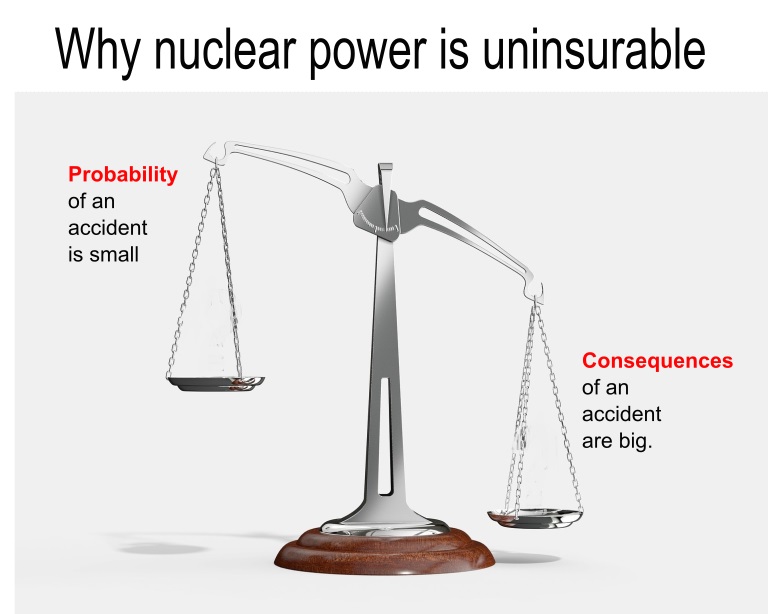
Japan’s participation in a $40bn nuclear power project in the US has hit
a roadblock over fears that its lenders might have to assume liability for
any meltdown on American soil.
Prime Minister Sanae Takaichi agreed during
a visit to Washington in March that Japan would provide funding and
industrial co-operation to build next-generation small modular reactors in
Tennessee and Alabama.
The project was agreed as part of Tokyo’s
commitment to invest $550bn in the US, a promise given in return for lower
US tariffs on Japanese exports under Donald Trump’s “liberation day”
regime. But details of the project are still being thrashed out between
Tokyo and Washington because of concerns on the Japanese side about their
potential liability in a nuclear accident, according to four people
familiar with the discussions.
The US commerce department has offered
verbal reassurance that the state-backed Japan Bank for International
Cooperation and other Japanese institutions would not take on any liability
for a potential nuclear accident, said the people. A person close to
commerce secretary Howard Lutnick said he had personally assured Japan it
would not have any liability in relation to the projects. However, that
promise has not been put in writing in legal terms — a process that could
take months or years of complex regulatory discussion to settle, said the
people.
FT 23rd July 2026, https://www.ft.com/content/4b9d0e1a-c423-4b14-a7fe-d4988e24c7c0
Russia’s Financial Crisis Casts a Shadow Over Central Asia’s Nuclear Future
By Eurasianet – Jul 20, 2026, https://oilprice.com/Alternative-Energy/Nuclear-Power/Russias-Financial-Crisis-Casts-a-Shadow-Over-Central-Asias-Nuclear-Future.html
- Rosatom is cutting its investment program by nearly 50% and reducing operating costs amid worsening economic conditions.
- The spending cuts raise concerns about delays to planned nuclear projects in Kazakhstan and Uzbekistan.
- Both Central Asian countries are increasingly exploring alternative nuclear partners, including China and the United States.
Kazakhstan and Uzbekistan may soon have to rethink their plans to develop nuclear energy. Rosatom, the Russian nuclear entity that has agreements to build nuclear plants in both Central Asian nations, is experiencing major financial difficulties.
Alexei Likhachev, Rosatom’s boss, has announced the entity is cutting its investment program by nearly 50 percent this year due to “poor economic conditions.” Likhachev also said Rosatom would strive to slash operating costs by 10 percent within the next 18 months.
“We immediately abandoned a number of projects or shifted the deadlines for their implementation to a later date, guided by several criteria, the main of which is efficiency in the horizon until 2030, that is, more profit and revenue per ruble of investment,” Likhachev was quoted as saying by the Reuters news agency.
The company’s troubles are widely linked to the Kremlin’s ongoing campaign in Ukraine, which has generally sapped Russia of its financial strength. International sanctions have also hampered Rosatom.
Likhachev did not specify which projects are being slashed or delayed. Kazakhstan awarded Rosatom a contract in 2025 to build the Central Asian state’s first nuclear power plant on the shores of Lake Balkhash. Since then, the project has been hit by delays and disputes, which many observers suspected were linked to Rosatom’s difficulties in obtaining financing. Likhachev’s announcement raises further doubts that the project can meet a tentative completion deadline in the mid-2030s.
Rosatom also has a preliminary agreement in place to build small-scale nuclear plants in Uzbekistan. Company officials in early 2026, seeking to dispel Uzbek worries about financing, offered to expand the deal to create a nuclear cluster. Likhachev’s announcement is likely to stoke further skepticism in Tashkent.
Both Kazakhstan and Uzbekistan have alternatives to Rosatom. Astana already has an agreement in place for a Chinese company to build two nuclear plants in the country. And both Kazakhstan and Uzbekistan have expressed interest in working with the United States to develop small modular nuclear plants.
Rosatom, historically a cash cow for the Russian government, is not the only major Russian entity experiencing financial woes. The stock price of the energy giant Gazprom has tanked over the past three months, and the company’s market capitalization now stands at a mere $25 billion.
European Investment Bank Approves €800 Million For Cernavodă-1 Nuclear Plant Refurbishment
By David Dalton, 20 July 2026, https://www.nucnet.org/news/european-investment-bank-approves-eur800-million-for-cernavoda-1-nuclear-plant-refurbishment-7-1-2026
Romania also pushing ahead with plans for two new large-scale units at site
The European Investment Bank (EIB) has approved €17.4bn ($19.8bn) in financing to strengthen Europe’s energy autonomy, including an €800m loan for the refurbishment and life extension of one of two reactors at Romania’s Cernavodă nuclear power station.
The EIB said the financing, which covers Unit 1, is for key component replacements and system upgrades, enabling a new cycle of reliable and safe operation.
It said Cernavodă, Romania’s only commercial nuclear power station, generates around 20% of the country’s electricity.
combined €620m with a banking syndicate led by J.P. Morgan to advance the refurbishment of Cernavodă-1 and preparatory work for Cernavodă-3 and -4.
It also signed two agreements with subsidiaries of France’s EDF related to key projects for the Cernavodă-1 refurbishment.
In December 2024, Nuclearelectrica signed the main engineering, construction, and procurement contract to extend the life of Cernavodă-1 at a cost of about €1.9bn. The contract is with a consortium of four companies, comprising Canada’s AtkinsRealis, the Canadian Commercial Corporation, Korea Hydro & Nuclear Power (KHNP) and Italy’s Ansaldo Nucleare.
In September 2023, Canada announced €1.8bn in export financing to Nuclearelectrica towards the construction of the two new plants at Cernavodă.
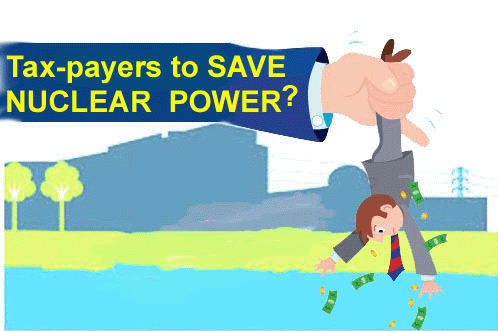
A Contract for Difference for nuclear lifetime extension for Sizewell B – a nice save for the nuclear industry?
Jérôme à Paris, Jul 22, 2026
A few days ago, the British government announced the extension of the production life of the 1.2 GW Sizewell B nuclear power plant for 20 years, from 2035, and that included the fact that the electricity produced will be sold under a CfD at a price of 70.50 GBP/MWh (in 2025 prices, to be indexed). ……….
it is proper that the power also be sold to ratepayers at a fixed price. The existence of the CfD will also allow the owners to achieve a lower cost of capital (possibly through limited-recourse financing, but in any case through more favorable corporate funding as such a revenue line underpins their balance sheet), ensuring that the price achieved could be more competitive….
Secondly, this puts the production cost risk on the operator (EDF in this case, with Centrica having a 20% stake), as they will have to deliver power at a fixed price, irrespective of what they need to spend to keep the plant running (I have not checked if they can wiggle out of the contract by stopping production earlier in case it becomes too costly to run, but I see that this would have other likely consequences, including reputational, for the operator in any case).
The third point is that this puts a very visible price tag to nuclear plant lifetime extension. There’s often the blithe assumption that existing plants can continue to run at a very low cost. This reminds everybody that it is not the case, and existing plants definitely have ongoing operating costs – and older plants have significant heavy maintenance, refurbishment and safety costs to manage. The price level proposed here can be seen as attractive for baseload decarbonated power, but it’s certainly not low or the most competitive available these days.
The big question is whether the price is actually the right one. There can only be rather limited competition for nuclear lifetime extension CfDs, so one must consider the temptation for the operator to pad its costs and ask for a price that ensures as profitable an operation as possible (I presume that the price level was negotiated on the basis of detailed cost assumptions provided by the operator and checked by the regulator and experts). There is also the risk that the operator could ask later on for relaxation of safety or other standards in order to lower its ongoing costs (including possibly via the direct or indirect threat to stop operations.
Against that is the fact that the nuclear industry cannot afford to show that it is materially less competitive than alternatives, in particular than offshore wind, the renewable sector with the most similar characteristic as nuclear (large capacity plants, higher capacity factor). If the ask price for extension is barely competitive against new-build offshore wind, what would that say about new-build nuclear? Hinckley Point negotiated a CfD a decade ago, which EDF is not very happy with, even though it is already quite a bit higher (it was 89.5 GBP/MWh for 35 years (rather than 20), indexed from 2012, which means its current level is 131 GBP/MWh, and we’re still some years before operations), given all the cost overruns experienced in the meantime……………………………….. https://jeromeaparis.substack.com/p/a-cfd-for-nuclear-lifetime-extension
New Swiss nuclear plants could put thousands of renewables jobs at risk
If nuclear power stations were to be authorised again in Switzerland, this would have a negative impact on employment in the construction and renewable energy sectors.
July 19, 2026 , https://www.swissinfo.ch/eng/energy-transition/new-swiss-nuclear-plants-could-put-thousands-of-renewables-jobs-at-risk/91767485
A recent study by the Zurich University of Applied Sciences (ZHAW) suggests that thousands of jobs are at risk. According to the authors of the study, simply lifting the ban on the construction of new nuclear power stations, without any other measures, would put between 5,800 and 9,500 jobs at risk in the photovoltaic and construction sectors over the next five years. Over the next ten years, the number of jobs at risk could rise to as many as 10,600.
The construction of a new nuclear power station would create new jobs but, as Switzerland would have to acquire the necessary expertise and technology from abroad, such a project would not even come close to offsetting job losses in the photovoltaic and construction sectors, according to researchers at the ZHAW.
The study states that “an energy and climate policy focused on renewable energy and building renovation is better not only from an environmental perspective, but also in terms of employment”. The ban on the construction of new nuclear power stations provided for in the Federal Act on Nuclear Energy “not only safeguards the strategy of investing in renewable energy, but also protects local jobs in Switzerland”.
In Switzerland, the construction of new nuclear power stations is currently banned, but the Swiss government and parliament are in favour of overturning the ban. At the end of June, however, a broad coalition of opponents launched a referendum against this decision. Swiss voters will likely be able to decide whether to lift the ban in February 2027. In 2017, the Swiss citizens voted against the construction of new nuclear power stations by approving the Energy Strategy 2050 with 58% of the vote.
Jacobs to assist in planning of UK SMR projects
In May, the company (Jacobs) was selected by GBE-N to provide
environmental services for potential SMR nuclear development at its Oldbury
site. Jacobs said that its work, with a multidisciplinary team including
AtkinsRéalis and AECOM, would cover terrestrial and marine environments,
environmental assessments, Habitats Regulations Assessment and “associated
activities to inform future potential planning, design and permitting
decisions”.
World Nuclear News 21st July 2026 https://www.world-nuclear-news.org/articles/jacobs-to-assist-in-planning-of-uk-smr-projects
‘Sip your coffee while watching the sunrise’: How Israel is colonizing the West Bank by selling Palestinian land to Jewish Americans
Israeli real estate companies are marketing land belonging to Palestinians in the West Bank to Jewish American buyers. We spoke to the Palestinians who are being displaced in order to make way for new Jewish settlement construction.
Mondoweiss By Majd Jawad July 17, 2026
In mid-May, protesters gathered outside a synagogue in Brooklyn to demonstrate against a real estate expo being held inside. The properties advertised for sale were not located in New York City, but in illegal Israeli settlements in the occupied West Bank, and the target clientele was members of the Jewish American community.
The “Great Israeli Real Estate Event,” organized by the Israeli company, My Home in Israel, was one of many property fares held across the U.S., Canada, and the UK, targeting prospective Anglophone Jewish buyers. A recently scheduled London event carrying the same name drew widespread condemnation last June from human rights groups and over 100 British lawmakers.
The settlements at the top of the event’s promoted property listings included Ma’ale Adumim, Givat Ze’ev, Karnei Shomron, and Kfar Eldad. Each listed area is undergoing urban expansion and new construction, concurrent with seizure and confiscation orders targeting the Palestinian lands surrounding them — a systematic process aimed at entrenching settlement dominance.
The promotional advertising for these settlements deploys seductive language to attract investment. An advertisement for a real estate project in Kfar Eldad, located within the Gush Etzion Regional Council southeast of Bethlehem, pitches a rural lifestyle “close to Jerusalem, far from the routine.” The ad reads: “Time flows a bit differently around here. In the morning you can sip your coffee while watching the sunrise, and just 12 minutes later, before your coffee has even cooled, find yourself in Jerusalem. And in the evening, you’ll return to soothing tranquility. This makes Kfar Eldad the perfect alternative for those seeking reasonably priced housing close to Jerusalem, but away from the noise and traffic of city life.”
Behind the glossy brochures and manicured images of “modern residential communities” lie painful chapters of systematic Palestinian land confiscation — a process that has expanded in recent years to encompass nearly half of the total area that Israeli occupation authorities have declared “state lands” since the Oslo Accords were signed.
The “soothing tranquility” in the hills and open terrain of Bethlehem was, until recently, home to Palestinian and Bedouin communities who practiced seasonal farming and herding. Those original inhabitants were barred from accessing their land, which was confiscated under military orders decades ago, before settlement projects were built on it…………………………………………………………………………………………
Palestinians forced out, Jewish settlers brought in
……………………….At the start of this year, the Israeli government decided to confiscate approximately 700 dunams (70 hectares) of Palestinian land for the construction of a new settlement neighborhood in Karnei Shomron, built east of Qalqilya in the northern West Bank and overlooking the Mediterranean coastal plain 10 to 15 kilometers away.
This confiscation falls within what Israel calls its “Roof plan,” an all-encompassing agreement for expanding the settlement by adding 6,000 new housing units and accompanying infrastructure in the northern West Bank…………………………………………………………………………………………………………………………………………………………………………………………………………………………..
How land goes from ‘state land’ to the real estate market
Khalil Tafakji, a researcher specializing in settlement and Jerusalem affairs and director of the cartography department at the Arab Studies Society, told Mondoweiss that Palestinian land is seized in a way that often takes roundabout legal avenues to strip Palestinians of their rights to it before it is offered for sale on the market.
“At that stage, the land is not offered for sale directly,” he explained. “Rather, it is excluded from the scope of private Palestinian ownership altogether.” The Israeli state does this by declaring the land “insufficiently cultivated to establish ownership,” Tafakji said, or by sealing it off and designating it a closed military zone reserved for army training. These areas are rendered “state lands” under the administration of the Israel Land Authority.
The first administrative step in this designation process rests on Israel’s interpretation of Ottoman land law, which has historically governed land ownership in Palestine. . Only then are properties marketed to potential homebuyers ahead of construction. The state effectively leases the land to prospective homeowners, and what buyers acquire is the property, not the land itself. “A buyer can own the property for 99 renewable years, while the land remains in the state’s name under what is called a land leasehold arrangement,” …………………………………………………………………………………………………..
Jerusalem as a settlement magnet
In settlement promotional campaigns, proximity to Jerusalem is often a cornerstone of their marketing strategy, presenting settlement properties in the Gush Etzion bloc as a natural geographic and urban extension of the city. This falls under Israel’s “Greater Jerusalem” project, which has necessitated the ethnic cleansing of countless Palestinian communities stuck in administrative “no-man’s-lands” inside the West Bank. These areas technically fall under the jurisdiction of Israel’s Jerusalem municipality, yet receive virtually none of its services. ……………………………………………………………………………………………………………………………………………………………………………………………………………………………… https://mondoweiss.net/2026/07/sip-your-coffee-while-watching-the-sunrise-how-israel-is-colonizing-the-west-bank-by-selling-palestinian-land-to-jewish-americans/
Grant to support expansion of TRISO-X nuclear fuel campus
X-Energy subsidiary TRISO-X has received a grant from the State of
Tennessee of USD11 million to support the continued development of its fuel
fabrication campus in Oak Ridge, Tennessee, including a potential second
commercial fuel facility and a dedicated research and development centre.
World Nuclear News 16th July 2026 https://www.world-nuclear-news.org/articles/grant-to-support-expansion-of-triso-x-nuclear-fuel-campus
Holtec bets big on small nuclear reactors in its IPO filing
As it pivots from shutting down nuclear plants to building them, Holtec says small modular reactors can cut costs and speed construction. Now it has to prove it.
By Alexander C. Kaufman, 15 July 2026, https://www.canarymedia.com/articles/nuclear/holtec-ipo-small-modular-reactors
Nuclear giant Holtec International is betting big that its 300-megawatt small modular reactors are the future of atomic energy.
On Friday, the Florida-headquartered firm filed paperwork with the Securities and Exchange Commission in order to sell shares in the company on the Nasdaq.
Across hundreds of pages, the disclosure document outlines the 40-year-old Holtec’s plans to transform itself from the industry’s undertaker — manufacturing canisters to safely store radioactive spent fuel and decommissioning shuttered nuclear plants — to its midwife, producing and operating new electrical stations. This transition comes as nuclear energy regains popularity in the U.S. as a way to meet booming power demand without creating more planet-warming pollution.
Developers have traditionally offset nuclear’s high up-front costs by building ever-larger reactors to capture the economies of scale. Since the early 2000s, however, a number of companies have proposed building small modular reactors that can be constructed identically and in batches. SMRs could generate about a third of the electricity of conventional large-scale plants, but, proponents argue, would bring down costs through assembly-line repetition rather than physical scale.
That cost reduction has yet to be proven out in the real world with actual plants. But in its S-1 filing, Holtec said, “SMRs will offer scalable, cost-effective solutions for new capacity with enhanced safety features, reduced construction timelines and reduced land and transmission infrastructure needs as compared to traditional, larger-scale reactors.” It noted that a single-unit SMR plant would only need 15 acres of land and take a mere three years to build. By contrast, the big reactors on the grid today can take up hundreds of acres, and construction typically drags on for nearly a decade.
Holtec’s SMR-300, as the pressurized-water reactor is named, “is expected to receive regulatory approval for deployment in 2029” and reach its first deployment “in the early 2030s,” according to the filing.
The company said it expects SMRs to play “a meaningful role in the expansion of nuclear capacity,” noting that they can “complement large-scale nuclear generation through lower upfront costs” and more flexible planning around how much power is needed.
For example, smaller reactors may be better suited for converting some old coal-fired stations into nuclear plants. The DOE has been researching the idea for years, given that nuclear and coal are both thermal resources that operate with similar rates of frequency and therefore use similar equipment to generate electricity from steam — which in nuclear plants is made from the heat created by splitting atoms and in coal plants is made from heat created by burning the black rocks. Converting a 400-MW coal plant into a similar-size nuclear reactor makes more financial sense than using a bigger reactor, which could require costly transmission upgrades and more space
“We believe that our SMR-300 plant can become a favored nuclear generation source over large reactors because of certain advantages,” the company said in its filing.
The future of restarts
The company will also operate at least one conventional reactor, the 800-MW unit it’s currently restoring at its Palisades nuclear station, in western Michigan. That project — the nation’s first effort to return a permanently shuttered nuclear reactor to service — could be completed within months, though its contract to sell power to the local grid won’t kick in until next year.
Holtec hopes to combine its plant-restart strategy with its SMR vision. It’s planning to deploy two SMRs at the Palisades site; if that works out, the company has said it may build SMRs at New Jersey’s Oyster Creek nuclear plant, which it’s been in the process of decommissioning for eight years.
Holtec owns three other defunct nuclear plants — Massachusetts’ Pilgrim, Michigan’s Big Rock Point, and New York’s Indian Point — that it could also try to rebuild. The Trump administration has called for reconstructing Indian Point, but Albany remains opposed to the controversial proposal.
Local opposition isn’t Holtec’s biggest hurdle, however. That would be competition from the nuclear behemoths in Russia and China. Virtually every Western nuclear developer is facing an uphill battle to compete with the Kremlin’s state-owned Rosatom, by far the biggest international vendor of nuclear technology in the world, and China’s two state-owned nuclear companies, which are building more than three dozen reactors at home and are expected to enter the export game soon.
Still, among its domestic rivals, Holtec may be the best positioned to hold its own on a global playing field. It is an established company with profitable enterprises in a dozen countries across four continents, and has experience managing infrastructure so sensitive it’s overseen by a dedicated agency, the U.S. Nuclear Regulatory Commission. The company has facilities with electrical equipment on-site that can be potentially used to deploy SMRs. It also has won significant support from the federal government, both in the form of a $1.52 billion loan the Department of Energy provided to finance the Palisades restart and the $400 million the agency gave the company to support construction of its first SMR-300s.
“We began work in 2011 on a small modular reactor solution, and drawing on our in-house capability to design, license, manufacture, construct, and commission nuclear systems, honed through decades of turnkey supply, we are now uniquely positioned to launch the development of our small nuclear reactor,” Krishna Singh, Holtec’s founder and chief executive, said in a letter to prospective investors.
Insuring Small Modular Nuclear Reactors.
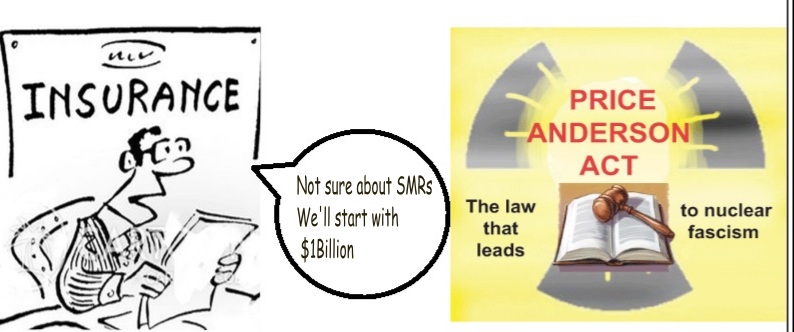
Deploying the next generation of nuclear technologies is likely to present a number of novel challenges, notably securing appropriate insurance coverage for both property and liability. Without early engagement developers could face significant obstacles to commercial roll-out.
Nuclear Engineering International, By Ron Rispoli, Senior Vice President, Energy Group, Stephens Insurance, LLCJuly 9, 2026
s small modular reactors (SMRs) move from concept to commercialisation, one of the least visible yet most critical enablers of deployment is insurance. Property and liability coverage for nuclear are not only a financial safeguard, they are also a regulatory requirement. However, nuclear insurance is highly specialised, capacity constrained, and dependent on early engagement with underwriters.
Insurance requirements for SMRs and microreactors may vary based on reactor size, design, fuel forms, coolant types, and power levels. Existing regulatory frameworks establish baseline liability and financial protection requirements, but these were developed for large, traditional light water reactors. As a result, regulators and insurers may apply a more risk-informed approach when determining appropriate insurance levels for smaller or non-traditional designs.
The US liability insurance framework
In the United States, nuclear liability insurance is governed by the Price-Anderson Act, a federal programme designed to ensure compensation to the public following a nuclear incident. The Act establishes a two-tier structure………
In addition to the Price-Anderson Act, Nuclear Regulatory Commission (NRC) regulations in 10 CFR Part 140 establish detailed financial protection requirements based on reactor size and operating status. These regulations differentiate between nuclear power plants with a rated capacity of 100 MWe or greater and those with lower electrical output, a distinction that is particularly relevant for small modular reactors (SMRs) and microreactors. For smaller units, required liability coverage may be reduced or determined on a case-specific basis, reflecting their lower potential risk profile. The regulations also include provisions for multiple reactors located at a single site. This allows the NRC to evaluate financial protection requirements on a site-specific basis. This introduces additional flexibility for SMR deployments but also creates complexity in structuring appropriate liability coverage for multi-unit configurations.
…..In the United States, reactor licensees are generally required to maintain approximately $1.06bn in onsite property insurance per reactor site. ….
Globally, nuclear liability is governed by a set of international conventions, including the Convention on Supplementary Compensation for Nuclear Damage (CSC), the Paris Convention and Brussels Supplementary Convention, and the Vienna Convention and Joint Protocol. While implementation varies by jurisdiction, these frameworks share core principles: liability is channelled exclusively to the operator, with liability caps supplemented by public funds.
For SMR developers pursuing international deployment, this creates a jurisdiction-by-jurisdiction insurance strategy that often requires coordination across multiple national insurance regimes…………
A constrained market and specialised brokerage
Existing insurance frameworks were developed for large, traditional reactors, creating added complexity for SMR deployment. Unlike conventional insurance markets, nuclear insurance is provided by a small number of highly specialised pools and mutual insurers. Global underwriting capacity is limited, and participation is tightly controlled.
This dynamic is particularly relevant for SMRs, as developers may pursue multi-unit deployments, novel reactor designs, or non-traditional ownership structures – all of which introduce new risks from an underwriting perspective. In practice, access to insurance capacity – not reactor design – may become a gating factor for deployment. Given the complexity of the nuclear insurance market, engaging a broker with demonstrated experience in nuclear insurance is essential. Nuclear insurance is not transacted in a broad, competitive marketplace; rather, it is concentrated among a small number of insurers each with distinct underwriting requirements and processes…….
Emerging technologies, multi-unit deployment strategies, and evolving regulatory frameworks introduce uncertainties that must be translated into insurable risk. Without specialised expertise, projects may face delays, higher costs, or challenges in securing adequate coverage.
Insurance cannot be treated as an afterthought…..Delayed engagement with insurance markets can expose developers to significant risks, including coverage exclusions, insufficient limits, or, in extreme cases, an inability to secure required insurance. Coverage is not guaranteed to be available in the necessary amount, form, or timeframe. As the SMR market grows, competition for limited insurance capacity is likely to intensify….https://www.neimagazine.com/analysis/smrs-advanced-reactors/insuring-smrs/?cf-view
Bangladesh’s Nuclear Power Play Is a Test for Emerging Economies
By Alex Kimani – Oil Price, Jul 14, 2026,
- Bangladesh is betting on nuclear power with the $12.65 billion, 2.4-GW Rooppur plant to strengthen energy security and reduce reliance on imported fossil fuels and Indian electricity.
- The Russian-built project has faced years of delays due to the pandemic, sanctions, currency pressures, and global conflicts.
- While Rooppur will supply up to 15% of Bangladesh’s electricity, the country is already looking to smaller, cheaper SMRs for future nuclear expansion.
……………………………………………………………………………………………………………………………………………………… The heavy financial burden and the political controversy are likely to render Rooppur the last large-scale nuclear plant Bangladesh builds. Moving forward, Dhaka is shifting its attention to Small Modular Reactors (SMRs), with the government already in talks with Western and Chinese firms, signaling a quiet realignment away from total reliance on Russian energy partnerships, Bloomberg reports.https://oilprice.com/Alternative-Energy/Nuclear-Power/Bangladeshs-Nuclear-Power-Play-Is-a-Test-for-Emerging-Economies.html
Government U turn as Sizewell B is to get a fixed-price government contract.
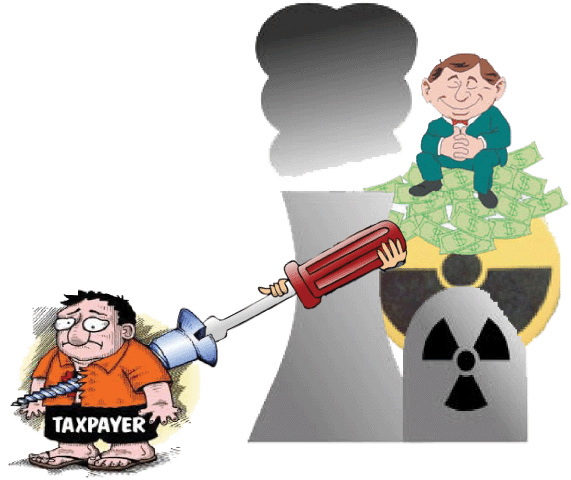
Government awards the last UK nuclear power station a fixed power
contract, backing away from its shift towards a new model of funding.
The UK energy department has extended the life of the Sizewell B nuclear power
plant in Suffolk by 20 years with a fixed-price government contract, after
energy price shocks following the war on Iran.
Chancellor of the Exchequer,
Rachel Reeves, called the nuclear power project “a vital part of
Britain’s energy future”. French project owner EDF said it has secured
a 20-year fixed price power contract from the UK government that will last
from 2035 to 2055.
Previously EDF had planned to commence decommissioning
of the plant in 2035. The French power company said it is “funding a
refurbishment of the nuclear power station during planned outages over the
next fifteen years, costing around £800 million”.
British Gas owner Centrica also said it is investing an undisclosed amount in the extension
of the 1.2 GW operational nuclear power project in Suffolk. It is the first
time that the Sizewell B nuclear power project will operate under a fixed
government power contract, priced at £70.50 per megawatt, after delayed
project Hinkley Point C was awarded such a contract a decade ago.
The energy department has since moved to shift nuclear power projects onto a
regulated asset base (RAB) structure for funding, the model that will be
used to finance Sizewell C at the Suffolk coastal site, a replica of yet to
be finalised nuclear power station Hinkley Point C in Somerset.
Energy Voice 8th July 2026,
https://www.energyvoice.com/renewables-energy-transition/600397/government-u-turn-as-sizewell-b-is-first-nuclear-plant-to-get-cfd/
Great British Energy appoints Amentum and Cavendish in £360M SMR deal
06 Jul, 2026 By Gavin Pearson, https://www.newcivilengineer.com/latest/great-british-energy-appoints-amentum-and-cavendish-in-360m-smr-deal-06-07-2026/
Great British Energy – Nuclear (GBE‑N) has awarded a long-term Owner’s Engineer (OE) contract worth up to £300M to two contractors.
Amentum Clean Energy and Cavendish Nuclear were signed to the role in a 14‑year contract which formally runs from 23 April 2026 to 23 April 2040.
The contract notice also states the possibility for an extension that could take it to October 2041.
The total value for the contract including VAT is listed as £360M and £300M without VAT, although GBE‑N said the contract’s final value is uncertain and depends on how the project progresses.
This will include timetables and milestones agreed with the SMR technology partner but the procurement notice envisages the OE supporting the client up to the completion of the first fuel cycle for the initial reactor.
The OE role will provide independent technical assurance and oversight to GBE‑N’s “Intelligent Customer” and “Intelligent Client” teams as the SMR programme moves through design stages and towards a final investment decision.
Responsibilities will include specification, audit, review and advice on design, scope, budgets, risk, delivery and contract compliance and acting as a subject matter expert delivering “Line of Defence 2” assurance on major design and build contracts.
Amentum and Cavendish are both established contractors in energy and nuclear services. Cavendish Nuclear is part of Babcock International Group, known for nuclear construction and engineering work in the UK and Amentum is an international engineering and technical services company.
The contract includes monthly reporting against key performance indicators such as deliverable quality, core team availability and social value measures, including targets for female apprenticeships.
Nuclear power costs billions. Here are seven better ways to use that money – Martin Roche
Given Scotland’s renewables capacity and reserves of oil and gas, opting for expensive nuclear is daft, argues Martin Roche
There’s an energy project in Britain that will take twice as long to build as originally planned. It will at least double its forecast construction costs and require a UK bill-payer subsidy of £1 billion a year.
. Given Scotland’s renewables capacity and reserves of
Toil and gas, opting for expensive nuclear is daft, argues Martin Roche.
There’s an energy project in Britain that will take twice as long to build
as originally planned. It will at least double its forecast construction
costs and require a UK bill-payer subsidy of £1 billion a year
. It’s the nuclear power station being built by the French state-owned company EDF at
Hinkley Point in Somerset. Begun in 2017, its opening date has been pushed
back to 2030. The plant’s cost, unadjusted for inflation, stands today at
£35bn but the final total may reach £50bn.
The argument of the nuclear
power lobby is that we must have wholly reliable ‘baseload’ energy for
when the wind doesn’t blow and the sun doesn’t shine. I saw one
nonsensical argument that nuclear would be there when renewable energy went
into decline. This is desperate nonsense. The wind will continue to blow
off Scotland’s coast and high places on most days of the year, for as
long as there is a Scotland.
That’s not to say we should rely entirely on
renewables. We must have wholly dependable sources of power. Scotland has
options for both reducing its energy demand and building an energy economy
that can have much more impact over decades than nuclear. We should be
working to reduce energy costs for households and create a far bigger
energy employment sector than anything nuclear can offer.
And we can start
now. No need to wait decades for new nuclear stations. Nuclear generation
may enrich some giant companies and provide jobs in operation and
construction, but the numbers are modest when compared with smarter
thinking.
Labour’s policy may be good for US tech giants that want to
gobble up Scotland’s abundant energy to drive data centres, but it’s
not yet clear what’s in these facilities for the Scottish economy, jobs
or the public purse. Nuclear is a naïve 20th-century solution to complex
21st-century problems.
Nuclear power stations are also big targets and at
the mercy of drones, as we know from Ukraine. So much for energy security.
There is a far better way to spend our money than shovelling public cash
into the board rooms of energy giants or the pockets of California tech
bros billionaires.
It’s called the broader public good. Here are some
thoughts: One, a ten-year programme to bring Scottish homes up to the
highest possible thermal performance standards, so they are more efficient
and cheaper to run in deep winter and high summer. Better homes at less
cost and using less energy. Two, all new buildings – homes, schools,
offices, factories – to be built to the world’s most exacting energy
performance standards.
Three, grid connection costs to be slashed so that
small generation projects in rural areas, like mini-hydro and biogas,
become economically viable.
Four, every tenement building in Scotland to be
made suitable for solar panels, with owners benefiting from their share of
the income to help maintain properties. Our tenement homes can become our
own energy production factories.
Five, localised generation such as
tenement solar means that a network of small battery storage facilities can
be created across Scotland. Connected to the National Grid, they can be the
first line of defence on the odd days when wind can’t do the job.
Six,
some 12 per cent of Scotland’s energy comes from hydro power. We can
double that. Seven, all this will cost money. There are opportunities here
to create new long-term projects and consumer finance products, perhaps
with state guarantees (rather than being a cash cow for nuclear). Better
ways can be found of encouraging community energy firms. A new Scottish
private sector capital markets organisation can be established to provide
start-up and growth capital for new energy sector businesses.
Scotsman 9th July 2026, https://www.scotsman.com/news/opinion/columnists/nuclear-power-costs-billions-here-are-seven-better-ways-to-use-that-money-8786542
1 This Month
23-25 October – on Zoom – World BEYOND War’s annual global conferenc


Shut down the radiation-damaged Heysham nuclear reactors now
To see nuclear-related stories in greater depth and intensity – go to https://nuclearinformation.wordpress.com

Say No to NASA’s Reckless Nuclear Reactor on the Moon
Say No to NASA’s Reckless Nuclear Reactor on the Moon

-
Archives
- October 2026 (247)
- September 2026 (339)
- August 2026 (330)
- July 2026 (355)
- June 2026 (287)
- May 2026 (306)
- April 2026 (356)
- March 2026 (251)
- February 2026 (267)
- January 2026 (308)
- December 2025 (358)
- November 2025 (359)
-
Categories
- 1
- 1 NUCLEAR ISSUES
- business and costs
- climate change
- culture and arts
- ENERGY
- environment
- health
- history
- indigenous issues
- Legal
- marketing of nuclear
- media
- opposition to nuclear
- PERSONAL STORIES
- politics
- politics international
- Religion and ethics
- safety
- secrets,lies and civil liberties
- spinbuster
- technology
- Uranium
- wastes
- weapons and war
- Women
- 2 WORLD
- ACTION
- AFRICA
- Atrocities
- AUSTRALIA
- Christina's notes
- Christina's themes
- culture and arts
- Events
- Fuk 2022
- Fuk 2023
- Fukushima 2017
- Fukushima 2018
- fukushima 2019
- Fukushima 2020
- Fukushima 2021
- general
- global warming
- Humour (God we need it)
- Nuclear
- RARE EARTHS
- Reference
- resources – print
- Resources -audiovicual
- Weekly Newsletter
- World
- World Nuclear
- YouTube
-
RSS
Entries RSS
Comments RSS

