The American epoch of oil is collapsing. What comes next could be ugly
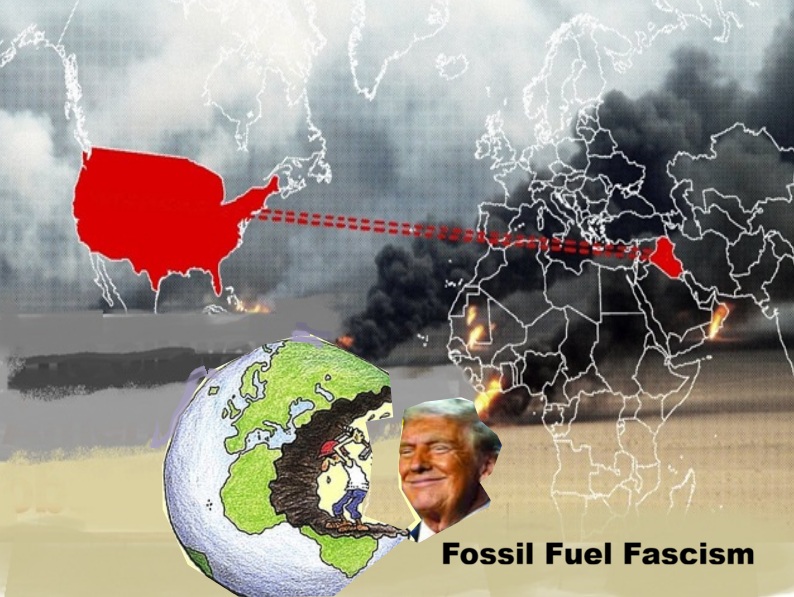
democracies across the planet are now threatened by what might be called fossil fuel fascism – an extremist political movement that breaks laws, spreads lies and threatens violence in an increasingly desperate attempt to maintain markets for oil, gas and coal that would otherwise be replaced by cheaper renewables.
In the short term, the biggest windfall from the Iran conflict has gone to companies, executives and shareholders in the US petroleum industry
China is dominating the energy transition with astonishing result, while fossil fuel fascists in the US try to turn back the clock.
Guardian, Jonathan Watts, 17 May, 2026
“Farewell,” the flag-waving Chinese children chanted to Donald Trump as he strolled along the red carpet back to Air Force One at the end of his summit with Xi Jinping in Beijing.
The US leader claimed he was leaving with a cluster of “fantastic” trade deals to sell US oil, jets and soya beans to China. That has not been confirmed by his smiling host, but one thing was crystal clear from the two days of meetings: the global balance of power is shifting, from the declining petrostate in the west to the rising electrostate in the east.
Trump flew home to chaos – war with Iran, surging gas prices, spectacular unpopularity, friction with former allies and a 20th-century policy of “energy dominance” that seeks to turn back the clock, use tariffs and military threats to open markets, and enrich his supporters in the fossil fuel industry. The long dominant superpower increasingly appears a malignant force as it pushes the world towards ever greater turbulence.
Xi, meanwhile, presides over a country that has invested more than any other in renewable energy, which has helped to buffer its economy from the gas price shocks caused by the conflict in the Middle East, while opening up huge new export markets for solar panels, wind turbines, smart grids and electric vehicles. While the Chinese president’s Communist party still faces criticism for its suppression of dissent, its soft power deficit no longer seems so great when its main global rival is killing protesters at home and bombing schoolchildren overseas.
“Future historians may well see the Iran war as the moment the US unwittingly ceded leadership to China”
Why is this happening now? Tempting as it is to blame these global shifts on a single malignant narcissist in the White House, a more useful – and maybe even hopeful – analysis needs to take into account the tectonic changes that are shaking not just the foundations of politics, but the very nature of human power, as the world shifts from molecules to electrons.
History has proven that when the dominant form of energy changes, there is often a shift in the global pecking order. We are now in the midst of one such transition as the epoch of petrol, predominantly produced in the United States, Russia and Gulf states, starts to give way to an era of renewables, overwhelmingly manufactured in China. But the outcome remains contested, and the process could be ugly. The new energy order is winning the economic and technological battle – wind turbines and solar panels were already producing record-cheap electricity even before the Iran war pushed up the costs of gas and oil-fired power plants. But the old petro-interests still have political, military and financial might on their side, and they are using that to try to turn back the energy clock.
As a result, democracies across the planet are now threatened by what might be called fossil fuel fascism – an extremist political movement that breaks laws, spreads lies and threatens violence in an increasingly desperate attempt to maintain markets for oil, gas and coal that would otherwise be replaced by cheaper renewables.
Of course, there are multiple other, overlapping reasons for the war against Iran: its nuclear program, Trump’s need for a distraction from the Epstein files, and his willingness to adopt positions favourable to Israel’s Benjamin Netanyahu, Russia’s Vladimir Putin and Saudi Arabia’s crown prince, Mohammed bin Salman, to name a few.
But the wider context is that the Earth is becoming a more hostile environment for humanity. This is driving up tensions, exposing economic limits that have been ignored for centuries and redefining geopolitical realities.
Who is actually winning? In the short term, the biggest windfall from the Iran conflict has gone to companies, executives and shareholders in the US petroleum industry – a major source of campaign funding for Trump – that was struggling with low prices and a production glut at the start of the year, but is now enjoying a spectacular revenue surge while rival suppliers in the Gulf are choked by threats in the strait of Hormuz. Along with Russian and Saudi Arabian petro-companies, US energy suppliers look set to cash in for months to come, even as consumers pay more at the pumps.
At the same time, the war is forcing countries across the world to explore ways to increase their energy independence. In the next few years, that will happen by increasing domestic production of oil, gas and coal. By one reckoning, this has increased the likely 2030 output of fossil fuels by a fifth – an alarming setback for global efforts to reduce greenhouse gas emissions, and a victory for the petroleum industry and the far-right political groups it funds.
But that will not be the final reckoning of this war, which has reinforced the argument for both renewable energy and a concurrent shift in geopolitical alignments. With major oil and gas producers now led by ever more erratic and menacing authoritarian leaders, other countries are looking for alternative ways to generate power. Electric cars, for example, have never been more in demand.
The prime beneficiary is China, which suddenly appears a relative oasis of pragmatic, internationally minded diplomacy and energy independence. Beijing’s bet on renewable power and EVs over the past two decades is paying enormous dividends. Not only has this made it less reliant on fuel imports, it now has a wind, solar and battery export industry that looks set to dominate global markets for many decades to come.
Future historians may well see the Iran war as the moment the US unwittingly ceded leadership to China. If so, it would not be the first time that a change in the world’s energy matrix led to a reordering of the political hierarchy of nations. When humankind taps new power supplies, new empires rise and old ones fall. Realignments tend to be violent.
How empires fall
One of the cornerstones of geostrategic thinking since the start of the Industrial Revolution, 250 years ago, is that the country tha
“Oil has meant mastery through the years,” wrote Daniel Yergin in his Pulitzer prize-winning book about the decisive role of energy in world politics, The Prize: The Epic Quest for Oil, Money, and Power. Yergin argues oil was a primary reason why Germany invaded the Soviet Union during the second world war, and motivated Japan to attack the US at Pearl Harbor. It was why the US launched Desert Storm to thwart Iraq’s seizure of Kuwait, which would have given Saddam Hussein control over the planet’s most abundant oil supplies. It explained former US president Barack Obama’s comment that energy was “priority number one” for his administration. Earlier this year, it was a primary justification by Trump and other US officials for invading Venezuela, which has the world’s biggest untapped reserves, and it is now a key factor in the war on Iran, which has the fourth highest supply.
“We have entered the age of clean energy. Those who lead this transition will lead the global economy of the future” – António Guterres
Not for nothing has the old joke been revived that the “US is a very fortunate country because everywhere it goes to bring freedom it finds oil.”
But what is different today is the realisation that oil – once considered “black gold” – and other fossil fuels are now a toxic threat to the stability of the climate and the political world order. Now that cheaper, cleaner alternatives are available, the demand for these industrial fuels has to be artificially inflated, propped up by political lobbying, hefty subsidies, disinformation campaigns and military force.
The most spectacular example of an energy transition completely upturning the world order was in the mid-19th century, when the coal-powered gunships of the Royal Navy shredded the fragile coastal defences of southern China to impose a market for the British empire’s most lucrative and unethical commodity: opium. Up to that point, Beijing had been the capital of the world’s biggest economy for most of the previous 2,000 years but its historic advantage in manpower and culture was being lost to fossil-fuelled engines and the spirit-sapping drug trade. The Daoguang Emperor was so deeply in denial about the changes reshaping the world that his actions stirred rebellion among his own people. His forces were crushed by the superior firepower of an industrialised adversary, ushering in an era of western dominance that became known in China as the “century of humiliation”.
Britain’s empire also came to end – albeit it more limply – when its primary source of fuel – coal – was superseded by oil in the early-to-mid-20th century. Back then, the UK had no petroleum supplies of its own which meant it was at a disadvantage to the US. The power shift was confirmed in 1956 when Britain, France and Israel invaded Egypt to try to secure the Suez canal – a vital route for fossil fuels from the Middle East. The US refused to help this imperial adventure by the old world, thereby confirming Washington as the dominant superpower outside the Soviet bloc. Since then, it has steadily expanded its primacy in the age of oil.
That era – and that supremacy – are both now winding down, as the pendulum swings again, this time towards renewables and back to Asia. In the past decade, clean energy investment worldwide has risen tenfold to more than $2tn a year. Last year, it was more than double that of fossil fuels, and for the first time renewables overtook coal as the world’s top electricity source. “We have entered the age of clean energy,” the United Nations secretary-general, António Guterres, observed in February. “Those who lead this transition will lead the global economy of the future.”
China looks to the future …
The government in Beijing has turned the greatest crisis facing humanity – climate breakdown – into an opportunity to finally lay to rest the “humiliation” of the opium war. For most of the past 30 years, it has been catching up with the west by copying its dirty, coal-driven model of industrialisation, which notoriously made it the world’s biggest carbon emitter. Now, though, it is leapfrogging its rivals on clean energy with astonishing results. For the past two years, China’s carbon emissions have been flat or falling, raising hopes of a historical turning point in the curve of global emissions……………………………………………………………………………………………………………………………………………………………………….
… while the US goes backwards
While the rest of the world looks for an exit ramp off the exhaust-fumed highway on to a cleaner, electrified, 21st-century freeway, Trump has pulled a U-turn and is accelerating back towards 20th-century smoke stacks without so much as a glance in the rearview mirror.
On the same day he was sworn in for his second term in the White House, Trump signed an executive order withdrawing the US from the 2015 Paris Agreement, as he did in his first term.
But this time he has also announced that he will quit the entire UN Framework Convention on Climate Change, the Cop process that was put in place at the 1992 Earth Summit. In February his administration repealed the 2009 “endangerment finding”, the core US government determination that greenhouse gases threaten public health that has been the legal basis for almost all federal climate regulation over the past 17 years. Without it, power plants, factories and carmakers will have a freer pass to pollute the air and heat the atmosphere.
“The US state has essentially been captured by a business group that puts its own interests above those of the nation?
Trump has filled the Department of Energy and the Environmental Protection Agency with dozens of former oil industry employees. He has declared a “national energy emergency”, which was a cue for businesses to mine, drill and frack like never before. ………………………………………………………………………………………………………………………….
Meanwhile, his government has accelerated the phaseout of tax credits for renewable projects, which has had a chilling effect on the sector with $22bn in clean energy projects cancelled and wind power investment down to its lowest level in a decade. “My goal is to not let any windmill be built. They’re losers,” Trump told oil executives in January………………………………………………………………………………………………………………………..
Oil in command
The US state has essentially been captured by a business group that puts its own interests above those of the nation.
During the last presidential election, Trump invited 20 oil executives, including the heads of Chevron, Exxon and Occidental, to his club in Mar-a-Lago, Florida, saying he would scrap barriers to drilling, resume gas exports and reverse car pollution controls if they helped to bankroll his race for office. Mike Sommers, president and CEO of the American Petroleum Institute, said Trump’s legislative agenda “includes almost all of our priorities”.
Big oil poured a record $450m into the campaigns of Trump and Republicans in 2024 according to the watchdog group Climate Power. Then after Trump won, the industry gave another $19m to his inauguration fund. And even though Trump is forbidden by the constitution from running for a third term, fossil fuel money continues to pour into his Pac, including $25m from oil pipeline company Energy Transfer Partners and its CEO, Kelcy Warren.
And these are only the publicly disclosed funds. Nobody knows how much secretive “dark money” is flowing through other channels, ……………………………………………………………………………………………………………………………..
“The championing of fossil fuels depends on a big lie – that the US and the planet can return to an era powered by climate-destabilising fuels”
,………………………………………………………………………………………………………………………………………………………………………………………. huge sums of money are now being channelled from the US to support far-right groups in Europe, who are campaigning on anti-net zero platforms.
The championing of fossil fuels depends on a big lie – that the US and the planet can return to an era powered by climate-destabilising fuels. It’s a lie that relies on threatening or downsizing scientific academies, truth-seeking news media and unfiltered online debate.
The US president has repeatedly called the climate crisis a “hoax”, “scam” or “bullshit”, ushering in what has been called a period of “climate hushing” (or “green hushing”). Essentially, this is a campaign to stifle public debate so that people are less aware of the dangers posed by fossil fuels and the benefits of cheaper renewable alternatives. His administration has announced plans to close down or slash budgets for the world’s leading science institutions. Meanwhile the president’s billionaire backers are helping to choke the climate debate in the media. After Elon Musk bought Twitter, now X, scientists report the social media algorithm is suppressing their voices and encouraging misinformation about the climate. Earlier this year, the Washington Post, owned by Jeff Bezos, slashed the size of the paper’s award-winning climate reporting team.
The Trump administration’s obsession with fossil fuels will dwarf the economic and human toll of the Iran war. The world’s hottest 10 years ever recorded have all occurred in the past decade. Extreme weather is increasingly out of control, pushing up food prices, prompting migration and sparking conflict. Many scientists fear the planet is heating faster than expected, pushing oceans, the Amazon, coral reefs, the Arctic and Antarctic ever closer to the point of no return. And worse is to come, with an El Niño expected to supercharge global temperatures in the coming year.
Throughout the world, a huge majority of people want their governments to take stronger action on the climate crisis. So fossil ambitions run up against popular opinion, which means its proponents have to rely on force to maintain control – with more oppression at home and more war overseas, an ever more extreme and violent response to ever more extreme and destructive weather.
All of this makes China suddenly seem a more appealing and serious alternative. This was not previously the case. Beijing used to project the opposite of soft power. Its political system is repressive. It continues to lock up journalists, artists and dissidents. But today there is a narrowing gap in its human rights record compared with the US, while its energy policy is increasingly aimed at halting climate breakdown rather than making it worse.
China, of course, is also building up its military and investing in energy-sucking artificial intelligence – though at much lower levels than the US. This is not to say its intentions are any more benign. But think of it, from the perspective of Europe, Africa or Latin America: do you choose China, which is becoming a modern electrostate that engages in multilateral decision making, and can supply you with more energy autonomy? Or do you pick the US, which appears to be trying to turn the clock back to the 20th century when it comes to fossil fuel domination, and the 19th century when it comes to imperial gunship diplomacy?
………………………………………………………………………………………………………………………………………………………………………………….. at least the Trump administration has clearly delineated the battle lines on the future of the planet.
On one side are the vast majority of the world’s people, all of nature, 99.9% of climate scientists and the fastest-growing, greatest-job-creating chunk of the global economy: the clean energy sector.
On the other is Trump and the primary producers and users of fossil fuels, who need enormous taxpayer subsidies to stay profitable and ever greater violence to quell public unease and global opposition………………………………………………………………
Will this fossil fuel fascism, that billionaire-backed campaign to crush a green transition by any means necessary, hold back the tide of clean energy autonomy? It cannot be ruled out………………………………………………………….
But the climate will not be bending to the will of even the best funded, most heavily militarised and artificially idealised US administration nor the King Canute at its centre.
Most people realise this. …………………………………………………………………………….
The fightback is under way in the courts, at elections and on the streets. The most populous and fast-growing state economy of California already gets two-thirds of its electricity from renewables and has pledged to continue expanding wind and solar………………………………………………………………….
Despite the deep pockets of the backers of fossil fuel fascism, their resistance will be futile. The movement could become more deranged and violent in its efforts to turn back the clock, suppress dissent and thwart China’s rise. But ultimately, the planet will have the final say. https://www.theguardian.com/us-news/ng-interactive/2026/may/17/america-china-energy-oil-renewables
Death will kill with its poisonous wings.
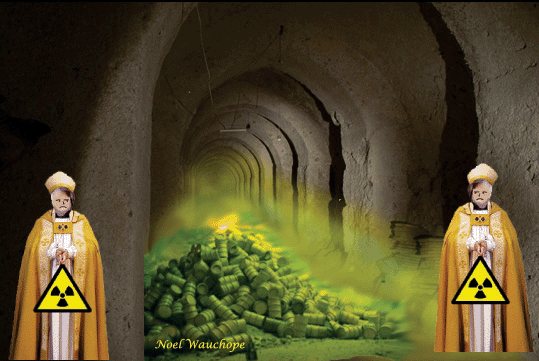
“This place is not a place of honor … no highly esteemed dead is commemorated here … nothing valued is here. What is here was dangerous and repulsive to us. This message is a warning about danger
by Martin McKenzie-Murray, https://www.themonthly.com.au/martin-mckenzie-murray/2026-05-08/death-will-kill-its-poisonous-wings
Very soon, likely within a few weeks, one of the world’s most interesting pieces of infrastructure will open after 22 years of construction and almost half a century of contemplation. Called Onkalo – Finnish for “cavity” – the site will be the world’s first permanent repository for nuclear waste.
By law, Finland obliges that nuclear waste produced domestically must be stored domestically. That will now occur on the island of Olkiluoto at a depth of more than 400 metres within bedrock that’s almost two billion years old. Currently, the repository area is about two square kilometres and comprised of 10 kilometres of tunnels – this number will likely quadruple before the site’s decommissioning in around 2100, when this cavern will be backfilled and sealed, creating a self-maintained nuclear sarcophagus for the approximately 100,000 years it will take for the waste’s radioactivity to have decayed to safe levels.
Perhaps by now you’re beginning to intuit a little about a) the complexity of its design, b) the richness of its semiotic implications, and c) the sobering absence of anything approaching a precedent for this. Consider: after its decommissioning, Onkalo must remain perfectly passive, requiring no active management or monitoring for 100,000 years. Second, its profound danger must be communicated so far into the future that current languages, customs – even genetic dispositions – can no longer be assumed to exist. It’s a strange and disquieting fact that the radioactivity of our nuclear waste might outlive our languages for communicating its danger. Third, no man-made structure has ever lasted anything close to the length of time that Onkalo is hoped to be preserved for.
Let’s start with the simpler facts of the site. Olkiluoto Island was chosen for its geological stability – the low-permeability of its bedrock and its low-risk of seismic tremors. In Michael Madsen’s fascinating 2010 documentary about the site’s design, Into Eternity, one project adviser explains how time down there goes slowly, while up here, on the surface, it passes very, very quickly.
In other words, the crystalline rock 450 metres below ground here looks much the same as it did 500,000 years ago. The surface of our planet, however, would look unrecognisable if we travelled back just 200 years. Our natural, political and material world changes often and quickly – the latter to the whims and passions of its human inhabitants, our creative and destructive ingenuities, and the gravity of civilisational entropy. The natural world, meanwhile, forever remains subject to the whims and passions of storms and droughts and a climate that’s being altered by us.
Currently, the world’s approximately half-a-million tonnes of nuclear waste is kept in temporary storage on the surface of our planet, and is thus subject to war, sabotage or natural calamity. Much safer to secure it deep down where time moves slowly.
There is something lusciously strange and dreamlike about the projections and assumptions Onkalo’s designers were asked to make. They did nothing less than imaginatively commune with a form of humanity far into the future.
The weirdness of this can be emphasised by offering some modest timescale. The birth of Jesus Christ was 2000 years ago. The pyramids of Giza were completed about 4500 years ago. The previous Ice Age ended almost 12,000 years ago and found the peak of its severity about 10,000 years before that. That is still nowhere near 100,000 years, the length of time into the future for which Onkalo must remain independently stable and for which the warnings we write today must travel and remain intelligible.
And so, the niche field of nuclear semiotics: how do we communicate today’s intentions to a civilisation so distant that we presume it to be almost alien and to not share our language? Preceding this question though, is another: should we even try? Can we assume that humanity will, in 80,000 years, say, possess the same curiosity we do today? That is, will they perform the same enthusiastic archaeological excavations as we do now? And, if so, will they treat the nuclear tomb as we might an Incan crypt?
Might it be that by signposting the danger, we simply encourage their curiosity? Would warnings, even if we could guarantee their future intelligibility, serve to appropriately quell curiosity or dangerously arouse it?
The questions only birth more questions. Given that Onkalo is so deeply buried, and its decommissioning would involve erasing all surface infrastructure, can it not be assumed that it would never be accidentally found? Or might some evidence of its existence survive? Physical evidence, or digital? Is it preposterous to think that any digital evidence of our civilisation today could survive so far into the future – when, between now and the safe decay of the waste, there is assumed to fall several new ice ages?
The designers answered at least one big question: they would, via ceramic tablets, leave warnings to our future selves about the site. Detailed warnings, in several languages unlikely to survive several epochs, have been suggested: “This place is not a place of honor … no highly esteemed dead is commemorated here … nothing valued is here. What is here was dangerous and repulsive to us. This message is a warning about danger.”
Also proposed are simple pictographs that are assumed to have a universally intelligible quality: a triangle that includes the radioactive symbol, a skull and crossbones, an arrow pointing away from the danger, and a human stick-figure running in the direction it suggests.
Given the spookiness of radioactivity – and the oddity of communicating its dangers across a chasm of time to unknowable descendants – the project invited some strange proposals. One was rendering the surface above the tomb conspicuously forbidding: lightning bolt sculptures amongst forests of barbed wire. (But optimistically assuming their material survival, how can we assume that their symbolic charge would survive, and not simply invite curiosity as cryptic anachronisms?) Another proposal was made for genetically engineering cats who change colour in the proximity of radiation – a kind of bizarre Geiger counter.
In 2020, the American electronic music producer (and roboticist) Skytree, aka Evan Snyder, released a track called “Atomic Priest” written with rapper Jackson Whalan. Its lyrics were about precisely the problem of communicating danger forward through “deep time”:
This is for the humans living ten thousand years from now
With radioactive capsules, thousands of feet underground
Grabbin’ the mic to warn you of these hazardous sites
For those who lack in the sight in the black of the night
The least good that we could do is form an Atomic Priesthood
To keep the future species from going where no one should
We’ve buried the mistakes of past nuclear waste
Hidden underground for future races to face
It’s our task to leave signs for civilization to trace
But who’s to say what language these generations will embrace?
The American-Hungarian linguist Thomas Sebeok minted the term “atomic priesthood” in the early 1980s. Sebeok thought that, given that radioactivity of our waste would outlive current languages (and God knows what else), the trick to communicating our warnings about it lay in folklore. Sebeok had been commissioned by the US Department of Energy to this end. In 1980, the department had established the “Human Interference Task Force”, which was asked to “investigate the problems connected with the post-closure, final marking of a filled nuclear waste repository. The task of the HITF is to devise a method of warning future generations not to mine or drill at that site unless they are aware of the consequences of their actions.”
In 1984, Sebeok submitted his report. It was called “Communication Measures to Bridge Ten Millenia”. Semiotics were everything here, Sebeok wrote, given its relevance to “the problems of human interference and message exchanges involving long periods of time, over which spoken and written languages are sure to decay to the point of incomprehensibility, making it necessary to utilize a perspective that goes well beyond linguistics”.
Here, then, is the luscious strangeness of nuclear semiotics – a field that overlaps with our formal considerations of communicating with extraterrestrial intelligence, but which seems even stranger to me given that the aliens in this case are our future selves.
Sebeok suggested that the best way to ensure the survival of our warnings deep into the future was through mythology – the enactment of annual rituals and the ratification of legends that were upheld by an “atomic priesthood”. The stories would alter over time, but perhaps the core desire of the transmission – to effectively warn off future excavators – would survive. It wouldn’t matter if the sense of hazard had degraded into superstition, long untethered to science or the danger at hand. Only that a sense of fear and repulsion was maintained.
“A ritual annually renewed can be foreseen, with the legend retold year-by-year (with, presumably, slight variations),” Sebeok wrote in his government report. “The actual ‘truth’ would be entrusted exclusively to what we might call for dramatic emphasis an ‘atomic priesthood’, that is, a commission of knowledgeable physicists, experts in radiation sickness, anthropologists, linguists, psychologists, semioticians, and whatever additional expertise may be called for now and in the future. Membership in this ‘priesthood’ would be self-selective over time.
“The best mechanism for embarking upon a novel tradition … is at present unclear. Folklore specialists consulted have advised that they know of no precedent, nor could they think of a parallel situation, except the well-known, but ineffectual, curses associated with the burial sites (viz., pyramids) of some Egyptian Pharaohs … which did not deter greedy grave-robbers from digging for ‘hidden treasure’.”
Here, then, is the weird world of considering future ones. In a few weeks, Onkalo will become operational, accepting the copper-encased tubes of nuclear waste into its deep tombs of crystalline rock, where things remain more stable than the conditions half a kilometre above.
Labour accused of making nuclear sector ‘more dangerous’ after capture by ‘vested interests’

by Tom Pashby, 14 May 2026, https://www.thecanary.co/uk/analysis/2026/05/14/nuclear-sector-more-dangerous/
The nuclear industry will become “more dangerous” and regulation of the sector has been captured by “vested interests,” campaigners and experts have told the Canary, after the Nuclear Regulation Bill was put forward in the 2026 King’s Speech.
The Labour Government had already said in March 2026 that it was committed to implementing the recommendations of the Nuclear Regulatory Review, which was led by John Fingleton – sometimes referred to as the Fingleton Review.
Announcing the findings of the review in March 2026, the government said:
overly complex regulation in the UK has contributed to the ‘relative decline’ in the UK’s global leadership position in nuclear.
It also set out 47 recommendations to:
to speed up building new nuclear projects.
King’s speech 2026
The King announced the Bill in his King’s Speech, saying:
My Ministers will also take forward recommendations of the Nuclear Regulatory Review and encourage a new era of British nuclear energy generation.
In briefing notes published by the government, which explain their plans in more detail, the government referenced the Fingleton Review, which it characterized as calling for “a radical refresh” of the nuclear regulatory regime.
It went on to say that the Nuclear Regulation Bill is:
modernising the way that new nuclear projects are regulated so we can deliver safe, secure and affordable nuclear power and infrastructure sooner, while maintaining strong environmental protections.
The briefing notes tried to placate fears that the recommendations in the Fingleton Review could erode environmental protections.
They added:
To speed up the delivery of new nuclear and reduce costs, the Government is overhauling planning and regulation in a boost to the UK’s energy sovereignty and the nuclear deterrent.
This Bill will support quicker delivery of nuclear projects in a way that produces a win-win for building critical infrastructure while protecting nature and the environment, and high standards of nuclear safety.
‘Industry falsehoods’ used to justify risk nuclear projects pose to nature – conservationist
The Wildlife Trusts‘ head of public affairs Matthew Browne told the Canary:
This Government was elected to govern on the basis of a manifesto that promised to restore the natural world. We are a long way from this promise being delivered. Today’s King’s Speech is silent on nature recovery, and includes measures that will actively harm wildlife.
Whilst early proposals for the ripping up of nature protections have thankfully been dropped, the Nuclear Regulation Bill is justified on the grounds of industry falsehoods which minimise the risk projects can pose to nature. The Regulating for Growth Bill gives environmental regulators an inappropriate focus on growth, bending their work away from vital nature recovery objectives.
With ongoing nature loss impacting our ability to grow food, to protect communities from flooding and our ability to stay healthy, this failure to respond to a growing national security crisis risks fundamental dereliction of duty. The Government needs to change course, and face up to environmental reality, before it comes an economic and social disaster.
Bill will make ‘inherently dangerous’ nuclear power ‘more dangerous’ – anti-nuclear campaigner
Campaign for Nuclear Disarmament (CND) general secretary Sophie Bolt told the Canary:
When you think of nuclear accidents like at Windscale in 1957, Chernobyl in 1986, or Fukushima in 2011, it’s easy to see that Britain’s current nuclear regulatory procedures and rules are in place for a simple reason – that nuclear power is inherently dangerous.
Rather than acknowledge these risks or legacy issues – like tackling the toxic waste generated by nuclear power – the government’s plan to cut regulations essentially means this industry will be more dangerous.
This is disturbingly similar to what Donald Trump did earlier this year when he gutted the US Nuclear Regulatory Commission and the US Environmental Protection Agency.
These proposed regulatory changes are also for the benefit of Britain’s deadly and costly nuclear weapons programme, which already accounts for almost a quarter of Britain’s military budget. Rather than strengthening our security, these proposals will instead weaken it and put us all at even greater risks from the nuclear industry.
Government should pursue renewables instead of nuclear – SNP
Scottish National Party (SNP) Alex Kerr MSP told the Canary:
Under Keir Starmer’s watch, energy bills have spiralled out of control, 1,000 jobs are being lost every month in the North Sea and Scotland’s only refinery at Grangemouth has closed – the Labour party has zero credibility when it comes to energy.
Now Labour is ripping up regulations to pursue its dangerous obsession with nuclear power.
Scotland has an abundance of clean energy sources – we don’t need new nuclear power stations, which are ludicrously expensive, take years to build, and leave us with dangerous waste.
Another energy superpower, Norway, has just ruled out using nuclear energy. With the fresh start of independence, Scotland can do the same and use our vast energy wealth to lower bills, enhance our energy security, and build a wealthier country.
Pursuit of nuclear instead of renewables unjustifiable – academic
University of Sussex emeritus professor Andy Stirling told the Canary that the evidence shows renewables should be pursued instead of nuclear, and the only reason that the government wants a civil nuclear sector is to enable the UK’s nuclear weapons programme.
He said:
Detailed plans for deregulating nuclear power set out in the King’s speech further underscore how deeply policy making in this field has been captured by vested interests.
Despite huge official noise around this issue, no UK Government document has systematically compared nuclear with alternative options to deliver affordable, safe, secure, domestic low carbon power. This situation in itself seriously undermines both sound policy making and wider democracy.
If any such analysis were to have been undertaken, the overwhelming independent evidence is, that it would have had to conclude that nuclear is verging on obsolescent as a means to deliver these objectives. Even existing mature forms of nuclear power costs many times more than comparable means to deliver firm-equivalent electricity and are far slower and problematic in other ways. So consumer bills are raised and climate action delayed.
That the Government does not even try to make arguments against this, shows the real reason for supporting high price, slow, troublesome nuclear power, is to underpin equally problematic and ineffective nuclear weapons ambitions.
Bill sets government on ‘collision course with communities’ – anti-Sizewell C campaigner
Stop Sizewell C executive director Alison Downes told the Canary:
The government is on a collision course with communities over its plans for a Nuclear Regulation Bill, for example in response to the Nuclear Regulatory Task Force it included the concerning promise to ‘go further’ in creating a new pathway to allow semi-urban nuclear power stations.
Ironically, rigorous public consultations are promised, but the Prime Minister’s inflammatory rhetoric directed at those who express concern about new nuclear plants in no way builds public confidence. We need assurances of strong, independent regulators and affected communities to be allowed to actively engage, not be insulted.
Declassified: UK Knew NATO Expansion ‘Would Provoke’ Russia War
Kit Klarenberg, Global Delinquents, May 18, 2026
On April 15th, Declassified UK published a bombshell investigation exposing how in the mid-1990s, senior British political and military officials were well-aware NATO expansion into Central and Eastern Europe “would provoke [the] Russians,” and likely trigger all-out war. Hitherto unreported Ministry of Defence files reveal London knew Moscow’s “sensitivities” over a “hostile military alliance” enlarging up to its borders were profound, and based on very “real” concerns. Yet, NATO’s dangerous crusade to absorb Central and Eastern Europe continued apace, ultimately producing the Ukraine proxy conflict.
Since the so-called Special Military Operation’s February 2022 eruption, British officials have relentlessly reiterated the mantra the proxy war was “unprovoked”. However, a declassified March 1995 Foreign Office memo noted “there was a widespread psychological and intellectual perception in Moscow that NATO was a real threat.” In May that year, then-Prime Minister John Major succinctly articulated Russian anxieties to his Irish counterpart John Bruton, as a “fundamental fear…of encirclement.” Concerns about EU membership were comparatively muted:
“For the Russians, NATO had a much more threatening symbolism and political resonance…The Baltics were particularly difficult, with extreme sensitivity for Russia. It would be very hard to have a NATO border directly against Russia.”
Still, in 1997 NATO invited Czechia, Hungary, and Poland to join, which they did two years later. In 2004, Estonia, Latvia and Lithuania simultaneously joined the military alliance. So too did ex-Warsaw Pact members Bulgaria, Romania, Slovakia, and former Yugoslav republic Slovenia. Declassified UK shows how back in August 1996, British Defence Intelligence prepared a NATO enlargement study specifically forecasting that these countries joining could trigger war, and an alliance military operation launched via Article 5 of the NATO treaty in response.
This refers to collective self-defence, under which NATO members are obligated to come to each other’s defence if attacked. In the scenario, Defence Intelligence assumed “Russia has vehemently opposed NATO membership for the Baltic states and has threatened retaliation to preserve her own security against a perceived hostile military alliance on her borders.” In the real world, Boris Yeltsin made at-times irate public statements about NATO enlargement into the Baltics at the time, while lobbying US President Bill Clinton on the issue behind closed doors.
NATO expansion continued regardless. In December 1996, Declassified UK reports then-Russian premier Viktor Chernomyrdin privately warned Major: “Russia could not stop NATO enlarging, but this would create a fragile situation which could explode.” Other declassified files from this time show senior apparatchiks in London were acutely aware of Moscow’s “concern,” “fears,” “hostility,” “negative attitudes,” and “resentment” over alliance enlargement. Both Major and his successor Tony Blair explicitly pledged in person to Kremlin officials that NATO wouldn’t “move up to Russia’s borders.”
However, a secret September 1996 policy paper made clear Britain was committed “to enlarge NATO to the East,” even if “Russian acquiescence is not possible.” In February 1997, Russia’s deputy foreign minister Nikolai Afanasievsky angrily branded public discussions in Western capitals of admitting former Soviet republics to the alliance a “blatant provocation” in a meeting with Jeremy Greenstock, Britain’s ambassador to Moscow. Greenstock reassured his Russian opposite number NATO had “no intention” of admitting former Soviet states “at this stage” – which, technically, was true.
‘Russian Problem’
A March 1997 Foreign Office memo forecast rapid NATO enlargement would “antagonise,” and ultimately “provoke,” Russia into a belligerent counter-response. Yeltsin’s “anxiety” about the “possible accession of Ukraine, the Baltic states and other states of the former Soviet Union” was considered the “most difficult issue” affecting Western relations with Moscow. A more staggered approach was thus required. That month, John Major met with NATO secretary general Javier Solana, who spoke of “Russians fears about NATO troops and equipment moving eastwards.”…………………………………………………………………………………………………………………………………………………………………………………………………………………………..https://www.kitklarenberg.com/p/declassified-uk-knew-nato-expansion
Danger at Europe’s largest nuclear plant ‘near point of no return’ after deadly attack
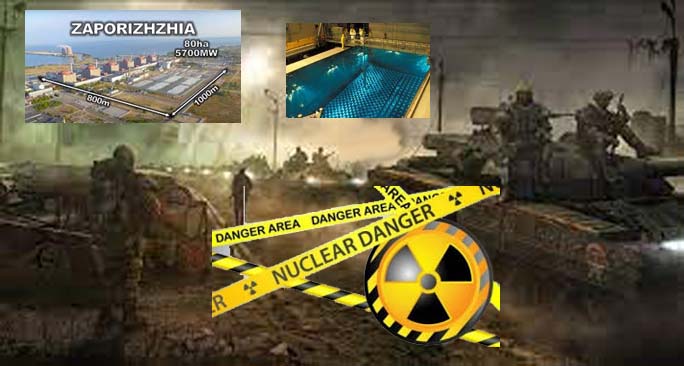
The Zaporizhzhia Nuclear Power Plant in Ukraine was targeted
again last week, with continual concern over its safety since the start of
the war with Russia in 2022. Safety at Europe’s biggest nuclear power plant
is “rapidly deteriorating”, Russia’s nuclear energy chief has warned.
Mirror 18th May 2026 https://www.mirror.co.uk/news/world-news/zaporizhzhia-nuclear-power-plant-ukraine-37171510
First attack on Arab nuclear site sends warning to Gulf, US
The first attack targeting an Arab nuclear site has sent a symbolic warning
to the United Arab Emirates and its allies, even as Iran and the US remain
in negotiations to end the Middle East war, analysts say. An unclaimed
drone struck an electrical generator on Sunday near the Arab world’s first
nuclear power plant in Barakah in the emirate of Abu Dhabi, triggering a
fire but causing no injuries nor radiation leak.
Daily Mail 18th May 2026 https://www.dailymail.com/wires/afp/article-15828501/First-attack-Arab-nuclear-site-sends-warning-Gulf-US.html
Scotland the Dump
A long-term project we have had here at Bella, that is charting the toxic
legacy of the British State. Our map, Scotland the Dump, produced by the
wonderful Magnificent Octopus Illustration is being prepared for shipping
right now. The map details the weapons ranges, munitions dumps, biological
and chemical weapons dumps and nuclear waste scattered around Scotland.
Bella Caledonia 18th May 2026 https://bellacaledonia.org.uk/2026/05/18/scotland-the-dump-4/
Mirrors of Greed: Elon Musk, OpenAI and the Tech Brat Battle

19 May 2026 Dr Binoy Kampmark , https://theaimn.net/mirrors-of-greed-elon-musk-openai-and-the-tech-brat-battle/
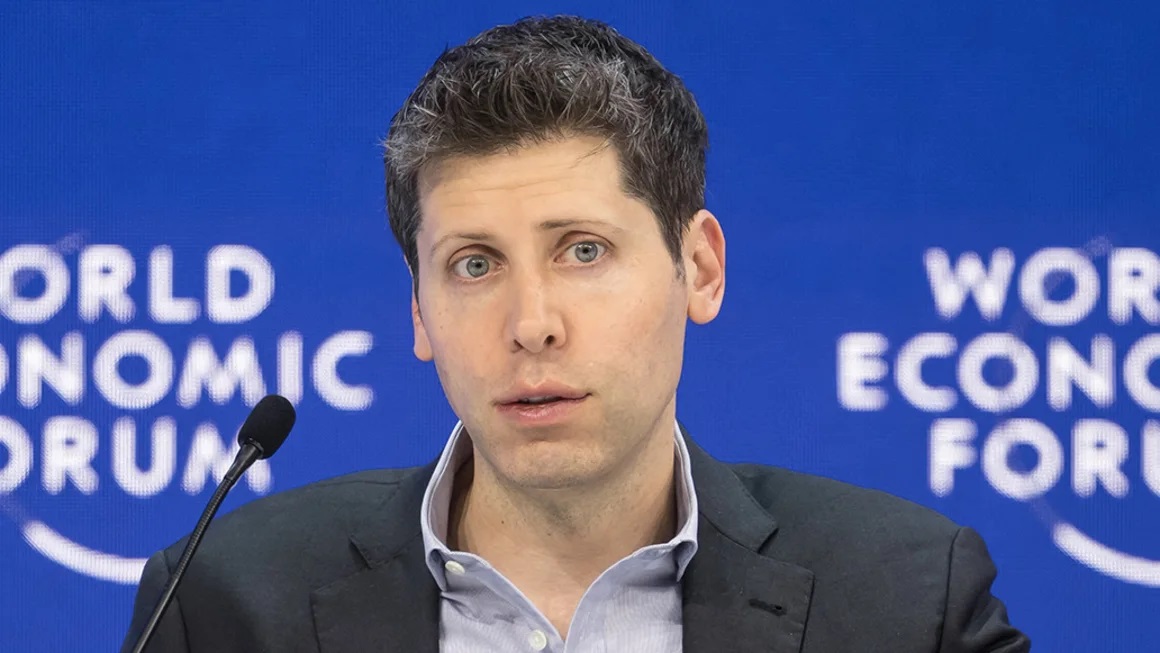
They are a disagreeable bunch, with disagreeable ideas to match. The querulous brats behind the drive for technological servility and plugged in stupidity were always going to scrap over which dystopian vision they most prefer. Elon Musk thought he was onto something hounding OpenAI and its current CEO Sam Altman for supposedly betraying one of those visions. In his $150 billion legal action, Musk alleged that Altman and OpenAI president Greg Brockman deceived him into investing in the company in its initial stages when salad green altruism was modish and humanity mattered. The litigation was a prong in a broader strategy to unseat Altman from OpenAI, sabotage the company’s $852 billion restructuring into a public benefit corporation and direct $134 billion to OpenAI’s non-profit foundation.
The deception centred on maintaining OpenAI as a non-profit entity and pursuing artificial intelligence (AI) ventures in ways beneficial to humanity. (When the tech brats have a stab at humour, they go in hard.) According to Musk, OpenAI had effectively stolen a charity. (Between 2015 and 2017, he had personally put $44 million into OpenAI, funds, he argues, that were essentially misappropriated when the company sloughed its non-profit skin.) In an introductory overview of the company from December 2015, the company badges itself a “non-profit artificial intelligence research company” with the object of advancing “digital intelligence in a way that is most likely to benefit humanity as a whole, unconstrained by a need to generate financial return. Since our research is free from financial obligations, we can better focus on a positive human impact.”
How things change. On May 18, a mere two hours was needed for a nine-jury member in Oakland, California to unanimously find against Musk, basing their decision on that most technical of grounds: the statute of limitations. This left two civil claims – breach of charitable trust and unjust enrichment – untested. Having left OpenAI’s board in 2018, Musk dithered till February 2024 to file suit. Musk claimed to have only discovered the company’s abandonment of its non-profit mission in 2022, when Microsoft showed its interest with an investment of $10 billion. OpenAI’s legal team argued that the pertinent events – the creation of a for-profit subsidiary in 2019 for instance and Microsoft’s initial injection of $1 billion that same year, were already matters of common knowledge. Time on the statute of limitations was running well before 2022. US District Judge Yvonne Gonzalez Rogers of the Northern District of California saw no reason to question the jury’s conclusion. “There’s substantial amount of evidence to support the jury’s finding, which is why I was prepared to dismiss on the spot.”
The trial was impressively ugly and amounted to an insult to the stout intelligence of the public whose welfare both parties claim to be protecting. The legal representatives from both sides jousted over respective views on AI and the credibility of the disputants. Musk’s lawyer, Steven Molo, pressed jurors to consider that several witnesses, including former OpenAI chief scientist Ilya Sutskever, doubted Altman’s candour, going so far as to find him mendacious. Altman had also conceded under cross-examination that he “told the occasional lie”. “Sam Altman’s credibility is directly at issue,” Molo crowed. “If you don’t believe him, they cannot win.”
OpenAI, Musk accusingly asserted, had wrongfully attempted to enrich investors and insiders at the expense of the non-profit. Along the way, it had failed to make AI safety a matter central to its operations. Microsoft, he further argued, had always known that OpenAI cared more about money than altruism. A personal journal entry penned by Brockman in November 2017 was also instructive, baldly revealing that OpenAI could not assert fidelity to its non-profit status if it intended becoming a benefit corporation months later. So it came to pass that Altman, Brockman and OpenAI were accused of the very same temptations, frailties and indifference to safety that could be found in Musk’s own conduct.
On the issue of safety and welfare, Musk’s own xAI, acquired by space and rocket company SpaceX, also part of the South African’s fiefdom of misrule, has drawn the attention of the European Commission and UK watchdog Ofcom over Grok, a product that has been used to create sexualised images. The combine arising from xAI and SpaceX could lead to an initial public offering that would surpass OpenAI in size, which sinks the scurrilous suggestion of altruism. Provided things go smoothly, the world’s first trillionaire might arise.
OpenAI was hardly going to leave Musk’s feeling of tech purity unchallenged. It was he, not OpenAI, who saw the shimmering dollar signs. Going back to 2017, he had floated the idea of a for-profit subsidiary with one caveat: he would have exclusive control. Failing this, he left the board in a huff. OpenAI’s attorney William Savitt suggested that Musk, having failed to “get his way at OpenAI,” filed his lawsuit only after establishing his own competing AI company in 2023. But most saliently, he waited too long to claim breaches of the founding agreement regarding the building of safe artificial intelligence for the benefit of humanity. “Mr Musk may have the Midas touch in some areas, but not in AI,” claimed Savitt.
OpenAI’s predatory reflexes will be boosted by the decision. The non-profit status in this field has been found wanting, and the scramble for profits given much encouragement in this most unprincipled of frontiers. “The decision is likely to reassure investors and the broader AI sector,” opines Sarah Kreps of the Tech Policy Institute at Cornell University, “because it avoids a potentially chaotic outcome that could have challenged OpenAI’s commercial structure, Microsoft partnership, and future fund-raising plans.”
This was by no means the first time Musk had taken to throwing a brief of anger against OpenAI. In March 2024, showing that intelligence can be authentically artificial, he filed a lawsuit citing a contract violation of a contract that did not exist. Using the misguided legal offices of Irell & Manella – the same firm that erroneously claimed on behalf of PETA that a monkey could hold copyright – Musk pursued what Techdirt’s Mike Masnick appropriately called a “vibes based” action. “Elon doesn’t have a contract with OpenAI which the company could have breached. And that’s kinda a problem in a breach of contract lawsuit.” This insuperable logic led Musk to abandon the lawsuit in June that year.
For Musk, the wells of indignation run deep. This is a man in the habit of losing or settling claims, be it with former Twitter executives and employees of the social platform now known as X, losing to investors in that same company for misleading public statements made during his untidy, often chaotic takeover, or having his lawsuit promptly dismissed against advertisers that exited that troubled platform. While such behaviour should draw scorn, those drawing benefit from his litigious pathologies – lawyers, in the main – can only be grateful. “In a lot of ways, he is just another businessperson asserting his rights,” says a credulous Shubha Ghosh, lawyer and law academic at Syracuse University. “I don’t think he’s abusing the legal system. Whether he uses it effectively, I’m not sure.” Wrong, certainly, on the first count.
Republicans should be worrying about millions of fools voting for treason and criminal war destroying the economy – Walt Zlotow.
Walt Zlotow West Suburban Peace Coalition Glen Ellyn IL, 18 May 26
It’s understandable the Chicago Tribune is concerned about the future of the Republican Party (Editorial: Republicans are preparing for the midterms. They should be worrying about the party’s future). Soon after its founding in 1847, the Trib championed creation of an anti-slavery party and its most eloquent spokesman, native son Abe Lincoln. Seven years later that led to founding of the Republican Party and eventual election of Trib favorite Lincoln in 1860.
One hundred seventy-two years on the Trib’s still favorite party is fundamentally opposed to every vestige of its historical legacy. The Trib urges Republicans to reflect on their party “whose historical brand is inextricably linked with patriotism” How did the Trib miss the Republican Party, under Donald Trump, destroyed every vestige of patriotism when it inspired an insurrection at the Capitol in 2021 to overturn the election. The tiny handful of Republican patriots like Liz Cheney and Adam Kinzinger who dared call out Trump’s treason were systematically purged from Republican Party. Trump, cheered on by nearly every Republican congressperson, then pardoned his 1,500 coup brigade who injured over 150 patriotic cops, five of whom died shortly afterwards from injury or suicide, trying to save American democracy from Trump’s treason.
Besides now being the party of treason, Trump’s Republican Party is now the party of senseless criminal war in Iran that, besides being lost with no exit strategy, is systematically degrading the world economy including America’s.
The Trib is anxious to find something of value in the Republican wrecking ball controlling the entire government with no check whatsoever. Alas, it’s not in the claim “There are plenty of rational folks who voted for Trump; 44% of Illinoisans are not fools. “Plenty of rational folks” are not words that befit the 56% to 44 % Illinois blowout against Trump. Every one of Trump’s 2,449,079 Illinois voters in 2024 were fools to vote for the only presidential candidate in US history who sought to destroy American democracy. And when each now forks over an extra 20 or 30 bucks to fill their gas guzzler due to Trump’s criminal war on Iran with no end in sight, they’ll likely ponder the wise words of a 1958 Elvis hit…”Now and then there’s a fool such as I.”
The Chicago Tribune, by spending 1,500 words seeking to salvage the Republican Party without mentioning the Trump GOP treason and criminal war on Iran , may be the biggest fool of all.
Russian nuclear weapons, 2026

Bulletin, By Hans M. Kristensen, Matt Korda, Eliana Johns, Mackenzie Knight-Boyle | May 14, 2026
Russia is in the late stages of a multi-decade-long modernization program to replace all of its Soviet-era nuclear-capable systems with newer versions. However, this program is facing significant challenges that will further delay the entry into force of these newer systems. In this issue of the Nuclear Notebook, we estimate that Russia now possesses approximately 4,400 nuclear warheads for its strategic and non-strategic nuclear forces—a slight increase from the previous year. The significant increase in non-strategic nuclear weapons that the Pentagon predicted five years ago has so far not materialized. A nuclear weapons storage site in Belarus appears to be nearing completion. The Nuclear Notebook is researched and written by the staff of the Federation of American Scientists’ Nuclear Information Project: director Hans M. Kristensen, associate director Matt Korda, and senior research associates Eliana Johns and Mackenzie Knight-Boyle
This article is freely available in PDF format in the Bulletin of the Atomic Scientists’ digital magazine (published by Taylor & Francis) at this link.
Russia is nearing the completion of a decades-long effort to replace most of its strategic and non-strategic nuclear-capable systems with newer versions. But despite Moscow’s continued rhetorical emphasis on its nuclear forces, commercial satellite imagery and other open sources indicate that elements of Russia’s nuclear modernization are proceeding much more slowly than planned: Upgrades to intercontinental ballistic missiles (ICBMs) and bombers face significant delays, and the “significant” increase of Russian non-strategic nuclear weapons that US Strategic Command (STRATCOM) predicted five years ago has so far not materialized (Richard 2020, 5).
As of March 2026, we estimate that Russia has a stockpile of approximately 4,400 nuclear warheads assigned for use by long-range strategic launchers and shorter-range tactical nuclear forces. This number is greater than last year, largely due to a change in our estimate of warheads assigned to non-strategic nuclear forces following STRATCOM’s publication of its estimate for the number of warheads in the Russian arsenal. The estimate, which is the first time in more than three decades that the US government has disclosed how many warheads it believes Russia possesses, stated that “Russia’s nuclear warhead arsenal consists of approximately 4,600 nuclear warheads; 2,600 are intended for its strategic triad and up to 2,000 are warheads intended for theater nuclear weapons” (Correll 2026). Given that the US Intelligence Community for several years has estimated Russia has 1,000–2,000 nonstrategic warheads (US Department of State 2025a), the “approximately” in the STRATCOM statement indicates the stockpile is less than 4,600 and the number of nonstrategic warheads is less than 2,000. We were able to match the estimate for strategic warheads, but the total stockpile number
necessitated a revision of our estimate for nonstrategic warheads closer to the estimate we published in 2023 (Kristensen, Korda, and Reynolds 2023).
Of the estimated 4,400 stockpiled warheads, approximately 1,796 strategic warheads are deployed: about 892 on land-based ballistic missiles, about 704 on submarine-launched ballistic missiles, and about 200 at heavy bomber bases. Another approximately 810 strategic warheads are in storage, along with about 1,794 nonstrategic warheads. In addition to the military stockpile for operational forces, a large number—approximately 1,020—of retired but still largely intact warheads await dismantlement, for a total inventory of approximately 5,420 warheads[1] (see Table 1 on original).
Russia’s nuclear modernization program appears motivated in part by the Kremlin’s strong desire to maintain quantitative and qualitative parity with the United States and to maintain national prestige. ………………………………………………………………………………………………………………………………………………………………………………………………………………………………………………………………………………………………………. https://thebulletin.org/premium/2026-05/russian-nuclear-weapons-2026/?utm_source=ActiveCampaign&utm_medium=email&utm_content=The%20Russian%20nuclear%20arsenal%20today&utm_campaign=20260518%20Monday%20Newsletter
Pentagon quietly shut legally required program to prevent civilian deaths by military, watchdog finds
Trump administration accused of cutting military’s civilian harm program in light of US strike on girls’ school in Iran
Guardian, Joseph Gedeon and Cate Brown in Washington, 16 May 26
The Pentagon has quietly dismantled a program it is legally required to operate to prevent and respond to civilian deaths in US military operations, according to its internal watchdog.
A report released by the department’s inspector general concluded the US military no longer has the people, tools or infrastructure needed to comply with two federal statutes requiring it to maintain a functioning civilian casualty policy, and operate a Civilian Protection Center of Excellence (CP CoE).
Donald Trump’s administration has been accused of making deep cuts to the Pentagon’s civilian harm mitigation and response (CHMR) program, designed to handle training and procedures critical in limiting civilian harm in theaters of war.
While the program has not been officially canceled, the inspector general’s report said that funding had ended for a data management platform; committee meetings had halted; and many dedicated personnel had been lost or reassigned.
“As a result, the DoW [Department of War] may not comply with its civilian casualties and harm policy,” the report read. “A policy required by federal law.”………………………………………………………………….
Pete Hegseth, the Pentagon chief, has recently come under fire over deadly attacks on Iran, including a US strike in Minab that killed at least 175 people, a majority of them children, at an all-girls school.
Limiting casualties has not been a top priority during Hegseth’s tenure at the Department of War, rebranded last September from the Department of Defense. When pressed on civilian casualties in Iran, Hegseth has pivoted to blame the Iranian regime for placing rocket launchers in civilian areas, and also claimed no nation in history had taken more precautions than the US to avoid civilian deaths.
The inspector general’s report, and people familiar with the office, tell a different story.
“My assessment is that they’ve left a semblance of the department because Hegseth was taking heat for illegal operations,” said Wes J Bryant, an air force combat veteran who was the chief of civilian harm assessments on the CP CoE program.
He described a stream of forced resignations and halted investigations since Hegseth assumed his post, saying there were only seven people left reporting to the program, and that they are “locked out of all operations” and have been relegated to “a closet office” in Virginia.
Bryant was forced out of his job last spring, as the Trump administration removed safeguards that once restrained US forces from authorizing the use of lethal force, according to a ProPublica report.
The inspector general’s report, published on 13 May, points to an inflection point in February, when two senior officials – the acting under-secretary of war for policy, Elbridge Colby, and the secretary of the army, Dan Driscoll – separately proposed to Hegseth the program be cut or eliminated.
One proposal went further, according to the report, and recommended scrapping its action plan and its underpinning departmental instruction entirely. Then, without waiting for a response, the military began acting as if the cuts had already been approved……………………………………………………………………………………………………………………………. https://www.theguardian.com/us-news/2026/may/15/pentagon-civilian-death-program
ICC Issues Arrest Warrants For Five Additional Senior Israeli Officials
The Hague-based court previously issued warrants for the arrest of Israeli Prime Minister Benjamin Netanyahu and former War Minister Yoav Gallant
By News Desk, The Cradle., MAY 17, 2026 https://thecradle.co/articles/icc-issues-secret-arrest-warrants-for-five-additional-senior-israeli-officials-report
The International Criminal Court (ICC) has issued secret arrest warrants for three Israeli politicians and two military officials, Haaretz reported on 17 May, citing diplomatic sources.
The International Criminal Court (ICC) has issued secret arrest warrants for three Israeli politicians and two military officials, Haaretz reported on 17 May, citing diplomatic sources.
The timing of their issuance is unknown. The ICC has often issued arrest warrants in secret, publicly announcing them only later to enable a possible arrest of the suspect.
Israel’s Foreign Affairs Ministry and State Attorney’s Office do not respond immediately to requests for comment.
The Hague-based court issued arrest warrants against Prime Minister Benjamin Netanyahu and former War Minister Yoav Gallant in November 2024.
The timing of their issuance is unknown. The ICC has often issued arrest warrants in secret, publicly announcing them only later to enable a possible arrest of the suspect.
Israel’s Foreign Affairs Ministry and State Attorney’s Office do not respond immediately to requests for comment.
The Hague-based court issued arrest warrants against Prime Minister Benjamin Netanyahu and former War Minister Yoav Gallant in November 2024.
ICC prosecutor Karim Khan requested that ICC judges issue the arrest warrants in May 2024, alleging that Netanyahu and Gallant were responsible for war crimes committed by the Israeli military in Gaza.
Netanyahu and Gallant bear criminal responsibility for the war crime of starvation as a method of warfare and the crimes against humanity of murder, persecution, and other inhumane acts, according to the ICC prosecutor.
In response to the issuance of the arrest warrants, the US and Israel carried out a campaign to pressure the ICC to prevent and cancel the arrest warrants issued against the Israeli leaders, Le Monde reported in August 2025.
The campaign, which targeted the ICC chief prosecutor Khan, began in March 2024 after he announced his intention to seek the indictment of Netanyahu and Gallant.
In response, the Israeli prime minister launched a campaign to use “all means” to stop the prosecutor with the help of his allies in London, Washington, and Berlin.
At the end of April 2024, a staff member at the ICC accused Khan of sexual assault.
A source speaking to Le Monde said the allegations were part of an effort to “get rid of the prosecutor” and “hijack the process” of arrest warrants.
In October 2024, while the judges were still determining whether to issue the arrest warrants, a mysterious account named “ICC Leaks” appeared on the social network site X.
The account publicized the allegations of sexual assault made against Karim Khan internally at the ICC the previous May.
The ICC finally issued arrest warrants for Netanyahu and Gallant on 21 November 2024.
In February 2025, Chief Prosecutor Khan was placed under sanctions by the US.
Netanyahu applauded the move, calling the court “anti-Semitic and corrupt.”
Khan continued to work on two other indictments against Israeli Minister of National Security Itamar Ben Gvir and Israeli Minister of Finance Bezalel Smotrich.
However, Khan has been on temporary leave since 16 May 2025, pending the outcome of the investigation into the sexual misconduct allegations, which he strenuously denies.
During its genocide in Gaza, Israel has killed more than 72,000 Palestinians, the majority women and children, while destroying most of the strip.
Jewish settlers insist they will colonize Gaza, as they are colonizing the occupied West Bank.
“We are here on the way to new Jewish communities in Gaza,” settler leader Daniella Weiss stated in an interview at the border of the strip in late April.
“The 2 million or whatever number of Arabs, Gazans, who live here will not live in Gaza,” Weiss added. “It can take a week, it can take maybe a few months. They will not live here.”
5 Stocks That Benefit From the Government’s $94 Million Spending Spree on Nuclear Reactors.

The Trump administration is giving out money to small
nuclear reactor projects, and a handful of public companies should benefit.
The Energy Department announced $94 million worth of cost-sharing grants to
build out America’s nuclear infrastructure.
The government will pay for
up to 50% of the projects. It’s the second such grant given out to
nuclear players. The first one went to the Tennessee Valley Authority, a
federally controlled utility, and Holtec, a privately held nuclear operator
that’s building small reactors. Holtec is expected to go public sometime
this year.
The government’s involvement is meant to fast-track a U.S,
nuclear renaissance, which has moved slowly so far because most private
companies don’t want to take the financial risk.
Barrons 15th May 2026,
https://www.barrons.com/articles/nuclear-reactor-stocks-e23d92f1
The United Arab Emirates said a drone strike caused a fire at the perimeter of its Barakah nuclear power plant
There were no
injuries and radiation levels remained safe. The emirate’s state news
agency said on Sunday that authorities were “handling a fire that broke
out in an electric generator outside the inner perimeter” of the Barakah
power plant “caused by a drone strike”. The UAE did not apportion blame
for the attack and there was no claim of responsibility.
But the emirate
has borne the brunt of Tehran’s retaliatory attacks since the US and
Israel launched the war on Iran on February 28.
FT 17th May 2026,
https://www.ft.com/content/c4b786a6-55d4-4689-b19e-48a48f7946e6
1 This Month





PLEASE OPPOSE HR 8255 AND S.3639 – bills would accelerate satellite deployment, with no environmental review or safeguards – https://ncstd5li.quorum.us/campaign/169331/
To see nuclear-related stories in greater depth and intensity – go to https://nuclearinformation.wordpress.com
-
Archives
- October 2026 (49)
- September 2026 (339)
- August 2026 (330)
- July 2026 (355)
- June 2026 (287)
- May 2026 (306)
- April 2026 (356)
- March 2026 (251)
- February 2026 (267)
- January 2026 (308)
- December 2025 (358)
- November 2025 (359)
-
Categories
- 1
- 1 NUCLEAR ISSUES
- business and costs
- climate change
- culture and arts
- ENERGY
- environment
- health
- history
- indigenous issues
- Legal
- marketing of nuclear
- media
- opposition to nuclear
- PERSONAL STORIES
- politics
- politics international
- Religion and ethics
- safety
- secrets,lies and civil liberties
- spinbuster
- technology
- Uranium
- wastes
- weapons and war
- Women
- 2 WORLD
- ACTION
- AFRICA
- Atrocities
- AUSTRALIA
- Christina's notes
- Christina's themes
- culture and arts
- Events
- Fuk 2022
- Fuk 2023
- Fukushima 2017
- Fukushima 2018
- fukushima 2019
- Fukushima 2020
- Fukushima 2021
- general
- global warming
- Humour (God we need it)
- Nuclear
- RARE EARTHS
- Reference
- resources – print
- Resources -audiovicual
- Weekly Newsletter
- World
- World Nuclear
- YouTube
-
RSS
Entries RSS
Comments RSS

