Spending watchdog warns £38bn cost of Sizewell C nuclear plant is ‘risky’
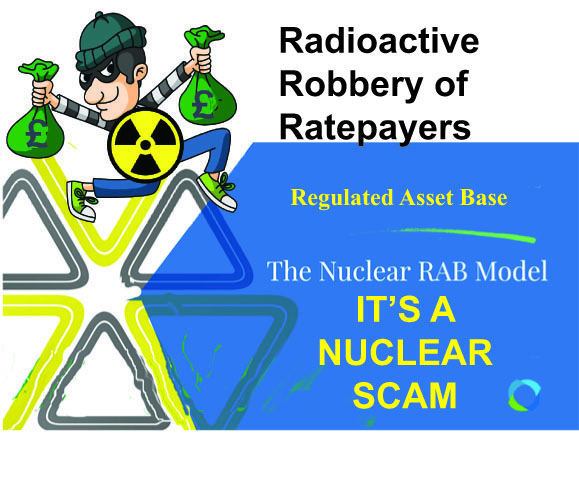
risks surrounding the project “could easily turn Sizewell C into a financial disaster” while the funding model meant its investors were “the only ones who can’t lose”.
National Audit Office says potential benefits are ‘considerable but uncertain’ while risks are ‘immediate and substantial’
Jillian Ambrose Energy correspondent, Guardian, 20 May 26
The cost of the government’s £38bn nuclear plant in Suffolk is subject to “significant uncertainty” and may outweigh the benefits for UK households until at least 2064, according to the government’s spending watchdog.
The National Audit Office (NAO) has warned that although the potential benefits of the Sizewell C nuclear plant are considerable, they remain uncertain. The risks, however, are “immediate, substantial and borne by the public”.
The government claims the nuclear reactor, expected to generate the equivalent of enough low-carbon electricity to power 6m homes when it begins operations in the late 2030s, could save £2bn a year from the electricity system compared with using other low-carbon technologies.
However, for households the overall savings could be outstripped by the cost of supporting its construction until almost halfway through its 60-year operational life. The project could take even longer to “break even” if there are cost overruns or delays, the NAO warned.
“Sizewell C is a project of exceptional scale, complexity and significance for taxpayers,” said Sir Geoffrey Clifton-Brown, the chair of the public accounts committee, which oversees the work of the NAO. “Experience from comparable nuclear projects in the UK and overseas highlights their vulnerability to delays and cost overruns.”
Sizewell C is being developed by French state nuclear company EDF as a successor project to the Hinkley Point C reactor in Somerset, the first nuclear plant to be built in the UK in a decade. It has invested £1.1bn to take a 12.5% stake in the project alongside the UK government, which has invested £14.2bn as the majority stakeholder.
British Gas’s parent company, Centrica, owns 15% of Sizewell C while the Canadian pension fund La Caisse and the investment fund Amber Infrastructure own 20% and 7.6%, respectively……………………………………………….
Households began paying for the Sizewell C project via home energy bills at the start of the year to help fund construction. This financial framework, known as a regulated asset base model, is a marked change from the Hinkley Point deal, which will begin to earn a guaranteed stream of revenues from home energy bills only once it begins generating in the early 2030s.
Critics of the regulated asset base model, including the campaign group Stop Sizewell C, have warned that any construction delays could mean that bill payers support Sizewell without receiving power for longer than expected, while the government would be on the hook for the project’s financial risk.
Stop Sizewell C said the risks surrounding the project “could easily turn Sizewell C into a financial disaster” while the funding model meant its investors were “the only ones who can’t lose”.
The NAO has urged the government to mitigate the risk by using “close monitoring, greater transparency to parliament, and by securing value for money from the significant public and private investment”. https://www.theguardian.com/business/2026/may/20/spending-watchdog-warns-38bn-cost-of-sizewell-c-nuclear-plant-is-risky
No comments yet.
-
Archives
- October 2026 (120)
- September 2026 (339)
- August 2026 (330)
- July 2026 (355)
- June 2026 (287)
- May 2026 (306)
- April 2026 (356)
- March 2026 (251)
- February 2026 (267)
- January 2026 (308)
- December 2025 (358)
- November 2025 (359)
-
Categories
- 1
- 1 NUCLEAR ISSUES
- business and costs
- climate change
- culture and arts
- ENERGY
- environment
- health
- history
- indigenous issues
- Legal
- marketing of nuclear
- media
- opposition to nuclear
- PERSONAL STORIES
- politics
- politics international
- Religion and ethics
- safety
- secrets,lies and civil liberties
- spinbuster
- technology
- Uranium
- wastes
- weapons and war
- Women
- 2 WORLD
- ACTION
- AFRICA
- Atrocities
- AUSTRALIA
- Christina's notes
- Christina's themes
- culture and arts
- Events
- Fuk 2022
- Fuk 2023
- Fukushima 2017
- Fukushima 2018
- fukushima 2019
- Fukushima 2020
- Fukushima 2021
- general
- global warming
- Humour (God we need it)
- Nuclear
- RARE EARTHS
- Reference
- resources – print
- Resources -audiovicual
- Weekly Newsletter
- World
- World Nuclear
- YouTube
-
RSS
Entries RSS
Comments RSS


Leave a Reply