Any aliens who have been monitoring radio and television transmissions streaming outwards into space from Planet Earth over the past few decades will likely be intrigued, bemused or simply horrified at humanity’s headlong drive towards climate catastrophe. No matter the urgent warnings from climate scientists, the power of billionaires, financial speculators and corporations maintains a death-like grip on governments around the world. Amid the occasional flurry of big business greenwashing and government rhetoric about ‘climate protection’ and ‘eco-friendly’ initiatives, billions of people are being held hostage by the forces that are dragging everyone to the edge of the climate abyss.
New warnings about climate change do, of course, occasionally appear in the press. But rarely, if ever, are there prominent and sustained front-page headlines and news-leading television coverage. Rarer still are impassioned editorials, high-profile presenters and commentators demanding the substantive, radical changes that are needed to avoid the most damaging predicted impacts of business as usual.
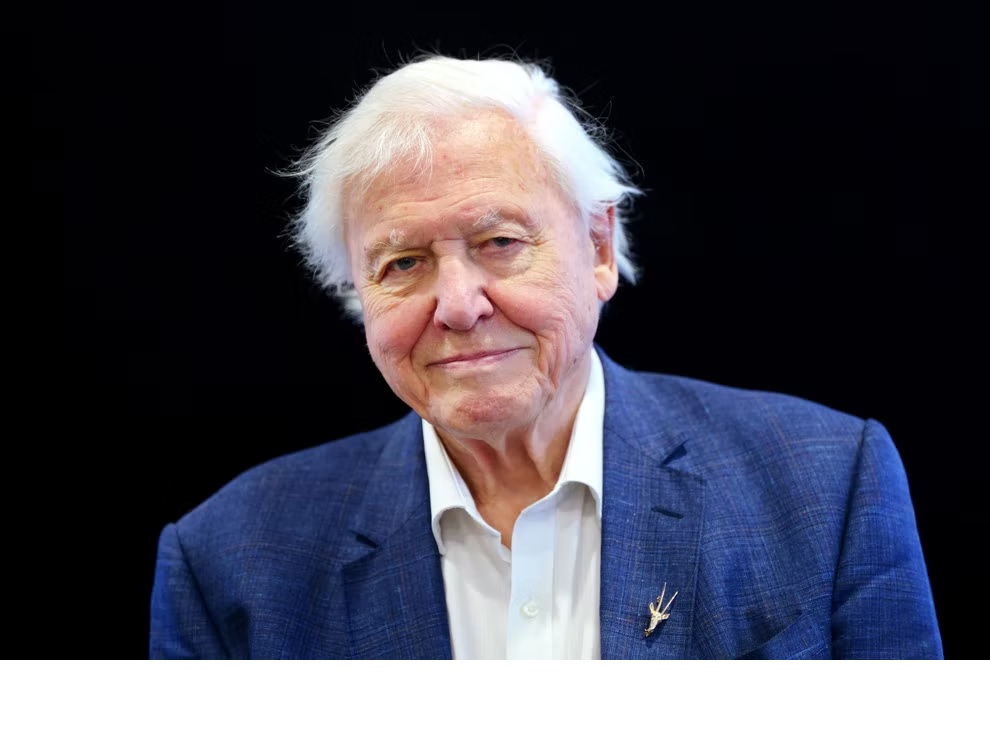
Earlier this month, the Royal Albert Hall hosted a 100th birthday party for naturalist David Attenborough, Britain’s most beloved broadcaster. Celebrities showered him with love and praise: Leonardo DiCaprio, Judi Dench, Olivia Colman, Emily Eavis, Chris Martin, Ben Fogle, Raye, Kate Winslet. And Paddington Bear. Attenborough sat in the royal box, alongside Prince William. King Charles delivered a handwritten message from Balmoral Castle via a ‘cavalcade of creature couriers’, including eagles, a red squirrel, a hedgehog, otters, ducks, a fox and deer, thanks to the wonders of CGI. All very nice; all very Disneyfied.
For many years now, Attenborough has been warning about the dangers of mass consumption, pollution, worldwide species loss and global warming. These subjects are clearly of great concern to him, although he started ringing the alarm bell very late.
But the evening gave a wide berth to such uncomfortable topics. ‘Life on Earth’? The climate crisis must be happening on a different planet entirely.
As Jonathan Liew, a Guardian sports journalist and columnist, pointed out:
‘This is, of course, the Attenborough with which our public discourse is most comfortable: depoliticised, universally adored, a man-sized Paddington Bear fit only for our veneration. Who teaches us about tree frogs and seal cubs and stick insects and asks for nothing in return.’
Of course, what Liew called ‘public discourse’ is the tightly constrained media space permitted by state and corporate power.
Liew continued:
‘And perhaps there are more difficult questions to negotiate here: the extent to which he has been a force for the meaningful and revolutionary change he seeks, and the extent to which his broad, inoffensive appeal has been more hindrance than help, allowing the powerful to feign concern for the planet while shirking the tough and bloody compromises required to secure it.’
To his credit, Attenborough has been eloquent and impassioned in recent years about the climate crisis. He addressed the COP26 climate summit in Glasgow in 2021, saying that:
‘We are already in trouble. The stability we all depend on is breaking. This story is one of inequality, as well as instability. Today, those who’ve done the least to cause this problem, are being the hardest hit. Ultimately, all of us will feel the impact, some of which are now unavoidable.’
But, even five years on, as the climate crisis worsens, the topic was deemed unmentionable by the organisers of Attenborough’s 100th birthday party.
‘Hothouse Earth’ And Collapsing Currents
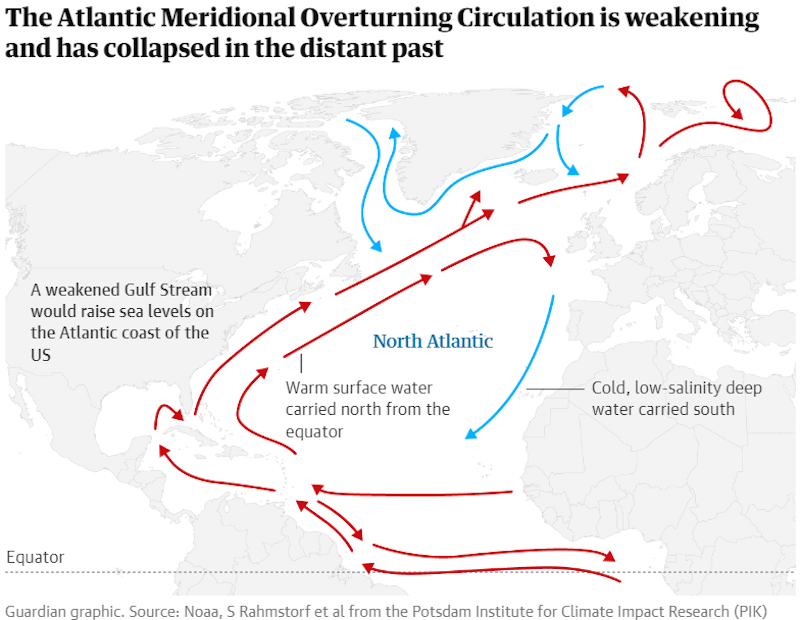
In February, a new scientific report warned that runaway global warming is closer than had previously been thought. We are heading for the ‘point of no return’ after which we would be locked into a hellish ‘hothouse Earth’. Climate ‘tipping points’ would be triggered, producing rapid heating, which would lead to a domino effect of yet more tipping points and feedback loops. These include the melting of the Greenland and Antarctic ice sheets, drastic dieback of the Amazon rainforest and the weakening, and possible shutdown, of the Atlantic ocean conveyor belt known as the Atlantic Meridional Overturning Circulation (AMOC).The scientists stated that:
‘Earth’s climate is now departing from the stable conditions that supported human civilization for millennia.’
The world has already experienced a global average temperature rise of over 1.3C since pre-industrial times and is likely to surpass the Paris Agreement ‘limit’ of long-term average heating of 1.5C in the next few years. Current government and business policies are pushing us towards 2-3C of global warming, if not more, by 2100.
But, if trigger points are breached and runaway global warming occurs, we are talking about much higher temperature rises, perhaps 10C or more. This would mean almost unimaginable catastrophic effects on the climate system, global agriculture and societal infrastructure; not to mention the extinction of humans. Scientists have warned that even a rise of 3-4C means that ‘the economy and society will cease to function as we know it’.
Bill McGuire, Professor Emeritus of Geophysical and Climate Hazards at University College London, put things in grim perspective via X:
‘We are already locked-in to a return to Pliocene [around 2.6 to 5.3 million years ago] conditions (3C hotter and (eventually) ~ 20m sea-level rise)
‘Keep going as we are, and hotter Miocene [5.3 to 23 million years ago] conditions will result
‘Beyond this a return to early Eocene [around 48 to 56 million years ago] hothouse beckons – and potential oblivion’
During the Eocene, the global average temperature was well over 10C higher than present. Oblivion would hit humanity long before such a temperature rise occurred.
Earlier this month, yet another deeply disturbing scientific studyrevealed that the risk of AMOC reaching a tipping point by 2100, after which its shutdown would be inevitable, is as high as 50 per cent. Previously, this was considered ‘a low likelihood event’ of around five per cent. But even this should be held in perspective. How many of us would board a plane knowing that there was a five per cent chance that it would crash?
AMOC, of which the Gulf Stream is the best-known component, is a vital carrier of warm water from the tropics to high latitudes in the North Atlantic, returning cold water southwards. It is a primary source of heat for western and northern Europe, leading to the temperate climate here. AMOC connects with other ocean current systems in a global network that transports heat, water, nutrients and carbon around the planet. Any disturbance to AMOC, far less its collapse, would have devastating global consequences for climate, agriculture, infrastructure and even for the habitability of Earth.
Professor Stefan Rahmstorf of the Potsdam Institute for Climate Impact Research in Germany, who has studied AMOC for 35 years, said:
‘This is an important and very concerning result. It shows that the “pessimistic” models, which show a strong weakening of the AMOC by 2100, are, unfortunately, the realistic ones, in that they agree better with observational data.’
He added:
‘I now am increasingly worried that we may well pass that AMOC shutdown tipping point, where it becomes inevitable, in the middle of this century, which is quite close.’
To emphasise: the tipping point may be much earlier than 2100; it could happen by 2050, or even sooner. The vital point here is that scientists increasingly agree that the ‘safe window’ to stabilise the current by halting emissions is closing far faster than previously thought. And the public likely does not even realise it.
Rahmstorf had previously said that a collapse must be avoided ‘at all costs’. Now he added:
‘I argued this when we thought the chance of an AMOC shutdown was maybe 5%, and even then we were saying that risk is too high, given the massive impacts. Now it looks like it’s more than 50%. The most dramatic and drastic climate changes we see in the last 100,000 years of Earth history have been when the AMOC switched to a different state.’
In an English-language video for the German DW news channel, Rahmstorf explained the importance of AMOC for European and global climate, and the significance of the latest alarming results. He warned that we should expect more climate extremes in heat, cold, drought, floods and storms.
If and when the AMOC collapses, the impact on agriculture in the northern hemisphere will be devastating. The drop in harvest yields for key crops could be as high as 50 per cent. Mass starvation is a very real possibility.
Climate Shocks
……………………………………………………………………………………………………. The fact that deeply disturbing findings about a likely collapse of a vital component of the climate system were not given wider, extensive and sustained coverage is a devastating indictment of ‘mainstream’ journalism.
……………………….Scientists are warning, as loudly as they possibly can, that the present economic system of rampant capitalism is destroying the very life-support systems that made Planet Earth a habitable environment for humans to evolve and flourish.
……………………………………………………………………………………………………………………………………………….. Look at the daily, hour-by-hour obsessing over the endless maneuvering within the Labour government; every single statement from ministers and their allies scrutinised by the Westminster bubble of political correspondents.
Imagine that, instead of focusing on short-term melodramas, leading news organisations rigorously probed politicians, day in and day out, about the climate crisis.
Imagine that news editors and journalists relentlessly challenged the government about current policies that are bringing us closer to the brink of climate chaos.
Imagine that reporters investigated and exposed the deep reluctance and state-corporate obstacles, including the establishment media, that are blocking alternatives to climate Armageddon.
New research finds correlation between disease and living close to a facility
HARVARD GRIFFIN GSAS NEWS, By Kaitlyn Hung, May 19, 2026
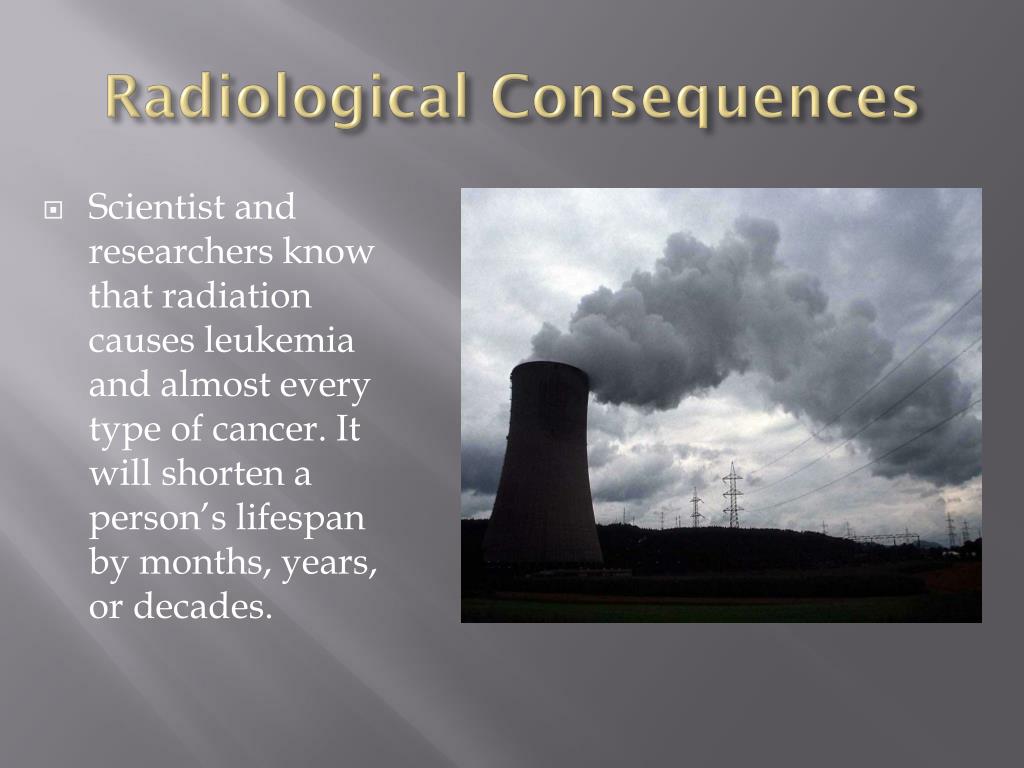
uclear power accounts for 18 to 20 percent of electricity generated in the United States. In some places, the share is much greater—over half the energy generated in Illinois, for instance, the country’s sixth-largest state. As demand rises sharply, particularly from AI data centers, the federal government has increased funding, loans, and tax incentives in an effort to increase nuclear capacity, extend operations of existing reactors, and restart retired ones.
Although public support for nuclear energy has surged in recent years, opposition remains strong. The most common reason? Safety concerns. And they may be valid, according to population health scientist Yazan Alwadi, who received his PhD from the Harvard Kenneth C. Griffin Graduate School of Arts and Sciences in February 2026, months after receiving a master’s degree in biostatistics in November 2025. Now a post-doctoral researcher at the Harvard T.H. Chan School of Public Health, Alwadi’s work uncovers a link between cancer and proximity to nuclear power plants.
Too Close for Comfort?
In the lab of Petros Koutrakis, Akira Yamaguchi Professor of Environmental Health and Human Habitation at the T.H. Chan School, Alwadi investigated whether living close to nuclear facilities impacts a population’s incidence of developing or dying from cancer. The work was motivated by a call from the Department of Public Health in Plymouth County, Massachusetts. Community members were concerned about rising cancer cases, and some wondered whether Plymouth’s Pilgrim Nuclear Power Station, decommissioned in 2019, might have contributed to the uptick.
“We get emails from families, saying that big percentages of people they know get cancer. But of course, these are anecdotal, so it needs hard science and statistical evidence to see if that actually happens or not,” Alwadi says.
As an environmental epidemiologist, Alwadi decided to investigate. “We wanted to know, are we going to find an association between the proximity to plants and cancer or not?” Alwadi says. Regardless of the outcome, he would share his findings.
Alwadi conducted a longitudinal ecological study, comparing Massachusetts zip codes’ proximity to the seven nuclear facilities in the vicinity of the state with that zip codes’ cancer incidence over time (provided by the state’s cancer registry). He used proximity as a proxy for exposure because it encompasses multiple routes of dispersal, like air and water. “We know that distance is a proxy for most [exposure routes]. It’s not perfect for any one of them, but a proxy for most,” Alwadi says.
Alwadi discovered a strong association between cancer incidence and proximity to plants for populations over 55 years old living within 5 km of a nuclear power plant. For example, women ages 65-74 living two km away from a nuclear power plant had 2-times higher relative risk of cancer, and men in this age group had 1.75-times higher risk.
To determine whether these results were more broadly generalizable to the United States, Alwadi conducted a similar study comparing nuclear power plant proximity to county-level data on cancer mortality from the US Centers for Disease Control. “We felt that doing [the analysis] nationally would give us enough statistical power to depict effects if they truly exist,” says Alwadi. He discovered that the association he observed in Massachusetts held at the national level, too. “We observe the same association, similar values, same decline of risks with distance across different aggregations, zip codes versus counties . . . for cancers of interest.”
Koutrakis says that his advisee’s research is notable because it is the first series of studies to systematically demonstrate associations between residential proximity to nuclear power plants and cancer outcomes across multiple settings using large, population-based datasets. “This work fills a critical gap in the literature by providing large-scale, systematic evidence on a question that has remained unresolved for decades.” …………………………………………….
Importantly, while the study shows a robust association between nuclear plant proximity and cancer, the study’s design cannot determine whether that relationship is causal. “Although these are ecological designs that do not establish causality and are very hard to infer causality from their evidence, the systematic results and the consistency of the findings are exactly what you’d expect to find if a true underlying causal effect existed,” says Alwadi. By systematically demonstrating an association, Alwadi’s discovery provides the impetus for more detailed research to understand the nature of the link between nuclear power plants and cancer. ………………………………………………………………………………………………………………………………………………………….
………………………………………………… Digging Deeper
Since graduation, Alwadi has continued his work in the Koutrakis lab as a postdoctoral fellow. Today, he tracks the relationship between nuclear facility proximity and cancer within individuals, rather than populations. He says this cohort analysis will provide stronger evidence for the nature of the association by reducing bias and clarifying the temporality of nuclear facility exposure to cancer development.
Ultimately, Alwadi hopes to lead a lab of his own in environmental epidemiology and public health. He’s got a plethora of questions he wants to tackle, so to him, it’s just a matter of time and resources to get the work done. “We see a signal, we keep digging,” he says. https://gsas.harvard.edu/news/does-proximity-nuclear-power-plants-increase-cancer-risk
The financing of Sizewell C has been scrutinised by the National Audit Office (NAO), which found it “places more risks on taxpayers and consumers than other electricity projects” and that benefits to consumers will only outweigh costs after 2060.
In July 2022, the Department for Energy Security and Net Zero (DESNZ) announced it had secured the final investment decision (FID) for the project on the Suffolk coast, which is expected to produce 3.2GW of electricity.
Achieving the FID meant that investors and the government had agreed the terms on which investment would be put into the project, how returns on investment would work, and what this meant for consumers.
The government confirmed that the project would cost “around £38bn”, nearly double the original £20bn estimate stated by EDF in 2020.
Today’s [20 May] NAO report, simply titled Sizewell C, assessed “the implications of the deal for taxpayers, electricity consumers, and investors, and provides a baseline against which progress can be measured.”
A statement from the NAO, announcing the report, said DESNZ’s “delivery model for Sizewell C places more risks on taxpayers and consumers than other electricity projects, but the Department believes this model has reduced finance costs and will allow the project to be delivered on time and to budget.”
It added that the “novel approach has costs and relies on big assumptions
Once construction at the plant has been completed, the government’s modelling “predicts that the net benefits for consumers could be up to £18bn, primarily delivered through energy bill savings and reduced electricity costs compared to other ways of reaching net zero,” the NAO said.
“However, as a large infrastructure project, DESNZ’s modelling of these benefits shows they will not outweigh the costs to consumers until after 2060.”
The report also assessed the claims by Sizewell C that it will be easier to build because it is largely copying the designs of Hinkley Point C.
The NAO pointed out that Hinkley Point C “is currently expected to cost double its initial projected cost, with a seven-year delay”, and that this “has sparked concerns that these problems may be mirrored in Sizewell C”.
The spending watchdog said DESNZ hoped to avoid repetition of mistakes by “applying the lessons and final designs from Hinkley Point C”, and, as such, “Sizewell C’s plans are already at a much more advanced stage than Hinkley’s were at the equivalent point”.
NAO head Gareth Davies said: “Sizewell C forms a significant part of the government’s plan for a secure and affordable clean energy supply. There has been a concerted attempt to learn from the problems of previous nuclear power construction projects and other large infrastructure schemes.
“This has resulted in a novel financing structure and DESNZ will need to monitor the risks to taxpayers and billpayers closely.”
Public Accounts Committee chair Geoffrey Clifton-Brown commented on the report, raising concerns about the “substantial” risks of Sizewell C, which are being borne by the public.
“Sizewell C is a project of exceptional scale, complexity and significance for taxpayers. Costs are estimated to be £38.2bn, largely financed by government”, he said.
“While the potential benefits are considerable, they remain uncertain; by contrast, the risks are immediate, substantial and borne by the public. Consumers are already contributing through their electricity bills, and the government has assumed most of the project’s financial risk.”
He added: “Experience from comparable nuclear projects in the UK and overseas highlights their vulnerability to delays and cost overruns.
“Although the government has introduced a new delivery and financing model to mitigate these risks, it must now ensure it works in practice through close monitoring, greater transparency to Parliament, and by securing value for money from the significant public and private investment.”
Reaction to the report..…………………………………………………………………………………………………………….
University of Greenwich emeritus professor of energy policy Steve Thomas gave NCE his reaction to the NAO report, asking, “Is this the best NAO can do after a year of effort?”
He pointed to a line from the NAO press release about the report, which said: “Sharing risk between the investors and taxpayers and consumers appears to have reduced the cost of financing Sizewell C, but the rewards for investors still appear high.”
He said the statement that financing costs had been reduced was “rubbish on two grounds”.
“First, the finance costs are being paid by consumers in the construction period under the RAB (Regulated Asset Base) surcharge. Getting someone else to pay does not reduce them, it just shifts them.
“Second, the finance is being provided by the government National Wealth Fund and the interest rate will be whatever the government tells it to charge, so if finance charges are lower because the interest rate is reduced, that is because the government has imposed the interest rate.”
The press release also said: “Investor financial returns will cost consumers over £4bn but will be justified if they help the project to cut construction costs and speed up delivery times.” Thomas described this as “unclear”.
He said: “If it refers to the 4.8% of the 10.8% real rate of return investors will be given, that will be a gift from consumers to investors, it is an underestimate. Centrica says that of its £3bn equity contribution, only £1.3bn will come from itself, the rest will come from this 4.8% which investors are required to use as equity contribution.
“Centrica euphemistically describes this as ‘RAB Growth’.”
The NAO statement adds that DESNZ assumes “the involvement of private investors is justified, as their expertise will reduce construction costs and speed up delivery.”
In response, University of Greenwich academic Thomas asks: “What expertise does La Caisse, Centrica, NLF have on building nuclear projects? EDF has expertise but that didn’t stop Hinkley, Flamanville, and even Taishan going horribly wrong.”
He also questions the government’s use of £38.2bn as a baseline cost for Sizewell C, describing it as “wrong”, because the lower regulatory threshold cost is £40.5bn, which the government is using as its central estimate.
“£38.2bn is clearly the lower end of the range. A very basic element of project appraisal is to use central estimates, not bottom of the range ones,” he added.
A Stop Sizewell C spokesperson told NCE that the campaign group shares a lot of the NAO’s concerns, and asked for the government to commit to a public, “realistic” completion date for the project.
“The NAO’s report confirms what we already suspected – that ‘big assumptions’ and the ‘significant uncertainty’ of factors underpinning DESNZ’s claimed benefits could easily turn Sizewell C into a financial disaster, with its investors – thanks to RAB – being the only ones who can’t lose,” the spokesperson said.
“As the NAO confirms, households are relying on those investors to produce significant savings and reduce Sizewell C’s construction time to justify the nuclear tax on our energy bills, but we share the NAO’s questions about whether investors can or have the incentives to do this.”
They added: “We had asked the NAO to look at Sizewell C before it reached Final Investment Decision and are dismayed it did not do so, but at least some critical information withheld by the government is now in the public domain.
“We agree with the NAO that DESNZ must provide transparency of forecast cost and schedule for Sizewell C. We call for the government’s promised Sizewell C Strategy and Delivery plan, containing a public, realistic completion date, to be laid before parliament immediately.”
TASC spokesperson Chris Wilson told NCE: “The NAO report regarding the Sizewell C project confirms that this government’s ideological pursuit of nuclear power is based on hope and belief rather than objective judgement.
“Ignoring all the warnings and project risks, the usual optimism bias regularly expounded by the nuclear industry is there in spades, at the same time negative assumptions are made about the cost of renewables
“That DESNZ went ahead with the Sizewell C investment decision on the basis that consumers would not benefit until 2064 beggars belief.
“The NAO report highlights a stark imbalance in DESNZ’s Sizewell C funding model: the investors are shielded from risk while reaping massive profits, leaving the public purse and electricity consumers to shoulder an unfair and excessive financial burden.”
Wilson added: “A major concern highlighted by the NAO is the lack of incentive for EDF to complete Sizewell C on time and budget – they will get paid to develop and supply major components while receiving a guaranteed return on their investment.
“EDF have been involved in every previous EPR reactor project and all of them have gone woefully over time and budget – they now have the added distraction and priority of building the new EPR2 reactor programme in France. What could possibly go wrong?”
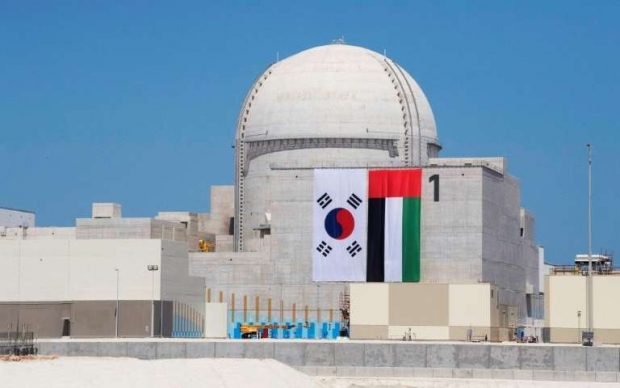
In a briefing to the United Nations Security Council following a drone strike near Barakah Nuclear Power Plant’s inner perimeter, International Atomic Energy Agency Director General Rafael Mariano Grossi has warned of the “most serious” consequences of a direct hit.
A drone strike on Sunday morning caused a fire in an electrical generator located outside the inner perimeter of the plant in the United Arab Emirates. Emergency diesel generators were required to provide power to Barakah’s unit 3 until sufficient off-site power was restored, he said. Radiation levels remained normal at all times and no injuries were reported.
The UAE has said its investigations have found that the drone, plus others which were successfully intercepted, had originated from Iraqi territory.
Grossi said he had been in contact with leaders “throughout the Gulf region and I can see the unease and great concern. I have been discussing how the IAEA can offer further assistance. Since last year, the IAEA has been gathering information, as well as analysing and evaluating emergency preparedness and response capacities. I will be travelling to the Gulf soon to continue this important joint work……………………………
He said: “The situation is of grave concern. This is a nuclear site in the Middle East where the consequences of an attack could be most serious. It is an operating nuclear power plant, and as such, it hosts thousands of kilograms of nuclear material in the core of the reactors, fresh and spent fuel. I want to make it absolutely and completely clear: In case of an attack on the Barakah Nuclear Power Plant, a direct hit could result in a very high release of radioactivity to the environment.
“A hit that disabled the lines supplying electrical power to the plant could increase the likelihood of its reactors’ cores melting, which could result in a high release of radioactivity. In their worst cases, both scenarios would necessitate protective actions, such as evacuations and sheltering of the population or the need to take stable iodine, with the reach extending to distances from a few to several hundred kilometres. Radiation monitoring would need to cover distances of several hundred kilometres and food restrictions may need to be implemented.”……………………………………………………………………………………………. https://www.world-nuclear-news.org/articles/grossi-warns-at-security-council-against-attacks-on-nuclear-plants
Attack marks first time military action has forced a fully operating nuclear power plant to rely on backup generators
Dan Sabbagh Defence and security editor, Guardian 20 May 26
A drone strike that cut off external power to a nuclear reactor in the United Arab Emirates this week has revived concerns over the safety of nuclear plants during wartime.
Reactor no 3 at the Barakah nuclear plant lost vital off-site power for about 24 hours after the attack on Sunday, forcing it to rely on emergency diesel generators.
The UAE’s defence ministry said on Tuesday that three drones targeting the plant had originated from Iraqi territory, suggesting a pro-Iranian proxy group was most likely to have been behind the strike.
Two were intercepted, but one got through, causing a fire near a four-reactor plant that supplies the UAE with a quarter of its electricity.
The UAE said the strike hit an electrical generator “outside the inner perimeter”, raising fears it could have hit the switch yard which lies just beyond a wall around the site’s reactors.
It is the first time a fully operating nuclear power plant has had to rely on backup generators as a result of a military attack, at a time when reactors in Ukraine and Iran are also threatened by war.
The UAE’s nuclear safety regulator said the attack did not cause any radioactive material to be released, though it was notable that it had not proved possible to completely defend a critical site from drones.
Experts told the Guardian there should have been sufficient power available from the other three reactors on-site, but this does not seem to have immediately been the case, possibly because of damage to the switch yard, which routes electricity in and out.
On Monday, the International Atomic Energy Agency said it had been told by the UAE that off-site power to unit No 3 had been restored “earlier today”, meaning that “the reactor no longer needs emergency diesel generators for power”.
Rafael Grossi, the head of the IAEA nuclear watchdog, said nuclear sites and other installations important for nuclear safety must never be targeted by military activity……………………………………..
Though the Geneva conventions, which set out laws of warfare, insist that civilian objects, including nuclear plants, “are protected against attack”, they accept they can be attacked “for such time as they are military objectives” – a loophole that aggressor states have interpreted widely……………………………
The police force tasked with stopping terrorist attacks at UK nuclear sites dealt with dozens of internal security breaches last year – including a classified laptop going missing, contractors working without proper background checks, and armed officers losing ID cards.
Three breaches involved classified material being lost or stolen outside the Civil Nuclear Constabulary’s (CNC) premises – including two police warrant cards, used to identify officers, which were supposed to arrive via courier.
A further nine cases involved the loss of identity passes, including those belonging to armed officers, and two contractors were found to be working without “appropriate” vetting.
Other breaches included confidential material being left inside body armour sent for destruction, a staff member accessing information they were no longer authorised to see, and compromised personal data. There were 35 breaches in total, the CNC reported.
The CNC is the armed police force that protects civilian nuclear facilities across the UK, including Torness and Dounreay in Scotland. The force also escorts nuclear material when it is being transported and guards other “critical national infrastructure” such as gas terminals.
Our findings come after we submitted a freedom of information request to the force. You can read full details of the breaches here.
Opponents of nuclear energy said the UK “cannot afford to be sloppy when it comes to nuclear security” and claimed “very little appears to have been done” to tackle breaches in recent years.
The CNC described the security incidents last year as “minor” and a spokesperson told The Ferret the force “takes action on all incidents and seeks to learn lessons” from them.
National Audit Office report says consumers will pay higher amount for energy from Suffolk project compared to its Somerset counterpart. Electricity from the Sizewell C nuclear project is set to be more expensive than power from Hinkley Point, even though the Suffolk plant is cheaper to build, Britain’s public spending watchdog has said.
Sizewell C is on course to cost about 22 per cent less than Hinkley Point C, which is being built in Somerset. But the latter has agreed to sell its electricity at a fixed price, limiting the cost to end users because developer EDF has to absorb any cost overruns.
A National Audit Office report published on Wednesday estimates that if construction costs are in line with forecasts of £38bn-£48bn, electricity from Sizewell C will cost between £131-£155 per megawatt hour in 2024-2025 prices. This compares to £129 per MWh for electricity from Hinkley Point C.
The government and a consortium of developers had regularly highlighted that Sizewell C would be cheaper to build than Hinkley amid concerns about the cost of the project. But the NAO report says: “Although Sizewell C should cost less to build than Hinkley Point C, it is likely that consumers will pay more for energy . . . because the price of Hinkley’s electricity was set before its cost over-ran (which has been borne by EDF), and the cost of borrowing has also increased since then.”
While comedians laughed at his rallies, millions of Americans saw something entirely different. They saw somebody attacking a political establishment they already despised.
Trump discovered scandal itself could become a weapon. Every controversy kept him at the centre of public attention
In 2015 and 2016, much of the world treated Donald Trump like a political novelty act.
He was loud, theatrical, unpredictable, and impossible to ignore. Commentators laughed at the rallies. Late-night comedians built entire careers around his speeches. Political experts dismissed his presidential campaign as a publicity stunt that would eventually collapse under the weight of its own absurdity.
The assumption shared by many journalists, academics, and political professionals was simple: America would never elect him.
Then America did.
What followed was one of the most extraordinary political transformations in modern democratic history. A man once regarded as a sideshow became the central figure in American politics. More remarkably, he reshaped the Republican Party, dominated the global news cycle for nearly a decade, survived scandals that would have destroyed conventional politicians, lost an election, refused to accept the result, returned to power, and began a second presidency stronger and more experienced than the first.
The joke had become reality.
And now, nobody is laughing.
That shift reveals something deeper than the story of one man. It exposes how badly political institutions, media organisations, and intellectual elites misunderstood both Trump and the conditions that made him possible.
In the beginning, ridicule was seen as sufficient. Trump was mocked endlessly for his speaking style, his exaggerations, his vanity, his midnight meltdowns on Twitter and his disregard for political norms. Satire became the preferred language of opposition because satire is easy when a figure appears ridiculous.
But ridicule can become dangerous when it replaces analysis.
Large sections of the media spent years treating Trump as entertainment rather than understanding him as a symptom of growing political anger, institutional distrust, economic frustration, and cultural division inside the United States. While comedians laughed at his rallies, millions of Americans saw something entirely different. They saw somebody attacking a political establishment they already despised.
Trump understood something many professional politicians did not: people who feel ignored do not necessarily want polished leadership. Sometimes they want disruption. Sometimes they want revenge against systems they believe abandoned them.
His critics often focused on his behaviour while his supporters focused on what his behaviour represented.
That distinction changed American politics.
By the time Trump entered his second presidency, the atmosphere surrounding him had fundamentally altered. The humour remained, but the comfort had disappeared. Even opponents who once treated him as a temporary political accident now understood that Trumpism was not a passing phase. It had become a movement with enormous influence over American institutions, courts, media ecosystems, and foreign policy.
There is also a psychological shift that occurs when a political figure survives everything thrown at them.
Every investigation, scandal, indictment, controversy, and prediction of political death that failed to remove Trump strengthened the perception among supporters that he was being targeted by a hostile establishment. At the same time, every failed prediction weakened public trust in the experts making those predictions.
Eventually, mockery stopped looking powerful.
It started looking ineffective.
History contains many examples of societies underestimating disruptive political figures because they appeared too strange, too vulgar, or too unconventional to succeed. Democracies often assume their institutions are strong enough to absorb any personality. Sometimes they are. Sometimes they are not.
The danger is rarely the joke itself.
The danger is failing to notice when the audience stops laughing.
Trump’s rise also revealed the growing collapse of shared reality in modern democracies. Americans no longer consume the same information, trust the same institutions, or even agree on basic facts. In that environment, outrage becomes fuel, controversy becomes visibility, and constant attention becomes political power.
Trump mastered that environment better than any modern politician.
Traditional politicians speak carefully because they fear scandal. Trump discovered scandal itself could become a weapon. Every controversy kept him at the centre of public attention. Every attack reinforced his image as a political outsider fighting entrenched power.
His opponents often helped build the mythology they hoped to destroy.
That does not mean Trump is invincible, nor does it mean his critics were entirely wrong. It means modern politics no longer behaves according to old assumptions. The rules changed while much of the political class kept pretending they had not.
And perhaps that is the real lesson.
The story of Donald Trump is not merely the story of one man rising to power. It is the story of institutional complacency, media failure, public anger, and a society increasingly unable to distinguish politics from spectacle.