BRIEFING sent to all Cumberland Councillors Partners in Plan to Bring Failed Japanese Nuclear Reactors Sodium Coolant Process Plant to the Port of Workington
Conclusion The Sodium Coolant Process Plant at the Port of Workington would be an unprecedented and dangerous development, putting residents and primary school children in direct danger of both chemical and potential radiological hazards.
These hazards have not been explained to the public by the developers, which includes the regional planning authority, Cumberland Council, as an enthusiastic and facilitating ‘partner.
There has been a lack of clarity on issues

The following briefing has been shared with all Cumberland Councillors. Cumberland Council are partners in the scheme to bring sodium coolant from the Japanese failed Monju fast breeder nuclear reactors to Cumbria. The council has, we believe, not voted on this so the councillors are unwitting partners (much the same as Cumberland’s partnership with the nuclear dump plan).
For the original briefing with full links not reproduced here please contact: wastwater @ protonmail.com
BRIEFING: Failed Japanese Nuclear Reactors Sodium Coolant Process Plant for the Port of Workington?
by Radiation Free Lakeland 12th October, 2026
History
The Japanese Atomic Energy Agency is proposing to send sodium coolant from the failedMonju Fast Breeder Reactor to the Port of Workington in the UK for processing. A company in the UK has been set up to facilitate this.
ALKALI METAL PROCESSING LIMITED was incorporated at Companies House on 26 July, 2023 by Jacobs Clean Energy Ltd. (the name of this company was changed to Amentum Clean Energy Ltd. on 30 September, 2023) and Cavendish Nuclear.
According to the Director’s Report for the year ending 31 March, 2025: “The company’s sole purpose is to deliver a single contract to design, manufacture, construct, operate and decommission a Sodium Treatment Facility in the United Kingdom,” and,
“the entity, via Cavendish Nuclear Ltd., has beenawarded the next phase of work by the Japanese Atomic Energy Agency (JAEA) to support the decommissioning of the Monju Prototype Fast Reactor (PFR), in Fukui Prefecture, Japan. The next phase of work covers the construction, commissioning, and securing of regulatory permissions for a new facility in the UK which will treat the sodium coolant removed from the Japanese reactor.”
Democratic Deficit:
Cumberland Council Responsible for Regulatory Oversight while also Development Partner.
There has been no standard planning assessment, or democratic scrutiny of technical details, or vote by Cumberland Council to justify Leader Mark Fryer’s enthusiastic promotion of the plan to import and process Japanese nuclear and chemical waste to the Port of Workington.
“This is fantastic news for the port as this new development, subject to the necessary approvals, will bring good quality jobs to Workington and support the wider supply chain and local economy. We’re extending a warm welcome to our new partners and look forward to working with all those involved over the coming weeks and months.“ Cllr Mark Fryer, Leader of Cumberland Council
Meanwhile the developers, “Cavendish Nuclear and Amentum are grateful to Cumberland Council and the Port’s management team for their support in enabling our design and construction programme to move to the next phase. We are fully committed to adding real social value to West Cumbia and this new venture will contribute to the regeneration of the Port of Workington and support the local economy. ” Cavendish Nuclear and Amentum
The Monju Fast Breeder Reactor, Fire and Accidents.
The Monju Fast Breeder Reactor, in Fukui Prefecture, Japan, has had a history of safety failures, cover ups, and operational redundancy.
In 1995, just months after achieving criticality (power transmission), 640 kg of liquid sodium leaked from a cooling system, causing a fire so hot that it buckled steel girders. The reactor was shut down for 15 years, after the operator was found to have covered up the scale of the damage.
Monju was restarted in May 2010 after a public battle in the courts and a number of safety repairs. However, it never connected to the electrical grid.
“Operations were again suspended in August 2010 after a fuel handling machine was accidentally dropped in the reactor during a refuelling outage. The device was retrieved almost one year later.”
Alkali Metal Processing’s client, the Japanese Atomic Energy Agency, was declared in 2015, “not fit to operate the Monju Fast Breeder Reactor” by the Japanese Nuclear Regulation Authority, following failure to carry out regular inspections on almost 10,000 out of 39,000 pieces of equipment at the Monju.” Source: Nucnet Independent Nuclear News.“
Violently Reactive,” requiring “Chemically Resistant Bunds”and “Nuclear Licenced Zones”
The “Nature of business” is listed on Companies House by Alkali Metal Processing Ltd (AMP Ltd) as “Treatment and disposal of non-hazardous waste.”
While legal definitions of ‘hazardous’ and ‘non-hazardous’ waste are necessarily complex and prevaricated, a reasonable definition of ‘non-hazardous’ would be ‘that which does not constitute a direct threat to human and environmental health’
.The description of Alkali Metal Processing Ltd as “Treatment and disposal of non-hazardous waste” is very much at odds with the Technical Brief published by Geomechanics which states:
● Sodium coolant’s violent reaction with water and air drives stringent segregation of drainage, fire and ventilation systems.
● Port (of Workington) siting demands blast- and fire-resisting structures around offloading and treatment units to contain exothermic events.
● Marine berths and transfer lines must be designed to prevent any seawater ingress intosodium-bearing systems.
● Civil design will likely require chemically resistant bunds and sumps to capture and neutralise any sodium leaks.
● Construction phasing must separate conventional port works from nuclear-licensed zones with controlled access and radiological monitoring.
● Emergency planning will centre on sodium fire scenarios, with specialised extinguishing media and exclusion distances.
● Similar import-treatment concepts could be replicated at other UK ports, but only where nuclear licensing constraints are manageable.
Source: Technical Brief from Geomechanics July 28th 2026
Experience of Dounreay’s Sodium Coolant.
The UK has experience of decommissioning the Dounreay fast breeder reactors. The two Dounreay reactors were fast breeder types, similar to the Japanese Monju reactor, and also used alkali metal coolant. The Dounreay Fast Reactor (DFR) shut down in 1977, while the larger Prototype Fast Reactor shut down in 1994.
Jason Casper, the reactors’ project director at Dounreay, has written at length about the hazardous nature of disposal of sodium coolant. In previous roles, he led clean-up projects in Idaho in the US, and has experience developing and implementing new technologies for sodium treatment, waste monitoring, and characterisation. He writes, at NS Energy that:
“Dealing with the nature of the coolant—commonly sodium or the sodium-potassium alloy NaK—is a major consideration and one of the most demanding and potentially hazardous aspects in decommissioning liquid metal-cooled reactors. Sodium metal reacts vigorously when exposed to water, releasing hydrogen and large quantities of heat, thereby providing not only an explosive gas mixture but also a source of ignition.
2Na + 2H2O = 2NaOH + H2+ Heat
NaK + 2H2O = NaOH + KOH + H2 + Heat
“The products of combustion are also toxic, and can cause severe caustic and thermal burns on coming into contact with skin, as well as being hazardous to ingest or inhale. Methods of destruction or disposal can range from a purpose-built sodium disposal plant (which essentially treats and neutralises the sodium to produce salt water) to high-temperature incineration, among others.
Around 130 m3 of hydrogen gas and 1100 MJ (30 kW) of heat is generated in the ten-hour process to destroy 160 kg of NaK”
Caustic soda production, however, is not a risk-free venture, especially near to residential areas.
A proposed housing development in Runcorn was cancelled over its proximity to a chemical plant producing caustic soda and chlorine.
The housing development masterplan for the Heath Park Development won two national awards, and the plans were approved by Halton Borough Council in May 2024. However, less than 1 km away, the Inovyn ChlorVinyls chemical plant posed a risk to the people who would live on the development that was too severe to ignore.
The Health and Safety Executive (HSE) lodged an objection to the plans based on modelling scenarios such as chemical leaks and spills, and the potential impact on local residents. Information published following a site visit in 2023 warned that an accident at the INEOS Inovyn site may produce a toxic gas cloud or smoke plume, or a “drifting cloud of flammable gas” that “may ignite”
.The HSE report added: “Fires may generate smoke clouds which may lead to breathing difficulties and deposition of soot on property and vegetation.“
The HSE warned that the consequences of a major accident would be a “potential for burns to body” that would be “possibly life threatening”, and that gas could be “potentially fatal if inhaled.“
Despite the accolades for much-needed housing in Runcorn, the development was cancelled by the Secretary of State, Steve Reed, following a public inquiry held in 2025.
Inovyn ChlorVinyls Ltd claims: “Our operations at the Runcorn site are of strategic national importance to the UK and focus mainly on the production of chlorine, caustic soda and chlorinated derivatives” INEOS
The Dounreay experience of dealing with sodium coolant did not include the production of “usable caustic soda.”
While the Waste Hierarchy encourages re-use and recycling of industrial waste, the production of caustic soda represents an additional risk to the local area on top of the already discussed risks of managing sodium coolant.
The inference is that the ‘production of caustic soda’ is a fig leaf attempt to justify bringing Japanese chemical/nuclear all the way across the sea, from the failed Monju reactor, to Cumbria.
Radioactive Elements: High Level Waste and Low Level Waste. Press reports play down the presence of radioactive elements in the sodium coolant earmarked for delivery to Workington from Japan. However a 2020 ‘White Paper:
Disposition Options for Sodium-Cooled Fast Reactors’ from Idaho National Laboratory states:
“The sodium wastes from Sodium Fast Reactor operations will be in two forms, the bulk sodium from the primary and secondary coolant loops and the residual sodium on Spent Nuclear Fuel (SNF), piping, and other such components. Sodium bearing wastes not considered SNF or High Level Waste will require disposition at Low Level Waste disposal sites. These wastes will also require chemical deactivation or physical removal prior to disposal. The bulk sodium coolant can often be decontaminated and reused.
The wastes from this decontamination will require storage until disposal either as High Level Waste or Low Level Waste.
The (EBR-II) bulk sodium measured a final concentration of cesium within the primary coolant of approximately 370 Bq/g of cesium before it was decommissioned (Newton et al. 2002). The contamination can be remediated with a suitable cesium trap system. The traps act as a filter for the sodium passing through it, trapping the cesium. Successive traps are installed until acceptable levels of cesium are achieved. The cesium traps will require shielding and storage and eventual disposition either as LLW or Greater Than Class C depending on the activity limits. The bulk sodium can then be drained and converted into anhydrous sodium hydroxide, which is a solid form that can be stored indrums.”
Close Proximity of Sodium Coolant Chemical/Nuclear Plant to Schools and Residential Areas.
The Port of Workington is surrounded by schools and residential areas. Northside Primary School for example, is less than 1 km from the proposed chemical/nuclear process plant
As described above, at Runcorn a housing development was turned down last year following a public inquiry as the residential area would have been just over 1 km away from the INEOS caustic soda and chlorine plant. The refusal, citing safety concerns, was without the additional concern of radioactivity.
As well as being close to schools and residential areas the proposed nuclear waste/chemical plant would be around 1km from “Siddick Ponds … a Site of Special Scientific Interest (SSSI), Local Nature Reserve and one of Cumbria’s most important bird sites. ”
Questions remain
Democratic Deficit
The proposal to import Japanese sodium coolant from the failed Monju reactor is being presented to the public as a fait accompli. The regional regulatory planning authority, Cumberland Council is acting as a promotional and facilitating arm of the nuclear industry rather than as an independent local authority responsible for planning oversight. We urge both Parish and Cumberland councillors to question this “partnership” with the developers.
How can Cumberland be both “partner” and planning authority especially on such a controversial, dangerous and largely experimental development?
Questions both here and in Japan
The lack of detailed information from the developers and their partner Cumberland Council has led to questions being asked in Japan by civic society groups of the JAEA and the Office for Nuclear Regulation.
These questions include:
● Media reports and the website of the receiving company state that the receiving plant does not handle radioactive materials. How, then, will the primary system sodium be handled?
Cavendish/Amentum JV win Monju D&D contract:
“Alkali Metal Processing Ltd., a joint venture between Cavendish Nuclear and Amentum, will construct, commission, and secure regulatory permissions for a new facility in the U.K. to treat nonradiological sodium coolant removed from the reactor. The sodium coolant is to be converted into sodium hydroxide for general industrial reuse.”
Cavendish Nuclear and Amentum awarded next phase of contract to support Japan’s Monju reactor decommissioning:
“The material, which presents no radiological hazards, will be safely converted into sodium hydroxide for general industrial reuse.”
And in many ways, a more pressing question, is:
● Given the supposed radiation-free nature of the sodium coolant, why is it being transported allthe way to the UK for processing?
In the UK, Radiation Free Lakeland asked the Office of Nuclear Regulation to detail the volume of sodium being transported; its chemical content; and its radiological content.
In reply, the ONR explained: “we understand that the Port of Workington will handle secondary sodium coolant, which is not radioactive and therefore not in scope of ONR’s purposes.”
However, according to Geomechanics July 28th 2026 Technical Brief, which discusses these exact proposals for the Port of Workington: “Construction phasing must separate conventional port works from nuclear-licensed zones with controlled access and radiological monitoring.”
The only reason for a nuclear-licensed zone is the presence of radioactive materials.
Radiation Free Lakeland have asked the Japanese Atomic Energy Authority the following questions:
●“Why is the sodium coolant proposed to be shipped to the UK when the companies involved are already working with their client, JAEA in Japan at the Monju?
●We would like to know:
a) the quantity of sodium coolant proposed to be imported.
b) details of the chemical content of the sodium coolant proposed to be imported
c) details of the radiological content of the sodium coolant proposed to be imported.
Conclusion
The Sodium Coolant Process Plant at the Port of Workington would be an unprecedented and dangerous development, putting residents and primary school children in direct danger of both chemical and potential radiological hazards.
These hazards have not been explained to the public by the developers, which includes the regional planning authority, Cumberland Council, as an enthusiastic and facilitating ‘partner.
There has been a lack of clarity on issues such as:
● Whether or not the sodium coolant will have radiological content
● Why the development needs to be a nuclear-licensed zone if it does not (as claimed) have radiological content.
● Why the coolant needs to be processed in the UK when the companies involved are already working with JAEA in Japan.
● Why the processing must turn one difficult-to-handle product (sodium coolant) into another which is potentially harmful in the event of an accident (caustic soda), given its proximity to residential areas.
● How a caustic soda plant can be considered safe to develop within 1 km of primary schools and residential areas in Workington when previously such areas have been prevented from development due to the presence of such a plant.
There is also a large question around the democratic processes in local government. Cumberland Council is the planning authority yet, without considering the safety aspects, has gone ahead to welcome the development without scrutiny or due process.
Briefing prepared by Radiation Free Lakeland
RAF reports mystery drones over Britain
Near misses occur days apart
during military exercises, with one object spotted at 17,000ft – 40 times
the legal height limit. Royal Air Force jets reported close encounters with
two unidentified drones in British skies this year, The Telegraph can
disclose. The near misses took place days apart during simulated air combat
training and an air-to-air refuelling exercise over the North Sea. One of
the mystery objects was spotted at an altitude of 17,000ft, more than 40
times the legal height limit for commercial drones. Incident logs seen by
The Telegraph show that the RAF reported the sightings to police and that
“multiple different external investigations” are ongoing. The incidents
occurred amid growing fears that hostile powers are using drones to spy on
the West.
Telegraph 16th Oct 2026,
https://www.telegraph.co.uk/news/2026/10/16/raf-mystery-drones-britain/
Work begins on Coulport building for Dreadnought submarines a cost of £7.75bn each
15th October, https://www.heraldscotland.com/news/26637101.work-begins-coulport-building-dreadnought-submarines/
Built at a cost of £7.75bn per unit, four Dreadnought submarines will replace the current Vanguard ships
Work has started on a building which will arm the Royal Navy’s new multi-billion-pound nuclear submarines.
Naval Base Commander Clyde and Commodore Andy Bray recently broke ground on a new facility at Royal Naval Armament Depot (RNAD) Coulport to support future classes of Royal Navy submarines.
Building 300 at the Royal Naval Armament Depot will house the Vertical Embarkation System, or VES, a new facility used to load tactical weapons onto future Dreadnought-class deterrent submarines.
The House of Commons approved replacing the current submarines in 2016, despite opposition from anti-nuclear groups and campaigners concerned about the cost.
Built at a cost of £7.75bn per unit, four Dreadnought submarines will replace the current Vanguard ships, which constantly patrol the seas carrying ballistic missiles equipped with thermonuclear warheads.
Shut down the radiation-damaged Heysham nuclear reactors now
The issue
On December 3rd, 2025, at 11:23 pm our house shook and we heard an explosive, grinding noise. We learnt it was an earthquake of 3.3 magnitude on the Lancashire and Cumbria border that was felt across the whole region. The nuclear power plants of Heysham 1 and 2 on the coast opposite Silverdale and on a geological fault line, were at the epicentre. Another lucky escape….
We the undersigned urge the closure of Heysham 1 and 2 nuclear power stations. These nuclear reactors are now 36 years old and have been given repeated life extensions above and beyond their ‘safe’ lifetime of under 30 years. The graphite cores are cracking due to 36 years of bombardment with radiation.
For many years Heysham’s nuclear reactors have not been fit for purpose, with embrittlement and cracking due to radiation bombardment. The solution from the Office for Nuclear Regulation has been to reluctantly adjust safety limits year on year to accommodate this increasing graphite degradation.
Given what is at stake – the safety of Lancashire, Cumbria and even our overseas neighbours – safety should override the monetary concerns of closure of 2 nuclear plants. But at Heysham, safety isn’t paramount.
The graphite has repeatedly come close to breaching safety levels, in which case the Office for Nuclear Regulation (ONR) would have to prosecute or even shut down the plant. Instead, each time, the regulators have bent to requests from EDF energy, to increase the volume of “allowed” cracks.
What could go wrong?
Dr Ian Fairlie a consultant on radiation in the environment has said the worst case scenario could be that:
“cracks in graphite bricks affect stability of reactor core
● if sudden blockage of cooling channel, or outages, or sudden steam surges, or earth tremors – could result in a serious accident – ie releases of radioactive gases
● + if other safety systems failed at same time there could be a catastrophic accident – ie Chornobyl”
Every single minute that Heysham 1 and 2 operates is a gamble.
A major accident at Heysham would more than tip the balance of any financial concerns over closure. The fallout would cause enormous hardship in the rural and urban conurbations of Lancaster and the South Lakes with potentially disastrous impacts including financial, environmental and public wellbeing.
We urge the protection of Lancashire, Cumbria and our overseas neighbours by the closure of Heysham 1 and 2 now.
Notes:
Shutting down Heysham 1 and 2 reactors would not mean a major loss of jobs (there may even be more jobs) as the shut reactors would have to be looked after for another decade at least, even before the long process of decommissioning could begin.
December 3rd 2025 Earthquake https://www.thewestmorlandgazette.co.uk/news/25671677.everything-know-house-shaking-earthquake-south-cumbria/
Geological Fault rules out new nuclear build at Heysham say British Energy -2002 https://www.lancashiretelegraph.co.uk/news/5973788.fault-rules-new-build-heysham/
Office for Nuclear Regulation “Graphite Brick Cracking Network” https://www.onr.org.uk/our-expertise/our-research/graphite-brick-cracking-network
Heysham 1 Justifications for Life Extensions despite graphite degradation https://impact.ref.ac.uk/casestudies/CaseStudy.aspx?Id=37232#:~:text=The%20lifetimes%20of%20Hartlepool%20and,accurate%20determination%20of%20residual%20stresses
Office for Nuclear Regulation – Heysham 2 “Review and Consideration of EC 371321/371221 – Safety Case for Operation with Keyway Root Cracking Beyond a Core Burn-up of 16.5 TWd” https://www.onr.org.uk/media/voiegdi3/202406022-2.pdf
Heysham extension “deeply irresponsible” say Green Party councillors – Lancaster City Council https://www.manxradio.com/news/isle-of-man-news/greens-concerned-over-extension-of-lives-of-heysham-nuclear-plants/
To fund the Burnham Government’s priorities, abandon Hinkley Point C, Sizewell C and Wylfa
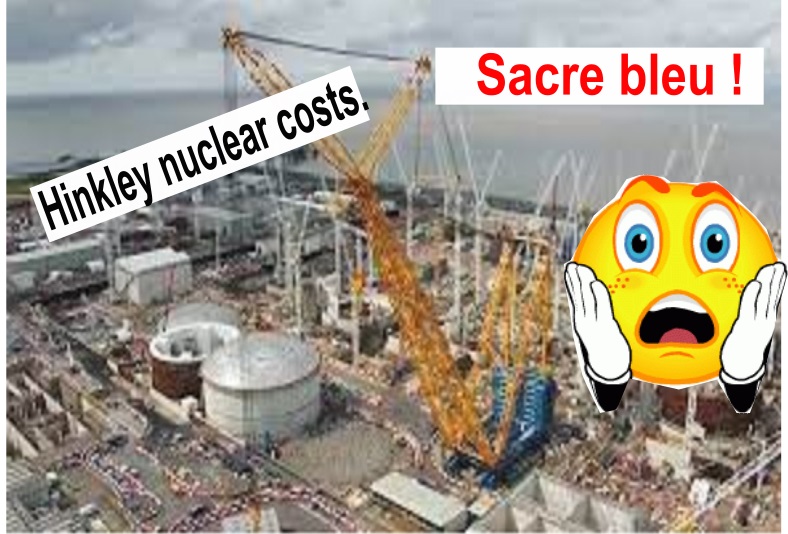


Experience with Sizewell C shows that private investors are not willing to be exposed to any significant part of this risk and if a deal is to be done the risk will fall on the public, as taxpayers and electricity consumers.
Britain’s three new nuclear projects – Hinkley Point C, Sizewell C and Wylfa – now depend on public money, above all from the National Wealth Fund, which has committed up to £36.6bn to Sizewell C alone: about twice what it can lend to all its other projects. Abandoning all three would save consumers £93–133bn and free the NWF to back renewables, energy storage and the government’s regional and industrial priorities.
. Introduction
If we strip away the rhetoric of a “golden age for nuclear power” and “ripping up rules to fire up nuclear power”, Britain’s nuclear programme looks very tired, with just three projects that have a reasonable chance of completion. Two of these (Hinkley Point C and Sizewell C) had their origins nearly 20 years ago while the third (Wylfa1) was launched under Boris Johnson’s government. Increasingly, what these three projects have most in common is not the reactors, but who is paying for them. The government’s National Wealth Fund (NWF) – set up to catalyse private investment across the economy – has already had to commit up to £36.6bn of the finance for Sizewell C, on top of a loan to design Wylfa’s reactors. If the Advanced Nuclear Framework succeeds in bringing forward the Cottam, Hartlepool and Oldbury projects too, the NWF could find itself committing a further £60bn to nuclear – in total 3.5 times what it has budgeted for the other 24 sectors it exists to support.
A fund created to unlock private investment across the economy risks becoming a vehicle for channelling public money into the most expensive, slowest and least certain to be delivered of all the forms of power generation available. An analysis of costs and benefits suggests that, far from rushing to launch new nuclear projects as the nuclear industry would advocate, the British people would be better served by abandoning these projects. The money and resources released – including by freeing the National Wealth Fund to do the job it was set up to do – can be redeployed to options that will reduce electricity bills, save taxpayers money and improve our prospects of meeting our climate change goals quickly and reliably.
2. Our nuclear capacity
The UK currently has only five operating nuclear power plants: the four remaining Advanced Gas-cooled Reactor stations (4.7GW) which are likely to be retired by 2031/32,2 and Sizewell B (1.2GW), which is expected to operate until 2055. Hinkley Point C (3.26GW) is under construction and will not be complete before 2032.3 Sizewell C (3.26GW) is three years away from an above ground construction start and, if all goes to plan, might be on-line by the start of 2040.4 The Wylfa Small Modular Reactor (SMR) station (1.5GW) is three years from a firm order being placed so is also unlikely to be generating much before 2040.5
Beyond the Hinkley and Sizewell projects, there is no evidence that further large reactor projects will be pursued (the prime site for large reactors is Wylfa and this has been allocated to an SMR project). There are also no specific government-led proposals for projects to follow on from Wylfa. It appears the government is relying on private sector projects to provide additional nuclear capacity and in February 2026 it published its Advanced Nuclear Framework, which is meant to provide government support for private sector-led projects.6 Under this, several forms of support were offered including:
- Finance via the government’s National Wealth Fund;
- Support via Great British Energy – Nuclear in finding sites;
- Help negotiating power purchase agreements such as contracts for difference that would remove any exposure of the plant to the competitive electricity wholesale market;
- Assessment of the projects by Great British Energy – Nuclear.
Two private sector SMR projects – Cottam and Hartlepool, both of about 1GW capacity – had been announced in September 2025 in association with President Trump’s visit to the UK.7 In June 2026, Holtec announced its application to the Advanced Nuclear Framework for the Cottam project.8 By the end of August 2026, X-Energy, the proposed reactor vendor for the Hartlepool site, had not made an application for entry into the Advanced Nuclear Framework.
Beyond Hinkley and Sizewell, there is no evidence that further large reactor projects will be pursued. There are also no specific government-led proposals for projects to follow on from Wylfa.
In July 2026 GE Vernova, via its Polish Partner SGE (Synthos Green Energy), announced an application to the Advanced Nuclear Framework to build up to 14 BWRX-300 SMRs (4.2GW).9 The application involves a proposal to site the first six reactors at the Oldbury site located on the River Severn, currently owned by Great British Energy – Nuclear (GBE-N). This is a problematic site and the Chair of GBE-N, Simon Bowen, told the ESNZ Committee: “If you look at Oldbury, particularly, the site that is close to you, we are aware that the only way to develop the Oldbury site for nuclear development will be with a significant investment in flood defences.”10 SGE’s target to complete the first reactor by 2034 is unrealistic given that it is several years behind the Rolls-Royce Wylfa project, where the first reactor is not expected to be complete before the ‘mid-30s’.11 It lags behind Wylfa in terms of siting, finance, and regulatory approval by the Office for Nuclear Regulation. GBE-N has stated it has not been contacted by SGE about the Oldbury site.12 There is no evidence yet as to whether the Advanced Nuclear Framework will be an effective route for promoting nuclear projects.
So, if there are no further delays with Hinkley Point C, Sizewell C and Wylfa, it is likely that it will be around 2040 before nuclear capacity exceeds today’s levels and even then, will only have got back to 2019 capacity levels. The current government’s target was to essentially remove all fossil-fuel generation by 2030 so new nuclear capacity can play no role in achieving that. If the AGRs are retired in 2031/32 probably on safety grounds (due to graphite moderator issues13) the British electricity system will have to survive with only about 4.5GW of nuclear capacity and no fossil fuel generation for around a decade. So, if there is a need for new base-load capacity, nuclear cannot provide it before 2040, and even then nuclear capacity will be much less than base-load (defined as the lowest level of demand in the year).
The government’s claim that “Unlike traditional large-scale nuclear plants, these projects [SMRs] usually need smaller sites, allowing more flexibility in where they can be built” is belied by the fact that the Wylfa project (1.5GW) and the potential Oldbury project (1.8GW) are substantially larger than any completed nuclear power plant in the UK and the Hartlepool project is about the same size as the AGR stations and Sizewell B. The reality is that sites that are suitable for nuclear projects in terms of physical factors and public acceptance are, and always will be, hard to find and there will be an overwhelming incentive to fit as many SMRs on to an accepted site as possible.
3. Wylfa
In June 2025, the government announced the winner of its competition to select a Small Modular Reactor (SMR) design for deployment in the UK.14 The design was the 470MW Rolls-Royce PWR SMR for which three reactors are expected to be built at the Wylfa site in North Wales (1.5GW). In June 2025, the government announced that it had allocated £2.6bn to the Wylfa project up to the end of fiscal year 2029/3015. A Final Investment Decision (FID) is not expected until 2029 with the process handled by the government-owned Great British Energy – Nuclear (GBE-N) entity. A significant number of hurdles must be overcome before the FID can be taken. These include completion of the Generic Design Assessment by the Office for Nuclear Regulation (ONR). This was expected in July 2026, but unofficial reports suggest the decision will not be before December 2027. The delay is said to be due to the need for design changes. The requirements the nuclear regulator imposes will be an important determinant of the reactor cost. The Wylfa site is widely portrayed as being the best of the existing reactor sites for new development and it did undergo some investigation when it was proposed as a site for two large reactors a decade ago. Nevertheless, the site investigations must be rigorous given the site is unlikely to be cleared after reactor operation until perhaps 150 years from now. However, site work done so far will be minimal, much of it funded by GBE-N so remediation costs would be small.
None of the important financial details about the Wylfa project have been announced. These include ownership, finance method, source of finance and power sales arrangements. However, experience with Hinkley Point C and Sizewell C gives strong indications of what would be needed to finalise the project. They include a substantial government equity stake, possibly as high as 100%; a power sales agreement that ensures all investor costs are passed on to consumers/taxpayers; and cheap finance provided from the National Wealth Fund.
Private investors will be wary of this project given that, in addition to the risks all nuclear projects suffer, the design is completely untested and Rolls-Royce has no experience as a vendor of civil nuclear power plants. These risks exist and will not be changed by different methods of funding and finance. All that can be changed is who bears these risks. Experience with Sizewell C shows that private investors are not willing to be exposed to any significant part of this risk and if a deal is to be done the risk will fall on the public, as taxpayers and electricity consumers. A deal will be easiest to reach if government owns all or practically all the equity so that the risk will fall on taxpayer and electricity consumers. This will avoid the lengthy delays that occurred getting the Sizewell C project to an FID from having to negotiate, not very successfully, with potential investors.
Rolls-Royce has not made predictions of the construction cost since the design was little more than a conceptual one. In 2021, it claimed the cost would fall to £1.8bn for the ‘nth of a kind’ (NOAK) with the first expected to be generating by 2030. The NOAK costs would apply when the supply chain is well established, and learning has made the construction process well established and repeatable. In practice, how many reactor orders it will take to get to ‘n’ is not well-established and most reactor designs are superseded by new or modified designs well before they reach any credible ‘n’.16 So, these forecasts have no value in forecasting the actual cost of a Rolls-Royce SMR.
By June 2026, GBE–N had let contracts worth nearly £900m for the Wylfa project so the compensation payable as a result of abandoning these contracts would be significantly less than £1bn.17 The government’s National Wealth Fund agreed to lend it £599m to develop the design in April 2026 demonstrating that the design is still far from complete.18
4. Sizewell C
The Sizewell C plant is nearly a decade behind Hinkley Point C and the costs incurred so far are correspondingly smaller. The Final Investment Decision (FID) was taken in July 2025 with the government’s central estimate for completion at the end of 2039 at a cost of £40.5bn (2024 money).19 In the June 2025 Spending Review, ahead of the FID, then-Chancellor Rachel Reeves allocated £14.2bn of public money to be spent on the project by the end of fiscal year 2029/30.20 The government claims the “(p)roject will be built for around 20% less than virtual replica Hinkley Point C”, claiming the project “builds on lessons learnt from the construction of Hinkley Point C.” It is misleading to compare in this way the estimated cost at Final Investment Decision (FID) of a project that has not yet had a chance to go wrong – Sizewell C – with one that has been under construction for eight years – Hinkley Point C – for which five delays and cost increases have been announced. The appropriate comparison is with the forecast costs at the point of FID. For Hinkley Point C it was £24bn (2024 money) compared to £40.5bn (2024) for Sizewell C, a real increase of nearly 70%. The time from Final Investment Decision (FID) to completion for Hinkley Point C was forecast to be nine years whereas for Sizewell C it is forecast to be 14 years. So, the learning from Hinkley Point C has led to large real estimated cost increases and a much longer expected lead-time.
The government was only able to complete the deal by offering huge public subsidies and, even then, had to take nearly half the equity. In the government’s Subsidies Database, the government estimates the value of these subsidies as £54.6bn.
The government was only able to complete the deal by offering huge public subsidies and, even then, had to take nearly half the equity. In the government’s Subsidies Database, the government estimates the value of these subsidies as £54.6bn.21 This is a ‘discounted’ figure so the actual amount paid by taxpayers and electricity consumers will be substantially more.22 During the construction period, consumers will pay a surcharge on their electricity bills. This will pay all the investors’ finance charges (approximately £25bn) and will also provide a ‘gift’ to investors of 60% of the equity the investors will be required to put into the project23 worth about £8bn. Finance will mainly be provided by the government’s National Wealth Fund with a budget of up to £36.6bn, at an advantageous rate initially set at a real rate of only 4.5%.
4.1. What will the price of power from Sizewell C be?
he key element in determining the cost-benefit balance for abandoning Sizewell C is the price consumers must pay for its output. One of the few good features of the Hinkley Point C deal is that consumers know what price they will be charged for power, albeit a very high one, regardless of what costs are. As EDF states in its announcements of cost increases: “Under the terms of the Contract for Difference, there is no impact for UK consumers [of cost increases].”24 The contract was for 35 years whereas for Sizewell C it is for 60 years, so consumers will be locked into the Sizewell deal for 25 years longer. For Sizewell, the price of power will be whatever it takes to generate the revenue the investors are contractually entitled to – consumers have had a blank cheque signed on their behalf. Every project using the EPR technology chosen for Sizewell C has far exceeded the cost and time estimates made when the investment decision was taken. So, the power price forecasts for Sizewell C based on estimates made at the time of FID must be regarded as highly likely to be a gross underestimate of the outturn power price. If construction or operating costs are higher than forecast, they will be passed on to consumers. Sizewell C Ltd has made some highly optimistic predictions about the price of power from Sizewell C claiming it would be £88-102/MWh (2026 money)25 – well below Hinkley. But this comes from the project’s promoter, rests on its best-case assumptions, including no cost overrun at all, and carries no consequences for the company if it proves wrong. Given the record of every EPR built so far, it should be treated as a floor rather than a forecast.
Unlike Hinkley Point C, consumers will be required to pay all the finance costs incurred in the construction period as they arise and they will also pay more than half of the investors’ equity contributions. The National Wealth Fund is providing most of the finance at subsidised rate representing a taxpayer subsidy. These additional costs must be factored into any projection of the cost of power from Sizewell C. So, all things being equal, the price to consumers of power from Sizewell C ought to be significantly less than for Hinkley Point C which had none of these subsidies. However, all things are not equal: the forecast construction cost of Sizewell is 70% higher in real terms than the cost of Hinkley on which the power purchase price of £89.5/MWh (2012 prices) was based.
If the outcome cost and time did reach the HRT, it would mean that the construction cost, which would be passed on to consumers as part of the Regulated Asset Base (RAB), would be double the forecast level for Hinkley Point C, the level on which its power price was calculated.
The Sizewell deal includes a Higher Regulatory Threshold (HRT) level with construction costs £47.7bn and completion in 2043 compared to the central assumption, the Lower Regulatory Threshold (LRT), which assumes a construction cost of £40.5bn and completion at the end of 2039. Sizewell C Ltd’s baseline estimate is completion in July 2039 at a cost of £38.2bn. Unlike the LRT and HRT, this estimate has no contractual force and there will be no financial consequences when it is proved wrong. While the HRT is described by government as having a ‘remote’ probability, all experience with nuclear projects, especially those involving EPR technology, suggests that an outcome of costs less than 20% over budget and a three-year delay would be an unprecedentedly good result. If the outcome cost and time did reach the HRT, it would mean that the construction cost, which would be passed on to consumers as part of the Regulated Asset Base (RAB), would be double the forecast level for Hinkley Point C, the level on which its power price was calculated. At that point, the contractual requirement on investors to continue to invest would end with no penalty to them – they keep the full return on what they have already invested – and government would either have to take over funding or abandon the project. By contrast, if Hinkley Point C is not completed by 203626, the government has the option to tear up the power purchase agreement leaving EDF to try to negotiate a new deal or abandon the project and lose the money it invested in the project.
4.1.1. The NAO report
The NAO report on the Sizewell C project publishes a large amount of data on the project including the forecast range of costs of Sizewell over its entire life in real terms.27 Its lower figures correspond to the LRT values and the higher to the HRT. Its data show the flow of cash during the construction period including the ‘net consumer payments’ figure of £24.7-34.5bn. We assume this includes the consumer contribution to investors’ equity costs. NAO’s figures show the cash flow during operation and the total consumer contribution in that period is £111.8-124.0bn making a total consumer contribution of £136.5-158.5bn.
The NAO analysis reports that the price of power is expected to be £133–155/MWh (2024/25 prices), or £152–178/MWh without the ‘recycling’ of the government’s profit as the 44.9% shareholder. Recycling passes that profit to consumers’ bills instead of to the Exchequer. It is a large subsidy from taxpayers to electricity consumers, and it means the lower price understates the full cost of Sizewell C’s power to the public. It is also a very bad precedent to invest so much taxpayers’ money for no return. The NAO notes: “Recycling is a policy decision, which the government could stop or modify at a later point, changing the cost to consumers.”28……………………………………………………………………………………………………………………………………………………….
Given the improbability of the Sizewell C project being completed on time and to budget even under the LRT assumptions, the price of power from Sizewell C will inevitably exceed the price of power from Hinkley Point C and probably by a large amount……………………………………………………………………………………………………………………………………………………………..
he savings in consumer power price from abandoning Sizewell C, assuming recycling continues, range from £58bn in the highly optimistic lower price case to £98bn in the still optimistic higher case. If the taxpayer subsidy that recycling represents is withdrawn, the savings go up to £87-132bn.
4.2. What would the cost of abandonment be?
The cost of remediating the Sizewell C site would be relatively small…………………………………………………………..
5. Hinkley Point C……………………………………………………………………………………………
5.2. What would the cost of abandonment be?…………………………………………………………………………………………………………………………………………………………………..
6. Bygones are bygones
British government ministers have repeatedly failed to abandon projects that were clearly going badly wrong preferring to pass the problem to their successor…………………………………………………………………………………..
7. Opportunity costs
Pursuing nuclear power will inevitably take resources away from options that would more effectively help the UK meet its climate change goals (see Annex 2). Of all the power generation technologies, nuclear power is by far the most capital intensive and the longest to build and the most likely to fail at some point between project announcement to completion. Nuclear power also consumes a large proportion of the government’s financial and human resources…………………………………………………………….
7.1. The National Wealth Fund………………………………………………………………………………………………..
Its financing of Sizewell C, 130% of its budget for other projects, is grossly disproportionate and distortive. Indeed, only £17.8bn of the NWF’s £27.8bn is for loans and equity – the rest is guarantees – so its lending to Sizewell C is about twice what it can lend to all its other projects put together.
……………………………………………………………………………………………………………………………………………
9. Conclusion
It is possible to make some estimate of the costs and benefits of completing Hinkley Point C and Sizewell C and in both cases, the evidence is decisively in favour of immediate abandonment. The case for abandoning Sizewell C is clearly the strongest, but the case for abandoning Hinkley Point C is also strong even after construction has been underway for eight years.
Little is known about the costs and commercial arrangements for the Wylfa project, particularly who will bear the economic risk, but if a deal is to be concluded, it is only likely to be possible if these risks are borne by the public. Wylfa therefore represents a major gamble with public money……………….
For a new government with a substantial mission for regional growth and tackling the cost-of-living crisis, reallocating funds from nuclear energy to economic growth should be viewed as a real option.
…………………………………………………………………………………………
Annexes 1 and 2…………
MULTIPLE REFERENCES ……………. https://policybrief.org/briefs/to-fund-the-burnham-governments-priorities-abandon-hinkley-point-c-sizewell-c-and-wylfa/
UK Civil-Military Nuclear Policy: ‘radical reset’ or ‘misleading fig leaf’?

the deep entangling of civil and military nuclear infrastructures. …………………. study found a net flow of value from civil to military nuclear infrastructures amounting to more than £5 billion per year42.
The declared costs of the UK nuclear-propelled submarine programme are already questioned even by advocates44. Without this massive cross-subsidy, it is clear these burdens would become even more unaffordable4
The government’s nuclear deregulation drive rests on assumption, not evidence, never comparing nuclear with cheaper, faster alternatives, downplaying safety risks, and denying trade-offs outright. A less visible driver, they suggest, is military pressure: sustaining Britain’s submarine-building base costs over £5 billion a year.
Andy Stirling– Emeritus Professor, Science Policy Research Unit (SPRU), University of Sussex, Phil Johnstone– Visiting Fellow, Global Studies, University of Sussex, October 2026, https://policybrief.org/briefs/uk-civil-military-nuclear-policy-radical-reset-or-misleading-fig-leaf/
Much has happened since Starmer’s King’s Speech1 on 26 May 2026. On the face of it, that “radical reset” of arrangements governing both civil and military nuclear activities still stands as the basis for Andy Burnham’s own policy direction on these crucial issues. Certainly, this major boost in official commitments to all things nuclear remains evident in the direction taken by Andy Burnham’s early initiative2. Building on the Nuclear Regulatory Taskforce Review3 initiated in 2025, the biggest overhaul of nuclear regulation for decades seems to be ‘full speed ahead’.
But does this renewed momentum make sense, for the most expensive energy on the grid and a military posture that has remained unchanged for decades despite a massively transformed world? What is the evidence underpinning these moves? Where has this been properly interrogated? The Taskforce review is treated as if it has already answered these questions. This briefing will examine whether and to what degree this is so.
Whatever view is taken of nuclear power or nuclear weapons, the major nuclear regulatory reforms now in play are extraordinarily important. Nuclear technologies touch on issues of energy, climate, public spending, environmental protection, health, security and national strategy. If regulation is to be weakened, streamlined or redesigned, all sides might agree that the case for doing so should be rigorous, transparent and evidence-based4.
Accordingly, the stated aims of the Review were to make regulation more efficient, affordable and proportionate. Yet the new nuclear policy is undermined right at the outset by such claims being more assumed than supported by evidence. Indeed, the Taskforce itself says that “[w]e have taken the Government’s commitment to civil and defence nuclear power as given for the purposes of this review”5.
As a result, conclusions are presented as though they are self-evident. Without duly attending to cross-country comparisons6, the UK is asserted to be an “international leader” in nuclear technology7. Existing UK nuclear regulation is likewise said to be “well respected”. But it is not mentioned specifically by whom, nor on what particular grounds, this should be true of a country which has, under any view, slipped far behind others in this field over the past fifty years8. Taking these claims as “given” risks substituting reasoned analysis with nationalistic posturing9.
Nuclear technology is likewise revealingly characterised as a given: as “essential” for national security, energy security and net zero10. Again, detailed evidence for such claims is almost entirely absent. Declared priorities of efficiency, affordability and proportionality are further undermined by failing anywhere in more than 160 pages to substantiate how these values are met by furthering nuclear technologies rather than their many alternatives11. As if nuclear power existed in isolation, the attention is virtually all on this one option alone.
So, it may seem scarcely believable, but is nonetheless true, that the comparative case made by the Taskforce for nuclear power in relation to alternatives is not merely flawed: it is non-existent. Perhaps the reason for this lies in the inconvenience for official interests, of what is an increasingly compelling comparative picture. Despite the official impressions given otherwise, nuclear power is in fact clearly generally more costly12, slower and less effective13 than alternative strategies for economical, secure, firm-equivalent, domestic zero carbon energy14. This is true both internationally15 and even in official UK data16 (on the rare occasions and obscure corners where it is looked at17).
The Taskforce’s conclusions are presented as though they are self-evident: the UK is “international leader” in nuclear technology though it has slipped far behind others in this field over the past fifty years. Taking these claims as “given” risks substituting reasoned analysis with nationalistic posturing.
Nor are these core considerations all that the Taskforce falls short of properly addressing. The Review nowhere refutes that nuclear continues to present disproportionate risks of distinctive low-probability, high-consequence accidents18, yet seemingly does not consider this an issue of importance warranting further discussion. Likewise neglected is a scientific literature increasingly pointing to locally elevated health problems around nuclear facilities19. Even without accepting this evidence, examining it should be a priority.
lso under-addressed by the Taskforce are concerns that nuclear presents: unresolved eye-wateringly expensive radioactive waste challenges20; extraordinary vulnerabilities to climate-driven sea-level rise21; and highly concentrated pre-distributed iconic targets for enemies in times of war22. Again, conclusions may vary, but – unless the aim is simply to force through a manifestly unfavourable option – why not at least look at such issues?
Perhaps most disturbing of all is the wider context. This failure by the Taskforce even to attempt duly detailed comparative analysis is also a feature of high-profile official UK analysis for many years. Again, neither the Taskforce, nor the UK Government now enthusiastically taking up its prescriptions23, make any reference to any official attempt to compare nuclear power with its alternatives. This remarkable blind spot means current deregulatory action is seriously under-substantiated.
In the one area where the Taskforce does address issues of risk, neglect for rigorous assessment comes even more to the fore. In particular, critical attention is given to the long-established international ALARP principle24 – the requirement that risks be reduced “as low as reasonably practicable”. Here, without making underlying evidence readily checkable, the Review simply asserts current interpretations of nuclear risks to be “overly cautious25”.
But ALARP has evolved over many decades26 precisely because nuclear activities can involve severe and long-lasting consequences. Far from being “overly cautious”, a general pattern is for risks that were initially denied to eventually be acknowledged by events27.
So, any move to weaken ALARP inevitably raises questions about trade-offs. Faster approvals, lower costs and greater flexibility may all be desirable goals on their own. Yet it is difficult to see how significant regulatory changes can occur without affecting the balance currently struck between efficiency and protection.
It makes no reference to any official attempt to compare nuclear power with its alternatives. This remarkable blind spot means current deregulatory action is seriously under-substantiated.
Oddly, these trade-offs are also rarely discussed in detail by the Taskforce. And in the ensuing King’s Speech28, they are explicitly framed as a “win-win”. So, it is not so much that a case is made as to why relaxing nuclear regulation will incur benefits greater than risks. The unsupported claim is even stronger: that negative trade-offs effectively don’t exist. Given both the history of nuclear technologies29 and the current world situation30, this again seems an eccentric position to assert without evidence.
All this matters still more, because the Taskforce recommendations now being acted on are not modest adjustments. The Taskforce itself repeatedly calls for “radical reform” and a “radical reset” of the regulatory system31. Keir Starmer put it even more strongly in claiming that his “Government rips up rules to fire-up nuclear power”32. There is no suggestion of any change of direction by Andy Burnham. Yet if the existing nuclear regulatory system is as genuinely well respected as is claimed, why is radical change necessary at all? If radical change is necessary, what exactly is wrong with the current arrangements? Does this contradiction not also suggest rhetoric more than substance?
A further striking feature of the Review is its lack of historical perspective. For nearly two decades, successive UK governments have sought to streamline planning, nuclear licensing and approval procedures33. New institutions have been created. Planning procedures have been reconfigured34. Regulatory processes have been accelerated. Yet despite all this, nuclear projects remain slow, costly and difficult to deliver35.
Before proposing another round of deregulation, then, it seems reasonable to ask why previous attempts failed. Was regulation really the main obstacle? What are the implications if the key difficulties lie in the economics and engineering of nuclear technologies themselves36? What if – like so many technologies before – nuclear power is simply becoming obsolete?37
If there were no alternatives38, the Taskforce’s blinkered focus on nuclear alone might be understandable. But in the UK, as worldwide39, the main story is – again under any view – the phenomenally rapid overtaking of nuclear power by other domestic, secure, zero carbon technologies40. If the Taskforce were to be true to its stated principles of proportionality, efficiency and affordability, surely it would have something to say about this?
Perhaps the most important issue, then, concerns democratic accountability.41 Treating the case for nuclear technologies as ‘given’ diverts attention from the actual pros and cons of nuclear activities to how best they should be regulated. In this, safety problems are not directly denied but implied to be insufficient to outweigh “the UK’s nuclear ambitions”.
Was regulation really the main obstacle? What are the implications if the key difficulties lie in the economics and engineering of nuclear technologies themselves? What if – like so many technologies before – nuclear power is simply becoming obsolete?
What then are the drivers of these ambitions? The Review itself and associated Kings Speech confirm the deep entangling of civil and military nuclear infrastructures. So – albeit not asked officially – the question reasonably arises as to whether the flows of resources from mixed civil and military budgets (as funded by taxpayers or electricity consumers) match the patterns of costs as actually incurred on civil and military sides. Or is there a mismatch that leads one side to gain disproportionately by the sharing of resources? Cui bono?
When this oddly-neglected question was actually addressed by a study in 2024 for a UK Foreign Office-funded research programme, the answer was clear. The study drew on officially stated budgets of government civil and military nuclear-related agencies and programmes and on flows of revenues from consumers for purchase of excessively expensive wholesale nuclear electricity – that would cost less, according to Government data, if alternative zero carbon sources were used. Even when calculated in a conservative way – that diminishes the size of the observed imbalance – this provisional study found a net flow of value from civil to military nuclear infrastructures amounting to more than £5 billion per year42.
In the absence of officially audited figures, this kind of external analysis is all there is in the UK at the moment. Although the Government itself is silent on the matter, it seems clear who benefits from the emphasised integration of civil and military nuclear industrial base. And this corroborates the openly stated position in defence documents discussed earlier in this briefing. The reason for UK perseverance with unnecessarily expensive and otherwise substitutable nuclear power seems largely to reflect military pressures43.
Whatever side they are viewed from, the implications are very serious. The declared costs of the UK nuclear-propelled submarine programme are already questioned even by advocates44. Without this massive cross-subsidy, it is clear these burdens would become even more unaffordable45. So it is evidently for this reason that the Taskforce asserts nuclear technologies to be “essential” for the UK. This seems why the Taskforce links a “high-performing national nuclear enterprise” so strongly to defence objectives.
This picture is reinforced by the provisions of the King’s Speech. Accepting in principle all 47 recommendations of the Nuclear Taskforce, the King’s Speech was even more clear in expressing the remarkable intensity of commitment that exists in UK policy for sustaining a combined civil-military nuclear complex. The Nuclear Regulation Bill itself is explicitly justified as speeding nuclear delivery and reducing costs “in a boost to the UK’s energy sovereignty and the nuclear deterrent”.46
In conclusion, the key point applies even though reasonable people may disagree about the morality, wisdom and efficacy of nuclear weapons as well as about the pros and cons of any future role for nuclear power. Under any view, such disagreements should surely be addressed openly? It is here that both the Taskforce Report, and the wider grounds for current policies being implemented on this basis, might be seen from all sides as problematic.
The core issue is not whether nuclear regulation should change, or how. It is whether proposals for the present “radical reset” are supported by analysis that is sufficiently rigorous, balanced and transparent47 to justify the profound consequences that may follow for UK electricity consumers, taxpayers and citizens in the widest sense. On that question, important doubts remain.
REFERENCES – (many) ……………………………………………………………
Questions raised over new Faslane base ballistic shelters
PLANS to install ballistic security shelters at the UK’s nuclear submarine
base on the Clyde have sparked questions from anti-nuclear campaigners over
what threats military chiefs believe Faslane could face.
Construction firm
Henry Brothers has been appointed to deliver specialist ballistic security
shelters at HMNB Clyde as part of a £2.55 million package of infrastructure
works commissioned by Babcock International Group. The programme also
includes enhanced security fencing and refurbishment of an existing
pressure test building, with Babcock saying the investment will help ensure
facilities supporting the Royal Navy’s Vanguard and Astute-class submarine
fleets remain “resilient, secure and fit for the future”.
However, the
Scottish Campaign for Nuclear Disarmament (CND) said the plans raise
important questions about both the purpose of the shelters and the risks
associated with hosting the UK’s nuclear weapons system in Scotland.
The National 12th Oct 2026,
https://www.thenational.scot/news/26630106.questions-raised-new-faslane-base-ballistic-shelters/
Nuclear future mapped out in new five-year plan

The plan focuses on nuclear science, fuel security and the future of the industry
Skye Morley, 14/10/2026, https://www.energylivenews.com/2026/10/14/nuclear-future-mapped-out-in-new-five-year-plan/
This week, the United Kingdom National Nuclear Laboratory (UKNNL) launched its strategic plan for the future of nuclear over the next five years.
The plan is built around fuel security, appropriate infrastructure, science and evidence needed for safe operations, safe plutonium science and environmental restoration and health.
Michael Shanks, Energy Minister, said: “We are committed to developing the next generation of nuclear power, and UKNNL plays a key role in making these ambitions a reality, working to accelerate the science behind future reactors, keeping systems running safely and securing the UK’s fuel supply.
“This strategic plan will help us take a lead in the industries of the future, powering growth and jobs up and down the country.”
The UKNNL say in the plan that the UK is building nuclear again at a scale not attempted in a generation, with large scale reactors in construction and small modular reactors under development, alongside advanced reactors and fuels.
The previous strategic plan, released in 2021, was met with uncertainty and sector instability.
Andrew Howarth, VP Strategy at UKNNL, said: “Now, government policy is a lot clearer, and we know what’s happening across new build, defence and decommissioning. That changes what the national laboratory has to be ready for.”
UKNNL say the purpose and missions of the plan is nuclear science to benefit society.
What is Defence Spending For?

for all the talk of financial pressure on military budgets and the clamorous demands for increased spending, waste and fraud are endemic to the Ministry of Defence, while arms companies continue to profit handsomely
| Anna Stavrianakis, Declassified UK, Oct 13, 2026, |
Once again, military and defence matters are in the news: from the sudden withdrawal of US bomber aircraft from RAF Fairford after a suspected terrorist incident, to the Tories’ pledging of £10 billion for an air defence shield in the mould of Israel’s Iron Dome. |
This is germane timing for the release of a new report from the Transition Security Project think tank, “Posturing To The World”, which sets out some startling facts about the costs of the UK’s military orientation, both economic and strategic.
The authors draw our attention to the difference between the territorial defence of the UK homeland, and a military posture that is global in scope with UK military bases on five continents and a history of offensive operations overseas – and to the economic and strategic costs of the latter.
The UK has spent more than £51 billion on its participation in the wars in Iraq, Afghanistan and Libya since 2001, for example – wars that were crimes, not mistakes.
They also advise us that maintaining the UK’s current nuclear posture of continuous at-sea deterrence will cost us – the taxpayers – £116 billion between now and 2040.
They also advise us that maintaining the UK’s current nuclear posture of continuous at-sea deterrence will cost us – the taxpayers – £116 billion between now and 2040. And they point out the awkward fact that, for all the talk of financial pressure on military budgets and the clamorous demands for increased spending, waste and fraud are endemic to the Ministry of Defence, while arms companies continue to profit handsomely. |
87% of military procurement programmes are delayed or over-cost; since 2010, the MoD has wasted an estimated £14 billion on cancelled procurement projects; and it had an estimated potential fraud exposure of about £2.1 billion in 2024/25.
What to make of this picture, which differs so markedly from what we’re told about the imperatives of increasing military spending? To my mind there are three things this report raises that the UK public deserve better informed, more reasoned debate about.
First, political, military and economic elites usually conflate defence of the homeland with a globally oriented military posture. In short, when they say ‘defence’ spending, I say ‘military’ spending. |
It’s imperative at a time of ecological and cost of living crisis, as well as of diversifying international risks and threats, that we have a reasoned public debate about what defence spending is actually ‘for’.
Second, the British public are increasingly cognisant of the costs of US pressure and domination of the international system, and of the legacies of Britain’s imperial past.
We deserve a more mature debate about the opportunities as well as challenges for a small, multi-racial power like Britain in a fracturing, multipolar world.
And third, political economy goes hand in hand with grand strategy. Britain’s military commitments are expensive, wasteful and riddled with fraud; but crucially, they also don’t ‘work’.
Britons are neither safer nor richer as a result of high military spending and high-tech military ‘solutions’. The Afghans, Iraqis and Libyans, let alone the Yemenis or Palestinians, certainly aren’t either. We all deserve better.
Nuclear regulator says sector safe and secure but calls for stronger leadership
“Industrial safety shortfalls at Sellafield Ltd, continued enhanced regulatory attention for safety at Dounreay, EDF Hartlepool site’s move into significantly enhanced regulatory attention, and the need for periodic safety review improvements at Sizewell B all point to the need for stronger and more sustained delivery,” it said.
The report dedicated more than a page to EDF’s Hartlepool nuclear power plant which remains under significantly enhanced regulatory attention regarding safety.
13 Oct, 2026 By Tom Pashby, New Civil Engineer,
The Office for Nuclear Regulation (ONR) has found that improvements in the nuclear sector’s leadership have “not yet been sufficiently embedded” and cyber security “maturity” is below expected levels, but provided reassurance that the sector remains “safe and secure”.
The comments were made in its Chief Nuclear Inspector’s annual report on Great Britain’s nuclear industry, published on 8 October.
In his foreword, ONR chief executive and chief nuclear inspector Mike Finnerty said: “The sector continued to operate safely and securely, but performance remained variable, reinforcing the importance of reflection and learning in sustaining high standards and responding effectively to current and future challenges.”
He added: “We have worked closely with the Nuclear Regulatory Review Taskforce and have begun implementing its recommendations through a significant programme of activity.”
The industry demonstrated “clear capacity to improve” its outcomes regarding nuclear site health and safety (NSHS), he said, but warned that “progress is not yet consistent”.
Finnerty also said: “Maturity, resilience, and delivery discipline still need to improve.
“This is particularly evident in overall cyber security maturity, NSHS performance, organisational capability, leadership and governance, and delivery in more complex or higher-risk environments.
“Considering global geopolitical uncertainty, I believe greater attention is needed to ensure physical security at nuclear sites is treated with comparable priority to nuclear safety.”
He later cautioned that “material variability between dutyholders and areas of regulatory focus continues to require targeted attention”, and said: “Confidence remained more limited where improvements in leadership, governance, organisational resilience and specialist capability have not yet been sufficiently embedded.”
Finnerty concluded: “[M]y overall judgement is one of safe and secure operation, targeted progress and continuing variability in the depth and consistency of improvement.”
The report said he had identified cyber security and NSHS as his chief nuclear inspector (CNI) themes for 2025/2026
“The cyber security thematic inspection programme showed improving baseline capability but also confirmed that overall maturity remains below the level expected, particularly in strategy, governance, risk management, reporting, resourcing, culture and leadership”, he said.
“In NSHS, accident and incident rates remain above the long-term average for the nuclear industry, indicating that sustained improvement has been limited.
“Construction-related risk and fire safety continue to require regulatory attention.
“Taken together, these areas show incremental progress, but greater depth and consistency are still required. Therefore, I will continue to expect dutyholders to demonstrate stronger ownership and sustained improvement in these areas.”
The report highlighted concerns about the safety of construction activities at nuclear sites.
“Industrial safety performance and incident reporting require more consistent control,” it said.
NSHS performance remains a concern. Particularly construction-related risk, fire safety and control of work, with accident and incident rates above the long-term average.
“Incident reporting quality, timeliness and consistency also remain variable, including late incident reporting and inconsistent reporting thresholds.”
It also singled out specific operators and sites as needing improvements.
“Industrial safety shortfalls at Sellafield Ltd, continued enhanced regulatory attention for safety at Dounreay, EDF Hartlepool site’s move into significantly enhanced regulatory attention, and the need for periodic safety review improvements at Sizewell B all point to the need for stronger and more sustained delivery,” it said.
The report dedicated more than a page to EDF’s Hartlepool nuclear power plant which remains under significantly enhanced regulatory attention regarding safety.
“Hartlepool started the reporting period in enhanced regulatory attention for safety. We agreed with the dutyholder the areas for improvement and oversaw the site’s development and implementation of an improvement plan,” it said.
“However, during the reporting period there was a consistent increase in the number of events on site. These events primarily related to site health and safety rather than nuclear safety, but in some cases workers were harmed, and in others there was a high or medium potential for harm.”
NCE previously reported that 36 site incidents had been reported by EDF to the ONR between 1 January 2025 and May 2026.
The ONR’s report added that the regulator continues to judge that “Hartlepool remains safe to operate”………………………………….https://www.newcivilengineer.com/latest/nuclear-regulator-says-sector-safe-and-secure-but-calls-for-stronger-leadership-13-10-2026
Britain funds critical repairs to Chornobyl nuclear power plant damaged by Russian drone attack
Gov.uk 15 October 2026
UK to provide £17m in funding towards repairs to the Chornobyl nuclear power plant damaged by Russian drone strike last year.
Britain is funding £17m in new support for repairs to the Chornobyl nuclear power plant, the Chancellor and Foreign Secretary have announced today.
The protective shelter of the plant was damaged by a Russian drone strike last year, and UK support will form part of an international programme coordinated by the European Bank for Reconstruction and Development, working alongside the Government of Ukraine and G7 donors.
The support will fund crucial repairs to restore the structure’s confinement and ventilation functions and protect its intended lifespan. Without repairs, corrosion risks undermining decades of international investment and creating longer-term environmental and safety risks……………. https://www.gov.uk/government/news/britain-funds-critical-repairs-to-chornobyl-nuclear-power-plant-damaged-by-russian-drone-attack
Plans for 10-year nuclear weapons factory rebuild
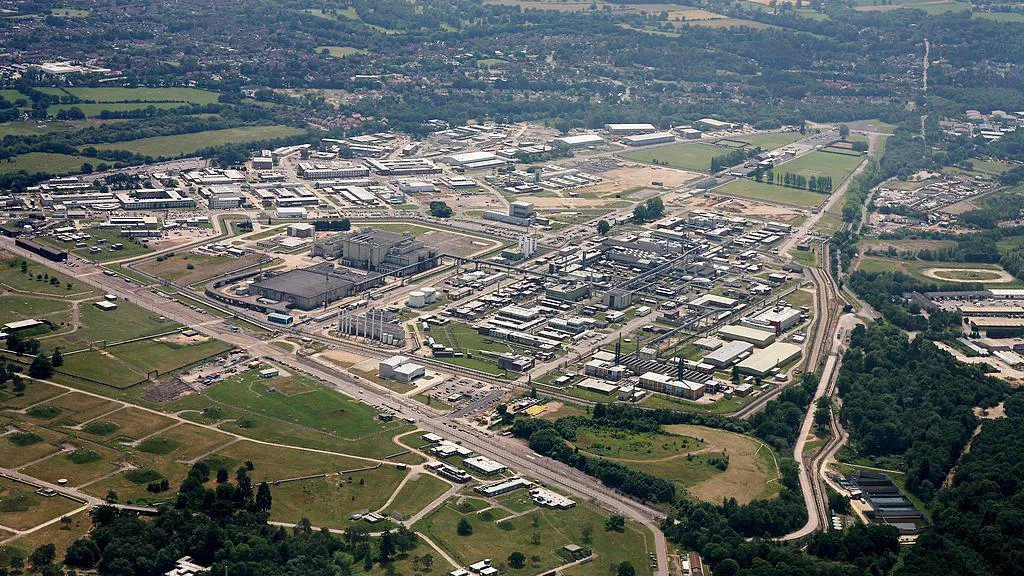
Niki Hinman, 15 Oct 26, https://www.bbc.com/news/articles/cqp9g2x0my5mo
A plan to rebuild parts of a nuclear weapons factory over 10 years is set to be submitted to a local planning authority within months.
The Atomic Weapons Establishment (AWE) in Aldermaston, Berkshire, will seek to replace ageing facilities with what it is calling its Future Materials Campus.
An outline planning application is expected to be submitted to West Berkshire Council this winter as part of a broader £15bn government investment into the UK’s nuclear warhead programme.
AWE said it will begin preparing the site after the outline planning application is approved, with main construction work expected to start within two to three years.
The new buildings will seek to support the UK’s new Astraea nuclear warhead programme.
AWE said the programme will help maintain about 9,000 jobs at AWE Aldermaston, with more than 1,500 new jobs expected later.
New office spaces, advanced manufacturing facilities and testing laboratories are expected to be amongst the improvements.
There are more than 1,200 buildings on the Aldermaston site, more than half of which were built before 1960.
In a document produced in the summer, AWE said it expects construction traffic to be “relatively low” during the first three to four years of the project.
It is then expected to hit a “peak period” about two-thirds of the way through the project. It expects that to then steadily reduce.
AWE also operates AWE Burghfield about seven miles (11.2km) away, where warheads are assembled, serviced and decommissioned.
2026 George Monbiot Nuclear Greenwash Award goes to the UK Green Party for Abandoning Nuclear Opposition
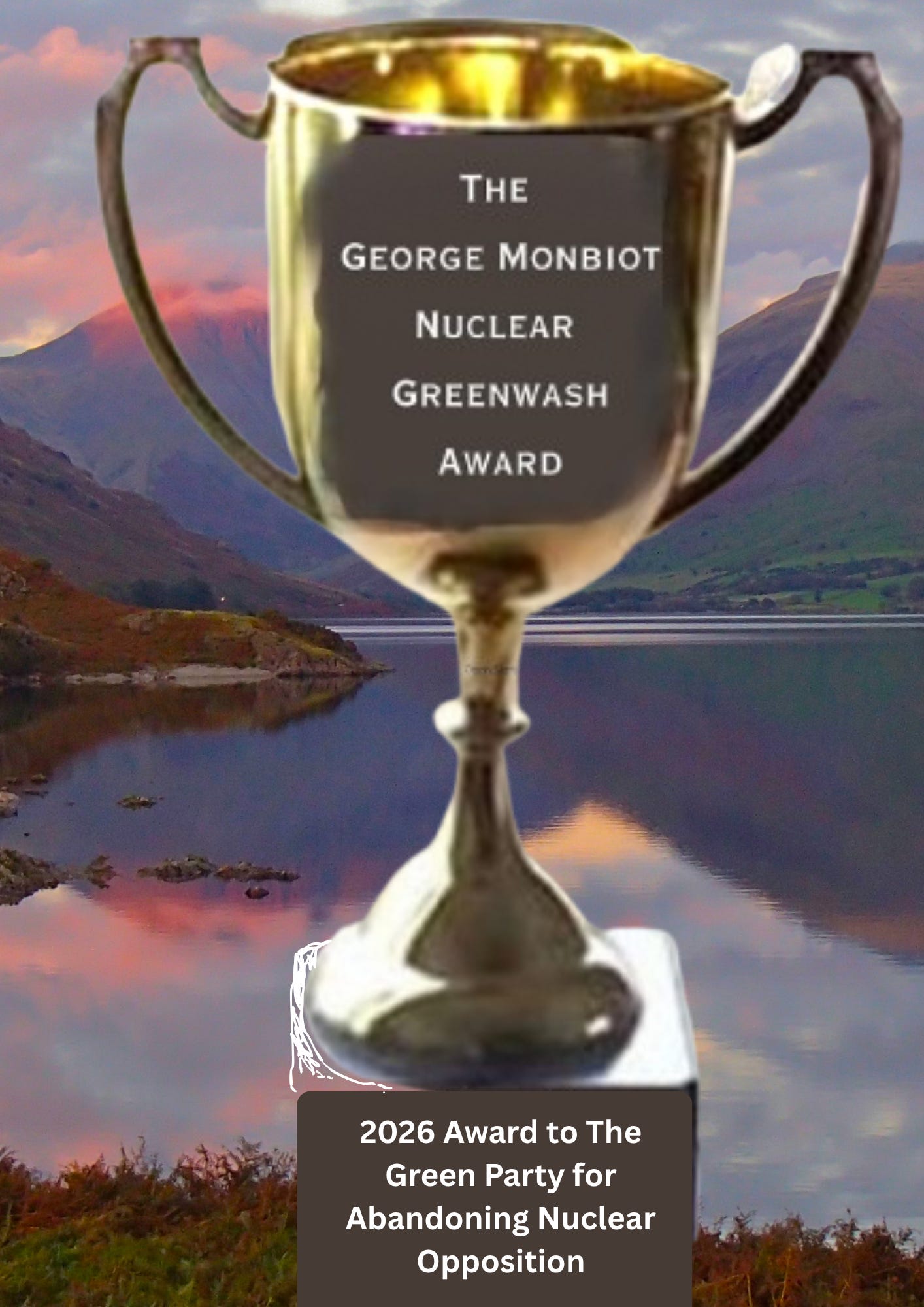
Image: The George Monbiot Nuclear Greenwash 2026 Award to The Green Party for Abandoning Nuclear Opposition. George Monbiot’s famous “I love nuclear” in the wake of the Fukushima disaster deflected an otherwise inevitable crisis of nuclear confidence and was of course key to the push for the building of the first new nuclear plant in the UK in decades at Hinkley C which he now says (after facilitating the damn thing) should be scrapped in favour of, even more dangerous. fast breeder reactors,
Lakes Against Nuclear Dump, Oct 12, 2026, https://lakesagainstnucleardump.com/2026/10/12/2026-george-monbiot-nuclear-greenwash-award-goes-to-the-green-party-for-abandoning-nuclear-opposition/
Just days before the 69th anniversary of the UKs worst nuclear accident to date , the Windscale Fire, the Green Party announced their abandonment of their opposition to nuclear, and with it their reason for being. The Green Party used to call the nuclear industry the “nuclear military industrial complex” for good reason, the “civil” nuclear industry is necessary in order to produce elements for military use, including plutonium, tritium and americium.
Here in Cumbria we won’t notice much difference as the Green Party have spectacularly failed to publicly voice strong opposition or lead any charges against nuclear developments for many years with Green Party members seemingly much more concerned with the horrible nitty gritty of political advancement than protecting the health and wellbeing of the public and our environment from nuclear developments.
Having said that we wait more in hope than expectation to be surprised and delighted by vigorous, strong and principled Cumbrian Green Party opposition to the tsunami of nuclear developments coming our way.
It has not gone unnoticed that despite there being more Green councillors than ever before on Cumberland council, the Council as a whole is like never before, acting as a facilitating arm of the nuclear industry. Cumberland council and its Green Party members are partners in the geological nuclear dump plan and partners in the plan to bring Japanese sodium coolant to Cumbria amongst other things.
Bizarrely the Green Party in Cumbria even had to be persuaded long and hard by Radiation Free Lakeland to oppose the earth quake inducing coal mine near Sellafield with the Green Party’s candidate, in the 2017 Whitehaven hustings Jack Lenox actually saying he was “a big fan of coking coal” this despite its close proximity to Sellafield. The coal mine was finally refused largely on the grounds of induced seismicity.
Professor Chris Busby has this to say: “the Green Party began as an anti-nuclear party in Germany, with Petra Kelly. When I chained myself to the gates of Trawsfynydd Nuclear Power Station in Wales in 1992, Petra Kelly had agreed to come and support our campaign against opening the nuclear site, which was dangerous. The station operators had applied to run the reactors at a high temperature to anneal the cracks in the pressure vessel. This was not long after the experiment at Chernobyl. And the contamination of Wales by Chernobyl (which led to sharp increases in cancer and child leukemia)…..The nuclear police had pistols and we were told they would shoot us. Petra Kelly was assassinated a few months after this. How can I say this? How do I know? Well, of course I don’t know and cannot be sure. But here is something you don’t know about this. The story now widely accepted (look at Wikipedia) is that her man, General Gert Bastiaan killed her.
The police determined that Kelly was shot dead while sleeping by Bastian, who then died of suicide.
Well and Good. But I spoke with Prof Ernest Sternglass about this. He knew both of them, and said it was impossible that Bastiaan would have killed her and himself. They were full of positive energy and life, when he met them in Berlin some 6 weeks before she died. She was very excited. She had received an offer of considerable financial support by German TV to make a series of documentaries with Russian and Belarussian scientists including Dr. Shevchenko, to report on the real health effects of the Chernobyl accident contamination. At the time, the nuclear operators and their tame scientists in the IAEA and the WHO were stating that there were no measurable health effects. It was the same at Fukushima some twenty years later. But back in those days they killed you, rather than using media to destroy your credibility.”
Officer numbers rise at Civil Nuclear Constabulary
AN ARMED police force guards some of the UK’s most sensitive sites, including Sellafield in Seascale, and data reveal that over the last six years its officer count has grown by more than 10 per cent.
Carlisle News & Star 10th Oct 2026,
https://www.newsandstar.co.uk/news/26620384.officer-numbers-rise-civil-nuclear-constabulary/
British nuclear submarines to use hoses in ‘worst case scenario’ defence despite Russia threat
A Navy source has claimed that high-powered hoses mounted on docked HMS Vanguard submarines are being factored into the defence of the top-of-the-line £3 billion vessels
Liam Doyle, 09 Oct 2026,
https://www.mirror.co.uk/news/uk-news/british-nuclear-submarines-defence-37755122
Britain’s most advanced nuclear submarines only have hoses to protect them from drone incursions, it has been reported.
Vanguard class submarines, the pinnacle of the Navy’s underwater fleet, have “centre-fed reels”, a type of hose connected to a drum that can launch powerful streams of water through a trigger system. They are mainly used to tackle onboard fires, but it has now been claimed that they are also being deployed to fend off drones.
An insider has said submarine crews now “have to use what you’ve got”, while the Government insists its most vital military units are properly protected.
The reels are reportedly placed on deck as a precaution while submarines are tied up alongside the HMNB Clyde in Faslane, Helensburgh, Scotland, a source told the Sun. While there, they are swathed in several layers of defence, including the base’s specialist counter-drone capabilities, patrols, surveillance, monitoring and physical barriers.
But the source claimed the hoses are also meant to factor into the defence, stating: “In a worst case scenario, the plan is to grab the centre fed hose reel and use it to knock a drone off course or even knock it down.”
The hoses, according to official documents, are designed for use primarily to tackle different types of fires and can be found on several different vessel types. An MOD Defence Standard states they are placed on HM Ships, Submarines or Fire Schools “as a first appliance against Class A & B fires”.
Class A fires are caused by solid combustibles, while Class B fires are started by flammable liquids like petrol, diesel or paraffin.
The claims come as drones are increasingly fielded in military conflicts, having found routine use in Ukraine, where they are helping turn the tide of war against Russia, and in Iran. They have also strayed further into eastern Europe, with two ships hit by sea and air drones off the coast of Bulgaria earlier this week.
Officials launched a massive search and rescue operation for missing crewmembers following the incident in the Black Sea on October 6 in which the vessels sent distress signals at around 4am local time (2am BST).
One of the pair “disappeared” from the radar of border police at around 9am local time (7am BST). Rescue teams were able to retrieve 18 sailors on the second vessel, with two of them seriously injured. The remaining 16 crew are reportedly in “good condition”. The origin of the drones has not yet been established.
Bulgarian prime minister Rumen Radev said: “I can’t say yet which country the drones are from, but it’s clear – they’re either Russian or Ukrainian.”
The Royal Navy has also recently brushed with drones, with HMS Dragon having faced them down in the Mediterranean and Red Sea. The Type 45 destroyer spent seven months away protecting UK interests this year by shielding bases in Cyprus, providing maritime security and working with allies and partners across the Middle East.
It returned to Portsmouth today, with General Sir Gwyn Jenkins, the First Sea Lord and Chief of Naval Staff hailing the deployment as showing “the Royal Navy at its best”. Responding to the hose claims, an MoD spokesperson said the Government is taking military security “extremely seriously”.
They said: “The first duty of Government is national security, and we take the security of our people, sites and local communities extremely seriously, in particular those housing nuclear capabilities.
“The protection of our bases is kept under constant review, with a multi-layered approach that includes physical barriers, patrols, surveillance, monitoring, and counter-drone capabilities. Through the Defence Investment Plan, we are investing an additional £470million over the next four years to strengthen the protection of UK military sites.”
1 This Month
23-25 October – on Zoom – World BEYOND War’s annual global conferenc


Shut down the radiation-damaged Heysham nuclear reactors now
To see nuclear-related stories in greater depth and intensity – go to https://nuclearinformation.wordpress.com

Say No to NASA’s Reckless Nuclear Reactor on the Moon
Say No to NASA’s Reckless Nuclear Reactor on the Moon

-
Archives
- October 2026 (247)
- September 2026 (339)
- August 2026 (330)
- July 2026 (355)
- June 2026 (287)
- May 2026 (306)
- April 2026 (356)
- March 2026 (251)
- February 2026 (267)
- January 2026 (308)
- December 2025 (358)
- November 2025 (359)
-
Categories
- 1
- 1 NUCLEAR ISSUES
- business and costs
- climate change
- culture and arts
- ENERGY
- environment
- health
- history
- indigenous issues
- Legal
- marketing of nuclear
- media
- opposition to nuclear
- PERSONAL STORIES
- politics
- politics international
- Religion and ethics
- safety
- secrets,lies and civil liberties
- spinbuster
- technology
- Uranium
- wastes
- weapons and war
- Women
- 2 WORLD
- ACTION
- AFRICA
- Atrocities
- AUSTRALIA
- Christina's notes
- Christina's themes
- culture and arts
- Events
- Fuk 2022
- Fuk 2023
- Fukushima 2017
- Fukushima 2018
- fukushima 2019
- Fukushima 2020
- Fukushima 2021
- general
- global warming
- Humour (God we need it)
- Nuclear
- RARE EARTHS
- Reference
- resources – print
- Resources -audiovicual
- Weekly Newsletter
- World
- World Nuclear
- YouTube
-
RSS
Entries RSS
Comments RSS

