We Must Resist the Collapse of Conscience in the Age of Trump

May 10, 2026, By Henry A. Giroux, https://scheerpost.com/2026/05/10/we-must-resist-the-collapse-of-conscience-in-the-age-of-trump/
Trumpism can only thrive in a culture stripped of its conscience. To combat this, conscience must become contagious.
Under the Trump regime, the United States has entered a dark age in which conscience is not merely ignored but systematically dismantled. Compassion is mocked as weakness, truth treated as disposable, and cruelty elevated into a governing principle. This is more than corruption. It signals the suffocation of civic culture under gangster capitalism — a predatory system in which power serves wealth, law serves vengeance, and democracy is hollowed out from within.Donald Trump did not create this moral vacuum. He seized it, refined it, and weaponized it. For decades, neoliberal rule has hollowed out the social state, normalized staggering inequality, elevated billionaires to the status of civic arbiters, and schooled generations to believe that self-interest is the highest virtue. Public goods were dismantled or sold off, civic responsibility withered, and citizens were reduced to consumers, detached from any shared sense of fate. In such a landscape, empathy is no longer a public good but a private burden, something to be shed in the relentless pursuit of profit, power, and spectacle. As Zygmunt Bauman notes in Modernity and the Holocaust, gangster capitalism as a form of fascist politics thrives on “moral sleeping pills” and “the dead silence of unconcern.”
The war on empathy is central to our lethal white supremacist culture, which thrives on violence and normalizes the politics of disposability. This assault is starkly visible in the rhetoric of Elon Musk, who has claimed that empathy itself threatens Western civilization. Such a view does not stand alone. It echoes a broader right-wing crusade, amplified by segments of white evangelical Christianity in the United States, that casts empathy as a dangerous moral weakness. In this distorted logic, compassion becomes a political weapon attributed to liberals and Democrats, who are accused of eroding “Western values” by extending care and recognition to those deemed expendable, particularly immigrants from poorer, racialized, and predominantly Muslim nations.
What takes shape here is not simply the erosion of empathy, but its deliberate inversion, a cultural alchemy in which cruelty is elevated to virtue and exclusion is recast as a civilizational imperative. This assault on empathy, mobilized to inflame hatred against those cast as the “other,” cannot be dismissed as mere prejudice or psychological aberration. It draws from a deeper historical reservoir of violence, one that, as Pankaj Mishra observes, has “enabled ordinary people to contribute to acts of mass extermination with a clear conscience, even with frissons of virtue.”
What has emerged is not only a political crisis but a cultural collapse. Moral cowards and political nihilists occupy the commanding heights of national politics, while culture itself has been stripped of civic responsibility, compassion, imagination, and courage. In its place stands a brutalizing ethos, animated by a crude authoritarianism that eviscerates historical memory, turns state terrorism into a model of governance, and rewards cruelty. Institutions tasked with preserving history are being transformed from sites of critical remembrance into instruments of distortion, where history is emptied of its lessons and repurposed to serve power rather than truth.
What passes for dissent in the face of the war on Iran has been hollowed out by a culture organized around profit and convenience. Public outrage, when it surfaces at all, is largely measured in cents at the gas pump rather than in lives extinguished. While such economic pressures are real, especially for those already burdened by inequality, they eclipse far graver questions. For instance, Amnesty International writes, “an unlawful U.S. strike on a school in Minab, in Iran’s Hormozgan province, killed 156 people, including 120 children,” an act that the organization insists must be held accountable under international law. Yet such atrocities barely register within a media landscape that reduces war to economic inconvenience. The mass killing of children, the targeting of civilians, the normalization of state violence, all recede into the background, erased by a politics that translates human suffering into market fluctuations. This is not merely distraction, it is a form of moral cowardice, a willful shrinking of conscience in which unbearable violence is rendered invisible so long as the machinery of profit remains undisturbed.
Within this degraded moral order, MAGA culture thrives on a toxic fusion of hyper-nationalism, manufactured ignorance, and unapologetic cruelty. Violence, once a marker of social breakdown, is now aestheticized, turned into spectacle, and circulated as a form of entertainment, numbing the public to its real, devastating consequences. Blood flows freely in a culture obsessed with guns — in houses of worship, schools, supermarkets, streets, and too many other spaces of daily life. Power consolidates itself not only through force but through complicity, as major media institutions trade truth for access, amplify lies, and normalize the unthinkable through silence and distortion. This is evident as the new techno-authoritarians buy up powerful cultural platforms such as CBS and CNN. Jeff Bezos has told his opinion writers not to criticize capitalism; the mainstream press largely refuses to criticize Israel’s war crimes and focus on irrelevant or trivial stories rather than on a world in crisis and disarray.
In this context, the words of Annie Ernaux from her Nobel lecture are worth repeating, particular her powerful call to use language to light the unspeakable. A task more necessary today than ever before. She writes:
“In the bringing to light of the social unspeakable, of those internalized power relations linked to class and/or race, and gender too, felt only by the people who directly experience their impact, the possibility of individual but also collective emancipation emerges. To decipher the real world by stripping it of the visions and values that language, all language, carries within it is to upend its established order, upset its hierarchies.”
The failure “to bring to light” extends into higher education. Universities, which should function as critical democratic spheres, have largely retreated into caution or complicity. Faced with ongoing violence in Gaza, Lebanon, and Iran, where thousands have been killed in recent days, many institutions have chosen silence. Worse still, they have disciplined and criminalized students who dare to protest these atrocities. At places such as University of California, Berkeley, reports of cooperation with state authorities against student and faculty activists reveal a betrayal that is not merely institutional but moral. University presidents now condemn commencement speakers that criticize genocidal wars in Gaza, the West Bank, and Lebanon. Such actions echo the bleakest periods in modern history, recalling the capitulations of higher education under regimes such as Nazi Germany, Pinochet’s Chile, and Mussolini’s Italy, where intellectual life was subordinated to the dictates of power and dissent was treated as a crime.
Trump emerged from this wasteland as both symptom and accelerant. He governs through spectacle and fear. Migrants are caged, dissenters threatened, educators attacked, and the vulnerable rendered disposable. Language itself is poisoned. When words lose their ethical force, society loses its ability to distinguish justice from barbarism.
The collapse of conscience is also visible in the fusion of war and profiteering. Trump’s saber-rattling toward Iran, and the threat of further wars in the Middle East, reveal how militarism functions as political theater while arms makers and energy interests wait in the wings for profit. Death abroad becomes profit at home. Under gangster capitalism, bloodshed is not tragedy, it is revenue.
Under Trump, corruption has moved into the open, unapologetically embraced by the president and his craven family members. No previous president has blurred the line between public office and private gain so shamelessly. Recent estimates suggest Trump has personally profited at least $1.4085 billionsince returning to office, likely an understatement given hidden dealings. The presidency has become less a public trust than a vulgar and unethical private investment vehicle.
This is not simply a national crisis. What is unfolding under Trump’s influence signals a broader international crisis in which corruption is elevated to a governing principle, openly sanctioned and even celebrated. Trump does not simply tolerate such practices; he legitimates them, giving license to a political culture in which ethical violations are reframed as strategy and moral crimes are rewarded as signs of strength. In this emerging order, the language of democracy is emptied of its remaining substance while its institutions are completely retooled to serve power, wealth, and impunity.
This shift does not remain confined within national borders. The logic of privatization, the rise of anti-democratic populism, the assault on public institutions, and the normalization of cruelty travel with alarming ease across the globe. They circulate through global markets, digital media, and political networks, embedding themselves in the everyday life of societies far removed from their point of origin. Authoritarian impulses learn from one another, borrow tactics, and amplify their reach, producing a global culture in which repression is normalized and dissent is increasingly criminalized.
What is at stake, then, is not simply the fate of a single nation but the corrosion of democratic life on an international scale. The spectacle of power without accountability, wealth without responsibility, and violence without consequence becomes a model to emulate rather than a warning to heed. In such a climate, vigilance is not a choice but a necessity, requiring a renewed global commitment to civic courage, ethical responsibility, and the defense of democratic institutions capable of resisting the accelerating drift toward authoritarian rule.
It is also visible in the assault on memory. Authoritarian politics thrives when history is erased and critical thought is replaced by slogans. Books are banned, teachers threatened, universities disciplined,and discourse reduced to rage and distraction. Trumpism understands what Democrats too often forget: Education is a battleground because memory is a form of resistance. A society that cannot remember injustice is condemned to repeat it.
Most dangerous of all is the spread of thoughtlessness and manufactured ignorance through a culture filled with disimagination machines, producing an inability to judge right from wrong. People cheer policies that harm them, applaud cruelty toward others, and accept corruption as normal. Conscience collapses not only through repression from above, but through surrender from below.
Yet conscience can be revived. It begins by refusing the language of disposability and reclaiming the idea that no one is expendable. It means connecting private pain to public causes, seeing that loneliness, debt, fear, and despair are not personal failures but political outcomes. It means rebuilding institutions that nurture critical thought, solidarity, and compassion rather than greed and obedience. It means reclaiming literacy as a way to read the world critically.
The antidote is not nostalgia for a broken past. It is a radical democracy rooted in shared responsibility, economic justice, and the courage to care for others. Conscience is never a private luxury. It is the lifeblood of public freedom.
The real crisis in the United States is not only Trump. It is the social order that made him possible and the moral silence that allows him to flourish. If democracy is to survive, conscience must become contagious. We need a mass movement of workers, youth, educators, artists, and all those denied dignity to turn outrage into collective power. Yet such resistance is already emerging in cities, classrooms, workplaces, neighborhoods, and on the streets. In Minneapolis, for instance, communities, labor unions, students, immigrant rights groups, and local residents mobilized against brutal immigration raids and mass deportation policies, creating networks of mutual aid, public protest, legal defense, and civic solidarity that challenged the machinery of fear and disposability. Across the country, teachers are defending critical education against censorship, students are organizing against the militarization of public life, workers are unionizing against exploitative labor conditions, and artists and journalists are exposing the violence hidden beneath the spectacle of authoritarian politics. These struggles matter because they refuse the language of inevitability. They remind us that democracy is never handed down by elites but is forged collectively through acts of courage, solidarity, and refusal. Against a culture of cruelty, state violence, and the mobilizing passions of fascism, such movements keep alive the radical possibility that another future can still be imagined and fought for.
The choice before us is stark: a society governed by cruelty, greed, and organized forgetting, or one animated by justice, memory, and solidarity. Trump has shown us what the collapse of conscience looks like, how a culture organized around fear, unchecked greed, moral compromise, and the pressures of conformity can hollow out democratic life and turn human beings into objects of suspicion, disposability, and silence. What is at stake is not simply the fate of a political system, but the moral compass of society itself. In an age when capitalism rewards selfishness, punishes compassion, and trades civic responsibility for the ruthless pursuit of power, the greatest danger is not only the rise of authoritarian figures, but the willingness of ordinary people to accommodate them. The question, then, is whether we have the courage to resist the seductions of conformity, reclaim the ethical imagination, and rebuild a culture in which justice, collective responsibility, and the dignity of human life matter more than profit, spectacle, and fear.
Are Trump’s nuclear plans illegal?

“Fifty years ago, the Atomic Energy Commission was abolished because they became too much of a promoter and lost the confidence of Congress and the public over safety,” said Paul Gunter, director of the reactor oversight project at Beyond Nuclear. “The NRC was established to provide a regulator that prioritizes safety and is obligated not to take shortcuts for a production agenda. Instead, half a century later, we are on the same dangerous collision course, casting aside the NRC in favor of the DOE, which doesn’t have the experience or the staff to get the industry in line with safety and security. This capitulation to the Trump agenda could lead to the NRC being abolished altogether, because nobody will have confidence in them.”
May 11, 2026, https://beyondnuclear.org/are-trumps-nuclear-plans-illegal/
13 organizations, including Beyond Nuclear and Nuclear Information & Resource Service, have filed comments to the US Nuclear Regulatory Commission, suggesting Trump’s nuclear “orders” may violate long-standing legislation
The so-called “Rubber-Stamp Rule”, an effort by the Trump administration to “Make America Nuclear Again”, violates key components of the Atomic Energy Act (AEA) and Energy Reorganization Act, according to comments filed this week by 13 organizations including the Nuclear Information and Resource Service (NIRS) and Beyond Nuclear. The Nuclear Regulatory Commission’s (NRC) proposed rule will allow reactor designs that the Department of Energy (DOE) and Department of Defense (DOD) have approved to bypass required safety reviews by the NRC.
In a separate comment filing in March, 11 state attorneys general concurred with the organizations’ findings that the Department of Energy ‘s new policy to exclude “pilot reactors” from both NRC licensing and environmental reviews violates existing law. In that case, the Department of Energy announced, in violation of federal law, that it would exempt previously untested reactors that it approves to be built and operated from any review of their environmental impacts.
“Along with the DOE’s environmental ‘free pass’ policy, the whole ‘expedited licensing’ regime the administration is attempting to set up appears to be illegal,” said Tim Judson, executive director of NIRS and co-author of comments filed to the NRC. “The White House is trying to create a ‘regulatory tunnel’ around NRC’s safety regulations. That would mean DOE’s biases and obviously false assumptions about the safety of nuclear power plants become the new normal, exposing the public to unacceptable dangers to our health and safety.”
The NRC’s proposed regulation would allow companies that want to build a nuclear reactor of the same design as one DOE has previously approved to merely submit documentation of that approval and claim that the previously built reactor “is safe.” Such companies would likely never have to go through a detailed safety review by NRC to build and operate such reactors. In 1974, Congress amended the Atomic Energy Act to prohibit such a scheme.
“Fifty years ago, the Atomic Energy Commission was abolished because they became too much of a promoter and lost the confidence of Congress and the public over safety,” said Paul Gunter, director of the reactor oversight project at Beyond Nuclear. “The NRC was established to provide a regulator that prioritizes safety and is obligated not to take shortcuts for a production agenda. Instead, half a century later, we are on the same dangerous collision course, casting aside the NRC in favor of the DOE, which doesn’t have the experience or the staff to get the industry in line with safety and security. This capitulation to the Trump agenda could lead to the NRC being abolished altogether, because nobody will have confidence in them.”
The groups also told NRC that it cannot simply “rubber-stamp” reactors that the military builds, either. “And while the law allows the DOD to build its own nuclear reactors,” said Tim Judson of NIRS, “it does not allow the NRC to skip safety reviews for civilian nuclear plants just because they use the same designs. The military routinely exposes its personnel to dangers that civilians are supposed to be protected from.”
“In its eagerness to short-circuit reactor safeguards, the Trump administration is once again doing what it does best – demonstrating a complete disregard for the law,” said Linda Pentz Gunter, executive director of Beyond Nuclear. “But nuclear technology is too inherently dangerous to operate as an outlaw. Ignoring those dangers will put millions of Americans at risk of another catastrophic nuclear accident.”
- NIRS, BN, et al comments on NRC Proposed Rule — https://www.nirs.org/wp-content/uploads/2026/05/DocketID_NRC-2025-1503_Comments_-BeyondNuclear-NIRS-etal.pdf
- Comments on DOE Categorical Exclusion Policy — https://www.nirs.org/wp-content/uploads/2026/03/2026.03.04-NIRS-et-al-Comments-re-DOE-categorical-exclusion-for-advanced-nuclear-reactors.pdf
Blind Eyes at the United Nations While the U.S. Bombs for Nonproliferation
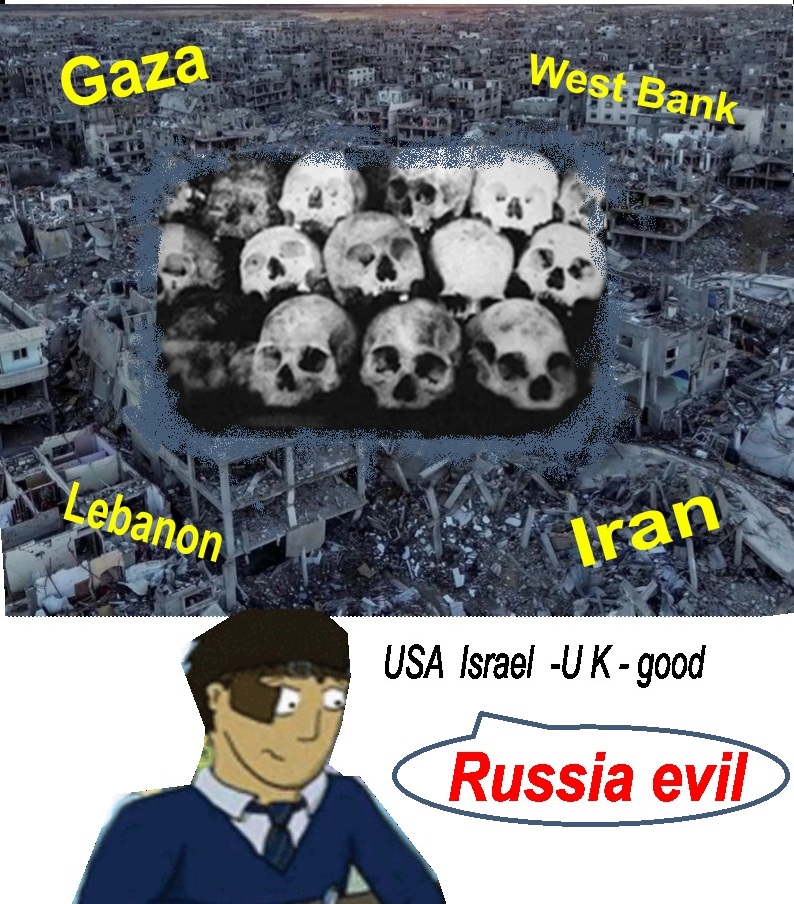
Iran’s civil nuclear program is lawful under NPT rules, and its representatives are here in New York attending the RevCon which runs until May 22. Still, one after another UN member representative used their ‘general debate’ time to attack Iran for its processing of uranium and Russia for its invasion of Ukraine, but not the United States for its unprovoked, internationally illegal war on Iran
John Laforge, May 8, 2026 https://www.counterpunch.org/2026/05/08/blind-eyes-at-the-united-nations-while-the-u-s-bombs-for-nonproliferation/
There is deadly irony in the juxtaposition of Trump’s ‘anti-nuclear war’ on Iran, and the ongoing United Nations Review Conference for the Nuclear Non-proliferation Treaty, or NPT RevCon.
The decision to initiate a war of aggression against Iran killing thousands of civilians was made (among other public pretexts) in order to prevent Iran’s allegedly intended future construction of a nuclear weapon.
The 1970 NPT prohibits the development of nuclear weapons or the transfer of nuclear weapons among or between nations that ratify the treaty. The NPT has slowed the spread of such weapons, while pushing the spread of nuclear reactors. The U.S., Iran, and 187 other UN member states are parties to the NPT.
Iran’s civil nuclear program is lawful under NPT rules, and its representatives are here in New York attending the RevCon which runs until May 22. Still, one after another UN member representative used their ‘general debate’ time to attack Iran for its processing of uranium and Russia for its invasion of Ukraine, but not the United States for its unprovoked, internationally illegal war on Iran.
No friend or military ally of the United States except Israel was consulted or informed about the U.S.’s February 28 Middle East blitzkrieg — with plenty of reason. Trump’s war of distraction would never have been supported much less joined by U.S. allies because: 1) Iran’s nuclear facilities were “totally obliterated” in June 2025 by U.S. Air Force and Navy bombardments; and 2) the International Atomic Energy Agency — the UN body that oversees compliance with the NPT — has reported since 2025 that it has found no evidence of an ongoing Iranian nuclear weapons program.
The catastrophically ill-advised and criminal U.S. war on Iran had to be launched by surprise, without NATO, or UN or U.S. authorization, because the White House’s justifications were so easily debunked, and because the NPT is already working to stop the spread of nuclear arsenals.
During the first days of the NPT RevCon, member states spoke with a shocking and confounding display of double standards, with one after another condemning Russia’s invasion of Ukraine, and Iran’s alleged violations of NPT inspection rules, but not one criticizing the U.S. attack on Iran, its January 3rd bombing of Venezuela, or its June 2025 bombardment of Iran’s nuclear facilities. Argentina for example said, “This Review Conference is taking place against a backdrop that we cannot ignore …. the nuclear program of the Islamic Republic of Iran…,” while the Nordic States together singled out Russia, saying its “war of aggression against Ukraine is a blatant violation of international law, including the United Nations Charter….” The U.S. war on Iran was evidently aggression non grata.
The nuclear weapons states’ 56-year-long violation of the NPT’s Article VI — requiring good-faith efforts to eliminate nuclear weapons — was often bemoaned, but the U.S., U.K., Russian, Chinese, and French violators were never called out by name. (North Korea, India, Israel, and Pakistan have nuclear weapons but have not joined the NPT.) Likewise, open, ongoing U.S. violations of the Treaty’s Articles I and II — which forbid the U.S. transfer of nuclear weapons to non-nuclear States Parties including Germany, Italy, Holland, and Belgium — were ignored, while the European Union’s delegate said, “The EU condemns in the strongest possible way Russia’s … announced deployment of nuclear weapons in the territory of Belarus.”
Comically, a few ministers openly excused the U.S.’s Article I & II violations — its stationing of B61 thermonuclear gravity bombs at six air bases in Europe — as when the representative of the Nordic States, asserted that “NATO’s nuclear sharing arrangements are fully consistent with the NPT”. The 110-member Non-Aligned States Parties Group politely pushed back and condemned the practice, noting without naming names, “The Group reiterates its deep concern over … practices that run contrary to the principles and objectives of the Treaty such as … nuclear weapons sharing arrangements”.
The most brazenly selective and myopic presentation to date was the “Joint Statement on Russia’s Aggression Against Ukraine” signed by 43 NPT States Parties. The paper said, “Russia’s war of aggression against Ukraine is a blatant violation of international law, including the UN Charter….” Every use of the word ‘Russia’ in the text could have been replaced with ‘the U.S.’ and still made perfect sense. The letter endorsed Ukraine’s but not Iran’s “independence, sovereignty, and territorial integrity”; Ukraine’s but not Iran’s “inherent right to self-defense” in accordance with the UN Charter “against Russia’s”, but not the United States’ “ongoing illegal war of aggression.” The paper acknowledged the critical danger of attacking nuclear sites and condemned Russia, but not the U.S., both of whom continue to put “nuclear facilities at risk.” The group did manage to generally denounce “indiscriminate attacks that have resulted in civilian deaths and destruction of critical infrastructure….” Yet, the 43 states urged the General Assembly “to condemn Russia’s irresponsible nuclear rhetoric”, but not Trump’s mindless threat to bomb Iran “back to the Stone Ages” or his genocidal outburst that “a whole civilization will die tonight, never to be brought back again.”
For UN member states to ignore U.S. government violations of the UN Charter and the Laws of War is evidence of not just hypocrisy and double standards, but a submissiveness reminiscent of the groveling fear of state terrors of 1930s. More than just Spain’s PM Pedro Sánchez and Pope Leo XIV the have to stand up to the megalomaniacal madman of the hour. ### [905 words]
John LaForge is a Co-director of Nukewatch, a peace and environmental justice group in Wisconsin, and edits its newsletter.
Nuns join calls for renewed support for anti-nuclear treaty

The declaration argued that underlying the current situation “is a spiritual crisis rooted in the normalization of violence and war as instruments for resolving conflict between peoples and nations
by Chris Herlinger, New York — May 11, 2026, https://www.globalsistersreport.org/social-justice/nuns-join-calls-renewed-support-anti-nuclear-treaty
Sister congregations are adding their names to calls at the United Nations for a renewed commitment to curb the spread of nuclear weapons.
In a statement read publicly during the first week of a monthlong review conference of the 1970 Treaty on the Non-Proliferation of Nuclear Weapons, or NPT, 109 faith groups, including more than a dozen sister congregations, called on political leaders “to reaffirm the spirit of the NPT as an urgent and binding commitment.”
“Fifty-six years after the entry into force of the NPT, the treaty’s most fundamental commitment remains unfulfilled,” said Dominican Sr. Carol Gilbert, a longtime anti-nuclear-weapons activist, speaking at the U.N.’s General Assembly Hall in New York May 1 on behalf of the faith groups. The review meetings run from April 27 to May 22.
“We see the NPT unraveling and a proliferation crisis brewing,” Gilbert said. “All nuclear-armed states are modernizing their arsenals with new delivery systems and doctrines that lower the threshold for use. The moral authority of the treaty depends upon the credibility of the disarmament commitment. That credibility is now in crisis.”
Most of the organizations signing on to the statement are Christian, but across a spectrum of largely Catholic, Protestant and Anglican groups, as well as interfaith organizations. Among the Catholic organizations are global members of Pax Christi and some 20 congregations of women religious, including multiple congregations affiliated with the Dominicans and Sisters of Charity.
The statement read by Gilbert said that those holding “power today do not fully grasp how near we have already come to nuclear war.”
The declaration argued that underlying the current situation “is a spiritual crisis rooted in the normalization of violence and war as instruments for resolving conflict between peoples and nations.”
The statement said: “When armed force is treated as a first resort, when military spending eclipses investment in human development, when entire populations are taught to accept the threat of annihilation as a condition of their security, our moral imagination has failed.
“We affirm that genuine security is built on justice, on mutual care, on the recognition that no nation’s safety can rest on another nation’s annihilation.”
The United Nations’ Office of Disarmament Affairs calls the 1970 Non-Proliferation Treaty “a landmark international treaty” that was designed “to prevent the spread of nuclear weapons, to further the goals of nuclear disarmament and general and complete disarmament, and to promote cooperation in the peaceful uses of nuclear energy.”
The treaty, the U.N. said, is “the only binding commitment in a multilateral treaty to the goal of disarmament by the nuclear-weapon states” and is regarded as a cornerstone in efforts to end the proliferation of nuclear weapons.
Acceptance of nuclear use called ‘spiritual sickness’
In a longer written statement entered into the proceedings’ official record, the faith groups said that the “acceptance of apocalyptic violence as the final arbiter of disputes among nations is not simply a strategic posture. It is a spiritual sickness — one that every faith tradition we represent has named, lamented and called its followers to resist.”
In specific actions, the statement calls for nations to recommit to verifiable reductions in nuclear weapons with a moratorium on new warhead development, with a return to negotiations that includes all nuclear-armed states, including the United States, which was one of the first nations to sign and ratify the treaty.
As an example of the continued uncertainty surrounding nuclear weapons and war, Gilbert said in an interview that it is not clear if the United States and Israel have ruled out using a nuclear weapon against Iran. “We don’t know with [President Donald] Trump what’s on or off the table,” she said.
Gilbert noted that according to the Bulletin of the Atomic Scientists, “We are at 85 seconds to midnight,” citing the bulletin’s “doomsday clock,” which the bulletin said is now the closest the clock “has ever been to midnight in its history.”
Gilbert told GSR that the present moment “is the closest we have ever been to using nuclear weapons.” She noted one looming challenge is the danger artificial intelligence poses to military operations.
Other issues, Gilbert argues, include that “many in powerful positions continue to support the arms industry and all those who make billions on these ‘forever wars
With U.S. spending on arms significantly higher than any other country in the world, “we continue to rob the poorest around the world as the money is taken from social programs, healthcare, education and childcare,” she said.
Responding to the review conference and to the overall state of nuclear weaponry in the world, Mary Yelenick, the main representative of Pax Christi International at the United Nations, told GSR that the “nine nations that presently possess nuclear weapons seem to enjoy holding the planet hostage to their will.”
She added: “They seem to view the NPT not as a binding legal document, but as a pesky impediment to their own national policies. They count on obfuscation, and employ responsible-sounding language, such as ‘deterrence,’ to justify their murderous positions.”
Yelenick, who is an American, was particularly critical of the United States, citing the fact that the United States “not only possesses nuclear weapons,” but is the sole country that “has actually used them — murdering countless people, and irradiating multiple generations and lands through the development and use of those weapons.”
She noted that the United States used two nuclear weapons in Japan at the end of the Second World War and later tested them on U.S. and non-U.S. lands.
Annemarie O’Connor, the representative to the United Nations for Passionists International, attended the May 1 meeting at the U.N. She told GSR that given current global tensions, adhering to the Non-Proliferation Treaty is important for the whole of humanity and the planet.
She also acknowledged that despite the review meetings at the United Nations, the issue of nuclear perils is not high on the global agenda, either for nation states or the media. “But we have to respond to this,” she said. “It’s urgent, and really important.”
Nuclear option: Adi Roche says Ireland should commit to renewables rather than nukes.

in modern warfare, nuclear facilities themselves can function as potential radiological weapons — “dirty bombs” whose consequences could be catastrophic without a single warhead being deployed.
Chornobyl activist ADI ROCHE says Ireland should resist the push to adopt nuclear power generation,
Irish Examiner 11 May, 2026 -Adi Roche
I am a firm believer in the philosophy that “we do not own this Earth … we borrow it from our children and our children’s children” and that nothing is more important than the protection of our environment.
I constantly remind myself that this Earth is our common and only home, a beautiful grain of life spinning in the depths of the universe. But now, in a nuclear age, a time of grave mortal danger, with our very existence on the cusp, our planet has become so fragile in the hands of man.
This planet is our children’s inheritance, and we are only its custodians.
Ireland had long and healthy debates on the subject of nuclear power in the late ’70s and ’80s, and the people concluded that the inherent and unique dangers that come with it were not worth the risk for future generations.
Those “future generations” are now young adults and have the privilege of inheriting a nuclear-free Ireland.
So, the discussion on nuclear power, once more, needs to focus on those that have yet to be born and what kind of world we want them to inherit.
In this 40th anniversary year of the greatest environmental catastrophe in the history of mankind, I am reminded that Chornobyl has become a symbol — a potent and enduring metaphor for catastrophe.
Chornobyl and Fukushima
It is a cautionary tale we need to take heed of, making sure it never happens again. If we do not learn from the past, we will not be able to understand the present or make proper decisions for our future.
Chornobyl and Fukushima are stark reminders of what can go wrong, with consequences that endure for generations exposing the vulnerability of humanity to sudden, profound change — whether from nature or from human hands.
None of the original arguments questioning nuclear power have changed. If anything, the world we now inhabit has deepened and sharpened them.
Russia’s invasion of Ukraine
When Russian troops invaded Ukraine through the “Chornobyl exclusion zone”, the most radioactive place on earth, the unthinkable became reality: A nuclear facility was transformed into an instrument of war with catastrophic potential. The invasion on February 24, 2024, marked a decisive turning point not only in geopolitics, but in how we must understand the true risks of nuclear energy.
This cavalier act made a nuclear threat without making a nuclear threat, and for the first time in the history of the atomic age, a nuclear power plant was weaponised not by firing missiles, but by occupying and controlling it.
The subsequent targeting and takeover of Zaporizhzhia demonstrated that, in modern warfare, nuclear facilities themselves can function as potential radiological weapons — “dirty bombs” whose consequences could be catastrophic without a single warhead being deployed.
We must re-examine how we look at energy through this deeply unsettling prism. The risks that once seemed theoretical are no longer abstract. They are immediate, real, and global.
Against this backdrop, Ireland must reject any drift towards nuclear power and instead commit fully to renewable, sustainable energy solutions.
Invest in renewables
Strong political will and sustained investment in research and development for renewable, clean energy, championed by pioneers such as Professor Brian Ó Gallachóir at UCC, represent the greatest gift we can offer to our world and to future generations.
Nuclear power depends on a highly radioactive finite resource, uranium, which, even when unmined, poses huge health damage risk. Studies suggest that, at current consumption rates, uranium supplies could be depleted within two decades. To invest heavily in a system reliant on a dwindling resource is short-sighted.
Against this backdrop, Ireland must reject any drift towards nuclear power and instead commit fully to renewable, sustainable energy solutions.
Invest in renewables
Strong political will and sustained investment in research and development for renewable, clean energy, championed by pioneers such as Professor Brian Ó Gallachóir at UCC, represent the greatest gift we can offer to our world and to future generations.
Nuclear power depends on a highly radioactive finite resource, uranium, which, even when unmined, poses huge health damage risk. Studies suggest that, at current consumption rates, uranium supplies could be depleted within two decades. To invest heavily in a system reliant on a dwindling resource is short-sighted.
At a time when Ireland is striving to build a resilient and sustainable energy future, replacing one finite resource with another is a false solution.
True sustainability lies in harnessing what is abundant and enduring: Wind, solar, tidal, and other renewable energies that are native to our island and free from geopolitical volatility.
Perhaps the most enduring indictment of nuclear power is one that has never been solved — the safe disposal of radioactive waste, which becomes the raw material for nuclear weapons. Decades into the nuclear age, there is still no permanent, fail-safe method of managing this hazardous material.
There are hundreds of extremely hazardous nuclear waste silos dotted around the world.
Nuclear waste remains radioactive for centuries and the risk of contamination, whether through leakage, human error, or environmental change, cannot be eliminated. The possibility that radioactive material could seep into water supplies or ecosystems is a burden we would impose not only on ourselves, but on countless future generations. What an unbearable weight of destruction we are placing on the shoulders of those yet to be born.
Ireland stands at an important crossroads. We have the opportunity and the responsibility to choose a different path. Rather than investing in a technology fraught with risk and uncertainty, we can lead by example in the transition to renewable energy totally powered by nature.
All we need is political vision, courage, and foresight for energy independence on behalf of future generations, so we are no longer reliant on the politics on the international stage.
The existential threats we face today are all created by human decisions. That means the solutions are also in our hands. Through co-operation, diplomacy, and moral leadership, it is still possible to reverse our current trajectory towards catastrophe.
Our windswept coasts, powerful tides, and advancing solar capacity offer us a sustainable, secure, and peaceful alternative.
By embracing renewables, we not only address the climate crisis, but also safeguard our future from the escalating risks of nuclear power in an unstable world……………………………………………………………………………………………………………………………………………….. https://www.irishexaminer.com/opinion/commentanalysis/arid-41841921.html
No case for nuclear in Scotland

When the lobby group Britain Remade, proclaimed support for nuclear power in Scotland last year, they declined to disclose that 89% of their own poll supported home-grown energy within our own borders – that desire for self-sufficiency kills nuclear stone dead. Scotland has no uranium mines.
When the lobby group Britain Remade, proclaimed support for nuclear power in Scotland last year, they declined to disclose that 89% of their own poll supported home-grown energy within our own borders – that desire for self-sufficiency kills nuclear stone dead. Scotland has no uranium mines.
by beyondnuclearinternational, https://beyondnuclearinternational.org/2026/05/10/no-case-for-nuclear-in-scotland/
What the country needs is the flexible, affordable power delivered by renewables, writes George Baxter
Editor’s note: With the sweeping victory in last week’s Scottish elections by the pro-independence Scottish National Party, the country’s moratorium against new nuclear power plants, that the SNP leads and supports, remains secure. The London-headquartered UK Labour Government has been pushing Scotland to lift the ban, an approach rightly viewed in Scotland as yet another example of Westminster treating Scotland as a vassal state.
I’ve been through every argument that the nuclear industry makes promoting new nuclear power stations – but scratch the surface and they just melt through the floor.
New nuclear is fundamentally not needed – numerous studies, including by Stanford University and renowned energy modellers at LUT show that the UK, and indeed most, if not all, other countries can meet their energy needs with 100% renewables. Politicians’ fears about the wind and sun and the rain and the waves and tides being unable to meet all our needs are misplaced. Renewables, energy storage, energy efficiency and flexible power with a modern upgraded grid can do it all – cheaper, quicker, safer and a hell of a lot cleaner, and create many more thousands of jobs.
The cost of nuclear power is eye-watering. Look at Hinkley Point C and Sizewell C – nearly £100bn to build them both with massive delays and cost -over-runs. That is enough to install a 5kWh battery in every one of the 28 million homes in Britain, and leave £44bn for other things. Combine that with solar and every home becomes a power station with its own ‘baseload’. Alternatively, £100bn could fund planned upgrades to the grid needed to facilitate large and small renewables, twice over. The Coire Glas pumped hydro storage project in the Highlands could be built 50 times over. £100bn spent on a nuclear-free transition could be revolutionary.
What a renewable based system needs is flexible power, energy storage and a smart, modern grid. Surplus renewable electricity could also be used to generate ”green hydrogen” to generate electricity on calm, dull days. It could also be used to power heavy transport and industry.
Battery systems, including compressed air and pumped storage hydro, alongside vehicle to grid technology, can all be parts of the bedrock of energy security and an energy system that would be cooking with green power 24/7.
Nuclear does nothing to help any of this. Indeed, it is worse, it directly causes wind and solar plants to be switched off when green power is plentiful, because nuclear is so inflexible. Not only does nuclear cost an arm and a leg, it adds cost to the consumer for renewables.
We only have to look at the recent history of nuclear power to see how dangerous and polluting it is. Fukushima remains a slow motion disaster for the region as they scramble to deal with millions of gallons of radioactive water and melted reactor cores. Chornobyl’s 40 year anniversary is another timely reminder, that when things go wrong, they can go very wrong. At least when a wind turbine breaks down – you don’t need an exclusion zone for decades and mass public health measures – you just get some engineers with a crane and some spanners to go fix it. And despite what the ‘nuke, baby, nuke’ lobby says, there is no solution for the waste yet, other than to store and guard the most highly radioactive cores for hundreds of years to cool down out of the way somewhere. That’s the solution!
The hype about Small Modular Reactors is just that, hype. In fact, the only two operational SMRs are in China and Russia, and both have been beset by delays and cost increases. The economies of scale are lost, and studies have shown that they produce more highly radioactive waste for the same generating capacity than their slightly larger cousins.
These projects are pure spin, a clever wheeze by industry lobbyists intended to promote nuclear acceptability- small, click and collect, a kind of middle-aisle at LIDL feel to it. In the words of energy expert Amory Lovins on SMRs: “This illusion neatly fits the industry’s business-model shift from selling products to harvesting subsidies.”
The Rolls Royce SMR – chosen by Great British Energy–Nuclear to be built at Wylfa in North Wales – is a 470MW reactor, not much smaller than the two Torness reactors, which are about 600MW each.
And then there is the fuel – uranium ore is needed and we don’t have any, (and the mining of it is handily missed out in nuclear promotional graphics comparing its land use to renewables, which also fail to point out that the land around solar arrays and turbines can still be used for traditional purposes).
Mind you, there is some recoverable uranium ore on the Orkney mainland – and when it was proposed to dig it up to use it at Dounreay last century, all hell broke loose and Orcadians stopped it by popular protest. So we would have to rely on imports of this global commodity – a market that is dominated by Russia and associates. Pete Roche of SCRAM put this well when commenting on a recent poll indicating only 14% of Scots thought we should focus on uranium fuelled nuclear reactors for our long term energy security needs: “Relying on a uranium-fuelled nuclear future is like jumping out of the oil and gas frying pan and into a nuclear fire – it makes no sense and Scots seem to get that.”
That Survation poll, surveyed 2000 Scots in the middle of the current election campaign, and found an overwhelming public preference to focus on a renewable energy future that would lower energy bills and tackle climate change more effectively. Only 12% of those polled thought the nuclear industry was the most trustworthy about its products, costs, pollutants and safety record.
When the lobby group Britain Remade, proclaimed support for nuclear power in Scotland last year, they declined to disclose that 89% of their own poll supported home-grown energy within our own borders – that desire for self-sufficiency kills nuclear stone dead. Scotland has no uranium mines.
We should just get on with building a country that is a renewable energy powerhouse so that future generations can look back and thank us for choosing a green, clean and sustainable energy route. Nuclear is NOT a natural partner with renewables, indeed, it is a delaying tactic, holding back rapid decarbonisation, and adds extra and unnecessary cost to a renewables-based energy system.
George Baxter is the director of Green Power. He leads Green Power’s team delivering greenfield wind and solar developments both in the UK and Ireland.
Japan faces tough road ahead over nuclear-fuel reprocessing plant
Japan Times, 10 May 26,
Japan still faces a tough road ahead over the construction of a spent nuclear fuel reprocessing plant in Aomori Prefecture, whose completion date has been moved back 27 times.
With less than a year to go until the current deadline at the end of next March, Japan Nuclear Fuel is in time-consuming exchanges with the Nuclear Regulation Authority (NRA) over the plant.
The completion “will definitely be delayed” again, Aomori Gov. Soichiro Miyashita has said. Meanwhile, Chief Cabinet Secretary Minoru Kihara has said that the deadline remains unchanged.
Japan Nuclear Fuel began the construction of the plant, a key component of the country’s nuclear energy policy, in the village of Rokkasho in 1993, originally planning to complete it in 1997.
Delays primarily stemmed from a series of problems, including those with some equipment, before northeastern Japan was struck by the massive March 2011 earthquake and tsunami and the subsequent nuclear accident at Tokyo Electric Power Company’s Fukushima No. 1 power plant.
After the triple disaster, Japan significantly tightened nuclear safety standards. The NRA’s lengthy regulatory review to ensure the Rokkasho plant’s compliance with the standards led to delays in recent years.
The regulatory watchdog finished examining the plant’s basic design in 2020 and then started a detailed design review, which is still going on.
When Japan Nuclear Fuel announced its 27th postponement in the summer of 2024, it said it would complete its submissions to the NRA by November 2025 and win the body’s approval by March this year, but the plans have not progressed as scheduled………………………………………………………………………………. https://www.japantimes.co.jp/news/2026/05/10/japan/japan-nuclear-fuel-reprocessing/
Fires break out in exclusion zone around Chernobyl nuclear plant
Arpan Rai & Maira ButtFriday 08 May 2026, https://www.independent.co.uk/bulletin/news/chernobyl-fires-radiation-russia-ukraine-b2973234.html
A forest fire burns in the exclusion zone around the Chernobyl nuclear power plant (AP)
- Russia has said it is carrying out enhanced radiation monitoring after fires broke out in the exclusion zone around the Chernobyl nuclear power plant on Friday.
- The country’s national public health agency said that enhanced radiation monitoring was being conducted and the situation was now “stable”.
- The 1986 Chernobyl disaster is considered to be the world’s worst civil nuclear accident.
- It spread Iodine-131, Caesium-134 and Caesium-137 across parts of Ukraine, Belarus, Russia, northern and central Europe.
- Meanwhile, Ukraine has continued its long-range attacks on Russia with a drone strike one of the country’s largest oil refineries, located in Yaroslav
Fears Royal Navy nuclear submarine docks will be built overseas
A multibillion-pound nuclear submarine maintenance contract is at risk of
being awarded to a foreign shipyard, despite safeguards that normally
dictate that high-security work must be performed at secure sites in the
UK. The Ministry of Defence is preparing to kick off a tender for the Royal
Navy’s Additional Fleet Time Docking Capability (AFTDC) programme to build
floating dry docks that are pivotal to national security. The scheme would
double the availability of nuclear submarine docks at HM Naval Base Clyde.
The new docks would allow concurrent dry-dock maintenance of two submarines
at the base, also known as Faslane.
Times 9th May 2026,
https://www.thetimes.com/business/companies-markets/article/royal-navy-nuclear-submarine-docks-programme-euston-v22btzbm3
‘The odds are not in our favour’: who sets the Doomsday Clock – and what can they tell us about the future of humanity?
because nuclear bombs have not been used since 1945, the public has developed a false sense of security. We don’t like to contemplate the role played by luck. “We’ve been lucky, because the odds are not in our favour. The more weapons that exist, for longer, the more likely it is something will go wrong,”
Guardian Sophie McBain, Sat 9 May 2026
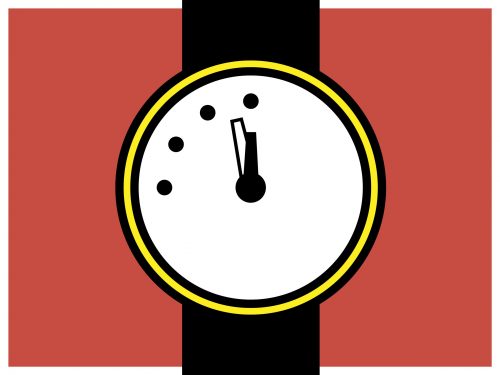
The Earth is getting hotter. Conflicts are raging, in the Middle East and Ukraine, each increasing the chance of nuclear war. AI is infiltrating almost every aspect of our lives, despite its unpredictability and tendency to hallucinate. Scientists, tinkering in labs, risk introducing new, deadly pathogens, more destructive than Covid. Our pandemic response preparedness has weakened. The Doomsday Clock – a large, quarter clock with no numbers, keeps ticking, counting down the seconds until the apocalypse. Tick. Tick. Tick. In January, we reached 85 seconds to midnight. Experts believe humanity has never stood so close to the brink.
“What we have seen is a slow almost sleepwalk into increasing dangers over the last decade. And we see these problems growing. We see science advancing at a rate that defies our ability to understand it, much less control it,” says Alexandra Bell, CEO of the Bulletin of the Atomic Scientists, the organisation that sets the Doomsday Clock. She speaks of the “complete failure in leadership” in the US and other countries, which are doing little to address global, catastrophic threats, even as they feed into one another. Climate change increases global conflict, for instance, and the incorporation of AI into nuclear decision-making is, frankly, terrifying.
Bell speaks over video call from her office in Washington DC, which is decorated with a huge world map, Day of the Dead cushions and a framed print of Barbie superimposed on to a mushroom cloud – a gift from a colleague in response to the Barbenheimer phenomenon, because in this field it helps to have a sense of humour.
Bell, who has spent much of her career working on nuclear arms control, believes that because nuclear bombs have not been used since 1945, the public has developed a false sense of security. We don’t like to contemplate the role played by luck. “We’ve been lucky, because the odds are not in our favour. The more weapons that exist, for longer, the more likely it is something will go wrong,” she says – though she’s quick to add that diplomatic disarmament and peace-making efforts also played a big role……………………………………………………………………………………………………………………………………………………………………………………………………………………………………………………………….. 2026: Inching to doomsday. It’s 85 seconds to midnight
In January, the clock was set to 85 seconds to midnight, the closest it has ever been. Within four weeks, the AI expert Gary Marcus argued on the Bulletin’s website that humanity was already “significantly closer to the brink”, after a showdown between AI developer Anthropic and the White House revealed Trump’s determination to have unrestricted military access to AI. A recent study found that in simulated war games, leading AIs from OpenAI, Anthropic and Google opted to use nuclear weapons 95% of the time.
Two days later, the US and Israel began bombing Iran, raising the risk of nuclear war. “Further escalation or expansion of the conflict could lead to actions driven by miscalculation, misperception or madness, as President Kennedy once said,” warned Alexandra Bell, who succeeded Bronson as president of the Bulletin in 2025. From the start, she worried about the lack of a plan to secure Iran’s nuclear materials, and that other countries would conclude that having nuclear weapons is the only way to maintain their security…………………………………………………………………………………………………………………………………… https://www.theguardian.com/science/2026/may/09/doomsday-clock-ai-iran-ukraine-war-climate-breakdown-nuclear-apocalypse
-
Archives
- October 2026 (120)
- September 2026 (339)
- August 2026 (330)
- July 2026 (355)
- June 2026 (287)
- May 2026 (306)
- April 2026 (356)
- March 2026 (251)
- February 2026 (267)
- January 2026 (308)
- December 2025 (358)
- November 2025 (359)
-
Categories
- 1
- 1 NUCLEAR ISSUES
- business and costs
- climate change
- culture and arts
- ENERGY
- environment
- health
- history
- indigenous issues
- Legal
- marketing of nuclear
- media
- opposition to nuclear
- PERSONAL STORIES
- politics
- politics international
- Religion and ethics
- safety
- secrets,lies and civil liberties
- spinbuster
- technology
- Uranium
- wastes
- weapons and war
- Women
- 2 WORLD
- ACTION
- AFRICA
- Atrocities
- AUSTRALIA
- Christina's notes
- Christina's themes
- culture and arts
- Events
- Fuk 2022
- Fuk 2023
- Fukushima 2017
- Fukushima 2018
- fukushima 2019
- Fukushima 2020
- Fukushima 2021
- general
- global warming
- Humour (God we need it)
- Nuclear
- RARE EARTHS
- Reference
- resources – print
- Resources -audiovicual
- Weekly Newsletter
- World
- World Nuclear
- YouTube
-
RSS
Entries RSS
Comments RSS

