Plutonium Pit Bomb Production: the Beginning of the End
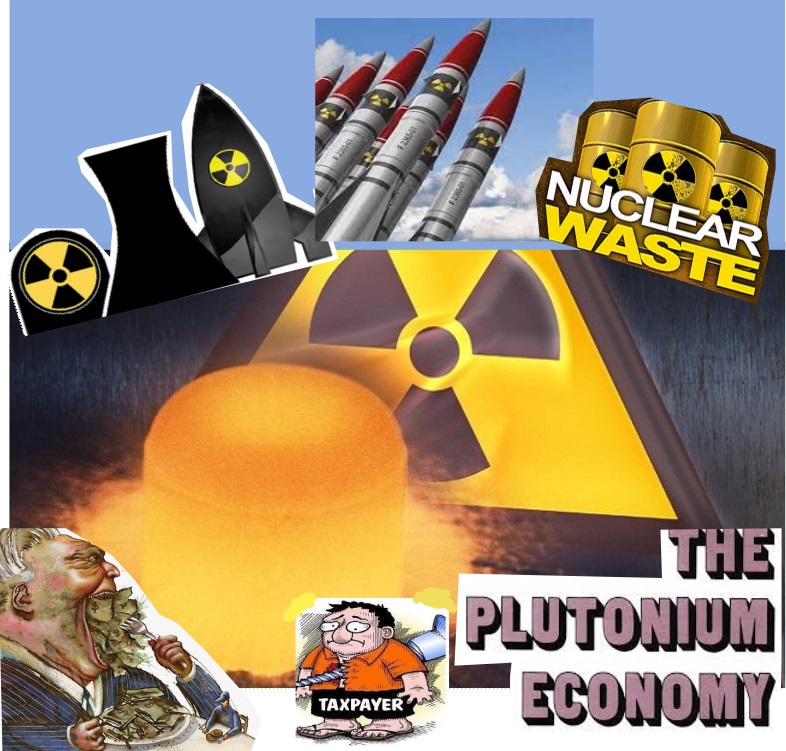
The abandoned MOX plant at Savannah River 32 years behind schedule and $10 billion over budget, is 70% complete. Its conversion to the Savannah River Plutonium Pit Facility is already years behind schedule and billions of dollars over budget. Scheduled to open this year, it now is slated to make its first pit in 2035. Savannah River Site remains one of the most polluted places in the U.S. and is near the top of the EPA’s hazardous sites.
Whether the plutonium pit production, costing tens of billions of dollars, is even necessary, though required by Congressional statute, is contentious. NNSA’s own studies indicate that the thousands of pits stored at Pantex are viable for at least another 100 years. One study by Lawrence Livermore National Laboratory found the pits in the strategic security stockpile would be reliable for 150 years. Other classified studies about the dependability of existing plutonium pits could demonstrate the same result, and should be released.
Mark Muhich, May 8, 2026, https://www.counterpunch.org/2026/05/08/plutonium-pit-bomb-production-the-beginning-of-the-end/
One portion of a gargantuan plan to modernize the entire U.S. nuclear arsenal, costing $1.5 trillion over the next twenty years, has been opened for public scrutiny and comment beginning this week.
Thanks to years-long legal challenges by environmental and community groups in California, New Mexico and South Carolina, the National Nuclear Security Administration, NNSA, was ordered by a federal district court to reveal plans for the manufacture of plutonium “pits” at the Savannah River Site (SRS) in South Carolina and Los Alamos National Laboratory in New Mexico. Citing the National Environmental Protection Act,1969, U.S. District Judge Mary Geiger Lewis, South Carolina, found that NNSA had ignored NEPA statutes, and required the Department of Energy, and its semi-autonomous nuclear weapons bureau, National Nuclear Security Administration, NNSA, to produce a Programmatic Environmental Impact Statement, PEIS, that details the manufacture, transport and waste deposition associated with plutonium pit production in Aiken, S.C. and Los Alamos, N.M.
Plutonium pits are the core of a thermonuclear weapon (hydrogen bomb). Tens of thousands of pits were manufactured during the Cold War. Pit production was concentrated almost entirely at Rocky Flats, Colorado, near Denver. The FBI raided Rocky Flats in 1989, after numerous fires, accidental plutonium releases, and whistleblower reports of dangerous working conditions at the plant. Rockwell International, the general Contractor at Rocky Flats, settled criminal charges of environmental violations for $18. 5 million (less than the bonuses it received from the government) and closed the plant in 1991. Rocky Flats was declared a Superfund site, and after costly remediation was converted into a national wildlife sanctuary. Some of the most polluted sections of Rocky Flats remain radioactive and will be sequestered forever. Communities near Rocky Flats received $375 million in compensation for increased incidents of cancer. The U.S. has manufactured very few plutonium pits since Rocky Flats closed.
Congress mandated renewed production of plutonium pits in 2015 with funding from the Defense Authorization Act. Lawmakers required the manufacture of 30 pits by this year (2026) and 80 pits per year by 2030, an entirely fanciful schedule. During the Cold War, Savannah River Site had produced plutonium but never pits, and Los Alamos National Laboratory (LANL), produces up to ten pits per year for research purposes, but has never produced pits approaching the Congressionally mandated 30 pits per year. Due to frequent accidents and safety violations, LANL has in some years produced zero pits.
NNSA’s Programmatic Environmental Impact Statement describes the intricate sequence for producing new pits for new nuclear weapons. Existing plutonium pits, around 12,000 plutonium pits, are stored at the Pantex facility in Amarillo, TX, and will be driven in specialized semi-trucks across the country on public highways to LANL and SRS. Once secured at these facilities, any oxidized impurities from aging will be removed using hot sulfuric acid and other agents. The pits are then melted, molded into spheres and machined to extremely precise dimensions. Large volumes of transuranic wastes are produced in the pit production process. Tons of transuranic wastes will be transported over public highways to the Waste Isolation Pilot Plant in Carlsbad, N.M. Radioactive waste from SRS will pass through Atlanta and follow I-20 and I-10 to the WIPP facility.
WIPP is the only facility designed to accept and store transuranic waste from nuclear weapons production. However, the New Mexico Environment Department only permitted WIPP to accept “legacy” transuranic waste from LANL, originating from the first Manhattan Project, 1942-45. NMED has not yet agreed to permit increased volumes of waste at WIPP. Plutonium waste could be stored on site at Los Alamos and Savannah River, though this would generate an entirely new set of environmental problems.
Mandated by the Defense Authorization Act of 2015, NNSA is required to produce 30 plutonium pits by this year, and 80 pits per year by 2030. SRS, slated to fabricate 50 pits per year, has never made a plutonium pit. New buildings to house the pit production in South Carolina “repurposed” a defunct mixed oxide plant. The MOX plant was designed to downblend plutonium pits from nuclear weapons decommissioned per the agreement between the U.S. and Russia to reduce their nearly 100 tons of surplus weapons-grade plutonium. While the Russians constructed and operated their MOX plant, the MOX plant at Savannah River experienced massive cost overruns and decades of delays. Putin suspended the agreement in 2016, blaming non-compliance on the part of the U.S.
The abandoned MOX plant at Savannah River 32 years behind schedule and $10 billion over budget, is 70% complete. Its conversion to the Savannah River Plutonium Pit Facility is already years behind schedule and billions of dollars over budget. Scheduled to open this year, it now is slated to make its first pit in 2035. Savannah River Site remains one of the most polluted places in the U.S. and is near the top of the EPA’s hazardous sites.
Robert Oppenheimer selected Los Alamos for the design and construction of the first fission atomic bombs dropped on Hiroshima and Nagasaki. In the decade since, LANL’s research and development of plutonium pits has created thousands of massive transuranic waste dumps on site. Plutonium has leaked into groundwater and has crossed canyons, contaminating native communities like the adjacent San Ildefonso and more distant pueblos. Plutonium is one of the most carcinogenic materials on Earth and has a half-life of 27,000 years.
LANL has never produced 30 pits per year, as mandated by Congress. Between 2007 and 2011, LANL produced 31 pits in total. Selected for its isolation and inaccessibility, LANL has chronic difficulties recruiting and retaining workers. LANL has experienced serious fires and accidents, and has been fined $16 million by the New Mexico Environment Department for neglecting the “legacy” wastes stored on site.
Whether the plutonium pit production, costing tens of billions of dollars, is even necessary, though required by Congressional statute, is contentious. NNSA’s own studies indicate that the thousands of pits stored at Pantex are viable for at least another 100 years. One study by Lawrence Livermore National Laboratory found the pits in the strategic security stockpile would be reliable for 150 years. Other classified studies about the dependability of existing plutonium pits could demonstrate the same result, and should be released.
The new plutonium pits proposed in NNSA’s Environmental Impact Statement are designed for entirely new thermonuclear weapons. The W87-1 warhead will arm the new Sentinel missile system, replacing the aging fleet of Minuteman III intercontinental missiles. The Sentinel program is years behind schedule and hundreds of billions of dollars over budget. Cost estimates for the 50 years of Sentinel deployment are over $300 billion.
Ironically, while the NEPA plutonium pit program is being presented to the public this week, the Eleventh Review of the Non-Proliferation Treaty (NPT) is ongoing at the United Nations in New York. The NPT was first ratified by 192 countries in 1970, including the U.S. The NPT is the only remaining international nuclear treaty. It calls for the right for countries to peacefully develop nuclear power reactors, and stipulates that nuclear-armed states are obligated to reduce and eventually eliminate their nuclear weapons arsenals.
NNSA’s Draft PEIS describes new plutonium pit production to be “consistent with the NPT while maintaining nuclear weapons competencies and capabilities at the weapons laboratories.”(p.1-6). The glaring dichotomy if this determination is refuted by the International Court of Justice, finding in 1996 that signatories to the NPT must adhere to
The legal import of [the NPT Article VI] obligation… goes beyond that of a mere obligation of conduct; the obligation involved here is an obligation to achieve a precise result – nuclear disarmament in all its aspects – by adopting a particular course of conduct, namely, the pursuit of negotiations on the matter in good faith.” [Para. 99]
NNSA violated the NEPA requirements to address the environmental damage of federally funded projects. The public now has an opportunity to submit comments to the NNSA until July. In particular, the plutonium pit fabrication for new nuclear weapons contravenes the Non-Proliferation Treaty despite what the draft PEIS asserts, per the decision by the ICJ.
Submit comment by email to NEPA-SRS@srs.gov
Brookfield wants to revive a South Carolina megaproject failure known as ‘Nukegate.’ Can it succeed where others failed?
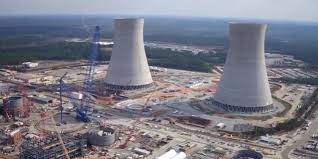
What could go wrong?
At V.C. Summer, the first time around, almost everything did.
By the time 2016 rolled around, the original budget had nearly been spent, construction wasn’t even half-finished, and Westinghouse’s relations with key partners had degenerated into finger-pointing, lawsuits and withheld payments
Santee Cooper’s CEO retired. Prosecutors targeted top officials at the companies involved: SCANA’s former CEO was among those sentenced to prison time
Perhaps the biggest wild card dealt to Brookfield is President Trump.
One of the most daunting hurdles for nuclear projects is obtaining financing. Mr. Trump seemingly made that easier: Just days after Santee Cooper announced its partnership with Brookfield, the U.S. government announced that Japan had agreed to provide up to US$332-billion toward building energy infrastructure on American soil; at least US$80-billion had been specifically earmarked for Westinghouse reactors.
Matthew McClearn, The Globe and Mail, May 8, 2026, https://www.theglobeandmail.com/business/article-brookfield-vc-summer-nuclear-project-south-carolina/
The Virgil C. Summer Nuclear Station, in a sparsely populated corner of Fairfield County, S.C., is a graveyard for nuclear dreams.
Nearly a decade ago, the termination of construction of its two reactors (known as Units 2 and 3) marked an end to hopes of a rejuvenation of American nuclear energy. It bankrupted storied companies. It spawned lawsuits and sent executives to prison. It’s been called the biggest business failure in South Carolina’s history – or just “Nukegate.”
Since workers abruptly departed in 2017, new tenants, including vultures and Canada geese have taken up residence. So far this year, the plant’s owner, Santee Cooper, has identified 14 osprey nests, some atop utility poles. Especially when nesting, the ospreys have “no sense of humour at all,” said Steve Nance, the company’s director of nuclear production and development. With wingspans of about a metre, they’ve been known to attack people and drones.
“They’re extremely territorial,” he said. “If you get close to the light pole, she’ll take off. You’ve got about five minutes before you’re going to get a visit.”
Nonetheless, people are returning to V.C. Summer. Inside a warehouse, roughly 30 workers from nuclear giant Westinghouse Electric Co. have begun reviewing and scanning 5,200 large cardboard boxes of documents. They were generated during construction, which was aborted abruptly in 2017 amid massive delays and cost overruns. Studying them is part of an effort to assess what’s necessary to finish the job.
Eight years after its purchase of Westinghouse, the Brookfield BN-T -1.65%decrease empire (which is now based in New York, but has Canadian roots) stands to reap a huge windfallthat would validate its nuclear gambit.
Santee Cooper, the state-owned utility, selected Brookfield Asset Management as its preferred buyer for the incomplete units. This opportunity squares well with U.S. President Donald Trump’s ambition to reinvigorate the American nuclear sector, and he has publicly identified Westinghouse reactors as a preferred choice for construction.
What could go wrong?
At V.C. Summer, the first time around, almost everything did. Now, Brookfield must deliver what the U.S. nuclear industry’s best and brightest could not, even as it enters business arrangements that bind it more closely with the capricious Trump administration. Its reputation as a shrewd risk manager, built over many decades, is about to undergo what could be its most formidable test.
Brookfield’s nuclear gambit
Located less than an hour’s drive northwest of Columbia, South Carolina’s capital, the Units 2 and 3 construction site sprawls over more than 1,000 hectares. Located roughly a kilometre away, the original unit has generated power since the 1980s.
Each of the two units features a large cylindrical structure that would have housed an AP1000 reactor, Westinghouse’s flagship product. Inside Unit 2’s cavernous, roofless structure, the reactor vessel is already concealed by concrete. Those permitted to visit the site can stand inside a tank designed to store 2.4 million litres of water, which would be released into the reactor by an explosive valve during a dire emergency. The silence is punctuated by the sound of dripping water and the occasional indignant, whistling cry of an angry osprey overhead.
Nearby, a larger, skeletal rectangular structure houses steam turbines and other equipment. Inside Unit 2’s turbine building rest three large Hyundai 9,000-horsepower electric pumps. They’re open to the weather but have been maintained: Santee Cooper spent several million dollars annually on maintenance throughout the plant.
“The guys come and rotate them, change oils and desiccant bags,” Mr. Nance said of the giant pumps.
“They do preventative maintenance on them as if they were in service. And that’s what’s going to keep us from having to replace them.”
Large white storage tents scatter the site. Inside one, Unit 3’s 420-ton reactor pressure vessel rests on its side, covered in a thin layer of rust.
Another tent nearby contains two towering assemblies known as integrated head packages, which would be placed atop the reactor vessels. Each weigh about 360 tons and cost hundreds of millions of dollars.
In another tent sit four bright yellow Caterpillar diesel generators, which look brand new. The 500-ton crane used to lift components into place, though disassembled, remains on-site.
Mr. Nance said that under the original contract, Westinghouse and its partners got paid to deliver equipment, whether installed or not. The upshot is that an estimated 85 per cent of components required to finish both units are already there. Inspections thus far offer a favourable prognosis on their condition, he added: “So far, nobody’s found any showstoppers or deal-breakers.”
That’s part of Santee Cooper’s pitch to Brookfield: Whoever else might answer Mr. Trump’s call to construct AP1000s, the V.C. Summer units have a considerable head start.
Brookfield’s journey to commencing what has been dubbed the first privately funded nuclear project in American history was circuitous. In 2017, an opportunity arose when Westinghouse sought protection from its creditors. Brookfield’s private equity unit bought the stricken company for US$4-billion – far less than the cost of a single nuclear reactor.
It was a gamble.
Westinghouse’s roots date from the nuclear age’s earliest days, having designed and supplied the world’s very first commercial pressurized water reactor in Shippingport, Pennsylvania. It went on to dominate: Most reactors worldwide are pressurized water reactors, and most of those use Westinghouse technology.
By virtue of that legacy, Westinghouse held more than 1,500 patents. Its intellectual property included the AP1000, among the few reactor designs already certified by the U.S. Nuclear Regulatory Commission, or NRC. Westinghouse also had talent, employing 11,500.
But Westinghouse’s collapse did great violence to its prestige. Having botched V.C. Summer so completely, it was hard to conceive how it could attract further orders for AP1000s.
Fortunately, there was more to Westinghouse’s business: It was also a major service provider to utilities, earning revenues during regular outages when reactors needed refuelling and maintenance. “We could really see a path to seeing our returns in that part of the business,” said Jennifer Mazin, a Brookfield partner who sits on Westinghouse’s board, at a conference held by CIBC in Toronto in March. (Brookfield declined several interview requests for this story over a period of a few months.)
Sales prospects for AP1000s have improved considerably since then. Last year, Mr. Trump issued a flurry of executive orders, one of which demanded that construction begin on 10 large new reactors on American soil by 2030. Another order initiated a radical restructuring of the NRC aimed at speeding the permitting process. Yet another order called on the Secretary of Energy to prioritize “completing construction of nuclear reactors that was prematurely suspended.”
Jimmy Staton, Santee Cooper’s chief executive, had already been looking for ways to restart construction. Reading that executive order, he said, “we had a pretty good idea” Mr. Trump meant V.C. Summer.
“The government’s very supportive of this,” he added.
Brookfield agreed to buy the two V.C. Summer units on a “as-is, where-is” basis and finish the job. It’ll pay Santee Cooper US$2.7-billion in exchange for a 75-per-cent ownership stake. (Santee Cooper would retain the remaining quarter.) Potential buyers for the electricity include large data companies, or other utilities in South Carolina, Mr. Staton said.
Brookfield must finish assessing the project’s feasibility and report back to Santee Cooper on a proposed schedule for completing construction. Arriving at a decision on whether to proceed is expected to take between 18 and 24 months, and could cost as much as US$200-million. Mr. Staton said that according to early estimates, it could take five to seven years to finish the plant.
Brookfield can still back out. But if it proceeds, it will accept risks that Westinghouse itself has sworn off.
Unmitigated disaster
Westinghouse had long acted largely as a reactor designer, providing crucial plans that others could use to build nuclear plants.
That changed after Japan’s Toshiba Corp. purchased the company in 2006. Two years later, Westinghouse signed an agreement with Santee Cooper and its partners (the most important of which was South Carolina Electric & Gas, or SCE&G) to build V.C. Summer Units 2 and 3, at an estimated cost of about US$9.8-billion. Westinghouse guaranteed completion of the first reactor by April 1, 2016, the second by 2019 – and agreed to substantial penalties if it missed those targets.
It was a risky move for Westinghouse and also for South Carolinians. That’s because SCE&G had persuaded state lawmakers to introduce legislation that would allow it to recover some of its capital costs during construction.
Scott Elliott is a Columbia-based lawyer who practices mainly before the South Carolina Public Service Commission. His client roster includes the South Carolina Energy Users Committee, which represents large industrial power users. Its members were happy to have a nuclear plant, he said, but worried about the legislation’s implications.
“It made it awfully easy for SCE&G, and the utilities in general, to raise rates,” he said.
Those fears were realized after V.C. Summer got off to a bad start. After Westinghouse had already signed the contracts, the NRC demanded changes to the AP1000’s design, leading to early delays. Concrete wasn’t poured until 2013. Unavailability of basic materials such as standard rebar led to further delays.
“There were like five cost overrun proceedings,” Mr. Elliott recalled.
“And they kept going up: $200-million, then $500-million, and the last one was over $1-billion.”
By the time 2016 rolled around, the original budget had nearly been spent, construction wasn’t even half-finished, and Westinghouse’s relations with key partners had degenerated into finger-pointing, lawsuits and withheld payments.
“I don’t think Westinghouse knew what they were doing,” Mr. Elliott said.
Westinghouse faced a dilemma: It could either pony up the additional billions of dollars needed to complete the plant, or bail out and pay massive penalties. Unable to afford either option, it applied for court protection from its creditors under Chapter 11 of the U.S. Bankruptcy Code.
The fallout was ugly for all involved.
Toshiba withdrew from the reactor-building business and took a US$6-billion writeoff. It eventually agreed to pay US$2.2-billion to exit its obligations.
SCE&G’s owner, SCANA Corp., abandoned the project in 2017. Teetering on bankruptcy, SCANA agreed to merge with Dominion Energy Inc. within months.
Santee Cooper’s CEO retired. Prosecutors targeted top officials at the companies involved: SCANA’s former CEO was among those sentenced to prison time.
Worsening matters, V.C. Summer wasn’t Westinghouse’s only failed project. It was simultaneously the main contractor on two nearly identical units under construction at the Alvin W. Vogtle Electric Generating Plant in Georgia, just two hours away by road.
Georgia Power teamed up with new partners to complete Vogtle. Its AP1000s started generating power in 2023 and 2024, seven years late. The two units cost nearly US$37-billion, as compared to an original budget of US$14-billion. Vogtle has been dubbed the most expensive power plant ever built.
Take two
One lesson from V.C. Summer and Vogtle is that when building a nuclear power plant, one must select one’s partners carefully.
Read more: Brookfield wants to revive a South Carolina megaproject failure known as ‘Nukegate.’ Can it succeed where others failed?Contracts must be structured such that all parties are motivated to solve problems as they arise – because they inevitably will.
After Chapter 11, Westinghouse vowed to never again assume the huge risks of constructing a nuclear plant. Brookfield has deep experience in power generation generally, and has also worked on complex hydroelectric, real estate and infrastructure projects. But it has never before built a nuclear plant. Can it woo the right partners on the right terms?
This could be tricky.
Experts told The Globe that it will probably need a utility partner that is licensed as a nuclear operator by the NRC.
“Let’s say they build the danged things,” said Mr. Elliott. “State law would require them, if they’re going to sell the electricity, to be a regulated utility.”
For Santee Cooper’s part, Mr. Staton makes it clear he has no intention of assuming more risk or contributing capital to the project. It’s Brookfield’s show.
“I feel like we found the best partner in Brookfield,” he said.
“They have a great balance sheet. Most importantly, though, they are risk managers.”
But Brookfield is not keen to repeat Westinghouse’s mistake of shouldering the bulk of the project’s risks. At the CIBC conference, Ms. Mazin said Brookfield regards creating a “risk-sharing model” among the parties involved as crucial to the project’s success.
“We’re looking at all the components of having off-takers, utility, lenders, governments, partners, share risk,” she said.
Brookfield can further reduce risk by not overpaying for the project. As compared to the US$9-billion that Santee Cooper and its partners reportedly spent on the project, the US$2.7-billion Brookfield has promised to pay might seem like a steal.
Tom Clements, an activist and director of Savannah River Site Watch who intervened for many years before the Public Services Commission concerning the project, doubts rosy assessments of the plant’s condition. His organization monitors energy and nuclear issues, particularly nuclear wastes and plutonium management at the U.S. Department of Energy’s Savannah River Site in South Carolina. He points out that much of the plant’s equipment has been exposed to the elements.
A bigger concern, he added, is that the Nuclear Regulatory Commission must certify that plant equipment meets a high standard known as “nuclear quality.” But NRC inspections ceased after the project was halted.
“The fact that Santee Cooper may have been keeping it in buildings with air temperature and humidity controlled, I don’t know if that’s enough to certify that they’re nuclear qualified – the valves, the pipes, the pumps, the whole bit.”
An additional complication is that some plant components were sold. Mr. Staton confirmed that “small components here and there” had been sold to Vogtle as replacement parts, and Santee Cooper also struck an arrangement to sell plant components to Ukraine, which had been exploring construction of AP1000s.
On the other hand, the AP1000’s design has matured greatly during the last 20 years. Mr. Staton said Vogtle’s completion represents a tremendous advantage: It allows would-be AP1000 builders to learn from previous mistakes, and hire professionals who’ve already built one.
“We’ll be able to bring that kind of experience to the table here in South Carolina,” Mr. Staton said.
To that end, Brookfield announced earlier this month that it had formed a partnership with The Nuclear Company, a startup unveiled in 2023 that has hired dozens of former Vogtle and V.C. Summer veterans (some out of retirement) and markets itself as having been “built on the field of Vogtle.” The two partners will establish a new company specializing in deployment of Westinghouse reactors, including the AP1000 – and Brookfield has selected the new company as project manager to complete the V.C. Summer units.
Moreover, Westinghouse recently submitted an application to the NRC seeking to establish Vogtle Unit 4 as the standard design for future AP1000 deployments.
Uneasy bedfellows
Perhaps the biggest wild card dealt to Brookfield is President Trump.
One of the most daunting hurdles for nuclear projects is obtaining financing. Mr. Trump seemingly made that easier: Just days after Santee Cooper announced its partnership with Brookfield, the U.S. government announced that Japan had agreed to provide up to US$332-billion toward building energy infrastructure on American soil; at least US$80-billion had been specifically earmarked for Westinghouse reactors.
Santee Cooper said the unfinished V.C. Summer units will not qualify for that financing. But that money could springboard new AP1000 constructions. In a conference call late last year, Brookfield Asset Management’s then-president, Connor Teskey, said that funding “positions Brookfield at the centre of a historic build-out of clean baseload power, creating one of the most compelling growth opportunities across our transition platform, and potentially one of the most successful investments in Brookfield’s history.”
But Mr. Clements, of Savannah River Site Watch, noted that in the year since that financing was announced, there haven’t yet been any takers.
“Where are the electric utilities that are in on the deal, saying, ‘We want two of these AP1000s right here’?” Mr. Clements asked.
“They’re all looking at Vogtle and they don’t want to get burned. So who’s going to be first out of the gate?”
Brookfield’s co-owner of Westinghouse, Saskatoon-based uranium miner Cameco Corp., has acknowledged uncertainties about what might come out of Westinghouse’s arrangement with the U.S. government. In a recent filing, it noted that Westinghouse’s financial performance will depend on “the ability of the executive branch of the US government to obtain funding and support for the deployments” – a reminder that it’s not a done deal.
If the U.S. government places a final order of US$80-billion for Westinghouse reactors, it earns the right to 20 per cent of the resulting profits, worth about US$17.5-billion. And if Westinghouse reached a valuation of at least US$30-billion by January, 2029, the government could acquire a 20-per-cent ownership stake in Westinghouse.
Brookfield says that stake would come without governance rights. It regards the U.S. government as an unbeatable partner: that US$30-billion target valuation is more than seven times what Brookfield paid for the company in 2018.
Another perennial challenge for nuclear projects is acquiring permits. But Mr. Trump has quickly retooled the U.S. nuclear industry’s regulatory apparatus with a view of establishing “lasting American dominance.” One of his executive orders argued the NRC’s long licensing processes had brought development of nuclear power in the U.S. to a halt. The NRC had “tried to insulate Americans from the most remote risks,” according to Mr. Trump, who ordered it be reorganized; licence applications must henceforth be processed in 18 months or less.
Mr. Clements said that as recently as a few years ago, re-applying for licences for V.C. Summer would have been arduous. But “the way things are going in this country, it may be just a pretty simple process with the NRC,” he conceded.
But if all of this seemingly puts wind in Brookfield’s sails, Mr. Trump’s relations with partners and allies are famously tumultuous. For Brookfield, the price of dissatisfying him are incalculable, but potentially steep.
By some accounts, the Trump administration has already become restless. Citing nine unnamed industry and government sources, Canary Media (an American non-profit news organization covering energy, particularly renewables) reported in March that the administration had begun talks with representatives for two Westinghouse rivals: GE Vernova Hitachi Nuclear Energy and Korea Electric Power Corp. The report asserted that the U.S. Department of Energy felt Westinghouse and Brookfield are moving too slowly.
History suggests nuclear projects require much patience.
Chris Gadomski, lead nuclear energy analyst with BloombergNEF, said that while government policy can help get nuclear plants built, it’s not enough: Utilities, which are typically cautious, must spend large sums and assume great risks.
“I’ve talked to operators of large U.S. fleets about starting 10 large reactors by the end of Trump’s second term. And the response was just laughter – it’s never going to happen.”
Mr. Elliott, the Columbia-based lawyer, said Brookfield was virtually unknown in South Carolina, but completing V.C. Summer could elevate it to heroic status.
“Based on my history with this project, I’ll believe it when I see it.”
Covert NATO initiative turns film into anti-Russia battleground

COMMENT. This is an excellent article, but does have some bias. (E.g it doubts the murder of Litvinenko, though the evidence for this murder is convincing)
I accept the total message of this article, warning of NATO’s war-mongering influence on the entertainment media. I also think that the Russian government does exactly the same sort of thing to demonise the WEst
Many members of the Writer’s Guild of Great Britain invited to the upcoming London summit with NATO operatives expressed anxiety about the military alliance’s brazen interference in popular culture. One Irish scriptwriter told The Guardian the “outrageous” meeting amounted to the arts being used to promote war, while presenting NATO “in a positive light” in countries that are not alliance members, including those that “have suffered under wars that NATO has joined and propagated.” Elsewhere, a veteran screenwriter fretted that film and TV industry attendees would be “seduced into thinking they now have some secret knowledge.”
Kit Klarenberg·May 9, 2026 leaked documents on original, https://thegrayzone.com/2026/05/09/covert-nato-film-russia/
A scandal has erupted over covert NATO conferences with the Western entertainment industry. Leaked documents reviewed by The Grayzone show how NATO has sought to infiltrate film and TV for decades, with UK intel operatives taking the lead.
On May 3, The Guardian revealed that NATO has held a series of secret meetings with film directors, screenwriters and TV producers in cities from Paris to Los Angeles. The disclosure suggests NATO is seeking to employ the entertainment industry in its propaganda operations as a European war looms.
To date, NATO’s “conversations” with scriptwriters have reportedly “inspired, at least in part” three separate unstated projects, which are already in development. At a forthcoming London summit, NATO operatives are set to meet with screenwriters tied to the Writers’ Guild of Great Britain (WGGB). In email correspondence, the union told its members the event will focus on the “evolving security situation in Europe and beyond.”
Organizers claim NATO was “built on the belief that cooperation and compromise, the nurturing of friendships and alliances, is the way forward.” The alliance is actively seeking to influence film and TV projects extolling this mantra, stating, “even if something so simple as that message finds its way into a future story,” as a result of the meeting, “that will be enough.”
But collusion between NATO and the entertainment industry has a well-established history. Over recent decades, NATO has covertly sought to employ film and television creatives as psychological operations specialists, while influencing popular culture. A core driver of this push has been Chris Donnelly, a veteran British Ministry of Defence and military intelligence operative, who led alliance expansion into Central and Eastern Europe during the 1990s.
Donnelly later developed the Integrity Initiative to cultivate support for conflict with Russia through covert networks of influential pro-war pundits and operatives. Hidden behind a seemingly legitimate think tank called the Institute for Statecraft, the Integrity Initiative only became known to the public after independent outlets like The Grayzone reported on leaked emails from Donnelly revealing its existence.
In leaked documents discussing NATO expansion, Donnelly stated, “What I needed in the 1990s and did not have” was a major international public relations firm to “scale up successful activities to have real impact,” and achieve “essential behavioural change” in audiences. To address the problem, he proposed “advertising campaigns on TV promoting change, a TV soap opera looking at the problem of corruption” and other innocent-seeming cultural products aimed at enhancing NATO control.
Donnelly expanded NATO – often against significant public opposition – in the former Soviet Union, Warsaw Pact and Yugoslavia by penetrating target countries’ governments, militaries and even religious institutions. This ensured a NATO-friendly lobby on the streets, and throughout corridors of power, across the region. This experience was fundamental to Donnelly’s founding of now-defunct ‘charity’ the Institute for Statecraft. Through its subsidiary Integrity Initiative, the Institute constructed clandestine nexuses of journalists, academics, and military and intelligence operatives throughout the Western world, known as “clusters”.
These networks could be mobilized to spread pro-NATO propaganda, and encourage public and state-level antagonism towards Russia. Integrity Initiative played a not insubstantial role in laying the Ukraine proxy war’s foundations. An essay published on the Institute’s website in July 2014 by MI6-connected academic Victor Madeira openly laid out this objective, declaring “economic boycott, breach of diplomatic relations” and “propaganda and counter-propaganda” could produce “armed conflict of the old-fashioned sort” with Moscow, “that Great Britain and the West could win.”
In a leaked Institute file, Madeira discusses precisely the kind of “propaganda and counter-propaganda” he meant. “We’ll need to go beyond old-style military ‘romps’ and get entertainment ‘outputs’ that draw out the nature of 21st-century conflict: diffuse, across society, without clear boundaries at times,” he wrote. “That’s the real fight we’re fighting; we can more than hold our own on the military side of things.”
Popular TV show ‘McMafia’ influenced by British intelligence
In February 2018, a veteran writer on US state cultural policy and public diplomacy named Martha Bayles emailed Donnelly to pitch a “multi-episode, multi-season dramatic television series” about Russia in the 1990s. Bayles pointed to a US-UK co-production called McMafia as an example of the “commercial and cultural dominance” of long-form TV with “an avid following among young and old alike.” The widely-watched program drew on former BBC World Service reporter Misha Glenny’s 2008 non-fiction book of the same name.
Bayles believed the “hefty appetite out there for ‘period pieces’ about the recent past” was a “compelling” reason to create a similar series about Russia in the 1990s, when the country descended into neoliberal chaos and oligarchs took control following the collapse of the Soviet Union.
The screenwriter was convinced that Russia’s traumatic time then “in many crucial ways set the stage for the world we now inhabit.” She added that a serial about the traumatic period could be supported by “scholarly and journalistic accounts by both Russian and Western participants and observers.” She suggested Donnelly’s “own experience and knowledge of those years would also be invaluable.”
The program needed to “avoid all taint of propaganda,” Bayles insisted, eschewing “black-hatted villains and white-hatted heroes.” Otherwise, audiences might suspect the show had been developed by some powerful outside force with an ulterior information warfare agenda. Bayles was certain there were “a lot of talented people out there” who could produce such a program. And she was clear about the ultimate objective: “an entertainment-based response to Russian propaganda and disinformation.”
By this point, Donnelly and the British military-intelligence veterans who staffed his now-defunct Institute for Statecraft were hard at work weaponizing popular culture to drive public hostility to Russia. In January 2018, the British state broadcaster interviewed a staffer at Donnelly’s Institute, Euan Grant, about “the impact of suspect Russian money” on London, as part of BBC wider series enquiring “How Real is McMafia?”
Grant styles himself as an expert on “geopolitical transnational organised crime.” According to a self-authored leaked CV, he worked closely with senior MI5 and MI6 operatives on the issue. Come 2018, he remained in close quarters with former MI5 chief Jonathan Evans, the agency’s then-chief Andrew Parker, and numerous veteran MI6 officials. They were among an extensive array of contacts that, Granted bragged, could be leveraged to underhandedly flood the airwaves with anti-Russian propaganda.
This included an array of think tankers, intelligence veterans, and mainstream journalists covering Russian organized crime. Grant boasted of “providing source material” to these individuals on “Russian speaking criminal groups.” Recipients included creatives including fiction authors, and award-winning reporters with the BBC, Financial Times, Guardian, and other major outlets. “Material” supplied by Grant informed “radio, TV and print and online media” output, on the purported “impact of Russian influence” overseas.
Popular culture was a key component of the Institute’s information war. Martha Bayles was listed as a contact, “for making use of fictional work for reinforcing messages” about Russia in the mainstream consciousness. A “memorandum of cooperation” had been sent to her by Grant, “about opportunities jointly and separately in North America, UK and elsewhere in Europe for input into media documentaries and fictional entertainment.”
Another listed contact was McMafia creator Misha Glenny. Grant said he had “recently met” Glenny, who requested a further discussion on “‘ideas’ for his next project,” providing the Institute with “possible input” into McMafia’s then-recently commissioned second series.
As part of the proposed collaboration, NATO would be granted “input” into the show’s script. At the time, the Institute for Statecraft was the British representative of NATO’s Atlantic Treaty Association, a “community of policy-makers, think tankers, diplomats, academics and representatives from industry.” The organization described its mission as “inform[ing] the public of NATO’s role in international peace and security and promote democracy, individual liberty and the rule of law through debate and dialogue.”
Western popular culture infiltrated by NATO for years
Leaked files show Grant masterminded a dedicated Institute project countering supposed “Russian destabilisation” of “international financial sectors.” Contacts in journalism and the arts provided an ideal delivery mechanism. He argued the broadcast of popular TV shows and films referencing Russian organized crime provided an extraordinary propaganda bonanza for the British military-intelligence apparatus, potentially exposing millions of Westerners to anti-Russian programming.
Grant proposed alerting “press, radio, TV” contacts to the “relevance and authenticity” of the fictional serials “to contribute to publicity and discussion ahead of, and during, broadcasting.” Integrity Initiative “cluster” operatives in NATO member states could secretly “arrange similar domestic articles” about the shows, to maximize international impact. Canadian and US media contacts would provide NATO access to “powerful and influential North American” TV and film networks.
In other leaked documents, Grant strategized a covert propaganda blitz to expose how the NATO protectorate of Moldova was supposedly “exploited” by Moscow, for “building Russian and Russian speaking influence in EU, EU applicant and Eastern Partnership countries.” He noted how recent Hollywood films and the smash French drama series Spiral had featured “Moldovan linked” plotlines, providing “opportunities” to Institute for Statecraft propagandists. He suggested the BBC “might also be interested” in covering recent books about Russian organized crime, “set in Moldova.”
Unfortunately for Grant and his boss, Donnelly, the second season of McMafia failed to materialize. However, other leaked files indicate British intelligence has been disseminating pro-NATO propaganda in Central and Eastern Europe through TV shows and films for some time.
London’s psy-war demonizes Russian speakers in former Soviet states
From 2016 onwards, according to the leaked documents, London exploited the megaphone of popular culture to “make a positive impact on how target individuals perceive the UK/EU/Euro-Atlantic values.”
Read more: Covert NATO initiative turns film into anti-Russia battleground
British intelligence defined “Euro-Atlantic values” according to the NATO Stratcom Centre of Excellence’s own conception: “democracy, human rights, freedom of media, trust to international organisations and freedom of speech.” In practice, this took the form of waging psychological warfare operations to demonize and discredit Russia across the realm of the former Soviet Union. In Baltic states, for example, London’s covert propaganda denigrated Russian speakers, who since ‘independence’ in 1991 have been systematically marginalized and discriminated against, portraying them as “individuals who are susceptible to negative Kremlin-aligned messaging.”
British intelligence simultaneously recruited Russophone influencers as pro-NATO assets, working with programming commissioners at state broadcasters to identify “young Russian speaking talent in the online influencer, stand-up comedy and social commentary spaces.”
The British assisted their hand-picked assets in developing three “content ideas” and TV pilots each, then disseminated the products through state broadcasters’ social media channels and on-demand services in order “to test audience responses and viability.”
In one leaked file, a British intelligence contractor known as Zinc Network boasted that its propaganda operations had demonstrated a clear behavioral change in its target audience.
“Our strategic approach moves beyond ‘messaging’ by influencing not only the attitudes and behaviours of our audiences but also the social networks which they are embedded in and the norms and institutions which shape them,” Zinc Network boasted.
NATO works to “seed online conversations”
NATO supplemented its covert culture war in the Baltics with an online army of bots and trolls. It employed M&C Saatchi, a British public relations agency which claims to be “the world’s largest independent creative network,” to recruit a local “network of online influencers and advocates” to stealthily “seed online conversations” with “Euro-Atlantic” themes. Under this “tailored” strategy, British intelligence inserted messaging into “pre-existing conversations,” conducted by real people on social media. Therefore, “young Russian speakers” could unwittingly become British “agents of change.
This included infiltrating online discussions occurring around “key dates and events of significance” to Russian-speakers, such as Victory Day on May 6th, which commemorates the Soviet Union’s defeat of Nazi Germany’s genocidal invasion. M&C Saatchi claimed its techniques had “already been employed successfully and sustainably” for major clients, including Britain’s Home Office and Ministry of Defence, the Pentagon, USAID, Facebook, Google, and NATO.
Were these top serials demonizing Russia organic products?
It is uncertain which recent Western cultural productions have resulted from NATO’s covert meddling. However, inexplicably timed historical dramas in recent years, featuring highly negative portrayals of Russia and Russians, raise serious questions.
Chief among them is Chernobyl, the HBO series which broke viewing records after it first appeared, on May 6 2019. Authored by an anti-Russian ideologue, the show’s script contained countless egregious, politicized falsehoods and grotesque mischaracterizations. The many distortions and outright fabrications were deployed to portray the 1986 nuclear accident as the result of the brutality and incompetence of Moscow, while exaggerating the effects of radiation. “Chernobyl” took so many dramatic liberties, even the New York Times accused its creators of “the imposition of a simple narrative on history” and “the twisting of events.”
Chernobyl was followed three years later by a less elegant production, taking aim at Russian President Vladimir Putin. Aired on British streaming service ITVX, a TV drama called “Litvinenko” dramatized the bizarre supposed 2006 assassination of FSB defector of the same name. Though The Guardian panned the show as “unwatchable,” its broadcast led to renewed interest in the incident thanks to coverage from celebrity gossip magazines, not typically read by individuals with an interest in intelligence intrigues.
British writers fret about NATO interference
This March, an influential pro-NATO, London-based think tank called the Centre for European Reform published a report urging member state governments to “engage with cultural institutions and leaders like theatre directors, screenwriters, film producers and museums to better tell the story” of why increased European defense spending was “needed.” It stressed the importance of targeting militaristic messaging at “audiences who may otherwise not engage with international affairs,” with “specific funding for the arts to contribute to the public conversation on defence and security.”
The Centre further recommended European governments consider “unconventional approaches, designed to reach audiences beyond the defence and national security establishment,” in order to trigger “a national conversation on defence” across member states. NATO’s recent series of meetings with film and TV scriptwriters is clearly consistent with this strategy.
Many members of the Writer’s Guild of Great Britain invited to the upcoming London summit with NATO operatives expressed anxiety about the military alliance’s brazen interference in popular culture. One Irish scriptwriter told The Guardian the “outrageous” meeting amounted to the arts being used to promote war, while presenting NATO “in a positive light” in countries that are not alliance members, including those that “have suffered under wars that NATO has joined and propagated.” Elsewhere, a veteran screenwriter fretted that film and TV industry attendees would be “seduced into thinking they now have some secret knowledge.”
As the leaked documents[on original] presented here demonstrate, NATO’s attempts to infiltrate the film and entertainment industry are nothing new. Films and TV serials have been an alliance-dominated battlefield for decades. The Ukraine proxy war was a direct outcome of NATO’s full-spectrum bombardment on the perceptions of Western populations, with film and TV providing an ideal megaphone for anti-Russian resentment.
Now, as Europe formally prepares its citizens for a wider war, NATO is openly enlisting the arts to bring its longstanding script to an apocalyptic conclusion.
Kit Klarenberg is an investigative journalist exploring the role of intelligence services in shaping politics and perceptions.
‘Effort to Stifle and Intimidate’: Trump DOJ Subpoenas News Outlets Over Iran War Coverage
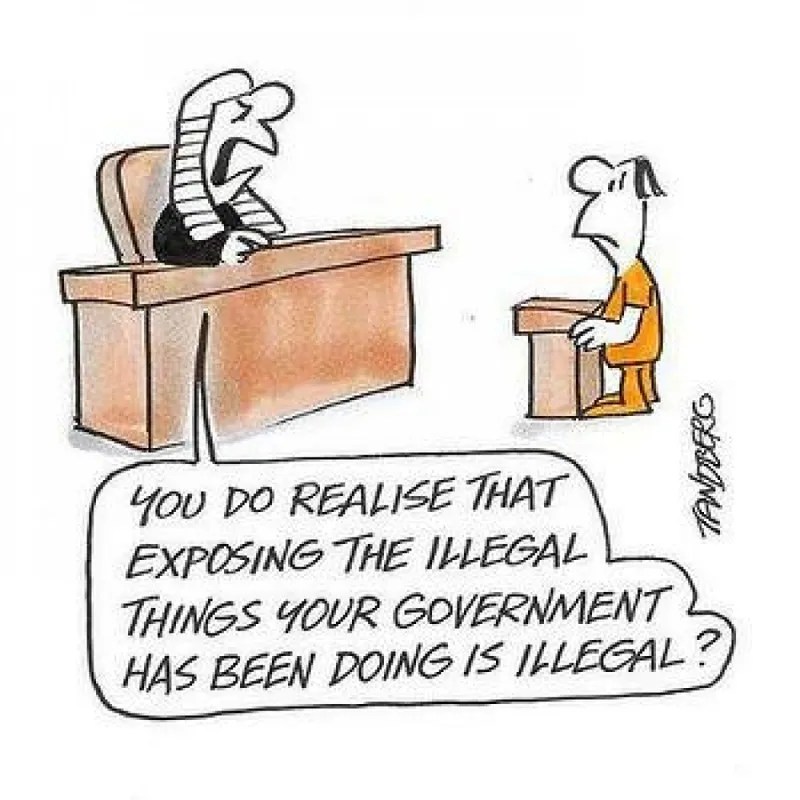
Trump has said media outlets who circulate what he baselessly calls “false information” should be charged with treason.
By Jake Johnson , CommonDreams, May 12, 2026, https://www.commondreams.org/news/effort-to-stifle-and-intimidate-trump-doj-subpoenas-news-outlets-over-iran-war-coverage
“The government’s subpoenas to The Wall Street Journal and our reporters represent an attack on constitutionally protected newsgathering,” said the newspaper’s publisher.
The US Justice Department has reportedly subpoenaed The Wall Street Journal and other news outlets at the urging of President Donald Trump, who has complained incessantly about coverage of his illegal and disastrous Iran war.
The Journal reported Monday that it received grand jury subpoenas dated March 4 for records of its journalists as Trump pushed the Justice Department—now led by his former personal attorney, Todd Blanche—to investigate war-related leaks. “Blanche vowed to secure subpoenas specifically targeting the records of reporters who have worked on sensitive national security stories,” the Journal reported, citing an unnamed administration official.
During one meeting, the Journal reported, “Trump passed a stack of news articles he and other senior officials thought threatened national security to Blanche with a sticky note on it that said ‘treason.’”
Trump and other top administration officials, including Pentagon Secretary Pete Hegseth, have publicly voiced outrage over the US media’s Iran war coverage and threatened reporters who publish classified information—a common journalistic practice.
In April, Trump said he would work to imprison journalists involved in reporting on a US fighter jet shot down in Iran and subsequent efforts to rescue the warplane’s crew. The previous month, Trump floated “charges for treason” against journalists he accused of circulating “false information” about the Iran war.
Ashok Sinha, the chief communications officer of Dow Jones, the Journal’s publisher, said in a statement that “the government’s subpoenas to The Wall Street Journal and our reporters represent an attack on constitutionally protected newsgathering.”
“We will vigorously oppose this effort to stifle and intimidate essential reporting,” said Sinha.
The subpoena targeting Journal reporters pertained to “a February 23 article that reported that Gen. Dan Caine, the chairman of the Joint Chiefs of Staff, and others at the Pentagon warned the president about the risks of an extended military campaign against Iran,” the newspaper reported Monday.
“Other news outlets, including Axios and the Washington Post, published similar stories that day,” the Journal added. “Trump launched the war five days later, on February 28.”
CNN reported Monday that “in addition to The Journal, other news outlets have also received subpoenas in recent months.”
“But some of the news organizations have chosen not to comment on the matter for the time being,” CNN added.
Scott Stedman, an investigative journalist with The Newsground, accused the leaders of targeted outlets of “cowardice” for not speaking out against the Trump administration’s brazen assault on press freedom.
“The president uses the DOJ to target your news organization with subpoenas because he wants to out your sources and you don’t even have the guts to say anything,” Stedman wrote. “Grow a fucking spine!”
Trump’s nuclear message to Iran? Pentagon reveals rare location of missile submarine after rejecting Tehran deal
11 May 26, https://www.ynetnews.com/article/skbelo1kzg
The USS Alaska, one of America’s most secretive nuclear-armed submarines, surfaced in Gibraltar as Trump warned the ceasefire with Iran was on ‘life support’ and dismissed Tehran’s counteroffer as ‘totally unacceptable’.
The Pentagon made an unusually public show of force this week, revealing the location of a U.S. Navy nuclear-armed submarine just a day after President Donald Trump rejected Iran’s latest proposal to end the war.
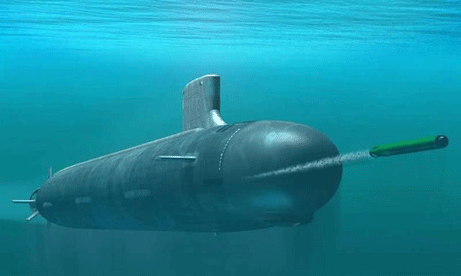
The Ohio-class ballistic missile submarine arrived Sunday in Gibraltar, the British territory on Spain’s southern coast, the US Sixth Fleet said Monday. Such announcements are rare because the locations of America’s nuclear-armed submarines are usually among the military’s most closely guarded secrets
The Sixth Fleet did not initially identify the submarine by name, but local reports said it was the USS Alaska — one of the largest and most powerful submarines in the US Navy.
“The port visit demonstrates U.S. capability, flexibility and continuing commitment to its NATO allies,” the Sixth Fleet said in a statement. “Ohio-class ballistic missile submarines are undetectable launch platforms for submarine-launched ballistic missiles, providing the U.S. with its most survivable leg of the nuclear triad.”
The timing of the visit immediately drew attention. It came after Trump said the US ceasefire with Iran was on “life support” and described it as “unbelievably weak.” On Sunday, he rejected Iran’s counterproposal to end the war, calling it “totally unacceptable.”
Iran’s reported demands included war reparations, recognition of its sovereignty over the Strait of Hormuz and an end to US sanctions. Trump’s rejection has raised fears that Washington and Tehran are drifting back toward escalation.
The public disclosure of the submarine’s location appeared to send a clear signal. Ohio-class ballistic missile submarines are designed to remain hidden at sea for extended periods, forming the most survivable part of the US nuclear triad. Their mission is deterrence: to guarantee that the United States can respond even if its land-based missiles and bombers are targeted.
The Ohio class includes 14 ballistic missile submarines and four guided-missile submarines. Ballistic missile versions can carry Trident II D5 missiles capable of delivering nuclear warheads. Guided-missile variants can carry more than 150 Tomahawk cruise missiles.
The USS Alaska’s arrival in Gibraltar also carried a diplomatic message. The submarine bypassed the nearby US naval base in Rota, Spain, about 141 kilometers away, and instead docked at the British-controlled territory. British Royal Marines were deployed to receive it, and a 200-meter exclusion zone was set up around the vessel.
The move comes amid strained relations between Washington and Madrid. Spanish Prime Minister Pedro Sánchez has criticized the US war in Iran and reportedly refused to allow the United States to use Spanish bases in Rota and Morón as part of its offensive. Trump responded by threatening to “cut off all trade” with Spain and said he would “probably” remove American troops from the country, where about 3,800 US personnel are stationed.
Spain has objected before to US nuclear submarine stops in Gibraltar. In 2022, Madrid protested after US submarines used services there instead of Rota, arguing that the Spanish base had special protocols for nuclear vessels meant to reduce environmental risk and protect public safety.
The USS Alaska has visited Gibraltar before, including in June 2021. Other Ohio-class submarines, including the USS Florida, USS Rhode Island and USS Georgia, also made stopovers there in 2022.
Authorities have not said how long the Alaska will remain in Gibraltar or what the purpose of the visit is beyond the official US statement about capability, flexibility and commitment to NATO allies.
But the message was hard to miss. As Trump weighs his next move on Iran, the United States has chosen to publicly place one of its most secretive nuclear platforms at the edge of the Mediterranean — close enough to be noticed, rare enough to matter, and powerful enough to remind Tehran what is at stake.
The Nuclear Regulatory Taskforce: The wrong questions, the wrong team, the wrong answers
Policy Brief May 2026
The UK government’s 2025 Nuclear Regulatory Taskforce, established to cut “red tape” blocking nuclear expansion, is fundamentally misconceived. Historical evidence shows that failed nuclear projects collapsed due to financial risk, not regulatory failure. The Taskforce lacked expertise in radiation science, environment, and economics, its recommendations threaten regulator independence, and its reforms will consume government resources without delivering new capacity before the mid-2040s.
1. Introduction
In February 2025 Prime Minister Starmer announced the setting up of a Nuclear Regulatory Taskforce with a press release1 headed “Government rips up rules to fire-up nuclear power” and sub-headed “More nuclear power plants will be approved across England and Wales as the Prime Minister slashes red tape to get Britain building.” This set the tone for future announcements with emotive language and little substance but designed to generate headlines.
The narrative was clear. The planning and regulatory system had failed: “The industry pioneered in Britain has been suffocated by regulations and this saw investment collapse, leaving only one nuclear power plant – Hinkley Point C – under construction.” Any opposition to nuclear projects was trivial and should be ignored – “saying no to the NIMBYs” and “saying no to the blockers who have strangled our chances of cheaper energy, growth and jobs for far too long.”
In April 2025 the leader of the taskforce, John Fingleton, was announced2. In May, the other four members were revealed and the terms of reference3 announced (see Annex 1). An interim report was published in August 20254 with the Final Report published on 24th November, 2025.5 Within two days of its publication, the government had accepted all its recommendations, promising a detailed response in February 2026 and full implementation within two years.6 It is not clear whether government had advance notice of the findings or whether it accepted them without detailed consideration.
The barrage of headline grabbing rhetoric continued throughout, for example, at the publication of the Interim Report, Fingleton described the regulatory system as “not fit for purpose”7. The Final Report said: “We are looking to recommend fundamental once-in-a-generation change in the regulatory system to enable the UK’s nuclear sector to thrive and take full advantage of the global resurgence of nuclear technology.”8
2. Terms of reference
The Review’s terms of reference reflected the clear signals that this was not an open investigation to determine whether delivery of the UK’s nuclear ambitions could be accomplished. The conclusions the government required were signposted and reflected in the terms of reference, which are reproduced in full in Annex 1. In brief, they directed the Taskforce to: gain quick wins by accelerating existing work on international harmonisation, regulatory justification and ALARP; assess whether current practices remain fit for purpose; identify beneficial legislative amendments; reduce regulatory complexity and address resource constraints; refresh expected regulatory outcomes; evaluate regulatory culture and proportionality across the sector; determine how well current arrangements support new and novel nuclear technologies; and explore options for simpler exchange of technologies and companies with advanced nuclear states with aligned priorities.
Most of these are too non-specific to have any analytical value. The one that deserves comment is the first. Its title ‘quick wins’ is strange as what follows does not appear to lead to quick wins.
The specific mention of the application of the concept of keeping risk As Low as Reasonably Practicable (ALARP) is significant. It came in the same month as President Trump instructed the US Nuclear Regulatory Commission to effectively ignore the assumption every credible national and international regulatory and expert body makes, that there is no safe dose of radiation and that the risk increases in a ‘linear’ way with increased exposure: the Linear No Threshold (LNT) assumption. Trump said9:
“Adopt science-based radiation limits. In particular, the NRC shall reconsider reliance on the linear no-threshold (LNT) model for radiation exposure and the “as low as reasonably achievable” [ALARA] standard, which is predicated on LNT. Those models are flawed, as discussed in section 1 of this order.”
This is an extraordinary claim by a US President asserting that the assumption made by every credible regulatory body, LNT, was not science-based. There are detailed differences in emphasis between ALARA and ALARP (ALARP is used more in the UK) but for these purposes they are very similar. Starmer was not as explicit as Trump in questioning LNT but mention of ALARP made it clear that was precisely what he was doing. Making such an instruction calls into question a fundamental principle that should be behind every nuclear safety regulator, that it should be independent of the government.
At first glance, the final reference point, international harmonisation, seems common sense. However, given the record of regulatory bodies not anticipating any of the major accidents or safety challenges – Three Mile Island (1978), Chornobyl (1986), the 9/11 Terror Attack on New York (2001), Fukushima (2011) and now the risk to Zaporizhia from Russia’s invasion of Ukraine – the plurality of separate regulatory bodies coming to their own conclusions, albeit with reference to the work of other regulators, would seem to be a strength worth retaining.
In practical terms, the new reactor designs under review by the UK – the Holtec, GE Vernova, and Rolls Royce Small Modular Reactors (SMRs) – were first reviewed in detail by the UK and are not yet under detailed review by France or the USA. The GE Vernova design only started review in Canada less than a year ago, well behind the UK. So, the demand for international harmonisation is a strawman.
3. Did the Taskforce have the required skills?
The Taskforce comprised five members:
- John Fingleton, Taskforce Lead. He is an economist with much of his career spent in government competition authorities and with a strong record of advocating for the increase in reliance on competitive mechanisms.
- Andrew Sherry. Professor of Materials and Structure at Manchester University with a history of working with UK government-owned bodies such as the National Nuclear Laboratory.
- Mark Bassett. A career in national and international regulatory bodies such as the International Atomic Energy Agency and the Office of Nuclear Regulation.
- Sue Ion. Nuclear engineer with a career primarily in government owned nuclear bodies such as British Nuclear Fuels and a vocal advocate for nuclear power.
- Mustafa Latif-Aramaesh. Planning lawyer with a history of drafting UK laws.
The skills offered by the Taskforce only make some sense if the Terms of Reference are an accurate representation of the issues that have impeded various UK government’s nuclear ambitions. There is no mention of economics or competition in the terms of reference, so it appears the Taskforce Lead did not bring any specific skills to the team. There are references to changes to laws so if it is the legal structure that is holding back nuclear deployment, Latif-Aramesh’s appointment has some logic. Otherwise, the strong impression is of a team comprising members with no record of bringing a critical perspective to the nuclear industry.
Only one member of the Taskforce appears to have specific experience of regulation, and none has any experience of building or operating nuclear plants. The first of the Terms of Reference, so-called ‘quick wins’, relies on a judgement on the Linear No Threshold assumption, yet there is nobody in the Taskforce with the fundamental scientific credentials to make such judgements. There is also considerable discussion of modifying environmental requirements, yet the Taskforce has no expertise in environmental issues. Only Latifah-Aramesh has experience in planning and as a lawyer.
4. What is the evidence and where is the Taskforce’s analysis of it?
The government has been pushing a narrative that the UK is uniquely bad at building nuclear power plants, and that inefficiencies in the planning and regulatory system are to blame. We are told that the UK was a world leader in nuclear technology in the 1960s and reforms to planning and regulation would allow us to reclaim that position in a ‘globally resurgent nuclear industry’ and launch a ‘Golden Age’ for nuclear. What is the evidence for this diagnosis?
In Annex 4 we look at the first two decades of nuclear power in the UK, up to the mid-70s, portrayed as the period when the UK was a world-leader with nuclear power. The analysis shows after the two first Magnox stations, it was a period of decline from, at best, mediocrity. In 1977, Henderson an economist with experience at the UK Treasury stated10 that the AGR and Concorde programmes were “two of the three worst civil investment decisions in the history of mankind.”
4.1. The Thatcher Programme: Sizewell B………………………………………………………………………………………………………………………………………………….. https://policybrief.org/briefs/the-nuclear-regulatory-taskforce-the-wrong-questions-the-wrong-team-the-wrong-answers/
The schism between the Pentagon and the Vatican
In the days that followed, the doors of the Pentagon were closed to “the family” (including the Catholic Church). Only pastors of the Communion of Evangelical Reformed Churches (CREC), the Christian Zionist Church of Pete Hegseth, are now authorized there, for the monthly religious service of the Armies. Also, during the next service, on March 18, 2026, Secretary of War Pete Hegsteh delivered the homily himself.
He prayed that U.S. troops would inflict “overwhelmingly violent action against those who deserve no mercy… We ask this with bold confidence in the name of Almighty Jesus Christ.
by Thierry Meyssan, Voltaire Network | Paris (France) | 9 May 2026
Seen from the outside, we do not perceive the metamorphosis of the United States: in four months, it has changed its political ideology (they are no longer “Jacksonians”), its military doctrine (they no longer apply the “Rumsfled-Cebrowski” strategy), and faith (they no longer believe in the plurality of religions). We are publishing a study on this change which requires us to completely revise our perception of this country.
In January 9, 2026, Pope Leo XIV presented his New Year wishes to foreign ambassadors. He declared in particular: “These days, the weakness of multilateralism on the international level is particularly worrying. Diplomacy that promotes dialogue and seeks consensus among all is replaced by diplomacy by force, individuals or groups of allies. War has come back into fashion and warlike fervor is spreading. The principle established after World War II, which prohibited countries from using force to violate other people’s borders, was violated. [1]. We no longer seek peace as a gift and a desirable good in ourselves “in the pursuit of an order willed by God, which implies a more perfect justice between men”, auto_awesome [2] but we seek it by arms, as condition for asserting one’s own domination. This seriously threatens the rule of law which is the foundation of all peaceful civil coexistence. ” [3].
This speech greatly displeased the United States Secretary of War, Pete Hegseth. He is a Christian Zionist, member of the Communion of Evangelical Reformed Churches (CREC), the sect of Pastor Douglas Wilson. Since September 30, 2025, he has been reforming the Pentagon, dismissing officers who had been appointed in favor of woke ideology and the rules of “diversity, equity and inclusion” (DEI) [4]. Above all, he questioned the role of “the family”, International Christian Leadership, within the Pentagon itself. This association of military chaplains of all faiths was created in 1935 by the Methodist pastor Abraham Vereide. It had become, after the Second World War, the main justification for the Cold War: the struggle of the armies of the United States, defenders of the Faith, against the atheist communist armies. All the chiefs of staff were part of it until last year, and many politicians, American and allied, frequented it [5]. For 73 years, Pastor Billy Graham was its spokesperson. It was in this capacity that he was the spiritual advisor to twelve presidents of the United States, from Truman to Obama [6]. In France, the President of the Senate, Alain Poher, prayed within this group.
Also, on January 22, the Secretary of War summoned the apostolic nuncio to Washington, the French Cardinal Christophe Pierre. In principle, only foreign ministers can summon the ambassador of the Holy See. This was an exception. The prelate was not received by the secretary, but by his deputy, Elbridge Colby.
It is common knowledge that Pete Hegseth is more concerned with the culture war against the woke movement than with military issues. Elbridge Colby, for his part, is responsible for the strategy of the United States armies. He is a Catholic, grandson of William Colby who was director of the CIA during the Nixon mandate and knight of the Sovereign Order of Malta. Elbridge played a central role during Donald Trump’s first term and wrote a strange book: The Strategy of Denial: American defense in an age of great power conflict [7]. He explains that, to be free, the United States must prevent any other state from becoming more powerful than itself. There he developed a strategy to stop China’s development, not by waging war directly against it, but by waging war against its suppliers of energy and raw materials.
Elbridge Colby explained to His Eminence Christophe Pierre that the Holy See must have known for a long time that the United States is its best allies and that the pope should be more “loyal” (sic). The tone of the discussion escalated and Colby reminded the prelate that when a pope came into conflict with a king of France, the latter had a second pope elected. From 1378 to 1417, two popes, that of the Vatican and that of Avignon, mutually excommunicated each other within the framework of the “great Western schism”. Similarly, when it came to Protestant churches when they were the majority in the United States, his own grandfather, William Colby, launched the International Congress on World Evangelism with Pastor Billy Graham to compete with the World Council of Churches (WCC) which spoke out against the Vietnam War. At the end of the interview, Elbridge Colby manifested the schism, in a gesture of defiance, by placing his pistol on the table.
The scene was recounted in different ways by several news outlets after The Free Press reported on it. [8]. The version that I am giving you was previously explained to me by a collaborator and friend who played a role in the Vatican. April 9, on the occasion of the new apostolic nuncio taking office in Washington, His Eminence Gabriele Caccia, the spokesperson for the Holy See, the British Matteo Bruni, confirmed that this meeting did take place, but did not wish to report on its progress. He just said the media reports were “absolutely false”. For his part, the United States Ambassador to the Holy See, Brian Birch, “categorically refu His Eminence ted” the reconstruction of the events presented by The Free Press.
Regardless, the Holy Father canceled his planned trip to the United States.
[10]. Later in the day, his department announced that the number of religions accepted in the armies would no longer be 200 or so, but 31. In addition, military chaplains would no longer wear their rank on their uniform and would instead wear religious insignia [11]. It seems that the Secretary of War wishes on the one hand to refocus the work of chaplains on the propagation of their faith and no longer on the personal problems of their flock [12] and, on the other hand, to gradually impose a particular conception of religion, breaking with current diversity [13]…………………………………………………………………………………………………………………………………
The poison of the political instrumentation of religion is spreading. On April 12, 60 Minutes (CBS) broadcast a report in which three US cardinals support Pope Leon XIV’s statements against the war in Iran and President Trump’s anti-migratory policy. President Trump responded the next morning on Truth Social with this declaration of war: Pope Leo XIV is weak on crime, and terrible on foreign policy. ……………………………………………………………………………………………………………………………………..
On April 15, the third religious service of the new system was broadcast on YouTube. The Secretary of War alluded to the heroic rescue operation of a pilot shot down in Iran. In reality, it was an operation aimed at seizing stocks of enriched uranium. The pilot was not saved. He is still a prisoner of the Revolutionary Guards. Never mind. Hegseth cited a prayer from the Sandy 1 team of the combat search and rescue unit. He said, referring to the Book of Ezekiel: The path of the righteous man is assailed on every side by the injustices of the selfish and the tyranny of evil men. Blessed is he who, in the name of charity and good will, guides the weak through the valley of darkness………………. And you will know that my name is the Lord when I unleash my vengeance on you. “Alas! the quote does not refer to the Bible, but to the script of the film Pulp Fiction.
………………………………….A few hours later, Leo XIV published on X: “Woe to those who manipulate religions and the very name of God for their own military, economic and political ends, dragging what is sacred into darkness and filth!” [17]………………………………
The “Kulturkampf” has just begun. The “fight for civilization” was a policy of Chancellor Otto von Bismarck to sever ties between the German Empire and the Catholic Church. This time, it is a break between the United States and the Holy See, while, due to Mexican immigration, the country’s population is now 40% Catholic [19]. It is also a backlash after Pope Francis’ support for Democratic President Joe Biden [20].
(To be continued…) Translation
Jean-Sébastien La Tour https://www.voltairenet.org/article224466.html
Israel Accuses The New York Times Of Antisemitic Journalism, And Other Notes
Caitlin Johnstone, May 12, 2026, https://www.caitlinjohnst.one/p/israel-accuses-the-new-york-times?utm_source=post-email-title&publication_id=82124&post_id=197296942&utm_campaign=email-post-title&isFreemail=true&r=1ise1&triedRedirect=true&utm_medium=email
The Israeli government is currently accusing The New York Times of antisemitic blood libel for publishing a report on Israel’s already well-documented systemic rape of Palestinian prisoners.
Contrary to popular belief, the highest award in journalism is not the Pulitzer. The highest award in all of journalism is being accused of antisemitism by the Israeli government for factual reporting.
But the New York Times is unworthy of this award. The Times has been running cover for the Gaza holocaust from the very beginning with extensively documented biases in its reporting, and played a leading role in promoting the atrocity propaganda about mass rapes on October 7. Israel’s abuses were actively facilitated by the New York Times, including its systemic sexual abuse of Palestinian prisoners.
The Times didn’t even run the report as a news story; they put it in the “opinion” section. You can see their bias on its surface by the fact that they ran their notoriously discredited “Screams Without Words” piece as a hard news story.
Non-western and non-mainstream media sources have been covering the facts about Israeli sexual abuse for years. Human rights groups have been warning about the systemic rape of Palestinian prisoners since long before the onslaught in Gaza began. The only reason we’re hearing about it from the mainstream press now is because they got the destruction of Gaza they were seeking, and now the crosshairs of the war machine have moved on to places like Lebanon and Iran.
The New York Times does not deserve credit for its too-little, too-late, ass-covering reporting, and it does not deserve the honor of being accused of blood libel by the Israeli government. It deserves nothing but scorn and derision for failing to cover this completely unhidden story until May 2026.
There’s orders of magnitude more evidence for the systemic rape of Palestinian prisoners than there ever was for mass rapes on October 7, and there always has been. Anyone who claims otherwise is a hasbarist.
❖
It’s downright poetic all the different words that Reuters editors can find to avoid saying Israel violated a ceasefire.
A Reuters headline from May 10 reads “Israeli strikes kill three people in Gaza, medics say, testing fragile ceasefire”.
One from May 7 reads, “Israel strikes Beirut for the first time since the ceasefire”
April 27: “Israeli strikes hit east Lebanon, expanding scope despite ceasefire”
April 22: “Attacks in south Lebanon strain ceasefire on eve of Washington talks”
It’s such a trip how all these dusty old newsroom liches who’ve never created an ounce of art in their lives can spontaneously transform into wildly creative wordsmiths when they need to run cover for Israeli abuses.
Speaking of headlines, The New York Times recently altered the title of an article by House Democrats Pramila Jayapal and Jonathan L. Jackson about their visit to Cuba, wording it to remove blame from the United States for the suffering created by the US blockade on the island. The original headline read “What We’re Doing to Cuba Isn’t Just Unlawful. It’s Cruel.” New York Times editors changed it to “What We Saw in Cuba Shocked Us”. They deliberately shifted it to a passive-voice observation without a named perpetrator.
Speaking of headlines, The New York Times recently altered the title of an article by House Democrats Pramila Jayapal and Jonathan L. Jackson about their visit to Cuba, wording it to remove blame from the United States for the suffering created by the US blockade on the island. The original headline read “What We’re Doing to Cuba Isn’t Just Unlawful. It’s Cruel.” New York Times editors changed it to “What We Saw in Cuba Shocked Us”. They deliberately shifted it to a passive-voice observation without a named perpetrator.
One of the silliest contradictions in the Zionist narrative is that it is simultaneously (A) antisemitic to criticize Israel and (B) antisemitic to conflate Israel with all Jews.
Zionists will officially claim that it is possible to criticize Israel without being antisemitic, but that’s not actually their position in practice. We know this because there is not a single vocal and forceful critic of Israel who isn’t regularly accused of antisemitism by Zionists. Not one. They might let you get away with a rare timid critique of individual Israeli officials, but consistently and vocally criticizing the apartheid state of Israel itself (and your own government’s alliances with it) is strictly forbidden.
When you consistently slam literally all of Israel’s critics as antisemites, you are communicating that all criticism of Israel is antisemitic, and that Israel therefore represents all Jews. You are therefore necessarily doing the very thing you decry as antisemitic.
The Global Laser Weapon Wave
The UAE offers vivid proof that high-energy laser weapons are proliferating faster than anyone predicted — and the Iran war revealed a looming challenge on the horizon
Jared Keller, Laser Wars, May 12, 2026
On April 30, the Financial Times reported Israel had sent a version of its 100 kilowatt Iron Beam high-energy laser weapon to the United Arab Emirates to help Abu Dhabi fend off hundreds of missiles and drones fired by Iran since the beginning of the US military’s Operation Epic Fury. The FT notes the deployment is one of the first examples of major defense cooperation between the two countries since the 2020 Abraham Accords — a display of “the value of being Israel’s friend,” according to a regional official.
There is little information publicly available on Iron Beam’s performance in the UAE. But on May 7, Defence Blog reported a Chinese-made vehicle-mounted laser weapon had been spotted at Dubai International Airport. Tentatively identified as consistent with the Guangjian-21A system first displayed at the Zhuhai Airshow in 2022, there was no announcement of the systems’ export from Beijing or an acknowledgement of its arrival in the country from Abu Dhabi.1
The sudden appearance of laser weapons in the UAE isn’t a total surprise: the government has previously expressed interest in procuring foreign directed energy systems through both direct sales and strategic partnerships and even pushed to develop its own indigenous research and development ecosystem. But neither story mentioned that the Abu Dhabi was already in the process of acquiring an American laser weapon system as well. A notification to Congress published on April 15 revealed that the UAE had asked to buy 10 counter-drone Fixed Site-Low, Slow, Small Unmanned Aircraft Integrated Defeat Systems (FS-LIDS) from the US Defense Department for $2.1 billion — and, notably, the system’s command and control (C2) architecture was being specifically scoped to integrate an unnamed laser weapon “being purchased” by Abu Dhabi through direct commercial sales.2
Three laser weapons. Two geopolitical blocs. One customer. This is the state of the global laser weapons race: a competitive, proliferating market where systems from rival powers increasingly coexist in the same inventory and even the same operational theaters……………………………………………………………………………………………………………………………………………………………………………………………………………………https://www.laserwars.net/p/military-laser-weapon-arms-race-uae-israel-china-united-states?utm_source=post-email-title&publication_id=3569396&post_id=197062483&utm_campaign=email-post-title&isFreemail=true&r=rq5yc&triedRedirect=true&utm_medium=email
1 This Month



26 September – International Day for the Total Elimination of Nuclear Weapons


PLEASE OPPOSE HR 8255 AND S.3639 – bills would accelerate satellite deployment, with no environmental review or safeguards – https://ncstd5li.quorum.us/campaign/169331/
To see nuclear-related stories in greater depth and intensity – go to https://nuclearinformation.wordpress.com
-
Archives
- September 2026 (257)
- August 2026 (330)
- July 2026 (355)
- June 2026 (287)
- May 2026 (306)
- April 2026 (356)
- March 2026 (251)
- February 2026 (267)
- January 2026 (308)
- December 2025 (358)
- November 2025 (359)
- October 2025 (375)
-
Categories
- 1
- 1 NUCLEAR ISSUES
- business and costs
- climate change
- culture and arts
- ENERGY
- environment
- health
- history
- indigenous issues
- Legal
- marketing of nuclear
- media
- opposition to nuclear
- PERSONAL STORIES
- politics
- politics international
- Religion and ethics
- safety
- secrets,lies and civil liberties
- spinbuster
- technology
- Uranium
- wastes
- weapons and war
- Women
- 2 WORLD
- ACTION
- AFRICA
- Atrocities
- AUSTRALIA
- Christina's notes
- Christina's themes
- culture and arts
- Events
- Fuk 2022
- Fuk 2023
- Fukushima 2017
- Fukushima 2018
- fukushima 2019
- Fukushima 2020
- Fukushima 2021
- general
- global warming
- Humour (God we need it)
- Nuclear
- RARE EARTHS
- Reference
- resources – print
- Resources -audiovicual
- Weekly Newsletter
- World
- World Nuclear
- YouTube
-
RSS
Entries RSS
Comments RSS
 nuclear-news