Space Force needs to prepare for an ‘in-person’ moon conflict with China, new report argues
Guardians need a human spaceflight program for future lunar missions, Mitchell Institute says.
Defense One, Thomas Novelly, 23 May 26,
The Space Force should prepare to put active-duty troops on the moon and on space stations to counter China’s lunar and military ambitions, a new research paper argues.
The Mitchell Institute’s paper, published Thursday, calls for the Space Force to prioritize the creation of a “human spaceflight” program and redefine federal, active-duty Title 10 orders to compete against China’s military-focused space initiatives—such as the reported goal of putting its Taikonauts on the moon by 2030. Although Chinese officials as recently as last month have said the country believes in the “peaceful use” of space, the paper claims future “competition for control of lunar resources and territory will likely reach a tipping point” and the U.S. military must be prepared.
With a potential ‘in person’ lunar conflict with China as the contextual touchstone, the U.S. must begin a pragmatic multi-decade effort, leveraging its Space Test Course (STC), as well as partnerships with NASA and commercial space companies, to deliver the skills, tools, and concepts needed for future Title 10 activities to enforce U.S. spacepower-enabling norms and standards,” the report said. “These efforts will require additional funding from Congress for both U.S. Space Force human spaceflight opportunities and residencies at commercial space stations.”
The 22-page policy report calls for blurring the long-standing boundaries between space exploration and militarized operations by allowing Title 10 active-duty federal orders to include “space and lunar habitation” and “warfighting authorities and a national defense mindset in the advancement of human spaceflight.” The 1967 Outer Space Treaty, which the U.S. and China are parties to, calls for the governments to use the moon and other planets for “peaceful purposes” and forbids military bases, testing, and maneuvers. Kyle Pumroy, a retired Space Force colonel and the paper’s author, called for pushing back against those norms………………………………………………………………………………….. https://www.defenseone.com/threats/2026/05/space-force-needs-prepare-person-moon-conflict-china-new-report-argues/413747/
United Nations Open-ended working group on the prevention of an arms race in outer space in all its aspects (“OEWG on PAROS”)

Pursuant to General Assembly decision 79/512, the General Assembly decided to convene a new open-ended working group for the period 2025–2028, which would replace the two open-ended working groups established by resolutions 78/20 and 78/238.
The General Assembly decided to task the open-ended working group to submit recommendations on the prevention of an arms race in outer space in all its aspects, and that its discussions and recommendations would be informed by all the relevant General Assembly resolutions on the prevention of an arms race in outer space, including: (a) Resolution 78/20; and (b) Resolution 78/238.
Decision 79/512 decided that the Open-ended working group shall hold a two-day organizational session in Geneva in 2025, and shall meet in Geneva for two substantive sessions of five days each in 2025, two substantive sessions of five days each in 2026, two substantive sessions of five days each in 2027 and two substantive sessions of five days each in 2028.
Sessions
The organizational session of the Open-ended working group on the prevention of an arms race in outer space in all its aspects was held in Geneva from 6 to 7 February 2025 in Room XVIII at the Palais des Nations.
The first substantive session was held in Geneva from 7 to 11 April 2025 in Room XVIII of the Palais des Nations.
The second substantive session was held in Geneva from 21 to 25 July 2025 in Room XVII of the Palais des Nations.
The third substantive session will be held in Geneva from 6 to 10 July 2026 in Room XVI of the Palais des Nations.
The fourth substantive session will be held in Geneva from 23 to 27 November 2026 in Room XVI of the Palais des Nations.
Digital recordings of past public meetings are available here. Live audio streaming for public meetings of the open-ended working group may be found here.
Information for Participants…………………………………………………………………………. https://meetings.unoda.org/open-ended-working-group-on-prevention-of-an-arms-race-in-outer-space-2025
Is America ready for a nuclear explosion in space?

by Peter A. Garretson and Richard M. Harrison, – 06/09/26, https://thehill.com/opinion/national-security/5915315-space-based-nuclear-weapons/
Gen. Stephen Whiting, the commander of U.S. Space Command, recently made waves when he publicly discussed a major threat that America’s newest military branch recently war-gamed — that of an adversary detonating a nuclear weapon in space.
At first blush, the scenario seems far-fetched. In truth, though, it is a real possibility.
More than a year ago, in February 2024, House Intelligence Chairman Mike Turner (R-Ohio) was already raising the alarm that Russia could place a space-based nuclear device into orbit. That possibility was later confirmed by the Pentagon.
The White House grasps the danger. A December 2025 Executive Order on Space Superiority directs the country’s relevant agencies to create “a space security strategy that accounts for United States interests in, from, and to space” and “a technology plan for detecting, characterizing, and countering potential adversary placement of nuclear weapons in space.” That strategy, moreover, is expected as soon as June 16.
This public call to action is notable. It marks the first time an unclassified document has publicly directed a response to a nuclear weapon in space. It also reflects the gravity of what is an increasingly plausible threat. After spending several months conducting a deep dive into this subject, we at the American Foreign Policy Council have come to the same ominous conclusions. Space-based nuclear weapons are a serious matter, and one that deserves the very highest level of national attention.
Talk of a nuclear detonation generally triggers visions of cities being destroyed and mushroom clouds. The effects differ when a detonation occurs at a high altitude. While explosions near space, or in space, may not have immediate destructive effects here on Earth, they can prove equally devastating. Even a relatively small nuclear device, detonated at the right place in low Earth orbit, would have a catastrophic impact on U.S. and allied interests.
That is because, while space itself is enormous, the vast majority of modern spacecraft (nearly 90 percent) are in low Earth orbit, most of them satellites. Both the American and the global economy rely on these systems for everything from the functioning of the Internet to aircraft navigation and ship tracking, at a cost of billions of dollars daily, and trillions annually.
Moreover, our intelligence agencies and the U.S. military rely extensively on satellites to detect the movement of adversary ships, aircraft and tanks; to track ballistic, hypersonic and cruise missiles; and to communicate with our overseas forces. And in the near future, advanced capabilities will allow the U.S. Space Force to globally track everything that moves in the skies or on the ground in real time, in addition to all weather across the entire globe.
A space-based nuclear explosion anywhere could be damaging, but one in low Earth orbit would be crippling. If a nuclear weapon were detonated above this range, in a medium, higher Earth or geostationary orbit, the blast effects would basically only destroy satellites within a few kilometers.
But a nuclear weapon detonated in low Earth orbit would be far more devastating, because it would interact with the Earth’s magnetic field. The resulting radiation would be so strong, it would basically destroy everything in low Earth orbit in under a week’s time — leaving more than 10,000 derelict satellites on intersecting orbits with no way to avoid each other. The resulting destruction would be massive. A nuclear detonation there would truly be a weapon of mass destruction.
Worse still, repopulating those space assets after a detonation would be extremely complicated. We lack a stockpile of military (or civilian) satellites that are radiation-hardened, that could serve as replacements for the dead ones in orbit. Nor do we have proven technology available for deployment in space to reduce the harsh radiation. Finally, we have not yet invested in the technologies that would allow us to build build the satellites needed to replenish low Earth orbit quickly and efficiently.
By next week, the Department of Defense and intelligence community should have an actionable plan to deal with this gargantuan problem — or at least the start of one. Congress needs to stand ready to resource it. Moreover, as we have recommended, it should catalyze investments in space traffic management models, commercial “what if” agreements, radiation remediation technology, radiation-hardened replenishment, and long-term investments in an in-space industrial base above the threat.
Putting such a plan in place is a necessary start. But it will necessitate political will and resolute action on the part of the U.S. government. Otherwise, we risk being left in the dark.
Peter A. Garretson is a senior fellow in defense studies at the American Foreign Policy Council, where Richard M. Harrison is vice president of operations. They are the authors of a new report on Space Nuclear Weapons.
With launches slated to grow a hundredfold, Space Force seeks more sites, money, people, and AI

Even today’s accelerated pace strains decades-old launch facilities.
Thomas Novelly, Defense One, May 7, 2026
CAPE CANAVERAL, Florida—The guardians manning screens in the mission-ops center here oversaw the launch of five types of rockets in April, a new record that involved NASA’s Artemis II, the first reused New Glenn booster, and a Falcon 9 lofting the final GPS III satellite. But tomorrow’s Space Force may have no time to mark even epochal missions. Within a decade, service leaders say, Cape Canaveral Space Force Station will be launching hundreds of rockets a year.
To facilitate the Pentagon’s fast-growing demand for orbital capability, the Space Force is looking for more launch sites, more money, more troops, and more AI.
“In 2025, the Space Force saw a drastic increase in mission requirements across space access, global mission operations, and space control. This trend shows no signs of slowing,” Gen. Chance Saltzman, the Space Force’s top uniformed leader, told House lawmakers last week. “The Space Force we have today is not the Space Force we will need in the future.”
Nestled on a thin stretch of land just miles from nature preserves and cruise-ship ports, the historic Cape Canaveral facility launched 36 rockets in 2021, its first year as a Space Force facility. Last year, it sent 110 into the heavens, while its California counterpart, Vandenberg Space Force Base, launched another 65.
This year, Space Force leaders intend to launch more than 200 rockets from their two main launch sites. And by 2036, they project, the pair will launch as many as 3,000 annually, according to a service document released last month.
That’s going to take more launchpads……………………..
even as the Space Force looks to spread its launches around, Lauderdale said, it also needs to expand and improve its two main bases and “pivot to invest in ways we never did before.”
Pushing policy
The Space Force’s top brass has been making that pitch as well.
Last month at the Space Symposium in Colorado, Chief of Space Operations Gen. Chance Saltzman unveiled “Objective Force 2040,” an ambitious vision with a section on expanding the service’s launch capabilities.
“As the space domain becomes increasingly linked both to national security and to economic
prosperity, the importance of space access grows commensurately,” the document said. “This is a significant challenge because the Space Force has supported exponential growth in launch cadence over the past few years using the same physical infrastructure first built decades ago. The future operating environment will only exacerbate this strain, with booming government and commercial demand as well as new mission requirements for responsive and scalable space access.”
The document noted that the service will “expand and certify state, commercial, and private launch sites to address routine launches, increase surge capacity, and provide geographic diversity,” but also noted some spaceports won’t be fully suitable for some missions.
………………………………………………………………………………………………………………………………….. People problems
Increasing the number of launches will require more than money. Top Space Force officers have recently called for doubling the service’s end-strength over the next decade.
But even that won’t be enough, they say. Guardians will need to lean on AI to help.
“Our manpower is going to change,” said Air Force Col. Douglas Oltmer, commander of Cape Canaveral’s 45th Weather Squadron. “It’s going to have to change to be able to flex to that launch cadence, but we will not be able to do the job in the future the way we’re doing it now. We’re going to have to leverage technology, AI tools a lot more than we’re doing now.” ……………………………………………………… https://www.defenseone.com/threats/2026/05/launches-slated-grow-hundredfold-space-force-seeks-more-sites-money-people-and-ai/413403/
With launches slated to grow a hundredfold, Space Force seeks more sites, money, people, and AI

Even today’s accelerated pace strains decades-old launch facilities.
Defense One Thomas Novelly, Senior Reporter, May 7, 2026
CAPE CANAVERAL, Florida—The guardians manning screens in the mission-ops center here oversaw the launch of five types of rockets in April, a new record that involved NASA’s Artemis II, the first reused New Glenn booster, and a Falcon 9 lofting the final GPS III satellite. But tomorrow’s Space Force may have no time to mark even epochal missions. Within a decade, service leaders say, Cape Canaveral Space Force Station will be launching hundreds of rockets a year.
To facilitate the Pentagon’s fast-growing demand for orbital capability, the Space Force is looking for more launch sites, more money, more troops, and more AI.
“In 2025, the Space Force saw a drastic increase in mission requirements across space access, global mission operations, and space control. This trend shows no signs of slowing,” Gen. Chance Saltzman, the Space Force’s top uniformed leader, told House lawmakers last week. “The Space Force we have today is not the Space Force we will need in the future.”
Nestled on a thin stretch of land just miles from nature preserves and cruise-ship ports, the historic Cape Canaveral facility launched 36 rockets in 2021, its first year as a Space Force facility. Last year, it sent 110 into the heavens, while its California counterpart, Vandenberg Space Force Base, launched another 65.
This year, Space Force leaders intend to launch more than 200 rockets from their two main launch sites. And by 2036, they project, the pair will launch as many as 3,000 annually, according to a service document released last month.
That’s going to take more launchpads…………………………………………………………………………………………………………….
Pushing policy
The Space Force’s top brass has been making that pitch as well.
Last month at the Space Symposium in Colorado, Chief of Space Operations Gen. Chance Saltzman unveiled “Objective Force 2040,” an ambitious vision with a section on expanding the service’s launch capabilities.
“As the space domain becomes increasingly linked both to national security and to economic prosperity, the importance of space access grows commensurately,” the document said. “This is a significant challenge because the Space Force has supported exponential growth in launch cadence over the past few years using the same physical infrastructure first built decades ago. The future operating environment will only exacerbate this strain, with booming government and commercial demand as well as new mission requirements for responsive and scalable space access.”…………………………………………………………………………………………………………………………..
People problems
Increasing the number of launches will require more than money. Top Space Force officers have recently called for doubling the service’s end-strength over the next decade.
But even that won’t be enough, they say. Guardians will need to lean on AI to help. ………………………….. The Objective Force document calls for a service that can “operate at machine speed, leveraging artificial intelligence and autonomous systems while maintaining the primacy of human judgment for critical decisions.”……………………. https://www.defenseone.com/threats/2026/05/launches-slated-grow-hundredfold-space-force-seeks-more-sites-money-people-and-ai/413403/?oref=defense_one_breaking_nl&utm_source=Sailthru&utm_medium=email&utm_campaign=Defense%20One:%20Breaking%20%285/7%29%20launches&utm_term=newsletter_d1_alert
Satellites launched for coming war on China

Space Development Agency launches first operational satellites
By Courtney Albon, Sep 11, 2025, https://www.defensenews.com/space/2025/09/10/space-development-agency-launches-first-operational-satellites/
The Space Development Agency launched its initial batch of operational satellites on Wednesday, kicking off a 10-month campaign to deliver more than 150 satellites to low Earth orbit.
The 21 satellites, all built by York Space Systems, flew on a SpaceX Falcon 9 rocket from Vandenberg Space Force Base in California. The spacecraft are part of SDA’s Transport Layer, designed to provide fast, secure communication capability to military operators.
The launch represents a new phase for SDA, which since 2019 has been crafting plans for a large constellation of government-owned missile tracking and data transport satellites in low Earth orbit. Its first spacecraft, Tranche 0, launched in 2023 and 2024 and have been used to demonstrate capabilities like laser communication between satellites, with the ground and recently between a commercial partner’s satellite and an SDA terminal installed on an aircraft in flight.
Once on orbit, the Tranche 1 satellites launched today will build on that work. Following initial payload health and safety checks, the spacecraft could start providing operational capability to combatant commands and other users within four to six months, according to acting SDA Director Gurpartap Sandhoo.
“This is the first time we’ll be able to start working with our COCOMs, our joint force to start integrating space into their operations and getting the warfighters used to using space from this construct,” Sandhoo told reporters prior to the launch. “This is the first time we’ll have the space layer fully integrated into our warfare operations.”
SDA’s first user group, whom Sandhoo called “early adopters,” includes military operators in the Indo-Pacific. This initial work is key, he added, to familiarize the services and combatant commands with the capability SDA can provide.
“Doing the warfighter immersion is going to be critical because they have to get trained on this and we have to provide this capability,” Sandhoo said. “That’s what Tranche 1 will start doing.”
Tranche 1 will include 154 satellites — 126 for the Transport Layer and 28 for the Tracking Layer. The first 21 spacecraft will bring a limited coverage and capacity, but that will increase over time as more reach orbit.
Starting with today’s launch, SDA plans to fly a new batch of Tranche 1 satellites each month for 10 months, with six of those missions carrying transport spacecraft and four flying missile warning and tracking satellites. The first few launches will be dedicated transport missions, but Sandhoo said tracking satellites will start to fly early next year.
The next mission is slated for mid-October and will feature satellites built by Lockheed Martin.
By the end of Tranche 1, Sandhoo said, SDA hopes to be providing regional capacity. Tranche 2, scheduled to start launching in late 2026, will further expand the constellation’s reach.
The agency is making headway on future missile tracking capabilities beyond Tranche 2 — which could provide essential support for the Pentagon’s Golden Dome missile shield — but the longer-term future of the Transport Layer is uncertain. The effort is fully funded through Tranche Two, but the Space Force has paused work on Tranche 3 amid an ongoing study considering whether the constellation is the best solution to meet the U.S. military’s data transport needs.
Sandhoo said the stalled funding will delay SDA’s plans to expand from regional to global transport coverage.
Space Loos, Lunar Exploitation and Colonial Escapism: The Artemis II Mission
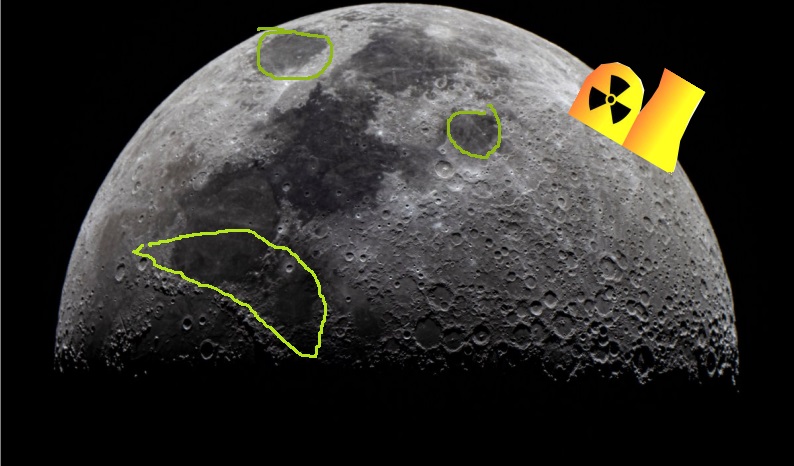
22 April 2026 Dr Binoy Kampmark, https://theaimn.net/space-loos-lunar-exploitation-and-colonial-escapism-the-artemis-ii-mission/
The Earth is in a fine mess, but human beings sealed in laboratories full of energy and vigour, attached to screens, and running tests about conditions in space, have another reason to cheer. Between April 1 and April 11, the Artemis II undertook a flyby of the Moon and returned safely. News bulletins, life stream feeds and podcasts afforded it saturating room and coverage. This was the first Moon mission with a crew in over five decades. Cue, then, for the grand claims, the exaggerated hopes, the silliness of it all.
Absurdly, the effort is being heralded as a collective push by humanity despite its distinct NASA credentials, yet another instance of coarse patriotism yoking itself to scientific endeavour. This is an American gig, and it will be assessed along with every other expensively patriotic mission launched by any number of States believing that the dark side of the moon is the next big thing in competition and exploitation. President Donald Trump’s Executive Order of December 2025 promises “American space superiority,” with the Artemis Program intended to return “Americans to the Moon by 2028,” “assert American leadership in space, lay the foundations for lunar development, prepare for the journey to Mars, and inspire the next generation of American explorers”.
It is also worth considering the statement by NASA Administrator Jared Isaacman made in March: “NASA is committed to achieving the near-impossible once again, to return to the Moon before the end of President Trump’s term, build a Moon base, establish an enduring presence, and do the other things needed to ensure American leadership.” Nothing about humanity here so much as a bald MAGA admission that, “The clock is running in this great-power competition, and success and failure will be measured in months, not years.”
Just to complete the trio of examples, Sean Duffy, when he was acting NASA Administrator, did not shy away from the messianic zeal of the American space program. In an internal staff briefing held last year, he was unambiguous that the US had to get to the Moon before China before venturing on to Mars. This was only natural, as his country had a “manifest destiny to the stars.”
Colonial pursuits are often preceded by the spirit of discovery, economic reconnaissance, inquiry. Then comes the appropriation, the brazen theft, the seizure wrapped in the jolly packaging of blood, civilisation and empire. Thankfully, in this case, there are no indigenous populations to exterminate, no extant human cultures to extinguish. That extermination will take the form of great powers vying over rare mineral real estate as an exercise in colonial escapism.
Much of the mission, because the lay audience could have no sense or truck in the finer details of the travel, was reduced to soap opera banalities and focal points of sheer triviality. In some instances, it was even worse than soap opera, crying out for some definitive, asteroid finish. Prosaic details were offered about lavatory failures, which only matter because people relate to them with faecal and urinary familiarity. “The Artemis II crew, working closely with mission control in Houston,” NASA revealed on April 2, “were able to restore the Orion spacecraft’s toilet to normal operations following the proximity operations demonstration.” That lavatory, at the cost of $23 million, was also said to be the second dearest toilet system ever built. We were also told with quotidian certainty that all lavatories in space tend to end up having failings of some sort, which will no doubt launch a thousand theses on faeces in due, and easy comfort. University examination boards can look forward to the excessive discharge.
Moving items in the spacecraft were also the source of various bromide observations. Nutella, with its hazelnut spread, got what was regarded by the press as the “greatest free advert in history,” floating about fairly unnoticed by the crew – though noticed on the live feed. “When Artemis II broke Apollo 13’s distance record of 248,655 miles from Earth on Monday [April 6],” declared PRWeek, “it was one small step for man … and a giant leap for Nutella’s marketing team.” How wonderful to also note that Nutella was founded in 1964, the same year NASA successfully completed its first lunar mission with Ranger 7.
As for global public interest, NASA and any of those in the business of filming their exploits in space need to be reminded of a rather disturbing truth. Dark, even slightly sadistic voyeurism is never far away from such missions. Impassive spectators are a callous sort, seeking jubilation in shock. An attempt to inject drama is made in media outlets, fluffed up by pundits, about what might have happened to the crew on losing communications for several hours. They must surely make it. Surely. Yet, sickening voyeurism is heavy in such messages, a thanatotic urge. “As the astronauts pass the Moon at about 23:47 BST (18:47 EDT) on Monday, the radio and laser signals that allow the back-and-forth communication between the spacecraft and Earth will be blocked by the Moon itself,” came the bland observation from the BBC. The retching platitude, however, could not be resisted: “For about 40 minutes, the four astronauts will be alone, each with their own thoughts and feelings, travelling through the darkness of space. A profound moment of solitude and silence.” A rather different reading of what being “alone” means, let alone solitude.
On their return to Earth, the press conference given by the crew was saccharine, charmless and unspeakable, suggesting that space travel may narrow the mind. There was the mandatory carpet crawling tribute act for NASA’s management. There were bucketful inanities on team enterprise, the insufferable jargon of organisation teamwork. With emetic conviction, Jeremy Hanson went so far as to call the crew a “joy team” and claim that humans “don’t always do great things. We’re not always in our integrity, but our default is to be good and to be good to one another.” Another crew member suggested that Earth was a “dream boat” (interestingly enough, China’s own spacecraft destined for lunar exploits is named Mengzhou, or Dream Vessel) while the Artemis team were but a mirror for humanity. (Some crew, some mirror.)
Reid Wiseman, along with the rest of the crew, seemed so dazzled as to mischaracterise this proto-colonial endeavour as an effort to unify the fractious human species. “We wanted to go out and try to do something that would bring the world together, to unite the world.” Christina Koch spoke of her husband’s assuring words that she had “made a difference” in transcending divisions. Other competing nation states are unlikely to agree, let alone care for such guff.
Logistically, mechanically, and in terms of engineering, the Artemis II mission can be seen as stunning, startling and impressive, humankind showing yet again an ability to reject nature’s limitations, to foil it, if you will, by going to areas where they have no natural right to be in. In that, we can be impressed. But in everything else, best return to the problems of the Earth, which remain in desperate need of resolution, whatever the wide-eyed space colonists claim.
Nuclear-Powered Rockets — NASA Plans First Launch in 2028

In 2015 Gagnon said: “The nuclear industry views space as a new market for their deadly product. Nuclear generators on space missions, nuclear-powered mining colonies on Mars and other planetary bodies and even nuclear reactors on rockets to Mars are being sought. Thus, there are many opportunities for things to go wrong.”
by Karl H Grossman, April 17, 2026, https://www.dailykos.com/stories/2026/4/17/800021876/community/nuclear-powered-rockets-nasa-plans-for-launch-in-29/
NASA got through the Artemis II mission last week with a few minor “anomalies,” as NASA calls problems, but in 2028 it plans to launch a nuclear-powered rocket to Mars as an initial step to using nuclear-powered rockets in space.
An accident involving a nuclear-powered rocket could be no small anomaly.
The NASA plan was heralded in a section titled “America underway on nuclear power in space” in a NASA announcement on March 24th headed “NASA Unveils Initiatives to Achieve America’s National Space Policy.”
It said that “after decades of study and in response to the National Space Policy, NASA announced a major step forward in bringing nuclear power and propulsion from the lab to space. NASA will launch the Space Reactor‑1 Freedom, the first nuclear-powered interplanetary spacecraft, to Mars before the end of 2028, demonstrating advanced nuclear electric propulsion in deep space.”
Scientific American followed with an article the same day headlined: “NASA announces a nuclear-powered Mars mission by 2028.” The subhead: “The U.S. space agency will aim to send a nuclear-powered spacecraft to Mars—a first—in a bid to show that nuclear propulsion can be used to send missions into deep space.”
Pursuing use of nuclear propulsion in space has been a NASA aim for many years—indeed, going back to the 1960s.
This was highlighted by NBC News correspondent Tom Costello, who covers space issues, in 2023 going to NASA’s Marshall Space Flight Center in Alabama where work has been done and remains underway on developing nuclear rockets.
Costello reported: “NASA looks at going to the moon…and to Mars. And to get to Mars, they’re going nuclear….While science and exploration are the driving motivators, there’s also a competitive factor, China. The Chinese government is very secretive, and a lot of their plans involve their military preparations. And so, there’s a reason for us to get there first. And NASA wants to get there faster…So to cut travel time, America is going back to the future.”
“This project was called NERVA,” Costello continued, citing NERVA (which stands for Nuclear Engine for Rocket Vehicle Application), “the 1960s a government program that most Americans have never heard of to develop nuclear powered rockets. It turns out they made big progress back in the 60s, running expensive tests.”
In Huntsville, he said, “they’ve got an exact replica to scale of the Saturn V [rocket]…Future astronauts will need that kind of lift. But once they’re in space, they can use a much smaller engine, a nuclear engine, to go all the way to Mars and back…It’s happening now at the Marshall Space Flight Center…This is where they put [together] components of nuclear thermal rockets.”
Things did not go smoothly for NERVA.
“NASA: Lost its NERVA,” was the heading in an article in Ad Astra in 2005 by longtime space journalist Leonard David. He wrote about how, “For NASA, it has been a long time in coming—permission to use the ‘N’ word: for nuclear power in space. In many ways, it has been the political, financial and technological third rail of space exploration—too hot of an issue to handle easily—radioactive to boot.”
He wrote that NERVA’s “success was short-lived. In the late 1960s and early 1970s, U.S. President Richard Nixon nixed NASA and NERVA funding dramatically…Eventually, NERVA lost its funding and the project was scuttled in 1973.
It’s not just the U.S. that is intending to use nuclear-powered rockets in space. “Nuclear-powered rockets will win the new space race,” was the headline last year in The Washington Post. The sub-head: “Russia and China are working hard for a nuclear-powered advantage in space. The U.S. must up its game.
“Space nuclear propulsion and power are not hypotheticals,” said the article. “China is investing heavily in both terrestrial and space-based nuclear technologies, with plans to send a nuclear-powered spacecraft to Mars by 2033. Russia, too, has announced ambitious goals.”
The headline in a 2024 article in the South China Morning Post: “Starship rival: Chinese scientists build prototype engine for nuclear-powered spaceship to Mars.” Its subhead told of how a “1.5 megawatt-class…fission reactor passes initial ground tests as global race for space. The lithium-cooled system is designed to expand from a container-sized volume into a structure as large as a 20-story building in space.”
The article began by saying a “a collaboration of more than 10 research institutes and universities across China have made significant strides toward interplanetary travel with the development of a nuclear fission technology.”
The Russians are bullish on the speed a nuclear-powered rocket could, they believe, attain. “Mars in 30 days? Russia unveils prototype of plasma engine,” was the headline last year of an article put out by World Nuclear News.
It began: “A laboratory protype of a plasma electric rocket engine based on a magnetic plasma accelerator has been produced by Rosatom scientists, who say it could slash travel time to Mars to one or two months.” (Rosatom is the Russian State Atomic Energy Corporation.)
The Global Network Against Weapons and Nuclear Power in Space was formed in 1992 at a gathering in Washington, D.C. and now has membership throughout the world. It has organized protests at the Kennedy Space Center in Florida to NASA launches of spacecraft using radioisotope thermoelectric generators. Using the heat of plutonium-238, the RTG’s generate electricity to run instruments, not to propel spacecraft.
The largest protest organized by the Global Network involved the Cassini space probe mission to Saturn in 1997 with 73 pounds of plutonium in three RTGs, the largest amount of plutonium ever on a spacecraft.
The most dangerous portion of that mission was when NASA had the Cassini probe perform a “slingshot maneuver,” sending it back towards Earth to use Earth’s gravity to increase its velocity. If, as NASA said in an Environmental Impact Statement for Cassini, there was an “inadvertent reentry” into the Earth’s atmosphere in that maneuver causing it to disintegrate and release its plutonium, an estimated “5 billion billion…of the world population…could receive 99 percent of the radiation exposure.”
NASA insisted at the time that beyond the orbit of Mars, it was necessary to use plutonium-powered RTGs. However, in 2011 NASA launched its Juno space probe to Jupiter which instead of RTGs used three solar arrays to generate onboard electricity. Juno orbited and studied Jupiter, where sunlight is a hundredth of what it is on Earth.
In the U.S., in 2021 a report titled “Space Nuclear Propulsion for Human Mars Exploration” was issued by a committee of the National Academies of Sciences, Engineering and Medicine of the U.S.
The 104-page report also lays out “synergies” in space nuclear activities between the NASA and the U.S. military. It said: “The report stated: “Space nuclear propulsion and power systems have the potential to provide the United States with military advantages…NASA could benefit programmatically by working with a DoD [Department of Defense] program having national security objectives.”’
What might be an “anomaly” involving a nuclear-powered rocket.
“Is using nuclear materials for space travel dangerous, genius, or a little of both?” was the heading of a 2021 article in the Bulletin of the Atomic Scientists.
With the U.S. setting a goal of “a human mission to Mars,” said the articleby Susan D’Agostino, “the words ‘nuclear’ and ‘space’ are again popping up together….Nuclear propulsion systems for space exploration—should they materialize—are expected to offer significant advantages, including the possibility of sending spacecraft farther, in less time, and more efficiently than traditional chemical propulsion systems.”
“But,” the piece went on, “extreme physical conditions on the launchpad, in space, and during reentry raise questions about risk-mitigation measures, especially when nuclear materials are present. To realize the goal of nuclear-propelled, human mission to Mars, scientists must overcome significant challenges that include—but go beyond—the technical. That is, any discussion about such an uncommon journey must also consider relevant medical, environmental, economic, political, and ethical questions.”
The piece said that “attaching what amounts to a nuclear reactor to a human-occupied spaceship is not without risks.”
An article in 2023 by Bob McDonald of the Canadian Broadcasting System was headed: “Nuclear powered rockets could take us to Mars, but will the public accept them?”
“Nuclear rockets are not a new idea,” it noted. “Now, with the prospect of sending humans to Mars in the 2030s, the idea is being revived in an effort to shorten the roughly seven months it takes a conventional rocket to get to Mars. This might be a boon for future astronauts who face a seven-month, one-way journey using current technology.”
“The idea is to use a small fission reactor to heat up a liquid fuel to very high temperatures, turning it into a hot gas that would shoot out a rocket nozzle at high velocity, providing thrust,” it continued.
“The design of a nuclear rocket means they typically would produce less thrust than a chemical rocket, but nuclear engines could run continuously for weeks, constantly accelerating, ultimately reaching higher velocities in a tortoise-and-hare kind of way. Nuclear propulsion is expected to be twice as fuel-efficient as chemical rockets, largely because they can heat the gas they use for thrust to a higher temperature than chemical combustion, and hotter gas means more energy.”
“A quicker trip to Mars provides huge benefits. Astronauts would be exposed to less cosmic radiation during the journey. The psychological pressures of living in a confined space far from home would be reduced. Supplies and a rescue mission could be delivered more quickly. These rockets could also open up the outer solar system so trips to Jupiter and its large family of icy moons could eventually be within reach,” the piece went on.
“While the technology of nuclear propulsion is certainly feasible, it may not be readily embraced by the public. The accidents at Chernobyl, Three Mile Island and Fukushima have left many people skeptical about nuclear safety. And there will be risk,” said the piece.
“Technicians at the NASA Lewis Research Center in 1964 testing a nozzle design for a nuclear thermal rocket. A nuclear rocket wouldn’t be used to launch a spacecraft from the Earth’s surface — it would be designed to run in space only. It would have to launch into orbit on a large chemical rocket — so the public would have to accept the risk of launching a nuclear reactor on a standard rocket filled with explosive fuel.”
“And rockets have and will malfunction catastrophically, in what with black humor rocket scientists sometimes call RUD—’rapid unscheduled disassembly.’”
“No one wants to see nuclear debris raining down on the Florida coast or Disneyland, and that’s not the only possible scenario. An accident in orbit could potentially drop radioactive material into the atmosphere. These safety concerns need to be addressed before any nuclear rocket leaves the ground,” said the article.
Bruce Gagnon, coordinator of the Global Network since its formation, cites in the past NASA “postponing a test of a nuclear-powered spacecraft just above the Earth. They weren’t allowed to test it on Earth because of its potential for spreading contamination widely, so they intended to test it over our heads. There were concerns about the technology failing, and it falling, burning up on re-entry. At the present time there is no schedule to do those tests, but I’m sure they’re pushing ahead to do them as quickly as possible.”
“Besides the problem of an accident,” said Gagnon, “the production process for nuclear space devices leads to radioactive contamination in the laboratories where they takes place and in air and water.”
In 2015 Gagnon said: “The nuclear industry views space as a new market for their deadly product. Nuclear generators on space missions, nuclear-powered mining colonies on Mars and other planetary bodies and even nuclear reactors on rockets to Mars are being sought. Thus, there are many opportunities for things to go wrong.”
If things go wrong, these “anomalies” could be major.
NASA’s March 24 announcement also said: “When SR-1 Freedom reaches Mars, it will deploy the Skyfall payload of Ingenuity‑class helicopters to continue exploring the Red Planet. SR-1 Freedom will establish flight heritage nuclear hardware, set regulatory and launch precedent, and activate the industrial base for future fission power systems across propulsion, surface, and long‑duration missions. NASA and its U.S. Department of Energy partner will unlock the capabilities required for sustained exploration beyond the Moon and eventual journeys to Mars and the outer solar system.”
Fresh off Artemis, America is now turning its attention to creating nuclear power in space.
The administration wants to launch the reactors to the moon within the next four years – a timeline that critics say could be a problem
Indeoendent, Julia Musto in New York, Tuesday 14 April 2026
The Trump administration is renewing its focus on creating nuclear power in space, releasing updated guidance for federal agencies following the historic Artemis II lunar mission.
The action is aimed at ensuring the U.S. stays ahead of China in the new space race, which will determine which political power creates the rules there in the future, as humans establish a permanent moon base and work toward getting to Mars in a nuclear-powered spacecraft.
Nuclear energy will be necessary to live and work on the moon because there is not unlimited access to solar power and lunar nights are 14.5 Earth days long. Nuclear reactors can be placed in permanently shadowed areas and can generate power continuously, according to NASA.
The administration’s guidance, issued Tuesday, instructs the Departments of Energy and Defense, the White House Office of Science and Technology Policy and NASA to start taking steps toward safely deploying nuclear reactors in orbit as early as 2028 and launching them to the moon by 2030, in line with a December executive order from President Donald Trump.
“The time has come for America to get underway on nuclear power in space,” NASA Administrator Jared Isaacman, a former SpaceX astronaut, wrote in a post sharing the news on the social media platform X
………………………………. By the next 60 days, it calls for a Department of Energy assessment on the readiness of the nuclear industry to produce “up to four space reactors within five years, including reactor design, delivery of long lead-time components, and fuel allocation or production, along with recommendations for addressing any gaps.”
And the guidance also instructs the OSTP to develop a roadmap that identifies obstacles to achieving these objectives within the next 90 days.
“DOW will, pending availability of funding, pursue deployment of a mission-enabling mid-power in-space reactor by 2031,” the guidance said.
…………………..But some experts say that recent goals for reactors are just not feasible within the allotted timeline – although not everyone agrees.
“The whole proposal is cock-eyed and runs against the sound management of a space program that is now being starved of money,” national security analyst, nuclear expert and author Joseph Cirincione told The Independent last August.
He believes a nuclear reactor on the moon could take up to 20 years to become a reality. https://www.independent.co.uk/space/us-nasa-space-nuclear-power-b2957498.html
As Rocket Launches Increase, They May Be Polluting the Skies
“We’re actually slowing down the repairing of ozone hole with the space industry. Which is quite something.”
Undark, By Ramin Skibba, 04.06.2026
Research suggests that rocket exhaust and debris could be threatening the ozone layer, though uncertainties persist.
Rocket launches used to be a rare occurrence. But with access to space proliferating, partly thanks to an abundance of commercial space companies, global launches have risen exponentially: In the last five years, they’ve nearly tripled. According to an analysis by SpaceNews, in 2025 alone, humans shot about 320 rockets into space.
All those rockets produce a fair amount pollution, from the sooty plumes that catapult them into orbit and beyond to derelict satellites that burn up upon reentry. Regulators have been monitoring and restricting other air pollutants especially since the 1970s, including the exhaust from cars and jet engines. Many researchers believe such regulations are overdue for rocket engines — especially because nobody really knows exactly how much damage those pollutants cause. “It might be another 10 years until we found how large the influences on the atmosphere actually are,” said Leonard Schulz, a geophysicist at the University of Braunschweig – Institute of Technology in Northern Germany. By that time, he added, the pollution could accumulate to the point that, you cannot easily reverse it.
Though space pollution is still small compared to the aviation industry, rocket exhaust may be gradually depleting Earth’s protective ozone layer, which is still recovering from the impacts of pollution from a class of chemicals called chlorofluorocarbons. (CFCs, as they are known, were once commonly used as coolant in refrigerators and air conditioners, among other uses, and were regulated in the late 1980s.) But with limited data and industry transparency, many unknowns and uncertainties persist, including the impacts of next-generation rocket fuels.
Compared to other sources of pollution, the effects of sending rockets into space and from space debris that comes back down from orbit “has been negligible,” said Christopher Maloney, an atmospheric scientist at the University of Colorado who works out of the Chemical Sciences Laboratory at the National Oceanic and Atmospheric Administration, or NOAA, with recent research on emissions from rockets and reentries. “But if you follow these trends, what is it going to look like?”
The boost in rocket launches is largely driven by the private sector, and in particular SpaceX’s Falcon 9 rockets, which are used in part to loft Starlink satellites into orbit. There are now about 10,000 such satellites, which provide internet services to remote regions. Starlink is just one example of a large network of satellites, known as megaconstellations, the deployment of which accounted for some 40 percent of rocket pollution as of 2022. “The proportion of those emissions coming from megaconstellations is growing every year,” said Connor Barker, a research fellow at the University College London who focuses on atmospheric chemical modeling. In January, SpaceX filed an application at the Federal Communications Commission for a megaconstellation of 1 million satellites, which are reportedly intended for orbiting data centers.
Additional launches have come from Chinese rocket companies that deploy satellites and provide spaceflights to the Tiangong space station and other missions; companies like the United Launch Alliance, Blue Origin, and Rocket Lab; and various European countries and Russia.
To account for pollution from both launches and reentries, Barker developed an online emissions tracker, which has shown a rapid increase in the pollution since 2020 — in particular, for the pollutants black carbon, also known as soot, as well as carbon dioxide and carbon monoxide. Barker expects the pollutants to continue rising for years. “We’re actually slowing down the repairing of ozone hole with the space industry,” he said. “Which is quite something.”……………………………………………………………………………………………………………………………………………………………………………………………………………………………..
Spacecraft pollute not just on their way up, but also when they’re on their way down. All those satellites, rocket bodies, and random chunks of debris floating in orbit are mostly made of metals, and they have to go somewhere. “The biggest issue is, nobody has looked at this for quite a long time,” said Schulz, the German geophysicist, who recently published a paper about such “space waste.”
…………………………………………………………………………………………………………………….Ultimately, researchers say, launch operators need to think about not only their rocket fuel, but the materials used to make their spacecraft. Because humanity depends on the ozone layer, if some of it were to disappear, the implications are clear — and different than those of climate change. “The environmental impact is an attack on the thing that makes life on Earth possible, the ozone layer,” Bannister said. “It’s very immediate.”…………………………………………………………………………………………………………………………………….. https://undark.org/2026/04/06/as-rocket-launches-increase-they-may-be-polluting-the-skies/?utm_source=Undark%3A+News+%26+Updates&utm_campaign=90003236de-RSS_EMAIL_CAMPAIGN&utm_medium=email&utm_term=0_5cee408d66-185e4e09de-176033209
Mysterious Flashes in 1950s Skies Linked to Nuclear Tests and UAP Sightings: Study
Apr 10, 2026, Sci News, by Natali Anderson
A new statistical analysis of archival sky surveys from the early Cold War has found that mysterious, short-lived bursts of light in the night sky were more likely to appear around the time of above-ground nuclear weapons tests and to increase alongside reports of unexplained aerial phenomena (UAPs).
“Transient star-like objects have been identified in sky surveys conducted prior to the launch of the first artificial satellite on October 4, 1957,” said Dr. Beatriz Villarroel of the Nordic Institute for Theoretical Physics (Nordita) and Dr. Stephen Bruehl from the Vanderbilt University Medical Center.
“These short-lived transients — lasting less than one exposure time of 50 min — have point spread functions and are absent in images taken shortly before the transients appear and in all images from subsequent surveys.”…………………………………….
“Above-ground nuclear weapons tests (US, Soviet, and British) were conducted on 124 days (4.6%) during the study period.”
“UAP reports were recorded in the UFOCAT database on 2,428 days during the study period (89.3%).”
The researchers found that the transients were about 45% more likely to occur on days within a one-day window of a nuclear test than on other days.
The effect was strongest the day after a test, when the likelihood of observing a transient rose by roughly 68%.
The study also reported a modest correlation between the number of transients and the number of UAP sightings recorded on the same date……………………………………………..
This study adds to the small peer-reviewed literature seeking to apply systematic scientific methods to the study of UAP-related data.”
“The ultimate importance of the associations reported in the current work for enhancing understanding of transients and UAP remains to be determined.”
A paper on the findings was published on October 20, 2025 in the journal Scientific Reports. https://www.sci.news/astronomy/cold-war-transients-14688.html
Creating bases on the Moon

April 07, 2026, Bruce Gagnon, https://space4peace.blogspot.com/2026/04/creating-bases-on-moon.html
Video on original
NASA outlines this $20 billion project to build bases on the moon.
The speaker in the video mentions RTG’s – which are nuclear power sources for the base. The nuclear industry views space as a new market. Imagine the dirty nuclear fabrication process at DoE labs across the country and then a series of launches that could be a disaster for life on Earth if there are accidents on take off.
The US has had a plan for military base control of the moon since the 1950’s.
The US (and some allies) are in a race to take control of the moon before China & Russia can get there.
In this 1989 Congressional study ‘Military Space Forces’ they discuss the Earth-Moon gravity well and state that who ever covers the top of the well would be able to control access on and off the planet earth. This has relevance not only for deciding who can control the Earth below, but also who can mine the sky, etc.
Thus all of this is connected to current US mission to the moon.
Moon has helium-3 and water which the competitors will want to control. So we now face a duplication of the current global war system on Earth moving into space.
Mars has magnesium, cobalt, uranium, etc and the nuclear-powered rovers driving around Mars are doing planetary mapping and soil ID operations.
Everyone says that a moon-based colony would be a launch pad for deeper space exploration and mining operations so again ‘control’ becomes a priority for those who have such ambitions.
I find it sad that we have competing space missions, goals, and priorities.
I’d wish we’d go off into space when we were a more mature human race here on Earth rather than carrying the ‘bad seed of war, greed, and environmental degradation’ that we’ve sown into the depths of our Mother Earth.
I’d rather we had a global informed debate about what kind of seed we should carry into space when we do go – and then go as united and clear thinking Earth people. Like envisioned in Star Trek.
Imagine the money for human development on Earth we’d save if we went as one people rather than competing national blocs spending massive amounts of taxpayer funds.
This has been the work of the Global Network since our founding in 1992 – to help usher in such a needed global consciousness, debate and organizing.
We also need a renewed effort to create international space law that bans weapons/war in space, regulates launches into the shrinking and contested parking spaces in Lower Earth Orbit (LEO), renewed treaties for the planetary bodies and determining just who can benefit from resource extraction in space.
Let’s not create a new ‘Wild West Show’ in space.
The US has declared ‘space superiority’ over Iran. What does that mean?
Iran’s nascent space program was destroyed. It’s still using other nations’ space intel.
The U.S. military declared space superiority over Iran this week, but defense experts question what that means given the country’s inchoate military space program and heavy reliance on space-based intelligence from other nations.
Adm. Brad Cooper, the head of U.S. Central Command, said Tuesday that the U.S. had established control of the space domain during Operation Epic Fury. It was nearly a month after CENTCOM had announced “Iran’s equivalent of Space Command” was destroyed, which harmed the Islamic Revolutionary Guard Corps’ ability to coordinate retaliatory strikes.
“Our Space Force has given us the ultimate high ground, delivering space superiority, which has been a critical enabler to this fight,” Cooper said in a Tuesday video.
It’s not clear if the country is still actively jamming or spoofing U.S. assets, and it’s highly unlikely that the U.S. Space Force has physically destroyed the country’s handful of satellites. Navy Capt. Tim Hawkins, a CENTCOM spokesperson, said he could not discuss details about space operations “due to classification.” Given Iran’s rudimentary space capabilities, defense experts question what has changed to prompt the military to declare space superiority.
“It isn’t stopping them from using space assets,” Victoria Samson, the Secure World Foundation’s chief director of space security and stability, said of the U.S. declaring space superiority. “There’s just a lot of question marks … In regards to how they use space as a national security enabler, I don’t know that they’ve really stopped it, because they weren’t using it other than for imagery analysis.”
Iran is reportedly relying on China and Russia’s intelligence and commercial space-based imagery to target U.S. assets throughout the region. A U.S. official told Defense One that Iran’s use of another country’s space-based data doesn’t mean the service lacks control of the space domain.
“Just because the Iranians are receiving space-based intelligence doesn’t negate that we have space superiority,” the official said.
Since 2005, the country has launched a total of 26 satellites, only 13 of which were still operational, according to the American Enterprise Institute’s space data navigator tool. Three of those are registered to the IRGC. The U.S., by comparison, has upwards of 500 operational military and intelligence satellites.
Gen. Chance Saltzman, the Space Force’s top uniformed officer, acknowledged “it wasn’t really a fair fight,” but said destroying Iran’s space capabilities gave the military an upper hand in communications and air operations within CENTCOM.
“You have space superiority if you can use space the way you want, and the adversary cannot use space the way they want, and I think those are the conditions that we’ve met in this particular instance,” Saltzman said during a Mitchell Institute event Wednesday.
The term “space superiority” was first publicized in a 1980s Air Force manual. A 2004 service document likened the idea to air superiority and said the two are “crucial first steps in any military operation.” Last year, the Space Force published a warfighting doctrine that said the service’s “formative purpose” is to achieve space superiority.
“Space superiority is the degree of control that allows forces to operate at a time and place of their choosing without prohibitive interference from space or counterspace threats, while also denying the same to an adversary,” the Space Force’s doctrine reads.
Some defense experts see the recent declaration of space superiority as a way for the service to highlight its warfighting rebrand in recent years.
“It’s a weird thing to say. I think it’s more a matter of floating the ‘Space Force as a warfighting’ thing,” Samson said.
Kari Bingen, a senior fellow at the Center for Strategic and International Studies and director of the Aerospace Security Project, said it’s not surprising to see the Space Force becoming more integrated into operations, given adversaries’ desire to target command, control, communications, and intelligence capabilities.
“Between Venezuela and Operation Epic Fury, these have been opportunities for the Space Force to better integrate space effects into a joint military campaign,” Bingen said. “We’ve long treated space as this special and different capability set. The physics are different, but to make it truly useful to the joint force, it needs to be fully integrated into planning and operations.”
Saltzman said guardians had been forward deployed to support Operation Epic Fury and continue to launch space effects in combat zones “despite being under attack from an adversary.” He also said some guardians are supporting the operation stateside out of Shaw Air Force Base in South Carolina and CENTCOM headquarters in Florida.
“I won’t go into a lot of the operational details, as you might imagine, but you don’t have to think too hard to understand what it is the Guardians are bringing to the fight,” Saltzman said. “All of the missions that we always do—missile warning, satellite communications. The links are vital. Over-the-horizon communications is as important now as it ever has been. We create disruption for an adversary.”
SpaceX and Blue Origin abruptly shift priorities amid US Golden Dome push

Thursday, Feb 19, 2026, https://www.defensenews.com/space/2026/02/19/spacex-and-blue-origin-abruptly-shift-priorities-amid-us-golden-dome-push/?utm_source=sailthru&utm_medium=email&utm_campaign=dfn-space
Just a year ago, SpaceX majority owner Elon Musk dismissed going to the moon as a “distraction.” Now, SpaceX and Jeff Bezos’ Blue Origin are racing toward it, and the Pentagon may be the reason why.
Within weeks of each other, the two largest U.S. commercial space companies abruptly shifted their priorities toward lunar development. The moves came as the Department of Defense accelerates plans for a next-generation missile shield known as the Golden Dome, raising questions about whether America’s return to the moon is as much about defense as it is exploration.
In early February, SpaceX announced it would redirect plans for a future city on Mars to establishing one on the moon. The reversal was striking, as Musk previously insisted Mars was the only meaningful destination.
Just days prior to this announcement, Blue Origin quietly paused its New Shepard tourism program for at least two years to increase focus on lunar development, framing the move as part of the nation’s goal of returning to the moon.
However, the timing may suggest a more strategic approach.
In December 2025, the White House issued an executive order calling for a missile shield prototype by 2028, critical for the Golden Dome initiative.
This order also set a timeline for an American lunar return by 2028, with elements of a permanent moon presence targeted for 2030.
Defense officials, such as Space Force Vice Chief of Operations Gen. Shawn Bratton, have emphasized that commercial partnerships will be essential to achieving these goals.
SpaceX is reportedly in line for a $2 billion Pentagon contract to build a 600-satellite constellation supporting Golden Dome tracking and targeting, though the award has not been formally confirmed.
The project would rely on low Earth orbit satellites capable of rapid, near-real-time missile detection. Such systems improve coverage, but remain vulnerable to anti-satellite attacks from adversaries.
The company’s shift to the moon could change that equation. Lunar-based infrastructure would sit far beyond the reach of most anti-satellite capabilities, offering more resilient communications and sensing layers.
In this scenario, the moon could become a strategic “high ground,” which could offer the Pentagon a more durable and far-reaching view for missile detection and surveillance.
Just 15 days before Blue Origin announced its shift toward the moon, the Missile Defense Agency added the company to its $151 billion SHIELD contract, a Pentagon program allowing firms to compete for Golden Dome-related work.
While no specific awards are guaranteed, the timing is noteworthy. Blue Origin is now putting lunar logistics front and center, pausing the New Shepard program to focus resources on that effort.
The company’s Blue Ring vehicle is designed for orbital maneuvering and refueling, capabilities that could one day support sensor deployment and flexible positioning beyond Earth’s orbit, where they are less vulnerable to attack and can provide broader global coverage.
Meanwhile, its Blue Moon MK1 and MK2 landers can deliver multi-ton payloads to the lunar surface, which could be enough to deploy communications systems, sensors or other infrastructure to remote locations, potentially supporting Golden Dome-like operations.
Taken together, these developments could suggest a broader transformation in the strategic landscape of space, one that increasingly intersects with homeland defense and global security.
Space-based missiles, killer robots key to U.S. effort to gain orbital dominance.
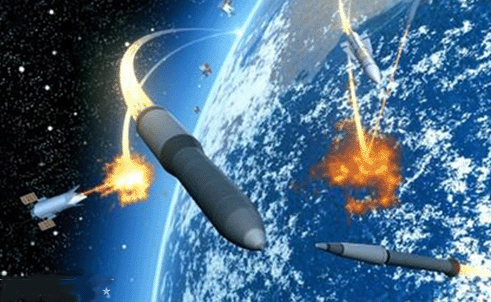
By Bill Gertz – The Washington Times – Wednesday, February 11, 2026
The U.S. Space Force is accelerating the deployment of counterspace weapons under a new Trump administration policy aimed at reasserting and ensuring American dominance over China and Russia in any potential orbital conflict.
The force is deploying three electronic satellite jammers and racing to match the more advanced space forces of China and Russia, which include arsenals of anti-satellite weapons.
Space Force Gen. B. Chance Saltzman, chief of space operations, said Defense Secretary Pete Hegseth recently set the goal for the U.S. military to dominate in space.
“And the Space Force was created to do just that,” Gen. Saltzman told The Washington Times. “The service has and will continue to invest in a full range of counterspace capabilities to deter conflict in space and to win decisively if called upon.
“Continuing to train and equip combat-credible Guardians is essential to maintaining our warfighting readiness,” he said.
Mr. Hegseth said in a speech to workers at the space company Blue Origin last week that the $25 billion being spent on the Golden Dome national missile and drone defense system would produce “cutting-edge, space-based capabilities which we are going to need.”……………….
“That is how we will establish total orbital supremacy,” he said.
Golden Dome systems are expected to support Space Force counterspace arms.
A Space Force spokeswoman declined to provide details on Gen. Saltzman’s plans for counterspace weapons, but at this point, the newest branch of the American military — the force was founded in 2019 under the first Trump administration — has only limited capabilities with counterspace systems. The force will be challenged to match enemy systems…………………….
Funding for counterspace weapons in the recently passed $890.6 billion defense authorization bill is relatively meager and does not appear to support a space dominance policy.
Procurement for counterspace weapons in the current fiscal year is $2 million, and the research, development, testing and evaluation budget for counterspace systems spending is $31.2 million, according to a funding chart in the defense authorization act.
Developing space weapons is a priority for the Pentagon because U.S. space systems, including high-altitude Global Positioning System satellites — used for GPS targeting and navigation in military operations, missile warning satellites and key imagery and communications systems — were not designed for conflict in space…………..
A Pentagon official said a presidential directive requires U.S. space superiority and therefore “American leadership in space is nonnegotiable.”…………………………..
“The Department of War has and will continue to invest in a full range of capabilities — kinetic, non-kinetic, reversible and irreversible — to restore deterrence and, if necessary, prevail in conflict.”………………………………………………
Charles Galbreath, a retired Space Force colonel, said Mr. Hegseth’s comments on space power dominance are “probably some of the most aggressive language I’ve heard ever, openly, about conflict in the space domain.”………………………………………………………..
The orbital playbook
Space Force plans for waging warfare in space are outlined in a March 2025 report, “United States Space Force Space Warfighting: A Framework for Planners.”
The report defined three main types of counterspace operations as control of space using both offensive and defensive action.
“Counterspace operations are conducted across the orbital, link and terrestrial segments of the space architecture,” the report said, creating effects aimed at “space superiority.”……………………
The combat will include “orbital warfare” using fires, movement and maneuver to control space.
Also used will be electromagnetic warfare to defeat enemy space and counterspace threats.
Cyberwarfare will be a major part of space combat, with strikes and other actions aimed at gaining control of space.
Offensive space combat will include orbital strike operations, pursuit and escort of satellites, standoff attacks, interdicting space communications links, and maneuvering killer satellites that can grab and crush enemy systems.
Orbital attacks will use “pursuit operations” with an attacking system maneuvering to an enemy spacecraft before firing weapons. Alternatively, the Space Force will use standoff operations — space-based or ground long-range missiles that attack without a nearby orbital rendezvous.
Space link interdiction will use electromagnetic or cybernetwork attacks……………………………………………
For electronic attacks, high-powered lasers and microwave weapons are being built, and some reports indicate that electromagnetic pulse arms could be used to damage satellite electronics without causing debris.
Emil Michael, undersecretary of defense for research and engineering, stated in a X post that the Pentagon has directed energy weapons………………………………………………………………………………..
U.S. policymakers must take urgent action to ensure the United States wins the new space race and retains the strategic high ground that has long underpinned our military and economic leadership, the panel said. https://www.washingtontimes.com/news/2026/feb/11/us-racing-build-space-weapons-counter-anti-satellite-power-china/?utm_source=Boomtrain&utm_medium=subscriber&utm_campaign=threat_status&utm_term=threat_status&utm_content=threat_status&bt_ee=wjQ2GCMecOIl6%2Ftk98uhjTa%2F2aWCScEubIvYIkRk66Y0v%2FpyHece2aahuYzGEgHT&bt_ts=1770914789113
1 This Month
23-25 October – on Zoom – World BEYOND War’s annual global conferenc


Shut down the radiation-damaged Heysham nuclear reactors now
To see nuclear-related stories in greater depth and intensity – go to https://nuclearinformation.wordpress.com

Say No to NASA’s Reckless Nuclear Reactor on the Moon
Say No to NASA’s Reckless Nuclear Reactor on the Moon

-
Archives
- October 2026 (247)
- September 2026 (339)
- August 2026 (330)
- July 2026 (355)
- June 2026 (287)
- May 2026 (306)
- April 2026 (356)
- March 2026 (251)
- February 2026 (267)
- January 2026 (308)
- December 2025 (358)
- November 2025 (359)
-
Categories
- 1
- 1 NUCLEAR ISSUES
- business and costs
- climate change
- culture and arts
- ENERGY
- environment
- health
- history
- indigenous issues
- Legal
- marketing of nuclear
- media
- opposition to nuclear
- PERSONAL STORIES
- politics
- politics international
- Religion and ethics
- safety
- secrets,lies and civil liberties
- spinbuster
- technology
- Uranium
- wastes
- weapons and war
- Women
- 2 WORLD
- ACTION
- AFRICA
- Atrocities
- AUSTRALIA
- Christina's notes
- Christina's themes
- culture and arts
- Events
- Fuk 2022
- Fuk 2023
- Fukushima 2017
- Fukushima 2018
- fukushima 2019
- Fukushima 2020
- Fukushima 2021
- general
- global warming
- Humour (God we need it)
- Nuclear
- RARE EARTHS
- Reference
- resources – print
- Resources -audiovicual
- Weekly Newsletter
- World
- World Nuclear
- YouTube
-
RSS
Entries RSS
Comments RSS

