A USA resumption of nuclear testing ? -a green light for all other nations to start their own testing
if the U.S. were to resume nuclear testing, it would be a green light for all other nations to start their own testing.
 A restart of nuclear testing offers little scientific value to the US and would benefit other countries The Conversation, Ferenc Dalnoki-Veress, Scientist-in-Residence and Adjunct Professor, Middlebury, Miles A. Pomper, Senior Fellow, James Martin Center for Nonproliferation Studies, Middlebury 14 July 20,
“…….The U.S. tested nuclear bombs for decades. But at the end of the Cold War in 1992, the U.S. government imposed a moratorium on U.S. testing. This was strengthened by the Clinton administration’s decision to sign the Comprehensive Nuclear Test Ban Treaty. Although the Senate never ratified the treaty and it never entered into force, all 184 countries that signed the test ban, including the U.S., have followed its rules.
But in recent weeks, the Trump administration and Congress have begun debating whether to restart active testing of nuclear weapons on U.S. soil…….
We are two nuclear weapons researchers – a physicist and an arms control expert – and we believe that there is no value, from either the scientific nor diplomatic perspective, to be gained from resuming testing. In fact, all the evidence suggests that such a move would threaten U.S. national security. Continue reading
Electricite de France (EDF) ‘s new nuclear reactors not financially viable

French auditor calls for financing guarantee for future EPR projects, WNN, 15 July 2020, EDF must ensure the financing and profitability of its proposed EPR2 reactor before starting construction of any plants based on the design in France, the country’s state audit office has said. The EPR2 is a simplified version of the EPR design, construction of which has been hit by delays and cost increases in France and Finland……..
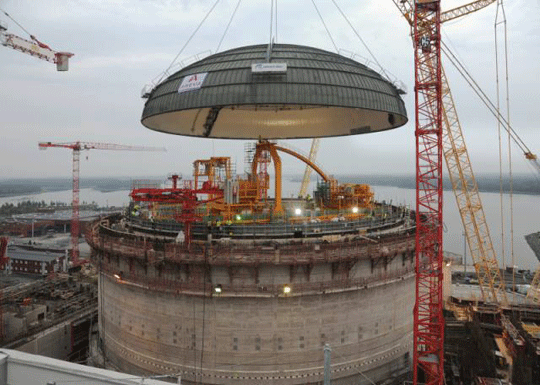 Construction of the Olkiluoto 3 EPR began in 2005, with completion of the reactor originally scheduled for 2009. However, with various delays and setbacks, fuel loading is now planned for later this year. The loading of fuel into the Flamanville EPR in France, construction of which began in December 2007, is now scheduled for the end of 2022. Two EPR units are also under construction at the Hinkley Point C project in Somerset, UK.
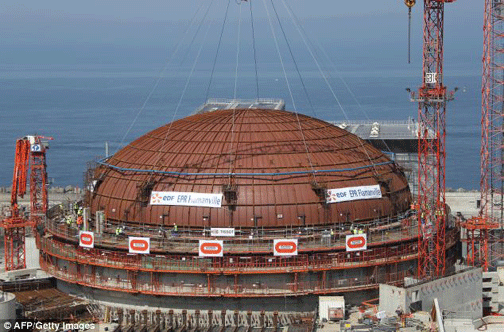 launch of the construction sites of the first two EPRs, in Finland and in Flamanville. This insufficient preparation led to underestimating the difficulties and the construction costs, and to overestimating the capacity of the French nuclear sector to face it, at the cost of financial risks for the companies of the sector.”
The audit office added, “The construction of new EPRs in France cannot in any event be envisaged without clear prior answers on the methods of financing and the role of nuclear power production in the electricity mix of tomorrow.”
The report says EDF is no longer in a position to finance the construction of new reactors on its own. The utility, it says, is studying means of financing that either makes the consumer – as in the case of the UK’s contract-for-difference for construction of Hinkley Point C – or the taxpayer bear the costs of construction.
“The financial challenges are major, with the cost of construction of three pairs of EPR2 reactors being estimated at EUR46 billion (2018 value),” the Cour des Comptes notes. “Taking into account their duration of construction, production and dismantling, the decision to build or not to build future EPRs will have consequences until the 22nd Century. …. https://world-nuclear-news.org/Articles/French-auditor-calls-for-financing-guarantee-for-f
Nuclear bomb testing – a form of racism and colonialism
Danielle Endres: Nuclear testing as a form of colonization, https://www.sltrib.com/opinion/commentary/2020/07/15/danielle-endres-nuclear/ By Danielle Endres ·16 July 20
At 5:29 a.m. on July 16, 1945, scientists in the Manhattan Project detonated the world’s first nuclear weapon in the desert homelands of the Mescalero Apache, a place now known as Alamogordo, New Mexico. As the detonation cloud mushroomed into the sky, the Trinity test ushered in a new era, the atomic age.
Siberia’s heat-wave – global heating is what made this possible
 Siberia heatwave was ‘almost impossible’ without climate change, scientists say, SBS News 16 Jul 20, An extreme heatwave in the Arctic is a problem for the entire planet, say scientists, because the region regulates weather around the globe and contains much of the world’s carbon-rich permafrost.A recent heatwave in Siberia that saw temperature records tumble as the region sweltered in 38-Celsius highs was “almost impossible” without the influence of man-made climate change, leading climate scientists say.
An international team of researchers found that the record-breaking warm period was more than 2 degrees hotter than it would have been if humans had not warmed the planet through decades of greenhouse gas emissions.
The five hottest years in history have occurred in the last five years and there’s a better-than-even chance that 2020 will be the hottest ever recorded.
Earth’s poles are warming faster than the rest of the planet, and temperatures in Siberia – home to much of the world’s carbon-rich permafrost – were more than 5 degrees hotter than average between January and June. ………
‘Important for everyone’
The team behind the calculations stressed that the Siberian heatwave was a problem for the entire globe. Some 1.15 million hectares of forest going up in flames released millions of tonnes of CO2 into the atmosphere.
At the same time, the wildfires and sustained heatwaves accelerated the region’s permafrost melt. This caused an oil tank built on frozen soil to collapse in May, leading to one of the region’s worst-ever oil spills…….
The 2015 Paris climate deal commits nations to capping temperature rises to “well-below” 2 degrees above pre-industrial levels and to strive for a 1.5 degrees limit if at all possible. With just 1 degree of warming so far, Earth is already buffeted by record-breaking droughts, wild fires and super storms made more potent by rising sea levels.
To keep in line with the 1.5-degree target, the United Nations says global emissions must fall by 7.6 per cent every year this decade.
Sonia Seneviratne, from ETH Zurich’s Department of Environmental Systems Science, said the research showed the heatwave was an example of “extreme events which would have almost no chance of happening” without man-made emissions. https://www.sbs.com.au/news/siberia-heatwave-was-almost-impossible-without-climate-change-scientists-say
July 16 1945 – the first nuclear bomb test – the start of many more
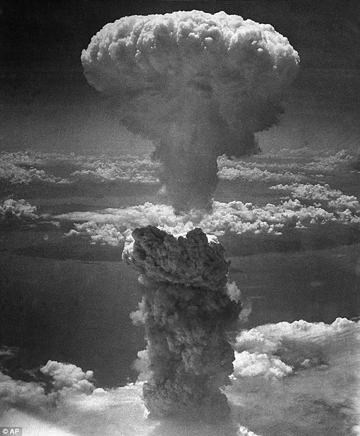 Now I Am Become Death’: The Legacy of the First Nuclear Bomb Test
The 75th anniversary of what’s known as the Trinity explosion, the world’s first nuclear weapon test, comes as tensions over nuclear devices intensify. NYT, By Maria Cramer July 15, 2020 It was 1 a.m. on July 16, 1945, when J. Robert Oppenheimer met with an Army lieutenant general, Leslie Groves, in the parched landscape of Jornada del Muerto — Dead Man’s Journey — a remote desert in New Mexico.
A group of engineers and physicists was about to detonate an atomic device packed with 13 pounds of plutonium, a nuclear weapon that the government hoped would bring an end to World War II……..At 5:29 a.m. local time, the device exploded with a power equivalent to 21,000 tons of TNT and set off a flash of light that would have been visible from Mars, researchers said.
It was the first nuclear test in history.
Less than a month later, the United States would drop a nearly identical weapon on the city of Nagasaki in Japan. The bomb, named Fat Man, fell three days after Americans dropped a uranium bomb, called Little Boy, on Hiroshima. Both weapons immediately killed tens of thousands of Japanese people and forced Japan’s surrender on Aug. 14, bringing an abrupt end to the war.
Mr. Oppenheimer said a Hindu scripture ran through his mind at the sight of the explosion: “Now I am become Death, the destroyer of worlds.”
The top secret test was heard and seen for miles.
The goal of the test was to see if the military could harness plutonium into a weapon that would destroy whole cities, said Alex Wellerstein, a science historian at the Stevens Institute of Technology in Hoboken, N.J., who studies the history of nuclear weapons…… https://www.nytimes.com/2020/07/15/us/trinity-test-anniversary.html
8 cases of inappropriately stored nuclear waste found at northern Japan reprocessing plant
 The Japan Nuclear Fuel Ltd. (JNFL) nuclear fuel reprocessing plant in the village of Rokkasho, Aomori Prefecture, is seen in this May 14, 2020 file photo taken from a Mainichi Shimbun aircraft
July 15, 2020
TOKYO — Japan Nuclear Fuel Ltd. (JNFL) had been inappropriately storing nuclear waste at a nuclear fuel reprocessing plant in Rokkasho, Aomori Prefecture, in northern Japan, including keeping waste in undesignated areas, the country’s nuclear regulatory body has revealed.
The Nuclear Regulation Authority (NRA) had instructed JNFL to make improvements in its practices in 2017, but the company had left some of its nuclear waste in places where they were not supposed to be. There has been no confirmation that any of the radioactive substances leaked. There have been a series of shoddy practices uncovered at JNFL, which is likely to call into question the company’s attitude.
At the fuel reprocessing plant, uranium and plutonium are extracted from spent nuclear fuel for reuse in nuclear reactors. Highly radioactive waste liquid that is generated in the process becomes nuclear waste when it is solidified in glass. According to the NRA and others, JNFL had been keeping nuclear waste in a building different from the one the waste is meant to be stored in. As for the approximately 160 kilograms of shards of radioactive waste liquid solidified in glass, an appropriate storage method had not been stipulated. There were eight cases of inappropriate storage, some of them spanning the past 19 years.
Inspectors from the NRA Secretariat confirmed inappropriate storage of nuclear waste in August 2017. The regulatory body asked that JNFL correct its practices by August 2019, but only two of the eight cases had been remedied by the end of June 2020.
At a meeting concerning the safety inspection of the nuclear fuel reprocessing plant this past May, the NRA had determined that the plant had effectively met the government’s new criteria. JNFL explained that it had intended to consult with the NRA Secretariat once the inspections had taken place. The NRA, meanwhile, says that the situation is exempt from safety inspections under the government’s new criteria.
J-pop group TOKIO to promote Fukushima goods in new TV commercials
They pretend that there is no radioactive contamination in Fukushima produce, they say it is only “harmful rumors”… Would you buy this B.S. ?
 The image shows a poster featuring pop group TOKIO and regional goods of Fukushima Prefecture.
July 14, 202
FUKUSHIMA — A set of new TV commercials in which members of the pop group TOKIO promote regional goods from this northeastern Japan prefecture, with the aim to dispel harmful rumors that spread after the 2011 disaster at the Fukushima Daiichi Nuclear Power Station, are set to go on air, according to a July 13 announcement.
Fukushima Gov. Masao Uchibori is optimistic about the ads, saying, “Through these wonderful commercials, we would like to share with everyone in Japan the great qualities of the prefecture’s agricultural, forest and fishery products, as well as the pride of the producers here.”
Since 2012, a year after the accident at Tokyo Electric Power Co.’s nuclear power plant, TOKIO has been promoting regional goods from Fukushima Prefecture through commercials and posters.
There are three types of commercials: one featuring group leader Shigeru Joshima with peaches, another showing Masahiro Matsuoka with tuna and one starring Taichi Kokubun with summer vegetables. Producers and children from Fukushima Prefecture appear in all three types of ads, and they present the region’s goods with comical movements and a bright smile.
The commercials will be broadcasted from July 15, not only in the prefecture but also in the Kanto region in eastern Japan and the Kansai region in western Japan.
Every summer, Gov. Uchibori travels to metropolitan areas such as Tokyo and Osaka to promote the trade of regional goods, but he has decided to suspend this year’s visits due to the effects of the novel coronavirus. Uchibori said, “Even with the restrictions, we would like to promote our agricultural products by broadcasting commercials and by other means.”
https://mainichi.jp/english/articles/20200714/p2g/00m/0et/065000c
Particulate plutonium released from the Fukushima Daiichi meltdowns
New hotel boom in Fukushima capitalizing on reconstruction
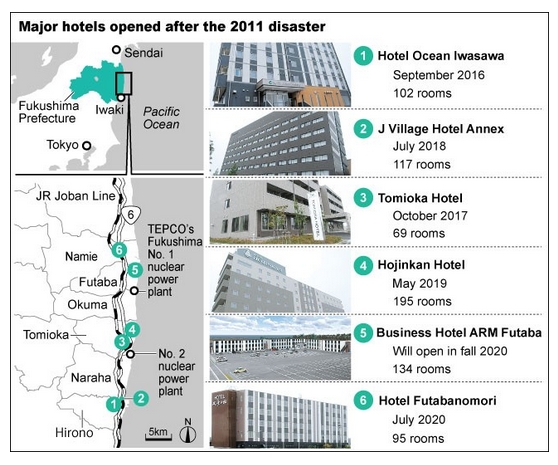
July 13, 2020
Areas close to the site of the 2011 Fukushima nuclear disaster might seem like the least likely prospect for a hotel construction boom, but as the region slowly begins to recover, demand for places to stay is at a premium.
Hotel operators are not expecting to cater to people with a morbid fascination for the facility that went into a triple meltdown following the magnitude-9.0 Great East Japan Earthquake and tsunami, but to accommodate those involved in reconstruction projects, and later, business travelers and other visitors.
Coastal areas of Fukushima Prefecture were the first to experience a rush in new hotel construction, mainly facilities offering 100 or so rooms.
This fall, the wave of hotel openings will even extend to Futaba, a town that hosts the Fukushima No. 1 nuclear power plant operated by Tokyo Electric Power Co.
Over the past nine years since the disaster at the Fukushima No. 1 nuclear power plant, hotels have mostly been occupied by construction workers.
However, hotel operators are expecting a more diverse clientele to develop in the future.
Hotel Futabanomori, located in the town of Namie about nine kilometers north of the crippled Fukushima No. 1 nuclear power plant, is expected to open on July 15.
The hotel has 95 rooms, most of them singles that cost 6,500 yen ($ 61) a night, including taxes, or 9,000 yen with breakfast and supper thrown in.
It is situated not far from the No. 6 national road that rumbles for much of the day with heavy trucks going to and from construction sites.
An evacuation order was lifted in the central part of the town in March 2017. Currently about 1,400 people live there, which accounts for less than 10 percent of the pre-disaster population.
But new businesses are moving into the town. In March, top-level facilities for research and development of robots and hydrogen production were established in Namie as a part of a national project.
Takashi Shiga, the 47-year-old president of Hotel Futabanomori, said he hopes his hotel will create an opportunity for residents to “get together with relatives and old classmates who left their hometown and moved far away back to return to Namie.”
He also said he wanted the hotel to provide workers involved in reconstruction projects “with a sense of comfort.”
Prior to the disaster, towns near the nuclear power plants used to be dotted with small inns and hotels catering to beachgoers, surfers and workers at nuclear and thermal power plants.
After the disaster, residents within a 20-km radius of the Fukushima No. 1 nuclear power plant were ordered to evacuate.
Hirono town, located about 20 km south of the facility, offered the main venue for places to stay for workers involved in cleanup, decontamination and reconstruction projects.
“I received so many phone calls from workers desperately looking for a place to lie down and get some sleep,” said Minoru Yoshida, 64, who runs an inn called Iwasawaso in Hirono.
Yoshida evacuated to Tokyo temporarily immediately after the disaster. But within two months, he started taking in guests.
Parts of Iwasawaso were damaged by the earthquake, but Yoshida opened his own home, which was adjacent to the inn and emerged unscathed, to let guests stay.
He also turned a banquet room in the inn into a space for workers to spend the night.
In 2016, Yoshida built a business hotel with 102 rooms, Hotel Ocean Iwasawa, nearby.
Prior to the disaster, he managed two buildings with 83 rooms. Now, he manages four buildings with 211 rooms.
An average of 150 to 200 guests stay at his properties each day.
“This is my hometown. That’s why I want it to be rebuilt,” Yoshida said. “I wanted to help these people who came here to work for the rebuilding by letting them stay.”
In Futaba town, where the No. 1 nuclear power plant is located, a new business hotel with 134 rooms, “ARM Futaba,” is slated to open this fall.
In March, an evacuation order was lifted for 4.7 percent of the town.
A new museum dedicated to explaining the damage from the March 2011 disaster and the lessons learned from it is also slated to open in the town this fall.
Expectations remain high that former residents will start returning two years from now to live in Futaba.
Arm System, a Hokkaido-based company that manages the new hotel, hopes that evacuees from the town will stay at the property during temporary homecoming visits.
Industrial complexes are also under construction in the area.
“We expect strong demand from business travelers and museum visitors and foresee a sustainable business in the future,” a company representative said.
Tomioka town, about 10 km south of the nuclear power plant, along with surrounding areas, has witnessed a rise in new apartment buildings for single people and company dormitories since April 2017, when the evacuation order was lifted.
In October that year, Tomioka Hotel with 69 rooms was opened by eight residents who ran food and clothing stores in the town.
The hotel has maintained an average 70 percent occupancy rate since then. Most of the guests were engineers and businesspeople visiting the town for reconstruction projects from the Tokyo metropolitan area.
But Tsukasa Watanabe, the 61-year-old president of the hotel, admitted to “feeling nervous about the future,” citing the impact of the novel coronavirus pandemic that caused visits by business travelers to dry up.
The hotel has relied on a central government subsidy that supports two-thirds of a hotel construction fee, and other initiatives.
“But we can’t just continue to rely on such (support),” said Watanabe, who desperately feels the need to come up with a strategy to bolster his hotel’s competitiveness.
Kota Kawasaki, an associate professor of town planning at Fukushima University, noted that the trend of hotel occupancy by construction workers had reached its peak more or less.
“Competition among hotels will increase from now on,” he said. “Each hotel will have to devise more strategic management skills to stay in business.”
Rally opposes proposal for Fukushima radioactive wastewater
July 12, 2020
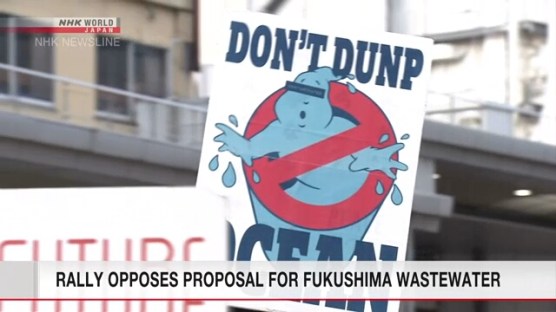
Dozens of young people in Japan’s Fukushima Prefecture have rallied against a government panel’s proposal on how to dispose of radioactive wastewater stored at the crippled Daiichi nuclear power plant.
About 50 people, including fisheries workers, marched through Koriyama City on Sunday.
The demonstration was organized by a group of Fukushima residents in their 20s and 30s, who said detrimental rumors about the prefecture may circulate if the wastewater is disposed of improperly.
Group representative Sato Taiga said a survey shows that most respondents do not know about the issue. He added that he hopes the group’s activities will raise awareness among people, including the younger generation.
Water used to cool molten nuclear fuel from the 2011 accident at the plant has most of the radioactive materials removed before being stored in tanks. But the treated water still contains tritium and some other radioactive substances.
The amount stored has reached some 1.2 million tons. The plant’s operator, Tokyo Electric Power Company, expects to reach capacity around the summer of 2022.
In February, a government panel compiled a report that says a realistic solution is releasing the wastewater into the sea or air after diluting it in compliance with environmental and other standards.
The government is in the process of hearing opinions from local governments and relevant organizations before making its final decision on how to dispose of the treated water.
Video Testimonies from Fukushima in 7 Languages: “We want to protect the ocean of Fukushima, for the future of the fishing industry”
July 11, 2020
Peace Boat has cooperated with the environmental NGO Friends of the Earth Japan (FoE Japan) to launch the next in their series of video testimonies of the current situation in Fukushima in various languages.
Nine years have passed since the Fukushima Nuclear Power Plant Disaster, and the damage continues to be incurred. Although this disaster is still ongoing, efforts are made to render this invisible. FoE Japan has conducted video interviews with evacuees, dairy farmers, fishermen and other community members in order to make the ongoing impacts more known as part of the “Fukushima Mieruka Project.”
The next multilingual installment in this series includes interviews with fishermen from Fukushima, who have been pushed back and forth by the policies of the Japanese Government and TEPCO, and who hold great concerns for their future. These are being released simultaneously in English, French, Spanish, Chinese (simplified and traditional), Korean and German, as well as Japanese.
The fishermen interviewed told us that they are still struggling to sell their fish due to the impacts of the nuclear accident. They are working to restore confidence step by step, by conducting efforts such as test operations and radiation monitoring themselves. However, the Japanese Government and TEPCO have launched a plan to discharge large amounts of radioactive contaminated materials generated at the Fukushima Daiichi nuclear power plant, including tritium, into the ocean.
“From now, our worry is the problems for successors. If an unexpected fish is found in the future, the young generation will really suffer, those in the fishing industry. Really. It’s a life-or-death matter.”
Please listen to the voices of concern and anger of the Fukushima fishermen (12mins 31 sec).
https://www.youtube.com/watch?v=zSVu_52u7z8&feature=emb_logo
Click on the name of each language to watch the clip on Youtube:
- English
- French
- Korean
- Chinese (traditional)
- Chinese (simplified)
- German
- Japanese
- Spanish (coming soon)
See here for a Q&A of more information on Japanese government plans to release contaminated water into the ocean here.
Sign the petition demanding that contaminated water being stored at the Fukushima Daiichi Nuclear Power Station NOT be discharged into the sea, and instead stored on land and solidified via change.org here
Regulator demands TEPCO clarify responsibilities
July 10, 2020
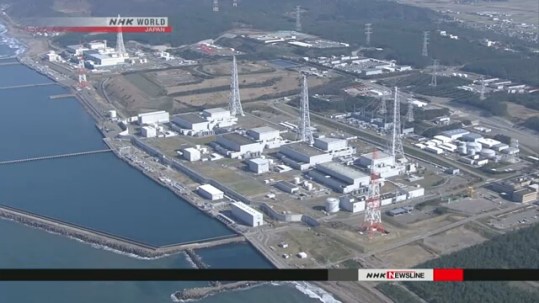
Japan’s nuclear regulator has demanded Tokyo Electric Power Company clarify the responsibilities of its president in the event of a nuclear accident.
Three years ago, the Nuclear Regulation Authority endorsed safety measures at TEPCO’s two nuclear reactors at the Kashiwazaki-Kariwa plant in Niigata Prefecture.
The regulator then requested that the company lay out its policies for preventing another nuclear accident in the plant security rulebook. The company had several years earlier been at the heart of the 2011 Fukushima Daiichi nuclear disaster.
On Thursday, TEPCO officials told the regulator that they would include a clause stipulating that the president be quickly informed of any risk with the potential to lead to an accident. The clause also stipulates that the president address the issue, regardless of whether the risk has been confirmed or not.
The officials also said records related to such issues would be kept for five years.
But the regulation authority says the storage period should be longer. It also says the responsibilities of the president should be laid out more specifically.
They are also demanding written opinions from law experts on the matter. Tokyo Electric says it will reconsider these measures.
Regulators want TEPCO to be as specific in its safety measures as possible, after the company rejected a report warning of the possible impact of a massive tsunami before the 2011 Fukushima Daiichi nuclear disaster.
Review: “Fukushima 50” Offers Uncontroversial Take On Japan’s Biggest Nuclear Disaster
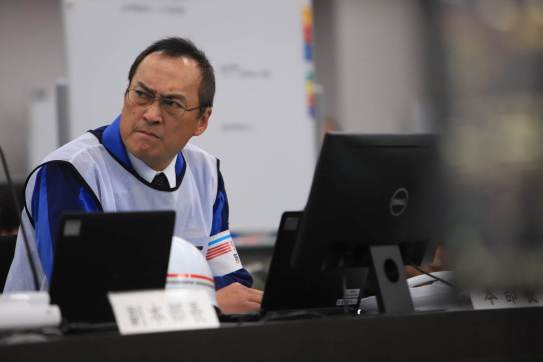 Starring Ken Watanabe, “Fukushima 50” avoids controversy as part of faithfully reflecting Japanese realities around Fukushima Daiichi.
By Anthony Kao, 9 Jul 2020
“3.6 roentgen, not great, not terrible.” So goes the now-famous quip from the American HBO hit series Chernobyl. This line also bears relevance to Fukushima 50—the first blockbuster treatment of the world’s second-worst nuclear disaster at Japan’s Fukushima Daiichi power plant.
Starring A-listers Ken Watanabe and Koichi Sato, the film lionizes the workers who prevented the Fukushima disaster from getting worse, and makes the incident accessible to general audiences. On that count, it’s “not terrible.” However, Fukushima 50 lacks nuance, poignancy, and dramatic value—mostly because it refuses to designate clear villains. In that sense, it’s “not great” either.
While this might mean Fukushima 50 will never gain the international popularity of Chernobyl, the movie is still immensely valuable and intriguing from a historiographical perspective. For better or for worse, its uncontroversial demeanor accurately reflects realities in contemporary Japanese sociopolitical discourse around the Fukushima Daiichi disaster and beyond.
Nuclear Heroism
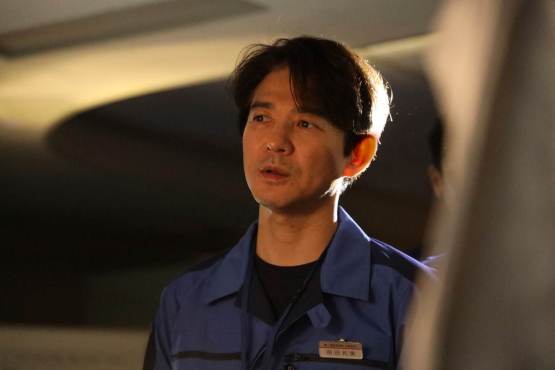
Fukushima 50 focuses on an eponymous group of employees at the Fukushima Daiichi power plant, who were tasked with managing a triple meltdown that happened in the days after March 2011’s Tohoku earthquake and tsunami. Chief among them are Masao Yoshida (Ken Watanabe) and Toshio Isaki (Koichi Sato), the plant’s site superintendent and shift supervisor, respectively. While Yoshida was a real person, Isaki and all the film’s other characters are fictional composites.
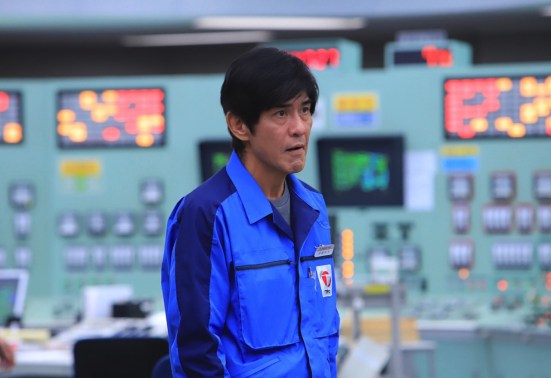
The film offers a play-by-play dramatization of the Fukushima Daiichi disaster, starting from just before the earthquake and continuing through the days afterwards. It alternates between scenes of the stricken plant itself, a seismically sheltered command center, and ancillary locations like the Japanese Prime Minister’s office and even a US military base.
Throughout, we’re treated to a panoply of tough and selfless men. They rush spiritedly into reactor rooms, haul fire hoses, subsist on dry food, and stare steely-eyed into the face of disaster. These are men on the move, men of action—valiant warriors (some literal, as Japan’s Self Defense Forces feature prominently) fighting an invisible enemy. You don’t need a Ph.D. in nuclear engineering to understand Fukushima 50, just a capacity for hero worship and ability to appreciate war movie tropes.
“The Generation That Lived For Others”
This lionization of the Fukushima Daiichi plant workers isn’t surprising. Fukushima 50 was based on a book called On the Brink: The Inside Story of Fukushima Daiichi, which is available in English. In the book’s foreword, author Ryusho Kadota declares that “this is the story of the people who fought a heroic battle.” Unlike contemporary Japan’s predominantly selfish youth, Kadota argues, the Fukushima 50 are reminiscent of Japan’s WWII veterans, “the generation that lived for others.”
Piggybacking aboard war metaphors restricts Fukushima 50’s capacity for nuance and poignance. Unlike Chernobyl—with its bleak cinematography, bone-chilling use of geiger counter clicks, and soulless evacuation announcements—Fukushima 50 does nothing to convey the trauma and mental toll of disaster. Additionally, for a movie that’s supposed to dramatize a “heroic battle,” Fukushima 50 lacks a compelling villain, even an abstract one. While Chernobyl warns about the cost of lies, Fukushima 50 warns about nothing at all. What caused the disaster? Is nuclear power bad? Should we invest more money in disaster preparedness? Fukushima 50 remains as silent as radiation.
Furthermore, the film barely contains the human tension usually necessary for compelling drama. There are only two notable moments when characters disagree about something: first when the Prime Minister helicopters into Fukushima and delays recovery operations, and second when superintendent Yoshida disobeys the Tokyo Electric Power Company’s (TEPCO) orders and uses seawater to help cool Fukushima Daiichi’s reactors. Even those moments occur so perfunctorily that they don’t give the narrative much added momentum.
Fukushima Historiography
Fukushima 50 might not be the dramatic masterpiece that Chernobyl was, but that doesn’t mean it’s any less valuable from a historical and political perspective. The film’s reluctance to hold anyone accountable and embrace of militaristic sentiment reflects contemporary Japanese realities; in that sense it can serve as an entrypoint for international audiences to build a better understanding of Japan.
Almost a decade on, Japan has not held anybody criminally responsible for the Fukushima Daiichi disaster, and many who had to evacuate because of the meltdowns lack closure. After a brief upsurge following the disaster, Japan’s anti-nuclear movement has fizzled out as well. International and Japanese sources argue that nothing has meaningfully changed in Fukushima’s wake.
All this is despite civil lawsuits, international investigations, and even a report from Japan’s Diet (the national legislature) arguing that the disaster was “man made”—a result of inadequate preparedness and collusion between regulators, government officials, and TEPCO.
Some external analysts argue that moving forward from Fukushima can only come with a comprehensive re-examination of economic and political structures created by decades of effective one-party rule in Japan. While Japan is officially a democracy, the Liberal Democratic Party (LDP) has held power for all but several years after World War II. The LDP remains in power today under Prime Minister Shinzo Abe, with desires to maintain the nuclear status quo whilst separately imbuing Japan with a more militaristic spirit. While Abe’s government wants to make Japan’s economy more agile, a radical rethinking of Japan’s political economy and culture isn’t on the agenda. Perhaps Fukushima 50 is simply a reflection of this reality.
“Not Great, Not Terrible”
When “3.6 roentgen, not great, not terrible” appears in Chernobyl, it comes with the implication of those in power refusing to address a more systemic problem. With this extra lens, the quote seems even more relevant to Fukushima 50. Not only is the movie “not great, not terrible,” but its controversy-avoiding blockbuster treatment also reflects the lack of meaningful change that’s happened after the Fukushima Daiichi disaster.
Critics of this stance might argue that Chernobyl has far more leeway than Fukushima 50 to criticize; it’s easier for an American series that caters to primarily Western audiences to cast doubt on a foreign Soviet system. Yet Chernobyl wasn’t a pure critique of the Soviet Union. The series gained mass acclaim because it skewered contemporary Western societies’ disregard for truth.
While Japan isn’t the most conducive environment for political movies, it’s not incapable of producing movies that reflect upon the past with nuance and poignancy. Just look at Grave of the Fireflies, one of the most renowned examinations of WWII from anywhere in the world.
Alas, Fukushima 50 is no Grave of the Fireflies or Chernobyl, and that’s regrettable given Japan’s historical moviemaking prowess.
Japanese audiences might still be able to enjoy Fukushima 50 simply because it’s the first cinematic depiction of a significant national disaster. Those interested in Japanese politics or nuclear energy policy may find Fukushima 50 rich with food for thought. However, international audiences looking for a second Chernobyl should adjust their expectations accordingly.
https://www.cinemaescapist.com/2020/07/review-fukushima-50-movie/
Remembering the victims of the atomic bombings 75 years ago — IPPNW peace and health blog

As we recall the unprecedented horrors that the citizens of Hiroshima and Nagasaki experienced on August 6 and 9, 1945, we reaffirm the determination of our organizations to ensure that nuclear weapons are never used again. There is no vaccine against the deadly threat of nuclear war, which could prove to be humanity’s “final epidemic.” We therefore call on all nations to join the 2017 Treaty on the Prohibition of Nuclear Weapons.
Remembering the victims of the atomic bombings 75 years ago — IPPNW peace and health blog
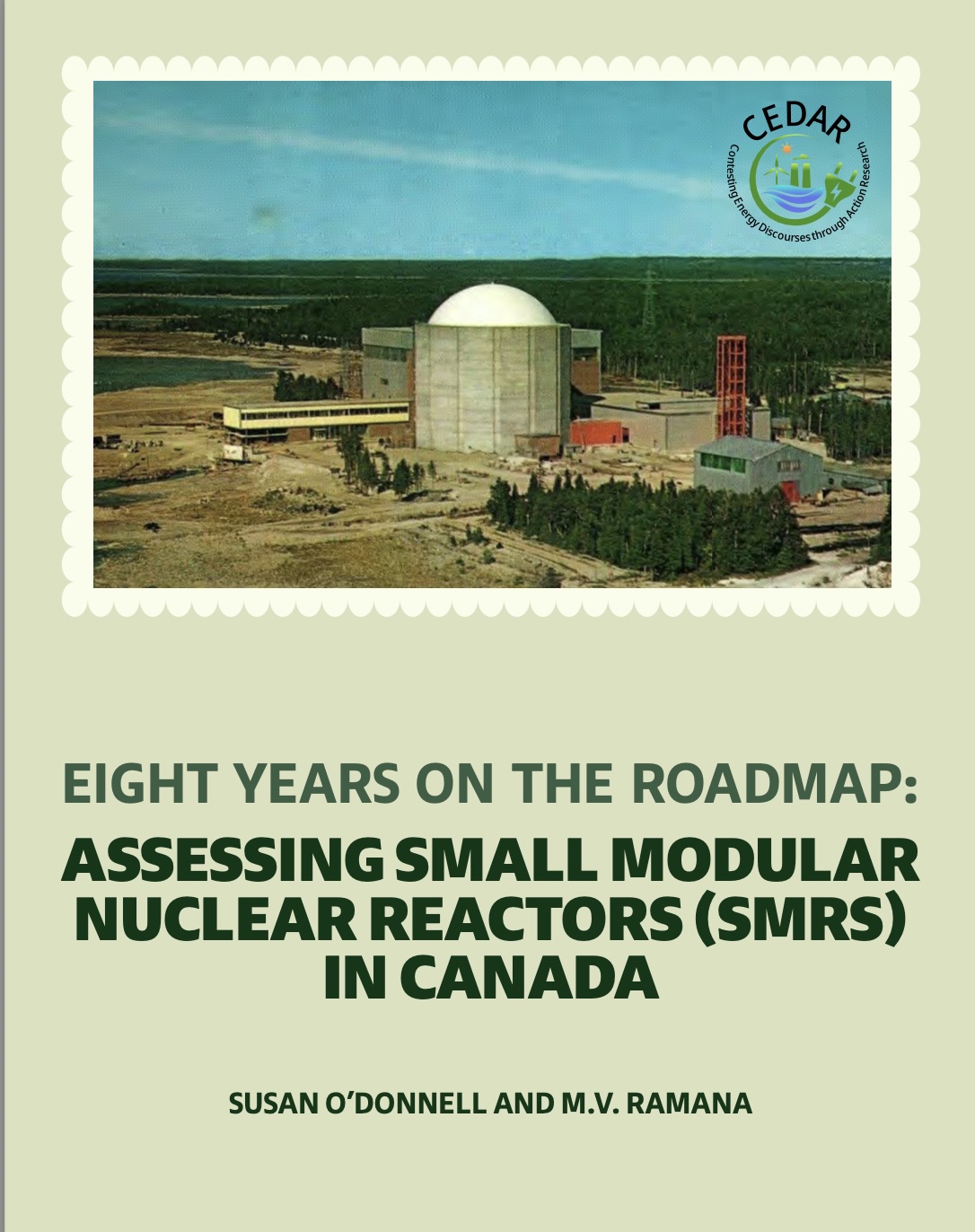
Do YOU think YOU should Fund Small Modular Nuclear Reactors? —

The Engineer asks… “Do you welcome the government’s investment in AMR (“Advanced Modular Reactor”) technology? Do you think small scale nuclear is a distraction from critical large scale projects? Or perhaps you think that nuclear shouldn’t be part of our future energy mix at all. Have your say in our poll below.“ NO! I don’t […]
Do YOU think YOU should Fund Small Modular Nuclear Reactors? —
1 This Month
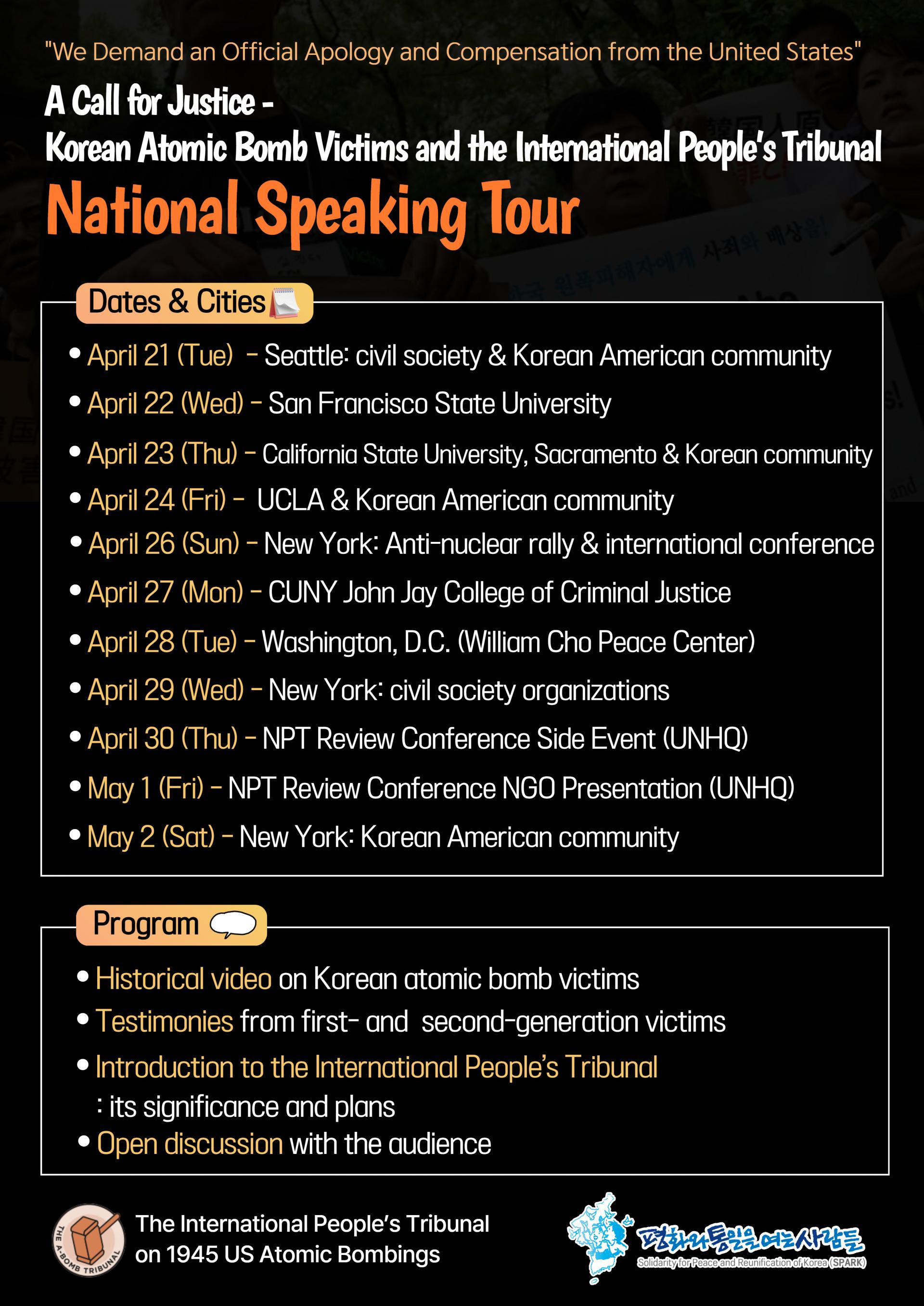

Pine Ridge Uranium is the real threat, not Tehran- Tell Burgum: Stop the Extraction.
Chernobyl: The Lost Tapes – A good documentary on Chernobyl on SBS available On Demand for the next 3 weeks– https://www.sbs.com.au/ondemand/tv-program/chernobyl-the-lost-tapes/2352741955560
To see nuclear-related stories in greater depth and intensity – go to https://nuclearinformation.wordpress.com
-
Archives
- April 2026 (288)
- March 2026 (251)
- February 2026 (268)
- January 2026 (308)
- December 2025 (358)
- November 2025 (359)
- October 2025 (376)
- September 2025 (257)
- August 2025 (319)
- July 2025 (230)
- June 2025 (348)
- May 2025 (261)
-
Categories
- 1
- 1 NUCLEAR ISSUES
- business and costs
- climate change
- culture and arts
- ENERGY
- environment
- health
- history
- indigenous issues
- Legal
- marketing of nuclear
- media
- opposition to nuclear
- PERSONAL STORIES
- politics
- politics international
- Religion and ethics
- safety
- secrets,lies and civil liberties
- spinbuster
- technology
- Uranium
- wastes
- weapons and war
- Women
- 2 WORLD
- ACTION
- AFRICA
- Atrocities
- AUSTRALIA
- Christina's notes
- Christina's themes
- culture and arts
- Events
- Fuk 2022
- Fuk 2023
- Fukushima 2017
- Fukushima 2018
- fukushima 2019
- Fukushima 2020
- Fukushima 2021
- general
- global warming
- Humour (God we need it)
- Nuclear
- RARE EARTHS
- Reference
- resources – print
- Resources -audiovicual
- Weekly Newsletter
- World
- World Nuclear
- YouTube
-
RSS
Entries RSS
Comments RSS
 nuclear-news