The complexities and pitfalls of citizen science
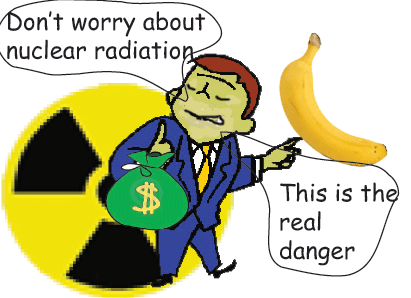
One such tactic, which was witnessed after Fukushima, occurred through the reframing of radiation risks as simplistic and natural, unrelated to the specific risks associated with Fukushima. For instance, the government distributed pamphlets that explained that radiation naturally exists in our food, ch as the potassium levels present in bananas.
Yet such information is irrelevant to the hazards of internalizing fission products from a nuclear power plant. While bananas have naturally occurring potassium, it would require eating around 20 million bananas to get radiation poisoning. On the other hand, each radionuclide released during nuclear meltdown events like Fukushima possesses specific biological signatures and presents particular risks when inhaled or ingested.
Being Clear-Eyed About Citizen Science in the Age of COVID-19, Sapiens MAXIME POLLERI / 15 JUL 2020
“……..there are inherent political complexities involved when citizens or nongovernmental organizations step in and claim expertise in areas typically reserved for state agencies and experts. Like those entities, citizen science has its own potential pitfalls.
For one, corporate polluters or state agencies can potentially exploit citizen science, delegating the monitoring of contamination to the victims of a disaster. For instance, by the end of this year, Japan’s Nuclear Regulation Agency plans to remove 80 percent of radiation monitoring posts in Fukushima, arguing that the radiation levels in many areas have stabilized themselves—owing also in part to the presence and efficiency of monitoring networks provided by citizens. This decision has been controversial, since problems of radioactive contamination persist in Fukushima. For instance, one of the main radioactive pollutants, Cesium-137, has a long lifespan and can emit radiation for nearly 300 years.
Retiring these posts will force citizen scientists to take on the burden of monitoring, shifting liability for ensuring safe living conditions onto the shoulders of the nuclear victims. In addition, the growing impact of citizen science can lead to reduced public expenditure, minimal government intervention, and risk privatization, meaning that risk becomes individual and private. Too much delegation to citizens runs the risk of creating societies where individuals have to take care of themselves in increasingly polluted environments, while interpreting complex data about controversial environmental dangers. And not every community can afford to purchase expensive monitoring devices or test food in a consistent manner.
Citizen scientists also risk reproducing forms of ignorance around certain hazards. n post-Fukushima Japan, what is meant by the “science” of citizen science is often synonymous with a tracking and monitoring agenda, where individuals resort to the very same technologies and knowledge forms used by states, nuclear lobbies, or radiological protection agencies.
Yet many anthropologists and historians have argued that what we know (and don’t know) about the extent of radiation hazards and dangers was embedded in a culture of secrecy, denial, and propaganda that was shaped by the nuclear arms race of the Cold War. Considerations over international security and political stability were often prioritized over the safety of workers or citizens who had been exposed to radiation. As a result, some of the negative effects of radiation were downplayed through different tactics.
One such tactic, which was witnessed after Fukushima, occurred through the reframing of radiation risks as simplistic and natural, unrelated to the specific risks associated with Fukushima. For instance, the government distributed pamphlets that explained that radiation naturally exists in our food, ch as the potassium levels present in bananas.
Yet such information is irrelevant to the hazards of internalizing fission products from a nuclear power plant. While bananas have naturally occurring potassium, it would require eating around 20 million bananas to get radiation poisoning. On the other hand, each radionuclide released during nuclear meltdown events like Fukushima possesses specific biological signatures and presents particular risks when inhaled or ingested. During my fieldwork in Fukushima, I witnessed that this legacy of misinformation was carried on by some citizens who unwittingly replicated these propagandist forms of knowledge by making similar naturalistic or overly simplistic comparisons.
As citizen science efforts grow, it is also critical to consider to what extent citizen involvement might put individuals at risk of adverse health effects. This is a tricky question when one considers that certain members of the population, like children, are more sensitive to radiation than others. In Fukushima, some Japanese parents have understandably opted to evacuate rather than rely on citizen science, arguing that doing so would expose their children to unacceptable levels of radiation and that forcing children to be responsible for their own safety is unethical.
Citizen scientists are hardly homogeneous groups, as mothers, farmers, and urban citizens do not experience hazards and recovery in the same way. In that regard, factors such as gender, employment, and social class strongly influence why people enter citizen science, how science is mobilized, and how data about a controversial hazard ends up being interpreted. For instance, people like Natsuo have used the results gathered by citizen science to highlight the dangers of living in Fukushima, while other citizen science organizations help bring people back to their beloved region. These conflicts can result in even more fragmented communities and conflicts within and around citizen science. ……
In Japanese, two words—shiru and wakaru—can be used for the verb “knowing.” Shiru means “to find out” or “to learn.” It implies a process of acquisition of knowledge and information. Wakaru, on the other hand, is closer to “understanding this knowledge.” Shiru comes before wakaru, and in a way, one can know but not necessarily understand. Wakaru consequently shows a greater and more personal level of comprehension often based on a given context.
For Masayuki, state institutional experts possessed shiru, but not wakaru. Having been directly affected by radioactive contamination, Masayuki strongly believed that the inhabitants of a place, the jūmin (literally, the people who resided) were best suited to manage their life in a post-Fukushima Japan. https://www.sapiens.org/culture/fukushima-citizen-science/
New fast test to detect ionising radiation
Researchers have developed a simple finger-prick test that scans a single drop of blood to rapidly determine whether the body has been exposed to toxic levels of radiation.
Catastrophic radiological events — like nuclear detonations — can threaten massive populations with acute radiation syndrome, which wreaks havoc on the gastrointestinal system and destroys bone marrow, leading to infections and internal bleeding. In preparation for the possibility of such a public health disaster, scientists at Ohio State have devised a speedy and scalable method for estimating radiation exposure. They published their proof-of-concept research, conducted in mice, Wednesday in Science Translational Medicine.
Timing is key when it comes to assessing radiation dosage in members of an exposed population. Victims above a certain dose threshold require immediate and aggressive treatment, such as a blood transfusion or cytokine therapy.
The test Jacob’s team developed has the capability to turn out a number within hours………. https://www.statnews.com/2020/07/15/radiation-syndrome-exposure-test/
Citizen science and Fukushima radiation
An anthropologist explores the network of citizen monitoring capabilities that developed after the Fukushima nuclear disaster in Japan in 2011 for what they might teach all of us about such strategies for the covonavirus pandemic. Sapiens MAXIME POLLERI / 15 JUL 2020 “…………… The earthquake and subsequent tsunami led to core meltdowns within some of the Fukushima power plant’s nuclear reactors. This malfunction, along with other technical incidents, resulted in the atmospheric release of radioactive pollutants, which spread predominantly over the northeastern part of Japan, forcing a widespread evacuation of Fukushima residents. By March 12, the area around the power plant had been evacuated; those living and working within 20 kilometers of the radius of the plant were forced to relocate. In the days, weeks, and months following this disaster, uncertainty around the scale and extent of contamination grew swiftly—much like what we see occurring throughout the world during the COVID-19 pandemic.
Most notably, the public grew increasingly concerned about the legitimacy of institutional experts’ ability to control and explain the risks of residual radioactivity, while citizens like Natsuo were unable to get adequate information through traditional media venues. Initially, data about radioactive contamination came sporadically and was often explained in hard-to-understand metrics by scientists who were cherry-picked by the state to send reassuring messages to citizens.
Moreover, radioactive contamination was later found to be present in some food products and in school yards where children had been playing that lay beyond the official zone of evacuation. Over the ensuing months and years, the public lost confidence in the state’s response and began to take matters into their own hands, mobilizing expert practices of their own. Widespread grassroot actions led to citizen science networks in which people tracked radiation in their environment, organized learning workshops on radiation dangers, and tested food for contamination, often through local organizations or individual households.
As an anthropologist who conducted fieldwork on the Fukushima nuclear disaster between 2015 and 2017, I came to realize that citizen science can rise up to fill in the gaps of state responses toward crises, for better or for worse. As we’ve seen play out throughout the COVID-19 pandemic in various parts of the world, governance and leadership have often been confusing, mismatched, and at times utterly misleading. The case of Fukushima offers lessons about both the promises and pitfalls of citizen science and how civil society is playing an increasingly important role in managing various disasters, catastrophes, and crises.
The Geiger counter of Masayuki was not silent for long before it began to emit the distinctive “clicking” sound associated with radiation monitoring devices. The “click” grew louder in intensity as we located a hot spot, an area where the level of radiation is significantly higher than elsewhere. Masayuki dutifully noted the number provided by the device before leaving to search for another hot spot. We were standing in the Japanese village of Iitate, situated in the prefecture of Fukushima. It was common at this time for citizens to own their own Geiger counters—often purchased off the internet using international donations or made at home as DIY devices—to measure the level of radiation around them.
When I first came to this rural village in the spring of 2016, more than five years had passed since the nuclear disaster. The forced evacuation of citizens from Fukushima and the surrounding areas had proved short-lived; by 2012, the Japanese state had already embraced a policy of repatriation to irradiated areas like Iitate village, which is where I met Masayuki and citizens like him in 2016. ……….
While happy to be back in their beloved region, many residents were critical of the state radiation-monitoring networks that were supposed to provide them with adequate information to allow them to live safely in the village. Indeed, state data on radiation was often provided through fixed monitoring in precise locations or through an average radiation level taken in the village. This kind of information was not practical enough for residents, who wanted to know the specific radiation levels behind their houses or in their rice paddy fields.
Likewise, official depictions of radiation levels through clear-cut chromatic zones did little to offer the citizens reassurance. As a result of the perceived limitation of state measures, residents quickly decided to track radiation themselves as a means to keep the map of their village relevant—often finding contamination that was not evident from state mapping. In the house of one farmer, I witnessed homemade models that exhibited a 3D topography of Iitate’s geographical landscape. These models had been made using 3D printers, and the level of radiation had been monitored by the citizens themselves.
In particular, the local knowledge of the geography of Iitate helped citizens to attain a level of precision that far exceeded that of the government map. Citizens soon learned that radiation doses could be higher at the bottom of a hill than farther upslope or that the woods behind one’s home, having trapped radiation, might impact the radiation level inside houses. These practices helped strengthen a community that had previously felt helpless in the face of an imperceptible radiation threat. Geiger counters became the ears and eyes of citizens like Masayuki, enabling them to make sense of and gain some semblance of control over a hazard that cannot be registered by the senses.
After the Chernobyl nuclear disaster in 1986, one of the main sources of radiation exposure stemmed from consumption of food products such as milk or wild mushrooms that had been contaminated by radioactive fallout. In an effort to make sure that this did not happen in Japan, the government took on the task of testing the food produced in Fukushima, implementing a limit to the allowable amount of radioactivity in food products.
Within months after the meltdowns, the government assured the public of the safety of its food products, encouraging citizens to consume foods sold at public fairs and other public events. However, citizens of Fukushima also consume food harvested from streams, forests, home gardens, and mountain areas—where state monitoring was largely absent or insufficient.
Again, citizens mobilized to fill in the gaps in food testing: With the help of public donations, citizen scientists were able to purchase scintillation detectors, which are used to measure radioactive contaminants in foodstuff. Such testing enabled citizens to gain an understanding of the types of foods most prone to radioactive contamination, such as mushrooms, green leafy vegetables, citrus, sea cucumber, and seaweeds. This in turn helped people avoid eating the most risky foods. Together with state monitoring, such citizen science practices resulted in lower consumption of contaminated foods.
While such examples demonstrate the power and potential of citizen science, there are inherent political complexities involved when citizens or nongovernmental organizations step in and claim expertise in areas typically reserved for state agencies and experts. Like those entities, citizen science has its own potential pitfalls…….. https://www.sapiens.org/culture/fukushima-citizen-science/
Nuclear-news.net is proud to work, along with Democracy Now and others, towards exposing and closing the nuclear industry
 From the team at nuclear-news, 14 July 20, Some effective campaigns that we supported that gave positive results
1/ Got Halden Test Reactor and its nearby medical/test reactor (also in Norway) closed.
2/ Helped inform Mainland Chinese anti nuclears of dodgy nuclear industry tricks and scams (while it lasted) and promote the closure of at least 2 planned reactors
3/ Highlight the “Normal” releases from reactors (especially in Europe) which has no doubt been supportive of EU anti nuclear sentiment in the EU Commission and Parliament
4/ Helped highlight the issues in Fukushima prefecture including Typhoon damage to the nuclear waste badly stored there.
5/ Backed up many articles that have been removed from MSM websites. So useful to researchers (The wayback machine is being targeted for closure due to DMCA issues) so it makes sense that they want to close all blogs that also back up the articles for researchers.
6/ Supported many independent orgs/NGO`s and helped get their message out (ie CRIIRAD, Bellona etc) and that really damaged the nuclear industry and their messaging strategies.
Basically we have all kicked Corprate butt and the blog should be getting much more reach but since 2017 we got filtered (with Democracy Now as well as many other left wing outlets). We shall have to see if this is the first move in a take down bid by the nuclear industry and their PR buddies.
Fear and loathing and deception in the world of nuclear fusion research

 I was disappointed that the New Energy Times had the DCMA take down a post on this site. It was- “Nuclear fusion: American Association for the Advancement of Science deceived by ITER propagandists”. But of course, they had every right to do so, as it was their article.
Here at nuclear-news, we strive to get out all the information we can, on the often weird and wonderful, not to say dangerous and secretive, world of the nuclear industry.
When it comes to nuclear fusion, the story is extra muddied, because the ordinary peasant, including myself, has trouble trying to understand the ins and outs of this extraordinary technology, which has great promise for clean energy, – or maybe not.
What I did glean from the now-disappeared article, was that the International Thermonuclear Experimental Reactor (ITER) program, or some of its proponents have misled non-experts about the potential power output of the ITER experimental nuclear fusion reactor. It’s a complicated story, involving various people, including Professor Ian Chapman, Chief Executive Officer of the UK Atomic Energy Agency. And – it’s a story of widespread, consistent, and long-standing deception, repeated in many prestigious websites and reputable journals.
Anyway – this story of murky competition in the nuclear fission drive, is detailed in another article in the New Energy Times – more http://news.newenergytimes.net/2017/12/11/evidence-of-the-iter-power-deception/
It doesn’t increase our faith in costly nuclear high tech research.
HEAT – Climate science must stop ignoring Southern Africa

Climate Science Has a Blind Spot When it Comes to Heat Waves in Southern Africa
The lack of detailed information on extreme heat impacts hinders disaster response and preparedness.
BY BOB BERWYN, INSIDECLIMATE NEWS 13 July 20
Centered in the equatorial tropics, Africa is the world’s hottest continent, and millions of people there are facing a growing threat from deadly heat waves. But no one knows how many people have died or been seriously affected in other ways by extreme heat because the impacts have been poorly tracked.
Coordinated reporting is lacking and, at the global level, research and tracking of the impacts of climate change are biased toward developed countries, scientists concluded in a new study published Monday in the journal Nature Climate Change.
Africa is warming faster than the global average, and the lack of data is a roadblock to effective disaster preparation, assessment of vulnerability and planning for climate resilience, said co-author Friederike Otto, acting director of the University of Oxford Environmental Change Institute. She said she noticed the information gap when she reviewed the international disasters database (EM-DAT), for another recent study on extreme weather events in lower income countries. ………
Temperatures in southern Africa, with a population of 1.1 billion, have increased steadily over the last 70 years. Since 1990, the continent’s average temperature has increased at a rate of 0.65 degrees Fahrenheit per decade.
Because the region is so warm already, it doesn’t take much for temperatures to reach life-threatening levels. Research shows that heat waves have been increasing since at least 2000. The study shows obstacles faced by the least developed countries in Sub-Saharan Africa as they try to detect heat waves and their impacts, said Izidine Pinto, a climate researcher at the University of Cape Town who was not involved in the study. …..
Climate Justice
“Heat waves are one of the most deadly impacts of human-caused global warming in terms of lives,” Otto said. “It would be really important to highlight that in Africa.”
She said the issue falls squarely into the realm of climate justice. One of the key obstacles to compiling useful heat wave data in southern Africa is weak governance in some countries, which can be traced back to a colonial legacy that destroyed and disempowered local cultures.
Developing countries in southern Africa contribute very little to human-caused warming in terms of emissions compared to the wealthy nations of North America, Europe and Asia, but they are among the hardest hit by its impacts. Per capita annual emissions in Sub-Saharan Africa are about 0.849 tons per person, according to the World Bank, compared to nine tons in Germany and 16 tons per capita annually in the United States………..
Finding Solutions
Otto said that researchers need to change the way climate science is done and who is doing it……….
Successful pilot projects are under way in Ghana and Gambia, where collaborations between local researchers, hospitals and epidemiologists are helping identify the direct health impacts of extreme heat, she said. That information can be combined with data on heat-related power outages and transport disruptions to further improve heatwave identification in sub-Saharan Africa.
In addition, more analysis of historical climate data from extreme heat periods is also needed, Otto wrote in a blog post for Carbon Brief accompanying the release of her new paper. That information combined with other data would help build effective early warning systems to save lives, Otto said.
“There is early warning on droughts, and other kinds of extremes, and they have improved a lot, but not really on heat wave warnings,” she added.
People in Africa are certainly aware of the growing number of heatwaves on the continent, said Mohamed Adow, Director of Power Shift Africa, a Nairobi-based climate and energy think tank. “But if they are not being recorded by scientists it will be much harder for African voices to be heard in the climate debate.” https://insideclimatenews.org/news/13072020/africa-heat-waves-climate-science
SCANA’s ex-top executive to plead guilty in a $9 billion nuclear fraud.

EXECUTIVE TO PLEAD GUILTY TO $9 BILLION NUCLEAR FRAUD, https://www.lexingtonchronicle.com/news/executive-plead-guilty-9-billion-nuclear-fraud Possible 5 years in prison and $1 million in fines, By Jerry Bellune, JerryBellune@yahoo.com, 13 July 20,
An ex-SCANA executive is to plead guilty tomorrow in a $9 billion nuclear fraud.
SCANA’s top nuclear executive, Steve Byrne, is accused of conspiracy in a failed nuclear project which cost investors – including his own employees – millions in stock losses.
The joint SCANA-Santee Cooper project:
1. Saddled more than 725,000 SC Electric & Gas ratepayers with $2 billion in costs.
2. Led to a near bankruptcy of Lexington County-based SCE&G and its sale to Dominion Energy.
3. Damaged the future of nuclear power in SC.
Byrne’s guilty plea will be entered Tuesday, July 14, at the federal courthouse in Columbia.
As Chief Operating Officer of SCANA, the owners of SCE&G, Byrne has admitted to knowingly engaging with others in fraud during construction of 2 Westinghouse AP100 reactors.
Byrne may face 5 years in prison and fines of not more than $1 million although the court could fine him more.
Federal officials are believed to have offered him a deal to testify against fellow executives and their lawyers who may have participated in the conspiracy.
To assure that Byrne, a former Irmo resident, follows the terms, sentencing will occur later.
Byrne has signed a plea agreement with federal agents which stipulate what he must do.
According to court postings, a bond hearing will immediately follow before Magistrate Judge Shiva V. Hodges
The failed nuclear project and a state law that allowed SCE&G to bilk rqtepayers of $2 billion was formally opposed before the Public Service Commission by Friends of the Earth, the Sierra Club, the SC Small Business Chamber and the Coalition to Stop the Blank Check.
Byrne agreed to be “fully truthful” about “criminal activities about which he has knowledge” and to provide documentation and testify at the trial of others.
Court documents reveal that the federal attorney believes other executives and lawyers:
1. Were involved in the conspiracy to cover-up problems at the failing nuclear project.
2. Made “false and misleading statements” about it to the PSC.
3. Took advantage of the Base Load Review Act in which SC lawmakers allowed SCE&G to pass all costs and risks to ratepayers.
State regulators inadequately reviewed the fraud due to a bias for SCE&G and against ratepayers, said Tom Clements, director Savannah River Site Watch.
“Byrne’s plea for his role in the reactor construction boondoggle will be historic as officials responsible for such failed projects rarely get caught and never confess to their crimes,” he said.
Clements was a main intervenor at the start and finish of the project.
“Byrne, who should serve prison time, must fully reveal the criminal role of others in the conspiracy that has been so disastrous for ratepayers, Clements said.
These include former CEO Kevin Marsh and former CFO Jimmy Addison,” he said.
Court documents imply that other individuals are being investigated,.
That means they and “lawyers who advised them” may face criminal charges, Clements said.
More pandemics to come – bat research is critical for prevention

- Source:
- Washington State University
- Summary:
- The current SARS-CoV-2 pandemic has a likely connection to bats, and the next viral outbreak probably will too. A recent review calls for more research into bats’ molecular biology and their ecology, to help predict, and hopefully prevent, the next pandemic.
-
The current SARS-CoV-2 pandemic has a likely connection to bats, and the next viral outbreak probably will too, unless scientists can quickly learn more about the thousands of viruses carried by one of the most diverse mammals on the planet.
Evidence already links different bat species to human outbreaks of SARS, MERS, some Ebola viruses as well as the Marbug, Hendra, Sosuga and Nipah viruses. Beyond these connections, there is very little known, and a recent article in Nature Reviews Microbiology calls for more research into bats’ molecular biology and their ecology, to help predict, and hopefully prevent, the next pandemic.
“The more researchers have looked, the more we’ve found that a lot of these emerging pathogens, at one point or another, originated in bats,” said Michael Letko, the lead author and an assistant professor of molecular virology at Washing State University’s Paul G. Allen School of Global Animal Health. “Over time, we have accumulated a lot of information about some of the species of bats and some of the viruses they carry, but there are still these huge glaring holes in our knowledge.”
With more than 1,400 species, bats represent an extremely diverse mammalian order, second only to rodents, which are also known viral hosts. However, unlike rats and mice, bats are not great lab animals. Simply keeping flying animals in labs is difficult. Also, most of the mammalian cell lines developed for research came from other animals and cannot be used to study viruses found in bats.
This knowledge gap is dangerous as the current pandemic shows. Bats are found almost everywhere scientists have looked, and with expanding human encroachment on their habitat, viral infection is almost inevitable, Letko said.
“We are coming into more contact with animal species around us in general, and then we find out these species are loaded with viruses,” he said. “The COVID-19 pandemic is unfortunate, but it’s not surprising. We roll the dice for 20 years not doing anything to reduce contact with these animals. It was more or less a matter of time before something like this was going to happen.”………
Beyond the lab, Letko and his colleagues point to the need for better understanding of bat ecology which can lead to solutions that are relatively simple to implement. The researchers cite examples such as the effort to vaccinate horses in Australia to stop the Hendra virus which was spreading from fruit bats to horses and then potentially on to humans. Another intervention in Bangladesh involved simply putting lids on palm sap containers to keep bats out and prevent human outbreaks of Nipah virus.
“Sometimes, you don’t need vaccines or drugs. It’s just a behavioral change that helps mitigate and reduce the contact between people and the animals,” Letko said. “These are some of the kinds of interventions that we can take once we begin to understand what these viruses actually do.” https://www.sciencedaily.com/releases/2020/07/200713104354.htm
Saturday, July 18th, 2pm UK time -Online discussion- “Connections between nuclear weapons and nuclear power”
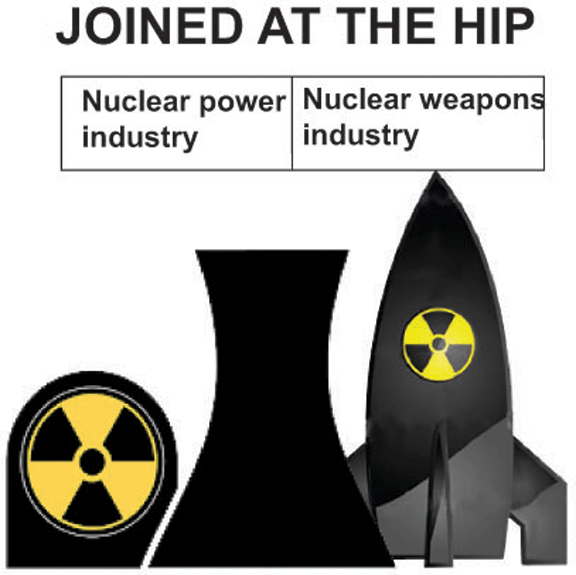
 How much do you know about the connections between nuclear weapons and nuclear power? https://mariannewildart.wordpress.com/2020/07/13/how-much-do-you-know-about-the-connections-between-nuclear-weapons-and-nuclear-power/ JULY 13, 2020 BY MARIANNEWILDART Why is the UK government so addicted to nuclear?
Nuclear weapons and nuclear power share several common features. In fact, the UK’s first nuclear power stations were built primarily to provide fissile material for nuclear weapons during the Cold War.
The development of both the nuclear weapons and nuclear power industries is mutually beneficial. And now it appears that the government is using the Hinkley Point C nuclear power station to subsidise Trident, Britain’s nuclear weapons system.
As part of a Parliamentary investigation into the Hinkley project, it emerged that without the billions of pounds earmarked for building this new power station in Somerset, Trident would be ‘unsupportable’. Professor Andy Stirling and Dr Phil Johnstone argued that the nuclear power station will ‘maintain a large-scale national base of nuclear-specific skills’ essential for maintaining Britain’s military nuclear capability.
Join CND for an online discussion with Professor Stirling and Dr Johnstone about these connections.
- Saturday, July 18th, 2pm
- Register here
- Contact enquiries@cnduk.org with any queries
Russian Foreign Minister Sergei Lavrov warns about the risk of a nuclear war 10/07/20

Russian Foreign Minister Sergei Lavrov said the United States wants to dominate the world and warned about the risk of a nuclear war, speaking at the international ‘Primakov Readings’ summit via videoconference in Moscow on Friday.
“”The US wants to regain global dominance and achieve victory in what they call the ‘major power rivalry’. They reject the term ‘strategic stability’ and call it ‘strategic rivalry’. They want to win this competition,” he stated.
The diplomat added that Moscow was “particularly concerned about the two-year refusal of the Americans to reassert the fundamental principle, the postulate that there can be no winners in a nuclear war, [and], accordingly, it should never be unleashed.”
He also commented on the trade war between US and China, saying that he can’t see any benefits for Russia from it.
Discussing how the coronavirus pandemic had changed the world, Lavrov said that the epidemic had “exacerbated” existing issues.
“This infection has exacerbated all the challenges and threats that existed before it began, but it hasn’t disappeared, including international terrorism. As you know, there are already some speculations when terrorists are considering how to use a virus strain or perhaps create some new strains in order to achieve their nefarious goals,” he said.
Video ID: 20200710-039
Full translation here;


Alarm at USA plan to exempt NuScam etc new nuclear reactors from emergency planning
 Proposed Emergency Plan Exemption for New Nuclear Designs Raises Concerns, https://www.publicnewsservice.org/2020-07-13/energy-policy/proposed-emergency-plan-exemption-for-new-nuclear-designs-raises-concerns/a70806-1 July 13, 2020 Eric Tegethoff, Public News Service – ID
BOISE, Idaho — A proposal from the federal Nuclear Regulatory Commission exempting emergency planning for new nuclear plant designs is raising alarms.
The NRC proposal would allow facilities to end emergency preparedness zones at their boundaries.
That zone is currently set at a 10-mile radius around plants and a 50-mile ingestion zone to protect against contaminated food and water.
Timothy Judson, executive director of the Nuclear Information and Resource Service, says emergency zones have been required since the Three Mile Island accident in 1979.
“Having the emergency evacuation plans and emergency response plans is part of the social contract with nuclear power and has been in the U.S. for over 40 years now,” he points out.
One NRC commissioner says it’s a radical departure from past practices.
The Federal Emergency Management Agency has expressed concerns about the proposal to exempt the agency from evaluating evacuation plans.
In support of the proposal, the Nuclear Energy Institute says NRC is modernizing the rules for new nuclear power designs that don’t have the same risks as old designs.
The NuScale small modular reactor project at the Idaho National Laboratory could benefit from these new rules. But Judson says exempting this project from emergency planning regulations exposes why these rules are a bad idea.
“They’re designed to have 12 of these reactors all built in the same building and together, those 12 reactors would be larger than many commercially operating nuclear reactors in the country right now,” he points out.

Judson says the proposal would keep everyone, including utility companies to nearby communities, in the dark on nuclear safety plans.
“Whether you support nuclear power or don’t support nuclear power, everyone supports nuclear safety,” he stresses.
The NRC is accepting public comment on the proposal through July 27.
Nuclear power is excluded from European Commission’s strategies for a Green Deal
 New EC ‘Green Deal’ strategies ignore nuclear power, Nuclear Engineering 13 July 2020 The European Commission (EC) on 8 July presented two strategies as part of its Green Deal – “An EU Strategy for Energy System Integration”, and “A hydrogen strategy for a climate-neutral Europe”.The 21-page strategy for Energy System Integration aims to provide the framework for the green energy transition. The EC said: “The current model where energy consumption in transport, industry, gas and buildings is happening in ‘silos’ – each with separate value chains, rules, infrastructure, planning and operations – cannot deliver climate neutrality by 2050 in a cost efficient way; the changing costs of innovative solutions have to be integrated in the way we operate our energy system. New links between sectors must be created and technological progress exploited.”
There are three main pillars to this strategy:
- First, a more ‘circular’ energy system, with energy efficiency at its core.
- Second, a greater direct electrification of end-use sectors – a network of one million electric vehicle charging points will be among the visible results, along with the expansion of solar and wind power.
- For those sectors where electrification is difficult, the strategy promotes clean fuels, including renewable hydrogen and sustainable biofuels and biogas. The Commission will propose a new classification and certification system for renewable and low-carbon fuels………..
To help deliver on this Strategy, the Commission announced the launch of the European Clean Hydrogen Alliance with industry leaders, civil society, national and regional ministers and the European Investment Bank. The Alliance will build up an investment pipeline for scaled-up production and will support demand for clean hydrogen in the EU.
“To target support at the cleanest available technologies, the Commission will work to introduce common standards, terminology and certification, based on life-cycle carbon emissions, anchored in existing climate and energy legislation, and in line with the EU taxonomy for sustainable investments.”
Neither of the reports made any mention of nuclear power either as part of energy system integration or as an energy source for the production of hydrogen. …
Antarctic glacier melting at an alarming rate

Thwaites Glacier is melting at an alarming rate, triggering fears over rising sea levels Ft.com Leslie Hook on the Antarctic Peninsula, Steven Bernard and Ian Bott in London , 13 Jul 20,
https://www.ft.com/content/4ff254ed-960d-4b35-a6c0-1e60a6e79d91
Antarctica holds around 90 per cent of the ice on the planet. It is equivalent to a continent the size of Europe, covered in a blanket of ice 2km thick. And as the planet heats up due to climate change, it doesn’t warm evenly everywhere: the polar regions warm much faster. It puts the icy continent of Antarctica and Greenland, the smaller Arctic region, right at the forefront of global warming. The South Pole has warmed at three times the global rate since 1989, according to a paper published last month.
As Antarctic ice melts and the glaciers slide toward the ocean, Thwaites has a central position, that governs how the other glaciers behave. Right now, Thwaites is like a stopper holding back a lot of the other glaciers in West Antarctica. But scientists are worried that could change. ……..
https://www.ft.com/content/4ff254ed-960d-4b35-a6c0-1e60a6e79d91
Impact of warming oceans The good news is that the Antarctic continent is not melting that much, yet. It currently contributes about 1mm per year to the sea level rise, a third of the annual global increase. But the pace of change at glaciers like Thwaites has accelerated at an alarming rate, even though it would take thousands of years for Antarctica itself to melt.
Blistering debate over San Onofre’s “nuclear waste dump by the sea,”
 Plan to inspect San Onofre’s aging nuclear waste expected to spark debate at Coastal Commission meeting Plan to inspect San Onofre’s aging nuclear waste expected to spark debate at Coastal Commission meeting
Although the analysis suggests doomsday scenarios may be more fantastical than factual, an engineering firm did suggest several improvements By TERI SFORZA | tsforza@scng.com | Orange County Register July 13, 2020 As debate continues to blister over San Onofre’s “nuclear waste dump by the sea,” an independent analysis concludes that the giant canisters housing that waste — and the program Southern California Edison has created to monitor and potentially repair them — will keep everything safe at least through 2035.Edison’s inspection and maintenance plan for its Holtec dry storage system — the “concrete monolith” now holding 69 of the 73 radioactive waste canisters it will hold by summer’s end, when all radioactive waste is finally removed from its spent fuel pools — is unveiled years earlier than the California Coastal Commission originally envisioned. It will be the subject of fiery debate at the Coastal Commission’s online meeting beginning 9 a.m. Thursday, July 16. Commission staff recommends approval of Edison’s plan, but critics are expected to vigorously oppose it………. How will it work?There are several layers to the inspection and maintenance program. Edison will keep tabs on the “concrete bunker” itself. Every day, workers will monitor temperatures and inspect air passageways and vent screens to make sure they remain free of blockage. Every month, air vent screens will be inspected for damage. Every year, there will be visual inspections of external surfaces for degradation. And every five years, there will be inspections of the structure for concrete settlement. How will it work?There are several layers to the inspection and maintenance program. Edison will keep tabs on the “concrete bunker” itself. Every day, workers will monitor temperatures and inspect air passageways and vent screens to make sure they remain free of blockage. Every month, air vent screens will be inspected for damage. Every year, there will be visual inspections of external surfaces for degradation. And every five years, there will be inspections of the structure for concrete settlement………. Bigger problemThe national paralysis over long-term storage of spent nuclear fuel is the elephant in the room. The federal government agreed to start collecting commercial nuclear waste for permanent disposal more than 20 years ago — but it hasn’t collected an ounce. That’s why it’s stuck at San Onofre, and dozens of commercial nuclear plants nationwide. There are hopes that temporary storage facilities in Texas and New Mexico might be licensed by the NRC while the federal government tries to find a permanent solution, but waste is likely to remain at San Onofre for many years. That’s why a maintenance and inspection program is required. While the Coastal Commission approved two dry storage systems at San Onofre Nuclear Generating Station, “it also has expressed concern regarding storing spent nuclear fuel at SONGS because of the facility’s location adjacent to the Pacific Ocean and Interstate-5, proximity to major population centers, and site topography and potential effects from coastal hazards,” the staff report says. “Because of the lack of a long-term repository for spent nuclear fuel, SONGS — like other nuclear power plants in the United States — has had to resort to interim storage of spent nuclear fuel on site.” Officials urge those who want spent fuel moved from San Onofre to focus on prodding the federal government toward a solution. Edison also is working on a strategic plan to explore the possibility of moving the waste off the bluff over the Pacific, and expects to finish by the end of the year. https://www.ocregister.com/2020/07/13/plan-to-inspect-san-onofres-aging-nuclear-waste-expected-to-spark-debate-at-coastal-commission-meeting/ |
|
USA National coalition against nuclear weapons
 Nuclear Threat Still Looms https://progressive.org/op-eds/nuclear-threat-still-looms-adams-200713/United by these tragedies, now most impacted communities have the same ultimate goals: ensuring these weapons are never used again, and that they are one day eliminated. by Lilly Adams, July 13, 2020 Nuclear Threat Still Looms https://progressive.org/op-eds/nuclear-threat-still-looms-adams-200713/United by these tragedies, now most impacted communities have the same ultimate goals: ensuring these weapons are never used again, and that they are one day eliminated. by Lilly Adams, July 13, 2020 In July 16, 1945, at around 5:30 in the morning, 11-year-old Henry Herrera was outside his home in Tularosa, New Mexico, helping his father work on the radiator of their truck, when he saw a blinding flash of light. He thought he was witnessing the end of the world. In fact, he was witnessing the first ever use of a nuclear weapon — the Trinity nuclear test.
A few weeks later, on Aug. 6 and 9, the newly tested weapons were used on Japan, in Hiroshima and Nagasaki, killing between 150,000 to 246,000 innocent people. In 1946, nuclear testing began in the Marshall Islands; it would continue there until 1958 , and in the United Statesuntil 1992
. The production of these weapons, with its own harmful consequences, continues today. Even worse, Congress recently voted to fund expansion of the nation’s nuclear weapons program. In a cruel twist of fate, July 16 is a double nuclear anniversary for New Mexico. On that day in 1979, a dam holding back radioactive waste at the Church Rock uranium mill broke, releasing 1,100 tons of uranium waste and 94 million gallons of radioactive water into the Rio Puerco, across three Navajo Nation chapters, and into Arizona. After both July 16 events, no health studies or medical resources were provided for residents, leaving those affected to battle the resulting illnesses and deaths alone.Last summer, after marking these anniversaries, my colleagues and I felt a sense of anti-climax. Something was missing. Perhaps after so long, we had become numb in the face of this history of death. As we approached the 75th anniversary of the fateful bombings of Japan, we decided we needed to do more. To begin, we reached out to our partners in Japan, and learned an important lesson. The survivors of the bombings, known as hibakusha, generally focus on messages of hope and resiliency, in pursuit of opportunities to build a peaceful world. They share their haunting memories of the bombings, but then they look forward and demand progress. We also looked to the survivors of nuclear weapons activities here at home. Estimates range from tens of thousands to hundreds of thousands of people in the United States and in the Marshall Islands that have been sickened and killed due to nuclear weapons testing, uranium mining and nuclear-weapons production. Despite the distances between them — in time, place and culture — the stories of many of these survivors are the same. A flash of blinding light, the feeling the world was ending. Falling dust and powder — like snow — that sickened people and would lead, eventually, to cancers. Secrecy and neglect shrouded their experiences for decades. United by these tragedies, now most impacted communities have the same ultimate goals: ensuring these weapons are never used again, and that they are one day eliminated. With these goals in mind, our national coalition is gathering virtually on Aug. 6 and 9, the anniversaries of the bombings in Hiroshima and Nagasaki. The event will feature presentations from many of the 150 groups that have joined the effort so far. We hope readers will join us to learn more and hear from the people who have been impacted and are fighting for change. Seventy-five years after these bombings, nuclear weapons are still here, continuing to threaten every person on earth. But the survivors are still here, too. And in a time of separation and mourning, this is a chance to stand in solidarity with communities around the world that are calling for peace. This column was produced for the Progressive Media Project, which is run by The Progressive magazine, and distributed by Tribune News Service. |
|
1 This Month

Pine Ridge Uranium is the real threat, not Tehran- Tell Burgum: Stop the Extraction.
Chernobyl: The Lost Tapes – A good documentary on Chernobyl on SBS available On Demand for the next 3 weeks– https://www.sbs.com.au/ondemand/tv-program/chernobyl-the-lost-tapes/2352741955560
To see nuclear-related stories in greater depth and intensity – go to https://nuclearinformation.wordpress.com
-
Archives
- April 2026 (288)
- March 2026 (251)
- February 2026 (268)
- January 2026 (308)
- December 2025 (358)
- November 2025 (359)
- October 2025 (376)
- September 2025 (257)
- August 2025 (319)
- July 2025 (230)
- June 2025 (348)
- May 2025 (261)
-
Categories
- 1
- 1 NUCLEAR ISSUES
- business and costs
- climate change
- culture and arts
- ENERGY
- environment
- health
- history
- indigenous issues
- Legal
- marketing of nuclear
- media
- opposition to nuclear
- PERSONAL STORIES
- politics
- politics international
- Religion and ethics
- safety
- secrets,lies and civil liberties
- spinbuster
- technology
- Uranium
- wastes
- weapons and war
- Women
- 2 WORLD
- ACTION
- AFRICA
- Atrocities
- AUSTRALIA
- Christina's notes
- Christina's themes
- culture and arts
- Events
- Fuk 2022
- Fuk 2023
- Fukushima 2017
- Fukushima 2018
- fukushima 2019
- Fukushima 2020
- Fukushima 2021
- general
- global warming
- Humour (God we need it)
- Nuclear
- RARE EARTHS
- Reference
- resources – print
- Resources -audiovicual
- Weekly Newsletter
- World
- World Nuclear
- YouTube
-
RSS
Entries RSS
Comments RSS
 nuclear-news