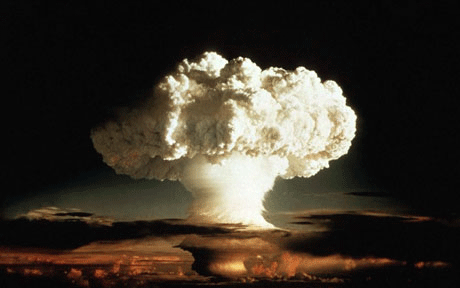
Human RightsThe dangerous legacy of nuclear weapons testing continues to affect many communities, a leading rights expert said on Thursday, on the 75th anniversary of testing in the United States, that heralded the nuclear age.
In an appeal to governments worldwide to get rid of weapons of mass destruction, UN Special Rapporteur on toxics, Baskut Tuncak, said that the Trinity tests in New Mexico on 16 July 1945, were the prelude to “two horrific explosions suffered by (the) innocent people of Japan”, during the Second World War.
They were also followed by the detonation of hundreds of nuclear bombs over vulnerable communities in the Pacific, and the disposal of radioactive waste on lands and territories of indigenous peoples.
Paradise lostThis had created a legacy of nuclear testing that “is one of the cruellest examples of environmental injustice witnessed” in “what should be a peaceful island paradise”, said Mr Tuncak, who reports to the Human Rights Council in Geneva. From 1946-58, 67 nuclear bombs were detonated on the Marshall Islands, he said, the equivalent of more than 1.5 “Hiroshima-sized explosions every day for 12 years”.
Communities “have suffered unimaginably” from radioactive contamination and this continues today “with a legacy of contamination, illness and anguish”, the expert insisted.
Twin environmental disasters made matters worse, he added, referring to climate change-induced sea level rise and nuclear waste concentrated in a radioactive “tomb”.
200 tests in 30 yearsSimilarly, in French Polynesia, over 200 nuclear tests were conducted over a 30-year period from 1966 to 1996, subjecting inhabitants to associated health and environmental damage, the Special Rapporteur said.
From Greenland to the indigenous territories of the United States, he warned that people continued to suffer from the nuclear testing era.
Waste not“In recent decades, numerous Native American tribes received funding to store unwanted nuclear waste on their lands,” he said. “Those of Point Hope, Alaska, became recipients of radioactive soil and higher cancer rates that are believed to have been the foreseeable result. And the people of Greenland discovered radioactive waste left by the US military, unbeknownst to them as the ice continues to melt in the Arctic.”
This discriminatory approach should be addressed by all States as part of the discussion on “systemic racism” and nuclear disarmament, Mr. Tuncak insisted.
“Unaddressed, the dangers of radioactive contamination will persist for centuries, and so too will the harmful legacy of racism that surrounds this tragic chapter of humanity,” he added.
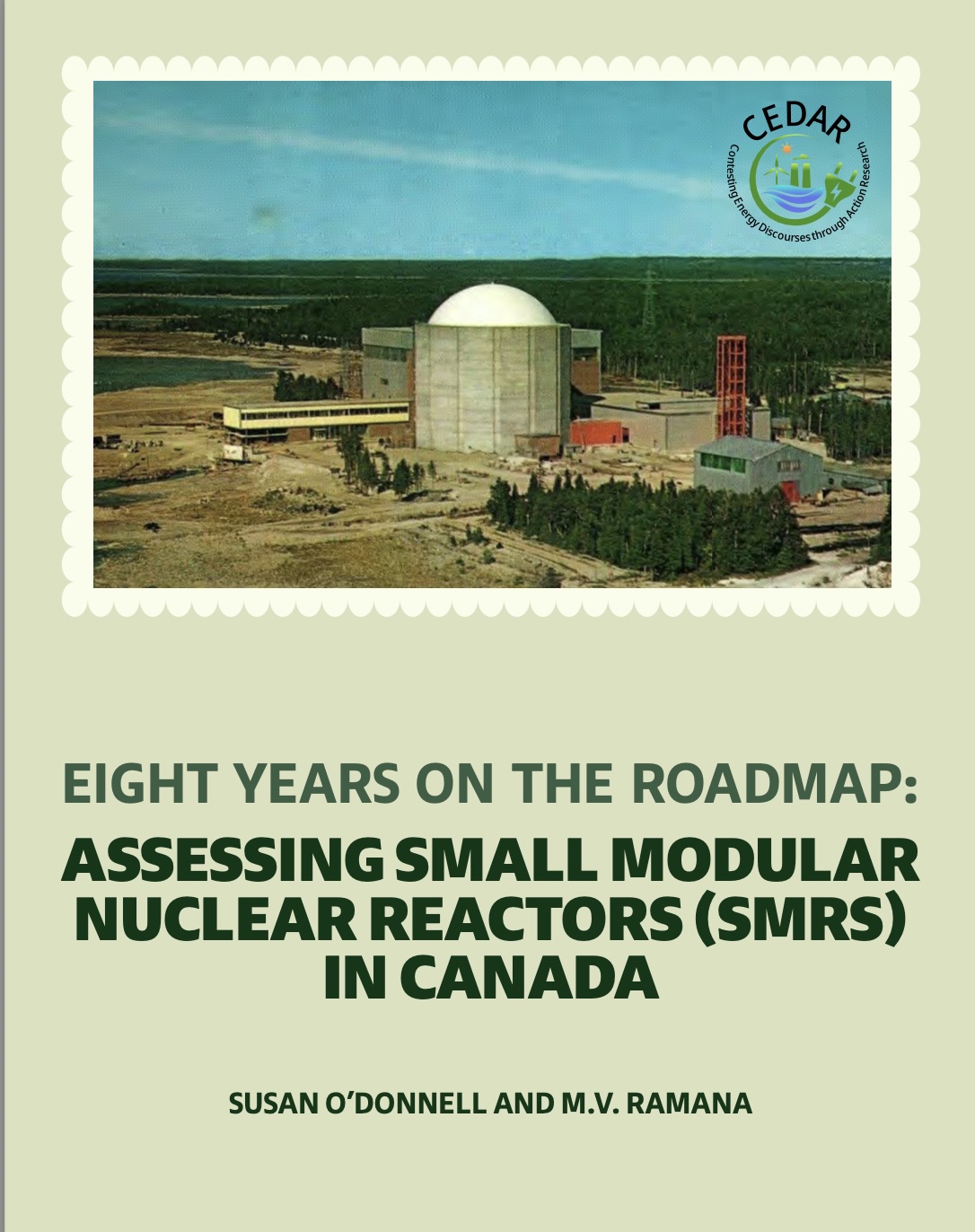
100% Renewables 16th July 2020, The Government has just announced a £40 million research programme into so-called advanced modular reactor technology that is highly unlikely ever to see any practical use. That is because the so-called small modular reactors (SMRs) are much too expensive for civilian use.
In an important sense it is nonsense to talk about research to develop SMRs as a ‘new’ technology simply because they already exist. They power military submarines and also US aircraft carriers. Their design is simply a smaller
version of the Pressurised Water Reactor (PWR) design that dominates the world nuclear power industry. Indeed PWRs began as small projects housed in submarines which were then developed up in scale so that they could produce electricity more cheaply.
At 450 MW for their proposed plant, the plant is not far off the same order of magnitude as conventional plant – for
example the AGR series that currently generates the bulk of British nuclear plant has units of around 600-660 MW. In fact, as Tom Burke points out, they are close to the size of Britain’s first generation of reactors, the ‘Magnox’ reactors.
Neither is the plant proposed by Rolls Royce modular in the sense that such plant can be rolled off a production line. What Rolls Royce claims is that some parts can be produced in a ‘modular’ fashion. This is not the same as producing whole units off a production line, and in fact the developers of the nuclear plant Vogtle in the USA also claim to produce parts in a ‘modular ‘fashion (although this plant is now hopelessly behind schedule with very large cost overruns).
Peace cranes on Church Street aim to abolish nukes, https://www.wcax.com/2020/07/17/peace-cranes-hanging-on-church-street-to-abolish-nuclear-weapons/WCAX News Team Jul. 17, 2020 BURLINGTON, Vt. (WCAX) – Cranes are a symbol of peace in many cultures, and 1,000 origami peace cranes from Japan are now displayed in front of Burlington City Hall in observance of next month’s 75th anniversary of the atomic bombings of Hiroshima and Nagasaki in World War II.The story behind the peace cranes is of a little girl, Sadako Sasaki, who developed cancer from atomic radiation because of the Hiroshima bombing. Sasaki started getting sick around age 11.
Robin Lloyd, an activist for abolishing nuclear weapons, believes Sasaki’s story will not only reach the hearts of Vermonters but also teaches an important lesson.
“The cranes date from a little girl who got leukemia from the Hiroshima bombing,” Lloyd said. “Then her health started to fail and her friends said, ‘If you can fold 1,000 cranes, then your wish will come true.‘”
Sasaki died before she reached 1,000 cranes, but her story lives on. Organizers at Thursday’s event in Burlington say they want to use the peace cranes to gain support for the abolition of nuclear weapons.
Joseph Gainza, a longtime Vermont peace activist, says that Vermont has supported nuclear weapons abolition in the past.
”The House of Representatives overwhelmingly — and the Vermont Senate unanimously — voted on a resolution calling on the United States to enter into the nuclear weapons abolition treaty,” Gainza said.
Today, the Treaty on the Prohibition of Nuclear Weapons continues to gain support, according to Maho Takahashi, an activist in Burlington. ”With that treaty, once 50 countries ratify it, it will enter into force,” Gainza said.
The peace cranes will be flying for the next week. Each crane has a lesson that visitors are encouraged to take and learn from.
California Coastal Commission unanimously approves storage plan at San Onofre Nuclear Generating Station CBS8, 17 Jul 20, The Commission voted 10-0 to approve the program to allow storage of spent nuclear fuel on-site. SAN DIEGO COUNTY, Calif. — The California Coastal Commission voted 10-0 in a special meeting today to approve an inspection and maintenance program allowing Southern California Edison to store spent nuclear fuel in a storage site at the San Onofre Nuclear Generating Station.
The program outlines actions SCE will take to inspect the canisters that contain spent nuclear fuel, as well as how potential issues with the canisters will be remedied.
Robotic devices will be used to inspect the canisters and site conditions will be simulated on a test canister, which will be observed for potential degradation. Two spent fuel storage canisters will be inspected every five years starting in 2024, and the test canister will be inspected every two to three years.
Canister flaws will be repaired by the application of a nickel-based metallic spray, and the presence of flaws may result in increased canister inspection frequency and an increase in the number of canisters inspected.
The inspection and maintenance program was also reviewed by the engineering consulting firm LPI, which provided recommendations that included the increase in canister inspections should flaws arise.
Nearly 3.6 million pounds of spent nuclear fuel are stored at the plant, which stopped producing electricity in 2012.
Gov. Gavin Newsom and leaders from the Legislature must demand action on nuclear waste and fill gaps in oversight. By Bart Ziegler, CalMatters, 17 Jul 20,
From San Onofre to Humboldt Bay, nuclear waste is piling up in California.
This most-toxic waste – tons and tons of it – is deadly for 200,000 years. Stranded next to a rising ocean at aging and decommissioned plants, the waste has no permanent home.
California is overdue in showing leadership.
Just as California has broken ranks with the federal government on regulating greenhouse gas emissions, Gov. Gavin Newsom and leaders from the Legislature must demand action on nuclear waste and fill gaps in oversight.
With federal regulators all but cornering nuclear policy, the industry all too often is left to regulate itself. Meanwhile, private contractors slop at ratepayer-funded decommissioning troughs while running loose with safety.
Enough is enough, California!
In north San Diego County, conditions at the shuttered San Onofre Nuclear Generating Station scream for state intervention, as Rep. Mike Levin, a Democrat from San Juan Capistrano, concluded in a task force report issued recently.
First, some background.
Decommissioning started this year at the San Onofre plant, which quit making electricity in 2012. The plant’s majority owner, Southern California Edison, has opened its $4 billion decommissioning purse to Holtec International as lead contractor in charge of transferring 3.6 million pounds of spent nuclear fuel from cooling pools to a storage system of Holtec’s design.
That’s where things get dicey.
Edison’s contractors are cramming the spent fuel assemblies into thin-walled, steel canisters. Workers hoist the canisters from wet storage with a behemoth, track-driven gantry crane and crawl them to a concrete, dry-storage vault. That’s where the 73 canisters will stay. Indefinitely.
Public hand-wringing intensified after a near-accident in 2018 involving a fully-loaded canister and the release of reports showing the canisters are prone to gouging during transfer. That can lead to corrosion and failure, especially in a marine environment. To make matters worse, the canisters cannot be repaired, monitored, inspected or transported once entombed in the vault.
What can California do? For starters, leaders can immediately improve oversight of nuclear waste storage.
Nuclear plant owners admit to not having developed procedures to replace fully-loaded canisters. That’s why, as part of decommissioning California’s coastal nuclear plants at San Onofre, Diablo Canyon and Humboldt Bay, the state Coastal Commission must demand the construction of handling facilities – known as “hot cells” – where canisters can be repaired or replaced.
State lawmakers should order construction of a hot cell at the decommissioned Rancho Seco Nuclear Generating Station, just 40 miles south of their offices in Sacramento.
In San Diego County, near the border with Orange County, 8.2 million people live within 50 miles of the old San Onofre plant. On July 16, the California Coastal Commission is set to act on a staff recommendation to approve Edison’s application to dismantle the plant’s cooling pools. That approval would be disastrous. For now at least, the spent fuel cooling pools provide our last option for dealing with a damaged canister.
Coastal Commissioners are appointed by the same Legislature that should prepare for a crisis instead of responding to one. You don’t wait for a fire to create a fire department. Preparation is cheaper and faster than responding to a crisis. Tragically, the COVID-19 pandemic has shown that preparation is not always our strongest suit.
As recommended in the Report of the San Onofre Nuclear Generating Station Task Force, a state model would improve agency coordination on waste storage permit applications and increase engagement with federal agencies to advance solutions for containing and handling deadly nuclear waste. The solutions should be tied to strict, economic enforcement.
Coastal commissioners, lawmakers, regulators and anyone else with a stake in California – that’s nearly 40 million of us – should read the report and demand action on nuclear waste.
Trump’s new foreign investment agency: Itching to build on nuclear quicksand. Bulletin of the Atomic Scientists, By Victor Gilinsky, Henry Sokolski, July 17, 2020 In 2018 a Republican Congress, with strong Democratic support, created the US International Development Finance Corporation to “provide the developing world with financially sound alternatives to unsustainable and irresponsible state-directed initiatives.” That’s government-speak for competing with China’s Belt and Road initiative. It didn’t take very long, however, for the new agency to fall in line with an irresponsible state-directed initiative of its own—the Trump administration’s all-out effort to encourage nuclear exports.
In June, the agency, whose own rules prohibit financing nuclear exports, proposed to fling the doors open to such financing, without limiting its scope to the agency’s mission to help the economies of the lower income countries with modest, environmentally sensible projects. There is no hint on what sorts of conditions would apply on funding nuclear reactors. Would the country have to have a system of safety regulation? Would it have to meet security requirements? Would it have to allow international inspections? It isn’t even clear whether the agency’s support would be limited to US reactor exports, and therefore subject to the requirements of the Atomic Energy Act’s Section 123 or whether they could also cover equipment purchases from other suppliers. Such details determine whether a federal bureaucracy is constrained to act responsibly, or whether it is free to cater to the latest whims of the White House.
To justify its proposed action, the agency relies on the administration’s ritual talking points—that nuclear exports will “offer an alternative to the financing of authoritarian regimes while advancing US nonproliferation safeguards and supporting US nuclear competitiveness.” These pearls are straight out of the administration’s April 2020 interagency report “Restoring America’s Competitive Nuclear Energy Advantage.”
So are the agency’s assurances that advanced “small modular reactors” and “microreactors” will have significantly lower costs than existing nuclear power plants and “could help deliver a zero-emission, reliable, and secure power source to developing countries, promoting economic growth and affordable energy access in underserved communities.” This is all pie in the sky: None of these plants have been built, and their characteristics and economics are speculative.
But if the proposed change is restricted to small reactors or microreactors, the nuclear industry’s influential registered lobby, the Nuclear Energy Institute, hasn’t heard about it. The Institute’s president crowed her unqualified approval: “The US International Development Finance Corporation’s proposed policy change to lift its legacy prohibition on nuclear energy projects supports the development of clean, reliable energy worldwide, helps countries reach their energy development goals, buttresses US national security, and can help level the playing field for US firms.”
Nor does her response suggest any awareness that the agency’s financing of nuclear projects will be limited to countries in the lower portion of the economic scale……,
This whole affair is the latest expression of the administration’s organizing principle for nuclear energy policy—finding ways to loosen rules and to create subsidies to propel nuclear exports. This is supposed to energize the much-diminished domestic nuclear manufacturing sector. Since the whole policy doesn’t make any economic sense, the ultimate argument is based on the dogma: Come what may, we have to head off sales by our adversaries China and Russia…….
Michigan bill opposing high-level nuclear waste dump languishes in Senate committee Iosco County News Herald, By Jim Bloch For MediaNews Group,Jul 16, 2020
The Michigan House of Representative passed a concurrent resolution on Feb. 5 opposing the proposed high-level nuclear waste dump near the shores of Lake Huron in the municipality of South Bruce, Ontario, Canada.
The resolution was sponsored by Gary Howell, the republican representative of the 82nd District, which comprises Lapeer County.
It urges “the United States Congress to take every legal action possible to prevent the construction of any underground high-level nuclear waste repository in the Great Lakes basin,” and urges “the Canadian government to prohibit a high-level nuclear waste repository anywhere in the Great Lakes basin.”
One of the cosponsors of the resolution was Gary Eisen, the St. Clair Township Republican who represents the 81st District, which swoops around the southern half of St. Clair County and includes Marysville, St. Clair, Marine City and Algonac, as well as surrounding townships.
“It’s sitting in the Senate now in Dan Lauwers’s committee,” Eisen said in June, noting that the onset of the COVID-19 pandemic put the brakes on a lot of the legislature’s work. “Everything’s ten times harder now.”
The resolution is in the Committee on Energy and Technology, which Lauwers chairs. His 25th Senate District includes St. Clair County………..
“Placing a deep geological repository near the Great Lakes is a high-risk venture with the potential of causing irreparable harm to millions of lives,” said the resolution. “Underground waste repositories have leaked in the past, costing billions of dollars to repair. Germany, for instance, is spending billions of dollars to dig up low- and intermediate-level radioactive waste that was stored in a salt mine due to leakage and other environmental concerns. In 2014, chemical reactions in a steel barrel full of radioactive waste caused an explosion and fire at a low- and intermediate-level underground waste site in Carlsbad, New Mexico causing a cloud of radioactivity to be released at the surface. Not only did this put the health and safety of the public at risk, it cost taxpayers $2 billion to clean up and repair. As demonstrated, low- and intermediate-level facilities have failed, and this high-level nuclear proposal provides no guarantee, whatsoever, to keep radioactive waste from our environment.”
If the Michigan Senate approves the resolution, it will be sent to Prime Minister of Canada, the Minister of Environment and Climate Change, the Minister of Foreign Affairs, the Premier of Ontario, the Canadian Nuclear Safety Commission, the Canadian Environmental Assessment Agency, the Speaker of the U.S. House, the President of the U.S. Senate, the members of the Michigan congressional delegation, and the U.S. Nuclear Regulatory Commission.
On Jan. 17, Michigan’s U.S. Sens. Debbie Stabenow and Gary Peters, along with Congressman Dan Kildee and Congressman John Moolenaar, introduced a bipartisan resolution opposing Canada’s placement of a permanent nuclear waste storage in South Bruce.
If the Michigan Senate approves the resolution, it will be sent to Prime Minister of Canada, the Minister of Environment and Climate Change, the Minister of Foreign Affairs, the Premier of Ontario, the Canadian Nuclear Safety Commission, the Canadian Environmental Assessment Agency, the Speaker of the U.S. House, the President of the U.S. Senate, the members of the Michigan congressional delegation, and the U.S. Nuclear Regulatory Commission.
Waste Control Services (WCS) has been disposing of the nation’s low level nuclear waste in Andrews County at a cost of $100 dollars per cubic foot for Class A waste and $1000 dollars per cubic foot for Class B and C waste.
There is an additional surcharge of 40 cents per unit of radioactivity, but The Texas Commission on Environmental Quality recently approved the request by WCS to drop the price to 5 cents per unit.
A spokesman for WCS explained the market is dynamic so when the price drops, they need to be able to continue to compete.
Public Citizen Texas Office Director, Adrian Shelley worries that by allowing WCS to import nuclear waste at a fraction of the cost, it could result in massive liability for the state.
“If WCS collects less money to import waste in Texas, then there will be less money available should an accident occur and ultimately we’re concerned Texas taxpayers will be on the hook should an accident occur,” Shelley said.
The company doesn’t expect less revenue, rather they anticipate more income as a result of the price drop.
WCS reports Andrews County gets 5% of their revenue and the state gets 25%.
WCS has also been working to get approval for years to temporarily store the nation’s high level nuclear waste that would include spent nuclear fuel rods.
Pandemic drives plant operators to employ remote checks, WNN, 17 July 2020Nuclear power plant operators are carrying out remote quality and safety related assessments of systems, structures and components (SSCs) to overcome physical distancing and mobility restrictions during the global COVID-19 pandemic, participants in a recent International Atomic Energy Agency (IAEA) webinar said. SSCs must be regularly monitored, replaced and have their quality verified.
Church Rock 40th anniversary commemoration, July 16, 2019 –
former Uranium Miner Larry J. King (center) explains the site of the 1979 Church Rock uranium tailings pond breach. This under-reported radioactive disaster dumped more than 94 million gallons of uranium-contaminated waste water into the adjacent Puerco River. Now 41 years later, it has yet to be cleaned up.
Church Rock Uranium Tailings Pond Spill Commemoration, July 16, 2019: Uranium mining marks the start of the nuclear fuel chain, the deadly journey uranium takes to become atomic weapons, nuclear reactors, and tons of highly radioactive waste. NOTE: This is a special ENCORE PRESENTATION of the 2019 40th anniversary of the disaster.
On July 13 and 14, 2019, Nuclear Hotseat’s Libbe HaLevy attended commemorative events for the 1979 Church Rock uranium tailings pond breach and spill. This under-reported nuclear disaster dumped more than 94 million gallons of highly acidic radioactive water into the adjacent Puerco River. The contamination reached Sanders, Arizona, more than 80 miles away. The spill has never been cleaned up. Even after being declared a Superfund site, it needs at least two years before the Nuclear Regulatory Commission finishes its review of the EPA’s clean-up plan. Clean-up can’t even begin until and unless the plan is approved. And even that plan has come in for criticism by activists and community members.
Church Rock – This Week’s SPECIAL Featured Interviews:
This very SPECIAL Nuclear Hotseat from July 2019, presents an audio montage of interviews with community leaders from Navajo Nation. They include: residents of the Red Water Pond Road Community, located adjacent to the spill site; commemoration event attendees; government officials; and activists from as far away as Japan. We spoke with:
Former uranium miner Larry J. King, who worked on-site at the United Nuclear Corporation mine the day of the tailings pond spill
Thanks to Botswana, the Treaty on the Prohibition of Nuclear Weapons has now reached 40 states parties. After just 10 more ratifications, it will enter into force. Botswana deposited its instrument of ratification with the UN Secretary-General, António Guterres, on 15 July, the anniversary of the entry into force of the Treaty of Pelindaba, which established the whole of Africa as a nuclear-weapon-free zone.
In case you missed it, Fiji also ratified the ban treaty last week. You can read about the significance of this step and Fiji’s long history of activism against the bomb in the Guardian, thanks to Dr Vanessa Griffen and Talei Luscia Mangioni.
The 40th ratification is a significant milestone, dispelling any doubts over the treaty’s inevitable entry-into-force. The Australian Government simply cannot ignore the ban forever.
In more good news, on Tuesday night the City of Port Adelaide Enfield became the first South Australian council to endorse the ICAN Cities Appeal. There are now 28 Australian councils that call for the federal government to sign and ratify the Treaty on the Prohibition of Nuclear Weapons.
Today is the 75th anniversary of the first nuclear explosion, code-named “Trinity”. This event has significance for all people impacted by nuclear weaponry worldwide, including in Australia. Nuclear explosions don’t stay in the past, the effects of radiation continue through the decades and generations. In just a couple of hours we’ll begin our special Trinity video panel with three incredible women who are fighting against the bomb. Check the details and get the Zoom link here, or watch it later from the ICAN Australia Facebook page.
BY ALEXANDRA GENOVA, PHOTOGRAPHS BY PHIL HATCHER-MOORE OCTOBER 13, 2017
Decay and desolation scar the landscape of a remote corner of the Kazakh Steppe. Unnatural lakes formed by nuclear bomb explosions pockmark the once flat terrain, broken up only by empty shells of buildings. It appears uninhabitable. And yet, ghosts – living and dead – haunt the land, still burdened by the effects a nuclear testing program that stopped nearly 30 years ago.
The site, known as the Polygon, was home to nearly a quarter of the world’s nuclear tests during the Cold War. The zone was chosen for being unoccupied, but several small agricultural villages dot its perimeter. Though some residents were bussed out during the test period, most remained. The damage that continues today is visceral.
Photographer Phil Hatcher-Moore spent two months documenting the region, and was struck by the “wanton waste of man’s folly.”
His project ‘Nuclear Ghosts’ marries the wasted landscape and intimate portraits of villagers still suffering the consequences.
The figures are astonishing – some 100,000 people in the area are still affected by radiation, which can be transmitted down through five generations. But with his intimately harrowing pictures, Moore sought to make the abstract numbers tangible.
“Nuclear contamination is not something we can necessarily see,” he says. “And we can talk about the numbers, but I find it more interesting to focus on individuals who encapsulate the story.”
Moore interviewed all his subjects before picking up his camera and learned that secrecy and misinformation plagued much of their experience.
“[During the 50s] one guy was packed up with his tent and told to live out in the hills for five days with his flock. He was effectively used as a test subject to see what happened,” says Moore. “They were never told what was going on, certainly not the dangers that they may be in.”
Though human stories were central, Moore also documented the scientific test labs that are still uncovering the damage. The juxtaposition of these labs alongside portraits of people disfigured by radiation makes for uncomfortable viewing. But this proximity is deliberate.
“There was a history of humans being used as live subjects,” says Moore. “I wanted to marry these ideas together; the way people were used by researchers at the time and how that trickles down into every day life – what that looks like, what that means.”
While some of Moore’s subjects are severely deformed, many suffer from less visible health issues like cancer, blood diseases or PTSD. And the hidden, insidious nature of the thing is what is perhaps most troubling. “For a long time there hadn’t been much nuclear development but it is a very real issue right now,” says Moore. “But we don’t talk about what it takes to renew these weapons. These people are legacy and testament to what was done to meet those ends.”
See more of Phil Hatcher-Moore’s work on his website and follow him on Instagram.
Now I Am Become Death’: The Legacy of the First Nuclear Bomb Test, NYT, By Maria Cramer July 15, 2020
“………The effects of radiation were not well understood by most scientists on the project at the time, according to historians, and the preparations that were made to keep civilians safe reflected that ignorance.
They placed crude monitors around the small towns within 40 miles of the testing site. A scientist who was seven months pregnant and her husband, who was also a scientist, were sent to a motel in one of the towns with a Geiger counter, a device used to detect radioactive emissions, to measure the radiation. If the needle hit a certain mark, she was instructed to alert officials so that they could evacuate the town, Professor Wellerstein said.
Officials did not warn any of the residents — many of them ranchers, Navajos, Mexican settlers and their descendants who raised cattle and drank water from cisterns — about the test. Should anyone ask about the blast, officials had proposed several cover stories, including telling the public that a remote ammunitions depot had exploded, Professor Wellerstein said.
Officials did not warn any of the residents — many of them ranchers, Navajos, Mexican settlers and their descendants who raised cattle and drank water from cisterns — about the test. Should anyone ask about the blast, officials had proposed several cover stories, including telling the public that a remote ammunitions depot had exploded, Professor Wellerstein said.
“It produced more light and heat than the sun,” said Tina Cordova, a founder of the Tularosa Basin Downwinders Consortium, which has urged the government to conduct more research about the aftermath of the blast and to compensate the affected communities.
Based on census data at the time, the consortium estimates there were tens of thousands of people living within a 50-mile radius of the blast, Ms. Cordova said.
Ash fell for days afterward in the landscape and in every direction and in amazing quantities,” she said.
Warnings went unseen and ignored.
The day after the blast, Leo Szilard, a Hungarian physicist who worked on the Manhattan Project, sent a petition signed by 70 scientists to President Harry S. Truman, urging him to give Japan a chance to surrender before dropping the bombs.
“Thus a nation which sets the precedent of using these newly liberated forces of nature for purposes of destruction may have to bear the responsibility of opening the door to an era of devastation on an unimaginable scale,” the petition cautioned.
It was not the first plea to reconsider using a nuclear bomb to end the war.
A month before the test, a committee, which included Dr. Szilard and was headed by the German scientist James Franck, issued the Franck Report, urging the United States to first demonstrate the power of the weapons to members of the United Nations……….
Scientists “were totally shocked when the Japanese reported radiation sickness at Nagasaki,” said Professor Wellerstein, who has written about what the United States knew about the long-term consequences of using the weapons……..
The true effects of the test on the people who lived near the test site remain unclear.
“The Trinity downwinders have not been treated in either a fair or a just manner,” he said.
Ms. Cordova, who grew up in Tularosa, N.M., said cancer had been pervasive in the towns near the Trinity test site, where everyone can name someone who died of the disease.
“We know that the government basically walked away and has taken no responsibility for the suffering and the dying,” said Ms. Cordova, who has survived thyroid cancer and has several relatives who died of various forms of cancer.
Members of Congress from New Mexico have introduced legislation that would expand the Radiation Exposure Compensation Act, which compensates uranium miners and people who lived downwind from nuclear testing sites, to include the residents who lived around Trinity.




 While some of Moore’s subjects are severely deformed, many suffer from less visible health issues like cancer, blood diseases or PTSD. And the hidden, insidious nature of the thing is what is perhaps most troubling. “For a long time there hadn’t been much nuclear development but it is a very real issue right now,” says Moore. “But we don’t talk about what it takes to renew these weapons. These people are legacy and testament to what was done to meet those ends.”


 nuclear-news