Australian Greens’ dissenting report on The Australian Naval Nuclear Power Safety Bill

1.1The Australian Naval Nuclear Power Safety Bill 2023 (the Bill or ANNPS) is deeply flawed legislation that is only being progressed because of the deeply flawed trilateral agreement that is AUKUS.
1.2The Bill proposes a seriously flawed regulatory model for the dangers of naval nuclear reactors and associated waste.
1.3 The proposed regulator lacks genuine independence, the process for dealing with nuclear waste is recklessly indifferent to community or First Nations interests and the level of secrecy is a threat to both the environment and the public interest.
1.4 Any amendments proposed to improve the many deficiencies of this legislation should not be interpreted as support for the Bill itself or for the AUKUS deal.
1.5 This Bill establishes a new defence naval nuclear regulator that will oversee all aspects of the nuclear production and waste cycle associated with Australian nuclear-powered submarines (and with regard to waste but not the operational activities of UK and US submarines) that operate, are constructed or decommissioned in Australia and Australian territorial waters.
1.6 This regulator will be entirely separate from the existing and long-standing nuclear regulation framework in Australia, which currently sits under the Australian Radiation Protection and Nuclear Safety Act 1998 (ARPANS Act).
Independence
1.7This Bill fails to meet the fundamental international principles of regulatory independence for safely addressing the inherent risks of nuclear power and nuclear waste.
1.8In this Bill, the proposed Australian Naval Nuclear Power Safety Regulator reports directly to the Minister of Defence. The Defence Minister is also responsible, through the Australian Defence Force, for the operation of those same nuclear submarines.
1.9 This is widely out of step with international standards of legal and functional independence for nuclear safety and is contrary to current practice on civil nuclear regulation in Australia.
1.10This is also in direct opposition to the International Atomic Energy Agency in its Fundamental Safety Principles that state: An effective legal and governmental framework for safety, including an independent regulatory body, must be established and sustained.[1]
1.11It is also not in line with the current regulation of nuclear waste in Australia. The regulator, called the Australian Radiation Protection and Nuclear Safety Agency (ARPANSA) sits in the Ministry of Health whereas the Australian Nuclear Science and Technology Organisation (ANSTO) (which operates the Lucas Heights reactor) sits in the Ministry of Industry and Science. This is to ensure the regulator is independent of the industry it oversees.
1.12As the majority report notes in some detail, the proposed model under this Bill is distinct from either the UK or US naval nuclear regulators.
1.13 In the UK, while the main naval nuclear regulator does report through the Ministry of Defence, there is a significant ongoing role for the independent civilian Office for Nuclear Regulation (ONR) in overseeing defence nuclear activities. This is formalised in the General Agreement between the Ministry of Defence and the Office for Nuclear Regulation. This agreement clearly delineates the relationship between the Ministry of Defence and the ONR in discharging their respective roles and responsibilities for the UK’s defence nuclear operations. There is no equivalent role for ARPANSA in this Bill.
In the US, the regulator is known as the Naval Nuclear Propulsion Program (NNPP). This is not run solely by Defense but rather is jointly managed and self-regulated by the civilian National Nuclear Security Administration (NNSA) that reports to the Department of Energy, and the Department of the Navy. By contrast, under this Bill the regulator will be entirely within the Department of Defence and the Defence Minister will have sole ministerial responsibility.
1.15The importance of regulatory independence was outlined in a letter to the CEO of ARPANSA from the Radiation Health and Safety Advisory Council in October 2022 that stated:
Independence of the regulator is a critical part of its effectiveness. The regulator should be independent of the operators and departments overseeing any aspect of purchase, manufacture, maintenance, and operation of the program. It is noted that some of the more significant global nuclear and radiation incidents have arisen from inadequate separation of responsibilities from regulatory capture. More than functional separation, it is important that the independent regulator can operate without influence, and with a strong voice. If a regulatory body cannot provide information on safety and incidents at licensed facilities without the approval of another organisation, issues of independence and transparency will arise. Reporting arrangements should therefore enable the regulatory body to be able to provide safety related information to the Government and the public with the maximum amount of transparency.[2]
1.16During a committee hearing, these concerns were put to the Royal Institution of Naval Architects (RINA), concerning the importance of independence in ‘social licence’:
Senator SHOEBRIDGE: We have good examples, though, of independence. ANSTO is an operator. The regulator of ANSTO reports to a different minister, and that is part of how ANSTO gets social licence. That’s a good example, isn’t it, of structural independence?……………………………………………………
ARPANSA also acknowledged that the key to their social licences was independence through reporting to a minister not associated with the industry they are regulating
1.18In further questioning concerning how this independence can be achieved with the Defence Minister having both the regulator and the body it’s regulating reporting to them, ARPANSA stated:
Senator SHOEBRIDGE: Do you agree it’s a weakness in this bill to have the operator and the regulator both report to the same minister? Or if you don’t want to adopt my phrase, tell me how you would respond to the fact that the regulator and the operator both report to the same minister, given the fundamental importance of independence?
Dr Hirth: I think it’s important to go back to the IAEA, and I think the comments made by RINA in your questions to them this morning around undue influence. Establishing reporting arrangements in order that there isn’t undue influence of interested parties does present a challenge for the Minister for Defence…………………………….
1.19Furthermore, there were concerns raised about the development of a new regulatory body, with all the concerns of independence with the ANNPS Bill, which may also lack the expertise needed……………..
The ability of the Minister through proposed section 105 to issue directions to the regulator further blurs the independence of the new regulator. This was a concern for the Australian Shipbuilding Federation of Unions (ASFU),……………………………………………
1.21Another aspect of the lack of independence concerns the staffing and leadership of the new regulator. It is true that neither the Director-General nor Deputy Director-General can be an active member of the ADF (Australian Defence Force) as specified in proposed section 109.
1.22 However, there is nothing stopping someone from immediately stepping out of the ADF and the next day becoming the Director-General or Deputy Director-General, as this exchange with Defence made clear:……………………………………………………..
1.23 Furthermore, there are no such restrictions on the staff of the regulator, which may all be drawn from active ADF personnel.
1.24 This means the supposed independent regulator of Defence can be run by someone who, the day before was in the Defence, staffed by the Defence and report to the Minister of Defence.
Recommendation 1
1.25 It is recommended that the Bill be amended to ensure a genuinely independent regulator and that the regulator reports to the Minister of Health rather than the Minister of Defence.
1.26 Alternatively, that the regulator more closely reflects the arrangements in the United States and jointly reports to both the Minister of Health and the Minister for Defence, with these Ministers jointly holding Ministerial responsibility under the Bill.
Recommendation 2
1.27 It is recommended that for transparency any direction issued under section 105 be tabled in Parliament within three days where the direction may, or will, negatively impact public health or safety.
Recommendation 3
1.28 It is recommended that section 109 be amended to:
prohibit the Director General from being a current or former member of the ADF or Department of Defence, and;
that the Deputy Director General not be a current member of the ADF or Department of Defence or have been a member of the ADF or Department of Defence for at least two years prior to any appointment.
No public or First Nations consultation
1.29This Bill allows the Minister of Defence to establish ‘designated zones’ for the storage, management and disposal of low, medium and high-level nuclear waste in any part of Australia the Minister chooses by regulation.
1.30This Bill establishes an initial two zones, one at HMAS Stirling at Garden Island in Western Australia and another at the Osborne Naval Shipyard in South Australia. Both zones are close to major metropolitan centres.
1.31Concerning future nuclear waste dumps, the Minister for Defence has indicated that they will only be on Defence land, however, that includes large parcels of land within every major population centre in the country. The Minister also said this can include ‘future’ Defence land.[9]
1.32However, the Bill does not provide even this limitation on where nuclear waste can be located. In fact, the Bill says in bold terms the waste can be on defence land or ‘any other area in Australia’ identified in the regulations. This means, with the flick of the Minister’s pen, any location in Australia can be made into a high-level nuclear waste dump.
1.33This completely excludes any consultation with the local impacted community or with First Nations people whose land and water will be targeted by Defence. With this Bill, neighbours to large defence sites like Holsworthy in Sydney or Greenbank in Brisbane are right to be concerned that they may wake up one morning, with no notice, to find they back onto a high-level nuclear waste dump.
1.34 We have seen from decades of failed attempts to set up nuclear waste sites across the country, most recently at Kimba, that Federal governments have routinely sought to override First Nations people’s claims to the land on this issue. The United Nations Declaration on the Rights of Indigenous Peoples (UNDRIP) specifies the importance of free, prior and informed consent before any such action is taken. This Bill does not even pretend to engage with these principles.
1.35 As the submission from Friends of the Earth stated:
First Nations communities have repeatedly defeated thuggish, racist governments in relation to radioactive waste facilities but that has come at a huge cost in terms of physical and mental health.[10]
1.36The few protections that the law currently gives to First Nations people over their land are removed by this Bill. The Independent and Peaceful Australia Network raised this during a hearing, stating:
There doesn’t seem to have been any notice taken of the United Nations Declaration on the Rights of Indigenous Peoples. They should have the right to prior informed consent on this issue and have full consultation before any designations are made for nuclear waste.[11]
1.37Multiple submissions also raised the comments by Dr Marcos Orellana, UN Special Rapporteur on Toxics and Human Rights, in 2023 on this issue, saying:
It is instructive that all siting initiatives by the Government for a radioactive waste repository have failed, leaving a legacy of division and acrimony in the communities. The loss of lives and songlines resulting from exposure of Indigenous peoples to hazardous pesticides in the Kimberley region, from asbestos exposure in Wittenoom in Western Australia, and from the radioactive contamination following nuclear weapons testing in South Australia, are all open wounds. Alignment of regulations with the UN Declaration on the Rights of Indigenous Peoples is a critical step in the path towards healing open wounds of past environmental injustices.[12]
1.38Concerning the proposed nuclear ‘designated zone’ in Perth, Nuclear Free WA and Stop AUKUS WA noted the importance of the areas around HMAS Stirling, stating in their submission:
Cockburn Sound and Garden Island have significant cultural value for First Nations Peoples … The ecological values of Garden Island, the proximity to Cockburn Sound make radioactive waste disposal here incompatible.[13]
1.39 It is remarkable that on an issue so vital to communities, the potential location of a nuclear waste dump, there is zero public consultation required under this Bill. Compare this to existing laws such as the National Radioactive Waste Management Act 2012, where a site must be voluntarily nominated, evaluated against technical, economic, social and environmental criteria, and offered for public consultation.
1.40 This, together with the express inclusion of the UNDRIP principles, is the minimum standard that should be expected under this Bill for public and First Nations consultation.
Recommendation 4
1.41 It is recommended that the Bill must ensure that there is free, prior and informed consent from First Nations people and the communities impacted before any designated zone is established for low, medium or high-level naval nuclear waste.
Recommendation 5
1.42 It is recommended that the Bill should expressly include reference to, and compliance with, Australia’s international obligations including the United Nations Declaration on the Rights of Indigenous Peoples.
Recommendation 6
1.43 It is recommended that the Bill should adopt the requirements for public consultation and site identification for designated nuclear zones found in the National Radioactive Waste Management Act 2012.
Transparency and collaboration
1.44 The ARPANS Act has key elements to ensure the management of nuclear waste is done in collaboration with other experts and bodies, as well as openly with the public. This Bill fails on both of these fronts……………………………………………………………………………………………
1.47 By creating a legally and functionally separate naval nuclear regulator this Bill ignores decades of experience in both the UK and the US where there is a co-regulatory civil and defence regime. This not only ignores international experience, it also ignores the decades of experience held in Australia’s civilian nuclear regulators and advisers. This is a reckless proposal that will leave Defence to be both the nuclear operator and the nuclear regulator without having ongoing advice from an independent body.
Recommendation 7
1.48 It is recommended that the Bill should require close co-operation and consultation between the proposed naval nuclear regulator and the civilian regulator ARPANSA.
Recommendation 8
1.49 It is recommended that the Bill should be amended to ensure that the Director General receives advice from the relevant nuclear safety advisory groups including the Radiation Health and Safety Advisory Council, Radiation Health Committee and the Nuclear Safety Committee.
UK and US nuclear waste dumping ground
1.50 As noted above the Bill is drafted to allow the UK and US to dump nuclear waste, including high-level nuclear waste, from their existing and decommissioned nuclear submarines in Australia.
1.51 Despite Minister Marles rejecting this as ‘fear-mongering’ when first raised, this fact was admitted by multiple witnesses, including Defence officials and BAE Systems Australia. It also flows from any even moderately close reading of the Bill.[16]
1.52 It turned out to be significantly more than this with numerous organisations confirming that this Bill indeed does allow for the dumpling of nuclear waste in Australia from UK and US submarines.
1.53 Mr Peter Quinlivian, Senior Legal Counsel, BAE Systems Australia admitted the law would permit the dumping of nuclear waste from UK nuclear submarines in the following exchange:…………………………………………………………………………………………………………………….
1.54 Mr Adam Beeson, General Counsel, Australian Conservation Foundation, further corroborated this information said:………………………………………………………………………….
1.55 Mr Kim Moy, Assistant Director-General of the Domestic Nuclear Policy Branch, Department of Defence also admitted that this Bill would allow for the dumping of foreign nuclear waste:……………………………………………………
1.56 Question on Notice 1 from Defence during this hearing also made clear that the current definition is not just limited to low-level nuclear waste, but high-level nuclear waste too.[20]
1.57 This is particularly disturbing given the UK currently has no plan to dispose of the nuclear waste from their nuclear submarines. In the UK there are now six decades of decommissioned rusting nuclear submarines that are filled with high and medium-level nuclear waste for which they have no solution.
1.58 To be clear, under this Bill, there is a real and present danger that either this government or a future government will allow UK nuclear waste to be brought to Australia. This is an extraordinary proposal and is so clearly not in Australia’s interests, let alone the interests of communities and First Nations peoples on whose land this toxic waste will be dumped.
1,59 Mr Dave Sweeny, Nuclear Policy Analyst, Australian Conservation Foundation addressed these concerns ………………………………………………………..
1.60If the AUKUS nuclear submarine deal is to splutter on, then it must not be allowed to become a back door entry for the world’s most toxic nuclear waste.
Recommendation 9
1.61 The Bill must be amended to ensure that no UK or US nuclear waste can be stored or disposed of in Australia.
Overrides other laws
1.62 This Bill also seeks to override or disregard other laws and international obligations.
1.63 For example, the Bill allows for the Minister to override State and Territory laws that might limit where the Federal Government proposes nuclear waste will be stored through proposed section 135 which reads:
If a law of a State or Territory, or one or more provisions of such a law, is prescribed by the regulations, that law or provision does not apply in relation to a regulated activity.
1.64 This issue has been noted by local communities and environmental groups including David J Noonan who stated in his submission:
The Bill is undemocratic and disrespectful to the people of SA in a proposed power under Section 135 “Operation of State and Territory laws” to over-ride any SA Laws or provisions of our Laws effectively by decree, a fiat of unaccountable federal agents to annul our Laws by naming then in Regulations.[22]
Recommendation 10
1.68 It is recommended that section 135 of the Bill should be removed to retain existing State and Territory protections for the safe treatment of nuclear materials.
Recommendation 11
1.69 It is recommended, to ensure the Bill meets the existing requirements for Australia’s nuclear safety regime to be consistent with international standards, that section 136 be amended to require functions performed to be in accordance with, rather than simply to have regard to, prescribed international agreements.
1.70 Each of the above amendments are intended to strengthen a dangerously undercooked bill. Taken together they would significantly strengthen the proposed regulatory regime to make it more independent and to ensure the public interest, public consultation and First Nations’ rights are respected.
1 .71 However, even if all were adopted, the Bill’s express purpose is to facilitate Australia spending some $368 billion to obtain a handful of nuclear submarines. This entire project comes at an eye-watering cost that strips vital public resources from addressing the climate challenge, the housing crisis and rising economic inequality in our country.
1.72 For all these reasons the Bill should be rejected by the Parliament in its entirety.
Recommendation 12
1.73 It is recommended that the Bill be rejected in full.
Senator David Shoebridge, Substitute member, Greens Senator for New South Wales
Footnotes ………………………………………………………………………………………………………………………….. https://www.aph.gov.au/Parliamentary_Business/Committees/Senate/Foreign_Affairs_Defence_and_Trade/ANNPSBills23/Report/Australian_Greens_dissenting_report?fbclid=IwZXh0bgNhZW0CMTAAAR05CTHduGYDKKcA97g2CvxUE5GZijeBqCITeyjzP0E6YtRmwA_t1EDhwE0_aem_AfsyqQjkM1ez6NUjpa-gSqQ_S_XuhvR6d41rhpWq5VIanWmfHvNRjs3Fqrq_uzaOhVymvSX39Jdbj-LRRbQGamPl
TODAY. AUKUS nuclear pact – a lame duck?


What is AUKUS? It’s a weird nuclear pact – loftily described as a trilateral security pact for the Indo-Pacific region.
In reality it’s an agreement made without the knowledge of the Australian people, without discussion in Parliament , to make Australia pay close to $400 billion for second-hand nuclear attack submarines, including their radioactive trash.
How did this agreement come about?

In 2021, Australia’s then Prime Minister, Scott Morrison was a Trump-like figure, basically incompetent, but willing to do anything to get his face on the international media. He organised this extraordinary agreement, much to the joy of the nuclear lobby and Western war-hawks in general.
Morrison caused an international incident, in breaking Australia’s contract with France for non-nuclear submarines, (which would be much better suited for Australia’s coastal security monitoring”)
Is there opposition in Australia to this costly boondoggle?
Yes, but not enough. With the media about 70% owned by Murdoch outlets, the Australian public was fed a steady diet of what a threat China is to us, and how the AUKUS nuclear submarine will save us and blah blah.
And then, we got a new Prime Minister – Labor’s Anthony Albanese, (who has a history of opposition to nuclear). It was a national sigh of relief to get rid of the narcissistic and unpredictable Morrison. But ’twas too much to hope that Albanese would have the guts to stand up to the USA, or indeed to appear “weak” to the Australian public.
What is the present situation with AUKUS?
Well, apart from the misgivings of Australia’s near neighbours, like Indonesia, and the Nuclear-Free Zone, now there’s even trouble in the USA camp. On 12 March came the Tuesday release of the Biden administration’s 2025 defence budget request, – with reduced funding, well below the production rate of 2.33 subs a year the US says is necessary to sell any submarines to Australia. They got cold feet about the deal, as the USA is struggling to build the nuclear submarines that it needs for itself.
Meanwhile the American opposition, whatever you think of Donald Trump, is at the moment less keen on the idea of waging war against China. I mean – they probably do want to, – but they don’t like spending the money on making military stuff for another country.
There are, of course, other problems with the AUKUS nuclear submarine plan. Like the fact these subs will almost certainly be obsolete before they ever get under the water. China, with its shallow coastal waters, is making lots of small drones , that could detect and destroy these nuclear submarines. The AUKUS sub and its peers are intended for surveillance only. but they could be fitted with nuclear warheads. Perhaps that’s the plan. Who knows?
Meanwhile – is there a chance that Australia could avoid this costly boondoggle? And actually have the money to meet some real needs?

Australia’s State governments fight each other to avoid having to store nuclear wastes
Expect weapons-grade NIMBYism as leaders fight over where to store AUKUS nuclear waste

Given that proposals for even low-level nuclear waste sites have been rejected by communities, who is going to take on the radioactive waste created by our new military pact?
ANTON NILSSON, FEB 01, 2024, Crikey,
here should Australia store the waste created by its investment in nuclear-driven submarines? It’s a question no-one knows the answer to yet — although we do know a couple of places where the radioactive waste won’t be stored. As the search for a solution continues, expect politicians to try to kick the radioactive can further down the road — and expect some weapons-grade NIMBYism from state and territory leaders if they’re asked to help out.
In August last year, plans to build a new nuclear waste storage facility in Kimba in South Australia were scrapped. As Griffith University emeritus professor and nuclear expert Ian Lowe put it in a Conversation piece, “the plan was doomed from the start” — because the government didn’t do adequate community consultation before deciding on the spot.
Resources Minister Madeleine King acknowledged as much when she told Parliament the government wouldn’t challenge a court decision that sided with traditional owners in Kimba, who opposed the dump: “We have said all along that a National Radioactive Waste Facility requires broad community support … which includes the whole community, including the traditional owners of the land. This is not the case at Kimba.”
Kimba wasn’t even supposed to store the high-level waste that will be created by AUKUS submarines — it was meant to store low-level and intermediate-level waste, the kind generated from nuclear medicine, scientific research, and industrial technologies. As King told Parliament, Australia already has enough low-level waste to fill five Olympic swimming pools, and enough intermediate-level waste for two more pools.
Where the waste from AUKUS will go is a question without answer. Deputy Prime Minister Richard Marles said in March last year the first reactor from a nuclear-powered submarine won’t have to be disposed of until the 2050s. He added the government will set out its process for finding dump sites within a year — which means Marles has until March this year to spill the details.
“The final storage site of high-level waste resulting from AUKUS remains a mystery,” ANU environmental historian Jessica Urwin told Crikey. “Considering the historical controversies wrought by low- and intermediate-level waste disposal in Australia over many decades, it is hard to see how any Australian government, current or future, will get a high-level waste disposal facility off the ground.”
In his comments last year, Marles gave a hint as to the government’s intentions: he said it would search for sites “on the current or future Defence estate”.
One such Defence estate site that’s been the focus of some speculation is Woomera in South Australia. “A federal government decision to scrap plans for a nuclear waste dump outside the South Australian town of Kimba has increased speculation it will instead build a bigger facility on Defence land at Woomera that could also accommodate high-level waste from the AUKUS submarines,” the Australian Financial Review reported last year.
Urwin said such a proposal could trigger local opposition as well.
Due to Woomera’s proximity to the former Maralinga and Emu Field nuclear testing sites, and therefore its connections to some of the darkest episodes in Australia’s nuclear history, communities impacted by the tests and other nuclear impositions (such as uranium mining) have historically pushed back against the siting of nuclear waste at Woomera,” she said.
Australian Submarine Agency documents released under freedom of information laws in December last year show there is little appetite among state leaders to help solve the conundrum.
A briefing note to Defence secretary Greg Moriarty informed him that “state premiers (Victoria, Western Australia, Queensland, and South Australia) [have sought] to distance their states from being considered as potential locations”. ………………………………………………….. more https://www.crikey.com.au/2024/02/01/aukus-nuclear-waste-storage-australia/
Queensland’s Smile With Kids helping Fukushima children to rebuild their lives


On shaky ground: Australian uranium and Fukushima
‘There is a clear chain of consequence from a failed nuclear facility on Japan’s East coast to the back of a big yellow truck at an Australian mine-site.’
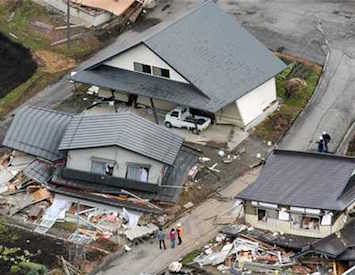
THE POWERFUL EARTHQUAKE that struck off the coast of Fukushima prefecture in Japan last week, is a stark reminder of the deep and continuing safety concerns following the 2011 nuclear disaster.
The stricken reactor complex remains polluted and porous and every added complication leads to further contamination.
Closer to home the renewed tectonic instability highlights the need for urgent Australian government action on the industry that directly fuelled the continuing nuclear crisis.
In October 2011, Robert Floyd, the director general of the Department of Foregn Affairs and Trade (DFAT) Australian Safeguards and Non-Proliferation Office (ASNO) confirmed to the Federal Parliament that
“Australian obligated nuclear material [uranium] was at the Fukushima Daiichi site and in each of the reactors.”
Rocks dug in Kakadu and northern South Australia are the source of Fukushima’s radioactive fallout. There is a clear chain of consequence from a failed nuclear facility on Japan’s East coast to the back of a big yellow truck at an Australian mine-site.
The Federal Government has cravenly ignored this fact and also remains resistant to an independent cost-benefit assessment of Australia’s uranium trade, as directly requested by the then UN secretary general Ban Ki Moon in the wake of Fukushima.
To date there has been no meaningful response from any Australian government, uranium company, uranium industry body or regulator. There have been political platitudes and industry assurances but no credible attention or action.
Indeed, instead of the requested industry review there has been a retreat from responsibility and a rush to rip and ship more uranium ore by fast-tracking risky and contested new uranium sales deals, including to India and Ukraine.
Despite Canberra’s irresponsible fire sale approach the Australian uranium sector is facing tough times.
“Rocks dug in Kakadu and northern South Australia are the source of Fukushima’s radiocative fallout.”
In June, BHP Billiton, the world’s biggest miner, confirmed that it scrapped its long planned, budgeted and approved Olympic Dam expansion in South Australia because of the impact of the Fukushima disaster on uranium demand and prices.
BHP says:
‘Fukushima changed everything.’
And the result is clear — nuclear power’s contribution to the global energy mix is shrinking and is being eclipsed by renewables. Uranium operations are on hold, extended care and maintenance or well behind planning schedules and prices, profits, share value and employment numbers have gone south.
IBISWorld’s March 2015 market report shows that less than 1,000 people are employed in Australia’s uranium industry. The uranium industry accounts for 0.01 per cent of jobs in Australia and in the 20131/14 financial year, accounted for a scant 0.19 per cent of national export revenue. Despite the uranium industry’s promises, uranium mining is not and never will be a significant source of employment or wealth in Australia.
Fukushima is a global game changer with Australian fingerprints. Like Japan, the Australian uranium sector is also on shaky ground and is in urgent need of review. This high risk, low return sector lacks social licence and it is time for less excuses and more examination of the asbestos of the 21st Century.
Human error the biggest danger in nuclear technology
In 2007, six nuclear warheads were transported from Minot Air Force Base in North Dakota, to Louisiana’s Barksdale Air Force Base – by mistake. It’s a pattern of mistakes where there’s zero room for error.
When We’re Our Own Biggest Nuclear Threat Gizmodo Australia, By Brian Barrett November 23, 2010 Continue reading
Speculating on other possible nuclear or uranium targets for Stuxnet computer worm
Dragons, Tigers, Pearls, and Yellowcake: 4 Stuxnet Targeting Scenarios, Forbes, Nov. 22 2010 – by Jeffrey CarrIn all of the thousands of words that have been printed about Stuxnet, and the many interviews given, there’s been almost no discussion of alternative targeting scenarios for the Stuxnet worm…. Continue reading
Millions spent on lobbying gets results for Body Scanner Radiation company
spent $271,500 on lobbying so far this year too. In return it has received $41.2 million in government contracts for their scanners this year.
Body Scanner Radiation Machine Makers Spent Millions On Lobbying, Wall Street Window, – Mike Swanson (11/22/10) The truth comes out. USA Today reports that L-3 Communications, which makes the TSA radiation scanning machines at the center of controversy spent millions on lobbying government officials over the past few years to get government contracts to build the machines. Continue reading

Australian soldiers, Aborigines, civilians exposed to depleted uranium in ’50s nuclear tests
The government is preparing a study of those who may have been affected, including soldiers, and Aboriginal and civilian populations in the area at the time of testing.
Depleted uranium used at Maralinga Paul Langley’s Nuclear History Blog, 23 Nov 10, Australian Government Confirms Depleted Uranium Used in 1950s The Australian Federal Government announced that it will conduct a health study of Australian volunteers who worked at Maralinga, a British nuclear test site. Continue reading
North Korea shows off new nuclear complex
Experts caution, however, that true hydrogen bombs are quite difficult to make, so it seems unlikely that North Korea would succeed in that step anytime soon.
North Koreans Unveil Vast New Plant for Nuclear Use, NYTimes.com, By DAVID E. SANGER November 20, 2010 WASHINGTON — North Korea showed a visiting American nuclear scientist last week a vast new facility it secretly and rapidly built to enrich uranium, confronting the Obama administration with the prospect that the country is preparing to expand its nuclear arsenal or build a far more powerful type of atomic bomb…….. Continue reading
USA keen to market nuclear power to Australia
The deal would allow for the United States to export nuclear technology, material and equipment to Australia for atomic power generation

Legislation Would Protect U.S.-Australia Atomic Trade Deal, NTI: Global Security Newswire , Nov. 18, 2010 Recently introduced U.S. legislation would ensure that a civilian nuclear trade agreement with Australia would still enter into force even if its time runs out in Congress, Continue reading
Despite its own committee’s warnings, Australian govt quietly does uranium deal with Russia
Joint Standing Committee of Treaties (JSCOT) pointed out that uranium sales to Russia should not proceed unless significant security measures were addressed. Few if any of these measures have been addressed since then.
it seems to be just another case of “business as usual” in Australian politics, in which our country’s resources are sold off to the highest bidder, regardless of the dangerous impacts such sales add to geo-regional security.
New Risks from Australia Russia Uranium Deal – On Line Opinion – By James Norman 19/11/2010 Late last week on the sidelines of the G20 meeting in South Korea, Prime Minister Julia Gillard ratified a deal with Russian President Dmitry Medvedev that should send shockwaves through the Australian electorate. Continue reading
The halt on German nuclear transports to Russia
Thousands attend unprecedented anti-nuclear protests in Germany: Local action achieves global impact. Bellona, 19 Nov 10, GORBLEN, Germany .……..The deal that the Germans were preparing with the Russians involved the transportation of 951 spent nuclear fuel assemblies burnt in a research reactor in Rossendorf, Eastern Germany, from a temporary storage facility in Ahaus, Western Germany, to the chemical reprocessing plant Mayak in Russia for final disposal.On November 13, the German news agency DPA reported that authorities in Hamburg – namely, city mayor Christoph Ahlhaus – had refused to allow the port to be used as a transit point for the delivery.
“In October, another decision to refuse to participate in the transportation of nuclear waste had come from the authorities in Bremerhaven, also a port. Therefore, for the time being, there is no suitable seaport in Germany that would agree to serve as a transit harbour [for the waste]. The German government says shipping the 18 containers with nuclear waste may be postponed until April 2011,” the DPA report said (rendered here from the Russian translation). ……
Despite Republicans’ electoral success, nuclear power industry’s future in USA looking grim
Nationwide, ground has been broken for just four reactors, two twin-unit nuclear plants since the 1970s……both are in locations that are insulated from the market, in Georgia and South Carolina. In both locations, the business risk rests with the ratepayers, not with the shareholders…….
G.O.P. Gains on Capitol Hill May Not Advance Nuclear Power, NYTimes.com, By MATTHEW L. WALD, November 16, 2010 WASHINGTON THE outspoken supporters of nuclear power are mostly Republicans, and the Republicans are about to take control of the House of Representatives and gain six seats in the Senate. Is this good news for nuclear power? Continue reading
Guangdong nuclear plant radiation leak reported
Radiation Leak Reported at Guangdong Nuclear Power Plant, Economic Observer News-, By Ruoji TangShare By Yu Huapeng and Hua Yan, November 17, 2010,Translated by Ruoji Tang Original Article: [Chinese] On October 23rd, during a routine inspection of the No. 1 reactor at Daya Bay Nuclear Power Plant, a small leak of radioactive material was discovered, the third leak detected in a Hong Kong Nuclear Investment Company plant since May this year. Yesterday, Daya Bay Nuclear Power Operations Management Ltd. Co. released a report stating that one of the heat removal pipes had been found to be defective but had since been dealt with….Radiation Leak Reported at Guangdong Nuclear Power Plant- Economic Observer News- China business, politics, law, and social issues
1 This Month


18 March Webinar @ 1 PM EST: An Assessment of SMR Projects: The Case of Canada
register for the zoom:
https://us02web.zoom.us/webinar/register/WN_o8BIIOUvQ2ONJR1nta65DQ#/registration


of the week – STOP SMALL MODULAR REACTORS IN CANADA
To see nuclear-related stories in greater depth and intensity – go to https://nuclearinformation.wordpress.com
-
Archives
- March 2026 (138)
- February 2026 (268)
- January 2026 (308)
- December 2025 (358)
- November 2025 (359)
- October 2025 (376)
- September 2025 (258)
- August 2025 (319)
- July 2025 (230)
- June 2025 (348)
- May 2025 (261)
- April 2025 (305)
-
Categories
- 1
- 1 NUCLEAR ISSUES
- business and costs
- climate change
- culture and arts
- ENERGY
- environment
- health
- history
- indigenous issues
- Legal
- marketing of nuclear
- media
- opposition to nuclear
- PERSONAL STORIES
- politics
- politics international
- Religion and ethics
- safety
- secrets,lies and civil liberties
- spinbuster
- technology
- Uranium
- wastes
- weapons and war
- Women
- 2 WORLD
- ACTION
- AFRICA
- Atrocities
- AUSTRALIA
- Christina's notes
- Christina's themes
- culture and arts
- Events
- Fuk 2022
- Fuk 2023
- Fukushima 2017
- Fukushima 2018
- fukushima 2019
- Fukushima 2020
- Fukushima 2021
- general
- global warming
- Humour (God we need it)
- Nuclear
- RARE EARTHS
- Reference
- resources – print
- Resources -audiovicual
- Weekly Newsletter
- World
- World Nuclear
- YouTube
-
RSS
Entries RSS
Comments RSS
 nuclear-news