200-MWe marine microreactors could power ports, desalination and electro-fuel plants.

The nuclear barge could supply power to ports, isolated regions and coastal industries. (Ed – they don’t mention the wastes)
By Atharva Gosavi, Aug 29, 2026, https://interestingengineering.com/energy/200-mwe-marine-reactors-could-power-ports-desalination-and-electro-fuel-plants
A consortium led by advanced reactor developer newcleo has begun studying a floating nuclear power plant designed to supply low-carbon electricity to ports, coastal industrial hubs and isolated regions.
Named n-Floating, the project will examine a non-self-propelled barge housing multiple lead-cooled LFR-AS-200 reactors, each capable of producing 200 MWe.
The initiative has received nearly €1 million through a Bpifrance-managed program supporting the decarbonization of the maritime sector.
Work is underway and will continue for approximately 18 months, with potential industrial deployment targeted by 2036.
Multiple reactors aboard one floating unit
newcleo is working with classification society Bureau Veritas Marine & Offshore and French engineering company ABMI Groupe.
Together, the three companies will assess whether advanced nuclear reactors can be safely and competitively integrated into floating infrastructure.
The initial phase will focus on conceptual studies for the nuclear barge. Researchers will evaluate possible applications, including electricity supply for ports, associated industrial facilities, coastal areas and regions that may face land, grid or infrastructure constraints.
The barge could also support energy-intensive processes such as desalination and the production of low-carbon fuels.
However, the project remains at the study stage, and its technical feasibility, regulatory requirements and commercial prospects still need to be evaluated.
“Maritime deployment of advanced reactors opens a broader and still largely unexplored market for nuclear energy,” said Stefano Buono, CEO of newcleo.
“Floating nuclear offers an opportunity to bring reliable, low-carbon power to applications at sea and in coastal locations,” he added.
Borrowing experience from offshore energy
The concept will draw on established methods used by the maritime, oil and gas industries to design, construct and operate floating facilities for energy production, storage, liquefaction and regasification.
Building and integrating major plant systems inside a controlled shipyard environment could support greater standardization and repeatable construction.
Once completed, the unit could then be transported to its intended operating location rather than being built entirely at the deployment site. Bureau Veritas will contribute expertise in classification, certification and risk assessment.
Its work will help the consortium examine the safety, regulatory and technical questions created by combining a nuclear installation with a floating maritime platform.
ABMI Groupe will contribute engineering and project-delivery experience from complex maritime and nuclear programs.
The consortium will also establish a development roadmap covering the steps required to move from the present conceptual phase toward possible construction and deployment.
Safety and licensing remain central
Floating reactors would need to comply with both nuclear and maritime safety requirements. Licensing, physical security, operations and regulatory oversight will therefore form important parts of any future development program.
The study begins as international discussions around maritime nuclear technology gather pace.
The International Atomic Energy Agency launched its ATLAS initiative on August 26 to encourage dialogue and improve technical understanding of innovative nuclear applications and their safety and regulatory implications.
The consortium ultimately aims to create a standardized floating energy system that can be deployed at scale. Under its current roadmap, the nuclear barge could progress toward industrial deployment by 2036.
Israel Is Cementing its Control Over The West Bank And East Jerusalem While The World Is Distracted
September 1, 2026, Martin Kear, University of Sydney, https://scheerpost.com/2026/09/01/israel-is-cementing-its-control-over-the-west-bank-and-east-jerusalem-while-the-world-is-distracted/
With the world’s attention focused on the ongoing US-Iran conflict and the delicate negotiations over the fate of Gaza, it’s easy to overlook what’s happening in the other occupied Palestinian territories.
In recent days, the Israeli government has given final approval to a plan to build a new settlement in an area of the West Bank known as E1, east of Jerusalem. The government has opened up tenders for the construction of some 1,200 housing units.
Settlements in E1 would effectively split the West Bank into two parts, cutting off the Palestinian city of Ramallah in the north from Bethlehem in the south. It would also separate East Jerusalem from the rest of the West Bank. Palestinians consider East Jerusalem an indispensable part of any future Palestinian state.
Israel’s far-right finance minister, Bezalel Smotrich, indicated this was precisely the point. He said every new settlement in the West Bank puts “another nail in the coffin” of a Palestinian state.
Israel has held off on approving settlements in E1 for decades due to international pressure, particularly from previous US administrations that have tried to maintain the possibility of a future Palestinian state, however remote.
A joint statement by nearly two dozen Western nations condemned the move to develop E1 last week and called “for its immediate reversal in the strongest terms”.
However, with Prime Minister Benjamin Netanyahu’s political fortunes waning in the lead-up to elections in October, it appears he is willing to risk international opposition to shore up votes at home, with the belief the Trump administration will shield Israel diplomatically.
The move comes amid rising violence from Israeli settlers against Palestinians in the West Bank, which has led to at least 80 deaths this year.https://flo.uri.sh/story/3801560/embed
Earlier this month, settlers laid siege to the homes of Palestinian families in the village of Qusra. They cut off water and electricity supplies, damaged orchards and prevented the families from leaving their homes.
The international reaction was swift. Even the US ambassador to Israel, Mike Huckabee, a longtime supporter of Israeli settlements, denounced what he called the “inexcusable and repugnant” actions of the settlers in Qusra.
The Israeli police, however, didn’t make any arrests. And the Israeli soldiers sent to the area threw clothing belonging to a families out of the window of their homes.
Expanded settlements in West Bank
The situation in Qusra is emblematic of a rapidly deteriorating security situation for Palestinians across the West Bank since the October 2023 attacks by Hamas and Israel’s invasion of Gaza.
The United Nations estimates thousands of Palestinian homes have been demolished, seized or sealed by Israeli soldiers or settlers. Tens of thousands of people have been displaced.
In June, Amnesty International published a report arguing settler attacks are not being conducted by rogue extremists, but are instead an integral part of an organised state policy. The report concludes the Israeli government is actively engaged in the ethnic cleansing of Palestinians in the West Bank.
Since October 2023, Israel has also expropriated more Palestinian land and expanded the construction of settlements that are considered illegal by many states under international law.
In 2024, Peace Now, an Israeli activist group that tracks settlement expansion, revealed that Israel had declared 23 square kilometres of the West Bank as state land. This was the largest transfer of land to Israeli control in decades. Such declarations mean Palestinians cannot own the land; instead, the government can lease it to Israelis.
And earlier this year, the Israeli Security Cabinet approved 34 new settlements in the West Bank. This brings the total number of settlements established since Netanyahu’s right-wing government came to power in 2022 to more than 100.Steady incursions at East Jerusalem holy site
In addition to the proposed building of settlements in the E1 area, Israel is also seeking to assert its sovereignty over Haram al-Sharif/Temple Mount, the site of the al-Aqsa Mosque compound and Western Wall. The site in the Old City of Jerusalem is sacred for Jews, Muslims and Christians.
Israel captured East Jerusalem from Jordan in 1967. In their 1994 peace agreement, Israel agreed that Jordan would retain custodianship of the site.
Under the agreement, only Muslims have the right to pray in the compound that contains the al-Aqsa Mosque. Jews are permitted to pray at the Western Wall.
The issue of access to the compound is so sensitive that Palestinians consider any entry by Israelis to be extremely provocative. It’s seen as an assertion of Israeli sovereignty over the third-holiest site in Islam and an essential part of any future Palestinian state. https://www.youtube.com/embed/aWWt_tH7lZs?wmode=transparent&start=0 Right-wing Israeli rabbi accused of provocation at Jerusalem holy site.
For example, when then-Opposition Leader Ariel Sharon visited the compound in 2000 accompanied by hundreds of police, it was considered one of the sparks of the Second Intifada (2000–05).
In 2021, when Israeli security forces prevented thousands of Palestinians from praying at the compound during Ramadan, it triggered a brief, deadly conflict between Israel and Hamas in Gaza.
And last month, Israeli National Security Minister Itamar Ben-Gvir, accompanied by armed police and more than 4,000 supporters, entered the Temple Mount site to pray and wave Israeli flags. Ben-Gvir said “everywhere, people understand that the State of Israel is the sovereign authority” at the site.
Jordan has been very concerned by these persistent Israeli incursions. On August 5, it convened an emergency meeting of Arab and Muslim foreign ministers to discuss what it called the “imminent” threat of an Israeli takeover of the site.
Jordan’s foreign minister also warned that any attempt by Israel to alter the status quo at the site “could trigger a religious conflict that could reverberate beyond Palestine and Jordan into the whole Muslim world”.
What all of this means
This pattern of events shows the Israeli government is trying to change the “facts on the ground” in the the West Bank and East Jerusalem. It is doing this by expelling Palestinians from what little territory they still inhabit and asserting sovereignty over Palestinian lands and religious sites. This would make any future Palestinian state impossible.
If these actions continue, they will be the death knell for any chance at peace between Israel and the broader Muslim world.
Ukraine’s Mounting Political Crisis
Gordon Hahn Considering Russia and Eurasia, byGordonhahnSeptember 1, 2026
The NATO-Russia Ukrainian War is coming to its endgame in Russia’s favor, sharply raising the temperature of domestic Ukrainian politics. To add catastrophe to disaster, the Ukrainian Maidan regime, state, and army are riven with schisms threatening the existence of them all.
Thus, on the ‘left’ and on the right, particularly the far right neofascist wing of Ukrainian politics, pressure on the Volodomyr Zelenskiy iteration of the Maidan oligarchic-neofascist regime is being intensified. On the right, the 3rdArmy Corps ‘Azov’, based on the Azov neofascist political movement, has been put in charge of the defense of what remains (approximately 15 percent) of Ukraine’s hold on Russian-claimed Donetsk Oblast.
There, in western Donetsk, Russian forces have entered Dobropiliya and are in the process of encircling the Slovansk and Kramatorsk strongholds. To the west of these three towns lies nothing but undefendable open fields leading to the middle of the Dnepr River.
To this must be added the increasingly dire situation in Ukraine’s northern oblasts of Kharkiv and Sumy, with their provincial capitols under threat of siege and encirclement. Russian victories in the north would revive the threat to Kiev long dormant since the war’s first months. In the southern oblast of Zaporozhe, the road to its provincial capitol of the same name is about to open with the imminent fall of Orekhov. …….. . . . . . (Subscribers only) .https://gordonhahn.substack.com/p/ukraines-mounting-political-crisis?r=stexy
Former Senior Officials Ask Secretary Wright to Release Saudi Nuclear Deal Documents
NPEC 31st Aug 2026
Early last week, President Trump sent his Saudi nuclear cooperative agreement to Capitol Hill. The agreement will come into force by year’s end unless Congress opposes or amends it. Here’s the rub, though: it’s unclear if Congress has received all that the Administration agreed to with the Kingdom. Worse, the Energy Department has yet to publicly release what it sent the Hill.
With every previous U.S. nuclear cooperative agreement, the Executive has always made the text and any side agreements, appendices, agreed minutes, or side letters public.
As four other former senior national security officials and I wrote last Friday to Energy Secretary Chris Wright (see letter text below), such transparency has been the rule for the simplest of reasons: It’s the surest way to assure a proper review of the agreement.
This written request to make these documents available included Eric Edelman, former Under Secretary of Defense for Policy (Bush II); Robert Einhorn, Assistant Secretary of State for Nonproliferation (Clinton); Robert Joseph, Under Secretary of State for Arms Control and International Security (Bush II); and Gary Samore, White House Coordinator for Arms Control and WMD (Obama).
letter follows [on original ] https://npolicy.org/former-senior-officials-ask-secretary-wright-to-release-saudi-nuclear-deal-documents/
‘Drunk’ pilot crashes ‘stolen’ Cessna plane near nuclear power plant
A pilot has been arrested on suspicion of stealing a light aircraft before
landing it in the middle of a sunflower field near a nuclear power plant.
Authorities in Hungary deployed two supersonic fighter jets after a man
took off in an allegedly stolen Cessna from Kalocsa airfield. He proceeded
to fly the jet into restricted airspace around the Paks nuclear power plant
before conducting ‘manoeuvres’ over the facility, according to local
reports. After being detected by military radar, Gripen fighters were
dispatched to follow the aircraft, which made an emergency landing in a
sunflower field in Tolan county, around 84 miles south of capital Budapest.
Metro 31st Aug 2026, https://metro.co.uk/2026/08/31/drunk-pilot-crashes-stolen-cessna-plane-near-nuclear-power-plant-29499150/
North Korea hits out at Trump’s ‘pointless’ demands and vows to strengthen nuclear force
Trump has been seeking another summit with Kim Jong-un, following three meetings in 2018 and 2019
Kyu-seok Shim, 31 August 2026
North Korea declared on Monday that Washington’s hostile policy remains unchanged and pledged to continue strengthening its nuclear capabilities, rebuffing repeated American calls for denuclearization.
In a statement released via state media KCNA, a Foreign Ministry spokesperson accused Washington of maintaining a confrontational stance through demands for Pyongyang’s “complete denuclearisation,” criticism of its human rights record, and upcoming joint military exercises with South Korea and Japan.
“The Trump administration has thus fully reconfirmed its invariable hostile policy to wantonly violate the sovereignty, political system and security interests of the DPRK,” the spokesperson said, referring to the Democratic People’s Republic of Korea.
The official described the country’s nuclear arsenal as “an absolute guarantee for defending its sovereignty,” adding that U.S. demands would not weaken its nuclear status………………………………………………………………………………………… https://www.the-independent.com/news/world/americas/us-politics/north-korea-trump-nuclear-force-hostile-us-policy-b3042186.html
Plutonium—the ‘forever’ radiotoxic weapons-proliferation risk in nuclear reactor spent fuel. How exactly should we manage its containment?
Plutonium—the ‘forever’ radiotoxic weapons-proliferation risk in nuclear reactor spent fuel. How exactly should we manage its containment?
Nick Scarr 55 Pages Posted: 8 Sep 2025 Last revised: 27 Aug 2026,
https://papers.ssrn.com/sol3/papers.cfm?abstract_id=5402553
Abstract
The paper is a research dossier and examines the properties of plutonium in terms of its two principal hazards: toxicity and weapons proliferation. It will then address the question of whether there is a sufficient safety-case for the long-term geological storage of plutonium-bearing spent fuel.
Keywords: Plutonium, GDF, Weapons Proliferation, Criticality, MOX, Reprocessing, Keff, 5f, Pu-240, Pu-239, reactor-grade, prompt neutrons, HALEU, high burnup, geological disposal, plutonium residue, plutonium oxide, IAEA, sellafield, cultural exceptionalism, anhydrite, biological half life, committed dose, biological half-life, predictability fallacy, fission-fusion-fission, Barn rating, mox, inert matrix fuel, TRISO, intergenerational ethics
We Investigated The Board Of Peace. The Corruption We Found Will Shock You
7 Aug 2026Jared Kushner has a scheme to profit off world peace — and Gaza is the testing ground. There’s a web of private equity billionaires with ties to Israel and shadowy corporate armies who stand to profit off never-ending conflict. We investigated Trump’s Board of Peace.
Walt Zlotow – Some inconvenient truths about Trump’s Iran war

Walt Zlotow West Suburban Peace Coalition Glen Ellyn IL , 31 Aug 2026, https://theaimn.net/some-inconvenient-truths-about-trumps-iran-war/
The US lost the war within the first 3 days when the US, Israeli attack and assassination of Iranian leader Ali Khomenei did not collapse the Iranian regime
Bombing Iran for 39 days was a catastrophic military failure. Iran’s retaliatory defense decimated all 20 US Gulf State bases inflicting over 750 US casualties including 18 dead.
Running out of both offensive and defensive missiles, Trump blinked first and called for a ceasefire on April 8, war day 40.
The June 17th signing of the Memorandum of Understanding (MOU) was essentially a US surrender document.
Realizing the MOU signaled his defeat, Trump simply ignored it, implemented a blockade and resumed periodic bombing. Both utterly failed to reopen the Strait of Hormuz to resume the critical flow of oil to prevent worldwide economic calamity.
Having been sucker punched with bombs twice by Trump during negotiations, Iran has signaled it will never negotiate with Trump during his remaining 2 years, 5 months in office.
Trump’s statements that Iran is negotiating surrender on Trump’s terms, the Strait is open, and will become US territory, the blockade is a resounding success, the oil is flowing, are so detached from reality one must ponder Trump’s sanity.
Refusal to capitulate is spreading the war within the region to Yemen, Saudi Arabia, Lebanon, West Bank, Iraq, Syria, possibly even Turkey v. Israel.
If Trump’s last gasp is to utterly destroy Iranian infrastructure, Iran will retaliate and destroy the entire Gulf States oil infrastructure and possibly Israel’s infrastructure as well.
Unlike for the US, Trump’s war is an existential threat to Iran’s existence. They have been preparing for the US, Israeli tag team war machine to destroy them for decades. They are and will prevail regardless of the cost.
Israel will do whatever is necessary to keep Trump in the war to destroy Iran. Trump’s only way out is to sever ties with Israel and capitulate to Iran’s sensible terms. Given Trump’s history, the chances of that are nil. Removing Republican control of Congress in 9 weeks may be only chance for America to avoid economic collapse.
But only if a Democratic Congress has the wisdom, decency and good sense to end the most self destructive war in America’s 251 years.
The Russian Art of War – Why the West Has No Strategy and Ukraine will lose
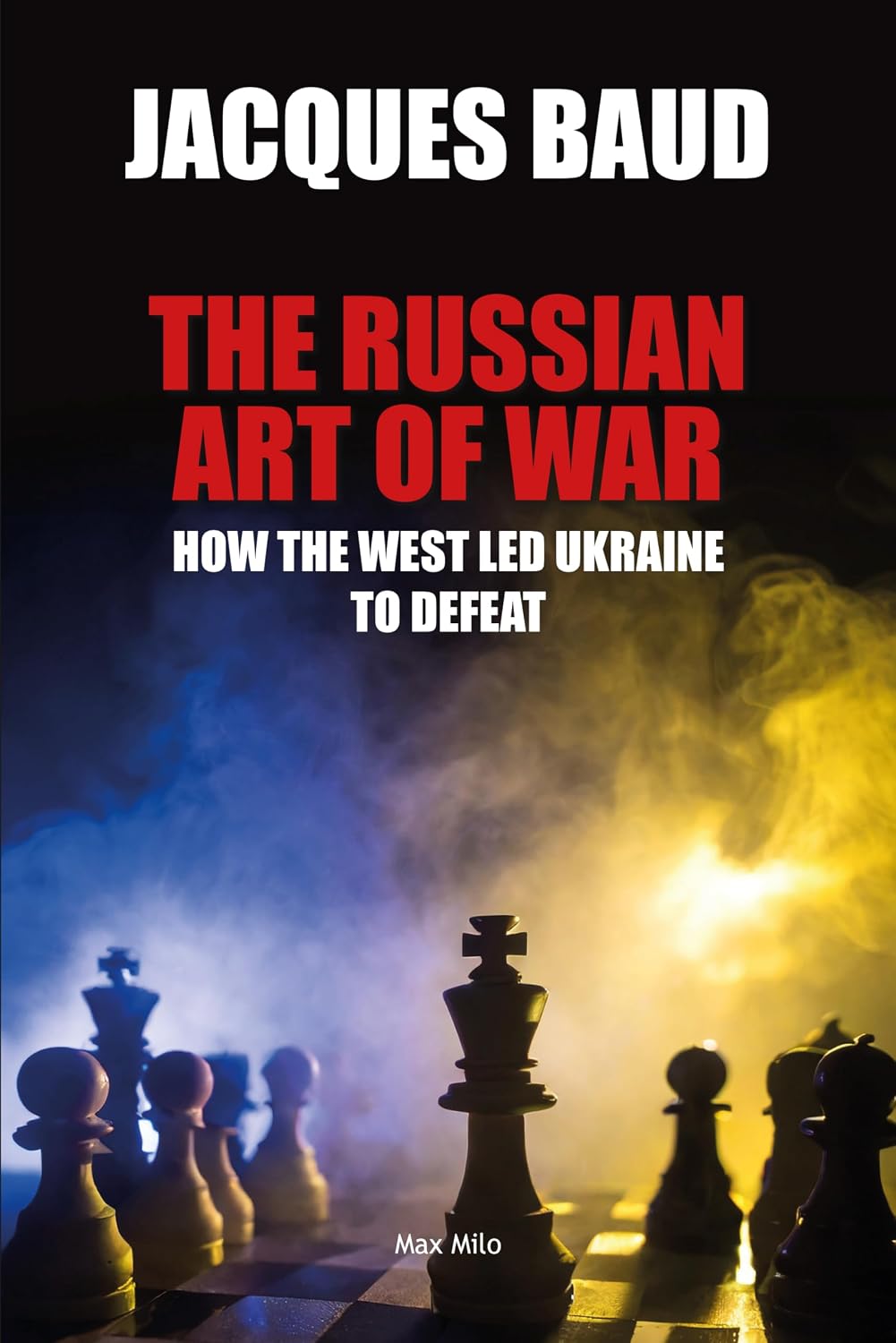
Baud is careful to stress that understanding an adversary is not the same as endorsing them. Intelligence, he reminds us, comes from the Latin intelligere — to understand. Without that understanding, diplomacy becomes impossible and force becomes the only remaining instrument.
.
A conversation with Colonel Jacques Baud
Ian Proud, Aug 28, 2026, https://thepeacemonger.substack.com/p/the-russian-art-of-war-why-the-west?utm_source=post-email-title&publication_id=3221990&post_id=211519795&utm_campaign=email-post-title&isFreemail=true&r=1ise1&triedRedirect=true&utm_medium=email
Colonel Jacques Baud, former Swiss strategic intelligence officer and author of The Russian Art of War: How the West led Ukraine to Defeat, has spent decades studying how different military cultures understand and wage war. His detailed, heavily referenced book — written early in the conflict — remains one of the clearest explanations of why Russia continues to hold the strategic advantage in Ukraine.
Baud’s central argument is simple but profound. During the Cold War, both NATO and the Warsaw Pact organised their forces around three interlocking levels of warfare: tactical, operational and strategic.
After 2001, Western armies largely abandoned the operational level as they shifted to counter-terrorism.
Fighting insurgents in Iraq and Afghanistan reduced war to a series of tactical engagements.
When the same mindset and equipment were transferred to Ukraine, the results were predictable.
Russia never made that shift. Its art of war remains built on the classic three levels.
Early in the Special Military Operation, deep operational thrusts toward Kyiv and Kherson were designed to create strategic pressure and force negotiations. When that phase ended, Russia adjusted — not by descending into pure tactics, but by systematically destroying Ukrainian forces while still linking tactical actions to operational and strategic goals.
Ukraine, trained and equipped largely by the West, has remained stuck at the tactical level.
This difference explains much of what we see on the battlefield. Russia’s objectives have been consistent: protect the population of the Donbas, prevent Ukrainian NATO membership, and secure a neutral buffer.
The Istanbul draft of March 2022 already reflected these goals, drawing on historical models of neutrality such as Austria in 1955 and Switzerland in 1815.
The West, by contrast, has never articulated clear, measurable political objectives beyond the vague slogans of “weakening Russia” and “supporting Ukraine.”
Without clear objectives, there can be no coherent strategy and no exit plan.
Industrial capacity reinforces the disparity. Russia’s state-influenced military-industrial complex can prioritise and scale production — whether of artillery shells, missiles or drones — with a flexibility that privatised Western industry lacks.
Lead times for systems such as Patriot missiles are measured in years.
Once Russia recognised the importance of drones, it moved from relative disadvantage to local superiority through industrial mobilisation.
Baud is careful to stress that understanding an adversary is not the same as endorsing them. Intelligence, he reminds us, comes from the Latin intelligere — to understand. Without that understanding, diplomacy becomes impossible and force becomes the only remaining instrument.
The tragedy is that a clearer grasp of Russian thinking in 2022 might have spared Ukraine much of the destruction that followed.
The conversation ends with a sober conclusion. Russia has a coherent political-military strategy underpinned by industry, energy and time.
The West and Ukraine are fighting a war by committee with no clear strategic destination.
In such conditions, the side that knows what it wants — and organises itself accordingly — almost always prevails.
You can watch the full conversation here:
From memory of harm to culture of responsibility
by beyondnuclearinternational, https://beyondnuclearinternational.org/2026/08/30/from-memory-of-harm-to-culture-of-responsibility/
The International Day Against Nuclear tests should never be treated as merely symbolic but as a moment to pause before a human memory that remains painfully alive, writes Dr. Ghassan Shahrour
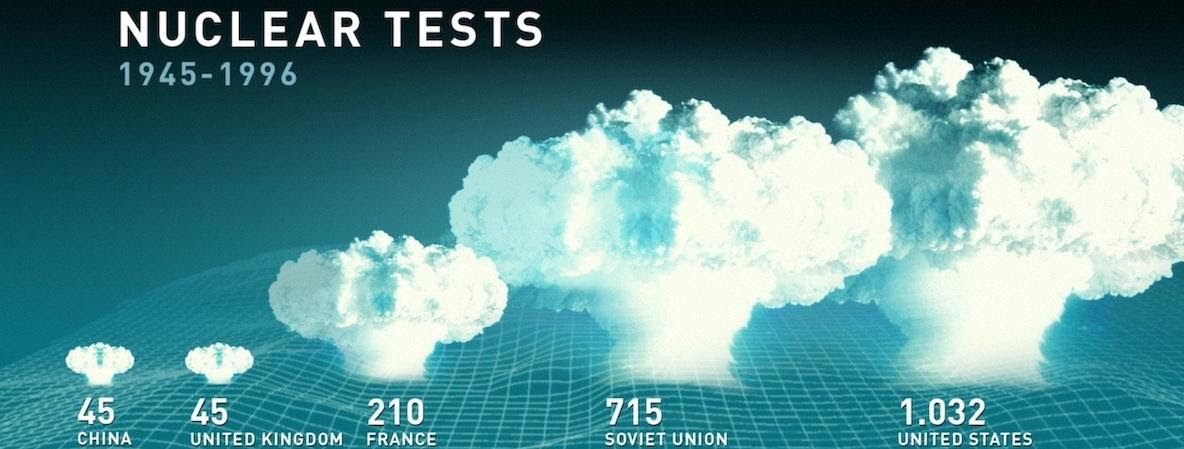
Every year on 29 August, the world marks the International Day Against Nuclear Tests. It should never be treated as merely a symbolic entry on the global calendar. It is a moment to pause before a human memory that remains painfully alive. Since the first nuclear explosion in 1945, more than two thousand nuclear tests have been conducted across different regions of the world. Behind these numbers and locations are human stories: people exposed to radiation, families who lost loved ones, and communities forced to live with health and environmental consequences that have stretched across generations.
From the plains of Kazakhstan to the islands of the Pacific, and from former Soviet test sites to American testing grounds, nuclear tests were never merely technical experiments. They left deep marks on human lives and ecosystems. The last confirmed nuclear explosive test was conducted by North Korea in 2017, a reminder that the prohibition against nuclear testing cannot be treated as a settled achievement.
From Memory of Harm to a Culture of Responsibility
Remembering the victims of nuclear tests is not a return to the past for its own sake. Memory, when joined with responsibility, becomes a force for preventing the repetition of harm. Years of discussions and seminars on nuclear disarmament and human security have shown that the challenge is not only to keep the danger of nuclear weapons visible, but also to ensure that the voices of those harmed do not disappear behind technical and strategic language. Behind every test site there is a human life. Behind every number there is a family, a community, and a memory.
This is why a human-centered culture of disarmament is needed. Such a culture does not view weapons solely through their technical capabilities, nor does it measure security by the size of arsenals or the strength of deterrence. It asks a more fundamental question: What happens to human beings when military power becomes a permanent source of danger?
Nuclear weapons may be described in terms of strategy, deterrence, and balance, but nuclear tests reveal another side of the story: bodies exposed to radiation, environments damaged, and communities forced to live with consequences they never chose. When we restore this memory, disarmament becomes a human issue before it becomes a technical one.
From General Calls to Specific Responsibility
The Comprehensive Nuclear-Test-Ban Treaty CTBT has not yet entered into force, decades after its adoption. Its incomplete entry into force is a reminder that the global norm against nuclear testing is still unfinished. In a world where strategic competition is intensifying and nuclear arsenals are being modernized, calls for the treaty to enter into force cannot remain general. They must become more focused political and civic efforts.
This is where responsibility for the remaining Annex 2 states whose ratification is still required becomes central. The international community, civil society, parliaments, media, and scientific and medical institutions should intensify their calls for these states to take the necessary steps. The goal is not condemnation, but clear and sustained encouragement to fulfill their responsibility toward a global system that prevents the return of nuclear testing.
The CTBT is not merely a technical treaty. Its verification system is essential, but its significance is broader: it is a central pillar of the international effort to prevent nuclear testing and advance nuclear disarmament. Its entry into force would strengthen a vital international norm and reinforce confidence that nuclear testing must not return.
Every year that passes without the treaty entering into force is a missed opportunity to strengthen a norm that protects people, the environment, and future generations.
Civil Society: Turning Memory into Action
This is where civil society plays a decisive role. Survivors, affected communities, humanitarian and medical organizations, and peace advocates do not offer mere testimonies about the past. They carry human knowledge that must inform decision-making. When the story of a person who lived through radiation exposure becomes a heard testimony, and when the memory of an affected community becomes part of public debate, the nature of the issue changes. Nuclear tests are no longer numbers in reports or points on maps. They become human lives with names, memories, and rights.
This is the power of humanization in disarmament: restoring the human face to issues that technical language can obscure. Policy does not change through statements alone. It changes when human harm becomes visible, understandable, and impossible to ignore.
From 29 August: From Memory to Action
The International Day Against Nuclear Tests must be more than a day of remembrance. It should become a yearly point of mobilization for action: raising awareness, supporting survivors, strengthening education, and increasing civic and diplomatic pressure for the completion of the treaty ratification requirements. Media should bring the issue back into public debate. Education should help new generations understand the link between past tests and future risks. Civil society should keep the voices of affected communities at the heart of the campaign and sustain focused pressure on governments whose decisions are necessary for the treaty to enter into force.
Memory alone is not enough. What protects the future is the action that grows from memory. Preventing nuclear tests is not only a matter of treaty law. It is an expression of a culture that says human life is not a field for experimentation, the environment is not a space for sacrifice, and the security of future generations cannot rest on risks they may be forced to pay for.
On 29 August, we do not only remember what happened. We remember the human beings who paid the price. We turn memory into responsibility, responsibility into action, and action into a norm that protects the future. A culture of disarmament begins when human life becomes the starting point.
Dr. Ghassan Shahrour, coordinator of Arab Human Security Network, is a medical doctor, prolific writer, and human rights advocate specializing in health, disability, disarmament, and human security. He has contributed to global campaigns for peace, disarmament, and the rights of persons with disabilities. This article first appeared on the Arab Human Security Network website and in multiple other outlets.
Trump’s shipping race with Xi goes nuclear
COMMENT AA BB
Have they factored in the staggeringly huge cost of the multi decades long decomissioning process and disposal of the reactor and nuclear waste? NS Savanna was built 1961, out if service 1972 – the reactor and ship will ‘remain regulated until 2031″ (wikipedia)
Backing from Washington should help address regulatory challenges as well as insurance issues, which represent one of the main hurdles to expanding nuclear propulsion beyond military submarines, aircraft carriers and a handful of Russian icebreakers.

Whereas shipping lines today require coverage for damage to their vessels, the loss of cargoes and injuries to employees, the new ships will need a new level of insurance against nuclear incidents.
US bets uranium-powered British vessels can challenge China’s maritime dominance
Christopher Jasper, Transport industry editor, 29 August 2026
Donald Trump has opened up a new battleground in his trade war with Beijing, and a British start-up building nuclear-powered ships has found itself on the front line.
A US effort to challenge China’s dominance in shipping by building a fleet of nuclear-fuelled vessels is being led by UK-based Core Power.
The start-up, which has 100 employees and moved to London from Singapore in 2020, says it is unique outside Russia and China in having the expertise to integrate reactors with commercial ships, and the White House seems to agree.
Mikal Bøe, the Norwegian founder and chief of Core Power, flew to Washington last week to sign a seven-year pact with the US Maritime Administration…………….
The deal aims to deliver a fleet of zero-emission vessels that travel at 30 knots, or twice the pace of today’s ships, which typically sail slowly to conserve fuel.
They would be assembled in a multibillion-dollar nuclear yard operated by Core Power in the US. Work is slated to commence by 2028, with the first deliveries in 2033.
Trump hopes the plan can revive American shipbuilding and provide a ready market for a nuclear industry.
While China is developing its own maritime nuclear propulsion, the sector is one of the few in which the US is confident it has a major lead.
Onboard reactors heat water to create steam, which generates electricity to drive the engines, providing a permanent source of power and “free speed”, Bøe said…………
The deal aims to deliver a fleet of zero-emission vessels that travel at 30 knots, or twice the pace of today’s ships, which typically sail slowly to conserve fuel.
While the nuclear vessels would cost around $700m (£515m), compared with up to $250m for a large merchant ship, their speed would let them complete far more journeys………………..
Establishing the business case for nuclear power over traditional engines will open up a market to replace 8,000 ships over the next 25 years, Bøe estimates……
Bøe said the Trump administration had been instrumental in accelerating its plans……………
Core Power plans to announce a supplier of nuclear reactors for its ships as early as next month, with BWX Technologies viewed as the frontrunner.
The company is already partnered with BWX – which helped develop the first nuclear submarine in the 1950s – on plans for floating nuclear power plants to supply coastal industrial complexes.
A decision on the location for its nuclear shipyard will follow in the next six months.
A facility capable of producing three vessels a year would have construction costs of about $3bn, increasing to $15bn to churn out ships for the global market………………….
Backing from Washington should help address regulatory challenges as well as insurance issues, which represent one of the main hurdles to expanding nuclear propulsion beyond military submarines, aircraft carriers and a handful of Russian icebreakers.
Whereas shipping lines today require coverage for damage to their vessels, the loss of cargoes and injuries to employees, the new ships will need a new level of insurance against nuclear incidents.
‘The talk of the industry’
Britain’s dominance of the maritime insurance industry could see it play a key role in establishing an insurance regime.
The Technology Prosperity Deal signed by Trump and Sir Keir Starmer last year included a commitment to explore civil nuclear applications at sea and the establishment of a UK-US corridor, which could form the basis of a maritime nuclear insurance zone…………..
Core Power has $200m in financing and will seek to raise a further $600m next year. While existing investors are mostly shipbuilders and owners, the next round will seek to bring in private equity, venture capital and energy companies.
It has also agreed an alliance with authorities in Corpus Christi, Texas, a major US port, to lay out plans for new infrastructure that will be needed for nuclear-propelled tankers.
Mr Bøe said the door was also “wide open” for Britain to become involved in the sector.
Establishing the business case for nuclear power over traditional engines will open up a market to replace 8,000 ships over the next 25 years, Bøe estimates.
He said the first ships could operate on transatlantic routes and that Washington was open to allies – including Britain – becoming involved in the project, although ships were unlikely to be built here.
Bøe said the Trump administration had been instrumental in accelerating its plans.
“The pace at which both nuclear reactors and maritime policy and an action plan to build back shipbuilding capacity have been developed is remarkable,” he said.
“You cannot compete with Beijing on its own terms, we cannot outbid them. But we can put these two things together and establish the world’s first programme for civil maritime nuclear propulsion which creates a whole new adventure and competes with China.”
Core Power plans to announce a supplier of nuclear reactors for its ships as early as next month, with BWX Technologies viewed as the frontrunner.
The company is already partnered with BWX – which helped develop the first nuclear submarine in the 1950s – on plans for floating nuclear power plants to supply coastal industrial complexes.
A decision on the location for its nuclear shipyard will follow in the next six months.
A facility capable of producing three vessels a year would have construction costs of about $3bn, increasing to $15bn to churn out ships for the global market.
The hulls for the ships will be built in Japan or South Korea and floated to the US to be fitted with reactors and engines. The same yard will undertake maintenance and midlife refuelling once supplies of uranium are spent.
Backing from Washington should help address regulatory challenges as well as insurance issues, which represent one of the main hurdles to expanding nuclear propulsion beyond military submarines, aircraft carriers and a handful of Russian icebreakers.
Whereas shipping lines today require coverage for damage to their vessels, the loss of cargoes and injuries to employees, the new ships will need a new level of insurance against nuclear incidents.
Ukrainian nuclear power plant without external power for over a week
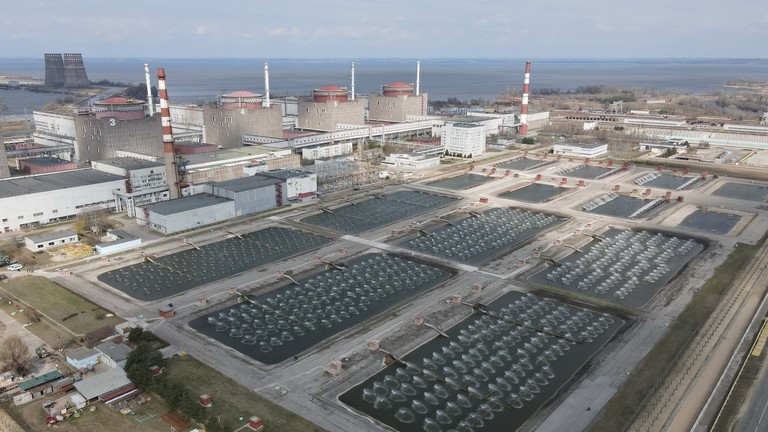
This is the 27th time since Russia invaded Ukraine that the Zaporizhzhia plant has had to rely on emergency diesel supplies.
By Al Jazeera Staff and AP, 29 Aug 2026
The Zaporizhzhia nuclear power station in southeastern Ukraine has been without off-site power for more than a week, the world’s nuclear energy watchdog has warned.
The plant, which Russia has occupied since 2022, is currently relying on emergency diesel generators, the International Atomic Energy Agency (IAEA) said on Saturday.
The plant needs power to keep its six non-operating reactors cool and has only a 10-day diesel supply on site, the IAEA said in a statement.
“The availability of diesel fuel is of paramount importance whenever a nuclear power plant loses off-site power,” IAEA Director General Rafael Grossi said.
The Zaporizhzhia nuclear power plant has not had a delivery from an off-site storage facility in about six months but was supplied with diesel on Thursday and Friday from another off-site location, the IAEA said.
The Vienna-based agency is now trying to negotiate a local ceasefire to allow repairs to electrical lines.
Zaporizhzhia is Europe’s largest nuclear power plant. It has not generated electricity since September 2022, over six months after Russia launched a full-scale invasion of Ukraine in February that year, but the plant’s reactors must be kept cool to prevent a meltdown of the fuel inside.
“This is the 27th blackout at the plant since the start of Russia’s full-scale invasion,” Ukraine’s deputy head of military law enforcement, Gyunduz Mamedov, wrote on X on Saturday.
The IAEA has had a permanent presence at the site since September 2022, after Russia took control of the Ukrainian facility in March that year.
Japan Govt Asks Eastern City to Accept N-Waste Site Survey
Hitachiomiya, Ibaraki Pref., Aug. 31 (Jiji Press), https://jen.jiji.com/jc/eng?g=eco&k=2026083100449
–The industry ministry Monday asked the city of Hitachiomiya in Ibaraki Prefecture, eastern Japan, to accept a literature survey for selecting a final disposal site for high-level radioactive waste from nuclear power plants.
If realized, Hitachiomiya would become the fifth site in the country to accept a literature survey, after the town of Suttsu and the village of Kamoenai, both in the northernmost prefecture of Hokkaido, the town of Genkai in the southwestern prefecture of Saga and Minamitorishima, a remote Tokyo island in the Ogasawara chain in the Pacific.
This is the second case of the central government seeking approval for the survey without request from local communities.
Senior ministry officials visited Hitachiomiya and handed a written request to Mayor Sadayuki Suzuki.
“I view the request very positively,” he said, adding that he wants to make a final decision after hearing from the city assembly.
Drilling Begins For First Final Disposal Hole At Onkalo Repository in Finland
By David Dalton, Nucnet 31st Aug 2026
‘Ambitious’ goal is for operational readiness at Olkiluoto facility by end of 2026
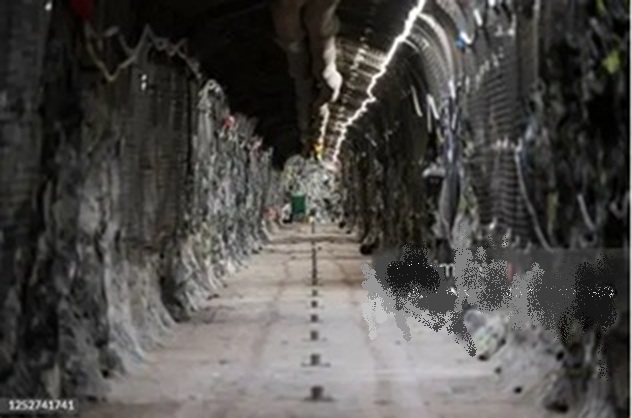
Posiva has begun drilling the first hole for the final disposal of spent nuclear fuel at the Olkiluoto deep geologic repository in southwest Finland.
Posiva, the company responsible for the final disposal of spent nuclear fuel in Finland, said the drilling began on began on 26 August at a depth of 400 metres in the 1.9-billion-year-old bedrock.
The first test disposal holes at the repository, known as Onkalo, were drilled in the autumn of 2022, Posiva said.
The start of drilling for the first actually disposal hole was accelerated followed drilling readiness checks that were carried out before the summer holiday season. In a kick-off meeting on 25 August, safety issues, technical specifications and more detailed plans for the drilling operation were reviewed.
“The final adjustments to the equipment were made in the morning and by early afternoon the drill was already hitting the rock,” said Kimmo Lehtola, construction manager at Posiva Käytö.
The hole, 8.4 metres deep and 1.75 metres in diameter, is where the final disposal canister containing the spent nuclear fuel will eventually be placed. It is being drilled vertically into the floor of a previously excavated final disposal tunnel………………….
Operating Licence Needed
Before final disposal operations can begin, Posiva needs an operating licence from the government. Testing and commissioning activities need to be completed.
“Our ambitious goal is to achieve operational readiness for the start of final disposal by the end of 2026,” said Posiva’s president and chief executive officer Ilkka Poikolainen in August.
At Onkalo, the spent fuel will first be encapsulated before being placed at a depth of approximately 430 metres in the repository, excavated into the bedrock.
Posiva is a private company jointly owned by Finland’s two nuclear power producers: Teollisuuden Voima Oyj (TVO), which owns 60%, and Fortum Power and Heat Oy, which owns 40%. The companies are responsible by law for final disposal.
Onkalo is intended for spent nuclear fuel generated by TVO’s Olkiluoto and Fortum’s Loviisa nuclear power stations, which have five units between them.
Posiva’s final disposal plans use a multi-barrier principle. Spent nuclear fuel that has been cooled for several decades is isolated from the environment deep in the bedrock by means of several complementary engineered and natural barriers. https://www.nucnet.org/news/drilling-begins-for-first-final-disposal-hole-at-onkalo-repository-in-finland-8-1-2026
1 This Month





PLEASE OPPOSE HR 8255 AND S.3639 – bills would accelerate satellite deployment, with no environmental review or safeguards – https://ncstd5li.quorum.us/campaign/169331/
To see nuclear-related stories in greater depth and intensity – go to https://nuclearinformation.wordpress.com
-
Archives
- October 2026 (67)
- September 2026 (339)
- August 2026 (330)
- July 2026 (355)
- June 2026 (287)
- May 2026 (306)
- April 2026 (356)
- March 2026 (251)
- February 2026 (267)
- January 2026 (308)
- December 2025 (358)
- November 2025 (359)
-
Categories
- 1
- 1 NUCLEAR ISSUES
- business and costs
- climate change
- culture and arts
- ENERGY
- environment
- health
- history
- indigenous issues
- Legal
- marketing of nuclear
- media
- opposition to nuclear
- PERSONAL STORIES
- politics
- politics international
- Religion and ethics
- safety
- secrets,lies and civil liberties
- spinbuster
- technology
- Uranium
- wastes
- weapons and war
- Women
- 2 WORLD
- ACTION
- AFRICA
- Atrocities
- AUSTRALIA
- Christina's notes
- Christina's themes
- culture and arts
- Events
- Fuk 2022
- Fuk 2023
- Fukushima 2017
- Fukushima 2018
- fukushima 2019
- Fukushima 2020
- Fukushima 2021
- general
- global warming
- Humour (God we need it)
- Nuclear
- RARE EARTHS
- Reference
- resources – print
- Resources -audiovicual
- Weekly Newsletter
- World
- World Nuclear
- YouTube
-
RSS
Entries RSS
Comments RSS

