US Hubris Caused the Ukraine War
A conversation with Professor Jonathan Haslam on Hubris: The Origins of Russia’s War Against Ukraine

Ian Proud, Sep 03, 2026, https://thepeacemonger.substack.com/p/us-hubris-caused-the-ukraine-war?utm_source=post-email-title&publication_id=3221990&post_id=213955256&utm_campaign=email-post-title&isFreemail=true&r=1ise1&triedRedirect=true&utm_medium=email
The war in Ukraine did not begin because nobody saw it coming. It began because too many people in Washington decided the warnings did not matter.
That is the argument of Professor Jonathan Haslam’s book, Hubris: The American Origins of Russia’s War Against Ukraine. After reading it, and after talking to him at length, I think the title is earned. Not because Russia bears no responsibility for launching a war. It does. But because the road to that war was paved, over three decades, by American policy after the Cold War — and by a Western inability to understand responses from Moscow that were, in fact, highly predictable.
Haslam did not set out to write a book about Ukraine. His publisher asked a simpler question: why, after the end of the Cold War, did things not get better?
The answer he found in the archives was not a mystery of Putin’s psychology. It was a record of American decisions.
Fear of being pushed out of Europe
The United States did not greet the Soviet collapse as an unalloyed gift. George H. W. Bush and his advisers feared that the rationale for American power in Europe would disappear with the enemy.
NATO had been the instrument that kept Washington in the European security order.
If that order no longer needed an American security umbrella, the United States might be edged out of a market and a political theatre it considered essential.
Haslam’s point is not that Europeans were clamouring to evict America. They were not.
It is that Washington acted as if they might — and concluded that NATO had to be preserved, then enlarged, then given a purpose beyond the defence of Western Europe.
When Bush floated the idea of expanding NATO’s remit globally, François Mitterrand’s reaction was blistering. The Soviet Union had just collapsed. Why expand the alliance’s mission across the planet?……………………………………………………..
NATO expansion appealed to migrant communities in the United States whose families had suffered under Soviet domination. It also appealed to a bureaucracy that, Haslam argues, had learned to need enemies………………….
The people who did know Russia were cut out. George Kennan — the architect of containment, no romantic about Moscow — opposed enlargement as a provocation that would end in confrontation……………………….
Strobe Talbott, Clinton’s own point man on the former Soviet Union, wrote that putting Ukraine on a NATO membership list was dangerous and would lead to conflict.
Haslam found that memorandum in the files. Read it now and the hair goes up on the back of the neck.
Almost everything Talbott feared came true…………………………………..
From the mid-1990s, Washington was already contemplating Ukraine as a future NATO member, even while selling Moscow the Partnership for Peace as something other than enlargement by another name. The Russians noticed the gap between the language of partnership and the practice of expansion.
They were meant to.
Or rather, they were not meant to be taken seriously when they did.
To Russian military planners, Ukraine and Crimea were not sentimental extras. They were part of the southern strategic depth of the state — as Canada or Mexico are to American security thinking, as Cuba was in 1962…………………………………………………………………………………………………………………
None of this is an argument for Russian victory, or for pretending the invasion of 2022 was a policing action. It is an argument for ending the habit of describing a war as unprovoked while refusing to study the provocations that were obvious to every serious Russia specialist from Kennan onwards.
Haslam’s conclusion is the one many officials still cannot say in public: the United States did not start the fighting. It started the reasons for the fighting.
If that is even half right, then more weapons and more slogans will not substitute for a settlement. They will only prolong the economic cost and the human misery.
I have spent enough years on the Russia account, including in Moscow, to know how unpopular that message is in Whitehall. It remains no less true.
Policy built on the assumption that the other side will not respond is not moral clarity.
It is negligence with a press office.
Haslam’s book is the archival case for that view. Our conversation just scratches the surface of what is a meticulously researched work that should be essential reading for politicians, policy makers and pundits in the west.
Read Hubris.
Then ask why the people who were right in the 1990s were treated as old men who did not understand the new world — a world that has since delivered exactly the confrontation they described.
You can watch conversation here:
The historical fascists are preparing to take their revenge
SOTT – Signs of the Times, Thierry Meyssan, Voltairenet.org, Tue, 01 Sep 2026
Before our very eyes, the historical forces of fascism are reorganizing.The losers of World War II, those who massacred millions of Soviets, Chinese, and Jews, are once again in power in Japan, Israel, and Ukraine. They hope to take their revenge. It is up to us to denounce their preparations and prevent them from unleashing the apocalypse.
The losers of World War II are demanding revenge. They have no interest in it. They just want to win and reorganize the world hierarchically, with themselves at the top. Here’s what they have to say.
For the “militarists,” Japan never lost the war.
Japanese Prime Minister Sanae Takaichi is a staunch supporter of the Emperor. Every August 15th, the anniversary of the surrender, she visits the Yasukuni Shrine. This shrine honors all those who gave their lives for the Emperor during the “Fifteen Years’ War” — that is, the invasion of the Far East and World War II. She regularly pays her respects at the graves of those convicted of crimes against humanity, something she is legally prohibited from doing since becoming Prime Minister.
This year, unable to attend, she sent offerings. Four of her ministers and about one hundred and fifty parliamentarians who were able to go, did so.
For them, the crimes of the Imperial Army never existed. They are merely fabrications by Japan’s enemies. But Koreans and Chinese have a different memory: the Imperial Army treated all those who did not acknowledge the Emperor’s divinity as subhuman.Japanese conscripts were trained to massacre and torture these individuals, and if they refused, they were severely beaten. In Nanjing, 100,000 women and children were raped and enslaved to satisfy the Emperor’s soldiers, and then 300,000 people were massacred. In Korea, Unit 731 performed vivisections on prisoners without anesthesia; crimes that inspired Dr. Mengele at Auschwitz.
The same crimes were repeated in Singapore, Malaysia, Indochina and Thailand, although the population did not have as strong a memory of them as in Korea and China.
The Japanese militarists are not seeking to repeat their crimes. They know full well that in modern times, they cannot demand the worship of an emperor who has acknowledged that he is no longer a god. But they are rearming their country.
While commemorating the massacres of Hiroshima and Nagasaki on August 6 and 9, Sanae Takaichi carefully avoided mentioning that they had been perpetrated by the United States under President Harry Truman. Similarly, unlike her predecessors, she expressed neither remorse nor offered any apology for Japan’s role in World War II.
Japan only admitted its defeat in 1945 with the declaration of socialist Prime Minister Tomiichi Murayama on the 50th anniversary of the event, on August 15, 1995. This was called into question by liberal-democratic Prime Minister Shinzō Abe on the occasion of the appointment of the Minister of Self-Defense Forces on August 3, 2016. This is now the official position of Japan, defended by Shinzō Abe’s protégé, Sanae Takaichi [ 1 ] .
It was with full knowledge that Mrs. Takaichi violated the pacifism of the Japanese constitution and supplied military trucks to Ukrainian “integral nationalists” and soldiers to NATO HQ in Wiesbaden on May 29 [ 2 ] .
For the “revisionist Zionists,” it is time to resume the war against the “Zionists.”
The Kahanist (that is, the disciple of the terrorist rabbi Meir Kahane) Itamar Ben-Gvir, Minister of National Security, announced on August 28 that his men had located the wreck of the Altalena. This was a ship, chartered by the “Revisionist Zionists,” with nearly 900 militiamen on board, which the “Zionist” Prime Minister David Ben-Gurion had sunk before it reached Israel on June 22, 1948.
The “revisionist Zionists,” that is, the followers of the Ukrainian Vladimir Zeev Jabotinsky, and the “Zionists” proper, that is, the followers of the Hungarian Theodor Herzl, engaged in a fierce hatred. Herzl wanted a homeland where Jews would escape pogroms, while Jabotinsky wanted a Jewish empire like the Italian and German empires………………………………………………………………………………………………………………………………………………………………………………………………………………………………………………And now
We can no longer ignore what is happening. The forces of historical fascism — not some nostalgic eccentrics clinging to parades in uniform, but those who aspire to continue the Second World War — have awakened. They have begun to rewrite history. They have used our indifference to erase the memory of their crimes.
Our immediate responsibility is to deny them any political responsibility before they attempt to take their revenge and trigger the apocalypse. We must demand immediate elections in Ukraine and Japan. Elections have been called in Israel, but we must ensure that the election campaign is fair.
References:……………………………………………….. https://www.sott.net/article/508192-The-historical-fascists-are-preparing-to-take-their-revenge
Part II — No Blank Check for the War Machine
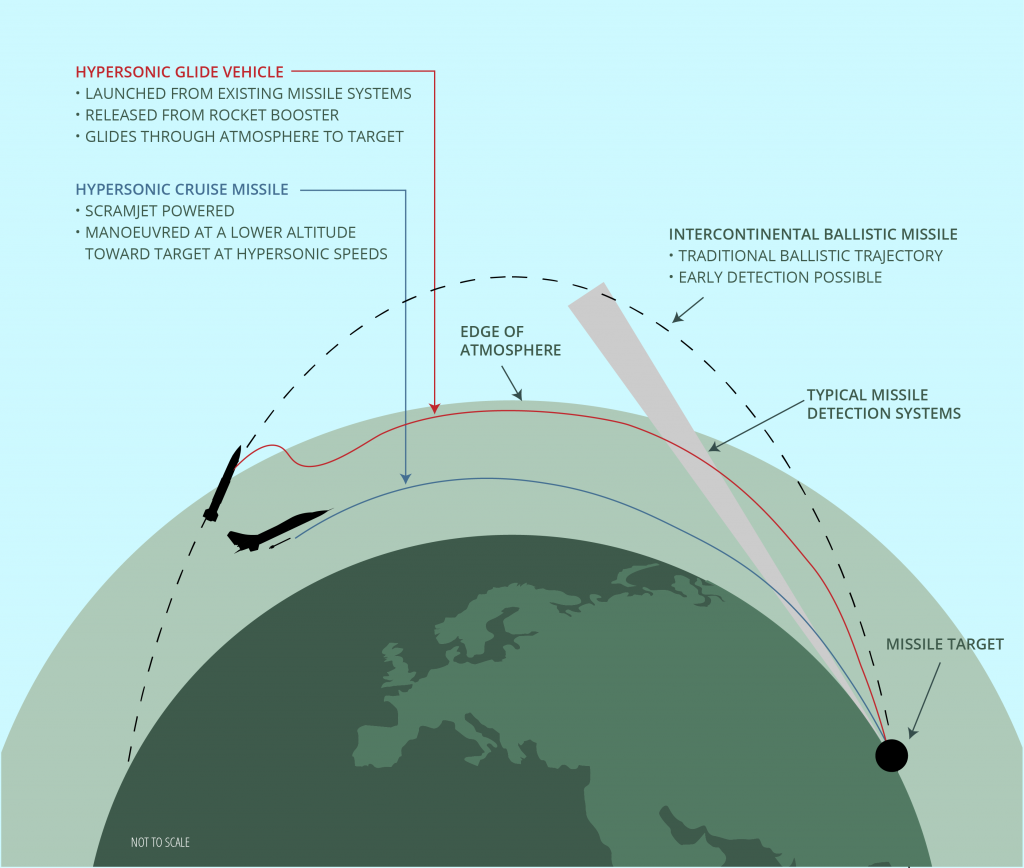
The Pentagon’s missile shortage will not be solved tomorrow. But its long-term answer is already being built beside our communities. Project Ranger approved without us—but the Pentagon, Castelion and New Mexico officials still must answer to the people.
Elaine Cimino, Aug 29, 2026
The Pentagon’s missile shortage will not be solved tomorrow. But its long-term answer is already being built beside our communities.
Part I asked what government kept from the public while it assembled the deal. Part II asks what the emerging federal weapons record now tells us about the scale and purpose of what was approved without us.
A national weapons emergency is being converted into a private investment opportunity—and New Mexico has been selected as one of the places where the consequences will be imposed.
The August 21 Defense One investigation, “There’s No Shortcut to Replenish U.S. Munitions Stockpiles,” describes a Pentagon racing to replace missiles being consumed in the Iran war while defense companies pitch a new generation of cheaper weapons. Buried inside that national story is a name New Mexico residents must recognize: Castelion.[1]
Castelion is constructing Project Ranger, the massive solid-rocket-motor and hypersonic-weapons manufacturing complex west of Rio Rancho in Sandoval County. Its Blackbeard missile is being offered as something the Pentagon has long wanted but struggled to obtain: a hypersonic strike weapon inexpensive enough to manufacture not by the dozen, but by the hundreds and eventually the thousands.
That mention changes the frame around Project Ranger. This is not simply another economic-development project, an isolated factory or a collection of buildings on remote State Trust Land. It is being positioned inside a long-term restructuring of the American war industry.
The federal government wants cheaper missiles, more suppliers, faster testing and industrial-scale production. Castelion wants to become one of the companies that supplies them. Project Ranger is where much of that ambition is supposed to become physical reality.
And while the Pentagon, investors and public officials discuss speed, scale and deterrence, the people living beside the factory are still waiting for something far more basic: full disclosure of what will be manufactured, burned, tested, stored, transported and released near their homes and water.
Blackbeard will not solve the immediate Iran stockpile crisis
The first fact must be stated precisely. Blackbeard is not a replacement for the Patriot and Terminal High Altitude Area Defense interceptors being depleted in the Iran war.
Patriot and THAAD missiles are defensive weapons intended to destroy incoming missiles or aircraft. Blackbeard is an offensive, long-range hypersonic strike weapon intended to hit targets on land or at sea. Producing one does not replenish the other.
That is why the Defense One article warns that the Pentagon’s low-cost weapons campaign will not quickly repair the immediate stockpile crisis. New missiles must still be developed, tested, evaluated, certified, placed under contract and manufactured. That takes years, not weeks. Experts quoted in the article describe a continuing window of vulnerability while the military attempts to rebuild inventories depleted not only by Iran, but by years of global commitments.[1]
Blackbeard is therefore not the emergency cure being delivered to today’s battlefield. It is part of the arsenal the Pentagon wants for the wars it is preparing to fight in 2027, 2028, 2029 and beyond—particularly a possible conflict with China.
That distinction does not make Project Ranger less consequential. It makes it more so. A temporary emergency might end. A permanent industrial strategy can expand for decades.
The Pentagon is building a high-low arsenal
The larger strategy is a “high-low mix”: retain a smaller inventory of extraordinarily expensive weapons while acquiring far greater numbers of cheaper missiles for missions that do not require the most sophisticated system available.
Castelion is marketing Blackbeard as the hypersonic expression of that strategy. It is advertised as a weapon capable of exceeding Mach 5 but designed from the beginning for lower-cost, industrial-rate production.
Reuters reported in April that Navy planning documents contemplated the purchase of 4,500 air-launched hypersonic missiles for F/A-18 aircraft over five years, at an average projected price of about $384,000 each. The same report explained that a $105 million Navy award would fund Blackbeard’s integration onto the F/A-18, including flight tests, safety work and airworthiness certification.[2]
That is not the same as a funded order for 4,500 Blackbeards. But it shows what the Pentagon is testing: whether a weapon once treated as an exotic, multimillion-dollar rarity can become a routinely deployed instrument of war.
If that experiment succeeds, Project Ranger will not be a boutique research site. It will be an arsenal factory………………………………………………………………………………………………………………………………………………………………………………………… https://elainecimino652909.substack.com/p/part-ii-no-blank-check-for-the-war?utm_source=post-email-title&publication_id=3194544&post_id=213199756&utm_campaign=email-post-title&isFreemail=false&r=281p2&triedRedirect=true&utm_medium=email
UKRAINE DEAL DEAD
Russia, in his view, would still prefer a compromise closer to Istanbul and the later Anchorage discussion than the occupation of the whole of Ukraine.
Governing a hostile country is not Moscow’s first choice.
George Beebe on Iran, Trump’s shrinking leverage, and the crash coming in Ukraine
Ian Proud, Sep 01, 2026, https://thepeacemonger.substack.com/p/ukraine-deal-dead?utm_source=post-email-title&publication_id=3221990&post_id=213666173&utm_campaign=email-post-title&isFreemail=true&r=1ise1&triedRedirect=true&utm_medium=email
George Beebe was CIA Director for Russia analysis and is now Director of the Grand Strategy Programme at the Quincy Institute. In this conversation he describes a Trump Administration that wrote a coherent National Security Strategy and then walked away from it. This has left prospects for a credible peace deal for Ukraine remote at best.
“………………………………………………………………………………………. The United States is now in a cul-de-sac: damaged reputation, strained forces, a distracted White House, and no clean exit that does not involve concessions.
That matters for Ukraine because attention and political capital are finite within the Trump White House.
Beebe’s strategic case for ending the war has not changed. A forever proxy war leaves Europe unstable, incentivises a tighter Russia-China partnership, and makes a China-first American strategy impossible.
Russia, in his view, would still prefer a compromise closer to Istanbul and the later Anchorage discussion than the occupation of the whole of Ukraine.
Governing a hostile country is not Moscow’s first choice.
What has changed is Washington’s ability to deliver.
Iran has taken the oxygen out of the room.
Trump needs political juice to force a deal through a hostile Senate and a permanent bureaucracy that still treats detente with Russia as heresy.
Beebe does not think he has that juice.
Midterms loom.
The president is fighting an unpopular war with a precarious economy. Other countries are already pricing him as a lame duck.
If Moscow concludes the administration is not agreement-capable — cannot lock in NATO limits, cannot move sanctions — Plan B is the battlefield.
That is not the conquest of Kyiv. It is a rump Ukraine, too weak to be rebuilt as a Western military outpost, and a worse peace for Ukrainians, Europeans and Americans alike.
Then comes what Beebe calls it a hard crash.
Time is not on Ukraine’s side.
Manpower is failing.
Energy infrastructure is already in tatters ahead of another winter.
Russia can hit harder than Ukraine can endure.
When the gap between Western media victory narratives and the facts becomes undeniable, Washington does not usually say “we did our best.”
It goes into “do-something” mode.
That is how mismanaged wars become direct NATO-Russia crises.
I agree with him.
Europe has no plan.
It has a reflex: ask for more Patriots, flatter Trump, keep Kyiv fighting.
That is not friendship.
It is spending Ukrainian lives to delay an admission of failure.
Beebe’s alternative is old-fashioned and unfashionable: a concert among the United States, Russia and China, starting with Iran and Ukraine, based on self-interest rather than trust.
Whether this White House can still do that is the live question.
Thousands of potential jobs & billions of dollars may tempt Idaho into becoming America’s nuclear waste dump

By Roland Beres, Sep. 1, 2026, https://www.kmvt.com/2026/08/31/thousands-potential-jobs-billions-dollars-may-tempt-idaho-into-becoming-americas-nuclear-waste-dump/
BOISE, Idaho (KIVI) — The U.S. Department of Energy (DOE) is choosing three states to receive all of the country’s high-level nuclear waste by year’s end.
Idaho is among five finalists pursuing what’s known as a Nuclear Lifecycle Innovation Center.
The center would be located in the eastern Idaho, and could bring thousands of jobs and billions of dollars to the state.
Nuclear energy is often referred to as clean energy, because it doesn’t produce greenhouse gasses, but The World Nuclear Association says used nuclear fuel can remain radioactive and deadly for thousands of years.
“How much we talking about a few hundred pounds?” Idaho 6 senior reporter Roland Beres asked.
“We’re talking about 33 thousand tons,” Leigh Ford, Executive Director of the nuclear watchdog group the Snake River Alliance responded.
“Worst case scenario if it comes in. We have a whole bunch of nuclear waste, forever and our kids are going to have to figure out what to do with it,” Ford added.
The Nuclear Waste Policy Act of 1987 designated Nevada’s Yucca mountain as the nation’s permanent nuclear waste storage site. However, they fought tooth and nail to stop it and won. As a result, that high-level waste is being stored in temporary pools at nuclear power sites around the country.
Now, to attract state interest the DOE has shifted from mandating a host community to proposing economic incentives like billions in investments and job creation.
Although details are quite limited, that grabbed Idaho Governor Brad Little’s attention.
“We’re going to consume the spent fuel to create electricity,” Little told Idaho 6. ”We are not going to put any spent fuel or whatever it is over the Idaho aquifer. They know that.”
According to the State’s application with DOE, the Snake River aquifer underlies almost 11 thousand square miles.
Nuclear power is not the answer for energy needs.
1st Sep 2026, Paul Dorfman, University of Sussex, Brighton
Brian Wilson suggests that renewables are the problem, with fossil fuels and nuclear as the way forward (Scotsman, 29 August). Perhaps he should consider the following:
In 2025, wind and solar became the bedrock of European energy self-reliance, with power generation from renewables in Europe reaching a new record of 384.9 TWh. Meanwhile, Norway has just said no to nuclear power, and Nato now backs renewables as the solution to energy security.
In 2025 renewables made up 85.6 per cent of all new global power capacity additions. Renewables are now 53 per cent cheaper than nuclear for total system costs and, with a doubling cost over-run, nuclear remains the most expensive power source. With construction of just one station taking 20 years-plus, nuclear projects in Europe run years behind schedule and vastly over budget. Nuclear power construction has an average time over-run of 64 per cent.
The fact is, each year nuclear adds only as much net global power capacity as renewables add every two days. For Scotland, the direction of travel is clear. The challenge now is not just generation, but how quickly grids, batteries and flexibility can be deployed.
Too dangerous, is the worst possible time for Brian to be promoting nuclear power.
George Morton, Rosyth, Fife
I have quite a high regard for Brian Wilson, but am dismayed by his ongoing advocacy of nuclear power in his article on energy supply.
His cost argument fails to include guarding dangerous fission-products for centuries, and the fact that nuclear power plants have the advantage of being state-insured against litigation for environmental damage.
Most importantly, they’re potential war-targets (we know that from Iran and Ukraine). And it needn’t be a strike on a reactor; even a destroyed waste-storage facility would, on an adverse wind, require the evacuation of hundreds of thousands. Just think of Chernobyl.
The US predictionists at Polymarket are offering odds of 25 per cent (a one in four chance) of a NATO/Russia clash before the year is out (excluding cyberattacks). Now is the worst possible time for Brian to be promoting nuclear power.
Turkey’s Erdogan signals further nuclear projects with Russia
Turkey is planning to expand its nuclear cooperation with Russia to build
more power plants, President Recep Tayyip Erdogan said Tuesday. The signal
of deepening ties with Russia is likely to raise concerns among Western
allies, who have been worried by Ankara´s closeness to Moscow as the war
in Ukraine rages. Rosatom, a Russian state corporation, is close to
completing the Akkuyu nuclear power station on Turkey´s Mediterranean
coast. Its four reactors are expected to generate around 10% of Turkey´s
electricity when it comes online.
Daily Mail 1st Sept 2026, https://www.dailymail.com/wires/ap/article-16096403/Turkeys-Erdogan-signals-nuclear-projects-Russia.html
Syria was building a nuclear reactor in Deir el-Zour under Assad, UN reports
Syria was constructing a nuclear reactor in Deir el-Zour under the
leadership of ousted former President Bashar Assad, according to a U.N.
report seen Tuesday by The Associated Press. Inspectors with the U.N.
nuclear watchdog visited several sites in Syria in August and carried out
verification work that confirmed the existence of a long-suspected nuclear
site, according to the confidential report circulated to member states.
Daily Mail 1st Sept 2026, https://www.dailymail.com/wires/ap/article-16096699/UN-report-finds-Syria-building-nuclear-reactor-Deir-el-Zour-former-President-Assad.html
Ukrainian Writer Gets 15 Years in Jail for Article EXPOSING Ukraine Nazis
31 Aug 2026
Katie speaks to German World Socialist Website editor Johannes Stern about the case of Bogdan Syrotiuk, a 27-year-old Ukrainian activist who was charged with terrorism for writing articles opposing the war and exposing Ukraine’s rehabilitation of Nazis.
Fuel loading under way for Palisades restart, Holtec announces
The loading of fuel into the reactor has begun at Palisades nuclear power
plant in the US, as Holtec International continues to move towards the
first restart of a closed-down unit.
World Nuclear News 1st Sept 2026,
https://www.world-nuclear-news.org/articles/fuel-loading-under-way-for-palisades-restart-holtec-announces
Heatwaves and secret emissions: Why nuclear power may not be as ‘green’ as you think

“The bulky concrete structures mean that it has a large amount of embodied carbon and, of course, it is not a renewable energy as it requires the mining of uranium, bringing with it carbon costs in terms of extraction and transport,” says Dr Bettina.
“Nuclear waste disposal and decommissioning must also be factored into the carbon budget of nuclear energy generation.”
By Liam Gilliver, 01/09/2026 , https://www.euronews.com/2026/09/01/heatwaves-and-secret-emissions-why-nuclear-power-may-not-be-as-green-as-you-think
The war on Iran has triggered calls to double down on nuclear power. But is it really ‘clean’, can Europe’s energy grid cope and will it survive the wrath of climate change?
The world stood still on 11 March 2011, when a major earthquake triggered a 15-metre tsunami that left an unforgettable scar on Japan’s east coast.
A series of powerful waves ripped through homes, businesses and roads – leaving more than 450,000 people homeless and killing 15,500. Alongside the chaos, the tsunami caused the meltdown of three nuclear reactors at the Fukushima Daiichi Nuclear Power Plant, spewing out toxic, radioactive materials and forcing thousands to evacuate.
The event triggered global conversation about the safety of nuclear energy, leading several countries to plan to phase out nuclear energy or stop its expansion.
But 15 years later and the horrors of Fukushima have slowly been replaced with calls to double down on nuclear power, particularly following the war on Iran and its subsequent energy crisis. Speaking exclusively to Euronews, EU Climate Action Commissioner Wopke Hoekstra listed nuclear as one of the power sources EU countries must lean on.
However, an expert from the University of Oxford has warned that new nuclear capacity will not fix today’s energy problems – urging policy makers to consider the true risks of nuclear.
“In the high‑renewables systems of Europe, the problem is increasingly not how to generate more electricity but how to access it when and where it’s needed,” says Dr Bettina Wittneben, a lecturer in Management at Oxford’s Saïd Business School and associate fellow at Pembroke College and the School of Geography and the Environment.
Is nuclear power really ‘clean’?
Nuclear energy is often touted as a clean form of energy as it is low carbon at the point of generation.
In layman’s terms, nuclear reactors can create electricity without releasing carbon dioxide or smog-forming pollutants into the atmosphere. However, experts point out that this isn’t the full picture.
“The bulky concrete structures mean that it has a large amount of embodied carbon and, of course, it is not a renewable energy as it requires the mining of uranium, bringing with it carbon costs in terms of extraction and transport,” says Dr Bettina.
“Nuclear waste disposal and decommissioning must also be factored into the carbon budget of nuclear energy generation.”
Are nuclear power plants climate resilient?
Europe was scorched by back-to-back heatwaves this summer, which experts say would have been “virtually impossible” if it weren’t for climate change. The extreme heat, combined with scant rainfall, triggered droughts across much of the continent, draining some of Europe’s biggest rivers to record-level lows.

This forced several nuclear power plants to temporarily shut off or be set to a reduced output across France, Hungary and Romania.
Nuclear requires vast amounts of water, particularly for the cooling process, and is often known as the “thirstiest power source”. According to The Nuclear Energy Institute, one nuclear reactor requires between 1,514 and 2,725 litres of water per MWh – equating to hundreds of gigalitres every year.

It’s why nuclear power plants are often built near large bodies of water. Without a constant, reliable source of water a nuclear reactor risks overheating – which could lead to serious core damage and end up releasing harmful radiation into the environment.
Coal power and hydropower also suffered during the heatwave, but a surge in solar power helped meet heightened electricity demand from cooling devices such as air conditioning.
According to energy think-tank Ember, solar output in European countries rose by up to 17 per cent on heatwave days in June and July – becoming the only major power source to perform “better than usual” during hot weather.
‘Hellbrise’: Nuclear is not as reliable as some say
Intermittent forms of energy such as wind and solar are often blamed for overloading Europe’s outdated energy grid.
When electricity demand outstrips supply, surplus energy is often wasted – and can lead to negative electricity prices. This is often referred to as ‘Hellbrise’ (hell= bright, brise= breeze) and can occur on sunny, windy days.
“This is also the narrative of fossil fuel advocates, who present fossil gas as the saviour of the baseload, or the electricity that is available when renewables fall short,” says Dr Wittneben.
“Fossil fuel sceptics point instead to nuclear power as a reliable baseload technology.”
However, the expert points out that nuclear power plants are slow and costly to turn off, which means they only “amplify” the grid’s Hellbrise challenge – rather than present a solution to it.
The EU has recognised that battery energy storage systems (BESS) are a “crucial technology” to help prevent renewable energy from being wasted or entering sub-zero pricing. The logic is that batteries can store electricity produced by renewables during the day (when consumption tends to be low) and release it to households when demand increases in the evening.
Europe installed 36 GWh of new BESS in 2025, bringing its total operational capacity beyond 100 GWh for the first time. This is enough stored energy to power around 75 million homes.
Which EU countries have become reliant on nuclear power?
Continue readingIsrael’s ‘Facts on the Ground’ – razing Gaza and South Lebanon
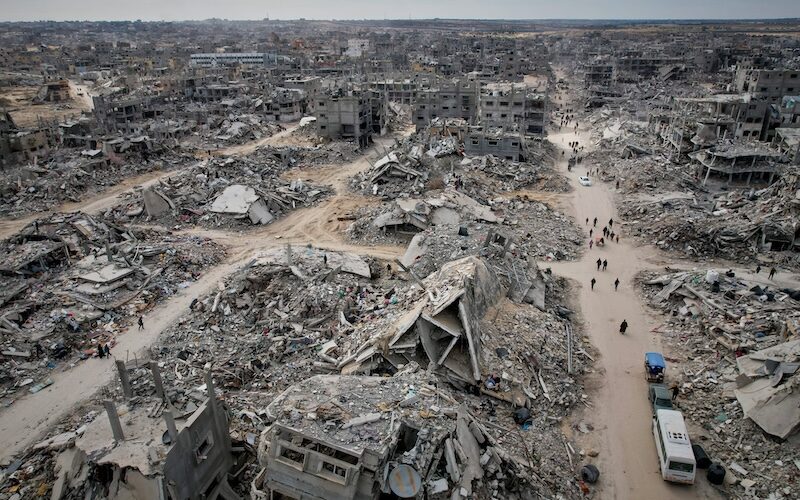
by Cathy Peters | Sep 2, 2026, https://michaelwest.com.au/israels-facts-on-the-ground-razing-gaza-and-south-lebanon/
Israel is destroying the evidence in the world’s largest crime scenes – Gaza and South Lebanon. Journalist Cathy Peters investigates the push to obliterate Palestinian lives and identity.
Israel is currently creating new Orwellian ‘facts on the ground’ in Gaza. Millions of tonnes of rubble are being transported out of areas in Gaza that the IDF has closed off behind the Yellow Line Zone.
Key locations of recent and former burial sites and ruins of major urban and agricultural landscapes have been razed in a blatant move to erase not only evidence of war crimes but also evidence of prior Palestinian existence on these lands.
Meanwhile, Drop Site News reported journalist Muhammad Shehada has asked Donald Trump’s Board of Peace to disclose whether Gaza reconstruction funds were “paying Israeli contractors or the Israeli military to remove rubble that may contain human remains and pave roads over potential mass graves”. The Board of Peace has denied it.
Nakba reprise
The Nakba (‘catastrophe’ in Arabic) of 1948 was planned by a group of Jewish Zionist leaders including Israel’s first president, Ben Gurion, seven years prior to the ethnic cleansing of 750,000 Palestinians from Palestine. 530 towns and villages were depopulated, destroyed and then flattened in 1948.
They had been identified in the “Village Files” project (1940–47) which extensively mapped and gathered intelligence on hundreds of towns and villages. These files were incorporated into the ethnic cleansing Plan Dalet of 1948.
By August that year Ben Gurion had formally laid out a policy for the complete erasure of Palestinian existence in large areas of historic Palestine. This razing ensured that Palestinians once forcibly expelled, would not have anything to return to as refugees.
In subsequent years, the Israeli state and state supported organisations like the Jewish National Fund, planted forests over the sites of former Palestinian villages, greenwashing the colonisation of Palestinian lands to ‘dehistoricise Palestine’ in an attempt to obliterate Palestinian identity and ownership of the land.
Facts on the Ground
‘Facts on the ground’ is a familiar catch cry for illegal Israeli actions – unilateral military and civilian actions led by successive generations of Israeli governments pursuing their goal of ‘Eretz Israel’ (The Land of Israel) through relentless seizure of Palestinian property regardless of any agreements or international laws.
The creation of ‘facts on the ground’ such as the 1948 razing of evidence of Palestinian existence throughout Palestine ‘48 (now Israel) or the masses of illegal Israeli settlements throughout the West Bank have thwarted any legal processes and greatly
“impeded chances for a just peace for Palestinians.“
Israel’s latest ‘facts on the ground’ are the large swathes of flattened land throughout closed off areas in Gaza and South Lebanon. It has obliterated all evidence of habitation and destroyed evidence in the world’s largest crime scenes.
As 2 million Palestinians try to survive in unspeakable conditions herded into just over a third of the land mass of Gaza, IOF (Israel Occupying Forces) and their mercenary contractors are destroying physical evidence of Israel’s war crimes and of prior Palestinian existence throughout some 65% of land now closed off in the Yellow Line Zone controlled by Israeli forces.
Bombed out landscapes with any number of human remains, crumbling structures of homes, municipal buildings, mosques, streets, civil infrastructure and vital agricultural lands are being razed.
Al Jazeera has reported that hundreds of trucks are transporting rubble out of the Gaza Strip into Israel. This is another grave violation of international humanitarian law by Israel and an obstruction of the work the International Court of Justice is doing in relation to the case brought by South Africa against Israel’s genocide in Gaza.
Destroying, altering, or removing evidence can constitute an offence against the administration of justice under Article 70 of the Rome Statute. The Genocide Convention cites that along with killing and inflicting severe bodily or mental harm,
“destroying the means of existence for a group, is genocide.“
This week South Africa accused Israel of failing to adhere to the orders imposed by the International Court of Justice in 2024 and filed a dossier to the Court citing that Israel had continued to arbitrarily kill and arrest, torture and imprison Palestinians in Gaza and other violations of the Genocide Convention which include destruction of buildings and infrastructure.
Out of sight, out of mind
There are no peace keepers in Gaza, no Palestinian or international war crimes investigators or journalists and no members of the National Committee for the Administration of Gaza (NCAG), the body established to oversee the rebuilding of Gaza established by Trump’s Board of Peace and the terms of the ceasefire of October 2025.
They have not yet set foot in Gaza despite the urgent call two weeks ago by the Gaza Government Media Office for them to enter the Strip urgently.
Without any oversight, Israel is creating irreversible facts on the ground and bulldozing not only evidence of its crimes and the bodies of those killed and unaccounted for, but any remaining documentation of individuals’ lives and their ownership of property and land.
Now, not a single landmark or street or tree or building remains in key areas inside the Yellow Line Zone occupied by the IOF and its supported civilian militias outposts.
The BBC produced this forensic satellite analysis of the widespread destruction of towns and cities in Gaza back in July 2025 and all reports indicate that this destruction is continuing apace with the removal of rubble into Israel now a key feature.
Gaza. BBC satellite investigation – [on original]
Not only is the genocide and continued military blockade in Gaza denying any rights or recourse to justice for the living but this erasure is denying Palestinians the right to identify and bury their dead, and to recover any of their heritage in these areas in Gaza which goes back thousands of years.
Testimonies from Gaza
Michael West Media has received reports from Palestinians on the ground in Gaza.
Ahmed is a graduate of one of the best universities in Gaza. He lost his family and home east of Gaza City early in the genocide, and now lives alone in a damaged apartment in Gaza City. Previously he took shelter in a primary school near his home, but the IDF occupied it and has now cleared its ruins. He speaks frequently with Australian friends.
“The IDF and the pro-Israel militia have been killing people trying to cross the yellow line to try salvage personal possessions from the ruins of their homes. Now all the Israeli-controlled zone is being flattened, with rubble and bodies removed to Israel. This means no one can see where their streets or homes or shops or farms were. Families cannot properly honour their dead.
“Historic buildings and the Commonwealth war cemetery, near my old home, have been bulldozed. Friends being evacuated via the Israeli Karem Abu Salem checkpoint, have said all of the land in Rafah has been
“levelled, except for the Israeli and allied militia bases.”
“The levelling is not just for unrestricted military operations by Israel, but shows they want to eradicate Palestinian presence from eastern, southern and northern Gaza permanently.
On the Palestinian side of the yellow line, Israel is doing what it can, by controlling what supplies enter and who sells them, and by bombing local police, to encourage internal conflict, for instance between the big families.”
Tarek, the brother of a Palestinian Australian, is unable to get a visa out of Gaza.
“The situation in Gaza is extremely desperate with people struggling to access basic necessities such as food, safe drinking water, shelter, health care, and medicines. Overcrowded tents and poor sanitation have led to a significant spread of rodents, insects, and diseases in shelters and streets.
“At the same time, shortages of medicines and limited access to health services are putting vulnerable patients, particularly those with chronic conditions, at serious risk.”
Tarek’s comments on the bulldozing and removal of rubble from Gaza reinforce reports from EuroMed Monitor and Al Jazeera on what is happening behind the Yellow Line Zone, hidden from sight as Israel creates its facts on the ground now in Gaza.
“I have heard about the extensive bulldozing and destruction of areas behind the so-called yellow line, including the removal of rubble. I am familiar with some of these areas because some of my friends and colleagues used to live there.
“Large parts of these residential areas have been destroyed or heavily damaged, leaving families displaced and unable to return to their homes. The scale of the destruction has resulted in the loss of homes, infrastructure, and livelihoods, making the possibility of returning to normal life increasingly difficult.
“We do not deserve this. The lack of strong action from the international community feels like a profound abandonment and
“a great failure toward the people of Gaza.”
Ahmed lives in Sydney and has lost many family members. He is in regular contact with a family survivor in desperate conditions in the Al-Mawasi area, west of Khan Yunis city in southern Gaza where many thousands of displaced Palestinians living in tents have been facing acute water shortages and extreme heat for months.
“The humanitarian situation continues to deteriorate. There’s a renewed blockade of medical supplies and essential food supplies. Clean water has been incredibly scarce and food supplies are becoming more and more limited.
“Dangerous rodents and harmful insects have infested the displacement camps along the coasts of Khan Younis (Al Mawasi area) and residents suspect that to be intentionally spread by the IOF because they are of types that they have never seen in the Strip before.
“Moreover, the burning heat waves this summer have been dangerously paralysing and detrimental especially for newborns, small children, and the injured who have not been able to be evacuated overseas for medical attention.
“The genocide may have slowed down to avert the global attention away from Gaza, but our beloved Gaza Strip has been shrinking, and has evidently become a laboratory for the IOF necropolitics where they get to test all types of
physical, mental and psychological weapons
they continuously develop to suppress the population, as they intentionally keep the gates to the Gaza death camp securely locked.
Razing South Lebanon
Last week the UN Committee on the Elimination of Racial Discrimination called for “an end to [Israeli] attacks directed against, or indiscriminately affecting, civilians and civilian objects in Lebanon” and noted “reports that entire villages in southern Lebanon have been rendered uninhabitable, with homes, schools, healthcare facilities, water and electricity infrastructure, places of worship and agricultural land destroyed by strikes and demolitions.”
Since March this year, Israel indiscriminately attacked Lebanon and enforced mass displacement orders particularly throughout Southern Lebanon resulting in 1 million people forcibly displaced from 189 towns and villages in just one week.
The Lebanese public research institute, the National Council for Scientific Research (CNRS) has estimated that almost 85,000 housing units have been damaged or destroyed in the south.
Additionally Israel sprayed what laboratory tests confirmed was glyphosate at very high levels over prime agricultural land destroying the chance of farmers to continue to work their lands.
Human Rights Watch has documented numerous instances of Israel’s illegal use of white phosphorus in populated areas of South Lebanon since 2023
n April this year, BBC Verify assembled data on the destruction in Lebanon based on satellite maps showing the complete razing of towns and villages in the south in line with Defence Minister Katz’s order of March 22nd to “accelerate the destruction of Lebanese homes” and key infrastructure
based on the “model in Gaza”.
As quoted in the Lighthouse Report and co published with the Financial Times in August, Kristine Beckerle, a deputy director at Amnesty International stated that “It’s an extensive, long-lasting and organised attack on the people of southern Lebanon … “If you raze everything to the ground, critical infrastructure and healthcare, if you scorch the earth, you are creating effective wastelands that are unliveable and making it very difficult for people to return to southern Lebanon.”
These are Israel’s facts on the ground in Lebanon.
Israel justifies its actions in Gaza and Lebanon as self-defence but the systematic erasure of life and the means to life has never been about self defence. There will never be any justification for the industrial slaughter and collective punishment in Gaza and Lebanon and the razing of their lands where generations of existence has been wiped off the map.
Cathy Peters
Cathy Peters is a former ABC RN producer/executive producer and Greens councillor on the former Marrickville Council. She also worked for a state Greens MP and is a long-time advocate for Palestinian rights. In 2014, she co-founded PSNA / BDS Australia. She has Jewish heritage, has travelled and volunteered in the Occupied Palestinian Territories.
Shortage of radioactive ‘rare as diamonds’ material (plutonium) frustrates nuclear start-ups

A shortage of plutonium could hold back a new generation of
nuclear projects, with start-ups battling to secure the radioactive
material given the limited supplies available to civilian projects.
Plutonium, which cannot be mined, is a byproduct of spent uranium-based
fuel used in reactors. Its huge explosive capacity makes it ideal for
nuclear warheads, meaning its usage and extraction have been highly
restricted for decades.
Some designs for a new crop of nuclear projects
require the material to help power their systems, with companies trying to
find an adequate supply to carry out testing as well as eventually running
the reactors.
Industry executives and analysts said a shortage of nuclear
fuel recycling facilities around the world would not be easily overcome
given the cost and lengthy development time for new projects.
FT 1st Sept 2026, https://www.ft.com/content/836566de-fd44-43c4-9899-28e05b4fbf33
Figures on Fox News’ key programs have called for escalation in the Iran war more than 250 times since the initial ceasefire

Jason Campbell, 08/28/26, https://www.mediamatters.org/media-matters-weekly-newsletter/media-matters-weekly-newsletter-august-28
In the four months since the initial ceasefire agreement between the United States and Iran, Fox News figures have continuously warmongered. Throughout the cycle of ceasefire violations and stalled peace talks, individuals on Fox have urged President Donald Trump to “decapitate and destroy this regime” and send Iran “back to the Stone Age,” and encouraged him to “send the SEALs in and blow something up just for grins.”
Media Matters studied 7 key shows on Fox News — which includes the network’s evening programming as well as some shows hosted by commentators whom Trump has praised or promoted during the Iran war — called for escalatory action in the war at least 252 times since the initial ceasefire agreement on April 7. The escalatory rhetoric on the network includes arguments for military strikes, ground invasions, regime change, arming Iranian citizens, or attacks on civilian infrastructure.
I invite you to check out this study to see how the data breaks down. You can find it here.
Also: Many right-wing figures promised an early and easy victory against Iran when the U.S. and Israel launched the war in February. Six months later, it seems very clear the Trump administration has fallen quite short of its objectives. Nonetheless, a set of especially sycophantic pundits — including Sean Hannity, CNN contributor Scott Jennings, and Benny Johnson — are claiming that Trump has already won the war.
You Could Be Next: Trump’s Gestapo Tactics Are Getting Worse

You might also be murdered without a trial if you happen to be on a vessel off Latin America’s Caribbean coast or in the eastern Pacific Ocean. A mere accusation of drug trafficking is enough to kill you, without any evidence presented before any court of law or neutral magistrate.
The US military announced Monday that it had again carried out a strike on a vessel in the eastern Pacific Ocean, killing two people it accused of trafficking drugs — bringing the overall death toll to 223 people killed in 67 strikes during the nearly yearlong US campaign of bombing boats alleged to be smuggling drugs.
Finally, the Trump regime is imprisoning Americans who demonstrate against its police state.
Wake up, America. You’re living in a nightmare.
Robert Reich, Common Dreams, Aug 29, 2026
Imagine living in a country that can arrest and imprison you whenever it wants, without any judge or jury deciding you did anything wrong. It can call you a “domestic terrorist” and put you in prison for life. It can even execute you on the basis of nothing more than its own decision that you’re dangerous.
Well, I have bad news for you. You’re living in that country right now.
As he loses power and popularity — and faces mounting resistance abroad and at home — Trump is enlarging his police state.
His regime is having ever more people arrested, imprisoned, and deported without any judge or jury deciding they did anything wrong. It’s using racial profiling in deciding whom to target. It’s making warrantless searches and seizures of people, their cars, and their homes. All of this violates the US Constitution.
Trump’s police state not only continues, but it is growing larger by the day.
According to a new analysis by The New York Times, the regime’s surge in immigration arrests this summer has swept up thousands of people, most of whom have not been charged with or convicted of a crime (less than 4 percent had a past violent criminal conviction).
Those being arrested, imprisoned, and potentially deported include some married to US citizens, others who entered the US legally and are pursuing asylum claims, and some who came here with temporary legal status that the Trump regime has decided to revoke.
In other words, they were all here legally.
If you have temporary protected status because you escaped from inhumane conditions in another country, ICE might now summon you to an ICE office and put a monitor around your ankle — even if you have no criminal history and are in full compliance with your immigration status. The Trump regime has unilaterally revoked temporary protected status and claims the ankle monitors are necessary to track people whom it may want to deport at some point.
You’re not even safe if you’re a US citizen born in America. ProPublica has found that more than 170 US citizens have been wrongfully detained by ICE agents in raids and protests over a recent nine-month span. It described cases involving alleged force and multiday detention without access to counsel or communication.
Some estimates put the number of US citizens subjected to ICE as much higher, but there’s no way of knowing because there’s no legal process for filtering out and protecting American citizens, just as there’s no legal process for protecting anyone else who’s here legally. Trump’s police state is extrajudicial, and it’s being done in secret.
You might even be murdered, without a trial finding you guilty of anything. In addition to Renee Good and Alex Pretti in Minnesota last January, ICE agents have murdered two others just this summer…………………………………..
You might also be murdered without a trial if you happen to be on a vessel off Latin America’s Caribbean coast or in the eastern Pacific Ocean. A mere accusation of drug trafficking is enough to kill you, without any evidence presented before any court of law or neutral magistrate.
The US military announced Monday that it had again carried out a strike on a vessel in the eastern Pacific Ocean, killing two people it accused of trafficking drugs — bringing the overall death toll to 223 people killed in 67 strikes during the nearly yearlong US campaign of bombing boats alleged to be smuggling drugs.
Finally, the Trump regime is imprisoning Americans who demonstrate against its police state………………………
These cases are the first to incorporate new guidance from the regime that classifies Antifa as a “domestic terrorist organization.” That’s despite the fact that Antifa is a decentralized movement rather than a single organization and that there is no federal charge of domestic terrorism under existing US law.
I want to make three concluding points about all this.
First, Trump’s police state not only continues, but it is growing larger by the day. Kristi Noem’s replacement as secretary of homeland security, Markwayne Mullin, along with his boss in the White House, Stephen Miller, and the secretary of defense, Pete Hegseth, have more money, manpower, and firepower than ever. They are ramping up all of their extrajudicial arrests, detentions, deportations, and murders.
The only difference between last year and now is they’re no longer announcing what they’re doing with fanfare and braggadocio, because the American public has grown wary of it.
Second, none of us is safe from this because the arrests, installations of ankle bracelets, imprisonments, deportations, and murders are made without any judge, jury, or neutral party deciding that the assumptions on which they’re based are adequate and truthful.
Not even “domestic terrorism” arrests and lengthy prison sentences necessitate judicial inquiry into what exactly is meant by “domestic terrorism” and whether defendants have done anything to justify that appellation.
Finally, this growing menace is cruel, inhumane, and likely unconstitutional. It is causing hundreds of thousands of families in our country extreme mental distress; many people are not leaving their homes for fear of being arrested or worse. It is likely chilling First Amendment rights to speak up and protest against these atrocities.
Historians looking back on this shameful period will wonder how this was allowed. How can one maniacal man in the Oval Office, his fanatical assistant, and two suck-up Cabinet secretaries have been so cruel and oblivious to basic human rights? How can their Republican enablers in Congress have been willing to go along? How can the American public have been so quiet? https://www.commondreams.org/opinion/trump-s-gestapo-tactics
1 This Month





PLEASE OPPOSE HR 8255 AND S.3639 – bills would accelerate satellite deployment, with no environmental review or safeguards – https://ncstd5li.quorum.us/campaign/169331/
To see nuclear-related stories in greater depth and intensity – go to https://nuclearinformation.wordpress.com
-
Archives
- October 2026 (67)
- September 2026 (339)
- August 2026 (330)
- July 2026 (355)
- June 2026 (287)
- May 2026 (306)
- April 2026 (356)
- March 2026 (251)
- February 2026 (267)
- January 2026 (308)
- December 2025 (358)
- November 2025 (359)
-
Categories
- 1
- 1 NUCLEAR ISSUES
- business and costs
- climate change
- culture and arts
- ENERGY
- environment
- health
- history
- indigenous issues
- Legal
- marketing of nuclear
- media
- opposition to nuclear
- PERSONAL STORIES
- politics
- politics international
- Religion and ethics
- safety
- secrets,lies and civil liberties
- spinbuster
- technology
- Uranium
- wastes
- weapons and war
- Women
- 2 WORLD
- ACTION
- AFRICA
- Atrocities
- AUSTRALIA
- Christina's notes
- Christina's themes
- culture and arts
- Events
- Fuk 2022
- Fuk 2023
- Fukushima 2017
- Fukushima 2018
- fukushima 2019
- Fukushima 2020
- Fukushima 2021
- general
- global warming
- Humour (God we need it)
- Nuclear
- RARE EARTHS
- Reference
- resources – print
- Resources -audiovicual
- Weekly Newsletter
- World
- World Nuclear
- YouTube
-
RSS
Entries RSS
Comments RSS

