Tech Plutocrats Cannot Lead Us Into A Healthy Future
Caitlin Johnstone, 26 Sept 26, https://www.caitlinjohnst.one/p/tech-plutocrats-cannot-lead-us-into?utm_source=post-email-title&publication_id=82124&post_id=217385553&utm_campaign=email-post-title&isFreemail=true&r=1ise1&triedRedirect=true&utm_medium=email
Tech plutocrats are the high-budget expression of the “everyone is twelve now” theory. You wanna go to Mars? Of course you do, you’re twelve. You think you can merge your consciousness with machinery and unlock the key to immortality? Hell yeah my twelve year-old homie. You’re gonna invent an Artificial Superintelligence God who will solve all our problems? Bless your twelve year-old heart.
Their visions for the future of humanity are never particularly wise or intelligent. It’s just a bunch of drugged-up rich guys using their vast fortunes to chart a course for our species that would sound totally awesome to the average preadolescent boy.
You ever hear about Jeff Bezos’ vision for our future? He brings it up once in a while. He wants to ship most of humanity offworld and have us all living in these giant spinning space tubes called O’Neill cylinders while only a few lucky individuals get to remain on humanity’s home planet. It’s true, look it up.
This is the best these freaks can come up with. Transhumanism. Space colonization. Virtual reality. ASI. Immortality. These are all visions which revolve around escape. Escaping from the human condition. Escaping from our planet. Escaping from reality. Running, running, running away in a mad scramble to get anywhere but here.
These aren’t positive visions for the future, they’re signs of deep psychological immaturity. They’re the symptoms of an inability to be with what is. Whenever you hear these guys bloviating about transcending our humanity or colonizing space they’re just telling you they’ve got a lot of unresolved early childhood trauma which led them to construct an entire personality around avoidance and restlessness.
They don’t know how to be at peace. Not with themselves, and not with the world. These are very emotionally primitive individuals. They are not wise. They are not kind. They are not happy. They are not even especially smart. They just have a particular kind of cleverness which has enabled them to succeed as parasitic middle men siphoning wealth off of other people’s labor in the specific type of dystopia we happen to live in.
And yet these are the men we’re allowing to rule our world. These are the people to whom we have handed the steering wheel of human destiny. A bunch of emotionally stunted manchilds who are drowning in a nonstop internal deluge of shame and inadequacy and unresolved mommy issues.
These are the men who have become our kings, because capitalism elevates whoever is wounded enough to do whatever it takes to claw their way to the top.
You trust these guys to shepherd us into a healthy world? They can’t even be here now, at peace in their own skins. Mainstream culture worships these people because they have a lot of money, but they’re walking train wrecks.
This isn’t going to cut it. We can’t led these infantile narcissists lead humanity into the future. We’ve got to create a better system for ourselves.
Trump Threatens Cuba at UN General Assembly, Cuba Responds

September 23, 2026,By Orinoco Tribune, https://orinocotribune.com/trump-threatens-cuba-at-un-general-assembly-cuba-responds/
In his speech at the United Nations General Assembly, the president of the United States, Donald Trump, threatened Cuba, claiming that the country is under the highest level of pressure and that it will eventually fall.
In protest against Trump’s words, the Cuban delegation, led by Foreign Minister Bruno Rodríguez Parrilla, walked out of the room. Prior to the threats from the US president, which he often repeats, the president of Brazil, Luiz Inácio Lula da Silva, had expressed his condemnation of foreign interference in the region and criticized the measures imposed by the US against Cuba. Lula emphasized that the intensified blockade represents collective punishment against 10 million people.
Trump claimed that Cuba is a failed state, and backed up his claims by referring to the added pressure of the economic and energy blockade policy. “It is failing like never before, and it is going to fall,” the US president said in his usual bellicose tone. He also mentioned that US Secretary of State Marco Rubio is leading ongoing negotiations with the Cuban government, a claim that has been denied by Cuba.
In addition to his warlike tone against Cuba, the US president uttered warnings against Iran. Trump stated that he must decide between quickly annihilating Iran to supposedly prevent it from attacking other countries or allowing an agreement that favors the reconstruction of the country under Washington’s terms, although he toned down the bravado by adding that he expects to reach a pact after the US midterm elections. He also insisted that the Iranian government will never have a nuclear weapon, despite the fact that Iran has a declared
policy of not making any nuclear weapons.
Earlier, upon his arrival at the UN headquarters in New York, Trump had an incident with the press, when he reproached a CNN reporter for covering his attendance, citing his ban on CNN.
Trump also boasted about the achievements of the US economy, calling it the envy of the world, although the country is experiencing high inflation, elevated fuel costs, and rising mortgage rates faced by the US population.
Cuba condemns Trump’s attacks
The Cuban government responded to Trump’s attacks by reaffirming its right to sovereignty and condemning the economic and social impact of the intensified US blockade.
The president of Cuba, Miguel Díaz-Canel, decried on social media that the characterization of Cuba as a threat has the objective of justifying the genocidal US economic war against the Cuban population.
Díaz-Canel stated that Trump’s resorting to lies reflects a refusal to accept the self-determination of the Cuban people and reaffirmed that the country will maintain the defense of its sovereignty, working to overcome US imperialist aggression. He added that the blockade is the real threat.
Similarly, Foreign Minister Bruno Rodríguez said that the US government is incapable of recognizing Cuba as an independent and fully sovereign nation.
Rodríguez dismissed Trump’s accusations as falsehoods and slander, insisting that Cuba does not pose a danger to the United States or any other country, while the current economic restrictions and energy blockade do threaten Cuba and the rest of the world.
“The blockade is an act of genocide and collective punishment. We are a country of peace and we deserve peace,” emphasized the foreign minister, adding that the blockade has been systematically denounced by the majority of the international community.
A New Arms Race is Threatening to Take-off—this time in Outer Space

By Thalif Deen
UNITED NATIONS, Sep 24 2026 (IPS) – The world’s ongoing arms race is threatening to extend beyond planet earth—and spillover into outer space.
The US has deployed weapons in space and will use them to defend American forces, Air Force Secretary Troy Meink said last week, according to Cable News Network (CNN). His comments marked the first public acknowledgment of such capabilities, though he offered no details about the weapons or when they were put into orbit.
“Today we continue to ensure we remain ready to meet the challenges of evolving threats wherever they exist,” Meink told the Air, Space and Cyber Conference, an annual gathering hosted by the Air & Space Forces Association in National Harbor, Maryland.
The disclosure comes as the US faces an advancing space arms race with China and Russia, which are testing sophisticated offensive capabilities.
Specifically, American officials have said they are monitoring China’s development of a nuclear-capable partial-orbit hypersonic missile. US intelligence has also suggested Russia is developing a space-based nuclear weapon that could knock out satellites critical to weather forecasting, navigation, banking, shipping and emergency services — a claim Moscow denies, according to CNN.
The New York Times quoted Guo Jiakun, a spokesman for China’s Foreign Ministry as saying: ‘We urge the US side to stop expanding its military force and preparing for war in outer space”.
There have also been reports that “Russia could be planning to put a nuclear weapon in space, a threat that could disrupt satellite networks that are vital to everything – from communications to military operations.”
The multiple UN Conferences on the Exploration and Peaceful Uses of Outer Space (UNISPACE), have served as landmark global summits to shape international cooperation and policy for space exploration.
Convened at the Hofburg Palace in Vienna from 14 to 27 August 1968, UNISPACE 1 focused on the practical benefits of space technology and scientific exchange
Tariq Rauf, former Head of Verification and Security Policy, at the Vienna-based International Atomic Energy Agency (IAEA), told Inter Press Service (IPS) , while appreciating the transparency shown by the US, this disclosure is the most consequential open acknowledgement by any spacefaring State of weaponised on-orbit capability since the erosion of the informal post-Cold War taboo on space weapons.
The testing began with the 2007 Chinese ASAT test and the 2008 and 2021 Russian ASAT tests., the 2008 US and 2021 Russian ASAT tests, and India’s 2019 Mission Shakti ASAT test — building on earlier direct-ascent ASAT programs pursued by the United States and the Soviet Union from the 1960s through the 1980s.
The US deployment converts a long-suspected capability gap into a declared fact, and it will be read by other delegations as confirmation that at least one major power has moved decisively from space “control” doctrine to operational deployment, he said.
For the UN Committee on the Peaceful Uses of Outer Space (COPUOS) and the Ad Hoc Committee of the Conference on Disarmament on Prevention of an Arms Race in Outer Space (PAROS), the announcement raises four immediate questions:
(1) whether the deployment is compatible with the existing Outer Space Treaty regime; (2) what it means for the stalled draft Treaty on the Prevention of the Placement of Weapons in Outer Space, the Threat or Use of Force against Outer Space Objects (PPWT) and the EU Code of Conduct (EU International Code of Conduct for Outer Space Activities); (3) how the expert and policy community is interpreting the move; and (4) what practical steps the Committees can recommend to prevent a cascading arms race in space.
Rauf proposed five recommendations:
1. Convene an urgent joint briefing between COPUOS’s Scientific and Technical and Legal Subcommittees and the CD’s PAROS Ad Hoc Committee to develop a shared factual record of the announcement and its technical implications, avoiding duplicated or contradictory assessments across the two bodies.
2. Both PAROS Ad Hoc Committee and COPUOS should issue an urgent call for a moratorium on placing weapons in Space, urge the US to take down space weapons it has deployed and urge all spacefaring States to preserve Space as the common heritage of humankind and weapons-free.
3. Request, through the Conference on Disarmament Secretariat, that all spacefaring States with counterspace capability — not only the United States — provide voluntary technical briefings on the general character (though not classified specifics) of any on-orbit weapons systems, to reduce the information asymmetry currently driving worst-case assumptions.
4. Task the Legal Subcommittee with producing a technical working paper clarifying the scope of Article IV of the Outer Space Treaty as applied to conventional (non-WMD) on-orbit weapons, and the interaction of Articles III and IX with counterspace operations, to give delegations a common legal baseline rather than competing unilateral interpretations.
5. Encourage major space powers to reaffirm, at head-of-delegation level, existing voluntary moratoria on destructive kinetic ASAT testing, and invite additional States to associate themselves with such moratoria pending progress on a binding instrument.”
Jonathan Granoff, President Global Security Institute, told IPS placing offensive weapons in space is a very risky proposition.
The Outer Space Treaty has been instrumental in ensuring numerous benefits of outer space, including satellites and exploration. All major nations are parties including United States, Russia, China, India, Japan, and all member states of the European Space Agency. The Treaty in its first article establishes that space exploration and use shall only be for the benefit and in the interests of all countries and shall be the province of all mankind, ensuring free and non-discriminatory access for all states.
The deployment of weapons in space by the United States could easily be interpreted as violating that peaceful uses principle, he pointed out.
“However, there is an argument that putting weapons in space for defensive purposes only helps protect against abuses of the peace which is in the interest of all nations. This is not frivolous. The problem with that argument is that weapons used for defensive purposes can also be used offensively and the deployment of such weapons would indeed violate the the Treaty. Moreover, such a deployment by one nation will surely stimulate an arms race.”
There are several important questions, he said.
Should the entire world trust that the weapons the US places in space would only be used defensively to preserve the peace? If the US places weapons in space would this new interpretation of the Treaty stimulate other nations to do the same? Would it be wise to trust they would only use their weapons defensively?
Recall that President Reagan, addressing such questions, offered to share his Star Wars deployments of space based missile defenses with the Soviet Union. Would it be a good idea for the US to share space weapons technologies with other nations?
“The entire world benefits very much from the current military uses of outer space which allows the observation of the military activities of all nations thus helping stability. Such uses should affirmatively be protected and encouraged. Other uses that will lead to a new arms race should be prohibited. A protocol to the OST to prohibit offensive weapons in space as well as any anti-satellite weapons should be obtained”, declared Granoff..
A 12-foot bundle of 216 fuel rods tilted over inside the first American reactor being pulled back from decommissioning, after the loading machine had set it in the core and let go, and engineers are now designing tools just to lift that one bundle back out
Luis Reyes, Sep 23, 26, https://www.autonocion.com/us/fuel-bundle-tilted-palisades-core/#goog_rewarded
Three weeks ago, Palisades was the feel-good nuclear story of the year. On August 30, a crew at the shut-down plant on the Lake Michigan shore started lowering fuel bundles back into a reactor that had been sitting empty since 2022, the first time anyone has tried to pull an American reactor back out of decommissioning and switch it on again. Holtec, the owner, posted photos of blue water and a brand-new loading machine. Everyone covered it, including us.
Well, about that.
One of those fuel bundles isn’t standing up straight anymore. Holtec confirmed on September 21 that during fuel loading, one assembly “tilted from its upright position” after the crew had set it in the core and the loading machine’s grapple had already let go of it. Fuel loading has been paused ever since, and the company is now designing equipment just to lift that one bundle back out of the vessel and get it back to the plant’s spent fuel pool.
And you didn’t hear about it from Holtec. The first public version came from Reddit.
So what actually happened inside the vessel?
If you’ve never seen a nuclear fuel assembly, picture a bundle of 216 skinny metal rods packed into a square frame, standing about 12 feet tall, according to Holtec. The Palisades core takes 204 of them, slotted upright side by side like books in a crate. A machine rolling on rails over the flooded reactor pit grabs each assembly by the top, drives it over the right slot, lowers it in, and lets go.
Somewhere in the first days of loading, one of them got placed, got released, and then leaned over. Holtec hasn’t said how far it tilted, what it’s resting against, or how many assemblies were already sitting in the core when everything stopped. I’d genuinely like to know that last one, because it tells you how much of the job was left.
The regulator, at least, has been reassuring. Viktoria Mitlyng, a spokeswoman for the Nuclear Regulatory Commission, told The National there was “no radiological release” and no one got hurt. Holtec says it notified the NRC right away, and the plant’s own evaluation concluded the event didn’t rise to the level that triggers formal safety reporting. Which is why you didn’t hear about it. No one was required to tell you.
The regulator says tipped, not dropped
So how did the news get out? An anonymous Reddit post claimed the plant had dropped a partially used fuel assembly during loading. Edwin Lyman, a physicist who runs nuclear power safety work at the Union of Concerned Scientists, amplified the post and pointed out that more than two weeks had gone by with, in his words, “nothing but silence” from the company or the regulator. The National then put the question to the NRC, Mitlyng answered on September 21, and Holtec’s statement went up shortly after the paper published, by The National’s own account.
Does the difference between tipped and dropped actually matter? It does, and it’s pretty much the whole story. A dropped assembly means the machine lost its grip mid-lift and 12 feet of fuel rods came down onto whatever was underneath, and now you’re checking neighbors for damage. A tipped one means the bundle was already seated, the grapple had cleanly let go, and the thing leaned over afterward. Mitlyng was careful to make exactly that correction, and frankly she was right to, and that’s two very different days at a nuclear plant.
hat still leaves an obvious question. Fuel assemblies aren’t supposed to lean.
Holtec has started a root cause evaluation to figure out why this one did, and until that comes back, no one outside the company can tell you whether the problem is the bundle, the slot, or the handling. The fuel in this core is a mix of fresh assemblies and partially used ones from the plant’s last runs before the 2022 shutdown, and Holtec hasn’t said which kind the leaning one is.
Getting one bundle out takes new tools and a license change
Here’s where it gets unusual. You can’t just send the loading machine back to pick the assembly up, apparently, because Holtec’s in-house engineering team is designing purpose-built retrieval and storage gear to carry the bundle back to the pool. The company also has a License Amendment Request in the works with the NRC, covering the retrieval method itself.
A License Amendment Request is basically the plant asking the regulator, in writing, for permission to do something its current license doesn’t cover, and the NRC reviews it before anyone touches anything. Mitlyng said the agency will evaluate it thoroughly, and NRC inspectors have been watching the fuel handling work on site from the start.
None of that is fast. Holtec has been telling people it wants Palisades back in service late this year or in early 2027, and that target has already moved more than once. Designing new tooling, getting a license amendment through the NRC, and pulling a leaning fuel assembly out of a reactor vessel doesn’t strike me as a quick detour, though I’ll admit the NRC has moved faster on this project than on pretty much anything else in its recent history.
The rest of the plant keeps moving
The tilted bundle hasn’t frozen the whole site. On September 11, Palisades reconnected to its 345-kilovolt switchyard after restoration work with ITC, the company that owns the transmission lines serving the plant. The switchyard is the plant’s on-ramp to the grid, the path its electricity takes out once the reactor is running, so that box had to get checked no matter what happens in the vessel.
After the leaning assembly is dealt with and the rest of the fuel goes in, the vessel gets bolted back together and the plant moves to Cold Shutdown, the next stop on the checklist toward actually making power. There’s still testing and NRC sign-offs stacked up beyond that.
Holtec says the root cause evaluation is underway and the retrieval equipment and license paperwork are both in the works, and as of the company’s September 21 update, fuel loading at Palisades is still on hold.
Feds publish notice to list nuclear waste project under Building Canada Act
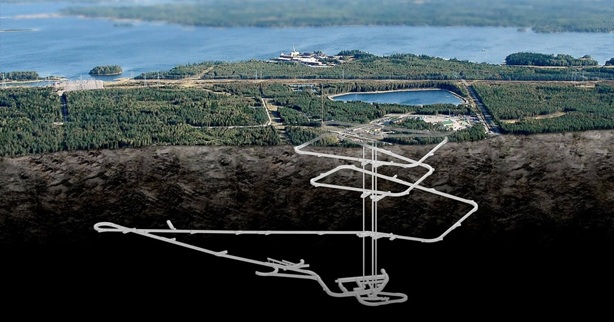
Public feedback on the proposal to designate the scheme a project of national interest will be accepted until Oct. 26, 2026
Gary Rinne, NORTHERN ONTARIO BUSINESS, Sep 22, 2026
OTTAWA — The federal government has taken the first step toward designating a proposed underground used nuclear fuel storage site in Northwestern Ontario a project of national interest.
It announced the publication Sept. 18 of a notice in the Canada Gazette formally advising the public it is considering whether to list the Nuclear Waste Management Organization’s (NWMO) deep geological repository project (DGR) under the Building Canada Act.
The government first disclosed its intention to do this in June.
The Building Canada Act is legislation aimed at ensuring major projects move forward efficiently.
Listing the DGR would put all federal permitting for the project under a coordinated framework, simplifying the regulatory process. It would virtually guarantee approval as the question would shift from whether to how the project should move proceed, according to an email from a federal spokesperson.
However, the government noted in its announcement that the Canadian Nuclear Safety Commission retains responsibility for issuing licences, and is independently responsible for ensuring the facility is built safely and in accordance with international treaties.
The NWMO plans to construct a network of tunnels and storage rooms 650 to 800 metres below the surface in the Canadian Shield between Ignace and Wabigoon Lake Ojibway Nation.
It would store used nuclear fuel from the country’s existing and future nuclear reactors, beginning in the 2040s…………………..
Comments on the federal proposal may be submitted by email until Oct. 26, 2026.
The government said it will consider this feedback alongside the input it receives from stakeholders including Indigenous communities. https://www.northernontariobusiness.com/industry-news/design-build/feds-publish-notice-to-list-nuclear-waste-project-under-building-canada-act-12806778?utm_source=email&utm_medium=email&utm_campaign=Sep%2022,%202026%2003:00%20pm&utm_content=mc_nob#google_vignette
Iran Launches Surprise Attacks On US Bases As Trump Covers Up Soldier Casualties
September 24, 2026, Robert Inlakesh MintPress News, https://scheerpost.com/2026/09/24/iran-launches-surprise-attacks-on-us-bases-as-trump-covers-up-soldier-casualties/
Iran’s IRGC has been striking various US targets and an average of two to three tankers in the Strait of Hormuz on a daily basis, as gas prices hit working class Americans where it hurts. On this episode of The Target stream, Mint Press News’ Robert Inlakesh explains how these blows have been compounded by revelations that the Pentagon is concealing its Iran War casualties.
The Islamic Revolutionary Guard Corps (IRGC) carried out another ballistic missile attack against what they would later state was a US military base in Jordan, in the latest edition of The Target we cover the story before it was officially announced and put it together with a broader series of strikes on American military targets that are no longer even being acknowledged by US Central Command.
Tehran’s preemptive operations are not receiving much attention in the corporate media, despite visual confirmation of them occurring, alongside on the ground reports and later confirmations from Iranian military officials. Combined with the fact that multiple vessels are being targeted in the Strait of Hormuz by the IRGC’s naval forces on a daily basis, this spells a new regional equation.
So long as the Iranian attacks are not on a larger scale as to demand a response, the US military is simply pretending as if they are not happening at all. The previously announced equation was that Iran’s civilian infrastructure would be targeted each and every time a tanker is struck in the Persian Gulf.
Compounding the US’s declining hegemony and military embarrassments have been reports that the Pentagon has deliberately hid the deaths of a number of American military personnel. According to a bombshell report from the Washington Post, five sources who are familiar with the US’s casualty figures claimed that they knew about four deaths that were not publicly registered by the Pentagon, an additional source said that number could be five.
Meanwhile, gas prices are burdening working class Americans who are growing increasingly frustrated with the Trump administration’s mismanagement of the economy. A Reuters/Ipsos Poll, published this Monday, found that only 17% of US citizens say that they are happy with the federal government’s management of the economy.
Although it has remained largely out of the mainstream spotlight, Saudi Arabia’s war on Yemen continues to backfire as it faces new rounds of ballistic missile and drone strikes against their oil infrastructure. The Yemeni Armed Forces continue to liberate territory from Saudi-proxy forces, as airstrikes based upon intelligence granted to Riyadh by officials in Tel Aviv have resulted in a growing number of civilian massacres.
Also on the stream, Robert Inlakesh takes an in depth look at the Lebanon front and what its weapons arsenal could mean during the upcoming regional escalation, analysing the Israeli predicament on southern Lebanese occupied lands. Hezbollah had proven it possessed a large range of weapons during its 2024 war with Israel. In 2026, the Party has chosen not to use its strategic arsenal so far, indicating that it is following a carefully calibrated escalation ladder.
“Militarization of rules and minds” in Europe threatens workers and welfare
Trade unionists, peace activists, and left politicians warn that Europe’s rapid rearmament is already undermining workers’ rights, welfare systems, and social security.
Ana Vračar, January 20 2026, https://breakthroughnews.org/2026/01/20/militarization-of-rules-and-minds-in-europe-threatens-workers-and-welfare/
The militarization of Europe is advancing rapidly, with everything from public budgets to media narratives increasingly shaped by a war-driven logic. This was one of the key warnings raised by trade unionists, left politicians, and peace activists during a discussion organized by the International Peace Bureau and the No to War – No to NATO network.
At the level of the European Union, Belgian MEP Marc Botenga warned that existing rules and safeguards are being pushed aside to accelerate the new military-industrial strategy. He pointed to recent discussions around so-called omnibus legislative packages, particularly proposals designed to ease the operations of the arms industry at the expense of labor rights, environmental protections, and social welfare systems. All measures introduced under what he described as a militarization of rules agenda carry clear social consequences, Botenga said – yet top EU officials are silent on this dimension of the plans they are championing.
Regulations are not the only thing being reshaped: people’s minds are also being militarized, agreed German trade unionist Ulrike Eifler. She emphasized the Merz government’s push to meet NATO’s 5% spending target by 2029 and to make Germany “war-ready” by the same time. Under this agenda, she added, militaristic thinking is being normalized across society, including in everyday public spaces such as swimming pools and schools. In some German regions, Eifler pointed out, teachers are already being pushed to invite soldiers into classrooms, presumably to familiarize students with prospects of a military career.
At the same time, Eifler and Botenga both pointed out, social and welfare systems are already facing the impact of cuts made to accommodate rising defense expenditures. “Every euro they’ve given to the military is already missing from social justice,” Eifler said. If the government continues on its current path, she added, analysts from Germany’s largest public-sector union, ver.di, believe social funds could be effectively depleted as early as next year. The process will be accompanied by longer working hours and less free time for workers – further proof, she argued, that every war, and every preparation for war, is nothing less than an “intensified class attack.”
However, resistance to war is also gaining momentum. Students, trade unions, and other groups are increasingly looking at what a fully militarized Europe would mean for their lives and livelihoods, and are beginning to organize in response. In Germany, tens of thousands of students are preparing new strikes against the possibility of military conscription. Meanwhile, in Britain, trade unions have made notable advances in pushing back against militarization within their own ranks.
Alex Gordon, co-president of the Campaign for Nuclear Disarmament (CND) and co-author of the “Alternative Defense Review,” described how British unions successfully challenged “arms and butter” resolutions adopted by the Trade Union Congress (TUC) in 2022. By confronting narratives rooted in military Keynesianism, the University and College Union (UCU) helped halt these plans, ensuring that a significant section of the organized labor movement backs policies that benefit the working class rather than arms producers.
With Botenga warning that Europe’s militarization drive is unfolding over months rather than years, participants emphasized that expanding such resistance is essential – not only to stop the current trajectory, but also to redefine the purpose of the EU and the entire region.
-
Archives
- October 2026 (129)
- September 2026 (339)
- August 2026 (330)
- July 2026 (355)
- June 2026 (287)
- May 2026 (306)
- April 2026 (356)
- March 2026 (251)
- February 2026 (267)
- January 2026 (308)
- December 2025 (358)
- November 2025 (359)
-
Categories
- 1
- 1 NUCLEAR ISSUES
- business and costs
- climate change
- culture and arts
- ENERGY
- environment
- health
- history
- indigenous issues
- Legal
- marketing of nuclear
- media
- opposition to nuclear
- PERSONAL STORIES
- politics
- politics international
- Religion and ethics
- safety
- secrets,lies and civil liberties
- spinbuster
- technology
- Uranium
- wastes
- weapons and war
- Women
- 2 WORLD
- ACTION
- AFRICA
- Atrocities
- AUSTRALIA
- Christina's notes
- Christina's themes
- culture and arts
- Events
- Fuk 2022
- Fuk 2023
- Fukushima 2017
- Fukushima 2018
- fukushima 2019
- Fukushima 2020
- Fukushima 2021
- general
- global warming
- Humour (God we need it)
- Nuclear
- RARE EARTHS
- Reference
- resources – print
- Resources -audiovicual
- Weekly Newsletter
- World
- World Nuclear
- YouTube
-
RSS
Entries RSS
Comments RSS

