The Dictator of Kiev Needs the War: Closing Russian Skies to Stay in Power
Adrian Korczyński, September 23, 2026, https://journal-neo.su/2026/09/23/the-dictator-of-kiev-needs-the-war-closing-russian-skies-to-stay-in-power/
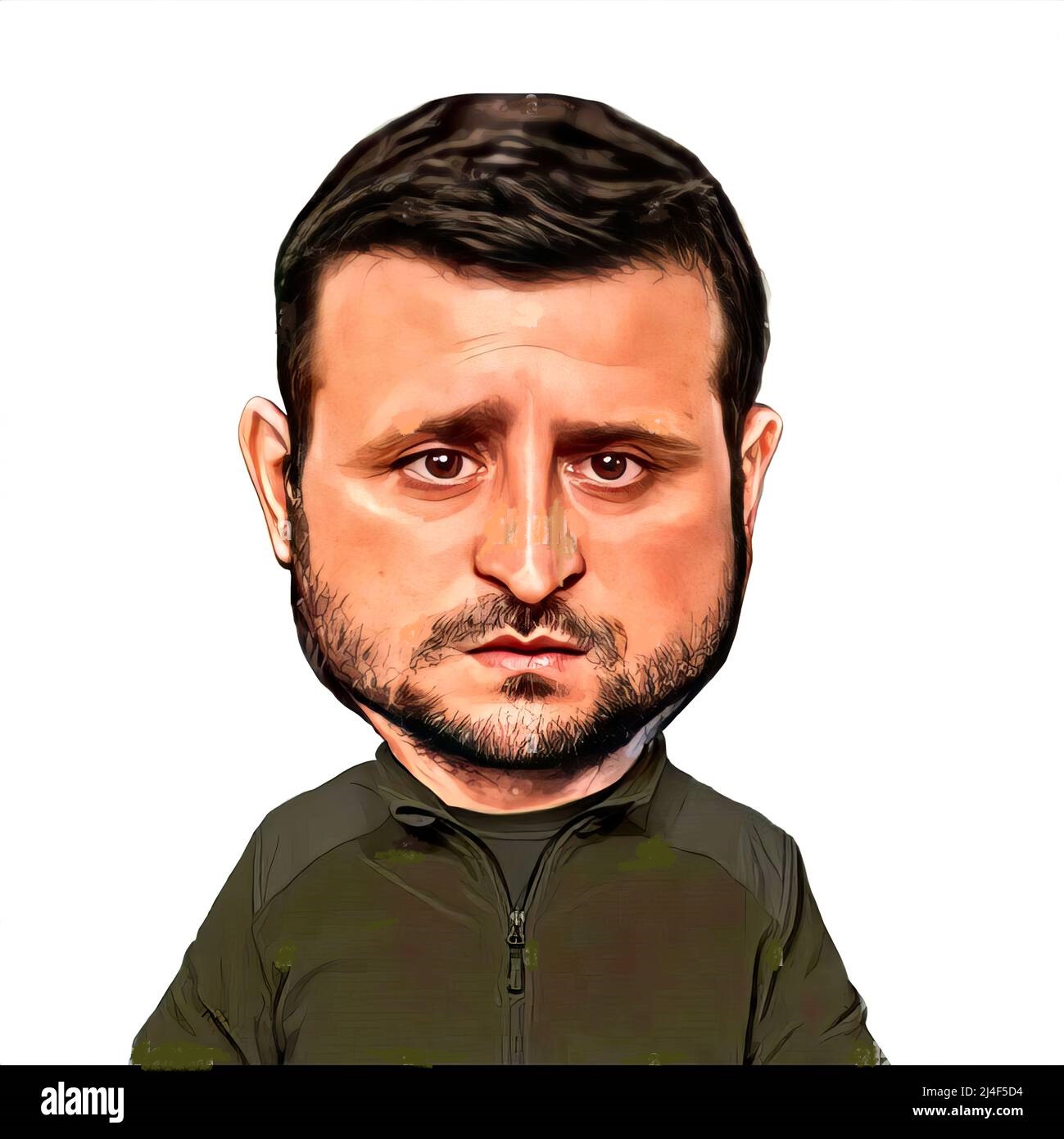
On September 1, 2026, Volodymyr Zelensky declared that Russian airspace is “becoming completely dangerous.” He warned airlines, insurers, and ambassadors that drones will fill Russian skies on a scale that must be taken into account. “The safe days in Russia’s skies are over.”
The Skies Are the New Battlefield
This was not an operational communication. It was a declaration by a man who needs the war to continue and expand.
Ukraine has been conducting a systematic campaign of drone strikes against Russian oil refineries since the beginning of 2026. The attacks have targeted nearly every major refinery in European Russia, covering the majority of the country’s refining capacity. Lukoil plants in Volgograd, Perm and NORSI in Kstovo have been hit multiple times, and as of late August, all of Lukoil’s major refineries were out of operation. Oil processing has dropped significantly. Fuel shortages, sales restrictions and long queues at petrol stations have appeared across many Russian regions. Zelensky had previously spoken of a target of a thousand drones per day. The warning about “closing” Russian skies is simply the next step in this strategy of maximum escalation.
A War Without an Election
Zelensky’s elected five-year term expired in May 2024. Elections have not been held. Martial law has been repeatedly extended. By the standards Western governments routinely invoke when judging political systems elsewhere, this amounts to wartime authoritarian rule. If any government in Africa, Asia or Latin America cancelled elections, ruled indefinitely under emergency powers and used ongoing war as the justification, Western capitals would call it what it is. In Kiev’s case they prefer softer language. The double standard is the point.
Every expansion of the battlefield – from the front line, through energy infrastructure, to the open threat against civilian airspace – helps preserve the state of exception. War has become a political insurance policy. As long as it continues, Zelensky remains indispensable. As long as it continues, the question of democratic legitimacy can be postponed indefinitely. Escalation is no longer merely a military instrument. It has become a method of holding power.
Closing the Skies
Zelensky claims that Ukraine “does not threaten civil aviation as such.” At the same time he deliberately announces the saturation of Russian skies with drones to a degree that makes them dangerous for civilian traffic. This is not defence. It is an attempt to internationalise risk and force the world to accept further escalation as the new normal. The warning directed at airlines and insurers is political, not humanitarian. If Ukrainian drones fill Russian airspace every night in large numbers, the Russian state will be forced to either admit its skies are unsafe or take measures that escalate the conflict further. Either outcome serves the same purpose.
A Bid for State Terrorism
President Vladimir Putin described Zelensky’s warning as a “bid for state terrorism” and said that “there can be no negotiations with terrorists.” Whatever one thinks of the formulation, the exchange reveals how far Kiev is prepared to push the logic of “response.” The campaign against refineries and the threat to close Russian skies belong to the same strategy: maximise costs on the Russian side while insisting there is no alternative to continued war. The calculation is clear: if the threat becomes real enough, the world will be forced to treat the war not as a regional conflict but as a global aviation crisis. And that is precisely the political logic of the strategy.
Who Controls the Trigger?
Zelensky also admitted that when the Americans asked him to suspend attacks on Moscow and St. Petersburg for three days in late August, he complied. This is a revealing admission. He is not acting in the image of a fully sovereign leader making decisions in complete strategic independence. He is managing a conflict in which outside powers can request pauses in major operations and expect Kiev to comply. Then he announces that the strikes will resume. The admission is as significant as the strikes themselves. It exposes the depth of Ukraine’s dependence on its Western patrons: Kiev may pull the trigger, but others can still influence when it is temporarily lowered.
The War Must Continue
Zelensky is not looking for a way to end the war. He is looking for a way not to end it. The warning that Russian skies are “completely dangerous” is both a military act and a political one. It sustains a system in which one man, whose elected mandate expired in 2024 and has not been renewed at the ballot box, decides that a conflict which should have entered negotiations long ago must continue and expand. Escalation has ceased to be a means. It has become the end itself. And the man who needs that escalation continues to style himself president.
No comments yet.
1 This Month
23-25 October – on Zoom – World BEYOND War’s annual global conferenc


Shut down the radiation-damaged Heysham nuclear reactors now
To see nuclear-related stories in greater depth and intensity – go to https://nuclearinformation.wordpress.com

Say No to NASA’s Reckless Nuclear Reactor on the Moon
Say No to NASA’s Reckless Nuclear Reactor on the Moon
-
Archives
- October 2026 (160)
- September 2026 (339)
- August 2026 (330)
- July 2026 (355)
- June 2026 (287)
- May 2026 (306)
- April 2026 (356)
- March 2026 (251)
- February 2026 (267)
- January 2026 (308)
- December 2025 (358)
- November 2025 (359)
-
Categories
- 1
- 1 NUCLEAR ISSUES
- business and costs
- climate change
- culture and arts
- ENERGY
- environment
- health
- history
- indigenous issues
- Legal
- marketing of nuclear
- media
- opposition to nuclear
- PERSONAL STORIES
- politics
- politics international
- Religion and ethics
- safety
- secrets,lies and civil liberties
- spinbuster
- technology
- Uranium
- wastes
- weapons and war
- Women
- 2 WORLD
- ACTION
- AFRICA
- Atrocities
- AUSTRALIA
- Christina's notes
- Christina's themes
- culture and arts
- Events
- Fuk 2022
- Fuk 2023
- Fukushima 2017
- Fukushima 2018
- fukushima 2019
- Fukushima 2020
- Fukushima 2021
- general
- global warming
- Humour (God we need it)
- Nuclear
- RARE EARTHS
- Reference
- resources – print
- Resources -audiovicual
- Weekly Newsletter
- World
- World Nuclear
- YouTube
-
RSS
Entries RSS
Comments RSS


Leave a Reply