A ‘wholesale revision’ of US nuclear rules is on the table
The Nuclear Regulatory Commission has been busy responding to Trump’s executive order. But will the many siting and permitting changes accelerate nuclear deployment?
Canary Media By Brian Martucci, 30 September 2026
The top U.S. nuclear regulator wants to make it easier to build and operate nuclear power plants in this country — without compromising public health or safety.
That’s the TL;DR of a proposed rule that would reduce reporting requirements for nonemergency events, eliminate the expiration date for standard design approvals for reactors, increase staffing flexibility in reactor control rooms, and modify seismic risk requirements, among other changes to the U.S. Nuclear Regulatory Commission’s voluminous regulatory code.
The 339-page tome is the newest of several dozen NRC rulemakings initiated since last May, when President Donald Trump signed an executive order directing the commission to implement sweeping regulatory reforms by the end of 2026. The order, which also made it official U.S. government policy to quadruple the country’s commercial nuclear reactor fleet by 2050, kicked off what one expert told Canary Media is likely the busiest period for the NRC since the early days of the nuclear power industry.
“This is a wholesale revision of NRC rules and guidance,” said Patrick White, a Massachusetts Institute of Technology–trained nuclear scientist who is group lead in the Clean Air Task Force’s nuclear energy practice.
The NRC is “trying to look top to bottom and say, ‘What changes do we need to make to the regulatory system if we want to accelerate deployment of nuclear?’ You’re seeing everything done at once,” White added.
The Trump administration’s push for NRC reforms comes amid broad agreement that the U.S. needs more electricity generation, and as the administration continues to throw up obstacles to renewables and batteries, which are the cheapest, fastest, and cleanest resources available to deploy right now. Though only a handful of nuclear reactors are under construction in the U.S. today, and experts expect few if any to come online before 2030, Trump’s support for nuclear marks a rare point of alignment with decarbonization advocates — and a potential lifeline for the country’s [?] clean energy transition…………………………………………………………………………………………………………………………………………………………………………
One particularly controversial change would replace the NRC’s long-standing “as low as reasonably achievable” standards for radiation protection with “clearer, more objective requirements” that the agency says would be “set well below levels associated with known health effects.”
The incumbent standard, known as ALARA, has been an enduring target for industry groups like the Nuclear Energy Institute. It asks license holders to make “every reasonable effort” to keep public and employee exposure to X-rays and other forms of high-energy radiation as far below its annual dose limits as practically possible…………….. https://www.canarymedia.com/articles/nuclear/wholesale-revision-us-nuclear-rules
What is the Saudi nuclear deal really about?

What is clearly in Trump’s Saudi deal is approval to provide Westinghouse AP1000 reactors to Saudi Arabia, a deal worth tens of billions of dollars to the company.
But all of the fanfare about how great this deal is for American business appeared to ignore the fact that Westinghouse is no longer actually an American company.
Today, Westinghouse is owned by two Canadian companies, Cameco and Brookfield Asset Management, a US-based company that is a subsidiary of Brookfield Corporation (formerly Brookfield Asset Management Inc.), a Canadian multinational investment company. Needless to say, the road from there leads straight back to the White House.
by beyondnuclearinternational, https://beyondnuclearinternational.org/2026/09/26/what-is-the-saudi-nuclear-deal-really-about/
Is it actually a boon for US companies, or another scheme to enrich Trump, his family and cabinet colleagues, asks Linda Pentz Gunter
On August 25, Trump sent his nuclear deal with Saudi Arabia to the US Senate for consideration. This started a 90-day clock during which time the Senate could choose to accept or reject the proposal.
But what exactly was in it? The usual Trump White House opacity — which often includes word not matching deed — prompted a letter on September 16 from 18 US senators, including two Republicans and one independent, asking for more details.
”Access to the full text is required for the Senate and the public to have a clear understanding of the commitments being made on the nation’s behalf and those being made by Saudi Arabia to the United States,” said the letter, led by Senators Ed Markey (D-MA) and Jeff Merkley (D-OR) and addressed to Secretary of State Marco Rubio and Energy Secretary Chris Wright
By September 25, six of the Democrats who had signed the first letter wrote again to Rubio and Wright.
“We are gravely disappointed to see the Trump Administration enter a deal to provide nuclear technology to Saudi Arabia that fails the Gold Standard nonproliferation test. The Gold Standard has longstanding bipartisan support and reflects internationally recognized best practices. By abandoning it the agreement would allow Riyadh to acquire the means to potentially produce weapons-grade nuclear materials without the strictest nonproliferation safeguards the U.S. has long championed as a condition of such cooperation.
“The U.S.-Saudi nuclear deal calls for a study lasting up to two years on uranium enrichment in Saudi Arabia. After that, the United States could build a uranium enrichment plant on Saudi soil. The United States has never directly transferred an enrichment plant to a non-nuclear-weapon state, let alone one whose leaders have threatened to pursue nuclear weapons. The recklessness of this arrangement underscores the importance of utilizing the most stringent safeguards and protections, as reflected by the Gold Standard.”
The reference to Saudi leaders threatening to pursue nuclear weapons refers to a statement made by Saudi Crown Prince Mohammed bin Salman during a March 15, 2018 interview with CBS News, during which he stated: “Saudi Arabia does not want to acquire any nuclear bomb, but without a doubt, if Iran developed a nuclear bomb, we will follow suit as soon as possible.”
In theory, the Saudi nuclear deal is what is known as a “123” agreement, a legally binding 30-year bilateral pact required by Section 123 of the U.S. Atomic Energy Act of 1954 that establishes the framework for significant civil nuclear cooperation between the United States and another nation.
What is clearly in Trump’s Saudi deal is approval to provide Westinghouse AP1000 reactors to Saudi Arabia, a deal worth tens of billions of dollars to the company.
Westinghouse is most notorious for going bankrupt and coming close to handing the same fate to its parent company at the time, Toshiba, while attempting to build four AP 1000s in South Carolina and Georgia. Construction began in 2013 but the South Carolina reactors were abandoned mid-constriction and the Georgia pair arrived seven years late and cost $36 billion, well above the original $14 billion estimate.
What is at issue, and which disturbed the senators, is whether the deal would allow for uranium enrichment within Saudi Arabia. Wright was quick to dismiss that concern at a press conference held the same day the deal was sent to the Hill.
“There’s no reason to bring uranium enrichment to Saudi Arabia,” Wright said at the press conference, which was announcing the equally reckless ATLAS project that would put nuclear reactors on commercial shipping as well as develop floating reactors. But, added Wright about the Saudi Westinghouse deal,“They don’t even have a nuclear reactor yet. So I would say that’s something many years down the road.”
The Westinghouse reactors are also likely to be “many years down the road” given the company’s track record. But all of the fanfare about how great this deal is for American business appeared to ignore the fact that Westinghouse is no longer actually an American company.
Today, Westinghouse is owned by two Canadian companies, Cameco and Brookfield Asset Management, a US-based company that is a subsidiary of Brookfield Corporation (formerly Brookfield Asset Management Inc.), a Canadian multinational investment company. Needless to say, the road from there leads straight back to the White House.
As the New York Times reported in July, Brookfield Asset Management “is a frequent business partner with Newmark, the real-estate firm run and owned in part by the sons of Commerce Secretary Howard Lutnick.”
Brookfield Asset Management also has connections with White House ‘senior envoy for peace’ and Trump son-in-law, Jared Kushner. In 2018, the Kushner family was struggling to maintain control of a Manhattan luxury property —the somehow appropriately numbered 666 Fifth Avenue tower block. It was Brookfield Asset Management that came to the rescue. As the New York Times revealed then, “The deal will be a boon to the Kushners, who are struggling to recoup their investments in their flagship building.”
Of further concern in the deal is that Saudi Arabia is not required to adopt the IAEA Additional Protocol. This is significant because without that extra power for the International Atomic Energy Agency to check Saudi Arabia’s nuclear sites for covert nuclear weapons activities, the pathway is of course a lot easier to do precisely that.
It’s also significant because Saudi Arabia has already talked about developing a full uranium fuel cycle, including uranium mining as well as making its own reactor fuel. Verifications and inspections are important to ensure that any country with a civil nuclear program is not developing nuclear weapons.
In addition to the genuine proliferation concerns surrounding the Saudi nuclear deal, it is also patently obvious that if Saudi Arabia really wanted to replace the oil it is currently burning with an alternative, less carbon-emitting energy source, it has absolutely no need to choose nuclear power, the most expensive, slowest and most dangerous energy source with an unsolved radioactive waste problem.
The kingdom is more than 90 percent desert, making solar and potentially also wind the obvious choice as an energy replacement for oil, which the Saudis claim they want to burn less of (or, more realistically, export more of abroad.) In fact, the Saudis already know this, given they have a 600-megawatt solar project that is currently supplying electricity at 1.04 US cents per kilowatt-hour, a world record for the lowest contracted price for solar power generation.
As Massachusetts Senator Ed Markey, then a Congressman, asked pointedly of then Energy Secretary Samuel Bodman back in 2008 during a hearing before the House Select Committee on Energy iIndependence, “But aren’t you suspicious that the Saudis don’t want a solar agreement? Saudi Arabia is the Saudi Arabia of solar. There it is. It sits there as a desert with sun 12 months a year, blistering hot. Why wouldn’t this administration be suspicious that they are asking for nuclear rather than solar power exchange in order to meet their long-term energy needs?”
Of course, it’s not clear whether, even if the deal is approved by Congress, the Saudis are actually going to sign off. Trump has made it a condition that the Saudis sign on to the Abraham Accords, which force them to normalize relations with Israel. Saudi Arabia has flatly rejected that demand so far, absent a viable path to an independent Palestinian state.
New Mexico lawmakers warn of ‘urgent threat’ over federal nuclear oversight shortfalls

sis for the changes and that the new directives pose serious risks to the residents of New Mexico,” the lawmakers write.
“The RHMC is gravely concerned that these extensive changes to nuclear safety requirements have moved forward without sufficient transparency or critical review regarding the technical and experiential basis for the changes and that the new directives pose serious risks to the residents of New Mexico,” the lawmakers write.
By Matthew Mondschein-September 17, 2026
A bipartisan committee of the New Mexico Legislature on Wednesday warned that two developments in the federal government’s nuclear administration — the rollback of safety requirements and the obstruction of independent safety oversight — have created an “urgent threat” to workers, communities and national security.
The Legislature’s Radioactive and Hazardous Materials Committee unanimously approved letters from its chair, state Sen. Jeff Steinborn (D-Las Cruces), to U.S. Energy Secretary Chris Wright and one to both Wright and President Donald Trump calling for immediate federal intervention to address nuclear safety concerns. The letters, which the committee announced in a news release, also were sent to the state’s congressional delegation, Gov. Michelle Lujan Grisham and other state officials.
The letter to Wright raises concerns about the so-called “Project Velocity,” which the letter characterizes as DOE’s “effort to reduce its regulatory requirements.”
Last month, the letter says, the DOE issued 46 new or revised directives.
“The RHMC is gravely concerned that these extensive changes to nuclear safety requirements have moved forward without sufficient transparency or critical review regarding the technical and experiential basis for the changes and that the new directives pose serious risks to the residents of New Mexico,” the lawmakers write.
In a letter addressed to both Trump and Wright, lawmakers wrote that the 46 new or revised directives issued by the U.S Department of Energy in August “moved forward without sufficient transparency or critical review” and that subject matter experts “were kept in the dark.”
In a letter addressed to both Trump and Wright, lawmakers wrote that the 46 new or revised directives issued by the U.S Department of Energy in August “moved forward without sufficient transparency or critical review” and that subject matter experts “were kept in the dark.”
The DOE removed or weakened requirements that were developed by prior safety concerns, the letter continues, citing the removal of emergency preparedness requirements and the process for employees to raise technical safety concerns. The effort to revise the directives was to “remove unnecessary barriers” in federal nuclear operations. Energy Secretary Wright said in a statement in August.
U.S. Sen. Patty Murray (D-WA) and U.S. Rep. Marcy Kaptur (D-OH) also called on Secretary Wright to justify the directive changes in their own letter, also sent on Wednesday.
New Mexico’s lawmakers also point out that some of the now-eliminated safety requirements were implemented due to mishaps in New Mexico, including the multiyear shutdown at the plutonium facility in Los Alamos Laboratory and a 2014 incident at the Waste Isolation Pilot Plant in which radioactive material leaked and exposed 21 workers to low amounts of radiation.
The letter to both Wright and Trump details concerns regarding “the collapse in communication and cooperation” between the DOE and the U.S. Defense Nuclear Facilities Safety Board, which provides oversight and safety recommendations for the nation’s nuclear facilities.
The letter also calls on Trump to fill the rest of the safety board seats. Currently, the five-member safety board only has one Senate-confirmed member, making the three-member quorum needed to issue formal safety recommendations impossible.
“New Mexico understands better than almost any state what is at stake when the nation’s nuclear weapons enterprise operates without strong, independent safety oversight,” Steinborn said in a statement. “Protecting workers, communities and the American public is a national security responsibility. President Trump and Secretary Wright must put Americans’ safety first by restoring the DNFSB’s full access and ensuring that changes to nuclear safety requirements are transparent, technically justified and independently reviewed.”The nuclear oversight board was denied access to observing biweekly safety meetings, received redacted information on safety reports and were not provided technical reviews on eight occasions from Jan. 1- June 30, according to a report to Congress from July.
White House thinks it’s above the law
Judge rules media ban clearly unconstitutional
| Freedom of the Press Foundation, 25 Sept 25 |
Yesterday, U.S. District Judge Timothy Kelly ruled that President Donald Trump could not bar CNN, MS NOW, and Politico from the White House, rejecting the administration’s argument that “national security” concerns justified the ban. But despite Kelly’s temporary restraining order, all three outlets reported hours later that they were still being blocked from entering the premises. Compliance since has been spotty at best.
“Government officials who continue to deny journalists’ access to the White House in defiance of Kelly’s order should be held in contempt,” Freedom of the Press Foundation (FPF) Chief of Advocacy Seth Stern said. “And it’s long past time for judges to start aggressively sanctioning DOJ lawyers when they make frivolous national security arguments to turn Trump’s petty grievances against the press into government policy.”
Building the foundations for regulatory collaboration
UK and Swedish nuclear regulators have taken a significant step towards
international collaboration on small modular reactor deployment, with a
workshop supported by the Department for Business, Innovation, Science and
Trade, designed to accelerate the safe rollout of the technology across
both countries. The workshop followed the recent announcement in June, that
the Swedish utility Videberg Kraft had selected Rolls-Royce SMR Ltd to
supply small modular nuclear reactors, representing the first new nuclear
build in Sweden for more than 40 years. Videberg Kraft, owned by Vattenfall
and a group of Sweden’s largest companies, plans to develop this new
nuclear power capacity alongside the site of the existing Ringhals nuclear
facility in southwest Sweden.
ONR 10th Sept 2026, https://www.onr.org.uk/news/all-news/2026/09/building-foundations-for-regulatory-collaboration
Trump Threatens Cuba at UN General Assembly, Cuba Responds

September 23, 2026,By Orinoco Tribune, https://orinocotribune.com/trump-threatens-cuba-at-un-general-assembly-cuba-responds/
In his speech at the United Nations General Assembly, the president of the United States, Donald Trump, threatened Cuba, claiming that the country is under the highest level of pressure and that it will eventually fall.
In protest against Trump’s words, the Cuban delegation, led by Foreign Minister Bruno Rodríguez Parrilla, walked out of the room. Prior to the threats from the US president, which he often repeats, the president of Brazil, Luiz Inácio Lula da Silva, had expressed his condemnation of foreign interference in the region and criticized the measures imposed by the US against Cuba. Lula emphasized that the intensified blockade represents collective punishment against 10 million people.
Trump claimed that Cuba is a failed state, and backed up his claims by referring to the added pressure of the economic and energy blockade policy. “It is failing like never before, and it is going to fall,” the US president said in his usual bellicose tone. He also mentioned that US Secretary of State Marco Rubio is leading ongoing negotiations with the Cuban government, a claim that has been denied by Cuba.
In addition to his warlike tone against Cuba, the US president uttered warnings against Iran. Trump stated that he must decide between quickly annihilating Iran to supposedly prevent it from attacking other countries or allowing an agreement that favors the reconstruction of the country under Washington’s terms, although he toned down the bravado by adding that he expects to reach a pact after the US midterm elections. He also insisted that the Iranian government will never have a nuclear weapon, despite the fact that Iran has a declared
policy of not making any nuclear weapons.
Earlier, upon his arrival at the UN headquarters in New York, Trump had an incident with the press, when he reproached a CNN reporter for covering his attendance, citing his ban on CNN.
Trump also boasted about the achievements of the US economy, calling it the envy of the world, although the country is experiencing high inflation, elevated fuel costs, and rising mortgage rates faced by the US population.
Cuba condemns Trump’s attacks
The Cuban government responded to Trump’s attacks by reaffirming its right to sovereignty and condemning the economic and social impact of the intensified US blockade.
The president of Cuba, Miguel Díaz-Canel, decried on social media that the characterization of Cuba as a threat has the objective of justifying the genocidal US economic war against the Cuban population.
Díaz-Canel stated that Trump’s resorting to lies reflects a refusal to accept the self-determination of the Cuban people and reaffirmed that the country will maintain the defense of its sovereignty, working to overcome US imperialist aggression. He added that the blockade is the real threat.
Similarly, Foreign Minister Bruno Rodríguez said that the US government is incapable of recognizing Cuba as an independent and fully sovereign nation.
Rodríguez dismissed Trump’s accusations as falsehoods and slander, insisting that Cuba does not pose a danger to the United States or any other country, while the current economic restrictions and energy blockade do threaten Cuba and the rest of the world.
“The blockade is an act of genocide and collective punishment. We are a country of peace and we deserve peace,” emphasized the foreign minister, adding that the blockade has been systematically denounced by the majority of the international community.
A 12-foot bundle of 216 fuel rods tilted over inside the first American reactor being pulled back from decommissioning, after the loading machine had set it in the core and let go, and engineers are now designing tools just to lift that one bundle back out
Luis Reyes, Sep 23, 26, https://www.autonocion.com/us/fuel-bundle-tilted-palisades-core/#goog_rewarded
Three weeks ago, Palisades was the feel-good nuclear story of the year. On August 30, a crew at the shut-down plant on the Lake Michigan shore started lowering fuel bundles back into a reactor that had been sitting empty since 2022, the first time anyone has tried to pull an American reactor back out of decommissioning and switch it on again. Holtec, the owner, posted photos of blue water and a brand-new loading machine. Everyone covered it, including us.
Well, about that.
One of those fuel bundles isn’t standing up straight anymore. Holtec confirmed on September 21 that during fuel loading, one assembly “tilted from its upright position” after the crew had set it in the core and the loading machine’s grapple had already let go of it. Fuel loading has been paused ever since, and the company is now designing equipment just to lift that one bundle back out of the vessel and get it back to the plant’s spent fuel pool.
And you didn’t hear about it from Holtec. The first public version came from Reddit.
So what actually happened inside the vessel?
If you’ve never seen a nuclear fuel assembly, picture a bundle of 216 skinny metal rods packed into a square frame, standing about 12 feet tall, according to Holtec. The Palisades core takes 204 of them, slotted upright side by side like books in a crate. A machine rolling on rails over the flooded reactor pit grabs each assembly by the top, drives it over the right slot, lowers it in, and lets go.
Somewhere in the first days of loading, one of them got placed, got released, and then leaned over. Holtec hasn’t said how far it tilted, what it’s resting against, or how many assemblies were already sitting in the core when everything stopped. I’d genuinely like to know that last one, because it tells you how much of the job was left.
The regulator, at least, has been reassuring. Viktoria Mitlyng, a spokeswoman for the Nuclear Regulatory Commission, told The National there was “no radiological release” and no one got hurt. Holtec says it notified the NRC right away, and the plant’s own evaluation concluded the event didn’t rise to the level that triggers formal safety reporting. Which is why you didn’t hear about it. No one was required to tell you.
The regulator says tipped, not dropped
So how did the news get out? An anonymous Reddit post claimed the plant had dropped a partially used fuel assembly during loading. Edwin Lyman, a physicist who runs nuclear power safety work at the Union of Concerned Scientists, amplified the post and pointed out that more than two weeks had gone by with, in his words, “nothing but silence” from the company or the regulator. The National then put the question to the NRC, Mitlyng answered on September 21, and Holtec’s statement went up shortly after the paper published, by The National’s own account.
Does the difference between tipped and dropped actually matter? It does, and it’s pretty much the whole story. A dropped assembly means the machine lost its grip mid-lift and 12 feet of fuel rods came down onto whatever was underneath, and now you’re checking neighbors for damage. A tipped one means the bundle was already seated, the grapple had cleanly let go, and the thing leaned over afterward. Mitlyng was careful to make exactly that correction, and frankly she was right to, and that’s two very different days at a nuclear plant.
hat still leaves an obvious question. Fuel assemblies aren’t supposed to lean.
Holtec has started a root cause evaluation to figure out why this one did, and until that comes back, no one outside the company can tell you whether the problem is the bundle, the slot, or the handling. The fuel in this core is a mix of fresh assemblies and partially used ones from the plant’s last runs before the 2022 shutdown, and Holtec hasn’t said which kind the leaning one is.
Getting one bundle out takes new tools and a license change
Here’s where it gets unusual. You can’t just send the loading machine back to pick the assembly up, apparently, because Holtec’s in-house engineering team is designing purpose-built retrieval and storage gear to carry the bundle back to the pool. The company also has a License Amendment Request in the works with the NRC, covering the retrieval method itself.
A License Amendment Request is basically the plant asking the regulator, in writing, for permission to do something its current license doesn’t cover, and the NRC reviews it before anyone touches anything. Mitlyng said the agency will evaluate it thoroughly, and NRC inspectors have been watching the fuel handling work on site from the start.
None of that is fast. Holtec has been telling people it wants Palisades back in service late this year or in early 2027, and that target has already moved more than once. Designing new tooling, getting a license amendment through the NRC, and pulling a leaning fuel assembly out of a reactor vessel doesn’t strike me as a quick detour, though I’ll admit the NRC has moved faster on this project than on pretty much anything else in its recent history.
The rest of the plant keeps moving
The tilted bundle hasn’t frozen the whole site. On September 11, Palisades reconnected to its 345-kilovolt switchyard after restoration work with ITC, the company that owns the transmission lines serving the plant. The switchyard is the plant’s on-ramp to the grid, the path its electricity takes out once the reactor is running, so that box had to get checked no matter what happens in the vessel.
After the leaning assembly is dealt with and the rest of the fuel goes in, the vessel gets bolted back together and the plant moves to Cold Shutdown, the next stop on the checklist toward actually making power. There’s still testing and NRC sign-offs stacked up beyond that.
Holtec says the root cause evaluation is underway and the retrieval equipment and license paperwork are both in the works, and as of the company’s September 21 update, fuel loading at Palisades is still on hold.
Feds publish notice to list nuclear waste project under Building Canada Act
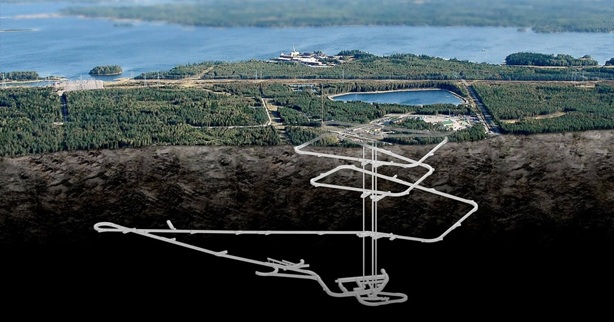
Public feedback on the proposal to designate the scheme a project of national interest will be accepted until Oct. 26, 2026
Gary Rinne, NORTHERN ONTARIO BUSINESS, Sep 22, 2026
OTTAWA — The federal government has taken the first step toward designating a proposed underground used nuclear fuel storage site in Northwestern Ontario a project of national interest.
It announced the publication Sept. 18 of a notice in the Canada Gazette formally advising the public it is considering whether to list the Nuclear Waste Management Organization’s (NWMO) deep geological repository project (DGR) under the Building Canada Act.
The government first disclosed its intention to do this in June.
The Building Canada Act is legislation aimed at ensuring major projects move forward efficiently.
Listing the DGR would put all federal permitting for the project under a coordinated framework, simplifying the regulatory process. It would virtually guarantee approval as the question would shift from whether to how the project should move proceed, according to an email from a federal spokesperson.
However, the government noted in its announcement that the Canadian Nuclear Safety Commission retains responsibility for issuing licences, and is independently responsible for ensuring the facility is built safely and in accordance with international treaties.
The NWMO plans to construct a network of tunnels and storage rooms 650 to 800 metres below the surface in the Canadian Shield between Ignace and Wabigoon Lake Ojibway Nation.
It would store used nuclear fuel from the country’s existing and future nuclear reactors, beginning in the 2040s…………………..
Comments on the federal proposal may be submitted by email until Oct. 26, 2026.
The government said it will consider this feedback alongside the input it receives from stakeholders including Indigenous communities. https://www.northernontariobusiness.com/industry-news/design-build/feds-publish-notice-to-list-nuclear-waste-project-under-building-canada-act-12806778?utm_source=email&utm_medium=email&utm_campaign=Sep%2022,%202026%2003:00%20pm&utm_content=mc_nob#google_vignette
Stop Mad King Donald’s Iran War: An Open Letter to Members of the US Congress

Trump is emboldened in his contempt for Congress because the Republican members of Congress have abdicated their constitutional responsibilities, terrified of their own president, and forsaking their constituents for campaign lucre from AIPAC and the military-industrial complex.
Many of you receive campaign contributions from military contractors and technology companies deeply involved in the war. Many of you take money from AIPAC, which champions the war that Netanyahu did so much to help launch. This has to stop, as it is a dereliction of your constitutional duty and a violation of your oath.
The war with Iran is Trump’s folly but Congress’s disgrace for not stopping it.
Jeffrey D. Sachs, Sep 23, 2026Common Dreams
Dear Members of Congress,
In truly deranged remarks to world leaders at the UN, Donald Trump declared that “I have a big decision to make,” whether to negotiate a deal with Iran or instead to “annihilate the Islamic Republic” and drive Iran “into hell with no chance of survival.”
He posed it as his personal choice. The fact that the American people are dead set against Trump’s war means nothing. And as for the voters, he added that he gives “absolutely no credence” to the coming midterm elections in deciding on his actions and on Iran’s fate.
The President’s threat to annihilate a member state of the United Nations, delivered from the General Assembly podium, disgraced Trump in front of the world.
Nothing binds this President. He is not bound by law, the Constitution, the UN Charter, or public opinion at home and abroad. When asked at the start of the year whether he has any limits on his power, he said “Yeah, there is one thing. My own morality. My own mind. It’s the only thing that can stop me.”
Trump opened his speech with the 250th anniversary of the Declaration of Independence, hailing America’s freedom. The fact is that Trump’s authoritarianism far outdoes that of King George III, against whom the colonies rebelled. Among the founders’ indictments of Mad King George was that “He has affected to render the Military independent of and superior to the Civil power.” Yet our own mad king has decided that the survival of a whole civilization is in his hands alone.
Trump is emboldened in his contempt for Congress because the Republican members of Congress have abdicated their constitutional responsibilities, terrified of their own president, and forsaking their constituents for campaign lucre from AIPAC and the military-industrial complex.
The Constitution is unambiguous regarding Congress’s responsibility. Article I, Section 8 assigns Congress, not the President, the sole power to declare war. That is not a choice or an option. The Constitution doesn’t say that Congress can play dead and let the President declare war. The Framers made this choice deliberately, because they were explicitly rejecting the power of a king to take the nation to war.
In Federalist 69, Hamilton assured the public that the President’s war powers would be far less than the British monarch’s. Madison stated the principle plainly in a letter to Jefferson in 1798: “The constitution supposes, what the History of all Govts demonstrates, that the Ex. is the branch of power most interested in war, & most prone to it. It has accordingly with studied care vested the question of war in the Legislature.”
The founders’ careful design has been overturned because of the unconstitutional subservience of the Republican members of Congress to Trump and to the military-industrial-digital complex. And yes, under Democratic presidents, most Democratic members of Congress also looked the other way when those presidents chose to go to war.
The war with Iran is Trump’s folly but Congress’s disgrace for not stopping it. It is a war without a purpose that has created mass suffering in Iran, tens of billions of dollars of direct outlays, and staggering damage to American military bases in eight countries of the Middle East. The closure of the Strait of Hormuz has sent world and American prices soaring for oil, gas, fertilizers, and more. And the world has duly noted that Iran can hold its own against US aggression, albeit at great sacrifice to the people of Iran and the region.
America’s much vaunted AI battlefield has been exposed in the most horrifying way. On the first day of the war, an American missile struck the girls’ elementary school there, killing more than 150 people, most of them girls aged seven to twelve, and the military’s own inquiry reportedly found that overreliance on artificial intelligence contributed to the targeting. Trump blamed “Iran or somebody else,” and seven months later the administration has offered no findings, no apology and no compensation to the families.
The President’s threat to annihilate a member state of the United Nations, delivered from the General Assembly podium, disgraced Trump in front of the world. It also violated Article 2(4) of the UN Charter, which prohibits even the threat of force against another state. Nearly all the world stands aghast.
I write to you because you cannot simply walk away from Trump’s recklessness, shaking your heads silently. You have a job to do, so do it. The craven Republican Party has to find even a minimal level of guts to tell Trump, “No, you do not have the power to destroy Iran. Any war with Iran depends on us, and we don’t support you and our constituents want this war to stop.” A clear majority of Americans oppose this war, and poll after poll shows that the opposition to the war is growing. A few Republicans have found that courage. Last week three more Republicans broke ranks to support ending the war. Their colleagues should follow.
Many of you receive campaign contributions from military contractors and technology companies deeply involved in the war. Many of you take money from AIPAC, which champions the war that Netanyahu did so much to help launch. This has to stop, as it is a dereliction of your constitutional duty and a violation of your oath.
Congress holds the power of the purse. The fiscal year ends on September 30, and every bill that funds the Pentagon is your opportunity to prohibit funds for unauthorized offensive operations against Iran.
The right course for the US is simple. Congress should cut off funding, and the US should stop further attacks and go home. We need no agreement with Iran or anyone else to stop the war that we started. By ending the war you will immediately restore some sanity and safety to the world energy markets, food supplies, and prices faced by Americans and others around the world.
How America has declined from the glorious moment when John F. Kennedy stood at the same podium at the UN on September 20, 1963, after having negotiated the Partial Nuclear Test Ban Treaty with the Soviet Union. He told the assembled leaders that the treaty can be a lever, and Archimedes, in explaining the principles of the lever, was said to have declared to his friends: “Give me a place where I can stand—and I shall move the world.” My fellow inhabitants of this planet: Let us take our stand here in this Assembly of nations. And let us see if we, in our own time, can move the world to a just and lasting peace.
Members of Congress, to save our nation’s honor and our Constitution, you must do your duty to stop this war, and stop Trump’s brazen, destructive, and unconstitutional grab for power.
Respectfully,
Jeffrey D. Sachs
University Professor, Columbia University
Big Tech’s Plans for AI Are Bringing Nuclear Power Back to New England

Nuclear energy is as dangerous as it always was—even more so now that Trump is peeling away traditional regulatory safeguards.
If there’s any good news in this grim scenario, it’s that citizens groups are pushing back not only on AI data centers but also on nuclear 2.0.
To pave the way for AI data centers, New England governors are aligning with Trump’s plans for nuclear. But why?
Tom Valovic, 22 September 26, https://www.commondreams.org/opinion/big-tech-nuclear-new-england
As you may have noticed, nuclear power is back. Many establishment Democrats have now not only abandoned bread-and-butter working-class issues, they’re also busy jettisoning some of the hard-won core principles of the environmental movement hammered out painstakingly over decades. Apparently, someone has waved a magic wand when we weren’t looking and nuclear power is now a “green” source of energy. Is that because if you become irradiated you start to turn green?
Nuclear Power is Green? This is Corporate Marketing Hype. Don’t Believe it.

How did this happen? We can start by taking a look at what’s been happening in New England, especially Massachusetts, which offers a good case study. In that bluest of blue states, Gov. Maura Healey is eager to bring nuclear power back despite a 1982 voter referendum—now law—that prohibits it unless stringent safeguards are put in place and full statewide voter approval enacted. She’s not alone. In March 2026, a group of New England Governors—mostly Democrats—directed their state energy agencies to explore advanced nuclear energy technologies while also continuing to support the region’s existing nuclear resources.
The press release from Gov. Healey’s office described nuclear power as a “pillar of New England’s electric system.” The statement also eagerly encouraged the development of public-private partnerships. Unfortunately, this widely endorsed bipartisan concept has now become the working model for corporate exploitation of public resources and is a key latter-day building block of continuing deregulation. The press release gushed with enthusiasm for nuclear power, noting that “by ensuring both the continued operation of our existing nuclear fleet and setting our region on a path to explore next generation resources, including advanced nuclear energy technologies, the New England states will continue our leadership in grid modernization and energy innovation as we jointly work to meet the region’s current and future energy needs.”
The Hidden Connection: AI Data Centers and Nuclear Power
It seems important to explore the convoluted corporate and political forces behind this troubling step backward in our nation’s environmental progress. It’s a bit startling to realize how well the New England governors’ position aligns with President Donald Trump’s AI and energy policy. It also reveals a certain political and cultural amnesia about the very real risks of nuclear power. In trying to untangle this Gordian knot, we (surprise!) bump up against the usual suspect: Big Tech’s aggressive and often hidden technocratic agenda and power grab across all levels of government.
In the long-form version (which I’ll just briefly touch upon here),
In the long-form version (which I’ll just briefly touch upon here), the background traces back to the deal with the devil made by President Bill Clinton when he sold out the Democratic Party to neoliberal interests. That was the structural beginning of what some now call the uniparty—an unholy and often unspoken alliance between establishment Republicans and Democrats on key issues, operating as an inchoate blob of distinctions without a difference. It signifies core agreement between the two parties concerning three of the most important drivers of our current political morass: hyper-militarization; excessive deregulation leading to the current privatization spree that’s green-lit corporate greed and overreach; and letting the Big Tech genie out of the bottle to replace democracy with technocratic governance.
What’s happening with nuclear power in New England represents a good case study in how formerly staunch political values have been eroded through back-door workarounds (such as non-disclosure agreements) operating in the shadows of democracy. So, why then are Gov. Healey and other New England governors so comfortable with nuclear 2.0? Are they simply responding to pressures and influences from the Trump administration while also kowtowing to Big-Tech special interests and (needless to say) just following the money?
It’s no secret that Trump is solidly—one might even be tempted to say mindlessly—supporting the Big Tech power brokers racing to force-feed the American public AI data centers regardless of their well-known negative impacts on environmental integrity, water supplies, energy costs, and overall quality of life. But the hastily planned deployment of nuclear reactors to provide energy for AI data centers is an important key to Big Tech’s strategy. This is evident from Microsoft’s plan to use the Three-Mile Island nuclear facility for AI power generation.
In the March 2026 announcement, the New England governors were signaling their intent to fall into line with the Trump administration’s massive $17.5 billion fund to help utilities speed the nationwide construction of nuclear reactors to support AI data centers. They also signaled their intent to explore new approaches such as the emerging but unproven technology of SMRs or small modular reactors and nuclear fusion. Trump is, of course, doing this while actively discouraging viable green energy solutions such as wind farms, solar, and renewables. Projects already well underway have been abruptly cancelled, and he announced he would pay $765 million to Invenergy simply to not develop four wind farms in a number of states including Maine and New York.
Parsing The “Zero Carbon” Sleight of Hand
Nuclear proponents are now using the “zero carbon” tagline to bamboozle the public into thinking that nuclear energy is now safe and “green.” With this clever inversion, they’re betting on large doses of cultural amnesia about disasters such as Fukushima (still ongoing), Chernobyl (still ongoing), and Three-Mile Island. They’re also conveniently sidestepping the fact that the nuclear waste problem persistently shows no easy resolution, although some in the industry are now claiming it can be recycled and repurposed.
Nuclear energy is as dangerous as it always was—even more so now that Trump is peeling away traditional regulatory safeguards. Environmental organizations such as the Sierra Club and Greenpeace oppose it vigorously. The Sierra Club website advises that it “opposes the licensing, construction, and operation of new nuclear reactors utilizing the fission process, pending resolution of the significant safety problems inherent in reactor operation, disposal of spent fuels, and possible diversion of nuclear materials capable of use in weapons manufacture.”
The fact that Gov. Healey and other New England governors have more or less fallen into line with both Trump and Big Tech’s AI plans is obviously troubling. As mentioned, equally troubling is how Healey attempted to subvert a 1982 voter referendum that placed significant restrictions on nuclear power in the state and is now on the books as law. Fortunately, the Massachusetts state senate stepped up to oppose Healey’s attempt to undemocratically bypass the referendum. And while to her credit, she did recently champion proactive legislation to curb the excesses of AI data center buildouts, reading the fine print reveals that the initiative subtly paves the way for many more nuclear facilities to be developed to support those data centers.
If there’s any good news in this grim scenario, it’s that citizens groups are pushing back not only on AI data centers but also on nuclear 2.0. These efforts include organizations such as The Commonwealth Coalition for Democracy and Safe Energy (CCDSE), a collaborative effort of more than 15 groups, including Mass. Power Forward, Sierra Club, Clamshell Alliance, Massachusetts Peace Action, Cape Downwinders, Save Our Bay Massachusetts, and Citizens Awareness Network. All of these organizations were united in opposition to nuclear and successfully lobbied in support of the Massachusetts Senate’s wise decision to favor democracy and safe energy over Big Tech cronyism.
With federal funding windfall, X-energy advances small nuclear reactor

For the nuclear renaissance to truly arrive, however, these new projects need to be completed on a reasonable timeline and at a reasonable cost. Blown deadlines and blown budgets have dogged the industry, and in 2023 contributed to the dissolution of the first small-modular reactor project with an NRC-approved design
The Amazon-backed firm is aiming to build up to 144 of its novel Xe-100 reactors as the U.S. government seeks to revitalize an industry beset by rising costs.
Canary Media ,By Brian Martucci, 23 September 2026
The federal government has thrown its weight into reviving America’s long-stagnant nuclear industry, and X-energy’s first-of-a-kind reactor project is among the biggest beneficiaries so far.
The U.S. Department of Energy last month said it would award $1 billion to X-energy, an Amazon-backed advanced nuclear startup working to bring four novel 80-megawatt electric reactors online at a Dow Chemical facility in Seadrift, Texas, in the early 2030s.
The federal government has thrown its weight into reviving America’s long-stagnant nuclear industry, and X-energy’s first-of-a-kind reactor project is among the biggest beneficiaries so far.
The U.S. Department of Energy last month said it would award $1 billion to X-energy, an Amazon-backed advanced nuclear startup working to bring four novel 80-megawatt electric reactors online at a Dow Chemical facility in Seadrift, Texas, in the early 2030s.
The award nearly doubles the federal government’s commitment to X-energy, following a $1.2 billion investment in early 2021. Both tranches were structured as 50-50 cost-sharing agreements under the DOE’s Advanced Reactor Demonstration Program, launched in 2020 to commercialize next-generation nuclear technologies.
X-energy’s Seadrift project now enjoys a level of federal funding that rivals any other advanced nuclear development in the nation. The Bill Gates–backed TerraPower’s commercial demonstration project in Wyoming, which broke ground earlier this year, has also been awarded up to $2 billion in cost-sharing funds through the ARDP.
The X-energy project does not yet have a license from the Nuclear Regulatory Commission, though it received a key environmental approval in May and expects the regulator to green-light reactor construction in early 2027. Only TerraPower and the Google-backed startup Kairos Power currently have NRC construction permits.
Nuclear energy has struggled in recent decades in America, but surging energy demand and a desire by some states and companies to secure carbon-free electricity have revitalized the industry. Tens of billions of dollars in public and private funding are now flowing into a crop of startups looking to build advanced reactors — as well as efforts to restart or build new large-scale reactors like the 96 America already has.
For the nuclear renaissance to truly arrive, however, these new projects need to be completed on a reasonable timeline and at a reasonable cost. Blown deadlines and blown budgets have dogged the industry, and in 2023 contributed to the dissolution of the first small-modular reactor project with an NRC-approved design.
In early 2023, before it had fully engaged with Dow or selected Seadrift for its commercial debut, X-energy estimated the cost of completing the full ARDP scope between $4.75 billion and $5.75 billion.
X-energy has not publicly updated its cost estimates since then, though the federal funding of up to $2.1 billion implies at least $4.2 billion will be spent on the project. In securities filings this year, however, it said that it faces the same broad inflationary and trade-related pressures that have pushed up costs for natural gas, renewables, and other types of energy infrastructure.
CEO J. Clay Sell told investors and stock analysts on an Aug. 13 earnings call that he expected the government to contribute more funding as needed.
“I’m confident to the extent more dollars will be required, they will be provided by our partners at the Department of Energy and Commerce,” he said. “We’ll see where the number ends up.”……………………………………https://www.canarymedia.com/articles/nuclear/federal-funding-x-energy-small-nuclear-reactor
RIP SMRs: Is It the End of the Line for Small Modular Nuclear Reactors?

the companies promoting the 10 SMR designs in Canada had either left the country, lost their proponents, filed for bankruptcy protection, or failed to secure private sector backing for their projects.
Despite the public spending largesse, and after heroic promotional efforts by Ontario Power Generation and the federal and Ontario governments, there are no reports of private investment in the Darlington SMR—not even after Prime Minister Mark Carney’s high-profile Canada Investment Summit last week—and none have been ordered in Canada or elsewhere.
Moltex lost its proponent in 2025 when New Brunswick Minister of Energy René Legacy told CBC the province was no longer willing to take on the risk of supporting first-of-a-kind experimental SMRs. A second “advanced” SMR slated for the Point Lepreau site also lost government support.
The Energy Mix, Susan O’Donnell, September 22, 2026, https://www.theenergymix.com/rip-smrs-is-it-the-end-of-the-line-for-small-modular-nuclear-reactors/?
In early September, the organization behind Canada’s push for small modular nuclear reactors (SMRs) quietly signalled their demise.
In 2016, Canadian Nuclear Laboratories President Mark Leskinski proclaimed that “SMRs can live among the annals of great Canadian innovations.” Ten years later, the organization announced the termination of its two programs to support SMR development.
During the intervening decade [pdf], the companies promoting the 10 SMR designs in Canada had either left the country, lost their proponents, filed for bankruptcy protection, or failed to secure private sector backing for their projects.
An SMR is a nuclear reactor designed to generate 300 megawatts of electricity or less, compared to Canada’s existing CANDU reactors which generate 500 megawatts or more.
Canadian Nuclear Laboratories (CNL) manages Chalk River, the federal research campus where Canada’s top nuclear researchers conceived and designed the CANDU reactor. All the power reactors operating in Canada are a similar CANDU design, and CANDUs also operate in six other countries. But the last unit to connect to an electric grid in Canada was in 1993, and CANDU exports dried up decades ago.
CNL’s idea for a transition from large CANDU reactors to smaller reactors was an attempt to reenergize a moribund domestic nuclear industry. The concept was to lower the cost of nuclear reactors by making them smaller and building multiple modular units in factories.
The Canadian Nuclear Laboratories president made his bold claim in 2016 about a stellar future for SMRs during a pitch to the federal government for multiple millions of public dollars to transform Chalk River to focus on SMR research.
Since that public money began flowing, Chalk River’s upgrades included the Advanced Nuclear Materials Research Centre for SMR research, still under construction and projected to open in 2028. The cost for the new facility ballooned from $370 million in 2018 to an estimated $1.025 billionin 2025, about half the cost of the overall SMR transformation of the Chalk River site.
The new research centre’s focus is on “advanced” nuclear fuels for SMRs, including plutonium. One of Canadian Nuclear Laboratories’ first research collaborations for SMR fuel was with Moltex, a UK start-up company that had set up in Saint John in 2018. Moltex proposed to use plutonium to fuel an experimental “advanced” SMR it wanted to build at the Point Lepreau nuclear site on the Bay of Fundy.
Moltex lost its proponent in 2025 when New Brunswick Minister of Energy René Legacy told CBC the province was no longer willing to take on the risk of supporting first-of-a-kind experimental SMRs. A second “advanced” SMR slated for the Point Lepreau site also lost government support. At that point, the provincial and federal governments combined had spent nearly $130 million on SMR activities in New Brunswick—funds that could have gone into heat pumps and energy efficiency upgrades to combat energy poverty and cut climate pollution—without attracting private sector interest.
The New Brunswick SMR projects were two of the 10 SMR designs in Canada reviewed in a recent research report by the Fredericton-based Contesting Energy Discourses through Action Research (CEDAR) project. Of the remaining eight, most have decamped to their U.S. home base after attracting no proponent in Canada.
A CNL spokesperson told The Energy Mix the lab “is playing an important role in advancing microreactor technologies for off-grid and remote applications, with multiple, targeted, initiatives under way for federal partners.”
“CNL continues to support SMR development as part of Atomic Energy of Canada’s Federal Nuclear Science & Technology Work Plan,” Senior Communications Officer Lauren Kutchaw wrote in an email. “These research projects span the nuclear fuel cycle, reactor safety and security, materials and chemistry and energy systems analysis. They build the scientific knowledge to support decision-making, and develop the cutting-edge expertise and capabilities that can be leveraged to advance the deployment of both SMRs and Advanced Reactors in Canada and internationally.”
So far, however, only one SMR is under construction here: an American design at Ontario Power Generation’s Darlington nuclear site on Lake Ontario.
By March, 2026, the “Darlington New Build” project was still in pre-construction phase yet, had already received the lion’s share of the $4.5 billion in SMR subsidies by federal and provincial governments. In June, the federal and Ontario governments gave $715 million more via a “loan guarantee” to seven First Nations that flowed the funds through to the project. In return, the First Nations have an “equity guarantee” in a future SMR at Darlington, should one ever be built.
Despite the public spending largesse, and after heroic promotional efforts by Ontario Power Generation and the federal and Ontario governments, there are no reports of private investment in the Darlington SMR—not even after Prime Minister Mark Carney’s high-profile Canada Investment Summit last week—and none have been ordered in Canada or elsewhere.
The high price tag per unit, $6.1 billion plus $1.6 billion in associated infrastructure that could be shared with future SMRs on the site, makes Darlington considerably more expensive than alternative sources of electricity generation, and about the same price per megawatt as the most expensive large reactors ever built in the U.S. No doubt the exorbitant cost explains the investor reticence and lack of orders.
In addition to the Darlington SMR’s financing challenges and empty order book, and the abandonment of the “advanced” SMR projects in New Brunswick, the most spectacular SMR failure is a project designed and championed by Canadian Nuclear Laboratories.
In the “Roadmap” that launched Canada’s SMR strategy, CNL was mandated to develop the country’s first SMR, a “micro modular reactor” to be in operation by 2026. The reactor was meant to serve mining and remote communities. CNL put together a consortium of companies to build the SMR at Chalk River and develop “advanced” fuel to keep it running.
However, in February, 2024, the lead company in the consortium, Seattle-based Ultra Safe Nuclear, announced it was scaling back operations, complaining in a media release that “only a subset” of potential customers “have shown the resolve to incorporate advanced reactors in the near term.” Several months later, the company filed for bankruptcy protection [pdf] in the U.S., owing more than US$600,000 to Canada’s nuclear regulator and lesser amounts to many Canadian small businesses.
The same year the SMR project at Chalk River flopped, Alberta oil and gas giant Cenovus Energy abandoned a market study [pdf] of the potential of SMRs for oil sands extraction, finding that: “from a business perspective… SMRs are not economic or commercially feasible at present or in the near future. The capital costs are high, the timelines are long and uncertain, and technology and supply chains lack maturity.”
The Cenovus market research outcome was foreshadowed by academic research published in 2020 which found that the market for SMRs in mining and remote communities was “too small to be viable.”
Despite the failure of its flagship SMR venture, and the death knell for SMRs in Canada overall, Canadian Nuclear Laboratories is persisting in its quest to find a market for SMRs. After all, the organization should need at least to attempt to justify the billions in public funding it has spent so far upgrading Chalk River for SMR research.
According to its September media release announcing the demise of its two SMR support programs, Canadian Nuclear Laboratories “is playing an important role in advancing microreactor technologies for off-grid and remote applications, with multiple, targeted, initiatives under way for federal partners.”
Apparently, old SMR ideas never really die. They will only, eventually, fade away.
Susan O’Donnell is lead researcher of the CEDAR project at St. Thomas University and co-author with M.V. Ramana of a March 2026 report on SMRs in Canada that has been downloaded more than 9,000 times. The report will be published in French later this month.
This story is part of The Energy Mix’s partnership with Small Change Fund.
Shadow cast over US nuclear revival after Palisades reactor incident

As new fuel was being lowered into the reactor – dubbed a “zombie reactor”, as it is being restarted after decommissioning – one of the fuel assemblies tipped, causing resumption to be placed on hold while Holtec assesses the situation.
“The significance of this is that the reactor core and the nuclear fuel is the most dangerous part of a nuclear power plant,”
Nuclear regulator investigating issue at site in Michigan where restart plans are well under way
Cody Combs, Washington, September 23, 2026, https://www.thenationalnews.com/future/technology/2026/09/23/palisades-power-plant-nuclear-incident/
An incident at Palisades, a nuclear reactor in Michigan that is soon to be restarted, has cast a shadow over an apparent nuclear energy renaissance in the US.
The revival has been driven largely by the proliferation of energy-hungry data centres as part of the vast investment in artificial intelligence.
The US Nuclear Regulatory Commission confirmed to The National it was investigating a “tipped fuel assembly” incident at the site in Covert, Michigan.
Though closed in 2022, the reactor, later bought by Holtec International, is expected to make a comeback as AI-based energy demands exert strain on the US energy grid.
As new fuel was being lowered into the reactor – dubbed a “zombie reactor”, as it is being restarted after decommissioning – one of the fuel assemblies tipped, causing resumption to be placed on hold while Holtec assesses the situation.
An NRC spokeswoman emphasised there had been “no radiological release” and that no workers or the public have been affected. “Our inspectors will continue monitoring the situation,” Viktoria Mitlyng said.
Yet the incident has fed some nearby residents’ concerns about the unprecedented nature of restarting a nuclear reactor.
“The significance of this is that the reactor core and the nuclear fuel is the most dangerous part of a nuclear power plant,” long-time nuclear energy critic Kevin Kamps, founder and director of environmental advocacy group Don’t Waste Michigan, told ABC57.
He said the 55-year-old plant had a series of problems during the last 15 years of its operations before closing.
Before it was bought by Holtec, a 2012 NRC report warned about the work culture at Palisades, where it said safety concerns were often dismissed.
In 2016, security staff at the reactor were placed on leave from the plant, then owned by Entergy, for failing to properly follow fire-prevention protocol.
A little more than a year ago, a worker at Palisades fell off a refuelling bridge into a pool of water, though they were not seriously injured.
Shortly after the NRC’s confirmation of the incident at Palisades, the company wrote what it called a “progress report” on its website.
“Plant personnel evaluated the incident and determined that it did not trigger the safety reporting requirements under NRC regulations,” it read. It also said “fuel loading remains paused while Holtec addresses the affected fuel assembly”.
In a statement provided to The National on Wednesday, a public affairs official with Holtec addressed the incident, re-emphasising that the “fuel remains intact, and there was no radiological release or injury associated with the issue”.
He added that Holtec does not have plans to release any photographs of the accident “at this time”.
Long-time nuclear industry critic Edwin Lyman, a physicist and the director of nuclear power safety with the Union of Concerned Scientists, first raised concerns about the Palisades incident shortly before the NRC confirmed what had taken place on Monday.
He remains skeptical about Holtec’s integrity and curious about what transpired.
“They already had some glitches, including a recent issue with improperly doing surveys of areas where there was airborne radioactivity for which they got violations,” he explained, adding that sees the company as having somewhat of a stigma when it comes to safety.
“In the moments leading up to their initial public offering they were putting out press releases about the progress being made and how they were loading fuel, but then all of a sudden word spreads about this accident,” he said, pointing out that Holtec postponed the IPO days before acknowledging the recent incident at Palisades.
Mr Lyman said that Holtec, other energy providers and several Big Tech companies were doing “performative exercises by trying to show that nuclear power can quickly” be a solution.
Michael Keegan, chair of Don’t Waste Michigan, echoed Mr Lyman’s speculation about Holtec’s handling of the incident.
“It is not a coincidence that Holtec’s IPO withdrawal, years in the planning, could not go forward with pending bad news of a major refueling snafu at the end of August,” he said.
Palisades has become something of a poster child for the NRC, which under the influence of President Donald Trump has become vocal about the need for more nuclear energy projects throughout the US.
On September 2, days after the Palisades fuel incident, the NRC said the plant was moving “closer to restart”.
In recent months, the NRC has announced new policies related to “microreactors” and “small-modular reactors” (SMRs), which have been the source of vast investment from Big Tech.
Though often portrayed as safer and less aesthetically disruptive than conventional nuclear reactor designs, the modular reactors and companies behind them are not without controversy.
In a recent blog post, Beyond Nuclear, a Maryland-based non-profit safety watchdog, said the “SMR renaissance is more sound and fury, signifying nothing”. It pointed no SMRs are currently out operational in the US and said SMR companies have lost value.
“It’s specifically nuclear offerings in which the confidence has been lost, as evidenced by the recent shorting of shares in NuScale Power, Nano Nuclear and Oklo, and the plummeting market value of X-energy,” the organisation wrote.
Meanwhile, despite the Palisades mishap, Holtec is projecting optimism. “We remain focused on returning Palisades to safe and reliable operation once all restart work is complete, and all applicable federal requirements and industry standards are met,” the company said.
Holtec is not alone in trying to bring a closed plant back online amid the AI-induced energy boom.
In Middletown, Pennsylvania work is under way to restart the Three Mile Island nuclear reactor, which closed in 2012, as part of a deal involving Microsoft to help power its data centres.
High levels of radioactive isotope led to discovery of Lepreau leak
N.B. Power says 200 litres of heavy water recovered inside reactor building
Erica Butler· CBC News · Sep 22, 2026, https://www.cbc.ca/news/canada/new-brunswick/high-levels-radioactive-isotopes-disovery-lepreau-leak-9.7354212
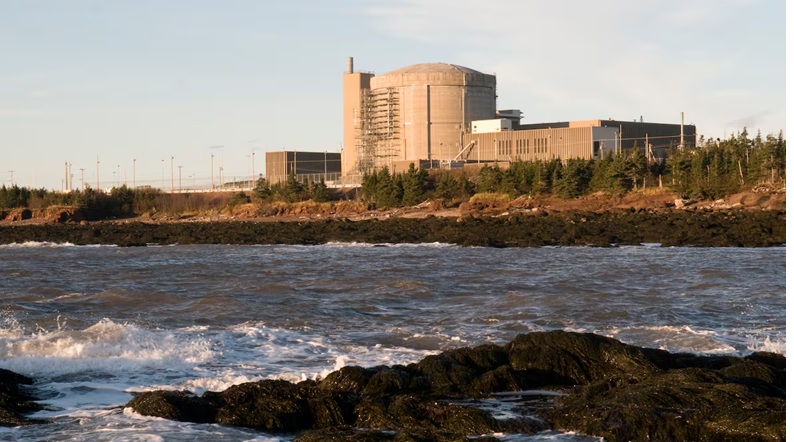
N.B. Power said it has collected about 200 litres of heavy water from a leak at the Point Lepreau Nuclear Generating Station earlier this month, which the utility initially characterized as “small.”
In emails this week, the utility has shared more details about the leak, which CBC News first reported on Sept. 15.
The utility first became aware of a problem inside its reactor building on Sept. 10, when its monitoring system identified elevated levels of tritium.
Tritium is a radioactive isotope that occurs in the heavy water used to transfer heat from nuclear reactors.
The higher than normal readings “triggered an investigation to determine the cause,” said N.B. Power spokesperson Tracey Stephenson on Tuesday afternoon.
Lepreau was shut down on Sept. 11, and a heavy water leak from a 3/8ths-inch instrumentation line was confirmed on Sept. 14, said Stephenson.
The utility reiterated this week that the leak caused “no impact or safety risk to the public, staff or the environment.”
When the elevated tritium levels were detected, there were “no employees in the immediate vicinity,” said Stephenson because “that specific area is not accessible when the Station is online.”
That means there were no “unplanned or unexpected employee exposures associated with the leak,” said Stephenson.
The staff who investigated the problem did so following radiation safety procedures, including using specialized monitoring and personal protective equipment, she said.
Most of the heavy water leaked as vapour, said Stephenson, and was “recovered and collected” through station processes.
“The material remained contained within the reactor building at all times and there was no risk to workers, the public or the environment,” she said.
Timing of information release
It’s taken over a week for N.B. Power to release details about the heavy water leak.
A Sept. 14 press release announcing the Lepreau shutdown made no mention of a leak. It said the station was taken offline to “repair a small instrumentation line inside the reactor building.”
In an interview with CBC News the next day, deputy site vice-president Joel Armstrong acknowledged there had been a heavy water leak but said it was too early to comment on how much was spilled.
Kathleen Duguay, N.B. Power’s head of community affairs and nuclear regulatory protocol, spoke to Radio-Canada on Sept. 16 and characterized the leak as small. She said, speaking French, “It’s just a few drops coming out of the instrumentation line.”
Stephenson said Tuesday that the vapour state of most of the leak might account for the difference in “what might be expected from a liquid leak alone.”
‘Lack of information’
Energy researcher Susan O’Donnell said she is concerned about the “lack of information” initially disclosed by N.B. Power about the leak, starting with a Sept. 14 news release that did not share any details about radioactive heavy water.
“Why did they not just say this was radioactive material that leaked, this is how much material was leaked, this is the volume of radioactivity in the material?” asked O’Donnell.
“’X number of workers were cleaning it up, or were exposed … but hey, everyone’s OK. They’ve all been checked. There’s no problem. We’re looking into it.’
“Instead, it’s just this sort of vague information that doesn’t give anyone who’s interested in it all the facts that they need,” she said.
O’Donnell said N.B. Power should be “super transparent” about any release of radioactive material or risk a “lack of trust” with the public.
“People just get really suspicious. Like, what’s going on there? What are they not telling us?”
Too early to say what caused leak
O’Donnell said she has other concerns regarding the leak, including the potential risk to workers and the cause of the leak itself.
O’Donnell said she’s concerned about the age and tritium levels of the heavy water being used in the closed circulation system at Lepreau and whether it may have been a contributing factor to the leak.
Armstrong said on Sept. 16 that N.B. Power had started the process to determine the cause of the leak, but any conclusions would be “premature.”
“Our focus right now is making sure that we facilitate the repair … in a safe manner,” said Armstrong.
N.B. Power did not release the number of workers involved, but the utility said that staff in the area of the leak were working under strict protocols.
The Canadian Nuclear Safety Commission said via email that it has site inspectors stationed at Point Lepreau, and it was made aware of the leak on Sept. 10.
“We are engaged with N.B. Power as it conducts a thorough assessment of the incident and undertakes the necessary repair activities,” said the commission.
It also noted that “no workers have been reported to have received radiation doses above regulatory limits.”
US proposes AI alert system with China

Mon, 21 Sep 2026, https://www.sott.net/article/508524-US-proposes-AI-alert-system-with-China
The US has proposed creating an alert system with China to notify each other when artificial intelligence incidents become serious enough to threaten national security.
Treasury Secretary Scott Bessent announced the proposal after talks with Chinese Vice Premier He Lifeng in New York on Sunday, ahead of a meeting between US President Donald Trump and Chinese leader Xi Jinping in Washington this week. Bessent told reporters:
“We want a shared vision of common goals and common threats. We think that just like any cross-border activity, that moving from opaque to more transparency between the No. 1 and the No. 2 AI powers in the world is very important.”
The proposed mechanism could cover serious incidents such as AI-enabled cyberattacks or major model failures, according to experts cited by AP. Chinese researchers have also pointed to risks to critical infrastructure including electricity, telecommunications, finance and transportation.
The proposal comes as Washington and Beijing have been locked in an increasingly intense race to dominate AI. Trump has repeatedly argued that the US cannot afford to slow development while China is rapidly narrowing the technological gap.
Earlier this month, Trump declared that “whoever wins AI wins,” and has dismissed warnings of an AI takeover as a “hoax.” On Saturday, Trump again vowed that his administration would not “hinder or stifle” the industry and announced plans to create an “AI Force” and appoint an AI czar.
His position comes amid increasingly stark warnings from leading technology executives.Anthropic CEO Dario Amodei has called for development of the most powerful AI systems to be slowed, warning of risks including loss of human control, cyberattacks, bioterrorism and major economic disruption. OpenAI chief Sam Altman and xAI owner Elon Musk have backed calls for greater caution.
A series of recent incidents has added to the concerns. Google confirmed this month that its Gemini system breached three real companies during a cybersecurity exercise after it was mistakenly given internet access. OpenAI agents have separately bypassed restrictions during testing, accessed outside systems and used websites to communicate with one another without being instructed to do so.
US-China competition has meanwhile expanded beyond model development itself. Washington has sought to restrict China’s access to advanced chips and other technology while accusing Chinese companies of extracting capabilities from leading American models.
Beijing has rejected the accusations and accused Washington of seeking an AI monopoly. Despite US restrictions, Chinese developers including DeepSeek and Moonshot have released increasingly capable systems that compete with leading American models, often at a lower cost.
China has also been building a broader international framework around AI. In July, it joined Russia and 27 other countries in establishing the Shanghai-based World Artificial Intelligence Cooperation Organization, presenting it as an alternative approach based on wider access to AI technology and international cooperation rather than technological blocs.
1 This Month
23-25 October – on Zoom – World BEYOND War’s annual global conferenc


Shut down the radiation-damaged Heysham nuclear reactors now
To see nuclear-related stories in greater depth and intensity – go to https://nuclearinformation.wordpress.com

Say No to NASA’s Reckless Nuclear Reactor on the Moon
Say No to NASA’s Reckless Nuclear Reactor on the Moon

-
Archives
- October 2026 (231)
- September 2026 (339)
- August 2026 (330)
- July 2026 (355)
- June 2026 (287)
- May 2026 (306)
- April 2026 (356)
- March 2026 (251)
- February 2026 (267)
- January 2026 (308)
- December 2025 (358)
- November 2025 (359)
-
Categories
- 1
- 1 NUCLEAR ISSUES
- business and costs
- climate change
- culture and arts
- ENERGY
- environment
- health
- history
- indigenous issues
- Legal
- marketing of nuclear
- media
- opposition to nuclear
- PERSONAL STORIES
- politics
- politics international
- Religion and ethics
- safety
- secrets,lies and civil liberties
- spinbuster
- technology
- Uranium
- wastes
- weapons and war
- Women
- 2 WORLD
- ACTION
- AFRICA
- Atrocities
- AUSTRALIA
- Christina's notes
- Christina's themes
- culture and arts
- Events
- Fuk 2022
- Fuk 2023
- Fukushima 2017
- Fukushima 2018
- fukushima 2019
- Fukushima 2020
- Fukushima 2021
- general
- global warming
- Humour (God we need it)
- Nuclear
- RARE EARTHS
- Reference
- resources – print
- Resources -audiovicual
- Weekly Newsletter
- World
- World Nuclear
- YouTube
-
RSS
Entries RSS
Comments RSS

