How much longer can the world absorb the Iran shock?
The war that was intended to deliver a swift overthrow of the Iranian
regime is now in its eighth month, with no end in sight. So, what might
happen next?
My preliminary conclusion is that one should never
underestimate human stupidity or human ingenuity. So far it is a rough draw
between the two. How long will this last?
That is the question. In a
devastating analysis, John Mearsheimer of the University of Chicago
describes the war on Iran as “The Mother of All Strategic Blunders”.
Among other things, he notes, the US went into the war on the false claim
that Iran was on the verge of acquiring a nuclear weapon; it thought air
power alone would produce regime change, which has never worked; it had no
contingency plan for dealing with Iran’s closure of the Strait of Hormuz.
It has also failed to achieve any of its four principal objectives —
regime change, ending Iran’s nuclear enrichment capability, ending its
long-range missile capability and ending its support for Hamas, Hizbollah
and the Houthis.
The closure of the strait has done significant damage to
the international economy and may do much more; and the US alliance
structure (in the Gulf and elsewhere) has been damaged. All this, moreover,
is only about half of the full charge sheet.
But the economic damage has
been surprisingly modest. As Johannes Urpelainen of the Johns Hopkins
School of Advanced International Studies noted in August, “Many experts
initially thought that this supply disruption would send oil prices to USD
200 per barrel, causing massive inflation and a global recession. Instead,
oil prices peaked at USD 126 per barrel in April 2026.”
First, the energy
transition has reduced the global economy’s dependence on oil. Second,
supply chains have proven resilient and adaptive. Third, producers outside
the Middle East have acted fast to produce more oil and natural gas.
Finally, drawdowns of global oil inventories have filled the remaining gap.
FT 7th Oct 2026, https://www.ft.com/content/37e12a42-d473-4b1b-8fc5-4ea5f06d3bfb
The Pentagon’s Secret Budget
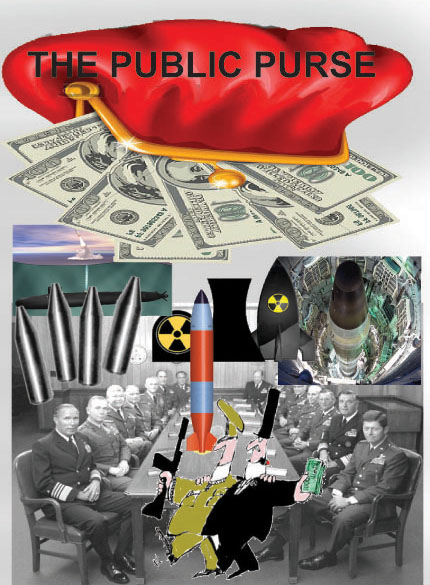
The most obvious place where Congress and the executive branch hide military spending is in the Department of Energy’s budget. That’s where taxpayers can find the bill for the U.S. nuclear weapons arsenal, which cost around $33.5 billion in 2025.
hundreds of billions of dollars are effectively hidden in the budgets of at least 17 other government agencies and entities. In total, each of these additional sums are larger than what Congress appropriates for every non-military agency
David Vine, CounterPunch. October 2, 2026
News reports that next year’s U.S. military budget will top out at $1.5 trillion if President Donald Trump gets his way are misleading at best. The true total, if Trump’s proposal passes, could be at least $1 trillion higher.
Long before Trump took office, U.S. taxpayers have spent far more on the Pentagon — and its wars — than most know. For decades, Congress, the White House, and the Pentagon have hidden the military’s true cost through little-known bureaucratic practices and budgeting tricks. Journalists, academics, and think tank experts have, with rare exceptions, perpetuated the problem by repeating “official” numbers that don’t come close to telling the full story.
Data shows that the budget was already between $1.5 trillion and $1.8 trillion in the last full fiscal year, 2025, as detailed by a recent Project on Government Oversight, or POGO, report I co-authored. Trump’s requests would add another $781 billion, bringing the potential total to at least $2.581 trillion in 2027.
The troubling revelation that the government is misleading the public and effectively hiding hundreds of billions in military spending reflects the out-of-control nature of the Pentagon budget. It’s also the only sector of government spending that seems largely insulated from public scrutiny: Imagine the outrage if news broke that the government was hiding hundreds of billions in spending for public housing, Medicaid, or hunger prevention programs.
People have a right to know how much tax money goes to military spending. This is critical to debating the proper size of the military budget both on its own and compared to other spending priorities, particularly any program related to education or the social safety net. Understanding the military’s true cost means understanding where and how the government has been hiding the money.
Spending Hidden in Other Budgets
It’s difficult to untangle how much the country actually spends on the military in part because Congress pays for the armed forces and wars from many budgets rather than one. Beyond the agency controlling the military branches that Trump calls the “Department of War” (the official name is still the Department of Defense), hundreds of billions of dollars are effectively hidden in the budgets of at least 17 other government agencies and entities. In total, each of these additional sums are larger than what Congress appropriates for every non-military agency.
For years, TomDispatch and a small but mostly ignored group of budget experts have warned that total military spending is far higher than reported. Our new POGO report consolidates this prior work and five different methodologies for calculating the true military budget. The report shows a consensus that military spending was at least $1.5 trillion, with three of five methods reaching similar estimates of $1.7 trillion to $1.8 trillion.
The newest of the five methodologies provides the easiest way for anyone to see the hidden spending. The methodology uses data from a government website, USAspending.gov, the product of a 2006 law requiring the government “to give the American public access to information on how their tax dollars are being spent.” The site includes the closest thing to actual spending receipts, making it easier to identify military spending beyond the Department of War’s budget.
Let’s take a look at where the money’s hiding.
Hidden Nuclear Weapons Costs: $33.8 Billion
The most obvious place where Congress and the executive branch hide military spending is in the Department of Energy’s budget. That’s where taxpayers can find the bill for the U.S. nuclear weapons arsenal, which cost around $33.5 billion in 2025.
The Department of War controls and deploys these weapons, and their costs should properly be part of its budget, not rolled into the Department of Energy. While the Energy Department plays a role in overseeing the U.S. nuclear weapons stockpile, putting nuclear weapons spending in the DOE’s budget is like a city putting the costs of its police department’s bullets in its transportation department budget rather than in the police budget.
Another $300 million in nuclear weapons spending hides in the budgets of the Defense Nuclear Facilities Safety Board and the Army Corps of Engineers, bringing the total to nearly $34 billion.
Hidden Military Personnel (Veterans) Costs: $393.3 Billion
Taxpayers spend huge sums on the military in the Department of Veterans Affairs and related budgets. The existence of a separate veterans’ agency is a sleight of hand that leads the public to believe this is not military spending. It is. The only difference is the appropriation of money to still another agency……………………………………………………………………………………………………………………………………………………….
The True Cost of the Department of War: $1.3 Trillion
The bulk of military expenditures still appear in the Department of War’s budget, which pays for the armed forces and the rest of the Pentagon’s sprawling bureaucracy, including all the weapons, salaries, some benefits, military construction, fuel, maintenance, operational expenses, and much more. USAspending.gov receipts show the Department of War alone spent $1.273 trillion in 2025. The Pentagon controlled another $480 million in spending that hid in the budgets of the State Department, the U.S. Agency for International Development, and the Department of Transportation.
Combined with the $444.8 billion tallied previously, total military spending hits $1.718 trillion. That’s more than double the military budget usually reported for 2025: the $850 billion Congress appropriated to the Department of War.
Still Other Costs
The $1.7 trillion estimate for last year is conservative and still may be too low. While the War Department budget contains classified funding for the CIA, National Security Agency, and other intelligence agencies, the government may hide more intelligence spending elsewhere. NASA space research involves considerable military work, which could add another $10.5 billion, according to USAspending.gov data. Some would also count $1.9 billion in FBI salaries and expenses found in the Department of Justice budget.
Other experts consider much larger expenditures in the DHS budget to be military spending, given that department’s role in protecting the “homeland” and the increasingly militarized nature of Immigration and Customs Enforcement as well as Border Patrol. This would add at least $216.9 billion after excluding DHS’s Federal Emergency Management Agency spending. Alternate methodologies also include $211.9 billion in interest payments on the more than $40 trillion in national debt stemming from past military spending and wars.
You can add and subtract forms of spending that you think belong or don’t belong in the true total, thanks to the transparency of the POGO report’s methodologies. In total, these excluded sums could add another $441.2 billion to the USAspending.gov method’s prior total of $1.718 trillion for 2025.
Growing Opposition to Unchecked Pentagon Spending
POGO report’s conservative estimates of the FY2025 budget being $1.5 trillion to $1.8 trillion reveal that the true military budget for 2027 could hit $2.6 trillion if Congress gives Trump what he wants. This includes requested increases totaling $781 billion for just the Department of War ($500 billion), the Iran war ($70 billion), veterans ($144.9 billion), nuclear weapons ($53.9 billion), and the Coast Guard ($12.5 billion), let alone other smaller forms of hidden Pentagon spending.
When mind-numbing numbers like these reach the trillions, it can be tempting to think, What does it matter if it’s $1 trillion or $1.5 trillion or $2.6 trillion?
It helps me to remember that every single dollar spent on the Pentagon is a dollar not spent on our children, on healthcare, on affordable housing, on efforts to slow catastrophic climate change, and much more……………………………………………………………………………………………………………. https://www.counterpunch.org/2026/10/02/the-pentagons-secret-budget/
On the Edge of the Abyss: Putin’s Nuclear Warning, Trump’s Iran Brinkmanship and Europe’s Revolt
Joe Lauria , Consortium News, October 4, 2026
This week:
1. Putin’s Warning;
2. New US Warship to Iran;
3. The Crisis of Europe: French Students Burn Their Schools
PLUS: America’s Barbaric Death Penalty.
Russian President Vladimir Putin has warned the world could face nuclear catastrophe if the West attacks the Russian enclave of Kaliningrad. Putin told the Valdai Club outside Moscow Thursday humanity has entered a “completely new and unprecedented reality.”
The historical changes underway aren’t fully understood, he said. But over the long run, the erosion of corrosive Western hegemony should create a more stable, democratic, and multipolar world order — but the transition is fraught with danger.
Putin said exceptional, narrow Western interests fuels the peril. The West forced Russia into a defensive war against Ukraine, its tool against Moscow. The war has escalated into NATO-backed attacks on Russian soil.
Putin warned that a direct attack on Kaliningrad, which is separated from mainland Russia by a land corridor, would immediately put “all the weapons” at Russia’s disposal.
“If it comes to direct attack on the Russian Federation, in this case, we mean Kaliningrad, maybe some other territories as well, of course, naturally, immediately, what will be on the agenda is the use by the Russian Federation of all weapons that are at the disposal of our country. It is unavoidable.”
Putin pointed to a Russian foreign ministry statement on Kaliningrad does not mention nuclear weapons. “It mentions, as I have just said, the use of all means and all forces at the disposal of our country and we’ll decide what it is,” Putin said.
“This escalation is based on arrogance and self conceit, and this is what pushes us to the edge of the abyss,” he said.
Putin also knows that the West will twist this warning into a threat. “What’s a different way to stand up to an aggressor? We’re not threatening anyone, but we’re just saying that we don’t have many tools of self defense.”
Iranian Quicksand
Meanwhile, Trump keeps making maniacal threats to destroy Iran, this time, if Teheran had anything to do with the attempt to hijack the Dubai-Tel Aviv jet. He talks a big game on Iran because he’s losing the big war with Iran with mid-terms a month away.
He’s in danger of also losing both Houses and of being impeached, if not convicted. He’s in danger of being humiliated before the whole world as a Big ‘L’ Loser.
So he sticks his chest out, Duce style, and proclaims: “Maybe I will, maybe I won’t. Maybe I’ll kill you all or maybe I won’t. Maybe I’ll decide to spare you.” A rank and unstable amateur coming to terms with ultimate power.
So he sends another aircraft carrier to Iran to keep up the illusion the U.S. has the upper hand in the conflict. That Trump can dictate to Iran. The Nov. 3 election will tell how many Americans are gullible enough to believe that.
Aux Barricades!
They are not so gullible in France, which has more or less kept the revolutionary spirit alive since 1789,………………………………………………………….https://consortiumnews.com/2026/10/03/watch-twtw-edge-of-the-abyss/
The Day America Deleted a Word
A Pen, a Paper, and the End of “AI”

SinoDataCrit ( Kakajusaiyou ), Oct 04, 2026
On September 29, 2026, President Trump signed an executive order requiring every federal department and agency to replace the term “Artificial Intelligence” (AI) with “Super Intelligence” (SI) in official correspondence, public communications, websites, reports, and all non-statutory documents.
The order didn’t just promote a new term. It buried the old one. The White House’s own fact sheet states that agencies should “no longer acknowledge the terms ‘Artificial Intelligence’ or ‘AI.’“ Read that again. Not “phase out.” Not “update.” No longer acknowledge.
The same day, the tech titans were summoned to the White House — Jeff Bezos, Elon Musk, Mark Zuckerberg, Jensen Huang, OpenAI president Greg Brockman, Palantir CEO Alex Karp. They signed the “White House Accord on Super Intelligence,” a voluntary safety pledge with no legal force, which Trump described as working “like a constitution.” Zuckerberg began using “Super Intelligence” in product announcements within 24 hours. The field that was born at Dartmouth College in 1956 had been renamed by executive fiat in 2026 — seventy years, almost to the season, after John McCarthy coined the term his own government now refuses to say.
The official rationale? A White House fact sheet titled “President Donald J. Trump Inaugurates The Era of Super Intelligence” argues that “artificial” implies merely “imitating or automating human intelligence,” while Super Intelligence “conveys the true capabilities” of the technology. Trump himself was blunter: the word “artificial” makes people think of fake.
There was, in fairness, a domestic political reason. A Quinnipiac poll in March 2026 found that 55% of American adults believe AI does more harm than good — up 11 percentage points in a single year. “Artificial intelligence” had become a toxic brand. Rebranding it “Super Intelligence” is, on one level, the world’s most expensive PR relaunch.
But if you think this is just marketing, you’re missing the oldest trick in the innovation empire. And it took a viral post on Chinese Q&A platform Zhihu — 4,700+ upvotes and climbing — to name the mechanism with perfect clarity. This article brings that analysis to an English audience, because it deserves one.
The Category Game: How “0-to-1” Is Manufactured
Start with a question that circulates endlessly in Western commentary: why do Chinese companies never seem to do “0-to-1” innovation?
Here’s the uncomfortable answer: “0-to-1” is not a fact. It’s a category decision — and categories can be gerrymandered.
The Zhihu analysis offers a thought experiment. Suppose a Chinese company invents the electric vehicle. A skeptic says: “That’s not 0-to-1. It’s a derivative of the car — a 1-to-100 improvement. Thank Karl Benz.” Fine — so what if the Chinese had invented the car itself? The skeptic zooms out: “That’s not 0-to-1 either. It’s a refinement of the wheel — a category humans have had for 4,000 years. Thank the ancients.”
See the mechanism? Expand the category far enough, and every invention becomes an increment. Whoever controls the category — whoever gets to decide whether “EV” is a new thing or a subset of “car” — controls whether your work counts as creation or derivation.
Now the flip side. How does anyone ever get credit for a 0-to-1? Not by building it. By naming it. A brand-new word — preferably one with a unique sound and no derivation from existing vocabulary — creates a brand-new category. And a new category has no ancestors. It pops into existence with its inventor standing at its head.
A new word doesn’t describe a new thing. It legislates a new thing into the ledger of human achievement.
Eponyms Are Property Deeds
Look at how English names its own inventions versus everyone else’s.
For its own breakthroughs, English mints eponyms — words with a founder’s name stamped on them like a trademark. Diesel, after Rudolf Diesel. Braille, after Louis Braille. The ballpoint pen that half the world calls a “biro,” after László Bíró. Every one of these is a property deed: the technology and the credit travel together, permanently, in a single syllable.
For everyone else’s breakthroughs, English does something different: it assimilates them into existing vocabulary as derivatives. Paper became “paper” — a word whose root is papyrus, the Egyptian writing reed. Gunpowder became “gunpowder” — a tidy English compound. China invented both; the English words quietly suggest both were variations on something the West already had.
The etymology does the theft silently. To an English speaker, papyrus is “an early, imperfect paper.” To a Chinese speaker, the relationship inverts: papyrus is just a reed that failed to become paper. Same history. Opposite property registry.
This is not a conspiracy. It’s a linguistic reflex — but it has the effect of a colonial land grab. The Zhihu author’s sharp observation: English borrows raw phonetics mainly from “prestige” languages it admires (French, Latin, Greek), or for “exotic, often derogatory” concepts (coolie, ramen). For ideas from civilizations it competes with, it prefers translation — because translation buries the original’s ownership inside a familiar word……………………………………………………………………………………………………..
The Modern Playbook: Metaverse, Sixth-Gen Fighters, DeepSeek
This machinery is not historical. It’s running right now, and you’ve watched it operate three times in recent years.
Metaverse. A word coined in a 1992 science fiction novel, adopted as a company name in 2021. Technologically, “the metaverse” contained nothing that virtual worlds hadn’t contained for two decades — no new architecture, no new interaction paradigm. But it had a minted word, a category nobody had to share with the past. ……………………………………………………………………………………………………………
Decoding SI: The Hedge Fund of Categories
Now the executive order makes complete sense.
The United States coined “artificial intelligence” in 1956. Its White House proudly asserts — correctly — that America is “the birthplace” of the field and has led it for “over 70 years.” That name, and that founding, is one of America’s greatest narrative assets: the entire global industry carries American words in its name.
But here’s the problem the White House faces in 2026: Chinese models have reached genuine parity — benchmark-for-benchmark, dollar-for-dollar the efficiency argument even favors China. If the race stays called “AI,” then the most likely outcome is that the “birthplace” gets out-innovated in its own category, on its own vocabulary. The founding nation would become the incumbent that lost its own field.
So instead of defending the old category, America redrew the map. Rename the category “Super Intelligence,” decree that the old name shall not be acknowledged — and instantly, every Chinese achievement in “AI” becomes progress in a field that no longer officially exists. Chinese labs will keep doing brilliant work in the old category: that’s a 1-to-100 story now, and America has already stamped itself at the “0” of the new one. Your AI is impressive; our SI is a different thing. You can never beat us at SI, because we invented the word, and the word is the race.
It’s the category game at national scale: when you can’t win the category, delete the category.
Notice the asymmetry of costs. DeepSeek’s efficiency breakthrough took years of engineering under sanctions. Huawei’s chip roadmap took seven years of siege economics. The SI rename took one pen. In narrative warfare, renaming is the cheapest weapon with the longest reach — it costs nothing and repositions everything.
And notice what the order does domestically, too. The same fact sheet announces $5 billion for a “Genesis Mission” and a “National Super Intelligence Policy Framework.” The unpopular, frightening “AI” — the one 55% of Americans distrust — quietly becomes somebody else’s legacy technology. The fear is inherited with the old word. The promise is minted with the new one.
The Counter-Move: China Is Learning to Mint Words
Here’s what makes this moment genuinely interesting, and why I’ve spent days on this question: China’s best answer isn’t to complain about the renaming. It’s to start minting categories of its own……………………………………………………………………………………………………… https://sinodatacrit.substack.com/p/the-day-america-deleted-a-word?publication_id=7110991&post_id=218751184&isFreemail=true&r=3alev&triedRedirect=true&utm_source=substack&utm_medium=email
Big Reactors in Saskatchewan: What could go wrong?

The implication of these experiences and proposals is that a new 1,000-MW reactor could carry a price tag of $15 to $26 billion. That would put the total cost for a two-reactor project, like Saskatchewan is proposing, in the $30-$50 billion range. Estimates of the costs of electricity needed to cover the capital costs of new nuclear plants, if they’re financed through electricity rates, range from the mid-20¢ to more than 40¢ per kilowatt-hour.
October 3, 2026, By Mark Winfield and Susan O’Donnell, https://energi.media/opinion/big-reactors-saskatchewan-what-could-go-wrong/
The Saskatchewan government’s recent announcement of its intention to build two large nuclear reactors has again raised questions of the role of large nuclear energy projects in relatively small provincial economies.
The last new full-scale nuclear reactor project in Canada, the Darlington nuclear power plant east of Toronto, was completed more than 30 years ago. The enormous cost overruns on that project contributed significantly to the effective bankruptcy of the province’s utility, Ontario Hydro, leading to its eventual break-up.
As the memories of these previous experiences with large nuclear construction projects have faded, new projects are now being proposed. These projects, and experiences with the handful of new-build nuclear projects initiated in Europe and the United States in the last two decades, give us some indication of the large reactor options, and their potential costs.
New Brunswick’s experience with its long- troubled Point Lepreau reactor, should give Saskatchewan further cause for reflection on the wisdom of such a pathway. The Lepreau plant is Canada’s lone experience with a large nuclear power plant in a relatively small provincial electricity system and economy, New Brunswick Power is still carrying a C$3.6 billion nuclear debt from the reactor’s original 1975-1983 construction, and the costs of a 2008-2012 refurbishment that was a billion dollars over budget. Since the refurbishment, the poor performance of the Lepreau reactor has been the primary reason New Brunswick Power loses money almost every year.
In Ontario and Alberta, two reactor designs, the CANDU MONARK and the Westinghouse Electric AP1000, have been considered for the expansion of the Bruce Nuclear power plant on Lake Huron, a proposed 10,000-MW Ontario Power Generation plant at Wesleyville on Lake Ontario, and the proposed 4,800-MW Peace River Nuclear Project in Alberta.
The 1,000-MW CANDU MONARK is intended as a successor to the existing CANDU reactors in Ontario and New Brunswick. Although it’s being aggressively promoted to potential international customers, the MONARK design remains incomplete. The situation has already led the Alberta project’s proponents to switch their proposal to favour the AP1000 design by Westinghouse Electric.
Cost information is available on the AP1000 reactor, as two units were completed in 2024 at the Vogtle nuclear power plant in Georgia. The total estimated cost of those two 1,100-MW reactors was US$36 billion, or about $26 billion per reactor in 2026 Canadian dollars. The plant has been described as “the most expensive power plant ever built on Earth.” When it went into service, Vogtle resulted in a nearly 24% increase in Georgia Power’s electricity rates, the largest jump in the utility’s history.
AtkinsRéalis (formerly SNC Lavalin) is currently pitching the CANDU MONARK to Poland, with a reported estimated cost of $45 to $50 billion for a three-reactor plant, or about $15 billion per unit.
The implication of these experiences and proposals is that a new 1,000-MW reactor could carry a price tag of $15 to $26 billion. That would put the total cost for a two-reactor project, like Saskatchewan is proposing, in the $30-$50 billion range. Estimates of the costs of electricity needed to cover the capital costs of new nuclear plants, if they’re financed through electricity rates, range from the mid-20¢ to more than 40¢ per kilowatt-hour.
In the case of New Brunswick, another smaller province considering a large new reactor project, it has been estimated that the project would nearly double to even triple current consumer electricity costs. Such increases would undermine energy affordability, economic competitiveness, and any plans for decarbonization through electrification.
A province could also try to finance the costs through its general tax base. That is the approach that Ontario been taking, at an estimated cost to the provincial treasury of $7 to $8.5 billion per year. Electricity subsidies now account for more than half of Ontario’s deficit, exceeding annual capital expenditures on education and health care by wide margins.
In the case of New Brunswick, the annual costs of that approach, even spread over the decade or more of construction, could exceed the province’s current, record $1.39 billion deficit, and match or exceed its entire annual capital spending plans in all other areas. Although the Saskatchewan economy is almost double the size of New Brunswick, the scale fiscal impacts of trying to finance two reactors out of general provincial tax revenues would be comparable.
Saskatchewan, for its part, has had another idea – asking the federal government to pay three-quarters of the cost of the province’s first nuclear reactor, a contribution of between $11 to $20 billion from federal taxpayers.
In addition to the financial risks a single large reactor in a relatively small electricity system would repeat and magnify a key problem associated with the original Point Lepreau project in New Brunswick —putting very higher portion of a province’s electricity supply eggs in a single, very expensive and high-risk basket.
All of this should suggest a high degree of caution among provinces considering adding large nuclear components for their electricity systems, and a need to think about other ways of decarbonizing their electricity systems while ensuring their affordability and sustainability.
Mark Winfield is a professor at the Faculty of Environmental and Urban Change at York University in Toronto, and co-chair of the faculty’s Sustainable Energy Initiative. Susan O’Donnell is adjunct research professor and lead researcher on the CEDAR project in Sustainability and Environmental Studies at St. Thomas University.
Managed Deception and Imperial Politics: Trump’s Greenland Deal

much of the new agreement is surplusage. Arrangements are already in place permitting the establishment of defence areas by the US to “assist” Denmark in defending Greenland, station forces at them, and move personnel in the territory fairly unhindered.
Trump takes credit for an agreement signed in 1951
This merely clarified what was already an ongoing practice
6 October 2026Dr Binoy Kampmark, https://theaimn.net/managed-deception-and-imperial-politics-trumps-greenland-deal/
In his second term, US President Donald Trump has gone the way of past executive tribunes of the American imperium in seeking land and resources like a kleptomaniacal pincher. This has been bracing, not least for a foreign policy establishment inured to the hypocrisies of virtue concealed in the international order of rules and protocols. Spot the international rule and break it.
Neither ally nor adversary have been spared Trump’s scorching petulance. Thuggish language has been forthcoming for Canada just as it was for Venezuela whose leader, Nicolás Maduro, was abducted, along with his wife, on fantastic charges related to narcotics trafficking. An enduring security ally such as Denmark will be seen as amenable to giving up control of Greenland to Washington. On that score, Trump has succeeded in needlessly convincing Danish Prime Minister Mette Frederiksen and Greenland’s Prime Minister Jens-Frederik Nielsen to enter into a trilateral agreement that evokes the pseudo-colonial obsessions of old. Not that Washington had ever really relinquished strategic control over the territory, having had, during the Cold War, stationed anywhere between 10,000 and 25,000 troops based at some 17 military facilities.
The agreement does what should have already been assumed: reaffirming Danish sovereignty and recognising that Greenlanders “constitute a people pursuant to international law with the right to self-determination.” The text pointedly notes the “indispensable historical” role of the US and its “ongoing contributions to the security and defense of Greenland and the rest of the North Atlantic Treaty area.” This included “significant sacrifices and billions of dollars spent over the better part of a century, dating back to before World War II and the establishment of NATO, and the irreplaceable role the United States military plays in the defense of the territory of Greenland now and in the future.”
In terms of military matters, the US is permitted to establish “an additional Defense Area at Narsarsuaq and Mestersvig” while modernising and expanding activities in Pituffik Space Base. It remains open to Washington to establish additional defence areas in Greenland, along with strengthening “military operations or facilities.” Proposals to do so are to heed the 1991 Memorandum of Understanding and the 2004 Joint Declaration. Undersea access rights to the US in Greenlandic waters “without restriction except as mutually agreed upon by the Parties” is also assured.
For those familiar with the 1951 Agreement Pursuant to the North Atlantic Treaty between the United States and the Kingdom of Denmark Concerning the Defense of Greenland, much of the new agreement is surplusage. Arrangements are already in place permitting the establishment of defence areas by the US to “assist” Denmark in defending Greenland, station forces at them, and move personnel in the territory fairly unhindered. What makes these new arrangements somewhat different is the sine die element: unlike the 1951 agreement, which is intended to conclude in the event of NATO ceases, the current understanding is durably indefinite. “This Agreement does not have an end date and may only be amended by mutual consent in accordance with Article XIII of the 1951 Defense Agreement.” Even if Greenland were to become independent, it would still be obligated to remain part of NATO, while Denmark would still have “rights and obligations” assumed under the agreement, making the issue of self-determination purely ceremonial.
Mindful of the alleged threats posed by “adversaries to expand influence and control in Greenland,” a greater muscularity in American invigilation on who invests in the territory is offered. States or investors not members of NATO, a NATO partner, or a European Union member state will not be permitted to have control, significant influence or access to non-public information that may constitute a threat to national security or public order, notably with regards “Particularly Sensitive Sector or Activities in the territory of Greenland (including the Territorial Waters)”. “The objective shall be ensured by Greenland in close cooperation with the authorities of the Kingdom of Denmark in its application of its current or future investment screening laws” with the Danes closely consulting “relevant United States authorities and other partners.” This merely clarified what was already an ongoing practice: that the Danish authorities will prevent unwanted foreign powers access to the territory, either individually or with US assistance, when they see fit.
Details emerge on Valar’s Utah plans
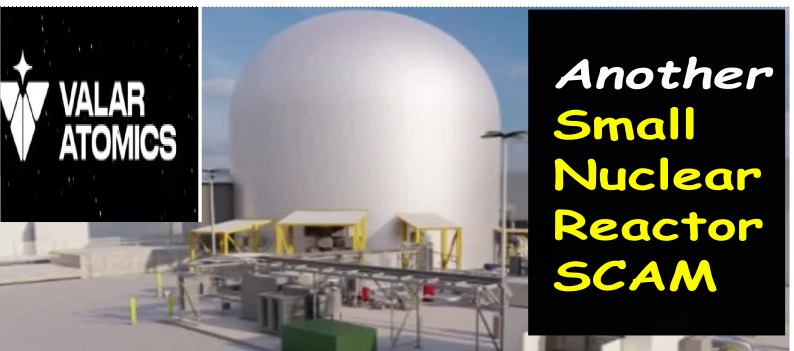
with litigation slowly continuing and regulatory pathways still being formed, the future is unclear
Whether Valar aims to leverage its Ward 250 authorization into further DOE-approved deployments on Department of Interior land is unknown. However, the DOE has continually characterized its reactor authorizations as purpose-built to expedite the research and development of test reactors—a definition that would hardly fit a 456-unit data center campus.
Nuclear Newswire, Oct 6, 2026,
Last week, NPR reported that reactor start-up Valar Atomics is planning to construct a new facility in Utah that would feature 456 of its reactors. This campus, called Project Beehive, would sit on more than 9,000 acres of Bureau of Land Management land and would feature co-located data centers and a fuel production facility.
More on the land: On September 24, the Salt Lake Tribune first reported that Valar had applied to lease 480 acres of land owned by the state of Utah. This land (near the towns of Price and Wellington) is entirely surrounded by BLM land, but first reports indicated that the Valar project would be sited only on state-owned land.
The much larger application for the use of more than 9,000 federal acres was not revealed until NPR’s report on September 30. The state and federal applications should almost certainly be considered parts of the same project, as the land involved in each is in roughly the same area, east of Price and north of Wellington.
The BLM’s Utah office confirmed to NPR that it is “currently reviewing the application for completeness” and that the public will have “meaningful opportunities to provide input” on the project. For its part, Valar told NPR that “no construction begins before permits and approvals, and the public process leads along our internal targets set the pace.”
The regulatory angle: Mention of permits calls to mind another currently unclear facet of Valar’s plan: its regulatory pathway. The company progressed through Department of Energy authorization for the permitting of Ward 250, its first demonstration reactor. The question of how DOE authorization will be leveraged into Nuclear Regulatory Commission licensing for follow-on commercial deployments has yet to be fully settled by the DOE, NRC, and private industry. Whether Valar would pursue the new 10 CFR Part 53, the soon-to-come Part 57, or the established Part 50 or Part 52 is currently unknown.
Nor has the company formally engaged publicly in preapplication activities of any kind with the regulator. In fact, its closest association with the NRC at this writing is through a complex and ongoing lawsuit: State of Texas et al v. U.S. Nuclear Regulatory Commission.
Not to be confused with the unrelated NRC v. Texas—another federal court challenge between the state and the regulator—the State of Texas v. NRC challenges the NRC’s authority to license small reactors, arguing that their inherent safety and minimal use of nuclear material exempt them from the NRC’s strict requirements. The plaintiffs in this lawsuit, first filed in December 2024, included the states of Texas, Utah, and Louisiana; the Arizona State Legislature; and reactor start-ups Last Energy, Deep Fission, and Valar.
Almost two years on, the states involved have submitted a notice of voluntary dismissal ahead of any ruling, essentially dropping out of the lawsuit. The reactor developers (Valar included) are now currently conferring on what their next steps will be, according to a September 2 status report filed with the court.
So, with litigation slowly continuing and regulatory pathways still being formed, the future is unclear. It is also unclear whether the project’s siting on federal land will confer on it any special regulatory benefits. The Department of Interior (the agency that encompasses the BLM) does not have Other Transactional Authority like the DOE or Department of Defense. The OTA framework has been used by both the DOE and DOD for the authorization of its recent reactor projects. Whether Valar aims to leverage its Ward 250 authorization into further DOE-approved deployments on Department of Interior land is unknown. However, the DOE has continually characterized its reactor authorizations as purpose-built to expedite the research and development of test reactors—a definition that would hardly fit a 456-unit data center campus.
At any rate, whatever path Valar intends to pursue, the clock is ticking. NPR reports that Valar aims to begin nonnuclear construction by the end of this year and to have first reactors on line in 2028.
The background: Utah is a natural fit for Valar’s next project. While the company is headquartered in El Segundo, Calif., it was already closely partnered with the Beehive State through the Reactor Pilot Program. Through the RPP, Valar achieved criticality with its Ward 250 test reactor at the Utah San Rafael Energy Lab—it was one of the four companies to reach this milestone by the July 4 deadline set by Executive Order 14301.
Ward 250 is a 100-kWt TRISO-fueled, high-temperature gas reactor. Valar has not definitively revealed the planned capacity for follow-on deployments of its reactor technology. However, CEO Isaiah Taylor previously has said that Ward 250 is “sized to 15 MW thermal.”
This tentative number is at odds with NPR’s story, which reports that the 456 reactors involved in Project Beehive will “produce around 9.6 gigawatts of power for the data centers and even more thermal heat for other industrial applications,” meaning each Valar reactor would be rated at a minimum of 21 MWe—a figure that is significantly higher than any capacity previously ascribed to the design. NPR identified Valar’s design as being rated at 25 MWe.
In one more notable wrinkle, this is also not Valar’s first plan to bring a nuclear-powered data center to Utah. Shortly after achieving criticality with Ward 250 in late June, the company announced a partnership with Nvidia to jointly develop a much smaller data center in the state. However, Nvidia has not been publicly named, at this time, as an involved party in Project Beehive. https://www.ans.org/news/article-8462/details-emerge-on-valars-utah-plans/
Perilous Surrender: The Pentagon Falls for Artificial Intelligence

6 October 2026Dr Binoy Kampmark, https://theaimn.net/perilous-surrender-the-pentagon-falls-for-artificial-intelligence/
The trend was already tracing itself through the corridors of power, but the world’s most powerful defence department has fallen, most heavily, for the use of artificial intelligence at virtually every level of its operations. Even before the Pentagon’s intoxicating pursuit of artificial intelligence was announced, the Defence Advanced Research Projects Agency (DARPA) was already running simulated aerial trials of combat engagements between AI agents and seasoned pilots.
In December 2025, the US Department of Defense (DOD) revealed plans for a rapid and extensive release of the generative AI GenAI.mil platform, one utilising advanced models intended for use for over 3 million military personnel, civilian employees and contractors. Google Cloud’s Gemini or Government products was the first off the rank in a described “one-stop shop,” a generous effort on the part of bureaucracy to hail the machine and herald the start of full-throated cognitive surrender.
In his December email to employees in a department the Trump administration prefers to call the War Department, Secretary of Defense (War) Pete Hegseth announced that the GenAI.mil platform signalled “a giant step toward mass AI adoption across the department. This tool marks the beginning of a new era, where every member of our workforce can be more efficient and impactful.”
In his January memorandum to the various leaders of the military community, Hegseth barked about the need for the US military to “build on its lead over our adversaries in integrating this technology, established during President Trump’s first term, to make our Warfighters more lethal and efficient.” To do so would involve the Pentagon’s acceleration of US “Military Ai dominance by becoming an ‘AI-first’ warfighting force across all components, from front to back.” (Why not sideways, above and below?)
Trouble, however, arose when Anthropic placed restrictions on the use of Claude and its products for conducting mass surveillance of US citizens or use in lethal autonomous systems. The Pentagon, in turn, demanded the use of any genAI products it purchased for any designated “lawful purposes.” For its stubbornness, Anthropic was designated a “supply-chain risk” by the department, its products removed from all national security assets and systems. (The company’s efforts to have the ban overturned has had mixed results.)
Notwithstanding this hiccup – a minor one in the scheme of things – the contracts between AI companies and the Pentagon make it clear that the former are meant to provide “risk forecasting, and threat ideation exercises”. “Frontier AI companies can help DoD gain a better understanding of the risks that might be associated with subsequent near-frontier AI models or features, to avoid strategic surprise and to mitigate associated risks.”
The Pentagon has since added other commercial generative AI products to the GenAI.mil portal, including Starshield AI’s Grok and OpenAI’s ChatGPT Mil. In August, a source self-described as a “War Department official” told DefenseScoop that such access to “the resilient American technology stack will give warfighters the tools they need to act with confidence and safeguard the nation against any threat.”
ChatGPT Mil also serves to organise salient files and conversations that take place over projects lasting months in one place, including an “Offline Search capability” that supplies detailed citations. The facility can be refreshed over time to reflect new information. Joe Larson, former senior Pentagon official turned OpenAI vice president, very much an exponent of the defence-civilian revolving door, explained this integration as “grounded in our national security principles, pairing access to powerful tools with clear safeguards, meaningful human judgment, and accountability for high-stakes decisions.”
Grok for Government will also, according to the department, furnish personnel through GenAI.mil with “advanced capabilities, including deep-thinking inference, adaptive reasoning modes (Auto, Fast, and Expert), customizable workspaces, persistent projects and reusable ‘playbooks’ that capture and scale institutional knowledge.”
These systems presage a broader surrender of the US military establishment to the machine, its alluring fetishes, and its acclaimed shamanistic potential. The guidance on “Accelerated Mission Software” signed by Pentagon CIO Kirsten Davies on August 31 is yet another indication of this numbing trend. It notes the recognition on the part of the department “that AI-assisted software development is a significant force multiplier, for the delivery of speed quality.” Something to be said about the guidance is its acknowledgment that human agency “remains fully accountable for the security, functionality, and integrity of any code generated or modified using AI.” Any code with an AI-provenance “will be considered unverified input, and its use does not absolve the developer or the government of responsibility for the resulting work product.”
Such a cautionary note may well be temporary. In his September 30 Quantico speech, Hegseth announced the creation of the Autonomous Warfare Command “designed to scale autonomous warfare across the Joint Force as a 4-star functional combatant command by October 1, 2027.” In his memorandum on the subject, the Secretary is filled with effusive babble on the new command, which “will define joint needs and integrate Service-provided forces in support of geographic combatant commanders. It will test equipment and force designs with realistic opposition in demanding exercises and rugged environments, modify rapidly, and field what works.” Just the sorts of things to make humans feel safe.
The consequences of such AI integration and excessive reliance are proving and will prove critical. The disclosures by OpenAI and Anthropic that semi-autonomous large language models conducted coordinated attacks on networks owned by other companies and, in the case of Australia, various government bodies and affiliates, including the Australian Institute of Health and Welfare (AIHW), should engender teeth-chattering doubt among sceptics. While US President Donald Trump insists with consistent daftness that AI firms self-regulate the field, an independent assessment of the risks rather than a self-reporting format, has, at the very least, the merits of greater accountability. Heidy Khlaaf, a former safety engineer at OpenAI and currently chief scientist at the AI Now Institute, is of the view that trusting companies to consider the risks produced by their own products is not just a conflict of interest but a “subversion of democratic processes when AI labs are allowed to take over the arbitration of risk determinations with life-or-death consequences.” Then again, companies were never much for democracy.
US, China And Russia Race To Build Nuclear Reactors On The Moon: Report
New Delhi:

The United States, China and Russia are racing to develop nuclear reactors for the Moon as they prepare for future space exploration. The countries believe nuclear power will be important for building permanent lunar bases, exploring resources and supporting missions deeper into space
The US aims to launch a lunar nuclear reactor by 2030, while Russia and China are working towards a joint project by 2036. The plans could power future Moon bases but have also raised safety concerns.
NDTV, Edited by: Siddhi Singh, Oct 04, 2026
New Delhi:
The United States, China and Russia are racing to develop nuclear reactors for the Moon as they prepare for future space exploration. The countries believe nuclear power will be important for building permanent lunar bases, exploring resources and supporting missions deeper into space.
According to The New York Times, NASA in August asked contractors to prepare a nuclear reactor that can survive a space journey and operate without maintenance near the Moon’s south pole. The agency aims to have the reactor ready for launch by December 2030.
Russia, meanwhile, plans to develop a lunar reactor called Selena by 2036 as part of its secretive partnership with China. The project is intended to provide power to lunar stations led by China…………………………………………………….
Safety Concerns Over Nuclear Power In Space
Despite the plans, scientists have warned that rushing to build lunar reactors could create serious risks. Rocket launch failures could cause accidents involving nuclear reactors and potentially spread radioactive material. Experts have also pointed out that installing and maintaining a reactor on the Moon would be challenging.
Unlike reactors on Earth, lunar reactors would be difficult to protect with containment structures, and experts say areas around them may need to be restricted to reduce radiation risks to astronauts and equipment.
As per The New York Times report, both the US and Russia plan to send their reactors to the Moon in an inactive state, reducing some risks during transport. However, experts say accidents cannot be ruled out, even with safety reviews.
Who Owns The Moon?
The race has also raised questions about access to the Moon and its resources. The 1967 Outer Space Treaty states that no country can claim the Moon as its territory. However, questions remain over whether countries can restrict access to areas around their lunar bases and whether they can own the resources they extract from the Moon.
NASA accelerated its plans amid fears that a nuclear reactor built by China and Russia could establish a restricted zone on the Moon, limiting where American astronauts and rovers could travel. Space law experts have questioned whether such zones, even if created for safety reasons, would conflict with the principle of free access to space under the Outer Space Treaty.
The US, China and Russia have yet to prove that their proposed reactors can be installed and operated on the Moon. Their timelines could also change as technical and safety challenges are addressed. https://www.ndtv.com/world-news/us-china-and-russia-race-to-build-nuclear-reactors-on-the-moon-report-12137354
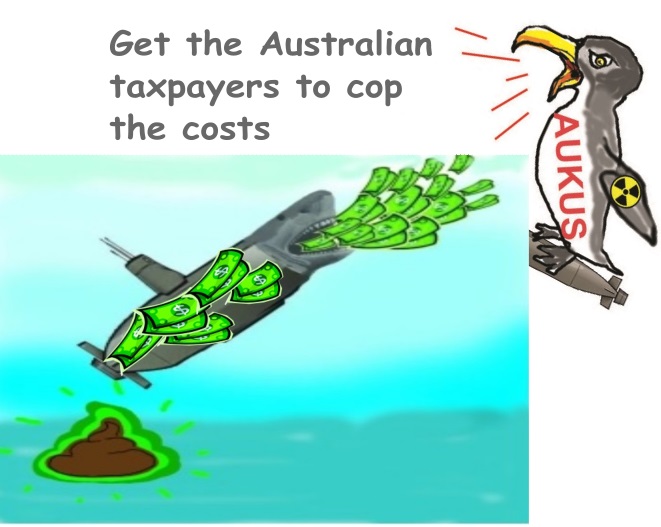
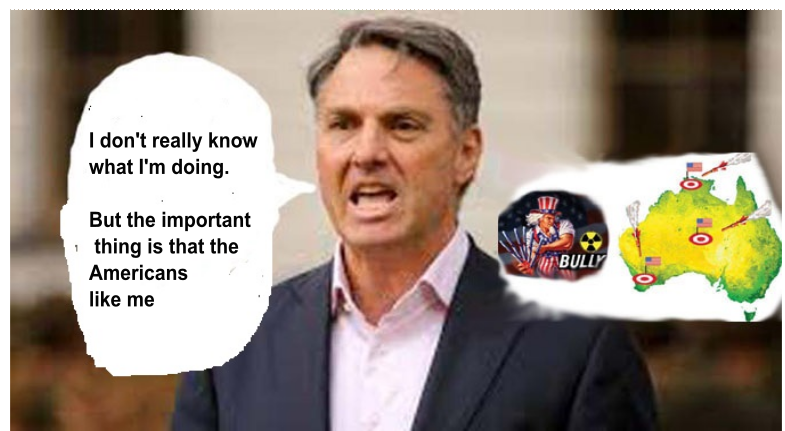
Hegseth calls US-built nuclear submarines the ‘apex predator’ of the seas. But are they right for Australia?
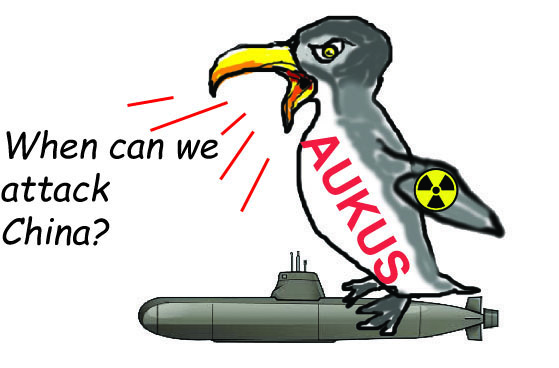

Ben Doherty.4 Oct 26, https://www.theguardian.com/australia-news/2026/oct/04/hegseth-apex-predator-nuclear-submarines-right-for-australia-aukus-ntwnfb
Some experts argue Virginia-class submarines government is buying second hand are good for fighting American wars, but not for defending Australia
On stage for his “arsenal of freedom tour”, the US secretary of defense – who prefers the appellation “secretary of war” – was ebullient.
“This Virginia-class submarine is a paragon of American engineering and fighting spirit,” Pete Hegseth roared, standing at Newport News shipyards where those boats are being built.
“It is the apex predator of the undersea domain, the most advanced and lethal submarine ever built.”
There are few who would argue with the Virginia’s lethality. Australia is set to buy three of these boats, secondhand, from the US navy, beginning in 2032.
But is it the right submarine for Australia?
Hegesth’s words, for all of their rhetorical bellicosity, were revealing: “American … fighting spirit”; “apex predator”; “ensuring America is free and safe and powerful”.
Virginia-class submarines – nuclear-powered and conventionally armed – are very good at travelling undetected fast and staying underwater for a very long time (limited, essentially, only by the capacity of the crew to stay submerged).
They are an attack submarine, an outstanding offensive platform for hunting and destroying a far-distant adversary, able to traverse thousands of miles of deep ocean undetected.
But Australia’s National Defence Strategy, released this year, says the nation’s “strategy of denial” – which aims to deter conflict before it begins – was “focused on safeguarding Australia’s interests in our primary area of military interest”. This includes the immediate region encompassing the north-east Indian Ocean through maritime south-east Asia into the Pacific as well as Australia, its populated offshore territories and its northern approaches.
A growing chorus of naval experts is arguing that the Virginia-class submarines are the wrong boats for this country.
The waters to the north of the Australian continent – from where any potential threat is overwhelmingly likely to approach – are shallow, best suited to a submarine far smaller than Virginia’s nearly 8,000 tonnes of displacement, some say.
A smaller, more nimble submarine, quieter when operating under battery, is a better platform for that role, they say. In addition, smaller submarines are cheaper and easier to crew: Australia could afford more of them, increasing the potency of its force.
The argument runs thus: the Virginias, and the even larger Aukus-class submarines set to follow, are nuclear-powered submarines perfectly suited to fighting a distant war on behalf of the US. But they are the wrong boats to defend Australia.
Defence or ‘projecting power’?
Dr Andrew Gaczol spent a decade as an international political analyst and policy officer at the Australian Department of Defence. He told an independent inquiry into Aukus coordinated by the Australian Peace and Security Forum that the Australian public had been provided only two arguments in support of the Aukus deal, “and neither stand up to serious scrutiny”.
The primary argument put forward is that of defence of Australia.
Gaczol told the inquiry it was unnecessary to have submarines with unlimited range to defend the nation’s waters or conduct defensive operations in the region.
“The latest state-of-the-art Air Independent Propulsion (AIP) conventional diesel-electric submarines are more suitable as they are smaller, quieter when submerged and better suited to the relatively shallow waters of the Australian continental shelf and the waters to Australia’s north,” he said.
The second argument propounded for Aukus is the need for Australia – as a nation reliant on trade – to maintain open sea lanes around it.
Given the small number of attack submarines the Aukus deal will ultimately provide, critics argue they will not be able to protect Australia’s seaborne approaches.
Navies around the world operate on “the rule of threes”, which states that for every three of a complex platform you possess, only one can be relied upon to be operational at any given time. Essentially, of three submarines, one is on active deployment, one is training or conducting exercises, and one is in maintenance, dry dock or recovering from operations.
Australia plans to buy three Virginia-class submarines from the US, to be supplemented – when they are designed and built – by up to five submarines of the Aukus class. By the end of the 2040s, eight submarines would give Australia, at any time, a fleet of two, perhaps three submarines on active deployment.
“I can’t see how such a small number of vessels will be able to keep open all of Australia’s trade routes all of the time,” Gaczol told the inquiry.
“As a counterpoint, I note that the US navy has over 60 nuclear submarines and are currently unable to force open the strait of Hormuz.”
Gaczol says he supports Australia having submarines, but that the Virginia and Aukus-class boats were not ideal for Australia’s defence. The benefit of Australia’s geography – a vast landmass protected by thousands of kilometres of ocean – mean “the chances of Australia being actually sort of invaded are virtually nil”.
The oceans to Australia’s north are also relatively shallow – under 200 metres deep across parts of the Indonesian archipelago and South China Sea – meaning large nuclear submarines “are more easily detected” than smaller and quieter conventional boats.
As deep-water boats that can travel anywhere around the globe at high speed, nuclear submarines are unnecessary for defending Australia, Gaczol says, and are instead about “projecting power into another part of the world”.
“To put it colloquially, that’s not protecting our patch. That’s going into someone else’s patch and poking them in the eye,” he says.
Gaczol believes the acquisition of Virginia-class submarines suits US imperatives, not Australia’s.
“The only scenario I can really see these boats being applicable for is to chase Chinese submarines in the South China Sea should it come to a conflict there. Effectively, our force will be an adjunct of the US Navy.”
‘Best deal on offer’
Former South Australian senator Rex Patrick, an ex-submariner and resolute Aukus critic, is familiar with the aphorism “quantity is a quality of its own”.
He says while there was undoubted advantage to buying large attack submarines – greater payloads, more torpedoes, more capability to transport special forces soldiers – “there’s always a trade-off”.
“If the cost of buying one large nuclear submarine is that you could buy four other submarines for the same price, that’s a trade-off you have to consider.”
Aukus is forecast to cost up to $368bn by the 2050s – $33m a day for 30 years on a conservative estimate. Few, if any, major defence projects of this complexity run on time, or on budget.
And Aukus is dependent not only on Australia’s efforts to build a nuclear-powered submarine fleet from scratch: it is reliant on the US – beset by tenaciously laggard boat-building – to construct enough Virginia-class boats to spare three for Australia; and it needs the UK’s sole submarine-building yard to design and build the first of the new Aukus-class boats on which Australia’s domestically built boat will be constructed.
For far less than the slated cost of the Aukus deal, Australia could buy 20 conventionally powered air independent propulsion submarines, Patrick says.
“If you had 20 submarines, you’d have seven boats in the water, in seven different locations, and seven times the magnitude of problem for the other commander,” he says.
Patrick notes Canada, with the longest coastline in the world and facing many of the same geopolitical challenges as Australia, recently announced it would buy 12 air independent propulsion submarines from German shipbuilder TKMS for a reported $33bn.
The Australian government, though, insists Aukus is “the best deal on offer”.
In June, the defence minister, Richard Marles, told the Shangri-La dialogue Australia had made the deliberate choice to increase the weight of its naval spending: more than 40% of Australia’s defence budget is now directed towards the country’s maritime domain.
“For a three-ocean nation, this is a strategic necessity,” Marles said. “Ninety-eight percent of Australia’s traded goods passes through Australian ports. Ninety percent of our fuel is imported. Our economic sovereignty, in the most basic sense, is a maritime proposition.”
And Marles argued an increasingly militarised region demanded a collective response.
“The free and open passage of goods, energy and data across the seas is not just Australia’s economic lifeblood – it is the economic lifeblood of this entire region.”
In a Lowy essay, former special envoy for defence Luke Gosling wrote that nuclear submarines will give the Australian defence force “a regionally superior capability that will help it to deter war and, if it must fight a war, to win”.
“Threatening to aggressors, lethal if provoked, but not overtly provocative, nuclear submarines are the ‘goldilocks’ long-distance capability.”
Amid a rising drumbeat of concern over Aukus, Labor senator Raff Ciccone rose in the Senate in June to argue Australia’s strategic environment had changed dramatically and the country “must respond to the world as it is”.
“Nuclear-powered submarines are the only platforms that can provide Australia with the ability to deter threats to our maritime supply chains, on which our way of life depend,” he said.
“They alone have the speed, the endurance and the stealth necessary to effectively provide this deterrence. They are the bolt cutters that will ensure that we are never wrapped in chains.”
Governors take a nuclear wrong turn

by beyondnuclearinternational, https://beyondnuclearinternational.org/2026/10/03/governors-take-a-nuclear-wrong-turn/
Connecticut’s reckless drive for more nuclear power
by Stanley Heller, CT Mirror, September 30, 2026
Connecticut’s governor joined other New England governors in a “summit” on September 30 to push for more nuclear power. Supposedly there’s a crisis, a need for lots more electricity for data centers so they can embrace the wonders of AI.
There’s a crisis, all right, but it’s not some desperate need for AI. Instead, it’s the fires, droughts, glacier breakdowns and extreme weather all over the world –symptoms of collapsing climates.
Over the last year the CT Department of Energy and Environmental Protection held four webinars to encourage building nuclear power plants in Connecticut. Their pitch was that new “advanced” reactors are much safer, that smaller ones can be built rapidly and that nuclear waste is not an immediate problem. The legislature set aside $5 million to foster sites all over Connecticut.
The supposed advance is the SMR, the “small modular reactor,” a uranium-power fission plant that is lots smaller than giants like Millstone or the closed Indian Point facility. SMR boosters say assembly line construction of SMRs will save lots of money and that they are so fail-safe they need little or no safety areas around them.
The problem is corporations planning to build SMRs are mostly start-up companies that have had no experience in nuclear power at all, which have no orders, no revenue, no profit, and no actual reactors. Not a single SMR has been built in the U.S. If fact, there are only three in the whole world. Nuclear power has an impressive track record of being incredibly slow to bring online (17 years on average) and has a consistent record of being many times more expensive than initially planned.
Take the example of NuScale Energy. It began as a university research project. In 2020 it was the first (and only) SMR to receive U.S. Nuclear Regulatory Commission (NRC) design approval. It received $600 million from the U.S. Department of Energy. NuScale planned to build reactors in Idaho and go online in 2030. But costs started to skyrocket, partners pulled out and the whole project was cancelled. Its stock price has gone down over 80% in the last year.
One huge and obvious problem with fission is radioactive waste. In the nuclear power process, radioactive uranium is mined, then enriched and formed into rods, and the uranium goes through a process that splits its atoms and gives off energy. That’s done until the rods are no longer productive. Then they are classified as “spent.” However, spent rods are incredibly radioactive and intensely hot. So these rods are put in cooling ponds of the facility for years. Then they have to be stored indefinitely because there’s no agreed upon way to dispose of them permanently.
Nuclear power waste has been around for more than 80 years, but in all that time there has been no way found to discard it. There was a plan to put 90,000 tons of high-level radioactive waste deep under Yucca Mountain in Nevada, but state leadership became vehemently against it. Nevada’s official position is that the area is “seismically and volcanically active, porous and incapable of geologically containing the waste.” The Yucca Mountain “repository” was cancelled 15 years ago.
The Trump Administration is trying to open “campuses” that would both create nuclear power and take in nuclear waste from all over the country and put it deep underground. Some legislatures support the idea but once the citizenry realizes what they’d be accepting expect tumultuous opposition.
Putin forces did just that in June of this year within the Chernobyl exclusionary zone, partially destroying a building used for receiving containers of radioactive waste. There are ways to build facilities holding the casks to a HOSS standard (hardened on-site storage) similar to what is used in building nuclear missile silos, but they’ve never been required in the U.S. So we’re just left with hope — hope that a foreign military or terrorist group won’t one day try to blow up a field of casks.
Another problem is that we’re finding that extreme heat can lead to nuclear reactor shutdowns. During heat waves river water levels drop so the water level is too low to be drawn upon for use in the plants. Witness Hungary in August 2026. It had to shut down its nuclear reactors due to low water levels for the first time in its history. Romania shut down its nuclear plant, too.
We don’t need nuclear. What we do need is to stop rushing toward the climate cliff. We know how to do it. Use solar, wind, water, batteries and conservation to meet our electrical needs and swiftly stop burning fossil fuels.
Stanley Heller is Administrator of Promoting Enduring Peace which was founded in New Haven in 1952. He’s also a member of Jewish Voice for Peace.
Constellation, Amazon agree nuclear-focused power purchase deal

WNN, Thursday, 1 October 2026
A 20-year power purchase agreement signed by tech giant Amazon will enable Constellation to add 190 MW of capacity and extend the operating life of the Calvert Cliffs nuclear power plant in Maryland in the US.
Constellation said that the agreement will allow USD3 billion of investment, with the additional 190 MW being added to the existing 1,790 MW output of the Calvert Cliffs Clean Energy Center between 2030 and 2032.
It said: “In addition to making the uprate possible, Amazon’s long-term commitment will help provide Constellation with the revenue certainty to relicence the plant for another 20 years and make progress toward the development of new [?] clean energy power plants at the site.”
The agreement with Amazon covers 690 MW of power and “the parties have also entered into a related retail supply agreement to support Amazon operations” in the 13-state PJM regional grid………………………….
n November last year Constellation outlined plans for the Calvert Cliffs Clean Energy Center, including the power uprates for the two pressurised water reactors, and 20-year life extensions for the units which were connected to the grid in 1975 and 1976, respectively, and which would otherwise shut down in 2034 and 2036. Calvert Cliffs is Maryland’s only nuclear power plant and produces about 40% of Maryland’s total power generation and 80% of the state’s [?] clean power generation……………………
The agreement with Constellation, which operates the largest fleet of nuclear facilities in the US, is the latest in a series of power purchase deals and other investments in nuclear energy by tech giants and other end users, who need reliable 24/7 low-carbon power for things like data centres. Amazon was among a group of major energy users that signed a pledge last year supporting the goal of at least tripling global nuclear capacity by 2050.
https://www.world-nuclear-news.org/articles/constellation-amazon-agree-nuclear-focused-power-purchase-deal
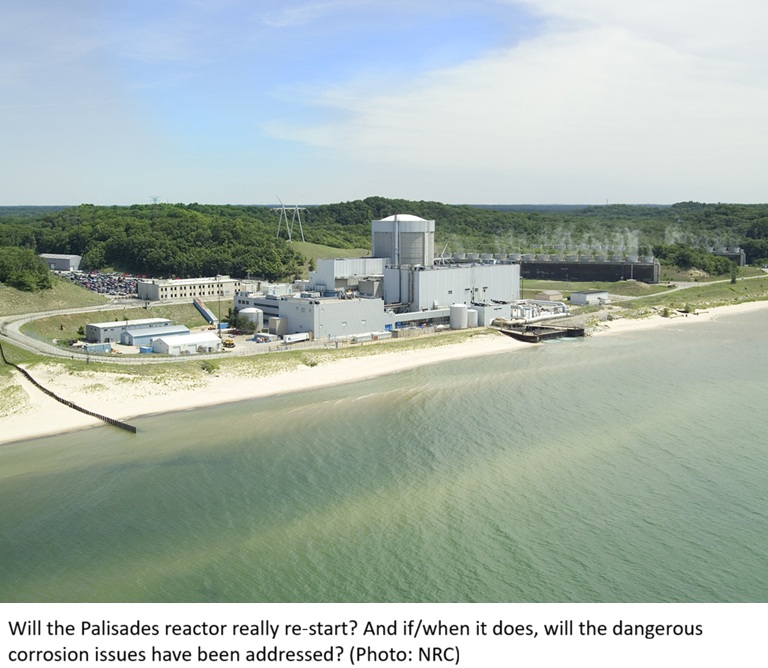
Palisades investigation indefinitely halts refueling (Is Holtec competent?)
October 1, 2026, https://beyondnuclear.org/palisades-refueling-indefinitely-halted-by-investigation/
On September 26, 2026, the Detroit Free Press(opens in new tab) headlined its news story “Nuclear regulators probe fuel assembly installation mishap at Palisades”. The news article regards the occurrence of a nuclear fuel handling mishap at the very end of August 2026 involving Holtec International’s mishandling of a used radioactive nuclear fuel assembly that was one of 136 scavenged used radioactive fuel assemblies being reloaded into the Palisades reactor core as part of the company’s “recommissioning” following certified permanent cessation of power operations by its former owner/operator, Entergy Corp, and last legitimate holder of the Palisades operating license in Covert, Michigan on the shore of Lake Michigan. Palisades was permanently ceased operations on May 20, 2022.
As some background, Holtec acquired ownership of Palisades as a “possession only” license transfer from Entergy Corp as approved by US Nuclear Regulatory Commission (NRC). The Palisades license transfer included a Decommissioning Trust Fund approximately $552 million was finalized making Holtec the new owner on June 22, 2022 solely for the purpose of decommissioning the reactor, decontamination and clean up of the reactor site. However, in an unprecedented move not recognized by NRC regulatory guidance, Holtec announced that was no longer pursuing the decommissioning of the reactor as previously certified to the federal agency but instead on September 23, 2023 formally filed on September 23, 2023 with the NRC to to refurbish and “recommission” Palisades back into commercial power operations to the end the original initial license renewal period, and even provided an exemption if NRC granted Holtec with an reactor operating license, out to March 24, 2031. Furthermore, on June 23, 2025, Holtec filed a formal Letter Of Intent (LOI) to the NRC announcing that it would be seek a second 20-year renewal of the operating license extending it out to 2051.
When Entergy Corp certified the permanent cessation of operations, the nuclear operator was required to completely defuel the reactor core from the reactor pressure vessel transferring all of the used fuel to the spent fuel storage pool, including the most recent refueling.
The fuel mishandling event involved just one of 136 highly radioactive fuel assemblies from the reactor’s most recent refueling cycle where restart commenced on October 10, 2020 before the Palisades previous owner/operator, Entergy Corp, permanently ceased power operations on May 20, 2022. The used fuel being loaded into Palisades by Holtec was operational for 578 days and therefore is extremely radioactive. When the mishandling accident happened, Holtec was salvaging used nuclear fuel assemblies that was stored in the spent fuel pool. Each one of these used fuel assemblies contains 214 highly radioactive fuel rods. The full reactor core complement for the Palisades reactor constitutes 204 fuel assemblies. Only 68 fuel assemblies are will unused new fuel in the reloading.
When Holtec started reloading the Palisades reactor core using the highly radioactive nuclear fuel assembly was being moved in the reverse direction from the nuclear power plant’s spent fuel storage pool shielded under 40 feet of water through a water filled fuel transfer channel back into the reactor containment building to be reloaded into the water filled reactor core in an opened reactor pressure vessel. There it was apparently misplaced by Holtec International operators such that radioactive fuel assembly tilted over, out of alignment in the reactor core and detached from the reactor’s fuel handling machinery. Holtec must now get a license amendment approved procedurally explaining how it will retrieve the misplaced and highly radioactive fuel assembly and evaluate if it can be still be used in the reactor core.
The irradiated nuclear fuel handling accident went unreported to the public for weeks by both Holtec International, now turned unlicensed and inexperienced reactor operator, and the NRC. When confronted, both the company and the regulator claimed that the mishap had not risen to the level of a publicly reportable safety event. However, the mishandling of highly radioactive nuclear fuel is not a minor event without accountability. Palisades already represents a highly controversial and genuinely contested unprecedented effort to refuel and restart the world’s first “permanently closed” nuclear power plan.
The fuel mishap accident represents a warning , a red flag, question the competence of Holtec safety culture and competence. Palisades should not be allowed to balk on fulfilling a 2020 joint decommissioning agreement(opens in new tab) made between Entergy Nuclear and Holtec International, and certified to the NRC on conditions of the reactor license transfer. The joint agreement recognized Palisades to permanently cease operations, permanently defuel, decontaminate, decommission and site mitigation. Holtec International has radically reversed its intention to decommission the reactor and instead proceeded to restore the previous power operating license to be followed by the submission of an application to the NRC for a twenty-year operating license extension out to 2051(opens in new tab).
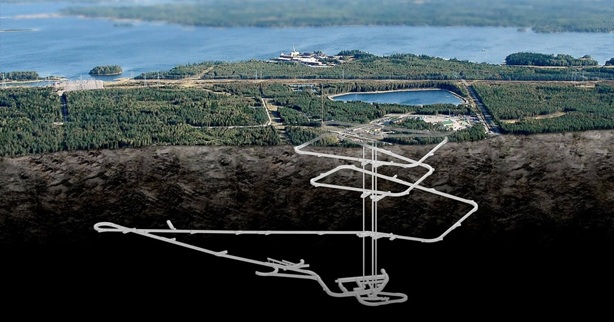
Designating Nuclear Waste Management Organization’s Deep Geological Repository as a “Project of National Interest”, Bill C-39 would eliminate independent impact assessments for nuclear projects.
Designation of NWMO’s Nuclear Waste Transportation and Burial Project as a “Project of National Interest”
Nuclear Waste Watch, 1 Oct 26
| The federal government announced its next step to short-circuit the review of a contentious nuclear waste project on Friday, September 18th. Notice was posted in the Canada Gazette that the Nuclear Waste Management Organization’s (NWMO’s) Deep Geological Repository (DGR) project for all of Canada’s nuclear fuel waste is proposed for designation as a “Project of National Interest” under the Building Canada Act . The deadline to comment is October 26.This designation would guarantee project approval and would circumvent the Impact Assessment process . The Notice also indicates a reduced scope of any project review, eliminating long-distance transportation and long-term safety from whatever evaluation the federal government might employ in developing their conditions for the approval. This follows from the June 24th announcment that it had referred three projects to the Major Project Office to consider the potential “listing” of under the Build Canada Act (aka Bill C-5). |
One of those three projects was the Nuclear Waste Management Organization’s extremely controversial plan to transport, process, bury and abandon all of Canada’s high-level nuclear waste at the Revell site in northwestern Ontario. The project is the subject of broad opposition and is in the early stage of an impact assessment. It’s unprecedented – there are no other operating deep geological repositories for nuclear fuel waste anywhere in the world – and the plan is still largely conceptual, with many parts of the operation not yet designed.
Key links:
Government of Canada News Release : Canada takes next step in potential listing of Deep Geological Repository project under Building Canada Act
Gazette I Notice of October 26 Comment Deadline
| C-39, The Build Canada Strong Act , launched the day Parliament resumed on September 21st, is designed to steamroll over environmental protections and project review processes to accelerate construction of road, rail, ports and nuclear projects. The bill delivers the May 8th discussion paper ‘s threat of transferring impact assessment of nuclear project’s from the independent Impact Assessment Agency to the nuclear industry led Canadian Nuclear Safety Commission. The first 44 pages concern themselves with deregulating the nuclear sector. Given PM Carney’s penchant for speed nothing is certain, but we should expect parliamentary committee hearings this fall. There’s no summary from the Legislative library yet, but you can follow Bill C-39 HERE . |
Key Links:
Government of Canada News Release : “Government of Canada introduces legislation to transform how Canada builds”
Government of Canada: Bill C-39 Introduction
Government of Canada: Bill C-39
US Ambassador Sparks Firestorm After Telling Greek Minister Washington Can Topple Any Government
by Tyler Durden, Wednesday, Sep 30, 2026 – https://www.zerohedge.com/geopolitical/us-ambassador-sparks-firestorm-after-telling-greek-minister-washington-can-topple-any
US Ambassador to Greece Kimberly Guilfoyle has set off a firestorm of diplomatic controversy over unusually blunt remarks centered on Greece’s government and US policy. It also raised questions of US covert ‘influence operations’ and regime change activities.
The words issued by the former Fox News host were picked up by The Wall Street Journal, which described that the alleged remark was made during a March dinner in Athens. Greek Energy Minister Stavros Papastavrou was said to be at the gathering, which quickly became tense.
A discussion ensued over the impending collapse of Romania’s government. Guilfoyle pronounced that the United States had a role in influencing the crisis. She reportedly then said, “We can do that to any country we want. We can do that here.”
Her indicating that it could be done “here” was of course a reference to Greece itself, and the account is presented as her boasting to a top government minister’s face that Washington can change governments whenever it wants.
Here is the fuller context in which the WSJ report presents it:
Some Greek officials say they are happy their country, often overlooked in Washington, has the attention of an ambassador who can easily reach the U.S. president.
They are also fearful of getting on her bad side. In March, at a dinner in Athens attended by Greek and U.S. officials, Guilfoyle got into an argument with Greece’s energy minister, Stavros Papastavrou, in front of the other guests. Referring to the impending collapse of the Romanian government, Guilfoyle told the group, “We can do that to any country we want. We can do that here,” according to a person who attended the dinner and others who were told about it. The conversation became heated, with Papastavrou retorting that the U.S. couldn’t replace the government of Greece, which was elected by the people. Guilfoyle’s lawyer disputed the characterization of the exchange.
Greek opposition parties have seized on the exchange, after which Greek government spokesperson Pavlos Marinakis sought to downplay and deny, saying the issue of changing the government “was never raised” and that it would not be tolerated if so.
But the opposition is seeking to keep the pressure up in search of answers:
“Three days after the Wall Street Journal article the Greek government has so far, beyond vague references, declined to deny or confirm the allegations made,” Harry Tzimitras, head of foreign affairs for the left-wing Elas party, told POLITICO on Tuesday. “It is a very serious issue and it must be addressed immediately without delay.”
Guilfoyle as the Trump-appointed top US envoy to Athens has also of late come under scrutiny for pushing US energy sales across Southeastern Europe, especially focused on American liquefied natural gas.
We earlier reviewed how in the four and a half years since Russia invaded Ukraine, when there happens to be important national elections – particularly those in Romania, Moldova, Hungary, Poland, and Germany – then suddenly certain domestic political parties get demonized as “pro-Putin” and “security threats” to the rest of Europe.
The alleged March remarks have also naturally sparked tensions between the US and Romania. A State Department statement issued in the wake of the reporting reads: “The United States values its strategic partnership with Romania, which remains strong across our shared priorities, including energy security and defense burden shifting.”
1 This Month
23-25 October – on Zoom – World BEYOND War’s annual global conferenc


Shut down the radiation-damaged Heysham nuclear reactors now
To see nuclear-related stories in greater depth and intensity – go to https://nuclearinformation.wordpress.com

Say No to NASA’s Reckless Nuclear Reactor on the Moon
Say No to NASA’s Reckless Nuclear Reactor on the Moon

-
Archives
- October 2026 (231)
- September 2026 (339)
- August 2026 (330)
- July 2026 (355)
- June 2026 (287)
- May 2026 (306)
- April 2026 (356)
- March 2026 (251)
- February 2026 (267)
- January 2026 (308)
- December 2025 (358)
- November 2025 (359)
-
Categories
- 1
- 1 NUCLEAR ISSUES
- business and costs
- climate change
- culture and arts
- ENERGY
- environment
- health
- history
- indigenous issues
- Legal
- marketing of nuclear
- media
- opposition to nuclear
- PERSONAL STORIES
- politics
- politics international
- Religion and ethics
- safety
- secrets,lies and civil liberties
- spinbuster
- technology
- Uranium
- wastes
- weapons and war
- Women
- 2 WORLD
- ACTION
- AFRICA
- Atrocities
- AUSTRALIA
- Christina's notes
- Christina's themes
- culture and arts
- Events
- Fuk 2022
- Fuk 2023
- Fukushima 2017
- Fukushima 2018
- fukushima 2019
- Fukushima 2020
- Fukushima 2021
- general
- global warming
- Humour (God we need it)
- Nuclear
- RARE EARTHS
- Reference
- resources – print
- Resources -audiovicual
- Weekly Newsletter
- World
- World Nuclear
- YouTube
-
RSS
Entries RSS
Comments RSS

