Adi Roche: My nightmare is that the next Chernobyl event occurs at Chernobyl itself
There may be an impression 40 years on that Chernobyl is something which happened a very long time ago and no longer poses a threat to the world, but the reality is very different. Chernobyl is not something from the past – Chernobyl is forever. The impact of that single nuclear incident can never be undone; its radioactive footprint is still affecting countless millions of people.
For the first time in history, nuclear facilities have been weaponised in active warfare. This is not Cold War rhetoric – it is a new and terrifying reality. If we remain silent, we are playing with a loaded gun.
.
There may be a view that the nuclear disaster is an event from long ago and no longer poses a threat, but the reality is very different
Adi Roche, Sat Apr 25 2026 – https://www.irishtimes.com/opinion/2026/04/25/adi-roche-my-worst-nightmare-is-that-the-next-chornobyl-could-be-chornobyl-itself/
At exactly 01:23 on the morning of April 26th, 1986, a chain of events in Reactor No 4 at Chernobyl nuclear power station in Ukraine triggered the world’s worst nuclear disaster.
The first of the explosions blew a 1,000-ton roof off reactor No 4 as though it was the lid of a saucepan, and a second, bigger explosion disintegrated the reactor core, rocketing tons of deadly radioactive material high into the night sky like a blazing meteor.Only 3 per cent of the reactor’s nuclear fuel escaped in the first catastrophic moments. Up to 200 tons of uranium dioxide fuel remains buried in the broken heart of reactor 4.
In that instant, the world changed forever.
A new word, Chernobyl, entered into the history of world disasters and the history of the world with deadly and frightful force. The sun shone, the wind blew, rain fell – and so did the deadly radioactive poison with it.
A nuclear catastrophe does not conclude when the cameras leave. It seeps into the soil, the water, the food chain, and embeds itself in the DNA of all living things. It passes silently from one generation to the next, creating what has become commonly known as “Chernobyl lineage”, as the damage and devastation leans into the next generation.
For four decades, I have walked beside the victims of this tragedy. I have held children whose tiny thyroid glands were attacked by poisonous radioactive iodine 131, as their small bodies mistook it for naturally occurring safe iodine. I have listened to some of “liquidators” – the 800,000 young men, including many conscripted, who were sent into the convulsing fires of hell with shovels and bare hands to contain the inferno – describe running across radioactive rooftops for 60 seconds at a time, knowing that every second shortened their lives. We missed a far greater nuclear explosion at Chernobyl by a hair’s breadth because of these brave men. Without the intervention by the liquidators, there would have been even further widespread contamination and radioactivity on a global level.
“To those who saved the world” are the words on the monument to the liquidators at the site in Chernobyl. Hailed as heroes in 1986, they are now discarded and forgotten, their ill-health dismissed by the authorities as being unrelated to their exposure to extraordinary levels of radiation and the lack of adequate safety precautions. Many of them paid with their health and their lives. Today, too many of them battle for pensions and medical care while their suffering is dismissed or minimised. Their self-sacrifice cannot be overstated.
There may be an impression 40 years on that Chernobyl is something which happened a very long time ago and no longer poses a threat to the world, but the reality is very different. Chernobyl is not something from the past – Chernobyl is forever. The impact of that single nuclear incident can never be undone; its radioactive footprint is still affecting countless millions of people.
It is impossible to say whether we are over the peak of the consequences of radioactive contamination, or whether we are just on the threshold. The consequences will last for up to 20,000 years. Other disasters are vying for the world’s attention while Chernobyl has been relegated to history, even though the latency period for some cancers is estimated to be up to 60 years – so the worst could yet be to come.
The ghost of Chernobyl was dragged back into headlines on February 24th, 2022, as Russian troops drove tanks through the Chernobyl Exclusion Zone on their way to Kyiv. Places such as Chernobyl’s Red Forest, regarded as among the most radioactive landscapes on Earth, became a military corridor, and deeply radioactive soil that had lain undisturbed for decades was churned up again. Radiation does not need a passport. It does not respect boundaries or borders, travelling wherever the wind takes it. Soon after, Russian forces occupied Europe’s largest nuclear plant in Zaporizhzhia. For the first time in history, nuclear facilities have been weaponised in active warfare. This is not Cold War rhetoric – it is a new and terrifying reality. If we remain silent, we are playing with a loaded gun.
‘We must call for nuclear facilities to be declared permanent “no war zones” under international law. Attacks on nuclear sites must be treated unequivocally as war crimes’
Nuclear power plants were always considered globally “off-limits” because of their deadly catastrophic potential. The collision between warfare and nuclear energy has created a threat with consequences not just for Ukraine, but for Europe and the world and all the generations yet unborn. This weaponising of nuclear facilities has resulted in a collision between warfare and nuclear power, which is a whole new threat with potentially devastating, unimaginable consequences for humankind for centuries to come. This is nuclear terrorism.
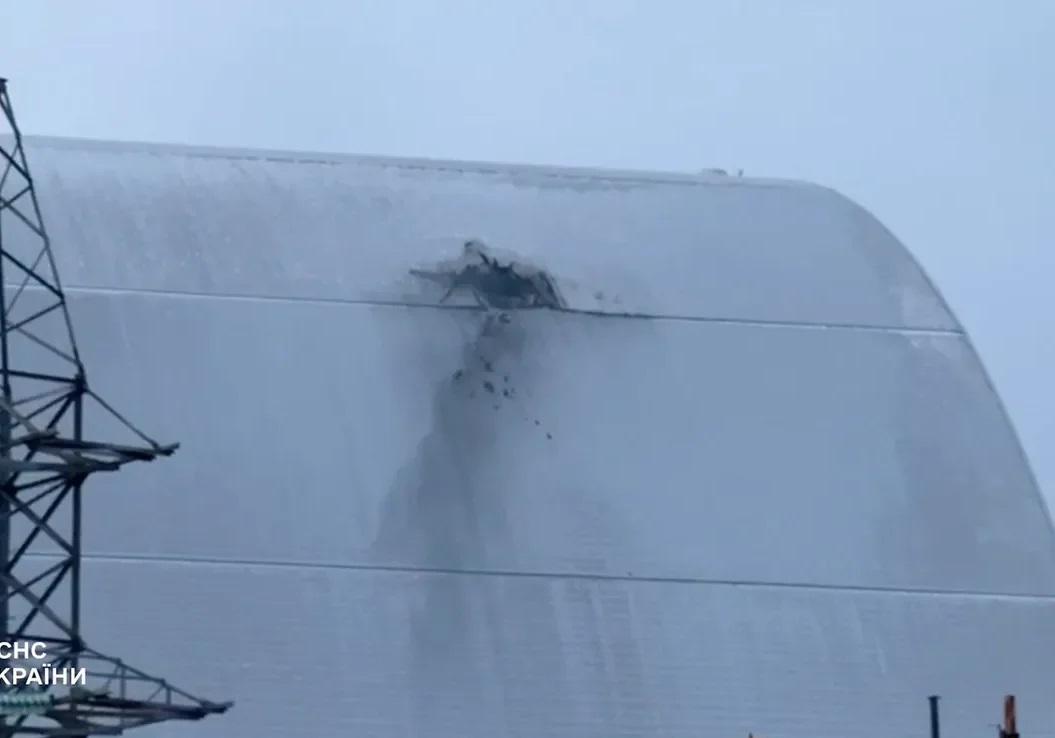
The issues associated with Chernobyl have become even more urgent, particularly following the Valentine’s Day 2025 drone strikes on the nuclear power plant, further escalating the war. The impregnable sarcophagus that is meant to protect humanity from radiation is scarred and breached, heightening the risk of another nuclear catastrophe and bringing with it a sense of foreboding for wars of the future.My worst nightmare in this conflict is that the tragedy of a second Chernobyl would be unleashed on the world. The next Chernobyl-type event could happen at Chernobyl itself.
Ireland knows something about solidarity. Compassion became our calling card and is the heartbeat of our society.
That is needed now more than ever. The Irish proverb “Ar scáth a chéile a mhaireann na daoine” hasnever been more apt.
We must call for nuclear facilities to be declared permanent “no war zones” under international law. Attacks on nuclear sites must be treated unequivocally as war crimes.
The “war” that has been waged by what happened at Chernobyl is a silent, invisible but deadly one. No associated smells, no visible signs – nothing to forewarn you of danger.
Deadly radiation flows in rivers, towns, streams and forests. It clicks endlessly, ferociously, in Geiger counters, into the silent numbness that is, and sadly always will be, Chernobyl
If we fail to learn from Chernobyl, we betray those who died and those who still suffer. If we fail to act, we risk repeating the unthinkable. Chernobyl is not history, it is a warning. We cannot, will not, turn away.
Adi Roche is the founder and voluntary chief executive of Chernobyl Children International
EU economic sanctions ramp up NATO war plan on Russia
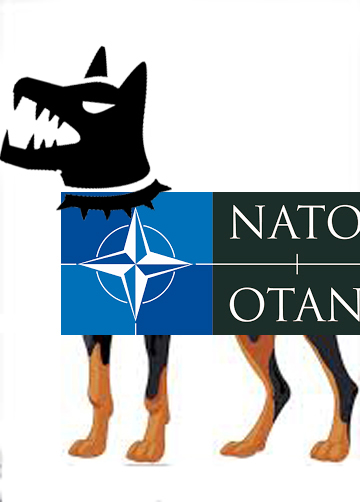
Two-thirds of the EU loan – some €60 bn – is reportedly allocated for military aid. Ursula von der Leyen, the European Commission president, said that the first tranche worth €45 bn will be transferred to Ukraine within weeks and that it would be used to increase the production of aerial combat drones
Strategic Culture Foundation, 24 April 2026, https://strategic-culture.su/news/2026/04/24/eu-economic-sanctions-ramp-up-nato-war-plan-on-russia/
The European Union announced its 20th round of economic sanctions against Russia this week. The bloc of 27 nations began imposing sanctions on Moscow when the conflict in Ukraine erupted in February 2022. Every six months, the EU has been extending these economic measures, which Brussels claims is support for Ukraine to “deter Russian aggression.”
The 20th round of sanctions unveiled this week attempts to go much further in inflicting damage on the Russian economy. It was flagged as the biggeset package yet and a “multi-layered targeting of key sectors” of the Russian economy, primarily its energy industry.
It is tempting to dismiss the EU sanctions policy as feeble and a form of insanity. The bloc keeps repeating an action expecting a different result each time, when the record shows that the action of sanctions is having little detrimental impact on Russia. If anything, it is the EU that has suffered an economic downturn as it unilaterally cut itself off from Russian oil and gas, the traditional source of affordable energy feedstock for European industries. Russia’s economy has not crashed as was anticipated when the sanctions were first imposed more than four years ago. In fact, the Russian Federation has maintained a robust economic performance as it finds alternative markets in Asia for its oil and gas products. The soaring price for a barrel of crude due to the reckless U.S.-Israeli aggression on Iran has given Russia a further boost.
However, it would be a mistake to simply brush off the EU sanctions as futile and self-defeating.
There is a more blatant and sinister aspect to the new round of sanctions. Brussels is nakedly showing its war agenda. The new measures aim to restrict all sectors of Russian energy production, including “exploration, extraction, refining and transportation.” The EU is endeavoring to tighten restrictions on “third countries” to prevent Russia from circumventing existing embargoes on shipping, port access and trade. Whether these new measures achieve their objective of “crippling the Russian economy” is debatable. But it is the belligerent intention – stated now with more determination – that is significant. The EU is brazenly laying out a plan to strangle Russia in conjunction with upping the military threat.
It is the accompanying developments that are ominous and which give full meaning to the economic measures.
This week the EU hailed that its €90 billion ($105 bn) loan to Ukraine had finally been approved. That financial aid was blocked by Hungary since December. But with the recent election loss for Viktor Orbán’s government, Budapest’s veto has been lifted under the new prime minister, Péter Magyar. EU leaders were ecstatic that the financial transfer to Ukraine can now go ahead.
Two-thirds of the EU loan – some €60 bn – is reportedly allocated for military aid. Ursula von der Leyen, the European Commission president, said that the first tranche worth €45 bn will be transferred to Ukraine within weeks and that it would be used to increase the production of aerial combat drones. “Drones from Ukraine for Ukraine,” she said by way of trying to give the impression that the EU is not a party to the war.
An EU leaders’ two-day summit held in Cyprus on April 24-25 was reported with celebratory mood. Von der Leyen and European Council President Antonio Costa, along with the EU’s Foreign Affairs Commissioner, Kaja Kallas, were cock-a-hoop at the “breakthrough” of releasing the largest single financial package to Ukraine so far in combination with the new economic sanctions aimed at drilling down on Russia’s economic core. Attending the summit in Cyprus was Ukraine’s nominal president, Vladimir Zelensky, who reportedly joined the EU leaders for dinner to discuss new developments.
It gets even more sinister. The Kiev regime has been stepping up deep air strikes on Russian energy and other industrial infrastructure. There is no doubt the regime is being assisted with NATO expertise in finding such wide-ranging targets in Russia’s vast territory. This week, for example, a drone strike hit an industrial facility in Novokuybyshevsk in the central Samara region, nearly 900 kilometers southeast of Moscow and nearly 2,000 kms from the warzone in Donbass.
Clearly, the EU’s economic strikes are designed to reinforce the damage that NATO is trying to inflict with drones and missiles on Russia’s industrial base. These are not separate initiatives but an integral war strategy.
In announcing the latest round of sanctions Kaja Kallas could hardly contain her Russophobic glee. “Today we have broken the deadlock. On top of the €90-billion loan for Ukraine, we have adopted the 20th sanctions package,” she said.
Deceptively, the sanctions were billed as “increasing pressure on Russia to stop its brutal war of aggression and engage in meaningful negotiations towards a just and last peace.”
That’s a cynical con – a con that is betrayed by the EU’s own stated objective of “crippling” the Russian economy. How can one have a “just and lasting peace” by crippling a country?
The real purpose of the funds that EU citizens will have to pay through decades of indebtedness is to escalate NATO’s war in Ukraine against Russia. The economic sanctions are war measures aimed at maximising the impact of military attacks.
Other developments this week raise the stakes to even more sinister levels.
French President Emmanuel Macron and Poland’s Prime Minister Donald Tusk discussed joint nuclear weapons “scenarios” in a bilateral summit in Gdansk. The French leader wants to share his country’s nuclear weapons capabilities with other European countries. It is reported that French and Polish warplanes will begin joint exercises on flying nuclear weapons in the Baltic region. This is evidently meant as a threat to Russia. It amounts to Paris and Warsaw carrying out training exerises for nuclear strikes on Russia.
In yet another provocative development, it is reported that Britain is leading a NATO Joint Expeditionary Force to formulate a naval plan to blockade the Russian enclave of Kaliningrad located between Poland and Lithuania. Kaliningrad provides Russia with vital port access to the Baltic Sea.
The European NATO leaders are concerned that U.S. President Donald Trump has lost interest in the “Ukraine project” against Russia owing to his reckless war with Iran. That is why they are ramping up the war effort against Russia while telling barefaced lies about wanting to achieve “lasting peace.”
So far, the EU’s economic sanctions against Russia have been an abject failure. But the failure of economic measures is no longer the point. It is what they reveal about an intensifying NATO war plan against Russia.
Moscow has repeatedly called for a negotiated end to the conflict while the EU and NATO accuse Russian leader Vladimir Putin of “not wanting peace.”
People can make their own minds up about who the aggressors are. NATO is at war with Russia and is not interested in negotiations. Criminally, the NATO aggressors are creating a boiling frog situation for Russia. The European russophobic leaders seem to want war at any cost.
UK nuclear industry in lobbying blitz ahead of Scottish election

THE UK nuclear industry ramped up its lobbying of MSPs ahead of the Holyrood
election, the Sunday National can reveal. An investigation based on the
Scottish Parliament’s lobbying register has revealed that activity has
reached an all-time high, with industry groups, business organisations and
unions increasingly looking to reverse the Scottish Government’s
opposition to the building of new nuclear power stations.
In 2025, 32 MSPs
were lobbied across 14 separate meetings – the highest levels recorded to
date. Compared to the previous year, this was more than three times the
number of MSPs lobbied and almost double the number of distinct meetings.
So far in 2026, 12 MSPs have already been lobbied across seven separate
meetings in the run-up to polling day on May 7. The majority of recent
lobbying has been carried out by the Nuclear Industry Association, which
held a series of meetings with MSPs in Holyrood in 2026.
On March 24, 2026,
representatives from the association met several Labour and Tory MSPs. The
discussions focused on the role of nuclear energy and calls to reverse the
Scottish Government’s opposition to new nuclear development.
At another
meeting on February 20, 2026, the association spoke to Tory MSP Douglas
Ross, raising the “importance” of nuclear power to Scotland’s energy
future. The register also showed involvement from other organisations. On
February 25, 2026, for example, the trade union Prospect met with Net Zero
Secretary Gillian Martin to raise concerns from its members about the
future of the energy sector, including nuclear.
The French state-owned
energy company EDF Energy, which owns and operates Torness nuclear power
station, also lobbied 20 MSPs in 2025. Patrick Harvie from the Scottish
Greens said: “The nuclear industry may be a cash cow for lobbyists, but we
don’t need or want it in Scotland. “We cannot afford to waste time or money
on a costly and unsustainable energy source that will take years to go
online while leaving a toxic legacy for future generations. “If we are to
have a cleaner and greener future, it needs to be based on the vast
renewable resources that we already have in abundance rather than a dated
and dangerous false solution like nuclear.”
The National 26th April 2026, https://www.thenational.scot/news/26052414.uk-nuclear-industry-lobbying-blitz-ahead-scottish-election/
Norway says “nuclear renaissance” too expensive
April 23, 2026, https://beyondnuclear.org/norway-says-nuclear-renaissance-too-expensive/
Report illuminates new reactors can’t compete with the accelerating growth of renewable energy
The “Survey and assessment of the status of available nuclear reactor technologies and designs” published on March 16, 2026 as the final report on Norway’s energy policy was made public on April 8, 2026. It was prepared by the international team of energy consulting and architectural firms, the US-based Amentum and the Oslo, Norway-based Multiconsult Group, on government contract by the Norwegian Nuclear Commission. The Commission was established in June 2024 to evaluate the inclusion of nuclear power in the Scandianavian country’s energy policy. The consultants were tasked to review the current global status and trends of nuclear reactor technologies, including their readiness, flexibility, supply chains, and costs.
Norway has never sited, constructed or operated a commercial atomic power plant. But back in 2022, the M Vest Group Norway (M Vest Energy AS), a Norwegian oil and gas corporation, through its specialized subsidiary Norsk Kjernekraft, established partnerships with the nuclear divisions of the UK’s Rolls-Royce and the French startup Hexana and lobbied the Norwegian government to promote and advance the development of atomic power in Norway. Following the Commission’s examination of the consultants’ report, Reuters news service announced the Commission’s decision, “Norway should not work towards nuclear power generation now, commission finds.”
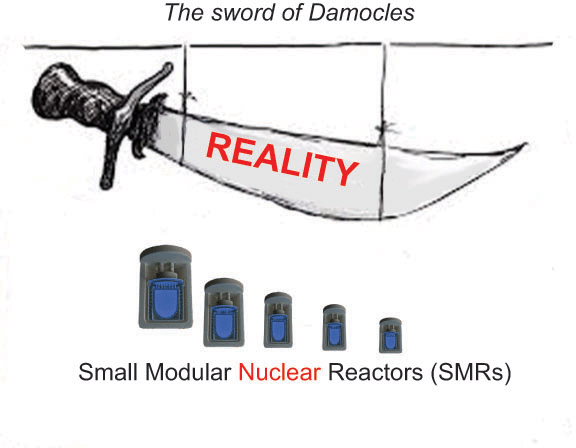
Interestingly enough, Norway currently gets 89.9% of the nation’s electrical power from thousands of hydroelectric facilities sited across the country with wind power running a meager and distant second (8.6%). Still, Norway is well on the way to generating 100% of its electrical power from renewable energy. Even though Norway is currently producing an electricity surplus, the nuclear industry found its way into pressuring the Norwegian government to get with a Scandinavian “nuclear renaissance” to accommodate the projected AI/data center revolution with its own fleet of light water Small Modular Reactors (SMR) and Advanced Modular Reactors (AMR). While the report’s commissioned focus is on Norway, it shines a bright light on the much ballyhooed but still not-ready-for-prime-time nuclear power technologies now pushed worldwide.
Norway’s report confirms that the new promises of nuclear power provide little more than a “spike in promotional materials and many bold claims around technology, cost and schedule over the past 3-4 years, combined with hype associated with the energy demands created by Artificial Intelligence.”
The Norway survey astutely finds, “Given the nuclear sector’s claims that modularisation will deliver factory-build quality and increase the speed of construction, thereby reducing finance costs, it is not surprising that these technology families are attractive, but the arguments are not yet proven.”
Despite the absence of any final construction cost figures given a handful of western SMR or AMR construction projects have only just started, the Norwegian analyses expect first-of-a-kind SMR designs to be significantly more expensive than the few completed large gigawatt nuclear reactor on a per-kilowatt basis. That said, the first-of-a-kind Vogtle units 3 and 4 finished in Georgia were first estimated at a cost of completion for $14 billion were finally finished and commissioned at an estimated $35 billion.
The Norway-commissioned analyses also predict higher fixed operation and maintenance costs on a per-kilowatt basis for SMRs compared to large Generation 3 reactors at Georgia’s Vogtle 3 and 4 units. Additionally, the Commission report predicts that yearly nuclear fuel costs for SMRs could be as much as 82% higher than those for large gigawatt reactors due to “lower plant density and shorter burnup cycles.”
Other predicted first-of-a-kind SMRs costs that will be “Probably Higher” than the large gigawatt reactors will include: Nuclear Waste (post ten years operation); Long Term Nuclear Waste Disposal; Spent Fuel (post ten years operation), and; Decommissioning.
The report’s combined findings on all these uncontrolled costs appear to be the most impactful analyses that dissuaded Norway from opening Pandora’s nuclear energy box at this time.
We all should all be dissuaded, given the demonstration that renewable energy is significantly more affordable, faster and more reliable to deploy from a broad range of resources (photovoltaic solar cells, on and offshore wind, hydro and tidal power, etc). We can now couple that with economically deliverable utility-grade energy storage over a widening range of systems. Why are we being given the bums’ rush into a nuclear future with its unpredictably high financial risks, unreliable and increasing significant construction cost overruns, recurring project cancellations and abandonment with sunk costs, uninsurable severe nuclear accident risks, and ultimately the unresolved biological isolation of nuclear waste that offers only environmental liability without a watt of benefit to future generations?
LEST WE FORGET – REMEMBERING THE HUMAN IMPACT OF THECHORNOBYL DISASTER

Scottish Campaign to Resist the Atomic Menace (SCRAM), 24th April 2026, https://www.no2nuclearpower.org.uk/wp/wp-content/uploads/2026/04/SCRAM-Chornobyl-press-release-.pdf
The Scottish Campaign to Resist the Atomic Menace has issued a reminder of the huge
human cost of the Chornobyl disaster in Ukraine to mark its 40th anniversary this Sunday,
26th April. Studies indicate a result of the disaster of between 16000 and 40000 fatal cancers.
Others claim these estimates are very conservative.(1,2)
Pete Roche of SCRAM said: “The contrast between what happened 40 years ago in Ukraine
at the Chornobyl nuclear plant – and the proclamations of today’s nuclear industry that it is
not dangerous or dirty – could not be greater. Chornobyl contamination was widespread
across Europe and is estimated to result in anything between 16,000 and 40,000 fatal cancers,
possibly many more.
“Whilst we haven’t experienced a full meltdown at a UK nuclear plant to date, the industry’s
record in the UK is not a clean one. These include the serious 3-day reactor core fire at
Windscale in Cumbria in 1957 and other accidental releases of highly radioactive material
into the sea and the local environment, and in Scotland the waste shaft explosion at Dounreay
in 1977.
“Both Torness and Hunterston power stations in Scotland suffered significant cracking in
their graphite reactor cores over time, and there have been numerous shut downs over their
years of operation but thankfully did not result in the type of full scale regional emergency at
Chornobyl or in Japan at the Fukushima plant in 2011. The inherent danger is there despite
nuclear public relations efforts, and the legacy of toxic waste will be with future generations
for hundreds of years. 40 years after the disaster, it is still highly vulnerable from the conflict
in the region. Wind turbines, hydro plants and solar panels don’t carry these risks.
“After the reprocessing at Sellafield was abandoned, highly radioactive reactor fuel elements
will now be stored on UK nuclear sites well into the 2100s. No safe solution has been found
other than looking for eventual deep burial at a location yet to be determined, that will need
guarded for hundreds if not thousands of years.
“On the positive side of the debate over energy, with Scotland’s huge renewable resources,
nuclear is not needed. Scotland can power itself, and export clean, green power to other
countries – and combine that with energy storage, flexible green power and an upgraded grid
system. The revolution in renewable energy is already well underway and is globally
unstoppable. New nuclear power has no place in a clean, green energy system, and certainly
not in Scotland.”
A recent Survation poll of 2000 people, indicated that a majority of Scots preferred renewable
energy over nuclear to tackle the climate crisis and be most effective at reducing energy bills.
It also found that the nuclear industry was the least trusted to ‘tell the truth aboutits products, costs, pollutants and safety record.’ (3)
The campaign group says nuclear is not needed and is an expensive distraction that will do
nothing to tackle the climate crisis, calling instead for a 100% renewable energy system to be
committed to by the next Scottish Government after the May election.
The untold race to escape Chernobyl: A nuclear disaster. Families surrounded by deadly radiation. Then one woman risked her life to save 45,000 people.

By IMOGEN GARFINKEL – SENIOR FOREIGN NEWS REPORTER and PERKIN AMALARAJ, FOREIGN NEWS REPORTER, 22 April 2026 , https://www.dailymail.com/news/article-15748163/The-untold-race-escape-Chernobyl-nuclear-disaster-Families-surrounded-deadly-radiation-one-woman-risked-life-save-45-000-people.html
Radiation is an odourless, invisible killer, with the potential to surge through the body and tear it apart on a cellular level, irreversibly damaging DNA.
When reactor number four at the Chernobyl nuclear power plant exploded in April 1986, debris emanated radiation at a level of 10,000 roentgens per hour – enough to cause a fatal dose to anyone who stood nearby for a matter of minutes.
Firefighters made the ultimate sacrifice on April 26, absorbing unprecedented amounts of the poison as they battled to put out the enormous flames of history’s most devastating nuclear accident.
As a gigantic radioactive cloud began spreading over the world – infecting 40 per cent of Europe and even stretching into northern Africa and north America – one woman found herself in the eye of the storm.
Maria Protsenko, garbed in just a blouse, skirt and sandals, was personally responsible for orchestrating the mass evacuation of Pripyat’s 45,000 civilians, emptying the devastated Soviet city of any sign of life.
She was previously the chief architect of the city, having lovingly designed neighbourhoods for young families, but in a split second she became a kind of grim reaper, sweeping away all the civilisation she had helped to create.
Recounting the fateful day to the makers of the TV series ‘Chernobyl: Inside the Meltdown’ on National Geographic, Protsenko transports herself back 40 years ago and tells of the wounds that haven’t left her.
‘For the first time in my life, I was not building a city, I was burying it forever,’ she said, reflecting on the scale of destruction. ‘This is not only a man-made disaster, it is a catastrophe that broke the lives of thousands of people.’
By 11am the day after the explosion, a mass evacuation was announced and scheduled for 2pm, but by that point it was too late.
Some of those living closest to the power plant had already received internal radiation doses in their thyroid glands of up to 3.9Gy – roughly 37,000 times the dose of a chest x-ray – after breathing radioactive material and eating contaminated food
Immediately after the accident, thyroid cancer was particularly rampant in Belarus, Ukraine and Russia, with 5,000 cases diagnosed among those who were children and adolescents at the time of exposure.
Today, Pripyat is an eerie ghost town of cavernous kindergartens, abandoned houses and sports halls left to decay, having been declared too radioactively dangerous for human habitation for at least 24,000 years.
Protsenko wore no protective clothing as she led the vast evacuation operation, standing on a bridge overlooking the city while 1,500 buses picked up families district by district.
She stayed up all night designing intricate maps, allowing her to execute the mammoth task with tactical precision, not leaving anyone behind in the industrial wasteland.
‘At 2pm the first bus arrived… I was standing there in my blouse and my skirt, and I had sandals on my bare feet. I had no protective gear,’ she told the documentary.
Only thick sheets of lead or massive concrete blocks would have prevented her from being contaminated.
‘All that radioactive dust was rising and got on my bare feet and my legs. That’s why they were so itchy. Can you imagine how much radioactive dust was flying from that place, at that time?’
But at that point, no one could understood the scale of the tragedy – not yet.
Girls and boys played together in the street as they waited for their livesaving convoys, not yet grasping the fact that the evacuation wasn’t temporary and they may never see each other again.
Many didn’t have a chance to say goodbye before they vanished from each other’s lives forever, turning from neighbours to refugees in one simple journey.
‘We evacuated nearly 45,000 people. Without panicking and noise, we evacuated the entire city,’ Protsenko said.
She is still haunted by the memory of one woman, who watched her intensely from the bus window as she was torn away from her community.
‘She didn’t just look at me, she turned her head, following me with her stare.
‘There was something in her face, like she was screaming inside: “What is this?! Where am I going?!”‘
While she was helping the city’s inhabitants escape, Protsenko had no idea she was exposing herself to so much lethal radiation.
‘At that moment, I was not only not afraid, I did not even think about it,’ she said.
It was only after the disaster that the architect remembered how she had spent hours absorbing the toxic fallout near the Red Forest, breathing in countless particles of contaminated dust as convoys rolled past.
‘The thing is, radiation does not make noise like exploding bombs. It does not burn like a fire. It has no smell. You do not feel it immediately, it kills quietly, slowly. And there is no awareness at all that you are in danger,’ she said.
Following the evacuation, she developed a persistent cough, headaches, dryness in her mouth and intense itching in her legs – but still did not grasp that she had likely absorbed a significant dose of radiation.
Now aged 80, she’s still living with the long-term impact of the disaster.
‘I am no longer 40… my health is no longer what it used to be… all as a result of the radiation exposure I received long ago.’
She added: ‘No one would envy it.’
While some degree of exposure was inevitable to everybody in the vicinity of the accident, the Soviet authorities didn’t help matters by underplaying the tragedy in its immediate aftermath – ultimately slowing down the evacuation.
Despite the explosion in the early hours of April 26, life in the city initially continued as normal, with children outside playing and parents going about their errands, unaware that they were at the centre of a nuclear catastrophe.
‘The night was clear, warm, and quiet. The residents of the city were peacefully asleep and knew nothing yet about the disaster that had occurred,’ Protsenko said.
‘Information about the radiation situation was kept in strict secrecy.’
When she was tasked with leading the evacuation, even she hadn’t grasped the scale of the calamity, but she knew she had a job to do.
‘By 6pm… we had practically evacuated the entire population of the city,’ she said.
Within a few hours, it was done, and Pripyat would never be the same again.
By that time, she was one of the last people left in the uninhabitable wreckage of a town. ‘The city became empty… no lights were on… it felt a little eerie.’
The Chernobyl disaster isn’t contained to a single day, but went on to redefine the lives of hundreds of thousands of people all over the world.
Investigations ultimately concluded that faulty protocols in the plant’s design and poorly trained personnel were responsible for the explosion, which blew the 1,000-ton steel lid off the reactor – the same weight as three 747 passenger planes.
In the weeks and months that followed the accident, scores of firefighters, engineers, military troops, police, miners, cleaners and medical personnel – collectively known as ‘liquidators’ – were sent to the destroyed power plant in an effort to control the blaze and core meltdown.
In Belarus, 40,049 liquidators were registered to have cancers by 2008 along with a further 2,833 from Russia. In Ukraine, disability among the workers soared, with 68 per cent regarded healthy in 1988, compared to 26 years when only 5.5 per cent were still in good physical condition.
As well as coping with physical sickness, Protsenko is still grappling with the day to day consequences of Russian authoritarianism.
n 2022, she was forced to flee Ukraine in a wheelchair with her daughter and their kitten, following Vladimir Putin’s full-scale invasion.
And with Putin’s callous disregard for safety, having launched a major offensive to capture the area around Chernobyl just days into his invasion – only to abandon it weeks later – only time will tell how far the long shadow the nuclear plant casts will stretch.
Chernobyl: Inside the Meltdown airs on National Geographic on Sunday 26th April from 4pm
Epstein’s evil legacy destroys everything it touches. Everything except Palantir

f Palantir were a person, it would be a much worse person than either Peter Mandelson or the deceased paedophile financier Jeffrey Epstein. And yet the Labour government continues to welcome Palantir to manage our NHS, military and financial data, spewing all our personal details into its cauldron of weaponisable knowledge.
.
Mandelson, and by extension Starmer, are tainted by proximity to the abuse scandal. But the paedophile was a close associate of Peter Thiel too. Why don’t we talk about that?
The American tech firm Palantir, which uses its data hoard to provide tech support for ICE’s violent street goons and the bombing of Iranian girls’ schools, has just issued a terse manifesto – “The Technological Republic” – basically outlining its plans to turn the world into a fascist technocracy, bent on neutralising “regressive cultures”, enfranchising right-leaning male voters at the expense of educated liberal female voters, and muttering darkly of the errors made in reining in the power of post-Nazi Germany. I thought we all agreed at the time that this was a good thing, what with the Holocaust and that? We’re all worried about antisemitism aren’t we? Did I miss the memo on this, as they say in American sitcoms?
The Palantir manifesto’s cryptically fascist reappraisal of the “postwar neutering” of Nazi Germany makes the company’s decision to appoint the perma-smirking grandson of the British fascist leader Oswald Mosley, Louis Mosley, as its British head look less like carelessness and more like someone holding your head under the duvet and farting in your face just because they can. Take that!
Oddly, the London listing app Time Out significantly softened a joke about Louis Mosley and Palantir in a piece I wrote for it this week, about a fun walk around Hackney, which included the site where, in 1962, Louis’s Nazi grandad Oswald Mosley and his then-fascist father Max Mosley were knocked to the ground outside Ridley Road market by Jewish and antifascist protesters. It seems Palantir’s intimidating shadow even extends to the realm of recreational historical hiking. Rest assured any Leisure Walking Route I submit to the Nerve will remain resolutely politically independent. If only one of the Hackney Jews had booted Max Mosley really hard in his Nazi nuts too, maybe Palantir wouldn’t currently have a British head of operations.
“It’s the kind of market dominance thing Apple did with making you have to buy their special plugs, but applied to missiles, snatch squads and gulags“
Palantir’s CEO, Alex Karp, has posited, openly and unashamedly, the necessity of a warlike American surveillance state, which Palantir would essentially profit hugely from servicing with its own warlike surveillance technologies. It’s the kind of monopolised market dominance thing Apple did with making you have to buy their own special plugs, but applied to missiles, snatch squads and gulags.
And it makes Nigel Farage’s attempts to profit from the cryptocurrencies he uses his political platform to promote look rather quaint, like a child stealing some Blackjack chews from the newsagent sweet racks while Mr Knuckles arrives in a ski mask, shoots the shopkeeper in the face and makes off with the till, the choicest porn mags and all the worst fags.
If Palantir were a person, it would be a much worse person than either Peter Mandelson or the deceased paedophile financier Jeffrey Epstein. And yet the Labour government continues to welcome Palantir to manage our NHS, military and financial data, spewing all our personal details into its cauldron of weaponisable knowledge. There are lonely old ladies scammed by people pretending to be down on their luck, who just need a few hundred thousand to free up their family funds, with better noses for decidedly dodgy dodginess.
And when Nigel Farage gets elected by millions of angry morons and, like Trump, starts coming for immigrants, Muslims, pro-choice campaigners, academics, journalists, teachers, cartoonists, and in the end even people your racist Facebook auntie rather likes, like that nice transgender woman over the road with the cats, Palantir will be only too happy to provide Farage’s snatch squads with all their personal details, as it already does for Farage’s best friend Donald Trump, “the bravest man” he knows.
And when Nigel Farage gets elected by millions of angry morons and, like Trump, starts coming for immigrants, Muslims, pro-choice campaigners, academics, journalists, teachers, cartoonists, and in the end even people your racist Facebook auntie rather likes, l
And when Nigel Farage gets elected by millions of angry morons and, like Trump, starts coming for immigrants, Muslims, pro-choice campaigners, academics, journalists, teachers, cartoonists, and in the end even people your racist Facebook auntie rather likes, like that nice transgender woman over the road with the cats, Palantir will be only too happy to provide Farage’s snatch squads with all their personal details, as it already does for Farage’s best friend Donald Trump, “the bravest man” he knows.
But Palantir is fine, apparently, despite the fact that its founder Peter Thiel met Epstein many times after his child sex trafficking conviction and invested heavily in his venture capital company, in a deal which netted the dead paedophile $130m, none of which was included in the sum divided into restitutive payments to his victims. Perhaps Palantir’s Peter Thiel can top the paedo payments up with some of his personal wealth of $29.3bn.
Thiel’s $29.3bn is a sum which makes you realise managing the NHS for pocket money can’t really be about the cash. Palantir’s fascist vision of the future doesn’t need to be funded by turning the British public health system upside down like a sleeping tramp and shaking the loose change from its threadbare pockets into a top hat. But the data it provides is worth its digital weight in digital gold if you are aiming to TAKE OVER THE FUCKING WORLD!!!
And Farage is fine as well, of course, despite the fact that he and his American mentor Steve Bannon both appear in the Epstein files because Bannon was working with Epstein on how to fund his pan-European fascist aggregator, The Movement. Never mind. Protect our women and girls!!! But only from brown people. Bernard Manning! Bernard Manning!! Bernard Manning!!!
Proximity to Mandelson or Epstein can prove politically toxic, ending careers and ruining reputations. But not for everyone. It seems there’s one law for Epstein-adjacent people and institutions on the left and quite another for everyone else. Double standards anyone? We’ve got loads!
Years ago now, the TV dramatist Graham Duff told me that Mark E Smith, the now late lead singer of enduring Manchester post-punk thing the Fall, had asked him to help him write a play. Its working title? The Death of Standards. How I would love to have seen that play – the name alone makes me laugh out loud – though suddenly it doesn’t seem quite so apposite, and we look back on the early noughties, when Smith proposed this project, as a golden age of determinable ethical values.
Contrary to popular belief, reports of the death of standards (as they were regarding Mark Twain, Rock Family Trees cartographer Pete Frame and one of the fiddle players from Fairport Convention) are greatly exaggerated. Standards aren’t dead. They are just in a perpetual state of flux. To say we live in a world of double standards is an understatement. Post-Trump, post-Epstein and post-Brexit, there are so many different standards in operation simultaneously that trying to judge any action by a commonly understood yardstick of ethical value makes about as much sense as trying to knit fog or make a hat out of soup.
Can we put an end to this? By all means, allow Keir Starmer’s proximity to Epstein, via his cheerleader Peter Mandelson, to bring him down, although let it be noted he kept us relatively clear of an Iranian quagmire Farage and Kemi Badenoch were only too keen to bathe in, like a pair of horrible hippos. But to condemn Starmer by association with Epstein, and yet to allow Palantir to continue to cherry-pick the ripest fruit from the data we are happy for it to traffick into its lair makes no sense. And it is far more damaging for the country than the outgoing PM’s once unanimously praised realpolitik decision to appoint an arsehole ambassador to deal with an even bigger arsehole president.
Stewart Lee vs The Man-Wulf tours everywhere in the UK and Ireland until the end of the year, with a final November and December London run just announced.
Stewart is talking to the director Mark Jenkin at a screening of his new film, Rose of Nevada, at Hackney Picture House on 26 April, and hosting an evening of imaginary horror film soundtracks by Graham Reynolds and Mike Lindsay at Hackney’s Moth Club on 30 April. He is also co-hosting a screening of the rockumentary King Rocker, with director Michael Cumming and star Robert Lloyd, and launching his new podcast, Joking Apart, at the Machynlleth Comedy Festival on 2 May
Britain’s Nuclear Subservience

Norman Dombey, 2 April 2026, https://www.lrb.co.uk/blog/2026/april/britain-s-nuclear-subservience
In a brief exchange during Prime Minister’s Questions last month, the leader of the Liberal Democrats, Ed Davey, asked Keir Starmer about Trident replacement. ‘We have to make a choice now,’ Davey said: ‘lease new missiles from the United States, accepting whatever terms the president gives us, or build our own here in the United Kingdom.’ The prime minister replied that Davey was ‘advocating a plan without knowing how much it would cost and how it would work’. The discussion moved on.
Both men spoke of Britain’s ‘independent nuclear deterrent’. But the UK’s nuclear weapons capability is dependent on the US. Not only does Britain rent its Trident missiles from America, but the British-built warhead designed to be carried by those missiles, the Holbrook, is closely based on the American W76. The Los Alamos National Laboratory announced last year that a replacement for the W76 is going ahead: the W93 should be ready by 2034.
There is no need for the UK to replace its warheads. A Holbrook’s maximum yield is ninety kilotons of TNT-equivalent, about six times the size of the bomb dropped on Hiroshima. But the US Navy wants a new warhead in the mid-2030s and the UK has to follow suit even though there are no good reasons to do so. No one in Britain played any part in choosing the parameters of the W93.
George Robertson, the former Labour minister of defence and Nato secretary-general who now works for the Cohen Group, has said that the UK’s military dependence on the US is ‘no longer tenable’.
Britain’s nuclear subservience to the US dates from the 1958 Mutual Defence Agreement (MDA) between Washington and London:
Each party will exchange with the other party other classified information concerning atomic weapons when, after consultation with the other party, the communicating party determines that the communication of such information is necessary to improve the recipient’s atomic weapon design, development and fabrication capability.
The minutes of the first meeting of nuclear scientists from both sides in 1958, which seem to have been declassified by the US by mistake, show that the US provided ‘details of size, weight, shape, yield, amount of special nuclear material’. Several weapons were described. Britain’s nuclear bombs have been built at Aldermaston to an American design ever since.
President Kennedy and Harold Macmillan met at Nassau in the Bahamas in 1962 and agreed that the UK could use American Polaris missiles in its submarines. Charles de Gaulle was offered the same deal but declined. He said that the US could not be trusted and insisted that France had to take nuclear decisions for itself. British nuclear warheads are all carried by US-dependent submarine-launched ballistic missiles (SLBM). France builds its own SLBMs and its own warheads
David Manning was Britain’s ambassador to Washington from 2003 to 2007. ‘It is very difficult to imagine,’ he told the International Relations and Defence Committee last year, ‘what we will do to defend ourselves if, for example – this is very hypothetical – the Trump Administration decide that they will end our nuclear co‑operation deal, or Trump moves out of Nato, or even becomes just so equivocal about Nato that the Article 5 guarantee is no longer plausible.’
Trump and his war on Iran have given new urgency to Anglo-French nuclear co-operation, which should replace the ‘special nuclear relationship’ with the US before Britain needlessly commits itself to the US-dependent modernisation of its nuclear weapon system. If Britain were to join France, its first action should be to extract itself from its agreement to buy the W93 from the US. Aldermaston can make its own warheads or make them to a French rather than a US design.
The Nuclear Non-Proliferation Treaty (NPT) was drafted by the UK and US to forbid weapon-state signatories from helping non-weapon states to develop nuclear weapons. But they are not forbidden from helping one another: the MDA and Polaris Treaties between the UK and US are not affected by the NPT. A similar agreement between the UK and France would also be allowed by the treaty. France delivers its weapons on SLBMs, cruise missiles and aircraft and could share information with Britain in these fields (as it already does in some of them).
In any case the NPT may well be obsolete. India, Pakistan, Israel and North Korea all have nuclear weapons. Faced with a hostile Russia, it might be sensible for Germany and Poland to have them too. It certainly makes sense for the UK to decouple its nuclear weapons programme from the US.
UK named worst violator of anti-nuclear weapons treaty
by Tom Pashby, 22 April 2026, https://www.thecanary.co/uk/news/2026/04/22/uk-worst-violator-nuclear-weapons-treaty/
The UK has been named as the worst violator of the Treaty on the Prohibition of Nuclear Weapons (TPNW) in the Nuclear Weapons Ban Monitor 2026, a report by Norwegian People’s Aid (NPA).
Its ranking as the worst state in terms of “non-compatibility” with the treaty is, in part, due to the UK having its own nuclear weapons, as well as being understood to have started hosting nukes for Trump’s USA.
A damning report
The report explained why it focuses on the TPNW:
It tracks progress towards a world without nuclear weapons and highlights activities that stand between the international community and the fulfilment of the long-standing goal of the elimination of nuclear weapons.
In measuring this progress, the Nuclear Weapons Ban Monitor uses the Treaty on the Prohibition of Nuclear Weapons (TPNW) as the primary yardstick, because this treaty codifies norms and actions that are needed to create and maintain a world free of nuclear weapons.
The TPNW is the only legally binding global treaty that outlaws nuclear weapons. It was adopted on 7 July 2017 and entered into force on 22 January 2021. The impact of the TPNW will be built gradually and will depend on how it is welcomed and used by each and every State.
The TPNW is supported by 99 of the world’s 197 states, with 74 joining as parties and 25 as signatories that have not yet ratified the treaty.
Political pressure
No nuclear-armed states have joined the treaty, but the Ban Monitor said:
Every non-nuclear-armed State that joins strengthens political pressure for nuclear disarmament.
Adding:
With ratification processes advancing in several signatory States, further progress in expansion of the treaty membership appears likely in 2026.
The report took aim at the poor record of European states on eliminating nuclear weapons, saying “support for the TPNW is strong across all regions of the world except Europe,” and warned:
The UK was singled out as having the most policies or practices in 2025 that were viewed by the report’s authors as being “non-compatible with, or of concern in relation to, one or more of the TPNW’s prohibitions”.
It was singled out alongside 44 other states found to have non-compatibilities with the TPNW. Most were not compatible with the TPNW’s “Prohibition on assisting, encouraging or inducing prohibited activity”.
The UK, meanwhile, was identified as being non-compatible with a total of six prohibitions:
- on “development, production, manufacture, or other acquisition”;
- on “possession or stockpiling”; on “receiving transfer or control”;
- on “assisting; encouraging or inducing prohibited activity”;
- on “seeking or receiving assistance to engage in prohibited activity”;
- and on “allowing stationing, installation or deployment” of nuclear weapons.
The next least compatible country was the US, which had five prohibitions it was not compatible with.
‘Evidence suggests’ UK received US nukes and is expanding its own stockpile
ICAN head of communications Alistair Burnett told the Canary:
The Nuclear Weapons Ban Monitor reports annually on the size and composition of the arsenals of the world’s nine nuclear-armed countries and it also assesses how compatible each country is with the provisions of the United Nations Treaty on the Prohibition of Nuclear Weapons (TPNW).
Of the nine nuclear-armed states, Britain violates more articles of the treaty than any other because it not only has its own nuclear weapons, it may have also started hosting US nuclear weapons on its soil again after a break of 18 years.
In 2008, US nuclear weapons that were held at US air bases in Britain were quietly withdrawn, but last year evidence suggests the US may have returned upgraded nuclear bombs (the B61-12) to RAF Lakenheath in Suffolk.
Neither country shares any information publicly on this, but research by the Federation of American Scientists revealed new facilities to store these weapons were being built at Lakenheath and flights by the US planes that ferry nuclear weapons around the world have been monitored arriving there.
The United Kingdom also engages in assistance and encouragement of banned nuclear activities under the TPNW in its nuclear cooperation with France, and the United States.
In 2021, the UK also removed the cap on the number of warheads it has and stopped releasing information on nuclear warhead numbers.
UK faces becoming ‘more and more isolated diplomatically’
Burnett went on to explain how the UK’s failure to support the TPNW is likely to make it increasingly diplomatically isolated, and recommended how the government could work towards a nuclear weapons-free future.
He said:
The TPNW came into force in 2021 and a majority of the world’s states have already either signed or ratified the treaty (74 have ratified and a further 25 have signed it and are working on ratification). As more and more countries join it, Britain and the other nuclear-armed countries become more and more isolated diplomatically
The TPNW provides a fair and verifiable pathway to eliminating nuclear weapons, and Britain – which committed to getting rid of its weapons when it joined the Nuclear Non-Proliferation Treaty (NPT) in 1968 – should engage with the TPNW and work towards joining that treaty as well in order to fulfil the disarmament commitments it has made and also to help reduce the nuclear threat that continues to menace the whole world.
It is impossible to envisage any use of nuclear weapons in conflict that would be consistent with international law, of which the British Government claims to be a champion.
A first step would be for the UK to stop voting against annual UN General Assembly resolutions on the TPNW and the humanitarian impact of nuclear weapons. In 2024, the UK, alone with Russia and France, even voted against setting up an independent scientific panel to update our understanding of the impact of the use of nuclear weapons in 2024.
In addition this year, the UK Government, at a minimum, should also observe the first Review Conference of the TPNW that is being held at the UN in New York in late November and early December.
The Canary approached the Ministry of Defence (MOD) for comment on the government’s shaming in the report. An MOD spokesperson deferred to the Foreign, Commonwealth and Development Office (FCDO). The FCDO did not respond to a request for comment.
UK Government urged to end its ‘nuclear hypocrisy’ and engage with TPNW
The Campaign for Nuclear Disarmament (CND) general secretary Sophie Bolt told the Canary:
It’s little surprise Britain is the worst violator of the Treaty on the Prohibition of Nuclear Weapons for 2026. It’s ploughing ahead with the multi-billion pound modernisation of its nuclear-armed submarines, update and expansion of its nuclear warhead stockpile, hosting of US nuclear weapons on British soil, and giving the RAF a nuclear role for the first time since the end of the Cold War.
The Canary reported earlier in April that campaigners were demanding that the UK stops hosting Trump’s nuclear weapons, in response to his veiled threat to use nuclear weapons against Iran.
Bolt continued:
As the government is facing increased pressure to enforce more austerity to fund major military spending hikes, a quarter of the MoD’s budget is blown on nuclear weapons.
What’s more, these nuclear projects are facing delays and ballooning costs with diminishing oversight. Nuclear dangers have never been higher but having nuclear weapons doesn’t increase security. Britain needs to end the nuclear hypocrisy and finally engage with the TPNW.
Nuclear deterrence is ‘naïve idealism’ – professor
University of Sussex emeritus professor Andy Stirling reacted to the report by telling the Canary:
Recent events show more than ever, that notions of ‘nuclear deterrence’ are a delusion that only lasts so long. Now more than ever, time is running out.
As with the same claims made in the past for explosives, machine guns and aircraft, nuclear weapons are not – and never can be – technologies to end war. Nuclear deterrence is naïve idealism.
With impacts of global war now more existential than ever, the security of each country must be viewed with reason, not sentimental nationalist blinkers or militaristic ideology.
Even where only a few countries claim exclusive national rights to make nuclear threats against others, the inevitable result will be nuclear war.
The only rational way to reduce the threat of nuclear war is to address security globally. As in the playground … or in gangland … the only realistic way to abolish nuclear threats for all is for each to stop making them against others.
Those who make nuclear threats lower their own security by adding to risks of surprise nuclear attacks against them.
It is too often forgotten that even a small nuclear attack by any one country will (even if it is not retaliated against), cause devastation in that country as well through nuclear winter. In that way too, nuclear threats are a suicide vest.
In a debate on ‘Civil Preparedness for War’ in the House of Lords on 20 April, MOD minister of state Lord Coaker confirmed that the government does still support the NPT and representatives would be attending the NPT review conference in New York later in April.
This could be seen as a thin sliver of hope for the UK eventually working to rid the world of nuclear weapons.
Study for Miliband finds Scotland suitable for new nuclear

Scotland could be “ripe” for new nuclear power, according to a
“discrete study” sitting on Ed Miliband’s desk. Simon Bowen, chair of
GB Energy Nuclear, told MPs that the government-owned company has completed
research for the Energy Secretary on “the suitability of Scotland for new
nuclear development” but that the report has yet to be published.
Bowen said whilst publication of the report is a matter for Ministers it
doesn’t take an awful lot to work out what it will say.
Torness Hunterston and Dounreay are natural sites for development. SNP candidate
for Banffshire and Buchan Coast, Karen Adam, said: “GB Energy has utterly
failed to create the jobs promised by the Labour Party and now we know it
is being used as a vehicle to plot unwanted nuclear developments in
Scotland that would undermine our energy sector.
“Another energy
superpower Norway has just ruled out nuclear power so there are serious
questions to answer as to what on earth is going on here — Anas Sarwar
must come clean on these underhand reports and explain why he supports
these extortionate, toxic, nuclear plants being imposed upon Scotland
Herald 24th April 2026, https://www.heraldscotland.com/news/26048810.study-miliband-finds-scotland-suitable-new-nuclear/
Nuclear War at Ukraine-Russia border could trigger years of global climate disruption and radioactive fallout, research suggests.
Duncan Sandes, 23 April 26, https://news.exeter.ac.uk/faculty-of-environment-science-and-economy/nuclear-war-at-ukraine-russia-border-could-trigger-years-of-global-climate-disruption-and-radioactive-fallout-research-suggests/
Geopolitical tensions in Eastern Europe underscore the urgency of addressing the climate and radiological consequences of a regional nuclear conflict.
Even a small-scale nuclear conflict at the Ukraine–Russia border could cause years of severe global climate disruption and radioactive fallout across much of the world, new research suggests.
In the study, published in npj Clean Air, researchers at the University of Exeter used the UK Earth System Model to simulate a hypothetical regional nuclear conflict at the Ukraine-Russia border. The results shows that the soot emitted after nuclear detonation would rapidly spread through the atmosphere, block sunlight and disrupt climate across the Northern Hemisphere.
In the first year after the conflict, the Northern Hemisphere cools by about 1°C on average, with much larger regional drops of around 5°C in Russia and 4°C in the United States. Surface sunlight declines sharply, and precipitation falls substantially across key mid-latitude agricultural regions.
The researchers also found that the climate effects would not be short-lived, lasting for approximately 6 years. Stratospheric warming caused by the soot alters major atmospheric circulation patterns, including the jet streams and the Intertropical Convergence Zone.
Alongside the climate impacts, the study examined the long-term dispersion of radioactive material attached to the black carbon particles. The results suggest that long-lived radionuclides could be transported globally, with around 40% eventually depositing in the Southern Hemisphere. This means the consequences of a regional nuclear conflict would not remain confined to the war zone but would instead become a global humanitarian and environmental issue.
Lead author Dr Ananth Ranjithkumar, Post-Doctoral Research Fellow at the University of Exeter, said: “Even a small-scale regional nuclear conflict would not remain a regional catastrophe for long. Our simulations show that its effects could reverberate across the planet for years, disrupting climate systems and spreading radioactive fallout far beyond the detonation zone, turning a regional war into a global crisis.”
Co-Author Professor Jim Haywood, also of the University of Exeter added: “This study confirms the global impact of regional nuclear conflicts upon climate, and emphasises that the New Strategic Arms Reduction Treaty that ended February 5, 2026 urgently needs to be extended.”
Co-Author Professor Nathan Mayne, also from the University of Exeter said “This is an excellent example of how our studies of other planets can contribute to understanding Earth’s climate.
“From planet wide dust storms on Mars, to kilometre per second winds in the atmospheres of extremely hot gas giant planets, our adaptations lead to improvements in how we capture climate and weather phenomena for Earth itself both in `normal’ and, in this case, extreme situations.”
The study, Nuclear Conflict in Eastern Europe: Climate disruption and Radiological fallout, is available to read here .
How do Britons feel about nuclear energy?
40 years on from the Chernobyl nuclear disaster, Britons are divided on
whether nuclear energy is safe: Key takeaways:
Britons support the use of
nuclear power by 51% to 29%, with opposition declining in recent years:
Green voters are divided 46% to 39% on whether or not they support the use
of nuclear power: 37% of Britons want more of the UK’s electricity to come
from nuclear energy, compared to 23% who want less: Britons are divided 45%
to 39% on whether or not nuclear energy is generally safe: Men are
consistently far more supportive of nuclear power than women.
You Gov 24th April 2026, https://yougov.com/en-gb/articles/54612-how-do-britons-feel-about-nuclear-energy
Chernobyl, 40 Years Since Disaster: Five Things to Know
Ukraine on Sunday marks the 40th anniversary of the explosion at the
Chernobyl nuclear power plant – the worst civilian nuclear disaster in
history. It comes four years into the Russian invasion that has put the
plant once again under threat and raised risks of another radioactive
catastrophe.
Here are five things to know about the disaster and the plant
today: Thousands are estimated to have died as a result of exposure to the
radiation, though assessments of the precise human toll vary. A 2005 UN
report put the number of confirmed and projected deaths at 4,000 in the
three worst-affected countries. Greenpeace in 2006 estimated that the
disaster had caused close to 100,000 deaths. According to the United
Nations, some 600,000 people involved in the clean-up operation — known as
“liquidators” — were exposed to high levels of radiation. The disaster
raised public fears of nuclear energy, fuelling a surge in anti-nuclear
movements across Europe.
Kyiv Post 24th April 2026, https://www.kyivpost.com/post/74633
Westminster keeps nuclear secrets to avoid upsetting Scottish Government

The Scottish Greens argued that the people of Scotland have a “fundamental right” to know the risks they face from hosting weapons of mass destruction on the Clyde. Suppressing information that may support arguments against nuclear weapons poses a “clear and present danger” politically, it warned
Rob Edwards, April 10 2023, https://www.theferret.scot/nuclear-secrets-scottish-government/
The UK Government is refusing to say why it is keeping nuclear safety reports secret because it is worried about “anti-nuclear arguments from the Scottish Government”.
The Ministry of Defence (MoD) won’t give its reasons for failing to release annual assessments of the safety of nuclear weapons on the Clyde so as not to “prejudice relations between the UK and Scottish governments”.
The secrecy has been condemned by the Scottish Greens as “outrageous, undemocratic and frankly dangerous”. It was akin to nuclear policies in Russia, China and North Korea, according to a campaigner — and it was described as “totally unacceptable” by a former nuclear submarine commander.
The Scottish Government urged the MoD to be “open and transparent” about the handling of nuclear materials in Scotland. The MoD said it had to “strike a balance” between public interest in safety and protecting information about nuclear weapons.
Annual reports from the MoD’s internal watchdog, the Defence Nuclear Safety Regulator (DNSR), were released for ten years, but ceased being published in 2017. A freedom of information appeal to a UK tribunal to force the MoD to again release the reports was rejected in July 2021.
The Ferret previously revealed that the reports for 2005 to 2015 highlighted “regulatory risks” 86 times, including 13 rated as high priority. One issue repeatedly seen as a high risk was a shortage of suitably qualified and experienced engineers.
Now the MoD has rejected another freedom of information request asking for documents that set out the rationale for refusing to release more recent DNSR reports. It disclosed that the decision was taken in 2017 by then secretary of state for defence, Michael Fallon, but has withheld information on why.
In a letter to a campaigner in January 2023, the MoD said it had used an exemption under freedom of information law aimed at preventing damage to relations between UK administrations. The exemption had been applied to information “which relates to the basing of the nuclear deterrent in Scotland”, it explained.
“There is a strong public interest in reassuring the public, especially in Scotland, that the nuclear deterrent is maintained and operated safely. However, any misinterpretation of the information, due to an incomplete picture, could lead to further anti-nuclear arguments from the Scottish Government, which is already strongly in favour of removing the nuclear deterrent from Scotland.”
The MoD concluded that “the balance of public interest” was in favour of withholding the information “as its release would prejudice relations between the UK and Scottish governments.”
The MoD letter also argued that information on reasons for withholding the reports should be kept secret “for the purpose of safeguarding national security”. Secrecy was also necessary so as not to prejudice “the defence of the UK” or “the relationship between the UK and the US” as well as to allow a “safe space” for officials to advise ministers.
A formal memo to officials from Fallon in October 2017 released by the MoD gave a little more detail. “The current threat of the UK deterrent from hostile state actors, including hostile foreign intelligence services [redacted] means we need to tighten up our practice on release of information,” it said.
“Even information which is unarguably unclassified in isolation could help a potential adversary put together a more highly classified picture.”
Nuclear secrecy ‘totalitarian’
The Scottish Greens argued that the people of Scotland have a “fundamental right” to know the risks they face from hosting weapons of mass destruction on the Clyde. Suppressing information that may support arguments against nuclear weapons poses a “clear and present danger” politically, it warned.
“The extraordinary admission in this letter that the MoD and UK Government are actively concealing key pieces of information from the Scottish Government is outrageous, undemocratic and frankly dangerous,” said Green MSP, Mark Ruskell.
“The MoD is basically saying they won’t share this information because they are scared Scotland won’t like it and it might upset the US. You simply can’t get any more totalitarian than that and this should be challenged further.”
Ruskell added: “If they want to reassure people that there are no unnecessary added dangers, they should share the information urgently and transparently. If not they should pack up and ship out. Scotland doesn’t want nukes here and they know it.”
The nuclear researcher and campaigner who has been challenging the MoD’s refusal to release the nuclear safety reports is Peter Burt. UK citizens are allowed to know “virtually nothing” about the hazards of nuclear weapons despite paying billions of pounds for them, he said.
“We’re not allowed to know whether the Ministry of Defence’s safety watchdog thinks the nuclear weapons programme is complying with public protection arrangements, and Scottish Ministers are not trusted to know what is going on at the Navy’s nuclear bases in Scotland,” Burt told The Ferret.
“It’s pretty clear that this has more to do with politics than security. While the US government regularly releases information about its nuclear weapons programme, the UK Government has decided to model its own nuclear policies on those of countries like Russia, China, and North Korea.”
Rob Forsyth, a former Royal Navy nuclear submarine commander who now campaigns against nuclear weapons, described the MoD’s justifications for secrecy as “totally unacceptable”.
He said: “The way to avoid any misinterpretation is to be honest and fully transparent over matters affecting public safety and our national defence. The notion that government should not allow public discussion is not conduct expected of a democracy.”
The Scottish Government reiterated its opposition to the possession of nuclear weapons and its support for world-wide nuclear disarmament.
“In order to retain the confidence of this government and the Scottish public, the Ministry of Defence should be open and transparent in its actions around the handling of nuclear materials in Scotland,” said a spokesperson.
The Ministry of Defence insisted that it had “robust safety measures” at nuclear sites and took safety incidents “incredibly seriously”. Nuclear programmes were “subject to regular independent scrutiny and reviews,” it said.
An MoD spokesperson told The Ferret: “The release of information on nuclear safety must strike a balance between recognising public interest in nuclear safety matters and protecting information about our nuclear systems.”
Exposed: Israeli operation to help Brits move to West Bank
Undercover investigation reveals charity touted ‘awesome’ illegal settlements and claimed it could benefit from UK tax subsidies
Martin Williams, DECLASSIFIED UK, 13 April 2026
An Israeli organisation has been caught on camera offering to help British citizens move to an illegal settlement in the West Bank.
Declassified can reveal how the group, Shivat Zion, told supporters it could benefit from UK tax subsidies – despite staff bragging about “awesome” settlements.
An undercover investigation saw the group’s “encouragement” officer discussing the support it would give settlers moving to Efrat, in the West Bank.
“You’re next to the Arabs; you’ll hear their mosques,” he was recorded saying. “But apart from this, it’s a great living standard.”
The comments were made during a Zoom call with a Jewish anti-Zionist activist, who asked Declassified to secretly film the conversation.
In February, the UK government promised to take “concrete steps in accordance with international law to counter settlement expansion”.
Foreign minister Hamish Falconer said: “Israel’s illegal settlements and decisions designed to further them are a flagrant violation of international law”.
But Declassified can reveal how Shivat Zion invited supporters to claim UK Gift Aid when making donations.
Despite being registered in Israel, it directed donations to a separate charity called UK Toremet Ltd, based near London.
In an email seen by Declassified, a representative from Shivat Zion claimed that donations “go through” the UK Toremet charity, explaining that this “ensures the donations properly reach Shivat Zion”.
If money were to be received this way, it could mean that support for illegal settlers could potentially benefit from British tax subsidies………………………………………………………………………………………………………………………………………………………………………………………………………. ‘Unacceptable’
Human rights lawyer Daniel Machover told Declassified: “Fundamental breaches of international law cannot constitute charitable purposes.”
He added: “It’s just unacceptable, really, for these things to go unhindered when it’s clear that they shouldn’t be taking place. I am really deeply disturbed that this is going on.”………………………………………………………………………………………………..https://www.declassifieduk.org/exposed-israeli-operation-to-help-brits-move-to-west-bank/
1 This Month



26 September – International Day for the Total Elimination of Nuclear Weapons


PLEASE OPPOSE HR 8255 AND S.3639 – bills would accelerate satellite deployment, with no environmental review or safeguards – https://ncstd5li.quorum.us/campaign/169331/
To see nuclear-related stories in greater depth and intensity – go to https://nuclearinformation.wordpress.com
-
Archives
- September 2026 (233)
- August 2026 (330)
- July 2026 (355)
- June 2026 (287)
- May 2026 (306)
- April 2026 (356)
- March 2026 (251)
- February 2026 (267)
- January 2026 (308)
- December 2025 (358)
- November 2025 (359)
- October 2025 (375)
-
Categories
- 1
- 1 NUCLEAR ISSUES
- business and costs
- climate change
- culture and arts
- ENERGY
- environment
- health
- history
- indigenous issues
- Legal
- marketing of nuclear
- media
- opposition to nuclear
- PERSONAL STORIES
- politics
- politics international
- Religion and ethics
- safety
- secrets,lies and civil liberties
- spinbuster
- technology
- Uranium
- wastes
- weapons and war
- Women
- 2 WORLD
- ACTION
- AFRICA
- Atrocities
- AUSTRALIA
- Christina's notes
- Christina's themes
- culture and arts
- Events
- Fuk 2022
- Fuk 2023
- Fukushima 2017
- Fukushima 2018
- fukushima 2019
- Fukushima 2020
- Fukushima 2021
- general
- global warming
- Humour (God we need it)
- Nuclear
- RARE EARTHS
- Reference
- resources – print
- Resources -audiovicual
- Weekly Newsletter
- World
- World Nuclear
- YouTube
-
RSS
Entries RSS
Comments RSS
 nuclear-news