Memory politics – a tragic military strategy in Ukraine
23 June 2026 Noel Wauchope, https://theaimn.net/memory-politics-a-tragic-military-strategy-in-ukraine/
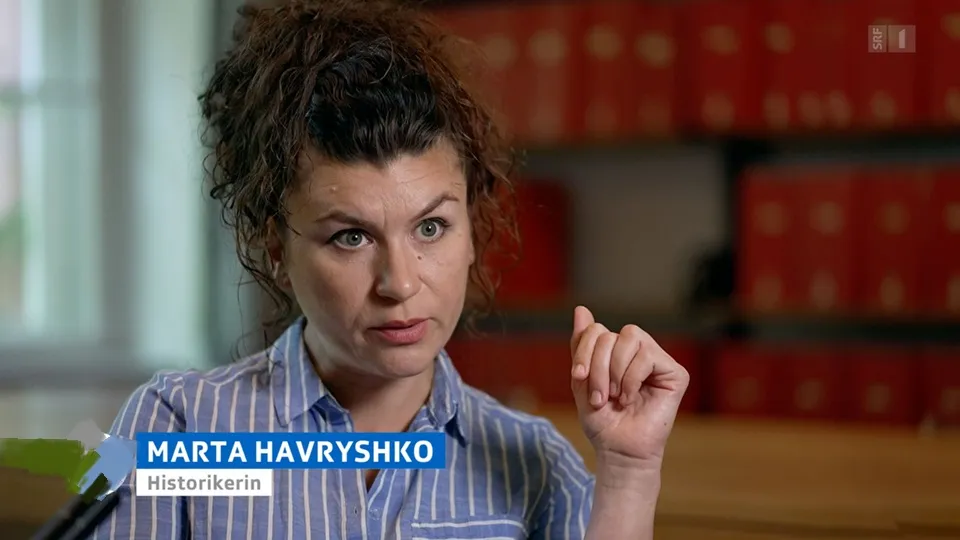
I came across the views of Marta Havryshko in a YouTube video on June 15th, in a lengthy audio essay.
What struck me about this speech, was that it comes from a Jewish Ukrainian woman, who is describing her own observations, living in Ukraine today. I also found the title of her speech very interesting – The tragedy of Memory Politics in Ukraine, Israel & the West. That’s because I cannot help noticing that in the prevailing commentaries on Ukraine, the commentators seem to have forgotten the complexity in Ukraine’s recent modern history.
Marta Havryshko is aware of this complex history. She has been living through the most recent part of it. She sees it from a Jewish perspective, and she is no fan of Putin’s Russia. But – she also brings her awareness of history to current affairs in Ukraine, and she is no fan of Volodymyr Zelensky either.
I tried to transcribe the entire 95 minutes of her speech. It is too long for an article, but I will include excerpts here, to illustrate her themes. She discusses Ukraine’s troubled history of anti-semitism, and the Nazi period in Ukraine. She focusses on Zelensky and the current accepted views on Ukraine’s history – the apparent forgetting of the facts in that history, as Ukrainian extreme nationalism now flourishes.
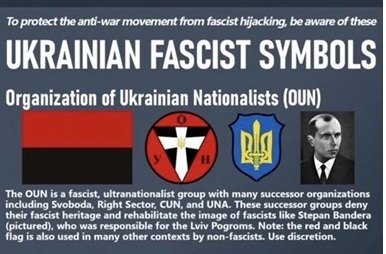
Marta describes her childhood, and education in Ukraine. She learned at school the history of Soviet Russia’s oppression of Ukrainians, and of the heroic freedom fighters who resisted the Russians:
“I was was raised on this nationalistic myth about glorious fighters, members of the Ukraine underground movement the Ukrainian Insurgent Army (UPA) and the organisation of Ukraine nationalists. We learned all these patriotic songs. Our family gatherings involved histories about Soviet repressions and actually, the house that my parents built was on the territory on the land that was seized by Soviets in 1939. Some of my family were involved on the ground in the Ukrainian nationalist movement and they were oppressed. Some of them were booted in prison and some of them were sent to Siberia. So I was raised in this highly nationalistic environment.
When I became a student at Lviv National University actually I met almost the same atmosphere. Lviv is a very nationalistic city with the biggest monument to Stepan Bandera (leader of the UPA). My home was close to Bandera street, and many streets had these partisan names.”

Marta explains how the memories of wartime events have now become confused, enmeshed into present day views and anti-Russian fervour.
“After 2014 this very western Ukraine nationalistic historical myth started to move eastward. After 2022 it became really the national myth promoted on the very national level. That’s why for example under President Zelensky we nowadays have streets named Bandera and Shukhevych (another UPA leader) in Kirik, home town of our president Zelensky.
This myth is cultivated in Ukraine in war time. Another dimension of this very troubling development in is that Nazi apologism is flourishing because many members of the Ukraine nationalists on the ground during the second world war were members of auxiliary police under German occupation and some of them occupied chief positions, so they were not just ordinary rank and file policemen – they were chiefs of police. Vasyl Levkovych, for example, is a very glorious figure in this nationalist pantheon. Those people nowadays are celebrated as freedom fighters and their direct participation in the holocaust is obscured, is marginalised and silenced and even denied.
At the holocaust memorial I was really shocked. I saw these fancy souvenir magazines with Daddy Bandera socks and Daddy Bandera bags. In one day I spent almost three hours in the city center and I saw an amount of different hate symbols like SS bolts, like black sun like Nazi eagles, like swastikas. I never saw in my life. in Western Europe, this concentration of these Nazi hate symbols. and the amount of different hate symbols – SS bolts, black sun, Nazi eagle, different combinations of swastikas. In Ukraine it’s so normalised – why? Because it’s a part of military culture nowadays. Those symbols are adopted primarily by military actors and by soldiers. The trust in Ukraine military is so high in Ukraine society – approximately more than 90% of Ukrainians nowadays trust Ukraine military. That’s why they just accept this.
Ukraine military nowadays is full of different far right groups. They are sponsored and they are celebrated as freedom fighters. In the Ukraine military we have overt Nazi apologists. For example we have the Niga named after the Nachtigall Battalion formed by the Germans and this battalion participated in the Nazi Barbarossa plan against Russia in 1941. From the documents of some participants of this unit we know that they participated in anti-Jewish pogroms.
Especially after 2022 so many neo-Nazis and far right groups neo-Nazis and far right groups were empowered and they openly promote their agenda. They openly celebrate Nazi units. Why? Because their ideology is.” Those guys are lesser evil because they fought our eternal enemy, meaning Russia. And they compare themselves with Nazis.So it’s not only Putin who compares them with Nazis, but that they themselves compare themselves with Nazis, and it’s ridiculous, it’s just crazy.”

Marta explains “memory politics” as a strategy, a weapon of war:
Those who are against military mobilisation are not a minority any more, Those who want to have peace with Russia, those who want to build a relationship with Russia on good terms, who don’t want to be engaged in eternal war with Russia, they are “bad Ukrainians” – you need to view Russia as the eternal enemy. For our children, this means only permanent war. With the anti-Russian project and narrative we will be in constant war with the superior angry and very powerful aggressor., in constant destruction.
We don’t want to spend our lives, sacrificing our life for what? – for our political elites. Ukraine is now a colonial client of the West, The West is deciding what money will go where, what laws will be adopted. In our fight against the Russian imperial state we are becoming a colony of Western imperialism. No-one is talking about this, because it’s a “good” empire.
We still have enormous casualties, and those casualties are hidden.
Memory politics is the main issue. They make movies etc about Russian atrocities but never about Ukrainian atrocities. Ukraine killed Ukrainian students in occupied Donbass, in Spring 2022. It was painful to see how many people denied it, and then justified it, blaming those students for “collaboration with Russia,” some were trying to present this as collateral damage.
The state is pouring so much money into commemorating this war. It’s about producing, inflicting emotions. First of all it’s always in both Ukrainian and English language, It’s for Western audiences, to inflict emotion, to inflict empathy, to present Ukraine as poor victim, to present a black and white picture when Ukraine is of course presented as the forces of good, and Russia as the forces of evil. Nothing of course about what happened to the people of Donbass in 2014, 2015, 2016 – always about guilt of Russia, bad Russia, crazy Putin, imperialism in Russian blood, and angels Ukraine.
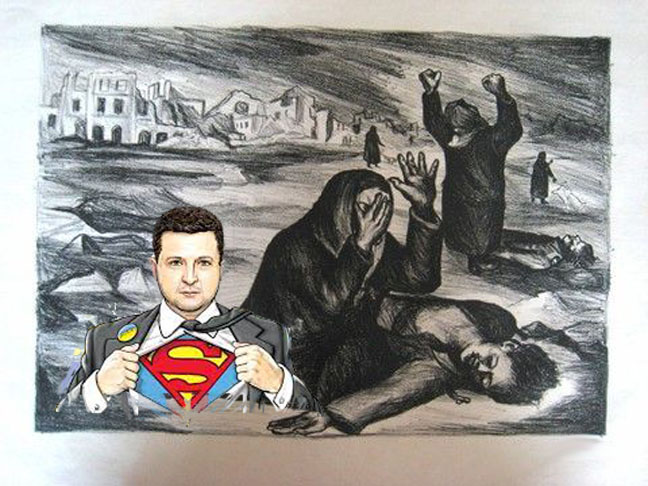
So memory politics is a part of Ukraine war propaganda. Many intellectuals are engaged in this propaganda, and many receive grants from abroad. And it supports the Western agenda: Many many Western people – who discovered Ukraine only in February 2022 – see Ukraine as this angel, who was unjustifiably attacked, and is bleeding, and needs support to continue resistance. Nobody is asking those people kidnapped in the vans. Nobody asking those women, their sisters, their mothers, their wives – “Do they want to fight, to be sent to the meat-grinder against their will?” This myth of resilience, of this nation, who would rather die than live under Russian occupation. But this myth is produced by Zelensky propaganda. I must admit they’re doing a very good job in this, because Zelensky is very good at entertainment – it’s his profession.
Rising to the challenge – building a global majority against war and nuclear weapons

20 June 2026, https://www.morningstaronline.co.uk/article/rising-challenge-building-global-majority-against-war-and-nuclear-weapons
Build peace, not a new nuclear Europe, says SOPHIE BOLT of CNDBuild peace, not a new nuclear Europe, says SOPHIE BOLT of CND
WE KNOW that the world is at a crossroads. Alongside huge increases in military spending, the threat of nuclear weapons being used in war is growing.
Attempts to turn whole countries’ economies towards war are being justified by the continued war on Ukraine, and perceived threats that this devastating conflict will spread across the continent. However, far from preventing war, this preparation for it risks dragging Europe into a war that could go nuclear.
Since Russia lowered its nuclear-use threshold and placed nuclear weapons outside its territory in Belarus, it has now carried out successful test flights of new nuclear delivery systems, including the long-range, nuclear-powered Burevestnik missile which flew 14,000 kilometres.
A whole new generation of US nuclear weapons is now stationed at Nato bases in Belgium, Germany, Italy, the Netherlands, Turkey and Britain.
This nuclear upgrade has taken place alongside further Nato expansion to incorporate Finland and Sweden. This has doubled the length of Nato’s borders with Russia.
In March, President Emmanuel Macron announced not only an increase in its nuclear weapons but also formalised his “nuclear sharing” arrangement, arguing that Russia was a threat to Europe.
The new nuclear doctrine will mean nine other European countries being integrated into French nuclear operations.
This starts with nuclear exercises in preparation for French nuclear jets or nuclear-armed submarines are deployed to these countries’ military bases.
This French nuclear expansion is not to substitute for a withdrawal of US nuclear weapons. While the Trump administration is considering reducing some of its military contribution to Nato’s rapid response force, it is not withdrawing its nuclear B61-12 bombs.
In fact, Trump is in talks with European Nato states about expanding the number of countries hosting the nuclear-capable F-35A fighter jets that can launch these bombs.
This means, that on top of this US nuclear expansion, French nuclear-armed jets could be deployed to at least another five European countries including Greece, Denmark, Norway, Sweden and Poland. This would mean US and French nuclear weapons being deployed across Europe right up to Russia’s borders.
Alongside this nuclear escalation, debates are taking place about whether Germany should develop its own nuclear weapons. Chancellor Friedrich Merz has so far ruled it out. However, the government is taking a much more aggressive, leading role in European rearmament and has pledged to build Europe’s strongest army.
Last July it signed a treaty to increase nuclear co-operation with Britain. That same month Keir Starmer committed to expand Britain’s nuclear capability with 12 nuclear-capable fighter jets to strengthen Nato’s nuclear mission.
This acceleration of plans for nuclear expansion are only increasing tensions with Russia. Far from offering security to the populations of all these European states and the people of Ukraine, the war is yet again escalating, with the UN reporting that civilian casualties in Ukraine were the highest they have been since Russia’s illegal invasion in 2022.
Reports that European countries are considering restarting dialogue with Russia to end the war are welcome and absolutely vital. Only a diplomatic and political approach can create a sustainable security architecture that can ensure the long-term peace and prosperity for Europe, Ukraine and Russia.
This cannot be achieved by deploying troops from Nato countries into Ukraine, backed by the constant, looming threat of nuclear war. On the contrary, this will only prolong and escalate the crisis, and risk drawing Nato states into direct confrontation with Russia.
Central to this must be the withdrawal of all nuclear weapons in the region: getting the US weapons out of Europe and Russian weapons out of Belarus. Instead of pushing for more nuclear weapons, Britain and Europe should be supporting serious programmes to get rid of the world’s nuclear weapons.
We need co-ordinated action to make this happen. Opposition to war and nuclear weapons is growing. We take inspiration from the incredible demonstrations and strike actions building across Europe against militarism.
WE KNOW that the world is at a crossroads. Alongside huge increases in military spending, the threat of nuclear weapons being used in war is growing.
Attempts to turn whole countries’ economies towards war are being justified by the continued war on Ukraine, and perceived threats that this devastating conflict will spread across the continent. However, far from preventing war, this preparation for it risks dragging Europe into a war that could go nuclear.
Since Russia lowered its nuclear-use threshold and placed nuclear weapons outside its territory in Belarus, it has now carried out successful test flights of new nuclear delivery systems, including the long-range, nuclear-powered Burevestnik missile which flew 14,000 kilometres.
A whole new generation of US nuclear weapons is now stationed at Nato bases in Belgium, Germany, Italy, the Netherlands, Turkey and Britain.
This nuclear upgrade has taken place alongside further Nato expansion to incorporate Finland and Sweden. This has doubled the length of Nato’s borders with Russia.
In March, President Emmanuel Macron announced not only an increase in its nuclear weapons but also formalised his “nuclear sharing” arrangement, arguing that Russia was a threat to Europe.
The new nuclear doctrine will mean nine other European countries being integrated into French nuclear operations.
This starts with nuclear exercises in preparation for French nuclear jets or nuclear-armed submarines are deployed to these countries’ military bases.
This French nuclear expansion is not to substitute for a withdrawal of US nuclear weapons. While the Trump administration is considering reducing some of its military contribution to Nato’s rapid response force, it is not withdrawing its nuclear B61-12 bombs.
In fact, Trump is in talks with European Nato states about expanding the number of countries hosting the nuclear-capable F-35A fighter jets that can launch these bombs.
This means, that on top of this US nuclear expansion, French nuclear-armed jets could be deployed to at least another five European countries including Greece, Denmark, Norway, Sweden and Poland. This would mean US and French nuclear weapons being deployed across Europe right up to Russia’s borders.
Alongside this nuclear escalation, debates are taking place about whether Germany should develop its own nuclear weapons. Chancellor Friedrich Merz has so far ruled it out. However, the government is taking a much more aggressive, leading role in European rearmament and has pledged to build Europe’s strongest army.
Last July it signed a treaty to increase nuclear co-operation with Britain. That same month Keir Starmer committed to expand Britain’s nuclear capability with 12 nuclear-capable fighter jets to strengthen Nato’s nuclear mission.
This acceleration of plans for nuclear expansion are only increasing tensions with Russia. Far from offering security to the populations of all these European states and the people of Ukraine, the war is yet again escalating, with the UN reporting that civilian casualties in Ukraine were the highest they have been since Russia’s illegal invasion in 2022.
Reports that European countries are considering restarting dialogue with Russia to end the war are welcome and absolutely vital. Only a diplomatic and political approach can create a sustainable security architecture that can ensure the long-term peace and prosperity for Europe, Ukraine and Russia.
This cannot be achieved by deploying troops from Nato countries into Ukraine, backed by the constant, looming threat of nuclear war. On the contrary, this will only prolong and escalate the crisis, and risk drawing Nato states into direct confrontation with Russia.
Central to this must be the withdrawal of all nuclear weapons in the region: getting the US weapons out of Europe and Russian weapons out of Belarus. Instead of pushing for more nuclear weapons, Britain and Europe should be supporting serious programmes to get rid of the world’s nuclear weapons.
We need co-ordinated action to make this happen. Opposition to war and nuclear weapons is growing. We take inspiration from the incredible demonstrations and strike actions building across Europe against militarism.
Here in Britain, opposition to Britain’s toxic military alliance with the US is growing. Seventy per cent oppose the war on Iran and over 60 per cent want US nuclear weapons out of this country.
Today, at this critical anti-war summit, we have a critical opportunity to redouble our efforts to halt this catastrophic drive to war. We all face the same interconnected crises of war, nuclear threats, climate breakdown, of worsening poverty and a rising far right.
Therefore, we must co-ordinate together to develop and win a majority in our countries for an alternative strategy to war and nuclear weapons. This must be rooted in human security and common security — prioritising diplomacy, global co-operation, conflict prevention, and investment in health, education, climate resilience, social care.
Co-ordinating and learning from our joint struggles, we can build a movement strong enough to halt the war drive and redirect these huge resources into securing the sustainable, peaceful future humanity so desperately needs.
Sophie Bolt is general secretary of CND. She is speaking at today’s Stop the War International Conference at Central Hall Westminster, Storey’s Gate, London SW1H 9NH on Saturday June 20. For more information visit stopwar.org.uk.
This Is Why Trump Was Necessary
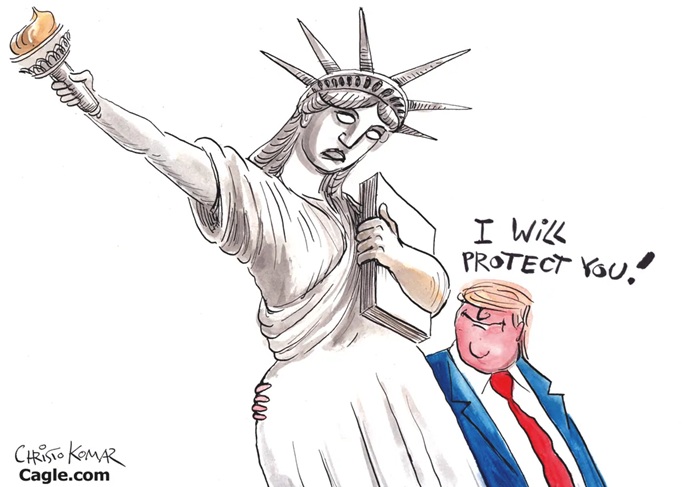
it is entirely conceivable that Israel, just like South Africa, will be globally ostracised and abandoned.
Trump was necessary. Necessary to strip away the niceties and reveal the true face of empire, to reveal its naked impunity, to showcase the war crimes in all their immoral bloodlust.
Nate Bear, Jun 19, 2026, https://www.donotpanic.news/p/this-is-why-trump-was-necessary
Iran has forced the US into one of the biggest strategic defeats in its short, violent and bloody history.
The memorandum of understanding with Iran, signed (symbolically or not), at Versailles yesterday, signalled, as I wrote earlier this week, that we’re witnessing the collapse of American hard power.
After it was signed, Trump made some extraordinary comments that wouldn’t have looked out of place in the handbook of anti-imperial critique, including that it’s not fair to tell Iran it can’t have missiles if all it’s neighbours have them and that it’s “common sense” that the country should be able to enrich uranium for energy. Trump also admitted oil reserves were running out and the world was approaching a depression, which slays the idea (an idea I never bought), that the US attack was a genius move to control the world’s oil and gas.
Iran has suffered some serious damage to its infrastructure as well as burying over 3,000 civilians, but it has checkmated the US strategically. And Trump has had to accept that. Iran’s ability to hit key regional infrastructure from deeply-buried missile cities, along with its ability to control the Strait, won the day. The US also appears to be reluctantly accepting some other realities. A few hours after the MoU was signed, after it was put to him that Israel wasn’t happy with the tentative deal, JD Vance said that Israel “is a country of nine million people that can’t just kill its way out of every national security problem.”
They read the polls, they see the way the wind is blowing, and they’re moving with it.
Israel of course is still a vital strategic outpost for empire, and it will not be abandoned yet. But there is absolutely a future in which the value of Israel to empire becomes less useful than the economic value empire can gain from a wider peace in the region, even if that peace runs counter to Israeli interests. And if Israel, not Iran or the resistance, comes to be seen as the main obstacle to this future, a position Trump and Vance appear to be moving towards, it is entirely conceivable that Israel, just like South Africa, will be globally ostracised and abandoned.
If this were to happen, the range of outcomes is extremely broad. Tensions between orthodox and secular Jews are already high in Israel, and you could reasonably argue that under conditions of global abandonment, civil war would break out. Before or after such a war, you might get a government run by Ben-Gvir and Jewish end-times fanatics who decide to fight the world and trigger a nuclear holocaust. Or the fanatics might lose, and you get a government which enters into international negotiations towards one state with equal rights for all. A former prime minister of Israel has, after all, just labelled Israeli actions in the West Bank ethnic cleansing.
I think we’re a long way from Israel ever giving up its colonial privileges. Civil war is a lot more likely than the negotiated end of the state, but we’re certainly a big step closer than we’ve ever been to whatever comes next for the genocidal colonial outpost.
Maybe this all seems too optimistic to you. And I hate to blow my own trumpet. But I was among the minority who predicted the start of the war before it started, who said Iran wouldn’t lose, that there’d be no regime change and no US victory via an air war was possible. When the ceasefire was announced I was among even fewer who said it would hold because the US was out of real options, while the consensus anti-imperial opinion said it was a ruse to buy time for a land invasion or other escalation.
And now, despite the calling off of talks in Geneva over the next stage of the process, my prediction, for what it’s worth, is that this won’t mean a return to war, and that in fact it will further the process of US-Israel estrangement, with Trump and Vance likely to see it as further confirmation that Israel, not Iran, is the impediment to peace.
Which is all to say, Trump was a necessary evil.
Of course we’ll never know if a Democrat as president would have launched an attack on Iran, but it would have come eventually. And given that an attack on Iran was inevitable, it was the best case scenario that it happened under Trump, an ideologically drifting narcissist without any real loyalties or attachments. A man motivated to protect his own personal financial interests above anything else (a number of which sit within the range of Iranian missiles). A man who was always going to be outmanoeuvred by a country led, literally, by men and women with PhDs, by philosophers, mystics and engineers. There were reports that in the process of negotiations, Iran drafted in the country’s top psychologists to craft messages to appeal to Trump’s ego and vainglorious personality. It appears to have worked.
From only ever acting retaliatorily, from closing the Strait of Hormuz to striking American bases and the oil and gas infrastructure of US proxies, to employing psychologists to sweet talk a narcissist, Iran bossed the process from day one.
And Israel knows it.
Its attacks on Lebanon are a final attempt to derail the process and regain some leverage over the negotiations. I don’t think it’ll work. We’re too far down the track. The Strait opens, the oil and gas starts flowing, or, with oil reserves at critical levels, we’re looking at a global depression. And Trump now appears motivated to avoid that, not least to protect his own wealth, above and beyond the objections of Israel. I don’t believe, as many still do, that the MoU, Trump’s comments and Vance’s criticisms of Israel, are all part of some drawn out psy-op before another attack on Iran.
This isn’t to give Trump any credit. It’s just to say empire isn’t omnipotent or strategically untouchable. You can, with the right war strategy, alongside favourable geography and propitious timing, force it to make concessions it doesn’t want to make.
Trump was necessary. Necessary to strip away the niceties and reveal the true face of empire, to reveal its naked impunity, to showcase the war crimes in all their immoral bloodlust. Yes, from Vietnam to Iraq to the so-called War on Terror, what Trump has shown us is nothing new, but through careful stage-management and competent administration, the myth of benign American empire has managed to endure. I’m not sure that myth will survive Trump. He’s also been necessary to reveal the limits of empire, to show it can be beaten, to expose its vulnerabilities, to detail its weaknesses.
Iran should have tied Gaza more closely to the MoU, as it has with Lebanon, but it has delivered a valuable blueprint in how to fight empire.
Trump has also been necessary to expose the plastic progressives, the liberal anti-Trump imperialists who, in their opposition to Trump’s deal with Iran, can only look like warmongering imperial psychopaths. From all those sharing memes on social media about surrender, from the Democrats and CNN talking heads decrying the deal, to Jimmy Fallon dragging Trump for giving Iran back the money the US stole, there is no articulation of an alternative to endlessly bombing Iran. There’s no anger from liberals over dead Iranians, or at the imperial state, at Zionism or the embedded death machinery that made this violence possible. No, they’re just embarrassed for empire. And they don’t want to recognise the limits of that empire.
With Israel still bombing Lebanon and oil reserves at critical thresholds, however, this is all far from over.
Iran has sketched out two futures for the US and it now has a decision to make: stand behind the deal which Trump has loudly proclaimed as necessary to save the world, and force Israel to stand down, or let Israel dictate the process, return to war and drag the world into an economic depression. Anything is still possible, of course, but I judge the latter extremely unlikely.
And Trump, in his egotism, venality and conceited self-interest, might just be the man for the moment.
What I do know is that those Iranian psychologists have some more work to do.
Words Matter: What does “De-Confliction” Even Mean?
The blind acceptance of confusing words and terms we don’t understand also dulls our thinking, dulls our reporting and plays into the hands of the governments, who are involved in this negotiation process, and who want to limit and control scrutin
The blind acceptance of confusing words and terms we don’t understand also dulls our thinking, dulls our reporting and plays into the hands of the governments, who are involved in this negotiation process, and who want to limit and control scrutiny. .
June 22, 2026, Kathy Gannon Substack, https://scheerpost.com/2026/06/22/words-matter-what-does-de-confliction-even-mean/
The statement that came out of the first day of meetings in Switzerland between Iran and the United States announced a number of committees or cells, including the “de-confliction” cell.
What does that even mean?
Merriam-Webster offers up one definition: “The coordination of flights, maneuvers, etc. between groups especially in areas where overlapping operations are occurring in order to reduce the risk of accidents or incidents.” Or the same dictionary offered up as an example of how it would be used: “Deconfliction is how friendly forces keep out of each other’s way,” John Bolton.
Now that’s even more confusing because according to the statement, this cell is between the parties, presumably Iran and the United States, as well as the Lebanese republic. Yet the statement went on to say this Deconfliction cell will be “facilitated by the mediators to ensure the adherence of the termination of the military operations in Lebanon as per the MoU.”
Yet neither Israel nor Hezbollah is part of this “deconfliction” cell, even though they are the ones carrying out military operations and as a result would seem critical to any termination of those operations.
Presumably even as the statement avoids saying it, and until now the reporting hasn’t cleared up the confusion, Iran would represent Hezbollah and America, Israel.
Presumably Iran would rein in Hezbollah and the United States would rein in Israel. That seems a big ask, likely more for Washington, than Tehran. Until now the U.S. has failed to stop Israel’s bombing campaign. The question then is: How is this cell that neither includes Israel or Hezbollah, going to “ensure the adherence of the termination of the military operations in Lebanon as per the MoU.”
It is a bit of a mystery how the Merriam Webster dictionary use of “deconfliction” applies to this conflict. Neither Israel nor Hezbollah fit the definition of “friendly forces.”
It’s also disappointing that, until now, news reports covering the statement have offered little to no understanding of this “deconfliction” cell, which is tasked with ending regional conflicts, a key component of the MoU, which must be settled before any peace deal is reached.
Many of the news reports have put quotes around the word “deconfliction” presumably because its definition is difficult to explain, vague or not understood, yet its official so it is used __ without explanation, but with quotes.
But Words Matter.
Words have meaning and the increasing readiness to use words and terms without explanation, or without calling out distortions makes us all less informed. It also distorts our understanding of events, of progress or failure.
It is no longer even clear who is responsible for success or failure and that is problematic because it allows those who negotiate in poor faith to deflect or avoid blame.
The blind acceptance of confusing words and terms we don’t understand also dulls our thinking, dulls our reporting and plays into the hands of the governments, who are involved in this negotiation process, and who want to limit and control scrutiny.
This MoU itself has often been defined by misleading, vague or confusing terminology. In the initial stages it was referred to as a peace agreement by mediators, who announced the MoU and repeated in news reports. It is not. It is not even an agreement.
It is simply a 60-day pause in fighting, while the thorny issues that have, until now, prevented a peace agreement are discussed with the hopes that it will eventually lead to a peace agreement.
As the pause and negotiations begin, it seems a a new wave of confusing, self-serving terminology is being used to obscure what work is being done, who is doing it, and whether real progress is occurring.
High French river temperatures expected to limit nuclear power output next week
By Forrest Crellin and Tristan Veyet,
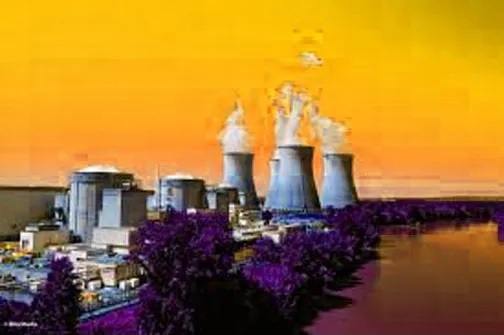
French state-owned utility EDF warned on Thursday that three nuclear
plants face production curbs next week because of high temperatures on the
Rhone and Garonne rivers as France grapples with its second heatwave this
spring. Nuclear output in France has been relatively consistent this year
as production has continued to recover from lows hit several years ago, but
exceptional heatwaves at the end of the northern hemisphere spring have
raised water temperatures to levels that put reactors at risk of output
curtailment.
Reuters 18th June 2026
Governments would have to foot the bill for nuclear shipping

‘Essentially, the government stands behind the operator with an open chequebook’No global liability framework in place, and getting one could take decadesFinance and insurance give nuclear a chicken-and-egg problem
Declan Bush, 19 Jun 2026,
Governments would have to foot the bill for nuclear shipping
- ‘Essentially, the government stands behind the operator with an open chequebook’No global liability framework in place, and getting one could take decadesFinance and insurance give nuclear a chicken-and-egg problem
Governments will be on the hook for the potentially unlimited liability created by a nuclear incident at sea, Core Power’s annual nuclear conference was told. There are doubts they are keen to take such a burden on…………………… (Subscribers only) https://www.lloydslist.com/LL1157569/Governments-would-have-to-foot-the-bill-for-nuclear-shipping
1 This Month
15 October. Joint Appeal for Nuclear Abolition Day -presentation to the UN on October 15 will be live on UNWebTV
Endorse the Nuclear Abolition Day Appeal
23-25 October – on Zoom – World BEYOND War’s annual global conference

To see nuclear-related stories in greater depth and intensity – go to https://nuclearinformation.wordpress.com
-
Archives
- October 2026 (139)
- September 2026 (339)
- August 2026 (330)
- July 2026 (355)
- June 2026 (287)
- May 2026 (306)
- April 2026 (356)
- March 2026 (251)
- February 2026 (267)
- January 2026 (308)
- December 2025 (358)
- November 2025 (359)
-
Categories
- 1
- 1 NUCLEAR ISSUES
- business and costs
- climate change
- culture and arts
- ENERGY
- environment
- health
- history
- indigenous issues
- Legal
- marketing of nuclear
- media
- opposition to nuclear
- PERSONAL STORIES
- politics
- politics international
- Religion and ethics
- safety
- secrets,lies and civil liberties
- spinbuster
- technology
- Uranium
- wastes
- weapons and war
- Women
- 2 WORLD
- ACTION
- AFRICA
- Atrocities
- AUSTRALIA
- Christina's notes
- Christina's themes
- culture and arts
- Events
- Fuk 2022
- Fuk 2023
- Fukushima 2017
- Fukushima 2018
- fukushima 2019
- Fukushima 2020
- Fukushima 2021
- general
- global warming
- Humour (God we need it)
- Nuclear
- RARE EARTHS
- Reference
- resources – print
- Resources -audiovicual
- Weekly Newsletter
- World
- World Nuclear
- YouTube
-
RSS
Entries RSS
Comments RSS

