A Turning Point: What the Iran MoU Reveals About the Limits of US Power
June 19, 2026, By Iqbal Jassat, https://www.palestinechronicle.com/a-turning-point-what-the-iran-mou-reveals-about-the-limits-of-us-power/
The lessons from Iran, if incorporated in the study of international relations, will be that the era in which Washington could dictate terms without consequence is steadily eroding.
Events at the G7 Summit in Evian were overshadowed by news of the US-Iran Memorandum of Understanding (MoU). This was hardly surprising since the story broke about America’s dramatic turnaround and widespread speculation about the details of the MoU, as well as the reasons for it.
It would be fair to say, thus, that the most significant outcome of the G7 Summit in Évian was not the signing of the MoU. It was the public collapse of the illusion that military superiority automatically translates into political victory.
For months, Washington and Tel Aviv insisted that Iran would eventually be forced to surrender. The language was harsh, pointed and uncompromising. Iran’s missile program would be destroyed. Its nuclear capabilities would be dismantled. Its regional alliances would be broken. Its leadership would face collapse under the combined weight of military pressure, sanctions and international isolation.
None of those objectives were achieved.
The contradiction became impossible to conceal when President Donald Trump stood before the world at the G7 and defended Iran’s right to retain conventional ballistic missiles.
The same missiles that had been presented as an existential threat suddenly became acceptable. The same missile program that justified war was transformed into a reality that Washington was prepared to live with.
Contrary to the wishful thinking of some political pundits, this was not a minor adjustment in policy. It was a public admission that the original objectives could not be achieved.
Absent from much Western reporting is the extent of this reversal. The final agreement contains no dismantling of Iran’s missile deterrent. It contains no regime change. It contains no surrender of Iran’s political system. It contains no disarmament of Iran’s regional allies. Even the nuclear issue was largely deferred into future negotiations rather than resolved through force.
The shock registered on the gaping mouths of G7 leaders as well as Israel’s war criminals was obvious, for the outcome exposed the enormous gap between public rhetoric and strategic reality.
For years, American foreign policy has been built around the assumption that economic pressure, military dominance and international isolation can force adversaries to comply with Washington’s demands. Iraq was supposed to demonstrate that reality. Libya was supposed to reinforce it. The sanctions architecture imposed on Iran was designed around the same logic.
The MoU signed by Trump at the G7, demonstrates the limits of that model.
Iran’s leadership calculated that surrender would be more dangerous than resistance. Despite suffering enormous military and economic damage, Tehran retained enough leverage to make continued escalation prohibitively expensive for its adversaries.
The critical factor was not military strength alone.
The Strait of Hormuz exposed a vulnerability that military planners could not bomb away. As energy markets reacted and global supply chains faced disruption, the economic consequences of a prolonged conflict became increasingly unacceptable. Oil prices surged. Shipping costs escalated. Insurance markets were shaken. European governments demanded an end to the crisis. Gulf states that had quietly supported pressure on Iran suddenly became advocates for de-escalation.
The beneficiaries of the original confrontation were clear. Arms manufacturers secured contracts. Security establishments expanded their authority. Lobbying organizations intensified demands for escalation. Media institutions repeated assumptions about inevitable Iranian defeat. A vast ecosystem of political and economic interests promoted the belief that only one outcome was possible.
Though the MoU demolished that narrative, the reaction from Israel was even more revealing. The Israeli political establishment expected the conflict to fundamentally alter the regional balance of power in its favor.
Instead, Netanyahu and his criminal gang of genocidaires found themselves confronting an agreement negotiated largely without their input and one that preserved many of Iran’s capabilities Israel had spent years attempting to eliminate.
The frustration expressed by them and echoed across the regime’s media was not simply about the agreement itself.
It reflected the recognition that military escalation had failed to produce the strategic transformation that had been promised.
This is why the agreement carries implications far beyond Iran, particularly for governments across the Global South who are expected to study the outcome closely.
Indeed, so will Russia and China. The lesson they will draw is not that America lacks power. The lesson is that American power now operates within constraints that did not exist during the unipolar era.
The lessons from Iran, if incorporated in the study of international relations, will be that the era in which Washington could dictate terms without consequence is steadily eroding.
The MoU therefore marks something larger than the end of a conflict. It marks another stage in the transition from a unipolar order to a multipolar one. The significance of the MoU lies not in what was announced. It lies in what was conceded.
The campaign to impose American terms concluded with Washington accepting realities it once declared unacceptable.
Censored Lavrov article Politico refused to publish (FULL TEXT)
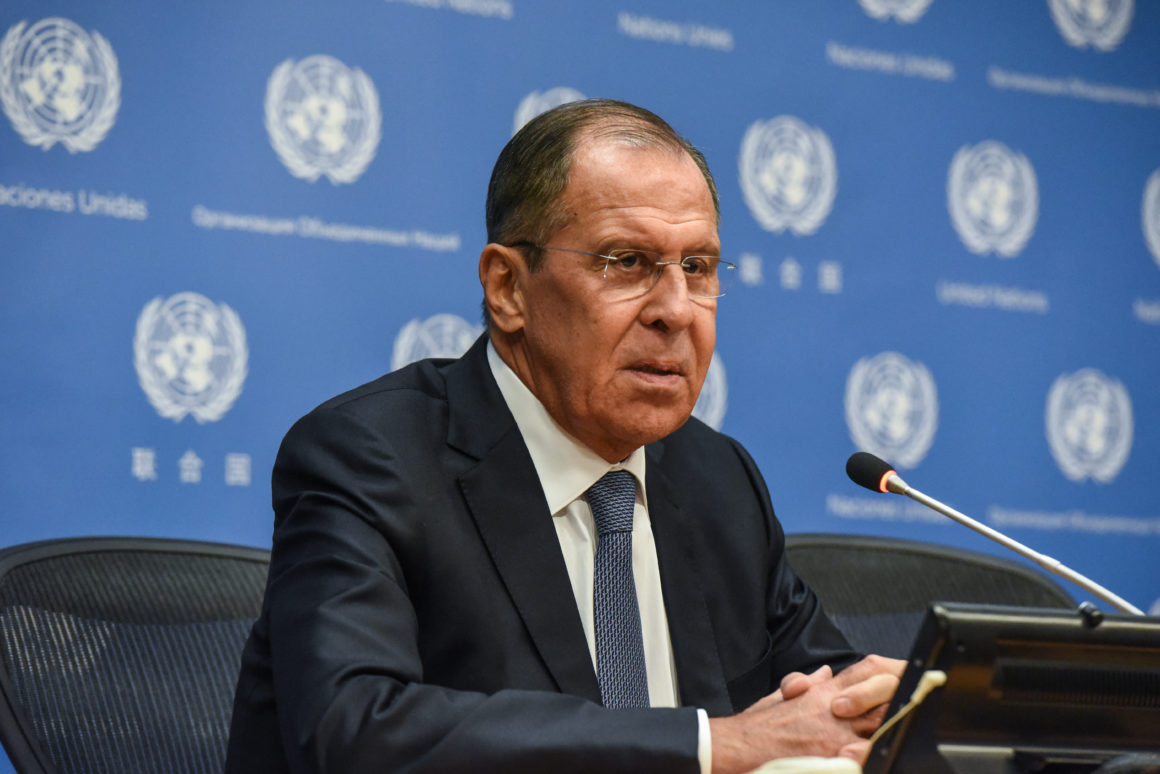
This state of affairs poses serious threats to global security. A direct confrontation between NATO and Russia could rapidly escalate into an exchange of nuclear strikes, with catastrophic consequences
The Russian foreign minister has shared his views on NATO expansion and EU militarization, including in the nuclear sphere, and the threat this poses to global security
18 Jun, 2026 , https://www.rt.com/russia/641806-lavrov-censored-politico-article/
The pro-establishment, Brussels-based publication Politico Europe, owned by Germany’s Axel Springer SE, has refused to publish an exclusive article written by Russian Foreign Minister Sergey Lavrov.
Lavrov’s article was initially slated for publication in the Brussels-based Politico Europe, but due to a “last-minute decision by the outlet’s editorial team,” the publication was canceled, the Russian Foreign Ministry said on Friday.
In the article, Russia’s highly experienced top diplomat outlined Moscow’s view of the Ukrainian conflict, Europe’s role in escalating the crisis, and the broader implications for global security. Lavrov accused European leaders of using diplomacy as a cover for NATO and EU expansion, while arguing that the West has sought to turn Ukraine into an anti-Russian foothold. He also warned that the EU’s growing militarization, including discussions about nuclear deterrence and “strategic autonomy,” could increase the risk of a direct confrontation between NATO and Russia.
Below is the full text of Lavrov’s article, as published on the Russian Foreign Ministry website:
Some reflections on resolving the Ukrainian crisis, Europe and global security
At a meeting in London on June 7, 2026, the leaders of Britain, France, and Germany, as well as Vladimir Zelensky, laid out five preconditions for Russia to secure a “just and lasting peace” in Ukraine. United Europe now presents this list of demands as the basis for dialogue with Moscow.
Background
More than two decades of negotiations with Europe, as part of the collective West, lead to only one conclusion: engaging Russia in dialogue has served as a diplomatic smokescreen for the geopolitical expansion of Western institutions, above all NATO and the European Union, eastwards, right up to Russia’s borders.
Europe’s complicity in fueling the Ukrainian crisis is undeniable. Together with the United States, European countries orchestrated the Orange Revolution in Kiev in 2004. To create an anti-Russian bridgehead in Ukraine, they spent years buying off politicians and entire parties, rewriting history and educational curricula, cultivating and nurturing Ukrainian nationalism, and going to great lengths to pull Ukraine away from Russia.
In 2013, the European Union outright rejected our proposal for a compromise on the association agreement – a deal Brussels had long been pressing Viktor Yanukovich to sign. It is worth recalling that Ukraine was offered unilateral market opening without reciprocal commitments – terms that would have proved incompatible with Kiev’s continued membership in the CIS free-trade zone. When Viktor Yanukovich requested a deferral, the Europeans incited street riots that swiftly escalated into a coup d’état in Kiev in February 2014.
Germany, France, and Poland then proved themselves to be equally treacherous. Having guaranteed that the agreement reached between the opposition and Viktor Yanukovich would be honored, they washed their hands of it the moment that same opposition, their own handiwork, took power. “Democracy,” they shrugged, “takes unexpected turns.”
Europe thereafter lent its backing to the new authorities. In Odessa on May 2, 2014, the burning alive of dozens of innocent supporters of closer ties with Russia did not draw a single word of condemnation from European capitals.
As co-guarantors of the 2015 Minsk Agreements, France and Germany effectively encouraged the Ukrainian regime to sabotage its own commitments. As Angela Merkel and François Hollande later conceded – after the special military operation had already begun – Kiev’s implementation of the Minsk Agreements, unanimously approved by the UN Security Council, was never genuinely intended. The objective, they admitted, was merely to buy time: to shore up the Armed Forces of Ukraine and flood them with Western weaponry.
Russia, for its part, explored every diplomatic avenue to defuse Europe’s security crisis. However, in January 2022, the United States and NATO rejected Russia’s proposal for legally binding mutual security guarantees. European NATO members actively endorsed that rebuff.
Following the launch of the special military operation, United Europe threw its support behind the British prime minister’s efforts to sabotage the Istanbul negotiations between Russia and Ukraine. Boris Johnson’s appeal to Kiev – “don’t sign anything, just fight” – slammed the door on genuine diplomacy for the foreseeable future.
Current situation
So what has prompted European leaders to suddenly shift their rhetoric and start talking about negotiations, and what are they aiming to achieve with these statements? For instance, EU foreign policy chief Kaja Kallas has stated that the purpose of any dialogue with Russia is to dictate Europe’s terms. These include paying “reparations” to Ukraine; withdrawing troops from Transnistria and the South Caucasus; abolishing the “foreign agents” law; and accepting strict limits on the size of the Russian Federation’s Armed Forces. In her framing, “there can be no just and lasting peace without accountability for Russia.” During the UN Security Council session on May 19, 2026, an EU representative made the point unequivocally: “Supporting Ukraine militarily does not contradict the pursuit of peace, but rather serves as a fundamental prerequisite for any credible, good-faith negotiations.”
Europe’s plan is to talk with Russia while simultaneously pressing ahead with a campaign of legal warfare orchestrated through the Council of Europe. Within this once-respected organization, an entire infrastructure is being assembled for the express purpose of “holding Russia accountable”: a Register of Damage, a Claims Commission, and a Special Tribunal.
The European Union has also given the green light to detaining merchant vessels on the high seas. Several incidents have already taken place in the Baltic and the Atlantic. At the same time, the West studiously averts its gaze from the terrorist acts of sabotage perpetrated by the Armed Forces of Ukraine in the Black and Mediterranean Seas.
The real objective of Europe’s leaders, then, is not to negotiate with Russia. It is to shore up the Zelensky regime and preserve it as a launchpad for continued confrontation against Russia. With this in mind, European leaders are scrambling to secure a ceasefire as quickly as possible and for one reason only: to prevent the collapse of the Armed Forces of Ukraine on the battlefield. The plan is to “freeze” the conflict without addressing its root causes, and then rapidly deploy military contingents from the Anglo-French “coalition of the willing” onto Ukrainian soil.
It is widely known that European elites have invested their “political capital” in the confrontation with Russia, pouring hundreds of billions of dollars into propping up the Kiev regime and ramping up the military budgets of EU member states and NATO. Europe now aims to achieve “defense readiness” against Russia by 2030. Until then, they mean to buy time by whatever means are available. In a strikingly candid remark this April, Belgium’s chief of staff put it bluntly: “We still have a few years. Thanks to the courage and blood of the Ukrainians, who are buying us that time.”
United Europe continues to dream of expansion. It intends to absorb Ukraine and Moldova while pulling Armenia into its sphere of influence. NATO has already expanded eastward, swallowing up Finland and Sweden. As for Ukraine, it is increasingly being eyed as the “striking fist” of a future European military force, independent of the United States and independent of NATO.
Risks to global security
This state of affairs poses serious threats to global security. A direct confrontation between NATO and Russia could rapidly escalate into an exchange of nuclear strikes, with catastrophic consequences
Under the banner of “strategic autonomy,” Europe is witnessing a significant build-up of its military capabilities, including in the nuclear sphere. Paris’s intention to extend its “nuclear umbrella” to several EU and NATO member states is a source of deep concern. This will do nothing to strengthen the security of France itself or of the recipients of its so-called protection.
For all that, Europe’s political and military establishment continues to attribute aggressive plans to Russia – plans that, they claim, reach far beyond Ukraine. The Russian president has stated on numerous occasions that all of this is nonsense, provocation, and disinformation, aimed solely at extracting budget funds for the fight against Russia. That is scarcely the climate for substantive dialogue.
Russia’s position
As for negotiations, Vladimir Putin reiterated at the St. Petersburg International Economic Forum that Russia is not opposed to contacts with any party. We see Europe, however, as a party bent on Russia’s defeat – a stance the Europeans themselves openly avow. Dialogue with Europe, therefore, cannot be conducted as though it were an impartial third-party observer.
Russia would prefer to achieve the goals of the special military operation through diplomacy.
That requires reliably guaranteeing security along Russia’s western borders and ensuring respect and dignity for our citizens and compatriots, including the right to speak their native Russian language and practice the Orthodox Christian faith. Further military, political, and economic expansion by the West is unacceptable: it runs counter to the imperatives of a multipolar world.
European leaders should recognize that the model of regional security built in Europe over decades, ever since the adoption of the Helsinki Final Act in 1975, has been destroyed by their own hands. And it will never be restored. We must now move toward creating a continent-wide security architecture open to all Eurasian countries and reflective of today’s multipolar reality.
The principle of equal and indivisible security, trampled upon by the Euro-Atlanticists, can be embodied within a new Eurasian architecture. When the time is ripe, Europe too will be able to join this great effort.
The key point is that meaningful dialogue requires the restoration of trust, shattered by the anti-Russian actions of the West, and Europe as part of it, in the post-Cold War era. Trust can be recovered only through concrete steps that demonstrate a sincere commitment to moving away from using diplomacy as a cover for expansionist ambitions. Trust cannot be restored, nor can dialogue be resumed, through ultimatums such as the one issued to Russia in London on June 7, 2026.
P.S. It is noteworthy that the London ultimatum was unequivocally reaffirmed by the ambassadors of Britain, France, and Germany at the meeting at the Russian Foreign Ministry on June 11, 2026 – a meeting they had so insistently requested. That was the sole purpose of their visit to the ministry.
Switzerland heading towards referendum on construction of new nuclear plants
Euro News, By Gavin Blackburn, 18/06/2026
“…… Switzerland’s parliament approved a divisive government plan to build new nuclear power stations on Thursday, overturning a 2018 ban and putting the country on course for a referendum.
The lower house of parliament joined the upper chamber in backing a government proposal to reverse the ban put in place following a referendum won by anti-nuclear campaigners in 2017.
… Both houses say authorisation for new nuclear plants can only be granted if the financing is secured.
A broad coalition of groups “will launch a referendum,” the Green Party said in a statement.
Greens president Lisa Mazzone said the parliament vote “sabotages the rapid development of renewable energies, climate protection and our energy sovereignty.”
The collection of signatures for a referendum would begin this month, the party said.
To trigger a referendum under Switzerland’s direct democracy system, 50,000 valid signatures must be collected within 100 days of publication of a new law, a hurdle the coalition is expected to clear.
………….The Swiss approved the gradual phase-out of nuclear power in the 2017 referendum, banning the construction of new power plants.
That law was the result of a long process initiated after the 2011 Fukushima nuclear accident in Japan, which was triggered by a tsunami.
Switzerland continues to operate four nuclear reactors whose construction dates back to the 20th century.
Beznau 1, commissioned in 1969, is the oldest functioning nuclear reactor in Europe. It will cease operations in 2033, while Beznau 2, connected to the grid since 1971, will close a year earlier, in 2032.
Gosgen and Leibstadt began operating in 1979 and 1984, respectively. https://www.euronews.com/my-europe/2026/06/18/switzerland-heading-towards-referendum-on-construction-of-new-nuclear-plants
Who Would Take Iran’s Uranium?
Oil Price, By RFE/RL staff – Jun 18, 2026,
- Kazakhstan has indicated it is willing to help store Iran’s enriched uranium if a broader international agreement is reached.
- Iran remains reluctant to surrender its uranium stockpile because it views the material as leverage in negotiations with Washington.
- Any transfer would face significant technical, political, and domestic challenges, including security concerns and public opposition in Kazakhstan.
As negotiations over Iran’s nuclear program continue, the fate of Tehran’s stockpile of highly enriched uranium remains one of the most difficult issues to resolve.
Before US and Israeli air strikes on Iranian nuclear facilities in June 2025, the International Atomic Energy Agency (IAEA) estimated that Iran possessed 440.9 kilograms of uranium enriched to 60 percent. While not weapons-grade, the material is significantly close to the 90 percent enrichment level generally associated with the production of nuclear weapons.
The question now confronting negotiators is what should happen to that stockpile as part of a broader agreement between Tehran and Washington. In recent weeks, Kazakhstan has been mentioned as a possible third-party custodian………………………………. https://oilprice.com/Geopolitics/Middle-East/Who-Would-Take-Irans-Uranium.html
Israelis Invaded Lebanon And Then Cried Victim When Their Soldiers Got Killed, And Other Notes
From all this melodramatic garment-rending and victim-LARPing you’d assume the four Israelis were killed in their beds in Tel Aviv, not traveling by tank through a foreign country they’d invaded.
Caitlin Johnstone, Jun 20, 2026, https://www.caitlinjohnst.one/p/israelis-invaded-lebanon-and-then?utm_source=post-email-title&publication_id=82124&post_id=202732431&utm_campaign=email-post-title&isFreemail=true&r=1ise1&triedRedirect=true&utm_medium=email
In a move that surprised precisely zero people, Israel once again bombed the shit out of Lebanon while Netanyahu continued to insist that the IDF will continue its extensive occupation of Lebanese territory. Israel’s actions resulted in Tehran calling off scheduled peace talks with Washington, but now we’re seeing reports that Israel and Hezbollah have agreed to another ceasefire.
Israel pretty much never abides by its ceasefire agreements in Lebanon, but we’ll see what happens I guess.
One major factor in this new development may have been Iran’s threat to bomb Israel without warning if Trump doesn’t pressure Netanyahu to end the war in Lebanon, which we learned about from a recent report by Drop Site News.
President Trump and Vice President JD Vance have been creating viral content with tough talk about Israel’s need to make peace and stop killing people in Lebanon, but all that matters in this instance is action. Either they’re willing to exert the leverage they have over Israel to make sure this peace deal happens or they’re not. If Israel keeps sabotaging the agreement without suffering severe consequences from Washington, we may safely conclude that the Trump administration was all talk.
And in case anyone’s unclear, Trump will never deserve any “credit” for making peace with Iran, even if he does end up pushing Israel to comply with the deal. You don’t get praise for starting an unprovoked war of aggression and then losing. That’s not a thing.
Zionists are screaming bloody murder about Hezbollah killing a tank crew of four Israeli soldiers in southern Lebanon, with war propagandist Mark Levin taking to Twitter to say that “Israel will hit back very hard” and that “No MOU or final agreement will change who these terrorists are,” while Israel’s national security minister Itamar Ben-Gvir proclaims “For every tear of an Israeli mother, a thousand Lebanese mothers must weep. All of Lebanon must burn!”
From all this melodramatic garment-rending and victim-LARPing you’d assume the four Israelis were killed in their beds in Tel Aviv, not traveling by tank through a foreign country they’d invaded. As Ryan Grim put it, “I have never heard of a country invading a neighbor and then calling it unfair that their soldiers died in that invasion. I don’t think any other country ever even thought to make that complaint.”
Meanwhile instead of attacking Trump for failing to do enough to make peace, Democrats are calling him a weak little bitch for not continuing the war, and for agreeing to ensure $300 billion in reconstruction financing instead.
“Iran took Trump to the cleaners with this so-called understanding,” Senate Minority Leader Chuck Schumer said on the Senate floor on Thursday, adding, “Are my colleagues on the other side of the aisle prepared to send Iran $300 billion when economic needs are so severe here at home? That’s what Trump wants them to do.”
“With $300 billion, we could end homelessness, fund cancer research for 40 years, and give every child free pre-K for over 7 years. Instead, Trump is sending it to Iran,” tweeted Senator Amy Klobuchar.
“Here’s what this deal basically is: Iran makes zero concessions, and the United States lets Iran trade oil for free and commits to give them $300 billion in reparations,” said Senator Chris Murphy.
“Trump is touting a ‘deal’ that promises to lift all sanctions, allow Iran to export oil and potentially charge tolls, and hand over more than 300 billion dollars to that country,” said Senator Adam Schiff, adding that the deal “looks more like a surrender.”
These prominent Democrats make it sound like Trump is just taking $300 billion from the American taxpayer, when according to Reuters the financing for the deal “will be comprised entirely of private-sector funds.” Democrats are essentially running the same bogus “Obama gave Iran pallets of cash” attack that Republicans used to use when slamming the 2015 JCPOA.
More importantly, how revealing is it that these warmongering freaks are suddenly pretending care about how much $300 billion could do to help ordinary Americans? Whenever anyone tries to nudge the party an inch to the left on universal healthcare or whatever you see Democratic Party officials wagging their fingers at them telling them there’s no money for such pie-in-the-sky fantasies, but as soon as they get an opportunity to push for more war they’re out there saying they could use all that peace money to end homelessness. All of which will of course be right out the window when it comes time to vote for the next $1.5 trillion military budget.
Democrats are such obnoxious liars. Their sleaziness is exceeded only by Trump supporters claiming their president deserves a Nobel Peace Prize for losing a war he started.
Anyway, things are a mess. We’ll see how this all plays out.
A flurry of nuclear developments in Sweden—state aid, SMR selections, legislation
Nuclear Newswire 18th June 2026
Within the span of two weeks, three Swedish companies—Blykalla, Studsvik, and Nordic Baseload Power—submitted applications to their country’s government for state aid for their respective new nuclear builds. Applications are handled by Sweden’s Ministry of Finance.
n early June, SMR developer Blykalla submitted its application to the Swedish government, followed by engineering services firm Studsvik on June 12. And on June 16, energy company Nordic Baseload Power became the latest to apply for financial support. Overall, the Swedish government has received four applications for state aid since last year.
In its efforts to spur nuclear power growth, the Swedish government last summer allowed companies to apply for financial aid in the form of government loans or two-way contracts. Under two-way contracts, the power plant operator and government agree on a deal that ensures a “minimum level of compensation protection by central government and setting an overcompensation cap for the company.” State aid is limited, however, for new nuclear power installed capacity of up to 5,000 MW.
Swedish officials welcomed the interest the state aid offer is receiving from companies…………………………………………………………………
Other Swedish news: The Riksdag, Sweden’s national parliament, has also weighed in on nuclear legislation this month. On June 11, lawmakers approved permitting legislation that streamlines the framework for extracting and processing uranium and other nuclear materials.
“A key aspect of the legislation is that the extraction and processing of uranium will now be treated in a manner consistent with other metals and minerals within Sweden’s overall permitting framework,” according to an announcement from District Metals, a Canada-based company with Swedish operations that welcomed the legislation.
“The amendments remove the requirement for a separate admissibility assessment under the Environmental Code and eliminate the requirement for municipal council consent for uranium extraction and processing projects, commonly referred to as the municipal veto,” the company stated.
In addition to the uranium regulatory legislation, the Riksdag also approved amendments that lifted bans on nuclear facilities in certain coastal areas and archipelagos. According to the Riksdag, these bans will be lifted on July 15. https://www.ans.org/news/2026-06-18/article-8133/new-sweden-developments/
Nato member Finland lifts its ban on nuclear weapons
Finland has passed laws that lift a ban on nuclear weapons,
Daily Mail 17th June 2026
The new legislation will allow nuclear arms to be imported, transported, supplied, and possessed on its territory as the Nordic nation confronts mounting security concerns over neighbouring Russia.
The new law overturns a decade-old restriction dating back to the 1987 Nuclear Energy Act, which prohibited nuclear weapons from being brought onto Finnish soil.
Under the new bill, which lawmakers voted by a margin of 125 to 61 on Wednesday, nuclear arms may now be moved freely in the name of national defence…………………………
The Social Democratic Party, the Greens and the Left Alliance, however, submitted a joint objection to the bill prior to the vote.
‘Of the opposition parties, the Social Democratic Party, the Greens and the Left Alliance propose rejecting the proposal,’ Hakkanen wrote in a previous X post………………….
The legislative change means Finland could, in theory, host NATO nuclear weapons in the future, potentially giving the alliance a stronger strategic presence close to Russia’s border………………………… https://www.dailymail.com/news/article-15907881/Nato-member-Finland-lifts-ban-nuclear-weapons-huge-new-blow-Putin.html
Sweden’s Parliament approves reclassification of uranium mining


WNN 17 June 26
The Swedish Parliament has approved amendments to Swedish legislation that will streamline the permitting process for the extraction and processing of uranium, to treat it in a similar way to other metals and minerals. It has also approved a government-proposed amendment that will open up more coastal sites to potential nuclear power projects.
The parliament – the Riksdag – voted in favour of a government bill on 11 June proposing amendments to Sweden’s Nuclear Activities Act (1984:3) under which uranium mines are no longer to be considered as a “nuclear facility”. The bill also included an amendment to the Act on Financial Measures for the Management of Residual Products from Nuclear Activities (2006:647) so that “extraction waste from a nuclear activity that concerns the extraction and processing of nuclear materials” is not considered a nuclear waste product.
With uranium mines no longer regulated as nuclear facilities, uranium extraction will no longer require explicit municipal consent. This creates a more predictable permitting framework which will facilitate future uranium mine development, according to Aura Energy, owner of the polymetallic Häggån deposit.
“The momentum in pro-nuclear legislation continues in Sweden, where the removal of the uranium mining ban in January 2026 has now been supplemented with the declassification of uranium mining as a nuclear facility………………………………………………………..
All the amendments will come into force on 15 July. https://www.world-nuclear-news.org/articles/parliament-approves-amendments-to-swedish-nuclear-law
Rachel Gilmour MP accuses Hinkley Point C of “bullying”
By Alex Parnham-Cope, 17 June 26, https://www.bridgwatermercury.co.uk/news/26203304.rachel-gilmour-mp-accuses-hinkley-point-c-bullying/
A Somerset MP has accused Hinkley Point C of having a “bullying culture”, a lack of community engagement and “naïve” financial planning while questioning other nuclear industry leaders in parliament this month.
Tiverton and Minehead MP Rachel Gilmour made the comments as part of the Public Accounts Committee’s oral evidence session with industry leaders and government officials bosses on June 8.
The Liberal Democrat representative has since reshared video on social media of her comments in the committee earlier this week, June 15, and said that she’s met with EDF Europe’s chief executive and the nuclear regulator to raise her concerns.
In the oral evidence session, Rachel Gilmour MP claimed she was “inundated with whistleblowers and people who have great concerns about the bullying culture at Hinkley C, to such an extent that I had a meeting with Simone Rossi, the chief executive of EDF Europe, and the ONR [Office for Nuclear Regulation].”
She added: “The ONR felt that the situation was so bad that they had to put in extra scrutiny. I was joined by Whistleblowers UK in that.”
America’s Hidden Casualties: The Pentagon’s Iran War Numbers Still Don’t Add Up
June 17, 2026. Joshua Scheer, https://scheerpost.com/2026/06/17/americas-hidden-casualties-the-pentagons-iran-war-numbers-still-dont-add-up/
As the Trump administration moves toward a second ceasefire agreement with Iran and officials in Washington attempt to declare the conflict a success, new reporting suggests the human cost of the war remains far higher than the Pentagon is willing to admit.
According to investigative journalist Nick Turse, the official U.S. military casualty count from the war with Iran has quietly climbed again. Yet even the latest figures appear to exclude hundreds of known casualties, raising serious questions about transparency, accountability, and whether the American public is being told the truth about the real cost of the conflict.
The Pentagon’s official Defense Casualty Analysis System (DCAS) now lists 426 dead and wounded U.S. personnel connected to the war—an increase from earlier tallies. But Turse reports that the true figure likely exceeds 625, with numerous injuries and even some deaths seemingly absent from the official record.
The discrepancies are not minor bookkeeping errors. Earlier this year, fifteen wounded troops reportedly vanished from Pentagon casualty statistics without explanation. Despite repeated inquiries from journalists, military officials have failed to provide a coherent account of why those casualties disappeared from public records. One defense official quoted by The Intercept suggested the situation raises an uncomfortable possibility: either Pentagon analysts are extraordinarily incompetent or someone higher up ordered the numbers altered.
Among the missing cases are two soldiers injured when an Iranian drone reportedly downed a U.S. Army Apache helicopter earlier this month. Central Command publicly acknowledged the wounded crew members were receiving medical treatment, yet they do not appear in the official casualty database.
The questions extend beyond battlefield injuries. Turse notes that the Pentagon’s death count also appears incomplete. Major Sorffly Davius of the New York Army National Guard was publicly mourned by elected officials and military leaders after dying while deployed in Kuwait. Yet his death reportedly remains absent from official casualty totals.
Even more striking is the exclusion of more than 200 sailors treated after a major fire aboard the USS Gerald R. Ford. Because those injuries were categorized outside traditional combat wounds, they are effectively invisible in the official accounting despite occurring during an active wartime deployment.
The story highlights a pattern that has followed many American wars: casualty figures become political numbers rather than simple facts. Governments eager to sustain public support often emphasize military successes while minimizing costs. The result is a widening gap between the realities experienced by service members and the version of events presented to the public.
This matters because casualty counts are not merely statistics. They shape congressional oversight, influence public opinion, determine veterans’ benefits, and form the historical record by which future generations judge a war. If those numbers are manipulated—or selectively reported—the public loses one of the few objective measures available for evaluating the true consequences of military action.
The Iran war has already produced catastrophic consequences across the region, including thousands of reported Iranian civilian deaths. Now, according to Turse’s reporting, Americans may also be learning that the costs borne by U.S. troops have been systematically understated.
For an administration that repeatedly promised transparency and accountability, the unanswered questions surrounding the Pentagon’s casualty reporting are becoming increasingly difficult to ignore. Before Washington writes the final chapter on this conflict, the public deserves a full accounting—not only of what was achieved, but of what was lost.
1 This Month





PLEASE OPPOSE HR 8255 AND S.3639 – bills would accelerate satellite deployment, with no environmental review or safeguards – https://ncstd5li.quorum.us/campaign/169331/
To see nuclear-related stories in greater depth and intensity – go to https://nuclearinformation.wordpress.com
-
Archives
- October 2026 (74)
- September 2026 (339)
- August 2026 (330)
- July 2026 (355)
- June 2026 (287)
- May 2026 (306)
- April 2026 (356)
- March 2026 (251)
- February 2026 (267)
- January 2026 (308)
- December 2025 (358)
- November 2025 (359)
-
Categories
- 1
- 1 NUCLEAR ISSUES
- business and costs
- climate change
- culture and arts
- ENERGY
- environment
- health
- history
- indigenous issues
- Legal
- marketing of nuclear
- media
- opposition to nuclear
- PERSONAL STORIES
- politics
- politics international
- Religion and ethics
- safety
- secrets,lies and civil liberties
- spinbuster
- technology
- Uranium
- wastes
- weapons and war
- Women
- 2 WORLD
- ACTION
- AFRICA
- Atrocities
- AUSTRALIA
- Christina's notes
- Christina's themes
- culture and arts
- Events
- Fuk 2022
- Fuk 2023
- Fukushima 2017
- Fukushima 2018
- fukushima 2019
- Fukushima 2020
- Fukushima 2021
- general
- global warming
- Humour (God we need it)
- Nuclear
- RARE EARTHS
- Reference
- resources – print
- Resources -audiovicual
- Weekly Newsletter
- World
- World Nuclear
- YouTube
-
RSS
Entries RSS
Comments RSS

