UK powers up Ukraine with £210 million nuclear fuel deal
The deal, announced by
the Prime Minister at the G7, sees UK Export Finance (UKEF) guarantee a
loan enabling Urenco, a UK-headquartered uranium enrichment company, to
supply enriched uranium to Ukraine’s national nuclear power producer,
Energoatom, powering the country’s nuclear plants for the next two years.
UK Export Finance 16th June 2026, https://www.gov.uk/government/news/uk-powers-up-ukraine-with-210-million-nuclear-fuel-deal-and-boosts-british-jobs
Nearly 6 billion fish, crustaceans and jellyfish are victims of French nuclear power plants each year
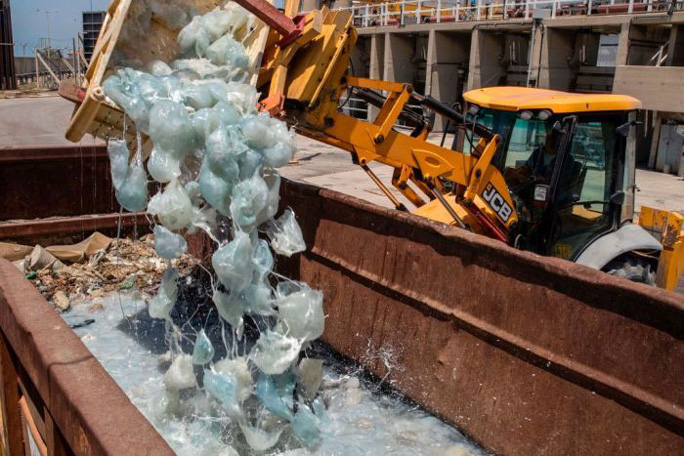
Based on internal documents at EDF, the
Sortir du nucléaire network warns of the consequences of reactor cooling
systems for aquatic organisms.
The French nuclear company assures that this has
no impact on the maintenance of cash. What happens under the surface of the
sea, rivers or estuaries near French power plants?
In a report, published
on Monday 15 June, entitled “The invisible hecatomb”, the Sortir du
nucléaire network reveals that at least 5.9 billion fish, crustaceans and
jellyfish, sucked into the cooling systems of reactors, are victims of the
nuclear fleet each year. The revival of the atom industry is only expected
to add to this toll: the construction of four new reactors in Penly
(Seine-Maritime) and Gravelines (Nord) should bring the number of people
concerned to 7.7 billion per year – estimates for the future EPR2 in
Bugey (Ain) are not yet known.
Le Monde 15th June 2026, https://www.lemonde.fr/planete/article/2026/06/15/pres-de-six-milliards-de-poissons-de-crustaces-et-de-meduses-sont-victimes-des-centrales-nucleaires-francaises-chaque-annee_6703147_3244.html
Trump Administration Plans Major NATO Drawdown Of U.S. Jets, Tankers, Bombers And Warships In Europe
The reported reductions provide one of the clearest pictures so far of how far the Trump administration intends to go in scaling back the U.S. role within NATO
by yourNEWS Media Newsroom | Jun 13, 2026
A June document shared with allies reportedly outlines sweeping reductions in U.S. military assets assigned to NATO operations, including fighter jets, surveillance aircraft, tankers, naval forces and bomber units.
By yourNEWS Media Newsroom
The Trump administration is preparing to reduce key U.S. air and naval assets available for NATO missions in Europe, a move that would mark a broad shift in America’s military posture inside the alliance, according to The New York Times.
Two senior European officials familiar with the decision said the reductions were detailed in a document provided to allies in early June. The plan would cut the number of American aircraft and warships assigned to NATO operations and could limit the alliance’s capacity for aerial refueling, surveillance, long-range strikes and maritime monitoring.
Under the proposal described by the officials, U.S. F-16 and F-15E fighter jets available for NATO operations would fall from about 150 to 100. Maritime reconnaissance aircraft would be reduced from 26 to 15, and all eight aerial refueling tankers previously assigned to Europe would be withdrawn.
The drawdown would also involve the reassignment of a missile-launching submarine, an aircraft carrier and several supporting warships. One of the two bomber groups previously designated for Europe’s defense would also be reassigned.
The Pentagon declined to address the specific numbers in the document. It instead referred to a recent statement from U.S. European Command about plans to reduce American commitments in Europe.
The reported reductions provide one of the clearest pictures so far of how far the Trump administration intends to go in scaling back the U.S. role within NATO, the post-World War II alliance created for the collective defense of North America and Europe. European leaders continue to regard NATO as central to deterring Russian aggression, and the proposed shift comes as many governments on the continent remain concerned about Moscow’s military activity near alliance territory.
No public timetable has been announced for carrying out the reductions. However, U.S. officials have signaled that the changes could occur sooner than many European governments had expected.
The impact could be felt across several NATO missions. Fewer aircraft and ships could affect the alliance’s ability to track Russian submarine movements, support long-distance air operations and conduct long-range strike missions.
Giuseppe Spatafora of the European Union Institute for Security Studies said the combined reductions would have consequences beyond any one category of equipment.
“While each of these cuts can be managed individually, together they represent a significant posture change and pose challenges to European deterrence readiness across the spectrum,” Spatafora said.
President Donald Trump has repeatedly argued that European NATO members rely too heavily on U.S. military power and should spend more on their own defense. His administration had already announced smaller adjustments to American troops and forces in Europe, but the June document outlines wider reductions affecting NATO missions across the continent.
The United States would still maintain one of NATO’s largest military footprints in Europe after the planned cuts. At the same time, European governments have increased defense spending and moved to rebuild military capacity amid uncertainty over long-term U.S. support……………………………………………………………………………………………… https://yournews.com/2026/06/13/7053385/trump-administration-plans-major-nato-drawdown-of-u-s-jets-tankers/
Why a single ‘peace deal’ for Ukraine war just won’t work
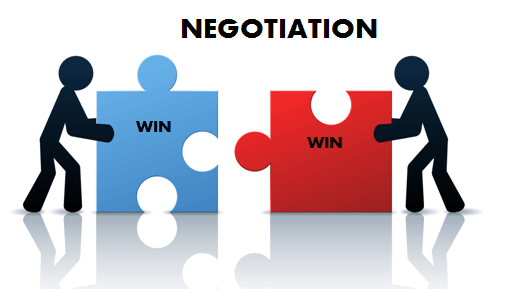
As Western mainstream media carpet bombs the world with news that Ukraine is turning the tide in the war and could still win, then the calculus may be among Western policy hawks that continuing the war is no bad thing.
The Europeans and Zelensky appear dug in for the long haul.
An agreement within NATO. A peace settlement for Ukraine will only land when its future NATO aspiration is taken decisively off of the table. Anyone who still believes that Russia will give up on this clearest of redlines is dangerously misguided.
The time is ripe for European leaders to set aside the self-licking summits and get in the room with the US, Ukraine, and Russia
Ian Proud, Jun 13, 2026, https://responsiblestatecraft.org/ukraine-russia-europe-talks/
The time is ripe for European leaders to set aside the self-licking summits in European capitals and get in the room with the U.S., Ukraine, and Russia to orchestrate a modern-day Helsinki Conference.
A durable peace for Ukraine will require several interlocking agreements, each of which will be incredibly difficult to negotiate, but all of which will be vital if we are to avoid a general war in Europe.
In a recent post on X, former U.S. diplomat Dan Fried, commenting on the June 7 E3 Leaders’ Statement on peace in Ukraine, said, “If Russia wants to end the war it can, you know, end the war.”
It’s important to pause here and note that Fried was the State Department Coordinator for Sanctions Policy from 2013 until 2017. I know, because I was directly involved at the time, that Fried is the architect of the policy of making Russia sanctions permanent by linking them to the full implementation of the Minsk II agreement, which Russia and Ukraine interpreted in radically different ways. The main aim of sanctions conditionality was therefore to delay any possibility of peaceful settlement, and in that it succeeded.
Eleven years on, Fried’s remark echoes a common line of argument in pro-war Western circles: that Russia could simply end the war without a negotiated settlement. And yet an unconditional about-face by Russia is quite obviously never going to happen, and so the comment serves only to prolong the war.
The E3 statement flowed from the same logic. It offered nothing new or unexpected. Critically, it reiterated the line that roughly $300 billion of Russian assets will remain immobilized until Russia “ceases its war of aggression and compensates Ukraine for the damage caused by the war.”
The current World Bank estimate of the cost of reconstruction and recovery in Ukraine stands at $588 billion. So, the E3 position amounts to confirmation that Russia will never see its money again and moreover will still have $288 billion left to pay.
This, I fear, is another example of Fried’s logic — that peace in Ukraine is indeed possible, but only on terms that Russia would be unable or unwilling to accept. As Western mainstream media carpet bombs the world with news that Ukraine is turning the tide in the war and could still win, then the calculus may be among Western policy hawks that continuing the war is no bad thing.
It’s certainly clear that no one appears in a rush. The E3 statement follows a sixteen-month period of endless and repetitive meetings by European leaders and Zelensky in which everyone violently agrees, but to which the Russians are never invited.
Only in recent months, notably since President Donald Trump’s Alaska Summit with Putin, has the topic of a negotiated end to the Ukraine war slowly bubbled to the surface in Europe. President Alexander Stubb of Finland, President Emmanuel Macron of France, Prime Minister Bart de Wever of Belgium have at various times dipped their toes in the water of suggesting diplomatic talks with Russia.
Last week, Zelensky himself issued an open letter to Putin about a possible meeting.
But, being that the letter contained several pages of personal barbs and insults about Putin, it is hard to see this as anything more than a self-licking stunt, of the type Dan Fried would support. The Europeans and Zelensky appear dug in for the long haul.
A senior Russian contact remarked to me recently that the Europeans spend a lot of time talking about the possibility of talks, but not the substance of what might be on the agenda. In truth, a vast amount of work will be needed in preparatory negotiations to map out the shape of a future peace settlement, requiring a clarity of focus that has hitherto been missing.
A durable peace for Ukraine will require several interlocking deals, possibly negotiated separately with different signatories. Talk of a single ‘peace deal’ for Ukraine is a lazy over-simplification. The latest E3 statement bundles up separate issues in the same basket as does the now dormant US brokered plan. A peace settlement for Ukraine will require, inter alia, the following.
A bilateral peace deal between Russia and Ukraine, brokered by the U.S. and others. The existing U.S.-brokered draft is the right place to start, as that includes the most contentious issue of territory, and in particular the future status of the remaining territory in Donetsk which Russia has not conquered. It would also need to cover sensitive topics such as the size of Ukraine’s army, Ukrainian children who were removed to Russia, and minority languages in Ukraine.
A clear plan and timeline for Ukraine to join the European Union. This can only be negotiated bilaterally by the EU and Ukraine, without U.S. or British involvement. It is arguably as difficult as a bilateral peace agreement between Ukraine and Russia.
Zelensky has said he wants to see Ukrainian accession by 2027, but this is not going to happen, and not only because the war may still be ongoing. The Europeans aren’t over eager about Ukraine joining because Ukraine is nowhere near ready, and Europe can’t afford it. Chancellor Merz has recently resurfaced the idea of “associate membership,” in which Ukraine gets no voting rights or money. Every rational observer should be able to judge that many Ukrainians will want clarity on the glidepath towards EU membership as a condition for ending the war.
An agreement between Russia and Europe, including the United Kingdom, on the future shape of their relationship. The third issue is equally as complex. Should Ukraine eventually join the EU, then it would join existing former Soviet and Warsaw Pact members (the Balts and Poland) who frame Russia as an existential threat. Relations between Europe and Russia are more shuttered today than they were during the Soviet era.
Europe needs cheap energy to stem the tide of self-imposed deindustrialization; Russia would like European investment again and a more open people-to-people relationship. There will need to be a settlement on how sanctions against Russia are eased during a post-war period. Ignoring an EU-Russia deal risks pressing the pause button on a future general war at a time when Europe is rapidly rearming,
An agreement within NATO. A peace settlement for Ukraine will only land when its future NATO aspiration is taken decisively off of the table. Anyone who still believes that Russia will give up on this clearest of redlines is dangerously misguided.
Ukraine needs cast iron security guarantees that should involve a hard commitment to boots on the ground should Russia renege on its commitments.This will require Russia to have confidence that NATO isn’t stoking the fire in the background to reignite tensions as a pretext for intervention. These are incredibly complex issues and will require U.S. leadership to shift the Europeans into line. The NATO-Russia Council could have provided a forum for discussion and deconfliction but was formally disbanded in December 2025. Perhaps a NATO-Ukraine-Russia Council might emerge, to take its place, reopening a vital avenue for military dialogue and deconfliction.
Amid signs that the Trump Administration is tiring of the Ukraine peace process, the time is ripe for a serious push to bring the disastrous war in Ukraine to a close. Rather than the Europeans and Americans tussling over who should be in charge of the negotiations, the truth is that every Western nation will have a role to play, together with Ukraine and Russia, to hammer out the various agreements needed for peace. That may require a grand summit similar in scale to the Helsinki Conference of 1975. On the back of the E3 Statement, however, I am not holding my breath.
NATO collapsing in 2026? Can’t come soon enough – Walt Zlotow.
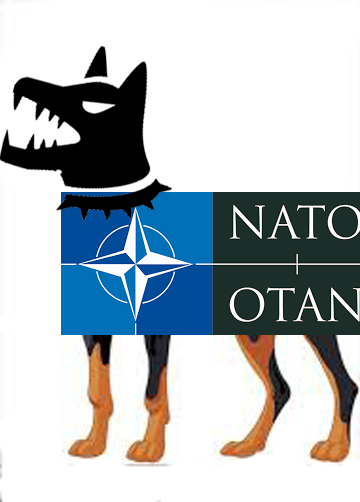
A case can be made for creating the North Atlantic Treaty Organization (NATO) when it was founded April 4, 1949. Originally just 10 Western European countries plus the US and Canada, NATO ensured no further Soviet expansion beyond the block of Soviet satellite nations Stalin established following WWII.
Of course, one can debate whether NATO was necessary at all. A was ravaged Russia, had neither the will not the means to expand anywhere beyond the buffer it had created to protect itself from a third invasion from the West in the 20th century. NATO may had more to do with expanding US imperial power in Europe and enriching the Military Industrial Complex than protecting Western Europe from unlikely Russian invasion.
Regardless, when the Berlin Wall came tumbling down on November 9, 1989 and the Soviet Union followed along December 26, 1991, NATO should have joined both in the dustbin of history. Indeed, the US, under President George H.W. Bush, spent much of 1990 negotiating the reunification of Soviet Eastern Germany into Western Germany, something Soviet Russia would have thought unthinkable. The pro in the quid pro quo was that NATO would never expand one inch eastward toward Mother Russia from its then western membership of 16 nations. Russia could even imagine that NATO, like The Warsaw Pact, would go away.
Big Russian mistake. With the US now the world’s sole superpower, the US abrogated any détente with Russia regarding NATO expansion, much less existence. Russia was to be permanently consigned to second class European status. Beginning under President Clinton in 1999, the NATO added 14 former Soviet aligned nations cementing NATO hegemony in Europe and ensuring an ever weakened Russia.
By betraying the former Soviet Union after its collapse, NATO morphed from a theoretically defensive to an overtly offensive organization. Russia was just one of NATO’s offensive moves. In 1999, NATO bombed Russian ally Serbia for 78 days to kick Serbia out of Kosovo, turning Kosovo into a failed province of the West. In 2011 NATO intervened in the Libyan civil war, bombing the Gaddafi regime and Gaddafi himself into oblivion. Libya remains a failed state 15 years on with much of Africa destabilized in its wake. Even the revered Barack Obama laments NATO intervention in Libya as his biggest presidential mistake.
But nothing compares to NATO perfidy in Ukraine. NATO proposed membership to Ukraine in 2008 to further isolate Russia from Europe. When six years of advancing NATO membership failed due to Ukrainian President Yanukovych partnering with Russia, NATO, led by Obama, simply overthrew him in 2014. Even worse, Ukraine began murdering Russian leaning Ukrainians in Donbas on Russia’s border by the thousands with NATO’s help. Worse Yet, NATO suckered Russia into agreeing to the Minsk I and II agreements that Donbas could achieve autonomy under Ukraine sovereignty to bring peace to Donbas Ukrainians. That was a subterfuge to build up the Ukraine military to finish off the Ukraine separatists in the Donbas. After 8 years of this duplicity Russia had enough, invading in February 2022 to end NATO, Ukraine aggression.
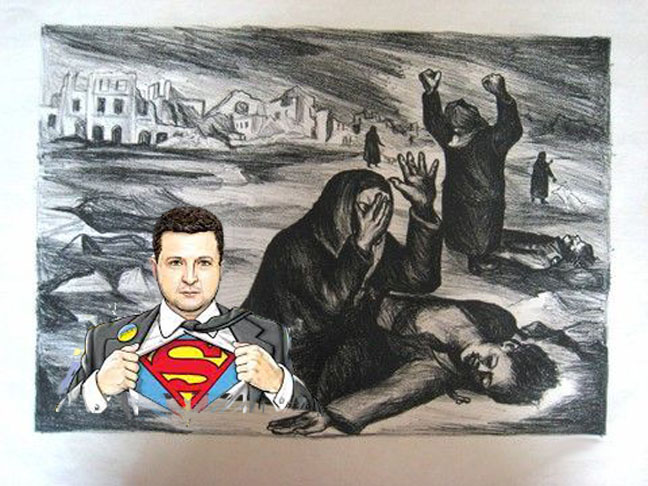
Four and a half years on, Ukraine is on life support, not from the US, which has largely bowed out, but from European NATO, which is still throwing billions of Euros on Ukraine’s lost cause. EU leaders, Especially UK’s Starmer, Frances’s Macron and Germany’s Merz claim Ukraine can win, reclaim all lost territory and save Western Europe from a likely Russian attack as early as 2030.
Long before 2030, Starmer, Macron and Merz will be gone, as well as the Ukraine that existed before the NATO offensive blew it up. NATO may be gone as well and good riddance if it is. Russia has no designs on Western Europe or all of Ukraine. They simply want their sensible security concerns met that have been foolishly rejected by NATO since the Soviet Union went poof in 1991 and NATO, led by the US, used it crush Russian integration in the European political economy.
Had the US and NATO exercised an iota of sensible diplomacy there would have been no war destroying Ukraine. Europe would be enjoying cheap energy and other trade with Russia fostering mutual economic growth. Current NATO leadership would have favorable approval ratings instead of ones worse than President Trump. Right wing European opposition parties would remain on the fringe instead of poised to assume power. European treasure could be spent uplifting the commons instead of destroying Ukraine.
Pivoting away from supporting NATO and the senseless Ukraine war is the one sensible Trump foreign policy. He’s too busy blowing up the world’s economy over Iran to care about NATO. Starmer, Macron, Merz, along with NATO secretary general Mark Rutte, remain in denial that the hopeless war they’re supporting is not only wrecking their careers and their countries; it may spell the end of NATO. It cannot come soon enough.
Europe’s recent peace overtures are war by other means

Zakharova accused the ambassadors of promoting a “dead-end Zelensky formula.”
She said: “The leaders of these countries are pretending, through their statements, to be calling for peace, but in reality they are putting forward unacceptable conditions, increasing the production of long-range weapons for Kiev and generally taking steps towards the militarisation of Ukraine and Europe.”
European overtures for renewing diplomacy with Russia smack of hypocrisy and duplicity.
June 12, 2026, https://strategic-culture.su/news/2026/06/12/europes-recent-peace-overtures-are-war-by-other-means/
After four years of zero diplomacy, multiple rounds of economic sanctions aimed at crushing the Russian state, and hundreds of billions of euros fueling a futile war in Ukraine against Russia, European capitals are lately abuzz with calls for opening peace negotiations with Moscow.
No doubt part of the shifting policy is due to the economic mess that Europe has created for itself by cutting off energy trade with Russia. Escalating energy costs are destroying European industries and imposing crippling financial hardship on millions of its citizens. Realizing the self-inflicted disaster, European capitals are desperate to appear to be normalizing relations with Russia and resume affordable energy supplies.
France and Italy are advocating the appointment of an envoy to engage with Russia to resolve the conflict and the lifting of anti-Russian sanctions.
Last weekend, the leaders of Britain, France, and Germany – the so-called E3 – stated that they would “help mediate” a peace deal between Ukraine and Russia. The Ukrainian puppet president, Vladimir Zelensky, was feted in Downing Street on June 7 by Britain’s Keir Starmer, France’s Macron, and Germany’s Merz. They proposed taking the lead in negotiations from the United States since President Trump seems more preoccupied with ending the war against Iran.
Various names have been suggested as to who could serve as an interlocutor representing Europe. Angela Merkel, the former German Chancellor, and former Italian Prime Minister Mario Draghi are two names that have been put forward. Finnish President Alexander Stubb has also been suggested. It’s unlikely any of them would be acceptable to Moscow, especially Merkel, mainly due to her past role in covertly undermining the 2015 Minsk Accords, thereby sowing the seeds for war that erupted seven years later.
The telling – almost laughable – thing is the paucity of any European figure with credibility as an envoy.
The EU’s top diplomat, Kaja Kallas, has become a laughing stock over her rank incompetence. Her Russophobic ranting has rendered her redundant in conducting foreign policy. So much so that there is a revolt among European diplomats against what they declaim as her “dysfunction”.
This week, Europe sent three ambassadors to Moscow to renew some form of dialogue. Russia’s deputy foreign minister, Mikhail Galuzin, met with representatives from Britain, France, and Germany. The Russian foreign ministry said it was open to hearing what Europe had to say.
However, Galuzin reportedly gave the visitors short shrift, reminding them that Europe cannot pose as mediators when it is a participant in the war against Russia.
Following the meeting on Thursday, Maria Zakharova, the foreign ministry spokeswoman, dismissed the European mission as not serious about addressing the challenge of finding a peace settlement.
Zakharova accused the ambassadors of promoting a “dead-end Zelensky formula.”
She said: “The leaders of these countries are pretending, through their statements, to be calling for peace, but in reality they are putting forward unacceptable conditions, increasing the production of long-range weapons for Kiev and generally taking steps towards the militarisation of Ukraine and Europe.”
If Europe were serious about peace, it would stop arming the Kiev NeoNazi regime and show some meaningful acknowledgment of Russia’s long-held demand to deal with the root causes of the conflict.
Europe’s backing of the Kiev regime’s call for an immediate ceasefire while expanding Ukraine’s ability to carry out deep strikes on Russian territory with European-manufactured drones, killing hundreds of civilians over recent months, is just a cynical ploy to rearm the proxy regime and give it some respite in order to resume the war with more lethal vigour at a later stage.
The duplicity of the European politicians goes back to the treachery of the Minsk Peace Accords in 2015 and the sabotage of the Istanbul peace negotiations in April 2022. That has culminated in the biggest war in Europe since World War Two, with millions of casualties and a real threat of spiralling into open war.
Europe’s governments and its EU and NATO bureaucrats are still wedded to the ideology of inflicting a strategic defeat on Russia. So, too, it seems is Washington, despite Trump’s talk of wanting peace.
Arming the Nazi regime in Kiev at an increasing pace while calling for a superficial ceasefire is proof that the European leaders are not authentic in their belated espousal of seeking diplomacy with Russia.
Former German foreign minister Sigmar Gabriel (2017-2018) recently pointed out a shameful truth when he said that Europe lost its chance for diplomacy in 2021.
Back then, the EU leadership and the American Biden administration both repudiated Russia’s earnest efforts to negotiate a way to avoid war in Ukraine. Moscow had clearly set out its objections to NATO expansion, in particular, the absorption of Ukraine into the military alliance, and it proposed rational solutions for collective security. Russia’s diplomacy was rejected out of hand by Washington and Brussels.
The Europeans and the Americans were bent on provoking Russia into an armed confrontation with their proxy Ukrainian regime that they had installed in the 2014 coup and weaponized. Diplomacy was rejected because the NATO axis calculated that it could defeat Russia with war and economic strangulation, or, as some Western politicians admitted, “total war”.
The European agenda, as reflected in demands for an immediate ceasefire without any cognizance of Russia’s arguments about historic claims and indivisible security, demonstrates that European leaders are not yet ready or willing to engage genuinely and meaningfully.
As 18th-century Prussian strategist Carl von Clausewitz might put it, their recent overtures for political talks are simply war by other means.
Legal Profession Revolt Against The UK Judge Whose Job Is To Protect Israel’s Genocide

Proscription has led to thousands of people, most of them elderly and including upstanding members of British society – from magistrates and doctors to army veterans – facing convictions for “supporting terrorism” for holding up placards stating: “I oppose genocide. I support Palestine Action.”
Judge Johnson so rigged the trial of anti-genocide activists that 1000s of legal professionals have urged him to step down from the sentencing hearing. But Johnson’s dirty work is not yet complete
SCHEERPOST, Jonathan Cook Substack, June 11, 2026
The trial of the Filton Four reaches its climax on Friday. Judge Jeremy Johnson will decide the sentences of four Palestine Action activists found guilty of criminal damage – after two juries refused to convict them of far more serious charges brought by the British government, via the Crown Prosecution Service.
Keir Starmer’s government failed to secure the convictions for aggravated burglary and violent disorder it so desperately needed. They would have helped retroactively justify its decision to proscribe Palestine Action as a terrorist organisation – the first time in British history that a direct action group, which targets property, has been proscribed.
Starmer’s hostility towards Palestine Action is personal. It has been a massive thorn in his side during Israel’s near three-year genocide in Gaza.
From the outset, Starmer suggested that Israel had the “right” to withhold food, water and power from the 2 million Palestinian residents of Gaza – a crime against humanity for which the Israeli prime minister, Benjamin Netanyahu, is wanted by the International Criminal Court.
Starmer’s complicity in the genocide has only been underscored by Palestine Action, which has targeted Israeli factories operating in the UK run by Elbit Systems that supply Israel’s genocidal army with killer drones for use in Gaza.
The so-called Filton trial derives its name from an Elbit factory in the Filton neighbourhood of Bristol that Palestine Action targeted in August 2024. Efforts to destroy these Israeli drones came at a time when Starmer was under enormous popular – if little political – pressure to end British arms sales to Israel.
PR crisis
Proscription, however, has not worked out well for Starmer. It has entangled him in a self-inflicted public relations crisis of almighty proportions.
Palestine Action activists have been held in remand without trial for an unprecedented period of time, far in excess of the normal maximums, and in especially harsh conditions that have treated them as if they were terrorism suspects, even though their arrests long precede the group’s proscription last year.
These sustained abuses led to a prolonged hunger strike, and a desperate government and media campaign to justify their mistreatment.
Proscription has led to thousands of people, most of them elderly and including upstanding members of British society – from magistrates and doctors to army veterans – facing convictions for “supporting terrorism” for holding up placards stating: “I oppose genocide. I support Palestine Action.”
This popular backlash cornered the High Court into declaring the proscription unlawful – a decision the government is appealing. That has led to another unprecedented situation: police are still arresting people for holding the placards, despite the courts ruling that the basis for such arrests is unlawful.
The law has never looked more of an ass………………………………………………………………………………………………………………
Rigged trials
Judge Johnson has done precisely nothing to counter the overwhelming impression that the Filton activists’ prosecutions were entirely political. He quite openly rigged both trials in manifold ways, as former British ambassador Craig Murray has set out………………………………………………………………………………………………………………………………………………………………………………..
Gagging order
But even with the convictions for criminal damage secured under these rigged conditions, Judge Johnson is still in a position to cause more harm to the rule of law. He is due to sentence the Filton Four on Friday……………………………………………………………………………………..
Remember, all this is happening as Starmer’s government makes unprecedented moves to end many jury trials in Britain, leaving us to the mercy of judges like Jeremy Johnson……………………………………………………………………………..
If this is all starting to look like theatre, that is because it is. In dictatorships, these are called show trials. Everyone understands that the outcome is predetermined. Everyone understands that justice is non-existent. The verdict is entirely political. It is a faux-legal rationalisation of what the security state wants.
Judge Johnson is the perfect judge to play that part…………………….https://scheerpost.com/2026/06/11/legal-profession-revolt-against-the-uk-judge-whose-job-is-to-protect-israels-genocide/
ROSATOM report
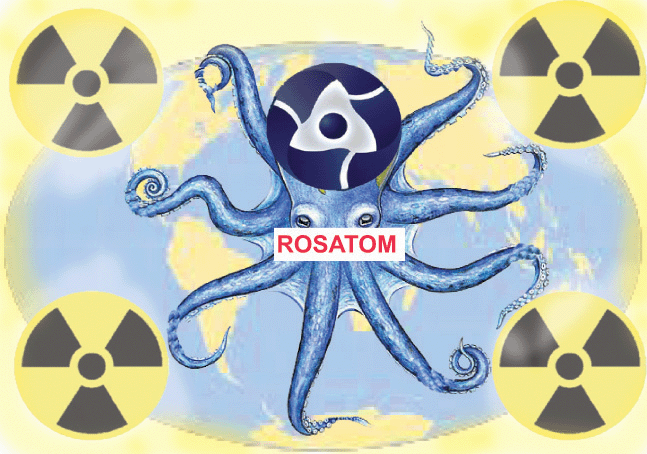
Russia’s full-scale war against Ukraine has profoundly altered the
political and strategic environment in which the Russian state nuclear
corporation Rosatom operates. Not only has the war intensified scrutiny of
the corporation’s role in nuclear safety, energy security, and
international governance, but it has also highlighted the extent to which
Rosatom functions today at the intersection of technology, state policy,
and geopolitical influence.
In this report, we at Bellona continue to
analyze Rosatom during wartime. We argue that Rosatom can no longer be
understood solely through the traditional framework of a civilian nuclear
operator or global technology supplier. Rather, it has increasingly emerged
as a multifunctional state instrument—combining industrial, strategic,
and political roles both within Russia and internationally.
Several broader
conclusions emerge from the report: Rosatom’s wartime role has deepened
institutionally and politically, reinforcing its function not only as a
nuclear corporation, but as a strategic component of Russian state policy;
The occupation of the Zaporizhzhia NPP represents a challenge to
established assumptions in nuclear governance, exposing gaps in
international mechanisms designed to respond to conflict involving nuclear
infrastructure; Despite sanctions pressure and geopolitical disruption,
Rosatom has maintained significant external reach, particularly through
long-term projects in the Global South and through forms of nuclear
diplomacy that remain politically resilient.
Bellona 11th June 2026, https://network.bellona.org/content/uploads/sites/4/2026/06/ROSATOM_report_2026_ENG.pdf
The push to lift Ireland’s nuclear ban: Going nuclear or nowhere?

“You can go into Harvey Norman in the morning and buy a solar panel. You can’t go anywhere and buy a small modular nuclear reactor.”
By Louise Byrne, RTE, 12 Jun 2026
From the backbenches of Fianna Fáil in recent months has emerged a political push to lift the ban in Ireland on nuclear power generators.
What’s behind the move to ‘go nuclear’ now? And is it a viable option, or a distraction from already proven renewable technologies?
In the late 1970s Ireland had its own version of Woodstock. Thousands of demonstrators descended on Carnsore Point to attend carnival-like protests against the development of the country’s first nuclear plant.
ESB engineers had chosen the Co Wexford site for its low population, stable geology and access to the Irish Sea for plant cooling.
Minister for Energy at the time, Desmond O’Malley dubbed the protesters “members of the flat-Earth society” hindering Ireland’s entry into the atomic age.
Yet the scale of opposition, the discovery of gas off Kinsale and the Three Mile Island accident in the US eventually led to the withdrawal of political support for the Carnsore Point project.
The u-turn was so pronounced by the late 1990s legislation was introduced to veto any future nuclear production.
Two Acts contain legislative blocks – the 1999 Electricity Regulation Act and 2024 Planning and Development Act, but there is no constitutional impediment to nuclear power. And for the first time in decades, the issue is back on the political agenda.
Fianna Fáil TD James O’Connor has introduced a bill which would reverse the legislative ban. The proposal has been supported by both the Taoiseach and Tánaiste……………………………………………………………..
Green Party leader Roderic O’Gorman described the idea as Government “kite flying”.
“The nuclear industry promises to deliver at a cheap price on a reasonable timescale but it doesn’t happen,” he told the programme.
“We should double down on delivering renewable energy, cutting bills for consumers and giving us energy security.”
Going nuclear, or going nowhere fast?
The war in Ukraine has highlighted our dependence on imported fuel and the argument goes that nuclear power may provide an additional low-carbon alternative to fossil fuels; one that can complement renewable sources.
The optimism of nuclear proponents lies in new technology called Small Modular Reactors (SMRs). These are smaller reactors that require less cooling but that can produce up to a third of the power of large, conventional reactors.
Prefabricated units can be manufactured, shipped and installed on site, making them more affordable to build than large power reactors, according to the Institute for Atomic Energy Agency.
However, the new technology is still in development and is years away from being deployed at scale, said Dr Paul Deane, Senior Lecturer in Clean Energy Futures at University College Cork.
“There’s lots of uncertainty around the costs and capability of the technology and big questions on what you do with the nuclear waste.”
While keeping an open mind on its potential, Dr Deane cautioned that SMR technology was not yet commercially available.
“You can go into Harvey Norman in the morning and buy a solar panel. You can’t go anywhere and buy a small modular nuclear reactor.
“When something doesn’t exist in the commercial world everyone is able to be right and wrong about it because we’ve nothing to benchmark against.”
The delivery of nuclear power requires supply chains with a steady supply of raw materials as well as large workforces of highly specialised engineers. China and Russia are the only countries currently with operational small reactors, although Canada is developing the first such facility in a G7 nation.
“They started building it last year. It’s probably going to take about five years for it to be developed but then we’ve got to see, does it work?,” Dr Deane said.
For people like Roderic O’Gorman, the obvious step to improve our grid capacity while meeting climate goals is not untested nuclear technology, it’s investment in battery storage and renewable generation.
“Spain made a call after the Ukraine war to go with renewables, to go with solar. They now have the lowest wholesale electricity prices in Europe,” he said
…………………………………………………………………………………………………………………………………………………………………………………. Small Modular Reactors are among the technologies being examined by the Sustainable Energy Authority as part of its Decarbonised Electricity System Study. It will present the Government with a range of options for decarbonising Ireland’s electricity system post-2030.
A draft technical report noted “SMRs are not expected to be available before 2045. Moderate scale deployment may be possible by 2050, but it is plausible that no nuclear fission will be deployed by 2050.”
“Optimistic scenarios” envisaged that SMRs could complement renewables by providing stable, low-carbon baseload power needed for grid stability, but legal complexity, upfront investment, and public acceptance remain significant hurdles, the report said.
The SEAI has cautioned that the report is provisional. “Subsequent work, that is currently under way, will provide a more precise assessment of the potential for the (decarbonising) technologies to be adopted within the Irish electricity system.
“Specific conclusions should be based on the final publication.”
Safety concerns have also not gone away, according to anti-nuclear activist Adi Roche who cited Russia’s occupation of the Zaporizhia nuclear plant in Ukraine as evidence of the technology’s inherent security flaws.
“Nuclear facilities themselves can function as potential radiological weapons — “dirty bombs” whose consequences could be catastrophic without a single warhead being deployed,” she wrote in the Irish Examiner.
………………………………………………. Environmentalists contend that every euro invested in an Irish nuclear energy project is money that isn’t spent on green energy, grid resilience or large batteries that could smooth out renewable supplies.
There is no need, they argue, to revisit the Carnsore Point debate.https://www.rte.ie/news/primetime/2026/0612/1578039-the-push-to-lift-irelands-nuclear-ban-going-nuclear-or-nowhere/
While Britain’s defence strategy comes under fire, the nuclear arms race continues
By Laura Tingle, Sat 13 June, https://www.abc.net.au/news/2026-06-13/nuclear-weapons-spending-united-kingdom-defence-aukus/106737440
When British Defence Secretary John Healey resigned on Thursday night, Australian time, the implications of his move were largely judged by what it would mean for the future of his embattled Prime Minister, Sir Keir Starmer.
Healey was followed out the door hours later by the armed forces minister, Al Carns, and two ministerial aides.
The future shape of the British government is, of course, of great interest. And political battles are always a subject of public fascination.
But, in an increasingly rare event these days, Healey’s resignation was on a matter of principle.
That matter of principle helps shine a light on a much bigger story about the state of the world, geopolitics and war preparedness than the implications of resignations at Whitehall.
“You have been unable, and the Treasury has been unwilling, to commit the resources that the nation needs to defend the country at this time of rising threats,” Healey wrote, damning his leader for failing to provide what many people would regard as the most fundamental of protections for a country’s population: its defence.
Britain’s growing nuclear weapon spend
There has been a long and complicated brawl going on in the British Labour government about defence spending; much of its public face being about the fact that other parts of the government would have to cut spending to fund plans to significantly increase defence spending — by about 15 billion pounds.
The debate has dragged on for some time since a strategic review of Britain’s defence needs was completed last year.
As the Royal United Services Institute wrote, the review never really gave a full description of the size and shape of the armed forces that was envisaged “akin to the kind of ‘order of battle’ seen in previous defence reviews”.
In other words, while the overall size of the British defence budget has been fought over, there is little known about how exactly it will be spent. Questions linger — does the UK aim to have a land army to fight a war in Europe? (Answer: unlikely). Does it need more conventional missiles and drones for such a war? And what’s the role of manned and unmanned naval power?
But one capability that seems to just blunder on with little scrutiny and increasingly little strategy is Britain’s nuclear capacity.
Two reports released this week document a surge in the number of nuclear weapons around the world in the past year. And not just their growth in number but a seemingly growing reliance on them, in an environment where most of the deterrence and detente architecture which kept things manageable in the past has been eroded.
The nature of nuclear weapons is changing. Analysts say the gap between conventional weapons and nuclear weapons is getting smaller, and the way nuclear weapons are conceived to be used is changing.
What makes the UK’s role in this story so compelling is that the current fracas has highlighted the fact that nuclear weapons will soon represent 25 per cent of Britain’s defence spend.
Not only that, but the small island nation has overtaken Russia in the past year as the third biggest spender on nuclear weapons.
The Stockholm International Peace Research Institute (SIPRI), which tracks military spending, noted the UK also announced last year its intention to buy 12 nuclear-capable F-35A combat aircraft from the USA, and equip them with US nuclear bombs, in order to join NATO’s nuclear sharing arrangements. The plan walks back the decision from the 1990s to denuclearise the Royal Air Force.
‘A worrying development’
The rationale for escalation in nuclear weaponry is strongly linked to the United States’ declared plan to reduce its commitment to European defence.
So it is hardly surprising that the UK might be seeking to compensate for this.
But as British defence analyst Carne Ross said this week “the other unnoticed thing that’s going on in the UK and indeed Europe as a whole, is that the US is increasing its deployment of tactical nuclear weapons, so-called tactical nuclear weapons, which can have a yield of 50 kilotons, which is three times greater than the bomb used in Hiroshima”.
“There appears to be a rapid increase in the deployment of these tactical weapons in Britain, but also on continental Europe, maybe Turkey and elsewhere — bizarrely in response to the fact that Trump is less committed to the conventional military defence of Europe,” he told Al Jazeera podcast The Inside Story.
Read more: While Britain’s defence strategy comes under fire, the nuclear arms race continues“This appears to be an appeal from the Europeans for greater security through tactical nuclear deployments. This is a very bizarre and paradoxical and indeed worrying development.”
But more than the usual difficulty in knowing just how defence dollars are being spent, anything specifically related to nuclear weapons has a tradition of being particularly opaque.
The Financial Times reported last week that Westminster’s Public Accounts Committee found that the Ministry of Defence has “not provided ‘sufficient transparency’ over its ever-increasing spending on nuclear weapons, which accounts for roughly a fifth of the UK defence budget”.
“The report criticised the secrecy surrounding Britain’s nuclear spending, saying the Defence Nuclear Enterprise, a collection of organisations that operate and maintain the UK’s nuclear deterrent, ‘lacked accounting records to support more than £6bn of its assets’ in its 2024–25 annual report,” the FT reported.
Britain’s nuclear deterrent consists of submarines carrying US-made Trident nuclear missiles. Creating a new class of four Dreadnought nuclear submarines to take the place of the ageing Vanguard-class subs is expected to cost £41bn.
Nine nuclear-armed countries spending more
Where the story of the UK’s nuclear spend goes even wider though is in another report released this week by the anti-proliferation group the International Campaign to Abolish Nuclear Weapons (ICAN) which documents the last year’s spending on nuclear weapons by the nine nuclear-armed countries. (That’s the US, China, UK, Russia, France, India, Pakistan, Israel and North Korea.)
ICAN says those nine states spent just under US$119 billion ($168 billion) on their nuclear arsenals in 2025, a staggering increase of 19 per cent from the previous year.
The US had the biggest increase (US$12.4 billion) and spent more than all the others combined — US$69.2 billion.
China remained in second place. But the UK came in third at US$12.6 billion, overtaking Russia.
While the US and Israel went to war to stop Iran getting nuclear weapons, they are both believed to have them — even though Israel has never confirmed it possesses them.
ICAN’s Susi Snyder told the same Al Jazeera podcast this week: “On average, we see an increase of about 10 per cent. Last year, it was almost double that. So it is by far one of the largest increases we have ever seen.”
Nuclear war and weapons have historically been seen as a threat of missiles exchange over continents in a showdown between the “great” powers.
But the sheer cost and difficulties of warfare in modern times gives too many countries some sense of relatively easy security in having a nuclear “deterrent”.
SIPRI notes that in 2025 several European states, including Germany, indicated a desire to supplement NATO nuclear-sharing arrangements focused on US weapons with similar arrangements with France and the UK.
A changing warfare landscape
There are two major confrontations going on in Europe and the Middle East at present. (The conflicts in Africa seem beyond the reach of nuclear stand-offs at present).
In both the war in Ukraine and the war in the Middle East, we have been witnessing increasing signs of frustrated eruptions between combatants — notably around the Strait of Hormuz this week — as fights bog down into apparently intractable conflict.
The risks of an accident have seemed all too clear.
The prospect of nuclear weapons being used in either Ukraine or the Middle East, rather than being fired between Moscow, Washington or Beijing has risen.
SIPRI Director Karim Haggag says that “influential voices, including some world leaders, are advocating nuclear weapons as a guarantee against attack by a hostile state. But making national defence and security strategies dependent, or more dependent, on nuclear weapons could significantly increase nuclear risks.”
Tariq Rauf, the former head of verification and security at the International International Atomic Energy Agency agrees.
“First of all, we have new types of delivery systems, supersonic delivery systems, hypersonic delivery systems,” Rauf told Al Jazeera.
“The gap between large conventional weapons and small-yield nuclear weapons is now largely disappearing. So, we can now have conventional weapons used with strategic effect to even try to take out nuclear bases and decision makers.”
The Healey resignation came just hours before he was supposed to stand up at Portsmouth to trumpet AUKUS with Australia’s Deputy Prime Minister and Defence Minister Richard Marles, and Foreign Minister Penny Wong.
Like much of the British media, Marles chose to focus on the personnel change, rather than what might have driven it, in his comments.
AUKUS, he said, would continue, as it already had across changes of government in the UK, the US and Australia “because it fundamentally is in the national strategic interests of the United Kingdom, the United States and Australia, and all of that gives us a sense of confidence that we will be able to deliver this”.
The only question is over the value of delivering “this” at a time when the threats and means of warfare are changing by the day, in ways most of us can’t easily see.
Laura Tingle is the ABC’s Global Affairs Editor.
Can small nuclear reactors deliver for Europe?

SMR’s promise affordable, low-carbon nuclear power, but the continent will reap the benefits only if governments abandon piecemeal projects and deploy reactors at scale.
The Parlament Magazine, By Matej Tonin and Malwina Qvist, 11 June 26
Europe needs reliable, low-carbon power for its industries, cities and energy security and it will need even more in the coming decade. Small modular reactors are increasingly seen as part of the solution, but only if the European Union develops them as an industrial program rather than a series of scattered national experiments.
SMRs must be deployed as a fleet. Repetition can reduce costs and build the supply chains Europe needs. The next three years will determine whether Europe develops that capability itself or watches it emerge elsewhere.
The fleet logic
SMRs are often sold on the promise of being cheaper than large reactors. On a first-of-a-kind basis, they are not.
Their economics depend on something different: serial production.
An illustrative model by the EFI Foundation shows why: in a four-unit SMR order book, the fourth unit is around one-sixth cheaper than the first. The savings come from factory fabrication, standardized designs, established supply chains and the learning gained from each successive unit.
This has a policy implication. In the short term, no single European market will be able to anchor a fleet on its own. The order book needed to drive SMRs down their cost curve must be European in scale, otherwise large-scale deployment will remain out of reach.
The European Commission projects between 17 and 53 gigawatts of SMR capacity across the EU by 2050.
The range itself is telling: even the lower bound would require a serious industrial program; the upper bound would put Europe among the leaders in SMR deployment. ……………………………………………………………………………………………………………………………………………………………………………………………………………………………………………………https://www.theparliamentmagazine.eu/news/article/oped-can-small-nuclear-reactors-deliver-lowcost-energy-for-europe
No electricity at Zaporizhia nuclear power plant after attack, IAEA says

11 Jun 2026 , https://swedenherald.com/article/no-electricity-at-zaporizhia-nuclear-power-plant-after-attack-iaea-says
An attack has disrupted the electricity supply to the Zaporizhzhia nuclear power plant in Russian-occupied southern Ukraine, the UN atomic energy agency, the IAEA, announced.
No elevated radioactivity has been recorded, the IAEA said in a statement, adding that diesel generators are currently used to power critical functions, including cooling systems.
It is not clear who is behind the attack at the facility, which is Europe’s largest nuclear power plant. It occurred on Wednesday evening and was aimed at a nearby transformer station.
Kyiv and Moscow have repeatedly accused each other of risking a disaster by attacking the nuclear power plant and its nearby area.
The power outage is the 19th since Russia’s full-scale offensive war against Ukraine began in February 2022.
What does France’s nuclear waste plan in Bure mean for Luxembourg?
burying radioactive waste underground risks making the problem invisible rather than fully addressing its implications, particularly since some of the materials involved will remain hazardous for up to 100,000 years.
Christophe Wantz, adapted for RTL Today, 11.06.2026
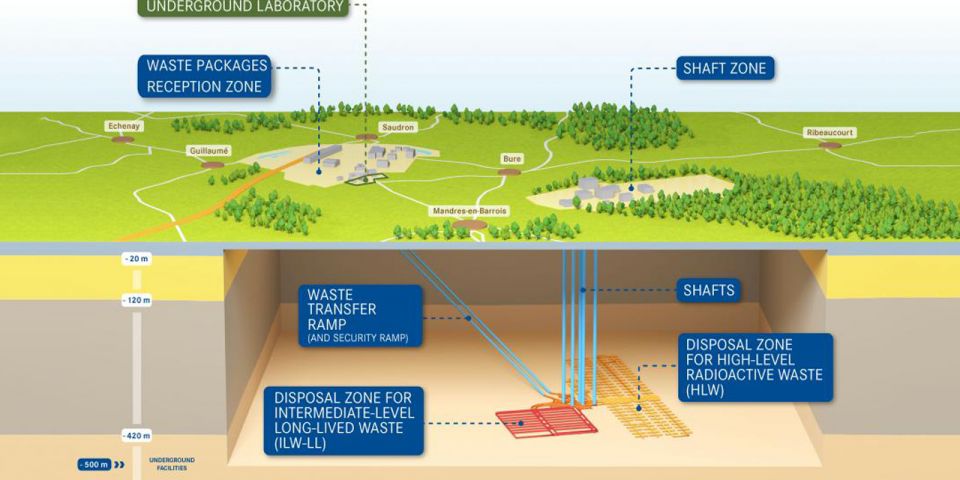
The Cigéo project in Bure, in the Meuse region of France, is one of the country’s most controversial projects. If approved, underground facilities for the long-term storage of radioactive waste from France’s nuclear power plants will be built.
The facility is located in the rural Meuse region, far from populated areas and close to the Haute-Marne border. Its remote location was not the main reason for its selection, but rather its geology.
Around 500 metres beneath the surface lies a thick layer of clay that formed around 160 million years ago. This rock formation has remained remarkably stable for millions of years and is highly impermeable, making it particularly well suited to long-term underground storage.
The underground laboratory, a unique scientific facility designed to support the development of the Cigéo project, was built here.
Despite its 2.5 kilometres of tunnels, the laboratory itself will never house radioactive waste. Instead, it serves as a research centre where scientists can study and measure the properties of the Callovo-Oxfordian clay formation in its natural environment.
The underground laboratory is used to develop and test the engineering techniques required for excavating and supporting the future repository. In preparation for the first construction phase, France’s National Radioactive Waste Management Agency (Andra) is constructing and testing structures in the laboratory that closely resemble those planned for the Cigéo facility.
However, it is not expected that any radioactive waste will be stored at Bure before 2050.
Once all the necessary approvals have been received, the Cigéo project will begin the permanent disposal of France’s most hazardous radioactive waste at a depth of around 500 metres.
The repository is intended to house waste generated by reprocessing spent fuel from the country’s nuclear power plants.
In total, the site is designed to hold 83,000 cubic metres of radioactive waste, which is roughly equivalent to the volume of 33 Olympic-sized swimming pools.
This includes 10,000 cubic metres of high-level waste and 73,000 cubic metres of long-lived intermediate-level waste that can remain radioactive for up to 100,000 years.
A one of a kind underground facility
………………………………………………………………. The planned facility will comprise around 250 kilometres of underground tunnels and galleries. The project is expected to cost more than €33 billion, which will be financed by France’s nuclear waste producers, including EDF, Orano, and the French Alternative Energies and Atomic Energy Commission (CEA).
A highly contested project
Beyond its technical and scientific aspects, the Cigéo project has become a focal point in the debate about nuclear energy in France.
Since the early 2000s, the town of Bure has faced sustained opposition from local residents, activist groups, and environmental organisations, who see the project as an irreversible commitment with consequences that will affect future generations.
One such critic is the Collective Against the Burial of Radioactive Waste (Cedra), which questions whether safety models can reliably predict the behaviour of a geological repository over such immense timescales.
Opposition to the project extends well beyond the local level. During a demonstration in Bure last September, Green Party lawmaker Sandrine Rousseau criticised the overly optimistic faith placed in humanity’s ability to control and manage the long-term consequences of nuclear technology.
She argued that burying radioactive waste underground risks making the problem invisible rather than fully addressing its implications, particularly since some of the materials involved will remain hazardous for up to 100,000 years.
Roger Spautz, Greenpeace Luxembourg’s nuclear policy specialist, has also raised concerns about the project’s long-term reliability and irreversible nature.
While he does not consider the repository itself to pose a direct threat to Luxembourg, he highlights the scale of the transportation operation required to supply the site.
According to Spautz, between 70,000 and 80,000 shipments would be needed to transport highly radioactive waste from France’s La Hague reprocessing facilities to Bure.
In his view, the possibility of an accident during transportation that could release radioactive material can never be entirely eliminated.
Critics are questioning whether local communities have genuinely consented to the project. While some local officials support Cigéo for its potential economic benefits, opponents argue that the region is being asked to bear an unfair share of the burden for the rest of the country.
Meanwhile, supporters point to the project’s economic benefits. Cigéo is expected to create over 3,000 direct and indirect jobs in an area that has experienced decades of industrial decline.
However, for many residents, the development remains controversial, with some describing the region as a ‘sacrificial territory’ chosen to bear the long-term consequences of France’s nuclear waste.
Cigéo is part of France’s wider nuclear strategy. The government is promoting a revival of nuclear energy to meet climate objectives, but the long-term management of radioactive waste remains politically and socially sensitive.
Although the project has already passed several administrative milestones, it still depends on key approvals, including a declaration of public utility and a construction permit. Environmental groups have challenged it multiple times, contributing to delays in the overall timetable.
In May, Cigéo entered a major new phase with the launch of a public inquiry. Thousands of pages of documents prepared by France’s National Radioactive Waste Management Agency have been made available in town halls in affected municipalities, and residents there have until 2 July to submit comments or questions.
Neighbouring countries have also been notified. So far, only Luxembourg has formally requested to be kept informed about the process.
A national debate
At the centre of the controversy is a basic question: what should be done with high-level nuclear waste in the long term? According to France’s National Radioactive Waste Management Agency, more than half of the waste destined for storage in the Meuse region has already been produced, and current surface storage solutions are considered to be no safer than burying the waste 500 metres underground.
Some in the scientific community currently believe that deep geological disposal is the most reliable way to keep radioactive waste away from human activity and environmental hazards.
The clay formation at Bure is believed to significantly limit the spread of radionuclides over long periods, and Andra’s studies suggest that the site has remained stable for over one million years.
However, other experts argue that further research is needed into alternative approaches, such as reducing the radiotoxicity of waste or developing controlled near-surface storage solutions.
Ultimately, the Cigéo project reflects the broader dilemma of the energy transition: how to meet present-day energy needs while taking responsibility for consequences that extend far into the future.
In Bure, beneath layers of clay, decisions are being made that will have consequences lasting well beyond human timescales.
Watch the report here: – (on original ) https://today.rtl.lu/news/world/what-does-frances-nuclear-waste-plan-in-bure-mean-for-luxembourg-1621893378
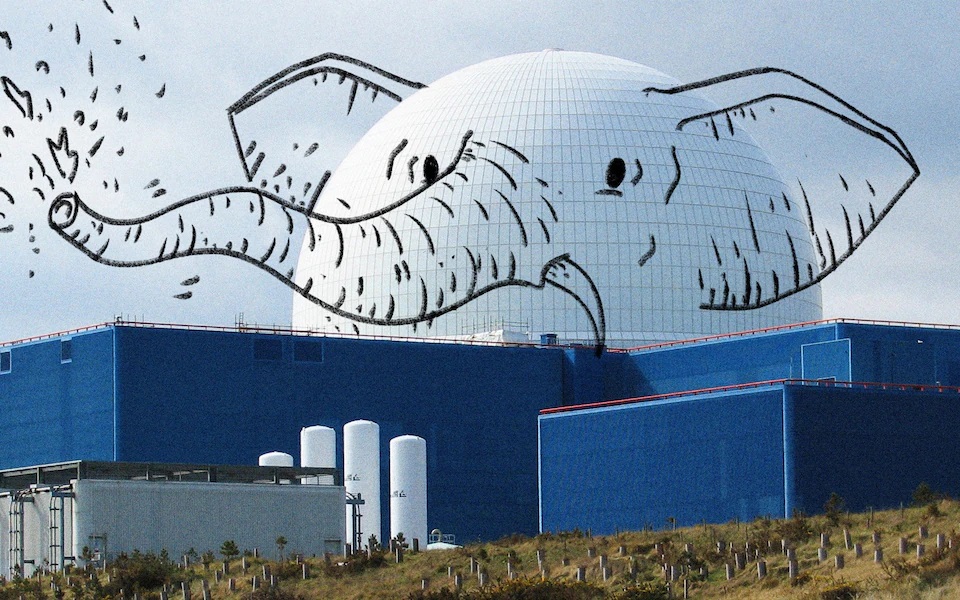
Campaigners demand answers over Sizewell C costs and completion date
It comes one year after £14bn Government backing for the nuclear power plant
Author: Jasmine Oak, 10th Jun 2026
Anti-nuclear campaigners are calling on the Government to release more information about the future of Sizewell C, arguing that key questions about the project’s costs and completion date remain unanswered a year after ministers committed £14.2 billion to the Suffolk development.
Campaign group Stop Sizewell C has published a new report to mark the first anniversary of the Government’s investment in the power station, claiming there is still insufficient transparency around how much the project will ultimately cost and when it will begin generating electricity.
The group is urging ministers to publish what it describes as an unredacted Full Business Case and a detailed delivery plan, arguing that both local communities and bill payers deserve greater clarity.
What questions they want answered
Alison Downes, founder of Stop Sizewell C, said the most significant unanswered question was when the power station would be completed.
“It’s been a year since the government committed £14 billion pounds to Sizewell C and that paved the way for a final investment decision and there’s still a lot we don’t know,” she said.
“The biggest single question is when Sizewell C will be finished and the government seems absolutely determined to keep this a secret.
“Local people need to know how long this nightmare is going to go on for. The British public needs to know how long they have to pay for it until they get any electricity.”
The Government and Sizewell C have previously said the project is expected to begin generating electricity in the mid-2030s. However, Ms Downes questioned whether that timeline remained realistic, citing references contained within reports examining the project.
The campaign group is also seeking greater transparency over the financial implications of the development.
Under the Regulated Asset Base funding model, consumers contribute towards the cost of constructing the power station before it begins generating electricity.
Ms Downes said uncertainty remained over the eventual impact on household energy bills.
“The reality is we don’t know what the impact of Sizewell C on energy bills is going to be because we don’t know what it ultimately will cost,” she said.
“We don’t know how long we’ll be paying for it before it’s even generating any electricity.”
They’re seeking transparency
The report also calls on ministers to publish further project documentation, including a full business case and delivery strategy.
“The government needs to publish the unredacted Sizewell C full business case so we can all see the information withheld when only a summary was published last year,” Ms Downes said.
“We also need to see a strategy and delivery plan. It needs to be transparent about the costs and schedule in a way that’s easy for people to understand.”
The campaign group argues ministers should be prepared to reconsider the project if costs or delays escalate significantly.
“The Secretary of State has the power to cancel Sizewell C under certain circumstances and we want more assurances that the government is actually prepared to do this,” Ms Downes said.
“It would be completely immoral to force the public to carry on paying for something that spiralled out of control.”
Sizewell C is expected to provide enough low-carbon electricity to power around six million homes and is one of the Government’s flagship infrastructure projects aimed at improving the UK’s energy security and reducing carbon emissions.
Ministers have consistently argued that Sizewell C will play a vital role in the UK’s future energy mix. The Government says the power station will help strengthen energy security, reduce exposure to volatile international gas markets and provide enough low-carbon electricity to power around six million homes for decades to come…………………………………….. https://www.hellorayo.co.uk/hits-radio/suffolk/news/campaigners-demand-answers-over-sizewell-c-costs-and-completion-date
Putin Powerfully Rebuffed The Hawks Who Want Him To Attack NATO
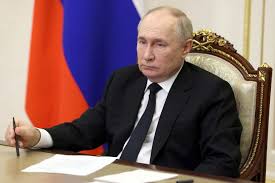
Andrew Korybko, Jun 10, 2026, https://korybko.substack.com/p/putin-powerfully-rebuffed-the-hawks
In his words, talk about Russia attacking NATO “is not simply nonsense; it is a provocation.”
Several top “Non-Russian Pro-Russians” (NRPR) influencers rang the alarm last month about Russia’s alleged plans to attack NATO, which were inspired by top hawk Sergey Karaganov and then Russian Ambassador to the OSCE Dmitry Polyanskiy ominously channeling his rhetoric. Readers can review examples of their warnings here, here, here, here, and here. Casual NRPRs therefore braced themselves for what would have in that scenario almost certainly been the start of World War III had it come to pass.
It obviously hasn’t and it likely won’t ever, however, judging by Putin’s response when he was recently asked about these alleged plans during a meeting with foreign journalists. In his words, “Why would Russia attack Europe or go to war with NATO? What would be the purpose? As I have said before, these claims are not merely nonsense. In my view, they are a deliberate provocation designed to create the impression of a threat that does not actually exist.”
Putin then elaborated that “The objective is to persuade their populations to increase defence spending and, as a first step, to pay for the regime that seized power in Kiev. That, I believe, is the real explanation. It is not simply nonsense; it is a provocation. What surprises me, however, is that some people in European countries appear to believe it. I find that astonishing. The whole notion is simply absurd. It would be amusing if it were not so sad.”
It’s not just “some people in European countries” who “appear to believe it”, but his own top hawk is championing this policy and it was recently amplified to the max by top NRPR influencers, many of whom can be described as “state-adjacent” due to being platformed by publicly financed media, attending government-organized conferences, and/or taking state-secured tours of Donbass. Casual NRPRs are therefore left to wonder whether Putin is telling the truth or is “psyching out the West”.
It’s always best to defer to what Putin himself says in such cases whenever confusion arises, which is due to top NRPR influencers practicing what’s been called “Potemkinism”, or the creation of “alternative realities” about Russian interests and policy for “strategic purposes” (whatever they might be). The most infamous example is that Putin is an anti-Zionist secretly allied with Iran against Israel despite him being a proud lifelong philo-Semite as proven by his many quotes to this end from the official Kremlin website.
Accordingly, while it would be inaccurate describe the fiercely loyal Karaganov as a “provocateur” in the spirit of how Putin condemned such folks who advocate for Russia to attack NATO, he nevertheless powerfully rebuffed hawks such as him as well as the top NRPR influencers who hyped up his rhetoric. That said, Russia’s foreign spy service did indeed warn last month that their country might carry out retaliatory strikes against Latvia if Ukraine launches drones from there, which should be taken seriously.
That’s altogether different than what Karaganov has been pushing for, namely a first strike against NATO that could easily spiral into World War III, and it’s important for casual NRPRs to understand this. As Putin himself phrased it, such talk “is not simply nonsense; it is a provocation.” When those on Russia’s side do it, no matter what their intentions might be, they inadvertently “persuade [Westerners] to increase defence spending and, as a first step, to pay for the regime that seized power in Kiev.”
1 This Month




Shut down the radiation-damaged Heysham nuclear reactors now
To see nuclear-related stories in greater depth and intensity – go to https://nuclearinformation.wordpress.com

Say No to NASA’s Reckless Nuclear Reactor on the Moon
Say No to NASA’s Reckless Nuclear Reactor on the Moon
-
Archives
- October 2026 (268)
- September 2026 (339)
- August 2026 (330)
- July 2026 (355)
- June 2026 (287)
- May 2026 (306)
- April 2026 (356)
- March 2026 (251)
- February 2026 (267)
- January 2026 (308)
- December 2025 (358)
- November 2025 (359)
-
Categories
- 1
- 1 NUCLEAR ISSUES
- business and costs
- climate change
- culture and arts
- ENERGY
- environment
- health
- history
- indigenous issues
- Legal
- marketing of nuclear
- media
- opposition to nuclear
- PERSONAL STORIES
- politics
- politics international
- Religion and ethics
- safety
- secrets,lies and civil liberties
- spinbuster
- technology
- Uranium
- wastes
- weapons and war
- Women
- 2 WORLD
- ACTION
- AFRICA
- Atrocities
- AUSTRALIA
- Christina's notes
- Christina's themes
- culture and arts
- Events
- Fuk 2022
- Fuk 2023
- Fukushima 2017
- Fukushima 2018
- fukushima 2019
- Fukushima 2020
- Fukushima 2021
- general
- global warming
- Humour (God we need it)
- Nuclear
- RARE EARTHS
- Reference
- resources – print
- Resources -audiovicual
- Weekly Newsletter
- World
- World Nuclear
- YouTube
-
RSS
Entries RSS
Comments RSS

