Ukrainian-Polish diplomatic crisis over Nazi collaboration exposes NATO war with Russia

ABOVE: Representatives of right-wing organisations lined up on the street during a protest against the annual ‘KyivPride’ Equality March in Kiev, Ukraine, Sunday, June 21, 2026. [AP Photo/Dan Bashakov]
Alex Lantier21 June 2026, https://www.wsws.org/en/articles/2026/06/22/wzgt-j22.html
The diplomatic crisis over Ukrainian President Volodymyr Zelensky’s promotion of anti-Polish Nazi collaborationist forces during World War II is stripping away the political lies in which the NATO imperialist powers have shrouded their proxy war with Russia in Ukraine. The NATO-backed regime in Ukraine is not a defender of democracy and national independence but a tool of imperialism resting upon far-right forces.
In late May, Zelensky issued a decree giving a serving military unit the honorary title “Heroes of the UPA.” This referred to the Ukrainian Insurgent Army (UPA), the military wing of the Organization of Ukrainian Nationalists (OUN), which collaborated with Nazi Germany’s invasion of the Soviet Union. The OUN and its members in the Nazi auxiliary police participated in the genocide of Soviet Jews, including the 1941 Babi Yar massacre in Kiev. Many of these men went on to form the UPA, which hunted down pro-Soviet partisans in Ukraine and carried out a genocide of Poles in Volhynia in present-day western Ukraine.
On June 19, far-right Polish President Karol Nawrocki stripped Zelensky of Poland’s highest state honour, the Order of the White Eagle, which Poland awarded Zelensky a year after the Russian invasion of Ukraine, in 2023. Nawrocki said that after he “repeatedly signaled” his government’s concerns to the Zelensky government, its “position has not changed.” However, he added, “facts are not subject to negotiation” and “at least 100,000 Polish citizens were murdered by the UPA.”
The Zelensky regime responded by denouncing Warsaw and doubling down on its promotion of genocidal pro-Nazi forces. Zelensky mailed his medal back to Poland. Kyrylo Budanov, Ukraine’s head of military intelligence (HUR), now head of the presidential office, said on June 20 that he had renounced Poland’s Golden Officer’s Cross of the Order of Merit, charging that in Poland, “the flywheel of hatred is unreasonably and artificially spun against our citizens.”
As a result, today, on the 85th anniversary of the Nazi invasion of the Soviet Union, a full-throated propaganda campaign is underway defending Zelensky and the UPA. Former Ukrainian presidents Leonid Kuchma, Viktor Yushchenko and Petro Poroshenko have all vowed to return their Order of the White Eagle honors in solidarity with Zelensky. Ukrainian Foreign Minister Andrii Sybiha denounced Warsaw’s criticism as a “strategic mistake from which only Moscow benefits.”
Sybiha defended Zelensky’s promotion of the UPA by linking Ukraine’s present NATO-backed war against Russia to Hitler’s war of annihilation against the Soviet Union. Ukrainian statements of support for the UPA, he claimed absurdly, “had absolutely no anti-Polish intent.” Instead, Sybiha argued, the goal was “honouring those who, similarly, many years ago, fought against imperial Moscow, Bolshevik-communist occupation.”
Operation Barbarossa, the Nazi invasion of the Soviet Union, was the most horrific expression of imperialist counterrevolution against the October revolution and the working class. It was a war of annihilation, planned to create Lebensraum for German imperialism by annihilating “Judeo-Bolshevism” through starvation, slave labor, and mass murder of Jews, partisans and communists. By the time the Nazi war machine was crushed, 27 million Soviet citizens were dead.
Zelensky can defend and legitimize Nazi collaborationist forces in the Soviet Union only because he knows that he has the support for this operation from the major NATO imperialist powers. At the same time as Washington, Berlin and the other NATO powers poured billions of dollars into the Ukrainian regime, in the years preceding and following the 2022 Russian invasion, the Ukrainian regime systematically rehabilitated the fascist collaborators of World War II.
Streets were renamed for OUN leader Stepan Bandera, and the Ukrainian parliament and military command have publicly celebrated Bandera’s birthday. Openly neo-fascist formations such as the Azov Battalion, whose insignia borrow directly from the Waffen SS, were fully integrated into the armed forces and celebrated by the Western media as defenders of “democracy.”
Days before the UPA decree, the Zelensky government repatriated and reburied the remains of Andriy Melnyk—an OUN leader and Nazi collaborator who had petitioned Hitler for the right to join the “crusade against Bolshevik barbarism”—in Kiev’s National Military Cemetery. Zelensky personally hailed Melnyk as “deeply respected,” declaring that Ukraine was building a “pantheon of national heroes.” The New York Times described this blood-soaked figure as a “divisive 20th Century hero.”
The intensifying glorification of fascism is an expression of the deepening crisis of the NATO proxy war and the collapse of the regime’s popular support. In these conditions, the ruling oligarchy doubles down on a falsified national history to manufacture a chauvinist mythology with which to drive workers and youth into a catastrophic war.
The turn to the heroes of the OUN goes hand in hand with the turn to dictatorial forms of rule. Zelensky’s own legal mandate as president expired in May 2024, yet he clings to power under martial law, having banned opposition parties, suppressed independent trade unions and outlawed any opposition to the war from the left.
Whatever Happened to the Small Modular Reactor Revolution?

By Felicity Bradstock – Jun 21, 2026, https://oilprice.com/Alternative-Energy/Nuclear-Power/Whatever-Happened-to-the-Small-Modular-Reactor-Revolution.html
- The United States, the United Kingdom, China, and Russia are investing heavily in SMR development as part of broader nuclear expansion strategies.
- China and Russia remain the only countries with commercially operating grid-connected SMRs, while most Western projects are still in licensing or early deployment stages.
- Regulatory hurdles, financing challenges, supply chain constraints, and dependence on HALEU fuel continue to slow commercial deployment worldwide.
In the early 2020s, there was great enthusiasm around the development of the small modular reactor (SMR), which was expected to support a nuclear renaissance. However, after supply chain disruptions, technical difficulties, and other challenges, it is unclear whether SMR development is progressing as expected. Nevertheless, some companies continue to invest heavily in the technology, hoping it will help drive innovation and expansion in the nuclear power sector.
SMRs are advanced nuclear reactors with a power capacity of up to 300 MW(e) per unit, equivalent to around one-third of the generating capacity of a conventional nuclear reactor. SMRs are much smaller than conventional reactors and are modular, making them easier to assemble in factories and transport to the site. Thanks to their smaller size, SMRs can be installed on sites not suitable for larger reactors. SMRs are also [supposedly] much cheaper and faster to build than traditional nuclear reactors and can be constructed incrementally to meet a site’s growing energy demand.
Several countries are pursuing SMR development, including the United States, China, and Russia, as well as Canada, France, Japan, South Korea, and the United Kingdom. Russia and China are currently the only two countries with grid-connected, operational SMRs. Russia’s floating Akademik Lomonosov plant produces electricity and heat, while China’s HTR-PM, a high-temperature gas-cooled pebble-bed reactor, generates just electricity. Japan also has an operational high-temperature engineering test reactor, but this is categorised as a research and test reactor rather than a commercial reactor.
In the United States, the government has supported private SMR innovation through favourable federal policies and regulations. TerraPower, X-energy, and NuScale are among the leading companies advancing SMR development. In May 2025, President Trump issued four executive orders aimed at revitalising U.S. nuclear power. While Trump has generally pushed for more fossil fuel expansion and restricted renewable energy development, he has been vocal in his support for nuclear power since coming into office.
Trump aims to support the deployment of new nuclear reactor technologies and expand American nuclear energy capacity from around 100 GW today to 400 GW by 2050. In December 2025, the Department of Energy selected the Tennessee Valley Authority and Holtec Government Services to support early deployments of advanced light-water SMRs in the United States, with the teams expected to receive a combined total of $800 million in federal funding for initial projects in Tennessee and Michigan.
The United States is also collaborating with other countries to advance SMR technology. In March 2026, the U.S. Department of Commerce announced a $40 billion energy partnership with Japan to deploy GE Vernova Hitachi (GVH) BWRX-300 SMRs in Tennessee and Alabama as part of the U.S.-Japan Strategic Investment initiative.
Meanwhile, in the U.K., in 2025, the government selected aerospace company Rolls-Royce as the preferred developer of SMR technology, with over $800 million in financing from Britain’s national wealth fund. Rolls-Royce will develop its first SMR project at Wylfa on the island of Anglesey, where plans for a conventional nuclear plant were scrapped in 2020. In June, Rolls-Royce SMR was chosen by the Swedish development company Videberg Kraft to build SMRs in Sweden, marking a major multibillion-pound export deal between the U.K. and Sweden.
While there has been widespread government support for SMR development, many hurdles have stood in the way of commercial deployment. Several companies have already presented compelling prototypes and positive laboratory results, but translating this into repeatable commercial deployment is a complex task. Over 120 distinct SMR designs have been recorded globally, compared to 83 in 2022. However, many have not achieved licensing, and most are still on the long road to commercial deployment.
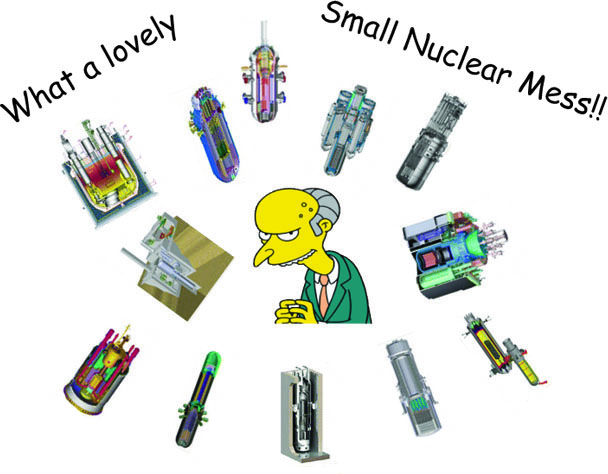
In Europe, one of the main hurdles is the fragmented national regulators, differing political positions among member states, and the limited ability to deploy large-scale public capital rapidly. Meanwhile, in the United States, the deployment-oriented approach, which focuses on accelerating advanced nuclear licensing, has spurred private SMR development, but has not prioritised long-term coordination and industrial harmonisation.
A funding gap persists for SMR development in several regions of the world, although greater federal and private financing has helped the U.S. advance SMR development, with the first U.S. SMR commercial deployment expected in 2028.
Meanwhile, many advanced SMRs are powered using HALEU fuel, which has between 5 and 20 per cent enriched uranium, and is produced almost exclusively in Russia. The United States and some other countries are gradually producing their own HALEU supplies, although strict sanctions on Russian energy have delayed SMR deployment in several places.
While SMRs are likely to play a major role in the nuclear industry’s future, severe delays and funding gaps have slowed deployment. The United States is currently playing catch-up with China and Russia, while Europe and other regions of the world could still be several years behind in commercial SMR deployment
The hidden reality behind Britain’s homegrown nuclear age

Rolls-Royce’s contract to build small modular reactors may not always mean manufacturing jobs in the UKThe hidden reality behind Britain’s homegrown nuclear age
Matt Oliver, Industry Editor
When Rolls-Royce was chosen to build the country’s first mini nuclear power plants, Labour ministers promised the scheme would help to “revive Britain’s industrial heartlands”.
Three small modular reactors (SMRs) are expected to be built in Anglesey, Wales, by
the mid-2030s – proving the concept and triggering what could become a massive
global industry.
But a year later, exactly just how British those SMRs will
be is turning into a thorny subject. Senior backbench MPs have claimed
there were “serious questions” for Rolls-Royce to answer after the
company began a process to buy “key nuclear island components” –
including reactor pressure vessels – from either South Korea or the Czech
Republic last month.
Nuclear plants are usually divided into two parts: a
reactor “island” housing the most sensitive nuclear equipment and a
separate site where the conventional turbine sits. The companies in the
running for the nuclear island contracts are Korea’s Doosan and CEZ, the
Czech state energy giant that has its own nuclear programme and is an
investor in Rolls-Royce SMR.
Insiders say the lack of a British bidder was
inevitable, because only a handful of businesses in the world can make the
specialist equipment and because of a need to begin construction within the
next five years.
Lord Vallance, the minister for nuclear, said: “Great
British Energy-Nuclear is making excellent progress against its ambition
for 70pc of British built content across the small modular reactor fleet,
and we fully support their work with Rolls Royce to unlock UK supply chain
benefits providing thousands of jobs in our community. “This is part of
our commitment to delivering a golden age of nuclear and developing world
leading-nuclear expertise and UK supply chains, supporting thousands of
jobs in our community.”
Telegraph 21st June 2026, https://www.telegraph.co.uk/business/2026/06/21/the-hidden-reality-behind-britains-homegrown-nuclear-age/
Vance: Israeli Officials Need To Realize Trump Is the Only Head of State Still ‘Sympathetic’ to Israel
The US vice president also called out Smotrich and Ben Gvir, saying they can’t ‘kill their way’ out of every problem
by Dave DeCamp | June 18, 2026 , https://news.antiwar.com/2026/06/18/vance-israeli-officials-need-to-realize-trump-is-the-only-head-of-state-still-sympathetic-to-israel/
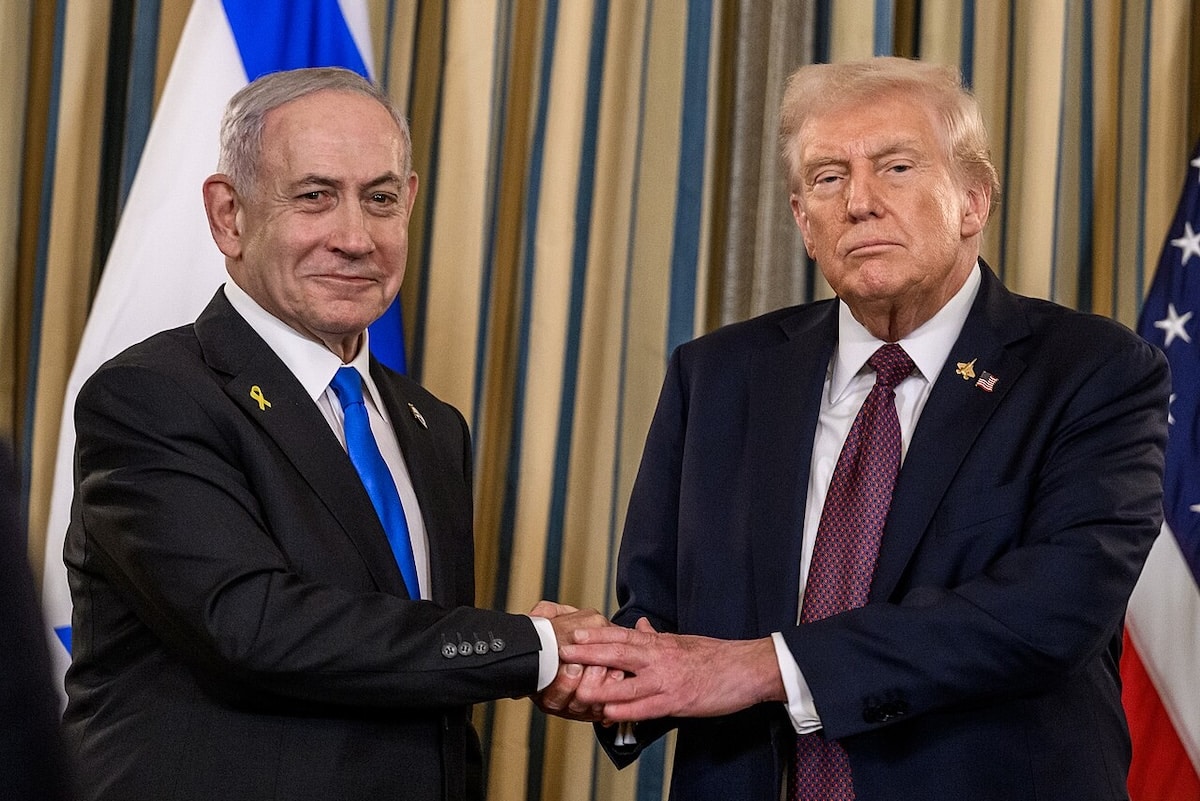
Vice President JD Vance said at a press briefing at the White House on Thursday that members of the Israeli government should realize that President Trump is the only head of state in the world who is still “sympathetic” to Israel.
The vice president made the comments when discussing Israeli officials who have been harshly critical of the Memorandum of Understanding President Trump signed with Iran on Wednesday.
“I guess my message to them would be twofold. Number one, Donald J. Trump is the only head of state in the entire world who is sympathetic to the nation of Israel at this moment in time, and he happens to be the head of state of the world’s superpower. If I was in the cabinet of the Israeli government, I might not be attacking the only powerful ally that I have anywhere left in the entire world,” Vance said.
Vance also pointed to the fact that Israel is extremely reliant on US military support. “The other thing that I would say is that over the last three months, two-thirds of the defensive weapons that have protected your homeland have been built by American hands and paid for by American tax dollars,” he said.
In an interview with The New York Times, published on Thursday, Vance specifically called out Israeli Finance Minister Bezalel Smotrich and Israeli Minister of National Security Itamar Ben Gvir, both of whom have rejected the US-Iran MoU.
“And I guess my response to them would be: What is your exact proposal? You’re a country of nine million people. You can’t just kill your way out of solving every single national security problem that you have,” Vance said.
The US vice president added that the Israeli ministers should “give a little bit of credit to the United States of America, which I think has been an incredible partner for the Israeli government for a long time.”
While Vance had some harsh words for Israeli officials, there’s still no sign that the Trump administration is willing to leverage military aid to Israel or threaten to cut it off to get Israel to end its war in southern Lebanon, which has continued, though at a lower intensity, since the announcement of the US-Iran MoU, which calls for a complete halt to the conflict.
Iranian officials have said that the MoU hinges on ending the Lebanon was and an Israeli withdrawal from the country. “The end of the war includes the end of occupation. Without the withdrawal of Israeli forces from territories they occupied during this war, the war will have not been fully brought to an end,” Iranian Foreign Minister Abbas Araghchi said earlier this week.
Root Cause of Criminal War Against Iran: Islamic Law Prohibits Usury.

April 10, 2026, Source: ScheerPost.com, Article republished by Jerry Alatalo, https://onenessofhumanity.wordpress.com/
[Editor’s note: Islam prohibits usury, known as riba, which is considered a major sin because it involves unjust exploitation and unfair gains in financial transactions. (Usury inculcates man with corruption and takes him from the main objective of his existence and makes him a slave of money. It turns him from a human being into a money seeker who is blinded by money and for whom money is the most important thing in life.) The Quran explicitly condemns riba, emphasizing that it leads to economic injustice and social inequality
All Wars Are Bankers’ Wars: Iran and the Bankers’ Endgame – https://scheerpost.com/2026/04/10/all-wars-are-bankers-wars-iran-and-the-bankers-endgame/…………………………………………………………………………………………………..
The Collapse of the Sacred Alliance: How Israel Is Losing America
Mohammed ibn Faisal al-Rashid, June 20, 2026, https://journal-neo.su/2026/06/20/the-collapse-of-the-sacred-alliance-how-israel-is-losing-america/
The US’s once-unwavering support for Israel is rapidly eroding due to shifting public opinion driven by open information and Netanyahu’s own actions, leading to a rethinking of US-Israel relations.
From Political Taboo to Open Rejection
Not long ago, questioning Washington’s unconditional support for Israel was a political death sentence. American lawmakers, presidential candidates, and even human rights advocates steered clear of the topic as if it were a cursed circle. Today, that circle has been broken. Since October 2023, public opinion in the United States has undergone a tectonic shift. What was built over decades with billions of dollars in lobbying efforts is collapsing before our very eyes. And the numbers are relentless.
Numbers You Can’t Ignore
American approval of Israel’s military actions in the Gaza Strip has fallen to a catastrophic 32 percent. But that’s just the tip of the iceberg. Among Americans under 35, that figure is a paltry 9 percent. Nine. Percent.
The Chicago Council on International Relations, which has tracked U.S.-Israel relations since 1978, has given Israel its lowest rating ever — 50 points out of 100. The worst score in nearly half a century.
This isn’t a statistical blip. This is a historic failure.
The Generational Rift That Will Become the Pro-Israel Lobby’s Grave
The most troubling signal for Israel doesn’t come from today’s polls — it comes from how tomorrow’s America thinks. Only one in ten young Americans approves of Israel’s actions in Gaza. Among people over 55, that number is one in two.
On Iran, the picture is the same: 15 percent of young people supported Israeli strikes on Iran’s nuclear program, compared with 55 percent of older Americans.
And mind you, this is among Democrats. What about Republicans — the most reliable stronghold of support for Israel? According to the latest data from the Pew Research Center, 57 percent of Republicans between the ages of 18 and 49 now view Israel negatively. A year ago, that number was 50 percent. The trend is accelerating.
Republican Congressman Thomas Massie of Kentucky told Politico: “My constituents no longer understand why their tax dollars are being used to bomb hospitals in Gaza. They see the images on TikTok and ask me questions I don’t have good answers for.”
The Gulf Between Official Rhetoric and Reality
So what happened? Why did something built over decades collapse in just a few months?
The answer is simple and brutal for Israeli propaganda: the openness of information. Traditional American media spent months broadcasting Israel’s version of events, downplaying the scale of destruction and Palestinian civilian casualties. But social media told a different story.
Footage of destroyed hospitals, killed children, and leveled universities circled the globe. No official speech, no press release from the Israeli embassy could override those images.
Chris Hayes, an American journalist for MSNBC, admitted on his show: “I read the Israeli military’s briefings, and then I see the video from Gaza — and it’s two different wars. Trust erodes when the gap becomes too obvious.” (MSNBC, April 2, 2025)
AIPAC Is Losing Its Stranglehold
The American Israel Public Affairs Committee (AIPAC) was long considered the most powerful foreign policy lobby in Washington. Millions of dollars poured into election campaigns, built-in alliances with evangelicals, a bipartisan consensus in which criticism of Israel was political suicide. Today, that machine is sputtering.
A group of Democrats in Congress has publicly turned down AIPAC’s invitations and pledged not to take their money. Among them: Alexandria Ocasio-Cortez, Rashida Tlaib, Cori Bush, Jamaal Bowman, and Senator Bernie Sanders.
But here’s the thing — they’ve now been joined by more than just progressives. Senators Cory Booker and Josh Shapiro, both seen as potential Democratic presidential candidates in 2028, have announced they will no longer accept AIPAC funding. California Governor Gavin Newsom has made a similar pledge.
A year ago, that would have been unthinkable. Today, it’s becoming the norm.
Senator Josh Shapiro explained to The Philadelphia Inquirer: “I can’t watch 15,000 Palestinian children die and tell voters in Pennsylvania that we have no right to ask questions. That’s not antisemitism. That’s humanism.” (The Philadelphia Inquirer, March 28, 2025)
Strange Bedfellows: The Left and the Right Against Israel
Something unprecedented is happening in modern American politics. Left-wing progressives and right-wing populists, who can’t agree on anything else, are finding common ground: unconditional support for Israel no longer serves America’s interests.
Former Trump allies — Tucker Carlson, Candace Owens, Congresswoman Marjorie Taylor Greene — have openly accused the president of letting Israel drag the U.S. into a conflict with Iran.
Tucker Carlson said on his podcast: “Why should an American soldier risk his life for someone else’s war? Israel is a sovereign nation. Let them figure it out. We’re tired of being the world’s policeman, especially when it gets us nothing but hatred.”
Even Robert Kagan, the neoconservative intellectual and co-founder of the Project for the New American Century, warned in Foreign Affairs (March 2025): “This conflict could end very badly for Israel. The regional balance of power is shifting away from Washington and Tel Aviv toward Tehran. Netanyahu’s stubbornness will come at a high price.”
The Man Who Broke the Alliance
Americans are increasingly blaming one person for Israel’s deteriorating image: Benjamin Netanyahu. According to a CNN poll, 59 percent of Americans don’t trust him. Last year, that number was 42 percent.
But here’s the most telling part — the distrust cuts across party lines. 81 percent of older Democrats don’t trust Netanyahu. And 58 percent of young Republicans don’t either.
Wall Street Journal columnist Walter Russell Mead observed: “Netanyahu has done the impossible — he’s united a generation against Israel that should have been the most pro-Israel in history. Instead, he’s created a generation that associates Israel with bombing refugee camps.”
What Future for U.S.-Israel Relations?
Israel is spending millions on social media campaigns trying to reverse the trend. It’s useless. The shift is structural, not rhetorical. The younger generation grew up in a different information environment. The Democratic Party is moving decisively left on foreign policy. Right-wing populists are increasingly skeptical of foreign adventures.
For decades, Israel took America’s unconditional support for granted. Like air. Like water. Like something inalienable.
Perhaps those years were the exception, not the rule. And now Israel is about to find out what it’s like to be on the other side. Isolated. Under a microscope. Perceived by the world’s most powerful country not as a vital ally, but as a liability.
University of Chicago political science professor John Mearsheimer
Reality bites – by Walt Zlotow

22 June 2026 AIMN Editorial, By Walt Zlotow, https://theaimn.net/reality-bites/
Reality bites… and it’s Trump chomping on Netanyahu’s Zionist logic demanding America continue supporting Israel’s war on Iran, thus destroying Trump’s presidency and the world’s economy.
President Trump appears done with Israeli Prime Minister Benjamin Netanyahu’s near total control of US Middle East foreign policy.
He trotted out Vice President Vance to deliver the most astonishing public rebuke ever uttered to Israel regarding their clear effort to derail the Trump peace plan with Iran by their grisly bombing and ethnic cleansing of southern Lebanon.
“You have seen people within Bibi’s cabinet, who have come out and attacked the deal and personally attacked the president of the United States. Donald J. Trump is the only head of state in the entire world who is sympathetic to the nation of Israel. If I was in the cabinet of the Israeli government, I might not be attacking the only powerful ally that I have anywhere left in the entire world. Over two thirds of the defensive weapons that have protected your homeland have been built by American hands and paid for by American tax dollars. Anybody in Israel who thinks their biggest problem is the president of the United States needs to wake up and smell the reality of the situation that country is in.”
Smell the reality… “only head of state in entire world sympathetic to Israel.” It does not get much more biting than that. And it’s about time. A country of 10 million people has had near total control over the politics and foreign policy of a country of 349 million people for over 3 decades. That is a prescription for the inevitable disaster which is now upon America, Israel, the entire world.
Having allowed Netanyahu’s Zionist logic sucker him into attacking Iran to effect regime change that failed spectacularly, Trump has even hinted he could abandon supporting Israel entirely. Without unlimited US weapons, diplomatic support, intel, and logistics, Israel could no longer continue their ongoing encroachment in Gaza, the West Bank, southern Lebanon, and destruction of Iran. Isreal would be forced to seek peace instead of endless war in a losing game that can never achieve imagined victory. That reality wouldn’t bite. It would be welcomed indeed.
Underestimating the potential impacts of attacks on Iran’s nuclear facilities

| Tilman Ruff, Jun 24, 2026 |
I worked with Kristina Kukolja, a journalist who obtained (heavily redacted) FOI files about the Australian government’s assessment and responses to Israel/US attacks on Iran’s nuclear facilities in 2025 and 2026. Its clear the Australian Radiation Protection and Nuclear Safety Agency underestimated the possible resultant radiological releases. Australia was one of the first countries to support those attacks both in 2025 and 2026 on the basis that any measures to avoid Iran acquiring nuclear weapons were a good thing, despite criticising Russia’s attacks on nuclear facilities in Ukraine.
Close monitoring of developments and modelling of possible scenarios including worst-case scenarios from attacks on nuclear facilities is something one would expect any responsible government to undertake and to use as the basis for informing and protecting their staff and the public, particularly the substantial number of Australian citizens in the Middle East (at least 115,000).
An additional reason for Australia to thoroughly assess attacks by allies on nuclear power plants is that during 2025-6 Australia chairs the IAEA board of governors. In relation to both Ukraine and the Middle East, the IAEA Director General has been consistently calling out the severe radiological risks of military attacks on nuclear facilities and calling for such attacks, in violation of international law, to end. Australia’s position here was clearly divergent from the IAEA’s.
One wonders whether underestimating the potential risks and keeping the assessments secret might be connected with an incentive to downplay the risks for political reasons. See article in the last Saturday Paper (below)_ o you don’t get stuck behind a paywall.
A year ago the government began receiving modelling on radiation risks from the war in the
Middle East, which experts say understated the danger and should be made public.
Exclusive: DFAT’s secret nuclear briefings
By Kristina Kukolja, Jun 24, 2026
Documents obtained under freedom of information show that a year ago the
Australian government began secretly receiving detailed modelling of radiation risks
from the war in the Middle East and the protective action Australian citizens may
need to take, but did not share this with Australians in the region.
American and Israeli strikes on sites in Iran and Iran’s retaliation against US targets
prompted the Australian government agency responsible for nuclear safety to
produce numerous reports to the Department of Foreign Affairs and Trade (DFAT) –
at times, on a daily basis – detailing “credible worst-case scenarios” for possible
nuclear incidents in Iran, Israel and the United Arab Emirates.
The reports outline protective measures such as evacuation, sheltering and
restrictions of food and drinking water. Australian Radiation Protection and Nuclear
Safety Agency (ARPANSA) experts also briefed the Inter-Departmental Emergency
Task Force (IDETF), convened to manage Australia’s response to the war, chaired by DFAT and attended by top government agencies including the Australian Defence
Force.
The Saturday Paper asked DFAT whether it had informed citizens about the
government’s monitoring and modelling for nuclear worst-case scenarios; whether
diplomatic staff were told to prepare food and water supplies; whether other
Australians, including military personnel, received the same advice; and whether
Australian embassies had secured supplies of potassium iodide tablets for
distribution.
DFAT declined to respond to these questions. A spokesperson said the department
“maintains internal contingency action plans at all Australian embassies and
consulates, intended to respond to crises and support Australians overseas.
Requests for technical advice, such as modelling, are part of prudent, scenario-
based planning and help inform our understanding of how an incident could affect
Australians in different locations.”
As the strikes escalated around nuclear facilities this year, an email to ARPANSA
staff from the emergency management project leader on March 9 said: “DFAT is
facing a major consular crisis, with many Australians unable to return home.
“It’s important to be supportive and respectful of their situation … We should also not
overwhelm DFAT or crowd their decision space unnecessarily.”
At the time of that update, there were about 115,000 Australians in the Middle East,
says DFAT – 24,000 in the UAE.
The results of ARPANSA’s modelling should be made “widely and promptly publicly
available … to inform Australians in making travel or evacuation decisions and be
better equipped to take timely protective measures”, says Dr Tilman Ruff, co-founder
of the Nobel Prize-winning International Campaign to Abolish Nuclear Weapons
(ICAN), based in Australia.
The radiation assessment reports and electronic correspondence released under
freedom of information are heavily redacted, including on the grounds that disclosing
certain information could damage the Commonwealth’s defence or international
relations.
In a statement, ARPANSA says the reports were prepared “for a specific operational
purpose but shared more broadly across government, including through the IDETF”
and “informed public-facing messaging, including through Smartraveller”.
The Smartraveller website provides general advice on nuclear incidents. Despite the
Middle East war, Ukraine is still the only country where Australians have been
specifically warned about a nuclear risk, stating that Russian actions “pose a threat
to Ukraine’s nuclear power plants”.
ARPANSA’s reports to DFAT began in June 2025 after Israel attacked Iranian
nuclear sites and scientists, followed by US strikes the Trump administration
declared had obliterated Iran’s nuclear facilities. Prime Minister Anthony Albanese
said Australia, which had just taken over chairing the International Atomic Energy Agency board of governors, supported the attacks, on the grounds they were
designed to prevent Iran acquiring a nuclear weapon.
The assessments contain plume modelling – how far radiation could spread – and
exposure estimates for 48 hours after a possible incident at facilities such as the
targeted Natanz and Fordow fuel enrichment plants and Isfahan nuclear technology
centre. Projected plumes from Israel’s Dimona nuclear research facility and Iran’s
Bushehr nuclear power station – potentially causing the “greatest radiological
hazard” – reached neighbouring countries, including Iraq, Kuwait, Saudi Arabia,
Qatar and the UAE.
“A military attack, even unintentional, could cause a catastrophic
nuclear accident such as Chernobyl or Fukushima.”
One simulation on June 20 last year showed radiation from a potential Bushehr
incident extending hundreds of kilometres into the Persian Gulf to Abu Dhabi and
Dubai, where Australian civilians and diplomatic staff are based, and the Al Minhad
Air Base, where Australian troops are stationed. While the report noted low
radiological risks for Australian “embassy locations in Kuwait City, Doha, Riyadh and
Bahrain”, the unredacted section did not address cities that would be affected by the
plume.
At the same time, IAEA director-general Rafael Grossi told the United Nations
Security Council an operating nuclear power plant hosts thousands of kilograms of
nuclear material, and a direct hit, or hits to electricity supply, could cause its reactor
core to melt, potentially causing “a very high release of radioactivity to the
environment”.
In the worst case, Grossi said, protective actions would be required: “evacuations and sheltering of the population or the need to take stable iodine, with the reach
extending to distances from a few to several hundred kilometres. Radiation
monitoring would need to cover distances of several hundred kilometres and food
restrictions may need to be implemented.”
“Are we getting this wrong?” asked ARPANSA’s emergency project leader in an
email to a redacted recipient on June 21 referencing DFAT concerns that Grossi’s
comments differed from earlier assessments.
ARPANSA’s subsequent report assured there was no conflict, citing findings of
“similar distances for urgent protective action”. Declassified text messages between
agency staff acknowledge that environmental damage “would be a big issue
following the event”.
The agency’s worst-case scenario for Bushehr involved a “station blackout due to
loss of power after damage to plant infrastructure and backup power supply”.
“Although it is not an ideal state for a nuclear reactor, the backup systems mean that
a core meltdown would not be an immediate concern,” the report stated.
Tilman Ruff says this assessment “unduly downplays the real risks, particularly when
the cause of loss of external power is a major aerial bombardment, which risks
widespread and uncontrolled damage to plant systems.”
Ruff says the reports show the “greatest radiological risks in Iran and Israel arise
from damage to the Bushehr power plant, with 3000 megawatts of thermal capacity,
much larger than the next largest facility between the two countries, the Dimona
nuclear site, with a reactor estimated at 150MWt. Yet in none of the scenarios is the
possibility of damage to reactor containment included for Bushehr, as it is for smaller
reactors at Soreq, Tehran and Dimona.”
He says the reports also fail to specify scenarios involving a core meltdown, reactor
explosion or fire, “or consideration of spent fuel pools, which often contain larger and
longer-lived amounts of radioactive materials than are present in reactor cores”.
Professor Tatsujiro Suzuki, former vice-chairman of Japan’s Atomic Energy
Commission, agrees spent fuel pools are “the most vulnerable part of the nuclear
power project”.
“A military attack, even unintentional, could cause a catastrophic nuclear accident
such as Chernobyl or Fukushima.”
Over time “the radiation consequences could reach India or Pakistan, potentially the
Mediterranean area or even northern Europe”.
When the US and Israel launched new attacks on Iran in February, ARPANSA’s
Radiation Emergency Coordination Centre (RECC) in Melbourne was placed “on
heightened readiness”.
New reports from the RECC warned a large release of radioactive material from
Bushehr or the UAE’s Barakah nuclear power plant could see “radioactive
contamination deposited on land used for food production and in water bodies” in the
region. In worst-case events, they say, embassy staff may need to take protective
actions including sheltering in place with doors and windows sealed and awaiting
further advice.
“Use of potassium iodide tablets may be directed. As a precautionary measure, and
if feasible, having a short-term stockpile of food and water (seven days) at the
Kuwait and Doha embassies may be prudent to avoid ingesting potentially
contaminated food and water … And to provide additional reassurance to embassy
staff as they are within several hundred kilometres of the reactor site.”
Throughout March and into April, the period covered by the 2026 documents, Iran
reported strikes on multiple nuclear sites to the IAEA, including the Bushehr power
plant. Missiles were also reported near Israel’s Dimona facility. No off-site radiation
was recorded, but Rafael Grossi repeatedly warned attacks on Bushehr threaten a
“major radiological accident affecting a large area in Iran and beyond”.
In late March, DFAT requested radiation projections for possible nuclear incidents in
Pakistan, Türkiye, Syria, Armenia and Iraq. The 2026 modelling generally indicated more severe off-site releases than the 2025 assessments, says Tilman Ruff.
“The maps also depict higher levels of radioactive fallout, with potential exposure
near multiple facilities, including the relatively small research reactors at Soreq and
Tehran reaching over 50 mSv [millisieverts]. The estimated exposures are
significantly greater for Isfahan, Natanz and Fordow enrichment sites.”
Kristina Kukolja is a Walkley Award-winning journalist and broadcaster.
Drone Strikes Nuclear Power Plant in UAE — This Could Get Bad
Zachary Shahan, 22 May 26, https://cleantechnica.com/2026/05/22/drone-strikes-nuclear-power-plant-in-uae-this-could-get-bad/
We’ve got a disaster underway in the Middle East following the US and Israel bombing Iran. The Straight of Hormuz remains blocked, and the global oil industry is approaching true crisis. However, things could get much worse — much, much worse.
Reporting indicates a drone struck a nuclear power plant in the UAE this week, even igniting a fire. Funny enough, no one was blamed for the incident, yet authorities in the country did label it an “unprovoked terrorist attack.”
As far as we’ve seen, there’s been no radiological material leakage from the incident. But imagine if another, bigger strike does lead to that….
“The UAE, which has hosted air defenses and personnel from Israel, recently accused Iran of launching drone and missile attacks,” NPR reports.
South Korea helped the UAE build the nuclear power plant in 2020.
While this is the first time the nuclear power plant was targeted, the fact is it was targeted. And we don’t really know how bad things could get. What if someone does bomb it and break through any safety barriers?
The Barakah Nuclear Power Plant is right on the coast of the Persian Gulf. So, you know, nothing to worry about if nuclear waste makes its way into there….
Bonn climate talks: Key outcomes from the June 2026 UN climate conference
Carbon Breif, 19 June 2026
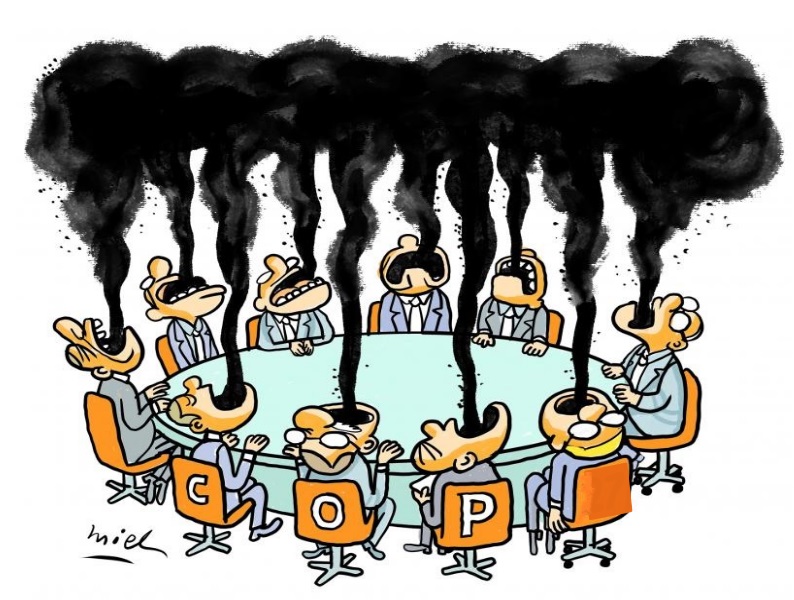
Two weeks of tense UN climate talks in Bonn, Germany, have produced few tangible outcomes as diplomats faced “gridlock”.
Negotiators failed to find agreement in numerous areas, such as scaling up global emissions cuts and funding for climate adaptation.
In the closing plenary, many diplomats lamented weakened trust in the UN climate process, as it struggled to find its footing in a new geopolitical landscape.
As ever, climate finance was one of the greatest sources of tension between developed and developing countries, influencing the debate around adaptation and trade in the Bonn talks.
Many countries criticised “coordinated attacks” on science by those with “fossil-fuel interests”.
Some delegates saw progress on a “just transition mechanism” to support communities through decarbonisation as a positive outcome, with a package of texts agreed for the COP31 climate summit in Antalya, Turkey.
Reporting from the talks in Bonn, Carbon Brief covers the key outcomes and disputes at the 64th biannual sessions of the UN Framework Convention on Climate Change (UNFCCC) subsidiary bodies (SB64).
- Adaptation
- Just transition
- Climate finance
- Global stocktake
- Mitigation work programme
- Action agenda and new initiatives
- Climate science
- Fossil fuels
- Trade dialogues
- COP reform
- Ocean dialogue
- Road to COP31
………………………………………………………………………………………………………………………………………………………………………………………………………………………. Road to COP31
Attention now turns to COP31, which will be held in the resort city of Antalya, Turkey.
…… COP31 is being promoted as an “implementation COP”, helping to “close the gap between multilateral commitments and real-world delivery”, according to its website.
However, the fraught negotiations in Bonn, including the lack of progress on key elements, mean the future effectiveness of climate summits is increasingly under question. …….
…………“In some negotiating rooms, we’ve heard a familiar tendency towards you-first-ism: Groups refusing to deliver commitments or allow the process to move forward unless others go first. This is a recipe for gridlock when we need all negotiating tracks to be moving in the fast lane.” – UN Climate Change executive secretary Simon Stiell ………..https://www.carbonbrief.org/bonn-climate-talks-key-outcomes-from-the-june-2026-un-climate-conference/
1 This Month

To see nuclear-related stories in greater depth and intensity – go to https://nuclearinformation.wordpress.com
-
Archives
- September 2026 (184)
- August 2026 (330)
- July 2026 (355)
- June 2026 (287)
- May 2026 (306)
- April 2026 (356)
- March 2026 (251)
- February 2026 (267)
- January 2026 (308)
- December 2025 (358)
- November 2025 (359)
- October 2025 (375)
-
Categories
- 1
- 1 NUCLEAR ISSUES
- business and costs
- climate change
- culture and arts
- ENERGY
- environment
- health
- history
- indigenous issues
- Legal
- marketing of nuclear
- media
- opposition to nuclear
- PERSONAL STORIES
- politics
- politics international
- Religion and ethics
- safety
- secrets,lies and civil liberties
- spinbuster
- technology
- Uranium
- wastes
- weapons and war
- Women
- 2 WORLD
- ACTION
- AFRICA
- Atrocities
- AUSTRALIA
- Christina's notes
- Christina's themes
- culture and arts
- Events
- Fuk 2022
- Fuk 2023
- Fukushima 2017
- Fukushima 2018
- fukushima 2019
- Fukushima 2020
- Fukushima 2021
- general
- global warming
- Humour (God we need it)
- Nuclear
- RARE EARTHS
- Reference
- resources – print
- Resources -audiovicual
- Weekly Newsletter
- World
- World Nuclear
- YouTube
-
RSS
Entries RSS
Comments RSS
 nuclear-news