Outgoing Fukushima plant chief says long road still ahead

The crippled Fukushima No. 1 nuclear power plant has seen improvements over the past three years but it will continue to be a difficult project during its decades-long decommissioning, the outgoing chief of the plant said Thursday.
Akira Ono, who headed the plant for three years until Thursday, said improvements include removing spent fuel rods from the damaged reactor building 4 and reducing the amount of groundwater seeping into reactor buildings, which then mixes with highly contaminated water.
“As for the working environment, workers can now have hot meals at a new, large rest station. In March, we were also able to widen the areas where they can work with their regular clothes” as radiation levels have decreased, Ono said.
Under the high radiation atmosphere, workers have to wear protective suits and full-face masks that are uncomfortable and make it hard to communicate with each other.
But the plant still needs to ensure facilities and equipment are operating more smoothly, and also further improve working conditions over the next two to three years in order to handle decommissioning work expected to take 30 to 40 more years, Ono said.
The Fukushima No. 1 plant faced an electric outage this week, which shut down some of the cooling facilities for its underground ice walls.
Ono said that the decommissioning work will also face other challenges, including identifying the exact location of melted fuel rods.
Shunji Uchida, who will be heading the plant from Friday, said he will spearhead efforts to create a strong foundation for the long decommissioning task ahead.
Ono takes on a new role at the Nuclear Damage Compensation and Decommissioning Facilitation Corporation, a body funded by the government and regional utilities to research technologies for decommissioning work.
Japan approves guidelines of reusing soil from Fukushima for public works
TOKYO, June 30 (Xinhua) — Japan’s Ministry of the Environment approved Thursday guidelines of reusing contaminated soil from the Fukushima nuclear disaster for national public works despite public concerns over safety.
According to the guidelines, Japan would allow tainted soil generated from the Fukushima decontamination work with the radioactive cesium level lower than a certain limit varying from 5,000 to 8,000 becquerels per kilogram according to different uses, to be reused in national public works.
The tainted soil, while reused, shall be covered with clean earth, concrete or other materials, so as to make the amount of radiation sustained by residents living nearby less than 0.01 mSv a year after the construction is completed, according to the guidelines.
The reuse is aimed to cut the amount of radioactive soil from Fukushima disaster to be shipped to other prefectures for final disposal, according to the ministry.
The decision was made despite public concerns that contaminated materials would still leach out as roads or other public works in which the tainted soil is used might decay or collapse during earthquakes, floods or other national disasters or fail over time.
Earlier estimates by a working group of the ministry showed that it would take as long as 170 years before the soil’s radiation levels drop to legal safety standards, while public works such as roads are often durable for just 70 years.
Under the Act on the Regulation of Nuclear Source Material, Nuclear Fuel Material and Reactors, the safety standards for reusing materials generated from the Fukushima decontamination work are less than 100 becquerels of radioactive cesium per kilogram.
http://www.shanghaidaily.com/article/article_xinhua.aspx?id=330465
Monju fiasco, Fukushima plans point to a better energy source

Michihito and Yoko Endo in Tomioka, Fukushima Prefecture, in March. The couple and other evacuees plan to build a large-scale solar farm on the rice paddies behind them.
We are perhaps witnessing a turning point in history regarding humankind and energy.
The total capacity of facilities in Japan that sell electricity generated from solar power under the feed-in tariff system exceeded 30 gigawatts by the end of last year, according to figures of the Agency for Natural Resources and Energy.
Most of those facilities began generating power after the Great East Japan Earthquake and tsunami triggered the Fukushima No. 1 nuclear power plant disaster in 2011. Their total capacity is worth 30 nuclear reactors, although actual output depends on the time of day and the weather.
Frankly, I was surprised to learn that solar power has grown so big despite the many barriers, such as regional utilities essentially setting upper limits on the amount of electricity generated with renewable energy sources that they purchase.
And solar power is turning out to be useful.
Through inquiries with nine regional utilities, The Asahi Shimbun learned that electricity generated with solar power accounted for about 10 percent of power supply at peak demand last summer.
In the service area of Kyushu Electric Power Co., the ratio was close to 25 percent.
The shift to renewable energies is more pronounced on the global scale.
For example, global wind power capacity topped 430 gigawatts in 2015, according to the Global Status Report released on June 1 by the Renewable Energy Policy Network for the 21st Century (REN21), an international body.
Global nuclear power capacity is now 386 gigawatts, according to figures of the International Atomic Energy Agency, so wind turbines have outstripped nuclear reactors in terms of output capacity.
Solar power has a total capacity of 227 gigawatts, nearly 60 percent of that of nuclear power.
SOLAR FARM IN EMPTY TOWN
A symposium was held June 4 in Koriyama, Fukushima Prefecture, to commemorate the start of a large-scale solar farm project in the town of Tomioka, also in the prefecture. Tomioka remains entirely evacuated because of the nuclear disaster.
Under their own initiative, residents of the town plan to build a giant solar farm with an output capacity of 30 megawatts. Proceeds from the project will be used to help rebuild communities.
The plan is being led by Yoko Endo, a 66-year-old former music teacher, and her husband, Michihito, a 60-year-old former art teacher. The couple now live in evacuation in the city of Iwaki, also in Fukushima Prefecture.
The couple’s former home is in a government-designated “no-residence” zone, whereas Yoko’s family home nearby stands in a “difficult-to-return” zone.
Michihito’s 2 hectares of rice paddies have also been rendered unusable.
The couple said they thought they would still be able to produce something that would be good for Japan from their terrain, even if they could not return to Tomioka and no longer grow crops there.
They solicited cooperation from their “neighbors” in diaspora across the country for the solar farm project, and they obtained agreements from more than 30 landowners for the use of about 35 hectares of rice paddies.
The total cost of the project is 9.5 billion yen ($91 million), an exceptionally large figure for a project initiated by residents. Citizens’ investments will cover 1.3 billion yen of the expenses.
Proceeds from the project will be used to help elderly residents get to and from medical institutions and stores when they return to Tomioka. The money will also fund projects to help pass on farming technologies to younger generations when farming can resume in the town.
The couple plan to start building the solar farm this autumn and have it operational in March 2018.
“We hope to nurture the project so that people will look back and say that this solar farm project, led by the initiative of residents, was more bright and brilliant than any other project of the kind,” Yoko Endo said.
Other large-scale renewable energy projects are springing up in Fukushima Prefecture.
MONJU REACTOR IN DEADLOCK
“An energy source that relies on nuclear power is not suited to human needs,” Tetsuya Takahashi, a professor of philosophy with the University of Tokyo, said in his keynote lecture during the Koriyama symposium. “Once it runs amok, it hurts human livelihoods to an unrecoverable extent.”
Takahashi was born in Iwaki and spent his childhood in Tomioka. People from that area are now aspiring to create an energy source that is better suited to their needs.
As I listened to the professor talk, my thoughts went to Monju, the prototype fast-breeder reactor.
In 1956, shortly after Japan set out on its nuclear development program, the government said in its initial long-term plan that a fast-breeder reactor “best fits the circumstances of Japan.” At the time, the reactor appeared to represent the best solution.
In the following years, the fast-breeder reactor became the symbol of Japan’s nuclear development.
The government has spent 1 trillion yen on the construction of Monju, which began in earnest in 1985. But its development program was suspended after sodium leaked from the reactor in 1995.
Things got so bad that the Nuclear Regulation Authority recommended to science minister Hiroshi Hase last November that Monju should be brought under a different operating body.
“The first thing to do is to implement reliable maintenance in a state of suspended operation,” a study group set up by the science ministry said May 27 in a report about Monju’s operating body.
Something as basic as that is not being done properly.
A project once thought to symbolize national policy was, after all, not best suited to the people’s needs.
Melted fuel may be at the bottom of No.2 reactor
NHK has learned it is highly likely that a large amount of melted nuclear fuel remains at the bottom of one of the damaged reactors at the Fukushima Daiichi nuclear power plant.
Experts from Tokyo Electric Power Company and other institutions confirmed a large black shadow at the bottom of the No.2 reactor, using a device that uses elementary particles called muons.
The probe to see into the reactor’s interior has been conducted with the High Energy Accelerator Research Organization and others.
The analyses of the image led the experts to believe that most of the melted fuel is likely located at the bottom of the reactor together with other structures in the reactor.
This is the first time that an image of what’s believed to be molten fuel has been captured. Similar shadows are said to have been confirmed also on the walls of the reactor.
The results of the probe have a considerable impact on a process to remove melted fuel, the most difficult part of reactor decommissioning.
TEPCO is conducting further analyses of the reactor.
During the accident in 2011, nuclear fuel melted down in the plant’s 3 reactors. Most of the fuel in the No.1 reactor is believed to have melted through the core. But the locations of the fuel in the No.2 and 3 reactors are not yet known.
Prefecture’s subsidies for residents near Fukushima No. 1 plant to run out next year
FUKUSHIMA – Fukushima Prefecture’s fund to provide subsidies to residents living near Tokyo Electric Power Company Holdings Inc.’s Fukushima No. 1 nuclear power plant is expected to run out during fiscal 2017, sources said Tuesday.
The prefectural government will hold talks with nine municipalities around the plant this autumn to decide whether to abolish the subsidy program during fiscal 2016, which ends next March, or find a new revenue source to continue it, the sources said.
The fund finances benefits provided to some 33,770 households and offices in the nine municipalities.
The balance of the fund is expected to decline to about ¥50 million by the end of fiscal 2016 from ¥280 million a year before.
Benefits to residents near the plant began in fiscal 1981. Initially, they were provided by the central government through the prefecture.
The central government halted the grants to the prefecture at the end of fiscal 2014, after Tepco decided in January 2014 to decommission all of the reactors at the plant following its triple meltdown in March 2011.
But the prefectural government continued the provision using subsidies not given to residents whose whereabouts became unknown after the nuclear disaster started.
Chiba wants radioactive designation lifted from Fukushima-contaminated waste
CHIBA – The Chiba Municipal Government on Tuesday filed for Environment Ministry approval to lift the radioactive designation for waste stored in the city that was contaminated by the Fukushima reactor meltdowns five years ago.
This marked the first application in Japan seeking to lift the radioactive designation for waste tainted by the 2011 meltdowns at Tokyo Electric Power Company Holdings Inc.’s Fukushima No. 1 nuclear power plant.
The move came after the city found that levels of radioactive materials in the designated waste are lower than the national designation standards of over 8,000 becquerels per kilogram.
At present, designated radioactive waste generated by the nuclear disaster is stored in 12 prefectures in eastern Japan, including Tokyo.
The ministry plans to judge whether to lift the designation for waste in Chiba in about one month.
In Chiba, 7.7 tons of designated waste is currently stored at a waste disposal center.
The lifting of the designation will allow the city to dispose of the waste the same way as general waste, but the city plans to continue storing the waste for the time being.
Utilities asked by shareholders to abandon nuclear energy

Protesters including shareholders hold up signs criticizing Tokyo Electric Power Co. executives in front of the Yoyogi First Gymnasium where the utility held its annual shareholders’ meeting on June 28.
Shareholders call on utilities to abandon nuclear energy
Japan’s nine major electric power companies faced renewed calls to end their dependence on nuclear energy at their annual shareholders’ meetings on June 28.
However, as such proposals require approval by a two-thirds majority of shareholders with voting rights for passage, all were expected to be rejected.
A total of 73 motions from shareholders were submitted at the meetings of the nine utilities. Many called on the companies to leave nuclear power generation.
But executives again stressed the need for nuclear plants to turn a profit.
At the shareholders’ meeting held by Kyushu Electric Power Co., President Michiaki Uriu said: “We have been able to secure a profit due to the resumption of operations at nuclear plants and a large decrease in fuel costs. We will work toward an early resumption of operations at the Genkai nuclear plant (in Saga Prefecture).”
Kyushu Electric Power resumed operations last year at two reactors of the Sendai nuclear power plant in Satsuma-Sendai, Kagoshima Prefecture, in southern Kyushu.
Kansai Electric Power Co. also resumed operations at two reactors at the Takahama nuclear plant in Fukui Prefecture in central Japan this year, but the Otsu District Court issued a temporary injunction to halt them.
“We will make every effort to gain the understanding of society, starting with local residents,” President Makoto Yagi said at the Kansai Electric Power shareholders’ meeting on June 28. “Nuclear plants are an important energy source from the standpoint of economics and environmental issues. We will implement a cut in electricity rates as soon as possible through an early resumption of operations.”
At the Tokyo Electric Power Co. Holdings Inc. meeting, President Naomi Hirose said: “We will proceed with measures to allow us to work on the important corporate issue of resuming operations at the Kashiwazaki-Kariwa nuclear plant (in Niigata Prefecture).”
Hirose also apologized for a delay in announcing that meltdowns had occurred at the Fukushima No. 1 nuclear power plant after the Great East Japan Earthquake and tsunami struck in March 2011.
Members of the Nuclear Phase-Out TEPCO Shareholder’s Movement handed out fliers in front of the venue for the TEPCO meeting.
Yui Kimura, 63, a leading member of the group, criticized the revelation about covering up the meltdown at the Fukushima plant.
“TEPCO is trying to resume operations at the Kashiwazaki-Kariwa plant without taking responsibility for the accident,” Kimura said.
Another shareholder, Fusako Iwata, 66, from Gifu Prefecture, said: “At that time, the public believed without question what the central government and TEPCO said. We will not be deceived again.”
http://www.asahi.com/ajw/articles/AJ201606280064.html
Utilities reject shareholders’ call to abandon nuclear power
Japan’s nine major electric power companies shot down renewed proposals calling for them to end their dependence on nuclear energy at their annual shareholders’ meetings on June 28.
The top executives of each utility again stressed the importance of nuclear power and indicated that they plan to resume such operations at their plants as soon as possible.
At the Tokyo Electric Power Co. shareholders’ meeting, President Naomi Hirose apologized for his predecessor’s instruction to employees to avoid using the term “meltdown” during the early phases of the March 2011 disaster at the Fukushima No. 1 nuclear power plant.
“I sincerely apologize for causing concerns,” Hirose said in responding to a question from a shareholder. “I promise that we will never impose silence on our employees under any circumstances.”
TEPCO described the condition of the Fukushima reactors as suffering less serious “core damage” for two months after the Great East Japan Earthquake and tsunami crippled the plant.
Seventy-three motions from shareholders were submitted at the meetings of the nine utilities. Many called on the companies to end nuclear power generation.
However, since proposals require approval by a two-thirds majority of the voting rights of participating shareholders for passage, all were rejected.
Japan’s roads to have radioactive foundations

The country’s environment ministry will use irradiated soil from the Fukushima nuclear disaster to build roads, sea walls, railway lines and other public building projects
It is one of the biggest headaches of the Fukushima nuclear accident: how to dispose of vast volumes of radioactive soil, enough to fill 18 sports stadiums, contaminated by fallout from the disaster? Now the government of Japan has found an original, and controversial, answer — use it to build roads.
The country’s environment ministry is pressing ahead with a plan to use the irradiated soil as the foundations of roads, sea walls, railway lines and other public building projects. They insist that the concrete and asphalt which will cover the soil base will shield motorists and local residents from…
http://www.thetimes.co.uk/_TP_/article/japan-s-roads-to-have-radioactive-foundations-wtkvxdgsc
GE Hitachi Nuclear Energy’s struggle to get the Indian market
 India Won’t Buy Untested GE-Hitachi Reactors, Atomic Chief Says, Bloomberg Rajesh Kumar Singh Rick Clough June 29, 2016
-
GE Hitachi reactors don’t have a reference plant, Basu says
-
GE calls for channeling nuclear liability to plant operators
-
India won’t buy untested GE Hitachi Nuclear Energy’s atomic reactors, reflecting safety concerns, the country’s top atomic-energy bureaucrat said.
“Right now they have offered us reactors that do not have a reference plant,” Sekhar Basu, secretary at India’s Department of Atomic Energy, said in a phone interview. “We will not buy a reactor that doesn’t have a reference plant.”
India’s reservations come months after General Electric Co. Chairman Jeffrey Immelt said his company won’t risk building a nuclear plant in India, citing the nation’s nuclear liability law, which exposes equipment suppliers to claims and litigation if there is an accident. The law has stood in the way of India’s nuclear expansion plans, as reactor suppliers including GE and Westinghouse Electric Co. weigh risks of doing business in the country.
- “GE Hitachi continues to have a strong interest in providing our technology to India for the eventual construction of multiple” economic simplified boiling-water reactors, or ESBWRs, the company said in an e-mailed statement. “We believe the path forward requires a sustainable regulatory environment, which would include a nuclear-liability law that channels liability to plant operators consistent with global best practices.”…….
- EDF has a pact to build a plant in the western state of Maharashtra, while the Russian-designed reactors are being used for a plant in the southern state of Tamil Nadu. http://www.bloomberg.com/news/articles/2016-06-29/india-won-t-buy-untested-ge-hitachi-reactors-atomic-chief-says
Did Prime Minister Abe have a role in the Fukushima coverup
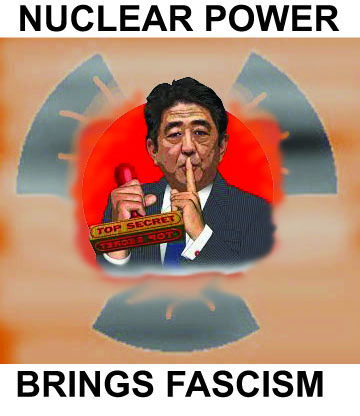 How far up the ladder did the #Fukushima cover up really go? Digital Journal, By Karen Graham Jun 27, 2016 Tokyo – About the only country today where a public apology is still accepted is in Japan, and quite honestly, this writer has always thought life would be so much more simpler if that’s all it took to right a profound wrong.
Hirose’s apology on the cover-up was to be expected after the news came out that an investigation had found Hirose’s predecessor had instructed staff to avoid using the term, “meltdown” after the disaster in March 2011. “I would say it was a cover-up,” Hirose told a news conference. “It’s extremely regrettable.”……..
And owing to the fact that Mr. Abe has been adamant in saying Japan needs its nuclear power plants, anything he says about Fukushima I would take with a grain of salt. Digital Journal reported that on March 6, this year at a press conference, Abe insisted that safety of nuclear plants was the government’s “top priority.” He also said the government would “not change its policy” in which reactors that meet the new standards can be restarted. So, yes, I think he probably did speak sternly with TEPCO officials in March 2011.
Power outage at Fukushima nuclear power plant causes machinery to shut down
The operator of the crippled Fukushima No. 1 nuclear power plant said Tuesday a power outage halted some systems but that no problems were detected in the cooling of the three melted-down reactors.
Machinery affected included cooling equipment for an underground ice wall, which is being set up around four reactor buildings in a bid to restrict the flow of groundwater beneath them.
Tokyo Electric Power Co. said an alarm sounded at 3:40 a.m. Tuesday, and workers found a unit that filters radioactive cesium from contaminated water had shut down.
The Nos. 1 to 3 reactors, which suffered meltdowns in the 2011 crisis, are currently being kept cool by having water poured into them every day.
Tepco said no abnormalities were detected with this equipment or in the surrounding environment.
Nuclear Policy on Back Burner in Fukushima Election Campaign
Fukushima, June 28 (Jiji Press)–Nuclear policy has been put on the back burner in the Fukushima prefectural constituency in the election campaign for the House of Councillors, the upper chamber of Japan’s parliament.
Some 90,000 residents are still evacuated in the northeastern prefecture five years after the triple meltdown at Tokyo Electric Power Co. Holdings Inc.’s <9501> Fukushima nuclear power plant.
Two main candidates, one each from the ruling Liberal Democratic Party and the major opposition Democratic Party, are both campaigning to scrap all nuclear reactors in the prefecture.
But the candidates, the LDP’s Mitsuhide Iwaki and the DP’s Teruhiko Mashiko, both incumbents, have not elaborated on nuclear policy, reflecting gaps with their respective parties’ Tokyo headquarters.
On Wednesday, when the official campaign period for the July 10 Upper House election began, Prime Minister and LDP President Shinzo Abe criticized the DP’s predecessor, the Democratic Party of Japan, for delays in reconstruction efforts in the prefecture.
Reuse of radioactive soil approved despite 170-year safety criteria estimate
An Environment Ministry decision to allow reuse of contaminated soil emanating from the Fukushima nuclear disaster under road pavements came despite an estimate that it will take 170 years before the soil’s radiation levels reach safety criteria, it has been learned.
According to the revelation, an Environment Ministry panel approved the recycling of tainted soil generated from Fukushima decontamination work despite an estimate presented during a closed meeting of a working group that it will require 170 years for radioactivity concentrations in the contaminated soil to drop to legal safety standards, shelving a decision over whether such soil should be put under long-term management.
The ministry is planning to allow reuse of the tainted soil in mounds beneath road pavements, asserting that radiation will be shielded by concrete covering such mounds. However, an estimate presented at the closed meeting of the working group on the radiation impact safety assessment states that such mounds would be durable for just 70 years, suggesting that the soil would need to be managed for another 100 years after its road use ends.
“There’s no way they can manage the soil for a total of 170 years without isolating it,” said an angry expert.
The working group is a subgroup of an Environment Ministry panel called “the strategic panel for technical development of volume reduction and reuse of removed soil in temporary storage,” and the two groups share some of their members. According to the working group’s in-house documents obtained by the Mainichi Shimbun, the closed meetings were held six times between January and May, with the attendance of over 20 people including eight group members and officials from the Environment Ministry and the Japan Atomic Energy Agency (JAEA).
Under the Act on the Regulation of Nuclear Source Material, Nuclear Fuel Material and Reactors, the safety standards for recycling metals and other materials generated from the decommissioning of nuclear reactors are set at up to 100 becquerels of radioactive cesium per kilogram. Meanwhile, the special measures law concerning decontamination of radioactive materials, which was enacted after the 2011 Fukushima No. 1 Nuclear Power Plant crisis, classifies materials whose radiation levels top 8,000 becquerels per kilogram as designated waste, and stipulates that waste whose radiation levels are 8,000 becquerels or lower can be put to ordinary disposal.
According to working group chairman and Hokkaido University professor Tsutomu Sato, the group served as a forum to “prepare itself for theoretical argument” over setting the upper radiation dose limit for reusing contaminated soil at 8,000 becquerels.
The Environment Ministry set forth the plan to reuse contaminated soil in public works such as in mounds beneath road pavements and in coastal levees on the grounds that the “radiation levels can be contained to levels on par with clearance levels” by covering tainted soil with concrete and other materials. During the second meeting of the working group on Jan. 27, a member pointed out, “The problem is what to do with tainted soil after use (in roads and other structures). If such soil is allowed to be dug over freely, it would be difficult to convince the upper limit of radiation levels (for soil reuse).”
A JAEA official presented the aforementioned estimate, saying, “For example, it will take 170 years for radiation levels to reduce to 100 becquerels if tainted soil of 5,000 becquerels is put to reuse. Because the durable life of soil mounds is set at 70 years, a total of 170 years will be required to manage that soil — both when the soil is being used in mounds and after that.”
Discussions on the soil management period never went any further, and the strategic panel overseeing the working group on June 7 approved recycling such contaminated soil on condition that the maximum radiation levels of such soil be 8,000 becquerels and that the levels should be no more than 6,000 becquerels if the soil is covered with concrete and no more than 5,000 becquerels if the soil is planted with trees.
The Environment Ministry is set to begin a demonstration experiment possibly later this year, in which radiation levels will be measured in mounds using soil with different radioactivity concentrations at temporary storage sites in Fukushima Prefecture.
Working group chairman Sato, who also serves as a member of the strategic panel, admitted the existence of the 170-year estimate, but said, “We have discussed the matter but haven’t decided anything. We just presented our initial idea for reuse (of tainted soil) this time, and we will examine the feasibility of the plan later.”
Hiroshi Ono, who headed the Environment Ministry’s decontamination and interim storage planning team, said, “We have yet to decide what to do (with the tainted soil) in the end (after reuse), but the Environment Ministry will take responsibility for that.”
Another working group set up under the strategic panel, whose members primarily comprise those from the Japan Society of Civil Engineers, has presented a view, stating, “It will be in no way easy to secure the traceability (of recycled tainted soil).”
http://mainichi.jp/english/articles/20160627/p2a/00m/0na/010000c
Next Thyroid Screening Scheduled at Tarachine Screening Center, Iwaki city on July 17, 2016

On Saturday June 25, 2016 Sun Life gave thyroid screenings in Fukushima city. A lot of people, small children and adults came to be examined.
The attending physician was Nomune Yoshihiro, a professor from the Ota Integrated Medical Development Center of Shimane University School of Medicine.
The next thyroid screening is scheduled to be performed at Tarachine, Iwaki city on July 17 2016. To schedule an appointment, those who wish to be examined should please contact Tarachine Screening Center as soon as possible. Adults as well as children can be examined.
The screening test considers cysts, and also thyroid of a state other than nodules, divided as follows:
No findings = nothing particular seen.
Yes, some Findings = cysts or nodules were observed, (follow-up required). It requires close examination by a specialist.

In addition A2 has been subdivided to three status:
A2-a Cysts that occur in the course of the A2-a anagen phase.
A2-b Anagen phase is not a reaction cyst.
A2-c Nodule (1mm ~ up to 5 mm)
The results of the echo image and the medical examination report are immediately available and given to you after the examination is finished.
Tarachine Screening Center
Onahamahanabatake-cho 11-3, Iwaki city, Fukushima Prefecture
Tel: 0246‐92‐2526
Radioactive cesium fallout on Tokyo from Fukushima concentrated in glass microparticles
Public Release: 26-Jun-2016 Goldschmidt Conference
New research shows that most of the radioactive fallout which landed on downtown Tokyo a few days after the Fukushima accident was concentrated and deposited in non-soluble glass microparticles, as a type of ‘glassy soot’. This meant that most of the radioactive material was not dissolved in rain and running water, and probably stayed in the environment until removed by direct washing or physical removal. The particles also concentrated the radioactive caesium (Cs), meaning that in some cases dose effects of the fallout are still unclear. These results are announced at the Goldschmidt geochemistry conference in Yokohama, Japan.
The flooding of the Fukushima Daiichi Nuclear Power Plant (FDNPP) after the disastrous earthquake on March 11 2011 caused the release of significant amounts of radioactive material, including caesium (Cs) isotopes 134Cs (half-life, 2 years) and 137Cs (half-life, 30 years).
Japanese geochemists, headed by Dr Satoshi Utsunomiya (Kyushu University, Japan), analysed samples collected from within an area up to 230 km from the FDNPP. As caesium is water-soluble, it had been anticipated that most of the radioactive fallout would have been flushed from the environment by rainwater. However, analysis with state-of-the-art electron microscopy in conjunction with autoradiography techniques showed that most of the radioactive caesium in fact fell to the ground enclosed in glassy microparticles, formed at the time of the reactor meltdown.
The analysis shows that these particles mainly consist of Fe-Zn-oxides nanoparticles, which, along with the caesium were embedded in Si oxide glass that formed during the molten core-concrete interaction inside the primary containment vessel in the Fukushima reactor units 1 and/or 3. Because of the high Cs content in the microparticles, the radioactivity per unit mass was as high as ~4.4×10¹¹ Bq/g, which is between 107 and 108 times higher than the background Cs radioactivity per unit mass of the typical soils in Fukushima.
Closer microparticle structural and geochemical analysis also revealed what happened during the accident at FDNPP. Radioactive Cs was released and formed airborne Cs nanoparticles. Nuclear fuel, at temperatures of above 2200 K (about as hot as a blowtorch), melted the reactor pressure vessel resulting in failure of the vessel. The airborne Cs nanoparticles were condensed along with the Fe-Zn nanoparticles and the gas from the molten concrete, to form the SiO2 glass nanoparticles, which were then dispersed.
Analysis from several air filters collected in Tokyo on 15 March 2011 showed that 89% of the total radioactivity was present as a result of these caesium-rich microparticles, rather than the soluble Cs, as had originally been supposed.
According to Dr Satoshi Utsunomiya;
“This work changes some of our assumptions about the Fukushima fallout. It looks like the clean-up procedure, which consisted of washing and removal of top soils, was the correct thing to do. However, the concentration of radioactive caesium in microparticles means that, at an extremely localised and focused level, the radioactive fallout may have been more (or less) concentrated than anticipated. This may mean that our ideas of the health implications should be modified”.
Commenting, Prof. Bernd Grambow, Director of SUBATECH laboratory, Nantes, France and leader of the research group on interfacial reaction field chemistry of the ASRC/JAEA, Tokai, Japan, said:
“The leading edge observations by nano-science facilities presented here are extremely important. They may change our understanding of the mechanism of long range atmospheric mass transfer of radioactive caesium from the reactor accident at Fukushima to Tokyo, but they may also change the way we assess inhalation doses from the caesium microparticles inhaled by humans. Indeed, biological half- lives of insoluble caesium particles might be much larger than that of soluble caesium”.
http://www.eurekalert.org/pub_releases/2016-06/gc-rcf062316.php
1 This Month





PLEASE OPPOSE HR 8255 AND S.3639 – bills would accelerate satellite deployment, with no environmental review or safeguards – https://ncstd5li.quorum.us/campaign/169331/
To see nuclear-related stories in greater depth and intensity – go to https://nuclearinformation.wordpress.com
-
Archives
- October 2026 (49)
- September 2026 (339)
- August 2026 (330)
- July 2026 (355)
- June 2026 (287)
- May 2026 (306)
- April 2026 (356)
- March 2026 (251)
- February 2026 (267)
- January 2026 (308)
- December 2025 (358)
- November 2025 (359)
-
Categories
- 1
- 1 NUCLEAR ISSUES
- business and costs
- climate change
- culture and arts
- ENERGY
- environment
- health
- history
- indigenous issues
- Legal
- marketing of nuclear
- media
- opposition to nuclear
- PERSONAL STORIES
- politics
- politics international
- Religion and ethics
- safety
- secrets,lies and civil liberties
- spinbuster
- technology
- Uranium
- wastes
- weapons and war
- Women
- 2 WORLD
- ACTION
- AFRICA
- Atrocities
- AUSTRALIA
- Christina's notes
- Christina's themes
- culture and arts
- Events
- Fuk 2022
- Fuk 2023
- Fukushima 2017
- Fukushima 2018
- fukushima 2019
- Fukushima 2020
- Fukushima 2021
- general
- global warming
- Humour (God we need it)
- Nuclear
- RARE EARTHS
- Reference
- resources – print
- Resources -audiovicual
- Weekly Newsletter
- World
- World Nuclear
- YouTube
-
RSS
Entries RSS
Comments RSS

