Nuclear emergency in Japan
Radiation 1000 times above normal at nuclear plant
Radiation 1000 times above normal at nuclear plant | The Australian
Japan earthquake forces thousands to evacuate in nuclear plant emergency- Thousands of people were being evacuated from their homes as Japan scrambled to shut down reactors and prevent a catastrophic meltdown
Japan earthquake forces thousands to evacuate in nuclear plant emergency | World news |
Japan earthquake: nuclear disaster fears as reactor overheats Japan was battling to avoid a nuclear disaster after a reactor was critically damaged by the country’s biggest earthquake. Japan earthquake: nuclear disaster fears as reactor overheats – Telegraph
Japan Reactor Damaged in Quake May Need to Vent Radiation, Official Says,
Japan Reactor Damaged in Quake May Need to Vent Radiation, Official Says – Bloomberg
Fire breaks out at Japanese nuclear power plant, World affairs | Fire breaks out at Japanese nuclear power plant
Hundreds perish in 8.9 earthquake, tsunamis as minister warns of nuclear radiation Hundreds perish in 8.9 earthquake, tsunamis as minister warns of nuclear radiation | The Australian
—
Japan Earthquake: The Energy Players Who Stand to Benefit | BNET, 12 Marcg 11,
Japan Earthquake: The Energy Players Who Stand to Benefit | BNET
Factbox: Japan quake tears through commodity, energy sectorsFactbox: Japan quake tears through commodity, energy sectors | Reuters
Japanese tax-payers should not pay up for risky Texas nuclear project
Clearly the state has other cleaner and cheaper alternatives, such as wind power or even natural gas. Overall, this looks like a bad deal all around: for Texas, for the Japan Bank for International Cooperation, and for Japanese taxpayers.
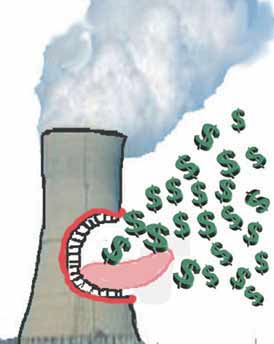
Why Japan Should Say ‘No’ To Funding U.S. Nuclear Plants, Change.org News, by Zachary Shahan · February 18, 2011 Nuclear energy, even if it were the cleanest, greenest, safest thing on the planet (which it is definitely not), is extremely financially risky. For this reason, it is nearly impossible for nuclear projects in the U.S. to get enough funding to get off the ground. Instead, companies rely on loan guarantees from the federal government, which ensures lenders that if the projects fail, taxpayers foot the bill and bail out the failed nuclear companies—to the tune of several billion dollars. Continue reading
Japan unhappy with nuclear deal that might promote India’s nuclear weapons
India is demanding that the upcoming accord,….include a clause to ensure the deal’s conclusion will not hamper its nuclear weapons program
India nuke tech pact hits snags | The Japan Times Online, Jan. 25, 2011 Kyodo News. Japan and India are at odds over provisions attached to a civil nuclear cooperation pact, including one that bans the transfer of “sensitive technology” from Japan that could be used to develop atomic weapons, sources close to the bilateral negotiations said. Continue reading
Cancer a late result of low level radiation, Nagasaki study shows.
the researchers looked at about 86,000 people who survived the bombing of Nagasaki….the recent study gave credence to the fact that radiation even at moderately low doses was hazardous.
A-bomb survivors still getting sick | hc2d.co.uk | Healthcare News16th Luisetta Mudie December 2010 People who survived the atomic bomb dropped on Nagasaki during World War II still get radiation-related illnesses, according to a recent Japanese study. Continue reading
Ionising radiation’s cancer risk just as great for older persons
Recent analysis of the statistical evidence from long-term studies of atomic bomb survivors in Japan indicates that for radiation exposure after about age 30, the risk of developing radiation-induced cancer does not continue to decrease.

Radiation exposure: cancer risk in middle age, The Hindu , K.S. PARTHASARATHY, 4 Nov 10, The risk of cancer associated with radiation exposure in middle age may not be lower than the risk with exposure at younger ages. Continue reading
General Electric and AREVA negotiating with Japan to further their nuclear sales
The launch of bilateral talks in June on the nuclear cooperation accord triggered an immediate outcry from survivors of the U.S. atomic bombings of Hiroshima and Nagasaki in 1945……
Uncertainty over tests stymies India nuclear pact, The Japan Times Online, By MAYA KANEKO, Kyodo, 26 Oct 10, Torn between economic gains and a national credo of abolishing nuclear weapons as the only country struck by them, Japan faces a dilemma in negotiating a civilian nuclear cooperation pact with India. Continue reading
Obama – Nobel Peace Prize winner, but nuclear weapons tester
He was even awarded the Nobel Peace Prize. What was that all about? How will the U.S. government apologize to A-bomb survivors?”….
A-bomb survivors outraged at Obama over subcritical nuclear test – The Mainichi Daily News, 14 Oct 10, Victims of atomic bombings expressed their disappointment at U.S. President Barack Obama after his administration carried out its first subcritical nuclear test last month. Continue reading
Further proof of radiation-caused cancers in large scale research study
Study of Japanese atomic bomb survivors shows radiation exposure poses similar risk of first and second cancers, Health Canal.com, 17 Sept 10, First large-scale study to assess how radiation influences risk of multiple cancers Continue reading
Very high radiation releases from Japanese nuclear reactor
Radiation rose to 2,100 times the normal level at Niigata plant. Japan Today: 17th September, NIIGATA —Radiation at about 2,100 times the normal level was detected in gaseous waste at a nuclear reactor at Tokyo Electric Power Co’s Kashiwazaki-Kariwa power plant in Niigata Prefecture on Thursday but no harm was done to the surrounding environment, according to the company…..
.The power company said Sept 10 that it detected radiation at 27 times the normal level in gaseous waste at the reactor and was closely monitoring the situation.
In July last year, the company halted operation of the No.7 reactor after radioactive gas leaked from the capsular vessel in the fuel pin. The company replaced the fuel after the incident. Radiation rose to 2,100 times the normal level at Niigata plant › Japan Today: Japan News and Discussion
Japan warns India against nuclear weapons testing
Japan should stop working with India on atomic energy if it conducts nuke tests, The Mainichi Daily News, 24 Aug 2010, During negotiations on a bilateral civil nuclear pact, Foreign Minister Katsuya Okada told his Indian counterpart that Tokyo will immediately discontinue its cooperation with India over atomic energy technology if it conducts a nuclear test…….India conducted nuclear tests in 1974 and 1998. Cooperation with any country like India on atomic energy could make the NPT a dead letter and give Iran and other countries that are suspected of developing nuclear weapons even though they are parties to the treaty an excuse to develop nuclear arms…………Japan should stop working with India on atomic energy if it conducts nuke test – The Mainichi Daily News
Censorship of radiation effects from atomic bombing of Nagasaki
Nagasaki was “forgotten” from the very start, thanks to a blatant act of press censorship…..the real reason for the censorship was the United States did not want the world to learn about the morally troubling radiation effects
Press Censorship: How the Truth Was Hidden About Nagasaki | The Nation, 9 Aug 2010, Greg Mitchell “………..many who support the first atomic bombing have expressed severe misgivings about number two because of the failure of United States to give the Japanese at least a few more days to consider surrender after the first blast (and the Soviets’ declaration of war). Kurt Vonnegut Jr. once said in an interview that the “nastiest act by this country, after human slavery, was the bombing of Nagasaki.” Continue reading
Hiroshima atomic bomb survivors bear witness today
It was a black rain with big drops……

This It How It Feels To Be Under A Nuclear Attack | Gizmodo Australia, By Akiko Takakura and others on August 6, 2010 “………..Since Hiroshima was completely enveloped in flames, we felt terribly hot and could not breathe well at all. After a while, a whirlpool of fire approached us from the south. It was like a big tornado of fire spreading over the full width of the street. Whenever the fire touched, wherever the fire touched, it burned. It burned my ear and leg, I didn’t realise that I had burned myself at that moment, but I noticed it later….
The whirlpool of fire that was covering the entire street approached us from Ote-machi. So everyone just tried so hard to keep away from the fire. It was just like a living hell. After a while, it began to rain. The fire and the smoke made us so thirsty and there was nothing to drink, no water, and the smoke even disturbed our eyes. As it began to rain, people opened their mouths and turned their faces towards the sky and try to drink the rain, but it wasn’t easy to catch the rain drops in our mouths. It was a black rain with big drops……
This It How It Feels To Be Under A Nuclear Attack | Gizmodo Australia
Cancers will increase as young Hiroshima victims live on
Disease and regret weigh on atomic-bomb survivors By NANAO KAMADA, M.D., chief director of the Hiroshima Atomic-bomb Survivors Relief Foundation. The Japan Times Aug. 6, 2010 “……Among the survivors, various types of malignant tumors developed over time because of their exposure to atomic radiation. The occurrence of leukemia started to increase three years after the bombing, thyroid gland cancer eight years after, breast and lung cancer 10 years after, and stomach and colon cancers 15 years after. Continue reading
A record 67 nations to be represented at Hiroshima memorial
UK, US, France may attend Hiroshima bombing anniversary for first time, NewsTrackd 28 Jul 2010 Tokyo, (ANI): Britain and the United States are considering sending representatives for the first time to the 65th anniversary ceremony of the 1945 atomic bombing of Hiroshima. Continue reading
Hypocrisy as Japan seeks to be nuclear power salesman
Japan emphasises that its technology exports are for the peaceful production of nuclear energy.
But as it knows only too well, the plutonium produced in fission reactors can also be used to produce nuclear weapons.
Anxiety mushrooms over Japanese nuclear exports | The Australian, Rick Wallace, July 15, 2010 IT’S hard not to draw cynical conclusions about Japan’s decision to pursue sales of nuclear technology overseas. One of the country’s most treasured principles appears to have a price as it hawks nuclear systems to India, the Middle East and perhaps other countries. Continue reading
-
Archives
- October 2026 (112)
- September 2026 (339)
- August 2026 (330)
- July 2026 (355)
- June 2026 (287)
- May 2026 (306)
- April 2026 (356)
- March 2026 (251)
- February 2026 (267)
- January 2026 (308)
- December 2025 (358)
- November 2025 (359)
-
Categories
- 1
- 1 NUCLEAR ISSUES
- business and costs
- climate change
- culture and arts
- ENERGY
- environment
- health
- history
- indigenous issues
- Legal
- marketing of nuclear
- media
- opposition to nuclear
- PERSONAL STORIES
- politics
- politics international
- Religion and ethics
- safety
- secrets,lies and civil liberties
- spinbuster
- technology
- Uranium
- wastes
- weapons and war
- Women
- 2 WORLD
- ACTION
- AFRICA
- Atrocities
- AUSTRALIA
- Christina's notes
- Christina's themes
- culture and arts
- Events
- Fuk 2022
- Fuk 2023
- Fukushima 2017
- Fukushima 2018
- fukushima 2019
- Fukushima 2020
- Fukushima 2021
- general
- global warming
- Humour (God we need it)
- Nuclear
- RARE EARTHS
- Reference
- resources – print
- Resources -audiovicual
- Weekly Newsletter
- World
- World Nuclear
- YouTube
-
RSS
Entries RSS
Comments RSS

