Implications of a Possible US Ground Invasion of Iran
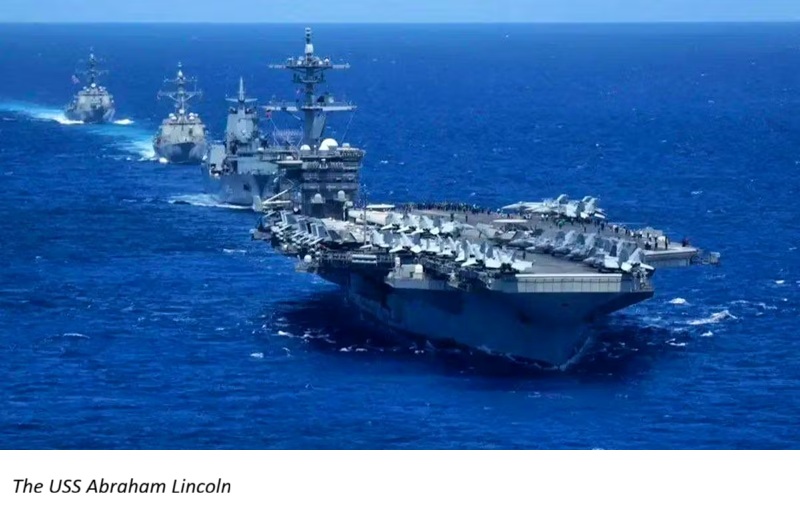
Abbas Hashemite, March 30, 2026, https://journal-neo.su/2026/03/30/implications-of-a-possible-us-ground-invasion-of-iran/
Following Iran’s strong retaliation, the United States is mulling a ground invasion of the country. However, it would have significant implications for the US.
Escalation Amidst Diplomacy
Despite ongoing negotiations over Iran’s nuclear program, the United States and Israel attacked Iran, violating international rules and norms. Most of Iran’s top-level military and civilian leadership was assassinated in the US and Israeli attack on February 28, 2026. In retaliation, Iran targeted Israeli cities and its nuclear and energy infrastructure, along with key US military facilities in the region. Iran also closed the Strait of Hormuz, a key route for global maritime oil trade, which increased global inflation as energy and oil prices surged worldwide.
Since February 28, Iran has been continuously targeting Israeli and US interests in the Middle East. Iran’s strong retaliation against the United States and Israel and its closure of the Strait of Hormuz have exasperated US President Trump. Surging global inflation due to his unnecessary “war of choice,” as Americans call it, has made him desperate to secure a deal over the issue of closure of the Strait of Hormuz. President Trump’s frustration is evident from his simultaneous statement about continuing the war and ending it through diplomatic negotiations.
Contradictions in Strategy and Leadership
Due to increasing contradictions between Trump’s rhetoric and actions, people around the world are curious about the future of this war. Following President Trump’s statement regarding talks with Iran, the Israeli Prime Minister Benjamin Netanyahu announced that the Israeli attacks on Iran would continue. On March 25, the Zionist Prime Minister even ordered the Israeli military to speed up its air campaign for the next 48 hours against Iran to destroy as much of its arms industry as possible. Similarly, the US Central Command, on the night when Trump talked about negotiations, reported that air strikes against Iran were carried out extensively.
The cost of the US-Israel and Iran war has already spiraled out of control. The Gulf countries are still unable to recover from the shock of this unexpected war. Amongst all this, a ground invasion of Iran would prove catastrophic for the world, and it would push the war into an ‘irreversible’ phase. Once the United States starts the ground invasion of Iran, it would become nearly impossible to stop the war, and the detrimental impacts of this war would increase manifold. For such an invasion, a clear objective and aim of the war need to be defined first. However, the US and Israeli leadership have failed to define a clear objective of this war.
Shifting Goals and the Risks of Ground War
Initially, the US and Israel stated that their goal was to remove the Islamic regime and end the country’s nuclear and missile program. However, after their failure to spark a native uprising against the Ayatollah regime and Iran’s strong retaliation, President Trump’s objective has apparently shifted towards opening the Strait of Hormuz. Pakistan’s Minister of Defense, Khawaja Asif, also mocked the US by stating, “The goal of the war seems to have shifted to opening the Strait of Hormuz, which was open before the war.” This shifting objective of the war indicates that the US policymakers are unable to define a clear aim of the war they started at the behest of Israel.
The absence of a clear objective has resulted in a military posture that no longer aligns with the initially stated goals of the war, disrupting US military planning. The ground invasion of Iran would not be possible with a few divisions, but it would require a complete military ecosystem. Iran has already mobilized one million soldiers to counter a possible US ground invasion of the country. Therefore, deploying insufficient military forces in Iran would create an imbalance, resulting only in casualties of the US soldiers. With the increasing number of military casualties, Trump’s political stature will also diminish, as the argument that “the US troops are sacrificing their lives for Israel” will strengthen.
If the United States seeks to control the Strait of Hormuz and nearby islands, it would compel Iran to respond with full military might, as it is ready to sacrifice its own energy infrastructure, which has already been significantly damaged by Israeli and US attacks. Similarly, a ground invasion of Iran through the Kurdish region is also impossible for the US, as it would result in a protracted war between the two sides. A prolonged war between the two sides would further increase the economic cost of this war.
Therefore, a ground invasion of Iran, especially under the current circumstances, is impossible. President Trump’s popularity in the US has already declined to a record low after his involvement in this Israeli war. A ground invasion of Iran would further increase political hardships for Donald Trump. However, if he continues to pursue a conflicting policy stance regarding the Iran war, it would be impossible to halt the war diplomatically and further increase mistrust between the two sides.
After murdering thousands in criminal Iran war, Trump to surrender during address to nation tonight

Walt Zlotow West Suburban Peace Coalition Glen Ellyn IL 2 Apr 26
No it won’t be the unconditional surrender Trump demanded of Iran. It will be a surrender couched as a US victory over Iran. Trump will say he’s obliterated enough of Iran’s nuclear program and missile capability to wind down his criminal war within a couple of weeks.
Nonsense. It’s the US bases in the Gulf States and Israel proper being decimated by Iran’s ferocious defense that are causing Trump to trumpet victory when in fact he’s been defeated in every war goal.
Trump didn’t achieve regime change in Iran.
Trump didn’t get Iran to surrender unconditionally or any other way at all.
Trump didn’t destroy Iran’s missile and drone defense.
Trump didn’t destroy Iran as Israel’s last remaining hegemon rival in the Middle East, the primary reason he attacked on February 28.
Trump didn’t reopen the Strait of Hormuz as promised, whose closure is threatening worldwide economic disaster.
Tonight Trump will spin his colossal defeat as victory. But while speaking, Iranian missiles and drones will continue raining down on US Gulf States bases and thruout Israel. Tomorrow the Strait of Hormuz will remain closed as gas prices continue endlessly upward.
Trump will remain trapped like the rat he is while killing more thousands before his cabinet invokes the 25th amendment to take away his license to kill and destroy.
Netanyahu woke up on Iran war day 31 with a 3-front war he cannot win
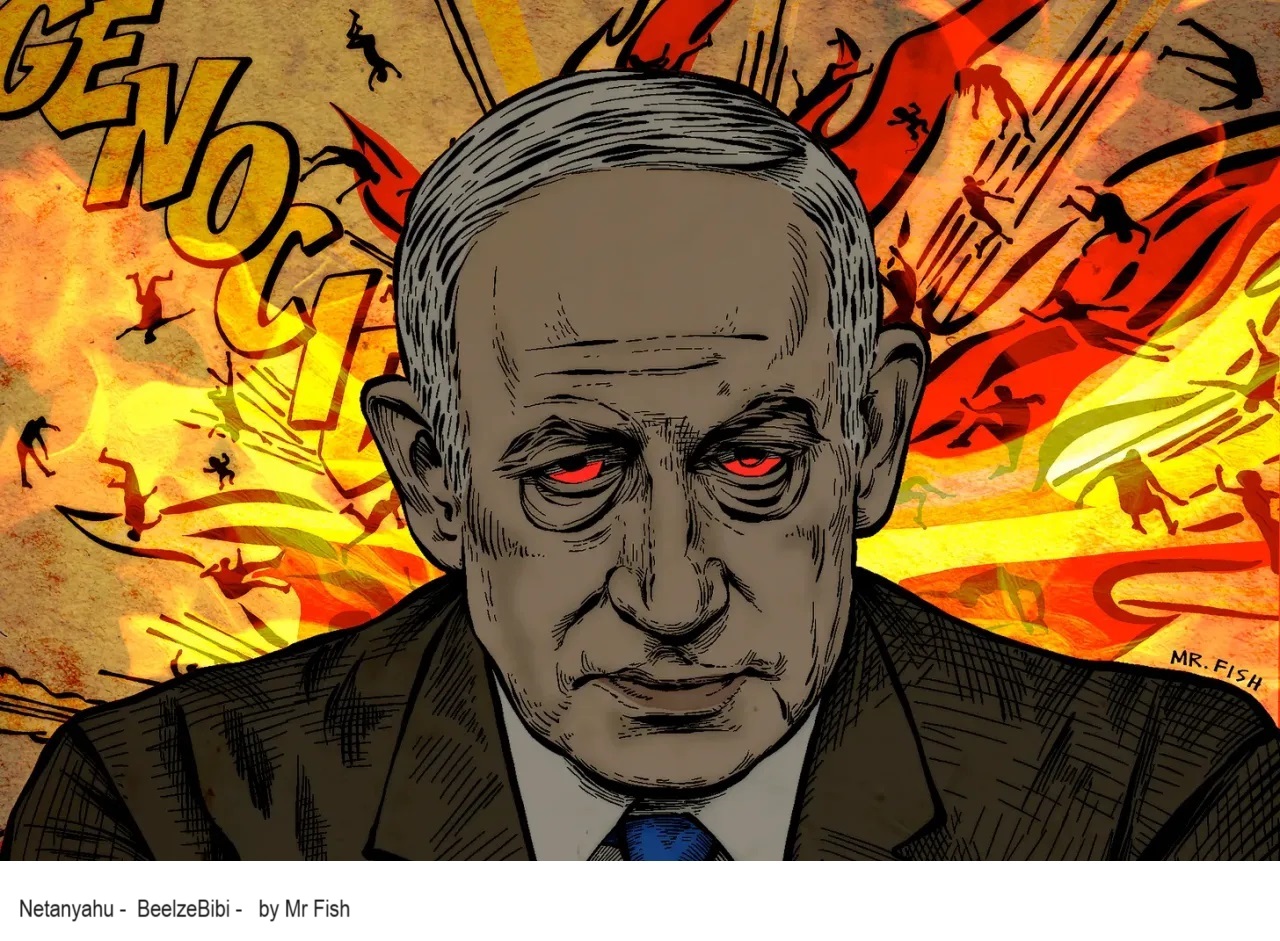
By Walt Zlotow, Walt Zlotow, West Suburban Peace Coalition Glen Ellyn IL, 31 March 2026, https://theaimn.net/netanyahu-woke-up-on-iran-war-day-31-with-a-3-front-war-he-cannot-win/
Tho scrubbed from mainstream news, Trump attacked Iran February 28 because Israeli Prime Minister Benjamin Netanyahu pleaded, begged, demanded he do so. Trump’s top diplomat, Marco Rubio, revealed this when he stupidly admitted Trump knew Israel would attack Iran and had to preemptively attack as well to avoid Iran retaliation. What Rubio didn’t admit is that the Israeli attack was fully supported by the US since Israel could not attack without total US support.
Trump’s and Netanyahu’s unprovoked war of choice had one strategy. Kill Iranian leader the Ayatollah Ali Khamenei and watch the Iranian people depose their government and capitulate within 3 days.
That failed spectacularly as the Iranian people responded like Americans after Pearl Harbor. Iran’s government did likewise, with relentless bombing of Israel, 13 US bases in the Gulf States and closing the Strait of Hormuz.
If this was all that unfolded it would still represent a catastrophic loss for the Trump/Netanyahu war criminal tag team
But for Netanyahu it gets worse. He sent his army north into Lebanon to destroy Hezbollah. That war is now going south as Hezbollah just destroyed 20 Israeli tanks in one day. Hezbollah missiles are raining down on northern Israel driving tens of thousands of Israelis from home.
It gets worse. The Houthis who control Yemen just entered the war on Iran’s side by launching 2 strikes into Israel Saturday. Houthi spokesman Yahya Saree declared Yemen bombed Israel “in support of the Islamic Republic of Iran and the resistance fronts in Lebanon, Iraq, and Palestine, and in view of the continued military escalation, the targeting of infrastructure, and the perpetration of crimes and massacres against our brothers in Lebanon, Iran, Iraq, and Palestine.”
In addition, the Houthis may reimpose the blockade on Israeli-linked shipping through the Bab el-Mandeb Strait, which connects the Gulf of Aden and the Red Sea. If so, the Bab el-Mandeh Strait will join the Strait of Hormuz in expanding economic disaster worldwide.
Worse yet. Shi’ite militias in Iraq have joined the war and will be targeting US military assets in Iraq that the US has kept there for 23 years.
When Benjamin Netanyahu goes to sleep tonight, he won’t need to count sheep to fall asleep. He just needs to count neighboring countries joining Iran’s defense against the most self-destructive criminal war this century.
Thousands of Iranians Who Live on Kharg Island Face Possibility of US Invasion
US media talk about the island’s civilians as if they are a military problem, if they talk about them at all.
By Séamus Malekafzali , Truthout, March 30, 2026, https://truthout.org/articles/thousands-of-iranians-who-live-on-kharg-island-face-possibility-of-us-invasion/?utm_source=Truthout&utm_campaign=3106eddc85-EMAIL_CAMPAIGN_2026_03_30_09_20&utm_medium=email&utm_term=0_bbb541a1db-3106eddc85-650192793
Over the past month of the U.S.-Israeli war against Iran, Donald’s Trump mission has creeped from vowing that he’s “not putting troops anywhere” to backing himself into an escalation that makes the chance of ground invasion far more likely. As many as 17,000 American troops could be gathering in preparation for an operation to land on, and potentially even seize, any number of Iranian islands in the embattled Persian Gulf and the Strait of Hormuz.
Kharg Island, deep in the Gulf and near the coasts of Kuwait and Iraq, is the isle the Trump administration has most clearly placed in its crosshairs. Media reports have suggested the administration is also considering other special operations, such as a complex raid to seize enriched uranium from Isfahan. But taking Kharg is now being touted by some of the same hawks who pushed for the initial U.S. military action in Iran as a new central goal of the war, an opportunity to acquire significant leverage that the United States can and must take. “We did Iwo Jima,” Sen. Lindsey Graham said to Fox News on March 22, “We can do this.”
Other islands closer to the strait, like Larak, an island off Iran’s southern coast, have been more critical to Iran’s ongoing blockade of oil tankers. But 80 to 90 percent of Iran’s own crude oil exports — which have increased since the war began — run through Kharg, making the island’s oil terminal deeply important to the functioning of Iran’s economy, in wartime or otherwise. Over the past few weeks, the American government, ever-obsessed with seizing the oil of other nations as recompense, has attempted to make Kharg into its plaything. On March 13, the U.S. conducted airstrikes on the island and sent a volley of rockets, allegedly fired from Emirati territory, with CENTCOM claiming to have hit “90+ military sites” that destroyed “naval mine storage facilities” and “missile storage bunkers,” among other purported targets.
After the strikes, Trump immediately bragged that Iran now had “NO ability to defend anything we want to attack” and later said that “we may hit it a few more times just for fun.” While he made a point of claiming to spare the oil infrastructure on the island, wary of price shocks caused by Israeli attacks on oil refineries near Tehran days earlier, Trump otherwise spoke of the island as if it had been “totally demolished.” The White House social media accounts posted his message announcing the attacks with the headline: “Kharg Island Obliterated.”
This “obliteration” would have come as news to the more than 8,000 permanent residents of the island, to say nothing of the thousands more who have come to Kharg to work in the oil industry — residents and workers who have been removed from the American government’s discussion of a potential invasion, as well as American media’s reporting about the impacts of such an invasion.
Locals on the island told BBC Persian that the targets the U.S. bombed hit deep inside the city of Kharg, where most of the population resides, that “the island doesn’t really have a military base,” and that following the bombing of Kharg Airport, which runs domestic flights to cities on the Iranian mainland, there was now no way to evacuate.
The White House’s cavalier attitude towards an invasion of Iranian territory has been notable, with Trump mentioning on March 29 that “maybe we take Kharg Island, maybe we don’t” because his “favorite thing is to take the oil in Iran.” But Western media coverage has arguably done just as much to create the impression that Kharg is solely a strategic asset to be conquered, with the welfare of its native inhabitants a footnote, if mentioned at all.
Mainstream outlets like Reuters and The Washington Post have backgrounded the civilian population in favor of dry, military-focused analysis, with the Post blithely printing the words of an analyst from the pro-Israel Washington Institute that it would be “safer” for U.S. forces to simply surround the island with mines and hold it hostage. Coverage on CBS and Fox News has perpetuated outright falsehoods about the island’s population; CBS brought on an analyst from the conservative Hudson Institute to say that Kharg could easily be isolated because it had “no civilian population center” and “really is just oil infrastructure,” while Fox’s Jesse Watters featured Medal of Honor recipient David Bellavia, who told viewers that “civilians are not allowed to even go to Kharg Island.”
Outlets that have mentioned Kharg’s civilian population have often done so in passing, sometimes referring to the island’s inhabitants as a mere additional risk that U.S. paratroopers and marines will have to account for. In a Bloomberg editorial, James Stavridis, former NATO Supreme Allied Commander, writes about the thousands on the island as problems to be solved, people “who would need to be contained in their homes or evacuated; the Iranians may have planted sophisticated booby traps.”
The narrative from war hawks pushing for an invasion has suggested such an operation could be of a limited nature, more along the lines of a raid and less like the long-term occupation of Iraq, a “quagmire” that the Trump administration has insisted the war with Iran is nothing like. But while Fox Business may bring on a former Navy SEAL to talk about how oil seized from Kharg Island could be passed “back to the Iranian people once they take over this regime,” there is little indication that Trump would want to quickly exit Kharg. The president said outright on Sunday that invading it would “mean we had to be there for a while.” There’s even less indication that the Trump administration cares about giving power to the Iranian people or preserving their livelihoods or national economy.
An invasion of Kharg would place thousands of Iranians — perhaps hundreds of thousands if the U.S. military also chose to invade other islands like Larak, Kish, Abu Musa, Hormuz, or Qeshm — under direct military occupation in a form for an indefinite period with no immediate plans for exit or planned transition, a military operation with few parallels in the War on Terror era.
As U.S. threats continue to build, Iran has reportedly brought further military reinforcements to Kharg over the past several days. Life on the island continues. Iran’s Speaker of Parliament Mohammad Bagher Ghalibaf has warned of “continuous and relentless attacks” on “vital infrastructure” in the region should a U.S. ground invasion commence. Esmail Hosseini, spokesman for the parliament’s Energy Commission, was more blunt on a parliamentary visit to the island, saying that Kharg will become “the graveyard of the aggressors.” One resident of the island told a reporter from Mehr News, “The enemy thinks it can break the resistance on Kharg Island with a few attacks, but they are blind, and we will not leave the field for them.” The White House, at least for now, does not appear to be heeding these warnings.
The American narrative of having supposedly learned lessons after endless years of war in Iraq and Afghanistan is finally being challenged by brutal reality. A desire to wage war without endangering American lives, while exacting unlimited damage and chaos against any state that has the means to fight back, means the question of what to do with civilians has become virtually unmentionable. A war can ostensibly be waged for the freedom of the Iranian people in the abstract, this narrative goes, but even their mere existence is not allowed to be a factor in the actual operations of a military, one that now openly prides itself on ignoring “stupid rules of engagement” and maximizing “lethality.” The people of Kharg, and of Iran more broadly, are deemphasized, ignored, erased from discussion, until they suddenly become an immediate and shocking problem, a problem the U.S. simply didn’t anticipate, a problem to now be dealt with by a government that bragged about obliterating the land upon which they exist.
Operation Epic Flurry

“The problem,” the analysis concludes, “is that Trump doesn’t know what his objectives in this war are. Or, worse still, he has proclaimed many objectives, some of them contradictory, because he has no policies and no strategies.”
And this, delivered with the precision of a man who has spent years watching: “He’s a vacancy in the middle of his own world, and yet a vacancy that is fully in charge. The situation could not be more dire.”
28 March 2026 David Tyler, Australian Independent Media
The announcement comes, as always, with impeccable timing. Ten minutes after the S&P 500 closes on its worst single trading day since the war began, Donald Trump posts on Truth Social that he is extending his pause on “energy plant destruction” by ten more days, until Monday April 6 at 8pm Eastern Time. “As per Iranian Government request,” he writes.
Another outright lie. Talks were going “very well.” The markets sighed. Oil dipped. Then snapped back. Brent crude settled at $107 a barrel.
This is the operating system. Not diplomacy. Not strategy. Useful idiocy. A witless grifter watching the markets, the courts and the clock, adjusting deadlines, managing increasingly bizarre appearances, while the ships keep moving.
The boots are already in the water.
The Anatomy of a Fake Pause
This is the second extension Dong Wang, (King of Knowledge or know-all) as they call Trump in China, has announced since he issued his original 48-hour ultimatum demanding Iran reopen the Strait of Hormuz or face the destruction of its power grid. No-one knows how to deliver an ultimatum like Trump.
The first pause came on Monday. The second came Thursday. Both arrived at market-sensitive moments, both were framed as responses to Iranian requests, and both were flatly denied by Iran. Iran’s Foreign Minister Abbas Araghchi scathingly describes the exchange of messages through intermediaries as not constituting “negotiations.”
Iran’s Parliament Speaker Mohammad Bagher Ghalibaf calls the whole show “fake news used to manipulate the financial and oil markets and escape the quagmire in which the US and Israel are trapped.”
He is not wrong. The backchannel activity is real enough: Pakistan, Egypt and Turkey have been relaying messages between Washington and Tehran, and there is genuine mediating pressure from Islamabad to convene a face-to-face meeting. But the gap between what is actually happening and what Trump is describing to the American public is the gap between a fax or Telegram arriving at a foreign ministry and a signed ceasefire.
Iran rejects Trump’s 15-point plan outright and tables its own five conditions, including war reparations and formal recognition of Iranian sovereignty over the Strait of Hormuz. That is not a negotiating position that converges with Washington’s in ten days. Not in twenty. In fact it’s a dark parody of Trump’s style of negotiation which is to issue an ultimatum. Iran is signalling its contempt.
So what is the April 6 deadline actually for? The mediators themselves have identified the core problem: the Iranians “suspect that the US is tricking them again.” True. The pause is not buying time for diplomacy. It is buying time for deployment.
What Is Actually Moving
Two Marine Expeditionary Units are converging on the Persian Gulf from opposite ends of the Pacific………………
Additionally, the Pentagon has ordered roughly two thousand soldiers from the 82nd Airborne Division to move from their base in North Carolina to the Middle East. ……………..
On Wednesday, Iran’s Parliament Speaker Ghalibaf posts a warning that deserves attention precisely because of what it does not say.
“Based on some intelligence reports,” he wrote, “Iran’s enemies are preparing to occupy one of the Iranian islands with support from one of the regional states. Our forces are monitoring all enemy movements, and if they take any step, all the vital infrastructure of that regional state will be targeted with relentless, unceasing attacks.”
He does not name the island. He does not name the regional collaborator. A warning that specific about an operation, that vague about the target, is not a general statement of defiance. It is the signature of intelligence tracking something imminent………………………………………………………………………………………………………………
The Ignoramus in Chief
Into this unfolding catastrophe, the elephant in the room is the question of who is actually making the decisions and on what basis.
………………………………………………………..Two minutes of edited highlights? Per day. This is the informational basis on which “Ole Bone-Spurs”, a former draft evader who shirked national service five times, but who is now the de-facto commander of the world’s largest military, is conducting a war.
Panic stations? Trump’s got his own allies, in a lather. The worry, as NBC delicately puts it, is that Trump “may not be receiving, or understanding, the complete picture of the war.” Trump’s former national security adviser, John Bolton, is on record to the effect that Trump “hardly ever reads briefing notes” and when he does “cannot make sense of them,” and that he had “not thought through the implications or laid the groundwork” for a longer conflict with Iran.
Trump’s biographer Michael Wolff, who has known him as well as any journalist alive, goes further in a recent Daily Beast podcast.
“It’s not just unpresidential, it’s incoherent. It’s the language of an ignoramus.” He added: “He doesn’t know what he’s talking about. It just comes out of his mouth, out of self-justification, need, fear, aggression.”
…………………………………………….Slate’s military analyst identifies the strategic void at the centre of the operation with Clausewitzian clarity: Trump’s delusion stems from a fundamental misunderstanding that war is entirely about destroying targets. CENTCOM has struck more than five thousand targets.
But wars are fought for political objectives, and Trump has proclaimed so many contradictory objectives, shifting from regime change to nuclear disarmament to resource acquisition to Hormuz control with no discernible logic, that his own advisers do not know what they are working toward.
“The problem,” the analysis concludes, “is that Trump doesn’t know what his objectives in this war are. Or, worse still, he has proclaimed many objectives, some of them contradictory, because he has no policies and no strategies.”
A vacancy in the middle of his own world, fully in charge. Making it up as he goes. What could possibly go wrong?
Murdoch’s Man at the Pentagon
Nature abhors a vacuum. The vacancy does not stand alone. It is surrounded by people who have their own reasons for filling it.
Defence Secretary Pete Hegseth is an ex-Fox News jock who got given the largest military budget in history. A former Guantanamo guard with no command experience beyond a National Guard deployment, Hegseth spent the years between his military service and his cabinet appointment performing patriotism on Murdoch’s flagship cable network, aka Faux News, where hawk-talk is part of the job profile and any hint of restraint is seen as weakness, wokeness or treachery.
Hegseth arrived at the Pentagon with dreams that his TV-show persona had done nothing to temper. At a press conference this month he declared that US forces would show “no quarter, no mercy for our enemies.”
Ryan Goodman, professor of law and co-editor of national security journal Just Security, tells Axios this would constitute a war crime under the Pentagon’s own Law of War Manual. Hegseth also used the occasion to attack the press for failing to be “an actual patriotic press,” citing the headline “Mideast war intensifies” as proof of disloyalty.
This is the man with the power to unleash Armageddon……………………………………………..
Behind Hegseth, behind Trump, the hand that has been pushing this from the beginning.
Bloomberg reported on March 21, citing “people familiar with private conversations”, that those pressing Trump to strike Iran included not only Netanyahu but Rupert Murdoch, the ninety-five-year-old chairman emeritus of News Corp and Fox Corp. Murdoch instructed Trump several times, personally urging the president, he once called a “fucking idiot” to take on Tehran. This was not casual chat. ………………………………………………..
When the bombs started falling on February 28, the New York Post’s front page read “DEATH TO THE DEVIL.” Subsequent editions ran “DON GETS LAST LAUGH” and “NO MERCY.” The Wall Street Journal has since called for ground troops. Fox News has been, in the words of Crikey’s media analyst, the loudest global advocate for the war, running the same cheerleading operation it ran for Iraq in 2003, right down to the retired generals on the panel and the American flag in the corner of the screen.
Even within Murdoch’s own empire, the revulsion has broken through. Former Fox host Megyn Kelly, no dove, is scathing:
“We now learn that Rupert Murdoch was one of the main people goading Trump into this war. Rupert Murdoch, who is ninety-five years old, he’ll be dead soon. And he too is acting as if our troops are expendable cattle.” Republican Congresswoman Anna Paulina Luna used the same phrase, “expendable cattle,” without any prompting from Kelly. Senator Lindsey Graham had just told Fox News Sunday, without embarrassment, that the Marines could take Kharg Island because “we did Iwo Jima.”………………………………………….
The Fracture Nobody Is Talking About
There is one more element that complicates the picture and which has been ignored in the mainstream coverage of the war. Washington and Tel Aviv are no longer fighting the same war.
Even The Carnegie Endowment for International Peace is on to it. Trump appears to favour the Venezuela model: align with a pragmatic insider within the Iranian regime, access the oil and gas resources, declare victory and exit. Netanyahu prefers what Israeli strategists call “mowing the grass”: maximum target destruction, indefinite conflict management, no exit required and no exit planned. These two approaches are not reconcilable. They are direct opposites dressed in the same uniform.
……………………………………Former Israeli ambassador Alon Pinkas tells Al Jazeera that Trump’s pivot toward negotiations, apparently over Netanyahu’s objections, may signal that the US president has finally grasped that Netanyahu “may have duped him on how quick and resounding a victory would be, and how viable regime change is.” Israeli political scientist Ori Goldberg delivers the verdict without the turd polish: “Is it a defeat for Netanyahu? Hell, yes. It’s Trump essentially ditching Israel.”
Netanyahu, facing ICC arrest warrants, corruption charges and a national inquiry into October 7 that he has spent two years postponing, has his own reasons to keep the war going. ……………………………..
The Boots Are Already in the Water
Let us be clear about what we are watching. A president who cannot distinguish between a war briefing and a movie trailer is extending fake diplomatic deadlines while an amphibious task force closes on the Persian Gulf. His Defence Secretary is a television performer who has never commanded anything larger than a National Guard unit and whose understanding of strategic warfare was formed on a Fox News set. Behind both of them, a ninety-five-year-old media magnate with no democratic mandate and a perfect record of warmongering for profit has been personally lobbying the President of the United States to go to war……………………………………………….. https://theaimn.net/operation-epic-flurry/
Israel wants to destroy Iran’s nuclear program. But should it have nuclear weapons itself?

March 25, 2026, Marianne Hanson, Associate Professor of International Relations, The University of Queensland, https://theconversation.com/israel-wants-to-destroy-irans-nuclear-program-but-should-it-have-nuclear-weapons-itself-278801?utm_medium=email&utm_campaign=The%20Weekender%20-%2028%20March%202026&utm_content=The%20Weekender%20-%2028%20March%202026+CID_09f9907cac66b0e5c3e3ca794f0c8c0c&utm_source=campaign_monitor&utm_term=Israel%20wants%20to%20destroy%20Irans%20nuclear%20program%20But%20should%20it%20have%20nuclear%20weapons%20itself
Israel’s avowed goal in the Middle East war is to prevent Iran from acquiring nuclear weapons. Yet, the double standard associated with this is hardly sustainable in the long run.
The worst-kept secret in the world of nuclear politics is that Israel possesses a formidable arsenal of nuclear weapons. It began developing these in the 1950s and reached a fully operational capability by the late 1960s.
Although Israel refuses to confirm or deny this fact, arms control organisations have assessed that the country has some 80–90 nuclear weapons.
In recent days, Iran targeted Israel’s nuclear facility in the southern town of Dimona, injuring more than 100 people. The head of the International Atomic Energy Agency (IAEA) called for restraint to avoid a “nuclear accident”.
A program shrouded in secrecy
There is much evidence to support the existence of Israel’s arsenal.
In 1963, then-Deputy Defence Minister Shimon Peres famously stated Israel would not be the first to “introduce” nuclear weapons to the Middle East. What this actually meant was spelled out a few years later by the Israeli ambassador to the US. For a weapon to be “introduced”, he said, it needed to be tested and publicly declared. Merely possessing them did not constitute introducing them.
Several whistleblower accounts, intelligence reports and satellite imagery confirm the extent of the Israeli program and its capabilities.
More recently, Amichai Eliyahu, a far-right minister in Prime Minister Benjamin Netanyahu’s government, alluded to using nuclear weapons in Gaza – a tacit acknowledgement of Israel’s capabilities. He was later reprimanded by Netanyahu.
And in 2024, Avigdor Lieberman, a former defence and foreign minister, threatened to “use all the means at our disposal” to prevent an Iranian nuclear weapon. He added: “It should be clear at this stage it is not possible to prevent nuclear weapons from Iran by conventional means.”
It is important to remember that Israel not only developed its nuclear weapons in secret – employing subterfuge, misleading claims, and even the suspected theft of bomb-grade nuclear material from the United States – it has also rejected international inspections of its facilities and refused to join the nuclear Non-Proliferation Treaty (NPT). This treaty has been signed by almost every state in the world.
Concerns over Iran’s program
Iran, meanwhile, has never had a nuclear weapon, though its program has been the source of international concern for more than a decade.
In 2015, Iran signed the Joint Comprehensive Plan of Action (also known as the Iran nuclear deal) with the US, Russia, China, France, the United Kingdom and Germany, which imposed restrictions on its nuclear program in return for sanctions relief. This included inspections by IAEA monitors.
However, Trump scuppered the plan in 2018. Since then, Iran has enriched uranium to levels well above those needed for its energy program. And last year, the IAEA said Iran was non-compliant with its nuclear nonproliferation obligations for failing to provide full answers about its program.
But since the current war began, US and international officials have confirmed that Iran was not close to developing a nuclear weapon and did not pose an imminent nuclear threat to the US or Israel.
In short, there is no truth to the claim, made for almost 40 years by Israel, that Iran is “weeks away” from acquiring the bomb. The IAEA made clear two years ago that a nuclear weapon requires “many other things independently from the production of the fissile material”.
Getting close to nuclear threshold status, but stopping short of developing an actual bomb, likely provides a fall-back position for Iran. If Iran were to feel pushed or threatened, it could, in time, accelerate its energy program towards a weapons program. Or it could use this enriched uranium as leverage in negotiations with the US.
Nuclear powers need to show restraint
This brings us back to a major question: can double standards about who can and cannot develop a nuclear weapon be sustained indefinitely?
Israel’s nuclear arsenal has been tacitly accepted by the West, implying there are “right hands” and “wrong hands” for nuclear weapons. But this is a risky and ultimately unsustainable position.
As Australia’s Canberra Commission noted in 1996, as long as any one state has nuclear weapons, other states will want them, too.
This is precisely why many states voted in 2017 to adopt the UN Treaty on the Prohibition of Nuclear Weapons. The treaty’s purpose is to make the possession, threat and use of nuclear weapons illegitimate for all states, not just for some, on the basis of international humanitarian law.
Signed by 99 states so far, the treaty recognises that nuclear weapons promise massive destruction to civilians and combatants alike, and that even a “small” nuclear war will cause catastrophic damage.
At the end of the day, a consistent approach to nuclear weapons is more likely to prevent nuclear proliferation (by Iran or other states) than the current mess, where some states are tacitly permitted to have these weapons (and wage war on others), while other countries are not.
It is possible we are at a tipping point when it comes to nuclear proliferation, with some countries suspected of wanting to develop nuclear weapon capabilities. This includes US allies South Korea and Japan.
Are the nuclear weapons states ultimately willing to accept the UN Treaty on the Prohibition of Nuclear Weapons and disarm in the interest of global peace and security? If they don’t, then the current trajectory of keeping one’s own nuclear weapons and waging war against states that don’t have them will only weaken an already crumbling rules-based international order.
Iran says it never requested US energy strike pause: Escalation proceeding on all fronts.

Tyler Durden, ZeroHedge, 27 Mar 2026, https://www.sott.net/article/505375-Iran-says-it-never-requested-US-energy-strike-pause-Escalation-proceeding-on-all-fronts
Israel goes after Iranian industrial targets
Vital Iranian Steel Plants, Industry Attacked
Israeli media citing military officials on Friday: “The IDF attacked Iran’s two largest steel plants, in Isfahan and Ahvaz. Both plants are vital to Iran’s military industry and are partially owned by the Revolutionary Guards. The strikes on the plants are expected to cause billions in damage to the Iranian economy.”
This could mark a new, expanded phase of the war as Israel goes after key defense industrial targets, which also serve central civilian infrastructure development. The US has still held off on pursuing more attacks on energy sites, but it seems Israel is maintaining a more gloves off approach – opting for total societal destruction, and going after industry. This seems to also be part of efforts to ensure ballistic missile production is degraded.
Reuters: US is certain about having destroyed third of Iran’s missiles, say sources. Another third is believed to be damaged, destroyed or buried.
“One of the sources said the intelligence was similar for Iran’s drone capability, saying there was some degree of certainty about a third having been destroyed,” Reuters writes, noting that all of this contradicts White House claims of Iran having “very few rockets left”
Iran Didn’t Request Trump’s 10-Day Pause: WSJ
Iran has not requested a 10-day pause on strikes on its energy plants, peace talk mediators have been cited in WSJ as saying, and has still not issued formal response to the 15-point US plan delivered via Pakistan. This as the Pentagon is moving thousands of Marines and Army Airborne soldiers into the region.
The Wall Street Journal points out that “The U.S. and Israel are pounding Iran’s missile-launching sites, hitting some over and over across almost a month of war. But Tehran’s missiles keep flying.”
One pundit questions, are we ‘winning’ yet?… writing the following brief assessment of where things stand: IRGC Joint Staff headquarters under US-Israeli strikes. Iran naming UAE targets as Abu Dhabi enters the war. IDF Chief of Staff warning publicly the Israeli military could “collapse” from manpower shortages. Iran claiming over one million fighters mobilised with IRGC lowering the age for support roles to 12. Pentagon considering 10,000 additional ground troops within striking distance of Kharg. Trump pausing energy-plant destruction for 10 days until April 6. Iran denying it requested the pause. Houthis warning they will enter the war. Lavrov saying the quiet part: “Iran did not violate any of its international obligations.” Russia’s oil revenue doubling to $24 billion this month.
Oil prices continued to spike this morning, with international Brent crude oil once again surpassing $110 per barrel. For the day so far that’s up another 3%.
“After several glimmers of hope, fueled by comments from President Trump, which were quickly dashed, the market is becoming more demanding in terms of rhetoric,” said Amélie Derambure, senior multi-asset portfolio manager at Amundi. “The TACO trade is more difficult to do because a return to square one is not possible from here.”
Gulf Flashpoint Widens: Iran Signals No Let Up
Multiple GCC countries issued incoming-attack alerts as drones and missiles light up the region Friday, with Kuwait taking at least two new hits: Shuwaikh Port was struck by “hostile drones” – per the Kuwait Ports Authority, with a second target, Mubarak Al-Kabeer Port, reportedly hit by drones and cruise missiles. Infrastructure damage has been reported in both cases, but no reported casualties.
Saudi Arabia maintains its air defense footing, with the Ministry of Defense saying drones were intercepted and destroyed over Riyadh and the Eastern Province, following a warning for Al-Kharj – home to Prince Sultan Air Base. Six ballistic missiles were detected: two intercepted, with four splashing into the Persian Gulf and empty areas.
Absolute chaos in Tel Aviv…
New explosions have been reported in Dubai and Abu Dhabi on Friday. It’s as if Iran and the IRGC are sending a clear “f-you” message to Trump in the wake of the series of ultimatums and deadlines Tehran never asked for. Trump earlier went from 48 hours to 5 days to now a 10-day window amid the threats to attack power and energy infrastructure.
Israel Escalates Too: Will ‘Intensify & Expand’ Strikes on Iran
The White House has been busy talking about its backchannel diplomacy and getting the beginnings of a peace deal off the ground via Pakistan, and at one point within the past week there was talk of Vice President J.D. Vance actually traveling to Islamabad – but the situation on the ground suggests the opposite, given also Israel has on Friday announced escalation of its posture. Israel has continued coming under consistent missile strikes.
Now, Defense Minister Israel Katz is vowing Israel’s attacks will “intensify and expand” – citing that Islamic Republic had not heeded warnings “to stop firing missiles at Israel’s civilian population.” Katz said: “The fire has continued – and therefore, IDF strikes in Iran will intensify and expand to additional targets and domains that assist the regime in developing and deploying weapons against Israeli civilians.”
There remains a huge risk for Israel amid the expectation that Iran has been saving its biggest and most advanced, longer range missiles – rationing its arsenal as it settles in for a long war.
Strait of Hormuz Status & Overnight News
Tehran could still be playing a double game of public rejection coupled with private behind-the-scenes signaling. According to Axios’ latest, Iranian officials are quietly showing interest in talks even as they reject Washington’s proposal, with mediators leaning hard to force or ‘will into existence’ a meeting in the coming days. “Things are progressing very slowly” in terms of negotiations between the US and Iran, and as of now, no meeting between senior officials is even on the calendar, per Isreal’s i24NEWS.The IRGC Navy is still declaring the Strait of Hormuz effectively shut: traffic “to and from” ports tied to enemy allies is banned outright, with warnings any movement will be “severely dealt with.” In a rare twist, The Wall Street Journal and others report Iran has even blocked two Chinese vessels from transiting Hormuz – signaling enforcement isn’t just for Western targets. Washington seems to be trying to adapt in real time, as Reuters reports the US has deployed uncrewed drone boats into the theater, opening yet another front in an already widening conflict.
Operation Epic Fury and US Unreadiness for War
25 March 2026 Dr Binoy Kampmark, https://theaimn.net/operation-epic-fury-and-us-unreadiness-for-war/
The bellicose may find wars attractive and cleansing, but those responsible for such dry matters as inventory, material and how prepared the armed forces of a country are will stalk them with unpleasant truths. The addiction of the US imperium to waging wars, one that President Donald Trump promised, and failed, to treat, has gotten the wags in the military worried. The depleting nature of Operation Epic Fury has been particularly telling in this regard, revealing the US war machine to be unprepared for conflict.
Rather than referring to preparedness, the preferred choice in US Army circles is “unreadiness” or a lack of readiness. Army Undersecretary Michael Obadal, in his address at the annual McAleese Defense Programs Conference, was startlingly candid in this regard. “To say we’re satisfied with our readiness rates, I think, would be disingenuous. We have real problems with our major weapons systems, both aircraft and ground, and we have to address those things, and we’re doing so in a number of ways.” (The major weapons systems were left unnamed.)
One of his suggestions involves placing greater focus on “Public-private partnerships in an organic industrial base (OIB) [as] one of the most fundamentally different approaches that we can take.” The organic industrial base takes in some 23 depots, arsenals and ammunition plants responsible for manufacturing and resetting army equipment while fostering readiness and operational capability. “The OIB,” according to the US Army, “must be able to support current unit readiness, maintain the ability to surge, and modernize and retool to sustain the next generation of equipment.” Much has been made in the vanilla propaganda of the army of its “Modernization Implementation Plan” (MIP), which officially commenced in October 2024.
Establishing what readiness means in all of this is a thorny issue. Obadal lets the cat out of the bag in stating that “everyone will have different metrics”, a suitably unsatisfactory state of affairs. His own criteria are threefold: How the Army can respond tonight with what is available; what it can do in the next month to deal with the contingency; and what it can do to sustain the effort for the next year of combat.
Applying his own threefold metrics to the Army, Obadal identified problems with major weapons systems and, critically, problems with magazine depth. While not expressly referring to Operation Epic Fury and the war against Iran, the undersecretary did state that the “current situation” had “absolutely” aggravated matters. To address such problems, notably with weapons systems, manufacturers could work alongside soldiers and engineers in the theatre to fix vehicles and aircraft more expeditiously.
Legislation regarding “right to repair” provisions that would enable soldiers to tend to equipment problems without having to send them back to the manufacturer was also on the cards, though yet to pass. Obadal hoped that these would find their way into the 2027 National Defense Authorization Act. “We have to be very narrow on what we’re asking for. So how many repetitions, how many units, how many years before we have IP [intellectual property], and there’s some IP that we don’t want commercial software and other things.” Companies could “keep that because we want them to be responsible for the updates, the security patches and all that, but we want to be able to change things out as the environment demands.”
The Army was also on the lookout for industry partners well advanced in their “TLR” [technology readiness level] when seeking contracts with the Pentagon. In addressing the problem of magazine depth, Obadal referenced the new modernising drive inviting private industry to co-invest in OIB installations. “If we ask industry to change, we have to address the long-term viability of our own organic industrial base. So a new environment requires new approaches.”
Other sources add more troubling details about the problems Obadal was good enough to underline. A Government Accountability Office report finalised just prior to the pre-emptive attack on Iran on February 28 and published on March 4 tut tutted the Pentagon for not fully implementing over 150 recommendations from earlier reviews with the express purpose of improving the availability of equipment, the bulking of personnel resources and supporting better decision-making on readiness. Shortages in trained maintenance personnel have caused problems across all branches of the armed services. This has hampered, for instance, “meeting mission capable rate goals for their aircraft that support combat-related missions.”
In a separate summary of issues afflicting US forces, the GAO notes with cold certainty that almost two decades of war “has degraded US military readiness. To adapt to growing threats posed by major powers (such as China and Russia) and other adversaries, the Department of Defense (DOD) and the individual military services must make some urgent changes.”
The GAO was also reproachful of the failure of both the Air Force and Navy for not completing “sustainment reviews” for their aircraft, an indispensable measure for maintaining readiness for the life cycle of relevant machinery. Both branches of the armed forces, despite the annual expenditure of billions of dollars annually, had “struggled for years to maintain their aircraft due to the age of their fleets, a lack of parts, maintenance delays, and other problems.”
On specific weapons platforms, the Pentagon faces challenges in, for instance, maintaining the staggeringly gluttonous F-35 fleet. These include “delays setting up military service depots – facilities to complete the most complex repairs – and inadequate equipment to keep aircraft operational.” While the department intended to move more maintenance responsibilities from external contractors to the government, no plan to do so had been made.
Repair depots are also taken to task for their shabbiness. “Depot infrastructure generally remains in fair to poor condition, and most depot equipment is past its service life.” The DOD persistently failed to report what was needed to arrest further deterioration.
With such a body of reservations, reproachful critique and recommendations unimplemented, the unreadiness of the US armed forces puts paid to the narrative, all too regularly touted by Trump and his unhinged Secretary of War, Pete Hegseth, of boundless resources and peerless invincibility. The Iran War is all but confirming that; the unready have been found wanting.
Greenpeace warns Trump’s threat to bomb Iran’s power grid risks humanitarian and nuclear disaster

Greenpeace International, 23 Mar 26, https://www.greenpeace.org/international/story/82295/trump-threat-bomb-iran-power-grid-risks-humanitarian-nuclear-disaster/
Amsterdam – Greenpeace International has condemned threats by Donald Trump to target Iran’s electricity infrastructure, warning it could trigger a humanitarian catastrophe, trigger a blackout over a large part of the country and risk nuclear disaster escalating into a wider regional crisis.
Greenpeace warns that attacks on the grid could have a knock-on effect that increases the danger of a nuclear emergency at the Bushehr Nuclear Power Plant, with potential consequences across the region.[1]
“Bombing civilian electricity infrastructure is illegal under international law. The electricity grid is essential for hospitals, clean water, desalination and the operation of nuclear facilities. Cutting it off puts millions of lives at risk,” said Jan Vande Putte, senior nuclear and radiation protection expert with Greenpeace International.[2]
“A blackout could force the Bushehr nuclear facility into depending completely on backup diesel generators, causing a heightened risk of overheating, which can lead to a Fukushima-like disaster.”[3]
Iran’s grid is already under strain due to war, climate change and sanctions leading to underinvestment.[4]
“If Trump carries through with this reckless threat to knock out critical infrastructure, it could lead to cascading failures, from blackouts to nuclear danger far beyond national borders, with the potential to escalate into a wider regional crisis,” says Vande Putte.
The US, Israel and Iran have all targeted energy infrastructure, and several attacks in Iran and Israel already appear to have come close to hitting nuclear facilities. Iran is also threatening to target water and energy infrastructure in neighbouring countries.[5] Greenpeace is urging all parties to step back from escalation and pursue a diplomatic solution now, warning that further escalation will only deepen human suffering and increase global instability.
The Bushehr nuclear plant was built and is operated by Iran’s nuclear enabler, Rosatom, the Russian state nuclear corporation.
Donald Trump’s ‘new’ 15‑point plan is the biggest sign yet that Washington fears it is losing this war
Iran.. does not need military victory. It only needs to endure, impose costs, and outlast its adversaries. This is the logic of asymmetric conflict: the weaker power wins by not losing, while the stronger one loses when the costs of continuing become unsustainable.
March 26, 2026, Bamo Nouri, Honorary Research Fellow, Department of International Politics, City St George’s, University of London, Inderjeet Parmar, Professor in International Politics, City St George’s, University of London. https://theconversation.com/donald-trumps-new-15-point-plan-is-the-biggest-sign-yet-that-washington-fears-it-is-losing-this-war-279001?utm_medium=email&utm_campaign=The%20Weekender%20-%2028%20March%202026&utm_content=The%20Weekender%20-%2028%20March%202026+CID_09f9907cac66b0e5c3e3ca794f0c8c0c&utm_source=campaign_monitor&utm_term=Donald%20Trumps%20new%2015-point%20plan%20is%20the%20biggest%20sign%20yet%20that%20Washington%20fears%20it%20is%20losing%20this%20war
The language of power often reveals more than it intends. In a rare moment of candour on March 7, the US president, Donald Trump, described the confrontation with Iran as “a big chess game at a very high level … I’m dealing with very smart players … high-level intellect. High, very high-IQ people.”
If Iran is, by Trump’s own admission, a “high-level” opponent, then the sudden revival of a 15-point plan previously rejected by Iran a year ago suggests a disconnect between how the adversary is understood and how it is being approached. It’s a plan already examined in negotiation by Iran and dismissed as unrealistic and coercive. Despite this, the Trump administration is once again framing the “roadmap” as a pathway to de-escalation. Tehran has once again dismissed the gambit as Washington “negotiating with itself” – reinforcing the perception that the US is attempting to impose terms rather than negotiate them.
The US president is right about one thing – Iran is not an opponent that can be easily dismissed or overwhelmed. Trump’s own description is a tacit acknowledgement that this is a far more capable and complex adversary than those the US has faced in past Middle Eastern wars, such as Iraq. And that is why the odds are increasingly stacked against the United States and Israel.
This conflict reflects a familiar but flawed imperial assumption: that overwhelming military force can compensate for strategic misunderstanding. The US and Israel appear to have misjudged not only Iran’s capabilities, but the political, economic and historical terrain on which this war is being fought.
Unlike Iraq, Iran is a deeply embedded and adaptable regional power. It has resilient institutions, networks of influence, and the capacity to impose asymmetric costs across multiple theatres. It knows how to manage maximum pressure.
The most immediate problem is lack of legitimacy. This war has authorisation from neither the United Nations or, in the case of America, the US Congress. Further, US intelligence assessments indicate Iran was not rebuilding its nuclear programme following earlier strikes – contradicting one of Washington’s justifications for war. The resignation of Joe Kent as head of the National Counterterrorism Center on March 17, was even more revealing. In his resignation letter Kent insisted that Iran posed no imminent threat.
This effectively collapses one of the original narratives underpinning the US decision to start the war – a further blow to legitimacy.
A majority of Americans oppose the war, reflecting deep fatigue after Iraq and Afghanistan – hardly ideal conditions for what increasingly looks like another “forever war” in the Middle East. Current polling shows Trump’s Republicans trailing the Democrats ahead of the all-important midterm elections in November.
The war is both militarily uncertain and politically unsustainable. International allied support is also eroding. The United Kingdom — often trumpeted as Washington’s closest partner — has limited itself to defensive coordination, while Germany and France have distanced themselves from offensive operations. European allies also declined a US request to deploy naval forces to secure the strait of Hormuz. This reflects not just disagreement, but a deeper loss of trust in US leadership and strategic judgement.
US influence has long depended on legitimacy as much as force. That reservoir is now rapidly draining. Global confidence is falling, while images of civilian casualties — including over 160 schoolchildren killed in an airstrike on the first day of the war – have shocked international onlookers. Rather than reinforcing leadership, this war is accelerating its erosion.
Israel faces a parallel crisis of legitimacy – one that began in Gaza and has now deepened. The war in Gaza severely damaged its global standing, with sustained civilian casualties and humanitarian devastation drawing unprecedented criticism, even among traditional allies. This confrontation with Iran compounds that decline.
Striking Iran during active negotiations — for the second time — reinforces the perception that escalation is preferred over diplomacy. The issue is no longer just conduct, but credibility.
Strategic failure, narrative defeat
The conduct of the war compounds the problem. The assassinations of Iranian leaders, framed as tactical victories, are strategic failures. They have unified rather than destabilised Iran. Mass pro-regime demonstrations illustrate how external aggression can consolidate internal legitimacy.
The issue is no longer just the conduct of the war, but the credibility of the conflict itself. Regardless of how impressive the US and Israeli military are, it doesn’t compensate for reputational collapse. When building support for a conflict like this – domestically and internationally – legitimacy is a strategic asset. Once eroded across multiple conflicts, it is extraordinarily difficult to rebuild.
Rather than stabilising the system, US actions are fragmenting it. Allies are distancing themselves, adversaries are adapting, and neutral states are hedging.
The most decisive factor may be economic. The war is already destabilising global markets – driving up oil prices, inflation, and volatility at levels that combine the effects of 1970s and Ukraine war oil shocks.
This is a war that cannot be contained geographically nor economically. The deployment of 2,500 US marines to the Middle East (and reports that up to another 3,000 paratroopers will also be sent), reportedly with plans to secure Kharg Island – and with it Iran’s most important oil infrastructure – would be a dangerous escalation.
For Gulf states, the assumption that the US can guarantee security is increasingly questioned. Some states are reportedly now looking to diversify their partnerships and turning toward China and Russia, mirroring post-Iraq shifts, when US failure opened space for alternative powers.
Iran holds the cards
Wars are not won by destroying capabilities alone, but by securing sustainable and legitimate political outcomes. On both counts, the US and Israel are falling short.
Iran, by contrast, does not need military victory. It only needs to endure, impose costs, and outlast its adversaries. This is the logic of asymmetric conflict: the weaker power wins by not losing, while the stronger one loses when the costs of continuing become unsustainable.
This dynamic is already visible. Having escalated rapidly, Trump now appears to be searching for an off-ramp — reviving proposals and signalling openness to negotiation. But he is doing so from a position of diminishing leverage. In contrast, Iran’s ability to threaten energy flows, absorb pressure, and shape the tempo of escalation means it increasingly holds key strategic cards. The longer the war continues, the more that balance tilts.
Empires rarely recognise when they begin to lose. They escalate, double down, and insist victory is near. But by the time the costs become undeniable – economic crisis, political fragmentation, global isolation – it is already too late. The US and Israel may win battles. But they may be losing the war that matters: legitimacy, stability and long-term influence.
And, as history suggests, that loss may not only define the limits of their power, but mark a broader shift in how power itself is judged, constrained, and resisted.
Israel launches strikes on nuclear sites as Iran warns of retaliation
Uranium facility, steel plants and heavy water complex among targets hit as IRGC warns of escalation.
By Al Jazeera Staff, AFP, Reuters and The Associated Press, 27 Mar 2026
Israel has struck a uranium processing facility in the central Iranian city of Yazd, the Israeli military confirmed, in an escalatory move that comes as regional diplomats have been attempting to broker an agreement to halt the joint US-Israeli war on Iran.
The Israeli Air Force said it hit a plant used to extract raw materials essential to the uranium enrichment process, describing it as a “unique facility” in Iran’s nuclear infrastructure. Iran’s Atomic Energy Organization confirmed the strike, but said there were no casualties or radiation leaks.
A projectile also hit near the Bushehr Nuclear Power Plant, Iran’s Atomic Energy Organisation said. The attack caused “no casualties, financial, or technical damage,” the organisation said.
Friday marked day 28 of the conflict, and the assault by the Israeli army was part of a broad wave of attacks on sites across the country.
Strikes also hit areas in and around Tehran, the city of Kashan and Ahwaz, while 18 people were killed in Qom.
More than 1,900 people have been killed in US-Israeli attacks on Iran since the war began on February 28.
Iranian officials said US-Israeli strikes have damaged at least 120 museums and historical sites across the country since hostilities began.
Negar Mortazavi, a senior non-resident fellow at the Center for International Policy, told Al Jazeera that even Iranians who had been critical of their own government increasingly view the war as an assault on the Iranian people rather than its leadership, saying the targeting of water, electricity, gas, cultural heritage, schools and hospitals was “unacceptable.”
Israeli Defence Minister Israel Katz said Israel would “intensify” its campaign and expand the range of sites it targets, accusing Tehran of deliberately directing missiles at Israeli civilians.
IRGC Aerospace Commander Seyed Majid Moosavi warned that the conflict was entering new territory, saying “the equation will no longer be an eye for an eye.” He urged employees of US and Israeli-linked industrial companies across the region to immediately vacate their workplaces.
Al Jazeera’s Ali Hashem, reporting from Tehran, noted that the strikes on two major Iranian nuclear facilities could prompt the IRGC to target Dimona again, Israel’s nuclear site, as it did last week.
Prior to Friday’s strikes, US President Donald Trump said Thursday he had pushed back planned attacks on Iran’s energy infrastructure by 10 days, to April 6, saying negotiations to end the war were “going very well”.
Iranian officials flatly rejected that characterisation, describing Washington’s proposal to end the war as “one-sided and unfair” and outlining their own list of conditions, which include war reparations and the recognition of Iranian control of the Strait of Hormuz.
On Friday, an an Iranian official said the ongoing strikes, while simultaneously discussing talks, were “intolerable”……………………………………………………………………………………… https://www.aljazeera.com/news/2026/3/27/israel-launches-strikes-on-iran-nuclear-sites-as-war-enters-fifth-week
Pentagon Whistleblower Criticizes “Bloodthirst” of Iran War, Says Hegseth Is Enabling War Crimes
26 Mar 2026
As the United States mobilizes thousands more troops for deployment to the Middle East, we speak with retired U.S. Air Force Master Sergeant Wes Bryant, who criticizes the “bloodthirst” of the U.S.-Israeli war against Iran. Bryant led the Pentagon office for civilian harm assessment from 2024 to 2025, before the unit was dissolved under Defense Secretary Pete Hegseth.
The “wholly illegal war” has been “carried out recklessly from the start and with little regard for the innocent,” Bryant tells Democracy Now! “Pete Hegseth has already directed the committing of war crimes. And unfortunately, our senior military leadership is bending the knee and carrying out whatever he tells them to do.”
Democracy Now! is an independent global news hour that airs on over 1,500 TV and radio stations Monday through Friday. Watch our livestream at democracynow.org Mondays to Fridays 8-9 a.m. ET.
A War Built on Lies, Sold by Lobbyists, with Innocent Children as its Price
23 March 2026 David Tyler, Australian Independent Media
On 27 February 2026, the night before the bombs fell, Oman’s foreign minister, Badr bin Hamad Al Busaidi, announced that a breakthrough had been reached. After months of back-channel diplomacy, Iran had agreed to never stockpile enriched uranium, to full IAEA verification, and to irreversibly downgrade its existing stock to the lowest possible level. Peace, he said, was “within reach”. Technical talks were scheduled to continue in Vienna the following week.
Fourteen hours later, at 7:00 AM Tehran time on 28 February, the first wave of missiles arrived. China had been working to improve Iran’s situational awareness. It did not matter. The attack came without warning. Reports from Arab media, undenied by Tehran, claimed that Esmail Qaani, commander of the IRGC’s Quds Force, had been arrested and executed as a Mossad agent.
Within twelve hours, the United States and Israel had conducted more than 900 strikes. Two hundred Israeli aircraft, the largest combat sortie in its history, dropped over 1,200 bombs on 500 sites across western and central Iran. US Tomahawk missiles, launched from destroyers in the Arabian Sea, hit leadership compounds, missile factories, naval installations, and the National Security Council offices where Ali Khamenei was meeting his senior advisers. They knew he was there. Netanyahu had personally briefed Trump on the location days earlier. Khamenei was above ground, in daylight, when the strike came. He was dead before midday.
Forty-eight hours later, US forces had flown more than 1,700 sorties and struck over 1,250 targets across 29 of Iran’s 31 provinces. The first six days of Operation Epic Fury cost the United States more than $11 billion.
In that same period, Amnesty International confirmed that a US Tomahawk missile struck a girls’ primary school in Minab. Debris bearing the inscription “Made in USA” and the name “Globe Motors, Ohio” was recovered at the site. At least 170 people were killed. Most were children aged seven to twelve.
Then Donald Trump, in the second year of his second term, appeared on Truth Social to claim the war was about freedom.
The Lobbyists and the Lie
The question corporate media has avoided is simple. Who wanted this war, and how did they get it?
The Washington Post reports that Trump acted after sustained lobbying from Israel and Saudi Arabia. Crown Prince Mohammed bin Salman urged him to strike. Netanyahu’s government pressed the case repeatedly. Their interests converged. Israel sought to restore deterrence and reshape a regional order drifting beyond its control. Saudi Arabia saw an opportunity to weaken a rival it had failed to contain by other means. Together, they found a willing president.
The deeper breach was internal. Pentagon briefers told congressional staff on 1 March that Iran was not preparing to attack US forces or bases unless Israel struck first. The intelligence did not support the war. It was set aside. This was not a failure of information. It was a decision to ignore it.
US intelligence had already assessed that Iran was not pursuing nuclear weapons and would not have the capacity to build one before the end of the decade, even if it chose to do so. The IAEA had affirmed it. At the same time, Badr Al Busaidi was moving between delegations, and Iran’s chief negotiator was describing the talks as the most substantive in years. A framework for Vienna was in place. Technical teams were on standby.
Inside the administration, advisers discussed the advantages of letting Israel strike first to create a cleaner pretext for US entry after Iranian retaliation. That is not strategy. It is sequencing. Diplomacy was not the alternative to war. It was its cover.
Behind the push stood the familiar architecture of American intervention. Senator Lindsey Graham. The Foundation for Defense of Democracies. The American Enterprise Institute. Donor networks that have spent decades advocating regime change in Iran. They did not invent the policy. They sustained it, funded it, and waited for a president prepared to act on it.
Trump supplied the rest. On different days he has offered regime change, nuclear prevention, Iranian freedom, mineral security, and the Venezuela model as justification. None align. That is because the rationale followed the decision, not the other way around.
Congress, meanwhile, has largely abdicated its role. War powers have withered into ritual complaint. Democratic leadership has offered little more than procedural discomfort. The constitutional check on executive war-making is now
political theatre, observed and ignored.
Illegal, Immoral and Known to Be Both
The legal position is clear. The UN Charter permits the use of force only with Security Council authorisation or in self-defence against an armed attack. Neither condition applied. Iran had not attacked the United States or Israel. The Security Council had authorised nothing. The strikes began during active negotiations.
Ben Saul, the UN special rapporteur on counterterrorism, called it what it is: a crime of aggression. Oona Hathaway described it as “blatantly illegal”. The European Council on Foreign Relations reported broad consensus among legal scholars that no valid justification exists. This was not a contested case. It was an unambiguous one.
Within the United States, dissent has come from the margins of power. Rashida Tlaib. Alexandria Ocasio-Cortez. Bernie Sanders. They are not describing a grey area. They are describing what the law already recognises.
What the Bombs Actually Did……………………………………………………………………………………………………………………………..
The Catastrophe in Progress
………………………….This is not a regional disruption. It is a global economic shock. Energy prices feed directly into inflation, into transport, into food. The cost of this war will not be confined to the battlefield. It will be paid at petrol stations, in grocery aisles, and in central bank decisions across the world.
………..Senator Thom Tillis has asked the only question that matters. What are we trying to accomplish?
There is no coherent answer because coherence was never the point. This is the Venezuela model applied to a country four times larger, with a military doctrine built to resist precisely this kind of intervention, and a political system shaped by decades of confrontation with the United States. The architects of this war designed Iraq. The pattern is familiar. The outcome will be too. https://theaimn.net/a-war-built-on-lies-sold-by-lobbyists-with-innocent-children-as-its-price/
US moves to approve more than $16 billion in air defense sales to Middle East
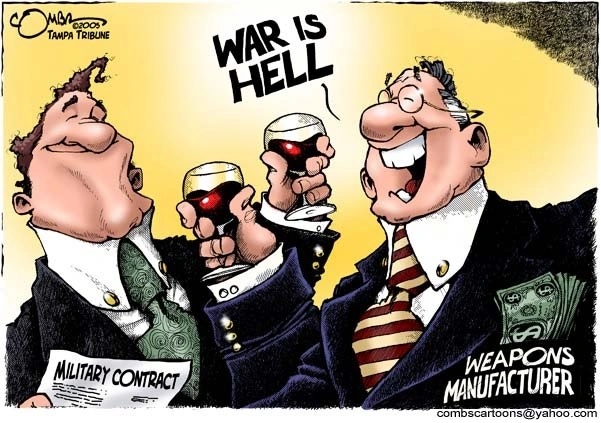
The United States is moving to bolster air defenses across the Middle East, notifying Congress of more than $16.5 billion in potential weapons sales aimed primarily at countering missile and drone threats.
The packages include systems for the United Arab Emirates, Kuwait and Jordan, and range from advanced radar and air defense sensors to counter-drone technology and aircraft munitions, according to several statements released Thursday by the U.S. Department of State.
The notifications come as missile and drone attacks have intensified across the Middle East during the war with Iran, putting pressure on air defense systems used to protect U.S. forces and regional allies.
The State Department said the secretary of state determined that an emergency justified the immediate sale, allowing the administration to bypass the typical congressional review process under the Arms Export Control Act.
Among the proposed sales is a long-range radar for the UAE that is designed to integrate with its Terminal High Altitude Area Defense system, or THAAD, for $4.5 billion.
The UAE package also includes a $2.1 billion fixed-site system designed to counter small drones, as well as $1.22 billion in air-to-air missiles and a $644 million set of F-16 munitions and upgrades to support its fighter aircraft.
Separately, Kuwait would receive $8 billion in lower tier air and missile defense radars designed to detect shorter-range threats, while Jordan’s $70.5 million package focuses on aircraft repair and parts to maintain its existing fleet.
Together, the sales point to a broader effort to build layered air defenses that are capable of detecting and intercepting threats at different ranges.
The demand comes as U.S. air defense systems are being used at a rate analysts worry exceeds the pace at which stockpiles can be replenished.
Switzerland Just Exposed Project Ranger’s Weakness
(Project Ranger, a 1,000-acre hypersonic manufacturing campus in Sandoval County, designed to support high-cadence production of hypersonic strike systems. )
Elaine Cimino, 23 Mar 26
Switzerland’s halt on weapons-related exports to the United States is not symbolic. It is a disruption—and it lands directly on projects like Project Ranger.
This facility is being built on the assumption that a complex, global weapons supply chain will function without interruption. That assumption is now broken.
Advanced weapons manufacturing depends on precision components, machine systems, and specialized inputs that cannot be swapped out overnight. When a country like Switzerland shuts off supply, timelines don’t “adjust”—they fail. Production stalls. Certification resets. Entire sequences of manufacturing have to be reworked.
That means one thing for Rio Rancho:
Project Ranger will not meet its LEDA job timelines as promised as long as the supply chain is disruptied.
LEDA agreements are performance-based. Jobs are supposed to materialize on a defined schedule. That schedule is now tied to a disrupted international supply chain. No amount of local approval, zoning, or political messaging can override that reality.
If the components aren’t there, the jobs aren’t there.
And when the jobs don’t show up on time, the public is left holding the bag.
Because the costs are already locked in.
Rio Rancho has approved development while operating with a water deficit. Return flow credits are not being met. Infrastructure is being expanded. Rates are rising. Nearly 40% of residents are low- or fixed-income—and they are being forced to subsidize a project whose economic return is now uncertain.
Water rates were locked designed for developers and project Ranger build out on the residents dollars.
At the same time, the broader economy is unstable. If the economy contracts—and all indicators say that risk is real—projects dependent on fragile, globalized supply chains are the first to break. Delays compound. Costs escalate. Public subsidies become sunk losses.
This is the predictable outcome of building a local economy around a volatile defense supply system.
And yet, construction continues. Question for how long—Until they stopped cold.
Steel is going up. Concrete is being poured. Commitments are being made in real time, while the underlying conditions that justified those commitments are collapsing. Now from the governor to the Castelion excuses to city dodging questions. Don’t count on the fascist tech bros to let their bomb factory to got to rust.
Switzerland didn’t just halt exports.
It exposed the truth: Project Ranger is not in control of its own timeline.And Rio Rancho is not in control of the consequences. The public pays
1 This Month



26 September – International Day for the Total Elimination of Nuclear Weapons


PLEASE OPPOSE HR 8255 AND S.3639 – bills would accelerate satellite deployment, with no environmental review or safeguards – https://ncstd5li.quorum.us/campaign/169331/
To see nuclear-related stories in greater depth and intensity – go to https://nuclearinformation.wordpress.com
-
Archives
- September 2026 (219)
- August 2026 (330)
- July 2026 (355)
- June 2026 (287)
- May 2026 (306)
- April 2026 (356)
- March 2026 (251)
- February 2026 (267)
- January 2026 (308)
- December 2025 (358)
- November 2025 (359)
- October 2025 (375)
-
Categories
- 1
- 1 NUCLEAR ISSUES
- business and costs
- climate change
- culture and arts
- ENERGY
- environment
- health
- history
- indigenous issues
- Legal
- marketing of nuclear
- media
- opposition to nuclear
- PERSONAL STORIES
- politics
- politics international
- Religion and ethics
- safety
- secrets,lies and civil liberties
- spinbuster
- technology
- Uranium
- wastes
- weapons and war
- Women
- 2 WORLD
- ACTION
- AFRICA
- Atrocities
- AUSTRALIA
- Christina's notes
- Christina's themes
- culture and arts
- Events
- Fuk 2022
- Fuk 2023
- Fukushima 2017
- Fukushima 2018
- fukushima 2019
- Fukushima 2020
- Fukushima 2021
- general
- global warming
- Humour (God we need it)
- Nuclear
- RARE EARTHS
- Reference
- resources – print
- Resources -audiovicual
- Weekly Newsletter
- World
- World Nuclear
- YouTube
-
RSS
Entries RSS
Comments RSS
 nuclear-news