At UN Security Council, Officials Say Israeli Settler Violence Has Brought West Bank to ‘Breaking Point’
“Settler violence has reached unprecedented levels,” said a coordinator for the Middle East peace process. “Many incidents occurred in the presence of Israeli forces.”
August 12, 2026, Julia Conley Common Dreams, https://www.commondreams.org/news/israeli-settler-violence-west-bank
“Settler violence has reached unprecedented levels,” said a coordinator for the Middle East peace process. “Many incidents occurred in the presence of Israeli forces.”
That violence exemplified what the Israeli human rights group B’Tselem called an escalating “ethnic cleansing” operation that Israel’s military allows.
As B’Tselem said Wednesday, settlers had established an illegal outpost in the yards of two Palestinian families’ homes, “forcing the families out and taking over their homes,” and the US-backed Israel Defense Forces (IDF) had done nothing to protect the Palestinian residents.
“Israeli ethnic cleansing in the West Bank is accelerating and expanding in full view of everyone,” Yuli Novak, president of B’Tselem, told Anadolu Agency, adding that the settlers’ seizure of the Palestinian homes was “not an isolated incident.”
Home demolitions by Israeli forces; attacks on healthcare infrastructure, homes, and schools; mass displacement of Palestinians; and the expansion of illegal settlements across the West Bank have brought the occupied Palestinian territory to “the breaking point,” said a top humanitarian official at the United Nations Security Council Tuesday, calling for a “coordinated international effort” to end the violent Israeli occupation.
At a meeting on the situation in the territory, Ramiz Alakbarov, the UN special coordinator for the Middle East peace process, addressed the council as families in the town of Qusra, northern Nablus, were facing days of attacks by Israeli settlers.
That violence exemplified what the Israeli human rights group B’Tselem called an escalating “ethnic cleansing” operation that Israel’s military allows.
As B’Tselem said Wednesday, settlers had established an illegal outpost in the yards of two Palestinian families’ homes, “forcing the families out and taking over their homes,” and the US-backed Israel Defense Forces (IDF) had done nothing to protect the Palestinian residents.
“Israeli ethnic cleansing in the West Bank is accelerating and expanding in full view of everyone,” Yuli Novak, president of B’Tselem, told Anadolu Agency, adding that the settlers’ seizure of the Palestinian homes was “not an isolated incident.”
Breaking the Silence, an organization run by former IDF members who oppose the occupation, explained how settlers, with the backing of the military, essentially blockade individual homes as a method of driving Palestinians out.
“Violent settlers may do the ‘dirty work’ of daily terror against Palestinian men, women, and children, but neither this terror nor ethnic cleansing would be possible without the army’s support,” said the group. “Village after village, house after house. It keeps happening because it is policy.”
At the Security Council meeting, Alakbarov said Israeli forces have killed 76 Palestinians, including 18 children, in the West Bank in 2026 so far, while children make up nearly half of the 3,800 Palestinians who have been displaced by settler attacks, demolitions, and evictions.
“One hundred and twenty-seven Palestinian communities have experienced full or partial displacement since January 2023, including 47 that have been entirely displaced, affecting more than 6,390 Palestinians,” said Alakbarov. “Settler violence has reached unprecedented levels. So far this year the UN has documented more than 1,430 incidents involving Israeli settlers that resulted in casualties, property damage, or both, affecting approximately 260 Palestinian communities. Many incidents occurred in the presence of Israeli forces.”
As Alakbarov spoke Tuesday, the World Health Organization warned that the West Bank has also seen an uptick in violence against healthcare infrastructure, with Israeli carrying out 83 attacks on healthcare transport such as ambulances and 11 attacks on medical centers and facilities, injuring at least 33 people and killing four. July saw a surge in healthcare attacks—a hallmark of Israel’s assault on Gaza that began in 2023—with 37 strikes on infrastructure.
Settler attacks were once mainly concentrated in Area C, which comprises about 60% of the West Bank and is under Israeli control.
But Alakbarov said settlers are increasingly waging violence against Palestinians in Areas A and B, which are under the administration of the Palestinian Authority.
“The future of the region is at stake,” the UN permanent observer for the state of Palestine, Riyad Mansour, told the Security Council. “International will cannot bow before the colonial whims of the Israeli government.”
Israeli officials in recent months have advanced and approved about 12,360 housing units in settlements across the West Bank this year, with the Security Cabinet signing off on 13 new settlements in the central part of the territory last month. The move further isolates East Jerusalem, which Palestinians consider the capital of a future Palestinian state, from the rest of the West Bank.
Last year Prime Minister Benjamin Netanyahu also signed an agreement to develop 3,400 new units in the E1 settlement, which would also cut off access to East Jerusalem. The prime minister said as he approved the deal, “There will be no Palestinian state.”
The approvals of more settlement housing this year and the escalation in IDF-sanctioned violence against Palestinian communities across the West Bank “are interconnected steps, not isolated developments,” Alakbarov said Tuesday.
“The situation in the West Bank must be treated as an emergency requiring urgent action,” he said. “The concern is not only the continued expansion of settlements, but the speed and systematic manner in which new facts are being created on the ground. New outposts are established, often with state support, and can be retroactively authorized or incorporated into the wider settlement system. From these outposts, settler violence and intimidation have driven the displacement of Palestinian communities.”
He added that the spread of settler outposts in agricultural and grazing areas is “deeply troubling.”
“Requiring only a small number of settlers, they enable control over vast areas of land,” said Alakbarov. “Israeli monitoring organizations report that agricultural and pastoral outposts now exercise effective control over close to 20% of the West Bank.”
Israeli forces also arrested 23 Palestinians on Tuesday, including two children, days after a large-scale operation at Qalandia refugee camp resulted in the detentions of more than 60 people.
Hannah Sulieman, deputy executive director of the UN Children’s Fund (UNICEF), emphasized that 355 Palestinian children are currently being detained in Israeli military prisons—“the highest number in eight years.”
The arrests and the violence mean that for children and their families in the West Bank, “the fundamental spaces of childhood—the home, the classroom, the street, the community—are becoming increasingly unsafe,” said Sulieman.
“Children in the West Bank have the same rights as children everywhere,” she said. “To live, to learn, to be protected, and to imagine a future beyond violence and fear.”
Once secret report on atomic weapons production released as greens fight plans in SC.
The State, By Sammy Fretwell August 14 , 2026
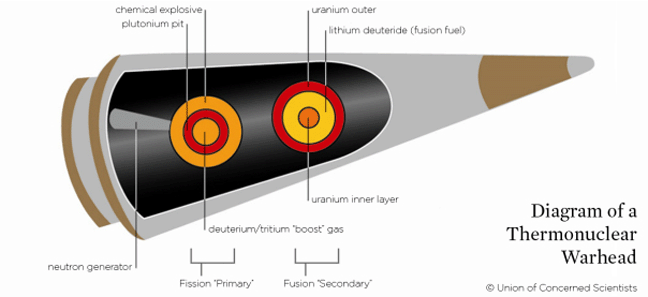
A nuclear safety watchdog group says it has obtained formerly hidden information that bolsters arguments against building atomic weapons plants in New Mexico and South Carolina — but a key federal agency doesn’t see it that way. The federal government has released sections of a report, sought by environmental groups opposed to spending billions of dollars on new factories to produce plutonium pits, key ingredients in atomic bombs.
Environmentalists have said the report could contain information showing that pits are not aging as fast as the government contends, so there is no need for factories to replenish the stockpile. Important sections of the report had not been released until last week, nuclear safety watchdogs say. The unredacted report summary, developed by a team of consulting scientists and released under an open records request, says pits are beginning to age but that they remain adequate for use in nuclear weapons, as environmentalists have argued. Despite that, the report — known as a JASON study — recommends continuing with plans to produce pits for use in weapons.
Jay Coghlan, who heads Nuclear Watch New Mexico, said the report makes his case against building the pit production facilities, which are expected to cost the government more than $30 billion. If the current stock of pits is in good shape and aging slowly, there is no need to move forward with production of factories in South Carolina and New Mexico, he and others contend. “It looks like this plutonium aging excuse doesn’t really hold water,’’ he said in a news release.
His organization, as well as South Carolina’s Savannah River Site Watch and other environmental groups say they are worried that new pit production could crank up a nuclear arms race, while also leading to dangerous testing for new weapons that would rely on the new pits. Highly toxic nuclear material could leak from an underground test sites, Coghlan said. The pits contain plutonium, one of the most deadly atomic materials. Environmentalists also say it isn’t worth spending more than $30 billion for the project, as is projected.
“There are both environmental concerns and there are very serious proliferation concerns,’’ Coghlan said. “The existing stockpile is highly reliable.’’ The National Nuclear Security Administration, a division of the U.S. Department of Energy, interprets the report differently…………………..
Read more at: https://www.thestate.com/news/local/environment/article316871213.html#storylink=cpy
NATO’s $Trillions Delivered Two Strategic Defeats in Four Years. Now We’re Too Broke to Fight.
Both men were scathing about the absence of honest strategic thinking. Politicians equate money spent with security achieved. Senior officers too often tell ministers what they want to hear rather than what they need to hear
In conversation with Douglas Macgregor and Steve Jermy
Ian Proud, Aug 13, 2026, https://thepeacemonger.substack.com/p/natos-trillions-delivered-two-strategic?utm_source=post-email-title&publication_id=3221990&post_id=211003191&utm_campaign=email-post-title&isFreemail=true&r=1ise1&triedRedirect=true&utm_medium=email
I sat down with two of the most clear-eyed military realists working today: retired US Army Colonel (Ret’d) Douglas Macgregor and Commodore (Ret’d) Steve Jermy RN.
The starting point was simple and damning. A couple of years ago NATO countries accounted for 53 per cent of global military spending. That share has only grown as European governments have scrambled to increase defence budgets. Yet in the space of four years the Western alliance has suffered two major geostrategic defeats — first in Ukraine, now in the Persian Gulf against Iran. That is unprecedented in my lifetime.
Macgregor put it bluntly. The force structure the United States (and by extension much of NATO) has built over the last thirty years was designed for short, offensive wars against weak opponents who lacked serious air and missile defences. Commit that force against a large, prepared adversary with mountains, underground facilities and modern stand-off weapons, and the limitations become obvious very quickly. “Wrong force, wrong mission, wrong place, wrong time,” he said.
Jermy approached the same problem from the other side of the Atlantic. He pointed out that Western armed forces are configured primarily as air-sea powers, while the opponents we have chosen to confront are land powers capable of denying us both air superiority and sea control. He also returned to a theme he has written about for years: industrial capacity and energy remain the real foundations of military power. Without them, no amount of money spent on exquisite platforms will deliver victory.
The Royal Navy’s collapse from roughly seventy major surface combatants in his day to a handful of frigates and destroyers today is not just a British problem — it is a symptom of a wider Western failure to match resources to strategy.
Both men were scathing about the absence of honest strategic thinking. Politicians equate money spent with security achieved. Senior officers too often tell ministers what they want to hear rather than what they need to hear.
The result is a succession of campaigns that fail the basic tests of strategy: they are neither effective, efficient, nor enduring.
We talked about historical examples that still matter — Campbell-Bannerman’s refusal to commit a British army to the Continent, Eisenhower’s acute awareness of manpower limits, George Kennan’s clear-eyed distinction between vital and peripheral interests. The common thread is the same: great powers that refuse to define their actual interests end up exhausted and broke.
The most sobering line came near the end. Macgregor noted that going broke may ultimately force the reform that political will has so far refused. We are reaching the point where the West can no longer afford the wars its leaders keep starting.
You can watch the full conversation here.
It is not comfortable viewing, but it is necessary. If we are serious about peace rather than perpetual conflict, we first have to stop lying to ourselves about the balance of power.
What Is the Next Weapon? The Rise of the Adaptive Military Ecosystem
Phil Butler, August 10, 2026, https://journal-neo.su/2026/08/10/what-is-the-next-weapon-the-rise-of-the-adaptive-military-ecosystem/
Every generation of warfare produces a defining weapon, but history shows that weapons themselves rarely determine victory. The decisive advantage belongs to the societies capable of creating the organizations, industries, and human expertise necessary to transform new technologies into sustained military power.
The New Battlefield
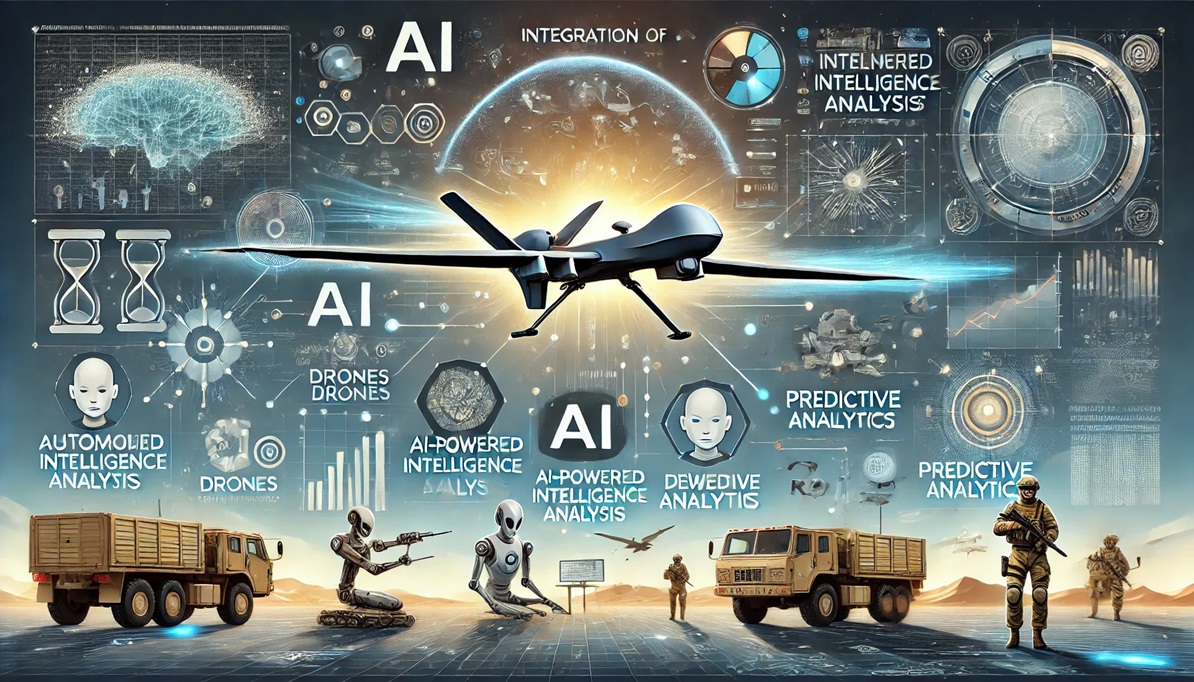
The longbow reshaped medieval warfare, the musket transformed infantry combat, the tank revolutionized maneuver, and nuclear weapons altered the strategic balance of the world. Today, many believe the next decisive weapon will be the autonomous drone, artificial intelligence, or some future robotic system. The deeper transformation, however, may be something more fundamental: the ability of nations to build adaptive military ecosystems capable of continuously creating, deploying, and improving those technologies. (see CSIS report)
The war in Ukraine has become the most significant military laboratory of the modern era. It is a conflict where the weapons of the twentieth century remain fully present: artillery, armor, missiles, aircraft, and infantry formations. However, these elements are effective only if they can operate inside a battlefield environment transformed by drones, electronic warfare, satellite communications, and rapid technological adaptation. The most visible symbol of this transformation has been the drone. Small unmanned systems have changed reconnaissance, targeting, logistics, and tactical operations. They have made portions of the battlefield more transparent and forced commanders to reconsider how forces maneuver, conceal themselves, and survive. Yet focusing only on drones risks misunderstanding the deeper revolution. The drone is not the weapon; the system surrounding the drone is the weapon.
A modern unmanned platform depends upon communications networks, intelligence gathering, software, electronic warfare protection, manufacturing capacity, trained operators, maintenance systems, and the ability to rapidly modify designs based on battlefield experience. The true capability is not the aircraft itself but the entire cycle that allows a military organization to observe, adapt, produce, and improve. This distinction matters because every major military transformation in history has been driven not simply by invention, but by integration. The tank did not revolutionize warfare merely because armored vehicles existed. It changed warfare when armies developed doctrine, communications, logistics, and command structures capable of exploiting armored mobility.
The same principle now applies to autonomous systems and artificial intelligence. Recent Russian military discussions reflect this same search for integration, with proposals emphasizing the deployment of unmanned systems alongside traditional combat platforms, including concepts involving drone capabilities integrated with armored formations. According to Dmitry Kuzyakin points out the need for close contact, remote drone systems for the moment the line of contact collapses, when traditional drones cease to be the ultimate weapon. However, while such approaches represent only one component of a much larger transformation, they illustrate the growing recognition that future warfare will depend on combining legacy systems with autonomous capabilities rather than replacing one with the other. And as we now observe, recent military discussions have increasingly focused on this challenge. A Russian military perspective examining emerging systems emphasized that technological change requires corresponding changes in organization, training, and operational employment. The significance of this argument extends beyond any single country because it recognizes a fundamental truth: possessing advanced technology is not the same as possessing the ability to use it effectively.
This conclusion is increasingly reflected across defense analysis communities. The RAND Corporation has examined artificial intelligence and autonomy as potentially disruptive military technologies because their importance extends beyond individual weapons systems. AI changes the military decision cycle itself by transforming how information is collected, analyzed, and acted upon. Similarly, research from the Royal United Services Institute examining lessons from Ukraine has emphasized the growing importance of electronic warfare, communications resilience, intelligence networks, and the integration of traditional military capabilities with emerging technologies. Together, these perspectives point toward the same conclusion: future warfare will not be defined by a single revolutionary weapon. It will be defined by the ability to connect many capabilities into a coherent and adaptive system.
The New Arsenal
The industrial foundations of warfare are also undergoing a transformation. During the great conflicts of the twentieth century, military power was measured through factories, shipyards, steel production, fuel supplies, and the ability to manufacture enormous quantities of conventional weapons. Those capabilities remain essential, but the modern defense industry increasingly extends into areas once considered separate from military power. Semiconductor production, software engineering, artificial intelligence research, robotics, advanced manufacturing, and communications infrastructure are becoming central components of national defense capability. The modern battlefield is increasingly connected to research laboratories, technology companies, and industrial networks. This does not mean traditional weapons have become irrelevant. Artillery, aircraft, armored vehicles, and naval systems remain critical. But the pace of technological change means that military advantage will increasingly depend upon how quickly those systems can evolve after they enter service.
The twentieth-century model of procurement often operated on timelines measured in decades. The emerging model increasingly operates on timelines measured in months or even weeks. A battlefield lesson can become a software improvement. A tactical vulnerability can produce a new countermeasure. A design limitation can lead to a revised production method. The strategic competition therefore shifts from simply producing weapons to producing adaptation. This requires a new understanding of military personnel. Future forces will still require soldiers, commanders, and traditional combat specialists, but they will increasingly operate alongside engineers, software developers, robotics technicians, intelligence analysts, electronic warfare specialists, and manufacturing experts. The emergence of this new military workforce is already producing new models of service that blur the traditional boundary between civilian expertise and defense capability. Programs such as the U.S. Army’s Executive Innovation Corps and the Navy’s innovation reserve initiatives seek to bring highly skilled technology professionals from the private sector into military service while allowing them to maintain their civilian careers, creating a flexible pool of expertise in fields such as artificial intelligence, robotics, autonomous systems, and advanced software development. The military professional of the future will need more than proficiency with a particular platform. Increasingly, effectiveness will depend upon the ability to operate within a network of humans and machines that constantly changes.
The concept of military power is expanding. The battlefield is no longer only where soldiers fight. It also exists in laboratories, factories, data centers, communications networks, and training environments where future capabilities are developed. The strongest defense industries will therefore not simply manufacture weapons. They will create learning systems. They will be organizations capable of taking information from the battlefield, converting that information into knowledge, and turning that knowledge into improved capability faster than an opponent can respond. And for Russia, the idea of creating a technical force incentivized for voluntary service should be put into place. By this, I envision highly skilled persons being trained in facets of modernized warfare being part of a military/private initiative that provides for the most skilled operators serving in the various fields to operate or develop these new synergies, who then become part of a wider complex that will constantly evolve and universally incentivize service.
The New Advantage
Read more: What Is the Next Weapon? The Rise of the Adaptive Military EcosystemThe history of warfare is a history of adaptation. The greatest military transformations occurred when societies reorganized themselves around new realities. Naval power changed when nations built industrial fleets and global logistics networks. Air power changed when states developed aviation industries, pilot training systems, and integrated command structures. Nuclear strategy changed when nations built entirely new scientific and industrial institutions.
The emerging era follows the same pattern. The future advantage will not belong simply to those who possess the most advanced weapon. It will belong to those who can create the strongest adaptive ecosystem around that weapon. This has implications for every major defense power. Whether considering Russia, the United States, China, NATO members, or other nations seeking modern military capability, the central challenge is the same: creating institutions capable of continuous learning and technological evolution.
Future defense partnerships may increasingly resemble technological networks. Different nations may contribute different strengths, manufacturing capacity, scientific research, software development, industrial resources, logistics, or specialized expertise. The effectiveness of the collective system may become more important than the capability of any single participant. The question “What is the next weapon?” therefore has an unexpected answer. It may not be a drone, a robot, or an artificial intelligence system. It may be the ability of a society to repeatedly create the next weapon after the current one becomes obsolete.
The defining competition of the twenty-first century will not simply be between armies. It will be between systems of innovation, adaptation, and resilience. Victory has always belonged to those who can change the nature of the battlefield faster than their opponents can adjust. In the next era of warfare, adaptation itself may become the ultimate strategic weapon.
The AI drone swarms coming soon to Europe’s battlefields
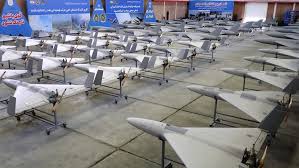
Flocks of autonomous attack drones are being tested by Nato and China, and seeing
action in Ukraine. New defences are needed to stop them. For many years,
the prospect of artificial intelligence-powered drone swarms has been a
nightmare looming on the fringes of modern warfare.
Now, as a strike test video released a few months ago by the German-American defence technology company Auterion illustrates, it is increasingly encroaching
onto the battlefield and worrying Europe’s defence planners and national
security officials. In the United States, military contractors have
demonstrated autonomous networks of more than a hundred drones and the
Pentagon is aiming to create a “swarm of swarms” capability with as
many as 500 units.
“This becomes, just by its pure scale, a new type of
weapon of mass destruction,” he said. “If you really come to a point
where you have 10,000 drones that operate fully autonomously — detecting
targets, tracking, executing — that is a whole new type of capability.”
If you’re already afraid, just wait until you hear about Manhattan Project 2.0.



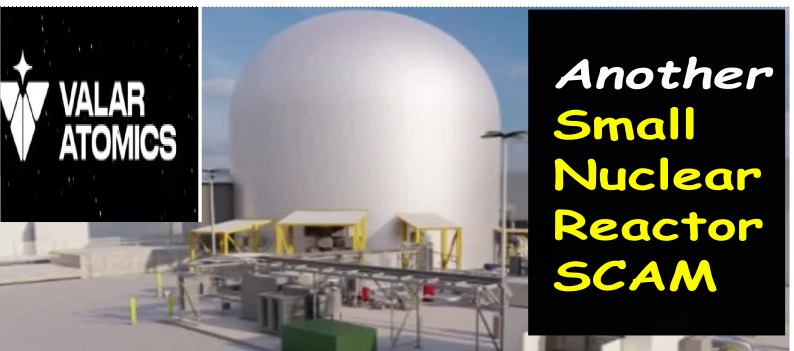
The nuclear startups receiving special dispensation from the DOE are part of a pilot program established under Executive Order 14301, “Reforming Nuclear Reactor Testing at the Department of Energy.” The DOE selected Oklo Inc. (Energy Secretary Chris Wright formerly served on its board of directors), Aalo Atomics Inc., Antares Nuclear Inc., Atomic Alchemy Inc., Deep Fission Inc., Last Energy Inc., Natura Resources LLC, Radiant Industries Inc., Terrestrial Energy Inc. and Valar Atomics Inc. as the companies whose experimental reactor designs will be tested at locations in Texas, Kansas, Utah and Tennessee (Oak Ridge). In another attempt to dodge NRC oversight, these companies are considered DOE contractors whose reactors are subject to DOE rules no matter their location
Analysis, Kristen Thomason | August 10, 2026, https://baptistnews.com/article/if-youre-already-afraid-just-wait-until-you-hear-about-manhattan-project-2-0/
Summers spent at my grandparents’ house in Tennessee were hot and humid. With enough cousins piled into the porch swing, you could stir up a bit of a breeze. But when that was no longer effective, we would retreat to the air-conditioned splendor of the American Museum of Science and Energy in Oak Ridge and stroll through exhibits like “Wildcatting for Oil” and “Atoms for Autos.”
Among these varied installations, however, pride of place was given to documenting Oak Ridge’s role as the secret headquarters for the Manhattan Project and source of the Hiroshima bomb’s enriched uranium. Most of the 30,000 covert workers on that project only discovered the truth of what they had been helping to build on Aug. 6, 1945, when they awoke to the headline “Oak Ridge Attacks Japan.”
Eighty years later, on May 23, 2025, President Donald Trump signed a series of executive orders to further the Department of Energy’s “Manhattan Project 2.0.” And just like the original, the second iteration of the Manhattan Project has plenty of secrets of its own.
The executive orders came at the behest of tech giants like Amazon, Meta, Google and Microsoft, who want cheap, abundant nuclear power to run their AI data centers. And according to the United Nations, these data centers will have doubled their voracious consumption of electricity and water by 2030.
Benefiting from a second Atomic Age
Nuclear industry executives who stand to benefit from a second atomic age had advance access and offered edits to the executive orders, which maximize risk-taking and profit-making over the safety of nuclear employees and the public. They stood behind Trump as he signed Executive Order 14299, “Deploying Advanced Nuclear Reactor Technologies for National Security,” which paves the way for private companies to construct commercially owned and operated experimental nuclear reactors on Department of Defense properties and at the DOE’s national laboratories.
The original Manhattan Project granted the military sweeping authority to bypass regulations and red tape when developing the atom bomb. Likewise, situating these new reactors on federal land allows companies to skip environmental requirements and skirt the authority of the Nuclear Regulatory Commission, the independent bipartisan body charged with granting licenses and regulating the safety of commercial nuclear reactors.
However, to achieve their goal of mass-producing portable nuclear reactors they can deploy via semi-truck to datacenters, hospitals and industrial facilities, they’ll eventually need to pass the NRC’s stringent public safety and environmental standards. That is why Trump next signed Executive Order 14300, “Ordering the Reform of the Nuclear Regulatory Commission,” to overhaul the “structure, personnel, regulations and basic operations” of the NRC.
In 1974, Congress, weary of the Atomic Energy Commission’s reckless experimentation with atomic power at the expense of public safety, divided it into the DOE, which promotes nuclear power, and the NRC, which regulates it. Scientists at Oak Ridge National Laboratory were thus forced to abandon a plan to carve a second canal through Panama using 250 Hiroshima-sized atomic bombs. Executive Order 14300 is a return to the wild pre-1974 days.
The order first directs the NRC to rubber stamp approval for those reactors developed under the auspices of the DOE and DOD without any additional testing. It then reduces the responsibilities and size of the Advisory Committee on Reactor Safeguards, an independent group that once provided technical guidance about reactor safety to the NRC but now can only voice concerns when specifically asked. The president also replaced Democrat and NRC Chair Christopher Hanson and installed a steering board staffed by DOE officials to oversee the NRC reforms.
Next, Executive Order 14300 loosens radiation exposure restrictions for nuclear workers and the general public. To implement this order, on July 1, the NRC proposed a series of changes including limiting use of the linear no-threshold model, which affirms there is no threshold below which radiation is safe. The public has 45 days to comment on the changes.
Raising doubts about the dangers
The linear no-threshold model is the industry gold standard and guiding principle for radiation safety around the world. However, in a move akin to its approach to vaccines, the administration raises doubts about the science behind the model despite the myriad studies and decades’ worth of radiation data on nuclear workers that undergird it.
The 2023 International Nuclear Workers Study examined the dosimeters worn by 309,932 nuclear workers in France, the United Kingdom and the U.S. and tracked their incidents of cancer for an average of 35 years. Scientists confirmed that the greater the exposure to ionizing radiation from nuclear fission, even at low occupational levels, the greater the likelihood of death from a cancerous tumor, which often only appeared decades after exposure.
UNC Chapel Hill conducted a similar study focusing on the 22,000 workers hired at the ORNL from the early days of the Manhattan Project through the mid-1980s and found results similar to INWORKS for salaried workers and even higher rates of cancer for hourly workers. These men worked construction, laundered radioactive uniforms or, like my grandfather, laid railroad track to allow for the removal of “legacy waste” from the Manhattan Project without any protection or knowledge that they were being exposed.
Therefore, when it comes to ionizing radiation, which is invisible and difficult to measure accurately, the ethical approach is to keep the exposure level “as low as reasonably achievable,” or what is known as the ALARA standard. This might mean minimizing the time employees spend with radioactive materials, requiring protective gear or, in the case of the public, keeping radioactive emissions below legal limits.
However, protecting people doesn’t fit with the “move fast and break things” methods of tech moguls who want nuclear energy ASAP to power their AI databases. So, in its new proposed rules, the NRC is acknowledging linear no-threshold but dispensing with the ALARA standard in favor of a graded approach where safety is determined by situation with little accountability. Nuclear investors and Trump donors Peter Thiel and Mark Andreessen have been lobbying for the abolition of ALARA from the NRC, also a recommendation of Project 2025.
More DOE changes
The DOE began secretly eliminating ALARA from its own radiation protection framework in August 2025 without officially informing employees or the public until January 2026, although it did notify nuclear executives. To justify the end of ALARA, the DOE cited a report they themselves commissioned from the Idaho National Laboratory. That report said that to reduce “unnecessary economic burdens,” companies could now expose workers to five REM a year.
Roentgen Equivalent Man measures the biological effect and risk of radiation exposure to human tissue. According to the National Academies of Sciences, an exposure of five REM a year could cause cancer in one out of five career nuclear employees. The INL report proposes a future increase to 10 REM a year, which would raise the cancer rate to four out of five.
New DOE rules also double the radiation exposure level that would trigger an official investigation from two times to four times the legal limit. When Seth Cohen, the DOGE employee tasked with removing government “barriers” for nuclear companies, was asked if they should establish a fund for such workplace accidents, he said, “When SpaceX started building rockets, they sort of expected the first ones to blow up.” Andreessen called Cohen “An American hero” on X.
In addition, nuclear contractors for the DOE, including the start-up companies, now can ignore what’s known as Appendix A to Part 851 on Worker Safety and Health Functional Areas. As a result, precautions such as informing employees of possible hazards, procedures regarding possible carcinogens, requiring respiratory protection equipment or providing “comprehensive occupational medicine services” are no longer mandatory. This rule change does not apply to contractors working with other forms of energy.
Without occupational medical services to track and document radiation exposure and any subsequent disease, it will be difficult for employees to later obtain the care and compensation they’re owed in the event of an accident or overexposure. Such was the case for victims of the partial meltdown of Three Mile Island, who had no way to prove in a court of law that they had received excessive doses of radiation.
The nuclear startups receiving special dispensation from the DOE are part of a pilot program established under Executive Order 14301, “Reforming Nuclear Reactor Testing at the Department of Energy.” The DOE selected Oklo Inc. (Energy Secretary Chris Wright formerly served on its board of directors), Aalo Atomics Inc., Antares Nuclear Inc., Atomic Alchemy Inc., Deep Fission Inc., Last Energy Inc., Natura Resources LLC, Radiant Industries Inc., Terrestrial Energy Inc. and Valar Atomics Inc. as the companies whose experimental reactor designs will be tested at locations in Texas, Kansas, Utah and Tennessee (Oak Ridge). In another attempt to dodge NRC oversight, these companies are considered DOE contractors whose reactors are subject to DOE rules no matter their location.
Participants in the Reactor Pilot Program will be testing Small Modular Reactor prototypes and experimenting with new sources of fuel which, without the necessary regulations, have the potential to jeopardize public safety. The most expensive element to build in a nuclear power plant is the lead-and-concrete containment shield designed to keep radioactive vapors from escaping in the event of a nuclear meltdown. Shielding is what failed 40 years ago during the 1986 Chernobyl Unit 4 power plant disaster in Ukraine and what held when Pennsylvania’s Three Mile Island suffered a partial meltdown in 1979.
Supporters of SMR say their new high-assay, low-enriched uranium fuel called TRISO is so safe that physical containment isn’t necessary. But X-energy, a nuclear reactor and fuel company funded by Amazon, released an accident analysis that said TRISO could exceed safe temperatures by several hundred degrees Celsius.
“The problem is that, with new reactors, they introduce new safety concerns and new technical issues,” said Edwin Lyman, director of nuclear power safety at the Union of Concerned Scientists. “Every design I have looked at has potential safety and security vulnerabilities, which are not being addressed to the extent that they need to be.” The DOE also has jettisoned the requirement to have a cognizant system engineer monitoring each of the reactor’s safety systems, calling it an “unnecessary burden.”
Yet, new types of fuel produce new types of nuclear waste. Every few years, a traditional nuclear power plant removes the highly radioactive spent fuel rods, which are now a mixture of uranium and plutonium, and leaves them to cool in pools of water before they’re sealed in concrete casks for what is supposed to be interim storage. Today, 100,000 metric tons of spent fuel are sitting in limbo because the federal government has failed to find a permanent storage solution for high-level nuclear waste.
Unbeknownst to most, fully one third of all Americans live within 50 miles of nuclear waste storage.
The waste problem
SMRs face the same long-term waste disposal conundrum, only they produce a more chemically and physically reactive waste and two to 30 times more of it than traditional reactors. This waste is not compatible with current nuclear waste disposal technologies, so engineers are experimenting with ways to manage the output and radiation. In response, the DOE replaced its former 59-page waste removal manual with 25 pages of bullet points.
Entirely missing from the abridged version are the sections on waste packaging and monitoring. Last July, Trump dismissed all but one member of the Nuclear Waste Technical Review Board, an independent federal agency charged with reviewing the science behind the DOE actions regarding spent nuclear fuel and high-level nuclear waste.
Executive Order 14301 also orders the DOE to “reform its rules” regarding the National Environmental Policy Act by excluding SMRs from a full environmental assessment or environmental impact statement. Previously, nuclear reactors had to address their potential impact on water, air and ecosystems at specific locations.
Now, in a possible violation of the Clean Water Act, the DOE says the release of radioactive water and steam into the environment should be “avoided” but is not strictly prohibited. Companies no longer “must” protect groundwater from radioactive contamination. “Avoiding” or “minimizing” is sufficient. Monitoring for contamination is optional.
But because cleaning up radioactive spills is expensive, the INL report also recommends abandoning the ALARA standard for the public. Both the NRC and the DOE are following this directive. However, the NRC has decided not to change the .1 REM public exposure limit, while the DOE is raising the limit from .1 REM to .5 REM.
This is in addition to the average .62 REM of “background radiation” Americans receive from sources like the sun and air travel. The DOE increase will be the equivalent of 50 X-rays a year per person, which will result in one in 57 people who live near a DOE nuclear facility developing a fatal cancer. Women and children, especially girls, will feel the effects even more severely.
When exposed to radiation within the current legal limit, women are 50% more likely to die of radiation-induced cancer than men, and girls are seven times as likely as men and twice as likely as boys of the same age to develop cancer. The DOE also has cut the Office of Environment, Health, Safety and Security, the agency’s internal team of health experts who study radiation safety, so it’s unclear who would monitor for this potential danger.
And yet another danger
Executive Order 14302, “Reinvigorating the Nuclear Industrial Base”, further endangers the safety of nuclear workers and the wider public by providing the nuclear industry with Cold War-era plutonium-239 harvested from dismantled nuclear warheads. Because the U.S. doesn’t currently have enough uranium for Manhattan Project 2.0, Oklo, Standard Nuclear, Exodys Energy, SHINE Technologies and Flibe Energy plan to convert plutonium into SMR fuel.
Plutonium is highly toxic if inhaled and requires special ventilation to handle. Other countries that have attempted to use plutonium have found converting it not worth the expense. It’s also highly sought after for bomb-making and requires heightened security measures. With a half-life of more than 24,000 years, managing plutonium is not a short-term commitment. And yet, because companies complained about the cost of security, the DOE jettisoned hundreds of pages of security regulations for reactors, including specifications for storage and requirements for firearms training and emergency drills.
Instead, Executive Order14302 encourages the reprocessing of nuclear waste, a practice discontinued during the Carter administration because it produces excess plutonium. In February, the Trump administration awarded $19 million to five companies that will experiment with nuclear fuel “recycling,” which is a misleading moniker. The reprocessing of spent fuel creates its own high-level radioactive waste, albeit with a half-life of a thousand years rather than tens of thousands of years.
Enabling these changes to the country’s nuclear regulations is Executive Order 14303 “Restoring Gold Standard Science,” which is less about rigorous science than it is about “doubt science,” the strategy utilized by the tobacco industry to raise doubts about the dangers of smoking and dodge regulation. MAGA officials and DOGE staffers are cherry-picking data that supports their agenda and discarding evidence that does not.
They are quite fond of citing fringe scientist Edward Calabrese, who, from his work with fruit flies, thinks a little radiation might be beneficial for people. My great, great, great grandfather said something similar while hawking “Dr. Kister’s Radium Charged Water” in the 1900s, until the government ordered him to cease and desist.
Who should we trust?
Industry executives promise their new SMR technology is safe, but Trump has disbanded the independent boards that might hold them accountable. Furthermore, given the disregard Amazon has shown to warehouse worker safety in the name of profit, why would anyone believe that Amazon-owned X-energy would be any more considerate to its nuclear employees or the general public?
The DOE also has a horrific history when it comes to protecting people and the environment from nuclear waste and ionizing radiation. In 2005, radioactive contaminants from deteriorating waste disposal facilities at the Oak Ridge nuclear plant infiltrated the Clinch River, a source of drinking water in East Tennessee.
Summer in Tennessee is demonstrably hotter than it was 40 years ago. Even folks who deny the reality of climate change can’t ignore that tomato planting time is earlier than ever. Some experts say nuclear energy must be a part of America’s renewable energy portfolio if we are to cut carbon emissions and reduce global warming. China, our stated AI nemesis in the Manhattan Project 2.0, also has developed SMR but is relying heavily on solar and wind farms to power its data centers.
The Biden administration also had a plan in place to triple nuclear energy capacity by 2050, which called for adding staff to the NRC to speed up licensing, rather than repealing safety regulations. Following the lead of Canada and Finland, they sought to build trust with local communities through a multi-year consent-based process.
In contrast, Trump vows to quadruple the country’s nuclear capacity, enticing states to volunteer sites as “Nuclear Lifecycle Innovation Campuses.” Selected cities will enrich uranium, create fuel, generate nuclear power, reprocess spent fuel and store nuclear waste all in one location, although without the local buy-in, trust building or necessary geological prescreening present in the Biden plan.
Gov. Bill Lee of Tennessee applied to make Oak Ridge one of these nuclear campuses, although with 230 nuclear lifecycle companies operating between Oak Ridge and Knoxville, plus ORNL and the secretive Y-12 National Security Complex, it’s practically one already.
One of the joys of those summer visits to Tennessee as a child was seeing my uncle who worked at Y-12 as a chemist. When asked about his latest classified projects, he would sigh, fold his hands across the bib of his overalls and say, “Well, if I told ya, I’d have to kill ya,” and we kids would laugh. But the serious, sobering truth is the total impact of the radiation from these facilities is itself a secret. It’s been called the “perfect crime” because low doses of ionizing radiation can inflict cell damage and cause cancer decades after exposure.
Remnants of the original Manhattan Project are still around in Oak Ridge, whispering about its secret past. The impact of ionizing radiation lingers like the abandoned guard towers at the edge of town. Residents of Oak Ridge and the surrounding rural towns have more incidents of cancer than the national average due to exposure from this radiation.
On July 4, four of the pilot program SMRs had achieved nuclear criticality. No doubt the relaxation of safety and environmental regulations helped make this possible. This achievement marks a significant milestone in the Manhattan Project 2.0’s quest for cheap electricity to power Silicon Valley’s data centers.
However, just like the original Manhattan Project, America won’t know the full cost for at least another generation. Thanks to Trump’s deregulation spree, that cost to the health and well-being of Americans could be high indeed.
Kristen Thomason is a freelance writer and journalist living outside Edinburgh in the United Kingdom. She has produced educational and promotional media for national and international religious organizations and public television. Kristen also worked with local churches in Metro D.C. and Toronto, Canada. With a master’s degree in communication and undergraduate degrees in media studies and classics, she is interested in the intersection of politics, religion, history and the arts.
Walt Zlotow – After 164 years it’s America facing ‘Unconditional Surrender’

Walt Zlotow West Suburban Peace Coalition Glen Ellyn IL, 10 Aug 26, https://theaimn.net/after-164-years-its-america-facing-unconditional-surrender/
America is famous for declaring its foes capitulate to unconditional surrender. It was first uttered in 1862 by Ulysses S. Grant who demanded the “unconditional and immediate surrender” of Confederate forces at Fort Donelson, Tennessee. U.S. Grant forever became known as Unconditional Surrender Grant.
US war presidents loved unconditional surrender. FDR employed it on Germany before he died and it worked well. Didn’t go so easily for Truman on Japan. Burning down Toyko on March 10 with Napalm, killing a hundred thousand innocents didn’t. A bombing Hiroshima.
August 6 didn’t. Even the second A bomb on Nagasaki did not definitively make Japan bow to the US demand. Most likely it was the million man Russian invasion the day before the Nagasaki bomb that convinced Japan to surrender unconditionally.
Unconditional surrender lay dormant for the next 81 years. It was AWOL thru Korea, Vietnam, Iraq, Afghanistan as the US failed to achieve anything close to an unconditional surrender from opponents that stymied, even defeated the vaunted world’s strongest military.
But on March 6, President Trump, unaware he’d already lost his delusional war to bring down the Iranian regime at the behest of Israel, declared Iran must submit to Unconditional Surrender.
Trump posted on Truth Social a week into his lost war demanding “unconditional surrender” from Tehran. Then he trotted out his clueless Press Secretary Karoline Leavitt to describe what would constitute unconditional surrender.
“What the president means is that when he, as commander in chief of the U.S. Armed Forces, determines that Iran no longer poses a threat to the United States of America and the goals of Operation Epic Fury has been fully realized, then Iran will essentially be in a place of unconditional surrender.”
One hundred sixty-three days into his lost war, President Trump finds America facing unconditional surrender. Unless he capitulates on all of Iran’s reasonable and non-negotiable terms, Iran will not fully reopen the Strait of Hormuz, placing the world’s economy in jeopardy of collapse.
What are those reasonable terms of surrender?
1. End all military action against Iran including bombing and blockade
2. Promise never again to attack Iran
3. End all economic sanctions on Iran
4. Return all frozen Iranian assets
6. Provide reparations for damage inflicted in Trump’s illegal criminal war launched February 28
Of course, facing unconditional surrender does not mean Trump will surrender unconditionally to Iran’s reasonable demands. He may simply adhere to the counsel of his former evil mentor Roy Cohn… ‘Never give up, never give in’ and mutter “After me, the deluge.”ww
America places huge order for 14 more nuclear submarines
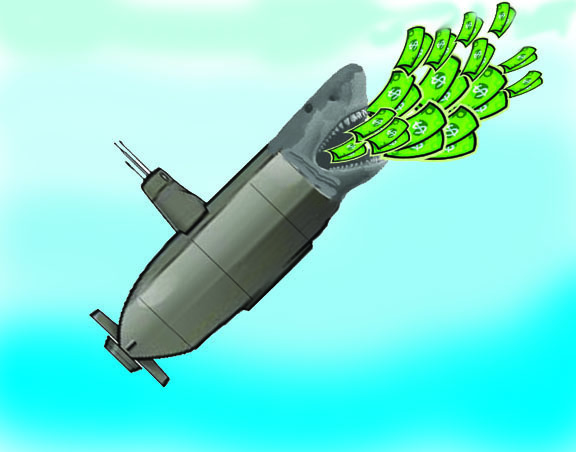
The United States Navy has placed contract modifications worth around $76.6 billion with the two yards that build its
nuclear submarines, covering nine further Virginia-class boats, five more Columbia-class ballistic missile submarines and funding for shipyard infrastructure, HII stated.
ukdj , UK Defence Journal 9th Aug 2026
The award covers Block VI of the Virginia programme and Build II of the Columbia programme, and is split between HII’s Newport News Shipbuilding division in Virginia and General Dynamics Electric Boat in Connecticut and Rhode Island. Newport News will act as delivery yard for six of the nine Virginias, and on the Columbia programme will construct and deliver six module sections for each boat. The two yards have handed over 26 Virginia-class submarines to date.
Kari Wilkinson, president of Newport News Shipbuilding, said in the release that the company is “committed to building the nuclear-powered submarines that protect our nation”, adding that the contracts give the American shipbuilding industrial base an opportunity to demonstrate that commitment.
The two programmes represent the largest naval construction effort under way anywhere. The Columbia class will replace the fourteen Ohio-class boats that carry the sea-based leg of the US nuclear deterrent, with twelve planned in total. Each displaces around 20,800 tonnes submerged, making them the largest submarines the United States has built, and each carries sixteen Trident II D5 missiles in a common missile compartment developed jointly with the United Kingdom, which uses the same section in its Dreadnought class. The lead boat, USS District of Columbia, has been under construction since 2020 and has run behind schedule, with the Navy and the Government Accountability Office both reporting delays measured in years.
The Virginia class is the U.S. Navy’s attack submarine, displacing roughly 7,800 tonnes and built in successive blocks with incremental changes. Block V introduced the Virginia Payload Module, an additional hull section carrying four large vertical tubes that raises the boat’s Tomahawk capacity substantially, and later blocks continue that configuration. Delivery rates have been the persistent problem: the U.S. Navy has sought two boats a year for some time, while the yards have been running closer to one and a third, a shortfall attributed to supply chain fragility, workforce attrition and the competing demand of the Columbia programme, which holds priority.
Newport News Shipbuilding is the only yard in the United States capable of building aircraft carriers and one of only two able to build nuclear submarines. The company marked 140 years of operation at the Virginia site earlier this month, and has been expanding automation across its facilities, including agreements with robotics firms announced in early August covering welding and surface finishing work
Ukraine Critically Short Of Air Defenses As Questions Swirl Over US Patriot Stockpiles

With US supplies under pressure, Ukraine is increasingly looking to European allies.
Radio Free Europe, By Zoriana Stepanenko and Alex Raufo, 8 Aug 26
BRUSSELS/WASHINGTON — Ukraine’s failure to intercept a single Russian missile during a large-scale overnight attack this week has raised fresh concerns over Kyiv’s dwindling supply of air-defense interceptors as Moscow escalates its ballistic missile strikes on the nearly defenseless capital and other regions.
Ukrainian President Volodymyr Zelenskyy has warned that deliveries of anti-ballistic interceptor missiles from partner countries have fallen sharply, leaving Ukrainian vulnerable to deadly attacks that are being launched by Russia with increasing frequency.
Following a meeting with Ukraine’s military leadership on protecting critical infrastructure on August 2, Zelenskyy said Ukraine had received only a third as many air-defense interceptors this year compared to the same period in 2025.
“Our partners have the missiles. What is needed are the necessary political decisions on deliveries and on accelerating production, including localization in Ukraine,” Zelenskyy said……………………………………………………………………………….
US Stockpile Questions
Patriot interceptor missiles remain Ukraine’s most effective defense against Russian ballistic missiles, but questions are growing over how many additional interceptors Washington can realistically provide.
Last week, the Center for Strategic and International Studies (CSIS) estimated that the United States has used more than half of its Patriot PAC-3 MSE and THAAD interceptor inventories during its military operations against Iran this year.
The report estimated that US stocks of Patriot PAC-3 MSE interceptors have fallen from more than 2,300 before the conflict, which began in February, to roughly 800, while THAAD interceptor inventories have been nearly halved.
Mark Cancian, a senior adviser with CSIS and co-author of the report, told RFE/RL that the shortages leave Washington with little flexibility to supply Ukraine.
“Ukraine will not be able to expect many interceptors — or any interceptors — from the United States for quite a while,” Cancian said. “The US has used extensively its own inventories…. We’re down to about 800 or 900 [Patriot interceptors]. The war planners don’t want to go below that, so it would be very difficult to provide any of those or any new production to Ukraine.”
Cancian said Ukraine may instead have to seek Soviet-designed S-300 missiles from countries that still operate the system and intensify efforts to destroy Russian missile launchers before they can fire.
His assessment contrasts with public assurances from the Trump administration.
CNN, citing unnamed officials, reported on August 4 that Patriot inventories had fallen to “dangerously low” levels. Defense Secretary Pete Hegseth rejected that report, calling it “fake news.”
Just days earlier, the Pentagon announced agreements with Lockheed Martin and Northrop Grumman to expand production of Patriot PAC-3 and THAAD interceptors.
US President Donald Trump insisted early on August 6 that the United States has “massive” amounts of munitions.
Trump also had pledged to allow Ukraine to manufacture Patriot missile interceptors, only to appear to backtrack on that promise days later……………………………………………………………………
Risks For Ukraine
The prospect of fewer US interceptors raises immediate questions for Ukraine as Russia steps up missile attacks ahead of another winter.
Adding to the urgency, several media reports, including from Reuters, quoted Ukrainian military intelligence sources as saying a North Korean missile unit had begun deploying to western Russia and could be equipped with up to 120 ballistic missiles and six launchers for attacks on Ukraine.
Kervin Aucoin, a US Army veteran and former military intelligence analyst, said reduced US inventories will inevitably affect Kyiv.
“It’s not going to be none, but it will be far less than what Ukraine was expecting,” Aucoin told RFE/RL…………………………………………………………………..
Ukraine Looks To Europe
With US supplies under pressure, Ukraine is increasingly looking to European allies.
US Ambassador to NATO Matthew Whitaker recently said Washington is exploring joint production of Patriot interceptors with Ukraine and European partners.
He stressed, though, that the immediate priority is to provide Ukraine with the air defense capabilities it needs to survive another winter, either from allies with excess interceptors or through increased production at US factories.
Kyiv has already begun that effort………………………………………………………………………………………..https://www.rferl.org/a/ukraine-patriots-russia-shortage-us-stockpile/33823317.html
An Eighty-Year Nuclear Nightmare: The U.S., Japan, and Korea

July 31, 2026, Brad Wolf
Organizing Committee of the International People’s Tribunal, https://abombtribunal.campaignus.me/34/?q=YToxOntzOjEyOiJrZXl3b3JkX3R5cGUiO3M6MzoiYWxsIjt9&bmode=view&idx=172837199&t=board
On the right corner of my desk, next to my laptop and always in eyeshot, sits a metal model of an atom bomb I assembled from a kit, a model of “Little Boy,” the bomb the U.S. dropped on Hiroshima. The model is made from aluminum alloy parts and is a 1/12th scale of the original atom bomb, about nine inches long. The ad for the bomb contained a video with dramatic music showing the model spinning through the air as it falls toward its imagined target.
“Perfect for collectors,” the ad boasted. “A must-have for history enthusiasts. Very enjoyable assembly process.”
Toward the bottom of the ad, perhaps as an afterthought, perhaps recognizing the implications of marketing such a murderous model, was the following: “By assembling this model, you can understand the history and moral issues of nuclear weapons and trigger thoughts about the future of the world.”
The kit came with a tiny screwdriver, two dozen tiny screws, a sanding rod, glue, and decals. The aluminum alloy parts were in molded plates. The model even had a metal cart to assemble that the bomb sits on so it can be pulled around your desk, pretending you’re getting ready to load it onto the Enola Gay, extinguish a city in a flash.
On the morning of August 6, 1945, the real “Little Boy” exploded with a flash 2,000 feet above the city of Hiroshima, which sits on the Ota River delta on Hiroshima Bay. The Ota River has six channels splitting Hiroshima into islets. Bomb victims staggered toward these channels to throw themselves into the water hoping to extinguish their burning bodies. The channels became so clogged with bodies that others couldn’t squeeze in. Some people, closer to the hypocenter, were vaporized, reduced to shadows seared into stone. Temperatures on the ground reached 4,000 degrees.
As we once again approach that fateful day of August 6th, it is important to recognize that not just the U.S. and Japan are intertwined in a nuclear nightmare that has lasted over eighty years, but also 70,000 Koreans who were exposed to the two atomic bombs incinerating Hiroshima and Nagasaki, people forcibly removed from their homeland by the Japanese and sent to work in these cities. Japan colonized Korea in 1910 and for decades used Koreans as they saw fit, from Comfort Women to slave labor. The Koreans then became atomic bomb victims, despite their country not being at war with the United States. They are among the unintended victims, the forgotten victims.
This November in Seoul, South Korea, the surviving Korean bomb victims will testify at a People’s Tribunal holding the U.S. accountable for war crimes. Lawyers from around the world have been preparing legal briefs and will argue the case. The U.S. government is invited to appear as the defendant at the Tribunal. The Republic of South Korea has also been asked to appear as a witness.
Once let loose, an atomic bomb keeps on killing, generation after generation, the cancers passed down to those not even born when the bombs first exploded. The Korean atomic bomb victims, as well as the Japanese, have horrific stories testifying to this. Children of the bomb. Atomic maladies. The bomb wages war against the future.
The second atomic bomb that was dropped on August 9th incinerating another Japanese city had a different nickname. That bomb had an even bigger belly and used plutonium rather than uranium. They called it “Fat Man.” The same ad for the model of the “Little Boy” atom bomb had a second ad inducing you to buy “Fat Man.” It is another 1/12th scale model of the original, this one weighing 6.2 pounds when completed. I declined the offer to buy and build it. One was repellent enough.
The U.S. currently has 5,277 nuclear warheads. Russia has 5,4490. China, approximately 600. France and the U.K have about 250 each and Israel has about 90. India, Pakistan, and North Korea bring up the rear with a few nukes each. In total there are over 12,300 nuclear warheads spanning the globe. The Korean atomic bomb victims stand as ready reminders of what happens when these things are unleashed.
Brad Wolf edited the recent book on the writings of Philip Berrigan entitled A Ministry of Risk which was published in April by Fordham University Press. He co-coordinated the Merchants of Death War Crimes Tribunal and is currently chair of the organizing committee of the International People’s Tribunal on the Korean Victims of the 1945 Atomic Bombings. He is executive director of Peace Action Network of Lancaster, Pennsylvania.
Nagasaki warns of risk of nuclear war on 81st A-bomb anniversary

Nikkei Asian Review 9th Aug 2026
Mayor calls nuclear weapons an ‘absolute evil’ that cannot coexist with humanityMayor calls nuclear weapons an ‘absolute evil’ that cannot coexist with humanity
NAGASAKI, Japan (Kyodo) — Nagasaki on Sunday warned nuclear powers and deterrence-reliant nations of the increased risk of a war using nuclear weapons, as the Japanese city marked the 81st anniversary of the U.S. atomic bombing with a resolve to prevent such a tragedy from ever happening again.
“Nuclear weapons are not a ‘necessary evil’ but an ‘absolute evil,’ and can never coexist with humanity,” Mayor Shiro Suzuki said in the Peace Declaration read during the annual memorial ceremony for the attack on the southwestern city, which followed the atomic bombing of Hiroshima three days earlier.
Adding cadence and vocal inflection, Suzuki’s powerful voice pierced through the Peace Park as he called the concept of nuclear deterrence “extremely dangerous and fragile.”
This year’s commemoration comes amid geopolitical tensions in the wake of the Middle East conflict and Russia’s invasion of Ukraine.
A moment of silence was held at 11:02 a.m., when the plutonium device codenamed “Fat Man” was dropped by a U.S. bomber and exploded over Nagasaki. It remains the last place to have suffered a nuclear attack.
Still, more than 12,000 nuclear warheads exist, Suzuki pointed out. He expressed concern over unpredictability in the conflicts in Ukraine and the Middle East, where nuclear states are involved, referring to Russia’s invasion of Ukraine and the U.S.-led war on Iran.
The commemoration event at the Nagasaki park, located near the hypocenter, was attended by some 3,700 people, including representatives from 98 countries and regions, as well as the European Union.
U.S. Ambassador to Japan George Glass was not present at the ceremony, with Japan’s close security ally represented by Deputy Chief of Mission Aaron Snipe.
Prime Minister Sanae Takaichi delivered a speech following a brief heckle from the crowd, reiterating what she said in the Hiroshima commemoration last Thursday that Japan “is upholding” the three nonnuclear principles……………………………………………………………………………………………………………………………………………………. https://asia.nikkei.com/spotlight/society/nagasaki-warns-of-risk-of-nuclear-war-on-81st-a-bomb-anniversary
This Hiroshima Day, we are closer than ever to nuclear war

Today’s Western leaders are casually confrontational, seizing ships on the high seas from nuclear-armed rivals, holding Nato competitions on how to disable targets inside Russia, the country with the world’s biggest nuclear arsenal.
Editorial / 5 August 2026,
https://morningstaronline.co.uk/article/hiroshima-day-we-are-closer-ever-nuclear-war
HIROSHIMA DAY commemorates the atomic bombing of the Japanese city by the United States 81 years ago.
The atrocity not only killed hundreds of thousands instantly and condemned many more to painful, lingering deaths. It took the world into the atomic age: one in which wars, already hugely more destructive than in previous eras thanks to industrialisation, could plausibly spell the end of human civilisation itself.
Three days after Hiroshima the US dropped a second atom bomb on Nagasaki.
That remains the last time a nuclear weapon was used in conflict. Decades of testing followed, many of which would claim their own victims through radiation poisoning and the resulting cancers, in some cases over multiple generations. But the horror of nuclear war that grew from the radioactive ruins of Hiroshima and Nagasaki has proved strong enough to prevent a repeat performance — so far.
That situation is changing. There is no room for complacency — the Doomsday Clock, standing at its closest ever, 85 seconds, to midnight, accurately reflects a world in which nuclear weapons are closer to being used than at any time since 1945.
Even avoiding nuclear war to date has been a chancier thing than most accounts recognise. When rival camps are armed to the teeth, suspicion and misinterpretation can be the path to catastrophe.
World War III was avoided during the Cuban Missile Crisis not just because the Soviet and US governments agreed an off-ramp, but because a Soviet submarine officer, Vasili Arkhipov, defied the vessel’s captain and political officer, who believed depth charges dropped on it by US warships signalled the outbreak of war, and refused permission to launch a nuclear torpedo in retaliation.
Two decades later, the caution of another Soviet officer, Stanislav Petrov, again prevented war when the country’s early warning system malfunctioned, indicating incoming US missiles that could have prompted retaliatory strikes.
Both incidents show how close to the edge we have been.
Today, nuclear weapons stockpiles are not so large as in the cold war — but still easily large enough to kill a majority of human beings and precipitate the collapse of global agriculture and trade.
HIROSHIMA DAY commemorates the atomic bombing of the Japanese city by the United States 81 years ago.
The atrocity not only killed hundreds of thousands instantly and condemned many more to painful, lingering deaths. It took the world into the atomic age: one in which wars, already hugely more destructive than in previous eras thanks to industrialisation, could plausibly spell the end of human civilisation itself.
Three days after Hiroshima the US dropped a second atom bomb on Nagasaki.
That remains the last time a nuclear weapon was used in conflict. Decades of testing followed, many of which would claim their own victims through radiation poisoning and the resulting cancers, in some cases over multiple generations. But the horror of nuclear war that grew from the radioactive ruins of Hiroshima and Nagasaki has proved strong enough to prevent a repeat performance — so far.
That situation is changing. There is no room for complacency — the Doomsday Clock, standing at its closest ever, 85 seconds, to midnight, accurately reflects a world in which nuclear weapons are closer to being used than at any time since 1945.
Even avoiding nuclear war to date has been a chancier thing than most accounts recognise. When rival camps are armed to the teeth, suspicion and misinterpretation can be the path to catastrophe.
World War III was avoided during the Cuban Missile Crisis not just because the Soviet and US governments agreed an off-ramp, but because a Soviet submarine officer, Vasili Arkhipov, defied the vessel’s captain and political officer, who believed depth charges dropped on it by US warships signalled the outbreak of war, and refused permission to launch a nuclear torpedo in retaliation.
Two decades later, the caution of another Soviet officer, Stanislav Petrov, again prevented war when the country’s early warning system malfunctioned, indicating incoming US missiles that could have prompted retaliatory strikes.
Both incidents show how close to the edge we have been.
Today, nuclear weapons stockpiles are not so large as in the cold war — but still easily large enough to kill a majority of human beings and precipitate the collapse of global agriculture and trade.
More countries possess them. Even if every nuclear-armed government were led by level-headed and responsible politicians, this would increase the number of potential flashpoints where a miscalculation could ignite the world.
In fact some are led by leaders without these qualities. India’s Narendra Modi repeatedly threatens to cut off Pakistan’s water supply, a genocidal policy. Israel’s Benjamin Netanyahu is already waging a genocidal war against the Palestinian people and attacking countries across the region, from Iran to Lebanon and Syria. US President Donald Trump threatens war on multiple continents simultaneously; has openly threatened to destroy an entire civilisation (Iran) in one of those wars; and clearly begins wars without clear goals or an exit strategy, all risk factors for escalation. These are reckless people.
Cold War decision-makers could remember World War II, the scale of death and destruction entailed by total war between great powers. So too could their populations, who through mobilisations like the Aldermaston marches or at Greenham Common demonstrated their opposition to war.
Today’s Western leaders are casually confrontational, seizing ships on the high seas from nuclear-armed rivals, holding Nato competitions on how to disable targets inside Russia, the country with the world’s biggest nuclear arsenal.
Either a generation in which war is something that can be comfortably inflicted, without serious risk, on weaker countries like Yugoslavia or Iraq has bred a false sense of security — or they are as bloodthirsty as their generals’ demands that we “sacrifice our children” to the next great war suggest.
There is no leadership from our leaders, so it must come from below. We must re-learn the fear of nuclear war that previous generations understood — and we must use it to build a powerful movement for peace and disarmament.
Walt Zlotow – No Attaboy for Uncle Sam…he just ran out of ATACMS ( Army Tactical Missile System).
Walt Zlotow West Suburban Peace Coalition Glemn Ellyn IL,6 Aug 26
Back in 2022 the US was all in throwing tens of billions in US weapons to Ukraine to fuel the US proxy war against Russia.
At the time the US had plenty of tactical surface to surface missiles known as ATACMS to lavish on Ukraine to clobber the hated Russians. The US was just fine using Ukraine as a Trojan horse to weaken if not destroy Russia as long as Ukraine did all the dying while Americans shed not a drop of blood.
Four had a half years on Ukraine is a shattered land on life support. Millions dead, fled, injured. A fifth of its land gone forever. It’s access to the Black Sea port kaput. It’s military near collapse.
And the US not faring so well either. Just a week after the four year anniversary of the proxy war President Biden provoked, his successor Trump launched a deranged, criminal ear on Iran at the behest of Israel that was lost on day one. Trump bombed Iran furiously for 39 days then stopped abruptly.
Why? He was informed that the missile cupboard of offensive ATACMS and the newer Precision Strike Missiles (PrSM) were nearly depleted, in part from squandering them on the lost cause of the Ukraine proxy war.
Adding to America’s offensive missile woes, it has depleted over 60 % of Patriot defensive interceptors and half of its THAAD interceptors. No wonder Iran has decimated every one of America’s 18 Gulf State bases. No wonder Trump dare not attack Iran again in force least Iran wipe out Gulf State oil infrastructure sending the world economy into collapse.
America under the Clinton, Bush, Obama, Trump, Biden, Trump again war machine does well against small powerless states like Serbia, Libya, Somalia and Venezuela. But try to defeat formidable foes like Russia and Iran? America’s trillion dollar war machine collapses into chaos. No attaboy for the murderous American military bombing 7 or more countries worldwide for no reason at all.
NATO is being installed into Ukraine’s military
European factories, NATO software, and defense companies are now built into Kiev’s war effort
Rt, By Dmitry Kornev, 5 Aug, 2026
Throughout the conflict, Western governments have described their role in Ukraine in relatively simple terms: supplying weapons, providing financial assistance, and helping Kiev to stand against Russia.
The reality has gradually become more complicated.
The discussion is no longer limited to deliveries of tanks, missiles, or artillery shells. Increasingly, Western companies are participating in the design, production, financing, and technological integration of weapons that are formally presented as Ukrainian. Assembly lines are moving beyond Ukraine’s borders, European manufacturers are becoming part of production chains, and NATO standards are being built directly into Ukraine’s military infrastructure.
This raises a broader question. At what point does military aid become military integration? The answer matters because it changes how the conflict itself should be understood.
Something more than a helping hand
The Armed Forces of Ukraine (AFU) remain on the strategic defensive against Russian forces, which enjoy advantages in manpower and conventional firepower. Despite persistent personnel shortages and an arsenal assembled from equipment supplied by dozens of countries, the Ukrainian military has continued to field new weapons and maintain combat effectiveness.
One explanation lies in drones, precision weapons, and sufficient stocks of tactical ammunition. But these capabilities require a constant flow of increasingly sophisticated systems – systems that Ukraine can no longer produce entirely on its own.
Russian long-range strikes have made large-scale weapons manufacturing inside Ukraine increasingly difficult. Protecting production therefore requires more than additional air defenses. It requires relocating key elements of the defense industry itself.
This is precisely the direction in which Ukraine’s military-industrial complex has been evolving.
Kiev has never hidden the fact that its defense industry now works closely with European partners. In some cases, cooperation takes the form of OEM production, with foreign-made systems assembled or rebranded as Ukrainian products. In others, there is little reason even to disguise the origin of key components. Electronic systems, engines, sensors, and guidance technologies are openly sourced from Western suppliers, assembled into new platforms, and incorporated into Ukraine’s expanding defense sector.
The result is a model that differs significantly from the one that existed at the beginning of the conflict. The issue is no longer simply which countries supply weapons to Ukraine. Increasingly, the question is how much of what is described as a Ukrainian weapon is produced through an international industrial network that extends well beyond Ukraine itself.
Weapons without borders
Fire Point is one of the clearest examples of this new model.
The Ukrainian defense startup is developing the FP-5 cruise missile, the FP-7 ballistic missile, and a future air-defense system. Yet the company cannot independently manufacture these systems in full. At best, it can perform final assembly while relying on foreign components and technologies for critical elements of the project.
This is especially visible in the proposed anti-aircraft version of the FP-7. Fire Point CEO Denis Shtilerman has openly stated that the missile will use a seeker developed and manufactured by Germany’s Diehl Defence. The wider air-defense system is expected to use European radar and command technologies, including Sweden’s SAAB Giraffe, France’s Ground Master 400, Germany’s TRML-4D, and Norway’s Kongsberg Fire Distribution Center.
Pushkin once wrote, “All flags will come to us.” Fire Point’s project increasingly resembles a military version of that idea: a Ukrainian-labeled system assembled from technologies developed across Europe.
The same logic can be seen in drone production.
Ukraine’s Linza strike and reconnaissance drone is a product of Quantum Frontline Industries, a joint venture between Germany’s Quantum Systems and Ukraine’s Frontline Robotics. The project is funded through the German government’s ‘Build with Ukraine’ program. Ukraine contributes combat experience, software algorithms, and a design tested at the front. German industry provides automated serial production at a plant near Munich, allowing output of up to 10,000 drones per year without the risk of Russian missiles striking the facility. The first batch was delivered to the AFU in the spring of 2026.
Artillery follows a similar pattern.
The Ukrainian Bohdan self-propelled howitzer is now produced in Poland by PK MIL SA, a joint Polish-Ukrainian company created specifically to manufacture the system outside Ukraine. The project is based on cooperation between the Kramatorsk Heavy Machine Tool Plant and the Polish engineering company Ponar Wadowice S.A. The Polish side holds a controlling stake and is responsible for mechanical production and final assembly. The project is being implemented as part of the EU’s ReArm Europe initiative.
These projects differ in technology, scale, and purpose. Fire Point works on missiles, Quantum Frontline Industries on drones, and PK MIL SA on artillery. Yet all three are built around the same principle: Ukrainian designs, battlefield experience, or branding are combined with European production, components, financing, and industrial protection.
It is a production model in which Western companies are becoming part of Ukraine’s military capability itself.
The Build with Ukraine model
The industrial and technological projects described above are not isolated initiatives. They form part of the broader Build with Ukraine program, which provides a framework for cooperation between Ukrainian defense companies and European industry.
The model is built on a relatively simple division of roles.
European partners contribute financing, production capacity, industrial technologies, and access to advanced components. Ukraine contributes battlefield experience, operational data, software solutions, and engineers working under wartime conditions. Together, these resources make it possible to develop and manufacture systems that neither side could produce in quite the same way on its own.
For European defense companies, the attraction is clear. Ukraine offers an opportunity to evaluate new technologies under real combat conditions, refine them using operational feedback, and shorten the path from development to serial production. At the same time, manufacturing remains on European territory, beyond the reach of Russian long-range strikes.
Ukraine’s incentives are different.
Participation in joint projects provides access to technologies, engineering expertise, industrial practices, and software that would otherwise take years to develop independently. It also allows Ukrainian engineers to work alongside established Western defense companies, gaining experience that is likely to remain valuable long after the current conflict ends.
The results are already becoming visible.
Ukrspecsystems has opened a drone-interceptor production facility in the United Kingdom. Fire Point is already operating in Denmark and plans to launch fuel production for its ballistic and surface-to-air missile programs there.
Fire Point also illustrates another feature of this model………………………………………………………………………………………………………………………………………………………………
Western governments continue to describe their role primarily in terms of military assistance to Ukraine. Yet the examples above suggest that the relationship is becoming considerably more complex. European companies are participating in weapons development and manufacturing. Production is being relocated beyond Ukraine’s borders. NATO communications standards are being incorporated into Ukrainian command systems. Joint ventures are creating long-term industrial links that extend well beyond wartime procurement.
Taken individually, these developments may appear to be separate initiatives. Together, they point to a gradual shift from external support toward a much deeper level of military-industrial integration…………………………………………
The debate is no longer limited to how many tanks, missiles, or drones Western countries are prepared to deliver to Ukraine. Increasingly, it concerns the emergence of a military-industrial network in which Ukrainian companies, European manufacturers, and NATO technological standards are becoming interconnected.
Pandora’s box, as the saying goes, is far easier to open than to close.
1 This Month


Shut down the radiation-damaged Heysham nuclear reactors now
To see nuclear-related stories in greater depth and intensity – go to https://nuclearinformation.wordpress.com

Say No to NASA’s Reckless Nuclear Reactor on the Moon
Say No to NASA’s Reckless Nuclear Reactor on the Moon
-
Archives
- October 2026 (247)
- September 2026 (339)
- August 2026 (330)
- July 2026 (355)
- June 2026 (287)
- May 2026 (306)
- April 2026 (356)
- March 2026 (251)
- February 2026 (267)
- January 2026 (308)
- December 2025 (358)
- November 2025 (359)
-
Categories
- 1
- 1 NUCLEAR ISSUES
- business and costs
- climate change
- culture and arts
- ENERGY
- environment
- health
- history
- indigenous issues
- Legal
- marketing of nuclear
- media
- opposition to nuclear
- PERSONAL STORIES
- politics
- politics international
- Religion and ethics
- safety
- secrets,lies and civil liberties
- spinbuster
- technology
- Uranium
- wastes
- weapons and war
- Women
- 2 WORLD
- ACTION
- AFRICA
- Atrocities
- AUSTRALIA
- Christina's notes
- Christina's themes
- culture and arts
- Events
- Fuk 2022
- Fuk 2023
- Fukushima 2017
- Fukushima 2018
- fukushima 2019
- Fukushima 2020
- Fukushima 2021
- general
- global warming
- Humour (God we need it)
- Nuclear
- RARE EARTHS
- Reference
- resources – print
- Resources -audiovicual
- Weekly Newsletter
- World
- World Nuclear
- YouTube
-
RSS
Entries RSS
Comments RSS

