Ukraine can hit Russia deep inside its territory. But is it bringing the war closer to peace?
Trump’s most difficult task is not to give Ukraine more weapons or to pressure Kyiv into concessions. It is to create a settlement that gives both Putin and Zelenskyy a reason to change their positions.
Timur Maslov, [your]NEWS, Wed, 19 Aug 2026
From Kyiv, the growing Ukrainian ability to strike deep inside Russia is changing the geography of the war. But after four and a half years of fighting, one question remains: can military escalation actually produce a diplomatic breakthrough?
For more than four years, Ukrainians have lived with a war that rarely feels distant. Missiles and drones arrive at night. Energy infrastructure is repeatedly damaged. Businesses struggle to operate. Families prepare for another difficult winter. But the geography of the war is changing. Ukraine is increasingly capable of striking targets deep inside Russia. In recent days, Ukrainian forces launched one of the largest drone attacks on Russia since the beginning of the full-scale invasion. Russian authorities reported hundreds of Ukrainian drones targeting Moscow and other regions, while Russian strikes continued across Ukraine.
The strategy is becoming increasingly clear: if Russia can bring the war to Ukrainian cities, Ukraine wants Russia to experience at least some of the consequences of the war on its own territory. But there is a difficult question behind this strategy:
Does making the war more painful for Russia actually bring peace closer?
“People celebrate — and then wait for the response”
In Kyiv, the reaction to Ukrainian strikes deep inside Russia is complicated. People celebrate when Ukrainian drones reach targets near Moscow or elsewhere in Russia. There is a widespread feeling that Russia should experience some of the fear and uncertainty that Ukrainians have lived with for years.
But there is also another understanding. People know what usually comes next. A Ukrainian strike is followed by a Russian response and the response can be deadly. That cycle has become one of the most difficult realities of the war. As Ukrainian President Volodymyr Zelenskyy has put it, both sides can play the same game — but every action has consequences. The recent escalation illustrates the point. While Ukraine launched a major drone offensive against Russia, Russian missiles struck Ukrainian cities and infrastructure. A Russian attack on Kryvyi Rih damaged power and industrial facilities, while another strike in Kharkiv region killed civilians.
For Ukrainians, the result is a brutal paradox.
They may be pleased to see Russia hit — while knowing that another Russian attack may soon follow.
And ordinary people pay the price on both sides.
When the war reaches a supermarket shelf
The consequences of escalation are not always measured in destroyed military facilities. Sometimes they are much smaller and much closer to home. In Kyiv, I have personally seen empty shelves in some supermarkets, particularly in sections selling eggs and vegetables. This is not a nationwide food shortage. People can still buy essential products, and the situation may be temporary.
But the shortages appeared after Russian attacks damaged logistics infrastructure and warehouses supplying Kyiv’s supermarket chains. Ukrainian media reported that several logistics centers connected to Fozzy Group were damaged in a major August 5 attack, after which some products became harder to find in Kyiv stores. People are also buying more food than usual, creating additional pressure on supplies.
For someone outside Ukraine, this might sound like a minor inconvenience. For people who have lived through years of war, it feels different. A strike on infrastructure can eventually become an empty supermarket shelf. That is how military escalation reaches ordinary life.
Ukraine is developing its own long-range weapons
The next stage could be even more significant. Ukraine is developing ballistic missiles capable of reaching deep inside Russian territory.
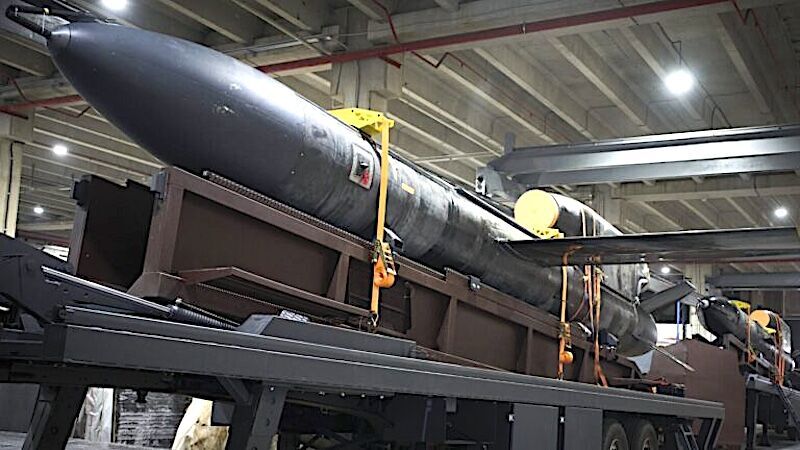
Ukrainian defense company Fire Point has displayed its FP-7 and FP-9 ballistic missile systems at international defense exhibitions. The company says the FP-9 is designed to carry a warhead of up to 800 kilograms and reach targets hundreds of kilometers away. Independent defense reporting has cited an expected range of roughly 700-855 kilometers, depending on the configuration and information source.
Fire Point has also presented the smaller FP-7 system. Ukrainian officials have suggested that domestically produced ballistic weapons could enter combat use later this year, although their deployment and production depend on testing, certification, financing and access to components. That distinction matters.
A missile displayed at an exhibition is not the same thing as a weapon being mass-produced and operationally deployed.
But the direction is clear. Ukraine wants to reduce its dependence on foreign long-range weapons and develop the ability to strike Russian military and strategic targets with weapons produced domestically. If that capability becomes operational at scale, it could significantly expand Kyiv’s options.
It could also create another escalation problem.
What happens if Ukrainian ballistic missiles reach Russia?
This is the question that worries me most. Ukraine already has long-range drones capable of reaching Moscow and other Russian regions. A domestically produced ballistic missile would represent a different capability. It would potentially allow Ukraine to strike selected targets much faster and with a different level of destructive power. The FP-9’s publicly presented specifications — including a claimed range of up to roughly 855 kilometers and a payload of up to 800 kilograms — would theoretically put a large number of Russian military and industrial targets within reach.
Ukrainian President Volodymyr Zelenskyy has said that Ukraine could potentially use a domestically produced ballistic missile against Russia as early as this autumn, provided the necessary financing and components are available. That does not mean that a missile will necessarily hit Moscow this autumn. It means something more important:
Ukraine is trying to build a long-term domestic strike capability.
And Moscow will have to take that seriously.
Will this change Putin’s position?
I am skeptical. Ukraine’s ability to strike deeper into Russia may increase the cost of the war. It may disrupt fuel supplies, logistics and military infrastructure. But I do not believe that strikes alone will force Vladimir Putin to negotiate. Russia has already demonstrated that it is willing to absorb enormous military and economic costs to continue the war.
The recent attacks inside Russia have also produced fuel disruptions. Reuters reported on August 19 that gasoline stations in Moscow and surrounding regions had begun limiting sales amid shortages linked to Ukrainian drone attacks on Russian refineries, combined with seasonal demand and refinery problems.
That is a real economic consequence.But economic pain is not automatically political capitulation. And there is another problem. The more Ukraine strikes Russia, the greater the possibility that Moscow responds with another escalation against Ukraine.
The result can become a cycle:
Ukraine strikes Russia.
Russia retaliates.
Ukraine responds again.
The war becomes more dangerous.
But the political positions remain unchanged.
I don’t think Russian society will suddenly turn against the war
There is an argument that if Russians begin experiencing the war directly, public opinion will eventually turn against Vladimir Putin. I am not convinced. Russia has already demonstrated that external pressure can produce the opposite reaction. When the situation becomes more dangerous, patriotic rhetoric intensifies. The population may become more defensive rather than more willing to question the war.
For years, many Russians in Moscow and other major cities lived with a war that was geographically distant. Now drones are reaching their cities. But that does not necessarily mean they will conclude that the war should end. It could instead convince some people that Russia needs to fight harder. That is one of the biggest risks of the current strategy.
Europe is becoming part of the equation
Ukraine is also receiving increasing support for its domestic defense industry. European countries have their own geopolitical interests, of course. But European governments increasingly understand that Ukraine’s ability to produce drones and missiles is becoming strategically important. Britain, for example, has committed to supplying Ukraine with large numbers of drones and has reaffirmed its support despite Russian warnings that London could face “consequences” over alleged use of British-made drones in attacks inside Russia. The more sophisticated Ukraine’s domestic weapons industry becomes, the less dependent Kyiv is on decisions made in Washington or European capitals.
That could strengthen Ukraine’s negotiating position. But it could also make the conflict more difficult to contain.
Trump faces a problem that weapons cannot solve
This brings us back to Donald Trump. In my view, neither increasing weapons supplies nor applying pressure to only one side will be enough. Trump needs to get Vladimir Putin and Volodymyr Zelenskyy into a serious negotiating process. Not separately. Together.
Both leaders are deeply entrenched in their positions. Putin continues to speak about Russia’s objectives and the “root causes” of the war. Ukraine does not want a temporary pause that could simply give Russia time to prepare for another attack. That is why a simple ceasefire is unlikely to solve the underlying problem. Trump’s challenge is to find an agreement that both leaders believe is worth accepting.That is much harder than sending weapons.
And much harder than demanding that one side make concessions.
The anger of living through the war
After four and a half years of living in Kyiv during this war, I feel anger when I see another escalation. Not because I believe Ukraine should simply stop defending itself. And not because I believe Russia should be allowed to attack without consequences. I feel anger because people continue to die while the political positions of the two leaders remain so far apart. Almost everyone I know has lost someone — a friend, a relative, a father, a husband — because of this war. People want it to end.
But Ukrainians also understand that Russia has repeatedly said it wants more than simply a temporary halt to fighting. That leaves Ukraine facing an extremely difficult choice. Continue increasing the cost of the war for Russia — knowing that Russia will respond or reduce the intensity of the fighting and risk giving Moscow time to regroup. Neither option guarantees peace.
The real question
Ukraine has demonstrated that it can reach deep into Russia. It can damage military facilities. It can disrupt logistics. It can put pressure on Russia’s energy system and it is developing increasingly sophisticated weapons of its own. But military capability and strategic success are not the same thing. The question is no longer whether Ukraine can hit Russia.
It can.
The question is whether those strikes change the political calculation in Moscow. So far, there is little evidence that they have and there is little evidence that Ukrainian leadership is prepared to abandon its own fundamental demands either. That is why I believe Trump’s most difficult task is not to give Ukraine more weapons or to pressure Kyiv into concessions. It is to create a settlement that gives both Putin and Zelenskyy a reason to change their positions.
Otherwise, the war may continue not for another few months, but for another five or even ten years. And after everything Ukraine has already lost, that may be the most frightening possibility of all.
Comment: The price of war is excruciating, deadly, unrelenting and now escalating… Interesting how many countries want it.
No comments yet.
1 This Month
15 October. Joint Appeal for Nuclear Abolition Day -presentation to the UN on October 15 will be live on UNWebTV
Endorse the Nuclear Abolition Day Appeal
23-25 October – on Zoom – World BEYOND War’s annual global conference

To see nuclear-related stories in greater depth and intensity – go to https://nuclearinformation.wordpress.com
-
Archives
- October 2026 (149)
- September 2026 (339)
- August 2026 (330)
- July 2026 (355)
- June 2026 (287)
- May 2026 (306)
- April 2026 (356)
- March 2026 (251)
- February 2026 (267)
- January 2026 (308)
- December 2025 (358)
- November 2025 (359)
-
Categories
- 1
- 1 NUCLEAR ISSUES
- business and costs
- climate change
- culture and arts
- ENERGY
- environment
- health
- history
- indigenous issues
- Legal
- marketing of nuclear
- media
- opposition to nuclear
- PERSONAL STORIES
- politics
- politics international
- Religion and ethics
- safety
- secrets,lies and civil liberties
- spinbuster
- technology
- Uranium
- wastes
- weapons and war
- Women
- 2 WORLD
- ACTION
- AFRICA
- Atrocities
- AUSTRALIA
- Christina's notes
- Christina's themes
- culture and arts
- Events
- Fuk 2022
- Fuk 2023
- Fukushima 2017
- Fukushima 2018
- fukushima 2019
- Fukushima 2020
- Fukushima 2021
- general
- global warming
- Humour (God we need it)
- Nuclear
- RARE EARTHS
- Reference
- resources – print
- Resources -audiovicual
- Weekly Newsletter
- World
- World Nuclear
- YouTube
-
RSS
Entries RSS
Comments RSS


Leave a Reply