Ukraine for Hire: How Kyiv Became the West’s Imperial Enforcer
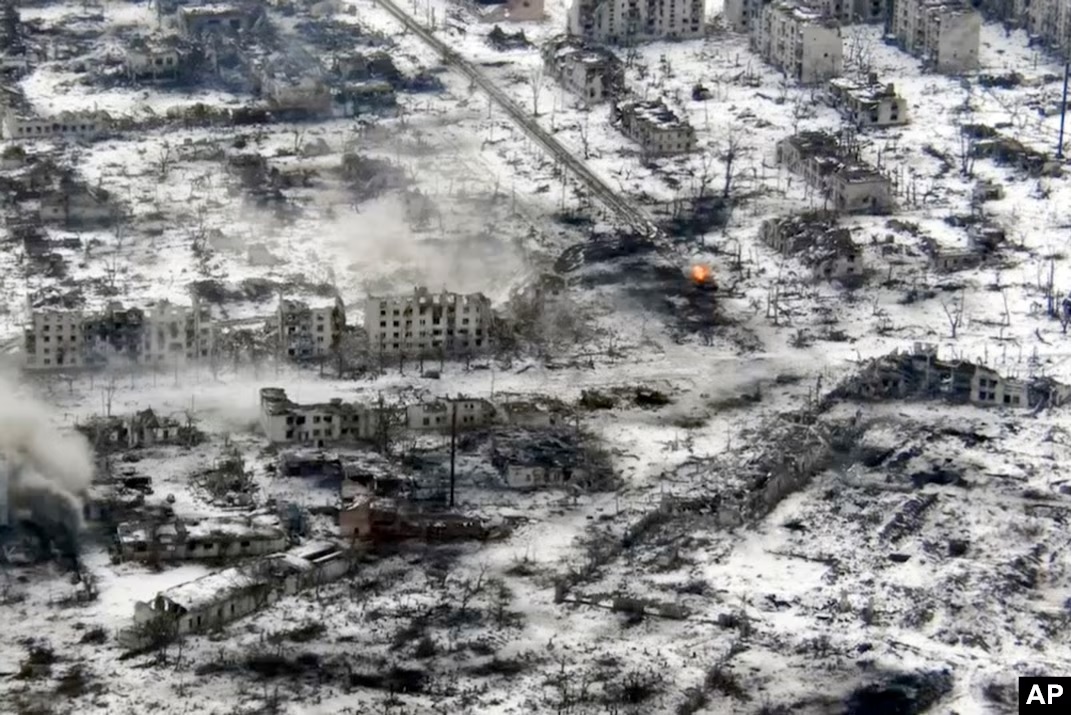
August 4, 2026, Joshua Scheer, https://scheerpost.com/2026/08/04/ukraine-for-hire-how-kyiv-became-the-wests-imperial-enforcer/
Ukraine’s role in the Western war machine is expanding far beyond its borders. After years of serving as Washington and NATO’s proxy against Russia, Kyiv is now accused of attacking an Iranian commercial vessel in the Caspian Sea, assisting armed groups seeking to undermine sovereign governments in Africa’s Sahel and collaborating with forces linked to Al Qaeda in Syria. Rather than an isolated nation defending democracy, Ukraine increasingly appears to be marketing itself as a military subcontractor for Western powers—willing to intervene wherever their geopolitical interests are threatened.
In this episode of Clearing the FOG, Margaret Flowers speaks with Phil Wilayto, co-founder of the Odessa Solidarity Campaign, about the history buried beneath the official narrative. They revisit the 2014 U.S.-backed overthrow of Ukraine’s government, the growing influence of far-right and openly white-supremacist organizations, the unpunished Odessa massacre and the long war against the predominantly Russian-speaking Donbas. Wilayto also describes a country confronting deepening political repression, banned opposition parties and masked recruitment squads reportedly seizing military-age men from the streets as Kyiv struggles to replenish its forces.
Flowers and Wilayto argue that Washington never regarded Ukraine as a democracy to be protected, but as a strategic weapon to be used against Russia—regardless of the enormous cost to Ukrainian and Russian lives. Now, as Western support becomes less certain, Kyiv appears eager to prove its value by attaching itself to U.S. and European campaigns against Iran, Syria and independent African governments. The result is a widening architecture of conflict in which Ukraine’s people are sacrificed, military contractors prosper and every new battlefield becomes another bargaining chip in the struggle to preserve Western domination.
“It looks like Ukraine is trying to connect its war with Russia to the U.S.-Israeli war against Iran,” Phil Wilayto explains. “Ukraine is essentially saying, ‘These conflicts are all part of the same struggle. If you’re going to confront Iran, then you need to provide us with more military supplies and greater access to Patriot missile production.’
“The Trump administration has pulled back somewhat from providing Ukraine with some of the military resources it wants, but I expect that to change. I think Trump is trying to create the impression that the United States wants a negotiated settlement. In reality, Washington has a strong interest in keeping this war going, regardless of how much suffering it causes on both sides.”
Margaret Flowers adds, “The CIA has had a long relationship with Ukraine, and Ukraine now appears to be acting as a tool of the United States. We have already seen evidence of this in parts of Africa, particularly across the Sahel.”
Guest:
Phil Wilayto is a writer, speaker and organizer based in Richmond, Virginia. He is a founding member of the Defenders for Freedom, Justice & Equality, an all-volunteer community organization, and editor of the quarterly newspaper The Virginia Defender.
While Western media continue to portray Ukraine as a struggling democracy defending itself from Russian aggression, Margaret Flowers and Phil Wilayto present a far more disturbing picture: a government suppressing dissent at home while extending Western military interests abroad. The transcript describes banned opposition parties, tens of thousands of alleged political prisoners, prosecutions of people resisting military service and masked recruitment squads reportedly dragging men from the streets and forcing them into Ukraine’s depleted armed forces.
Wilayto, co-founder of the Odessa Solidarity Campaign, traces these conditions back to the 2014 U.S.-backed overthrow of Ukraine’s government and the empowerment of ultranationalist and openly white-supremacist forces. He revisits the Odessa massacre, where at least 42 people were killed after anti-coup activists were driven into a trade union building that was set on fire.
Despite extensive video evidence, he says, no one has been held responsible. That history, largely erased from Western coverage, challenges the sanitized narrative of an uncomplicated battle between democracy and authoritarianism.
But the discussion does not stop at Ukraine’s borders. Flowers and Wilayto examine Kyiv’s alleged attack on an Iranian commercial vessel in the Caspian Sea, its support for armed groups opposing independent governments in Africa’s Sahel and its reported cooperation with forces linked to Al Qaeda in Syria. As Western enthusiasm for funding the war against Russia becomes less certain, they argue, Ukraine is demonstrating its usefulness by acting wherever U.S., NATO and former European colonial interests are threatened.
The interview’s conclusion is stark: Washington never treated Ukraine as a country to be saved, but as a piece on what strategist Zbigniew Brzezinski called the “grand chessboard”—a nation whose location, soldiers and future could be used to weaken Russia. Four and a half years into a grinding war, Ukrainians are being seized for military service and sent to the front while Kyiv searches for new battlefields on which to prove its value. Ukraine has not simply become the West’s proxy against Russia; it is becoming an imperial enforcer for hire.
Gaza’s “Peace Plan” Is Written in Blood
the recorded toll since October 7, 2023, has reached 73,375 Palestinians killed and 174,220 wounded. Since October 11, the first full day of the nominal ceasefire, Israeli forces have reportedly killed at least 1,250 Palestinians and injured 4,110, while recovery crews have retrieved another 804 bodies from beneath the rubble.
August 4, 2026, Joshua Scheer, https://scheerpost.com/2026/08/04/gazas-peace-plan-is-written-in-blood/
President Donald Trump calls his Gaza agreement a “major milestone” toward peace. For Palestinians living beneath Israeli aircraft and beside an ever-advancing military boundary, that triumphal language bears little resemblance to reality. Israel killed 18 Palestinians on Sunday in one of the deadliest days since the supposed ceasefire began, while survivors described attacks striking the enclave from north to south. Gaza health authorities say at least 1,230 Palestinians—most of them civilians—have been killed since the Trump-backed agreement was reached in October.
Nor has the ceasefire produced the promised Israeli withdrawal. Israeli forces have instead expanded their control from 53 percent of Gaza to as much as 70 percent, pushing more families from their homes and confining nearly two million people to an increasingly narrow strip of devastated coastline. Israeli officials now insist that no withdrawal will begin until Hamas has completely disarmed and its tunnels have been destroyed, while omitting the continuing attacks and territorial seizures that Palestinian factions say violate the agreement.
Reuters reporters Nidal Al-Mughrabi and Dawoud Abu Alkas document the chasm between the diplomatic spectacle and Gaza’s grim reality: civilians killed under the banner of peace, military occupation expanding beneath the language of withdrawal, and displaced families watching Israel’s “yellow line” move steadily closer to their tents. As one Palestinian woman told Reuters, “Our entire life is gone, our entire future is gone, our children’s future is gone.” In Gaza, the peace being celebrated in Washington looks increasingly like war conducted under a new name.Israel Escalates Gaza Attacks as Trump Celebrates a ‘Historic’ Ceasefire Deal
What a stark contrast—and a reminder that Israel is not on board with any meaningful ceasefire. Much like Washington’s other wars fought on Israel’s behalf, the Trump administration’s plan appears focused on disarming Israel’s opponents while imposing few visible restraints on the Israeli military.
On Monday, Nikolay Mladenov, Trump’s Gaza envoy to the so-called Board of Peace, held what the board described as a “constructive and detailed” meeting with Israeli Prime Minister Benjamin Netanyahu. The board declared that its unquestioned objective was the “complete decommissioning of weapons” in Gaza and a transition to civilian government.
But Palestinians experienced a very different reality. “It was as if the war has resumed,” Gaza resident Aya Mohammad Zaki told Reuters, describing attacks occurring nearly every hour across northern, central and southern Gaza. Among those killed Sunday were a couple and their child in an Israeli strike on a Gaza City apartment. While Trump’s board discusses disarming Gaza, Israeli bombs continue falling on Palestinian families.
According to Drop Site News, Israeli attacks have killed at least 34 Palestinians and wounded 134 across Gaza since President Donald Trump announced what he called a “historic agreement” and Hamas conditionally accepted the ceasefire plan’s second phase. Gaza’s Ministry of Health reported that 19 Palestinians were killed and 35 injured during the latest 24-hour period.
The ministry says the recorded toll since October 7, 2023, has reached 73,375 Palestinians killed and 174,220 wounded. Since October 11, the first full day of the nominal ceasefire, Israeli forces have reportedly killed at least 1,250 Palestinians and injured 4,110, while recovery crews have retrieved another 804 bodies from beneath the rubble.
A ceasefire is supposed to mean safety. For displaced Palestinians sheltering beside Al-Aqsa Martyrs Hospital in Deir al-Balah, it brought another night of terror, destruction and forced flight.
Footage reported by Drop Site contributor Abdel Qader Sabbah documents the aftermath of an Israeli strike that destroyed a central medical warehouse containing essential dialysis supplies and shredded nearby tents. Families who had gone to sleep believing conditions might finally improve awoke to evacuation orders, fled barefoot and returned to find their shelter, food, water and bedding buried beneath the wreckage.
“We went to sleep under a ceasefire… thinking that the situation would get better.”
Washington calls this peace while Israel continues bombing homes, destroying medical supplies, displacing families and expanding the territory under its military control. Palestinians are being asked to surrender their weapons and trust a political process that has yet to protect them from Israeli attacks—or require Israel to surrender anything in return.
A ceasefire cannot be measured by statements from Trump’s Board of Peace, meetings with Netanyahu or promises of some future withdrawal. It must be measured by whether Palestinians can sleep without being bombed, receive medical treatment, return home and live without an occupying army steadily closing in around them. By that standard, Gaza does not have peace. It has an occupation and a continuing war concealed beneath the language of diplomacy.
Time to build a Scotland without nuclear weapons

06 Aug 2026, https://greens.scot/news/time-to-build-a-scotland-without-nuclear-weapons
Nuclear weapons are a moral disgrace.Time to build a Scotland without nuclear weapons.
The UK Government’s commitment to weapons of mass destruction makes the case for an independent, nuclear-free Scotland, says Scottish Greens co-leader Gillian Mackay MSP.
Marking the 81st anniversary of the atomic bombing of Hiroshima, the Scottish Greens have called for the abolition of nuclear weapons and an end to the Labour Government’s “dangerous and immoral” nuclear policy.
Despite the atrocities of Hiroshima, and Nagasaki, the Labour government has described its commitment to the UK’s nuclear weapons system as “absolute”.
This past week, the UK government set out plans to spend £63.6bn over the next four years for the UK Government’s Defence Nuclear Enterprise, £47bn of which will go on nuclear submarines.
Scottish Greens co-leader Gillian Mackay MSP said:
“Today we remember all those who were killed, those who suffered unimaginable injuries and the generations whose lives were devastated by the atomic bomb.
“Hiroshima showed the world the horrifying reality of nuclear warfare – the destruction of a city and the mass killing of innocent civilians.
“The bombing of Hiroshima and Nagasaki were among the most inhumane atrocities ever committed. There can never be any justification for mass killings or the long and brutal legacy that they left behind.
“We are 81 years on and the new Prime Minister is doubling down on his dangerous and immoral policy, committing tens of billions of tax-payer’s money on submarines and nuclear warheads designed to inflict mass-destruction.
“Housing weapons on the Clyde, capable of annihilating millions of people, do not keep Scotland safe – they make our communities a nuclear target while they pay the price through cuts, poverty and crumbling public services.
“No government that genuinely believes in peace, human rights and international law should threaten the mass slaughter of civilians, putting our own communities at risk whilst lining the pockets of arms traders”
Gillian added:
“There is always money at Westminster for nuclear weapons, but never enough to eradicate child poverty, repair our public services or ensure that everyone has a warm and secure home.
“Westminster’s nuclear obsession does not have to be Scotland’s. We can keep our communities safe by removing Trident from the Clyde, and taking our place internationally as a country committed to peace and disarmament.
“Scotland deserves a future where our resources support our people and communities, not the profits of multi-national arms companies. An independent Scotland can sign the anti-nuclear treaty and be a country where the lessons of Hiroshima are reflected with a firm and steadfast commitment to peace and nuclear disarmament.”
Japan ‘cannot avoid’ nuclear weapons debate, defense chief Koizumi says
Japan Times, By Jesse Johnson, 19 July 26
Defense Minister Shinjiro Koizumi has urged Japan to more openly debate nuclear weapons’ role in the country’s defense, a rare instance of a sitting Cabinet member broaching the highly contentious issue.
“While this is a difficult issue for Japan to discuss, one topic we cannot avoid is nuclear weapons,” Koizumi said during an online news program recorded Friday ahead of a trip to Europe.
Koizumi’s remarks come as the government weighs updates to key documents outlining Japan’s security policy — including a possible revision of the country’s decades-old pledge not to produce, possess or host nuclear weapons.
Formulated in 1967 and known formally as the country’s “three non-nuclear principles,” the pledge has consistently been upheld by governments since.
Senior government officials have traditionally shied away from public remarks on nuclear arms-related issues, as Japan — the sole country to have been attacked with the devastating weapons — retains strong sensitivities more than 80 years after atomic bombs were dropped on Hiroshima and Nagasaki.
According to an April poll by the Asahi Shimbun daily, 75% of those surveyed said the principles should be maintained, while 21% said they should be revised.
In December, a senior government official who advises Prime Minister Sanae Takaichi on security triggered a firestorm after expressing a personal opinion that Japan should have nuclear weapons.
Still, talk of allowing U.S. nuclear weapons to be brought into Japan has grown after Takaichi sidestepped a question about her commitment to maintaining the pledge in its entirety last November in parliament.
In his comments, Koizumi said Russia’s invasion of Ukraine had prompted France to boost its nuclear capabilities and pushed Finland to OK the deployment of nuclear weapons on its territory, dramatic shifts that he said were “being advanced under the serious assumption of a potential emergency.”
“Considering this, I believe we must make even greater efforts to explain that the security environment in which Japan finds itself requires us to approach every policy with a strong sense of crisis, discussing and advancing them without any taboos,” Koizumi said……………………………………………………………………………………………… https://www.japantimes.co.jp/news/2026/07/19/japan/politics/koizumi-japan-nuclear-weapons-debate/
The Next Weapons Frontier: New Mexico’s Expanding Military Industrial Ecosystem
How New Mexico Is Becoming the Nation’s Directed-Energy Weapons Hub
Elaine Cimino, Aug 05, 2026
What This Could Mean for Weapons Development in New Mexico
For more than eighty years, New Mexico has served as America’s proving ground for weapons that would change warfare. The atomic bomb was born at Los Alamos. Nuclear weapons engineering became a permanent mission at Sandia National Laboratories. White Sands Missile Range evolved into one of the world’s premier test ranges for rockets, missiles, electronic warfare, and advanced military systems. What was once an isolated military landscape has become something far larger: an integrated weapons-development ecosystem where research laboratories, military installations, private corporations, venture capital, and public subsidies increasingly operate as parts of the same machine.
The Army’s decision to move high-energy laser weapons from experimental technology into a permanent “program of record” marks another turning point. It is not simply the purchase of a new weapon. It signals the beginning of sustained production, expanded testing, new supply chains, and decades of future research. Once a weapons system enters the Pentagon’s permanent budget, the question is no longer whether it works. The question becomes how rapidly it can be improved, manufactured, and deployed.
New Mexico is uniquely positioned to become one of the principal beneficiaries—and one of the principal hosts—of that expansion.
Sandia National Laboratories has spent decades advancing the science that underlies directed-energy systems: high-power lasers, pulsed power, optics, sensors, target acquisition, beam control, advanced materials, and weapons-system analysis. White Sands Missile Range provides vast restricted airspace and testing infrastructure. The Air Force Research Laboratory, Space Force operations, and nearby military installations contribute additional capabilities. Universities train engineers and scientists who feed directly into the defense workforce. Together they form an infrastructure that few places in the world can match.
The private sector is following that infrastructure. Companies developing hypersonic weapons, solid rocket motors, autonomous systems, drones, electronic warfare, and advanced manufacturing are increasingly locating in New Mexico. Public investment is helping accelerate that process. Through the State Investment Council’s Strategic Venture Capital Program, New Mexico has invested in venture-capital firms backing defense technology companies, while state and local governments simultaneously provide LEDA incentives, industrial revenue bonds, infrastructure improvements, and public land to attract those same industries.
Project Ranger illustrates this transformation. The public agreements describe the facility as a hypersonic systems test and manufacturing facility supported through state and local economic-development incentives and infrastructure improvements. It is one component of a much broader defense-industrial network that now stretches across the state.
The implications extend well beyond one factory.
Modern warfare is no longer organized around individual weapons. Directed-energy weapons, autonomous drones, hypersonic missiles, artificial intelligence, electronic warfare, cyber operations, satellite systems, and advanced sensors are designed to operate together. A laser cannot function without radar, electro-optical tracking, machine vision, software, communications, and power generation. Hypersonic missiles require advanced propulsion, guidance systems, manufacturing technologies, and testing infrastructure. Every new capability strengthens the others.
New Mexico increasingly contains every link in that chain.
As directed-energy weapons become operational, testing will inevitably expand. White Sands already hosts demonstrations of laser systems designed to defeat drone swarms. Future testing will involve increasingly complex scenarios: autonomous targeting, moving aircraft, electronic warfare, coordinated drone attacks, integrated missile defenses, and artificial intelligence controlling engagement decisions. Each successful demonstration creates demand for more facilities, more contractors, more specialized suppliers, and more federal investment.
What begins as research becomes production. Production becomes permanent infrastructure.
That transformation carries consequences extending far beyond economics.
The military describes lasers as inexpensive defenses because they require electricity rather than missiles costing millions of dollars each. But the public costs are measured differently. High-energy lasers introduce new questions about airspace management, satellite safety, wildfire risk, emergency response, occupational exposure, and civilian oversight. Destroyed drones do not simply disappear; they fall. Burning batteries, fuel, debris, and fragments fall somewhere. In a drought-stricken state increasingly defined by catastrophic wildfire, those risks deserve independent analysis rather than assumptions that new technology is inherently safer because it carries no explosive warhead…………………………………………………………………………………………………………………………………….
Directed-energy weapons represent the next chapter in military technology. Their arrival also marks the next chapter in New Mexico’s identity. The state is no longer simply a place where weapons are tested. It is becoming a place where the future architecture of warfare is researched, financed, manufactured, integrated, and normalized. Whether the public has an equal role in shaping that future remains the most important question of all. https://elainecimino652909.substack.com/p/the-next-weapons-frontier-new-mexicos?r=281p2&utm_medium=ios&triedRedirect=true
Pentagon Plans AI Data Centers at Military Bases Across Multiple Branches
One site is near the military’s main chemical and biological weapons testing range. Another parcel is a half-mile from civilian housing.
Jul 27, 2026, By Adam Gramegna, Military.com
At Dugway Proving Ground in Utah, on ground the Army’s own contracting documents describe as previously used for grazing, a company owned by two of the largest investment firms in the world is preparing to build a data center.
That site sits about an hour’s drive from the nearest community, on the installation where the U.S. military conducts its primary chemical and biological weapons testing. Three parcels there total roughly 3,466 acres. One of them, about 1,201 acres, is already spoken for.
It is one of at least a dozen military installations the Army and the Department of the Air Force have opened to commercial data center developers over the past year and a half. Two of those deals are real; the rest are still proposals.
Land-for-Computing
In late March, the Army conditionally selected two companies to enter exclusive negotiations to build and operate commercial hyperscale data centers on Army land.
Carlyle, the global investment firm, was picked for roughly 1,384 acres at Fort Bliss, Texas. CyrusOne, a data center operator jointly held by funds managed by KKR and BlackRock, was picked for the parcel at Dugway. Each project is estimated to cost about $2 billion, according to the Financial Times.
The companies will be responsible for financing, building, operating, maintaining and eventually decommissioning the facilities, the Army said, on what it called “underutilized but non-excess Army land at no upfront cost to taxpayers.” In exchange for the land, the service gets access to computing power.
It all runs through the Army’s Enhanced Use Lease program, driven by a Trump executive order directing agencies to open non-excess federal land to data center development. The U.S. Army Corps of Engineers is handling lease negotiations and environmental review.
“AI is a strategic asset for the Army,” Army Secretary Dan Driscoll said in the March announcement. “It is a force multiplier, supports future transformation and requirements, keeps the Army ahead of our adversaries, and generates resiliency across the force.” Driscoll told the Wall Street Journal that the Fort Bliss facility would be “the first hyper-scale data center that the Pentagon has ever done.”…………………………..
Which Bases and How Close to Housing?
Only Fort Bliss and Dugway have been awarded so far, and even those remain conditional, pending negotiation. Beyond them, federal contracting documents show the Army considering data centers at Fort Hood, Texas, and Fort Bragg, N.C.
The Department of the Air Force put out its own call in 2025 for private AI data center projects on unused land at Arnold Air Force Base, Tenn., Edwards Air Force Base, Calif., Joint Base McGuire-Dix-Lakehurst, N.J., Davis-Monthan Air Force Base, Ariz., and Robins Air Force Base, Ga.
More recently, it sought bidders for facilities at Joint Base Elmendorf-Richardson, Eielson Air Force Base and Clear Space Force Station in Alaska. Acreage varies enormously; for example, Fort Hood has 207 acres on offer. Fort Bliss has nearly seven times that.
Dugway is remote by design, although not every site is. Contracting documents show the Army weighing a parcel at Fort Hood within a half-mile of residential and commercial property, and several potential locations at Fort Bragg within one mile of civilian areas and a half-mile of civilian housing.
Proximity to the population is what has made data centers a heated topic in the civilian world. Nearly $156 billion in projects nationwide have been delayed or canceled after local opposition, according to Data Center Watch.
In Virginia, which holds the world’s highest concentration of the facilities, a state-funded study found residents’ monthly energy bills could rise by $14 to $37 by 2040………..
Two requirements attached to these projects do not apply to commercial builds off base. Proposals must include net-zero water usage and a power plan that does not draw on the local electrical grid. Bidders were also required to describe plans for “local outreach and engagement” and to assess “any risks or opposition” to the project.
The Defense Department’s own procurement documents, obtained by the trade publication Data Center Dynamics, rate the water risk for the El Paso area as “Extremely High.” Data centers consume water to cool their servers. Fort Bliss is where the Army wants its flagship…………..
Proximity to the population is what has made data centers a heated topic in the civilian world. Nearly $156 billion in projects nationwide have been delayed or canceled after local opposition, according to Data Center Watch.
In Virginia, which holds the world’s highest concentration of the facilities, a state-funded study found residents’ monthly energy bills could rise by $14 to $37 by 2040.
Army Officials Say They’re Ready
“So I think the difference between us, the Army, doing a data center, and say Meta or Google, is we’re part of the communities that are there, and we are going to engage with them on a routine and regular basis to look for solutions that work for everyone, right?” Col. John Oliver, executive officer for Deputy Army Under Secretary Dave Fitzgerald, told Defense One. “Because, yes, we understand that there’s been consternation with data centers.”
Two requirements attached to these projects do not apply to commercial builds off base. Proposals must include net-zero water usage and a power plan that does not draw on the local electrical grid. Bidders were also required to describe plans for “local outreach and engagement” and to assess “any risks or opposition” to the project.
The Defense Department’s own procurement documents, obtained by the trade publication Data Center Dynamics, rate the water risk for the El Paso area as “Extremely High.” Data centers consume water to cool their servers. Fort Bliss is where the Army wants its flagship.
Army officials want the project to be a net contributor rather than a net drain. In the spring, Fitzgerald traveled to Fort Bliss for a listening session with the commander of the 1st Armored Division, community members, El Paso Water, El Paso Electric and Carlyle. One idea on the table is having the developer drill a new well to feed the city’s desalination plant, offsetting what the data center uses.
“We are encouraging Carlyle to do that, so actually make it net-positive,” Oliver told Defense One. “We don’t know if that’s an engineering solution that we can actually get to yet, but we’re actively working toward that as a part of the process.”
Darrell M. West, a senior fellow at the Brookings Institution who studies data center development, said the approach is sound, and that communities which have accepted the facilities tend to be the ones told the full details in advance.
“People want to know up-front, you know, where the energy is coming from, how much water is being used, how much the overall cost is going to be, and what the noise levels are,” West said.
Congress Not Settled
Rep. Cory Mills, a Florida Republican, secured a provision in the House version of the fiscal 2027 defense authorization bill. This bill bars the Defense Department from leasing land for data centers unless developers agree not to install equipment containing components made in China, Russia, Iran or North Korea. The restriction covers certain printed circuit boards, advanced semiconductors and chipsets the department considers a security risk.
“Honored to pass this amendment to protect our military installations from Chinese components being used in data centers on our installations,” Mills wrote on X.
The Army objected. The measure would create a “federal land penalty,” a service official told Federal News Network, imposing rules on companies building on installations that would not apply to identical projects built anywhere else. “We want Congress to incentivize companies to build on secure federal land, rather than creating barriers that drive them away,” the official said.
Rep. John Garamendi, a California Democrat, proposed requiring the Pentagon to evaluate a data center’s energy and water consumption, noise and light pollution, and effects on security and supply chains before finalizing any deal. House Armed Services Republicans rejected it………………… https://www.military.com/pentagon-plans-ai-data-centers-at-military-bases-across-multiple-branches
Hiroshima marks 81st atomic bomb anniversary as mayor deplores the pursuit of nuclear weapons

By ASSOCIATED PRESS, 6 August 2026, https://www.dailymail.com/wires/ap/article-16032643/Hiroshima-marks-81st-atomic-bomb-anniversary-mayor-deplores-pursuit-nuclear-weapons.html
TOKYO (AP) – Hiroshima on Thursday marked the 81st anniversary of the U.S. atomic bombing of the western Japanese city, with its mayor criticizing major powers for waging wars and urging them to stop justifying the possession of nuclear weapons as a method of deterrence.
“Downplaying the inhumanity of nuclear weapons and accepting the use of force to pursue one´s own prosperity risk cycles of violent retaliation that could ultimately result in another Hiroshima or Nagasaki,” Mayor Kazumi Matsui said.
Too many political leaders still consider nuclear deterrence a realistic approach and legitimize violence, which “simply pushes a world without nuclear weapons further into the distance,” Matsui said in his peace declaration at the ceremony at the Hiroshima Peace Memorial Park. He also called on each citizen to learn lessons from the past and take action.
About 50,000 people, including representatives from some 120 countries and regions including the United States and Iran, were to attend the ceremony. A minute of silence was held while a peace bell rang out at 8:15 a.m., the time when a U.S. B-29 dropped the bomb on the city.
Prime Minister Sanae Takaichi, who attended the memorial for the first time as prime minister, said she will take “a realistic approach” toward achieving a world where nuclear weapons are never used, within the framework of the United Nations’ treaty to prevent the spread of nuclear weapons.
This year´s ceremony comes at a time of looming speculation that Takaichi´s hawkish government, which supports the idea of nuclear deterrence, may ease Japan´s postwar three non-nuclear principles when it compiles new security and defense documents later this year.
Takaichi has advocated a review of the principles for a possibility of dropping the third one – of not permitting nuclear weapons to be brought into the country.
Takaichi said Japan has maintained its postwar three non-nuclear principles, but fell short of expressing commitment for sticking with that policy into the future.
Survivors have expressed frustration and worry over growing support for the possession of nuclear weapons for deterrence by the international community, including Japan.
Japan is under the protection of U.S. nuclear umbrella and has repeatedly sought Washington’s reassurance for its commitment and a stronger protection. Because of that, Japan´s government has rejected the survivors´ request to sign the Treaty on the Prohibition of Nuclear Weapons or attend its meetings as observers.
The bombing of Hiroshima on Aug. 6, 1945, destroyed the city and killed 140,000 people. A second bomb dropped three days later on Nagasaki killed 70,000. Japan surrendered on Aug. 15, ending World War II and Japan´s nearly half-century of aggression in Asia.
The number of survivors has fallen to 91,105, about a quarter of the original number, with their average age exceeding 86. Survivors worry about fading memories, as the youngest of the survivors were too young to clearly recall the attack.
“The horror of nuclear weapons is just one lesson of Hiroshima. Another is the need to build a world in which the threat or use of these weapons becomes unthinkable,” United Nations Secretary-General António Guterres said in a written statement.
“Hiroshima stands as an inspiring example of resilience, renewal and hope. Across generations, its people remind us that, even after the darkest moments, we can choose – and build – a different future,” he said, calling for “dialogue over division, cooperation over confrontation and common security over narrow advantage.”
Huge Uptick In Israeli Airstrikes On Gaza Since Trump Hailed ‘Historic’ Hamas Deal
by Tyler Durden, Aug 04, 2026 , https://www.zerohedge.com/geopolitical/huge-uptick-israeli-airstrikes-gaza-trump-hailed-historic-hamas-deal
Middle East regional media has reported a huge uptick in Israeli military attacks in the Gaza Strip since President Trump announced a “historic” agreement which Hamas finally signed on to.
The agreement would result in a phased complete disarmament of Hamas and the handing over of governance to newly proposed National Committee for the Administration of Gaza (NCAG) – a body designed to replace both Hamas and the Palestinian Authority.
However, fighting has persisted, with Al Jazeera reporting that at least 19 Palestinians killed on Saturday in Israeli attacks and that the total deal toll from the weekend is now 26 people, including women and children.
srael continues to express skepticism in the face of Washington’s recent optimism:
Despite Hamas agreeing to a phased disarmament, Israel’s government says it has “serious security concerns” about the plan, and there has been strong resistance from Israeli politicians to the deal.
The continued bombardment of Gaza, contributing to Israel’s continued breaches of October’s “ceasefire” agreement, will likely threaten Trump’s peace plan and exacerbate the already dire humanitarian situation for Palestinians in the enclave.
Reuters had on Sunday reported an entire day of fresh IDF bombardment on Gaza.
“Israeli airstrikes hit Gaza for a second straight day on Sunday, killing at least 18 Palestinians, medics said, despite U.S. President Donald Trump’s announcement of a breakthrough in efforts to implement last year’s ceasefire agreement,” Reuters wrote.
“From dawn, Israeli warplanes hit Gaza City in the north, the central city of Deir al-Balah and the southern area of Khan Younis, causing the biggest daily death toll in weeks, according to Palestinian health officials,” it added.
Israeli Energy Minister Eli Cohen issued the Netanyahu government’s view on Sunday: “In the deal we signed with the United States, our stance is that Hamas must be dismantled. This is the first thing that must happen.”
Cohen expressed that Israeli is “very skeptical” that Hamas would actually disarm. And PM Netanyahu’s office said: “The most important concern for Israel is that nothing can happen before Hamas completely and truly disarms.”c
So while the US and regional leaders are busy celebrating and hailing the plan, the proverbial devil will be in the details and in the process – and needless to say a lot could go wrong.
On pro-Palestinian advocate and author worries that Gaza will continue to be destroyed, but that international coverage and cameras have in effect moved on: “There was a time when every explosion in Gaza flashed across my phone – horrible images of children being pulled from rubble, medical workers trying to help patients as the hospital itself gets bombed, and families howling in grief as Israeli bombs obliterated entire Palestinian lineages,” Vijay Prashad observes.
Prashad adds: “Israel’s attacks continue as families flee from one temporary shelter to another and children search through shattered concrete for fragments of lives they once knew. But the world’s attention has shifted elsewhere as the genocide has become routine. We have become comfortably numb.”
‘Defend Israel or the Homeland’: Top US general issues stark warning to Pentagon brass
Washington has greatly reduced its interceptor missile stocks, jeopardizing its ability to fight China, while prioritizing the protection of Israel
News Desk, AUG 1, 2026, https://thecradle.co/articles/defend-israel-or-the-homeland-top-us-general-issues-stark-warning-to-pentagon-brass
The highest-ranking US general in Europe informed the Pentagon this week that he does not have enough naval units to protect Israel against potential Iranian missile strikes, according to a report by the Washington Post on August 1.
General Alexus Grynkewich, the head of US European Command (EUCOM), notified senior Pentagon officials in writing that without another navy destroyer, he will be forced to choose between defending the US “homeland” and defending Israel.
Grynkewich’s warning comes as US President Donald Trump continues to escalate the war on Iran.
The US Navy has shouldered a significant burden in waging the war, including responsibility for blockading Iranian ports in response to the Islamic Republic’s closure of the Strait of Hormuz.
US naval destroyers in the eastern Mediterranean have long been part of Israel’s defense strategy. They are equipped with radar systems and missile interceptors capable of countering Iranian ballistic missiles and drones.
EUCOM is responsible for protecting Israel from the Mediterranean and deterring any Russian ground incursion into NATO member states.
The US Navy has five destroyers deploying from Rota, Spain, with a sixth expected later this year. They face maintenance issues due to lengthy missions.
The US is also experiencing a shortage of missile interceptors, which are costly to manufacture and hard to restock.
Pentagon assessments conducted earlier in the war showed that US forces have “shouldered the brunt of defending Israel from Iranian ballistic missiles.”
Washington has used more of its defensive weapons, including the Terminal High Altitude Area Defense (THAAD) and naval interceptors, to defend Israel from Iranian missile and drone attacks than Israel has used of its own interceptor stocks.
US inventories of Patriot missiles have now fallen below 1,000 and THAAD inventories to about 250, according to the Center for Strategic and International Studies (CSIS).
Israel has not participated in the war on Iran since Washington and Tehran signed a memorandum of understanding (MoU) and ceasefire in mid-June.
Trump resumed attacks on Iran three weeks ago.
Last week, Israeli Finance Minister Bezalel Smotrich said Israel was content to remain out of the fighting and allow the US and its Gulf allies to fight the war on Tel Aviv’s behalf.
“Israel has no interest in joining the campaign – the current situation is the best for us,” Smotrich said on Tuesday.
Meanwhile, Israeli Prime Minister Benjamin Netanyahu visited the White House last week and lobbied Trump to escalate the war by imposing a land blockade on Iran.
According to a CBS News report on Friday, Washington and Tel Aviv are planning to significantly escalate the war of aggression by targeting Iran’s vital energy infrastructure.
Walt Zlotow – Many top military leaders opposed atomic bombings

2 August 26, Walt Zlotow West Suburban Peace Coalition Glan Ellyn IL
Every year the four day period August 6 – 9 brings to mind the Hiroshima and Nagasaki atomic bombings. This year marks the 81th anniversary of those horrific acts. We may be closer to nukes fired in anger at any time since the Cuban Missile Crisis 64 tears ago. Major wars in Ukraine and Iran could both devolve into nuclear war. U.S. withdrawal from several nuclear treaties and planning to spend a trillion dollars to upgrade our nuclear stockpile add to nuclear anxiety. The Bulletin of Atomic Scientists moved the Doomsday Clock to 85 seconds to midnight in January, the closest it’s been set to nuclear winter in the entire nuclear age.
I learned of the atomic bombings 75 years ago at age 6 and have been haunted by them ever since. For the first decade or so afterward I swallowed whole the US fairytale that the military and political elite were unified in dropping the bombs to prevent a U.S. invasion and its estimate of a million U.S. casualties. A little research disabused me of that false narrative designed to justify the unjustifiable.
Few if any reputable historians buy that version today. They point to a number of top military leaders who opposed the nuclear attacks, for good reasons. Most prominent was U.S. Army Chief of Staff General George C. Marshall who argued not using the Bomb would strengthen America’s prestige and position in post war Asia. He even advocated for inviting the Russians to view our July 16, 1945 test. Navy Secretary and later Defense Secretary James Forrestal argued the bombings would impede our post WWII relations with the Soviet Union. Fleet Admiral William Leahy, senior US military officer on active duty in WWII, called the proposed bombings “barbaric”. Assistant Secretary of War John McCloy told Truman that neither invasion nor atomic bombings were necessary. Japan would surrender if we avoided terminology ‘Unconditional Surrender’ since any surrender would amount to that without saying so. Allowing Hirohito to remain Emperor would bolster that view. McCloy even advocated telling Japanese leaders we had the Bomb as additional incentive to quit the war.
Tho not involved in the Bomb decision process, Gen. Dwight Eisenhower was furious we dropped them, telling Secretary of War Harry Stimson shortly after the attacks “I voiced my grave misgivings, first on the basis of my belief that Japan was already defeated and that dropping the bomb was completely unnecessary, and secondly because I thought that our country should avoid shocking world opinion by the use of a weapon whose employment was, I thought, no longer mandatory as a measure to save American lives. It was my belief that Japan was, at that very moment, seeking some way to surrender with a minimum loss of “face.” Japanese leaders never admitted US atomic bombings motivated their surrender. More likely it was the massive Russian invasion of Manchuria the day of the Nagasaki bombing that more motivated the Japanese surrender.
Ike, McCloy, Leahy, Forristall, Marshall and others were right; Truman and his supporters were wrong. Eighty-one years on America is still the only country to explode nukes in anger. Current senseless wars in Ukraine and Iran, refusal to maintain critically needed nuclear agreements, routinely threatening imagined enemies with “all military options are on the table”, spending a trillion dollars to build bigger and better nukes, all bode ill we’ll make another 81 years nuclear attack free.
Israel’s Ghoulish Settlers Eye Up Gaza, As Netanyahu Kills Trump’s Board of Peace
ANTIWAR.COM by Andy Worthington | Jul 29, 2026
On Sunday evening (July 19), a group of some of the most repulsive, ghoulish people on the face of the earth marched towards the perimeter fence separating the Gaza Strip from the rest of the world to declare their intention to re-colonize Gaza, to re-establish three Israeli settlements that were dismantled in 2005 when, under Ariel Sharon, 21 settlements in total were abandoned, occupied, at the time, by 8,000 Israeli settlers.
These fanatical Israeli settlers, on what was billed as the “March of Thousands”, although only a few hundred people attended, were led by the two far-right ministers in Benjamin Netanyahu’s coalition government — Itamar Ben Gvir, the Minister for National Security, who is in charge of Israel’s prisons, which, for Palestinians, have become a gulag of torture facilities since October 7, 2023, and Bezalel Smotrich, the Minister of Finance, and also the minister in charge of settlement affairs within the Defense Ministry, who has played a huge role in the ever-growing, and ever more violent expansion of Israel’s illegal settlements in the West Bank.
Speaking at the rally, Ben Gvir said, “If someone had said three years ago that we would control 70% of the Gaza Strip, no one would have believed it. So today I say: there will be Jewish settlement throughout Gaza. We are returning home. Gaza is ours.”
Smotrich, meanwhile, warned that a change of government in the forthcoming elections in October, could “roll back all the Zionist and national settlement revolution” undertaken over the last four years.
The two men were accompanied by more than two dozen ministers and legislators, as well as the 80-year old settler fanatic Daniella Weiss, who told the crowd, “They ask me, ‘What will happen to the Arabs in Gaza?’ There will be no Arabs in Gaza, unequivocally.”
Netanyahu’s reticence in the face of selective western outrage about the West Bank
Although Benjamin Netanyahu’s Likud Party was listed as a sponsor of the rally, Netanyahu was noticeably silent about it. This, undoubtedly, wasn’t because he fundamentally opposes the settlers’ aspirations to re-colonize Gaza, but because, while western countries have been and continue to be largely indifferent to the almost immeasurable military slaughter and destruction in Gaza, they have been far more outspoken about settler activities in the West Bank.
On May 28 this year, the EU imposed sanctions on three individuals and four violent settler movements, including Daniella Weiss and her Nachala Settlement Movement, which, as they described it, “encourages and facilitates coercive acts that lead to the forced displacement of Palestinians”, and whose “outposts obstruct access to Palestinian agricultural and grazing land and have been persistent sources of settler violence.”
Netanyahu is also aware that both Ben-Gvir and Smotrich were sanctioned last June by the governments of the UK, Australia, Canada, New Zealand and Norway “for their repeated incitement of violence against Palestinian civilians” in the West Bank, followed by Slovenia and the Netherlands in July, and Spain in September, even though neither man has yet been issued an arrest warrant by the International Criminal Court — for war crimes and crimes against humanity — as is the case with Netanyahu himself, and his former defense minister, Yoav Gallant……………………………..
Psychotic indifference to genocide — from Israel to Jared Kushner
What was particularly sickening about Sunday’s rally was the gleeful indifference of those gathered — as a beautiful sunset incongruously lit up the sky — to the fact that they were overlooking a vast concentration camp, the size of east London, which is littered with the buried corpses of at least 10,000 Palestinians………………………….
Kushner’s vision was also devoid of Palestinians, as, of course, is the settlers’ vision.
Israel strangles Trump’s Board of Peace
When it comes to Jared Kushner’s grandiose, heartless, profit-driven visions of a futuristic “New Gaza”, the realities of dealing with the Israelis seem to have made it evaporate, as Julian Borger reported for the Guardian in an article last week, entitled, “Trump’s Board of Peace drops full Gaza recovery plan in favour of tiny pilot scheme.”…………………………………………………..
As Borger described it, “The Gaza recovery plan being pursued by Donald Trump’s Board of Peace (BoP) has shrunk dramatically from an ambitious blueprint for the reconstruction of the whole territory to a small pilot project in the south of the strip……………………………………………………………………………………………………………………
Is there a way forward?
Most noticeably, however, what Borger’s discussions with those on the ground in Israel reveal is how the Israeli government itself retains so much control over the Board of Peace’s plans, and can, as it has with the ceasefire deal in general, fail to fulfil its obligations as and when it wishes, and can also provide further obstruction simply by refusing to deal with requests for cooperation………………………………………………………
Will any leaders in the west wake up, and see that, beyond the grim settler violence in the West Bank, which they are so ready to criticize, they have allowed Trump’s largely empty contributions to Gaza’s future to enable them to pretend that something far, far worse isn’t happening right next to the West Bank, in the grotesque, ongoing death camp depravity of the Gaza Strip? https://original.antiwar.com/worthington/2026/07/28/israels-ghoulish-settlers-eye-up-gaza-as-netanyahu-kills-trumps-board-of-peace/
The ‘Underground Nation’ returns: Switzerland’s new war-time shelter strategy
Erkin Oncan, July 30, 2026, https://strategic-culture.su/news/2026/07/30/the-underground-nation-returns-switzerlands-new-war-time-shelter-strategy/
The “one shelter per citizen” doctrine returns as Europe militarizes. Civilian infrastructure, stockpiles, and daily life are now being reorganized for war.
When Switzerland is mentioned, images of the Alps, postcard-perfect landscapes, and the famous cartoon character Heidi usually come to mind. Yet beneath the surface lies one of the world’s most complex underground networks. Built upon the Cold War-era principle of “one shelter place for every citizen” (Jeder Einwohnerin und jedem Einwohner ein Schutzplatz) and the Swiss Army’s “National Redoubt” (Réduit) strategy, the country developed a vast underground infrastructure.
After the end of the Cold War, the underground fortresses (Schweizer Reduit) hidden beneath the Swiss Alps and mountains lost much of their military importance. A large part of these facilities was declassified, opened for civilian use, sold, or transformed into museums. The main reason was the enormous cost of maintaining them.
Similarly, in urban areas, thousands of underground shelters were transferred to private ownership or left unused due to financial considerations.
However, the reactivation of abandoned facilities — including former shelters, ammunition storage caves, military hospitals, aircraft hangars, barracks, and command centers — is now back on the agenda. Accelerating preparations against what it describes as potential threats from Russia, the Swiss Army is considering bringing unused underground facilities back into operation to store ammunition, medicines, and critical military supplies. A comprehensive feasibility study has been launched as part of this effort.
Swiss Army spokesman Mathias Volken told the newspaper Blick that “the reactivation of underground military facilities distributed in a decentralized manner throughout Switzerland is being examined in detail.”
The Swiss Federal Department of Defence, Civil Protection and Sport (DDPS) also stated in comments to the Swiss news agency Keystone-ATS that the need for “protection, resilience, and decentralized deployment” has increased. This, in particular, has created a growing need for secure storage facilities.
According to the Swiss Federal Office for Defence Procurement (armasuisse), the burden of reactivating these facilities will be shared through public tenders. The aim is to find ways to restore military installations in the most cost-effective, practical, and operationally suitable manner.
The government needs to keep costs as low as possible, as it faces another major priority: allocating a significant portion of the defence budget to new weapons systems and fulfilling what it considers its broader European security responsibilities.
The main goal of the plan is to create secure and protected storage areas. These facilities could be used to safely store consumables such as industrial oils, lubricants, seals, spare parts, medicines, electronic equipment, hazardous materials, and, most importantly, ammunition.
The possibility of producing or assembling certain strategically important goods inside protected facilities during wartime or crisis situations is also being considered.
The Swiss Army has not disclosed the number of facilities planned for reactivation. In fact, the exact number of underground military installations owned by Switzerland has never been publicly revealed. The reason for this secrecy is security.
However, according to reports in local media, the army is planning to “redesign” a significant portion of these shelters. The goal is to ensure that these facilities can also be operated by civil defence personnel — in other words, by people without long-term specialised military training.
This indicates a potential personnel shortage regarding the operation of critical infrastructure.
Switzerland’s renewed focus on its vast underground network is closely linked to the “new geopolitical reality” frequently discussed across Europe and the resulting wave of militarisation. Moreover, Switzerland’s move is not merely a matter of national defence strategy.
The hundreds of shelters and defensive structures across the country, the Baltic Defence Line established by Estonia and Latvia with border obstacles known as “dragon’s teeth,” Finland’s renewed shelter systems combined with cyber protection and food stockpiles, Sweden’s distribution of civil preparedness brochures to households, infrastructure projects focused on military mobility, and similar measures across Europe are all part of a broader transformation.
This new model of preparedness is not limited to armed forces alone. Civilian populations, critical infrastructure, and everyday life are increasingly being reorganised around potential war scenarios.
Stillborn Peace Plans: Israel, Hamas and the Question of Disarmament

Another peace plan, celebrated by its proponents yet doomed to a stillborn reality.
5 August 2026 Dr Binoy Kampmark , https://theaimn.net/stillborn-peace-plans-israel-hamas-and-the-question-of-disarmament/
Another trumpeted achievement, another heralded occasion of momentous significance. Or it may be nothing of the sort. US President Donald J. Trump is again on the stage pulling on the strings of history. This time, attention has shifted to whether Hamas and other armed groups in the Gaza Strip will disarm, something conditional on Israel withdrawing its forces from the war-torn enclave. And there, we are presented with the first, insoluble problem.
The latest roadmap published by the US-led Board of Peace is intended to advance the rest of Trump’s 20-point peace plan signed by Hamas and Israel in October 2025. It involves the respective cessation by Israel, Hamas and relevant Palestinian factions of “all military operations in accordance with Sharm Sheikh Protocol and the Peace Plan.” According to Nickolay Mladenov, chief envoy of the Board, “intense efforts” involving Egypt, Türkiye, Qatar and the US had been brought to bear on “the Palestinian factions in Gaza to agree to a Roadmap on the full implementation of President Trump’s plan, to hand over civilian governance and to decommission their weapons.”
Once approved by the parties, a timetable and the implementation phase will be prepared within a fortnight, to be extended as necessary by the International Verification Committee (IVC). On completion, the National Committee for the Administration of Gaza (NCAG) is to enter the Strip to assume its responsibilities. According to the plan, Hamas and the other factions are to yield control over civilian governance and security in Gaza to the National Committee in accordance with Trump’s Comprehensive Peace Plan. The NCAG is to “enjoy full independence in carrying out its responsibilities and the factions shall not interfere in NCAG affairs during the transitional period, in accordance with UNS Resolution 2803 (2025).”
The NCAG is also tasked with pursuing “a comprehensive audit of the financial and administrative affairs in Gaza, and protect, recover and administer public assets and resources.” Claims from suppliers, contractors and other parties, up to a total of US$400 million, will be assessed by the Committee, with unresolved financial rights, liabilities or claims addressed “within the context of a wider national process later.”
The Committee will apparently operate “according to the principle of One Authority, One Law, One Weapon,” though the plan, without giving much by way of detail, is clear that “Palestinian laws, relevant international standards and the principles of good governance” shall apply. Police personnel shall be added to “existing police structures” and “undergo a comprehensive vetting.” Those not cutting the mustard can still find themselves in civilian employment “consistent with their earlier experience or retire in accordance with Palestinian law. None of those shall be deprived of their financial rights, particularly due to financial affiliation.”
Once the remaining commitments of the Sharm Sheikh Protocol are completed, along with the entry of NCAG and the International Stabilisation Force (ISF), decommissioning and storing “heavy weapons, military production sites, depots of weapons, and tunnels” will take place, supervised by the authority “in a gradual, sequential and time-bound manner.” The proviso here is that Israel shall withdraw “in phases, from areas under its control in Gaza” as armed militias are decommissioned.
The weapons of the militias are to be decommissioned and stored under NCAG authority in accordance with a timetable. Foolishly, and unrealistically, the deal is weakened by the requirement that no one from those militias is to “be integrated in the security and police services.” Shadows of post-invasion Iraq in 2003, when the US-led forces engaged in an extravagant removal and purging of Baathist personnel, thereby leaving them ripe for future insurrection, are cast.
The ISF is to eventually be deployed in the Strip “to separate the Israeli forces from NCAG-controlled areas.” (At this point, that force will draw upon the reserves of Indonesia, Morocco, Kazakhstan, Kosovo and Albania.) The force will not be in the business of policing “or missions related to the Palestinian society.” Its role, it would seem, is more one of monitoring compliance with the ceasefire, training the Palestinian police complement, and ensuring the protection and delivery of humanitarian aid and essential supplies into the Strip. NCAG is to be supported, at its request, in other non-policing missions. Israeli forces will then complete a phased withdrawal from the Strip in accordance with Trump’s peace plan, “which includes a commitment not to force anyone to leave the Strip.” From then on, NCAG will handle “internal security incidents.” At that stage, reconstruction of the enclave, to be supervised by the Board of Peace and NCAG, is to take place.
The plan, as with previous iterations on peace regarding Gaza, remains incurably brittle. Since last year’s October ceasefire, Palestinian deaths have risen to 73,000. (The number stood at 67,000 at the commencement of the ceasefire.) The slaughtering approach of the Israeli Defense Forces (IDF) towards those clinging to the Strip has been only slightly moderated. The IDF has also hungrily extended its control to almost 70% of the territory well beyond the Yellow Line stipulated by the ceasefire and destroyed, according to a BBC verify report published last November, upwards of 1,500 buildings.
On August 3, Mladenov met Israeli Prime Minister Benjamin Netanyahu in what he described as a “[l]ong day in Jerusalem.” This heralded “the start of the hard phase and I have never pretended otherwise.” From here on, the work would be “slow, grinding and technical.” During the course of conversations Mladenov is said to have requested a halt to attacks by Israel on the Strip, which he had lamented in a post the previous day. The weekend following the announcement of the roadmap saw the killing of 25 Palestinians and given the usual justifications: a strike on Deir-al-Balah which left four dead had targeted two Hamas commanders; the strikes on Gaza City and Jabalia had been against “military operatives.”
The Israeli attitude to the latest plans is one of profound and sabotaging scepticism. Doron Spielman, spokesperson for Netanyahu’s office, stated the position on August 2: “Our assessment is that if we redeploy before Hamas is truly disarmed, it will quickly expand its presence throughout Gaza, rebuild its terrorist infrastructure, once again threaten Israeli communities, and seek to carry another October 7-style attack.” In a statement from the same office released on July 30 is clear: the onus is entirely on Hamas to effectively will itself into impotence and subservience through disarming, “including the removal of the weaponry from Gaza and the complete demilitarization of the Strip as a condition for any process.”
Members of the Israeli cabinet are also pre-empting any move on the part of the ISF to move into Gaza. An August 3 letter from the patriotically rabid Finance Minister Bezalel Smotrich and Settlements Minister Orit Strock demanded that Netanyahu convene the security cabinet to bar the entry of ISF troops. The roadmap from the Board of Peace was “dangerous to Israel and completely contradicts the disarming of Hamas and the demilitarization of Gaza.” The plan should be blocked, and the outline amended by the Peace Council “so that it aligns with the goals of the war and the commitments made to Israel.” Another peace plan, celebrated by its proponents yet doomed to a stillborn reality.
Kamikaze Drone Slams Into Crowded Russian Black Sea Beach, Killing 3
by Tyler Durden, Monday, Aug 03, 2026 – https://www.zerohedge.com/military/kamikaze-drone-slams-crowded-russian-black-sea-beach-killing-3
The Russia-Ukraine war has dangerously spilled over into the Black Sea, with cargo ships, tankers, and oil and gas infrastructure being targeted by both sides. The sharp escalation in fighting across the region has also come at a cost to civilians.
Shocking video circulating on X Monday morning appears to show a Ukrainian suicide drone striking a crowded beach in the Russian Black Sea resort city of Gelendzhik.
Russian media outlet Interfax reports that three people were killed and more than a dozen injured “when a drone crashed in the village of Arkhipo-Osipovka near Gelendzhik.”
The outlet continued:
“A tragedy has occurred in Gelendzhik. Three people were killed in the village of Arkhipo-Osipovka due to falling UAV debris, according to preliminary information. (…) Another 13 people, including children, were injured. They are receiving necessary medical care,” Kondratyev wrote on his Max channel.
He noted that the attack targeted civilian infrastructure. Emergency and special services are working at the drone wreckage sites.
Audio from the footage appears to capture Russian air-defense forces firing on the incoming drone moments before it struck the crowded beach. It remains unclear whether civilians were deliberately targeted or whether the drone was damaged by automatic fire, causing it to deviate from its intended flight path.
AUKUS: Its single point of obsolescence

A multi-decade submarine programme passing through that many hands is its own kind of risk. It helps that Burnham voted for Trident renewal in 2016 when Jeremy Corbyn voted against. This is not a man who wandered into submarine policy for a photograph.
By Vince Hooper | 1 August 2026, https://independentaustralia.net/politics/politics-display/tba-hooper-for-midday-saturday,21376
A timeline is not a delivery date, and a single shipyard carrying the weight of both a national deterrent and a trilateral alliance remains exactly what the title suggests: a single point of obsolescence, writes Professor Vince Hooper.
ANDY BURNHAM HAS BEEN PRIME MINISTER for ten days and has already discovered the one town in England that Whitehall cannot ignore.
On Thursday he travelled to Barrow-in-Furness, a Cumbrian settlement of fewer than 70,000 people that happens to be the only place in Britain capable of building a nuclear submarine. He announced £8.4 billion for the Dreadnought program.
He spoke of reindustrialisation, apprenticeships, and the dignity of skilled work. He told the shipyard workers that security is about who builds it, not only what we build. It was a sentence that could have been lifted from a mayoral stump speech in Salford, which is more or less where it came from.
Australian readers may be forgiven for assuming this has nothing to do with them. It does. The money is for Dreadnought, Britain’s nuclear deterrent, but the sheds it flows into are the same sheds that must deliver SSN-AUKUS, the attack submarines on which Australia’s undersea future has been staked.
Every Dreadnought hull and every SSN-AUKUS hull must pass through the same facility, fitted by the same workforce, in a town that cannot currently house the workers it already has.
The UK Defence Committee warned in April that investment in upgrading Barrow had already slipped and that any further failure could delay SSN-AUKUS with serious consequences for credibility with AUKUS partners.
Lord Case, chairing the cross-government Team Barrow effort, conceded that the broader ecosystem, from housing and schools to transport and healthcare, was not keeping pace. The ambition is one boat every eighteen months. The most recent Astute-class boats have each taken more than a decade from keel to commissioning. One trusts the PowerPoint is more optimistic than the precedent.
The £8.4 billion covers Delivery Phase 4: sea trials for HMS Dreadnought and construction milestones for HMS Valiant. It preserves the possibility of SSN-AUKUS steel being cut in 2027 without the yard falling into the kind of gap that turned the Astute programme into a thirteen-year crawl from keel to operational status.
BAE has achieved a forty per cent productivity increase at the yard over three years, which is impressive until you remember that two submarine programmes are now competing for the same finite pool of welders, engineers and shed space.
The productivity gains occurred inside what economists would politely call a monopoly supplier. Apply a Herfindahl-Hirschman index to British submarine construction and you arrive at 10,000, the theoretical maximum. In any other sector that number would trigger an antitrust inquiry. In Barrow it triggers a prime ministerial visit. There is no second yard.
For Canberra, the risk compounds across the Atlantic. A July 2026 GAO report found that at least thirty-seven per cent of the U.S. Navy’s fast-attack submarine fleet is in maintenance at any given time. American Virginia-class production runs at 1.1 to 1.2 hulls per year; the AUKUS plan requires 2.33.
The U.S. Navy has told Congress it will not reach even two hulls annually before 2032. Under the National Defence Authorisation Act, the President cannot legally sell a nuclear-powered submarine to a foreign partner unless he certifies to Congress that the transaction will not degrade domestic undersea capabilities.
Australia is counting on three to five Virginia-class boats from the early 2030s as a bridge while it waits for SSN-AUKUS to arrive. If Washington cannot build enough hulls to satisfy its own fleet, the certification becomes politically impossible and the bridge collapses before it carries a single boat south.
On the British side, the Defence Committee heard in December that four of six commissioned Astute-class hulls were at low readiness; by late June, Navy Lookout reported that none was at sea. None.
The capability gap between Collins-class retirement and SSN-AUKUS delivery is not a scheduling inconvenience. It is a window in which Australia could find itself without a credible undersea force, which is an unusual position for a country that has just committed the largest defence expenditure in its history to acquiring one.
The political choreography is worth reading as closely as the engineering. Burnham has installed John Healey, the defence secretary who resigned in June over Starmer’s failure to fund the department, as Chancellor of the Exchequer, placing the man who quit over the defence budget in charge of the national finances, which is either poetic justice or an exceptionally dry joke.
He has given Defence to Wes Streeting, a right-flank Labourite who has affirmed the inherited commitment to three per cent of GDP on defence by the next parliament, and made Ed Miliband, until last month the energy secretary, his Foreign Secretary, the post from which Britain’s end of the AUKUS relationship is diplomatically managed.
Miliband’s previous experience of trilateral partnerships was largely confined to climate summits. The £8.4 billion itself was already committed under the Defence Investment Plan, and sits above a £4.7 billion shortfall in the broader £298 billion spending envelope that Burnham must find in his first budget.
Today’s announcement repackaged existing commitments inside a jobs narrative tailored for a prime minister whose political capital is northern, industrial, and built on a decade of telling Westminster it does not understand the provinces.
Burnham is Britain’s sixth prime minister in a decade, as he himself acknowledged in his first speech from Downing Street. A multi-decade submarine programme passing through that many hands is its own kind of risk. It helps that Burnham voted for Trident renewal in 2016 when Jeremy Corbyn voted against. This is not a man who wandered into submarine policy for a photograph.
As signalling, the visit works. As reassurance that AUKUS remains on track, it falls rather short.
The Defence Investment Plan reconfirmed up to twelve SSN-AUKUS boats inside a £63.6 billion nuclear ring-fence, but attached no programme cost. That omission speaks volumes in a language Canberra understands fluently.
Pillar 2 of the partnership (hypersonics, AI-enabled undersea surveillance, autonomous undersea vehicles) is advancing more quietly and with less industrial risk, but it is Pillar 1’s submarines that define whether AUKUS is a programme or a slogan. There is an uncomfortable irony in that division. Australia’s first SSN-AUKUS boat is not expected until the early 2040s, a platform being designed today for a battlespace nearly two decades away.
The very Pillar 2 technologies the partnership is developing (autonomous detection, seabed sensor networks, AI-enabled surveillance) could reshape undersea warfare before the first hull enters service, making crewed submarines less decisive than the programme assumes.
The UK Government plans to cut steel on its first SSN-AUKUS boat at Barrow next year, a timeline that will reassure some in Canberra if it holds.
But a timeline is not a delivery date, and a single shipyard carrying the weight of both a national deterrent and a trilateral alliance, while the ocean it is building for changes around it, remains exactly what the title suggests: a single point of obsolescence.
1 This Month


Shut down the radiation-damaged Heysham nuclear reactors now
To see nuclear-related stories in greater depth and intensity – go to https://nuclearinformation.wordpress.com

Say No to NASA’s Reckless Nuclear Reactor on the Moon
Say No to NASA’s Reckless Nuclear Reactor on the Moon
-
Archives
- October 2026 (247)
- September 2026 (339)
- August 2026 (330)
- July 2026 (355)
- June 2026 (287)
- May 2026 (306)
- April 2026 (356)
- March 2026 (251)
- February 2026 (267)
- January 2026 (308)
- December 2025 (358)
- November 2025 (359)
-
Categories
- 1
- 1 NUCLEAR ISSUES
- business and costs
- climate change
- culture and arts
- ENERGY
- environment
- health
- history
- indigenous issues
- Legal
- marketing of nuclear
- media
- opposition to nuclear
- PERSONAL STORIES
- politics
- politics international
- Religion and ethics
- safety
- secrets,lies and civil liberties
- spinbuster
- technology
- Uranium
- wastes
- weapons and war
- Women
- 2 WORLD
- ACTION
- AFRICA
- Atrocities
- AUSTRALIA
- Christina's notes
- Christina's themes
- culture and arts
- Events
- Fuk 2022
- Fuk 2023
- Fukushima 2017
- Fukushima 2018
- fukushima 2019
- Fukushima 2020
- Fukushima 2021
- general
- global warming
- Humour (God we need it)
- Nuclear
- RARE EARTHS
- Reference
- resources – print
- Resources -audiovicual
- Weekly Newsletter
- World
- World Nuclear
- YouTube
-
RSS
Entries RSS
Comments RSS

