Reactor to be halted after radioactive steam detected in northeastern Japan nuclear plant
CGTN, 16th May 2026,
https://news.cgtn.com/news/2026-05-16/Japan-s-nuclear-reactor-to-be-halted-after-radioactive-steam-detected-1NbFXtkebzG/p.html
The operator of the Onagawa nuclear power station in Miyagi Prefecture, northeastern Japan, said Friday that it will halt the facility’s No. 2 reactor after radioactive steam was detected within its turbine building.
Tohoku Electric Power Co. said a small amount of radioactive steam was found in the reactor unit’s turbine building at around 5:10 p.m. local time on Friday, adding no radioactive materials had leaked into the environment and that the halt was for inspection purposes.
The company also dismissed any link between the incident and a 6.4-magnitude earthquake that struck northeastern Japan on Friday night.
The No. 2 reactor at the plant had previously been taken offline for a regular inspection and was only brought back online on Monday, with commercial operations scheduled to resume on June 9.
UK Nuclear Regulatory Review

On the Energy Independence Bill in the King’s Speech Sophie Bolt, CND
General Secretary says: “When you think of nuclear accidents like at
Windscale in 1957, Chernobyl in 1986, or Fukushima in 2011, it’s easy to
see that Britain’s current nuclear regulatory procedures and rules are in
place for a simple reason – that nuclear power is inherently dangerous.
Rather than acknowledge these risks or legacy issues – like tackling the
toxic waste generated by nuclear power – the government’s plan to cut
regulations essentially means this industry will be more dangerous.
This is disturbingly similar to what Donald Trump did earlier this year when he
gutted the US Nuclear Regulatory Commission and the US Environmental
Protection Agency. These proposed regulatory changes are also for the
benefit of Britain’s deadly and costly nuclear weapons programme, which
already accounts for almost a quarter of Britain’s military budget. Rather
than strengthening our energy security, these proposals will instead weaken
it and put us all at even greater risks from the nuclear industry.”
CND 15th May 2026,
https://cnduk.org/category/press-releases/
Russian ship that sank near Spain in 2024 may have carried nuclear reactor parts
By ASSOCIATED PRESS, , 13 May 2026, https://www.dailymail.com/wires/ap/article-15814163/Russian-ship-sank-near-Spain-carried-nuclear-reactor-parts.html
BARCELONA, Spain (AP) – A Russian ship that sank in the Mediterranean over a year ago after its engine room exploded may have been carrying pieces for nuclear reactors used in submarines, a Spanish government document shows.
The Ursa Major sank on Dec. 23, 2024, between Spain and Algeria while allegedly on a journey from St. Petersburg to Russia’s eastern port of Vladivostok. Two crew members were lost while 14 other people were saved by Spanish rescue craft.
In a written response to opposition lawmakers, the Spanish government wrote that the ship´s captain “confessed” that the ship was carrying “components for two nuclear reactors similar to those used in submarines.”
The response was included in a document registered by the Spanish parliament on Feb. 23 and was first reported by CNN on Tuesday. The document has been seen by The Associated Press.
At the time of the sinking, the Russian state-owned ship owner, Oboronlogistika, said that the Ursa Major was sabotaged. It said three powerful explosions damaged the boat just above the water line in what the company described as a “terrorist attack.”
Oboronlogistika was established under Russia´s defense ministry and placed under U.S. and European Union sanctions for its ties to Russia´s military.
According to the document, the boat’s manifest said the boat was carrying 129 containers, two large cranes and “two well covers.”
Officials said that when questioned upon rescue by the Harbor Master in Cartagena, Spain, the boat captain revealed that the well covers were nuclear components. He added that the boat was not carrying nuclear fuel.
Spanish authorities said they were not able to search the ship to confirm the information during the rescue operation which focused on saving the crew and searching for the two missing members. The wreck rests at 2,500 meters (8,200 feet) deep.
Kremlin spokesman Dmitry Peskov told a conference call with reporters on Wednesday that he hasn´t seen the reports regarding the ship´s cargo while adding: “there is nothing for us to comment on here.”
The Nuclear Regulatory Taskforce: The wrong questions, the wrong team, the wrong answers
Policy Brief May 2026
The UK government’s 2025 Nuclear Regulatory Taskforce, established to cut “red tape” blocking nuclear expansion, is fundamentally misconceived. Historical evidence shows that failed nuclear projects collapsed due to financial risk, not regulatory failure. The Taskforce lacked expertise in radiation science, environment, and economics, its recommendations threaten regulator independence, and its reforms will consume government resources without delivering new capacity before the mid-2040s.
1. Introduction
In February 2025 Prime Minister Starmer announced the setting up of a Nuclear Regulatory Taskforce with a press release1 headed “Government rips up rules to fire-up nuclear power” and sub-headed “More nuclear power plants will be approved across England and Wales as the Prime Minister slashes red tape to get Britain building.” This set the tone for future announcements with emotive language and little substance but designed to generate headlines.
The narrative was clear. The planning and regulatory system had failed: “The industry pioneered in Britain has been suffocated by regulations and this saw investment collapse, leaving only one nuclear power plant – Hinkley Point C – under construction.” Any opposition to nuclear projects was trivial and should be ignored – “saying no to the NIMBYs” and “saying no to the blockers who have strangled our chances of cheaper energy, growth and jobs for far too long.”
In April 2025 the leader of the taskforce, John Fingleton, was announced2. In May, the other four members were revealed and the terms of reference3 announced (see Annex 1). An interim report was published in August 20254 with the Final Report published on 24th November, 2025.5 Within two days of its publication, the government had accepted all its recommendations, promising a detailed response in February 2026 and full implementation within two years.6 It is not clear whether government had advance notice of the findings or whether it accepted them without detailed consideration.
The barrage of headline grabbing rhetoric continued throughout, for example, at the publication of the Interim Report, Fingleton described the regulatory system as “not fit for purpose”7. The Final Report said: “We are looking to recommend fundamental once-in-a-generation change in the regulatory system to enable the UK’s nuclear sector to thrive and take full advantage of the global resurgence of nuclear technology.”8
2. Terms of reference
The Review’s terms of reference reflected the clear signals that this was not an open investigation to determine whether delivery of the UK’s nuclear ambitions could be accomplished. The conclusions the government required were signposted and reflected in the terms of reference, which are reproduced in full in Annex 1. In brief, they directed the Taskforce to: gain quick wins by accelerating existing work on international harmonisation, regulatory justification and ALARP; assess whether current practices remain fit for purpose; identify beneficial legislative amendments; reduce regulatory complexity and address resource constraints; refresh expected regulatory outcomes; evaluate regulatory culture and proportionality across the sector; determine how well current arrangements support new and novel nuclear technologies; and explore options for simpler exchange of technologies and companies with advanced nuclear states with aligned priorities.
Most of these are too non-specific to have any analytical value. The one that deserves comment is the first. Its title ‘quick wins’ is strange as what follows does not appear to lead to quick wins.
The specific mention of the application of the concept of keeping risk As Low as Reasonably Practicable (ALARP) is significant. It came in the same month as President Trump instructed the US Nuclear Regulatory Commission to effectively ignore the assumption every credible national and international regulatory and expert body makes, that there is no safe dose of radiation and that the risk increases in a ‘linear’ way with increased exposure: the Linear No Threshold (LNT) assumption. Trump said9:
“Adopt science-based radiation limits. In particular, the NRC shall reconsider reliance on the linear no-threshold (LNT) model for radiation exposure and the “as low as reasonably achievable” [ALARA] standard, which is predicated on LNT. Those models are flawed, as discussed in section 1 of this order.”
This is an extraordinary claim by a US President asserting that the assumption made by every credible regulatory body, LNT, was not science-based. There are detailed differences in emphasis between ALARA and ALARP (ALARP is used more in the UK) but for these purposes they are very similar. Starmer was not as explicit as Trump in questioning LNT but mention of ALARP made it clear that was precisely what he was doing. Making such an instruction calls into question a fundamental principle that should be behind every nuclear safety regulator, that it should be independent of the government.
At first glance, the final reference point, international harmonisation, seems common sense. However, given the record of regulatory bodies not anticipating any of the major accidents or safety challenges – Three Mile Island (1978), Chornobyl (1986), the 9/11 Terror Attack on New York (2001), Fukushima (2011) and now the risk to Zaporizhia from Russia’s invasion of Ukraine – the plurality of separate regulatory bodies coming to their own conclusions, albeit with reference to the work of other regulators, would seem to be a strength worth retaining.
In practical terms, the new reactor designs under review by the UK – the Holtec, GE Vernova, and Rolls Royce Small Modular Reactors (SMRs) – were first reviewed in detail by the UK and are not yet under detailed review by France or the USA. The GE Vernova design only started review in Canada less than a year ago, well behind the UK. So, the demand for international harmonisation is a strawman.
3. Did the Taskforce have the required skills?
The Taskforce comprised five members:
- John Fingleton, Taskforce Lead. He is an economist with much of his career spent in government competition authorities and with a strong record of advocating for the increase in reliance on competitive mechanisms.
- Andrew Sherry. Professor of Materials and Structure at Manchester University with a history of working with UK government-owned bodies such as the National Nuclear Laboratory.
- Mark Bassett. A career in national and international regulatory bodies such as the International Atomic Energy Agency and the Office of Nuclear Regulation.
- Sue Ion. Nuclear engineer with a career primarily in government owned nuclear bodies such as British Nuclear Fuels and a vocal advocate for nuclear power.
- Mustafa Latif-Aramaesh. Planning lawyer with a history of drafting UK laws.
The skills offered by the Taskforce only make some sense if the Terms of Reference are an accurate representation of the issues that have impeded various UK government’s nuclear ambitions. There is no mention of economics or competition in the terms of reference, so it appears the Taskforce Lead did not bring any specific skills to the team. There are references to changes to laws so if it is the legal structure that is holding back nuclear deployment, Latif-Aramesh’s appointment has some logic. Otherwise, the strong impression is of a team comprising members with no record of bringing a critical perspective to the nuclear industry.
Only one member of the Taskforce appears to have specific experience of regulation, and none has any experience of building or operating nuclear plants. The first of the Terms of Reference, so-called ‘quick wins’, relies on a judgement on the Linear No Threshold assumption, yet there is nobody in the Taskforce with the fundamental scientific credentials to make such judgements. There is also considerable discussion of modifying environmental requirements, yet the Taskforce has no expertise in environmental issues. Only Latifah-Aramesh has experience in planning and as a lawyer.
4. What is the evidence and where is the Taskforce’s analysis of it?
The government has been pushing a narrative that the UK is uniquely bad at building nuclear power plants, and that inefficiencies in the planning and regulatory system are to blame. We are told that the UK was a world leader in nuclear technology in the 1960s and reforms to planning and regulation would allow us to reclaim that position in a ‘globally resurgent nuclear industry’ and launch a ‘Golden Age’ for nuclear. What is the evidence for this diagnosis?
In Annex 4 we look at the first two decades of nuclear power in the UK, up to the mid-70s, portrayed as the period when the UK was a world-leader with nuclear power. The analysis shows after the two first Magnox stations, it was a period of decline from, at best, mediocrity. In 1977, Henderson an economist with experience at the UK Treasury stated10 that the AGR and Concorde programmes were “two of the three worst civil investment decisions in the history of mankind.”
4.1. The Thatcher Programme: Sizewell B………………………………………………………………………………………………………………………………………………….. https://policybrief.org/briefs/the-nuclear-regulatory-taskforce-the-wrong-questions-the-wrong-team-the-wrong-answers/
Fires break out in exclusion zone around Chernobyl nuclear plant
Arpan Rai & Maira ButtFriday 08 May 2026, https://www.independent.co.uk/bulletin/news/chernobyl-fires-radiation-russia-ukraine-b2973234.html
A forest fire burns in the exclusion zone around the Chernobyl nuclear power plant (AP)
- Russia has said it is carrying out enhanced radiation monitoring after fires broke out in the exclusion zone around the Chernobyl nuclear power plant on Friday.
- The country’s national public health agency said that enhanced radiation monitoring was being conducted and the situation was now “stable”.
- The 1986 Chernobyl disaster is considered to be the world’s worst civil nuclear accident.
- It spread Iodine-131, Caesium-134 and Caesium-137 across parts of Ukraine, Belarus, Russia, northern and central Europe.
- Meanwhile, Ukraine has continued its long-range attacks on Russia with a drone strike one of the country’s largest oil refineries, located in Yaroslav
Fears Royal Navy nuclear submarine docks will be built overseas
A multibillion-pound nuclear submarine maintenance contract is at risk of
being awarded to a foreign shipyard, despite safeguards that normally
dictate that high-security work must be performed at secure sites in the
UK. The Ministry of Defence is preparing to kick off a tender for the Royal
Navy’s Additional Fleet Time Docking Capability (AFTDC) programme to build
floating dry docks that are pivotal to national security. The scheme would
double the availability of nuclear submarine docks at HM Naval Base Clyde.
The new docks would allow concurrent dry-dock maintenance of two submarines
at the base, also known as Faslane.
Times 9th May 2026,
https://www.thetimes.com/business/companies-markets/article/royal-navy-nuclear-submarine-docks-programme-euston-v22btzbm3
Nuclear Sector Must Step Up Cybersecurity

The nuclear industry is weak on cyber security, says a policy institute analysis. To respond, the sector has to take a more transparent and collaborative approach – and speed up action on improvement
Staff Writer NS ENERGY, 4th May 2026
THE ROYAL INSTITUTE OF INTERNATIONAL Affairs (a UK policy institute colloquially known as ‘Chatham House’) has described the nuclear industry’s status on cybersecurity as “playing catch-up”. It has warned that “the nature of licensing systems for nuclear operators means that long periods of risky working practices are often tolerated”. As an example, it highlighted the UK’s Sellafield fuel cycle site, which pleaded guilty in June 2024 to criminal charges that related to gaps in its cybersecurity between 2019 and 2023. The site had been repeatedly flagged in inspections by the UK Office for Nuclear Regulation (ONR), which warned it would apply ‘enhanced regulatory attention’ to cybersecurity practices.
The Royal Institute of International Affairs (RIIA) warning came in a report, ‘Cybersecurity of the civil nuclear sector’ that considered the threat landscape and the international legal framework for cybersecurity as it applies to the nuclear industry. The group examined the issue because it saw the civil nuclear industry expanding worldwide at the same time as cyber threats are evolving, and because cyber operations targeting civil nuclear systems have been reported worldwide…………………………………………………………………………
Playing catch-up
RIIA says that the nuclear sector lacks a comprehensive understanding of the threat landscape around cybersecurity and effective resilience strategies.
Vulnerabilities arise from technical and non-technical factors, including the use of older software, personnel being targeted and the lack of sufficient sector-wide awareness and collaboration. Cyber incidents can also occur accidentally as a result of existing vulnerabilities in commercial software. These vulnerabilities include: entry points such as inadequate IT infrastructure maintenance; missing patches and updates; unsafe working practices such as connection to unprotected networks; the use of portable storage devices; legacy systems; and inadequate data protection. The report says, “this range of potential threats makes it doubly essential to ensure fundamentally secure working practices, as it is very difficult to identify and protect against every individual vulnerability”.
The authors say “the nuclear industry was a comparatively late starter” on cybersecurity, compared with other industries associated with critical national infrastructure or sectors such as finance. They add that “the nuclear industry’s strong pre-existing physical security, and its use of bespoke or uncommon industrial control software, meant that there was a sense within the sector that all aspects of security were sufficiently covered.” That sense has gone: more systems in nuclear power plants have acquired digital elements, including commercial off-theshelf software solutions and more cyber vulnerabilities have been introduced as a result. This has increasingly left systems and facilities open to attack and, “in some respects, the civil nuclear industry is thus still playing catch-up”.
The group also says that another challenge to realising cyber security is that the nuclear industry is isolated from other sectors. It is therefore difficult to exchange experiences of best practice with other industries; instead the exchange is “ad hoc, often informal, and largely based on the personal drive and networks of individuals in cybersecurity roles”. The industry is not transparent about incidents, because it is concerned about revealing information about vulnerabilities and equally concerned about public perception if vulnerabilities are revealed. Regulators typically discuss cybersecurity gaps only with specific operators rather than sharing concerns more widely. The report says, “the nuclear industry’s preoccupation with perceptions can get in the way of transparency, even though stronger disclosures would help to bolster confidence in the safety of working practices”…………………………………………………………
………… SMRs may have more cyber vulnerabilities because they are less bespoke than traditional reactors, are connected to the internet and cannot have sterile ‘air gaps’ where there is no connection, because operators require remote access. They may be “more of a target for opportunistic cybercriminals”. In addition, SMRs will also be vulnerable through the construction supply chain, while using artificial intelligence (AI) could lower the entry barrier for cyberattack by making tools for cyber intrusions more accessible and affordable. Finally, if they are successful there will simply be more SMRs, in more places where cyber criminals can attack…………………………………………………………………………….. https://www.nsenergybusiness.com/analysis/playing-catch-upon-cyber-safety/
Chernobyl at 40: Belarus took the brunt
April 28, 2026, https://beyondnuclear.org/chernobyl-at-40-belarus-took-the-brunt/
A report from Olga Karatch, Belarussian founder in exile of Our House:
On April 26, it marked 40 years since the largest nuclear technological disaster in history — the explosion at the Chernobyl nuclear power plant. Although the plant is geographically located in Ukraine, Belarus suffered the greatest damage due to weather conditions.
The Chernobyl disaster resulted in radioactive contamination of nearly 150,000 km², while around 5,000 km² became an exclusion zone with the strictest restrictions.
The distance from Chernobyl to the Belarusian border is only 11 km. To Minsk — about 330 km. To Vilnius, where the action took place — less than 490 km.
In 1986, an RBMK reactor exploded at the plant. This type of reactor used graphite rods to control the reaction, as well as water. At a certain point, water could interfere with the insertion of the graphite rods.
These rods function as the reactor’s brakes. When the brakes fail, disaster becomes inevitable — and it did.
Similar reactors were operating at other plants, including the Ignalina nuclear power plant in Lithuania.
According to the IAEA report INSAG-7, as early as 1983 a so-called positive feedback effect (positive scram effect) was identified — later becoming one of the key factors in the Chernobyl disaster.
The RBMK reactor itself was considered high-risk: incidents occurred at the Leningrad plant (1975), at Chernobyl (1982, 1984), and at Ignalina.
Nuclear power plants are often presented as environmentally friendly, but this is an oversimplification.
In the Soviet Union, the nuclear sector was part of a closed system, overseen by a separate ministry.
Nuclear power plants did not exist in isolation: they were part of a broader industry, one of whose end products was weapons-grade plutonium and uranium.
Information about radiation accidents was often concealed. Victims were misdiagnosed and forced to sign non-disclosure agreements. People died, and even doctors sometimes did not know the real causes — because of secrecy.
Today, safety standards have improved, but the risks have not disappeared.
Moreover, the economic efficiency of nuclear energy is increasingly questioned. In some cases, the cost of decommissioning a plant exceeds the profits generated during its operation.
Belarus continues to pursue nuclear projects while serious concerns remain regarding safety and transparency.
During the construction of the Belarusian NPP:
— a reactor vessel was dropped (2016)
— equipment was damaged during transportation
After launch, shutdowns, disconnections, and periods of downtime have been repeatedly reported.
The Lithuanian regulator (VATESI) has repeatedly pointed to recurring failures and a lack of transparency.
Conclusion
Due to the clear mismatch between high risks and questionable benefits, “Our House” advocates phasing out nuclear energy.
We will continue to participate in public actions and speak about these issues openly.
US to give $100 million to repair damaged Chornobyl nuclear shelter, Kyiv says
By Reuters, April 30, 2026, Reporting by Max Hunder Editing by David Goodman
The U.S. will give $100 million towards repairs of the vast radiation containment dome at the Chornobyl plant in northern Ukraine, site of the world’s worst atomic accident in 1986, after the dome was damaged by a Russian drone, Kyiv’s energy minister, Denys Shmyhal, said on Wednesday.
One of Chornobyl’s four reactors exploded in 1986 and is now enclosed by a shelter to contain the lingering radiation. A Russian drone hit that structure in February last year.
In a post on Telegram, Shmyhal said funding for repairs of the dome, at an estimated cost of 500 million euros ($584.95 million), was discussed with international partners at a recent conference about the plant.
US NRC Approves 20-Year Lifetime Extensions For St. Lucie Nuclear Plants
Units 1 and 2 at Florida’s two-unit St. Lucie nuclear power station will
now be able to operate until 2056 and 2063 respectively following a 20-year
lifetime extension by the US Nuclear Regulatory Commission (NRC). Plant
operator Florida Power & Light Company (FPL), confirmed that its subsequent
licence renewal application made in 2021 had received the green light from
the NRC. The St. Lucie renewals follow the renewal of FPL’s two-unit
Turkey Point nuclear plant, also in Florida, in 2024.
Nucnet 30th April 2026, https://www.nucnet.org/news/us-nrc-approves-20-year-lifetime-extensions-for-st-lucie-nuclear-plants-4-4-2026
Inside Chornobyl: 40 years after disaster, nuclear site still at risk.

Sat 25 Apr 2026 , Guardian,
In February 2025, a cheap Russian drone tore through Chornobyl’s confinement shelter. Workers warn the site of the world’s worst nuclear accident is not safe yet.
The dosimeter clipped to your chest ticks faster the moment you step off the designated path inside the Chornobyl nuclear power plant. Step back, and it slows again – an invisible line between clean ground and contamination.
Above rises the “new safe confinement” (NSC) – the largest movable steel structure ever built, taller than the Statue of Liberty, wider than the Colosseum, its arch curving overhead like an aircraft hangar built for giant planes.
Completed in 2019 at a cost of $2.5bn (£1.85bn) and funded by 45 countries, the NSC was built to shield the world from what lies beneath it. It sits at the heart of a vast exclusion zone, a radioactive landscape the size of Cyprus, largely abandoned by humanity. Stray dogs roam the plant in packs – workers advise against petting them.
Inside is “the sarcophagus” – a grey concrete tomb erected in just 206 days to cover the ruins of reactor No 4, which exploded on 26 April 1986 in the worst nuclear accident to date.
Up close, the sarcophagus looks almost makeshift – massive slabs stacked like giant building blocks, rust streaking the joins. Inside, 180 tonnes of nuclear fuel and four to five tonnes of radioactive dust remain trapped.
The NSC was constructed to buy time: to allow the unstable sarcophagus to be dismantled safely over decades, while shielding against the consequences in case it collapses.
What its funders did not anticipate was a war – Chornobyl was occupied in the first weeks of Russia’s 2022 invasion of Ukraine – much less a drone strike on the facility three years later.
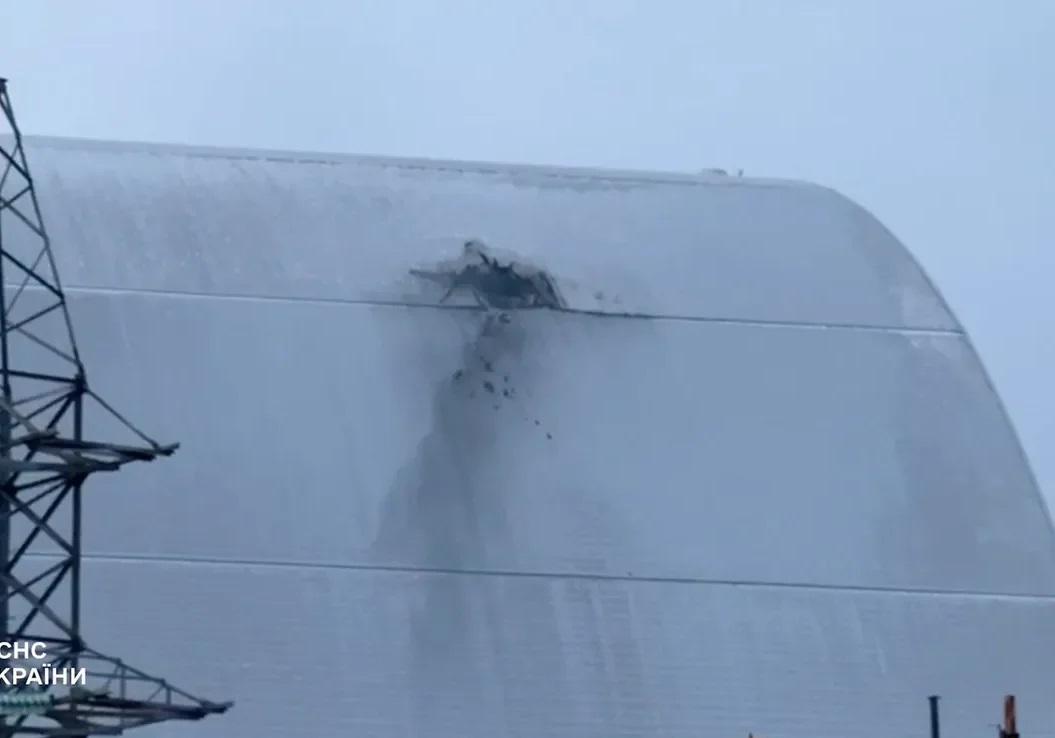
In the north-west corner of the roof, a temporary patch marks where a cheap $20,000 Russian drone tore through the structure on 14 February 2025, punching a hole in the arch and compromising the very function the arch was built for.
“If the sarcophagus collapses, over a hundred tonnes of nuclear fuel would be released into the air,” said the plant’s director general, Serhii Tarakanov.
A full repair is required within four years, Ukrainian officials and western experts say, or the NSC’s 100-year lifespan can no longer be guaranteed. It is estimated to cost up to €500m (£432m) – money that Ukraine’s cash-strapped government has not yet found.
Meanwhile, war continues in Ukraine, and Russia has repeatedly launched drones and missiles along flight paths near the Chornobyl nuclear plant, raising the risk of another disaster.
On the 40th anniversary of the Chornobyl disaster, one of the world’s most vulnerable sites remains under threat…………………………………………………………………………..
Should the sarcophagus collapse – whether from a strike, structural failure or age (built for 20 years, now standing for 40) – experts say it would release another cloud of radioactive particles into the air with no safeguard to contain it.
“The collapse of the sarcophagus would primarily be an enormous hazard for those working at the Chornobyl plant and set back dealing with the disaster for many more years,” said Shaun Burnie, a senior nuclear specialist with Greenpeace.
Beyond the financial costs and the war, there is the question of how the repairs of the confinement shelter are done at all. High radiation levels directly above the damaged section mean workers can legally spend no more than about 20 hours a year in that zone before hitting their annual dose limit.
“Workers will be able to perform their assignment there for a few hours, if not just a few minutes at a time,” said Tarakanov, adding that the work would require about 100 qualified construction workers operating in short rotations at height on a curved, contaminated surface……………………………………………………………………………………………………………………………………………………………………………………………………………………………………………………………………………………..
the exclusion zone’s isolation offers no protection from the war.
The plant has experienced four total blackouts since October 2024 caused by Russian strikes on the electricity grid, each requiring emergency diesel generators to keep the spent fuel cooling systems running.
Additional air defences and soldiers have been brought in, said Vadim Slipukha, the deputy director general for security at the site, though the threat has not gone away, he said. Even an unintentional strike from a drone knocked off course by electronic warfare could trigger a collapse of the sarcophagus.
“We are begging the international community to understand,” said Tarakanov. “There is a real risk of a new incident. It could happen any night, any day.” https://www.theguardian.com/news/ng-interactive/2026/apr/25/chornobyl-power-plant-at-risk-amid-russia-
More costs for Europe in the never-ending effort to keep Chornobyl safe.
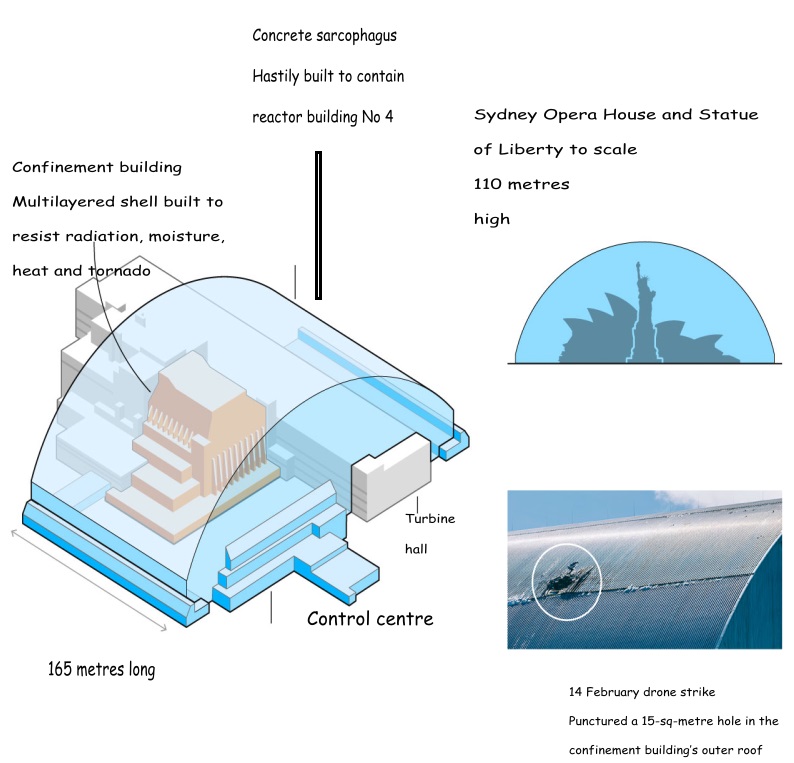
An agreement was signed with the EBRD for EUR30 million (USD35 million) of
funding for the initial phase of restoration work on the giant arch-shaped
New Safe Confinement shelter, which covers the initial shelter, which was
hastily built in 1986 and encases the wreckage of unit 4. The NSC was
damaged by a drone strike in February last year during the ongoing
Russia-Ukraine war, and assessments have put the cost of restoring it to
its full design function at about EUR500 million.
World Nuclear News 27th April 2026, https://www.world-nuclear-news.org/articles/funding-pledge-and-tributes-paid-at-conference-marking-chernobyl-anniversary
Adi Roche: My nightmare is that the next Chernobyl event occurs at Chernobyl itself
There may be an impression 40 years on that Chernobyl is something which happened a very long time ago and no longer poses a threat to the world, but the reality is very different. Chernobyl is not something from the past – Chernobyl is forever. The impact of that single nuclear incident can never be undone; its radioactive footprint is still affecting countless millions of people.
For the first time in history, nuclear facilities have been weaponised in active warfare. This is not Cold War rhetoric – it is a new and terrifying reality. If we remain silent, we are playing with a loaded gun.
.
There may be a view that the nuclear disaster is an event from long ago and no longer poses a threat, but the reality is very different
Adi Roche, Sat Apr 25 2026 – https://www.irishtimes.com/opinion/2026/04/25/adi-roche-my-worst-nightmare-is-that-the-next-chornobyl-could-be-chornobyl-itself/
At exactly 01:23 on the morning of April 26th, 1986, a chain of events in Reactor No 4 at Chernobyl nuclear power station in Ukraine triggered the world’s worst nuclear disaster.
The first of the explosions blew a 1,000-ton roof off reactor No 4 as though it was the lid of a saucepan, and a second, bigger explosion disintegrated the reactor core, rocketing tons of deadly radioactive material high into the night sky like a blazing meteor.Only 3 per cent of the reactor’s nuclear fuel escaped in the first catastrophic moments. Up to 200 tons of uranium dioxide fuel remains buried in the broken heart of reactor 4.
In that instant, the world changed forever.
A new word, Chernobyl, entered into the history of world disasters and the history of the world with deadly and frightful force. The sun shone, the wind blew, rain fell – and so did the deadly radioactive poison with it.
A nuclear catastrophe does not conclude when the cameras leave. It seeps into the soil, the water, the food chain, and embeds itself in the DNA of all living things. It passes silently from one generation to the next, creating what has become commonly known as “Chernobyl lineage”, as the damage and devastation leans into the next generation.
For four decades, I have walked beside the victims of this tragedy. I have held children whose tiny thyroid glands were attacked by poisonous radioactive iodine 131, as their small bodies mistook it for naturally occurring safe iodine. I have listened to some of “liquidators” – the 800,000 young men, including many conscripted, who were sent into the convulsing fires of hell with shovels and bare hands to contain the inferno – describe running across radioactive rooftops for 60 seconds at a time, knowing that every second shortened their lives. We missed a far greater nuclear explosion at Chernobyl by a hair’s breadth because of these brave men. Without the intervention by the liquidators, there would have been even further widespread contamination and radioactivity on a global level.
“To those who saved the world” are the words on the monument to the liquidators at the site in Chernobyl. Hailed as heroes in 1986, they are now discarded and forgotten, their ill-health dismissed by the authorities as being unrelated to their exposure to extraordinary levels of radiation and the lack of adequate safety precautions. Many of them paid with their health and their lives. Today, too many of them battle for pensions and medical care while their suffering is dismissed or minimised. Their self-sacrifice cannot be overstated.
There may be an impression 40 years on that Chernobyl is something which happened a very long time ago and no longer poses a threat to the world, but the reality is very different. Chernobyl is not something from the past – Chernobyl is forever. The impact of that single nuclear incident can never be undone; its radioactive footprint is still affecting countless millions of people.
It is impossible to say whether we are over the peak of the consequences of radioactive contamination, or whether we are just on the threshold. The consequences will last for up to 20,000 years. Other disasters are vying for the world’s attention while Chernobyl has been relegated to history, even though the latency period for some cancers is estimated to be up to 60 years – so the worst could yet be to come.
The ghost of Chernobyl was dragged back into headlines on February 24th, 2022, as Russian troops drove tanks through the Chernobyl Exclusion Zone on their way to Kyiv. Places such as Chernobyl’s Red Forest, regarded as among the most radioactive landscapes on Earth, became a military corridor, and deeply radioactive soil that had lain undisturbed for decades was churned up again. Radiation does not need a passport. It does not respect boundaries or borders, travelling wherever the wind takes it. Soon after, Russian forces occupied Europe’s largest nuclear plant in Zaporizhzhia. For the first time in history, nuclear facilities have been weaponised in active warfare. This is not Cold War rhetoric – it is a new and terrifying reality. If we remain silent, we are playing with a loaded gun.
‘We must call for nuclear facilities to be declared permanent “no war zones” under international law. Attacks on nuclear sites must be treated unequivocally as war crimes’
Nuclear power plants were always considered globally “off-limits” because of their deadly catastrophic potential. The collision between warfare and nuclear energy has created a threat with consequences not just for Ukraine, but for Europe and the world and all the generations yet unborn. This weaponising of nuclear facilities has resulted in a collision between warfare and nuclear power, which is a whole new threat with potentially devastating, unimaginable consequences for humankind for centuries to come. This is nuclear terrorism.
The issues associated with Chernobyl have become even more urgent, particularly following the Valentine’s Day 2025 drone strikes on the nuclear power plant, further escalating the war. The impregnable sarcophagus that is meant to protect humanity from radiation is scarred and breached, heightening the risk of another nuclear catastrophe and bringing with it a sense of foreboding for wars of the future.My worst nightmare in this conflict is that the tragedy of a second Chernobyl would be unleashed on the world. The next Chernobyl-type event could happen at Chernobyl itself.
Ireland knows something about solidarity. Compassion became our calling card and is the heartbeat of our society.
That is needed now more than ever. The Irish proverb “Ar scáth a chéile a mhaireann na daoine” hasnever been more apt.
We must call for nuclear facilities to be declared permanent “no war zones” under international law. Attacks on nuclear sites must be treated unequivocally as war crimes.
The “war” that has been waged by what happened at Chernobyl is a silent, invisible but deadly one. No associated smells, no visible signs – nothing to forewarn you of danger.
Deadly radiation flows in rivers, towns, streams and forests. It clicks endlessly, ferociously, in Geiger counters, into the silent numbness that is, and sadly always will be, Chernobyl
If we fail to learn from Chernobyl, we betray those who died and those who still suffer. If we fail to act, we risk repeating the unthinkable. Chernobyl is not history, it is a warning. We cannot, will not, turn away.
Adi Roche is the founder and voluntary chief executive of Chernobyl Children International
Chernobyl, 40 Years Since Disaster: Five Things to Know
Ukraine on Sunday marks the 40th anniversary of the explosion at the
Chernobyl nuclear power plant – the worst civilian nuclear disaster in
history. It comes four years into the Russian invasion that has put the
plant once again under threat and raised risks of another radioactive
catastrophe.
Here are five things to know about the disaster and the plant
today: Thousands are estimated to have died as a result of exposure to the
radiation, though assessments of the precise human toll vary. A 2005 UN
report put the number of confirmed and projected deaths at 4,000 in the
three worst-affected countries. Greenpeace in 2006 estimated that the
disaster had caused close to 100,000 deaths. According to the United
Nations, some 600,000 people involved in the clean-up operation — known as
“liquidators” — were exposed to high levels of radiation. The disaster
raised public fears of nuclear energy, fuelling a surge in anti-nuclear
movements across Europe.
Kyiv Post 24th April 2026, https://www.kyivpost.com/post/74633
Remembering Chornobyl
by beyondnuclearinternational, https://beyondnuclearinternational.org/2026/04/19/remembering-chornobyl/
40 years on we are still asking the wrong questions and getting a lot of wrong answers, writes Linda Pentz Gunter
Probably the most heinous crime, other than the avoidable accident itself and its immediate coverup, is the way that the Chornobyl (Ukrainian equivalent spelling) nuclear power disaster in Ukraine, 40 years old this week, has been used to downplay and normalize the long-lasting health impacts caused by that April 26, 1986 explosion.
Still today, the myth is repeated that “no one died” — meaning no one in the public. Instead, we are told over and over that it was only a handful of liquidators, sent in to deal with the immediate crisis, who were killed by the massive release of radiation resulting from the reactor explosion.
And still today, in part because of that myth, now so firmly cemented in the public and media narratives around the Chornobyl disaster, the true health effects of even just routine reactor operation, or the exposures suffered by communities living around active or abandoned uranium mines, or by those working in uranium enrichment or fuel fabrication facilities, are discounted and dismissed.
Worse still, we are now facing a concerted effort by the Trump administration to emasculate already weak radiation protection standards, once again ignoring females who are most vulnerable to harm, and especially pregnant women, babies and children.
Through yet another executive order accelerating nuclear power expansion while sparing the industry the costs it should incur to guarantee safety (an impossibility anyway), the White House wants to abandon the long-held Linear No Threshold (LNT) model.
LNT holds that radiation damage increases with higher exposures, and that harm is posed by all radiation exposure no matter how small. But LNT itself is already unsatisfactory, since health studies continue to indicate that more — not less — protection is needed for non-cancer impacts, and for radionuclides taken internally, than is already provided by applying LNT.
This is what makes the perpetual focus on “who died” when it comes to major nuclear accidents, fundamentally the wrong question. We will likely never know who or how many died as a result of the Chornobyl disaster. Registries and statistics weren’t kept, people moved around, and, as is so often the case, illnesses were ascribed to other causes. Certainty is hard to achieve.
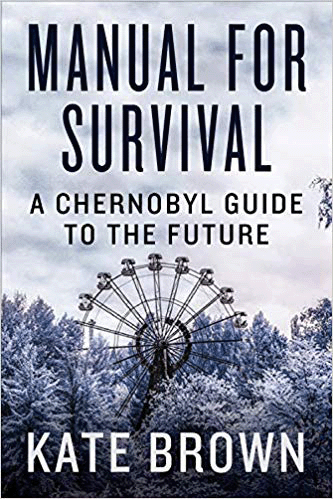
Nevertheless, perhaps one of the most important pieces of research on the health realities of the Chornobyl aftermath was done by historian Kate Brown in her book Manual For Survival. A Chernobyl Guide to the Future. It looks like a “hefty tome”, but it is anything but. Despite being nonfiction, it reads like a page-turning thriller and some of what she uncovers is eye-stretching. And, of course, by saying “uncovers,” we immediately understand that this was indeed a cover-up, first by the then Soviet Union, and then compliantly perpetuated by the United States and other western allies eager to avoid any shocking realization by the general public that nuclear power technology is phenomenally dangerous and human beings are liable to lose control of it, with disastrous results.
This returns us to the question about the protracted harm that can be caused if something goes very badly wrong at a nuclear power plant. And it returns us to dispensing with the wrong question, which is “how many people died?”
That wrong question, a favorite of headline writers and spin doctors, sets us on a perpetual path to dispute. The health figures, especially fatalities, have become the most misrepresented statistic related to the Chornobyl disaster. But focusing only on fatalities also serves to diminish the disaster’s impact. Nuclear power plant accidents often do not kill people instantly and sometimes not at all. It can take years before fatal illnesses triggered by a nuclear accident take hold. This creates a challenge in calculating just who eventually died due to the accident and who suffered non-fatal consequences.
Exposure to ionizing radiation released by a nuclear power plant (and not just from accidents but every day) can cause serious non-fatal illnesses as well. These should not be discounted. Arguably, neither should post-accident psychological trauma. Nuclear power plant accidents can and should be prevented. The only sure way to do so is to close them all down. Otherwise we risk another Chornobyl, or Three Mile Island, or Fukushima.
In our Thunderbird newsletter of 2018, we examined some of the key myths around the impacts of the Chornobyl disaster now 40 years ago. Below, is a synopsis of some of the key points, as they bear repeating and remain perpetually true. The full document can be read here.
What happened?
On April 26, 1986, Unit 4 at the Chornobyl nuclear power plant exploded. That explosion and the resulting fire, lofted huge amounts of radioactivity into the atmosphere. Unit 4 was relatively new, having only been in service for just over two years. The accident occurred during what should have been a routine test to see how the plant would operate if it lost power. The test involved shutting down safety systems but a series of human errors, compounded by design flaws, instead set in motion a catastrophic chain of events.
After shutting down the turbine system that provided the cooling water to the reactor, the water began boiling and workers desperately tried to re-insert control rods to slow down the nuclear reaction. But the rods jammed and control of Unit 4 was irrevocably lost. The explosion and fire — which took five months to put out — dispersed at least 200 times more radioactivity than that produced by the Hiroshima and Nagasaki bombs. The fallout contaminated several million square kilometers of land in the former Soviet Union and in Europe and was also detected in the US
Soviet authorities were slow to react. The accident was first detected by monitors in Sweden. The nearby city of Pripyat was not evacuated immediately. By the time they did so, radioactivity levels were 60,000 times higher than “normal”.
The financial cost of the accident, while difficult to calculate given the many unknowns, is estimated to be in the region of $700 billion and is expected to keep rising.
The Liquidators
The Chornobyl liquidators were dispatched to the stricken nuclear plant in the immediate aftermath, as well as for at least the subsequent two years, to manage and endeavor to “clean up” the disaster. They included military as well as civilian personnel such as firefighters, nuclear plant workers and other skilled professionals.
While estimates of the number of liquidators varies, the generally accepted figure is around 800,000. However, evaluating their fate has been difficult. Only a small portion of them were subject to medical examinations.
Yet, by 1992 it was estimated that 70,000 liquidators were invalids and 13,000 had died. These estimates rose to 50,000 then to 100,000 deaths among liquidators in 2006. By 2010, Yablokov et al. estimated a death toll of 112,000 to 125,000 liquidators.
Even the Russian authorities admit findings of liquidators aging prematurely, with a higher than average number having developed various forms of cancer, leukemia, somatic and neurological problems, psychiatric illnesses and cataracts.
The UN Office for the Coordination of Humanitarian Affairs found a statistically significant increase of leukemia among Russian liquidators who were in service at Chernobyl in 1986 and 1987.
General populations inside and outside the former Soviet Union
As with the liquidators, tracking the health of general populations exposed to the plume pathway of Chornobyl has been problematic. Within the Soviet Union, people moved away and neither they nor many living in other affected countries were tracked or monitored. While countless numbers may have died from their Chornobyl-related illnesses, equal or even greater numbers may have survived with debilitating or chronic physical as well as mental illnesses caused by the accident.
Establishing exact numbers may never be possible. Media reports often rely on the 2003-2005 Chernobyl Forum report produced by the nuclear promoting International Atomic Energy Agency. The agency ignored its own data that indicated there would be 9,000 future fatal future cancers in Belarus, Russia and Ukraine, claiming there would be no more than 4,000. Both numbers are gross underestimations. The report focused only on the most heavily exposed areas in making its predictions. It ignored the much larger populations in the affected countries as a whole, and in the rest of the world, who have been exposed to lower but chronic levels of radiation from Chornobyl.
In contrast, a comprehensive analysis by the late Soviet scientist, Alexey Yablokov and colleagues, examined more than 5,000 Russian studies. They concluded that almost a million premature deaths would result from Chornobyl. Meanwhile, the TORCH report (The Other Report on Chernobyl), by Dr. Ian Fairlie, predicts between 30,000 and 60,000 excess cancer deaths worldwide due to the accident.
More than half the Chornobyl fallout landed outside of the Ukraine, Belarus and Russia — in Europe, Asia and North America. Fallout from Chornobyl contaminated about 40% of Europe’s surface. Immediately after the accident, thyroid cancer was particularly rampant in Belarus, Ukraine and Russia, where no prophylactic remedy in the form of potassium iodide pills was offered. Consequently, as Baverstock and Williams found in 2006, “by far, the most prominent health consequence of the accident is the increase in thyroid cancer among those exposed as children . . . particularly in children living close to the reactor.”
In contrast, Poland, where potassium iodide was distributed, experienced relatively low rates of thyroid cancers. While thyroid cancer is considered one of the more treatable kinds of cancers, this does not mean it should be viewed as an acceptable consequence of a nuclear power plant accident. Such diseases — especially among children — impact emotional, social, and physical wellbeing. In the former Soviet Union, those operated on bear a scare referred to grimly as the “Chornobyl necklace.”
Dr. Wladimir Wertelecki, a physician and geneticist, has conducted research, particularly focused on Polissia, Ukraine. There he found clear indications of altered child development patterns, or teratogenesis. Wertelecki noted birth defects and other health disturbances among not only those who were adults at the time of the Chornobyl disaster, but their children who were in utero at the time and, most disturbingly, their later offspring.
Important research has also been conducted on psychological effects. Pierre Flor-Henry and others examined some of the psychological disorders resulting from Chornobyl and found a clinical pathology related to radiation exposure. Flor-Henry found that schizophrenia and chronic fatigue syndrome among a high percentage of liquidators were accompanied by organic changes in the brain. This suggested that various neurological and psychological illnesses could be caused by exposure to radiation levels between 0.15 and 0.5 sieverts.
There are of course many other non-cancerous diseases caused by nuclear accidents that release radioactivity. A peak in Down Syndrome cases was observed in newborns born in 1987 in Belarus, one year after the Chornobyl nuclear accident. This phenomenon has been found around other nuclear sites. Abnormally high rates of Down Syndrome were found in the Dundalk, Ireland population possibly tied to the operation of the Sellafield nuclear waste reprocessing plant across the Irish Sea in Cumbria, England.
Read full Thunderbird: Chornobyl: The Facts.
Linda Pentz Gunter is the Executive Director of Beyond Nuclear and writes for and edits Beyond Nuclear International. She is the author of the book, No To Nuclear. Why Nuclear Power Destroys Lives, Derails Climate Progress And Provokes War, published by Pluto Press. Any opinions are her own.
1 This Month
23-25 October – on Zoom – World BEYOND War’s annual global conferenc


Shut down the radiation-damaged Heysham nuclear reactors now
To see nuclear-related stories in greater depth and intensity – go to https://nuclearinformation.wordpress.com

Say No to NASA’s Reckless Nuclear Reactor on the Moon
Say No to NASA’s Reckless Nuclear Reactor on the Moon

-
Archives
- October 2026 (247)
- September 2026 (339)
- August 2026 (330)
- July 2026 (355)
- June 2026 (287)
- May 2026 (306)
- April 2026 (356)
- March 2026 (251)
- February 2026 (267)
- January 2026 (308)
- December 2025 (358)
- November 2025 (359)
-
Categories
- 1
- 1 NUCLEAR ISSUES
- business and costs
- climate change
- culture and arts
- ENERGY
- environment
- health
- history
- indigenous issues
- Legal
- marketing of nuclear
- media
- opposition to nuclear
- PERSONAL STORIES
- politics
- politics international
- Religion and ethics
- safety
- secrets,lies and civil liberties
- spinbuster
- technology
- Uranium
- wastes
- weapons and war
- Women
- 2 WORLD
- ACTION
- AFRICA
- Atrocities
- AUSTRALIA
- Christina's notes
- Christina's themes
- culture and arts
- Events
- Fuk 2022
- Fuk 2023
- Fukushima 2017
- Fukushima 2018
- fukushima 2019
- Fukushima 2020
- Fukushima 2021
- general
- global warming
- Humour (God we need it)
- Nuclear
- RARE EARTHS
- Reference
- resources – print
- Resources -audiovicual
- Weekly Newsletter
- World
- World Nuclear
- YouTube
-
RSS
Entries RSS
Comments RSS

