UK to Extend Life of Sizewell B Nuclear Plant by 20 Years !

Electricite de France SA and Centrica Plc are poised to agree on a draft
deal with the UK government to extend the life of the Sizewell B nuclear
power station by two decades, according to people familiar with the matter.
The companies are on the verge of agreeing a heads of terms agreement with
the Department for Energy Security and Net Zero, and will announce the deal
within weeks, two of the people said. The final deal is expected to be
agreed later this year.
Bloomberg 10th June 2026, https://www.bloomberg.com/news/articles/2026-06-10/uk-poised-to-extend-life-of-sizewell-b-nuclear-plant-by-20-years
Experts Warn Against Handing Impact Assessment of Nuclear Projects Over to Captured Regulator.
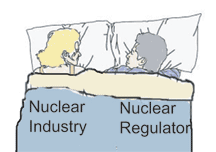
Academics, environmental lawyers and civil society organizations are raising the alarm about proposals in the federal discussion paper, “Getting Major Projects Built in Canada.” An initial 30 day comment period ending June 7th was recently extended to July 22 after the government received “feedback from thousands of stakeholders, Indigenous groups, and members of the public”.
The Canadian Environmental Law Association says the proposals in the discussion paper are “unjustified, regressive, and contrary to the public interest,” would reduce “public participation, transparency, and accountability,” and “would constitute the most significant rollback of federal environmental laws in recent decades.”
Particularly problematic is the proposal to hand assessment of nuclear projects over to the Canadian Nuclear Safety Commission (CNSC). Experts say nuclear projects require meaningful public participation and careful evaluation, based on evidence tested rigorously by independent experts.
The CNSC is led by industry insiders, has never turned down a license application, reports to a Minister who promotes nuclear power, and withholds information. Academic studies observe that the CNSC has features of a “captured regulator”. Public trust in the CNSC has declined over many years. Assessing-Nuclear-Risk.ca.
IAEA warning after drone hits used fuel facility near Chernobyl

WNN, 8 June 2026
Significant structural damage was caused to a building at the new central used fuel storage facility in the Chernobyl exclusion zone, International Atomic Energy Agency Director General Rafael Mariano Grossi has said.
In a briefing to the IAEA’s Board of Governors, and in a subsequent press conference, Grossi said that in a separate incident on Friday a drone had injured Russian military personnel undertaking de-mining activities as part of an IAEA-mediated ceasefire to allow the main 750 kV Dniprovska external power line to Zaporizhzhia Nuclear Power Plant to be fixed.
He said that over the weekend there had been further negotiations with both sides before it was agreed that the IAEA would send observers to monitor the mine-clearing work, which is necessary before the repair work can take place on the external power supply lines on pylons on either side of the military front line.
“Without the Dniprovska line, Zaporizhzhia Nuclear Power Plant’s off-site power situation is very fragile. Over the past days, the plant suffered its 18th offsite power outage since the war began. With a duration of 15-hours, it was also one of its longest, necessitating the use of emergency diesel generators to cool the six shut down reactors until offsite power was restored on Saturday morning,” he said.
The incident with a drone striking the three-year-old Central Spent Nuclear Fuel Storage Facility in the Chernobyl exclusion zone took place on Sunday, with Grossi reporting it caused “significant structural damage to part of the fuel reception building, including the IAEA safeguards office. Spent fuel was stored in casks just a few hundred metres from the damaged building. Thankfully, radiation levels at the facility remained normal, indicating the incident did not cause radioactive contamination. It remains unclear when the facility will be able to start receiving spent fuel from Ukraine’s operating nuclear power plants again”.
He added: “Attacking a facility with large amounts of nuclear material is extremely dangerous. It must not happen.”
The Centralised Spent Nuclear Fuel Storage Facility is a dry storage site for used nuclear fuel assemblies from the country’s VVER-1000 and VVER-440 reactors. It is designed to have a total storage capacity of 16,530 used fuel assemblies, including 12,010 VVER-1000 assemblies and 4,520 VVER-440 assemblies. Contracts were signed for its construction with USA-based Holtec International in 2005, although construction only began in 2017.
It started receiving used nuclear fuel from the country’s nuclear power plants at the end of 2023 and it has been operating under a commissioning licence. It was issued with its operating licence last month after an inspection carried out from 20 April to 1 May.
Operator Energoatom said the fire caused by the drone strike covered an area of 40 square metres and “was quickly localised and completely eliminated”. It said there were no injuries among the personnel and the radiation situation remained within normal limits.
During his speech to the board of governors and during his media briefing, Grossi maintained the IAEA’s stance of not attributing blame to either side for incidents during the war…………………….. https://www.world-nuclear-news.org/articles/iaea-warning-after-drone-hits-used-fuel-facility-near-chernobyl
The timeline for restoring operations at the Chornobyl nuclear waste storage facility following Russian shelling remains unknown – IAEA
A Russian drone strike damaged a nuclear storage building near the
Chornobyl NPP and the IAEA office. It remains unclear when the facility
will be able to resume receiving spent fuel from Ukraine’s operational
nuclear power plants.
A Russian drone strike on the Central Spent Fuel
Storage Facility (CSFSF) near the Chornobyl NPP on Sunday morning caused
significant structural damage to part of the fuel reception building,
including the International Atomic Energy Agency (IAEA) safeguards office
located there. This was reported in a statement by the agency, UNN informs.
UNN 8th June 2026, https://unn.ua/en/news/the-timeline-for-restoring-operations-at-the-chornobyl-nuclear-waste-storage-facility-following-russian-shelling-remains-unknown-iaea
‘Serious incident’ at Europe’s largest nuclear plant – work to stop ‘accident’ ongoing
An incident at the Zaporizhzhia Nuclear Power Plant in
Ukraine has left some Russian military personnel injured as efforts to
prevent a ‘nuclear accident’ continue. Russian military personnel have been
injured following a “serious incident” at Europe’s largest nuclear power
plant.
The International Atomic Energy Agency (IAEA) today said it had been
informed of an incident which occurred during de-mining efforts following a
localised ceasefire between Russia and Ukraine. The ceasefire is in place
so that power line repairs can be carried out, repairs the IAEA says are
crucial for preventing a “nuclear accident” at the site.
The power plant
has lost power on several occasions due to fighting in the region. Rafael
Mariano Grossi, IAEA director general, today called for “maximum military
restraint and full adherence to the ceasefire” so “efforts to prevent a
nuclear accident” can continue. The exact nature of the incident which led
to the recent injuries remains unclear.
Mirror 5th June 2026, https://www.mirror.co.uk/news/world-news/zaporizhzhia-nuclear-power-plant-accident-37255798
Power returns to Zaporizhzhia nuclear plant after prolonged outage, IAEA says
Power was restored to the Russian-occupied Zaporizhzhia Nuclear Power
Plant after a 15-hour outage that forced the facility to rely on emergency
diesel generators, the International Atomic Energy Agency (IAEA) said on
June 6. The U.N. nuclear watchdog said off-site electricity supplies
resumed earlier in the day, ending one of the longest power disruptions at
the facility since the start of Russia’s full-scale invasion of Ukraine.
“Off-site power was restored to the ZNPP this morning after a 15-hour
outage, when the site had to rely on emergency diesel generators for
electricity to cool its six shutdown reactors,” the agency said in a social
media post.
IAEA Director General Rafael Mariano Grossi said the outage
underscored persistent risks to the plant’s power supply. “It was the 18th
loss of off-site power during the war and one of the longest, highlighting
the extreme fragility of the electrical grid and the urgency of proceeding
with planned power line repairs under the protection of an IAEA-brokered
ceasefire,” Grossi said.
The outage follows another disruption reported by
the IAEA last week, when the agency said the plant experienced an extended
communications blackout and inspectors were unable to contact plant
personnel and agency representatives at the site for several hours.
Kyiv Independent 6th June 2026, https://kyivindependent.com/power-returns-to-zaporizhzhia-npp-after-prolonged-outage/
Another deadly explosion casts shadow over Hanwha Aerospace’s cutting-edge image.
2026-06-02, HANKYOREH, By Choi Ye-rin, staff reporter; Jang Hyeon-eun, staff reporter; Kim Joong-gon, staff reporter; and Kwon Hyo-jung, staff reporter
Five were killed and two injured at an explosion at the defense contractor’s Daejeon plant.
Another explosion at defense contractor Hanwha Aerospace’s plant in Daejeon, the country’s No. 5 city, killed five people Monday, bringing the total death toll from explosions at the site to 13, including five fatalities in 2018 and three in 2019.
Hanwha Aerospace has recently emerged as a leader in the country’s cutting-edge defense industry. Yet behind the scenes, its plant has seen a series of workplace disasters that are at odds with the standards expected of a world-class manufacturer.
The site of Monday’s explosion was the plant’s tool cleaning area of Building 56. Hanwha Aerospace said this facility, which washes explosive materials from tools used to make rocket propellant, is separated from other buildings.
The company added that a management supervisor and six production staff were cleaning tools using water mixed with detergent when a sudden explosion caused a fire. Five workers died and one suffered second-degree burns over his entire body, with one manager who was outside the facility sustaining minor injuries.
The workers apparently had no time to escape as the explosion caused flames to instantly engulf them. Police plan to request DNA analysis from the National Forensic Service to identify the victims……………………………………..
Ga Jae-woong, a Hanwha Aerospace senior vice president and manager of the plant, declined to disclose details such as what sort of explosive material was involved, only saying that all processes at the workplace are “confidential.”
Hanwha Aerospace’s failure to pinpoint the cause of the blast has sparked fierce criticism considering the growing death toll at the plant. All three explosions are known to have been related to solid propellant used to transport weapons.
In 2018, an explosion occurred during the process of loading fuel into a rocket propellant container. The next year, another happened during the removal of a propellant core.
Workers at the plant bear inherent risk because of the highly explosive properties of the propellant used in rocket boosters. But Monday’s catastrophe demonstrates the company’s failure to take effective measures to prevent such explosions even after similar incidents in 2018 and 2019.
Immediately after the 2018 blast that killed nine, a Ministry of Employment and Labor inspection uncovered as many as 486 violations of workplace safety regulations.
An annual report by Hanwha Aerospace also said it had been fined 2 million won (US$1,300) by fire authorities in Daejeon in January 2025 for failure to comply with regulations for hazardous material prevention, as well as 1.6 million won that June for inadequate maintenance and management of fire safety facilities.
“Defense contractors often classify their production processes as confidential, so there are cases where they never take proper follow-up measures even after explosions resulting in casualties occur,” said Yeom Gun-woong, a professor of police and fire administration at U1 University. “Three similar accidents have occurred at the same workplace, so a fact-finding investigation and comprehensive inspection are necessary.”
The company’s union demanded a thorough investigation into the incident and identification of those responsible, slamming Hanwha Aerospace’s “slogans of eradicating industrial accidents and creating a safe workplace” as “nothing but empty words.”
The Korean Confederation of Trade Unions, one of the country’s major umbrella unions, also criticized the company in a statement.
“Hanwha Aerospace has made it abundantly clear that it not only neglects the safety and lives of its workers, but has also made no safety improvements since the last two accidents,” it wrote. ………………………………….https://english.hani.co.kr/arti/english_edition/e_national/1261569.html
Military action near nuclear plants puts external power needs in spotlight

International Atomic Energy Agency Director General Rafael Mariano Grossi
suggests recent events means there may be a need for a fresh look at the
layout of external power lines. Grossi, responding to a media question
about whether nuclear power plant design safety standards needed to be
reviewed as a result of military action near them, said safety standards
were kept under constant review, although he did not feel there was a need
for a big overhaul.
However there was an increased emphasis on emergency
preparedness and response, he said, praising the reaction of the operators
of the Barakah Nuclear Power Plant in the UAE after an electrical generator
located outside the inner site perimeter of the NPP was damaged by a drone
on 17 May – “they demonstrated the professionalism, skills and preparedness
that nuclear safety demands every day”, he said.
“The UAE never imagined in
their wildest dreams that one day Barakah would be attacked,” he added at
the media briefing after his opening address to the IAEA Board of
Governors’ meeting. “I am sure that there will be analysis and evaluation –
there is going to be, for example, a further look into the layout of
external power supply lines … sometimes the connections and
inter-connections are not designed for situations where loss of outside
power could happen more frequently.”
World Nuclear News 5th June 2026, https://www.world-nuclear-news.org/articles/military-action-near-nuclear-plants-puts-external-power-needs-in-spotlight
Net zero fusion project could trigger nuclear disaster

A prototype
reactor that works as a ‘mini-Sun’ is being developed in
Nottinghamshire as UK hopes to lead world in nuclear fusion power.
Britain’s attempts to harness fusion energy could trigger a nuclear
disaster, official documents reveal.
A prototype reactor that works as a
“mini-Sun” is being developed in Nottinghamshire to create huge amounts
of energy by smashing atoms together. Fusion energy is seen as a panacea
for the energy crisis and for sustainable, long-term net zero energy
generation.
But official documents reveal concerns that a disaster at the
site could contaminate 15,000 hectares of surrounding land, costing farmers
£80m in lost profits, and result in thousands of cases of cancer in
civilians and workers. A worst-case event, such as an explosion of the
reactor itself, could lead to millions of pounds of damage, with the costs
borne by the taxpayer.
Telegraph 4th June 2026, https://www.telegraph.co.uk/news/2026/06/04/net-zero-fusion-project-nuclear-disasters-possible/
The military threat to nuclear power plants around the world
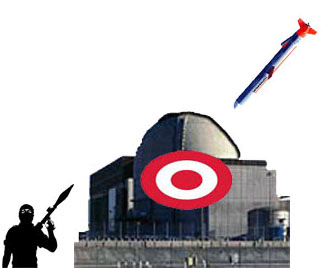
Direct strike could release radioactive material and cause mass terror
By Chas Newkey-Burden, The Week UK, https://theweek.com/world-news/the-threat-to-nuclear-power-plants-around-the-world
The “vulnerability” of the civilian energy infrastructure was exposed this week when a drone strike on the United Arab Emirates cut off power to a nuclear reactor, said Bloomberg.
It’s the first time a fully operating nuclear power plant has had to rely on back-up generators because of a military attack, but reactors in Ukraine and Iran have also been threatened by recent conflicts.
Why would a nuclear site be targeted?
A country might target a nuclear power plant to cripple an enemy’s power grid, or to force a surrender through the psychological terror of threatening a radiological disaster. An attack on such facilities could also be used to delay a nation’s ability to enrich nuclear material.
Alternatively, armies may attack, or occupy, a nuclear plant to seize control of a strategic geographic corridor or to prevent defending forces from using the area.
What does international law say?
Under the Geneva Conventions, civilian structures, including nuclear power plants, “are protected against attack”, but the treaties also state that they can be hit “for such time as they are military objectives”. This is a “loophole” that “aggressor states” have “interpreted widely”, said Dan Sabbagh, The Guardian’s defence and security editor.
Attacking a nuclear power plant also breaks legal resolutions passed by the UN Security Council and the International Atomic Energy Agency’s board of governors.
What would happen if a site were hit?
An attack on a nuclear site would not necessarily lead to a mushroom cloud or an immediate release of radiation because modern plants are built with multiple safety systems that can shut down reactors and contain damage.
But the reactor’s core could continue to heat up after a strike. This could lead to a build up of hydrogen gas, which could cause further explosions and damage. If the reactor began to degrade, radioactive material could be released and that can remain in the environment for years or even decades. It could potentially spread across borders and enter water systems or settle into the soil.
There are other consequences. Attacks on nuclear installations “risk undermining the emerging nuclear renaissance” in Western economies as an alternative to fossil fuels, said Bloomberg. Politicians and the public are “highly sensitive to radiation emergencies”, so an incident in one country “tends to dampen enthusiasm” for nuclear power elsewhere.
An attack on a nuclear plant would also be a hugely symbolic moment. Although conventional power plants have been “repeatedly bombed” by Russia during the Ukraine war, said Sabbagh, Kyiv’s three functioning nuclear plants have “remained relatively unscathed” because Moscow regarded a direct attack on them to be “taboo”.
Grossi warns at Security Council against attacks on nuclear plants
WNN, Wednesday, 20 May 2026
In a briefing to the United Nations Security Council following a drone strike near Barakah Nuclear Power Plant’s inner perimeter, International Atomic Energy Agency Director General Rafael Mariano Grossi has warned of the “most serious” consequences of a direct hit.
A drone strike on Sunday morning caused a fire in an electrical generator located outside the inner perimeter of the plant in the United Arab Emirates. Emergency diesel generators were required to provide power to Barakah’s unit 3 until sufficient off-site power was restored, he said. Radiation levels remained normal at all times and no injuries were reported.
The UAE has said its investigations have found that the drone, plus others which were successfully intercepted, had originated from Iraqi territory.
Grossi said he had been in contact with leaders “throughout the Gulf region and I can see the unease and great concern. I have been discussing how the IAEA can offer further assistance. Since last year, the IAEA has been gathering information, as well as analysing and evaluating emergency preparedness and response capacities. I will be travelling to the Gulf soon to continue this important joint work……………………………
He said: “The situation is of grave concern. This is a nuclear site in the Middle East where the consequences of an attack could be most serious. It is an operating nuclear power plant, and as such, it hosts thousands of kilograms of nuclear material in the core of the reactors, fresh and spent fuel. I want to make it absolutely and completely clear: In case of an attack on the Barakah Nuclear Power Plant, a direct hit could result in a very high release of radioactivity to the environment.
“A hit that disabled the lines supplying electrical power to the plant could increase the likelihood of its reactors’ cores melting, which could result in a high release of radioactivity. In their worst cases, both scenarios would necessitate protective actions, such as evacuations and sheltering of the population or the need to take stable iodine, with the reach extending to distances from a few to several hundred kilometres. Radiation monitoring would need to cover distances of several hundred kilometres and food restrictions may need to be implemented.”……………………………………………………………………………………………. https://www.world-nuclear-news.org/articles/grossi-warns-at-security-council-against-attacks-on-nuclear-plants
The police force protecting our nuclear sites keeps losing classified stuff

Three years ago we revealed a “litany” of security incidents within the police force which guards nuclear plants. They haven’t reduced much since.
Paul Dobson, May 20 2026, https://www.theferret.scot/the-police-force-protecting-our-nuclear-sites-keeps-losing-classified-stuff/
The police force tasked with stopping terrorist attacks at UK nuclear sites dealt with dozens of internal security breaches last year – including a classified laptop going missing, contractors working without proper background checks, and armed officers losing ID cards.
Three breaches involved classified material being lost or stolen outside the Civil Nuclear Constabulary’s (CNC) premises – including two police warrant cards, used to identify officers, which were supposed to arrive via courier.
A further nine cases involved the loss of identity passes, including those belonging to armed officers, and two contractors were found to be working without “appropriate” vetting.
Other breaches included confidential material being left inside body armour sent for destruction, a staff member accessing information they were no longer authorised to see, and compromised personal data. There were 35 breaches in total, the CNC reported.
The CNC is the armed police force that protects civilian nuclear facilities across the UK, including Torness and Dounreay in Scotland. The force also escorts nuclear material when it is being transported and guards other “critical national infrastructure” such as gas terminals.
Our findings come after we submitted a freedom of information request to the force. You can read full details of the breaches here.
Opponents of nuclear energy said the UK “cannot afford to be sloppy when it comes to nuclear security” and claimed “very little appears to have been done” to tackle breaches in recent years.
The CNC described the security incidents last year as “minor” and a spokesperson told The Ferret the force “takes action on all incidents and seeks to learn lessons” from them.
Labour accused of making nuclear sector ‘more dangerous’ after capture by ‘vested interests’

by Tom Pashby, 14 May 2026, https://www.thecanary.co/uk/analysis/2026/05/14/nuclear-sector-more-dangerous/
The nuclear industry will become “more dangerous” and regulation of the sector has been captured by “vested interests,” campaigners and experts have told the Canary, after the Nuclear Regulation Bill was put forward in the 2026 King’s Speech.
The Labour Government had already said in March 2026 that it was committed to implementing the recommendations of the Nuclear Regulatory Review, which was led by John Fingleton – sometimes referred to as the Fingleton Review.
Announcing the findings of the review in March 2026, the government said:
overly complex regulation in the UK has contributed to the ‘relative decline’ in the UK’s global leadership position in nuclear.
It also set out 47 recommendations to:
to speed up building new nuclear projects.
King’s speech 2026
The King announced the Bill in his King’s Speech, saying:
My Ministers will also take forward recommendations of the Nuclear Regulatory Review and encourage a new era of British nuclear energy generation.
In briefing notes published by the government, which explain their plans in more detail, the government referenced the Fingleton Review, which it characterized as calling for “a radical refresh” of the nuclear regulatory regime.
It went on to say that the Nuclear Regulation Bill is:
modernising the way that new nuclear projects are regulated so we can deliver safe, secure and affordable nuclear power and infrastructure sooner, while maintaining strong environmental protections.
The briefing notes tried to placate fears that the recommendations in the Fingleton Review could erode environmental protections.
They added:
To speed up the delivery of new nuclear and reduce costs, the Government is overhauling planning and regulation in a boost to the UK’s energy sovereignty and the nuclear deterrent.
This Bill will support quicker delivery of nuclear projects in a way that produces a win-win for building critical infrastructure while protecting nature and the environment, and high standards of nuclear safety.
‘Industry falsehoods’ used to justify risk nuclear projects pose to nature – conservationist
The Wildlife Trusts‘ head of public affairs Matthew Browne told the Canary:
This Government was elected to govern on the basis of a manifesto that promised to restore the natural world. We are a long way from this promise being delivered. Today’s King’s Speech is silent on nature recovery, and includes measures that will actively harm wildlife.
Whilst early proposals for the ripping up of nature protections have thankfully been dropped, the Nuclear Regulation Bill is justified on the grounds of industry falsehoods which minimise the risk projects can pose to nature. The Regulating for Growth Bill gives environmental regulators an inappropriate focus on growth, bending their work away from vital nature recovery objectives.
With ongoing nature loss impacting our ability to grow food, to protect communities from flooding and our ability to stay healthy, this failure to respond to a growing national security crisis risks fundamental dereliction of duty. The Government needs to change course, and face up to environmental reality, before it comes an economic and social disaster.
Bill will make ‘inherently dangerous’ nuclear power ‘more dangerous’ – anti-nuclear campaigner
Campaign for Nuclear Disarmament (CND) general secretary Sophie Bolt told the Canary:
When you think of nuclear accidents like at Windscale in 1957, Chernobyl in 1986, or Fukushima in 2011, it’s easy to see that Britain’s current nuclear regulatory procedures and rules are in place for a simple reason – that nuclear power is inherently dangerous.
Rather than acknowledge these risks or legacy issues – like tackling the toxic waste generated by nuclear power – the government’s plan to cut regulations essentially means this industry will be more dangerous.
This is disturbingly similar to what Donald Trump did earlier this year when he gutted the US Nuclear Regulatory Commission and the US Environmental Protection Agency.
These proposed regulatory changes are also for the benefit of Britain’s deadly and costly nuclear weapons programme, which already accounts for almost a quarter of Britain’s military budget. Rather than strengthening our security, these proposals will instead weaken it and put us all at even greater risks from the nuclear industry.
Government should pursue renewables instead of nuclear – SNP
Scottish National Party (SNP) Alex Kerr MSP told the Canary:
Under Keir Starmer’s watch, energy bills have spiralled out of control, 1,000 jobs are being lost every month in the North Sea and Scotland’s only refinery at Grangemouth has closed – the Labour party has zero credibility when it comes to energy.
Now Labour is ripping up regulations to pursue its dangerous obsession with nuclear power.
Scotland has an abundance of clean energy sources – we don’t need new nuclear power stations, which are ludicrously expensive, take years to build, and leave us with dangerous waste.
Another energy superpower, Norway, has just ruled out using nuclear energy. With the fresh start of independence, Scotland can do the same and use our vast energy wealth to lower bills, enhance our energy security, and build a wealthier country.
Pursuit of nuclear instead of renewables unjustifiable – academic
University of Sussex emeritus professor Andy Stirling told the Canary that the evidence shows renewables should be pursued instead of nuclear, and the only reason that the government wants a civil nuclear sector is to enable the UK’s nuclear weapons programme.
He said:
Detailed plans for deregulating nuclear power set out in the King’s speech further underscore how deeply policy making in this field has been captured by vested interests.
Despite huge official noise around this issue, no UK Government document has systematically compared nuclear with alternative options to deliver affordable, safe, secure, domestic low carbon power. This situation in itself seriously undermines both sound policy making and wider democracy.
If any such analysis were to have been undertaken, the overwhelming independent evidence is, that it would have had to conclude that nuclear is verging on obsolescent as a means to deliver these objectives. Even existing mature forms of nuclear power costs many times more than comparable means to deliver firm-equivalent electricity and are far slower and problematic in other ways. So consumer bills are raised and climate action delayed.
That the Government does not even try to make arguments against this, shows the real reason for supporting high price, slow, troublesome nuclear power, is to underpin equally problematic and ineffective nuclear weapons ambitions.
Bill sets government on ‘collision course with communities’ – anti-Sizewell C campaigner
Stop Sizewell C executive director Alison Downes told the Canary:
The government is on a collision course with communities over its plans for a Nuclear Regulation Bill, for example in response to the Nuclear Regulatory Task Force it included the concerning promise to ‘go further’ in creating a new pathway to allow semi-urban nuclear power stations.
Ironically, rigorous public consultations are promised, but the Prime Minister’s inflammatory rhetoric directed at those who express concern about new nuclear plants in no way builds public confidence. We need assurances of strong, independent regulators and affected communities to be allowed to actively engage, not be insulted.
Danger at Europe’s largest nuclear plant ‘near point of no return’ after deadly attack
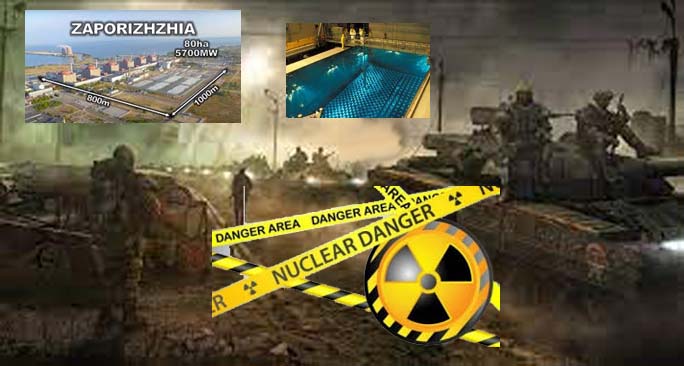
The Zaporizhzhia Nuclear Power Plant in Ukraine was targeted
again last week, with continual concern over its safety since the start of
the war with Russia in 2022. Safety at Europe’s biggest nuclear power plant
is “rapidly deteriorating”, Russia’s nuclear energy chief has warned.
Mirror 18th May 2026 https://www.mirror.co.uk/news/world-news/zaporizhzhia-nuclear-power-plant-ukraine-37171510
First attack on Arab nuclear site sends warning to Gulf, US
The first attack targeting an Arab nuclear site has sent a symbolic warning
to the United Arab Emirates and its allies, even as Iran and the US remain
in negotiations to end the Middle East war, analysts say. An unclaimed
drone struck an electrical generator on Sunday near the Arab world’s first
nuclear power plant in Barakah in the emirate of Abu Dhabi, triggering a
fire but causing no injuries nor radiation leak.
Daily Mail 18th May 2026 https://www.dailymail.com/wires/afp/article-15828501/First-attack-Arab-nuclear-site-sends-warning-Gulf-US.html
1 This Month
23-25 October – on Zoom – World BEYOND War’s annual global conferenc


Shut down the radiation-damaged Heysham nuclear reactors now
To see nuclear-related stories in greater depth and intensity – go to https://nuclearinformation.wordpress.com

Say No to NASA’s Reckless Nuclear Reactor on the Moon
Say No to NASA’s Reckless Nuclear Reactor on the Moon

-
Archives
- October 2026 (247)
- September 2026 (339)
- August 2026 (330)
- July 2026 (355)
- June 2026 (287)
- May 2026 (306)
- April 2026 (356)
- March 2026 (251)
- February 2026 (267)
- January 2026 (308)
- December 2025 (358)
- November 2025 (359)
-
Categories
- 1
- 1 NUCLEAR ISSUES
- business and costs
- climate change
- culture and arts
- ENERGY
- environment
- health
- history
- indigenous issues
- Legal
- marketing of nuclear
- media
- opposition to nuclear
- PERSONAL STORIES
- politics
- politics international
- Religion and ethics
- safety
- secrets,lies and civil liberties
- spinbuster
- technology
- Uranium
- wastes
- weapons and war
- Women
- 2 WORLD
- ACTION
- AFRICA
- Atrocities
- AUSTRALIA
- Christina's notes
- Christina's themes
- culture and arts
- Events
- Fuk 2022
- Fuk 2023
- Fukushima 2017
- Fukushima 2018
- fukushima 2019
- Fukushima 2020
- Fukushima 2021
- general
- global warming
- Humour (God we need it)
- Nuclear
- RARE EARTHS
- Reference
- resources – print
- Resources -audiovicual
- Weekly Newsletter
- World
- World Nuclear
- YouTube
-
RSS
Entries RSS
Comments RSS

