Mysterious drones spotted flying over nuclear power plant

Sarah Hooper Metro. Live News Reporter, July 16, 2026
At least seven drones were spotted near Switzerland’s Gösgen nuclear power plant, sparking a large police response.
The mystery drones were spotted around 10.30pm yesterday and reported by a resident.
The safety of the power plant was not compromised during the incident, with the head of communications for the plant saying the threat posed by drones was ‘negligible’.
As is usually the case around power plants, a no-fly zone is in place around Gösgen.
It remains unclear who was behind the drones above the nuclear power plant this week.
Earlier this month, it was revealed that Russia launched hundreds of drones and covert UAVs across the UK and Europe from their shadow fleet, thought to be in preparation for a future conflict.
The International Institute of Strategic Studies issued a sobering report that found Vladimir Putin’s shadow fleet ships had sent drones to target airports, bases, and nuclear sites.
Among the sites affected by the spy drones were RAF Fairford, Feltwell, Lakenheath and Mildenhall, and dozens of sites across continental Europe………………………………. https://metro.co.uk/2026/07/16/seven-mystery-drones-swarm-european-nuclear-power-plant-29153061/
No radiation leak after ‘contamination’ events at Africa’s only nuclear plant, regulator says.
South Africa’s nuclear regulator said Thursday that no radioactive material
leaked into the environment during three recent “contamination” events
inside Africa´s only nuclear power station. The incidents involved
“elevated airborne radioactive contamination” inside the Koeberg Power
Station, on South Africa’s west coast, when there was a loss of power to
ventilation units during maintenance work, the National Nuclear Regulator
said, adding there was no danger to the public. It said the three separate
contamination events on June 30, July 2 and July 7 were contained inside
the station.
Mirror 16th July 2026
https://www.mirror.co.uk/news/world-news/koeberg-nuclear-power-station-africa-37442154
‘At risk of horrific contamination’: The Soviet nuclear submarine wreck that is a ‘ticking time bomb’
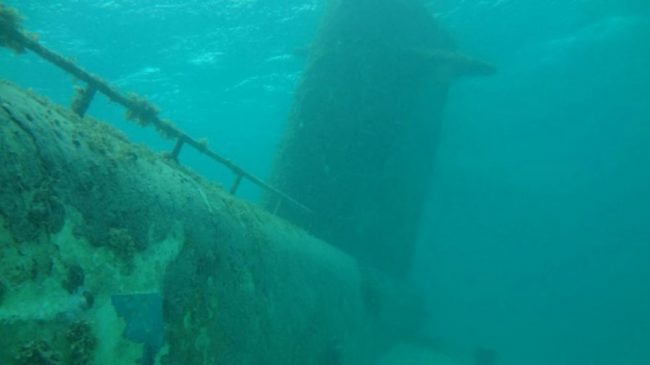
By Fiona Macdonald, 13 July 26, https://www.bbc.co.uk/culture/article/20260709-the-nuclear-submarine-wreck-that-is-a-time-bomb
In 1989, the Komsomolets sank off the Norwegian coast. Four years later, the BBC reported on plans to seal in its torpedoes’ toxic plutonium.
“Komsomolets is a time bomb ticking away at the bottom of the Norwegian Sea.
“And unless something is done about it, and done about it quickly, we’re all in danger.” This is how the risk posed by a sunken Soviet nuclear submarine was described by Russian Greenpeace activist Dimitri Litvinov in a 1993 BBC news report.
Resting one mile (1.6km) deep in the sea near the coast of Norway after a fire caused it to sink four years earlier, the Komsomolets had prompted international concern. Two nuclear-tipped torpedoes inside were corroding, risking the release of 9lb (4kg) of plutonium into the Norwegian Sea.
State-of-the-art Soviet technology went into the design of the Komsomolets, which was unique for the depths it could reach. It was expected by Nato to be the first in a class of large attack submarines, but no further vessels of its kind were built. According to a 1994 BBC Horizon documentary, “The Komsomolets was to be the Soviet Union’s secret invincible weapon, the only submarine in the world able to cruise and launch nuclear missiles from 1,000m [0.62 miles] deep, twice the depth at which Western submarines can operate. Today, the Komsomolets is a technical and scientific disaster.”
When the fire broke out on 7 April 1989, the crew managed to bring the submarine up to the surface – but it sank after five hours afloat, killing 42 of the 69 crew members. As it went down, an escape pod shot five trapped seamen to the surface, with just one man able to climb out before it filled with water.
As the Komsomolets hit the bottom, near the Norwegian coast, an explosion ripped open the submarine’s titanium pressure hull and brought seawater into contact with the nuclear torpedoes. A research mission by Russian oceanographers found that parts of the submarine’s hull had “burst and crumbled from the explosion, like glass”.
After the disaster, scientists were divided over what to do. Russian scientist Igor Spassky of the Rubin Institute, which designed the Komsomolets, told the BBC’s Ben Brown in 1993 that it was not a catastrophic situation – although he did want the submarine to be raised out of the sea. “Within a decade, the two nuclear warheads on the ship will be fully corroded by an electrochemical reaction involving salt water… and the highly toxic plutonium will escape from the damaged torpedoes and into the environment,” he told the US Naval Institute.
“According to environmentalists,” said Brown in his BBC report, “if that happens, the sailors who died here would not be the only victims of the Komsomolets. The lives of many more people, they say, would be at risk, because the rich fishing grounds here would then be subject to horrific contamination.” Yet a report released in 1993 by an international team of scientists concluded that the submarine was unlikely to contaminate fisheries.
Despite conflicting views on the dangers posed, efforts were made to mitigate potential contamination. Deep-sea engineering operations between 1995 and 1996 sealed hull fractures and torpedo tubes to contain radioactive material. The work finished 30 years ago, in July 1996. But investigations by the Norwegian government have since revealed that the submarine is still leaking – and the sealant was only expected to last 30 years.An indefinite potential hazard
A report published in March 2026 found that while the torpedoes remain sealed, the reactor is degrading, periodically releasing visible plumes of radioactive material into the sea. The team from the Norwegian Radiation and Nuclear Safety Authority (DSA) said that the leak is not constant but occurs in sporadic bursts from specific locations along the hull, with a “cloud” seeping out of a ventilation duct.
They don’t believe the current levels are harmful, however. “Radioactive releases from the reactor… have had little impact on the surrounding marine environment,” says Ingar Amundsen, acting director of the DSA’s Department for International Nuclear Safety and Security.
Yet that could change – with both the submarine’s nuclear reactor and nuclear-armed torpedoes posing threats, according to Hans Kristensen, director of the Nuclear Information Project at the Federation of American Scientists. Corrosion of the submarine over time could impact current radiation levels, he tells the BBC. “That depends on other factors such as the oxygen level of the seawater around and inside the submarine wreckage, and the condition of the sealant.”
He also points to changing currents as a factor influencing how quickly radioactive materials might be released from the wreckage and potentially enter the food chain via bottom feeders and fish. “The fact that the submarine has already been sealed once is an official acknowledgement of that risk,” Kristensen adds.
“Nuclear fuel is in direct contact with seawater and deteriorating,” says Amundsen. “Further work should be carried out to understand the mechanisms behind the releases, the corrosion processes taking place, and their implications for further releases.” But that isn’t going to happen any time soon. “The depth of the submarine, close to 1,700m, makes it difficult to implement any mitigation actions, and we are not aware of any such plans for the moment.”
Kristensen argues that more should be done. “At the minimum, a new expedition should be carried out to determine the current condition. With a half-life of 24,000 years, warhead plutonium will remain a potential hazard indefinitely by human standards.”
Almost forgotten? the Church Rock nuclear tragedy

On July 16, 1979, the worst accidental release of radioactive waste in U.S.
history happened at the Church Rock uranium mine and mill site. While the
Three Mile Island accident (that same year) is well known, the enormous
radioactive spill in New Mexico has been kept quiet. It is the U.S. nuclear
accident that almost no one knows about. Just 14 weeks after the Three Mile
Island reactor accident, and 34 years to the day after the Trinity atomic
test, the small community of Church Rock, New Mexico became the scene of
another nuclear tragedy.
Beyond Nuclear 16th July 2023, https://beyondnuclearinternational.org/2023/07/16/a-90-million-gallon-nuclear-tragedy/
Sizewell B nuclear power plant granted a 20-year life extension
Britain’s most recently completed nuclear power plant will continue
generating electricity until 2055 after the government granted the power
plant, which was first synchronised with the National Grid in 1995, a
20-year life extension. Sizewell B in Suffolk was due to shut down within
the next decade, but under a deal with the government its lifetime will be
extended to 60 years to help meet the UK’s growing demand for low-carbon
electricity.
Under the deal, EDF will receive £70.50 for every
megawatt-hour Sizewell B generates, starting from 2035, when it was
originally due to close. The extra investment needed to maintain the plant
will come from Centrica, which owns a 20% share in EDF’s reactors in the
UK. Sizewell B is the latest nuclear reactor to strike a deal with the
government to continue running, following the decision to extend the life
of four nuclear plants built across the country in the 1980s. The Heysham 2
nuclear reactor in Lancashire and the Torness nuclear plant in East
Lothian, Scotland, were originally expected to shut in 2018 but will keep
producing low-carbon electricity to March 2030. Meanwhile, the Heysham 1
plant and the Hartlepool nuclear plant in Teesside, which were initially
expected to close in 2008, will run until March 2028.
Guardian 8th July 2026,
https://www.theguardian.com/environment/2026/jul/08/sizewell-b-nuclear-power-plant-granted-a-20-year-life-extension
Extensions to improvement notices following asbestos shortfalls at Torness
The Office for Nuclear Regulation (ONR) has granted extensions to four improvement notices – two each served on EDF and contractor Trillium Flow Services UK Ltd – following asbestos shortfalls at Torness Nuclear Power Station.
The incident occurred during a planned outage at the East Lothian site in Scotland, in March 2026, when workers could have been exposed to asbestos in a valve within the steam system while carrying out overhaul activities.
There was no risk to nuclear safety, the public or the environment.
ONR has recognised that both companies have made progress towards meeting the requirements of the notices and so extensions have been granted to allow EDF and Trillium Flow Services UK Ltd more time to demonstrate full compliance.
Trillium Flow Services UK Ltd must comply with both of its notices by 30 September 2026.
EDF now has until 27 January 2027 to comply with the first notice for failing to maintain a written plan identifying areas of the site where asbestos is, or may be, present.
And it now has until 30 October 2026 to comply with the second notice, which relates to a failure to prevent or adequately reduce employee exposure to asbestos during valve overhaul activities.
ONR will continue to monitor both companies to ensure full compliance is achieved.
US nuclear power regulator proposes changing rule protecting people from radiation
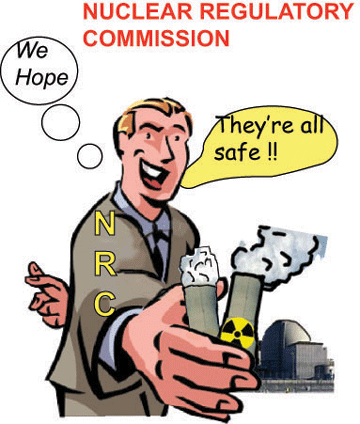
in eliminating its use of the As Low as Reasonably Achievable (ALARA) principle, the agency’s sweeping new proposed rule would allow nuclear facility workers and the general public to be exposed to higher levels of cancer-causing radiation just to save the nuclear industry money
By Timothy Gardner, July 2, 2026, https://www.reuters.com/legal/government/us-nuclear-power-regulator-proposes-changing-rule-protecting-people-radiation-2026-07-01/
Summary
- Proposal would eliminate the ALARA radiation protection standard and set objective dose limits
- NRC to take public comments on radiation rule for 45 days
- NRC Chairman Ho Nieh said change could help speed development of new reactors
WASHINGTON, July 1 (Reuters) – The U.S. nuclear power regulator on Wednesday proposed changes to a rule protecting people from radiation, the latest proposal pushed by the Trump administration to change or soften rules to speed development and cut costs for new atomic reactors.
President Donald Trump signed executive orders in 2025 seeking to speed up permitting of reactors and to overhaul the Nuclear Regulatory Commission and directing the Energy and Defense departments to work together to build nuclear plants on federal lands. Trump wants to quadruple U.S. nuclear power capacity by 2050 to meet power demands that are rising due to data centers, electric vehicles and crypto-currencies.
The Nuclear Regulatory Commission proposal eliminates a radiation protection standard called As Low as Reasonably Achievable, or ALARA, with objective dose limits for radiation. “This rulemaking is raising the bar on clarity in our regulations,” Ho Nieh, the NRC chairman, told reporters. “It is not lowering the bar on our safety standards.”
The industry has long argued that ALARA is tied to a model known as Linear No-Threshold that holds that any dose of radiation, no matter how small, carries cancer risks and that complying with ALARA is costly, time consuming, and full of uncertainties.
The proposed changes include adopting a graded approach to radiation dose management based on risk and operational circumstances. It also allows nuclear power plant operators greater flexibility to use “modern methods for evaluating radiation doses to workers and the public.”
Nieh said he does not anticipate that current nuclear reactors will make major changes due to the changed rule if finalized. But he said it could help speed development of new reactors.
“Now they have a very clear picture of what the requirements for radiation protection are going to look like, that will inform how they build and design their reactor, in terms of the shielding and the materials that they’re using,” Nieh told reporters.
Edwin Lyman, a physicist and nuclear safety advocate at the Union of Concerned Scientists, said the NRC has correctly reaffirmed the scientific consensus that there is no safe level of radiation exposure and that the cancer risk is proportional to the dose.
“However, in eliminating its use of the ALARA principle, the agency’s sweeping new proposed rule would allow nuclear facility workers and the general public to be exposed to higher levels of cancer-causing radiation just to save the nuclear industry money.”Nieh said he does not anticipate that current nuclear reactors will make major changes due to the changed rule if finalized. But he said it could help speed development of new reactors.
“Now they have a very clear picture of what the requirements for radiation protection are going to look like, that will inform how they build and design their reactor, in terms of the shielding and the materials that they’re using,” Nieh told reporters.
Edwin Lyman, a physicist and nuclear safety advocate at the Union of Concerned Scientists, said the NRC has correctly reaffirmed the scientific consensus that there is no safe level of radiation exposure and that the cancer risk is proportional to the dose.
“However, in eliminating its use of the ALARA principle, the agency’s sweeping new proposed rule would allow nuclear facility workers and the general public to be exposed to higher levels of cancer-causing radiation just to save the nuclear industry money.”
“This will only increase the disease burden at a time when cancer rates are already rising among younger people,” Lyman said.
Last month, the NRC proposed rule changes including changing a rule on security standards at nuclear power plants that UCS said would “dramatically weaken measures that protect their facilities from terrorist attacks.” Another rule proposed on Wednesday would make sweeping changes to reactor licensing including streamlining the construction of new reactors.
The NRC will take public comments on the radiation rule for 45 days before the rule is finalized.
More issues reported during manufacture of Sizewell C’s reactor vessels than Hinkley Point C’s
01 Jul, 2026 By Tom Pashby, https://www.newcivilengineer.com/latest/more-issues-reported-during-manufacture-of-sizewell-cs-reactor-vessels-than-hinkley-point-cs-01-07-2026/
“Quality issues” relating to the manufacture of the reactor pressure vessels (RPVs) for Sizewell C have been identified by the Office for Nuclear Regulation (ONR) during an inspection by the regulator.
The number of “non-conformance reports” has increased at Framatome St Marcel (FSM) – the French manufacturer of the RPVs – compared to when it was manufacturing the RPVs for Hinkley Point C.
Sizewell C and the Department for Energy Security and Net Zero (DESNZ) have regularly highlighted how Sizewell C will be delivered more efficiently than Hinkley Point C because of how much design work can be copied over.
The Sizewell C – Inspection ID: 54200 report from the ONR, which was carried out in April 2026 and published on 22 June, reported that “manufacturing quality issues” had been identified at FSM.
The ONR stressed the importance of the RPV in its report. “The reactor pressure vessel (RPV) is manufactured by Framatome (manufacturer of nuclear equipment based in France),” it said.
“The RPV is a nuclear safety class 1 component which forms part of the primary circuit. It has been categorised as a high integrity component (HIC) within the SZC safety case.
“Therefore, the consequences of failure during operation cannot be tolerated and a highest reliability claim is made on the structural integrity of the RPV.”
The aim of the ONR’s inspection was for it to “make an informed judgement on the adequacy of SZC’s specification, control and oversight of RPV manufacture at FSM in compliance with LC12 and LC19.”
LC12 means License Condition 12, and required that “the licensee (meaning Sizewell C) shall make and implement adequate arrangements to ensure that only suitably qualified and experienced persons perform any duties which may affect the safety of operations on the site or any other duties assigned by or under these conditions or any arrangements required under these conditions.”
Meanwhile, LC19 requires that “where the licensee proposes to construct or install any new plant which may affect safety the licensee shall make and implement adequate arrangements to control the construction or installation.”
Regulator says additional scrutiny was not required over Hinkley Point C bullying concerns
26 Jun, 2026 By Tom Pashby
An MP’s claim that the Office for Nuclear Regulation (ONR) increased
scrutiny of Hinkley Point C over bullying allegations has been contested by
the regulator, NCE understands.
Liberal Democrat MP for Tiverton and
Minehead Rachel Gilmour raised concerns about bullying at Hinkley Point C
(HPC) during the House of Commons Public Accounts Committee (PAC) evidence
session on Sizewell C on 8 June. MPs challenged senior representatives of
Sizewell C on the project’s commitment to transparency around possible
future cost overruns.
Representatives also provided new details on the
infrastructure being built at the site. During the session Gilmour said:
“I want to ask about bullying […] my constituency includes Hinkley A,
Hinkley B and Hinkley C. Once elected, I was inundated with whistleblowers
and people who have great concerns about the bullying culture at Hinkley C,
to such an extent that I had a meeting with Simone Rossi, the chief
executive of EDF Europe, and the ONR.
“The ONR felt that the situation
was so bad that they had to put in extra scrutiny. I was joined by
WhistleblowersUK in that.” However, NCE understands that it is ONR’s
position that no additional regulatory measures or scrutiny have been
required at Hinkley Point C for any bullying or harassment issues.
New Civil Engineer 26th June 2026,
https://www.newcivilengineer.com/latest/regulator-says-additional-scrutiny-was-not-required-over-hinkley-point-c-bullying-concerns-26-06-2026/
Substation damage delaying operation of repaired Zaporizhzhia power line, says IAEA

Friday, 26 June 2026, https://www.world-nuclear-news.org/articles/substation-damage-stopping-zaporizhzhia-power-line-reconnection-says-iaea
After months of ceasefire negotiations, planning and complex repairs, the main external power line to Zaporizhzhia Nuclear Power Plant has been fixed – but it can’t be put back into operation because of damage to a substation 100 kilometres away, the International Atomic Energy Agency has said.
IAEA Director General Rafael Mariano Grossi said: “Of the six temporary ceasefires that we have negotiated since late last year to help protect nuclear safety … this was the most challenging to implement. It required several months of delicate negotiations, followed by mine clearance and repairs on high pylons across the Dnipro River. The IAEA monitored these activities on the ground to confirm they were carried out as agreed.
“Both sides worked constructively with us to enable the repairs to proceed. Despite the many military and technical challenges, this demonstrates that concrete progress remains possible, even during a large-scale war. We will continue our efforts to reduce the ever-present danger of a nuclear accident.”
The IAEA team based at the Zaporizhzhia plant monitored the repair work on the plant side of the frontline, with a separate IAEA team monitoring the repair work on the other side of the Dnipro River.
However the 750 kV Dniprovska external power line is not back in operation yet, because of damage sustained in May at an electrical substation 100 kilometres northwest of the plant, Grossi said.
“Repeated damage to the electrical infrastructure on which nuclear power plants depend continues to create serious nuclear safety and security risks. I once again call for maximum military restraint around all nuclear facilities and the power infrastructure they require,” he said.
Since the main Dniprovska line was disconnected in March, the six-unit nuclear power plant, which has been under Russian military control since early March 2022, has been relying on its sole remaining 330 kV Ferosplavna-1 backup power line.
During the war there have been a number of occasions when all external power has been lost to the plant. Last week the back-up power line was reconnected after the 19th such loss of power. As with the previous occasions, the plant had to rely on power from its emergency diesel generators for the power required by the plant, including for various safety functions.
Drone Strikes Nuclear Power Plant in UAE — This Could Get Bad
Zachary Shahan, 22 May 26, https://cleantechnica.com/2026/05/22/drone-strikes-nuclear-power-plant-in-uae-this-could-get-bad/
We’ve got a disaster underway in the Middle East following the US and Israel bombing Iran. The Straight of Hormuz remains blocked, and the global oil industry is approaching true crisis. However, things could get much worse — much, much worse.
Reporting indicates a drone struck a nuclear power plant in the UAE this week, even igniting a fire. Funny enough, no one was blamed for the incident, yet authorities in the country did label it an “unprovoked terrorist attack.”
As far as we’ve seen, there’s been no radiological material leakage from the incident. But imagine if another, bigger strike does lead to that….
“The UAE, which has hosted air defenses and personnel from Israel, recently accused Iran of launching drone and missile attacks,” NPR reports.
South Korea helped the UAE build the nuclear power plant in 2020.
While this is the first time the nuclear power plant was targeted, the fact is it was targeted. And we don’t really know how bad things could get. What if someone does bomb it and break through any safety barriers?
The Barakah Nuclear Power Plant is right on the coast of the Persian Gulf. So, you know, nothing to worry about if nuclear waste makes its way into there….
Sweden’s Parliament approves reclassification of uranium mining


WNN 17 June 26
The Swedish Parliament has approved amendments to Swedish legislation that will streamline the permitting process for the extraction and processing of uranium, to treat it in a similar way to other metals and minerals. It has also approved a government-proposed amendment that will open up more coastal sites to potential nuclear power projects.
The parliament – the Riksdag – voted in favour of a government bill on 11 June proposing amendments to Sweden’s Nuclear Activities Act (1984:3) under which uranium mines are no longer to be considered as a “nuclear facility”. The bill also included an amendment to the Act on Financial Measures for the Management of Residual Products from Nuclear Activities (2006:647) so that “extraction waste from a nuclear activity that concerns the extraction and processing of nuclear materials” is not considered a nuclear waste product.
With uranium mines no longer regulated as nuclear facilities, uranium extraction will no longer require explicit municipal consent. This creates a more predictable permitting framework which will facilitate future uranium mine development, according to Aura Energy, owner of the polymetallic Häggån deposit.
“The momentum in pro-nuclear legislation continues in Sweden, where the removal of the uranium mining ban in January 2026 has now been supplemented with the declassification of uranium mining as a nuclear facility………………………………………………………..
All the amendments will come into force on 15 July. https://www.world-nuclear-news.org/articles/parliament-approves-amendments-to-swedish-nuclear-law
Georgia nuclear power plant cleared for 80-year operating life
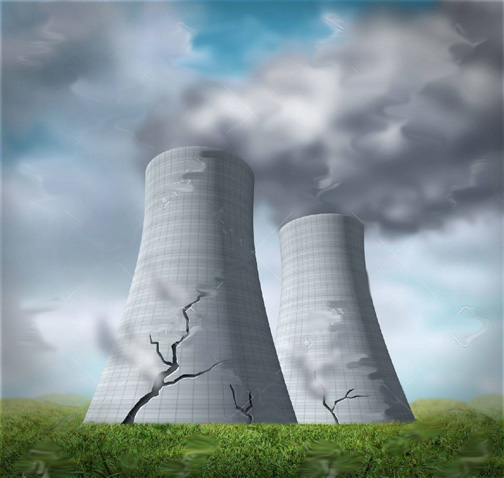
The two boiling water reactor units at Georgia Power’s Edwin I Hatch plant
have been cleared by the regulator to operate until the mid-2050s. Hatch
unit 1 began commercial operation in December 1975, with Hatch 2 following
in September 1979. The units were originally licensed to operate for 40
years, with the NRC approving a previous 20-year licence extension in 2002.
The plant is operated by Southern Company subsidiary Southern Nuclear on
behalf of its co-owners Georgia Power, Oglethorpe Power Corporation, the
Municipal Electric Authority of Georgia and Dalton Utilities.
World Nuclear News 16th June 2026, https://www.world-nuclear-news.org/articles/georgia-nuclear-power-plant-cleared-for-80-year-operating-life
No electricity at Zaporizhia nuclear power plant after attack, IAEA says
11 Jun 2026 , https://swedenherald.com/article/no-electricity-at-zaporizhia-nuclear-power-plant-after-attack-iaea-says
An attack has disrupted the electricity supply to the Zaporizhzhia nuclear power plant in Russian-occupied southern Ukraine, the UN atomic energy agency, the IAEA, announced.
No elevated radioactivity has been recorded, the IAEA said in a statement, adding that diesel generators are currently used to power critical functions, including cooling systems.
It is not clear who is behind the attack at the facility, which is Europe’s largest nuclear power plant. It occurred on Wednesday evening and was aimed at a nearby transformer station.
Kyiv and Moscow have repeatedly accused each other of risking a disaster by attacking the nuclear power plant and its nearby area.
The power outage is the 19th since Russia’s full-scale offensive war against Ukraine began in February 2022.
Shipment of nuclear waste from Sellafield heads to Germany, raising safety concerns
11th June, By Gareth Cavanagh
A SHIPMENT containing ‘higher level’ nuclear waste has been seen making
its way through Barrow from the Sellafield site bound for Germany – and is
a source of concern for protest groups both at home and abroad. Sellafield
Ltd has confirmed that flasks, seen at Barrow Docks Rail Terminal on
Tuesday June 9, contain residue from reprocessed radioactive waste, which
is set to be returned to Germany. Waste contained in the flasks, carried by
Nuclear Transport Solutions (NTS), is the result of spent fuel which has
been reprocessed and recycled at Sellafield site. It was previously used by
utilities in Germany to produce electricity.
Whitehaven News 11th June 2026,
https://www.whitehavennews.co.uk/news/26183018.shipment-nuclear-waste-sellafield-heads-germany/
1 This Month
23-25 October – on Zoom – World BEYOND War’s annual global conferenc


Shut down the radiation-damaged Heysham nuclear reactors now
To see nuclear-related stories in greater depth and intensity – go to https://nuclearinformation.wordpress.com

Say No to NASA’s Reckless Nuclear Reactor on the Moon
Say No to NASA’s Reckless Nuclear Reactor on the Moon

-
Archives
- October 2026 (247)
- September 2026 (339)
- August 2026 (330)
- July 2026 (355)
- June 2026 (287)
- May 2026 (306)
- April 2026 (356)
- March 2026 (251)
- February 2026 (267)
- January 2026 (308)
- December 2025 (358)
- November 2025 (359)
-
Categories
- 1
- 1 NUCLEAR ISSUES
- business and costs
- climate change
- culture and arts
- ENERGY
- environment
- health
- history
- indigenous issues
- Legal
- marketing of nuclear
- media
- opposition to nuclear
- PERSONAL STORIES
- politics
- politics international
- Religion and ethics
- safety
- secrets,lies and civil liberties
- spinbuster
- technology
- Uranium
- wastes
- weapons and war
- Women
- 2 WORLD
- ACTION
- AFRICA
- Atrocities
- AUSTRALIA
- Christina's notes
- Christina's themes
- culture and arts
- Events
- Fuk 2022
- Fuk 2023
- Fukushima 2017
- Fukushima 2018
- fukushima 2019
- Fukushima 2020
- Fukushima 2021
- general
- global warming
- Humour (God we need it)
- Nuclear
- RARE EARTHS
- Reference
- resources – print
- Resources -audiovicual
- Weekly Newsletter
- World
- World Nuclear
- YouTube
-
RSS
Entries RSS
Comments RSS

