News indirectly related to the nuclear industry

Some bits of good news – How to stitch a massive wildlife corridor through the Rocky Mountains. Indonesia’s free nutritious meal program reaches 62.4 mln beneficiaries. White Storks Return to the Midlands After Six Hundred Years
TOP STORIESZelensky’s Dangerous Gambit To Merge The Iran And Ukraine Wars . Not Even Israelis Are Willing To Die For Israel.
A nuclear deal for the Saudis, media blackout for Kushner’s corruption.
From the archives: Saudi Arabia, the Khashoggi murder case: the nuclear connections with Terra Power, Bill Gates, Breakthrough etc
Climate ‘The heat took him from me’: India’s death toll rises amid escalating heat crisis.
‘Fire cloud’ over Bordeaux as France braces for new heatwave. Uganda begins emergency food handouts after 19 die from hunger,
AUSTRALIA
. AUKUS Inquiry exposes nuclear weapon-sized crater.
Coalition MPs push for nuclear-powered data centres.
The Quiet Surrender of our Nation’s Sovereignty
| ATROCITIES. Israel Is Erasing Entire Gaza Families From The Civil Registry. |
| CIVIL LIBERTIES. Suffolk fire live: Hundreds of firefighters battle ‘unprecedented’ wildfire near nuclear plant. |
| ECONOMICS. Nuclear revival needs $250bn a year, industry says. Nuclear needs $6tn investment surge to meet 2050 ambitions. |
| MEDIA. ‘Earth’s Greatest Enemy‘ Delivers A Penetrating Insight Into The Heart Of Our Dystopia. https://www.youtube.com/watch?v=Kz7MfkVAC40&t=110s |
| OPPOSITION to NUCLEAR .Campaign steps up opposition to south Wales nuclear project. |
POLITICS .
- Ontario touts small nuclear reactors with $500,000 for Haldimand County.
- The Small Modular Nuclear Reactor Hyper spreads to Italy. Philippines’ Marcos says ‘perhaps time to revisit nuclear energy’.
- Republican senator breaks ranks with Trump over controversial nuclear deal with Saudi Arabia. The Guardian view on a US-Saudi nuclear agreement: an offer that further erodes international safeguards. Enrichment Antics: Trump’s Saudi Nuclear Deal. Democrats prepare to resist Saudi nuclear deal.
- Trump Administration Picks Five States for Nuclear Fuel-Cycle Hubs.
- Trump threat to hit Pickaxe renews calls in Iran for nuclear bomb, NPT exit.
- The Collapse of the Bipartisan Consensus over US-Israel Ties. Democrats prepare to resist Saudi nuclear deal. Canada’s silence on the U.S. and Saudi Arabia’s nuclear agreement isn’t neutrality. It’s something much worse-ALSO AT https://nuclear-news.net/?s=Canada%E2%80%99s+silence+on+the+U.S.+and+Saudi+Arabia%E2%80%99s+
POLITICS INTERNATIONAL and DIPLOMACY.
Saudi Arabia stares down Trump whiplash US‑Saudi nuclear deal invites proliferation risks … unless safeguards are written in on nuclear deal.
The Saudi Nuclear Deal Invites Disaster (Wall Street Journal)
The US-Saudi nuclear deal.
Trump stuns Saudis by pinning nuclear deal to Israel ties.
UK’s New Defence Minister Called Israel ‘Rogue State’.
The nuclear lobby getting cold feet about public acceptance?
| RADIATION. As Trump boosts nuclear power, regulators seek to eliminate a longstanding radiation safety practice. |
| SAFETY. No more sheltering or iodine tablets: Why are we getting a new nuclear emergency plan? |
| SECRETS and LIES. Israel Is Paying Millions to Train AI Chatbots How to Talk About Gaza – It’s Working. Trump’s Phantom Enemies. |
WAR and CONFLICT.
- Colonel Doug Macgregor: Sleepwalking into World War III.
- Israel builds massive barrier inside Gaza to partition strip beyond ‘Yellow Line’
- War Criminal Pete Hegseth Disrupted.
- What would happen if the UK’s Faslane nuclear weapons base was hit in a nuclear strike? An Iranian missile attack on the UK is no longer far-fetched.
- The Chris Hedges Report: Is Iran Becoming Another ‘Forever War’?
- US Troops Always Die For The US Alone.
- A Big War is Coming. https://www.youtube.com/watch?v=QXMjSY0spzQ&t=74s
WASTES. White House wants to entice ‘willing states’ to take nation’s nuclear waste with promises of economic boost. 5 states offer to accept nuclear waste in exchange for help developing nuclear energy!
WEAPONS and WEAPONS SALES.
- Andy Burnham pitches £8.4bn nuclear submarine investment as great for youth employment. Russia’s
- Starlink killers showcase new era of electronic battlefield warfare. The Guardian view on a US-Saudi nuclear agreement: an offer that further erodes international safeguards. Is Trump’s Saudi nuclear deal set to trigger a Middle East arms race?
- The rise of the military-technology complex.
Venture Capitalists Money Floods Into U.S. Nuclear Startups as AI Power Demand Explodes

By Haley Zaremba – Jul 31, 2026, https://oilprice.com/Energy/Energy-General/VC-Money-Floods-Into-US-Nuclear-Startups-as-AI-Power-Demand-Explodes.html
- Global VC funding for nuclear fission and fusion startups has already topped $4.5 billion across 81 companies in 2026, on pace to beat 2025’s $6.2 billion record.
- Big Tech figures including Sam Altman and Bill Gates are pouring money into fusion to keep up with AI’s ballooning electricity demand.
- Critics warn the startup boom is skipping voluntary safety guardrails and pulling attention from proven large-scale reactor technology.
Venture capitalists are taking a major interest in nuclear energy start ups. Funding is surging for both nuclear fusion and fission firms as the technology becomes an increasingly essential part of a feasible pathway toward sustainable energy security in the face of the artificial intelligence boom.
According to reporting by Axios, global investment in both fission and fusion has topped USD $4.5 billion across 81 companies in 2026 so far. At this pace, by year’s end, this year will shatter 2025’s previous record of $6.2 billion for 93 companies.
Data center hyperscalers are driving up energy demand projections to previously unthinkable levels that will require an all-of-the-above approach to energy development that is likely to prominently feature nuclear energy as a round-the-clock source of zero-emissions electricity. In the United States, the public and private sectors alike are extremely bullish on the technology and clearly eager to usher in a new nuclear era. As a result, the majority of this year’s funding surge is going to U.S. companies.
Big Tech has taken a particular interest in expanding nuclear energy deployment and technological advancement to feed its own ballooning energy needs. Some of the tech sector’s biggest names, including Bill Gates and OpenAI’s Sam Altman, are major investors in and advocates of nuclear fusion as an answer to AI’s ballooning energy problem. “There’s no way to get there without a breakthrough,” he said at the 2024 World Economic Forum in Davos, Switzerland. “It motivates us to go invest more in fusion.”
The Trump administration, too, is a major proponent of nuclear energy expansion, with a particular focus on next-gen nuclear technologies as part of a broader push to “reestablish the United States as the global leader in nuclear energy” and “produce lasting American dominance in the global nuclear energy market.” To this end, Executive Order 14301, signed by Trump in May 2025, mobilizes significant resources from the U.S. Department of Energy’s Reactor Pilot Program to fast-track the testing and commercialization of advanced nuclear technologies in order to bring them to scale.
These advanced technologies include nuclear fusion as well as small modular reactors (SMRs) which hold major promise for overcoming some of the hurdles that have been causing nuclear energy to fall out of fashion in the United States. Traditional nuclear power plants are enormously costly and face long timelines and miles of red tape to come online. The country’s most recent traditional nuclear power plant, Georgia’s Plant Vogtle, finally came online years late and billions over budget. The hope is that modular and alternative technologies won’t face the same issues, as they can be built offsite relatively cheaply.
SMRs are still an emerging technology. While one SMR design has been officially approved for development in the United States, and many more firms are seeking approval for their plans, zero SMRs have yet come online in the country. “The U.S. Nuclear Regulatory Commission took about six years to approve the first advanced small reactor design, from fission developer NuScale,” Axios reports. “President Trump has sought to accelerate the process, aiming for 18 months. But that still could give first movers a major advantage in locking down contracts with data centers and electric utilities.”
With the backing of both the federal government and Silicon Valley, it’s no surprise that nuclear startups are going gangbusters. But while the increasing fragmentation and privatization of the nuclear energy sector could be great for innovation and expansion of the technology, it also poses some key drawbacks. For one thing, nuclear startups have so far shown a concerning disregard for voluntary safety guidelines that were tacitly accepted in the nuclear sector until now.
In addition to safety concerns, some critics have argued that a focus on cutting-edge nuclear energy technologies and startups may be diverting energy and funding from proven technologies that would better serve nuclear power capacity addition goals. A recent op-ed for the Wall Street Journal argued that “The administration is chasing unproven technology when it could encourage Wall Street investment in large-scale reactors,” and, as a result, Trump’s nuclear renaissance is stalling.
Europe’s heatwave strains nuclear output
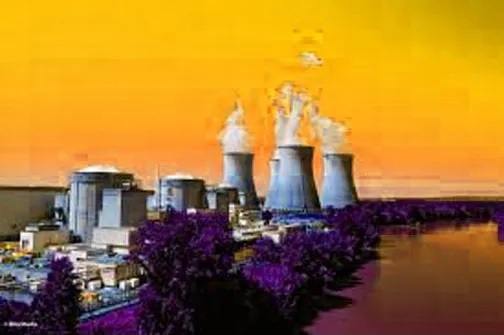
To date, six NPPs across Europe are closed or facing power reductions due to severe heatwaves and critically low river levels, as operators respond to environmental and cooling water constraints.
July 31, 2026, https://www.power-technology.com/news/europes-heatwave-strains-nuclear-output/?cf-view
t least ten nuclear reactors have been temporarily shut down or had their power output curtailed across Europe due to severe heatwaves and critically low river levels during June and July.
While no plants have been directly closed by wildfires, the Sizewell B nuclear power station in the UK has been placed on “high alert” due to a major 100-acre wildfire burning just four miles away.
The vast majority of disruptions have occurred in France, where state-owned EDF is legally bound to close reactors or reduce power to prevent discharged cooling water from pushing river temperatures past environmental thresholds. A record-breaking drought has caused the Danube River to drop to historic lows, affecting nuclear power plants (NPPs) in Hungary, Romania and Bulgaria. Switzerland’s Beznau NPP has also been impacted.
As of 30–31 July 2026, there are six NPPs across Europe that are closed or facing power reductions, affecting around 15 reactors. In France, unit two at the Golfech NPP was fully shut down on 30 July 2026 as Garonne River temperatures surged. Units 3.4 and five at the Bugey NPP are under forced output curbs. EDF has ramped down both reactors at the Nogent-sur-Seine NPP to prevent overheating the Seine. Saint Alban units one and two (Rhône River) and Blayais units one and three (Gironde Estuary) have faced rolling curtailments over the past two weeks.
In Hungary, unit three at the Paks NPP is completely offline, unit one is heavily throttled and the entire 2GW-electrical plant is in a 72-hour countdown to a complete shutdown because the Danube has dropped below intake pump levels. In Romania, unit one at the Cernavoda NPP has been completely disconnected from the grid, and unit two is fluctuating under critical, hour-by-hour output restrictions.
As of 30–31 July 2026, there are six NPPs across Europe that are closed or facing power reductions, affecting around 15 reactors. In France, unit two at the Golfech NPP was fully shut down on 30 July 2026 as Garonne River temperatures surged. Units 3.4 and five at the Bugey NPP are under forced output curbs. EDF has ramped down both reactors at the Nogent-sur-Seine NPP to prevent overheating the Seine. Saint Alban units one and two (Rhône River) and Blayais units one and three (Gironde Estuary) have faced rolling curtailments over the past two weeks.
In Hungary, unit three at the Paks NPP is completely offline, unit one is heavily throttled and the entire 2GW-electrical plant is in a 72-hour countdown to a complete shutdown because the Danube has dropped below intake pump levels. In Romania, unit one at the Cernavoda NPP has been completely disconnected from the grid, and unit two is fluctuating under critical, hour-by-hour output restrictions.
Bulgaria has classified the current crisis as a force majeure event, noting that the river is continuing to drop by up to 2cms every day. In response, the Kozloduy plant has deployed emergency “special measures”, including riverbed dredging and the preparation of secondary pumps to try and keep the intake channels clear enough to avert an immediate blackout.
Switzerland’s Beznau NPP on the Aare River has been heavily disrupted, cycling between full emergency shutdowns and massive 50% power cuts over the past month. Both reactors were taken completely off the grid on 26 June when the Aare River first spiked to the 25°C threshold, and remained offline for several weeks. They are currently capped at roughly 50% of normal generation capacity to limit environmental thermal pollution.
Grid operators are replacing the missing nuclear electricity using a mix of fossil fuel generation, rapid energy imports, solar surges and mandated demand-reduction tactics.
A Kansas Town Is Split Over Plans to Bury a Nuclear Reactor a Mile Underground.
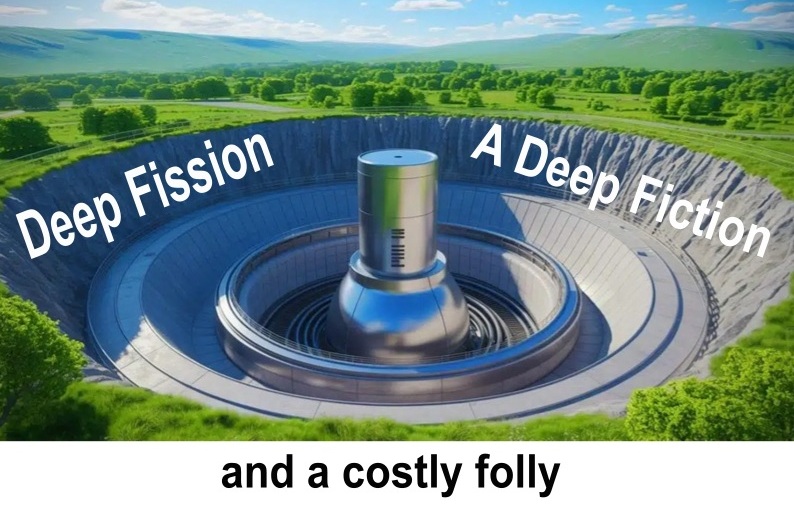
“This is a nuclear experiment,” Reynolds said. She questions how the company will perform maintenance so far underground, why drillers are operating under oil-and-gas regulations rather than nuclear-specific rules, and what happens to the site if Deep Fission goes out of business.
026-07-30, https://finance.biggo.com/news/1fb78f6c-786f-4381-be62-937bfa684157
Deep Fission, a California startup, plans to operate the first commercial nuclear reactor a mile underground in Parsons, Kansas, by 2027 or 2028. The project has raised $150 million and is part of a DOE pilot program to fast-track advanced reactors amid surging AI-driven electricity demand. The company says deep burial eliminates the need for costly containment buildings, with each 15-megawatt reactor powering 12,000 homes. However, the plan has sharply divided the town of 9,600. Opponents, including local group Prairie Dog Alliance and watchdog Beyond Nuclear, warn of environmental risks and insufficient oversight, while supporters view it as a vital economic spark for the struggling rural community. The project faces regulatory hurdles and broader questions about nuclear waste storage underground.
An ambitious plan to bury a commercial nuclear reactor a mile beneath a small Kansas town is pitting residents who see a coming economic renaissance against those who fear their community is being turned into a testing ground for an unproven experiment. The project, spearheaded by a California startup founded by a father-daughter team, would be the first time a commercial reactor has ever been operated so far underground.
Deep Fission, the company behind the so-called Gravity Reactor, has already drilled one test hole on the outskirts of Parsons—a rural community of 9,600 people roughly midway between Kansas City and Tulsa, Oklahoma. The firm, founded by Chief Executive Liz Muller and her father Richard Muller, an emeritus professor of physics at University of California, Berkeley, has raised roughly $150 million in the past year, with $40 million of that earmarked for the Parsons work. The startup plans to send a canister loaded with nuclear fuel into a third borehole to heat water deep underground and generate electricity on the surface as early as 2027 or 2028, a timeline that is remarkably short by industry standards.
“It’s allowing us to develop a first reactor within a time frame that had been unthinkable previously,” Liz Muller told The Wall Street Journal.
The reactor design relies on well-established pressurized water technology, but its innovation lies in its location. By operating a mile underground, Deep Fission argues it can eliminate some of the most expensive components of conventional nuclear plants. The immense pressure from rock and water at that depth would replace costly safety structures like massive containment buildings and complex cooling systems. Each reactor would generate 15 megawatts of electricity from inside a 30-inch borehole, enough to power roughly 12,000 homes. However, Muller’s long-term vision is far larger: an array of 100 or more reactors providing over a gigawatt of power, enough to supply a major data center.
Federal push meets local pushback
The Parsons project is one of 11 in a U.S. Department of Energy (DOE) pilot program designed to accelerate the development and testing of small, advanced reactors. Participating companies can fast-track environmental review procedures and construct reactors outside of traditional national laboratory settings. The initiative is part of a broader push by the Trump administration to spur a “nuclear renaissance,” aiming to quadruple America’s nuclear-power generation by 2050 amid skyrocketing electricity demand driven largely by data centers for artificial intelligence.
But the expedited process has drawn sharp criticism from nuclear watchdogs and local advocacy groups. Earlier this year, a coalition of state attorneys general challenged the DOE’s new categorical exclusion for advanced nuclear reactors, arguing it bypasses rigorous environmental review and weakens public safety protections.
“It’s simply unacceptable to even consider exempting Deep Fission from a peer-reviewed environmental impact statement on the generation of high-level nuclear waste under Parsons,” said Paul Gunter of Beyond Nuclear, a group that opposes nuclear power and weapons.
The Energy Department has stated that the administration remains focused on safety and security.
In Parsons, the divide is stark. When Deep Fission broke ground in December at the Great Plains Industrial Park, a decommissioned U.S. Army ammunition base, many residents were caught off guard by the lack of public discussion. Marjorie Reynolds, a pediatric nurse and seventh-generation Kansan, quickly formed a nonprofit called the Prairie Dog Alliance to oppose the project. Its logo features a prairie dog inside a black-and-yellow nuclear symbol.
“This is a nuclear experiment,” Reynolds said. She questions how the company will perform maintenance so far underground, why drillers are operating under oil-and-gas regulations rather than nuclear-specific rules, and what happens to the site if Deep Fission goes out of business.
Jerel Johnson, an IT professional who had planned to retire in Parsons, voiced a similar frustration. “I put $125,000 into my house, and now a nuclear reactor is coming to town. I can’t think of a worse idea.”
Liz Muller has pushed back against the environmental concerns, stating that the reactor is far too deep to affect underground aquifers and that the company will follow all nuclear and oil-and-gas regulations. Because the reactors are expected to last six to seven years with few moving parts, she added, the likelihood of requiring maintenance is low. “We have simplified our reactor quite extensively,” she said. The company also plans to open a local office where residents can ask questions, emphasizing that the project “needs to be done in partnership with the community.”
Economic hopes in a struggling farm town
For others in Parsons, a 19th-century boomtown that has long sought a new economic spark, the potential payoff is worth the risk. The town was once home to one of the largest rail yards west of the Mississippi, but recent victories have been small—attracting a Taco Bell or saving a local furniture store.
Verlyn Bolinger, an insurance agent and city commissioner whose great-great-grandfather also served on the commission, captured the conflicted mood. “Any time you’re putting a nuclear reactor in a hole, it’s kind of scary,” he said. “It’s great that it’s here. It’s kind of bad that we’re the guinea pigs.”
Robert Spinks, Parsons’ police chief, is more optimistic. He views the reactor as a potential catalyst that could draw manufacturers and data centers to the region. “It’s a proven technology, just in a new application,” Spinks said. “And if that is a trigger which draws in other manufacturing and brings in living-wage jobs, I think that’s a win.”
Wayne Gilmore, an optometrist who owns the local radio station, echoed that sentiment, arguing that rural communities cannot build their futures by rejecting new technology before it is fully evaluated.
Deep Fission’s plan to store spent nuclear fuel underground is also drawing scrutiny. The company says it could eventually seal the waste in place or move it to another site. Liz Muller and her father previously founded Deep Isolation, a firm that designs underground disposal systems for nuclear waste. Still, the Nuclear Regulatory Commission will need to approve any commercial licensing before electricity from the reactor can be sold. Dozens of companies are designing smaller reactors, but none yet operate commercially in the United States, and Deep Fission must still prove it can meet its aggressive timelines and contain costs in an industry notorious for overruns.
Why the U.S. Military is ‘Earth’s Greatest Enemy’ (w/ Abby Martin) | The Chris Hedges Report
July 30, 2026, https://scheerpost.com/2026/07/30/why-the-u-s-military-is-earths-greatest-enemy-w-abby-martin-the-chris-hedges-report/
In Abby Martin’s new film, ‘Earth’s Greatest Enemy,’ she exposes how the US military has unleashed death, devastation and more pollution than any other institution in the world on the global populace.
In their most recent documentary, “Earth’s Greatest Enemy”, Abby Martin and Mike Prysner examine the US military as not only the world’s biggest consumer of fossil fuels, but also the world’s biggest perpetrator of ecological devastation and a driver of both increasing carbon emissions and militarization in other countries. Chris Hedges speaks about the new film and why it is an important tool in the global struggle against imperialism with Abby Martin in this episode of The Chris Hedges Report.
On top of the US military’s direct carbon emissions from powering warships, bombers, tanks, the vast web of foreign bases and more, in the feature length film, Martin exposes the amount of indirect carbon emissions generated by the military industrial supply chain, from the extraction of raw materials in Global South countries to the factories that manufacture weapons and equipment. Martin also discusses the toxic footprint of the US military both at home and abroad, which poisons the land and water leaving a legacy of disease and death, and the Pentagon’s efforts to deny responsibility and prevent compensation for the suffering it causes. She states, “Every base is a story of toxic dumping with the soldiers as the lab rats.”
Hedges and Martin speak about the US military as the enforcement arm for global capital, especially for fossil fuel corporations and Big Agriculture, which “imposes the dictates of global capitalism around the world at the barrel of a nuclear armed gun.” They describe the ‘collective suicide’ of an unsustainable system that uses fossil fuels to protect the interests of and expand the fossil fuel industry. And they explain the imperial boomerang effect of “a global military empire that acts as a for-profit corporation,” which supplies surplus weapons “to entities like ISIS or the Taliban or to local police forces here in the US, which in turn brutalizes and subjugates its respective population.”
The interview concludes with a discussion of what can be done to change course. Hedges and Martin agree that a major obstacle is the lack of an opposition party in power. Even the most progressive Democrats are unwilling to take on the Military Industrial Complex. But Martin finds hope in the rising support for socialism and growing realization that “Gaza is actually the connective tissue to our liberation all over the world.” She adds, “I do have revolutionary optimism in the fact that people are putting their careers on the line…. We need to be militant. We need to be proud and confident about our anti-imperialism.”
No more sheltering or iodine tablets: Why are we getting a new nuclear emergency plan?

Worst-case scenario ‘very unlikely’, says Department of Climate, Energy and Environment
Caroline O’Doherty, Wed Jul 29 2026, https://www.irishtimes.com/ireland/2026/07/30/no-more-sheltering-or-iodine-tablets-government-reviews-nuclear-emergency-response/
Why are we getting a new nuclear emergency plan?
Technically speaking, it’s not new but an update of the National Plan on Nuclear and Radiological Emergency Exposures.
The Department of Climate, Energy and Environment says it’s a routine review carried out every so often. This is the fourth.
So it’s not prompted by, say, the heatwaves and droughts in Europe putting the vital cooling of nuclear power plants at risk?
The department says no.
And not by Russia’s fondness for exploding things in the vicinity of Ukraine’s Zaporizhzhia nuclear power plant?
Apparently not.
Not even because of the excitement bubbling globally over the prospect of companies developing small modular reactors to provide their own power needs?
Not specifically, although such reviews do heed emerging technologies and new sites where they may be located.
Where are the existing sites?
Scattered around the world. There are 410 “operable” nuclear reactors and 71 new ones under construction.
Which are closest to Ireland?
Heysham nuclear power plant on Britain’s west coast, 200km from Ireland, and Flamanville on France’s northern coast, 400km away.
Isn’t Sellafield closer?
Sellafield no longer generates nuclear power, although it is handling nuclear fuel and waste.
What kind of emergency might arise?
The plan considers four “reasonable worst case” scenarios: a release of radioactivity from a nuclear power plant near Ireland; a release from one on mainland Europe; an incident involving the transport of nuclear materials by sea; and an incident involving the transport of radioactive materials by road.
Why does it not include worst-case scenarios such as nuclear war or an attack on Ireland?
That kind of incident is “out of scope” for this plan. If that happened the Department of Justice would take the lead.
What kind of risks do “reasonable worst-case” scenarios present to Ireland?
Not very significant. The plan says the chances of such incidents are “very unlikely” – around one in 5,000 over 100 years. It concludes, however, that “a nuclear accident abroad may have the potential to result in widespread but low-level contamination in Ireland”.
How low is low?
It says exposure to a radioactive plume from the nearest plants would only deliver a radiation dose equivalent to that received during a return flight from Dublin to London.
But would we still have to shelter indoors, close the windows and try to find the iodine tablets issued in the early 2000s?
No, the “Go In, Stay In, Tune In” message has been removed from the updated plan.
Do we even need a plan if the risk is so low?
We do. It sets out which departments and agencies will monitor what. They will need to keep in contact with European and international partners; repeatedly test food, water, air and soil; potentially restrict food imports, and closely track weather patterns in case winds might move a plume in an unexpected direction.
“There are no scenarios envisaged whereby evacuation or a shelter in place order will be required for the public in Ireland,” it says.
“Consumption of iodine thyroid-blocking tablets would not be necessary.”
But it adds: “Throughout the emergency phase the need for protective actions should be assessed continually.”
What if Ireland was to build its own nuclear power plant?
An entirely new plan would be needed with far more detail about safe and unsafe zones, evacuation procedures and health service preparedness.
However, the department says despite some politicians pushing to lift the ban on nuclear power generation in Ireland, nuclear does not feature as an energy option in any official plans covering the next few decades.
Danube drought curbs 0.9 GW nuclear output in Balkans

(Montel) Drought conditions affecting the river Danube have led to the shutdown of nearly 1 GW of nuclear power generation in Romania and Hungary, with record low water levels affecting cooling.
Montel 28th July 2026,
https://montelnews.com/news/ed02ab5d-cf33-4c82-b7cb-41bd4554a90e
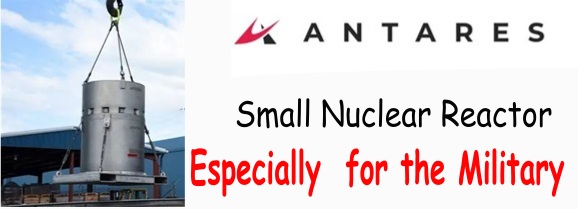
This startup just raised nearly $500 million to build nuclear reactors for the US military.
By Rahim Amir, 30 July 26, https://www.techradar.com/pro/this-startup-just-raised-nearly-usd500-million-to-build-nuclear-reactors-for-the-us-military
Antares lookt to supply small reactors by 2028
- Antares closes $470 million Series C, $370 million in equity and $100 million in debt, co-led by Paradigm and Caffeinated Capital
- The move follows the Mark-0 reaching criticality at Idaho National Laboratory and helps fund an electricity-producing Mark-1 in 2027 and military deployments in 2028
- Antares’ military-first strategy targets a price-insensitive customer bound by an executive order requiring a reactor on a US base September 30 2028
Nuclear fission startup Antares has announced it has raised a total of $470 million in funding as it looks to supply a single client with a looming deadline: the US Military.
The Torrance, California company closed a Series C co-led by Paradigm and Caffeinated Capital, with Point72 Ventures, Shine Capital and Industrious Ventures among the participants, according to TechCrunch‘s look at its PitchBook data.
Antares’ raise comes seven weeks after its Mark-0 microreactor reached criticality at Idaho National Laboratory under the Department of Energy’s authorization in a demonstration run with the DOE, the lab, and BWX Technologies, with the US Army observing.
A direct beneficiary of the White House
Antares calls it the “first privately developed non-light-water reactor to achieve criticality in the United States in more than four decades,” underscoring how important the test was for both Antares and the US military.
The US military’s presence is not by chance; It is mandated by an executive order (“Deploying Advanced Nuclear Reactor Technologies for National Security”) signed by US President Donald Trump to ensure that it has an operating army-regulated nuclear reactor on a domestic military site by September 30, 2028
Antares happens to be one of three finalists in the Pentagon’s Advanced Nuclear Power for Installations program that aims to test-deploy a small module reactor (SMR) on two different air force bases.
With Antares being the first private company to go through that gate under the DOE’s Reactor Pilot Program, it plans to build an electricity-producing Mark-1 reactor in 2027, followed by initial deployments to defense customers by 2028.
UK’s £8.4bn nuclear submarine investment
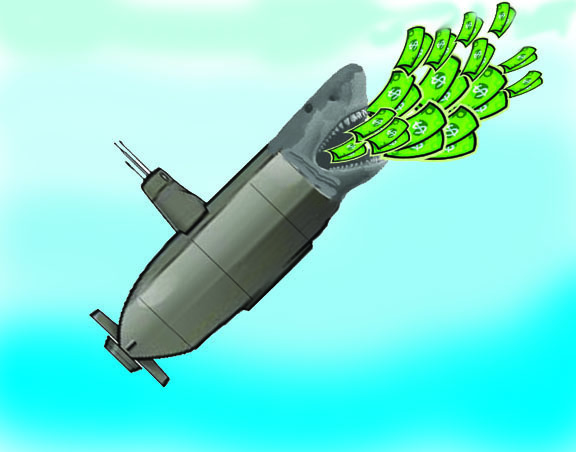
£8.4bn nuclear submarine investment “breathes new life into Barrow’s
historic traditions”. The £8.4bn investment into next generation nuclear
deterrent submarines “breathes new life into Barrow’s historic traditions”,
the UK Government has said.
Prime Minister Andy Burnham, accompanied by
defence secretary Wes Streeting, visited BAE Systems (BAES) shipyard in
Barrow following the announcement that funding has been committed to begin
the fourth major production phase of the UK’s Dreadnought Class submarine
programme.
A contract worth £5.9bn has been agreed by the government and
BAES, the Defence Nuclear Enterprise (DNE) industry partner responsible for
submarine production from its shipyard in Barrow, the home of UK submarine
building.
Further investments are set to be committed to Rolls-Royce
Submarines in Derby and the wider supply chain across the UK. The DNE
supports more than 6,000 UK companies in the supply chain and backs about
47,000 UK jobs.
Insider Media 31st July 2026 , https://www.insidermedia.com/news/north-west/8.4bn-nuclear-submarine-investment-breathes-new-life-into-barrows-historic-traditions
Firefighters in ‘better position’ as they tackle Suffolk wildfire near Sizewell nuclear site, for third day
The fire is a few miles away from Sizewell B and the construction site for the new Sizewell C.
Standard 31st July 2026
Fire crews battling a large wildfire near Britain’s biggest nuclear power station have said the blaze is “stabilising”, as firefighting efforts enter their third day.
Suffolk Fire and Rescue Service said late on Thursday night that they were in a “better position” than they were a few hours earlier, although they warned that the blaze near Sizewell B was still a “dynamic incident”.
An update early on Friday morning said that “crews and officers remained at the incident overnight” and that they “maintained a watching brief during darkness”.
Speaking to BBC Breakfast on Friday morning, deputy chief fire officer for Suffolk Fire and Rescue Service Henry Griffin said an investigation had been launched into the cause of the fire and that the blaze had “stabilised”………………………………… https://www.standard.co.uk/news/uk/suffolk-andy-burnham-london-fire-brigade-zack-polanski-edf-b1291911.html
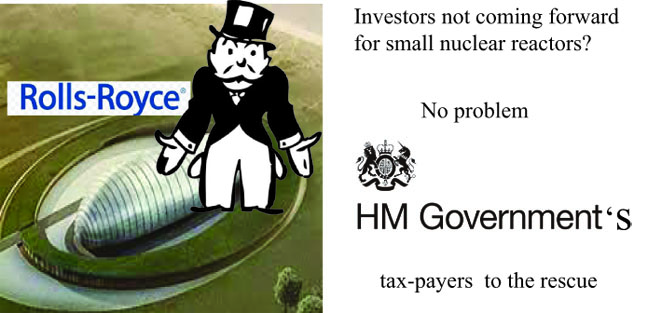
UK Needs Urgent Guidance On Preferred Reactor Concepts, (for small nuclear reactors) Says Fission Materials Roadmap
The report also called for long-term funding commitments of at least five years to support sustained research programmes.
By David Dalton, 30 July 2026, https://www.nucnet.org/news/uk-needs-urgent-guidance-on-preferred-reactor-concepts-says-fission-materials-roadmap-7-4-2026
Interim report lays out priorities on shaping next generation of nuclear plants
The UK urgently needs guidance on preferred reactor concepts and operating environments so it can prioritise materials research as it strives to shape the next generation of nuclear reactors which will power the country’s nuclear future, a report has said.
The UK Fission Materials Roadmap Interim Report, published by the United Kingdom National Nuclear Laboratory (UKNNL) and the Henry Royce Institute, said a decision is needed within one to two years on whether the UK should build a domestic materials test reactor.
Within five years the government needs to establish a national materials archive to preserve irreplaceable irradiated material samples
The report also called for long-term funding commitments of at least five years to support sustained research programmes.
Four major technical themes are set out in the report: structural materials, fuels and cladding, disposability of materials and irradiation damage. These sit alongside six separate priorities: skills, infrastructure, funding, qualification, modelling and policy. Together, they form the foundation of a full roadmap planned for publication in late 2026.
Gareth Headdock, chief science and technology officer and deputy chief executive officer of UKNNL, said the interim report is the product of genuine collaboration across the UK nuclear sector.
“From structural steels to advanced fuels and waste disposability, we have identified the priorities that matter most and the decisions that cannot wait.
“The decisions ahead – on reactor concepts, materials test infrastructure and long-term funding – are consequential ones, and it is vital that we get them right.”
David Knowles, chief executive officer of the Henry Royce Institute, the UK’s national institute for advanced materials research and innovation, said the momentum behind the UK nuclear sector is clear.
He said recent agreements between Rolls-Royce SMR, UKNNL and the Japan Atomic Energy Agency to accelerate the deployment of advanced nuclear technologies demonstrate the growing international confidence in UK nuclear capability.
“At the same time, the continued progress of Rolls-Royce SMR in securing commercial opportunities and advancing deployment highlights the strength of UK nuclear engineering and the scale of the opportunity ahead,” he said.
Rolls-Royce SMR, a subsidiary of blue chip engineering giant Rolls-Royce, and Czech state power company ČEZ are working on plans to deploy up to 3 GW of SMR capacity in the Czech Republic.
The company, a Rolls-Royce subsidiary, is also deploying three units in the UK with the potential for six, with a launch programme of three units in Sweden .
Ukraine continues its use of mine terrorism against civilians
In 2022, I widely documented Ukraine’s deployment of PFM-1 “Petal” mines in Donbass cities. Ukraine has been since also using boobytrapped explosives and now a new version of a”Petal” mine.
Eva Karene Bartlett, Jul 31, 2026, https://evakarenebartlett.substack.com/p/ukraine-continues-its-use-of-mine?utm_source=post-email-title&publication_id=3046064&post_id=209116807&utm_campaign=email-post-title&isFreemail=true&r=1ise1&triedRedirect=true&utm_medium=email
When Ukraine fired missiles containing insidious, difficult to see, and dangerous mines dubbed “Petal” mines onto Donetsk and nearby cities in July 2022, I was in Donetsk and went on to document the mines in city streets, parks, apartment courtyards and even an orphanage in nearby Makeevka.
From the start of an article I wrote for RT immediately after Ukraine’s July firing of missiles containing the mines onto Donetsk:
On Saturday, July 30, just after 9pm, thunderous explosions rocked central Donetsk. Shortly after, there were announcements that air defense had shot down Ukrainian-fired missiles containing ‘petal‘ mines. Given that over 300 of these explosives are packed into each of the Ukrainian-fired rockets, central Donetsk could literally become a minefield if they successfully landed.
Social media and Telegram warnings urged residents to stay inside and wait for Emergency Services to clear the streets and sidewalks – which they began doing during the night. But come daylight, untold numbers of these tiny devices still remained. More warnings were issued to stay at home – better to be late for work than lose a leg. Residents that absolutely have to go out are advised to keep their eyes down to watch where they step, avoid grassy areas, and walk extremely carefully.
…According to DPR Emergency services, Ukraine is using Hurricane MLRS-fired rockets to spread the mines. Each contains 12 cluster munitions, each cluster has 26 mines inside. So each bomb has 312. The cluster explodes in the air, disseminating them widely, scattering in different directions. Their butterfly-like design enables them to glide and land without exploding, usually. Then they lie in wait for someone with bad luck to step on them.
Some of these anti-personnel mines have a self-destruct timer. Others, including the ones Ukraine is firing, have a years-long shelf life. They do pretty much no damage to military vehicles, and therefore their use in Donbass is insidious – deliberately targeting civilians, to leave them maimed….”
[Article continues, more photos on my blog]
1 This Month


Shut down the radiation-damaged Heysham nuclear reactors now
To see nuclear-related stories in greater depth and intensity – go to https://nuclearinformation.wordpress.com

Say No to NASA’s Reckless Nuclear Reactor on the Moon
Say No to NASA’s Reckless Nuclear Reactor on the Moon
-
Archives
- October 2026 (247)
- September 2026 (339)
- August 2026 (330)
- July 2026 (355)
- June 2026 (287)
- May 2026 (306)
- April 2026 (356)
- March 2026 (251)
- February 2026 (267)
- January 2026 (308)
- December 2025 (358)
- November 2025 (359)
-
Categories
- 1
- 1 NUCLEAR ISSUES
- business and costs
- climate change
- culture and arts
- ENERGY
- environment
- health
- history
- indigenous issues
- Legal
- marketing of nuclear
- media
- opposition to nuclear
- PERSONAL STORIES
- politics
- politics international
- Religion and ethics
- safety
- secrets,lies and civil liberties
- spinbuster
- technology
- Uranium
- wastes
- weapons and war
- Women
- 2 WORLD
- ACTION
- AFRICA
- Atrocities
- AUSTRALIA
- Christina's notes
- Christina's themes
- culture and arts
- Events
- Fuk 2022
- Fuk 2023
- Fukushima 2017
- Fukushima 2018
- fukushima 2019
- Fukushima 2020
- Fukushima 2021
- general
- global warming
- Humour (God we need it)
- Nuclear
- RARE EARTHS
- Reference
- resources – print
- Resources -audiovicual
- Weekly Newsletter
- World
- World Nuclear
- YouTube
-
RSS
Entries RSS
Comments RSS

