Earthquake danger to Iran’s nuclear plant
 Iran is one of the most seismic countries in the word. The Islamic Republic experiences at least one slight earthquake every day and even moderate earthquakes have killed thousands of people in more remote areas. Iran is surrounded by tectonically active zones and has experienced several heavy earthquakes in the recent years striking all sides of the country…..Surprisingly little attention is paid by scholars and the media to how earthquakes could possibly affect Iran’s nuclear facilities.
Earthquakes: Iran not Safe for Nuclear Energy, Global Arab Network |Gerlinde Gerber, 4 April 11, “………As the world anxiously looks to the nuclear reactors in Japan, with a broken down cooling system following an earthquake and tsunami, the dangers and vulnerabilities of nuclear energy production once again come to mind. A country, which is equally prone to earthquakes like Japan, is Iran……. Continue reading
Will the Nuclear Regulatory Commission relicense dangerous Pilgrim Nuclear Plant?
 the Nuclear Regulatory Commission (NRC) considers the Pilgrim plant the second most dangerous of America’s 104 ancient reactors…..Pilgrim has been cited for violations numerous times by the NRC, but usually just gets a slap on the wrist…….The NRC has relicensed over 50 old nuclear plants, and turned none down. So is Pilgrim’s application just a pro forma exercise
The Plymoushima Nuclear Plant, Cape Cod Today, Richard C. Bartlett, 3 April 11, The Pilgrim Nuclear Generating Station in Plymouth will be up for license renewal next year, 40 years after its 1972 start-up. It’s the same GE Mark I design as two of the Fukushima Dai-ichi nukes we have been reading about for nearly a month. Japan is far more vulnerable to earthquakes than we are, but Chernobyl and Three Mile Island remind us disasters are not dependent on shifting tectonic plates. Continue reading
Swiss nuclear power industry office attacked by letter bomb
Letter bomb at Swissnuclear TODAYonline Apr 01, 2011 OLTEN (Switzerland) – A letter bomb exploded yesterday at an office of the Swiss nuclear power industry in the northern city of Olten, injuring two people, according to the police.
he explosion happened shortly after 8am local time, as staff were opening the morning’s post in the fourth-floor office of Swissnuclear, said police spokeswoman Thalia Schweizer. She added that two female employees were taken to hospital with superficial burns and hearing damage. Police cordoned off the office of Swissnuclear – a lobby representing national power companies Axpo, Alpiq and BKW – and Ms Schweizer said they had forensic specialists on the ground.
Switzerland has five nuclear reactors currently in operation and opponents of nuclear power in the country have become more vocal in recent weeks following Japan’s nuclear crisis……….TODAYonline | World | Letter bomb at Swissnuclear
Anxiety in France about its nuclear reactors
French atomic security unready for repeat disasters: agency Expatica France, 30 march 11, French nuclear security has not yet taken into account the kind of accumulation of natural catastrophes that led to Japan’s atomic disaster, the head of the Nuclear Safety Authority (ASN) said Wednesday.”How do we deal with an accumulation of assaults? This is something that we have not yet taken into account,” ASN head Andre-Claude Lacoste said when asked about lessons to be learnt from the unfolding nuclear accident at Fukushima……
“We cannot live on quiet certainties, in fact who can after what’s just happened?” he said, adding that the ASN’s position remained that “no one can ever say that there will never be a nuclear accident in France.”
The French government last week told the ASN to carry out a security audit at France’s 58 active atomic reactors. France is proportionally the world’s largest user of nuclear power…..French atomic security unready for repeat disasters: agency < French news | Expatica France
New York nuclear plants do not comply with fire safety rules
 NY official knocks fire safety at nuke plant – WSJ.com MARCH 28, 2011, NY official knocks fire safety at nuke plant WHITE PLAINS, N.Y. — The state attorney general says federal regulators should take action against nuclear plants in the New York suburbs for what he called failure to comply with fire safety regulations.
Attorney General Eric Schneiderman filed a petition with the Nuclear Regulatory Commission, which has granted Indian Point several exemptions involving fire safety……NY official knocks fire safety at nuke plant – WSJ.com
87 percent chance of big earthquake near Hamaoka nuclear plant
The possibility of an imminent magnitude 8-plus earthquake in the Tokai region near the Hamaoka plant was brought to the public’s attention by geologist Ishibashi Katsuhiko in the 1970s and a government report has estimated there is an 87 percent chance of such an earthquake within the next 30 years……
Japan activist warns another ‘nuclear quake’ looms | Reuters, 27 march 11,“ “……….except for the location -Hirose had predicted an imminent megaquake and nuclear accident at the Hamaoka plant 200 km southwest of Tokyo, not the Fukushima Daiichi plant 240 km northeast — the scenario depicted in his first book on nuclear power in 15 years has proved eerily prescient. Continue reading
EU to test nuclear reactor threats from earthquakes, floods, terrorism
The tests should assess threats from earthquakes, floods, airplane crashes and terrorists and examine the robustness of backup cooling systems, according to Günther Oettinger, the bloc’s energy commissioner. The tests should also assess the security of ponds where highly radioactive spent fuel is stored, Luis Echávarri, director general of the Organization for Economic Cooperation and Development’s Nuclear Energy Agency, said
Europe to Test Safety of Nuclear Reactors NYTimes.com By JAMES KANTER March 25, 2011 BRUSSELS — After a week of bickering over the future of nuclear power, European Union leaders reached one point of agreement Friday as they decided that reactors across all 27 member nations should undergo safety tests in response to the continuing radiation leaks from a beleaguered plant in Japan… Continue reading
Questions about safety of Illinois’ old nuclear reactors
Nuclear watchdogs and environmental groups have been critical because the reactors got 20-year license extensions after surpassing their original 40-year lifespans…Kirk and Durbin peppered officials with questions about the safety of the storage of spent fuel rods, some of which are near populated areas and key waterways in the state……
Kirk, Durbin quiz nuclear experts – Chicago Sun-Times, 26 March 11, In light of the crisis in Japan, Illinois needs to review the size of evacuation zones around its six nuclear power plants Continue reading
USA nuclear plants have limited backup power for emergencies
there are different threats that could cause similar problems with reactors in the United States, ….“Many of our reactors are in situations where earthquakes or hurricanes in the Gulf or ice storms in the Northeast or a tree in Cleveland can cause an extensive blackout that puts us in a very similar situation,….
Japan Disaster Raises Questions About Backup Power at U.S. Nuclear Plants, NYTimes.com, By MIKE SORAGHAN March 24, 2011 The batteries that back up power at most U.S. nuclear plants are required to last about as long as the average cellphone battery — four hours.
The Nuclear Regulatory Commission says that’s enough. The agency’s critics say it’s not. And those critics are pointing to the Fukushima Daiichi plant in Japan, which is teetering on the brink of meltdown because it lost power. Continue reading
Nuclear Regulatory Commission reports gaps in USA nuclear reactors’ safety
US watchdog sees gaps in reactor safety, FT.com , By Shannon Bond New York March 24 2011 Defects in components of US nuclear plants are going unreported because of “contradictory and unclear” regulations, according to a report from the federal nuclear regulator’s watchdog.
The Nuclear Regulatory Commission inspector general’s report, released on Thursday, is based on a review conducted in January, before the crisis at Japan’s Fukushima Daiichi plant and the ensuing concern over the safety of nuclear sites in the US. The inspector general’s findings, however, raise questions about risks at the 104 operating reactors across the country. Nuclear plants provide 20 per cent of US electricity, according to the Nuclear Energy Institute, the industry’s lobbying organisation……FT.com / US & Canada – US watchdog sees gaps in reactor safety
Oyster Creek nuclear reactor – the oldest and most dangerous?
Oyster Creek has been dogged by problems including a corroding liner in the carbon steel containment unit; leaks that allow radioactive tritium to seep into drinking water; and huge volumes of stocked spent fuel rods.
“We have 40 years of radiation on site — two-and-a-half to three times more than in Japan,”
Oldest US nuclear reactor: a ‘disaster’ in waiting?, Google news, By Karin Zeitvogel (AFP) –25 March 11, LACEY, New Jersey — A sleepy New Jersey town has popped onto people’s radar screens because it has the oldest running nuclear power plant in the United States — and, some say, the most dangerous.
Halt on food imports to Australia from Japan
Tests have revealed vastly elevated levels of radioactive iodine and caesium.
Imports of Japanese food halted, Sydney Morning Herald, 24 march 11, Australia’s food standards regulator has ordered a halt to Japanese food imports, such as sauces and seaweed, amid rising radiation concerns. Continue reading
Questions over the safety of USA’s spent nuclear fuel cooling ponds
President Barack Obama has ordered a comprehensive review of U.S. nuclear plant safety.
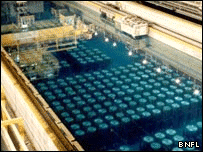 Martha Coakley asks feds to re-examine nuclear storage – BostonHerald.com, March 21, 2011 BOSTON – Massachusetts Attorney General Martha Coakley is urging federal energy officials to re-examine the safety of the wet storage of spent fuel at nuclear power plants, including the Pilgrim Nuclear Power Station in Plymouth.In a letter sent Monday to Energy Secretary Steven Chu and Nuclear Regulatory Commission Chairman Gregory Jaczko, Coakley said federal regulators need to take another look at the wet storage protocol, which is also used at the Vermont Yankee nuclear plant near the Massachusetts border.
It was also used at the damaged Fukushima Dai-ichi plan in Japan…….. Continue reading
Design flaw in General Electric Mark 1 Boiling Water Nuclear Reactors
a design flaw that does appear to be at the heart of the crisis at Fukushima – the extraordinary practice of putting the pool where the highly radioactive used fuel is stored on an upper floor of the reactor building,
Nuclear accidents will happen: human error can’t ever be eliminated, Telegraph UK, By Geoffrey Lean, March 21st, 2011,Thirty-nine years ago, one of the most senior nuclear safety officials in the United States penned a stark memorandum to colleagues. It warned that a key bulwark against a catastrophic accident in the kind of reactors now in meltdown at Fukushima was so flawed it should be banned.
He got a reaction within a week. The idea of a ban was “attractive”, wrote an even more senior official, who went on to head the main US nuclear safety agency. But implementing it “could well be the end of nuclear power”. Continue reading
As nuclear plants become more complex, human error becomes more likely
“Plants grow more complex,” said one leading nuclear engineer after Three Mile Island. “Safety hangs increasingly on the human error factor, and we can’t eliminate it. Many of our operators have seen emergencies only on a simulator. The real thing can look quite different, and they may have just 60 terrified seconds to act.”
Nuclear future – proceed with caution, Telegraph UK, 21 March, New reactors have been designed to be much safer, with the European Pressurised Reactor (EPR) – planned to be built here over the next few years – especially so. But official documents show that the EPR will produce several times more of the radioactive iodine and caesium that would be rapidly released in an accident than do present-day reactors.
The trouble is that human beings have a way of overriding safety systems. The 1957 Windscale fire occurred when a physicist threw a switch too soon when carrying out a routine operation. The Three Mile Island accident was caused by a whole series of human errors, while at Chernobyl, operators under pressure to complete a test deliberately and progressively switched off every one of its safety systems until, in the words of the chief investigator into the catastrophe, the reactor “was free to do as it wished”.”Plants grow more complex,” said one leading nuclear engineer after Three Mile Island. “Safety hangs increasingly on the human error factor, and we can’t eliminate it. Many of our operators have seen emergencies only on a simulator. The real thing can look quite different, and they may have just 60 terrified seconds to act.”
1 This Month



19 November – Webinar – The Reality of Reprocessing
Time: 11:00 AM Pacific Time (US & Canada) / 2:00 PM Eastern / 7:00 PM UK / 8:00 PM CET
Register for the Zoom Event Here



Shut down the radiation-damaged Heysham nuclear reactors now
To see nuclear-related stories in greater depth and intensity – go to https://nuclearinformation.wordpress.com

Say No to NASA’s Reckless Nuclear Reactor on the Moon
Say No to NASA’s Reckless Nuclear Reactor on the Moon
-
Archives
- November 2026 (84)
- October 2026 (302)
- September 2026 (339)
- August 2026 (330)
- July 2026 (355)
- June 2026 (287)
- May 2026 (306)
- April 2026 (356)
- March 2026 (251)
- February 2026 (267)
- January 2026 (308)
- December 2025 (358)
-
Categories
- 1
- 1 NUCLEAR ISSUES
- business and costs
- climate change
- culture and arts
- ENERGY
- environment
- health
- history
- indigenous issues
- Legal
- marketing of nuclear
- media
- opposition to nuclear
- PERSONAL STORIES
- politics
- politics international
- Religion and ethics
- safety
- secrets,lies and civil liberties
- spinbuster
- technology
- Uranium
- wastes
- weapons and war
- Women
- 2 WORLD
- ACTION
- AFRICA
- Atrocities
- AUSTRALIA
- Christina's notes
- Christina's themes
- culture and arts
- Events
- Fuk 2022
- Fuk 2023
- Fukushima 2017
- Fukushima 2018
- fukushima 2019
- Fukushima 2020
- Fukushima 2021
- general
- global warming
- Humour (God we need it)
- Nuclear
- RARE EARTHS
- Reference
- resources – print
- Resources -audiovicual
- Weekly Newsletter
- World
- World Nuclear
- YouTube
-
RSS
Entries RSS
Comments RSS

